

The fallacy of placing confidence in confidence intervals
Open accessThe DOI matches its Crossref record; 99 of the 108 references it cites were found in a registry or an index.
Abstract
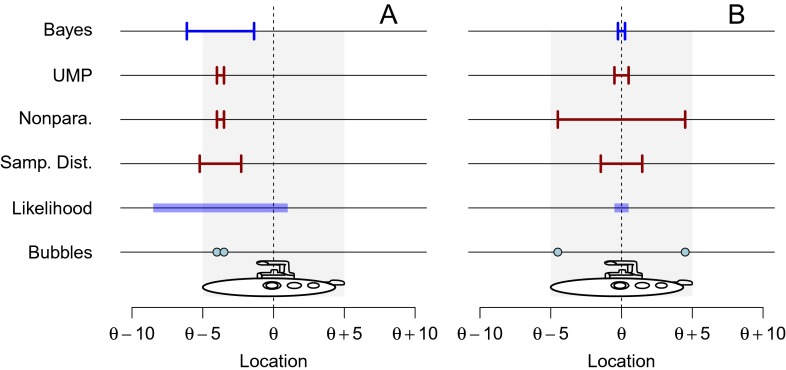
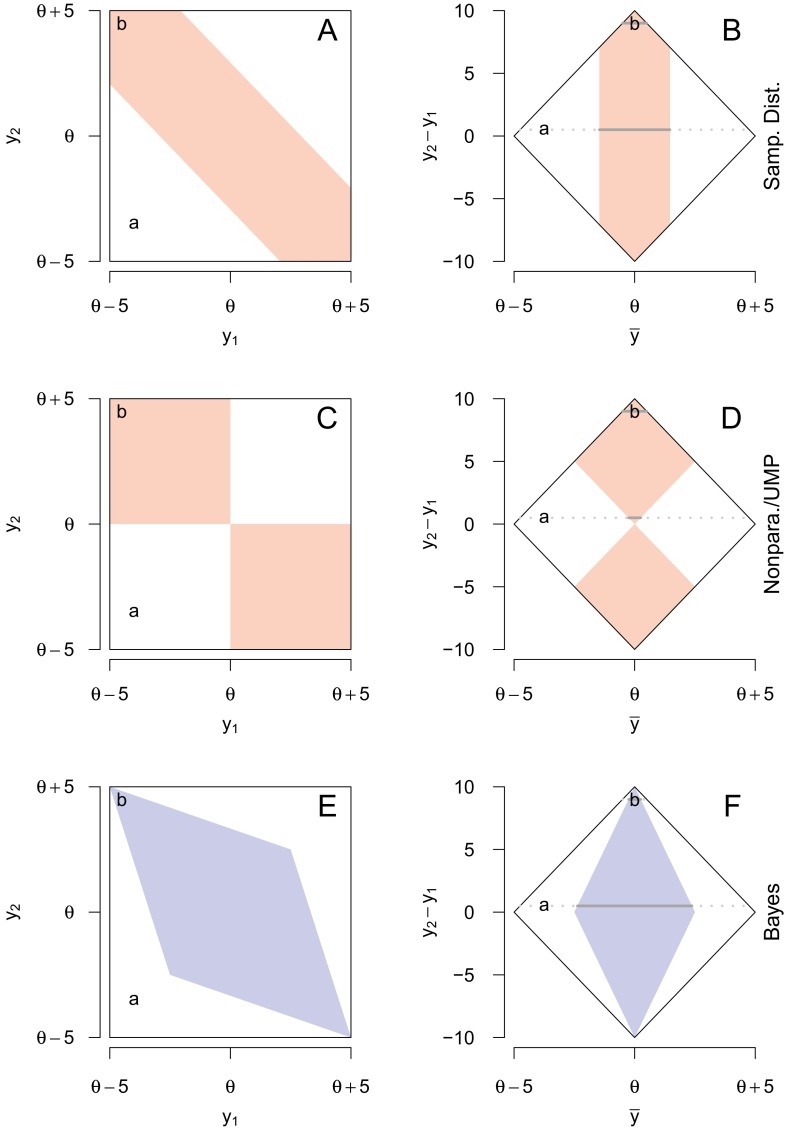
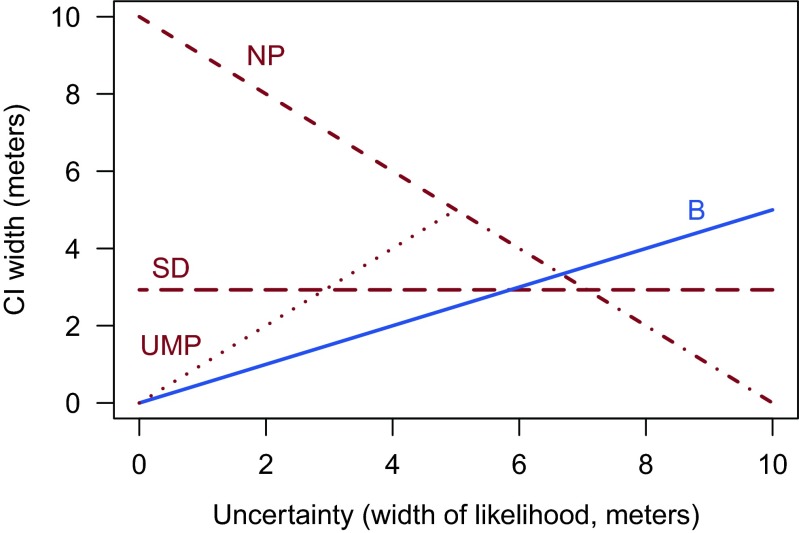
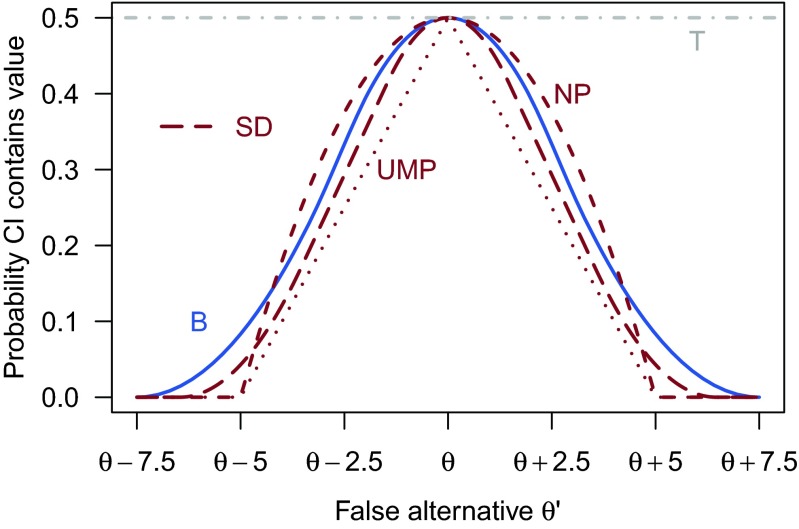
Interval estimates - estimates of parameters that include an allowance for sampling uncertainty - have long been touted as a key component of statistical analyses. There are several kinds of interval estimates, but the most popular are confidence intervals (CIs): intervals that contain the true parameter value in some known proportion of repeated samples, on average. The width of confidence intervals is thought to index the precision of an estimate; CIs are thought to be a guide to which parameter values are plausible or reasonable; and the confidence coefficient of the interval (e.g., 95 %) is thought to index the plausibility that the true parameter is included in the interval. We show in a number of examples that CIs do not necessarily have any of these properties, and can lead to unjustified or arbitrary inferences. For this reason, we caution against relying upon confidence interval theory to justify interval estimates, and suggest that other theories of interval estimation should be used instead.
Overview
The claims and statistics of this paper haven’t been checked yet.
Free: it reads the open-access text and checks the first 5 claims that cite a source we can check. Create a free account to check every claim.
Integrity signals
Registry
Cites
Statistics
Figures
Verification
Claims the paper makes
The claims and statistics of this paper haven’t been checked yet.
Free: it reads the open-access text and checks the first 5 claims that cite a source we can check. Create a free account to check every claim.
Claims other papers make about this one
Each is checked against this paper’s own text: does it say what the citing paper says it does?
The cited source says what the claim attributes to it.
In the citing paper
“These intervals operate directly in the probabilistic space, thereby avoiding the common interpretational issues associated with confidence intervals[47], emerging as well suited solutions for one-shot settings[44].”
From Provenance-driven nanopublications: representing source lineage and trust networks for multi-source assertions (2025) · cites this paper as [47]
In the citing paper
“The credible interval [L,U] has a x% probability that the true parameter lies in the interval that ranges from L to U (an interpretation that is often wrongly attributed to frequentist confidence intervals, see Morey, Hoekstra, Rouder, Lee, & Wagenmakers, 2016).”
From The JASP guidelines for conducting and reporting a Bayesian analysis (2021) · cites this paper as Morey, Hoekstra, Rouder, Lee, & Wagenmakers, 2016
Self-check
Percentages, sums and reported differences re-computed from the paper’s own numbers.
The self-check needs the paper’s full text.
Citations
Cites
Gelman, A., Carlin, J. B., Stern, H. S., & Rubin, D. B. (2003) · doi:10.1201/9780429258480 · Cited by 27,276
Casella, G., & Berger, R. (2024) · Chapman & Hall/CRC eBooks · doi:10.1201/9781003456285 · Cited by 5,711
Testing Statistical Hypotheses
(2021) · Wiley Series in Probability and Statistics · doi:10.1002/9781119243830.ch12 · Cited by 5,106
Probability theory the logic of science
Jaynes, E. T., & Bretthorst, G. L. (2003) · Cited by 4,643
Essentials of Psychological Testing
Rosner, B., & Cronbach, L. J. (1960) · The American Journal of Psychology · doi:10.2307/1419921 · Cited by 4,513
Probability Theory: The Logic of Science
Jaynes, E. T. (2003) · doi:10.1017/cbo9780511790423 · Cited by 4,045
Bayesian t tests for accepting and rejecting the null hypothesis
Rouder, J. N., Speckman, P. L., Sun, D., Morey, R. D., & Iverson, G. (2009) · Psychonomic Bulletin & Review · doi:10.3758/pbr.16.2.225 · Cited by 3,688
Self-citationInterval Estimation for a Binomial Proportion
Brown, L. D., Cai, T. T., & DasGupta, A. (2001) · Statistical Science · doi:10.1214/ss/1009213286 · Cited by 3,538
The New Statistics: Why and How
Cumming, G. (2014) · Psychological Science · doi:10.1177/0956797613504966 · Cited by 3,200
Statistical methods in psychology journals: Guidelines and explanations.
Wilkinson, L., & Task Force on Statistical Inference (1999) · American Psychologist · doi:10.1037/0003-066x.54.8.594 · Cited by 2,791
Research works printed but not linked: 3
- Psychonomics Society (2012). Psychonomic Society guidelines on statistical issues. Retrieved from http://www.springer.com/psychology?SGWID=0-10126-6-1390050-0
- Spanos A Revisiting the Welch uniform model: A case for conditional inference? Advances and Applications in Statistical Science 2011 5 33 52
- Venn, J. (1888). The logic of chance (third edition). London: Macmillan. Retrieved from https://archive.org/details/logicofchance029416mbp
Cited by
Items 401–500 of 577
Courtney, J. B., Ja, T., Puterman, E. M., & Almeida, D. M. (2024) · Psychology of sport and exercise · doi:10.1016/j.psychsport.2024.102777 · Cited by 5
“These wide range of potential effects may be due to person differences, such as the sex and age differences found in this study, emphasizing the need to interpret the results within the context of the study ’ s sample (Morey et al., 2016).”
Sources of bias in general linear models: evaluating the analytic practice in psychological research
Sladekova, M., Poupa, V. L., & Field, A. P. (2026) · Royal Society Open Science · doi:10.1098/rsos.250076 · Cited by 7
Gilman, S. E., Govender, T., Augustin, D., & Yu, J. (2023) · Journal of Child Psychology and Psychiatry · doi:10.1111/jcpp.13842 · Cited by 3
Sensorimotor control dynamics and cultural biases: learning to move in the right (or left) direction
Waterman, A., Giles, O. T., Havelka, J., Ali, S., Culmer, P., Wilkie, R. M., & Mon-Williams, M. A. (2017) · Royal Society Open Science · doi:10.1098/rsos.160806 · Cited by 3
“This is the property which many researchers erroneously attribute to the frequentist confidence interval [21].”
BackgroundKovic, M., & Hänsli, N. (2017) · Social Sciences · doi:10.3390/socsci7010002 · Cited by 4
“Credible intervals are what researches often believe confidence intervals to mean (Morey et al. 2016): The interval in which the true value of the parameter, given the data and the model, lies with some probability, in this case with 95% probability.”
BackgroundComparative Study of References and Protein Quantifications Using Biuret-Spectrophotometric Method
Syauqi, A., Fuadi, M. T. D. I. A. M., & Santoso, H. (2018) · Chimica et Natura Acta · doi:10.24198/cna.v6.n2.19224 · Cited by 3
“The confidence of all data replication was obtained from the uncertainty of standard curve, ± [t.(VC) 1/2 ], which is accuracy value (Morey et al. 2016).”
MethodThompson, W. B., Garry, A., Taylor, J. R., & Radell, M. L. (2019) · Psychology Learning & Teaching · doi:10.1177/1475725719877590 · Cited by 3
Juhan, N., Zubairi, Y. Z., Khalid, Z. M., & Zuhdi, A. S. M. (2020) · ASM Science Journal · doi:10.32802/asmscj.2020.sm26(1.1 · Cited by 3
Gil, H. G. (2024) · Macroeconomic Dynamics · doi:10.1017/s1365100524000233 · Cited by 3
P-values and confidence intervals: not fit for purpose?Preprint
Pharoah, P. D. P., Jones, M. R., & Kar, S. (2017) · bioRxiv (Cold Spring Harbor Laboratory) · doi:10.1101/180117 · Cited by 5
Chemopreventive potential of nicotinamide in Gilmore's Bayesian analysis
Phelan, P. S. (2018) · Australasian Journal of Dermatology · doi:10.1111/ajd.12849 · Cited by 3
“3]),(2) which Gilmore has noted is unfortunately wide, and which is inherently unable to provide a valid probability statement on the location of the parameter of interest.(4) In the future, the posterior can then be updated with results of subsequent trials and the credible interval revised to reflect the latest evid…”
BackgroundPerezgonzalez, J. D. (2018) · Frontiers in Psychology · doi:10.3389/fpsyg.2018.01640 · Cited by 3
Number of participants required for common designs in psychology: A power analysisPreprint
Brysbaert, M. (2018) · PsyArXiv (OSF Preprints) · doi:10.31234/osf.io/2v4yx · Cited by 4
JASP for Audit: Bayesian Tools for the Auditing PracticePreprint
Derks, K., de swart, J., Wagenmakers, E., Wille, J., & Wetzels, R. (2019) · PsyArXiv (OSF Preprints) · doi:10.31234/osf.io/9f6ub · Cited by 4
Self-citationGervais, W. M., McKay, R., Brown-Iannuzzi, J. L., Ross, R. M., Pennycook, G., Jong, J., & Lanman, J. A. (2024) · PsyArXiv (OSF Preprints) · doi:10.31234/osf.io/nv2ge · Cited by 4
Cheat, cheat, repeat: On the consistency of dishonest behavior in structurally comparable situationsPreprint
Thielmann, I., Hilbig, B. E., Schild, C., & Heck, D. W. (2024) · doi:10.31234/osf.io/ntg6c · Cited by 3
Positive affect modulates memory by regulating the influence of reward prediction errors
Qasim, S. E., Deswal, A., Sáez, I., & Gu, X. (2024) · Communications Psychology · doi:10.1038/s44271-024-00106-4 · Cited by 4
Uncertainty quantification of wind turbine fatigue lifetime predictions through binning
Sadeghi, N., Noppe, N., Morato, P. G., Weijtjens, W., & Devriendt, C. (2024) · Journal of Physics Conference Series · doi:10.1088/1742-6596/2767/3/032024 · Cited by 6
Peak V̇O2 and heart rate depend on running slope: a systematic review and meta-analysis
de Lucas, R. D., Lanzarini, L. D. V., Lana, I. D., Turnes, T., Ventura, T. P., Denadai, B. S., & Borszcz, F. K. (2025) · Sport Sciences for Health · doi:10.1007/s11332-025-01543-2 · Cited by 4
“…(Θ > 0) ) was 99.5% (please note that this P (Θ) corresponds to the probability of the effect being higher than zero, i.e. the proportion of the posterior distribution located above zero; this is not the traditional p-value used in frequentist analysis to test for ‘significance’ p < 0.05 [19, 36]).”
InfluentialChoose to think: Nudging towards privacy informed decisions at the app download stage
Klütsch, J., Zimmermann, V., & Schlittmeier, S. J. (2025) · Computers in Human Behavior · doi:10.1016/j.chb.2025.108895 · Cited by 2
Evaluative adjective sentences: A question-based analysis of projection
Tonhauser, J., de Marneffe, M.-C., & Degen, J. (2020) · Glossa a journal of general linguistics · doi:10.5334/gjgl.701 · Cited by 3
Advanced Considerations in Quantitative Methods for New Directions in Engineering Education Research
Katz, A., Godwin, A., & Brozina, C. (2023) · Routledge eBooks · doi:10.4324/9781003287483-36 · Cited by 4
الدلالة العملية لنتائج البحوث التربوية والنفسية المنشورة بمجلات الجامعة الأسمرية الإسلامية
بلعيد, ف. ع. ض. (2021) · مجلة الجامعة الأسمرية · doi:10.59743/jau.v34i3.374 · Cited by 2
Tian, X., Griffith, A. E., Price, Z., Boyer, K. E., & Tang, K. (2024) · Language and Speech · doi:10.1177/00238309241234565 · Cited by 15
“Because of the complex structure of linguistic data, Bayesian analysis is a popular approach over frequentist statistics (such as p and confidence intervals), as the latter either may not converge or result in uninterpretable results (Bates et al., 2015; Hoekstra et al., 2014; Morey et al., 2016).”
Wang, A., Yendluri, A., Megafu, M. N., Cordero, J. K., Forsh, D. A., Ryan, S. P., Tornetta, P., & Parisien, R. L. (2025) · Archives of Orthopaedic and Trauma Surgery · doi:10.1007/s00402-025-05804-0 · Cited by 2
“To circumvent these issues, reporting of confidence intervals is often recommended, though their interpretation similarly remains challenging [18, 19].”
Campbell, K. W., Kuehn, N. M., & Bozorgnia, Y. (2025) · Earthquake Spectra · doi:10.1177/87552930251351660 · Cited by 2
“…the Bayesian credible interval represents the probability that the true value of r falls within that interval (e.g. a 95% credible interval ranging from 0.2 to 0.5 means that there is a 95% probability that the true value of r falls within these two values) (Morey et al., 2016; O’Hagan, 2004).”
InfluentialTeaching of Confidence Intervals in Context
Finch, S. J., & Gordon, I. R. (2025) · Australian & New Zealand Journal of Statistics · doi:10.1111/anzs.70024 · Cited by 2
Exposure to Different Levels of Visual Complexity Influences Judgments of Complexity and Liking
Sun, X., Che, J., Leder, H., & Nadal, M. (2025) · Empirical Studies of the Arts · doi:10.1177/02762374251391644 · Cited by 2
Effects of a Synthetic Clarinet Bore Liner on Spectral Centroid and Fundamental Frequency Error
Gardner, J. (2019) · Acta acustica united with Acustica · doi:10.3813/aaa.919397 · Cited by 3
Silva, I., & Oliveira, D. W. R. (2020) · Communications in Statistics - Theory and Methods · doi:10.1080/03610926.2020.1780447 · Cited by 2
Comprensión del intervalo de confianza por estudiantes de Bachillerato
de Hierro, A. F. R. L., Batanero, C., & Álvarez‐Arroyo, R. (2020) · Avances de Investigación en Educación Matemática · doi:10.35763/aiem.v0i18.284 · Cited by 2
“• Confundir confianza con probabilidad de que el parámetro caiga en el intervalo (37,9% en opción D de ítem 1; 39,7% en distractor C de ítem 6), dando interpretación bayesiana al intervalo, error citado por Behar (2001), Morey et al. (2016) y Olivo (2008).”
BackgroundA Comparison of Priors When Using Bayesian Regression to Estimate Oral Reading Fluency Slopes
Solomon, B. G., Forsberg, O. J., Thomas, M., Penna, B., & Weisheit, K. M. (2021) · Assessment for Effective Intervention · doi:10.1177/15345084211040219 · Cited by 2
“In the latter case, the frequentist can only use the p-value to estimate how well the data support the null hypothesis (Morey et al., 2016; Wagenmakers et al., 2015).”
MethodRecommendations for reporting statistical results when comparing proportions
Vrbin, C. M. (2022) · Cytopathology · doi:10.1111/cyt.13083 · Cited by 3
Ganguly, D., Gleize, M., Hou, Y., Jochim, C., Bonin, F., Pascale, A., Tommasi, P., Mac Aonghusa, P., West, R., Johnston, M., et al. (2021) · PubMed Central · doi:10.17863/cam.104384 · Cited by 3
Are there factive predicates? An empirical investigation: Supplementary Material
Degen, J., & Tonhauser, J. (2022) · Language · doi:10.1353/lan.2022.0015 · Cited by 2
Confidence Means What?!?: Lexical Ambiguity in the Interpretation of Confidence Intervals
Kaplan, J., & Roland, K. (2022) · Bridging the Gap: Empowering and Educating Today’s Learners in Statistics. Proceedings of the Eleventh International Conference on Teaching Statistics · doi:10.52041/iase.icots11.t8h2 · Cited by 2
The importance of change communication and state motivation when adapting to changes
Stasielowicz, L. (2024) · Scandinavian Journal of Psychology · doi:10.1111/sjop.13066 · Cited by 5
Roldán-López, A. F., Batanero, C., & Álvarez‐Arroyo, R. (2020) · Educação Matemática Debate · doi:10.24116/emd.e202010 · Cited by 2
Gilmore, S. J. (2018) · Australasian Journal of Dermatology · doi:10.1111/ajd.12874 · Cited by 2
“3]),(2) which Gilmore has noted is unfortunately wide, and which is inherently unable to provide a valid probability statement on the location of the parameter of interest.(4) In the future, the posterior can then be updated with results of subsequent trials and the credible interval revised to reflect the latest evid…”
BackgroundUnderstanding rumination as a form of inner speech: probing the role of motor processesPreprint
Nalborczyk, L. (2019) · Thesis Commons (OSF Preprints) · doi:10.31237/osf.io/p6dct · Cited by 7
“…statistics (like p-values and confidence intervals) are often attributable to the wrong interpretation of these statistics as resulting from a Bayesian analysis (e.g., Dienes, 2011; Gigerenzer, 2004; Hoekstra, Morey, Rouder, & Wagenmakers, 2014; Kruschke & Liddell, 2018a; Morey et al., 2015).”
BackgroundMethodInfluentialA Tutorial on Bayesian Single-Test Reliability Analysis with JASPPreprint
Pfadt, J. M., van den Bergh, D., Sijtsma, K., & Wagenmakers, E. (2021) · doi:10.31234/osf.io/j6z8h · Cited by 2
Self-citationClassical and Bayesian Uncertainty Intervals for the Reliability of Multidimensional ScalesPreprint
Pfadt, J. M., van den Bergh, D., & Moshagen, M. (2021) · doi:10.31234/osf.io/d3gfs · Cited by 2
Improving the Replicability of Psychological Science Through PedagogyPreprint
Frank, M. C. (2016) · PsyArXiv (OSF Preprints) · doi:10.31234/osf.io/p73he · Cited by 2
Measuring the Effects of Light Distribution on Spatial Brightness
Sullivan, J. P. (2021) · doi:10.26686/wgtn.16713670.v1 · Cited by 2
Rodebaugh, T. L., Frumkin, M. R., & Piccirillo, M. L. (2022) · doi:10.31234/osf.io/7ez2m · Cited by 2
Bach, D. R., Rigdon, E. E., & Sarstedt, M. (2023) · doi:10.31234/osf.io/fvhwr · Cited by 2
A gentle introduction to Bayesian statistics, with applications to bilingualism researchPreprint
Veríssimo, J. (2024) · PsyArXiv (OSF Preprints) · doi:10.31234/osf.io/7wfus · Cited by 4
Schiavone, S. R. (2018) · University of Kentucky Libraries · doi:10.13023/etd.2018.276 · Cited by 1
Cathode spot dynamics in axial magnetic fields
Liang, J. J., Tsoutas, K., & Bilek, M. (2024) · Journal of Vacuum Science & Technology A Vacuum Surfaces and Films · doi:10.1116/6.0003243 · Cited by 1
Lu, Y., Zheng, Q., & Henning, K. S. S. (2024) · Multivariate Behavioral Research · doi:10.1080/00273171.2024.2358233 · Cited by 1
“A long line of literature (e.g., Gelman & Carlin, 2017; Hoekstra et al., 2014; Morey et al., 2015) has demonstrated that even seasoned researchers are not immune from the temptation to interpret the confidence level—say, 95%—associated with a post-hoc computed interval as the probability that the…”
Bayesian inference of wall torques for active Brownian particles
Lambert, S., Duchêne, M., & Klumpp, S. (2025) · Europhysics Letters (EPL) · doi:10.1209/0295-5075/adaee1 · Cited by 1
Symptomatic treatment of infantile nystagmus: a systematic review
Li, X., Huurneman, B., & Goossens, J. (2025) · Frontiers in Neuroscience · doi:10.3389/fnins.2025.1612504 · Cited by 1
Semantic contrast ahead: contrast guides pre-planning in complex noun-phrase production
Roeser, J., Torrance, M., & Baguley, T. (2025) · Language and Cognition · doi:10.1017/langcog.2025.10022 · Cited by 1
“…a straightforward interpretation as the range that contains the true parameter value with a 95% probability (Kruschke, 2014; Morey et al., 2016). analysis of eye data, we removed a further 2.4% of the trials which had more than 75% of the eye fixations away from any of the…”
InfluentialDesign and analysis of behavioral intervention studies: A Bayesian approach
Ibáñez, C. N. B., Lösener, U., Moeteke, N. S., & Moerbeek, M. (2026) · PLoS ONE · doi:10.1371/journal.pone.0342163 · Cited by 1
“The latter interpretation is valid only for credible intervals , the Bayesian counterpart of CIs [58,59].”
Polussa, A., Oldfield, E. E., Runge, T., Evans, E. K., Liu, S., Forbes, E. S., Smith, C., Potash, E., Sanderman, J., Sheffer, M., et al. (2026) · Geoderma · doi:10.1016/j.geoderma.2026.118007 · Cited by 4
Definition of Confidence Interval
Mongan, J., & Sebro, R. (2016) · Radiographics · doi:10.1148/rg.2016150248 · Cited by 1
Infants’ motor simulation of observed actions is modulated by the visibility of the actor’s body
Boyer, T. W., Harding, S., & Bertenthal, B. I. (2017) · Cognition · doi:10.1016/j.cognition.2017.03.014 · Cited by 3
Biodegradable Neural Cell Culture Sheet Made of Polyanhydride thin Film with Micro-Trench Structures
Nakamura, Y., & Satomitsu, I. M. A. I. (2019) · IEICE Transactions on Electronics · doi:10.1587/transele.2018oms0015 · Cited by 1
Analysis of a Network of Randomized Complete Block Design Experiments with One Factor
Makowski, D., Piraux, F., & Brun, F. (2019) · Springer eBooks · doi:10.1007/978-94-024-1696-1_3 · Cited by 1
Banerjee, S., Aurangzeb, M., & Kumar, A. (2022) · Indian Chemical Engineer · doi:10.1080/00194506.2022.2068077 · Cited by 1
“At the same time, the reliability of CI is not recommended at every time [30].”
BackgroundBrody and Jamie’s Colleague: The Difference in Confidence Interval Estimators and Estimates
Roland, K., & Kaplan, J. (2022) · Bridging the Gap: Empowering and Educating Today’s Learners in Statistics. Proceedings of the Eleventh International Conference on Teaching Statistics · doi:10.52041/iase.icots11.t8h3 · Cited by 1
Six textbook mistakes in data analysis
Gezerlis, A., & Williams, M. (2023) · The European Physical Journal Plus · doi:10.1140/epjp/s13360-022-03629-z · Cited by 1
Kara, E. (2023) · Anadolu Journal Of Educational Sciences International · doi:10.18039/ajesi.1240655 · Cited by 1
Robust single‐trial event‐related potentials differentiate between distress and fear disorders
Randau, M., Reinholt, N., Pernet, C. R., Oranje, B., Rasmussen, B. S., & Arnfred, S. (2023) · Psychophysiology · doi:10.1111/psyp.14500 · Cited by 1
Using Constructivism to Develop an Agenda of Research in Stochastics Education Research
Hatfield, N. J. (2024) · Research in mathematics education · doi:10.1007/978-3-031-47386-9_21 · Cited by 1
Research design, statistics and soil carbon: Responses to von Haden et al. and Spertus
Bradford, M. A., Polussa, A., Eash, L., Jevon, F. V., Kuebbing, S. E., Rosenzweig, S. T., & Oldfield, E. E. (2024) · Geoderma · doi:10.1016/j.geoderma.2024.116961 · Cited by 1
Spontaneous theory of mind in autism: are anticipatory gaze and reaction time biases consistent?
Onda, K., Ichwansyah, R., Kawasaki, K., Egawa, J., Someya, T., & Hasegawa, I. (2024) · Frontiers in Psychiatry · doi:10.3389/fpsyt.2024.1189777 · Cited by 3
Seis, W., Stapf, M., Miehe, U., & Wintgens, T. (2025) · The Science of The Total Environment · doi:10.1016/j.scitotenv.2025.178573 · Cited by 1
Schmidt‐Kassow, M., Kasper, J., Diefenbach, C., & Kaiser, J. (2025) · Scientific Reports · doi:10.1038/s41598-025-23360-w · Cited by 1
Overt language production of German past participles: investigating (ir-)regularity
Marusch, T., Jäger, L. A., Neiß, L., Burchert, F., & Nickels, L. (2018) · Language Cognition and Neuroscience · doi:10.1080/23273798.2018.1527936 · Cited by 1
“Conversely, we can also compute a so-called 95% credible interval, which provides the interval within which we can be 95% certain that the real effect size lies (note that the frequentist confidence interval does not provide any information about plausible effect sizes, see Morey et al., 2015).”
MethodFORMAL QUALITATIVE PROBABILITY
Kiernan, D. K. M. (2020) · The Review of Symbolic Logic · doi:10.1017/s1755020319000480 · Cited by 1
Statistische Signifikanz – was der p-Wert aussagt
Köppel, M., Eckert, K. G., & e.V., I. N. D. A. W. D. D. (2021) · B&G Bewegungstherapie und Gesundheitssport · doi:10.1055/a-1382-0614 · Cited by 1
“Allerdings sind selbst Wissenschaftler, die sich tagtäglich mit ihnen konfrontiert sehen, nicht vor Missverständnissen gefeit [1].”
BackgroundStatistical Reliability of 10 Years of Cyber Security User Studies
Groß, T. (2021) · Lecture notes in computer science · doi:10.1007/978-3-030-79318-0_10 · Cited by 3
Future Research Opportunities in the Strategic Leadership-EO Space
Anderson, B. S. (2021) · Springer eBooks · doi:10.1007/978-3-030-87300-4_8 · Cited by 1
Chen, G., Taylor, P. A., Stoddard, J., Cox, R. W., Bandettini, P. A., & Pessoa, L. (2022) · Aperture Neuro · doi:10.52294/2e179dbf-5e37-4338-a639-9ceb92b055ea · Cited by 10
Field Experimental Evidence on Sector Differences in Ethnic Discrimination: A Bayesian Approach
Villadsen, A. R., & Wulff, J. N. (2016) · Academy of Management Proceedings · doi:10.5465/ambpp.2016.14416abstract · Cited by 1
Goel, S., Gedney, C., & Honorio, J. (2020) · arXiv (Cornell University) · doi:10.48550/arxiv.2012.06990 · Cited by 1
“Following [33], since the confidence coefficients were all >0.”
BackgroundFazekas, J., Jessop, A., Pine, J. M., & Rowland, C. F. (2020) · PsyArXiv (OSF Preprints) · doi:10.31234/osf.io/3phxu · Cited by 2
Estudios de Replicación, Pre-registros y Ciencia Abierta en PsicologíaPreprint
García‐Garzón, E., Lecuona, O. Z., & Carbajal, G. V. (2017) · OSF Preprints (OSF Preprints) · doi:10.31219/osf.io/u3a6r · Cited by 2
Statistical Modelling for Sports Scientists: Practical Introduction Using R (Part 1)Preprint
Jovanovic, M. (2019) · SportRxiv (OSF Preprints) · doi:10.31236/osf.io/dnq3m · Cited by 4
Chen, G., Moraczewski, D., & Taylor, P. A. (2023) · Research Square · doi:10.21203/rs.3.rs-3433324/v1 · Cited by 1
Lovrić, M. (2025) · Springer eBooks · doi:10.1007/978-3-662-69359-9_144 · Cited by 1
Clearer Analysis, Interpretation, and Communication in Organizational Research: A Bayesian GuidePreprint
Courey, K. A., Oswald, F. L., & Culpepper, S. (2022) · OSF Preprints (OSF Preprints) · doi:10.31219/osf.io/z9xd6 · Cited by 1
Schwarze, S. A., Lindenberger, U., Bunge, S. A., & Fandakova, Y. (2026) · bioRxiv (Cold Spring Harbor Laboratory) · doi:10.64898/2026.02.26.708262 · Cited by 1
“Reported effects are based on 95% credible intervals (CI), meaning that we can make a statement with 95% probability (cf. Bürkner, 2017; see also Morey et al., 2016).”
Bethley, T. Y. (2017) · University of North Texas Digital Library (University of North Texas) · doi:10.12794/metadc984187
Level dominance effect and selective attention in a dichotic sample discrimination task
Tan, A. Y., & Berg, B. G. (2018) · The Journal of the Acoustical Society of America · doi:10.1121/1.5030919
“…statistical analysis of the general linear model (GLM) presented has a number of well-known limitations, stemming from a basic inability to represent uncertainty about inferences, or quantify evidence for and against hypotheses on the basis of data (e.g., Morey et al., 2016; Wagenmakers, 2007).”
Towards a Bayesian Approach in Criminology: A Case Study of Risk Assessment in Youth Justice
Hodges, H. R. (2018) · Cronfa (Swansea University) · doi:10.23889/suthesis.48027 · Cited by 2
Guidelines for Experimental Algorithmics in Network AnalysisPreprint
Angriman, E., van der Grinten, A., von Looz, M., Meyerhenke, H., Nöllenburg, M., Predari, M., & Tzovas, C. (2019) · arXiv (Cornell University) · doi:10.48550/arxiv.1904.04690
Baker, R. M., & Hirudayaraj, M. (2019) · Advances in Developing Human Resources · doi:10.1177/1523422319870565 · Cited by 1
Statistical Analysis: Getting to Insight Through Collaboration and Critical Thinking
Lineberry, M. C., & Cook, D. A. (2019) · Springer eBooks · doi:10.1007/978-3-030-26837-4_27
de Hierro, A. F. R. L. (2019) · Institutional Repository of the University of Granada (University of Granada) · doi:10.30827/digibug.59619
Las encuestas en las elecciones de Ejecutivos locales en México (2016-2018).
de la Peña, R. (2020) · Revista Mexicana de Estudios Electorales · doi:10.54505/rmee.v4i23.294
McIntosh, C. N. (2020) · Wiley eBooks · doi:10.1002/9781119568124.ch50
Cycling and prostate cancer risk – Bayesian insights from observational study dataPreprint
Vincent, B. T. (2020) · bioRxiv (Cold Spring Harbor Laboratory) · doi:10.1101/2020.06.25.171546
Batanero, C., de Hierro, A. F. R. L., & Álvarez‐Arroyo, R. (2020) · PARADIGMA · doi:10.37618/paradigma.1011-2251.0.p685-705.id771
Probability, Modelling, and Statistical Inference
Banning, E. B. (2020) · Interdisciplinary Contributions to Archaeology/Interdisciplinary contributions to archaeology · doi:10.1007/978-3-030-47992-3_8
Can coherence-based interventions change dogged moral beliefs?Preprint
Horne, Z., Rottman, J., & Lawrence, C. (2018) · doi:10.31234/osf.io/jx6fd
Designing With Learning Myths in MindPreprint
Sloan-Lynch, J. (2018) · PsyArXiv (OSF Preprints) · doi:10.31234/osf.io/na8u2
Advancing best practices in data analysis with automatic and optimized output data analysis softwarePreprint
Krajcsi, A. (2021) · PsyArXiv (OSF Preprints) · doi:10.31234/osf.io/hnmsq · Cited by 2
Metadata
- Authors
- Morey, R. D., Hoekstra, R., Rouder, J. N., Lee, M. D., & Wagenmakers, E.-J.
- Affiliations
- Cardiff University (GB)
- University of Groningen (NL)
- University of Missouri (US)
- University of California, Irvine (US)
- University of Amsterdam (NL)
- Corresponding author
- Morey, Richard D.
- Venue
- Psychonomic Bulletin & Review
- Published
- 2015-10-08
- Volume
- 23
- Issue
- 1
- Pages
- 103-123
- ISSN
- 1069-9384 (ISSN-L)
- 1531-5320
- PMC
- PMC4742505
- OpenAlex
- W1913823733
- Semantic Scholar
- 5c3e8fa957c3aae2ccd59d114f77bddf9958e006
- Cited by
- 577
- References
- 108
- Citations by year
- 2026: 32 · 2025: 49 · 2024: 58 · 2023: 51 · 2022: 47 · 2021: 55 · 2020: 65 · 2019: 64 · 2018: 74 · 2017: 49 · 2016: 30 · 2015: 3
- FWCI
- 42.74
- Type
- journal article
- Language
- en
- Open access
- hybrid
- doi.org
- Locations
- Psychonomic Bulletin & Review (publishedVersion, cc-by)
- Europe PMC (PubMed Central) (publishedVersion, cc-by)
- PubMed Central (publishedVersion, cc-by)
- PubMed (publishedVersion)
- UvA-DARE (University of Amsterdam) (publishedVersion, cc-by)
- University of Groningen research database (University of Groningen / Centre for Information Technology) (publishedVersion, cc-by)
- ORCA Online Research @Cardiff (Cardiff University) (acceptedVersion)
- eScholarship (California Digital Library) (submittedVersion)
- University of Groningen research database (University of Groningen / Centre for Information Technology) (submittedVersion, cc-by)
- Data Archiving and Networked Services (DANS) (submittedVersion, other-oa)
- Funders
- National Science Foundation (SES-102408, BCS‐1240359)
- Topics
- Physical Sciences › Mathematics › Statistics and Probability › Statistical Methods and Bayesian Inference
- Physical Sciences › Mathematics › Statistics and Probability › Probability and Statistical Research
- Physical Sciences › Mathematics › Statistics and Probability › Statistics Education and Methodologies
- Keywords
- confidence intervals, interval estimation, sampling uncertainty, confidence level, estimation precision, statistical inference
- MeSH terms
- Bayes Theorem, Data Interpretation, Statistical, Humans, Confidence Intervals
About these checks
Registry, retraction, Cites and statistics results are computed, not judged, with one exception: a printed reference that no index lists is read once by a model before it counts as a citation error. Claims are extracted by a model and kept only when their quote appears verbatim in the text; each cited source is then checked, with a model’s help, for whether it says what the claim relies on. Those verdicts can be wrong — read the claim’s quote and the cited source before relying on one.
Statistics and arithmetic are recomputed, not judged.
Confidence bands are shown only for fields calibrated on our annotated test set. None is calibrated yet, so no band is shown.
What counts as a claim ›How we measure confidence ›How we check this ›
Are you an author, or do you see a problem with this page? Request a review
Data sources
Bibliographic data: Semantic Scholar, OpenAlex, Crossref.
Contains information from the Semantic Scholar Academic Graph Datasets, made available under the ODC Attribution License (ODC-BY 1.0).
Semantic Scholar’s data is described in: Kinney, R., et al. (2023). The Semantic Scholar Open Data Platform. arXiv:2301.10140.
