

The DOI matches its Crossref record; 28 of the 29 references it cites were found in a registry or an index.
Ridge Regression and Other Kernels for Genomic Selection with R Package rrBLUP
Open accessAbstract
Many important traits in plant breeding are polygenic and therefore recalcitrant to traditional marker-assisted selection. Genomic selection addresses this complexity by including all markers in the prediction model. A key method for the genomic prediction of breeding values is ridge regression (RR), which is equivalent to best linear unbiased prediction (BLUP) when the genetic covariance between lines is proportional to their similarity in genotype space. This additive model can be broadened to include epistatic effects by using other kernels, such as the Gaussian, which represent inner products in a complex feature space. To facilitate the use of RR and nonadditive kernels in plant breeding, a new software package for R called rrBLUP has been developed. At its core is a fast maximum-likelihood algorithm for mixed models with a single variance component besides the residual error, which allows for efficient prediction with unreplicated training data. Use of the rrBLUP software is demonstrated through several examples, including the identification of optimal crosses based on superior progeny value. In cross-validation tests, the prediction accuracy with nonadditive kernels was significantly higher than RR for wheat (Triticum aestivum L.) grain yield but equivalent for several maize (Zea mays L.) traits.
Overview
The claims and statistics of this paper haven’t been checked yet.
Run the check — free, no account needed. It reads the open-access text and checks the sources it cites.
Integrity signals
Registry
Cites
Statistics
Figures
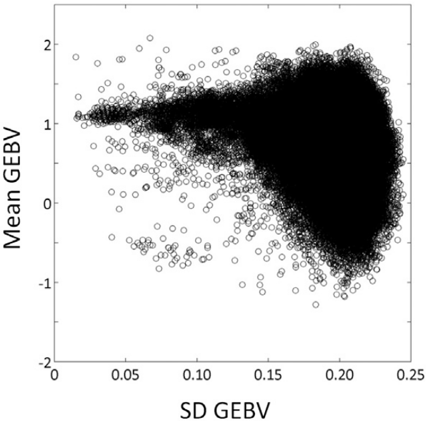
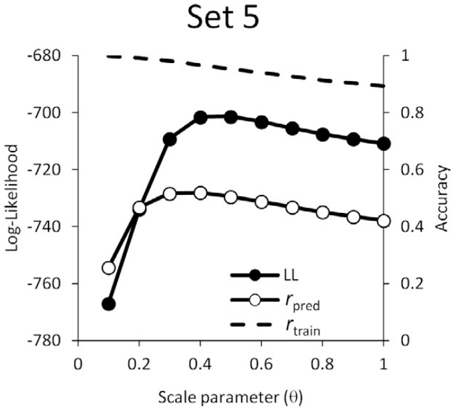
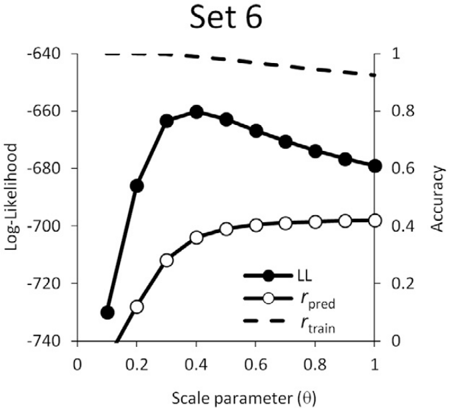
Verification
Claims the paper makes
The claims and statistics of this paper haven’t been checked yet.
Run the check — free, no account needed. It reads the open-access text and checks the sources it cites.
Claims other papers make about this one
Each is checked against this paper’s own text: does it say what the citing paper says it does?
The cited source says what the claim attributes to it.
In the citing paper
“Endelman (2011) developed the R -package rrBLUP that allows convenient restricted maximum likelihood (REML) estimation of the bandwidth, but only in the context of LMMs with a single genetic variance component, i.e., no G × E or G × E × M interaction models.”
From REML implementations of kernel-based genomic prediction models for genotype x environment x management interactions (2025) · cites this paper as Endelman (2011)
Self-check
Percentages, sums and reported differences re-computed from the paper’s own numbers.
The self-check needs the paper’s full text.
Citations
Cites
R: A Language and Environment for Statistical Computing
R Core Team (2000) · doi:10.32614/r.manuals · Cited by 355,893
Schölkopf, B., & Smola, A. J. (2001) · The MIT Press eBooks · doi:10.7551/mitpress/4175.001.0001 · Cited by 11,934
Prediction of Total Genetic Value Using Genome-Wide Dense Marker Maps
Meuwissen, T. H. E., Hayes, B. J., & Goddard, M. E. (2001) · Genetics · doi:10.1093/genetics/157.4.1819 · Cited by 7,917
TASSEL: software for association mapping of complex traits in diverse samples
Bradbury, P. J., Zhang, Z., Kroon, D. E., Casstevens, T. M., Ramdoss, Y., & Buckler, E. S. (2007) · Bioinformatics · doi:10.1093/bioinformatics/btm308 · Cited by 7,785
Ridge Regression: Biased Estimation for Nonorthogonal Problems
Hoerl, A. E., & Kennard, R. W. (2000) · Technometrics · doi:10.2307/1271436 · Cited by 7,001
Learning With Kernels: Support Vector Machines, Regularization, Optimization, and Beyond
Williams, C. K. I. (2003) · Journal of the American Statistical Association · doi:10.1198/jasa.2003.s269 · Cited by 4,390
Yu, J., Pressoir, G., Briggs, W. H., Bi, I. V., Yamasaki, M., Doebley, J., McMullen, M. D., Gaut, B. S., Nielsen, D. M., Holland, J. B., et al. (2005) · Nature Genetics · doi:10.1038/ng1702 · Cited by 4,155
Browning, S. R., & Browning, B. L. (2007) · The American Journal of Human Genetics · doi:10.1086/521987 · Cited by 3,217
Efficient Control of Population Structure in Model Organism Association Mapping
Kang, H. M., Zaitlen, N., Wade, C. M., Kirby, A. W., Heckerman, D. E., Daly, M. J., & Eskin, E. (2008) · Genetics · doi:10.1534/genetics.107.080101 · Cited by 1,869
Genomic Selection for Crop Improvement
Heffner, E. L., Sorrells, M. E., & Jannink, J. (2009) · Crop Science · doi:10.2135/cropsci2008.08.0512 · Cited by 1,753
Research works printed but not linked: 3
- Bernardo, 2010, Quantitative traits in plant breeding
- SAS Institute, 1994, SAS 9.2 for Windows
- Searle, 2006, Variance components
Cited by
Sorted by citations
Items 1,001–1,001 of 1,001
Melsen, K. A. C., Gezan, S., Tolhurst, D. J., van Eeuwijk, F. A., & Peeters, C. F. W. (2025) · arXiv · doi:10.48550/arxiv.2501.06844 · Cited by 3
“Other approaches typically involve cross-validation, some sort of grid-search, optimization before fitting the LMM, or are restricted to simple GBLUP models (P´erez-Elizalde et al. , 2015; Endelman, 2011).”
Metadata
- Authors
- Endelman, J. B.
- Affiliations
- Washington State University (US)
- Corresponding author
- Endelman, Jeffrey B.
- ORCID
- Endelman, Jeffrey B.
- Venue
- The Plant Genome
- Publisher
- Wiley
- Published
- 2011-11
- Volume
- 4
- Issue
- 3
- Pages
- 250-255
- ISSN
- 1940-3372 (ISSN-L)
- OpenAlex
- W2064013109
- Cited by
- 2,094
- References
- 29
- Citations by year
- 2026: 198 · 2025: 202 · 2024: 204 · 2023: 206 · 2022: 226 · 2021: 234 · 2020: 204 · 2019: 144 · 2018: 110 · 2017: 112 · 2016: 99 · 2015: 82 · 2014: 36 · 2013: 23 · 2012: 9
- FWCI
- 14.37
- Type
- journal article
- Language
- en
- Open access
- gold
- doi.org
- Licence
- cc-by-nc-nd
- doi.wiley.com/10.1002/tdm_license_1.1 (tdm)
- Locations
- The Plant Genome (publishedVersion, cc-by-nc-nd)
- DOAJ (DOAJ: Directory of Open Access Journals) (submittedVersion, cc-by-sa)
- Topics
- Life Sciences › Biochemistry, Genetics and Molecular Biology › Genetics › Genetic and phenotypic traits in livestock
- Life Sciences › Biochemistry, Genetics and Molecular Biology › Genetics › Genetic Mapping and Diversity in Plants and Animals
- Life Sciences › Agricultural and Biological Sciences › Plant Science › Genetics and Plant Breeding
- Keywords
- genomic selection, ridge regression, BLUP, Gaussian kernel, breeding value estimation, plant breeding, wheat grain yield, cross-validation
About these checks
Registry, retraction, Cites and statistics results are computed, not judged, with one exception: a printed reference that no index lists is read once by a model before it counts as a citation error. Claims are extracted by a model and kept only when their quote appears verbatim in the text; each cited source is then checked, with a model’s help, for whether it says what the claim relies on. Those verdicts can be wrong — read the claim’s quote and the cited source before relying on one.
Statistics and arithmetic are recomputed, not judged.
Confidence bands are shown only for fields calibrated on our annotated test set. None is calibrated yet, so no band is shown.
What counts as a claim ›How we measure confidence ›How we check this ›
Are you an author, or do you see a problem with this page? Request a review
