

The DOI matches its Crossref record; 67 of the 67 references it cites were found in a registry or an index.
Risk factors associated with stress, anxiety, and depression among university undergraduate students
Open accessAbstract
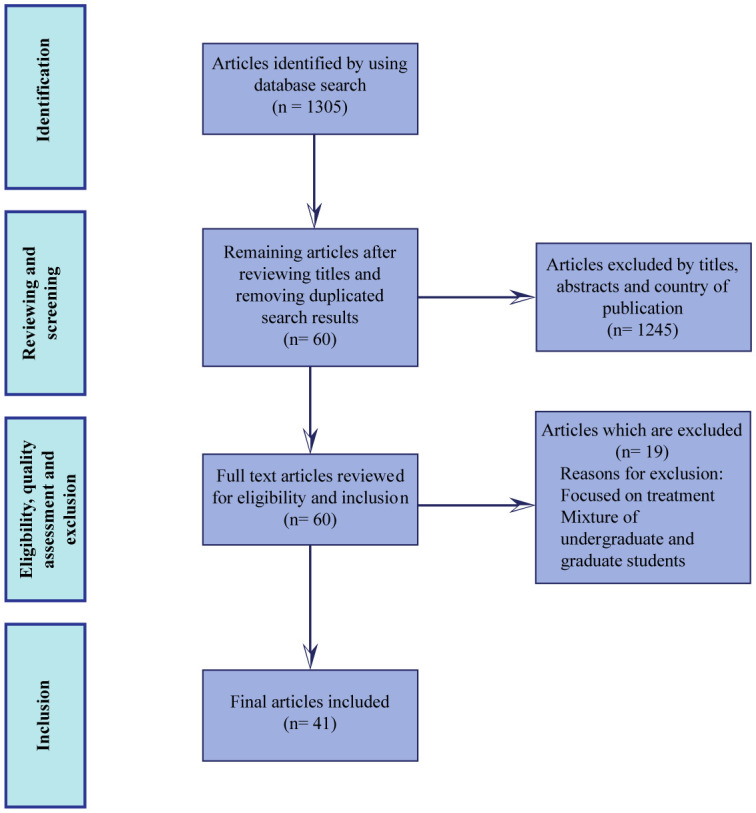
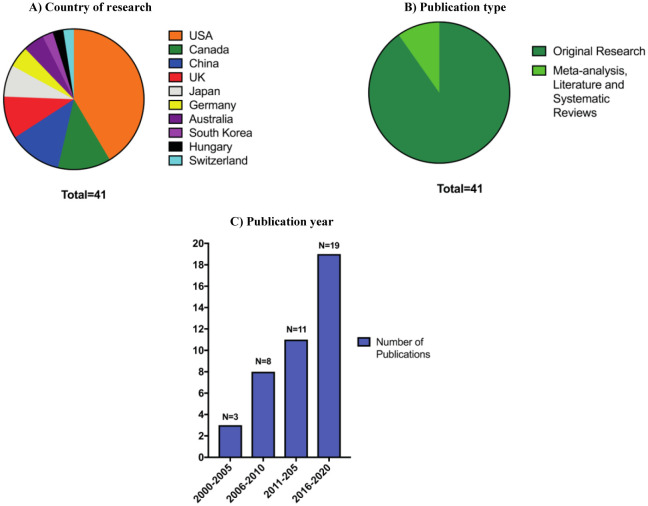
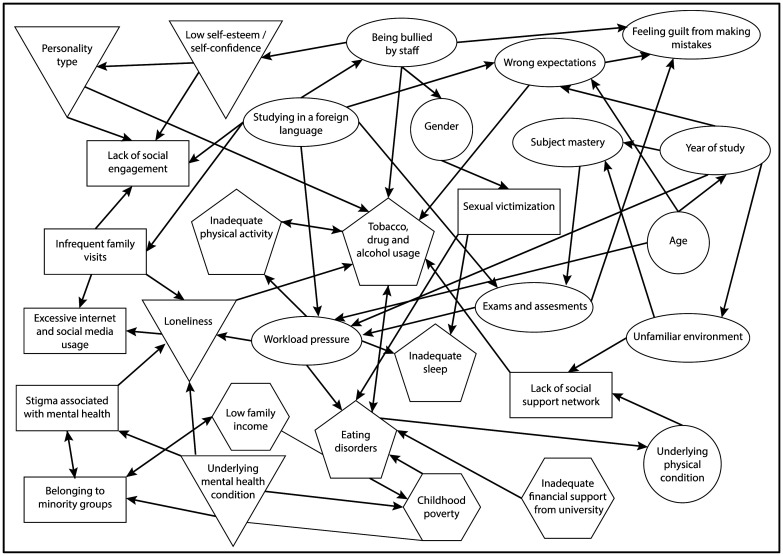
It is well-known that prevalence of stress, anxiety, and depression is high among university undergraduate students in developed and developing countries. Students entering university are from different socioeconomic background, which can bring a variety of mental health risk factors. The aim of this review was to investigate present literatures to identify risk factors associated with stress, anxiety, and depression among university undergraduate students in developed and developing countries. I identified and critically evaluated forty-one articles about risk factors associated with mental health of undergraduate university students in developed and developing countries from 2000 to 2020 according to the inclusion criteria. Selected papers were analyzed for risk factor themes. Six different themes of risk factors were identified: psychological, academic, biological, lifestyle, social and financial. Different risk factor groups can have different degree of impact on students' stress, anxiety, and depression. Each theme of risk factor was further divided into multiple subthemes. Risk factors associated with stress, depression and anxiety among university students should be identified early in university to provide them with additional mental health support and prevent exacerbation of risk factors.
Overview
The claims and statistics of this paper haven’t been checked yet.
Run the check — free, no account needed. It reads the open-access text and checks the sources it cites.
Integrity signals
Registry
Cites
Statistics
Figures
Verification
Claims the paper makes
The claims and statistics of this paper haven’t been checked yet.
Run the check — free, no account needed. It reads the open-access text and checks the sources it cites.
Claims other papers make about this one
Each is checked against this paper’s own text: does it say what the citing paper says it does?
The cited source says what the claim attributes to it.
In the citing paper
“Student well-being poses a growing and pressing concern, given increases in rates of depression and suicide among students (Mofatteh, 2021).”
From A Scoping Review of Acceptance and Commitment Therapy in Higher Education (2024) · cites this paper as Mofatteh, 2021
In the citing paper
“All these stressors would aggravate the individuals’ risks of anxiety, depression, and even suicidal behaviors [ 23 ].”
From Anxiety and Depression Symptoms among Youth Survivors of Childhood Sexual Abuse: A Network Analysis (2023) · cites this paper as [23]
Self-check
Percentages, sums and reported differences re-computed from the paper’s own numbers.
The self-check needs the paper’s full text.
Citations
Cites
An Introduction to the Five‐Factor Model and Its Applications
McCrae, R. R., & John, O. P. (1992) · Journal of Personality · doi:10.1111/j.1467-6494.1992.tb00970.x · Cited by 6,835
A systematic review of studies of depression prevalence in university students
Ibrahim, A. K., Kelly, S. J., Adams, C. E., & Glazebrook, C. (2013) · Journal of Psychiatric Research · doi:10.1016/j.jpsychires.2012.11.015 · Cited by 1,988
Mental health problems and help-seeking behavior among college students
Hunt, J., & Eisenberg, D. (2010) · Journal of Adolescent Health · doi:10.1016/j.jadohealth.2009.08.008 · Cited by 1,949
Blanco, C., Okuda, M., Wright, C., Hasin, D. S., Grant, B. F., Liu, S.-M., & Olfson, M. (2008) · Archives of General Psychiatry · doi:10.1001/archpsyc.65.12.1429 · Cited by 1,582
Psychological distress in university students: A comparison with general population data
Stallman, H. M. (2010) · Australian Psychologist · doi:10.1080/00050067.2010.482109 · Cited by 1,372
College Students: Mental Health Problems and Treatment Considerations
Pedrelli, P., Nyer, M., Yeung, A., Zulauf, C., & Wilens, T. (2015) · Academic Psychiatry · doi:10.1007/s40596-014-0205-9 · Cited by 1,325
Medical Student Distress: Causes, Consequences, and Proposed Solutions
Dyrbye, L. N., Thomas, M. R., & Shanafelt, T. D. (2005) · Mayo Clinic Proceedings · doi:10.4065/80.12.1613 · Cited by 1,142
Social support and mental health among college students.
Hefner, J., & Eisenberg, D. (2009) · American Journal of Orthopsychiatry · doi:10.1037/a0016918 · Cited by 810
Persistence of mental health problems and needs in a college student population
Zivin, K., Eisenberg, D., Gollust, S. E., & Golberstein, E. (2009) · Journal of Affective Disorders · doi:10.1016/j.jad.2009.01.001 · Cited by 784
Stress and Quality of Life Among University Students: A Systematic Literature Review
Ribeiro, Í. J. S., Pereira, R., Freire, I. V., de Oliveira, B. G., Casotti, C. A., & Boery, E. N. (2018) · Health Professions Education · doi:10.1016/j.hpe.2017.03.002 · Cited by 684
Cited by
Sorted by citations
Items 501–559 of 559
Parimah, F., Amenuke-Edusei, M., Nyarko, J., Agyemang, C. B., Bobo, E. K., Addy, A., Osei, P. A. T., Essien, B., Oti, G. O., Yamson, E. D., et al. (2026) · PLOS mental health. · doi:10.1371/journal.pmen.0000381
Mahadevaswamy, M., Nathawat, S., Chatterjee, N., & Bansal, N. (2026) · Research Square · doi:10.21203/rs.3.rs-9880084/v1
Hein, Z. M., Spaska, A., Jasim, A. D. N., Hamid, H. A., Jaffer, U., & Nassir, C. M. N. C. M. (2026) · International Journal of Environmental Research and Public Health · doi:10.3390/ijerph23060738
Does Depression Influence Academic Stress Among University Students Through Anxiety?
Kibtiyah, A., Muaz, Y. A., Barhordin, A., Umam, K., Widiyati, E., & Mustafida, F. (2026) · Bulletin of Counseling and Psychotherapy · doi:10.51214/002026081716000
Thi, N. D., & T, T. (2026) · Discover Social Science and Health · doi:10.1007/s44155-026-00433-3
Zhumagulova, N., Mireeva, A., Akhelova, S., Koshkimbayeva, G., Askarova, A., Taipova, M., Amirkhanova, A., Kartbayeva, E., Kudaibergenova, B., Кошербеков, Е. Т., et al. (2026) · Healthcare · doi:10.3390/healthcare14121708
Senosy, A. M. K., Sallam, G. S., Fattah, H. A. A., Sharkawi, S. S. E., Ahmed, Z. A., Maki, S., Zafar, I., Awar, S. A. A. R. A., & Magzoub, M. E. (2026) · F1000Research · doi:10.12688/f1000research.173432.3
Mistry, U., & Tran, V. (2026) · Research in Post-Compulsory Education · doi:10.1080/13596748.2026.2692209
Future Orientation Scale: A Psychometric Evaluation Across Health-Vulnerable Samples
Altier, H. R., Sirois, F. M., Jeglic, E. L., & Hirsch, J. K. (2026) · Assessment · doi:10.1177/10731911261451782
Rostami, S., Bermudo-Gallaguet, A., Camins-Vila, N., Ferrer-Uris, B., Busquets, A., Vía, M., & Mataró, M. (2026) · Psychoneuroendocrinology · doi:10.1016/j.psyneuen.2026.107946
Buffering Teacher Distress: Co-Worker Support and Psychological Capital as Protective Resources
Kocar, M., & Seki, T. (2026) · Türk Psikolojik Danışma ve Rehberlik Dergisi · doi:10.17066/tpdrd.1806289
Makhele, L., Mphasha, M. H., Sukati, V. N., Govender, S., Wasonga, J., Ouma, A. A., Bangalee, V., Oosthuizen, F., Grootboom, W., Padayachee, N., et al. (2026) · Social Sciences & Humanities Open · doi:10.1016/j.ssaho.2026.103190
Bulut, A. (2026) · Journal of College Student Mental Health · doi:10.1080/28367138.2026.2697074
Stratton, R., & Sandbulte, J. (2026) · Lecture notes in computer science · doi:10.1007/978-3-032-30405-6_14
A dichotomous structure does not capture the coping behavior of emerging adults
Trumbach, L. M. D., & Roesch, S. C. (2026) · Journal of American College Health · doi:10.1080/07448481.2026.2685591
Mitchell, J., van der Westhuizen, C., & Sorsdahl, K. R. (2026) · BMJ Open · doi:10.1136/bmjopen-2026-119398
Tandon, M., & Dhoble, S. (2026) · International Journal of Community Medicine and Public Health · doi:10.18203/2394-6040.ijcmph20262339
Psychological interventions and academic performance in higher education: a systematic review
Fialho, J. M., Santos, O., de Arriaga, M. T., Paixão, C., Batista, P., & Pereira, A. (2026) · Academia Mental Health and Well-Being · doi:10.20935/mhealthwellb8431
Santé des étudiants : plus d’un sur deux entre à l’université avec une fragilité physique ou mentale
Crombez, L., Coquart, J. B., & Llena, C. (2026) · doi:10.64628/aak.msg7haxdf
Guo, R., Yuan, Z., Yan, W., Huang, Z., Rong, R., Liu, Y., Zhouguo, Y., Abdul, M., Li, Y., Feng, G., et al. (2026) · Frontiers in Psychology · doi:10.3389/fpsyg.2026.1801247
Negash, K. H., Osman, A. A., Abdilahi, A. M., Omar, F. M., Guelleh, O. S., Farah, M. A., & Shegere, M. M. (2026) · BMC Psychiatry · doi:10.1186/s12888-026-08438-7
Julianto, V., Putri, S. A., Nurhudaya, D. R. P., Widyawati, W., & Permadani, N. N. (2026) · Mental Health Religion & Culture · doi:10.1080/13674676.2025.2551983
Viljoen, A.-J., & Padmanabhanunni, A. (2026) · South African Journal of Psychology · doi:10.1177/00812463261468474
Ribeiro, A. J., & Padovan‐Neto, F. E. (2026) · Current Psychology · doi:10.1007/s12144-026-09830-y
Exploring Different Types of Career Anxiety Among Young Adults: A Latent Profile Analysis
Ciminli, A., & Aydın, B. (2026) · The Career Development Quarterly · doi:10.1002/cdq.70036 · Cited by 1
Patil, J. A., Singh, J., Rani, R., & Bansal, P. (2026) · Lecture notes in networks and systems · doi:10.1007/978-3-032-28307-8_24
From Art Therapy to Art Healing: Solutions for College Students’ Mental Health: A Review
Song, Y., Chen, C., & Wang, Z. (2026) · Arts · doi:10.3390/arts15080180
Self Regulated Learning and Spiritual Practices Alleviate Educational Stress
Salim, Y. N., & Wahidin, W. (2026) · Academia Open · doi:10.21070/acopen.11.2026.14871
Exploring Stress and Anxiety in University Settings: (Study and its Assessment)
Fazil, A., Agarwal, P., & Anas, M. (2026) · Innovations in Sustainable Technologies and Computing · doi:10.1007/978-3-032-22830-7_38
Méndez, R. M. Y., Escobar-Agreda, S., Villarreal‐Zegarra, D., Flores, W. M. T., Sánchez-Broncano, J., Cordova, J. H. O., Alvarez-Yslado, C., & Rojas-Mezarina, L. (2026) · F1000Research · doi:10.12688/f1000research.169745.1
Alves, N. V., SANT’ANA, G. A., Carrozza, J. F., Oliveira, G. M., Santos, C. F., & Calvo, A. M. (2026) · Pharmacy · doi:10.3390/pharmacy14050118
Pareek, S., Jain, G., & Nagar, R. (2026) · Journal of Technology in Behavioral Science · doi:10.1007/s41347-026-00700-9
Global Prevalence of Depression Among University Students: A Comprehensive Umbrella Review
Sam, G. Y. K., Soh, X. C., Balaji, H., Tan, G. X. D., Diong, S. F., Hu, M., Hartanto, A., & Majeed, N. M. (2026) · Education Sciences · doi:10.3390/educsci16081316 · Cited by 1
Patrick, S. C., Akyala, I., Efe, E. E., & Aremu, S. O. (2026) · Discover Public Health · doi:10.1186/s12982-026-02084-w · Cited by 1
Guay, F., Gilbert, W., & Bureau, J. S. (2026) · Emerald Group Publishing Limited eBooks · doi:10.1108/978-1-80686-869-820261011
Association between menstrual cycle characteristics and mental health in early adolescence
Marla, S., Gangaraju, S. H., Nguyen, J., Sarasjärvi, K. K., Ye, R. R., Schmaal, L., Thompson, A., Clark, S. R., Lin, A. P., Wigman, J. T. W., et al. (2026) · European Child & Adolescent Psychiatry · doi:10.1007/s00787-026-03163-8
Strategies for using humor in undergraduate nursing education: A scoping review
Haydon, G., Hazell, L., & Reis, J. (2026) · Teaching and learning in nursing · doi:10.1016/j.teln.2026.07.026
Mofatteh, M. (2026) · Research Square · doi:10.21203/rs.3.rs-10643222/v1
Self-citationYin, J., Fan, M., Sun, X., Ji, Y., & He, X. (2026) · Frontiers in Psychiatry · doi:10.3389/fpsyt.2026.1927040
Aslan, M., NAMLI, S., & Ateş, F. (2026) · Journal of Education and Future · doi:10.30786/jef.1853702
Rodriguez‐Mateos, A., Kamarunzaman, N. N. Z., Lu, T., Baya, M., Powell, C., Li, Y., Mesnage, R., Alharbi, A., Halket, J. M., Caldwell, A., et al. (2026) · Research Square · doi:10.21203/rs.3.rs-10739217/v1
Vivekanandan, N., Daniel, R. A., Yuvraj, S., Varadharajulu, P., Ganesh, R., & Upadhyay, S. (2026) · International Journal of Preventive Medicine · doi:10.4103/ijpvm.ijpvm_309_25
Owuor, D. C., Gatotoh, A. M., Omungo, R. M., & OTIENO, G. A. (2026) · Primary Health Care Practice Journal · doi:10.11604/phcp.2026.6.1.52093
Promoting supportive strategies to enable nursing students to manage anxiety during their training
Seshabela, H. D., & Shakwane, S. (2026) · Curationis · doi:10.4102/curationis.v49i1.2866
Kaushik, D., & Bhat, R. (2026) · Journal of Bodywork and Movement Therapies · doi:10.1016/j.jbmt.2026.09.003
Coping Strategies With Stress of University Students: Individual Solutions and University Resources
Lebedeva-Nesevrya, N. A., Leukhina, A., & Bakhtiyarova, K. V. (2026) · University Management Practice and Analysis · doi:10.15826/umpa.2026.02.006
Teh, Y. S., Kan, K. C., Low, C. S., & Ng, A. J. Q. (2026) · Discover Public Health · doi:10.1186/s12982-026-02635-1
Kabul, E., & Karagöz, Y. (2026) · International Journal of Health Care Quality Assurance · doi:10.1108/ijhcqa-09-2025-0131
Zihad, A., & Halder, S. (2026) · Journal of Social Science and Multidisciplinary Enquiry · doi:10.65496/jssme.2026.105
Indoor Biophilic Design for Higher Education Environments: A Systematic Mixed-Methods Review
Niu, Y., & Ma, H. (2026) · Buildings · doi:10.3390/buildings16183665
Yana, M., SAHMAN, M., & Güneş, M. (2026) · Ergoterapi ve Rehabilitasyon Dergisi · doi:10.30720/ered.1906568
bashaija, A., Aja, L., Otitoju, A. M., Faith, U., Bwema, K., Bahebwa, G., & Kiyundo, Z. (2026) · F1000Research · doi:10.12688/f1000research.190346.1
Análise da depressão e ansiedade em estudantes universitários: estudo transversal
Silva, R. S., Ferreira, R., Filho, A. C. A. D. A., de Oliveira, A. L. C. B., Neto, J. C. G. L., Almeida, P. D., Alves, H. L. C., & Monteiro, A. K. D. C. (2026) · Jornal Brasileiro de Psiquiatria · doi:10.1590/0047-2085-2025-0081
Mohamad, N., Miles, R., Krishnan, A., Kaufman, B., Lee, S., Sash, S., & Rabin, L. (2026) · Frontiers in Education · doi:10.3389/feduc.2026.1971647
Nguyen, P. (2026) · Entrepreneurship Education · doi:10.1007/s41959-026-00194-9
Arpaci, R., KABAKOĞLU, H., & Tanrıverdi, D. (2026) · Journal of Psychosocial Nursing and Mental Health Services · doi:10.3928/02793695-20261008-01
Moonajilin, M. S., Islam, R. U., Taher, L., Noshin, F., Taher, T., & Kamal, S. (2026) · Health Expectations · doi:10.1111/hex.70933
Saintila, J., Ruiz-Mamani, P. G., Espinoza, M. E. B., & Calizaya-Milla, Y. E. (2026) · SAGE Open · doi:10.1177/21582440261493125
Schiel, A. L., Hug, J., Kohls, E., Prado, A. D. S., & Rummel‐Kluge, C. (2026) · Research Square · doi:10.21203/rs.3.rs-10960544/v1
Metadata
- Authors
- Mofatteh, M., Lincoln College, U. O. O., Merton College, U. O. O., & Sir William Dunn School of Pathology, U. O. O.
- Affiliations
- University of Oxford (GB)
- Corresponding author
- Mofatteh, Mohammad
- ORCID
- Mofatteh, Mohammad
- Venue
- AIMS Public Health
- Published
- 2021
- Volume
- 8
- Issue
- 1
- Pages
- 36-65
- ISSN
- 2327-8994 (ISSN-L)
- PMC
- PMC7870388
- OpenAlex
- W3118086842
- Cited by
- 561
- References
- 67
- Citations by year
- 2026: 102 · 2025: 190 · 2024: 132 · 2023: 96 · 2022: 29 · 2021: 12
- FWCI
- 51.66
- Type
- journal article
- Language
- en
- Open access
- gold
- doi.org
- Licence
- cc-by
- Locations
- AIMS Public Health (publishedVersion, cc-by)
- PubMed Central (publishedVersion, cc-by)
- PubMed (publishedVersion)
- DOAJ (DOAJ: Directory of Open Access Journals) (submittedVersion, cc-by-sa)
- Topics
- Social Sciences › Psychology › Developmental and Educational Psychology › Student Stress and Coping
- Health Sciences › Health Professions › General Health Professions › Healthcare professionals’ stress and burnout
- Health Sciences › Medicine › Psychiatry and Mental health › Mental Health Treatment and Access
- Keywords
- stress, anxiety, depression, undergraduate students, mental health risk factors, academic stress, financial stress, social stress, lifestyle factors, biological risk factors, psychological risk factors, mental health support, developed and developing countries
About these checks
Registry, retraction, Cites and statistics results are computed, not judged, with one exception: a printed reference that no index lists is read once by a model before it counts as a citation error. Claims are extracted by a model and kept only when their quote appears verbatim in the text; each cited source is then checked, with a model’s help, for whether it says what the claim relies on. Those verdicts can be wrong — read the claim’s quote and the cited source before relying on one.
Statistics and arithmetic are recomputed, not judged.
Confidence bands are shown only for fields calibrated on our annotated test set. None is calibrated yet, so no band is shown.
What counts as a claim ›How we measure confidence ›How we check this ›
Are you an author, or do you see a problem with this page? Request a review
