

The DOI matches its Crossref record.
The first oases in Eastern Arabia: society and craft technology, in the 3rd millennium BC at Hili, United Arab Emirates
Abstract
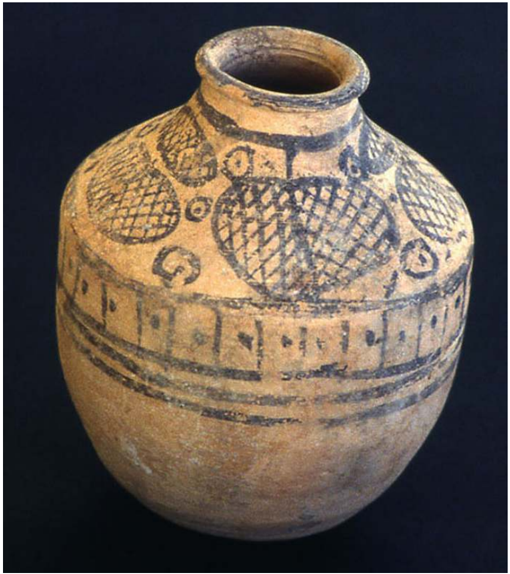
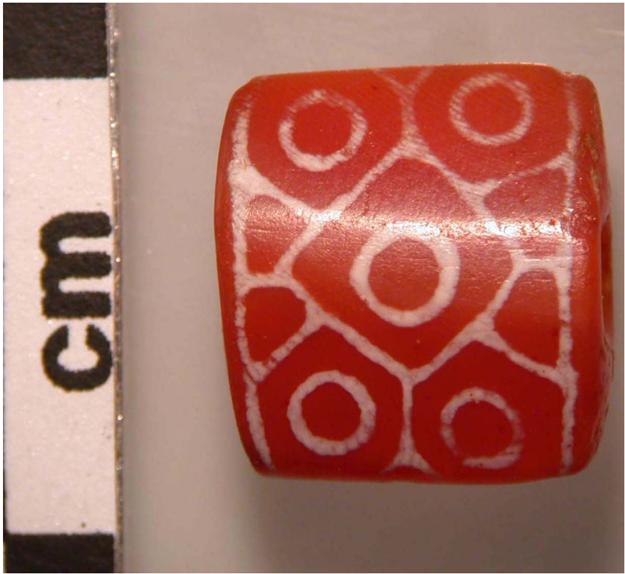
Dans la péninsule d’Oman, le iiie millénaire voit apparaître et se développer les premières oasis agricoles. Ce processus, complexe et encore mal compris, s’accompagne d’évolutions profondes dans le domaine économique et social. Ainsi, dans la sphère artisanale, on assiste à diverses transformations, en particulier au sein des pyro-technologies. Ces changements favorisent l’émergence d’un nouveau type de société, qui atteindra son apogée au cours du dernier tiers du iiie millénaire, à la fin de l’âge du Bronze ancien, puis se transforme et décline vers 2100 avant J.-C. Un siècle environ plus tard, une société différente par bien des aspects émerge, mais dont l’économie de subsistance continuera de reposer sur le système oasien - sauf dans les habitats côtiers et les haltes/lieux de chasse.L’analyse proposée ici est centrée sur un exemple, celui de l’oasis de Hili dans l’émirat d’Abou Dhabi, car c’est le site sur lequel le plus d’études spécialisées ont été réalisées jusqu’à présent, des études partiellement publiées que l’auteur de cet article a menées ou auxquelles elle a pris part.
Overview
The claims and statistics of this paper haven’t been checked yet.
Run the check — free, no account needed. It reads the open-access text and checks the sources it cites.
Integrity signals
Registry
Cites
Statistics
Figures
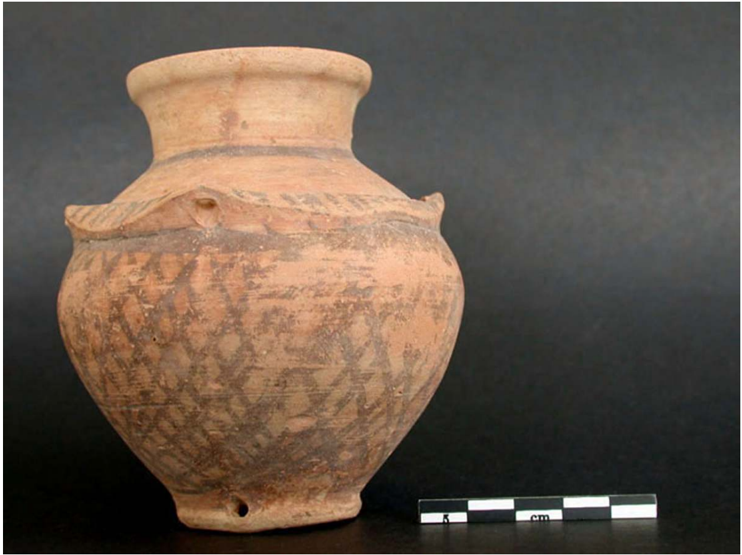
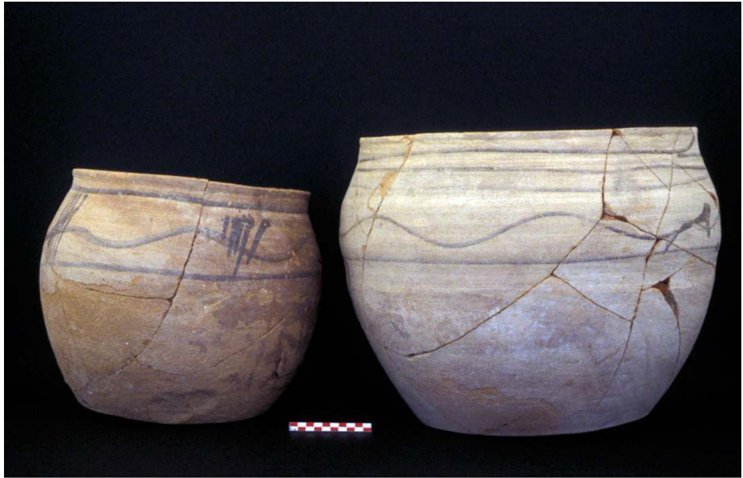
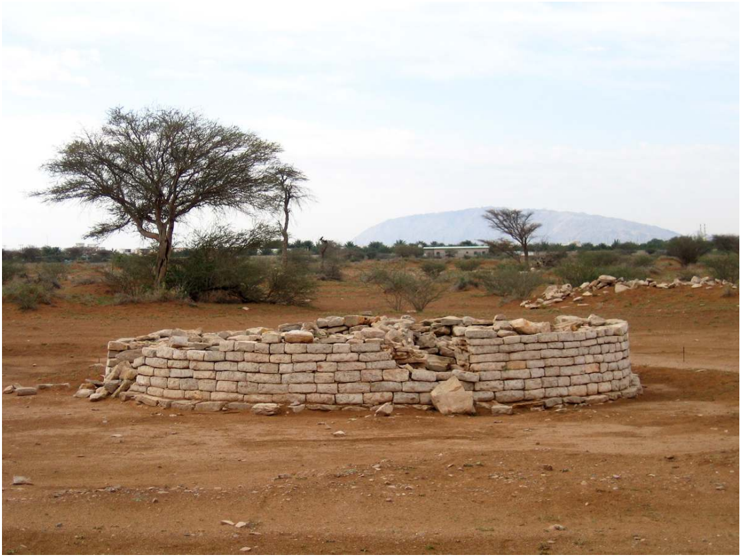
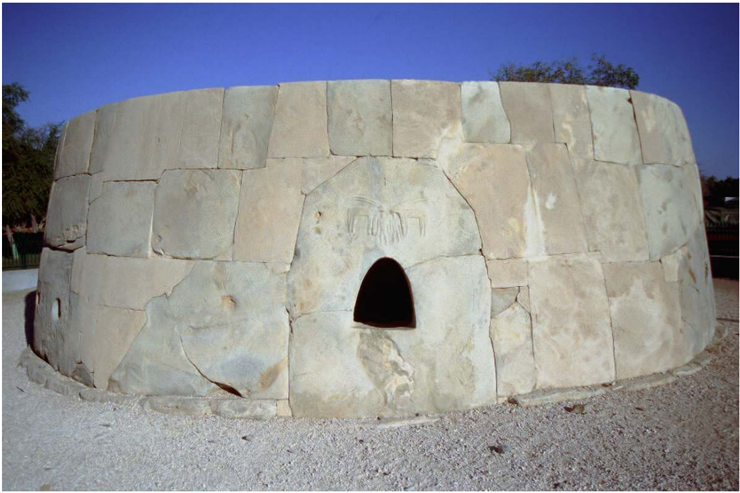
Verification
Claims the paper makes
The claims and statistics of this paper haven’t been checked yet.
Run the check — free, no account needed. It reads the open-access text and checks the sources it cites.
Claims other papers make about this one
Each is checked against this paper’s own text: does it say what the citing paper says it does?
The source backs part of the claim, not all of it — or backs it for a different population, condition or comparison.
In the citing paper
“Pottery technology in southeastern Arabia was adopted at a relatively fast pace during the early-mid third millennium BC, within the context of other pyrotechnologies, such as metalworking, as well as the movement of imported pottery and possibly craftspeople from the Indo-Iranian region and Mesopotamia [16–20,150].”
From Identifying pastoral and plant products in local and imported pottery in Early Bronze Age southeastern Arabia (2025) · cites this paper as [18]
Experimental — accuracy not yet measuredIn the citing paper
“Early locally-produced pottery in southeastern Arabia appears to be influenced by ceramic technologies from the Indo-Iranian borderlands [15–20].”
From Identifying pastoral and plant products in local and imported pottery in Early Bronze Age southeastern Arabia (2025) · cites this paper as [18]
Self-check
Percentages, sums and reported differences re-computed from the paper’s own numbers.
The self-check needs the paper’s full text.
Citations
Cites
No references could be resolved yet.
Research works printed but not linked: 36
- Al-Jahwari N. S. 2009 – The agricultural basis of Umm an-Nar society in the northern Oman peninsula. Arabian Archaeology and epigraphy : 20: 122-133. · DOI · Paper page
- Azzara V.M. 2009 – Domestic architecture at the Early Bronze Age sites HD-6 -2 and RJ-2 (Ja'alan, Sultanate of Oman). Proceedings of the Seminar for Arabian Studies 39: 1-16.
- Beech M. & Shepherd E. 2001 – Archaeobotanical evidence for early date consumption on Dalma Island, United Arab Emirates. Antiquity , 75, 287: 83-9. · DOI
- Benton J. N. & Potts D. T. (Ed.) 1994 – Jabal al-Emalah /1993/4. Report compiled for the Department of Culture and Information, Government of Sharjah, United Arab Emirates, 90 p.
- Bessac J.-C. & Dubeuf P. forthcoming – La construction des tombeaux en pierre à Hili. In Méry S. (Ed.) avec des contributions de P. Dubeuf, A. Berthelot, J.-C. Bessac, O. Brunet, A. Dupont-Delaleuf, C. Gagnaison, W.Y. al Tikriti. Les productions artisanales de la fin du 3e millénaire à Hili (Al Ain). Travaux de la Mission archéologiques française aux Émirats Arabes Unis, 1998-2006. BAR International Series.
- 10.1080/00438240600708188 · DOI
- Bondioli L., Coppa A. & Macchiarelli R. 1998 – From the coast to the oasis in Prehistoric Arabia: what the human osteodental remains tell us about the transition from a foraging to the exchange economy? Evidence from Ra's Al Hamra (Oman) and Hili North (U.A.E.). In Tosi M. (Ed.), Proceedings of the XIII -congress 8- 5-14 sept. 1996, International Union of Prehistoric and Protohistoric Sciences, vol. 5, A.B.A.C.O., Forli, p. 229-234.
- Carter R. 2002 – Preliminary report on Unar 2 and its ceramics. Bulletin of the Society for Arabian Studies: 5-14. · DOI
- Charpentier V. 2008 – Hunter-gatherers of the “empty quarter of the early Holocene” to the last Neolithic societies: chronology of the late prehistory of south-eastern Arabia (8000–3100 BC). Proceedings of the Seminar for Arabian Studies 38: 93–116.
- Cleuziou S. 1989 – The chronology of protohistoric Oman as seen from Hili. In Costa P. M. & Tosi M. (Ed.), Oman Studies, Serie Orientale Roma LXIII, IsMEO, Rome: 47-78.
- Cleuziou S. 2002 – Présence et mise en scène des morts à l'usage des vivants dans les communautés protohistoriques : l'exemple de la Péninsule d'Oman à l'âge du Bronze ancien. In Molinos M. & Ziffereo A. (Ed.) Primi Popoli d'Europa. Proposte e riflessioni sulle origini della civilta nell'Europa mediterranea, All'Insegna del Giglio, Florence: 17-31.
- 10.3406/paleo.1980.4278 · DOI · Paper page
- Cleuziou S. & Méry S. 2002 – In between the great powers. In Cleuziou S., Tosi M. et Zarins J. (Ed.): Essays on the Late Prehistory of the Arabian Peninsula, Serie Orientale Roma, IIAO, Roma: 273-316.
- Cleuziou S. & Tosi M. 2000 – Ra's al-Jinz and the prehistoric coastal cultures of the Ja'alan. Journal of Oman Studies : 11: 19-73
- Cleuziou S., Vogt B. & Méry S. 2011 – Les premières tombes à chambres multiples : la tombe M de Hil. In Cleuziou S., Méry S. & Vogt B. Protohistoire de l'oasis d'Al Aïn, travaux de la Mission archéologique française à Abou Dhabi (Émirats arabes unis). Les sépultures de l'âge du bronze. BAR International Series : 2227 : 41-71. · DOI
- Costantini L. & Audisio P. 2000 – Plant and insect remains from the Bronze Age site of Ra's al-Jinz (RJ-2), Sultanate of Oman. Paléorient (26(1): 143-156. · DOI
- Frifelt K. 2002 – Bat, a centre in 3rd Millennium Oman. In Cleuziou S., Tosi M. & Zarins J. (Ed.) Essays on the Late Prehistory of the Arabian Peninsula. (Rome, Serie Orientale Roma , 93, Istituto italiano per l'Africa e l'Oriente): 101-110.
- Gagnaison C., Barrier P., Méry S. & al Tikriti W.Y. 2004 – Extractions de pierres à l'âge du Bronze à Hili (Émirat d'Abou Dhabi) et architecture funéraire. Revue d'Archéométrie : 28 : 97-108. · DOI
- Johnson A.W. & Earle T.K. 1987 – The evolution of human societies: from foraging group to agrarian state. Stanford, Stanford University Press, 440 p.
- Martin L., Mccorriston J. & Crassard R. 2009 – Early Arabian pastoralism at Manayzah in Wâdî Sanâ, Hadramawt. Proceedings of the Seminar for Arabian Studies, 39: 271-282.
- 10.1111/j.1600-0471.2007.00290.x · DOI
- McSweeney K., S. Méry & al Tikriti W.Y. 2010 – Life and death in an Early Bronze Age community from Hili, Al Ain, UAE. In Weeks L. (Ed.), Death & burial in Arabia and beyond, multidisciplinary perspectives, Oxford, BAR International Series 2107: 45-53.
- Méry S. 2010 – Results, limits and potential: burial practices and early Bronze Age societies in the Oman peninsula. In Weeks L.R. (Ed.) Death and burial in Arabia and beyond: multidisciplinary perspectives. Oxford, Archaeopress: 33-44.
- Méry S. & Blackman M.J. 2005 – Socio-economical patterns of a ceramic container : the Harappan black slipped jar. In Jarrige C. & Lefèvre V. (Ed.), South Asian Archaeology . 2001. Proceedings of the sixteenth international conference of the Association of South Asian Archaeologists. Paris, Éditions Recherche sur les Civilisations: 226-235.
- Méry S., Besenval R., Blackman M.J. & Didier A. 2012 – The origin of the 3rd millennium BC fine grey wares found in eastern Arabia: new evidence from archaeometry. Proceedings of the Seminar for Arabian Studies.
- 10.4000/nda.973 · DOI
- 10.1002/ajpa.22434 · DOI
- Potts D.T. 1986 – Eastern Arabia and the Oman Peninsula during the late fourth and early 3rd & millennium B.C. In Finkbeiner U. & Röllig W. (Ed.), Gamdat nasr, Period or regional style? Beihefte zum Tübinger Atlas des Vorderens Orients, Reihe B . n° 62. Wiesbaden, Dr. Ludwig Reichert: 121-170.
- Potts D.T. 1998 – Before the Emirates: an archaeological and historical account of developments in the region c. 5000 BC to 676 AD. In Ghareeb E. & Al Abed I. (Ed.), Perspectives on the United . Arab Emirates. London, Trident Press Ltd.: 36-73.
- Potts D. T. 2000 – Ancient Magan: The secrets of Tell Abraq. London, Trident Press Ltd., 144 p.
- 10.1016/j.jas.2011.02.023 · DOI
- Santini G. 1987 – Site RH-10 at Qurum and a preliminary analysis of its cemetery: an essay in stratigraphic discontinuity. Proceedings of the Seminar for Arabian Studies : 17: 179-198.
- Tengberg M. 2003 – Archaeobotany in the Oman Peninsula and the role of Eastern Arabia in the spread of African Crops In , Neumann K., Butler A. and Kahlheber S. (Ed.), Food,Fuel and Fields. Progress in African Archaeobotany. Africa Praehistorica. Monographien zur Archäologie und Umwelt Afrikas. Köln, Heinrich-Barth-Institut: 229-37.
- Uerpmann M., Uerpmann H.-P. & Jasim S.A. 2000 – Stone Age nomadism in SE-Arabia - paleo-economic considerations on the neolithic site of Al-Buhais 18 in the Emirate of Sharjah, U.A.E. Proceedings of the Seminar for Arabian Studies 30: 229-234.
- 10.1163/9789004495449 · DOI
- Willcox G. 1995 – Some plant impressions from Umm an-Nar Island. In Frifelt K. (Ed.) The Island of Umm an-Nar: vol. 2, the 3rd millennium settlement. Aarhus, Jutland Archaeological Society Publications , 26, Aarhus University Press: 257-259.
Cited by
Sorted by citations
Suryanarayan, A., Méry, S., Swerida, J., Esposti, M. D., Dollarhide, E., Döpper, S., Douglas, K. A., Eddisford, D., Al-Jahwari, N. S., Mazuy, A., et al. (2025) · PLOS One · doi:10.1371/journal.pone.0324661 · Cited by 3
Self-citation
Metadata
- Authors
- Méry, S.
- Venue
- Revue d’ethnoécologie
- Publisher
- OpenEdition
- Published
- 2013
- Volume
- 4
- ISSN
- 2267-2419
- Cited by
- 19
- References
- 0
About these checks
Registry, retraction, Cites and statistics results are computed, not judged, with one exception: a printed reference that no index lists is read once by a model before it counts as a citation error. Claims are extracted by a model and kept only when their quote appears verbatim in the text; each cited source is then checked, with a model’s help, for whether it says what the claim relies on. Those verdicts can be wrong — read the claim’s quote and the cited source before relying on one.
Statistics and arithmetic are recomputed, not judged.
Confidence bands are shown only for fields calibrated on our annotated test set. None is calibrated yet, so no band is shown.
What counts as a claim ›How we measure confidence ›How we check this ›
Are you an author, or do you see a problem with this page? Request a review
