

The DOI matches its Crossref record; 19 of the 20 references it cites were found in a registry or an index.
The impact of COVID-19 related lockdown on ophthalmology training programs in India – Outcomes of a survey.
Open accessAbstract
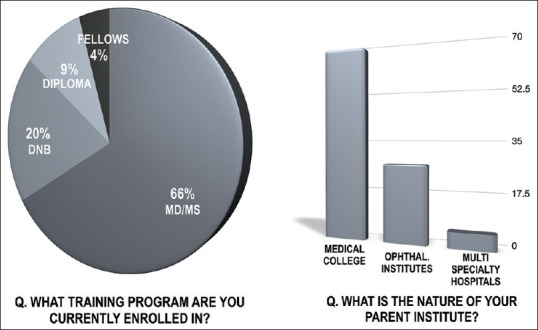
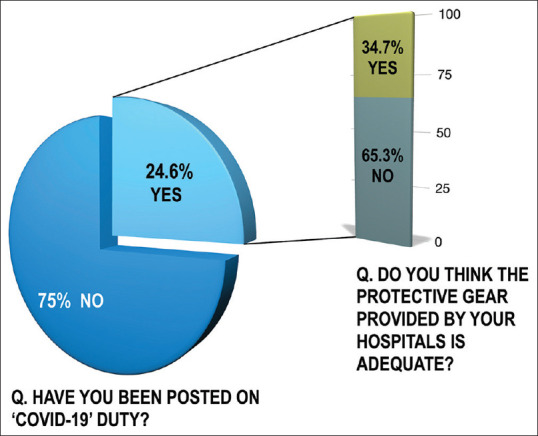
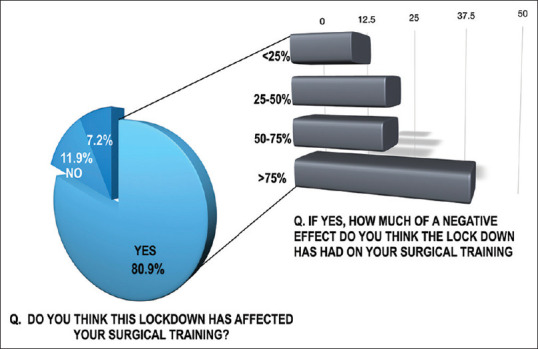
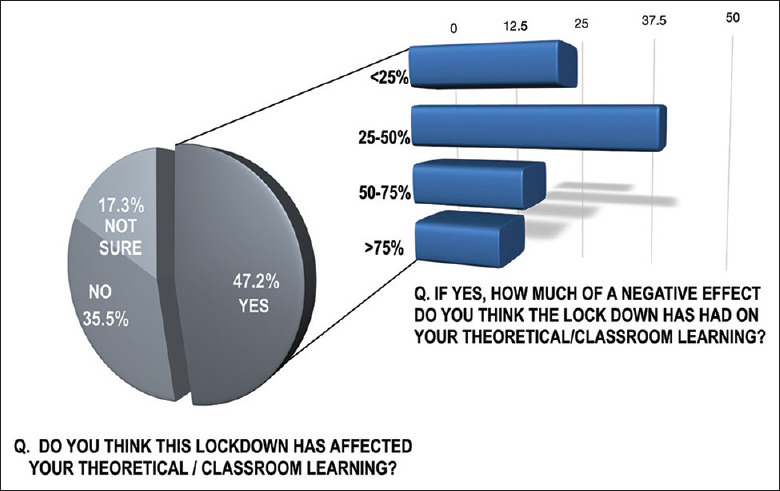
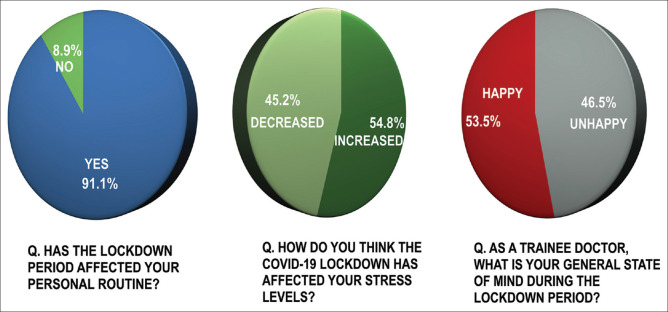
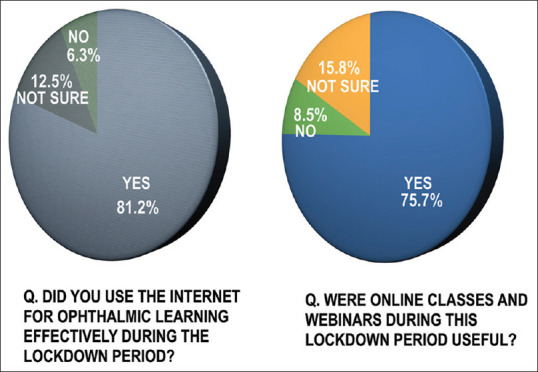
Purpose: In 2020, in response to the emergence and global spread of the disease COVID-19, caused by a new variant of coronavirus 2019-nCoV, the government of India ordered a nationwide lockdown for 21 days, which was then extended to a total of over 50 days. The aim of this study is to assess the effect of the lockdown on ophthalmic training programs across India. Methods: An online survey was sent across to trainee ophthalmologists across India through various social media platforms. Results: In all, 716 trainees responded; the average age was 29.1 years. Results showed that majority of the respondents were enrolled in residency programs (95.6%; 685/716) and the others were in fellowship programs. About 24.6% (176/716) of the trainees had been deployed on 'COVID-19 screening' duties. Nearly 80.7% (578/716) of the trainees felt that the COVID-19 lockdown had negatively impacted their surgical training. Furthermore, 54.8% (392/716) of the trainees perceived an increase in stress levels during the COVID-19 lockdown and 77.4% (554/716) reported that their family members had expressed an increased concern for their safety and wellbeing since the lockdown began. In all, 75.7% (542/716) of the respondents felt that online classes and webinars were useful during the lockdown period. Conclusion: Our survey showed that majority ophthalmology trainees across the country felt that the COVID-19 lockdown adversely affected their learning, especially surgical training. While most found online classes and webinars useful, the trainees' perceived stress levels were higher than normal during the lockdown. Training hospitals should take cognizance of this and reassure trainees; formulate guidelines to augment training to compensate for the lost time as well as mitigate the stress levels upon resumption of regular hospital services and training. Going ahead, permanent changes such as virtual classrooms and simulation-based training should be considered.
Overview
The claims and statistics of this paper haven’t been checked yet.
Run the check — free, no account needed. It reads the open-access text and checks the sources it cites.
Integrity signals
Registry
Cites
Statistics
Figures
Verification
Claims the paper makes
The claims and statistics of this paper haven’t been checked yet.
Run the check — free, no account needed. It reads the open-access text and checks the sources it cites.
Claims other papers make about this one
Each is checked against this paper’s own text: does it say what the citing paper says it does?
The source backs part of the claim, not all of it — or backs it for a different population, condition or comparison.
In the citing paper
“Researchers in India have reported an increase in anxiety and depression among Indians, owing to the pandemic (Goyal et al., 2020; Kumar and Nayar, 2020; Mishra et al., 2020; Rehman et al., 2020; Verma and Mishra, 2020).”
From Knowledge of COVID-19 and Its Influence on Mindfulness, Cognitive Emotion Regulation and Psychological Flexibility in the Indian Community (2020) · cites this paper as Mishra et al., 2020
Experimental — accuracy not yet measured
Self-check
Percentages, sums and reported differences re-computed from the paper’s own numbers.
The self-check needs the paper’s full text.
Citations
Cites
Lai, J., Ma, S., Wang, Y., Cai, Z., Hu, J., Wei, N., Wu, J., Du, H., Chen, T., Li, R., et al. (2020) · JAMA Network Open · doi:10.1001/jamanetworkopen.2020.3976 · Cited by 8,015
A novel coronavirus outbreak of global health concern
Wang, C., Horby, P. W., Hayden, F. G., & Gao, G. F. (2020) · The Lancet · doi:10.1016/s0140-6736(20)30185-9 · Cited by 7,700
Maunder, R., Hunter, J., Vincent, L. H., Bennett, J. P., Peladeau, N., Leszcz, M., Sadavoy, J., Verhaeghe, L. M., Steinberg, R. J., & Mazzulli, T. (2003) · Europe PMC (PubMed Central) · Cited by 1,495
Stress and psychological distress among SARS survivors 1 year after the outbreak
Lee, A. M., Wong, J. G., McAlonan, G. M., Cheung, V., Cheung, C., Sham, P. C., Chu, C.-M., Wong, P.-C., Tsang, K. W., & Chua, S. E. (2007) · The Canadian Journal of Psychiatry · doi:10.1177/070674370705200405 · Cited by 1,195
Evaluation of coronavirus in tears and conjunctival secretions of patients with SARS‐CoV‐2 infection
Xia, J., Tong, J., Liu, M., Shen, Y., & Guo, D. (2020) · Journal of Medical Virology · doi:10.1002/jmv.25725 · Cited by 1,131
Nair, A., Gandhi, R. A., & Natarajan, S. (2020) · Indian Journal of Ophthalmology · doi:10.4103/ijo.ijo_797_20 · Cited by 205
SARS and its effect on medical education in Hong Kong
Patil, N. G., & Yan, Y. C. H. (2003) · Medical Education · doi:10.1046/j.1365-2923.2003.01723.x · Cited by 183
Lee, R., Raison, N. T. J., Lau, W. Y., Aydın, A., Prokar Dasgupta, A., Ahmed, K., & Haldar, S. (2020) · Eye · doi:10.1038/s41433-020-0832-1 · Cited by 143
Residency and Fellowship Program Accreditation: Effects of the Novel Coronavirus (COVID-19) Pandemic
Potts, J. R. (2020) · Journal of the American College of Surgeons · doi:10.1016/j.jamcollsurg.2020.03.026 · Cited by 126
Editorial. Impact of COVID-19 on neurosurgery resident training and education
Bambakidis, N. C., & Tomei, K. L. (2020) · Journal of neurosurgery · doi:10.3171/2020.3.jns20965 · Cited by 111
Cited by
Sorted by citations
A review on the evolution of simulation-based training to help build a safer future
Bienstock, J., & Heuer, A. J. (2022) · Medicine · doi:10.1097/md.0000000000029503 · Cited by 143
“In a survey completed by Mishra et al,[26] ophthalmic trainees reported that COVID-19 negatively impacted their surgical training.”
BackgroundThe impact of COVID-19 on surgical training: a systematic review
Hope, C., Reilly, J., Griffiths, G., Lund, J. N., & Humes, D. J. (2021) · Techniques in Coloproctology · doi:10.1007/s10151-020-02404-5 · Cited by 117
What is the impact of the COVID-19 pandemic on residency training: a systematic review and analysis
Chen, S.-Y., Lo, H.-Y., & Hung, S.-K. (2021) · BMC Medical Education · doi:10.1186/s12909-021-03041-8 · Cited by 106
Fiest, K. M., Leigh, J. P., Krewulak, K. D., Plotnikoff, K. M., Kemp, L. G., Ng-Kamstra, J. S., & Stelfox, H. T. (2021) · BMC Psychiatry · doi:10.1186/s12888-021-03090-9 · Cited by 74
“The proportion of physicians who experienced symptoms of depression (i.e., any symptoms of depression measured on a validated scale [i.e., mild, moderate, and severe]) was reported in 31 studies, and ranged from 17% (China) to 80.5% (India) (Fig.”
BackgroundInfluentialDistance learning strategies in medical education during COVID-19: A systematic review
Ahmady, S., Kallestrup, P., Sadoughi, M. M., Katibeh, M., Kalantarion, M., Amini, M., & Khajeali, N. (2021) · Journal of Education and Health Promotion · doi:10.4103/jehp.jehp_318_21 · Cited by 78
Incorporating a virtual curriculum into ophthalmology education in the coronavirus disease-2019 era
Mishra, K., Boland, M. V., & Woreta, F. A. (2020) · Current Opinion in Ophthalmology · doi:10.1097/icu.0000000000000681 · Cited by 65
Singh, R. K., Bajpai, R. C., & Kaswan, P. (2021) · Clinical Epidemiology and Global Health · doi:10.1016/j.cegh.2021.100737 · Cited by 62
Dubey, N., Podder, P., & Pandey, D. (2020) · Frontiers in Psychology · doi:10.3389/fpsyg.2020.589365 · Cited by 56
“Depression, anxiety, and stress were much prevalent among the Indian population during the lockdown, and Verma and Mishra (2020) found that 25, 28, and 11.6% of the sample of their study had moderate to extremely severe level of depression, anxiety, and stress.”
BackgroundInfluentialNair, A. G., Ahiwalay, C., Bacchav, A., Sheth, T., Lansingh, V. C., Vedula, S. S., Bhatt, V., Reddy, J. C., Vaddavalli, P. K., Praveen, S. V., et al. (2021) · Scientific Reports · doi:10.1038/s41598-021-90410-4 · Cited by 50
Sen, S., Desai, D., Desai, S., Desai, R., & Dash, S. (2020) · Indian Journal of Ophthalmology · doi:10.4103/ijo.ijo_2049_20 · Cited by 41
“[4] Thus, the routine training of medical students in all teaching hospitals has been compromised which is a collateral damage.[5]”
BackgroundCOVID-19 impact on junior doctor education and training: a scoping review
Seifman, M. A., Fuzzard, S. K., To, H., & Nestel, D. (2021) · Postgraduate Medical Journal · doi:10.1136/postgradmedj-2020-139575 · Cited by 41
Lo, H.-Y., Lin, S.-C., Chaou, C., Chang, Y., Ng, C., & Chen, S.-Y. (2020) · BMC Medical Education · doi:10.1186/s12909-020-02267-2 · Cited by 38
“Page 3/14 Studies have reported the effect of the COVID-19 pandemic on residency training programs in urology, surgery, and ophthalmology.(6-9) The rapid decrease in clinical and surgical activities has posed challenges to residency training programs in several specialties.”
BackgroundAl-Ghunaim, T. A., Johnson, J., Biyani, C. S., & O’Connor, D. (2021) · BMJ Open · doi:10.1136/bmjopen-2020-045699 · Cited by 45
Lessons Learned From the Resilience of Chinese Hospitals to the COVID-19 Pandemic: Scoping Review
Traverson, L., Stennett, J., Mathevet, I., Zacarias, A. C. P., de Sousa, K. M. P., Andrade, A., Zinszer, K., & Ridde, V. (2022) · JMIRx Med · doi:10.2196/31272 · Cited by 40
Impact of the COVID-19 Pandemic on Ophthalmology Residency Training in Portugal
Silva, N., Laiginhas, R., Meireles, A., & Barbosa‐Breda, J. (2020) · Acta Médica Portuguesa · doi:10.20344/amp.14341 · Cited by 35
“Creation of virtual platforms for journal clubs 15 (20)”
BackgroundSharma, N., Agarwal, R., Patil, A., Thakur, H., Saxena, R., & Kumar, A. (2020) · Indian Journal of Ophthalmology · doi:10.4103/ijo.ijo_2366_20 · Cited by 34
“Minimal patient exposure has jeopardized resident learning and steps such as rotational clinical postings, online classes, simulator-based surgical practice, and extension of tenure have been undertaken to facilitate their learning.[17] Financial repercussions of national economic backlash may be expected as suboptima…”
BackgroundRemote corneal suturing wet lab: microsurgical education during the COVID-19 pandemic
Pasricha, N. D., Haq, Z., Ahmad, T. R., Chan, L., Redd, T. K., Seitzman, G. D., Parikh, N. B., Kim, T. N., Schallhorn, J. M., & Ramanathan, S. (2020) · Journal of Cataract & Refractive Surgery · doi:10.1097/j.jcrs.0000000000000374 · Cited by 31
“Recent surveys have shown that more than 80% of ophthalmology trainees report COVID-19 has negatively impacted their surgical training, more than 50% report an increase in stress levels, and nearly one third of ophthalmologists report some degree of depression.(17,30) The long-term clinical impact of these negative su…”
BackgroundResidents’ Perceived Impact of COVID-19 on Saudi Ophthalmology Training Programs-A Survey
Alahmadi, A. S., Alhatlan, H. M., Helayel, H. B., Khandekar, R. B., Habash, A. A., & Al-Shahwan, S. A. (2020) · Clinical ophthalmology · doi:10.2147/opth.s283073 · Cited by 32
Impact of COVID-19 on education, health and lifestyle behaviour of Brazilian urology residents
Prezotti, J. A. P., Henriques, J. V. T., Favorito, L. A., Canalini, A., Machado, M. G., Brandão, T. B. V., Barbosa, A. M. V., Moromizato, J. K. M., Anzolch, K. M. J., Fernandes, R. D. C., et al. (2021) · International braz j urol · doi:10.1590/s1677-5538.ibju.2021.99.09 · Cited by 31
Mishra, S., Singh, S., Tiwari, V., Vanza, B., Khare, N., & Bharadwaj, P. (2020) · Journal of International Society of Preventive and Community Dentistry · doi:10.4103/jispcd.jispcd_340_20 · Cited by 31
“[24] Similarly, when compared with the available literature of stress level of Indian orthopaedic surgeons[25] and trainee opthalmologists[26] during COVID-19 flare up, the level of stress that dentists in the present study were facing is much higher (22.”
ResultYiasemidou, M., Tomlinson, J. E., Chetter, I. C., Biyani, C. S., Abdulhannan, P., Andreou, A., Badiani, S., Boyapati, R., Silva, N. D., Dickerson, P., et al. (2021) · BJS Open · doi:10.1093/bjsopen/zraa051 · Cited by 30
Ayub, G., de Vasconcellos, J. P. C., & Costa, V. P. (2021) · Clinical ophthalmology · doi:10.2147/opth.s334147 · Cited by 27
Agarwal, D., & Kumar, A. (2020) · Indian Journal of Ophthalmology · doi:10.4103/ijo.ijo_1462_20 · Cited by 26
“These findings are aptly highlighted in the present study.[4]”
BackgroundEssentials of setting up a wet lab for ophthalmic surgical training in COVID-19 pandemic
Mishra, D., Bhatia, K., & Verma, L. (2021) · Indian Journal of Ophthalmology · doi:10.4103/ijo.ijo_3298_20 · Cited by 23
“It also maintains an objective measurement & recording of the trainee’s surgeries, while documenting their skill level though different phases of their learning.[21,31]”
BackgroundChasset, F., Barral, M., Steichen, O., & Legrand, A. (2021) · Postgraduate Medical Journal · doi:10.1136/postgradmedj-2021-139755 · Cited by 20
Impact of the COVID-19 pandemic on ophthalmic specialist training in Poland
Konopińska, J., Obuchowska, I., Lisowski, Ł., Dub, N., Dmuchowska, D. A., & Rękas, M. (2021) · PLoS ONE · doi:10.1371/journal.pone.0257876 · Cited by 20
“2% of residents believed that the SARS-CoV-2 pandemic had a negative impact on theoretical learning, but 65% of this group believed that the extent of the impact was less than 50% [7].”
BackgroundInfluentialNair, A., Ahiwalay, C., Bacchav, A., Sheth, T., & Lansingh, V. C. (2022) · Indian Journal of Ophthalmology · doi:10.4103/ijo.ijo_1593_22 · Cited by 16
“The course chosen for the demonstration and assessment was scleral tunnel construction course (STCC) in MSICS.”
BackgroundInfluentialDMEK surgical training: An instructional guide on various wet-lab methods
Parekh, M., Ruzza, A., Rovati, M., Tzamalis, A. K., Romano, D., Gupta, N. M., Vaddavalli, P. K., Bhogal, M. S., Jhanji, V., Sawant, O., et al. (2023) · Survey of Ophthalmology · doi:10.1016/j.survophthal.2023.06.008 · Cited by 16
Grover, A. (2020) · Indian Journal of Ophthalmology · doi:10.4103/ijo.ijo_1498_20 · Cited by 16
Rana, R., Kumawat, D., Sahay, P., Gour, N., Patel, S. M., Samanta, R., Singh, A. K., & Mittal, S. K. (2021) · Indian Journal of Ophthalmology · doi:10.4103/ijo.ijo_3136_20 · Cited by 15
Impact of COVID-19 on a urology residency program
Danilovic, A., Torricelli, F. C. M., dos Anjos, G. M., Cordeiro, M., Machado, M. G., Srougi, M., & Nahas, W. C. (2021) · International braz j urol · doi:10.1590/s1677-5538.ibju.2020.0707 · Cited by 15
“Medical residents from other specialties also felt that the reduction in surgical volume during this pandemic will negatively impact on their surgical training (17, 18).”
BackgroundDąbrowski, F., Stogowski, P. T., Białek, J., Fliciński, F., Piotrowski, M., Pankowski, R., Ceynowa, M., Rocławski, M., Wałejko, S., & Mazurek, T. (2022) · Journal of Reconstructive Microsurgery · doi:10.1055/s-0042-1750122 · Cited by 14
Impact of COVID-19 on a tertiary eye hospital
Sanjay, S., Garg, A., Shetty, R., Shetty, N., & Shetty, B. (2020) · Indian Journal of Ophthalmology · doi:10.4103/ijo.ijo_921_20 · Cited by 12
“[6] An online survey was sent across to trainee ophthalmologists across India through various social media platforms showed that majority ophthalmology trainees across the country felt that the COVID‐19 lockdown adversely affected their learning, especially surgical training.[7]”
BackgroundGuidelines for the management of ocular trauma during the COVID-19 pandemic
Nair, A., Natarajan, S., Hegde, R. S., Sundar, G., Bapaye, M. M., Mukherjee, G., Bhasin, P., Sachdev, M., Sharma, N., Sinha, R., et al. (2020) · Indian Journal of Ophthalmology · doi:10.4103/ijo.ijo_1892_20 · Cited by 12
“The COVID-19 pandemic has changed the practice patterns in ophthalmology.[11] Ocular emergencies cannot be deferred”
BackgroundGurnani, B., & Kaur, K. (2021) · Indian Journal of Ophthalmology · doi:10.4103/ijo.ijo_117_21 · Cited by 12
“[2] The COVID‐19 pandemic observed an exponential surge in the number of COVID‐19‐related articles published across journals of all the medical specialties, and ophthalmology was not far behind.[3] We agree that a crisis may generate opportunities for new learning.”
BackgroundThe Impact of the COVID-19 Pandemic on Ophthalmology Residents: A Narrative Review
Dub, N., Konopińska, J., Obuchowska, I., Lisowski, Ł., Dmuchowska, D. A., & Rękas, M. (2021) · International Journal of Environmental Research and Public Health · doi:10.3390/ijerph182111567 · Cited by 12
“[13] reported that almost 55% of their study participants indicated higher stress levels, and approximately 47% of the responders felt ‘unhappy’ during the lockdown.”
BackgroundInfluentialYoung, K. J., Yeoh, S., Putman, M., Sattui, S. E., Conway, R. P., Graef, E. R., Kilian, A., Konig, M. F., Sparks, J. A., Ugarte-Gil, M. F., et al. (2022) · Rheumatology Advances in Practice · doi:10.1093/rap/rkac001 · Cited by 12
“Surveys of trainees in other medical specialties have described the impact of the COVID-19 pandemic on hands-on training and didactic sessions, in addition to increases in trainee burnout and stress [3–5].”
Gothwal, M., Singh, P., Sharma, C., Yadav, G., & Gupta, M. (2022) · Journal of obstetrics and gynaecology research · doi:10.1111/jog.15291 · Cited by 12
“elective surgical treatments and the majority of outpatient appointments being postponed.(2,3) This had a”
BackgroundImpact of ophthalmic webinars on the resident's learning experience during COVID-19 pandemic
Dasgupta, S., Shakeel, T., Gupta, P., Kakkar, A., Vats, V., Jain, M., Rathi, V., Panwar, J., Kaur, K., & Gupta, H. (2020) · Indian Journal of Ophthalmology · doi:10.4103/ijo.ijo_2279_20 · Cited by 12
“[3‐8] Ophthalmology residency training programs (RTP’s) have been particularly affected due to the suspension of the routine clinical practices and elective surgeries since the lockdown was imposed.[9,10] Technology has now removed the barriers of time, space, and boundaries.”
BackgroundResultInfluentialThe perceived impact of webinars during the COVID.19 pandemic
Mishra, D., Nair, A. G., Verma, L., Grover, A. K., Mathur, S., & Srivastav, T. (2021) · Oman Journal of Ophthalmology · doi:10.4103/ojo.ojo_87_21 · Cited by 11
AbuDujain, N. M., Almuhaideb, Q. A., Alrumaihi, N., Alrabiah, M., Alanazy, M. H., & Abdulghani, H. M. (2021) · Cureus · doi:10.7759/cureus.19250 · Cited by 10
“7% of the respondents felt that online classes and webinars were useful during this lockdown period [19].”
BackgroundSharma, S. K., Joseph, J., Dhandapani, M., Varghese, A., Radha, K., Das, K., Jangra, N., Rozha, P., Varkey, B. P., & Rachel, R. (2023) · Indian Journal of Community Medicine · doi:10.4103/ijcm.ijcm_159_22 · Cited by 11
Pradeep, T. G., Sundaresh, D. D., & Ramani, S. (2021) · Indian Journal of Ophthalmology · doi:10.4103/ijo.ijo_3063_20 · Cited by 10
“their surgical training.[10] For the first time, it was seen that the exit examinations of ophthalmology residents were conducted with virtual patients and clinical case scenarios, and the students were evaluated based on their knowledge of clinical skills and not on demonstration of skills.”
Cataract surgical training among residents in India: Results from a survey
Nair, A., Mishra, D., & Prabu, A. (2023) · Indian Journal of Ophthalmology · doi:10.4103/ijo.ijo_1935_22 · Cited by 10
“Whether this trend is a direct effect of the COVID‐19 pandemic and will soon correct itself remains to be seen.[9,23] The aim of every residency program is that the graduating ophthalmologists are competent and can render consistent quality service to their patients.”
BackgroundSuicide cases among nurses in India due to COVID-19 and possible prevention strategies
Kapilan, N. (2020) · Asian Journal of Psychiatry · doi:10.1016/j.ajp.2020.102434 · Cited by 9
Impact of COVID-19 at the Ocular Level: A Citation Network Study
Sánchez‐Tena, M. Á., Martínez-Pérez, C., Villa-Collar, C. C., & Alvarez-Peregrina, C. C. (2021) · Journal of Clinical Medicine · doi:10.3390/jcm10071340 · Cited by 9
The Role of Technology in Ophthalmic Surgical Education During COVID-19
Hu, K. S., Pettey, J. H., & SooHoo, J. R. (2022) · Current Surgery Reports · doi:10.1007/s40137-022-00334-9 · Cited by 9
“80.7% of ophthalmology trainees in India felt the 2020 pandemic lockdowns had a negative impact on their surgical training [10].”
BackgroundInfluentialA Survey on the Impact of COVID-19 on Lacrimal Surgery: The Asia-Pacific Perspective
Nair, A. G., Narayanan, N., & Ali, M. J. (2020) · Clinical ophthalmology · doi:10.2147/opth.s279728 · Cited by 9
Navigating the new normal in ophthalmology
Honavar, S. G. (2020) · Indian Journal of Ophthalmology · doi:10.4103/ijo.ijo_1649_20 · Cited by 9
Perspective of medical students on online teaching-learning process during COVID-19 pandemic
Dhotre, S., Dhotre, P. S., & Shaikh, A. (2020) · Indian Journal of Health Sciences and Biomedical Research (KLEU) · doi:10.4103/kleuhsj.kleuhsj_235_20 · Cited by 8
Gurnani, B., & Kaur, K. (2022) · Indian Journal of Ophthalmology · doi:10.4103/ijo.ijo_2301_21 · Cited by 8
COVID-19 pandemic—testing times for post graduate medical education
Agrawal, S., Tandon, V., Srivastava, R. M., & Kaur, A. (2020) · Indian Journal of Ophthalmology · doi:10.4103/ijo.ijo_3174_20 · Cited by 8
Moolasart, V., Manosuthi, W., Thienthong, V., Jaemsak, U., Kongdejsakda, W., Pantool, P., & Chottanapund, S. (2021) · Environmental Health Insights · doi:10.1177/11786302211013545 · Cited by 7
Pediatric Training Crisis of Emergency Medicine Residency during the COVID-19 Pandemic
Huang, Y.-B., Lin, Y., Hung, S.-K., Chang, Y., Ng, C., & Chen, S.-Y. (2022) · Children · doi:10.3390/children9010032 · Cited by 8
“It could be easily utilized for viewing educational videos of common pediatric disease like bronchiolitis, croup and asthma which incorporate presenting features, pathology, diagnosis, and management [35].”
BackgroundEmbracing technology in cataract surgical training – The way forward
Lansingh, V. C., Ravindran, R. D., Garg, P., Fernandes, M., Nair, A. G., Gogate, P. M., Natarajan, S., Swaminathan, M., Bachhav, A. E., & Gandhi, R. A. (2022) · Indian Journal of Ophthalmology · doi:10.4103/ijo.ijo_1725_22 · Cited by 8
“A survey conducted in India reported that 81% of the 716 ophthalmology trainees who were surveyed felt that COVID-19 had negatively impacted their surgical training.[1] Additionally, most of the respondents felt that there was at least 50% reduction in their surgical training volume, when compared to the training prio…”
ResultPerformance outcomes from a DMEK peeling and preparation wet lab
Parekh, M., Wallace, A., Airaldi, M., Ruzza, A., Ferrari, S., Romano, V., & Ahmad, S. (2024) · BMJ Open Ophthalmology · doi:10.1136/bmjophth-2023-001540 · Cited by 7
Post-lockdown challenges for ophthalmologists during COVID-19 pandemic in India
Goel, M., Goel, S., Sachdev, M. S., Sharma, N., Mishra, D., Yadav, G., Barua, N., & Aggarwal, S. (2021) · Indian Journal of Ophthalmology · doi:10.4103/ijo.ijo_3550_20 · Cited by 7
“Due to reasons discussed, COVID-19 pandemic has created a huge psychological impact on practicing ophthalmologists throughout the country which may necessitate individualized mental healthcare, especially for those with moderate-to-severe depression.[13] Khanna et al.”
BackgroundDas, A., Sil, A., & Chakrabarti, A. (2021) · Indian Dermatology Online Journal · doi:10.4103/idoj.idoj_657_20 · Cited by 7
“A similar survey was conducted amongst the residents of ophthalmology, wherein majority of the ophthalmology trainees across the country felt that the COVID‐19 lockdown adversely affected their learning, especially surgical training.[15] Considering”
ResultGabhann, J. N., Murphy, C. C., Boland, F., Doyle, A. J., & Pawlikowska, T. R. B. (2023) · PLoS ONE · doi:10.1371/journal.pone.0282829 · Cited by 7
“[42, 52], Fisher et al advised that the strategy for the flipped classroom is important, as the environment needs to facilitate learning rather than influence learning to be satisfactory for students [53].”
BackgroundA Systematic Literature Review and Bibliometric Analysis of Ophthalmology and COVID-19 Research
Forouhari, A., Mansouri, V., Safi, S., Ahmadieh, H., & Jolfayi, A. G. (2022) · Journal of Ophthalmology · doi:10.1155/2022/8195228 · Cited by 7
“7% of the ophthalmology trainees felt that the COVID-19 crisis had a negative impact on their surgical training [90].”
BackgroundCadaver dissection for oculoplastic procedures: A beginner’s guide
Singh, M., Sharma, M., Nair, A. G., Mehta, A., Kaur, M., Gupta, R., Gupta, T., & Sahni, D. (2022) · Indian Journal of Ophthalmology · doi:10.4103/ijo.ijo_3037_21 · Cited by 7
“Am I audible? Are my slides visible?” – Do we need to flatten the webinar curve?
Nair, A. (2020) · Indian Journal of Ophthalmology · doi:10.4103/ijo.ijo_3038_20 · Cited by 7
Ophthalmology practice during COVID-19 pandemic: A survey of Indian ophthalmologists
Sahay, P., Sharma, N., Sinha, R., & Sachdeva, M. S. (2021) · Indian Journal of Ophthalmology · doi:10.4103/ijo.ijo_1589_21 · Cited by 6
Alexandru, M., Favier, V., Coste, A., Carsuzaa, F., Fieux, M., Fath, L., & Bartier, S. (2022) · European Annals of Otorhinolaryngology Head and Neck Diseases · doi:10.1016/j.anorl.2022.04.006 · Cited by 6
Ophthalmic surgeries before and during the covid-19 outbreak in a tertiary hospital
Çetinkaya, Y. F. (2022) · International Ophthalmology · doi:10.1007/s10792-022-02555-4 · Cited by 6
“8% reduction in mechanical trauma cases at an eye unit during quarantine [11].”
BackgroundEdakhlon, S., Mohan, P., Pillai, G. S., Verma, L., Honavar, S. G., Sharma, N., & Nadaraj, A. (2021) · Indian Journal of Ophthalmology · doi:10.4103/ijo.ijo_1491_21 · Cited by 6
“, which came to a similar conclusion.[13] This was again significantly more in the case of younger ophthalmologists and women.”
The effects of COVID-19 on Canadian surgical residents’ education and wellness
Alam, P., Salimi, A., ElHawary, H., Sioufi, K., Papanastasiou, C., & Thibaudeau, S. (2022) · Canadian Medical Education Journal · doi:10.36834/cmej.72160 · Cited by 6
Alshareef, R., Zahrani, A. A., Alzhrani, M., Suwaidi, A., & Alamry, B. (2021) · Journal of Family Medicine and Primary Care · doi:10.4103/jfmpc.jfmpc_2173_20 · Cited by 6
“[13] In an open survey conducted among ophthalmology residents in India, a significant number of the residents expressed negative impact on their learning especially the surgical training.[14] In a local study, almost all surgical residents and fellows reported that their surgical exposure was reduced as a consequence…”
BackgroundImpact of COVID-19 on Eye Care in Spain during the First Phase of the Pandemic
Rodríguez-Fernández, C. A., Varela-Agra, M., Pérez-Roldán, L., Álvarez-Reguera, A., Reglero, C. M., & Gesto, A. C. (2021) · Journal of Clinical Medicine · doi:10.3390/jcm10184087 · Cited by 5
“In India, ref.”
BackgroundInfluentialRetiSurge - Enabling “Dry Lab” vitreoretinal surgical training during COVID-19 pandemic
Chhabra, K., Khanna, V., Vedachalam, R., & Sindal, M. D. (2021) · Indian Journal of Ophthalmology · doi:10.4103/ijo.ijo_2729_20 · Cited by 5
“7% felt an impact on surgical training, with a perceived 50% reduction in surgical volume.[10] In addition, 54.”
BackgroundGupta, P. C., Singh, R., Khurana, S., Behera, R. K., Thattaruthody, F., Pandav, S. S., & Ram, J. (2021) · Indian Journal of Ophthalmology · doi:10.4103/ijo.ijo_566_21 · Cited by 5
“7% of ophthalmology trainees felt that the COVID-19-related lockdown had negatively affected their surgical training.[6] Even though academic theoretical training continued online throughout this phase, hands-on training suffered a significant setback.”
BackgroundThe Impact of the COVID-19 Pandemic on Ophthalmology Residency Training
Nilforushan, N., & Abolfathzadeh, N. (2021) · Journal of Ophthalmic and Vision Research · doi:10.18502/jovr.v16i2.9102 · Cited by 5
Nakhleh, L. A., Gavvala, J. R., & Haneef, Z. (2021) · Journal of Clinical Neurophysiology · doi:10.1097/wnp.0000000000000888 · Cited by 4
Frank, D., Perera, T., & Weizberg, M. (2023) · Western Journal of Emergency Medicine · doi:10.5811/westjem.59771 · Cited by 4
A quick glance at publications on COVID-19 and ophthalmology
Banu, S., & Singh, S. (2020) · Indian Journal of Ophthalmology · doi:10.4103/ijo.ijo_2670_20 · Cited by 4
Jayakumar, N., Hellwig, S. J., Allison, C. M., Stummer, W., Holling, M., & Surash, S. (2021) · World Neurosurgery · doi:10.1016/j.wneu.2021.07.053 · Cited by 4
Reliability of Ahmed glaucoma valve surgical videos for educational purposes
Parmar, U. P. S., Ichhpujani, P., Chahal, R., & Singh, R. B. (2023) · International Ophthalmology · doi:10.1007/s10792-023-02734-x · Cited by 4
“This has severely impacted the surgical training for ophthalmology residents and glaucoma fellows during the past two years [2].”
BackgroundThe Effect of the COVID 19 Pandemic on Elective Surgical Services in Jos, North Central, Nigeria
Ode, M. B., Shitta, A. H., Peter, S. D., Amupitan, I., & Yilleng, S. B. (2021) · Journal of Biosciences and Medicines · doi:10.4236/jbm.2021.97005 · Cited by 4
“There was a rapid spread in Asia, Europe the United States and then Africa [2] [3] [4].”
BackgroundGardas, S., Nair, S., Pitchai, P., & Panhale, V. P. (2021) · PubMed Central · doi:10.30476/jamp.2021.89189.1367 · Cited by 4
“Its content element was drawn from previous studies conducted in different medical specialties across the world (9-12).”
BackgroundMethodInfluentialShoji, M. K., Venincasa, M. J., & Sridhar, J. S. (2021) · Journal of Academic Ophthalmology · doi:10.1055/s-0041-1740314 · Cited by 4
Impact of COVID-19 on urology residency in India – Results of a nationwide survey
Kumar, S., & Cheriyan, A. (2020) · Indian Journal of Urology · doi:10.4103/iju.iju_413_20 · Cited by 4
“[6] Ed i t o r i a l”
COVID-19 and the medical education system in ophthalmology – Lessons learned and future directions
Parija, S., & Das, S. (2021) · Indian Journal of Ophthalmology · doi:10.4103/ijo.ijo_540_21 · Cited by 4
A Pandemic of Webinars in the COVID Era—Can It be the Way Forward?
Thenmozhi, S., Girija, S., Viswanathan, K., & Kuppuswamy, B. A. (2022) · Journal of Health and Allied Sciences NU · doi:10.1055/s-0042-1742465 · Cited by 3
Scoping review of published research on medical education in India during the Covid-19 pandemic
Kumar, D., Varma, J. R., Dongre, A. R., & Pandya, H. V. (2023) · The National Medical Journal of India · doi:10.25259/nmji_636_21 · Cited by 4
Hébert, M., Bouhout, S., Freeman, E. E., & Aubin, M. (2023) · Vision · doi:10.3390/vision7010023 · Cited by 3
“[24] India 716 trainees Increased stress levels in 54.”
BackgroundKoh, S. J. Q., Woon, T. H., Fong, W. W. S., Kwan, Y. H., Lim, S. H., Lee, J. L. H., & Tan, H. K. (2023) · Journal of Graduate Medical Education · doi:10.4300/jgme-d-22-00569.1 · Cited by 3
Non-technical factors on ophthalmology education: a narrative review
Jiang, Y., Jiang, H., Yang, Z., Li, Y., & Chen, Y. (2024) · Frontiers in Medicine · doi:10.3389/fmed.2024.1468631 · Cited by 3
Impactos do COVID-19 no ambulatório e residência médica em dermatologia
Felipe, C. O., de Medeiros, A. C. T. R., de Queiroz, M. V. R., Vallandro, E. I. D., & Sarmenghi, K. D. D. A. (2021) · Revista Científica da Faculdade de Medicina de Campos · doi:10.29184/1980-7813.rcfmc.497.vol.16.n1.2021 · Cited by 3
Irembere, W., & Lubani, R. (2020) · International Forum Journal · doi:10.63201/vkfm6846 · Cited by 2
The Role of Telemedicine and Globalization in Medical Education
González-Urquijo, M., Macías-Rodríguez, Y., & Rivas, J. A. G. D. (2021) · Advances in medical education, research, and ethics (AMERE) book series · doi:10.4018/978-1-7998-8783-6.ch015 · Cited by 2
Role of Training Transfer in the Aftermath of the COVID-19 Pandemic
Dixit, R., & Sinha, V. (2022) · Practice, progress, and proficiency in sustainability · doi:10.4018/978-1-6684-5109-0.ch009 · Cited by 2
The Impact of COVID-19 Pandemic on Ophthalmology Residency Education
Balcı, A. S. (2022) · Beyoglu Eye Journal · doi:10.14744/bej.2022.58234 · Cited by 2
“To best of our knowledge, there were a few publications about the impact of the COVID-19 pandemic on ophthalmology residents (5,11,12).”
BackgroundImpact of COVID-19 pandemic on rheumatology trainees: an online survey
Chandwar, K., Mukherjee, S., Ekbote, D., Kishor, K., Dogga, P. K., Dixit, J., Kumar, P., & Dhakad, U. (2022) · Rheumatology International · doi:10.1007/s00296-022-05225-x · Cited by 2
Impact of COVID-19 pandemic on surgical residency: Residents' perception
Ghosh, P., Kurian, A. T., Velmurugan, D., & Tharumaraj, M. (2023) · Journal of Education and Health Promotion · doi:10.4103/jehp.jehp_252_23 · Cited by 2
“[23] demonstrated that more than half of ophthalmology residents across India also reported an increase in stress levels and 46.5% described not feeling happy during the lockdown period.”
BackgroundInfluentialWebinars and Continuing Medical Education: Pros, Cons, and Controversies
Torres, R. M., Reviglio, V., Basanta, I., & Srikumaran, D. S. (2022) · Southern Medical Journal · doi:10.14423/smj.0000000000001387 · Cited by 2
Saha, B., Halder, M., Mandal, M., & Das, S. K. (2021) · Asian Journal of Medical Sciences · doi:10.3126/ajms.v12i7.35203 · Cited by 2
Transforming Ophthalmology Training via Mobile Learning during the COVID-19 Pandemic
Sadoughi, M.-M., Ahmady, S., Kalantarion, M., & Khajeali, N. (2021) · Journal of Ophthalmic and Vision Research · doi:10.18502/jovr.v16i4.9762 · Cited by 2
Kaushik, J., Chaitanya, Y., Kumar, A., Jakhar, P., Shetty, R., Singhal, A., Parihar, J., & Singh, A. (2021) · Indian Journal of Ophthalmology · doi:10.4103/ijo.ijo_1886_21 · Cited by 2
“These figures are remarkably more than what was previously reported by the surveys conducted both in India and abroad.[14]”
ResultKekunnaya, R., Deshmukh, A., Sheth, J., Chattannavar, G., & Sachadeva, V. (2022) · Indian Journal of Ophthalmology · doi:10.4103/ijo.ijo_357_22 · Cited by 2
“In a recent survey, Mishra et al.[8] reported that the majority of ophthalmology trainees across India felt that the COVID-19 lockdown had adversely affected their learning and trainees perceived higher than usual stress levels during the lockdown.”
BackgroundCOVID ‐19 pandemic impact on urology residencies in Asia ‐ An observational study
Ngoo, K. S., Fadzli, A. N., Amponin, M. O., Cho, S. Y., Chuang, Y., Horiguchi, A., Karthikeyan, V. S., Morshed, M. S., Situmorang, G. R., Tan, T. C., et al. (2020) · Surgical Practice · doi:10.1111/1744-1633.12474 · Cited by 2
“Many residents felt the pandemic had impacted negatively on their training, emotional and social wellbeing.(1) It is hypothesized that urology residents will also share the same experience as their ophthalmology counterparts, given both are non-critical specialties in the COVID-19 pandemic.”
Background
Metadata
- Authors
- Nair, A., Mishra, D., Gandhi, R., Gogate, P., Mathur, S., Bhushan, P., Srivastav, T., Singh, H., Sinha, B., & Singh, M.
- Affiliations
- Aditya Jyot Eye Hospital (IN)
- Institute of Medical Sciences (IN)
- Indira Gandhi Institute of Medical Sciences (IN)
- Corresponding author
- Nair, AkshayGopinathan
- Venue
- Indian Journal of Ophthalmology
- Published
- 2020
- Volume
- 68
- Issue
- 6
- Pages
- 999
- ISSN
- 0301-4738 (ISSN-L)
- PMC
- PMC7508115
- OpenAlex
- W3032084305
- Cited by
- 172
- References
- 20
- Citations by year
- 2025: 1 · 2024: 7 · 2023: 26 · 2022: 42 · 2021: 68 · 2020: 27
- FWCI
- 32.32
- Type
- journal article
- Language
- en
- Open access
- diamond
- doi.org
- Licence
- cc-by-nc-sa
- Locations
- Indian Journal of Ophthalmology (publishedVersion, cc-by-nc-sa)
- PubMed Central (publishedVersion, cc-by-nc-sa)
- PubMed (publishedVersion)
- DOAJ (DOAJ: Directory of Open Access Journals) (submittedVersion, cc-by-sa)
- Topics
- Health Sciences › Medicine › Ophthalmology › Ophthalmology and Visual Health Research
- Health Sciences › Medicine › Oncology › COVID-19 and healthcare impacts
- Social Sciences › Education › Education during COVID-19 pandemic
- Keywords
- COVID-19 lockdown, ophthalmology residency training, surgical training disruption, perceived stress, online learning, webinars, simulation-based training, India
- MeSH terms
- Betacoronavirus, COVID-19, SARS-CoV-2, Adult, Female, Health Surveys, Humans, India, Internship and Residency, Male, Middle Aged, Ophthalmology, Pneumonia, Viral, Quarantine, Contact Tracing, Coronavirus Infections, Disease Transmission, Infectious, Young Adult, Pandemics
About these checks
Registry, retraction, Cites and statistics results are computed, not judged, with one exception: a printed reference that no index lists is read once by a model before it counts as a citation error. Claims are extracted by a model and kept only when their quote appears verbatim in the text; each cited source is then checked, with a model’s help, for whether it says what the claim relies on. Those verdicts can be wrong — read the claim’s quote and the cited source before relying on one.
Statistics and arithmetic are recomputed, not judged.
Confidence bands are shown only for fields calibrated on our annotated test set. None is calibrated yet, so no band is shown.
What counts as a claim ›How we measure confidence ›How we check this ›
Are you an author, or do you see a problem with this page? Request a review
