

The effect of pregnancy training classes based on bandura self-efficacy theory on postpartum depression and anxiety and type of delivery
Open accessThe DOI matches its Crossref record; 27 of the 27 references it cites were found in a registry or an index.
Abstract
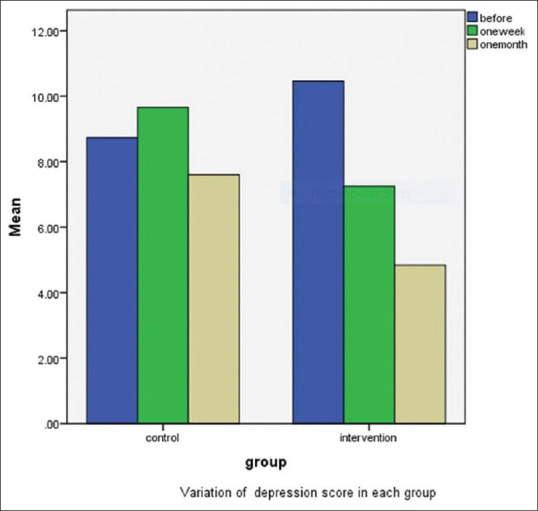
BACKGROUND: Postpartum depression and anxiety is one of the most common complications that women face and cause many problems for mother, baby, and family. Considering the effect of self-efficacy on women's adaptation to pregnancy and delivery conditions and their mental health during this period, the present study was designed to investigate the effect of pregnancy training classes based on Bandura self-efficacy theory on postpartum depression and anxiety and type of delivery. MATERIALS AND METHODS: In this clinical trial study, 64 pregnant women were randomly divided into intervention and control groups. Mothers in the intervention group received pregnancy training in eight sessions (each session was 2-hour) from the 20 th week of pregnancy. The classes were run by a trained midwife and the content of the training was based on Bandura self-efficacy components. The mothers in the control group received routine care. The demographic-reproductive information form, Beck Depression and Spielberger Anxiety Questionnaire were completed by pregnant women of both groups at several times, before the program, 1 week and 1 month after delivery. RESULTS: The results showed that the training program significantly decreased the depression score in 1 week and 1 month after delivery in the intervention group compared to the control group. In addition, this training program decreased the mean score of apparent and hidden anxiety in the intervention group 1 month after delivery, although this decrease was not statistically significant. Furthermore, 80.55% of the intervention group and 58.33% of the control group had vaginal delivery, which were significantly different between the two groups in terms of the type of delivery. CONCLUSION: The findings showed that pregnancy training classes based on Bandura self-efficacy theory decrease depression and anxiety and increases vaginal delivery rate.
Overview
The claims and statistics of this paper haven’t been checked yet.
Free: it reads the open-access text and checks the first 5 claims that cite a source we can check. Create a free account to check every claim.
Integrity signals
Registry
Cites
Statistics
Figures
Verification
Claims the paper makes
The claims and statistics of this paper haven’t been checked yet.
Free: it reads the open-access text and checks the first 5 claims that cite a source we can check. Create a free account to check every claim.
Self-check
Percentages, sums and reported differences re-computed from the paper’s own numbers.
The self-check needs the paper’s full text.
Citations
Cites
Social Learning Theory of Aggression
Bandura, A. (1978) · Journal of Communication · doi:10.1111/j.1460-2466.1978.tb01621.x · Cited by 1,459 · cited 1×
“In other words, people who have high self‐efficacy and independence usually face fewer barriers to meeting their health needs and experience fewer problems with their physical and mental health.[9,10]”
BackgroundBandura, A. (2010) · The Corsini Encyclopedia of Psychology · doi:10.1002/9780470479216.corpsy0836 · Cited by 576
Marsh, H. W., Pekrun, R., Parker, P. D., Murayama, K., Guo, J., Dicke, T., & Arens, A. K. (2019) · Journal of Educational Psychology · doi:10.1037/edu0000281 · Cited by 535
Grigoriadis, S., Graves, L., Peer, M., Mamisashvili, L., Tomlinson, G., Vigod, S. N., Dennis, C.-L., Steiner, M., Brown, C., Cheung, A., et al. (2018) · The Journal of Clinical Psychiatry · doi:10.4088/jcp.17r12011 · Cited by 404 · cited 1×
“A lot of evidence show mental health problems, such as anxiety, during pregnancy and postpartum affect the outcomes of pregnancy like recovery, mental balance, mother attitude toward her baby, and adaptation to new role.[5,6]”
BackgroundMisri, S., Reebye, P., Corral, M., & Milis, L. (2004) · The Journal of Clinical Psychiatry · doi:10.4088/jcp.v65n0913 · Cited by 205 · cited 1×
“They reported that psychological interventions had no significant effect on reducing postpartum anxiety and depression.[22] While the study of Sanaati et al.”
Caropreso, L., Cardoso, T. D. A., Eltayebani, M. M., & Frey, B. N. (2019) · Archives of Women s Mental Health · doi:10.1007/s00737-019-01010-1 · Cited by 159 · cited 1×
“Based on studies numerous factors cause postpartum depression and anxiety such as a history of depression, low‐income levels, primiparity, being not married, lack of jobs, low self‐efficacy, and existence of pregnancy complications such as preeclampsia.[7,8] Studies show that people with high self‐efficacy can deal ef…”
BackgroundZheng, X., Yu, H., Qiu, X., Chair, S. Y., Wong, E. M. L., & Wang, Q. (2020) · International Journal of Nursing Studies · doi:10.1016/j.ijnurstu.2020.103638 · Cited by 100 · cited 1×
“[12‐14] Therefore, the self‐efficacy structure can be used by health care professionals as a theoretical base in many health training programs to create and promote healthy behaviors.[15,16]”
BackgroundTrends of Postpartum Depression in Iran: A Systematic Review and Meta-Analysis
Veisani, Y., Delpisheh, A., Sayehmiri, K., & Rezaeian, S. (2013) · Depression Research and Treatment · doi:10.1155/2013/291029 · Cited by 91 · cited 1×
“In a meta‐analysis that summarized the evidence from 41 studies of Iran, the prevalence of postpartum depression is estimated about 25%.[4] Anxiety disorders are more important in pregnancy and postpartum period.”
BackgroundThe impact of maternal anxiety disorder on mother-infant interaction in the postpartum period
Reck, C., Tietz, A., Müller, M., Seibold, K., & Tronick, E. Z. (2018) · PLoS ONE · doi:10.1371/journal.pone.0194763 · Cited by 91 · cited 1×
“A lot of evidence show mental health problems, such as anxiety, during pregnancy and postpartum affect the outcomes of pregnancy like recovery, mental balance, mother attitude toward her baby, and adaptation to new role.[5,6]”
BackgroundFathi, F., Mohammad‐Alizadeh‐Charandabi, S., & Mirghafourvand, M. (2017) · Women & Health · doi:10.1080/03630242.2017.1292340 · Cited by 90
Research works printed but not linked: 2
- Cunningham FG Leveno KJ Bloom SL Dashe JS Hoffman BL Casey BM Williams Obstetrícia -25 2018 New York McGraw Hill
- Mousavinejad N Impact of cognitive skills training on reducing depression among clients during pregnancy and postpartum referring to health centers Iran J Health Educ Health Promot 2015 3 39 48
Cited by
Hua, Z., & Ma, D. (2022) · International Journal of Environmental Research and Public Health · doi:10.3390/ijerph19084676 · Cited by 47
“For instance, an empirical study investigated a group of American cancer survivors and found that less self-efficacy was associated with more severe depressive symptoms [74], whereas another study reported that participation in training programs aimed at improving self-efficacy significantly decreased the depression s…”
BackgroundNguyen, N. T., & Pengpid, S. (2025) · Frontiers in Global Women's Health · doi:10.3389/fgwh.2025.1497740 · Cited by 24
Zhang, L., Ren, L., Li, H., Qiu, H., Hong, Y., Shi, X., Rong, H., Zheng, C., Li, F., Luo, T., et al. (2025) · BMC Psychiatry · doi:10.1186/s12888-025-06557-1 · Cited by 17
The Role of Resilience for Developing the Self-Efficacy Among Chemistry Students in Pakistan
Siddique, M. E., Hassan, K. H. U., & Akmal, F. (2023) · VFAST Transactions on Education and Social Sciences · doi:10.21015/vtess.v11i1.1401 · Cited by 23
Tan, Y., Huang, F., Wang, Y., Lan, Y., & Cai, S. (2023) · Zeitschrift für Geburtshilfe und Neonatologie · doi:10.1055/a-2004-0740 · Cited by 9
“Many researchers have carried out some related research work in breastfeeding, diabetes, postpartum anxiety, and obstructive sleep apnea [20–23].”
Self-efficacy resources program for behavior changes
Juwita, C. P., Damayanti, R., Besral, B., & Aras, D. (2023) · Nursing Management · doi:10.1097/nmg.0000000000000013 · Cited by 7
Evaluation of childbirth self-efficacy and associated factors among pregnant women
Donyaei‐Mobarrez, Y., Rezasoltani, P., Rafat, F., & Leyli, E. K. (2023) · Journal of Education and Health Promotion · doi:10.4103/jehp.jehp_1770_22 · Cited by 10
Mannocci, A., Ciavardini, S., Mattioli, F., Massimi, A., D’Egidio, V., Lia, L., Scaglietta, F., Giannini, A., Antico, R., Dorelli, B., et al. (2022) · International Journal of Environmental Research and Public Health · doi:10.3390/ijerph19031461 · Cited by 5
“In this case the findings showed that pregnancy training classes based on Bandura self-efficacy theory decreased depression and anxiety during the pregnancy and one month after the delivery [14,60].”
MethodHategekimana, J. B., Ndikubwimana, A., Ndayisenga, J., Niyitegeka, F., Ukwishatse, D., Cyubahiro, S., Ntwali, B. K., Gashaija, A., Nyirazigama, A., Korukire, N., et al. (2024) · Contraception and Reproductive Medicine · doi:10.1186/s40834-024-00317-4 · Cited by 5
Sun, X., Ding, M., Luo, X., Kang, B., Zhu, Y., Xu, Z., & Chen, C. (2022) · BMC Medical Education · doi:10.1186/s12909-022-03311-z · Cited by 4
Mei, X., Li, Y., Wu, X., Liang, M., Chen, Q., Kang, L., & Ye, Z. (2025) · Nature and Science of Sleep · doi:10.2147/nss.s522570 · Cited by 4
“63 Furthermore, our study observed that poorer initial sleep quality was associated with lower initial levels of self-efficacy and a steeper decline in self-efficacy over time, supporting our hypothesis 2.”
Jiang, F., Lin, Y., Li, S., Peng, Y., Huang, X., & Chen, L. (2022) · International Journal of General Medicine · doi:10.2147/ijgm.s353977 · Cited by 7
Silletti, F., Koire, A. M., Ma, C., Lin, H., Mittal, L. P., Roffman, J. L., Erdei, C., Musso, P., & Liu, C. H. (2025) · Development and Psychopathology · doi:10.1017/s0954579425000379 · Cited by 3
The application of the public health model in pregnancy coaching for preventing high-risk pregnancy
Wahyuni, S., Wuriningsih, A. Y., Nursalam, N., & Arief, Y. S. (2023) · Healthcare in Low-resource Settings · doi:10.4081/hls.2023.11214 · Cited by 3
Metadata
- Authors
- Mohammadi, F., Kohan, S., Farzi, S., Khosravi, M., & Heidari, Z.
- Affiliations
- Isfahan University of Medical Sciences (IR)
- Corresponding author
- Heidari, Zeinab
- Venue
- Journal of Education and Health Promotion
- Published
- 2021-07
- Volume
- 10
- Issue
- 1
- Pages
- 273-273
- ISSN
- 2277-9531 (ISSN-L)
- 2319-6440
- PMC
- PMC8396055
- OpenAlex
- W3193543996
- Cited by
- 14
- References
- 26
- Citations by year
- 2025: 4 · 2024: 1 · 2023: 5 · 2022: 4
- FWCI
- 2.17
- Type
- journal article
- Language
- en
- Open access
- gold
- doi.org
- Licence
- cc-by
- Locations
- Journal of Education and Health Promotion (publishedVersion, cc-by)
- PubMed Central (publishedVersion, cc-by-nc-sa)
- PubMed (publishedVersion)
- DOAJ (DOAJ: Directory of Open Access Journals) (submittedVersion, cc-by-sa)
- Topics
- Health Sciences › Medicine › Public Health, Environmental and Occupational Health › Maternal Mental Health During Pregnancy and Postpartum
- Health Sciences › Medicine › Obstetrics and Gynecology › Maternal and Perinatal Health Interventions
- Health Sciences › Medicine › Pediatrics, Perinatology and Child Health › Maternal and Neonatal Healthcare
- Keywords
- self-efficacy theory, postpartum depression, postpartum anxiety, mode of delivery, vaginal delivery, maternal mental health, prenatal education
About these checks
Registry, retraction, Cites and statistics results are computed, not judged, with one exception: a printed reference that no index lists is read once by a model before it counts as a citation error. Claims are extracted by a model and kept only when their quote appears verbatim in the text; each cited source is then checked, with a model’s help, for whether it says what the claim relies on. Those verdicts can be wrong — read the claim’s quote and the cited source before relying on one.
Statistics and arithmetic are recomputed, not judged.
Confidence bands are shown only for fields calibrated on our annotated test set. None is calibrated yet, so no band is shown.
What counts as a claim ›How we measure confidence ›How we check this ›
Are you an author, or do you see a problem with this page? Request a review
Data sources
Bibliographic data: Semantic Scholar, OpenAlex, Crossref.
Contains information from the Semantic Scholar Academic Graph Datasets, made available under the ODC Attribution License (ODC-BY 1.0).
Semantic Scholar’s data is described in: Kinney, R., et al. (2023). The Semantic Scholar Open Data Platform. arXiv:2301.10140.
