

Consensus statement on the use of oral contraceptive pills in polycystic ovarian syndrome women in India
Open accessThe DOI matches its Crossref record; 238 of the 239 references it cites were found in a registry or an index.
Abstract
OBJECTIVE: To provide consensus recommendations for health-care providers on the use of oral contraceptive pills (OCPs) in polycystic ovarian syndrome (PCOS) women in India. PARTICIPANTS: Extensive deliberations, discussions, and brainstorming were done with different fraternities (specialists) being involved. These included endocrinologists, gynecologists, reproductive endocrinologists, dermatologists, public health experts, researchers, and a project manager with a team to develop the guideline. EVIDENCE: Published literature was retrieved through searches of Medline and The Cochrane Database from January 2003 to December 2017 using appropriate-controlled vocabulary (e.g., oral contraceptive pills, polycystic ovarian syndrome, long term outcomes, infertility). Clinical practice guideline collections, clinical trial registries, and national and international medical specialty societies' publications and data were also reviewed to suggest the recommendations. PROCESS: The working group for guideline committee included members from the PCOS Society (India), Indian Society for Assisted Reproduction, The Mumbai Obstetric and Gynecological Society, The Endocrine Society of India, Indian Association of Dermatologists, Venereologists and Leprologists, Cosmetic Dermatology Society (India), Academicians from Medical Colleges, National Institute for Research in Reproductive Health, and a Research Associate. The core team included five reproductive endocrinologists, five gynecologists, five dermatologists, three endocrinologists, two public health experts and one research associate. CONCLUSIONS: This consensus statement provides the guidance/recommendations for Indian practitioners regarding the use of OCP in women with PCOS. PCOS is one of the common endocrinopathies encountered in gynecological/endocrine practice. The spectrum of this disorder may range from prepubertal girls with premature pubarche, young girls with hirsutism, acne and anovulatory cycles, married women with infertility, and elderly women. Although obesity is a common feature for most PCOS patients, 'lean PCOS' also exists. For several years, OCPs have played an important role in the symptom management of PCOS women. This is due to the fact that OCPs decrease the luteinizing hormone, reduce androgen production, and increase sex hormone-binding globulin, which binds androgens. Several new formulations of OCPs have been developed to decrease the side effects. This includes use of less androgenic progestins and lower doses of ethinyl estradiol. These consensus recommendations help the health provider to choose the right type of OCPs, which will alleviate the symptoms with least side effects. It also gives insight into the indications, contraindications, and concerns regarding its short, intermediate and long-term use.
Overview
The claims and statistics of this paper haven’t been checked yet.
Free: it reads the open-access text and checks the first 5 claims that cite a source we can check. Create a free account to check every claim.
Integrity signals
Registry
Cites
Statistics
Figures
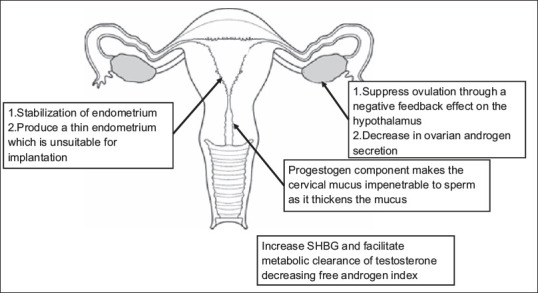
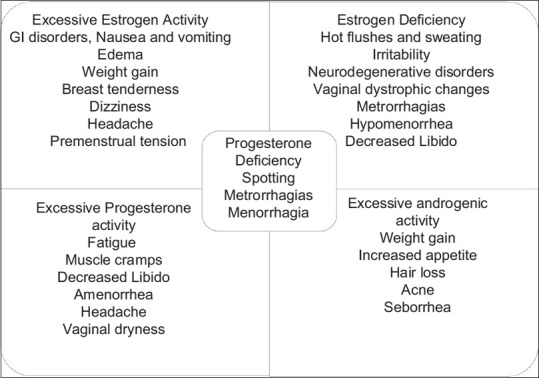
Verification
Claims the paper makes
The claims and statistics of this paper haven’t been checked yet.
Free: it reads the open-access text and checks the first 5 claims that cite a source we can check. Create a free account to check every claim.
Claims other papers make about this one
Each is checked against this paper’s own text: does it say what the citing paper says it does?
The cited source says what the claim attributes to it.
In the citing paper
“Oral contraceptives are commonly prescribed for those not considering becoming pregnant to treat the primary concerns of menstrual irregularities and hyperandrogenism [3, 65, 66].”
From Challenges in diagnosis and health care in polycystic ovary syndrome in Canada: a patient view to improve health care (2023) · cites this paper as [65]
Self-check
Percentages, sums and reported differences re-computed from the paper’s own numbers.
The self-check needs the paper’s full text.
Citations
Cites
The Diagnosis of Polycystic Ovary Syndrome during Adolescence
Witchel, S. F., Oberfield, S., Rosenfield, R. L., Codner, E., Bonny, A., Ibáñez, L., Pena, A., Horikawa, R., Gomez-Lobo, V., Joel, D., et al. (2015) · Hormone Research in Paediatrics · doi:10.1159/000375530 · Cited by 3,113
ESHRE guideline: management of women with endometriosis
Dunselman, G. A. J., Vermeulen, N., Becker, C., Calhaz-Jorge, C., D'Hooghe, T., De Bie, B., Heikinheimo, O., Horne, A. W., Kiesel, L., Nap, A., et al. (2014) · Human Reproduction · doi:10.1093/humrep/det457 · Cited by 2,211
Fauser, B. C. J. M., Tarlatzis, B. C., Rebar, R. W., Legro, R. S., Balen, A. H., Lobo, R., Carmina, E., Chang, J., Yildiz, B. O., Laven, J. S. E., et al. (2012) · Fertility and Sterility · doi:10.1016/j.fertnstert.2011.09.024 · Cited by 1,976 · cited 2×
“There is no difference in the efficacy with the use of various combination pills.[137,138]”
BackgroundLegro, R. S., Arslanian, S. A., Ehrmann, D. A., Hoeger, K. M., Murad, M. H., Pasquali, R., & Welt, C. K. (2013) · The Journal of Clinical Endocrinology & Metabolism · doi:10.1210/jc.2013-2350 · Cited by 1,919 · cited 7×
“The presence of dyslipidemia may not be a contraindication for the use of OCPs.”
BackgroundInfluentialTeede, H. J., Misso, M. L., Costello, M. F., Dokras, A., Laven, J., Moran, L., Piltonen, T., Norman, R. J., & the International PCOS Network (2018) · Clinical Endocrinology · doi:10.1111/cen.13795 · Cited by 1,823
Teede, H. J., Misso, M. L., Costello, M. F., Dokras, A., Laven, J., Moran, L., Piltonen, T., Norman, R. J., Andersen, M., Azziz, R., et al. (2018) · Fertility and Sterility · doi:10.1016/j.fertnstert.2018.05.004 · Cited by 1,325 · cited 3×
“We also know that PCOS itself is associated with increased incidence and risk of obesity, hyperlipidemia, and hypertension.[37] As PCOS women are already at a higher risk of CVD, which can be exaggerated with the use of OCPs, close monitoring of”
BackgroundInfluentialSelf-citationBone Gain in Young Adult Women
Recker, R. R. (1992) · JAMA: The Journal of the American Medical Association · doi:10.1001/jama.1992.03490170075028 · Cited by 845
Collaborative Group on Epidemiological Studies of Ovarian Cancer (2008) · The Lancet · doi:10.1016/s0140-6736(08)60167-1 · Cited by 822
Moghetti, P., Castello, R., Negri, C., Tosi, F., Perrone, F., Caputo, M., Zanolin, E., & Muggeo, M. (2000) · The Journal of Clinical Endocrinology & Metabolism · doi:10.1210/jcem.85.1.6293 · Cited by 660
Research works printed but not linked: 3
- 113. Moghetti P Ovarian suppression and treatment of hirsuitism Contemporary Endocrinology: Androgen Excess Disorders in Women: Polycystic Ovary Syndrome and Other Disorders 2006 2nd ed Totowa, New Jersey Humana Press Inc
- 120. Saeed R Akram J Changezi HU Saeed M Treatment of hirsutism in polycystic ovarian syndrome with Diane, 50 mcg ethinyl estradiol and 2 mg cyproterone acetate Specialist 1993 9 109 12
- 220. Devoto E Aravena L Ríos R Treatment of hirsutism with spironolactone and with spironolactone plus dexamethasone Rev Med Chil 2000 128 868 75 11129548
Cited by
A review: Brief insight into Polycystic Ovarian syndrome
Bulsara, J., Patel, P., Soni, A., & Acharya, S. (2021) · Endocrine and Metabolic Science · doi:10.1016/j.endmts.2021.100085 · Cited by 167
Questioning PCOS phenotypes for reclassification and tailored therapy
Myers, S. H., Russo, M., Dinicola, S., Forte, G., & Unfer, V. (2023) · Trends in Endocrinology and Metabolism · doi:10.1016/j.tem.2023.08.005 · Cited by 74
Sydora, B. C., Wilke, M. S., McPherson, M., Chambers, S., Ghosh, M., & Vine, D. F. (2023) · BMC Women's Health · doi:10.1186/s12905-023-02732-2 · Cited by 60
“Oral contraceptives are commonly prescribed for those not considering becoming pregnant to treat the primary concerns of menstrual irregularities and hyperandro-genism [3, 65, 66].”
BackgroundOncology and Pharmacogenomics Insights in Polycystic Ovary Syndrome: An Integrative Analysis
Yumiceba, V., López-Cortés, A., Pérez-Villa, A., Yumiseba, I., Guerrero, S., García-Cárdenas, J. M., Armendáriz-Castillo, I., Guevara-Ramírez, P., Leone, P. E., Zambrano, A. K., et al. (2020) · Frontiers in Endocrinology · doi:10.3389/fendo.2020.585130 · Cited by 40
“It also competes with androgen receptor and prevents subsequent androgen actions (89, 100).”
Rizvi, M., Islam, M. A., Aftab, M. T., Naqvi, A. A., Jahangir, A., Ishaqui, A. A., Iqbal, M. Z., & Iqbal, M. S. (2023) · PLoS ONE · doi:10.1371/journal.pone.0285284 · Cited by 36
Shailaja, K., Ravindranathan, S., Jayanii, V. T., Aadhira, J., & Shirly, S. (2023) · Asian Journal of Pharmaceutical Research and Health Care · doi:10.4103/ajprhc.ajprhc_68_23 · Cited by 32
Rempert, A. N., Sarria, I., Standeven, L. R., Nylander, E., Segars, J., & Singh, B. (2023) · Reproductive Sciences · doi:10.1007/s43032-023-01285-x · Cited by 25
“Oral contraceptives restore menstrual irregularities and treat androgenic symptoms, such as hirsutism and acne, by increasing sex hormone binding globulin (SHBG) and reducing ovarian androgen production [51, 52].”
BackgroundPanda, S. P., Kesharwani, A., Singh, G. D., Prasanth, D., Vatchavai, B. R., Kumari, P. V. K., Panda, S. K., & Mallick, S. P. (2023) · Ageing Research Reviews · doi:10.1016/j.arr.2023.102086 · Cited by 27
Maan, P., Gautam, R., Vasudevan, S., Menon, G. R., Arora, A., Nair, A., Jabbar, P. K., & Arora, T. K. (2025) · Pharmaceuticals · doi:10.3390/ph18050680 · Cited by 28
“(c) Oral contraceptive pills (OCPs) OCPs have been the first-line medication for concurrent treatment of menstrual irregularity, acne, and hirsutism [89].”
Osteoporosis in polycystic ovary syndrome (PCOS) and involved mechanisms
Sudhakaran, G., Priya, P. S., Kannan, J., Haridevamuthu, B., Meenatchi, R., & Arockiaraj, J. (2023) · Life Sciences · doi:10.1016/j.lfs.2023.122280 · Cited by 25
Geraci, G., Riccio, C., Oliva, F. G., Gabrielli, D., Colivicchi, F., Grimaldi, M., Facchinetti, F., & Unfer, V. (2025) · Frontiers in Cardiovascular Medicine · doi:10.3389/fcvm.2025.1520490 · Cited by 24
Sarahian, N., Noroozzadeh, M., Naz, M. S. G., Roozbahani, N. E., Mahboobifard, F., & Tehrani, F. R. (2021) · Molecular Biology Reports · doi:10.1007/s11033-021-06799-8 · Cited by 19
Rajashekar, S., Ravindran, S. G., Kakarla, M., Gambo, M. A., Salama, M. Y., Ismail, N. H., Tavalla, P., Uppal, P., Mohammed, S. A., & Hamid, P. (2022) · Cureus · doi:10.7759/cureus.25340 · Cited by 18
“COC is often used but also despised due to the stringent adherence required and the unpleasant and worrisome side effects such as breast tenderness, bloating, nausea, weight gain, elevated blood sugars, dyslipidemia, venous thromboembolism, cardiovascular disease, irregular bleeding, and hypertension [15].”
Backgroundde Medeiros, S. F., Soares, J. M., de Medeiros, M. A. S., Yamamoto, A. K. L. W., de Medeiros, C. L. W., Carvalho, A. B. D. S., Yamamoto, M. M. W., & Baracat, E. C. (2024) · Archives of Gynecology and Obstetrics · doi:10.1007/s00404-024-07637-5 · Cited by 11
“Combined oral contraceptives (COCs) are considered the first-line therapy for PCOS women with menstrual irregularity and clinical and/or biochemical hyperandrogenism who do not wish to become pregnant [11, 12].”
Siddiqui, S., Ahmad, R., Aziz, T., Khan, A. A., Ashraf, H., & Moin, S. (2025) · The Journal of Steroid Biochemistry and Molecular Biology · doi:10.1016/j.jsbmb.2025.106772 · Cited by 8
Singh, S., Arya, V., Mishra, R. K., Rajput, S. K., & Dhanasekaran, M. (2024) · Next research. · doi:10.1016/j.nexres.2024.100004 · Cited by 10
Alshamari, A. K. (2022) · Russian Journal of Organic Chemistry · doi:10.1134/s107042802212017x · Cited by 8
Polycystic Ovary Syndrome: Current Perspectives and Recent Advances
Nirupama, A. Y., John, J. B., & Chellaiyan, V. G. (2022) · Current Medical Issues · doi:10.4103/cmi.cmi_2_22 · Cited by 9
Đogo, A., Dožić, B., Vujović, S., Srebro, D., & Dožić, I. (2021) · The Indian Journal of Medical Research · doi:10.4103/ijmr.ijmr_478_20 · Cited by 7
Carriero, V. C., Forte, G., Dinicola, S., Oliva, M. M., Mudarris, G. A., & Unfer, V. (2025) · European Journal of Obstetrics & Gynecology and Reproductive Biology · doi:10.1016/j.ejogrb.2025.113947 · Cited by 6
Sibal, R., Keogh, M., Latthe, P. M., & Idkowiak, J. (2026) · Journal of Pediatric and Adolescent Gynecology · doi:10.1016/j.jpag.2026.01.001 · Cited by 6
Cutler, D. A. (2019) · cIRcle (University of British Columbia) · doi:10.14288/1.0378929 · Cited by 6
“On the other hand, the OCP can be protective against endometrial and ovarian cancers (124).”
BackgroundPharmacological management of PCOS: trends and insights from a 10-year bibliometric analysis
Gautam, R., Jyoti, A., Bhateja, A., Malhotra, N., & Arora, T. (2025) · Expert Opinion on Pharmacotherapy · doi:10.1080/14656566.2025.2535175 · Cited by 3
Veeran, M. G., Nisha, U., Lakshmi, S., & Painuly, D. (2024) · Journal of Drug Delivery Science and Technology · doi:10.1016/j.jddst.2024.105357 · Cited by 3
Comparative Management Methods for Adolescents With Polycystic Ovarian Syndrome: A Systemic Review
Vadan, R. L., Varela, N., Zhuravko, N., Ogidan, N. O., Adedara, V. O., & Keku, E. O. (2024) · Cureus · doi:10.7759/cureus.55876 · Cited by 4
Mandvia, A., George, R., Kumari, K., Kumari, K., Sabbagh, L. I., Bhullar, A., Ismail, D. M., Kolanu, N. D., & Ali, A. (2025) · Cureus · doi:10.7759/cureus.83850 · Cited by 3
“Current therapeutic strategies for managing PCOS in adolescents include hormonal agents, such as combined oral contraceptive pills (COCs), which are often the first-line treatment for regulating menstrual cycles and reducing androgen-related symptoms [5].”
Awareness regarding oral health among women with polycystic ovary syndrome: a qualitative study
Nivedha, K., Aparna, S., & Madankumar, P. D. (2023) · International Journal of Community Medicine and Public Health · doi:10.18203/2394-6040.ijcmph20231299 · Cited by 1
Majdi, F., Farshbaf‐Khalili, A., Mirzaei, M., Hakimi, P., Hajizadeh, K., & Shahnazi, M. (2025) · Journal of Research Development in Nursing and Midwifery · doi:10.61882/jgbfnm.22.2.44 · Cited by 1
Ghosh, S., Maity, A., Roy, B., & Thakur, S. (2025) · In Silico Research in Biomedicine · doi:10.1016/j.insi.2025.100134 · Cited by 2
Rajak, N., Singh, V. K., Singh, V. K., Gupta, P. K., Mahapatra, A. K., Chouhan, P., & Garg, N. (2025) · Future Journal of Pharmaceutical Sciences · doi:10.1186/s43094-025-00917-0 · Cited by 1
“Oral contraceptives reduced free androgens in the patients and inhibited the production of gonadotropin [11].”
Mechanisms and modalities of herbal anti-fertility: toward integrative reproductive health solutions
Mishra, M. K., Sharma, S., Sharma, S., & Pamu, S. (2025) · Oriental Pharmacy and Experimental Medicine · doi:10.1007/s13596-025-00870-6 · Cited by 3
“Progestins and estrogen are those hormones which are involved in hormonal contraception progestin are used along with estrogen or without estrogen as a hormonal contraception (Shah and Patil 2018) (Table 1).”
Management of women with hirsutism in Kosovo
Lumezi, B. G., & Lokaj‐Berisha, V. (2025) · Advances in Dermatology and Allergology · doi:10.5114/ada.2025.158069 · Cited by 1
“A reduction in the rate of hirsutism has also been observed with the use of OCPs containing CPA and DRSP [9].”
Infertility Management in Lean Versus Obese PCOS
Shah, D., & Patil, M. (2021) · ISGE series · doi:10.1007/978-3-030-63650-0_9 · Cited by 2
Self-citationMazhar, A., Jehangir, F., Masud, A., Abidi, S. H. B., & Zehra, N. (2023) · Journal of Gandhara Medical and Dental Science · doi:10.37762/jgmds.10-4.458 · Cited by 4
Polycystic Ovarian Syndrome: Current Insights
Naidu, S. J. K., Ramdin, S., Naicker, T., Moodley, J., Naidoo, G., & Govender, N. (2024) · Biomedical visualization · doi:10.1007/978-3-031-68501-9_8 · Cited by 2
COMPARISON OF METFORMIN AND ORAL CONTRACEPTIVE PILLS IN THE TREATMENT OF POLYCYSTIC OVARIAN SYNDROME
Mushtaq, R., Iqbal, S., Abbas, A., Iftikhar, B., Ahmed, W., & Afsheen, A. (2021) · Pakistan Armed Forces Medical Journal · doi:10.51253/pafmj.v71i4.5401
Showri, R., & Rajini, T. (2022) · International Journal of Reproduction Contraception Obstetrics and Gynecology · doi:10.18203/2320-1770.ijrcog20221919
A Review on Traditional and Modern Therapy in Management of Poly Cystic Ovarian Syndrome
Rathore, S. S. S., Navyashree, G. A., Komala, M., Chacko, C. S., & Shravya Lakshmi, S. (2022) · Advances in Pharmacology and Pharmacy · doi:10.13189/app.2022.100302
Polycystic ovary syndrome therapeutic methods: A systematic review
Farinha, V. R., Farinha, B. R., Silva, T. L., Souza, D. M., Castro, M. S., Solano, N. P., & Silva, V. R. S. (2023) · Brazilian Journal of Health Review · doi:10.34119/bjhrv6n1-304
Quarde, A. (2023) · Wiley eBooks · doi:10.1002/9781119863564.ch6
Banerjee, S. (2024) · IP Journal of Nutrition Metabolism and Health Science · doi:10.18231/j.ijnmhs.2024.001 · Cited by 1
Polycystic Ovary Syndrome in Ethnic Populations of India: A Comprehensive Meta-Analysis and Review
Sengupta, S., & Khandelwal, V. (2024) · Universal Journal of Public Health · doi:10.13189/ujph.2024.120401 · Cited by 1
SÍNDROME DOS OVÁRIOS POLICÍSTICOS: HISTÓRICO, DIAGNÓSTICOS E TRATAMENTOS
Oliveira, D. D., Carvalho, E. D., Ferreira, K. D. S., Pereira, T. S., & Júnior, N. R. (2024) · Revista Omnia Saúde · doi:10.69719/ros.v7iesp..797
The impact of hormonal contraceptives on skeletal muscle hypertrophy
Markov, N., & Arčon, M. (2025) · Exercise and Quality of Life · doi:10.31382/preprint.000103
Ernest, D. K., Collier, A., Chandrasekhar, A., Xie, L., Darraji, S., Patel, J. R., Almandoz, J. P., & Messiah, S. E. (2025) · Women s Health Reports · doi:10.1089/whr.2024.0143 · Cited by 4
“9,31,32 While amenorrhea and OCP were self-reported by participants, TT and SHBG concentrations were assessed using blood draws according to NHANES protocol.”
von Damm, I., Hernández-Ortega, M., Sarfati, C. D., & von Son, F. W. (2025) · medRxiv · doi:10.1101/2025.05.21.25327203
“Unfortunately, the use of OC, is a palliative approach that focuses in signs and symptoms temporarily, compromising physiological ovary function and provoking anovulation and fertility disorders [34,35] , in addition to the popular and known side effects which can impair women’s health [35] .”
Balancing Hormones and Skin Health: A Focus on Oral Contraceptives in Dermatology
(2025) · La Prensa Medica · doi:10.47275/2953-4763-443
Holistic management plan for polycystic ovarian syndrome (PCOS): A systematic literature review
Karali, H. F., Farhad, E. S., Sekai, E. S., Pang, J. Y., Teoh, X. Y., Wong, K. Y., & Teh, A. (2025) · International Journal of Clinical Obstetrics and Gynaecology · doi:10.33545/gynae.2025.v9.i3b.1640
Sydora, B. C., Wilke, M. S., McPherson, M., Chambers, S. A., Ghosh, M., & Vine, D. F. (2024) · Figshare · doi:10.6084/m9.figshare.26635785
Khodavirdilou, L., & Wilkerson, J. L. (2026) · Frontiers in Pharmacology · doi:10.3389/fphar.2025.1670766
Jeslin, G. N., Suganthirababu, P., Yugandhar, P., Bhargavi, E. S., Likitha, G. R., & Manikandan, M. (2026) · AIP conference proceedings · doi:10.1063/5.0312108
Assessment and evaluation of knowledge pertaining to PCOS among MBBS students in Western Maharashtra
Joshi, B., Subhedar, S., Sharma, S., & Sambharam, S. (2026) · International Journal of Reproduction Contraception Obstetrics and Gynecology · doi:10.18203/2320-1770.ijrcog20262539
Role of hormonal and demographic factors in the development of dysmenorrhea in young women
Аязбеков, А. К., Kurbaniyazova, S., Khudaibergenova, S., Нурхасимова, Р. Г., & Terlikbaeva, A. (2026) · INTERNATIONAL JOURNAL OF ENDOCRINOLOGY (Ukraine) · doi:10.22141/2224-0721.22.6.2026.1761
Raina, J. K., Panjaliya, R. K., Tiwari, D., Loona, S., Pal, S., Choudhary, N., Sharma, R., Kumar, P., & Dogra, V. (2026) · Journal of Education and Health Promotion · doi:10.4103/jehp.jehp_1903_25
Metadata
- Authors
- Shah, D., Patil, M., & On behalf of the National PCOS Working Group
- Corresponding author
- Shah, Duru
- ORCID
- Shah, Duru
- Venue
- Journal of Human Reproductive Sciences
- Published
- 2018
- Volume
- 11
- Issue
- 2
- Pages
- 96
- ISSN
- 0974-1208 (ISSN-L)
- PMC
- PMC6094524
- OpenAlex
- W2902540909
- Cited by
- 51
- References
- 239
- Citations by year
- 2026: 5 · 2025: 13 · 2024: 9 · 2023: 11 · 2022: 6 · 2021: 5 · 2020: 1 · 2019: 1
- FWCI
- 1.88
- Type
- journal article
- Language
- en
- Open access
- diamond
- doi.org
- Licence
- cc-by-nc-sa
- Locations
- Journal of Human Reproductive Sciences (publishedVersion, cc-by-nc-sa)
- Europe PMC (PubMed Central) (publishedVersion, cc-by-nc-sa)
- PubMed Central (publishedVersion, cc-by-nc-sa)
- PubMed (publishedVersion)
- DOAJ (DOAJ: Directory of Open Access Journals) (submittedVersion, cc-by-sa)
- Topics
- Health Sciences › Medicine › Reproductive Medicine › Ovarian function and disorders
- Health Sciences › Medicine › Public Health, Environmental and Occupational Health › Reproductive Health and Contraception
- Health Sciences › Medicine › Reproductive Medicine › Endometriosis Research and Treatment
- Keywords
- polycystic ovary syndrome, oral contraceptives, PCOS management, hirsutism, acne, anovulatory cycles, infertility, lean PCOS, obesity, luteinizing hormone, androgen reduction, sex hormone-binding globulin, progestins, ethinyl estradiol, long-term outcomes, Indian women, clinical guidelines
About these checks
Registry, retraction, Cites and statistics results are computed, not judged, with one exception: a printed reference that no index lists is read once by a model before it counts as a citation error. Claims are extracted by a model and kept only when their quote appears verbatim in the text; each cited source is then checked, with a model’s help, for whether it says what the claim relies on. Those verdicts can be wrong — read the claim’s quote and the cited source before relying on one.
Statistics and arithmetic are recomputed, not judged.
Confidence bands are shown only for fields calibrated on our annotated test set. None is calibrated yet, so no band is shown.
What counts as a claim ›How we measure confidence ›How we check this ›
Are you an author, or do you see a problem with this page? Request a review
Data sources
Bibliographic data: Semantic Scholar, OpenAlex, Crossref.
Contains information from the Semantic Scholar Academic Graph Datasets, made available under the ODC Attribution License (ODC-BY 1.0).
Semantic Scholar’s data is described in: Kinney, R., et al. (2023). The Semantic Scholar Open Data Platform. arXiv:2301.10140.
