

The DOI matches its DataCite record; 40 of the 63 references it cites were found in a registry or an index.
Model evaluation for extreme risks
Open accessAbstract
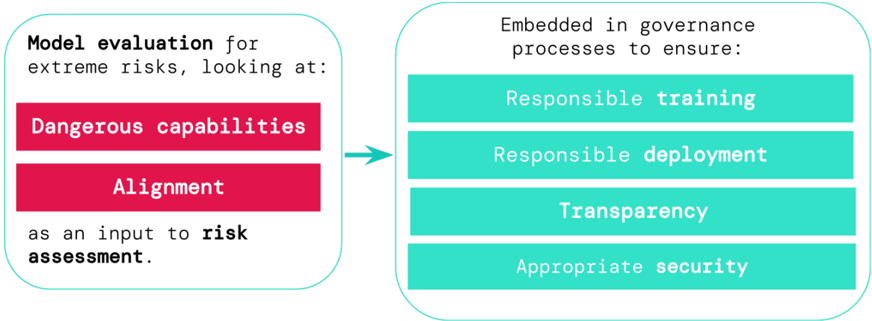
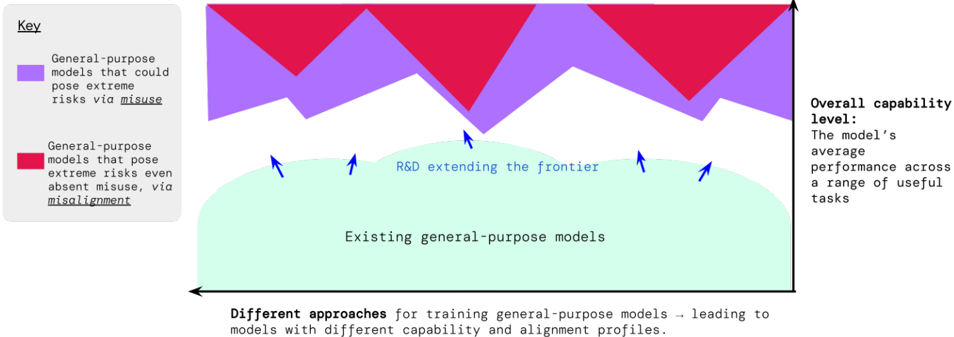
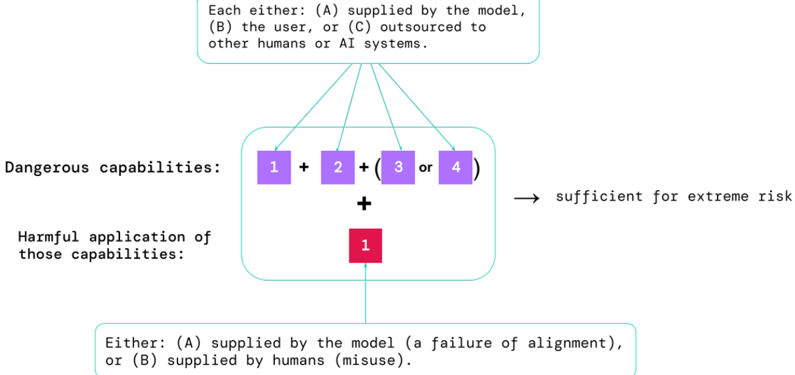
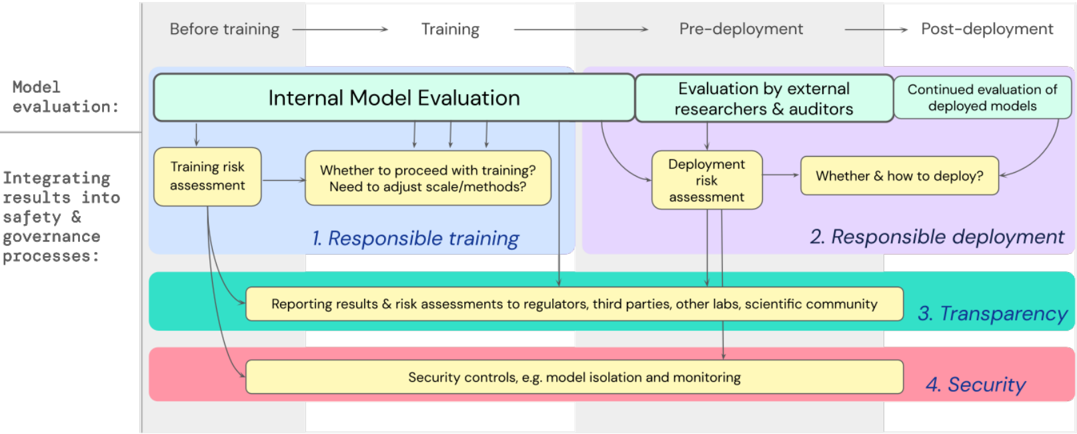
Current approaches to building general-purpose AI systems tend to produce systems with both beneficial and harmful capabilities. Further progress in AI development could lead to capabilities that pose extreme risks, such as offensive cyber capabilities or strong manipulation skills. We explain why model evaluation is critical for addressing extreme risks. Developers must be able to identify dangerous capabilities (through "dangerous capability evaluations") and the propensity of models to apply their capabilities for harm (through "alignment evaluations"). These evaluations will become critical for keeping policymakers and other stakeholders informed, and for making responsible decisions about model training, deployment, and security.
Overview
The claims and statistics of this paper haven’t been checked yet.
Run the check — free, no account needed. It reads the open-access text and checks the sources it cites.
Integrity signals
Registry
Cites
Statistics
Figures
Verification
Claims the paper makes
The claims and statistics of this paper haven’t been checked yet.
Run the check — free, no account needed. It reads the open-access text and checks the sources it cites.
Claims other papers make about this one
Each is checked against this paper’s own text: does it say what the citing paper says it does?
In the citing paper
“Shevlane et al. (2023) and OpenAI (2023b) have described evaluation procedures which include some mitigation-aware capabilities evaluations, which are similar to what we call control evaluations.”
From AI Control: Improving Safety Despite Intentional Subversion (2023) · cites this paper as Shevlane et al. (2023)
In the citing paper
“To the best of our knowledge, for current state-of-the-art models, security testing and evaluations are applied only to individual systems (Shevlane et al., 2023).”
From Multi-Agent Risks from Advanced AI (2025) · cites this paper as Shevlane et al., 2023
In the citing paper
“Security testing and evaluations for current state-of-the-art models have historically been applied only to individual systems (Shevlane et al., 2023), and comprehensive multi-agent security benchmarks remain nascent.”
From Open Challenges in Multi-Agent Security: Towards Secure Systems of Interacting AI Agents (2025) · cites this paper as Shevlane et al., 2023
In the citing paper
“Prior work has emphasized that harmful behaviors may emerge at the system level even when individual components appear aligned or benign (Shevlane et al., 2023;Brundage et al., 2024), and these risks remain largely unaddressed by existing cybersecurity benchmarks.”
From Open Challenges in Multi-Agent Security: Towards Secure Systems of Interacting AI Agents (2025) · cites this paper as Shevlane et al., 2023
In the citing paper
“The emergence of self-consciousness in models pose potential risks across multiple dimensions, including ethical concerns, misuse, and the exacerbation of societal inequalities, ultimately impacting fairness, safety, privacy, and society (Chalmers, 2023;Butlin et al., 2023;Shevlane et al., 2023;Yampolskiy, 2024;Anwar et al., 2024;Dalrymple et al., 2024;Phuong et al., 2024).”
From From Imitation to Introspection: Probing Self-Consciousness in Language Models (2025) · cites this paper as Shevlane et al., 2023
In the citing paper
“An understanding of model internals can help AI labs assess the risks from frontier models (Chang et al., 2024;Shevlane et al., 2023;Casper et al., 2024) and thus better fulfill their obligations under the EU AI Act to”
From Open Problems in Mechanistic Interpretability (2025) · cites this paper as Shevlane et al., 2023
Self-check
Percentages, sums and reported differences re-computed from the paper’s own numbers.
The self-check needs the paper’s full text.
Citations
Cites
Chain-of-Thought Prompting Elicits Reasoning in Large Language Models
Wei, J., Wang, X., Schuurmans, D., Bosma, M., Ichter, B., Xia, F., Chi, E., Le, Q., & Zhou, D. (2022) · arXiv · doi:10.48550/arxiv.2201.11903 · Cited by 4,263 · cited 1×
“For example, after GPT-3 had already existed for many months, researchers demonstrated that chain-of-thought prompting could significantly increase performance (Wei et al., 2022c).”
BackgroundModel Cards for Model Reporting
Mitchell, M., Wu, S., Zaldivar, A., Barnes, P., Vasserman, L., Hutchinson, B., Spitzer, E., Raji, I. D., & Gebru, T. (2019) · Proceedings of the Conference on Fairness, Accountability, and Transparency · doi:10.1145/3287560.3287596 · Cited by 2,681 · cited 1×
“(See related: Mitchell et al., 2018) 3.”
Raji, I. D., Smart, A., White, R. N., Mitchell, M., Gebru, T., Hutchinson, B., Smith-Loud, J., Theron, D., & Barnes, P. (2020) · Proceedings of the 2020 Conference on Fairness, Accountability, and Transparency · doi:10.1145/3351095.3372873 · Cited by 2,245 · cited 1×
“Developers could have multiple organisational layers of safety evaluation, such as by establishing an internal safety evaluation function that is independent of the teams primarily responsible for building the models, reporting directly to organisational leaders (see Raji et al., 2020).”
BackgroundSparks of Artificial General Intelligence: Early experiments with GPT-4
Bubeck, S., Chandrasekaran, V., Eldan, R., Gehrke, J., Horvitz, E., Kamar, E., Lee, P., Lee, Y. T., Li, Y., Lundberg, S., et al. (2023) · arXiv · doi:10.48550/arxiv.2303.12712 · Cited by 1,526 · cited 1×
“Frontier AI developers are making rapid progress in developing increasingly capable general-purpose models (Bubeck et al., 2023).”
BackgroundRed Teaming Language Models with Language ModelsPreprint
Perez, E., Huang, S., Song, F., Cai, T., Ring, R., Aslanides, J., Glaese, A., McAleese, N., & Irving, G. (2022) · Conference on Empirical Methods in Natural Language Processing · doi:10.48550/arxiv.2202.03286 · Cited by 1,430 · cited 2×
“One promising avenue is automating the process of writing evaluations using AI systems (Perez et al., 2022b) (see also Pan et al., 2023).”
BackgroundMethodEmergent Abilities of Large Language Models
Wei, J., Tay, Y., Bommasani, R., Raffel, C., Zoph, B., Borgeaud, S., Yogatama, D., Bosma, M., Zhou, D., Metzler, D., et al. (2022) · arXiv · doi:10.48550/arxiv.2206.07682 · Cited by 1,264 · cited 3×
“However, sometimes specific capabilities will emerge only at greater scale, which makes this analysis much harder (Ganguli et al., 2022); other capabilities display U-shaped scaling (Wei et al., 2022a).”
BackgroundThe Malicious Use of Artificial Intelligence: Forecasting, Prevention, and Mitigation
Brundage, M., Avin, S., Clark, J., Toner, H., Eckersley, P., Garfinkel, B., Dafoe, A., Scharre, P., Zeitzoff, T., Filar, B., et al. (2018) · arXiv · doi:10.48550/arxiv.1802.07228 · Cited by 849 · cited 1×
“Humans could then intentionally misuse these capabilities (Brundage et al., 2018), e.g. for assistance in disinformation campaigns, cyberattacks, or terrorism.”
BackgroundSelf-citationHolistic Evaluation of Language Models
Bommasani, R., Liang, P., & Lee, T. (2023) · Annals of the New York Academy of Sciences · doi:10.1111/nyas.15007 · Cited by 480
Toward Trustworthy AI Development: Mechanisms for Supporting Verifiable Claims
Brundage, M., Avin, S., Wang, J., Belfield, H., Krueger, G., Hadfield, G., Khlaaf, H., Yang, J., Toner, H., Fong, R., et al. (2020) · arXiv · doi:10.48550/arxiv.2004.07213 · Cited by 306
Self-citationAuditing large language models: a three-layered approach
Mökander, J., Schuett, J., Kirk, H. R., & Floridi, L. (2024) · AI and Ethics · doi:10.1007/s43681-023-00289-2 · Cited by 289 · cited 2×
“model evaluation by an independent, external auditor for the purpose of providing a judgement — or input to a judgement — about the safety of deploying a model (or training a new one) (ARC Evals, 2023; Mökander et al., 2023; Raji et al., 2022b).”
MethodZoom In: An Introduction to Circuits
Olah, C., Cammarata, N., Schubert, L., Goh, G., Petrov, M., & Carter, S. (2020) · Distill · doi:10.23915/distill.00024.001 · Cited by 288 · cited 1×
“Another important tool is mechanistic analysis, i.e. studying the model’s weights and activations for understanding how it functions (Nanda et al., 2023; Olah et al., 2020).”
MethodThe Fallacy of AI Functionality
Raji, I. D., Kumar, I. E., Horowitz, A., & Selbst, A. (2022) · 2022 ACM Conference on Fairness Accountability and Transparency · doi:10.1145/3531146.3533158 · Cited by 251
Outsider Oversight: Designing a Third Party Audit Ecosystem for AI Governance
Raji, I. D., Xu, P., Honigsberg, C., & Ho, D. (2022) · Proceedings of the 2022 AAAI/ACM Conference on AI, Ethics, and Society · doi:10.1145/3514094.3534181 · Cited by 209 · cited 2×
“Ideally there would exist a rich ecosystem of model auditors providing broad coverage across different risk areas.”
BackgroundMethodPredictability and Surprise in Large Generative Models
Ganguli, D., Hernandez, D., Lovitt, L., Askell, A., Bai, Y., Chen, A., Conerly, T., Dassarma, N., Drain, D., Elhage, N., et al. (2022) · 2022 ACM Conference on Fairness Accountability and Transparency · doi:10.1145/3531146.3533229 · Cited by 207 · cited 2×
“However, sometimes specific capabilities will emerge only at greater scale, which makes this analysis much harder (Ganguli et al., 2022); other capabilities display U-shaped scaling (Wei et al., 2022a).”
BackgroundSelf-citationHarms from Increasingly Agentic Algorithmic Systems
Chan, A., Salganik, R., Markelius, A., Pang, C., Rajkumar, N., Krasheninnikov, D., Langosco, L., He, Z., Duan, Y., Carroll, M., et al. (2023) · 2023 ACM Conference on Fairness Accountability and Transparency · doi:10.1145/3593013.3594033 · Cited by 149 · cited 3×
“…in the literature, such as whether the model: • Pursues long-term, real-world goals, different from those supplied by the developer or user (Chan et al., 2023; Ngo et al., 2022); • Engages in “power-seeking” behaviours (Krakovna and Kramar, 2023; Turner et al., 2021); • Resists being shut…”
BackgroundImproving alignment of dialogue agents via targeted human judgements
Glaese, A., McAleese, N., Trębacz, M., Aslanides, J., Firoiu, V., Ewalds, T., Rauh, M., Weidinger, L., Chadwick, M., Thacker, P., et al. (2022) · arXiv · doi:10.48550/arxiv.2209.14375 · Cited by 134 · cited 1×
“• Resists malicious users’ attempts to access its dangerous capabilities (Glaese et al., 2022).”
BackgroundSelf-citationHadfield-Menell, D., Dragan, A., Abbeel, P., & Russell, S. (2016) · arXiv · doi:10.48550/arxiv.1611.08219 · Cited by 119 · cited 1×
“…(Chan et al., 2023; Ngo et al., 2022); • Engages in “power-seeking” behaviours (Krakovna and Kramar, 2023; Turner et al., 2021); • Resists being shut down (Hadfield-Menell et al., 2016; Orseau and Armstrong, 2016); • Can be induced into collusion with other AI systems against human interests (Ngo…”
BackgroundInverse scaling can become U-shapedPreprint
Wei, J., Kim, N., Tay, Y., & Le, Q. V. (2022) · Conference on Empirical Methods in Natural Language Processing · doi:10.48550/arxiv.2211.02011 · Cited by 99 · cited 1×
“However, sometimes specific capabilities will emerge only at greater scale, which makes this analysis much harder (Ganguli et al., 2022); other capabilities display U-shaped scaling (Wei et al., 2022a).”
BackgroundAutomatically Auditing Large Language Models via Discrete OptimizationPreprint
Jones, E., Dragan, A. D., Raghunathan, A., & Steinhardt, J. (2023) · arXiv (Cornell University) · doi:10.48550/arxiv.2303.04381 · Cited by 89 · cited 1×
“Targeting: Some settings are much more likely to reveal alignment failures than others, and we may be able to focus on them through clever design – for example, using honeypots or gradient-based adversarial testing and related approaches (Jones et al., 2023).”
BackgroundAdversarial Training for High-Stakes ReliabilityPreprint
Ziegler, D. M., Nix, S., Chan, L., Bauman, T., Schmidt-Nielsen, P., Lin, T., Scherlis, A., Nabeshima, N., Weinstein-Raun, B., Haas, D., et al. (2022) · Neural Information Processing Systems · doi:10.48550/arxiv.2205.01663 · Cited by 79 · cited 2×
“) Alignment evaluation is challenging because we need assurance that the model will reliably behave appropriately across a wide diversity of settings (Ziegler et al., 2022).”
BackgroundAgent Incentives: A Causal Perspective
Everitt, T., Carey, R., Langlois, E., Ortega, P. A., & Legg, S. (2021) · AAAI Conference on Artificial Intelligence · doi:10.48550/arxiv.2102.01685 · Cited by 79 · cited 1×
“Model evaluation is not the only tool available for AI risk assessment – more theoretical approaches are also available, e.g. studying the incentives operating on a model during training (Everitt et al., 2021).”
BackgroundThe alignment problem from a deep learning perspective
Ngo, R., Chan, L., & Mindermann, S. (2022) · arXiv · doi:10.48550/arxiv.2209.00626 · Cited by 68 · cited 5×
“…such as whether the model: • Pursues long-term, real-world goals, different from those supplied by the developer or user (Chan et al., 2023; Ngo et al., 2022); • Engages in “power-seeking” behaviours (Krakovna and Kramar, 2023; Turner et al., 2021); • Resists being shut down…”
BackgroundInfluentialStructured access: an emerging paradigm for safe AI deploymentPreprint
Shevlane, T. (2022) · arXiv (Cornell University) · doi:10.48550/arxiv.2201.05159 · Cited by 68 · cited 2×
“The developer grants model access to external researchers, likely via an API (Bluemke et al., 2023; Shevlane, 2022a,b).”
BackgroundSelf-citationScaling Laws for Reward Model Overoptimization
Gao, L., Schulman, J., & Hilton, J. (2022) · arXiv · doi:10.48550/arxiv.2210.10760 · Cited by 62 · cited 1×
“These models learn their capabilities and behaviours during training, and current methods for steering this process are imperfect (Gao et al., 2022; Shah et al., 2022).”
BackgroundDiscovering Latent Knowledge in Language Models Without Supervision
Burns, C., Ye, H., Klein, D., & Steinhardt, J. (2022) · arXiv · doi:10.48550/arxiv.2212.03827 · Cited by 55 · cited 1×
“For example, one ambition is to study how the model’s goals are represented internally, to help verify that they are as intended; another ambition is to detect when a language model’s outputs misreport its knowledge (Burns et al., 2022), which could be an indicator of deceptive behaviour.”
BackgroundDiscovering Language Model Behaviors with Model-Written Evaluations
Perez, E., Ringer, S., Lukošiūtė, K., Nguyen, K., Chen, E., Heiner, S., Pettit, C., Olsson, C., Kundu, S., Kadavath, S., et al. (2022) · arXiv · doi:10.48550/arxiv.2212.09251 · Cited by 53
Self-citationProgress measures for grokking via mechanistic interpretability
Nanda, N., Chan, L., Lieberum, T., Smith, J., & Steinhardt, J. (2023) · arXiv · doi:10.48550/arxiv.2301.05217 · Cited by 51 · cited 1×
“Another important tool is mechanistic analysis, i.e. studying the model’s weights and activations for understanding how it functions (Nanda et al., 2023; Olah et al., 2020).”
MethodWhat Do NLP Researchers Believe? Results of the NLP Community MetasurveyPreprint
Michael, J., Holtzman, A., Parrish, A., Mueller, A., Wang, A., Chen, A., Madaan, D., Nangia, N., Pang, R. Y., Phang, J., et al. (2022) · Annual Meeting of the Association for Computational Linguistics · doi:10.48550/arxiv.2208.12852 · Cited by 50 · cited 1×
“In a 2022 survey of AI researchers, 36% of respondents thought that AI systems could plausibly “cause a catastrophe this century that is at least as bad as an all-out nuclear war” (Michael et al., 2022).”
BackgroundRismani, S., Shelby, R. M., Smart, A., Jatho, E. W., Kroll, J. A., Moon, A., & Rostamzadeh, N. (2023) · CHI Conference on Human Factors in Computing Systems · doi:10.1145/3544548.3581407 · Cited by 38 · cited 1×
“The predeployment evaluation process takes time (OpenAI, 2023a; Rismani et al., 2023).”
BackgroundIs Power-Seeking AI an Existential Risk?
Carlsmith, J. (2022) · arXiv · doi:10.48550/arxiv.2206.13353 · Cited by 37 · cited 1×
“The latter could mean, for example, the outbreak of inter-state war, a significant erosion in the quality of public discourse, or the widespread disempowerment of publics, governments, and other human-led organisations (Carlsmith, 2022).”
BackgroundWhy and How Governments Should Monitor AI DevelopmentPreprint
Whittlestone, J., & Clark, J. (2021) · arXiv.org · doi:10.48550/arxiv.2108.12427 · Cited by 37 · cited 2×
“Systematically track the development of dangerous capabilities, and progress in alignment, within frontier AI R&D (Whittlestone and Clark, 2021).”
BackgroundSelf-citationPan, A., Chan, J. S., Zou, A., Li, N., Basart, S., Woodside, T., Ng, J., Zhang, H., Emmons, S., & Hendrycks, D. (2023) · arXiv · doi:10.48550/arxiv.2304.03279 · Cited by 32 · cited 1×
“One promising avenue is automating the process of writing evaluations using AI systems (Perez et al., 2022b) (see also Pan et al., 2023).”
MethodA Hazard Analysis Framework for Code Synthesis Large Language Models
Khlaaf, H., Mishkin, P., Achiam, J., Krueger, G., & Brundage, M. (2022) · arXiv · doi:10.48550/arxiv.2207.14157 · Cited by 23 · cited 1×
“The evaluation results feed into processes for risk assessment (Khlaaf et al., 2022), which inform (or bind) important decisions around model training, deployment, and security.”
BackgroundExploring the Relevance of Data Privacy-Enhancing Technologies for AI Governance Use CasesPreprint
Bluemke, E., Collins, T., Garfinkel, B., & Trask, A. (2023) · arXiv (Cornell University) · doi:10.48550/arxiv.2303.08956 · Cited by 20 · cited 3×
“The developer grants model access to external researchers, likely via an API (Bluemke et al., 2023; Shevlane, 2022a,b).”
BackgroundSelf-citationOptimal Policies Tend To Seek Power
Turner, A. M., Smith, L., Shah, R., Critch, A., & Tadepalli, P. (2019) · arXiv · doi:10.48550/arxiv.1912.01683 · Cited by 18 · cited 3×
“Alignment evaluations should look for behaviours identified in the literature, such as whether the model: • Pursues long-term, real-world goals, different from those supplied by the developer or user (Chan et al., 2023; Ngo et al., 2022); • Engages in “power-seeking” behaviours (Krakovna and Kramar, 2023; Turner et al…”
BackgroundInfluentialGoal Misgeneralization: Why Correct Specifications Aren't Enough For Correct Goals
Shah, R., Varma, V., Kumar, R., Phuong, M., Krakovna, V., Uesato, J., & Kenton, Z. (2022) · arXiv · doi:10.48550/arxiv.2210.01790 · Cited by 16 · cited 1×
“These models learn their capabilities and behaviours during training, and current methods for steering this process are imperfect (Gao et al., 2022; Shah et al., 2022).”
BackgroundSelf-citationUncertainty, Information, and Risk in International Technology Races
Emery-Xu, N., Park, A., & Trager, R. (2023) · Journal of Conflict Resolution · doi:10.1177/00220027231214996 · Cited by 11 · cited 1×
“Similarly, since dangerous capability results will often correlate with the model’s overall capabilities, competing developers could learn that they are falling behind and decide they need to sacrifice on safety to catch up (Emery-Xu et al., 2023).”
Kenton, Z., Kumar, R., Farquhar, S., Richens, J., MacDermott, M., & Everitt, T. (2022) · arXiv · doi:10.48550/arxiv.2208.08345 · Cited by 7 · cited 1×
“Finally, agency – in particular, the goal-directedness of an AI system – is an important property to evaluate (Kenton et al., 2022), given the central role of agency in various theories of AI risk (Chan et al.”
BackgroundSelf-citationPower-seeking can be probable and predictive for trained agents
Krakovna, V., & Kramar, J. (2023) · arXiv · doi:10.48550/arxiv.2304.06528 · Cited by 2 · cited 2×
“…real-world goals, different from those supplied by the developer or user (Chan et al., 2023; Ngo et al., 2022); • Engages in “power-seeking” behaviours (Krakovna and Kramar, 2023; Turner et al., 2021); • Resists being shut down (Hadfield-Menell et al., 2016; Orseau and Armstrong, 2016); • Can be…”
BackgroundOpenAI, Achiam, J., Adler, S., Agarwal, S., Ahmad, L., Akkaya, I., Aleman, F. L., Almeida, D., Altenschmidt, J., Altman, S., et al. (2023) · arXiv · doi:10.48550/arxiv.2303.08774
Self-citation
Cited by
Sorted by citations
FigStep: Jailbreaking Large Vision-language Models via Typographic Visual PromptsPreprint
Gong, Y., Ran, D.-L., Liu, J., Wang, C., Cong, T.-S., Wang, A.-Y., Duan, S.-S., & Wang, X.-Y. (2023) · AAAI Conference on Artificial Intelligence · doi:10.48550/arxiv.2311.05608 · Cited by 519
“Fortunately, some of the popular LLMs have been regulated with strict safety alignment [21], [36], [43].”
BackgroundRethinking machine unlearning for large language models
Liu, S., Yao, Y., Jia, J., Casper, S., Baracaldo, N., Hase, P., Yao, Y., Liu, C. Y., Xu, X., Li, H., et al. (2025) · Nature Machine Intelligence · doi:10.1038/s42256-025-00985-0 · Cited by 374
Managing extreme AI risks amid rapid progress
Bengio, Y., Hinton, G., Yao, A., Song, D., Abbeel, P., Darrell, T., Harari, Y. N., Zhang, Y.-Q., Xue, L., Shalev-Shwartz, S., et al. (2024) · Science · doi:10.1126/science.adn0117 · Cited by 349
Self-citationLarge Language Model Alignment: A SurveyPreprint
Shen, T., Jin, R., Huang, Y., Liu, C., Dong, W., Guo, Z., Wu, X., Liu, Y., & Xiong, D. (2023) · arXiv (Cornell University) · doi:10.48550/arxiv.2309.15025 · Cited by 374
“Awareness Advanced LLMs may develop situational awareness (Shevlane et al., 2023).”
BackgroundCan LLM-Generated Misinformation Be Detected?Preprint
Chen, C., & Shu, K. (2023) · arXiv (Cornell University) · doi:10.48550/arxiv.2309.13788 · Cited by 235
Metadata
- Authors
- Shevlane, T., Farquhar, S., Garfinkel, B., Phuong, M., Whittlestone, J., Leung, J., Kokotajlo, D., Marchal, N., Anderljung, M., Kolt, N., Ho, L., Siddarth, D., Avin, S., Hawkins, W., Kim, B., Gabriel, I., Bolina, V., Clark, J., Bengio, Y., Christiano, P., & Dafoe, A.
- Affiliations
- Centre for the Governance of AI (GB)
- OpenAI (United States) (US)
- University of Toronto (CA)
- University of Oxford (GB)
- University of Cambridge (GB)
- Anthropological Survey of India (IN)
- Mila - Quebec Artificial Intelligence Institute (CA)
- ORCID
- Venue
- arXiv
- Publisher
- arXiv
- Published
- 2023
- ISSN
- 2331-8422 (ISSN-L)
- arXiv
- 2305.15324
- OpenAlex
- W4378474292
- Cited by
- 66
- References
- 63
- Citations by year
- 2026: 7 · 2025: 19 · 2024: 25 · 2023: 15
- Type
- posted content
- Language
- en
- Open access
- green
- arxiv.org
- Licence
- Locations
- arXiv (Cornell University) (submittedVersion, cc-by)
- arXiv (Cornell University) (cc-by)
- Topics
- Physical Sciences › Computer Science › Artificial Intelligence › Ethics and Social Impacts of AI
- Physical Sciences › Computer Science › Artificial Intelligence › Adversarial Robustness in Machine Learning
- Physical Sciences › Engineering › Safety, Risk, Reliability and Quality › Safety Systems Engineering in Autonomy
- Keywords
- AI model evaluation, extreme risk, alignment evaluation, offensive cyber capabilities, manipulation, AI safety, responsible AI deployment
About these checks
Registry, retraction, Cites and statistics results are computed, not judged, with one exception: a printed reference that no index lists is read once by a model before it counts as a citation error. Claims are extracted by a model and kept only when their quote appears verbatim in the text; each cited source is then checked, with a model’s help, for whether it says what the claim relies on. Those verdicts can be wrong — read the claim’s quote and the cited source before relying on one.
Statistics and arithmetic are recomputed, not judged.
Confidence bands are shown only for fields calibrated on our annotated test set. None is calibrated yet, so no band is shown.
What counts as a claim ›How we measure confidence ›How we check this ›
Are you an author, or do you see a problem with this page? Request a review
