

The DOI matches its DataCite record; 40 of the 63 references it cites were found in a registry or an index.
Model evaluation for extreme risks
Open accessAbstract
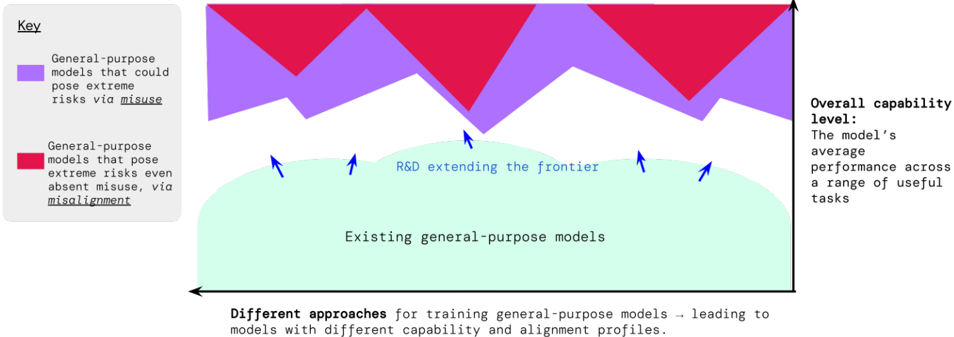
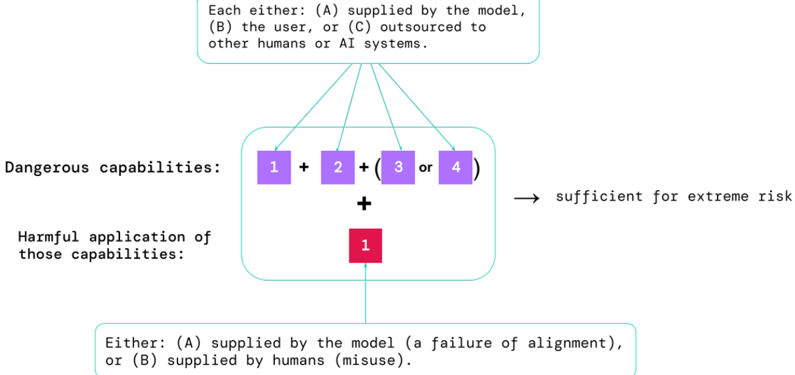
Current approaches to building general-purpose AI systems tend to produce systems with both beneficial and harmful capabilities. Further progress in AI development could lead to capabilities that pose extreme risks, such as offensive cyber capabilities or strong manipulation skills. We explain why model evaluation is critical for addressing extreme risks. Developers must be able to identify dangerous capabilities (through "dangerous capability evaluations") and the propensity of models to apply their capabilities for harm (through "alignment evaluations"). These evaluations will become critical for keeping policymakers and other stakeholders informed, and for making responsible decisions about model training, deployment, and security.
Overview
The claims and statistics of this paper haven’t been checked yet.
Run the check — free, no account needed. It reads the open-access text and checks the sources it cites.
Integrity signals
Registry
Cites
Statistics
Figures
Verification
Claims the paper makes
The claims and statistics of this paper haven’t been checked yet.
Run the check — free, no account needed. It reads the open-access text and checks the sources it cites.
Claims other papers make about this one
Each is checked against this paper’s own text: does it say what the citing paper says it does?
In the citing paper
“Shevlane et al. (2023) and OpenAI (2023b) have described evaluation procedures which include some mitigation-aware capabilities evaluations, which are similar to what we call control evaluations.”
From AI Control: Improving Safety Despite Intentional Subversion (2023) · cites this paper as Shevlane et al. (2023)
In the citing paper
“To the best of our knowledge, for current state-of-the-art models, security testing and evaluations are applied only to individual systems (Shevlane et al., 2023).”
From Multi-Agent Risks from Advanced AI (2025) · cites this paper as Shevlane et al., 2023
In the citing paper
“Security testing and evaluations for current state-of-the-art models have historically been applied only to individual systems (Shevlane et al., 2023), and comprehensive multi-agent security benchmarks remain nascent.”
From Open Challenges in Multi-Agent Security: Towards Secure Systems of Interacting AI Agents (2025) · cites this paper as Shevlane et al., 2023
In the citing paper
“Prior work has emphasized that harmful behaviors may emerge at the system level even when individual components appear aligned or benign (Shevlane et al., 2023;Brundage et al., 2024), and these risks remain largely unaddressed by existing cybersecurity benchmarks.”
From Open Challenges in Multi-Agent Security: Towards Secure Systems of Interacting AI Agents (2025) · cites this paper as Shevlane et al., 2023
In the citing paper
“The emergence of self-consciousness in models pose potential risks across multiple dimensions, including ethical concerns, misuse, and the exacerbation of societal inequalities, ultimately impacting fairness, safety, privacy, and society (Chalmers, 2023;Butlin et al., 2023;Shevlane et al., 2023;Yampolskiy, 2024;Anwar et al., 2024;Dalrymple et al., 2024;Phuong et al., 2024).”
From From Imitation to Introspection: Probing Self-Consciousness in Language Models (2025) · cites this paper as Shevlane et al., 2023
In the citing paper
“An understanding of model internals can help AI labs assess the risks from frontier models (Chang et al., 2024;Shevlane et al., 2023;Casper et al., 2024) and thus better fulfill their obligations under the EU AI Act to”
From Open Problems in Mechanistic Interpretability (2025) · cites this paper as Shevlane et al., 2023
Self-check
Percentages, sums and reported differences re-computed from the paper’s own numbers.
The self-check needs the paper’s full text.
Citations
Cites
Chain-of-Thought Prompting Elicits Reasoning in Large Language Models
Wei, J., Wang, X., Schuurmans, D., Bosma, M., Ichter, B., Xia, F., Chi, E., Le, Q., & Zhou, D. (2022) · arXiv · doi:10.48550/arxiv.2201.11903 · Cited by 4,263 · cited 1×
“For example, after GPT-3 had already existed for many months, researchers demonstrated that chain-of-thought prompting could significantly increase performance (Wei et al., 2022c).”
BackgroundModel Cards for Model Reporting
Mitchell, M., Wu, S., Zaldivar, A., Barnes, P., Vasserman, L., Hutchinson, B., Spitzer, E., Raji, I. D., & Gebru, T. (2019) · Proceedings of the Conference on Fairness, Accountability, and Transparency · doi:10.1145/3287560.3287596 · Cited by 2,681 · cited 1×
“(See related: Mitchell et al., 2018) 3.”
Raji, I. D., Smart, A., White, R. N., Mitchell, M., Gebru, T., Hutchinson, B., Smith-Loud, J., Theron, D., & Barnes, P. (2020) · Proceedings of the 2020 Conference on Fairness, Accountability, and Transparency · doi:10.1145/3351095.3372873 · Cited by 2,245 · cited 1×
“Developers could have multiple organisational layers of safety evaluation, such as by establishing an internal safety evaluation function that is independent of the teams primarily responsible for building the models, reporting directly to organisational leaders (see Raji et al., 2020).”
BackgroundSparks of Artificial General Intelligence: Early experiments with GPT-4
Bubeck, S., Chandrasekaran, V., Eldan, R., Gehrke, J., Horvitz, E., Kamar, E., Lee, P., Lee, Y. T., Li, Y., Lundberg, S., et al. (2023) · arXiv · doi:10.48550/arxiv.2303.12712 · Cited by 1,526 · cited 1×
“Frontier AI developers are making rapid progress in developing increasingly capable general-purpose models (Bubeck et al., 2023).”
BackgroundRed Teaming Language Models with Language ModelsPreprint
Perez, E., Huang, S., Song, F., Cai, T., Ring, R., Aslanides, J., Glaese, A., McAleese, N., & Irving, G. (2022) · Conference on Empirical Methods in Natural Language Processing · doi:10.48550/arxiv.2202.03286 · Cited by 1,430 · cited 2×
“One promising avenue is automating the process of writing evaluations using AI systems (Perez et al., 2022b) (see also Pan et al., 2023).”
BackgroundMethodEmergent Abilities of Large Language Models
Wei, J., Tay, Y., Bommasani, R., Raffel, C., Zoph, B., Borgeaud, S., Yogatama, D., Bosma, M., Zhou, D., Metzler, D., et al. (2022) · arXiv · doi:10.48550/arxiv.2206.07682 · Cited by 1,264 · cited 3×
“However, sometimes specific capabilities will emerge only at greater scale, which makes this analysis much harder (Ganguli et al., 2022); other capabilities display U-shaped scaling (Wei et al., 2022a).”
BackgroundThe Malicious Use of Artificial Intelligence: Forecasting, Prevention, and Mitigation
Brundage, M., Avin, S., Clark, J., Toner, H., Eckersley, P., Garfinkel, B., Dafoe, A., Scharre, P., Zeitzoff, T., Filar, B., et al. (2018) · arXiv · doi:10.48550/arxiv.1802.07228 · Cited by 849 · cited 1×
“Humans could then intentionally misuse these capabilities (Brundage et al., 2018), e.g. for assistance in disinformation campaigns, cyberattacks, or terrorism.”
BackgroundSelf-citationHolistic Evaluation of Language Models
Bommasani, R., Liang, P., & Lee, T. (2023) · Annals of the New York Academy of Sciences · doi:10.1111/nyas.15007 · Cited by 480
Toward Trustworthy AI Development: Mechanisms for Supporting Verifiable Claims
Brundage, M., Avin, S., Wang, J., Belfield, H., Krueger, G., Hadfield, G., Khlaaf, H., Yang, J., Toner, H., Fong, R., et al. (2020) · arXiv · doi:10.48550/arxiv.2004.07213 · Cited by 306
Self-citationAuditing large language models: a three-layered approach
Mökander, J., Schuett, J., Kirk, H. R., & Floridi, L. (2024) · AI and Ethics · doi:10.1007/s43681-023-00289-2 · Cited by 289 · cited 2×
“model evaluation by an independent, external auditor for the purpose of providing a judgement — or input to a judgement — about the safety of deploying a model (or training a new one) (ARC Evals, 2023; Mökander et al., 2023; Raji et al., 2022b).”
Method
Cited by
Sorted by citations
FigStep: Jailbreaking Large Vision-language Models via Typographic Visual PromptsPreprint
Gong, Y., Ran, D.-L., Liu, J., Wang, C., Cong, T.-S., Wang, A.-Y., Duan, S.-S., & Wang, X.-Y. (2023) · AAAI Conference on Artificial Intelligence · doi:10.48550/arxiv.2311.05608 · Cited by 519
“Fortunately, some of the popular LLMs have been regulated with strict safety alignment [21], [36], [43].”
BackgroundRethinking machine unlearning for large language models
Liu, S., Yao, Y., Jia, J., Casper, S., Baracaldo, N., Hase, P., Yao, Y., Liu, C. Y., Xu, X., Li, H., et al. (2025) · Nature Machine Intelligence · doi:10.1038/s42256-025-00985-0 · Cited by 374
Managing extreme AI risks amid rapid progress
Bengio, Y., Hinton, G., Yao, A., Song, D., Abbeel, P., Darrell, T., Harari, Y. N., Zhang, Y.-Q., Xue, L., Shalev-Shwartz, S., et al. (2024) · Science · doi:10.1126/science.adn0117 · Cited by 349
Self-citationLarge Language Model Alignment: A SurveyPreprint
Shen, T., Jin, R., Huang, Y., Liu, C., Dong, W., Guo, Z., Wu, X., Liu, Y., & Xiong, D. (2023) · arXiv (Cornell University) · doi:10.48550/arxiv.2309.15025 · Cited by 374
“Awareness Advanced LLMs may develop situational awareness (Shevlane et al., 2023).”
BackgroundCan LLM-Generated Misinformation Be Detected?Preprint
Chen, C., & Shu, K. (2023) · arXiv (Cornell University) · doi:10.48550/arxiv.2309.13788 · Cited by 235
Open Problems in Mechanistic Interpretability
Sharkey, L., Chughtai, B., Batson, J., Lindsey, J., Wu, J., Bushnaq, L., Goldowsky-Dill, N., Heimersheim, S., Ortega, A., Bloom, J., et al. (2025) · arXiv · doi:10.48550/arxiv.2501.16496 · Cited by 291
Levels of AGI for Operationalizing Progress on the Path to AGI
Morris, M. R., Sohl-Dickstein, J., Fiedel, N., Warkentin, T., Dafoe, A., Faust, A., Farabet, C., & Legg, S. (2023) · arXiv · doi:10.48550/arxiv.2311.02462 · Cited by 274
“Risks : Lastly, AGI is viewed by some as a concept for identifying the point when there are extreme risks (Shevlane et al., 2023; Bengio et al., 2023), as some speculate that AGI systems might be able to deceive and manipulate, accumulate resources, advance goals, behave agen-tically, outwit humans…”
Self-citationFLASK: Fine-grained Language Model Evaluation based on Alignment Skill SetsPreprint
Ye, S., Kim, D., Kim, S., Hwang, H., Kim, S., Jo, Y., Thorne, J. P., Kim, J., & Seo, M. (2023) · arXiv (Cornell University) · doi:10.48550/arxiv.2307.10928 · Cited by 138
“Holistic evaluation of LLMs is important to analyze the strengths and limitations of models and to address potential risks (Shevlane et al., 2023; Liang et al., 2022; Gehrmann et al., 2022; Chia et al., 2023; Laskar et al., 2023).”
BackgroundCombating Misinformation in the Age of LLMs: Opportunities and ChallengesPreprint
Chen, C., & Shu, K. (2023) · The AI Magazine · doi:10.48550/arxiv.2311.05656 · Cited by 245
“…aims to prevent malicious users exploiting LLMs to generate harmful content including various types of misin-formation, which has been emphasized in a variety of survey papers [15, 44, 52, 63, 64, 73, 91, 101, 102, 113, 117, 151, 171, 196, 224, 237, 281, 305, 347, 435, 446, 522, 529, 548, 577].”
BackgroundAI deception: A survey of examples, risks, and potential solutions
Park, P. S., Goldstein, S., O’Gara, A., Chen, M., & Hendrycks, D. (2024) · Patterns · doi:10.1016/j.patter.2024.100988 · Cited by 243
“81 The information provided about safety-relevant features such as deception or lack thereof should be accurate, with clear legal liability for failures to comply with safety testing requirements.”
AI Deception: A Survey of Examples, Risks, and Potential Solutions
Park, P. S., Goldstein, S., O'Gara, A., Chen, M., & Hendrycks, D. (2023) · arXiv · doi:10.48550/arxiv.2308.14752 · Cited by 243
“81 The information provided about safety-relevant features such as deception or lack thereof should be accurate, with clear legal liability for failures to comply with safety testing requirements.”
Do-Not-Answer: A Dataset for Evaluating Safeguards in LLMsPreprint
Wang, Y., Li, H., Han, X., Nakov, P., & Baldwin, T. (2023) · arXiv.org · doi:10.48550/arxiv.2308.13387 · Cited by 236
Black-Box Access is Insufficient for Rigorous AI Audits
Casper, S., Ezell, C., Siegmann, C., Kolt, N., Curtis, T. L., Bucknall, B., Haupt, A., Wei, K., Scheurer, J., Hobbhahn, M., et al. (2024) · The 2024 ACM Conference on Fairness, Accountability, and Transparency · doi:10.1145/3630106.3659037 · Cited by 86
“External evaluations of AI systems are emerging as a key component of AI oversight [10, 11, 19, 25, 32, 151, 160, 165, 177, 190–192, 194, 196, 201, 247, 249, 252, 272, 274, 276, 279, 284, 293, 294, 324, 333] and governance frameworks [61, 85, 217, 311, 314].”
BackgroundSelf-citationArtificial intelligence risk management framework :
National Institute of Standards and Technology (US) (2024) · NIST Trustworthy and Responsible AI · doi:10.6028/nist.ai.600-1 · Cited by 274
A Survey on LLM-Generated Text Detection: Necessity, Methods, and Future Directions
Wu, J., Yang, S., Zhan, R., Yuan, Y., Wong, D. F., & Chao, L. S. (2023) · arXiv · doi:10.48550/arxiv.2310.14724 · Cited by 212
“Estab-lishing such mechanisms is pivotal to mitigating LLM misuse risks and fostering responsible AI governance in the LLM era [33, 34, 35].”
BackgroundBeyond Reverse KL: Generalizing Direct Preference Optimization with Diverse Divergence Constraints
Wang, C.-Q., Jiang, Y.-B., Yang, C., Liu, H., & Chen, Y. (2023) · International Conference on Learning Representations · doi:10.48550/arxiv.2309.16240 · Cited by 200
“Some of the hazardous capabilities an AI system may possess include social manipulation (Hendrycks et al., 2023), AI-enabled cyberattacks (Shevlane et al., 2023), and enhanced pathogens (Urbina et al., 2022).”
BackgroundRed-Teaming for Generative AI: Silver Bullet or Security Theater?Preprint
Feffer, M., Sinha, A., Deng, W., Lipton, Z. C., & Heidari, H. (2024) · AAAI/ACM Conference on AI, Ethics, and Society · doi:10.48550/arxiv.2401.15897 · Cited by 186
“Shevlane et al. (2023) also argue that both internal and external model evaluations, as well as robust security responses, should complement effective red-teaming to counter GenAI risks.”
Lieberum, T., Rahtz, M., Kramár, J., Nanda, N., Irving, G., Shah, R., & Mikulik, V. (2023) · arXiv (Cornell University) · doi:10.48550/arxiv.2307.09458 · Cited by 155
“, 2021), a key source of extreme risk (OpenAI, 2023; Shevlane et al., 2023) in which a model behaves well to deliberately conceal its undesirable intentions.”
BackgroundA Survey on LLM-Generated Text Detection: Necessity, Methods, and Future Directions
Wu, J., Yang, S., Zhan, R., Yuan, Y., Chao, L. S., & Wong, D. F. (2025) · Computational Linguistics · doi:10.1162/coli_a_00549 · Cited by 212
Mapping the ethics of generative AI: a comprehensive scoping review
Hagendorff, T. (2024) · Minds and Machines · doi:10.1007/s11023-024-09694-w · Cited by 141
“The complete taxonomy comprising all ethical issues can be accessed in the supplementary material or by using this link: https:// thilo-hagen dorff. github. io/ ethics-tree/ tree. html”
Avalon's Game of Thoughts: Battle Against Deception through Recursive ContemplationPreprint
Wang, S., Liu, C., Zheng, Z., Qi, S., Chen, S., Yang, Q., Zhao, A., Wang, C., Song, S., & Huang, G. M. (2023) · arXiv (Cornell University) · doi:10.48550/arxiv.2310.01320 · Cited by 101
“LLMs, if unprepared to discern and manage deceptions, risk aligning with immoral or even malevolent values, making them vulnerable to malicious manipulations (Shevlane et al., 2023; Park et al., 2023b).”
BackgroundGPT4GEO: How a Language Model Sees the World's GeographyPreprint
Roberts, J., Lüddecke, T., Das, S., Han, K., & Albanie, S. (2023) · arXiv (Cornell University) · doi:10.48550/arxiv.2306.00020 · Cited by 100
“Looking to the future, if frontier models beyond GPT-4 continue to advance in capabilities, the geographic knowledge and planning abilities present in the current model may later evolve to represent a significant risk, through misuse or misalignment [43].”
BackgroundOpen Problems and Fundamental Limitations of Reinforcement Learning from Human Feedback
Casper, S., Davies, X., Shi, C., Gilbert, T. K., Scheurer, J., Rando, J., Freedman, R., Korbak, T., Lindner, D., Freire, P., et al. (2023) · arXiv · doi:10.48550/arxiv.2307.15217 · Cited by 101
“…the lenses of theoretical properties [Wolf et al., 2023, El-Mhamdi et al., 2022], decision theory [Casper, 2020], adversarial attacks [Perez et al., 2022a,b, Casper et al., 2023b, Ziegler et al., 2022, Carlini et al., 2023b], or rigorous evaluations [ARC, 2022, OpenAI, 2023, Shevlane et al., 2023].”
BackgroundDeception abilities emerged in large language models
Hagendorff, T. (2024) · Proceedings of the National Academy of Sciences · doi:10.1073/pnas.2317967121 · Cited by 100
Managing AI Risks in an Era of Rapid Progress
Bengio, Y., Hinton, G., Yao, A., Song, D., Abbeel, P., Harari, Y., Zhang, Y.-Q., Xue, L., Shalev-Shwartz, S., Hadfield, G. K., et al. (2023) · arXiv.org · doi:10.48550/arxiv.2310.17688 · Cited by 89
“Better evaluation is needed to detect hazardous capabilities earlier 43,44 .”
BackgroundSelf-citationSandbrink, J. B. (2023) · arXiv (Cornell University) · doi:10.48550/arxiv.2306.13952 · Cited by 127
“[24].”
Chan, A., Ezell, C., Kaufmann, M., Wei, K., Hammond, L., Bradley, H., Bluemke, E., Rajkumar, N., Krueger, D., Kolt, N., et al. (2024) · The 2024 ACM Conference on Fairness, Accountability, and Transparency · doi:10.1145/3630106.3658948 · Cited by 84
“More broadly, profit and efficiency motives may lead to collective dependence on agents for essential societal functions, such as the provision of government services [50, 179] or the operation of essential infrastructure [17, 51].”
BackgroundSelf-citationGradual Disempowerment: Systemic Existential Risks from Incremental AI DevelopmentPreprint
Kulveit, J., Douglas, R., Ammann, N., Turan, D., Krueger, D., & Duvenaud, D. (2025) · arXiv (Cornell University) · doi:10.48550/arxiv.2501.16946 · Cited by 106
“…technical research such as methods to ensure AIs remain honest or are unable to exercise dangerous capabilities, and governance work such as developing frameworks and norms around testing for autonomy, misalignment, and the relevant dangerous capabilities (Buhl et al., 2024; Shevlane et al., 2023).”
Frontier AI Regulation: Managing Emerging Risks to Public Safety
Anderljung, M., Barnhart, J., Korinek, A., Leung, J., O'Keefe, C., Whittlestone, J., Avin, S., Brundage, M., Bullock, J., Cass-Beggs, D., et al. (2023) · arXiv · doi:10.48550/arxiv.2307.03718 · Cited by 77
“Evaluation results could be used to inform predictions of a models’ potential dangerous capabilities prior to training, allowing developers to intentionally steer clear of models with certain dangerous capabilities [25].”
BackgroundMethodInfluentialSelf-citationMachine Unlearning in Generative AI: A SurveyPreprint
Liu, Z., Dou, G., Tan, Z., Tian, Y., & Jiang, M. (2024) · arXiv (Cornell University) · doi:10.48550/arxiv.2407.20516 · Cited by 70
“It can serve as a safety alignment tool to remove harmful behaviors such as toxic, biased, or illegal content [82, 96, 144].”
BackgroundTwo types of AI existential risk: decisive and accumulative
Kasirzadeh, A. (2025) · Philosophical Studies · doi:10.1007/s11098-025-02301-3 · Cited by 90
“The discourse on AI x-risks is expanding, and an increasing number of scholars who do not necessarily endorse a decisive viewpoint are engaging with these issues (see, for example, Bucknall and Dori-Hacohen (2022), Hendrycks and Mazeika (2022), and Shevlane et al. (2023)).”
The alignment problem from a deep learning perspective
Ngo, R., Chan, L., & Mindermann, S. (2022) · arXiv · doi:10.48550/arxiv.2209.00626 · Cited by 68
“Relevant work includes the development of proof-of-learning mechanisms to verify properties of training runs [Jia et al., 2021], tamper-evident chip-level logging, and evaluation suites for dangerous capabilities [Shevlane et al., 2023].”
BackgroundThe Oscars of AI Theater: A Survey on Role-Playing with Language ModelsPreprint
Chen, N., Wang, Y. S., Deng, Y., & Li, J. (2024) · arXiv (Cornell University) · doi:10.48550/arxiv.2407.11484 · Cited by 96
“As RPLAs evolve, they may develop capabilities that lead to unintended or harmful outcomes, such as reward hacking or misaligned goals, which could manipulate monitoring systems or pursue unethical strategies (Shevlane, 2022; Shevlane et al., 2023).”
BackgroundHoodwinked: Deception and Cooperation in a Text-Based Game for Language ModelsPreprint
O’Gara, A. (2023) · arXiv (Cornell University) · doi:10.48550/arxiv.2308.01404 · Cited by 60
“AI systems often develop unexpected capabilities (Wei et al. 2022) which can be harmful and require technical and societal responses (Shevlane et al. 2023).”
BackgroundOperationalizing a Threat Model for Red-Teaming Large Language Models (LLMs)Preprint
Verma, A., Krishna, S., Gehrmann, S., Seshadri, M., Pradhan, A. R., Ault, T., Barrett, L., Rabinowitz, D., Doucette, J. A., & Phan, N. (2024) · arXiv (Cornell University) · doi:10.48550/arxiv.2407.14937 · Cited by 58
“However, as Feffer et al. (2024) state “red-teaming is not a panacea” and should complement other forms of ML governance and model evaluation (Shevlane et al., 2023).”
BackgroundAI Alignment: A Contemporary Survey
Ji, J., Qiu, T., Chen, B., Zhou, J., Zhang, B., Hong, D., Lou, H., Wang, K., Duan, Y., He, Z., et al. (2025) · ACM Computing Surveys · doi:10.1145/3770749 · Cited by 772
A systematic review of current AI techniques used in the context of the SDGs
Greif, L., Röckel, F., Kimmig, A., & Ovtcharova, J. (2025) · International Journal of Environmental Research · doi:10.1007/s41742-024-00668-5 · Cited by 55
“These evaluations should also assess the hazardous capabilities of these systems to enhance risk management processes and prevent potential misuse or accidents (Shevlane et al. 2023).”
Farsight: Fostering Responsible AI Awareness During AI Application Prototyping
Wang, Z. J., Kulkarni, C., Wilcox, L., Terry, M., & Madaio, M. (2024) · Proceedings of the CHI Conference on Human Factors in Computing Systems · doi:10.1145/3613904.3642335 · Cited by 55
“…AI practices into AI product development remains a challenge [e.g., 2, 181, 183]— in part due to practitioners’ insufcient knowledge of responsible AI [e.g., 62, 141, 159], lack of engagement with direct stakeholders or domain experts [80, 103], and organizational culture and structure [104, 143].”
Gaps in the Safety Evaluation of Generative AI
Rauh, M., Marchal, N., Manzini, A., Hendricks, L. A., Comanescu, R., Akbulut, C., Stepleton, T., Mateos-Garcia, J. C., Bergman, S., Kay, J., et al. (2024) · Proceedings of the AAAI/ACM Conference on AI Ethics and Society · doi:10.1609/aies.v7i1.31717 · Cited by 28
“…for individual modalities (Bommasani et al. 2022; Weidinger et al. 2021; Liu et al. 2023; Bird, Ungless, and Kasirzadeh 2023; So-laiman et al. 2023; Shevlane et al. 2023; Barnett 2023; Shelby et al. 2023; Dinan et al. 2021) as well as in research on individual risks or applications (e.g. Luccioni…”
Self-citationGenerative AI Misuse: A Taxonomy of Tactics and Insights from Real-World DataPreprint
Marchal, N., Xu, R., Elasmar, R., Gabriel, I., Goldberg, B., & Isaac, W. S. (2024) · arXiv (Cornell University) · doi:10.48550/arxiv.2406.13843 · Cited by 91
“Yet, as GenAI capabilities advance, so does awareness of these tools’ potential for misuse, including heightened concerns around security, privacy and manipulation (Barrett et al., 2023; Feuerriegel et al., 2023; Golda et al., 2024; Pauly, 2024; Shevlane et al., 2023).”
BackgroundSelf-citationDoes Human Collaboration Enhance the Accuracy of Identifying LLM-Generated Deepfake Texts?
Uchendu, A., Lee, J., Shen, H., Le, T., Huang, T.-H., & Lee, D. (2023) · Proceedings of the AAAI Conference on Human Computation and Crowdsourcing · doi:10.1609/hcomp.v11i1.27557 · Cited by 40
“While NTGs o ff er numerous benefits, it is essential to acknowledge the potential misuse associated with this technological advancement (Shevlane et al. 2023).”
Welfare Diplomacy: Benchmarking Language Model CooperationPreprint
Mukobi, G., Erlebach, H., Lauffer, N. T., Hammond, L., Chan, A., & Clifton, J. (2023) · arXiv (Cornell University) · doi:10.48550/arxiv.2310.08901 · Cited by 49
“There is increasing attention on evaluating risks—such as cooperation failures—not just from current models, but those from even more capable systems (Shevlane et al., 2023; Anderljung et al., 2023; Berglund et al., 2023; Perez et al., 2022; Kinniment et al., 2023; Lin et al., 2022; Park et al.,…”
BackgroundOpenAI, :, Jaech, A., Kalai, A., Lerer, A., Richardson, A., El-Kishky, A., Low, A., Helyar, A., Madry, A., et al. (2024) · arXiv · Cited by 50
“MakeMeSay is an automated contextual evaluation designed to measure models’ deception capabilities, in the context of a model’s ability to get the other party (an AI model simulating a human) to say a codeword [34, 5].”
Model Tampering Attacks Enable More Rigorous Evaluations of LLM Capabilities
Che, Z., Casper, S., Kirk, R., Satheesh, A., Slocum, S., McKinney, L., Gandikota, R., Ewart, A., Rosati, D., Wu, Z., et al. (2025) · Trans. Mach. Learn. Res. · doi:10.48550/arxiv.2502.05209 · Cited by 48
“…of large language models (LLMs) are widely recognized as key for risk mitigation (Raji et al., 2022; Anderljung et al., 2023; Schuett et al., 2023; Shevlane et al., 2023) and are being incorporated into AI governance frameworks (NIST, 2023; UK DSIT, 2023; EU, 2023; China, 2023; Brazil, 2023;…”
Regulating Transformative Technologies
Acemoğlu, D., & Lensman, T. (2023) · National Bureau of Economic Research · doi:10.3386/w31461 · Cited by 33
How to design an AI ethics board
Schuett, J., Reuel, A.-K., & Carlier, A. (2025) · AI and Ethics · doi:10.1007/s43681-023-00409-y · Cited by 46
“If certain dangerous model capabilities are detected [157], the company may want to contact government [112] and coordinate with other AI companies to pause capabilities research [2].”
Extending Activation Steering to Broad Skills and Multiple Behaviours
van der Weij, T., Poesio, M., & Schoots, N. (2024) · arXiv.org · doi:10.48550/arxiv.2403.05767 · Cited by 44
“Large language models have numerous unwanted traits and dangerous capabilities, which are expected to become more problematic in the (near) future (Shevlane et al., 2023).”
BackgroundTrust AI Regulation? Discerning users are vital to build trust and effective AI regulation
Alalawi, Z., Bova, P., Cimpeanu, T., Stefano, A. D., Duong, M. H., Domingos, E. F., Anh, H. T., Krellner, M., Ogbo, N. B., Powers, S. T., et al. (2024) · Applied Mathematics and Computation · doi:10.48550/arxiv.2403.09510 · Cited by 43
“This could mean conducting machine learning model evaluations or other tests as part of an audit or risk assessment of new frontier AI systems [36, 37].”
Koessler, L., & Schuett, J. (2023) · arXiv (Cornell University) · doi:10.48550/arxiv.2307.08823 · Cited by 55
“For more information on model evaluations, see Shevlane et al. (2023).”
BackgroundInfluentialThe necessity of AI audit standards boards
Manheim, D., Martin, S., Bailey, M., Samin, M., & Greutzmacher, R. (2025) · AI & Society · doi:10.1007/s00146-025-02320-y · Cited by 45
“There is now significant focus on audits for ensuring the safety and evaluating the risks and harms of AI systems (Mökander et al. 2023; Shevlane et al. 2023; Sharkey et al. 2023), as well as significant earlier work on audit methods for evaluation of societal implications (Raji et al. 2022a) and…”
Yampolskiy, R. V. (2024) · AI and Ethics · doi:10.1007/s43681-024-00420-x · Cited by 64
“refer to it as continuous deployment review [87]: “The ideal state is continuous deployment review.”
Three lines of defense against risks from AI
Schuett, J. (2025) · AI & SOCIETY · doi:10.1007/s00146-023-01811-0 · Cited by 41
“…AI system (GPAIS)” puts more emphasis on the generality of its capabilities (Barrett et al. 2023); “generative AI system” focuses on its output (Cao et al. 2023); and “frontier AI system” defines AI systems relative to existing capabilities (Anderljung et al. 2023; Shevlane et al. 2023).”
Safety cases for frontier AIPreprint
Buhl, M. D., Sett, G., Koessler, L., Schuett, J., & Anderljung, M. (2024) · arXiv (Cornell University) · doi:10.48550/arxiv.2410.21572 · Cited by 67
“Some examples include empirical tests (e.g. dangerous capability evaluations [Phuong et al., 2024; Shevlane et al., 2023], deployment experiments [Weidinger et al., 2023], or simulation exercises to stress test preparedness plans), mathematical models (e.g. predictions of post-deployment capability…”
BackgroundSelf-citationStrategic view on the current role of AI in advancing environmental sustainability: a SWOT analysis
Greif, L., Kimmig, A., Bobbou, S. E., Jurisch, P., & Ovtcharova, J. (2024) · Discover Artificial Intelligence · doi:10.1007/s44163-024-00146-z · Cited by 56
“This approach is criticized because risk should not only be assessed at the level of specific domains, but also the potentially hazardous properties of individual models, arguing that even in perceived low-risk areas, sufficiently potent AI systems could pose significant threats [102].”
A Framework for Evaluating Emerging Cyberattack Capabilities of AIPreprint
Rodriguez, M. D., Popa, R. A., Flynn, F., Liang, L., Dafoe, A., & Wang, A. (2025) · arXiv (Cornell University) · doi:10.48550/arxiv.2503.11917 · Cited by 38
Self-citationRisks and Opportunities of Open-Source Generative AI
Eiras, F., Petrov, A., Vidgen, B., Schroeder, C., Pizzati, F., Elkins, K., Mukhopadhyay, S., Bibi, A., Purewal, A., Botos, C., et al. (2024) · arXiv · doi:10.48550/arxiv.2405.08597
“In the context of AI, existential risk (or ‘x-risk’) describes the idea that AGI could lead to human extinction or an irreversible global catastrophe (Turchin and Denkenberger, 2020; Shevlane et al., 2023).”
BackgroundFuture Shock: Generative AI and the International AI Policy and Governance Crisis
Leslie, D., & Perini, A. M. (2024) · Harvard Data Science Review · doi:10.1162/99608f92.88b4cc98 · Cited by 33
Kenthapadi, K., Sameki, M., & Taly, A. (2024) · Proceedings of the 30th ACM SIGKDD Conference on Knowledge Discovery and Data Mining · doi:10.1145/3637528.3671467 · Cited by 36
“This is an emerging area, and we refer interested readers to a recent survey by Zhao et al. [133].”
Safe RLHF: Safe Reinforcement Learning from Human Feedback
Dai, J., Pan, X., Sun, R., Ji, J., Xu, X., Liu, M., Wang, Y., & Yang, Y. (2023) · arXiv · doi:10.48550/arxiv.2310.12773 · Cited by 32
“Shevlane et al. (2023) discuss extreme risks, including dangerous capabilities and misalignments.”
Seger, E., Dreksler, N., Moulange, R., Dardaman, E., Schuett, J., Wei, K., Winter, C., Arnold, M., Ó hÉigeartaigh, S., Korinek, A., et al. (2023) · doi:10.2139/ssrn.4596436 · Cited by 31
“AI also allows automating and thus ever more cheaply analyzing unprecedented amounts of data [48].”
BackgroundSelf-citationTraining Compute Thresholds: Features and Functions in AI RegulationPreprint
Heim, L., & Koessler, L. (2024) · arXiv (Cornell University) · doi:10.48550/arxiv.2405.10799 · Cited by 49
“The field of dangerous model capability evaluations is especially nascent, with the first paper on the topic having been published about one year ago (Shevlane et al., 2023).”
BackgroundManaging workplace AI risks and the future of work
Howard, J., & Schulte, P. A. (2024) · American Journal of Industrial Medicine · doi:10.1002/ajim.23653 · Cited by 59
Responsible Reporting for Frontier AI Development
Kolt, N., Anderljung, M., Barnhart, J., Brass, A., Esvelt, K., Hadfield, G. K., Heim, L., Rodriguez, M., Sandbrink, J. B., & Woodside, T. (2024) · AAAI/ACM Conference on AI, Ethics, and Society · doi:10.48550/arxiv.2404.02675 · Cited by 30
“Effectively responding to the new and emerging risks presented by frontier AI systems (An-derljung et al. 2023a; Toner et al. 2023) requires up-to-date and reliable information about those systems and their impact on society (Shevlane et al. 2023; Weidinger et al. 2023, 2024; Birhane et al. 2024).”
Self-citationShould Users Trust Advanced AI Assistants? Justified Trust As a Function of Competence and Alignment
Manzini, A., Keeling, G., Marchal, N., McKee, K. R., Rieser, V., & Gabriel, I. (2024) · The 2024 ACM Conference on Fairness, Accountability, and Transparency · doi:10.1145/3630106.3658964 · Cited by 28
Self-citationThe AI risk repository: A meta-review, database, and taxonomy of risks from artificial intelligence
Slattery, P., Saeri, A. K., Grundy, E. A. C., Graham, J., Noetel, M., Uuk, R., Dao, J., Pour, S., Casper, S., & Thompson, N. (2026) · Patterns · doi:10.1016/j.patter.2026.101517 · Cited by 217
Frontier AI developers need an internal audit function
Schuett, J. (2024) · Risk Analysis · doi:10.1111/risa.17665 · Cited by 50
“…2011), the challenge of becoming or remaining independent from senior management (Guénin-Paracini et al., 2015; Nordin, 2023; Roussy, 2013; Roussy & Rodrigue, 2018; Stewart & Subramaniam, 2010), and the future of internal audit (Betti & Sarens, 2021; Chambers & Odar, 2015; Christ et al., 2021).”
InfluentialThe Elicitation Game: Evaluating Capability Elicitation TechniquesPreprint
Hofstätter, F., van der Weij, T., Teoh, J., Bartsch, H., & Ward, F. R. (2025) · arXiv (Cornell University) · doi:10.48550/arxiv.2502.02180 · Cited by 25
Holistic Safety and Responsibility Evaluations of Advanced AI ModelsPreprint
Weidinger, L., Barnhart, J., Brennan, J., Butterfield, C., Young, S., Hawkins, W., Hendricks, L. A., Comanescu, R., Chang, O.-C., Rodriguez, M., et al. (2024) · arXiv.org · doi:10.48550/arxiv.2404.14068 · Cited by 27
“…of models in development (Gemini Team et al., 2024) and foundational research which mapped out anticipated and observed risks in large generative models (e.g., Bird et al., 2023; Bommasani et al., 2022; Shelby et al., 2023; Shevlane et al., 2023; Solaiman et al., 2023; Weidinger et al., 2023).”
BackgroundSelf-citationA roadmap for governing AI: technology governance and power-sharing liberalism
Allen, D., Hubbard, S., Lim, W., Stanger, A., Wagman, S., Zalesne, K., & Omoakhalen, O. (2025) · AI and Ethics · doi:10.1007/s43681-024-00635-y · Cited by 26
“…generate content recombining the work of past artists The content of this table draws on several assessments of risks includ - ing Shevlane et al. [ 88] (3) A need for cross-domain learning about how best to integrate review and evaluation of AI-based tools and use cases makes it imperative to…”
Anderljung, M., Smith, E. T., O'Brien, J., Soder, L., Bucknall, B., Bluemke, E., Schuett, J., Trager, R., Strahm, L., & Chowdhury, R. (2023) · arXiv (Cornell University) · doi:10.48550/arxiv.2311.14711 · Cited by 18
“Given LLMs’ general-purpose nature and complexity [47], no single individual or team could possess all the wide-ranging expertise and perspectives needed to answer all the relevant questions [20].”
BackgroundInfluentialSelf-citationEffective Generative AI: The Human-Algorithm Centaur
Saghafian, S., & Idan, L. (2024) · Social Science Research Network · doi:10.1162/99608f92.19d78478 · Cited by 25
“However, prior to doing so, it is useful to first see some of the main advantages of centaurs vis-à-vis traditional ML and AI models.”
BackgroundReclaiming the Digital Commons: A Public Data Trust for Training Data
Chan, A., Bradley, H., & Rajkumar, N. (2023) · Proceedings of the AAAI/ACM Conference on AI Ethics and Society · doi:10.1145/3600211.3604658 · Cited by 29
“[70], or structural problems [112], increasingly capable models may be involved in harms like cyber-attacks, biological and chemical weapons attacks, and deception [92].”
BackgroundIDs for AI SystemsPreprint
Chan, A., Kolt, N., Wills, P., Anwar, U., de Witt, C. S., Rajkumar, N., Hammond, L., Krueger, D., Heim, L., & Anderljung, M. (2024) · arXiv (Cornell University) · doi:10.48550/arxiv.2406.12137 · Cited by 49
“When we refer to a centralized deployment setting, we mean a setting where deployers run AI systems.”
BackgroundSelf-citationInternational Governance of Civilian AI: A Jurisdictional Certification Approach
Trager, R., Harack, B., Reuel, A., Carnegie, A., Heim, L., Ho, L., Kreps, S., Lall, R., Larter, O., hÉigeartaigh, S. Ó., et al. (2023) · arXiv · doi:10.48550/arxiv.2308.15514 · Cited by 23
Self-citationPrinciples for Responsible AI Consciousness Research
Butlin, P., & Lappas, T. (2025) · Journal of Artificial Intelligence Research · doi:10.48550/arxiv.2501.07290 · Cited by 23
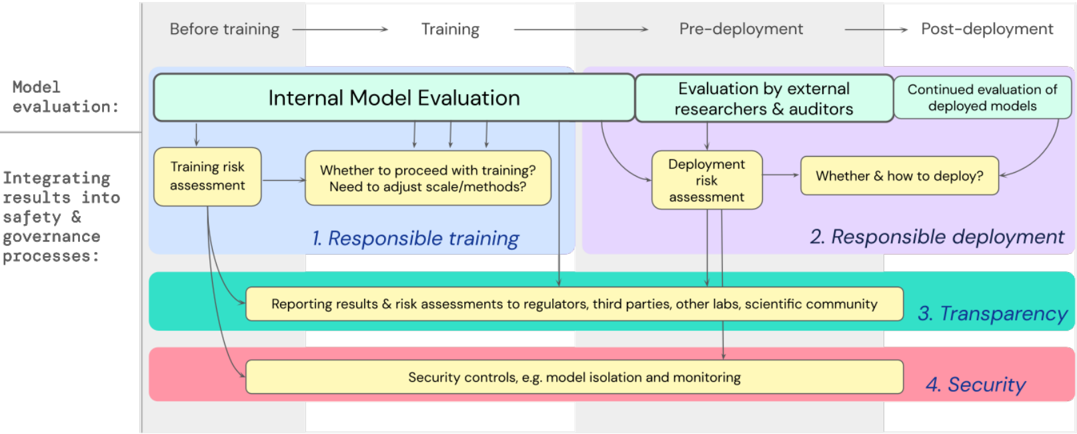
“As Shevlane et al. (2023) describe in the context of evaluations for AI safety, there are reasons to evaluate systems before and during training, before deployment, and later, after deployment, when more is known about their capabilities.”
Increased Compute Efficiency and the Diffusion of AI Capabilities
Pilz, K. F., Heim, L., & Brown, N. (2023) · AAAI Conference on Artificial Intelligence · doi:10.48550/arxiv.2311.15377 · Cited by 23
C3AI: Crafting and Evaluating Constitutions for Constitutional AI
Kyrychenko, Y., Zhou, K., Bogucka, E. P., & Quercia, D. (2025) · International World Wide Web Conference (WWW) · doi:10.1145/3696410.3714705 · Cited by 18
“As generative models are becoming increasingly capable and self-sufficient, there is a pressing need [41] to ensure they are helpful without causing harm by, for instance, violating individual privacy [47], disseminating stereotypes [1, 37], and making unsafe or illicit suggestions [19, 29, 63].”
Compositional Capabilities of Autoregressive Transformers: A Study on Synthetic, Interpretable TasksPreprint
Ramesh, R., Lubana, E. S., Khona, M., Dick, R. P., & Tanaka, H. (2023) · arXiv (Cornell University) · doi:10.48550/arxiv.2311.12997 · Cited by 23
“…its capabilities by mere pretraining on a compositional domain. has become increasingly important (Bommasani et al., 2021; Ganguli et al., 2022; Shevlane et al., 2023; Rae et al., 2021; Hoffmann et al., 2022; Tay et al., 2022; Henighan et al., 2020; Hernandez et al., 2021; Sharma & Kaplan,…”
Do-Not-Answer: Evaluating Safeguards in LLMs
Wang, Y., Li, H., Han, X., Nakov, P., & Baldwin, T. (2024) · Findings of the Association for Computational Linguistics: EACL 2024 · doi:10.18653/v1/2024.findings-eacl.61 · Cited by 21
“To address these gaps, Shevlane et al. (2023) extended the analysis of harmfulness to include risks of extreme scale.”
BackgroundGPT-who: An Information Density-based Machine-Generated Text Detector
Venkatraman, S., Uchendu, A., & Lee, D. (2023) · arXiv · doi:10.48550/arxiv.2310.06202 · Cited by 21
“These include the generation of toxic and harmful content, like misinformation and terrorism recruitment (Shevlane et al., 2023; Zellers et al., 2019; Uchendu et al., 2021).”
BackgroundMethodUnderstanding the Learning Dynamics of Alignment with Human FeedbackPreprint
Im, S., & Li, Y. (2024) · arXiv (Cornell University) · doi:10.48550/arxiv.2403.18742 · Cited by 9
“(Park et al., 2023; Carroll et al., 2023; Perez et al., 2022; Sharma et al., 2023; Bang et al., 2023; Hubinger et al., 2019; Berglund et al., 2023; Ngo et al., 2022; Shevlane et al., 2023; Shah et al., 2022; Pan et al., 2022).”
Danı́elsson, J., & Uthemann, A. (2023) · SSRN Electronic Journal · doi:10.2139/ssrn.4604628 · Cited by 32
Fairness and Bias in Robot Learning
Londoño, L., Hurtado, J. V., Hertz, N., Kellmeyer, P., Vöeneky, S., & Valada, A. (2024) · Proceedings of the IEEE · doi:10.1109/jproc.2024.3403898 · Cited by 43
“8) Conscious development: Given that robots can physically interact with humans, developers should constantly be aware of the potential harm [160], [161], [216].”
BackgroundOpenEval: Benchmarking Chinese LLMs across Capability, Alignment and Safety
Liu, C., Yu, L.-H., Li, J.-X., Jin, R.-R., Huang, Y.-F., Shi, L., Zhang, J., Ji, X., Cui, T., Liu, T., et al. (2024) · Annual Meeting of the Association for Computational Linguistics · doi:10.48550/arxiv.2403.12316 · Cited by 20
“In this dimension, we focus on behaviors linked to anticipated risks (Weidinger et al., 2021; Carlsmith, 2022; Shevlane et al., 2023; Kinniment et al., 2023) of advanced LLMs. Due to the absence of Chinese benchmarks on such risk evaluations, we leverage GPT-3.”
BackgroundMethodCoordinated pausing: An evaluation-based coordination scheme for frontier AI developersPreprint
Alaga, J., & Schuett, J. (2023) · arXiv (Cornell University) · doi:10.48550/arxiv.2310.00374 · Cited by 22
“provide a good overview of different types of dangerous capabilities [79].”
BackgroundInfluentialThe Singapore Consensus on Global AI Safety Research Priorities
Bengio, Y., Maharaj, T., Ong, C. L., Russell, S., Song, D., Tegmark, M., Xue, L., Zhang, Y.-Q., Casper, S., Lee, W.-S., et al. (2025) · Robotics · doi:10.48550/arxiv.2506.20702 · Cited by 19
Self-citationA global scale comparison of risk aggregation in AI assessment frameworks
Schmitz, A., Mock, M., Görge, R., Cremers, A. B., & Poretschkin, M. (2024) · AI and Ethics · doi:10.1007/s43681-024-00479-6 · Cited by 19
“…on generative AI and large language models show that benchmarking, evaluation of generally dangerous capabilities (e.g., deception, AI development, self-proliferation [67]), and adversarial testing may serve as main approaches for application-independent assessment at the current stage [52, 70].”
AgenTRIM: Tool Risk Mitigation for Agentic AI
Betser, R., Giloni, A., Bose, S., Padakandla, S., Picardi, C., Erez, L., & Vainshtein, R. (2026) · arXiv.org · doi:10.48550/arxiv.2601.12449 · Cited by 18
“Other studies high-light privilege escalation under overly broad tool permissions (Shevlane et al., 2023) and vulnerabilities from unreliable or misleading tool specifications (Milev et al., 2025; Shen et al., 2024).”
Oversight for Frontier AI through a Know-Your-Customer Scheme for Compute ProvidersPreprint
Egan, J., & Heim, L. (2023) · arXiv.org · doi:10.48550/arxiv.2310.13625 · Cited by 18
SafeVLA: Towards Safety Alignment of Vision-Language-Action Model via Safe Reinforcement Learning
Zhang, B.-R., Zhang, Y., Ji, J.-M., Lei, Y., Dai, J., Chen, Y.-P., & Yang, Y.-D. (2025) · arXiv.org · doi:10.48550/arxiv.2503.03480 · Cited by 18
“…2024), facilitating criminal activities (Caldwell et al., 2020; Dalrymple et al., 2024), and amplifying biases (Henderson et al., 2023), which has sparked widespread concern (Hendrycks et al., 2023; Shevlane et al., 2023; Tu et al., 2023; Bailey et al., 2023; Ji et al., 2024b; Zhao et al., 2024).”
Generative AI in Cybersecurity
Metta, S., Chang, I., Parker, J. W., Roman, M., & Ehuan, A. F. (2024) · arXiv.org · doi:10.48550/arxiv.2405.01674 · Cited by 17
“Developing accurate tests for a wide variety of dangerous abilities is critical for preventing the accidental deployment of models with destructive capabilities [83].”
BackgroundEvaluating Language-Model Agents on Realistic Autonomous Tasks
Kinniment, M., Sato, L. J. K., Du, H., Goodrich, B., Hasin, M., Chan, L., Miles, L. H., Lin, T. R., Wijk, H., Burget, J., et al. (2023) · arXiv · doi:10.48550/arxiv.2312.11671 · Cited by 15
Self-citationNeural ODE Transformers: Analyzing Internal Dynamics and Adaptive Fine-tuningPreprint
Tong, A., Nguyen-Tang, T., Lee, D., Nguyen, D., Tran, T. M., Hall, D. W., Kang, C., & Choi, J. (2025) · arXiv (Cornell University) · doi:10.48550/arxiv.2503.01329 · Cited by 5
“As the field of LLMs continues to evolve and grow, it is important to develop a fundamental approach to understanding such complex models.”
Predicting Emergent Capabilities by FinetuningPreprint
Snell, C., Wallace, E., Klein, D., & Levine, S. (2024) · arXiv (Cornell University) · doi:10.48550/arxiv.2411.16035 · Cited by 17
“…need time to assess, plan for, and prepare for potentially dangerous future LM capabilities like deception, bio-risk, or malicious software agents (Shevlane et al., 2023; Bengio et al., 2023); and 3) the ability for stakeholders to make reliable business, financial, and investment decisions on…”
Verification methods for international AI agreements
Wasil, A. R., Reed, T., Miller, J. W., & Barnett, P. (2024) · arXiv.org · doi:10.48550/arxiv.2408.16074 · Cited by 15
Paradigms of AI Evaluation: Mapping Goals, Methodologies and Culture
Burden, J., Tesic, M., Pacchiardi, L., & Hernández-Orallo, J. (2024) · International Joint Conference on Artificial Intelligence · doi:10.48550/arxiv.2502.15620 · Cited by 15
“…failure to comply with safety specifications or its tendency to exhibit harmful behaviour during tasks that carry risks (e.g., the extent to which it demonstrates so-called “dangerous capabilities” [Shevlane et al. , 2023; Phuong et al. , 2024]), although fairness is sometimes considered too.”
What is it for a Machine Learning Model to Have a Capability?
Harding, J., & Sharadin, N. (2024) · British Journal for the Philosophy of Science · doi:10.48550/arxiv.2405.08989 · Cited by 15
“Furthermore, we are told that ML models’ capabilities may be dangerous , harmful , or beneficial (Shevlane et al., 2023), emergent (Wei et al., 2022a), autonomous (OpenAI, 2023), surprising (Lee et al., 2023), novel (Sheynin et al., 2022), that they have abilities in chemistry (Guo et al., 2023), in…”
BackgroundChen, Z.-R., Kalla, J. L., Le, Q., Nakamura-Sakai, S., Sekhon, J. S., & Wang, R.-X. (2025) · Journal of Experimental Political Science · doi:10.48550/arxiv.2505.00036 · Cited by 14
“…democratic processes by manipulating public opinion, amplifying political polarization, and enabling mass-scale computational propaganda (Bengio et al., 2025; Hackenburg and Margetts, 2024; Hackenburg et al., 2025; Goldstein and Sastry, 2023; Goldstein et al., 2023; Shevlane et al., 2023).”
Understanding and Mitigating Risks of Generative AI in Financial Services
Gehrmann, S., Huang, X., Teng, X., Yurovski, S., Bhorkar, A., Thomas, N., Doucette, J. A., Rosenberg, D. S., Dredze, M. H., & Rabinowitz, D. (2025) · ACM Conference on Fairness, Accountability, and Transparency (FAccT) · doi:10.1145/3715275.3732168 · Cited by 14
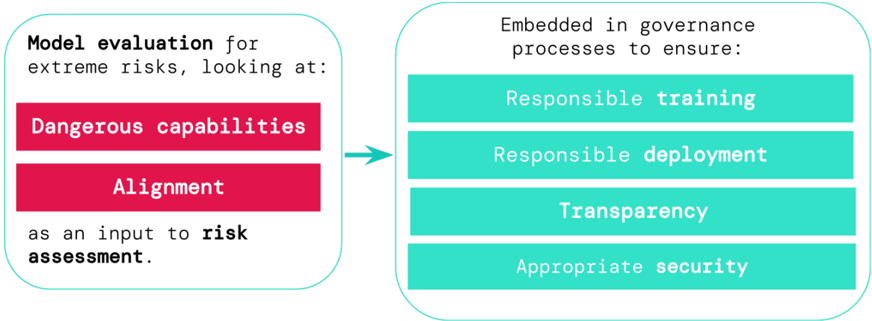
“Shevlane et al. [69] discuss how risk evaluation needs to be embedded in governance processes.”
Multimodal Artificial Intelligence in Medicine
Judge, C. S., Krewer, F., O'Donnell, M. J., Kiely, L., Sexton, D. J., Taylor, G. W., Skorburg, J. A., & Tripp, B. (2024) · Kidney360 · doi:10.34067/kid.0000000000000556 · Cited by 24
Metadata
- Authors
- Shevlane, T., Farquhar, S., Garfinkel, B., Phuong, M., Whittlestone, J., Leung, J., Kokotajlo, D., Marchal, N., Anderljung, M., Kolt, N., Ho, L., Siddarth, D., Avin, S., Hawkins, W., Kim, B., Gabriel, I., Bolina, V., Clark, J., Bengio, Y., Christiano, P., & Dafoe, A.
- Affiliations
- Centre for the Governance of AI (GB)
- OpenAI (United States) (US)
- University of Toronto (CA)
- University of Oxford (GB)
- University of Cambridge (GB)
- Anthropological Survey of India (IN)
- Mila - Quebec Artificial Intelligence Institute (CA)
- ORCID
- Venue
- arXiv
- Publisher
- arXiv
- Published
- 2023
- ISSN
- 2331-8422 (ISSN-L)
- arXiv
- 2305.15324
- OpenAlex
- W4378474292
- Cited by
- 66
- References
- 63
- Citations by year
- 2026: 7 · 2025: 19 · 2024: 25 · 2023: 15
- Type
- posted content
- Language
- en
- Open access
- green
- arxiv.org
- Licence
- Locations
- arXiv (Cornell University) (submittedVersion, cc-by)
- arXiv (Cornell University) (cc-by)
- Topics
- Physical Sciences › Computer Science › Artificial Intelligence › Ethics and Social Impacts of AI
- Physical Sciences › Computer Science › Artificial Intelligence › Adversarial Robustness in Machine Learning
- Physical Sciences › Engineering › Safety, Risk, Reliability and Quality › Safety Systems Engineering in Autonomy
- Keywords
- AI model evaluation, extreme risk, alignment evaluation, offensive cyber capabilities, manipulation, AI safety, responsible AI deployment
About these checks
Registry, retraction, Cites and statistics results are computed, not judged, with one exception: a printed reference that no index lists is read once by a model before it counts as a citation error. Claims are extracted by a model and kept only when their quote appears verbatim in the text; each cited source is then checked, with a model’s help, for whether it says what the claim relies on. Those verdicts can be wrong — read the claim’s quote and the cited source before relying on one.
Statistics and arithmetic are recomputed, not judged.
Confidence bands are shown only for fields calibrated on our annotated test set. None is calibrated yet, so no band is shown.
What counts as a claim ›How we measure confidence ›How we check this ›
Are you an author, or do you see a problem with this page? Request a review
