

OSWorld: Benchmarking Multimodal Agents for Open-Ended Tasks in Real Computer Environments
Open accessThe DOI matches its DataCite record; 63 of the 63 references it cites were found in a registry or an index; 19 of the 26 sources its claims cite were checked for support.
Abstract
Autonomous agents that accomplish complex computer tasks with minimal human interventions have the potential to transform human-computer interaction, significantly enhancing accessibility and productivity. However, existing benchmarks either lack an interactive environment or are limited to environments specific to certain applications or domains, failing to reflect the diverse and complex nature of real-world computer use, thereby limiting the scope of tasks and agent scalability. To address this issue, we introduce OSWorld, the first-of-its-kind scalable, real computer environment for multimodal agents, supporting task setup, execution-based evaluation, and interactive learning across various operating systems such as Ubuntu, Windows, and macOS. OSWorld can serve as a unified, integrated computer environment for assessing open-ended computer tasks that involve arbitrary applications. Building upon OSWorld, we create a benchmark of 369 computer tasks involving real web and desktop apps in open domains, OS file I/O, and workflows spanning multiple applications. Each task example is derived from real-world computer use cases and includes a detailed initial state setup configuration and a custom execution-based evaluation script for reliable, reproducible evaluation. Extensive evaluation of state-of-the-art LLM/VLM-based agents on OSWorld reveals significant deficiencies in their ability to serve as computer assistants. While humans can accomplish over 72.36% of the tasks, the best model achieves only 12.24% success, primarily struggling with GUI grounding and operational knowledge. Comprehensive analysis using OSWorld provides valuable insights for developing multimodal generalist agents that were not possible with previous benchmarks. Our code, environment, baseline models, and data are publicly available at https://os-world.github.io.
Overview
CoChat Summary
TL;DR
OSWorld introduces a scalable, real computer environment and benchmark for multimodal agents, with 369 Ubuntu tasks (plus 43 Windows tasks) spanning web, desktop, OS file I/O, and multi-app workflows. It shows that current LLM/VLM agents are far from human performance, with the best model reaching 12.24% success versus 72.36% for humans.
Key findings
- The benchmark contains 369 Ubuntu tasks: 268 single-app (72.6%), 101 multi-app workflow (27.4%), 30 infeasible (8.1%), and 84 integrated from other benchmarks (22.8%), with 302 initial states and 134 unique execution-based evaluation functions.
- Humans complete 72.36% of tasks overall, while the best model achieves only 12.24%; for workflow tasks involving multiple apps, the highest baseline performance is 6.57%.
- Human median completion time on OSWorld is 111.94 seconds versus 35.38 seconds on WebArena, and human accuracy is 72.36% versus 88% on WebArena.
- Agents struggle primarily with GUI grounding and operational knowledge; among 550 failed examples, more than 75% involved mouse click inaccuracies, and higher screenshot resolution generally improves performance while more a11y-tree history helps SoM but screenshot-only history does not.
Methods
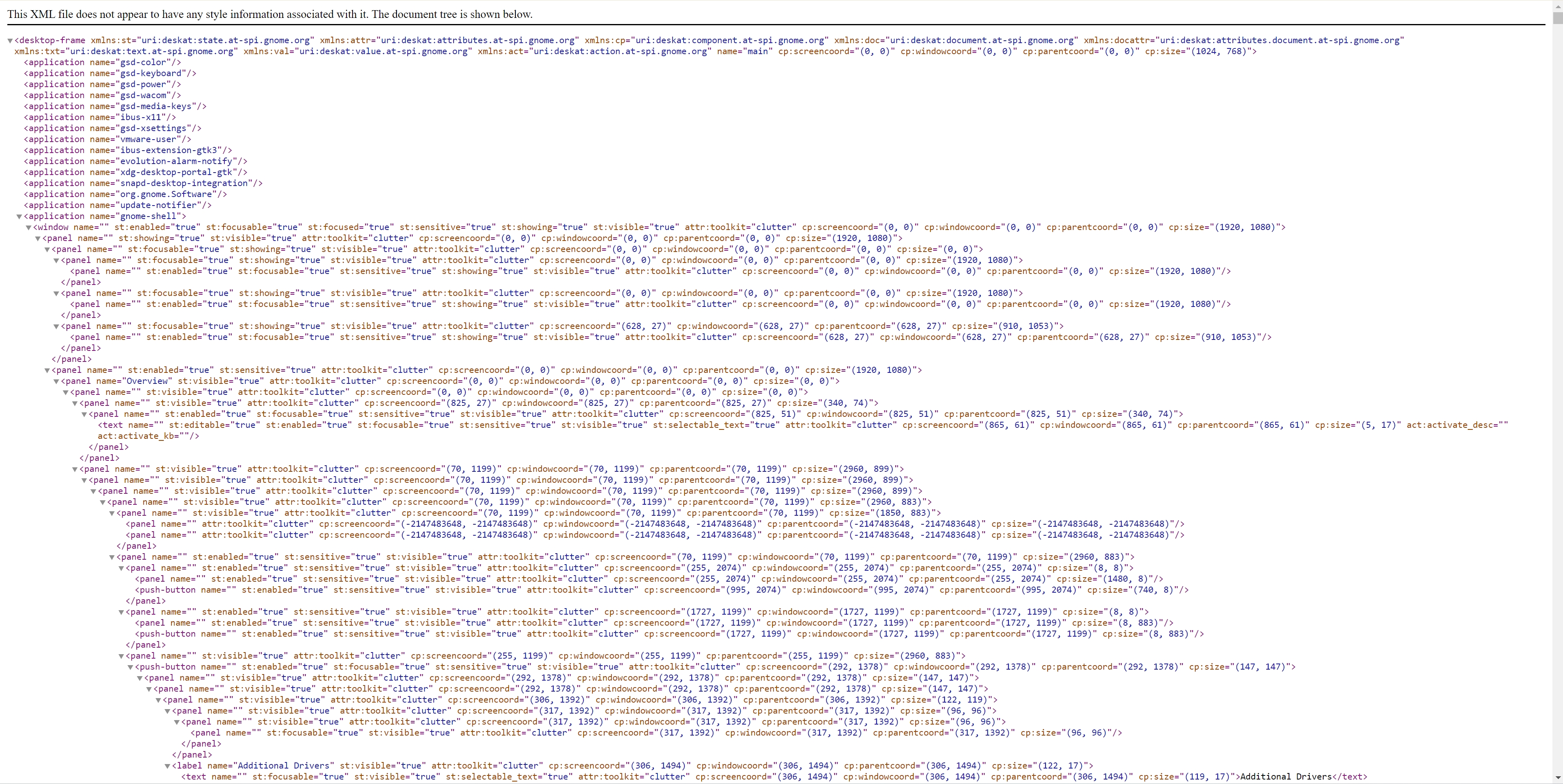
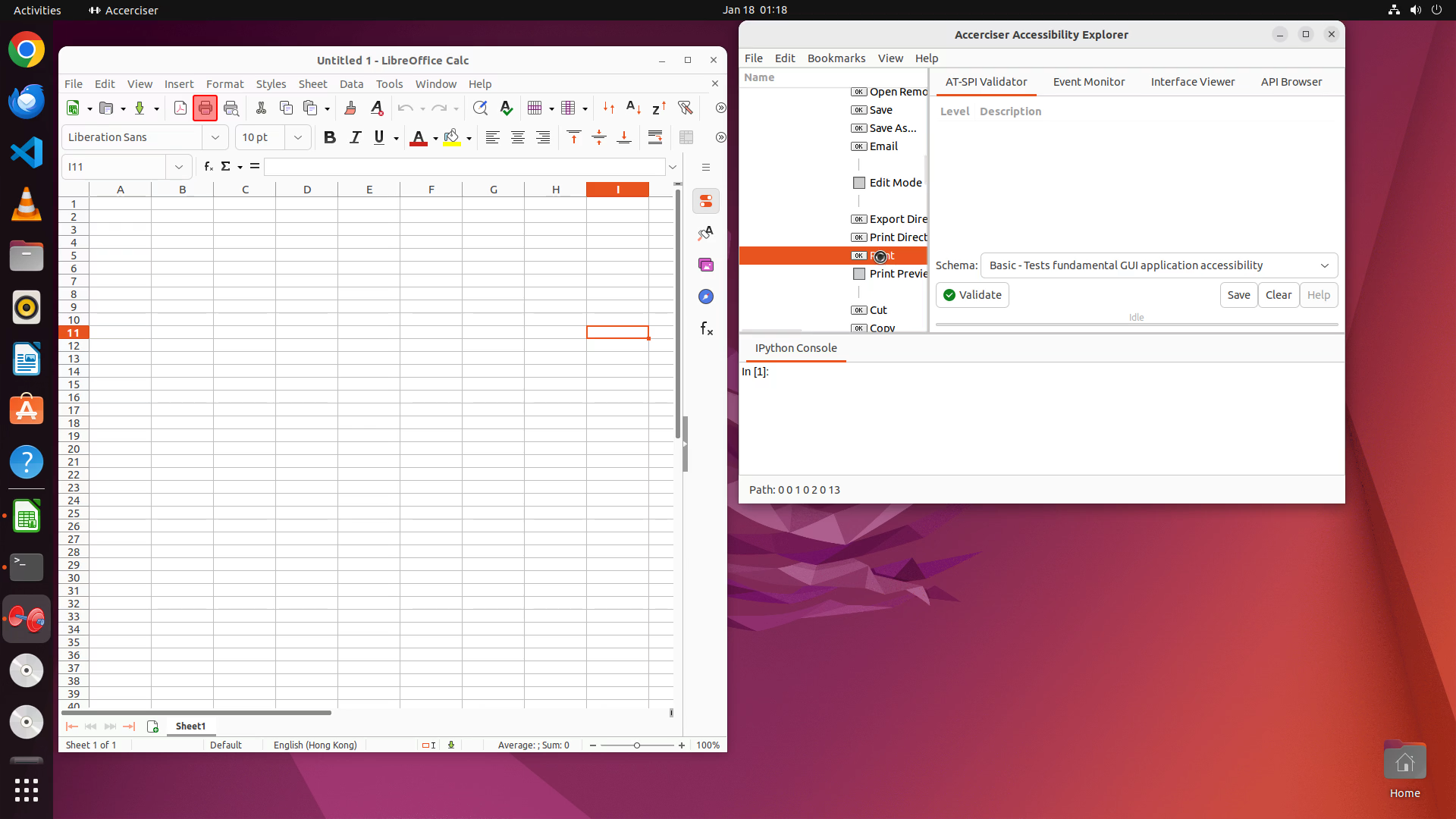
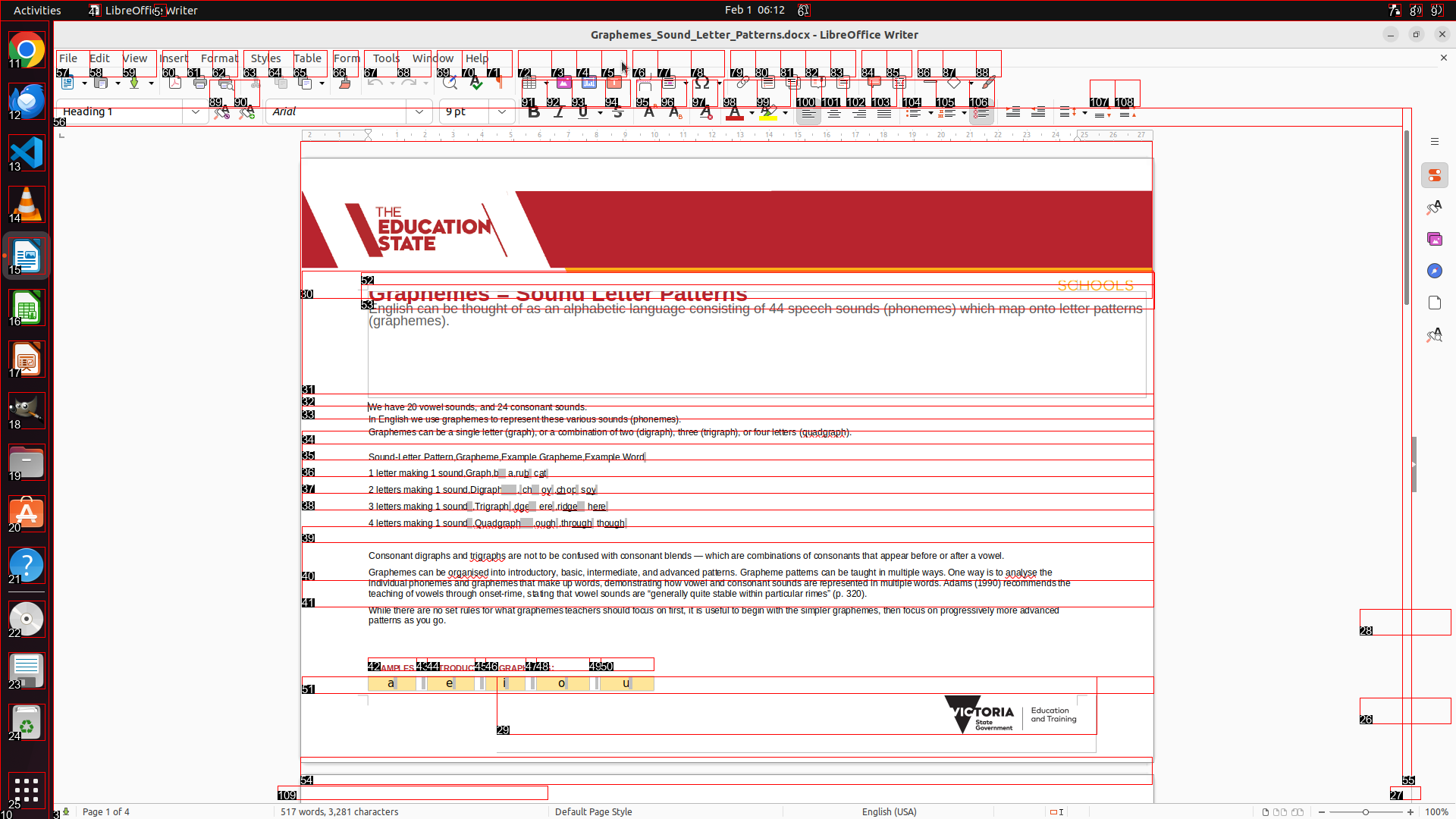
- OSWorld is a VM-based executable environment supporting Ubuntu, Windows, and macOS, with config-driven initial state setup, execution-based evaluation, observations including screenshots, accessibility trees, and terminal output, and a pyautogui action space plus WAIT, FAIL, and DONE.
- The benchmark was built from real-world computer-use sources and annotated by 9 computer science students over 3 months, consuming approximately 1800 man-hours, with each task including a natural-language instruction, setup configuration, and custom evaluation script.
- Evaluation included human performance studies and LLM/VLM baselines (GPT-4V, GPT-4, GPT-4o, Gemini, Claude-3 Opus, Qwen-Max, Mixtral, Llama-3, CogAgent) under four input settings: accessibility tree, screenshot, screenshot + accessibility tree, and Set-of-Mark, with a max step limit of 15 and temperature 1.0, top-p 0.9.
Limitations
- The paper states that further red teaming could reduce false positives and negatives, that a11y tree quality varies across applications and may be missing or noisy, and that there is no reliable metric to assess agent safety or latent side effects; evaluation focuses on task correctness rather than unnecessary damaging actions.
- The paper states that Windows tasks require further activation by the user due to copyright issues, and that macOS benchmark development was avoided due to copyright concerns, leaving the main benchmark on Ubuntu with only 43 Windows tasks for analysis.
- Evident from the text: baseline evaluation is capped at 15 steps and 30 minutes, which may constrain long-horizon tasks, and the Windows set is small and analytic rather than a full benchmark.
Model-written summary. Check it against the paper before relying on it.
Integrity signals
Registry
Cites
Statistics
Figures
Verification
Claims the paper makes
4 Valid · 7 Not valid · 2 Not checked · 147 Own results and interpretations
Some cited sources support this claim and some don’t — read each source’s verdict below.
In the paper
“which contradicts the widely shown effectiveness of SoM in classic image understanding tasks [56], as well as in application areas like web agents [65, 16].”
What the sources say
- Supportedcites [56] Jianwei Yang, Hao Zhang, Feng Li, Xueyan Zou, Chunyuan Li, and Jianfeng Gao. Set-of-mark prompting unleashes extraordinary visual grounding in gpt-4v. arXiv preprint arXiv:2310.11441, 2023. source
The Introduction reports that SoM significantly improves GPT-4V on a wide range of visual tasks requiring grounding, and the Conclusion describes results across fine-grained vision tasks. The cited paper supports the image-understanding part attached to this citation; the decline is the citing authors’ finding, and the web-agent part has separate citations. (LLM, conf=0.91)
- Disputedcites [65] Boyuan Zheng, Boyu Gou, Jihyung Kil, Huan Sun, and Yu Su. Gpt-4v (ision) is a generalist web agent, if grounded. arXiv preprint arXiv:2401.01614, 2024. sourceExperimental — accuracy not yet measured
The Abstract says that set-of-mark prompting is not effective for web agents, contrary to the claim that this source shows its effectiveness in that application. The paper distinguishes web agents from object- or scene-centric image tasks, where it says similar visual marking has been effective. (LLM, conf=0.95)
Checked by a reasoning model — may be wrong.
- Supportedcites [16] Hongliang He, Wenlin Yao, Kaixin Ma, Wenhao Yu, Yong Dai, Hongming Zhang, Zhenzhong Lan, and Dong Yu. Webvoyager: Building an end-to-end web agent with large multimodal models. arXiv preprint arXiv:2401.13919, 2024. source
Our copy of WebVoyager is exactly such an application: the Introduction states it is 'Inspired by Set-of-Mark Prompting (Yang et al., 2023a), we mark interactive web elements on screenshots ... to facilitate decision-making', and §3.3 (Observation Space) says the overlaid bounding boxes 'better guide the agent's action prediction' and that 'The numerical labels assigned to each element are also essential for the model to identify the elements requiring interaction, thereby facilitating accurate action determination' (with the design observation that a single black colour 'yields higher success rates than using multiple colors'). The paper's GPT-4V-backed agent reaches 57.1%/57.9% overall success versus 40.1% for the text-only baseline (Tables 1/3, §5.2), so the copy treats SoM-style marking as effective in a web agent. Caveat: WebVoyager adapts SoM without an object-detection module (GPT-4V-Act) and never isolates the marks against an unmarked-screenshot condition, so the support is an exemplifying application rather than a controlled SoM ablation. (LLM, conf=0.80)
boostedstates a causeSingle case- Asserted: passes — The authors put it forward as true.
- Checkable: passes — It can be checked against evidence.
- Load-bearing: passes — The paper’s conclusions depend on it.
- Based: passes — The paper gives a reason why it holds.
- Supported
The cited sources that could be checked couldn’t confirm or dispute this claim.
In the paper
“Our benchmark has a total of 134 unique evaluation functions, which are orders of magnitude larger than prior work [66], showcasing the complexity, diversity, and evaluation challenges of tasks in our benchmark.”
What the sources say
- Could not verifycites [66] Shuyan Zhou, Frank F Xu, Hao Zhu, Xuhui Zhou, Robert Lo, Abishek Sridhar, Xianyi Cheng, Yonatan Bisk, Daniel Fried, Uri Alon, et al. Webarena: A realistic web environment for building autonomous agents. arXiv preprint arXiv:2307.13854, 2023. sourceExperimental — accuracy not yet measured
Section 3.2 names several WebArena scoring functions, and the section on site-navigation and content tasks describes task-dependent reward functions. Our copy does not give a total number of unique evaluation functions for WebArena, so it cannot establish the claimed orders-of-magnitude comparison with OSWorld’s 134 (searched: unique evaluation functions, 134, programmatic evaluation). (LLM, conf=0.71)
plain- Asserted: passes — The authors put it forward as true.
- Checkable: passes — It can be checked against evidence.
- Load-bearing: passes — The paper’s conclusions depend on it.
- Based: passes — The paper gives a reason why it holds.
- Could not verify
The cited sources support only part of this claim — read each source’s verdict below.
In the paper
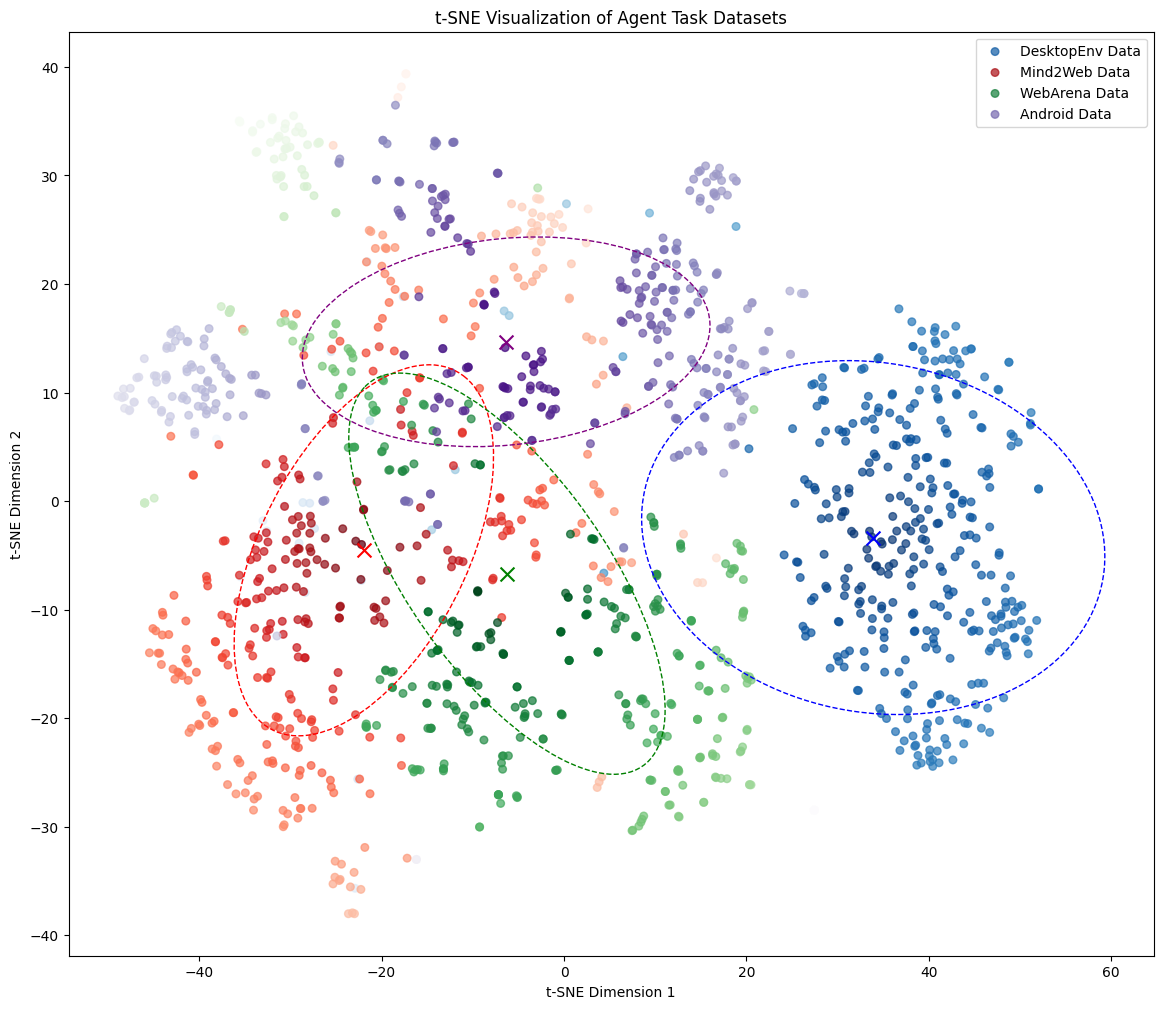
“we also integrate 84 examples from other benchmarks focusing on single-application or domain-specific environments such as NL2Bash [29], Mind2Web [9], SheetCopilot [25], PPTC [14], and GAIA [36].”
What the sources say
- Supportedcites [29] Xi Victoria Lin, Chenglong Wang, Luke Zettlemoyer, and Michael D Ernst. Nl2bash: A corpus and semantic parser for natural language interface to the linux operating system. arXiv preprint arXiv:1802.08979, 2018. source
The Introduction identifies NL2Bash as a dataset of natural-language descriptions paired with Bash commands for controlling the operating system, supporting its use as an example of a domain-focused benchmark. The 84 examples are described as the citing authors’ own integration, not as a count reported by NL2Bash. (LLM, conf=0.92)
- Partly supportedcites [9] Xiang Deng, Yu Gu, Boyuan Zheng, Shijie Chen, Samuel Stevens, Boshi Wang, Huan Sun, and Yu Su. Mind2web: Towards a generalist agent for the web. arXiv preprint arXiv:2306.06070, 2023. sourceExperimental — accuracy not yet measured
The Introduction identifies Mind2Web as a benchmark with over 2,000 tasks across 137 websites and 31 domains, so the citation supports identifying it as a benchmark. It does not support describing Mind2Web as focused on a single application or domain-specific environment; the paper emphasizes its diversity. The 84 examples are the citing authors’ own integration, not a number established by this source. (LLM, conf=0.86)
- Supportedcites [25] Hongxin Li, Jingran Su, Yuntao Chen, Qing Li, and Zhaoxiang Zhang. Sheetcopilot: Bring- ing software productivity to the next level through large language models. arXiv preprint arXiv:2305.19308, 2023.
The citation is used to identify SheetCopilot as one of the benchmarks targeting a single-application / domain-specific environment, and our copy is exactly that: the Abstract (p. 1) and Sec. 3 (Dataset and Evaluation, p. 3) present a curated benchmark of 221 spreadsheet-control tasks with a fully automated evaluation pipeline, and Sec. 5.1 (Benchmark Protocol, p. 7) details its metrics (Exec@1, Pass@1, A50/A90). Sec. 2 (Related Works, p. 2) likewise frames the work as LLM control of one application (spreadsheets), alongside e.g. PowerPoint. The '84 examples' figure belongs to the citing paper's own pooling and is not attributed to this source, so nothing here overreaches. (LLM, conf=0.90)
plain- Asserted: passes — The authors put it forward as true.
- Checkable: passes — It can be checked against evidence.
- Load-bearing: passes — The paper’s conclusions depend on it.
- Based: passes — The paper gives a reason why it holds.
- Supported
The cited sources support only part of this claim — read each source’s verdict below.
In the paper
“Previous benchmarks provide datasets of demonstrations without executable environments [9, 40, 21].”
What the sources say
- Partly supportedcites [9] Xiang Deng, Yu Gu, Boyuan Zheng, Shijie Chen, Samuel Stevens, Boshi Wang, Huan Sun, and Yu Su. Mind2web: Towards a generalist agent for the web. arXiv preprint arXiv:2306.06070, 2023. sourceExperimental — accuracy not yet measured
The Introduction describes MIND2WEB as a dataset of manually annotated action sequences, supporting the demonstrations part of the claim. But the Human-Agent Interaction section says it evaluates agents in cached offline environments and includes network traffic that could enable some replay and exploration. The paper therefore supports a lack of fully interactive live evaluation, not the unqualified assertion that it has no executable environment. (LLM, conf=0.82)
- Partly supportedcites [40] Christopher Rawles, Alice Li, Daniel Rodriguez, Oriana Riva, and Timothy Lillicrap. Android in the wild: A large-scale dataset for android device control. arXiv preprint arXiv:2307.10088, 2023. sourceExperimental — accuracy not yet measured
The Abstract and §2.1 describe AITW and earlier device-control datasets as collections of demonstrations, and §5.2 describes an offline evaluation method. The paper does not establish that these benchmarks lack executable environments; §3 says AITW demonstrations were collected using AndroidEnv and an Android emulator. No page numbers are available in our copy. (LLM, conf=0.79)
- Partly supportedcites [21] Raghav Kapoor, Yash Parag Butala, Melisa Russak, Jing Yu Koh, Kiran Kamble, Waseem Alshikh, and Ruslan Salakhutdinov. Omniact: A dataset and benchmark for enabling multimodal generalist autonomous agents for desktop and web. arXiv preprint arXiv:2402.17553, 2024. sourceExperimental — accuracy not yet measured
Section 3 describes OmniACT as a dataset of tasks, screenshots, and ground-truth action scripts, supporting the demonstration-dataset part of the claim. Sections 4.1–4.2 describe scoring predicted actions against those scripts, but our copy does not establish that the benchmark lacks an executable environment. (LLM, conf=0.78)
plain- Asserted: passes — The authors put it forward as true.
- Checkable: passes — It can be checked against evidence.
- Load-bearing: passes — The paper’s conclusions depend on it.
- Based: passes — The paper gives a reason why it holds.
- Partly supported
A result the paper reports from its own data — it cites no other source for it, so there is none to check. The quote shows it is in the paper.
In the paper
“The performance of these experiments ranges from 0.99% to 12.24%”
plain- Asserted: passes — The authors put it forward as true.
- Checkable: passes — It can be checked against evidence.
- Load-bearing: passes — The paper’s conclusions depend on it.
- Based: passes — The paper gives a reason why it holds.
65 more claims
Create a free account to see all 160 claims and to verify the 4 references still open.
- It may state two separate claims as one. 59
- Probably not a substantial claim. 44
Claims other papers make about this one
Each is checked against this paper’s own text: does it say what the citing paper says it does?
The cited source says what the claim attributes to it.
In the citing paper
“Recent advances [266-268] use LLMs as the core reasoning component within autonomous agents-systems that perceive environments, make decisions, and execute tasks through reasoning and interaction.”
From A Survey of Large Language Models (2026) · cites this paper as [267]
The cited source says what the claim attributes to it.
In the citing paper
“Benchmarks like SWE-bench [332], which tests the resolution of real-world software issues, and OSWorld [267], which evaluates performance within operating system environments, are representative of this direction.”
From A Survey of Large Language Models (2026) · cites this paper as [267]
The cited source says what the claim attributes to it.
In the citing paper
“OSWorld [49] broadens computer-use evaluation to desktop and operating-system tasks under VM-style infrastructure with GUI grounding”
From MemGym: a Long-Horizon Memory Environment for LLM Agents (2026) · cites this paper as [49]
The cited source says what the claim attributes to it.
In the citing paper
“AI agent benchmarks have also proliferated (Zhou et al., 2024; Xie et al., 2024; Abhyankar et al., 2025; Deng et al., 2023; Zhang et al., 2024; Huang et al., 2024; Zhu et al., 2025b).”
From Holistic Agent Leaderboard: The Missing Infrastructure for AI Agent Evaluation (2025) · cites this paper as Xie et al., 2024
The cited source says what the claim attributes to it.
In the citing paper
“In contrast, professional applications remain largely unexplored, with only a few works featuring specialized tasks such as coding in VSCode (Xie et al., 2024).”
From ScreenSpot-Pro: GUI Grounding for Professional High-Resolution Computer Use (2025) · cites this paper as Xie et al., 2024
6 more claims about this paper
Create a free account to see every claim other papers make about this one.
Self-check
Percentages, sums and reported differences re-computed from the paper’s own numbers.
Each contradiction between two passages listed here was confirmed by an independent check.
Rated major: it would touch a result — a value a result rests on, reported and recomputed p-values on opposite sides of the significance level, two passages that conflict with no sign which is right, or a cited work retracted before this paper was published.
In the paper
§ Exec.-based
“Infeasible 8.13% 16.67% Feasible 91.87% 13.34%”
§ Exec.-based
“GPT-4V 8.33% 8.55% 22.84% 14.28% 6.57% 11.77%”
Rated minor: it would not touch a result — a value no result rests on, a p-value that stays on the same side of the significance level, or a conflict that is clerical, resolved elsewhere in the paper, or outside its own findings.
In the paper
§ Exec.-based
“The first use removes the subtitles embedded in the original video, and the second use saves the extracted subtitles locally.”
§ Exec.-based
“Step 4: pyautogui.typewrite('ffmpeg -i video.mp4 -map 0:s:0 subtitles.srt', interval=0.5) Step 5: pyautogui.typewrite('ffmpeg -i video.mp4 -c copy -sn no_subtitles_video.mp4', interval=0.5)”
Rated minor: it would not touch a result — a value no result rests on, a p-value that stays on the same side of the significance level, or a conflict that is clerical, resolved elsewhere in the paper, or outside its own findings.
In the paper
“Excel Word PPT Workflow Overall Examples 11 9 7 16 43 Avg. Inst. Tokens 19.45 21.44 21.86 47.57 32.48”
Reported 32.48 · recomputed 30.722093
Rated minor: it would not touch a result — a value no result rests on, a p-value that stays on the same side of the significance level, or a conflict that is clerical, resolved elsewhere in the paper, or outside its own findings.
In the paper
“for workflow tasks that involve cooperation from multiple apps, the highest performance of the baseline agent is only 6.57%.”
§ Exec.-based
“GPT-4o 20.83% 6.99% 16.81% 16.33% 7.56% 11.36%”
Rated minor: it would not touch a result — a value no result rests on, a p-value that stays on the same side of the significance level, or a conflict that is clerical, resolved elsewhere in the paper, or outside its own findings.
In the paper
§ Exec.-based
“CogAgent 4.17% 0.85% 2.71% 0.62% 0.09% 1.32%”
§ Focus the Terminal window and type the command
“Screen CogAgent 4.17 2.17 0.00 4.35 6.53 0.00 2.17 0.00 0.00 0.10”
Citations
Cites
The publisher hasn’t deposited this paper’s reference list.
Research works printed but not linked: 2
- [44]Tianlin Shi, Andrej Karpathy, Linxi Fan, Jonathan Hernandez, and Percy Liang. World of bits: An open-domain platform for web-based agents. In International Conference on Machine Learning, pages 3135–3144. PMLR, 2017.
- [67]Deyao Zhu, Jun Chen, Xiaoqian Shen, Xiang Li, and Mohamed Elhoseiny. Minigpt-4: En- hancing vision-language understanding with advanced large language models. arXiv preprint arXiv:2304.10592, 2023. https://doi.org/10.48550/arXiv.2310.10634 https://doi.org/10.48550/arXiv.2310.10634 · DOI · Paper page
Cited by
Items 601–696 of 696
de Leao, T. M. (2026) · Research Square · doi:10.21203/rs.3.rs-11206775/v1
Absorbed in Inertia: Activation Analysis for Computer-Use AgentsPreprint
Segalini, G., Soi, Z. W., Decouchant, J., & Chen, L. Y. (2026) · arXiv (Cornell University) · doi:10.48550/arxiv.2609.37176
“Figure 9 shows one further example per model, all on OSWorld, in which a single action is repeated from a screen that it leaves unchanged.”
InfluentialEngiWorld: What Can Frontier Agents Deliver in Professional Engineering Environments?Preprint
Gao, H., Qu, H., Lei, Y., Sun, H., Li, H., Wei, Y., Xue, N., Yu, X., Tao, Z., Zang, Y., et al. (2026) · arXiv (Cornell University) · doi:10.48550/arxiv.2609.37686 · Cited by 3
“A specification may include a natural-language objective, reference media, initial project files, and required intermediate or final deliverables.”
InfluentialAgentic Commerce and the Economics of Machine-to-Machine Payments
Laturnus, V. (2026) · The Journal of FinTech · doi:10.2139/ssrn.7542238
GUI-HARVEST: Self-Improving GUI Agents through Evidence-Driven Harness EvolutionPreprint
Yang, G.-Y., Qu, Z.-K., Li, X., Wang, Z.-Y., Zhang, M., Zeng, S.-P., & Dai, Z.-X. (2026) · arXiv (Cornell University) · doi:10.48550/arxiv.2610.00948 · Cited by 2
“OSWorld provides executable desktop tasks with programmatic evaluation (Xie et al., 2024).”
Self-citationContractRL: Shielded Group-Relative Policy Optimization for Auditable Tool-Call RepairPreprint
Hu, M., Hu, S., Guo, X., Wang, X., Wang, B., Sa, Y., & Zha, D. (2026) · arXiv (Cornell University) · doi:10.48550/arxiv.2610.00328 · Cited by 1
“…et al., 2023; Ouyang et al., 2022; Wang et al., 2023; Zhou et al., 2024; Liu et al., 2024; Chen et al., 2021; Janner et al., 2022; Shao et al., 2024; Geifman & El-Yaniv, 2019; Ong et al., 2025; Chen et al., 2023; Skalse et al., 2022; Lambert et al., 2024; Xie et al., 2024; DeepSeek-AI, 2024; 2025).”
Bayu, I. (2026) · UMM Institutional Repository (University of Maine at Machias)
OpenGameEval: Benchmarking Agentic Programming and Exploration in a Stateful Game EnginePreprint
Turkel, E., Sun, M., Ayyar, K., Dunigan, S., Lu, J., Shcherban, V., Shih, H.-S., Wang, X., & Zhang, T. (2026) · arXiv (Cornell University) · doi:10.48550/arxiv.2610.02563
Han, J. (2026) · arXiv (Cornell University) · doi:10.48550/arxiv.2610.03036
Complex Agents, Shallow Tests: Demystifying and Enhancing Test Adequacy of Agent Harness in the WildPreprint
Xiong, Y., Ge, J., Chen, Z., & Lou, Y. (2026) · arXiv (Cornell University) · doi:10.48550/arxiv.2610.04921
MedImageOSWorld: Benchmarking GUI Agents for Medical Image ConsolesPreprint
Long, Z., Li, X., Xing, L., & Yang, H.-J. (2026) · arXiv (Cornell University) · doi:10.48550/arxiv.2610.04800
“OSWorld evaluates multimodal agents by executed outcomes in real computer environments, and OSWorld 2.0 extends this line to longer-horizon tasks (Xie et al., 2024; Yuan et al., 2026).”
InfluentialSelf-citationCUAWright: A Minimal Unified Interface for Digital AgentsPreprint
Lu, Y., Lee, T., Li, Y., Jang, L., Xue, T., Su, Y., Sun, H., & Awadallah, A. H. (2026) · arXiv (Cornell University) · doi:10.48550/arxiv.2610.04116
“While for desktop agents, majority of works treat mouse, and keyboard as a universal interface (Zheng et al., 2024; Shaw et al., 2023; Qin et al., 2025; Xie et al., 2024; Bonatti et al., 2024; Wang et al., 2026; Yuan et al., 2026; Jang et al., 2026a).”
Human-Centered Needs and Preferences for AI-Assisted Web Automation
Fan, C. (2025) · Deep Blue (University of Michigan) · doi:10.7302/dspace/30369
WanderVision: Scenario-Based GUI Testing for Smart TVs via Vision-Language Models
Ahn, S., Yoon, J., Kim, T., Song, E., & Yoo, S. (2026) · doi:10.1145/3843777.3844529
Anticipatory Planning for Multimodal AI Agents
Liang, Y., Zhou, S., Gu, Y., Tan, H., Wu, G., Dernoncourt, F., Kil, J., Rossi, R. A., & Zhang, R. (2026) · 2026 IEEE/CVF Conference on Computer Vision and Pattern Recognition- FINDINGS Track (CVPRF) · doi:10.1109/cvprf71909.2026.00569 · Cited by 1
“The online benchmarks comprise OSWorld-Verified [41], which examines long-horizon desk-top operations, and AndroidWorld [31], which tests mobile task completion on a live Android emulator with 116 tasks across 20 applications; both use task success rate as the evaluation metric.”
Self-citationnanoMuse: An Open-Source Personal Agent for Every Device You OwnPreprint
Liu, G., Liu, Y., & Zhang, J. (2026) · arXiv (Cornell University) · doi:10.48550/arxiv.2610.08699
“An evaluation suite built from failed runs, so that each release has a number rather than an impression, run beside the public suites: AndroidWorld for the phone [33], OSWorld for the desktop [42], MemGUI-Bench for what the hands remember across apps [14] and OS-Harm for what they should refuse [9].”
Self-citationYao, Z., Wu, J., Lin, Y., Huang, A., Zhang, L., & Nan, Y. (2026) · arXiv (Cornell University) · doi:10.48550/arxiv.2610.09935
The Driver Was Never the Problem: Cross-Platform Test Portability as a Semantic Contract
Khanna, S. (2026) · doi:10.1145/3844177.3844557
“When OSWorld was introduced, humans completed over 72% of its tasks and the best model 12% [23].”
AndroidLong: LLM-Based Android Agents Struggle with Long Looping Tasks
Liu, X., Liu, X., Xu, Y., Fu, J., Huang, J., Liu, Y., Dong, Y., & Tang, J. (2026) · doi:10.1109/cvprf71909.2026.00168
Self-citationWhen Interfaces Speak: Data-Aware Generative UI Harness for Active InteractionPreprint
Li, X., Xu, X., Li, J., Xu, X., Qu, G., Huo, N., Williams, J., & Cheng, R. (2026) · arXiv (Cornell University) · doi:10.48550/arxiv.2610.11123
“…covers general assistance and stateful environments (Liu et al., 2024; Mialon et al., 2024; Trivedi et al., 2024), as well as interaction with existing web and desktop interfaces (Yao et al., 2022; Deng et al., 2023; Zhou et al., 2024; Koh et al., 2024; Drouin et al., 2024; Xie et al., 2024).”
Self-citationYang, K.-S., Liu, Q.-L., Wang, K.-J., Zhao, Y.-C., Li, J.-M., Zheng, S.-H., Yang, R.-Z., Yang, B., Gong, H., Gao, X., et al. (2026) · arXiv (Cornell University) · doi:10.48550/arxiv.2610.12341
Self-citationSadjadi, S. M., Bai, Q., Yang, W., & Liu, Q. (2026) · SSRN Electronic Journal · doi:10.2139/ssrn.7593345
Hur, M., Shin, J., & Min, M. (2026) · Forensic Science International Digital Investigation · doi:10.1016/j.fsidi.2026.302184
Travel Back To Move Forward: Retrospective Exploration and Evolving for Long Horizon AgentsPreprint
Ye, Z., Shi, W., Chen, L., Cai, Z., Wang, Y., Yao, Z., Wang, Z., Song, X., Feng, F., & Cao, Y. (2026) · arXiv (Cornell University) · doi:10.48550/arxiv.2610.13058
Model Context Protocol Based AI Agent for PC Control
Manoranjitham, R., Anbarasan, S., Bharath, S., Punitha, S. C., Sathish, M., & Niranjan, S. (2026) · International Conference on Smart Systems for Electrical, Electronics, Communication and Computer Engineering (ICSSEECC) · doi:10.1109/icsseecc69062.2026.11722066
Seg2Click: Learning Pixel-Level Action Masks for GUI Visual GroundingPreprint
Wang, J., & Huang, D. (2026) · arXiv (Cornell University) · doi:10.48550/arxiv.2610.16234
“GUI agents carry out user instructions across web, mobile, and desktop environments (Zhou et al., 2024; Rawles et al., 2025; Xie et al., 2024).”
What Counts as the Same Task? Executable Contracts for Robustness Evaluation of Tool-Using AgentsPreprint
Shahriyar, S. A., Iftee, M. A. R., Barton, A. C., & Wright, M. (2026) · arXiv (Cornell University) · doi:10.48550/arxiv.2610.14477
“Executable benchmarks such as AgentBench, AgentBoard, WebArena, OS-World, and τ -bench check whether an agent reaches a goal in a simulated environment [14, 15, 31, 34, 39].”
AgentStripes: An Evidence-Graded Maturity Model for AI AgentsPreprint
Naik, N. K., Poudel, V. P., Saroj, A. K., Samantray, S., & Patel, A. (2026) · arXiv (Cornell University) · doi:10.48550/arxiv.2610.18603
“Computer-use benchmarks apply the pattern to richer state: OSWorld (Xie et al., 2024), AndroidWorld and Windows Agent Arena (Rawles et al., 2024; Bonatti et al., 2025), OSWorld-MCP (Jia et al., 2025) and CRAB (Xu et al., 2024).”
EvoCowork: A Benchmark for Real-World Office TasksPreprint
Liu, Z., Chen, X., Han, Z., Pan, Z., Su, Z., Pan, N., Hu, X., Ting, K., & Zhang, W. (2026) · arXiv (Cornell University) · doi:10.48550/arxiv.2610.14828
Terrarium: Growing Personal Assistants via Scalable Synthesis of App WorldsPreprint
Wu, M., Guo, Y., Tao, J., Yuan, X., Cao, Y., Cao, G., Deng, Y., Gong, Z., Ran, D., Li, L., et al. (2026) · arXiv (Cornell University) · doi:10.48550/arxiv.2610.14860
“Training LLM agents across this ecosystem still depends on realistic, controllable, and scalable environments (Zhou et al. 2023; Xie et al. 2024; Trivedi et al. 2024; Barres et al. 2025).”
Self-citationBizAgentBench: Unveiling Hidden Challenges in Deploying Long-Horizon Agents for Real-World BusinessPreprint
Zhao, E., Tong, Y.-Q., Yu, X.-J., Wang, H., Wang, P., Wang, Y.-C., He, D., Li, J.-S., Yang, J.-M., & Wu, W. (2026) · arXiv (Cornell University) · doi:10.48550/arxiv.2610.20424
Task-State Governance: A Virtual Machine for Verifiable and Recoverable GUI Agent ExecutionPreprint
Yang, W., Hao, Y., Zhou, K., Pu, C., Zhang, Y., Cao, J., Huang, J., Ma, S., & Tian, F. (2026) · arXiv (Cornell University) · doi:10.48550/arxiv.2610.20100
OpenClaw-Bench: Reproducible Evaluation of Multi-Agent Harnesses for Multi-Step Tool-Use Tasks
Zhang, S. (2026) · International Conference on Computer Science, Machine Learning and Agents (CSMLA) · doi:10.1109/csmla70906.2026.11724415
AlphaDiana: A Measurement System for Agents in Verifiable Reasoning TasksPreprint
Zhou, Z., Li, Z., Huang, W., Li, X., Cao, C., Feng, X., Lu, X., Hu, J., Xie, Y., Pelleriti, N., et al. (2026) · arXiv (Cornell University) · doi:10.48550/arxiv.2610.20675 · Cited by 1
Self-citationRealtime-Bench: Can Frontier Models Solve Real-time Interactive Problems?Preprint
Tang, J., Yang, X., Zhang, Z., Wang, Z., Cheng, Q., Zhao, H., Li, M., Li, W., Xia, X., & Pei, J. (2026) · arXiv (Cornell University) · doi:10.48550/arxiv.2610.22155 · Cited by 3
“Recent studies also suggest that SoM representations preserve visual grounding performance under downsampling with minimal loss (Xie et al., 2024; Kaesberg et al., 2026).”
Engineering Autonomous LLM-Based Desktop Agents: A Modular Approach
Zanolo, L., Bombieri, M., Robol, M., & Giorgini, P. (2026) · Lecture notes in computer science · doi:10.1007/978-3-032-41794-7_31
Movin, M., Hauff, C., Henriksson, A., & Papapetrou, P. (2026) · Lecture notes in computer science · doi:10.1007/978-3-032-41086-3_23
GlobeBench: Evaluating Text-Based World Model Capabilities for Scalable Environment SimulationsPreprint
Saban, N., Bannur, C., Vasileva, M., & Deshpande, D. G. (2026) · arXiv (Cornell University) · doi:10.48550/arxiv.2610.22708
“Reinforcement learning (RL) for large language models has recently helped scale capabilities in domains such as software engineering (Jimenez et al., 2024; Yang et al., 2025), computer use (Hu et al., 2025; Xie et al., 2024), and scientific discovery (Xu et al., 2026).”
Visual Cache Reuse for Efficient Multimodal InferencePreprint
Gao, S., Fan, Y., Ma, J., Shao, J., Li, Y., & Li, X. (2026) · arXiv (Cornell University) · doi:10.48550/arxiv.2610.25136
“…models (VLMs) are widely deployed in interactive real-time applications such as visual question answering (VQA) [36, 37, 54], UI agent automation [4, 18, 56], and multimodal search [2, 14, 20, 28], where a low time-to-first-token (TTFT) is required to provide a responsive user experience [42, 66].”
Self-citationMining the Self-Rewriting System: A Vision for Data Mining on AI-Native InfrastructurePreprint
Darbari, M., Salavati, C., Wu, L., Wang, D., Zhang, J., Wan, K., Chakka, K., & Hong, L. (2026) · arXiv (Cornell University) · doi:10.48550/arxiv.2610.25374
Step-Aligned Script Generation with Verification and Recovery for Web Automation TestingPreprint
Dhulipala, H., Rong, X., Yadavally, A., & Nguyen, T. N. (2026) · arXiv (Cornell University) · doi:10.48550/arxiv.2610.25601 · Cited by 1
“…or GUI environments using screenshots, DOM structure, or both, include SeeClick [9], CogAgent [10], ShowUI [30], InfiGUIAgent [31], UI-TARS [32] and broader computer-use agents such as Guardian [33], GPTDroid [34], AutoDroid [8], DroidAgent [7]), TaskMatrix.AI [35], and OSWorld/Computer Use [36].”
CUA-Lite: An Open Platform for Computer Use AgentsPreprint
Zhou, Z., Zhang, W., Liu, H., Chen, L., Shi, T., Lin, K., Yang, Z., Wang, L., & Song, D. (2026) · arXiv (Cornell University) · doi:10.48550/arxiv.2610.26071
Cortex: A Fixed-Point Theory of Governed Coding Agents - Technical ReportPreprint
Dinu, M.-C., & Zeba, F. (2026) · arXiv (Cornell University) · doi:10.48550/arxiv.2610.24255
“AgentBench, GAIA, WebArena, OSWorld, and τ -bench cover other agent environments and interaction contracts (Liu et al., 2024; Mialon et al., 2024; Zhou et al., 2024; Xie et al., 2024; Yao et al., 2024).”
BlenderWorld: Benchmarking Visual Agents for 3D Creation from Real-World ReferencesPreprint
Fang, X., Wang, Y., Yu, W., Fang, R., Li, Z., Li, Z., Gu, T., Wei, X., Zang, Y., Li, H., et al. (2026) · arXiv (Cornell University) · doi:10.48550/arxiv.2610.23986
Bang, B., Park, S., Baek, J., Kim, K., Lee, Y., & Hwang, S. J. (2026) · arXiv (Cornell University) · doi:10.48550/arxiv.2610.27954 · Cited by 1
“Benchmark We evaluate on the OSWorld (Xie et al., 2024) benchmark, where we follow a consistent setting as A.1.”
InfluentialLiveUIBench: Evaluating Agent as App WorkflowsPreprint
Zhang, T., Cheng, Y., Zhang, R., Peng, Y., & Xie, T. (2026) · arXiv (Cornell University) · doi:10.48550/arxiv.2610.27977
“Mobile, desktop, enterprise, and office benchmarks assess interaction across richer workspaces (Rawles et al., 2025; Xie et al., 2024; Kapoor et al., 2024; Drouin et al., 2024; Wang et al., 2024a).”
Self-citationCanvasObs: Structured Spatial Observation for Agent Editing on 2D Infinite CanvasesPreprint
Xu, J., Wang, H., Faust, R., Zhou, D., & North, C. L. (2026) · arXiv (Cornell University) · doi:10.48550/arxiv.2610.27176
“OSWorld reports failures in locating and manipulating interface elements, while UI-Vision identifies weaknesses in spatial reasoning and dragging [26, 17].”
Merlet, A. (2026) · Research Square · doi:10.21203/rs.3.rs-11447587/v1
GenXR-Bench: Benchmarking Coding Agents for Interactive XR DevelopmentPreprint
Huang, W., Li, D., Chen, X. '., Qian, X., Numan, N., Zhou, Z., Cho, H., Chishti, S. M. K., Xia, D., Huang, X., et al. (2026) · arXiv (Cornell University) · doi:10.48550/arxiv.2610.29014 · Cited by 1
Goal Completion and State Preservation: Case Studies of GUI-Derived Agent ToolsPreprint
李德宽 (2026) · Research Square · doi:10.21203/rs.3.rs-11463966/v2
Post-Audit Mirage: Identifiability Limits of Offline Agent VerificationPreprint
Behera, A., & Payal, P. (2026) · arXiv (Cornell University) · doi:10.48550/arxiv.2610.31130
“Existing agent benchmarks and realistic task environments measure task success, interaction, and sandboxed risks [4, 15, 22, 23, 30, 39, 40, 42].”
ProductWebBench: Evaluating Website Continuity Beyond Task CompletionPreprint
Wu, J., Yang, J., Du, Y., Liu, S., Chai, L., Zheng, T., Zhang, W., Yang, H., Bai, Y., Lou, Y., et al. (2026) · arXiv (Cornell University) · doi:10.48550/arxiv.2610.31118 · Cited by 1
Joules-to-GDP: How Much Economic Value Do AI Systems Produce per Unit of Energy?Preprint
Zeinali, A., Saad-Falcon, J., Narayan, A., Abbasi, M., Hartley, J., Hennessy, J., Re, C., & Mirhoseini, A. (2026) · arXiv (Cornell University) · doi:10.48550/arxiv.2610.30858
“Related benchmarks extend this approach to research, IT, web, desktop, organizational settings, and economic simulations (Starace et al., 2025; Jha et al., 2025; Xie et al., 2024; Backlund & Petersson, 2025).”
PointerBench: A Diagnostic Benchmark for Fine-Grained GUI GroundingPreprint
Sacco, V., Pandey, S., Jercher, A. F., & Schilling, M. (2026) · arXiv (Cornell University) · doi:10.48550/arxiv.2610.31274
“WebArena provides reproducible, functional websites for evaluating long-horizon task execution [Zhou et al., 2024], while OSWorld extends this paradigm to real web and desktop applications with execution-based evaluators [Xie et al., 2024].”
InfluentialPLE: Physical-Engineering's Last ExamPreprint
Han, R., Zhuang, Y., Ray, A., Yu, H., CuiZhu, Z., Lee, G., Ming, Y., Roy, B., Sakalkar, V., Tirumalashetty, V., et al. (2026) · arXiv (Cornell University) · doi:10.48550/arxiv.2610.30537 · Cited by 1
“…measure machine-learning engineering; related suites cover terminals (Merrill et al., 2026), operating systems and the web (Mialon et al., 2023; Xie et al., 2024; Zhou et al., 2023), tool–user interaction (Yao et al., 2024), security (Zhang et al., 2024), scientific code (Tian et al., 2024)…”
Babu, M., Nejatia, F., & S, M. E. (2026) · Research Square · doi:10.21203/rs.3.rs-11226881/v1
AgentPhishing: A Benchmark of LLM Email Agents Under Adaptive AttackPreprint
Tan, J., Li, M., & Zhao, D. (2026) · arXiv (Cornell University) · doi:10.48550/arxiv.2610.31404
“Computer-use agents powered by large language models (LLMs) and vision-language models (VLMs) offer a way to delegate everyday tasks across desktop and web applications (OpenAI, 2025; Anthropic, 2024; Google DeepMind, 2025; Zhou et al., 2026; Kimi Team, 2026; Xie et al., 2024; Drouin et al., 2024).”
Dual Exam: Controlled Evaluation of Multimodal Agents and World ModelsPreprint
Rao, Z., Chu, M., Zhang, X., Chen, J., Cai, G., Li, R., Du, S., Huang, X., Lu, N., Chen, T., et al. (2026) · arXiv (Cornell University) · doi:10.48550/arxiv.2610.31066
Self-citationLee, L., & Zhang, X. (2026) · SSRN Electronic Journal · doi:10.2139/ssrn.7669369
CRM-Agent-Bench: Benchmarking Tool-Using Agents in Stateful Enterprise EnvironmentsPreprint
Banerjee, M., Lan, Z., & Cao, D. (2026) · arXiv (Cornell University) · doi:10.48550/arxiv.2610.32004 · Cited by 1
Proof-of-Agentness: Towards Verifying Agents on the WebPreprint
Xu, Z., & Li, X. (2026) · arXiv (Cornell University) · doi:10.48550/arxiv.2610.35288
Self-citationLim, G., Koo, Y.-M., Jang, G., & Kira, Z. (2026) · arXiv (Cornell University) · doi:10.48550/arxiv.2610.34384 · Cited by 1
Trajectory2Gym: Decision-Grounded Compositional Interaction Synthesis for Tool-Use AgentsPreprint
Hu, Y., Wen, Z., Lin, Y., Lu, S., Wang, P., Wu, W., Yang, J.-M., & Lin, T. (2026) · arXiv (Cornell University) · doi:10.48550/arxiv.2610.33568
“…al., 2024b, Lu et al., 2025, Guo et al., 2024], τ -bench customer service [Shi et al., 2026], web, computer, and workplace tasks [Zhou et al., 2024, Xie et al., 2024, Mialon et al., 2024, Trivedi et al., 2024, Xu et al., 2025a, Li et al., 2026], and MCP ecosystems [Luo et al., 2025, Mo et al.,…”
PreView: Enhancing GUI Grounding with Preprocessed Views and CuesPreprint
Hou, W., & Xu, K. (2026) · arXiv (Cornell University) · doi:10.48550/arxiv.2610.33645
“VisualWebArena, OS-World, and AndroidWorld evaluate interactive task completion (Koh et al., 2024; Xie et al., 2024; Rawles et al., 2025).”
AgentProofBench: Benchmarking Reusable Verifiers for Web AgentsPreprint
Ning, J., Li, X., Lu, Y., & Kong, Y. (2026) · arXiv (Cornell University) · doi:10.48550/arxiv.2610.34634
Self-citationPrince, E. H. (2026) · Synthesis lectures on visualization · doi:10.1007/978-3-032-37873-6_3
Wang, Z., He, X., Wang, X., Liu, M., Yu, S., & 徐汉川 (2026) · arXiv (Cornell University) · doi:10.48550/arxiv.2610.35978
Contract Before Code: Failure-Compiled Contracts for Long-Horizon Coding Agents
Yu, J., & Lin, K. S. (2026) · Workshop for Research on Agent Language Models (REALM) · doi:10.18653/2026.realm-1.72
Trace2Ground: Scenario, Disambiguation, and Relation Traces for Web GUI Grounding
He, R., Qu, Z., Zhang, S., Unal, M. E., Tu, Z., Appalaraju, S., Yuan, J., Ghadar, S., & Liao, H. (2026) · Workshop for Research on Agent Language Models (REALM) · doi:10.18653/2026.realm-1.100
LiveClawBench: Toward Faithful Evaluation of Stateful LLM Assistants
Long, X., Du, L., Xu, Y., Xu, R., Lu, Q., Gao, Y., Xie, Q., Liu, F., Ding, N., Wang, H., et al. (2026) · Findings of the Association for Computational Linguistics: EMNLP (Findings of EMNLP) · doi:10.18653/2026.findings-emnlp.2361
Self-citationLLM-based agents for generalized web automation and schema-guided data extraction: a survey
Khayoub, I., Chadi, M.-A., Mousannif, H., & Mohamed, F. A. (2026) · International Journal of Data Science and Analytics · doi:10.1007/s41060-026-01335-y
Nvidia, N., :, Jhunjhunwala, A., Srivastava, A. A., Gupta, A., Garg, A., Khattar, A., Wildish, A., Rajfer, A., Renduchintala, A., et al. (2026) · arXiv (Cornell University) · doi:10.48550/arxiv.2610.38095 · Cited by 7
Bank-World: A Benchmark for Evaluating Agents on Banking WorkflowsPreprint
Rupawalla, D. (2026) · arXiv (Cornell University) · doi:10.48550/arxiv.2610.39733
“Benchmarks such as WebArena and OSWorld evaluate agents acting through software, while WorkArena, WorkArena++, CRMArena, and TheAgentCompany test workplace tasks [11, 12, 16, 17, 15, 13].”
Fan, L., Zheng, Y., Mao, D., Ran, H., Hu, S., Mao, W., Zhao, R., Wu, W., Fang, G., Chen, Y., et al. (2026) · arXiv (Cornell University) · doi:10.48550/arxiv.2610.40191 · Cited by 2
Programming by Teaching: Authoring Agent Workflows through Voice Conversation
Yamazaki, T., Yoshida, N., & Higuchi, K. (2026) · ACM Symposium on User Interface Software and Technology (UIST) · doi:10.1145/3830398.3830516
“LLM agents can execute web and desktop tasks but still perform far below humans on complex, realistic ones [13, 17, 57, 62, 63].”
A Tutorial on Reinforcement Learning for LLMs: RLHF and Beyond
Jiang, D. R. (2026) · doi:10.1287/educ.2026.0311
Cross-Interface Authorization for AI Computer-Use AgentsPreprint
Zhu, G., & Wang, C. (2026) · arXiv (Cornell University) · doi:10.48550/arxiv.2610.41397
“Reproducible agent environments make this execution style explicit: WebArena exposes stateful web applications [29], OSWorld exercises real computer applications [25], WeaveBench requires long-horizon GUI and CLI orchestration [9], and CUA-Universe constructs shared-state GUI+CLI environments [21].”
Xu, Y., & Tao, X. (2026) · doi:10.1109/seai70065.2026.11751192
Self-citationHybrid Computer Use: A Unified Programmatic, Semantic, and Visual Interface for General AgentsPreprint
Wang, H., Zhang, X., Fan, S., Zhang, Z., Zhang, X., Li, J., Li, B., & Lu, Y. (2026) · arXiv (Cornell University) · doi:10.48550/arxiv.2610.41432
“The original OSWorld 1.0 set-of-marks baseline uses AX information to identify targets, but maps element identifiers to coordinates for GUI input [1, 16].”
InfluentialBABA-Bench: Evaluating Long-Horizon Patient-Advocacy AgentsPreprint
Vasudevan, S., Mehta, V., & Sweeney, C. (2026) · arXiv (Cornell University) · doi:10.48550/arxiv.2610.41076
“General agent benchmarks usually grade the final state of the environment, or an LLM judge reads the transcript after the run [17, 37–39 ,”
Mage-VL-Cowork: A Full Training Recipe to Learn Hybrid Computer Use From Evolved HarnessesPreprint
Zhang, X., Wang, H., Zhang, X., Xiang, M., Wang, X., Yang, S., Zhang, K., Jia, Z., Tan, A., Wang, X., et al. (2026) · arXiv (Cornell University) · doi:10.48550/arxiv.2610.40747
Self-citationBenchmarking Forecasting Agents on Yesterday's TomorrowsPreprint
Wang, Y., Wang, Y., & Deng, J. (2026) · arXiv (Cornell University) · doi:10.48550/arxiv.2610.40940
“…at a remarkable pace, and the agents built on them now carry out a growing share of everyday knowledge work: writing and debugging code (Jimenez et al., 2024), conducting deep research across many sources (Wei et al., 2025), and operating computers through their interfaces (Xie et al., 2024).”
LegoEnv: Self-Evolving Agentic Environments via Modular RecombinationPreprint
Jiang, Z.-S., Wu, C.-X., Liu, J.-Q., Yi, Y.-J., Wang, S.-Q., Huang, Z.-X., Jiang, J.-Q., Xiao, L.-J., Li, J.-X., Pan, Y.-Y., et al. (2026) · arXiv (Cornell University) · doi:10.48550/arxiv.2611.01834
Predictive Safety Guardrails Do Not Always Make LLM Agents SaferPreprint
Zhao, W., Liu, Z., Li, G., Zhao, Y., Qin, B., & Liu, T. (2026) · arXiv (Cornell University) · doi:10.48550/arxiv.2611.02815
Grosvenor, A., Zemlyansky, A., Wahab, A., Bohachov, K., Dogan, A., Adams, R., & Deighan, D. (2026) · arXiv (Cornell University) · doi:10.48550/arxiv.2611.01001
Error-Aware Context Coordination for Task-Specific Execution-Error Mitigation in OS Agents
Huang, K., Gu, Y., Jia, X., & Du, Z. (2026) · doi:10.1109/iotaiee70863.2026.11749470
Li, J., Golilarz, N. A., & Rahimi, S. (2026) · International Conference on Machine Learning and Applications · doi:10.1109/icmla69890.2026.00173
TenonAgent: Virtualizing Execution Residency for Memory-Oversubscribed LLM AgentsPreprint
Zhang, Y., Zhao, X., Huang, R., Xuan, L., Wang, D., Sun, S., Li, X., Lou, H., Cheng, G., Wang, N., et al. (2026) · arXiv (Cornell University) · doi:10.48550/arxiv.2611.00051
Self-citationDiabAgent: Toward Agentic Physiological ControlPreprint
Li, C., Li, S., Hong, D., Liu, Q., Huang, Y., Bian, P., Xu, M., Zhang, L., 孙, 铭., Li, X., et al. (2026) · arXiv (Cornell University) · doi:10.48550/arxiv.2611.03601
Self-citationMAC-Bench: Benchmarking Multi-Agent Collaboration via Interconnected TasksPreprint
Chen, Z., Zhang, Q., Liu, Q., Xiang, Z., Wei, Z., Tang, Y., Li, Z., Su, J., & Zhang, Z. (2026) · arXiv (Cornell University) · doi:10.48550/arxiv.2611.01728
CivicBench: A Benchmark and Memory Framework for Web-Based Civic Data AnalyticsPreprint
Wu, Y., Zhong, S.-R., Liang, H.-Y., & Liang, Y. (2026) · arXiv (Cornell University) · doi:10.48550/arxiv.2611.01145
When Restoration Hurts: Corruption Robustness and Training-Free Remedies for GUI Grounding
Chen, J., Zhao, L., Wang, Y., & Li, R. (2026) · Lecture notes in computer science · doi:10.1007/978-981-92-7201-3_22
Self-citationFOCAL: Filtered On-device Continuous Activity Logging for Efficient Personal Desktop Summarization
Yin, H., Wen, Z., Cao, J., Yuan, B., & Yang, R. (2026) · arXiv · doi:10.48550/arxiv.2604.19541
RSI-Anything: Unlocking Recursive Self-Improvement with World Models
Cui, T., Zeng, P., Xu, W., Xiao, H., Xue, S., Gao, Q., Ouyang, W., Heng, P. A., Yin, Z., Wu, Y., et al. (2026) · arXiv · doi:10.48550/arxiv.2610.13912 · Cited by 2
“We evaluated graphical user interface (GUI) task completion on MiniWoB++ click-checkboxes , which requires selecting specified checkboxes and submitting the selection [19], and on OSWorld [20].”
Establishing Best Practices for Building Rigorous Agentic Benchmarks
Zhu, Y., Jin, T., Pruksachatkun, Y., Zhang, A., Liu, S., Cui, S., Kapoor, S., Longpre, S., Meng, K., Weiss, R., et al. (2025) · arXiv · doi:10.48550/arxiv.2507.02825 · Cited by 2
“Prior work has proposed agentic benchmarks across various domains, including coding [30, 38, 49, 60], interacting with environments for a predefined target [85, 89, 97], solving math problems [22, 40], and others [11, 48, 75, 92].”
Metadata
- Authors
- Xie, T., Zhang, D., Chen, J., Li, X., Zhao, S., Cao, R., Hua, T. J., Cheng, Z., Shin, D., Lei, F., Liu, Y., Xu, Y., Zhou, S., Savarese, S., Xiong, C., Zhong, V., & Yu, T.
- ORCID
- Venue
- arXiv
- Publisher
- arXiv
- Published
- 2024
- Pages
- 52040-52094
- ISSN
- 1049-5258 (ISSN-L)
- arXiv
- 2404.07972
- OpenAlex
- W4415797693
- Semantic Scholar
- ff3e4f7c2481fb6df539f02be5945235101cbc19
- Cited by
- 64
- References
- 0
- Citations by year
- 2026: 53 · 2025: 8 · 2024: 3
- FWCI
- 13.21
- Type
- conference paper
- Language
- en
- Open access
- green
- arxiv.org
- Licence
- Locations
- neural information processing systems (publishedVersion)
- arXiv (Cornell University) (submittedVersion, cc-by)
- The HKU Scholars Hub (University of Hong Kong) (submittedVersion)
- arXiv (Cornell University) (cc-by)
- Topics
- Physical Sciences › Computer Science › Computer Vision and Pattern Recognition › Multimodal Machine Learning Applications
- Physical Sciences › Computer Science › Artificial Intelligence › Speech and dialogue systems
- Physical Sciences › Engineering › Control and Systems Engineering › Robot Manipulation and Learning
- Keywords
- multimodal agents, benchmarking, open-ended tasks, agent evaluation, human-AI interaction
About these checks
Registry, retraction, Cites and statistics results are computed, not judged, with one exception: a printed reference that no index lists is read once by a model before it counts as a citation error. Claims are extracted by a model and kept only when their quote appears verbatim in the text; each cited source is then checked, with a model’s help, for whether it says what the claim relies on. Those verdicts can be wrong — read the claim’s quote and the cited source before relying on one.
The claim verdicts this report counts are experimental: their accuracy is not yet measured.
A language model drew the claims from the paper on 2026-11-08, under version 3 of the claim definition (model deepseek-v4.1-flash, prompt extract-v3).
A second model labelled each claim on 2026-11-08 (model jev-1.13-20260917, definition revision gold-guideline-v0.2).
Cited sources are checked with a language model’s help (gpt-6-sol and qwen3.8-omni-flash).
Statistics and arithmetic are recomputed, not judged.
Confidence bands are shown only for fields calibrated on our annotated test set. None is calibrated yet, so no band is shown.
What counts as a claim ›How we measure confidence ›How we check this ›
Are you an author, or do you see a problem with this page? Request a review
Data sources
Bibliographic data: Semantic Scholar, OpenAlex, Crossref.
Contains information from the Semantic Scholar Academic Graph Datasets, made available under the ODC Attribution License (ODC-BY 1.0).
Semantic Scholar’s data is described in: Kinney, R., et al. (2023). The Semantic Scholar Open Data Platform. arXiv:2301.10140.
