

NIRVANA: A Comprehensive Dataset for Reproducing How Students Use Generative AI for Essay Writing
Open accessThe DOI matches its DataCite record; 49 of the 49 references it cites were found in a registry or an index; none of the 10 sources its claims cite is checked for support yet.
Abstract
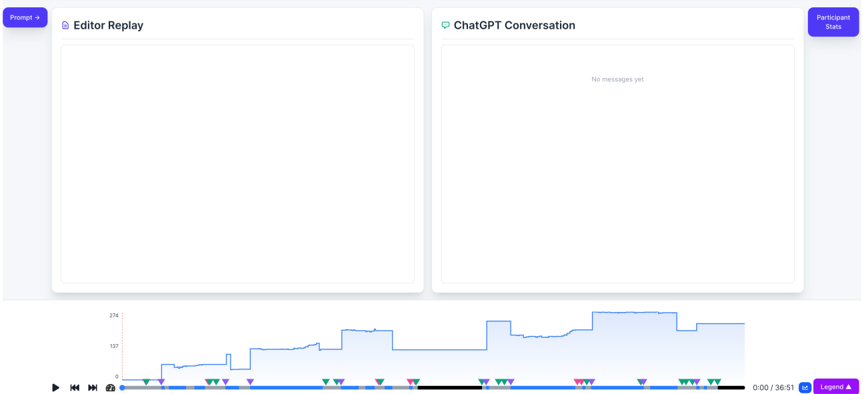
With the rapid adoption of AI writing assistants in education, educators and researchers need empirical evidence to understand the impact on student writing and inform effective pedagogical design. Despite widespread use, we lack systematic understanding of how students engage with these tools during authentic writing tasks: when they seek assistance, what they ask, and how they incorporate AI-generated content into their essays. This gap limits evidence-based policy development and rigorous evaluation of generative AI's learning effects. To address this gap, we introduce NIRVANA, a dataset capturing how university students use generative AI while writing an analytical essay. The dataset includes 77 students who completed an essay task with access to ChatGPT, recording keystroke-level writing behavior, full ChatGPT conversation histories, and all text copied from ChatGPT, enabling a complete reconstruction of the writing process and revealing how AI assistance shapes student work. Our analysis identifies key behavioral patterns, including variation in ChatGPT query frequency and its relationship to essay characteristics such as length and readability. We identify four writing profiles based on students' contribution and revision patterns: Lead Authors, Collaborators, Drafters, and Vibe Writers. To support deeper investigation, we developed a replay interface that reconstructs the writing process; qualitative analysis of sampled replays demonstrates how this tool enables systematic examination of student-AI interactions.
Overview
CoChat Summary
TL;DR
NIRVANA is a dataset of 77 U.S. college students writing an analytical essay with an embedded in-house ChatGPT (GPT-3.5-turbo), capturing keystroke-level writing, full ChatGPT conversations, and copy/paste events. The paper reports exploratory quantitative patterns and four writer profiles, plus a replay interface for qualitative process analysis.
Key findings
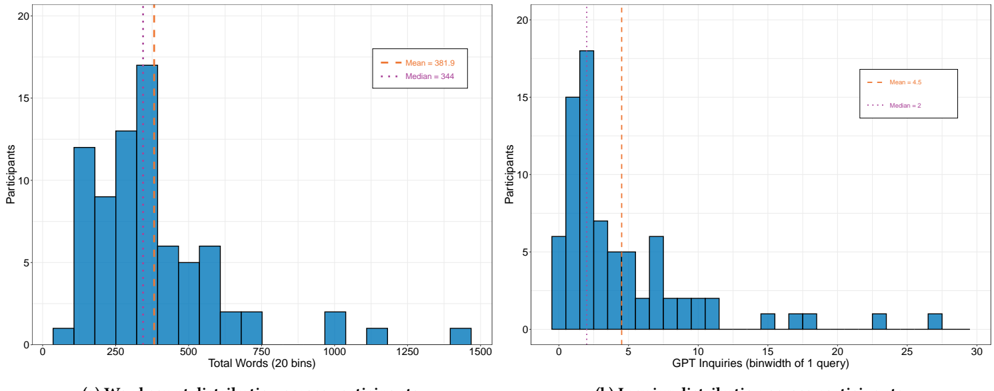
- Across 77 participants, essays averaged 382 words (σ = 235; median = 344), task time averaged 22.5 minutes (σ = 15.10; median = 20.6), ChatGPT queries averaged 4.51 (σ = 5.11; median = 2; skew = 2.24), and Dale-Chall grade level averaged 9.96 (σ = 1.34; median = 10.07).
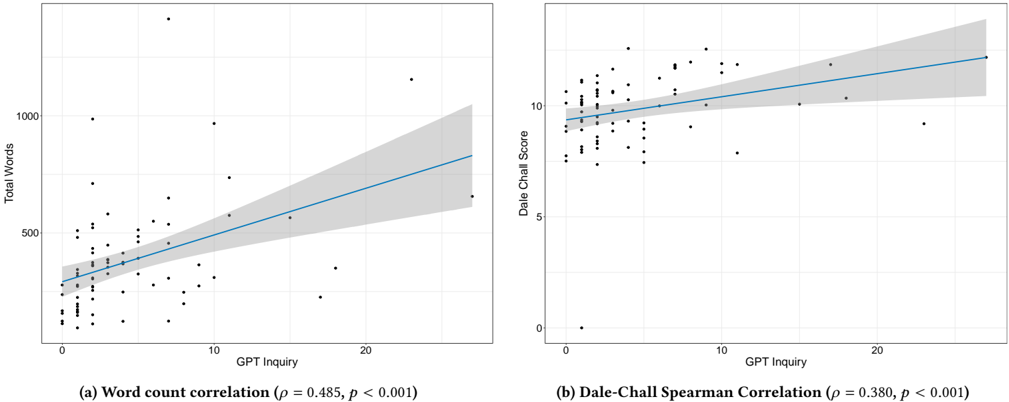
- Query count was positively correlated with word count (ρ = 0.485, p < 0.001), time taken (ρ = 0.493, p < 0.001), and Dale-Chall readability (ρ = 0.380, p < 0.001); no significant correlations were found with perceived ownership or the Creativity Support Index.
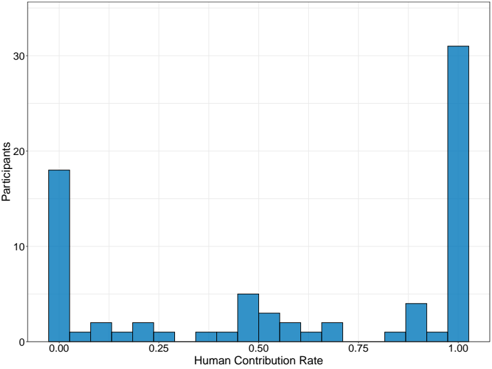
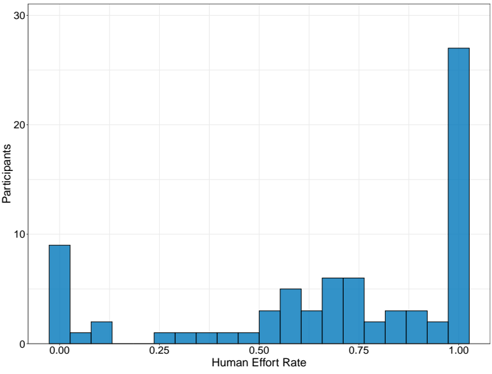
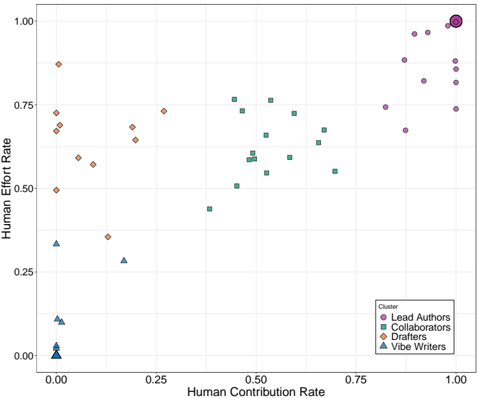
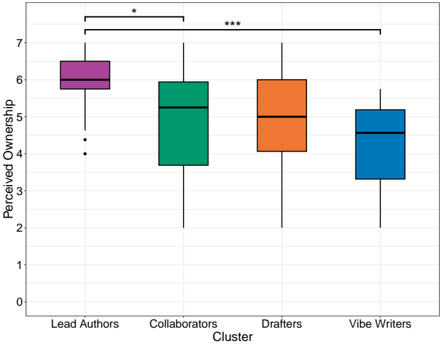
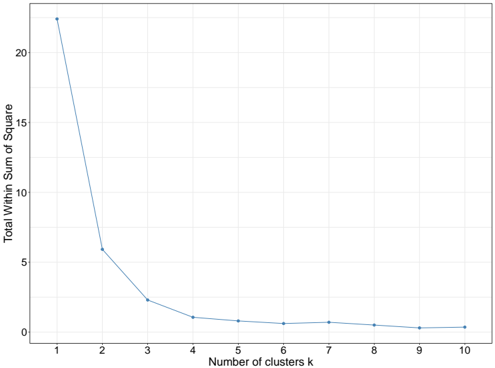
- K-means clustering on Human Contribution Ratio (HCR) and Human Edit Ratio (HER) yielded four profiles: Lead Authors (n = 37; HCR = 0.98, HER = 0.95), Collaborators (n = 15; HCR = 0.53, HER = 0.62), Vibe Writers (n = 14; HCR = 0.01, HER = 0.06), and Drafters (n = 11; HCR = 0.09, HER = 0.64).
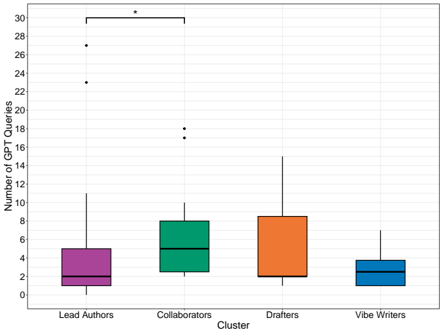
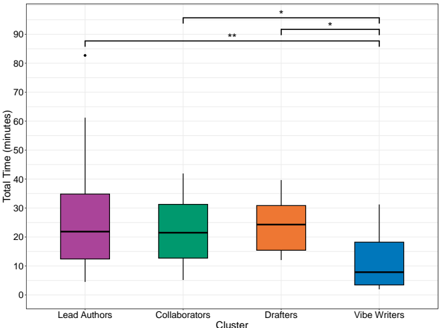
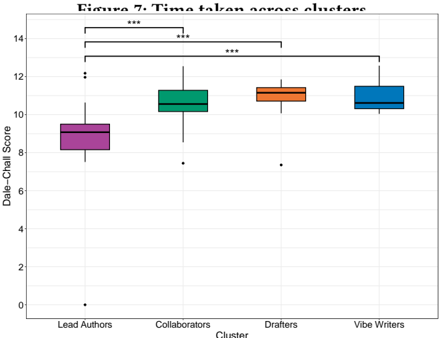
- Cluster differences were significant for query count, H(3) = 9.016, p = 0.0277 (Lead Authors vs Collaborators p = 0.0141); time spent, H(3) = 11.69, p = 0.009 (Vibe Writers shorter than Lead Authors, Collaborators, and Drafters); Dale-Chall, H(3) = 32.26, p < 0.001 (Lead Authors lower than the other three groups); and perceived ownership, H(3) = 23.80, p < 0.001 (Lead Authors higher than Collaborators and Vibe Writers); CSI showed no significant differences.
Methods
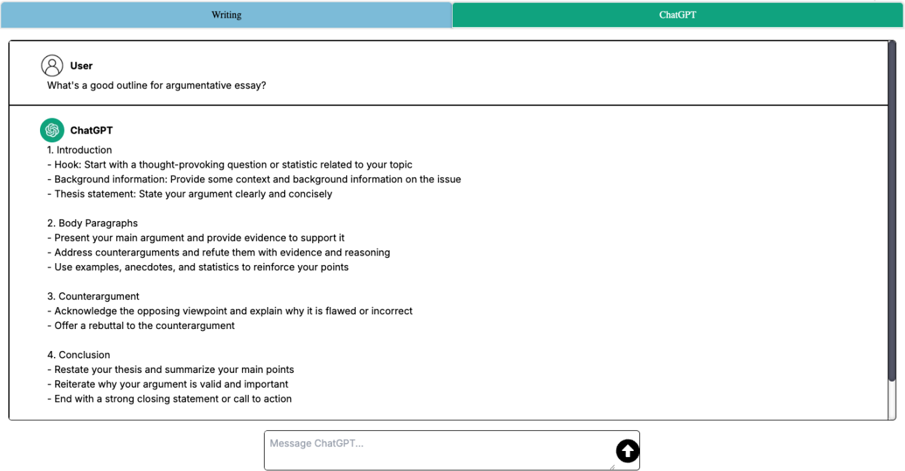
- A custom writing environment combined a text editor with an in-house ChatGPT interface using the OpenAI API and GPT-3.5-turbo; it logged keystrokes, cursor movements, insertions, deletions, copy-paste actions, and ChatGPT queries/responses with timestamps.
- 77 U.S. college students were recruited via university mailing lists and Prolific; they completed pre/post surveys (TAM, SEWS, Perceived Ownership, CSI) and an ACT-style argumentative essay prompt about automation replacing human labor, advised to spend approximately 30 minutes.
- Analyses included descriptive statistics, Spearman rank correlations between query count and writing outcomes, HCR/HER metrics, K-means clustering with silhouette/elbow selection (K = 4), Kruskal-Wallis tests with Dunn’s post hoc Bonferroni correction, and qualitative replay case studies.
Limitations
- The paper states: a single ACT-style argumentative prompt limits generalizability; GPT-3.5-turbo may differ from more advanced models; the ~30-minute task does not capture longitudinal writing; the task was not graded and had no real academic stakes; recruitment via mailing lists and Prolific introduces self-selection bias; findings are exploratory and correlational, not causal.
- The paper also states metric limitations: HCR overlooks structure and ideas when ChatGPT is used for revision, HER does not capture cognitive effort in planning, ideation, comprehending AI content, or deciding whether to incorporate it, and clustering may miss conceptual AI use (e.g., P26 was classified as a Collaborator but qualitatively resembled an editor of AI-generated content).
- Evident from the text: the sample is limited to U.S. college students and one essay genre, and the study did not assess overall writing quality beyond readability metrics or trace semantic provenance of AI-generated ideas.
Model-written summary. Check it against the paper before relying on it.
Integrity signals
Registry
Cites
Statistics
Figures
Verification
Claims the paper makes
0 Valid · 0 Not valid · 8 Not checked · 108 Own results and interpretations
A result the paper reports from its own data — it cites no other source for it, so there is none to check. The quote shows it is in the paper.
In the paper
“No significant correlations were found between query count and the post-task survey measures (PO and CSI).”
§ NIRVANA: A Comprehensive Dataset for Reproducing How Students Use Generative AI for Essay Writing > 5.1 Query Count and Writing Experience
plain- Asserted: passes — The authors put it forward as true.
- Checkable: passes — It can be checked against evidence.
- Load-bearing: unclear — It is unclear whether the paper’s conclusions depend on it.
- Based: passes — The paper gives a reason why it holds.
A result the paper reports from its own data — it cites no other source for it, so there is none to check. The quote shows it is in the paper.
In the paper
“No significant differences were found for CSI.”
§ NIRVANA: A Comprehensive Dataset for Reproducing How Students Use Generative AI for Essay Writing > 5.4 Behavioral and Perceptual Differences Across Writer Clusters
plain- Asserted: passes — The authors put it forward as true.
- Checkable: passes — It can be checked against evidence.
- Load-bearing: unclear — It is unclear whether the paper’s conclusions depend on it.
- Based: passes — The paper gives a reason why it holds.
A result the paper reports from its own data — it cites no other source for it, so there is none to check. The quote shows it is in the paper.
In the paper
“A similar pattern was observed for readability as measured by the Dale-Chall score (𝜌 = 0.380, 𝑝 < 0.001), with higher query counts associated with essays that are more difficult to read (see Figure 3b).”
§ NIRVANA: A Comprehensive Dataset for Reproducing How Students Use Generative AI for Essay Writing > 5.1 Query Count and Writing Experience
plainstates an association- Asserted: passes — The authors put it forward as true.
- Checkable: passes — It can be checked against evidence.
- Load-bearing: unclear — It is unclear whether the paper’s conclusions depend on it.
- Based: passes — The paper gives a reason why it holds.
- Rests on an assumption not shown here.
A result the paper reports from its own data — it cites no other source for it, so there is none to check. The quote shows it is in the paper.
In the paper
“Notably, 26 included no AI-generated words at all, suggesting they used ChatGPT primarily for idea generation, information search, or not at all.”
§ NIRVANA: A Comprehensive Dataset for Reproducing How Students Use Generative AI for Essay Writing > 5.3 Clustering Writer's Profile Based on Contribution and Edit
plainn = 26- Asserted: passes — The authors put it forward as true.
- Checkable: passes — It can be checked against evidence.
- Load-bearing: unclear — It is unclear whether the paper’s conclusions depend on it.
- Based: passes — The paper gives a reason why it holds.
- Rests on an assumption not shown here.
A result the paper reports from its own data — it cites no other source for it, so there is none to check. The quote shows it is in the paper.
In the paper
“We identify four writing profiles based on students' contribution and revision patterns: Lead Authors, Collaborators, Drafters, and Vibe Writers.”
§ NIRVANA: A Comprehensive Dataset for Reproducing How Students Use Generative AI for Essay Writing > Abstract
plain- Asserted: passes — The authors put it forward as true.
- Checkable: passes — It can be checked against evidence.
- Load-bearing: passes — The paper’s conclusions depend on it.
- Based: passes — The paper gives a reason why it holds.
32 more claims
Create a free account to see all 116 claims and every source verdict.
- It may state two separate claims as one. 52
- Probably not a substantial claim. 42
- The quote only partly states this claim. 3
Self-check
Percentages, sums and reported differences re-computed from the paper’s own numbers.
Each contradiction between two passages listed here was confirmed by an independent check.
Rated minor: it would not touch a result — a value no result rests on, a p-value that stays on the same side of the significance level, or a conflict that is clerical, resolved elsewhere in the paper, or outside its own findings.
In the paper
§ NIRVANA: A Comprehensive Dataset for Reproducing How Students Use Generative AI for Essay Writing > 5.3 Clustering Writer's Profile Based on Contribution and Edit
“Figure 5: Five Clusters of Participants based on HCR and HER.”
§ NIRVANA: A Comprehensive Dataset for Reproducing How Students Use Generative AI for Essay Writing > 5.3 Clustering Writer's Profile Based on Contribution and Edit
“The resulting clusters were visualized by plotting HCR against HER and characterized according to their relative magnitudes; mean HCR and HER values are reported in Table 1.”
Rated minor: it would not touch a result — a value no result rests on, a p-value that stays on the same side of the significance level, or a conflict that is clerical, resolved elsewhere in the paper, or outside its own findings.
In the paper
§ NIRVANA: A Comprehensive Dataset for Reproducing How Students Use Generative AI for Essay Writing > 3.4 Study Procedure and Task Information
“The prompt, adapted from an American College Testing (ACT) essay [1], addressed the issue of automation replacing human labor and presented three perspectives.”
§ NIRVANA: A Comprehensive Dataset for Reproducing How Students Use Generative AI for Essay Writing > References
“1. 2025. Jisuanke/CodeMirror-Record. https://github.com/Jisuanke/CodeMirror- Record original-date: 2019-05-08T13:32:58Z.”
Cited works that were retracted
Works this paper cites that were later retracted, from the retraction notices publishers deposit. Major when the notice came out before this paper was published.
A note, not an issue: for example, a cited work that was retracted only after this paper was published, which its authors could not have known.
In the paper
“Jin Wang and Wenxiang Fan. 2025. The effect of ChatGPT on students' learning performance, learning perception, and higher-order thinking: insights from a meta-analysis. Humanities and Social Sciences Communications 12, 1 (May 2025), 621. doi:10.1057/s41599-025-04787-y”
Cited work 10.1057/s41599-025-04787-y · retracted 2026-04-22 · notice 10.1057/s41599-026-07310-z · this paper published 2026
Citations
Cites
1 retracted
Wang, J., & Fan, W. (2025) · Humanities and Social Sciences Communications · doi:10.1057/s41599-025-04787-y · Cited by 322
RetractedPerceived usefulness, perceived ease of use, and user acceptance of information technology
Davis, F. D. (1989) · MIS Quarterly · doi:10.2307/249008 · Cited by 68,483
Chatting and cheating: Ensuring academic integrity in the era of ChatGPT
Cotton, D. R. E., Cotton, P. A., & Shipway, J. R. (2024) · Innovations in Education and Teaching International · doi:10.1080/14703297.2023.2190148 · Cited by 3,087
Thorndike, R. L. (1953) · Psychometrika · doi:10.1007/bf02289263 · Cited by 2,051
Artificial intelligence in higher education: the state of the field
Crompton, H., & Burke, D. (2023) · International Journal of Educational Technology in Higher Education · doi:10.1186/s41239-023-00392-8 · Cited by 2,010
A cognitive process theory of writing
Flower, L., & Hayes, J. R. (1981) · College Composition & Communication · doi:10.58680/ccc198115885 · Cited by 1,025
Psychological Ownership: Theoretical Extensions, Measurement, and Relation to Work Outcomes
Avey, J. B., Avolio, B. J., Crossley, C. D., & Luthans, F. (2009) · Journal of Organizational Behavior · doi:10.1002/job.583 · Cited by 920
A FORMULA FOR PREDICTING READABILITY
Dale, E., & Chall, J. S. (1948) · Cited by 775
ChatGPT and the rise of generative AI: Threat to academic integrity?
Eke, D. O. (2023) · Journal of Responsible Technology · doi:10.1016/j.jrt.2023.100060 · Cited by 532 · cited 1×
“Despite these promising findings, educators and practitioners have raised concerns about the negative impacts of generative AI that are difficult to regulate at scale, including weakened critical engagement, reduced cognitive effort, and threats to academic integrity [19, 35, 39].”
The measurement of readability: useful information for communicators
Klare, G. R. (2000) · ACM Journal of Computer Documentation · doi:10.1145/344599.344630 · Cited by 504
Quantifying the Creativity Support of Digital Tools through the Creativity Support Index
Cherry, E., & Latulipe, C. (2014) · ACM Transactions on Computer-Human Interaction · doi:10.1145/2617588 · Cited by 498
Examining dimensions of self-efficacy for writing
Bruning, R., Dempsey, M., Kauffman, D. F., McKim, C., & Zumbrunn, S. (2013) · Journal of Educational Psychology · doi:10.1037/a0029692 · Cited by 470
Koltovskaia, S. (2020) · Assessing Writing · doi:10.1016/j.asw.2020.100450 · Cited by 447
Psychological Ownership: An Empirical Examination of its Consequences
Vandewalle, D., Van Dyne, L., & Kostova, T. (1995) · Group & Organization Management · doi:10.1177/1059601195202008 · Cited by 407
Barrett, A., & Pack, A. (2023) · International Journal of Educational Technology in Higher Education · doi:10.1186/s41239-023-00427-0 · Cited by 391
Lee, M., Liang, P., & Yang, Q. (2022) · CHI Conference on Human Factors in Computing Systems · doi:10.1145/3491102.3502030 · Cited by 345
Zinsser, W. (1988) · Medical Entomology and Zoology · Cited by 224
Kosmyna, N., Hauptmann, E., Yuan, Y. T., Situ, J., Liao, X.-H., Beresnitzky, A. V., Braunstein, I., & Maes, P. (2025) · arXiv · doi:10.48550/arxiv.2506.08872 · Cited by 220
Bower, M., Torrington, J., Lai, J. W. M., Petocz, P., & Alfano, M. (2024) · Education and Information Technologies · doi:10.1007/s10639-023-12405-0 · Cited by 213
Condon, W., & Kelly-Riley, D. (2004) · Assessing Writing · doi:10.1016/j.asw.2004.01.003 · Cited by 198
Using Writing to Develop and Assess Critical Thinking
Wade, C. (1995) · Teaching of Psychology · doi:10.1207/s15328023top2201_8 · Cited by 190
Teaching CS50 with AI: Leveraging Generative Artificial Intelligence in Computer Science Education
Liu, R., Zenke, C., Liu, C., Holmes, A., Thornton, P., & Malan, D. J. (2024) · Proceedings of the 55th ACM Technical Symposium on Computer Science Education V. 1 · doi:10.1145/3626252.3630938 · Cited by 185 · cited 1×
“The rise of ChatGPT and other large language models (LLMs) has intensified these debates, leading to calls for deeper investigation into student interactions with these tools [7, 27, 34].”
AcaWriter: A learning analytics tool for formative feedback on academic writing
Knight, S., Shibani, A., Abel, S., Gibson, A., & Ryan, P. (2020) · Journal of Writing Research · doi:10.17239/jowr-2020.12.01.06 · Cited by 151
Art or Artifice? Large Language Models and the False Promise of Creativity
Chakrabarty, T., Laban, P., Agarwal, D., Muresan, S., & Wu, C.-S. (2024) · Proceedings of the CHI Conference on Human Factors in Computing Systems · doi:10.1145/3613904.3642731 · Cited by 135
Social Dynamics of AI Support in Creative Writing
Gero, K. I., Long, T., & Chilton, L. B. (2023) · Proceedings of the 2023 CHI Conference on Human Factors in Computing Systems · doi:10.1145/3544548.3580782 · Cited by 129 · cited 1×
“HCI research has also examined how writers use AI more broadly, revealing that they typically seek assistance with translating ideas and reviewing drafts, with general appreciation for ChatGPT’s ability to generate unexpected and sometimes inspiring output [10, 21, 33].”
Scarfe, P., Watcham, K., Clarke, A., & Roesch, E. (2024) · PLOS ONE · doi:10.1371/journal.pone.0305354 · Cited by 108
Psychological ownership: Development of an instrument
Olckers, C. (2013) · SA Journal of Industrial Psychology · doi:10.4102/sajip.v39i2.1105 · Cited by 102
From Pen to Prompt: How Creative Writers Integrate AI into their Writing Practice
Guo, A., Sathyanarayanan, S., Wang, L., Heer, J., & Zhang, A. X. (2025) · Creativity and Cognition · doi:10.1145/3698061.3726910 · Cited by 79
RECIPE: How to Integrate ChatGPT into EFL Writing Education
Han, J., Yoo, H., Kim, Y., Myung, J., Kim, M., Lim, H., Kim, J., Lee, T. Y., Hong, H., Ahn, S.-Y., et al. (2023) · Proceedings of the Tenth ACM Conference on Learning @ Scale · doi:10.1145/3573051.3596200 · Cited by 64
Self-citationChakrabarty, T., Padmakumar, V., Brahman, F., & Muresan, S. (2024) · Creativity and Cognition · doi:10.1145/3635636.3656201 · Cited by 61
The Effectiveness of Using Grammarly to Improve Students' Writing Skills
Huang, H.-W., Li, Z., & Taylor, L. (2020) · Proceedings of the 5th International Conference on Distance Education and Learning · doi:10.1145/3402569.3402594 · Cited by 55
Writing with AI Lowers Psychological Ownership, but Longer Prompts Can Help
Joshi, N., & Vogel, D. (2025) · Proceedings of the 7th ACM Conference on Conversational User Interfaces · doi:10.1145/3719160.3736608 · Cited by 50
Artificial Intelligence and Teachers’ New Ethical Obligations
Adams, C., Pente, P., Lemermeyer, G., Turville, J., & Rockwell, G. (2022) · The International Review of Information Ethics · doi:10.29173/irie483 · Cited by 49
Friction: Deciphering Writing Feedback into Writing Revisions through LLM-Assisted Reflection
Zhang, C., Ju, K., Bidoshi, P., Yen, Y.-C. G., & Rzeszotarski, J. M. (2025) · CHI Conference on Human Factors in Computing Systems · doi:10.1145/3706598.3714316 · Cited by 49
An Empirical Study to Understand How Students Use ChatGPT for Writing Essays
Jelson, A., Manesh, D., Jang, A., Dunlap, D., Kim, Y.-H., & Lee, S. W. (2026) · CHI Conference on Human Factors in Computing Systems · doi:10.1145/3772318.3791056 · Cited by 43
Self-citationIntelligent Support Engages Writers Through Relevant Cognitive Processes
Göldi, A., Wambsganß, T., Neshaei, S. P., & Rietsche, R. (2024) · CHI Conference on Human Factors in Computing Systems · doi:10.1145/3613904.3642549 · Cited by 36
LLMs as Writing Assistants: Exploring Perspectives on Sense of Ownership and Reasoning
Wasi, A. T., Islam, M. R., & Islam, R. (2024) · Workshop on Intelligent and Interactive Writing Assistants (In2Writing) · doi:10.1145/3690712.3690723 · Cited by 35
Weber, F., Wambsganß, T., Neshaei, S. P., & Soellner, M. (2024) · CHI Conference on Human Factors in Computing Systems · doi:10.1145/3613904.3642743 · Cited by 31
Effective Interfaces for Student-Driven Revision Sessions for Argumentative Writing
Afrin, T., Kashefi, O., Olshefski, C., Litman, D., Hwa, R., & Godley, A. (2021) · Proceedings of the 2021 CHI Conference on Human Factors in Computing Systems · doi:10.1145/3411764.3445683 · Cited by 30
Romoff, M. R., Brunette, M., Peterson, M. K., Hashmi, S. Z., & Kim, M. S. (2025) · Journal of Orthopaedic Surgery and Research · doi:10.1186/s13018-025-05955-1 · Cited by 21
Understanding Readability of Large Language Models Output: An Empirical Analysis
Marulli, F., Campanile, L., de Biase, M. S., Marrone, S., Verde, L., & Bifulco, M. (2024) · Procedia Computer Science · doi:10.1016/j.procs.2024.09.636 · Cited by 20
Vibe coding: programming through conversation with artificial intelligence
Sarkar, A., & Drosos, I. (2025) · arXiv · doi:10.48550/arxiv.2506.23253 · Cited by 11
Wilbers, S., Gröpler, J., Prell, B., & Reiff-Stephan, J. (2024) · Lecture notes in networks and systems · doi:10.1007/978-3-031-61905-2_2 · Cited by 10
An Automated Feedback System to Support Student Learning in Writing-to-Learn Activities
Xiong, Y., & Wu, Y.-F. B. (2019) · ACM Conference on Learning @ Scale (L@S) · doi:10.1145/3330430.3333657 · Cited by 6
CoachGPT: A Scaffolding-based Academic Writing Assistant
Chen, F., Veng, S., Wilson, J., Li, X., & Fang, H. (2025) · Proceedings of the 48th International ACM SIGIR Conference on Research and Development in Information Retrieval · doi:10.1145/3726302.3730143 · Cited by 6
Reframing Authority: A Computational Measure of Power-Affirming Feedback on Student Writing
Tan, M., Mah, C., & Demszky, D. (2024) · ACM Conference on Learning @ Scale (L@S) · doi:10.1145/3657604.3664680 · Cited by 4
Writing with AI Lowers Psychological Ownership, but Longer Prompts Can Help
Joshi, N., & Vogel, D. (2024) · arXiv · doi:10.48550/arxiv.2404.03108
From Pen to Prompt: How Creative Writers Integrate AI into their Writing Practice
Guo, A., Sathyanarayanan, S., Wang, L., Heer, J., & Zhang, A. (2024) · arXiv · doi:10.48550/arxiv.2411.03137
An Empirical Study to Understand How Students Use ChatGPT for Writing Essays
Jelson, A., Manesh, D., Jang, A., Dunlap, D., Kim, Y.-H., & Lee, S. W. (2025) · arXiv · doi:10.48550/arxiv.2501.10551
Self-citation
Cited by
Rahma, Sartika, D., & Arif, N. (2026) · IDEAS Journal on English Language Teaching and Learning Linguistics and Literature · doi:10.24256/ideas.v14i2.12511
Metadata
- Authors
- Jelson, A., Manesh, D., Lee, S., Jang, A., Dunlap, D., Maddox, T., Kim, Y.-H., & Lee, S. W.
- Affiliations
- Virginia Tech (US)
- George Mason University (US)
- NAVER Cloud (South Korea) (KR)
- Venue
- arXiv
- Publisher
- arXiv
- Published
- 2026
- ISSN
- 2331-8422 (ISSN-L)
- arXiv
- 2604.07344
- OpenAlex
- W7152541924
- Semantic Scholar
- d8076fc06ed387b59c4a74b74410949d8776155d
- Cited by
- 1
- References
- 46
- Citations by year
- 2026: 1
- Type
- posted content
- Language
- en
- Open access
- green
- arxiv.org
- Licence
- Locations
- arXiv (Cornell University) (submittedVersion, cc-by)
- arXiv (Cornell University) (cc-by)
- Topics
- Social Sciences › Education › Artificial Intelligence in Education
- Physical Sciences › Computer Science › Computer Science Applications › Online Learning and Analytics
- Social Sciences › Education › Academic integrity and plagiarism
- Keywords
- generative AI in education, AI writing tools, ChatGPT, student essay writing, student-AI interaction, query frequency, readability, university students
About these checks
Registry, retraction, Cites and statistics results are computed, not judged, with one exception: a printed reference that no index lists is read once by a model before it counts as a citation error. Claims are extracted by a model and kept only when their quote appears verbatim in the text; each cited source is then checked, with a model’s help, for whether it says what the claim relies on. Those verdicts can be wrong — read the claim’s quote and the cited source before relying on one.
A language model drew the claims from the paper on 2026-11-18, under version 3 of the claim definition (model deepseek-v4.1-flash, prompt extract-v3).
A second model labelled each claim on 2026-11-18 (model jev-1.13-20260917, definition revision gold-guideline-v0.2).
Statistics and arithmetic are recomputed, not judged.
Confidence bands are shown only for fields calibrated on our annotated test set. None is calibrated yet, so no band is shown.
What counts as a claim ›How we measure confidence ›How we check this ›
Are you an author, or do you see a problem with this page? Request a review
Data sources
Bibliographic data: Semantic Scholar, OpenAlex, Crossref.
Contains information from the Semantic Scholar Academic Graph Datasets, made available under the ODC Attribution License (ODC-BY 1.0).
Semantic Scholar’s data is described in: Kinney, R., et al. (2023). The Semantic Scholar Open Data Platform. arXiv:2301.10140.
