

Substantial ozone enhancement over the North China Plain from increased biogenic emissions due to heat waves and land cover in summer 2017
Open accessPublished version of a preprint
The DOI matches its Crossref record; 71 of the 72 references it cites were found in a registry or an index.
Abstract
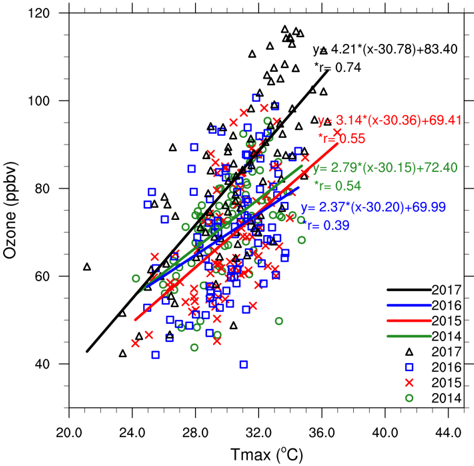
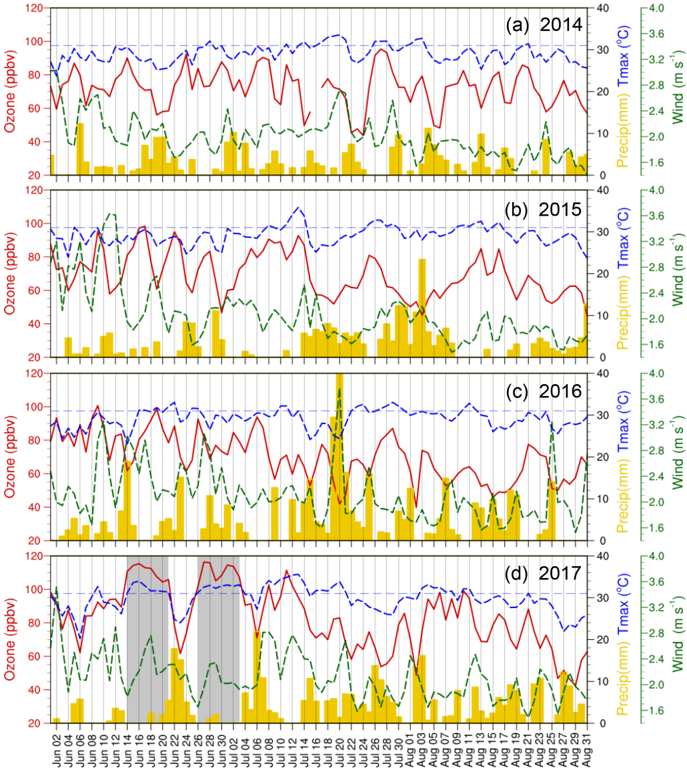
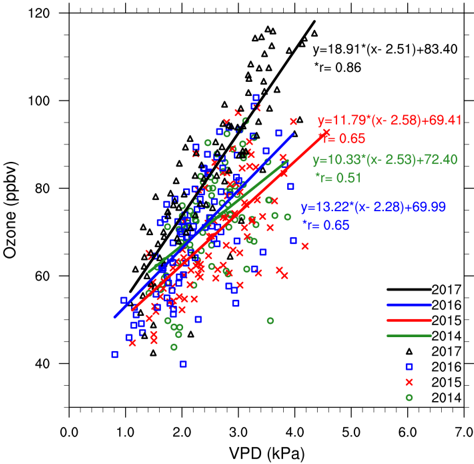
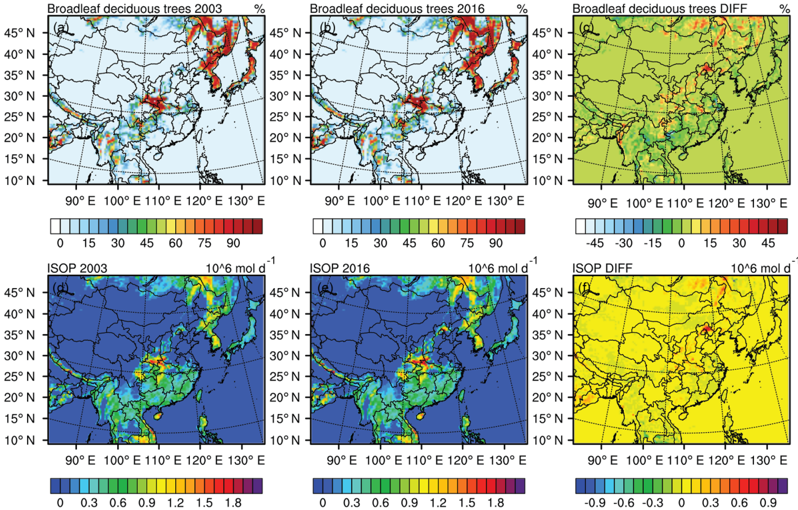
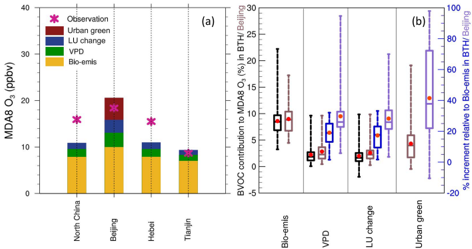
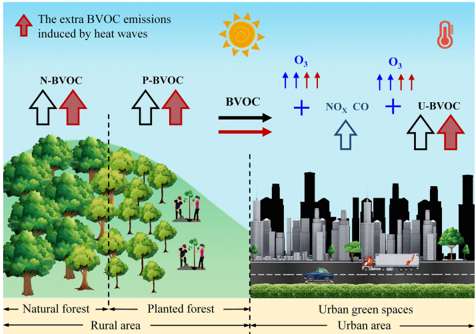
In the summer of 2017, heavy ozone pollution swamped most of the North China Plain (NCP), with the maximum regional average of daily maximum 8 h ozone concentration (MDA8) reaching almost 120 ppbv. In light of the continuing reduction of anthropogenic emissions in China, the underlying mechanisms for the occurrences of these regional extreme ozone episodes are elucidated from two perspectives: meteorology and biogenic emissions. The significant positive correlation between MDA8 ozone and temperature, which is amplified during heat waves concomitant with stagnant air and no precipitation, supports the crucial role of meteorology in driving high ozone concentrations. We also find that biogenic emissions are enhanced due to factors previously not considered. During the heavy ozone pollution episodes in June 2017, biogenic emissions driven by high vapor pressure deficit (VPD), land cover change and urban landscape yield an extra mean MDA8 ozone of 3.08, 2.79 and 4.74 ppbv, respectively, over the NCP, which together contribute as much to MDA8 ozone as biogenic emissions simulated using the land cover of 2003 and ignoring VPD and urban landscape. In Beijing, the biogenic emission increase due to urban landscape has a comparable effect on MDA8 ozone to the combined effect of high VPD and land cover change between 2003 and 2016. In light of the large effect of urban landscape on biogenic emission and the subsequent ozone formation, the types of trees may be cautiously selected to take into account of the biogenic volatile organic compound (BVOC) emission during the afforestation of cities. This study highlights the vital contributions of heat waves, land cover change and urbanization to the occurrence of extreme ozone episodes, with significant implications for ozone pollution control in a future when heat wave frequency and intensity are projected to increase under global warming.
Overview
The claims and statistics of this paper haven’t been checked yet.
Free: it reads the open-access text and checks the first 5 claims that cite a source we can check. Create a free account to check every claim.
Integrity signals
Registry
Cites
Statistics
Figures
Verification
Claims the paper makes
The claims and statistics of this paper haven’t been checked yet.
Free: it reads the open-access text and checks the first 5 claims that cite a source we can check. Create a free account to check every claim.
Claims other papers make about this one
Each is checked against this paper’s own text: does it say what the citing paper says it does?
In the citing paper
“This has led to surface brightening (e.g., by 0.70–1.16 W m−2 year−1 in eastern China over 2014–2019) [29] but also to undesirable increases in ambient O3 [30–33] (e.g., by 2–6 µg m−3 year−1 in megacity clusters of Beijing and Shanghai over 2013–2017) [34].”
From Changes in tropospheric air quality related to the protection of stratospheric ozone in a changing climate (2023) · cites this paper as [30]
Self-check
Percentages, sums and reported differences re-computed from the paper’s own numbers.
The self-check needs the paper’s full text.
Citations
Cites
Development of a turbulence closure model for geophysical fluid problems
Mellor, G. L., & Yamada, T. (1982) · Reviews of Geophysics · doi:10.1029/rg020i004p00851 · Cited by 6,913 · cited 2×
“, 2008), the unified Noah land surface model (Chen and Dudhia, 2001), the Mellor–Yamada–Janjic planetary boundary layer (PBL) scheme (Janjić, 1990, 1994; Mellor and Yamada, 1982), and the Grell–Freitas cumulus scheme (Grell and Freitas, 2014).”
Iacono, M. J., Delamere, J. S., Mlawer, E. J., Shephard, M. W., Clough, S. A., & Collins, W. D. (2008) · Journal of Geophysical Research: Atmospheres · doi:10.1029/2008jd009944 · Cited by 5,738
Chen, F., & Dudhia, J. (2001) · Monthly Weather Review · doi:10.1175/1520-0493(2001)129<0569:caalsh>2.0.co;2 · Cited by 5,674
Guenther, A., Karl, T., Harley, P., Wiedinmyer, C., Palmer, P. I., & Geron, C. (2006) · Atmospheric Chemistry and Physics · doi:10.5194/acp-6-3181-2006 · Cited by 4,603 · cited 2×
“The biogenic emissions were calculated by the Model of Emissions of Gases and Aerosols from Nature version 2.1 (MEGAN; Guenther et al., 2006, 2012).”
InfluentialGuenther, A. B., Jiang, X., Heald, C. L., Sakulyanontvittaya, T., Duhl, T., Emmons, L. K., & Wang, X. (2012) · Geoscientific Model Development · doi:10.5194/gmd-5-1471-2012 · Cited by 4,112
MODIS Collection 5 global land cover: Algorithm refinements and characterization of new datasets
Friedl, M. A., Sulla-Menashe, D., Tan, B., Schneider, A., Ramankutty, N., Sibley, A., & Huang, X. (2010) · Remote Sensing of Environment · doi:10.1016/j.rse.2009.08.016 · Cited by 3,473 · cited 3×
“PFT and LAI data were from the MODIS MCD12Q1 (Friedl et al., 2010) and MCD15A2H datasets (Myneni et al.”
BackgroundMethodInfluentialJanjić, Z. I. (1994) · Monthly Weather Review · doi:10.1175/1520-0493(1994)122<0927:tsmecm>2.0.co;2 · Cited by 3,366 · cited 1×
“…radiation (Iacono et al., 2008; Morcrette et al., 2008), the uni- fied Noah land surface model (Chen and Dudhia, 2001), the Mellor–Yamada–Janjic planetary boundary layer (PBL) scheme (Janjić, 1990, 1994; Mellor and Yamada, 1982), and the Grell–Freitas cumulus scheme (Grell and Freitas, 2014).”
The NCEP Climate Forecast System Version 2
Saha, S., Moorthi, S., Wu, X., Wang, J., Nadiga, S., Tripp, P., Behringer, D., Hou, Y.-T., Chuang, H.-Y., Iredell, M., et al. (2014) · Journal of Climate · doi:10.1175/jcli-d-12-00823.1 · Cited by 3,354
Trends in China's anthropogenic emissions since 2010 as the consequence of clean air actions
Zheng, B., Tong, D., Li, M., Liu, F., Hong, C., Geng, G., Li, H., Li, X., Peng, L., Qi, J., et al. (2018) · Atmospheric Chemistry and Physics · doi:10.5194/acp-18-14095-2018 · Cited by 2,916
Soriano, J. B., Abajobir, A. A., Abate, K. H., Abera, S. F., Agrawal, A., Ahmed, M. B., Aichour, A. N., Aichour, I., Aichour, M. T. E., Alam, K., et al. (2017) · The Lancet Respiratory Medicine · doi:10.1016/s2213-2600(17)30293-x · Cited by 2,538 · cited 1×
“Since ozone is harmful to both human health (Soriano et al., 2017) and vegetation (Emberson et al., 2009; Avnery et al., 2011), it is vital to investigate the possible mechanisms related to high ozone concentrations.”
Cited by
Rapid Increases in Warm-Season Surface Ozone and Resulting Health Impact in China Since 2013
Lu, X., Zhang, L., Wang, X., Gao, M., Li, K., Zhang, Y., Yue, X., & Zhang, Y. (2020) · Environmental Science & Technology Letters · doi:10.1021/acs.estlett.0c00171 · Cited by 602
Bais, A. F., Lucas, R. M., Bornman, J. F., Williamson, C. E., Sulzberger, B., Austin, A. T., Wilson, S. R., Andrady, A. L., Bernhard, G., McKenzie, R. L., et al. (2018) · Photochemical & Photobiological Sciences · doi:10.1039/c7pp90043k · Cited by 350
Beating the urban heat: Situation, background, impacts and the way forward in China
He, B.-J., Wang, J., Zhu, J., & Qi, J. (2022) · Renewable and Sustainable Energy Reviews · doi:10.1016/j.rser.2022.112350 · Cited by 316
Effects of Anthropogenic and Biogenic Volatile Organic Compounds on Los Angeles Air Quality
Gu, S., Guenther, A., & Faiola, C. (2021) · Environmental Science & Technology · doi:10.1021/acs.est.1c01481 · Cited by 263
Dang, R., Liao, H., & Fu, Y. (2021) · Science of The Total Environment · doi:10.1016/j.scitotenv.2020.142394 · Cited by 237
Neale, R. E., Barnes, P. W., Robson, T. M., Neale, P. J., Williamson, C. E., Zepp, R. G., Wilson, S. R., Madronich, S., Andrady, A. L., Heikkilä, A. M., et al. (2021) · Photochemical & Photobiological Sciences · doi:10.1007/s43630-020-00001-x · Cited by 225
Cao, J., Situ, S., Hao, Y., Xie, S., & Li, L. (2022) · Atmospheric chemistry and physics · doi:10.5194/acp-22-2351-2022 · Cited by 162
Zanis, P., Akritidis, D., Turnock, S. T., Naïk, V., Szopa, S., Georgoulias, A. K., Bauer, S. E., Deushi, M., Horowitz, L. W., Keeble, J., et al. (2022) · Environmental Research Letters · doi:10.1088/1748-9326/ac4a34 · Cited by 156
Weng, X., Forster, G. L., & Nowack, P. J. (2022) · Atmospheric chemistry and physics · doi:10.5194/acp-22-8385-2022 · Cited by 146
“Similarly, Ma et al. (2019) suggested that high biogenic emissions of VOCs and meteorological conditions indicative of heatwaves such as high temperature, low wind speed and no precipitation can elevate ozone pollution in NCP.”
BackgroundTyphoon-boosted biogenic emission aggravates cross-regional ozone pollution in China
Wang, N., Huang, X., Xu, J., Wang, T., Tan, Z., & Ding, A. (2022) · Science Advances · doi:10.1126/sciadv.abl6166 · Cited by 141
“In addition, biogenic emission itself is also highly dependent on the meteorology (15, 39).”
BackgroundCoping with the concurrent heatwaves and ozone extremes in China under a warming climate
Li, M., Huang, X., Yan, D., Lai, S., Zhang, Z., Zhu, L., Lu, Y., Jiang, X., Wang, N., Wang, T., et al. (2024) · 中国科学通报:英文版 · doi:10.1016/j.scib.2024.05.034 · Cited by 124
Ma, M., Gao, Y., Ding, A., Su, H., Liao, H., Wang, S., Wang, X., Zhao, B., Zhang, S., Fu, P., et al. (2021) · Environmental Science & Technology · doi:10.1021/acs.est.1c06170 · Cited by 128
Self-citationYin, H., Lu, X. H., Sun, Y., Li, K., Gao, M. C., Zheng, B., & Liu, C. (2021) · Environmental Research Letters · doi:10.1088/1748-9326/ac3e22 · Cited by 116
Self-citationNorth China Plain as a hot spot of ozone pollution exacerbated by extreme high temperatures
Wang, P., Yang, Y., Li, H., Chen, L., Dang, R., Xue, D., Liao, H., Tang, J., Leung, L.-Y. R., & Liao, H. (2022) · Atmospheric chemistry and physics · doi:10.5194/acp-22-4705-2022 · Cited by 110
Self-citationLiu, S., Xing, J., Zhang, H., Ding, D., Zhang, F., Zhao, B., Sahu, S. K., & Wang, S. (2019) · Atmospheric Environment · doi:10.1016/j.atmosenv.2019.117020 · Cited by 103
Self-citationGao, Y., Ma, M., Yan, F., Su, H., Wang, S., Liao, H., Zhao, B., Wang, X., Sun, Y., Hopkins, J. R., et al. (2021) · The Science of The Total Environment · doi:10.1016/j.scitotenv.2021.152654 · Cited by 99
Self-citationPerformance and application of air quality models on ozone simulation in China – A review
Yang, J., & Zhao, Y. (2022) · Atmospheric Environment · doi:10.1016/j.atmosenv.2022.119446 · Cited by 101
Zong, L., Yang, Y., Xia, H., Gao, M. C., Sun, Z., Zheng, Z., Li, X., Ning, G., Li, Y., & Lolli, S. (2022) · Atmospheric chemistry and physics · doi:10.5194/acp-22-6523-2022 · Cited by 94
Zheng, H., Kong, S., He, Y., Song, C., Cheng, Y., Yao, L., Chen, N., & Zhu, B. (2023) · Atmospheric Environment · doi:10.1016/j.atmosenv.2023.119701 · Cited by 94
Schwantes, R. H., Lacey, F. G., Tilmes, S., Emmons, L. K., Lauritzen, P. H., Walters, S., Callaghan, P. F., Zarzycki, C. M., Barth, M. C., Jo, D. S., et al. (2022) · Journal of Advances in Modeling Earth Systems · doi:10.1029/2021ms002889 · Cited by 91
Zhang, G., Gao, Y., Cai, W., Leung, L.-Y. R., Wang, S., Zhao, B., Wang, M., Shan, H., Yao, X., & Gao, H. (2019) · Atmospheric chemistry and physics · doi:10.5194/acp-19-565-2019 · Cited by 82
Self-citationWang, H., Wu, K., Liu, Y., Sheng, B., Lu, X. H., He, Y., Xie, J., Wang, H., & Fan, S. (2021) · Journal of Geophysical Research Atmospheres · doi:10.1029/2020jd034317 · Cited by 97
“The impacts of HWs that lead to various types of spatial and temporal distributions of elevated O3 levels have been extensively investigated across the world (Churkina et al., 2017; Ma et al., 2019).”
BackgroundGao, Y., Zhang, L., Huang, A., Kou, W., Bo, X., Cai, B., & Qu, J. (2022) · The Science of The Total Environment · doi:10.1016/j.scitotenv.2022.157623 · Cited by 81
Self-citationBenish, S. E., He, H., Ren, X., Roberts, S. J., Salawitch, R. J., Li, Z., Wang, F., Wang, Y., Zhang, F., Shao, M., et al. (2020) · Atmospheric chemistry and physics · doi:10.5194/acp-20-14523-2020 · Cited by 75
Self-citationMadronich, S., Sulzberger, B., Longstreth, J. D., Schikowski, T., Andersen, M. P. S., Solomon, K. R., & Wilson, S. R. (2023) · Photochemical & Photobiological Sciences · doi:10.1007/s43630-023-00369-6 · Cited by 64
“Simulations with numerical models show several possible reasons including increases in UV radiation [31, 33–39], shifts in the VOC/NOx chemical regime resulting in increased production of O3 efficiency [35, 40], higher emissions of biogenic VOC due to rising temperatures [30], and decreased competition for gas-phase r…”
BackgroundBao, X., Zhou, W., Xu, L., & Zheng, Z. (2022) · Environmental Pollution · doi:10.1016/j.envpol.2022.120886 · Cited by 70
Dynamic environmental interactions shaped by vegetative plant volatiles
Escobar‐Bravo, R., Lin, P., Waterman, J. M., & Erb, M. (2023) · Natural Product Reports · doi:10.1039/d2np00061j · Cited by 81
“157 This correlation is partly caused by the lower dry deposition of ozone by plant stomata due to stomatal closure under high VPD. 158 Since the late 1990s, there has been an increase in VPD consistently associated with the decrease in primary production, which can o ff set the positive e ff ect of…”
BackgroundGao, M. C., Wang, F., Ding, Y., Wu, Z., Xu, Y., Lu, X. H., Wang, Z., Carmichael, G. R., & McElroy, M. B. (2023) · Proceedings of the National Academy of Sciences · doi:10.1073/pnas.2218274120 · Cited by 79
Wu, K., Wang, Y., Qiao, Y., Liu, Y., Wang, S., Yang, X., Wang, H., Lü, Y., Zhang, X., & Lei, Y. (2022) · Environmental Pollution · doi:10.1016/j.envpol.2022.118914 · Cited by 69
Self-citationZhu, T., Tang, M., Gao, M. C., Bi, X., Cao, J., Che, H., Chen, J., Ding, A., Fu, P., Gao, J. Q., et al. (2023) · Advances in Atmospheric Sciences · doi:10.1007/s00376-023-2379-0 · Cited by 65
Self-citationLiu, Z., Doherty, R. M., Wild, O., O’Connor, F. M., & Turnock, S. T. (2022) · Atmospheric chemistry and physics · doi:10.5194/acp-22-1209-2022 · Cited by 60
Gao, Y., Shan, H., Zhang, S., Sheng, L., Li, J., Zhang, J., Ma, M., Meng, H., Luo, K., Gao, H., et al. (2020) · Chemosphere · doi:10.1016/j.chemosphere.2020.125861 · Cited by 50
“The setting of WRF/CMAQ is the same as documented by Zhang et al. (2019a) and Ma et al. (2019).”
Self-citationGong, C., Liao, H., Yue, X., Ma, Y., & Lei, Y. (2021) · Geophysical Research Letters · doi:10.1029/2021gl093814 · Cited by 50
“For O3 pollution in China, there existed studies that investigated the impact of vegetation on O3 by enhanced BVOC emissions at warm temperatures for limited episodes (e.g., Lyu et al., 2019; Ma et al., 2019; Pu et al., 2017).”
BackgroundZheng, H., Kong, S., Seo, J., Yan, Y., Cheng, Y., Yao, L., Wang, Y., Zhao, T., & Harrison, R. M. (2023) · Environment International · doi:10.1016/j.envint.2023.108361 · Cited by 50
Self-citationJiang, Y., Wang, S., Xing, J., Zhao, B., Li, S., Chang, X., Zhang, S., & Dong, Z. (2022) · Environmental Research Letters · doi:10.1088/1748-9326/aca16a · Cited by 51
Self-citationUnveiling the dipole synergic effect of biogenic and anthropogenic emissions on ozone concentrations
Gao, Y., Yan, F., Ma, M., Ding, A., Liao, H., Wang, S., Wang, X., Zhao, B., Cai, W., Su, H., et al. (2021) · The Science of The Total Environment · doi:10.1016/j.scitotenv.2021.151722 · Cited by 51
Self-citationJiang, Y., Ding, D., Dong, Z., Liu, S., Chang, X., Zheng, H., Xing, J., & Wang, S. (2023) · Environmental Science & Technology · doi:10.1021/acs.est.2c09164 · Cited by 50
Self-citationHe, C., Kumar, R., Tang, W., Pfister, G. G., Xu, Y., Qian, Y., & Brasseur, G. P. (2024) · Current Pollution Reports · doi:10.1007/s40726-024-00296-9 · Cited by 58
“As a result, previous studies have found that surface ozone and PM pollution are enhanced during heat waves [125–128].”
Do heat waves worsen air quality? A 21-year observational study in Seoul, South Korea
Park, K., Jin, H., & Baik, J. (2023) · The Science of The Total Environment · doi:10.1016/j.scitotenv.2023.163798 · Cited by 45
Yan, D., Jin, Z., Zhou, Y., Li, M., Zhang, Z., Wang, T., Zhuang, B., Li, S., & Xie, M. (2023) · Environmental Pollution · doi:10.1016/j.envpol.2023.123234 · Cited by 45
Yang, L., Yang, J., Liu, M., Sun, X., Li, T., Guo, Y., Hu, K., Bell, M. L., Cheng, Q., Kan, H., et al. (2022) · Environmental Research · doi:10.1016/j.envres.2022.112754 · Cited by 40
Self-citationImpact of different urban canopy models on air quality simulation in Chengdu, southwestern China
Wang, H., Liu, Z., Zhang, Y., Yu, Z., & Chen, C. (2021) · Atmospheric Environment · doi:10.1016/j.atmosenv.2021.118775 · Cited by 38
Wang, L., Yang, X., Dong, J., Yang, Y., Ma, P., & Zhao, W. (2023) · Environmental Pollution · doi:10.1016/j.envpol.2023.122725 · Cited by 45
Mechanisms and Pathways for Coordinated Control of Fine Particulate Matter and Ozone
Ojha, N., Soni, M., Kumar, M., Gunthe, S. S., Chen, Y., & Ansari, T. U. (2022) · Current Pollution Reports · doi:10.1007/s40726-022-00229-4 · Cited by 40
“The winter-time stagnant conditions substantially increase the severity of haze episodes, whereas the heatwaves during summer lead to excess biogenic emissions of VOCs with escalated chemistry of tropospheric O3 production [34].”
BackgroundLai, S., Hai, S., Gao, Y., Wang, Y., Sheng, L., Lupaşcu, A., Ding, A., Nie, W., Qi, X., Huang, X., et al. (2022) · The Science of The Total Environment · doi:10.1016/j.scitotenv.2022.154607 · Cited by 38
Self-citationJi, X., Chen, G., Chen, J., Xu, L., Lin, Z., Zhang, K., Fan, X., Li, M., Zhang, F., Wang, H., et al. (2024) · The Science of The Total Environment · doi:10.1016/j.scitotenv.2024.170035 · Cited by 36
Zeng, X., Gao, Y., Wang, Y., Ma, M., Zhang, J., & Sheng, L. (2021) · The Science of The Total Environment · doi:10.1016/j.scitotenv.2022.153324 · Cited by 36
Self-citationGao, Y., Zhang, L., Zhang, G., Yan, F., Zhang, S., Sheng, L., Li, J., Wang, M., Wu, S., Fu, J. S., et al. (2020) · Chemosphere · doi:10.1016/j.chemosphere.2020.127335 · Cited by 37
“…recently taken a series of actions to control emissions (Wang and Hao, 2012; Zhao et al., 2013; Tan et al., 2017), resulting in a decline in primary PM and SO 2 since 2006 and a signi fi cant drop in NO x emissions since 2011 (Liu et al., 2016; Li et al., 2017; Wang et al., 2017; Zeng et al., 2019).”
InfluentialSelf-citationNonlinear effect of compound extreme weather events on ozone formation over the United States
Gao, Y., Zhang, J., Yan, F., Leung, L.-Y. R., Luo, K., Zhang, Y., & Bell, M. L. (2020) · Weather and Climate Extremes · doi:10.1016/j.wace.2020.100285 · Cited by 38
Self-citationYan, F., Gao, Y., Ma, M., Liu, C., Ji, X., Zhao, F., Yao, X., & Gao, H. (2020) · Environmental Pollution · doi:10.1016/j.envpol.2020.115999 · Cited by 35
Self-citationLee, Y. R., Huey, L. G., Wang, Y., Qu, H., Zhang, R., Ji, Y., Tanner, D. J., Wang, X., Tang, J., Song, W., et al. (2021) · Journal of Geophysical Research Atmospheres · doi:10.1029/2021jd035296 · Cited by 36
Self-citationDa, Y., Xu, Y., & McCarl, B. A. (2021) · Environmental and Resource Economics · doi:10.1007/s10640-021-00629-y · Cited by 36
“There are also indications that climate change may increase ozone incidence and in turn damages (Jacob and Winner 2009; Tai et al. 2014; Pu et al. 2017; Ma et al. 2019).”
BackgroundIs atmospheric oxidation capacity better in indicating tropospheric O3 formation?
Wang, P., Zhu, S., Vrekoussis, M., Brasseur, G. P., Wang, S., & Zhang, H. (2022) · Frontiers of Environmental Science & Engineering · doi:10.1007/s11783-022-1544-5 · Cited by 39
“O3 from biogenic source is also considered, since recent studies reported that the BVOCs played an important role in the city clusters due to the urban greening impacts (Ma et al., 2019; Ma et al., 2022).”
BackgroundSelf-citationYang, X., Zeng, G., Iyakaremye, V., & Zhu, B. (2022) · The Science of The Total Environment · doi:10.1016/j.scitotenv.2022.155762 · Cited by 33
Chen, L., Gao, Y., Ma, M., Wang, L., Wang, Q., Guan, S., Yao, X., & Gao, H. (2022) · Environmental Pollution · doi:10.1016/j.envpol.2022.120835 · Cited by 38
Self-citationMitigating climate change and ozone pollution will improve Chinese food security
Li, S., Gao, Y., Zhang, J. J., Hong, C., Zhang, S., Chen, D., Wild, O., Feng, Z., Xu, Y., Guo, X., et al. (2024) · One Earth · doi:10.1016/j.oneear.2024.12.002 · Cited by 32
Self-citationQuantifying the drivers of surface ozone anomalies in the urban areas over the Qinghai-Tibet Plateau
Yin, H., Sun, Y., Notholt, J., Palm, M., Ye, C., & Liu, C. (2022) · Atmospheric chemistry and physics · doi:10.5194/acp-22-14401-2022 · Cited by 33
Self-citationZhang, Y., Xue, L., Li, H., Chen, T., Mu, J., Dong, C., Sun, L., Liu, H., Zhao, Y., Wu, D., et al. (2021) · Journal of Geophysical Research Atmospheres · doi:10.1029/2020jd033519 · Cited by 30
“In summer, high O3 episodes (defined in this study as a maximum daily 8-h average O3 mixing ratio (MDA8 O3) that exceeds 75 ppbv) have occurred frequently in various environments covering urban, suburban, rural, and mountainous sites (Chen et al., 2020; Lyu et al., 2019; Ma et al., 2019; Sun et al., 2016; Wei et al.,…”
BackgroundLi, C., Wang, H., Chen, X., Zhai, T., Chen, S., Li, X., Zeng, L., & Lu, K. (2021) · Atmospheric measurement techniques · doi:10.5194/amt-14-4033-2021 · Cited by 27
Mimicking atmospheric photochemical modeling with a deep neural network
Xing, J., Zheng, S., Li, S., Huang, L., Wang, X., Kelly, J. T., Wang, S., Liu, C., Jang, C. J., Zhu, Y., et al. (2021) · Atmospheric Research · doi:10.1016/j.atmosres.2021.105919 · Cited by 34
Self-citationGao, L., Wang, T., Ren, X., Ma, D., Zhuang, B., Li, S., Xie, M., Li, M., & Yang, X. (2021) · Atmospheric Environment · doi:10.1016/j.atmosenv.2021.118704 · Cited by 27
Zhu, Q., Schwantes, R. H., Coggon, M. M., Harkins, C., Schnell, J. L., He, J., Pye, H. O. T., Li, M., Baker, B., Moon, Z., et al. (2024) · Atmospheric chemistry and physics · doi:10.5194/acp-24-5265-2024 · Cited by 32
Liu, S., Li, X., Wei, J., Shu, L., Jin, J., Fu, T., Yang, X., & Zhu, L. (2024) · Environmental Science & Technology · doi:10.1021/acs.est.4c00339 · Cited by 28
Wang, P., Zhang, Y. L., Gong, H., Zhang, H., Guenther, A., Zeng, J., Wang, T., & Wang, X. (2023) · Journal of Geophysical Research Atmospheres · doi:10.1029/2023jd039928 · Cited by 24
“Ma et al. (2019) reported that higher temperature increased the BVOC emissions and then aggravated the O 3 concentration (up to 4.74 ppb) in the North China Plain (NCP) in China.”
BackgroundInfluentialLiu, S., Shu, L., Zhu, L., Song, Y., Sun, W., Chen, Y., Wang, D., Pu, D., Li, X., Sun, S., et al. (2024) · Earth s Future · doi:10.1029/2023ef003937 · Cited by 29
“…triggers multiple feedback, including accelerated photochemical reactions (Lei et al., 2022), enhanced biogenic emissions (Churkina et al., 2017; Ma et al., 2019), reduced dry deposition by vegetation (Lin et al., 2020), and increased likelihood of wildfire risk (Libonati et al., 2022).”
BackgroundItahashi, S., Irie, H., Shimadera, H., & Chatani, S. (2022) · Remote Sensing · doi:10.3390/rs14184512 · Cited by 24
Song, X. G., Li, X., Yuan, B., He, X., Chen, Y., Wang, S., Huangfu, Y., Peng, Y., Zhang, C., Liu, A., et al. (2024) · npj Climate and Atmospheric Science · doi:10.1038/s41612-024-00818-8 · Cited by 23
Self-citationLi, X., Chen, W., Zhang, H., Xue, T., Zhong, Y., Qi, M., Shen, X., & Yao, Z. (2022) · Environmental Pollution · doi:10.1016/j.envpol.2022.119672 · Cited by 25
Zhang, B., Jia, Y., Bai, G., Han, H., Yang, W., Xie, W., & Li, L. (2024) · Urban forestry & urban greening · doi:10.1016/j.ufug.2024.128341 · Cited by 27
High-Resolution Modeling of Summertime Biogenic Isoprene Emissions in New York City
Wei, D., Cao, C., Karambelas, A., Mak, J. E., Reinmann, A. B., & Commane, R. (2024) · Environmental Science & Technology · doi:10.1021/acs.est.4c00495 · Cited by 23
Zhu, Y., Xue, L., Gao, J. G., Chen, J., Li, H., Zhao, Y., Guo, Z., Chen, T., Wen, L., Zheng, P., et al. (2021) · Atmospheric chemistry and physics · doi:10.5194/acp-21-1305-2021 · Cited by 22
Self-citationGong, C., Wang, Y., Liao, H., Wang, P., Jin, J., & Han, Z. (2022) · Earth s Future · doi:10.1029/2022ef002671 · Cited by 24
“High temperature increases O3 concentrations by processes that include enhancing biogenic emissions of volatile organic carbon (BVOCs) (Gong, Liao, et al., 2021; Ma et al., 2019) and accelerating chemical reactions (Wang et al.”
BackgroundSelf-citationLiu, N., He, G., Wang, H., He, C., Wang, H., Liu, C., Wang, Y., Wang, H., Li, L., Lu, X. H., et al. (2023) · Journal of Environmental Sciences · doi:10.1016/j.jes.2023.09.024 · Cited by 25
Self-citationPace, R., Endreny, T. A., Ciolfi, M., Gangwisch, M., Saha, S., Ruehr, N. K., & Grote, R. (2025) · Scientific Reports · doi:10.1038/s41598-025-89842-z · Cited by 30
Extending Ozone‐Precursor Relationships in China From Peak Concentration to Peak Time
Qu, H., Wang, Y., Zhang, R., & Li, J. (2020) · Journal of Geophysical Research Atmospheres · doi:10.1029/2020jd033670 · Cited by 21
“1 of 16 China is experiencing high levels of ozone due to high precursor emissions in association with rapid urbanization and industrialization (Duncan et al., 2016; Lin et al., 2013; Ma et al., 2019; Sun et al., 2019; Wang et al., 2017; Zhao et al., 2013).”
BackgroundSelf-citationZhang, J., Ran, H., Guo, Y., Xue, C., Liu, X., Qu, Y., Sun, Y., Zhang, Q., Mu, Y., Chen, Y., et al. (2021) · The Science of The Total Environment · doi:10.1016/j.scitotenv.2021.149929 · Cited by 24
Huang, Z., Luo, M., Gao, M. C., Ning, G., Ge, E., Chan, T. O., Wu, S., Zhang, H., & Tang, Y. (2023) · International Journal of Applied Earth Observation and Geoinformation · doi:10.1016/j.jag.2023.103508 · Cited by 26
Xu, J., Silver, B. J., Tang, R., Wang, N., Huang, X., Ding, A., & Arnold, S. R. (2025) · npj Climate and Atmospheric Science · doi:10.1038/s41612-025-01054-4 · Cited by 22
“In the Beijing – Tianjin – Hebei (BTH) region of northern China, BVOCs have been found to contribute more than 10% to surface O 3 during an extreme heat event 15 .”
InfluentialYan, F., Su, H., Cheng, Y., Huang, R., Liao, H., Yang, T., Zhu, Y., Zhang, S., Sheng, L., Kou, W., et al. (2024) · Atmospheric chemistry and physics · doi:10.5194/acp-24-2365-2024 · Cited by 25
“5 concentrations (Q. Zhang et al., 2019 .”
BackgroundSelf-citationYang, X., Wang, Q., Ma, N., Hu, W., Gao, Y., Huang, Z., Zheng, J., Yuan, B., Yang, N., Tao, J., et al. (2022) · Atmospheric chemistry and physics · doi:10.5194/acp-22-3743-2022 · Cited by 17
Self-citationBao, J., Li, X., Kong, L., Li, J., Chen, Q., & Zhang, Y. (2025) · npj Clean Air · doi:10.1038/s44407-025-00023-8 · Cited by 24
Chen, W., Guenther, A., Shao, M., Yuan, B., Jia, S., Mao, J., Yan, F., Krishnan, P., & Wang, X. (2022) · Environmental Pollution · doi:10.1016/j.envpol.2022.119254 · Cited by 23
Tree species classification improves the estimation of BVOCs from urban greenspace
Bao, X., Zhou, W., Wang, W., Yao, Y., & Xu, L. (2024) · The Science of The Total Environment · doi:10.1016/j.scitotenv.2023.169762 · Cited by 20
Liaskoni, M., Huszár, P., Bartík, L., Perez, A. P. P., Karlický, J., & Šindelářová, K. (2024) · Atmospheric chemistry and physics · doi:10.5194/acp-24-13541-2024 · Cited by 20
Zhang, S., Lyu, Y., Yang, X., Liang, Y., Wang, Y., Wang, L., Liang, Y., Qiao, Y., & Wang, S. (2022) · Frontiers in Ecology and Evolution · doi:10.3389/fevo.2022.924944 · Cited by 17
“It is worth mentioning that BVOC emissions from southern SCB account for 56% of total BVOC budget, which is primarily driven by the combined effects of warm climate conditions and the high density of biomass in these regions (Ma et al., 2019).”
BackgroundSelf-citationMontoya, O. L. Q., Niño-Ruiz, E. D., & Pinel, N. (2020) · Environmental Science and Pollution Research · doi:10.1007/s11356-020-08268-4 · Cited by 19
“Biogenic emissions can impact air quality significantly at local and regional scales (Ma et al. 2019; Wang et al. 2019, Mo et al. 2018; Zhang et al. 2017; Sartelet et al. 2012; Steinbrecher et al. 2009).”
BackgroundSurface Ozone Concentration over Russian Territory in the First Half of 2020
Andreev, V. V., Arshinov, M., Belan, B. D., Davydov, D., Elansky, N. F., Жамсуева, Г. С., Zayakhanov, A. S., Ivlev, G. A., Kozlov, A. V., Kotelnikov, S. N., et al. (2020) · Atmospheric and Oceanic Optics · doi:10.1134/s1024856020060184 · Cited by 18
“This has become especially important in connection with the revealed synchronicity between the ozone concentration maxima and the appearance of heat waves in hot weather [25, 26].”
BackgroundLin, M., Xie, Y., Smedt, I. D., & Horowitz, L. W. (2025) · Geophysical Research Letters · doi:10.1029/2025gl114934 · Cited by 18
Schlaerth, H., Silva, S. J., & Li, Y. (2023) · Journal of Geophysical Research Atmospheres · doi:10.1029/2023jd039199 · Cited by 23
“Several other studies have found that BVOCs contribute significantly to urban O 3 during heat waves (e.g., Churkina et al., 2017; Ma et al., 2019).”
BackgroundConsecutive Northward Super Typhoons Induced Extreme Ozone Pollution Events in Eastern China
Wang, J., Wang, P., Wang, J., Wang, J., Tian, C., Tian, C., Gao, M., Gao, M., Cheng, T., Cheng, T., et al. (2024) · npj Climate and Atmospheric Science · doi:10.1038/s41612-024-00786-z · Cited by 23
Wang, N., Liu, S., Xu, J., Wang, Y., Chun, L., Xie, Y., Lu, H., & Yang, F. (2025) · Atmospheric chemistry and physics · doi:10.5194/acp-25-8859-2025 · Cited by 15
Self-citationTropospheric Ozone Perturbations Induced by Urban Land Expansion in China from 1980 to 2017
Zhang, X., Jian, X., Zhao, Y., Liu, X., Chen, K., Wang, L., Tao, S., Liu, J., Huang, T., Gao, H. J., et al. (2022) · Environmental Science & Technology · doi:10.1021/acs.est.1c06664 · Cited by 15
Self-citationQi, C., Wang, P., Yang, Y., Li, H., Zhang, H., Ren, L., Jin, X., Zhan, C., Tang, J., & Liao, H. (2024) · Atmospheric chemistry and physics · doi:10.5194/acp-24-11775-2024 · Cited by 23
Zhang, J., Gao, Y., Leung, L.-Y. R., Luo, K., Wang, M., Zhang, Y., Bell, M. L., & Fan, J. (2022) · Environmental Research Letters · doi:10.1088/1748-9326/aca3bc · Cited by 16
“, the season of summer, temperature tends to play an important role as well as downward surface solar radiation, considering that heat waves are often concomitant with solar radiation [42].”
BackgroundSelf-citationPoornima, R., Dhevagi, P., Ramya, A., Agathokleous, E., Sahasa, R. G. K., & Ramakrishnan, S. (2023) · Crop Protection · doi:10.1016/j.cropro.2023.106267 · Cited by 14
Impacts of compound extreme weather events on summer ozone in the Beijing-Tianjin-Hebei region
Lu, P., Liu, R., Luo, Z., Li, S., Wu, Y., Hu, W., & Xue, X. (2023) · Atmospheric Pollution Research · doi:10.1016/j.apr.2023.102030 · Cited by 14
Urban–Rural Comparisons of Biogenic Volatile Organic Compounds and Ground-Level Ozone in Beijing
Guo, P., Su, Y., Sun, X., Liu, C., Cui, B., Xu, X., Ouyang, Z., & Wang, X. (2024) · Forests · doi:10.3390/f15030508 · Cited by 19
Self-citationTropospheric ozone interacts with weather and climate
Lu, X. H., Zhang, L., & Shen, L. (2021) · Elsevier eBooks · doi:10.1016/b978-0-12-820123-7.00006-1 · Cited by 20
Wang, H., Gao, Y., Sheng, L., Wang, Y., Zeng, X., Kou, W., Ma, M., & Cheng, W. (2022) · International Journal of Environmental Research and Public Health · doi:10.3390/ijerph19116758 · Cited by 15
“Please note that the selection of the 95th percentile is traditionally common in previous studies [44,58].”
ResultSelf-citationBadía, A., Segura, R., Ventura, S., Guevara, M., Peñuelas, J., & Villalba, G. (2025) · npj Urban Sustainability · doi:10.1038/s42949-025-00303-y · Cited by 13
“These results and future predictions of higher temperatures and droughts 3 highlight the importance of carefully selecting vegeta-tionforurbanparkswithrelativelylowbiogenicemissionrates 28,76,77 toavoid increasing secondary pollutants that are harmful to human health, such as O 3 and SOA.”
Metadata
- Authors
- Ma, M., Gao, Y., Wang, Y., Zhang, S., Leung, L. R., Liu, C., Wang, S., Zhao, B., Chang, X., Su, H., Zhang, T., Sheng, L., Yao, X., & Gao, H.
- Affiliations
- Ocean University of China (CN)
- Qingdao National Laboratory for Marine Science and Technology (CN)
- Georgia Institute of Technology (US)
- University of Science and Technology of China (CN)
- State Key Joint Laboratory of Environment Simulation and Pollution Control (CN)
- Pacific Northwest National Laboratory (US)
- Max Planck Institute for Chemistry (DE)
- Corresponding author
- Gao, Yang
- Wang, Yuhang
- Liu, Cheng
- ORCID
- Venue
- Atmospheric Chemistry and Physics
- Publisher
- Copernicus GmbH
- Published
- 2019-10-02
- Volume
- 19
- Issue
- 19
- Pages
- 12195-12207
- ISSN
- 1680-7316 (ISSN-L)
- 1680-7324
- OpenAlex
- W2942208331
- Semantic Scholar
- f73a269d8a851561bf0168d89be24a347508bac4
- Cited by
- 216
- References
- 72
- Citations by year
- 2026: 22 · 2025: 25 · 2024: 36 · 2023: 31 · 2022: 50 · 2021: 34 · 2020: 12 · 2019: 5
- FWCI
- 10.01
- Type
- journal article
- Language
- en
- Open access
- gold
- doi.org
- Licence
- Locations
- Atmospheric chemistry and physics (publishedVersion, cc-by)
- DOAJ (DOAJ: Directory of Open Access Journals) (submittedVersion, cc-by-sa)
- OSTI OAI (U.S. Department of Energy Office of Scientific and Technical Information) (submittedVersion)
- MPG.PuRe (Max Planck Society) (submittedVersion)
- Funders
- National Science Foundation (DEAC05–76RL01830, 76RL01830)
- U.S. Department of Energy (DE-AC05–76RL01830, 76RL01830, AC05-76RL01830, DE-AC05?)
- Battelle (AC05-76RL01830, DE- AC05-76RL01830, DE-AC05)
- National Natural Science Foundation of China (21625701, 91544212, 41722501, 41705124, DE AC05-76RL01830)
- Natural Science Foundation of Shandong Province (ZR2017MD026)
- Fundamental Research Funds for the Central Universities (201941006)
- Pacific Northwest National Laboratory (DEAC0576RL01830, 76RL01830)
- Topics
- Physical Sciences › Earth and Planetary Sciences › Atmospheric Science › Atmospheric chemistry and aerosols
- Physical Sciences › Earth and Planetary Sciences › Atmospheric Science › Atmospheric Ozone and Climate
- Physical Sciences › Environmental Science › Global and Planetary Change › Atmospheric and Environmental Gas Dynamics
- Keywords
- ozone pollution, biogenic volatile organic compounds, heat waves, land cover change, urban landscape, vapor pressure deficit, North China Plain, urban arborization, tree species selection, summer 2017
About these checks
Registry, retraction, Cites and statistics results are computed, not judged, with one exception: a printed reference that no index lists is read once by a model before it counts as a citation error. Claims are extracted by a model and kept only when their quote appears verbatim in the text; each cited source is then checked, with a model’s help, for whether it says what the claim relies on. Those verdicts can be wrong — read the claim’s quote and the cited source before relying on one.
Statistics and arithmetic are recomputed, not judged.
Confidence bands are shown only for fields calibrated on our annotated test set. None is calibrated yet, so no band is shown.
What counts as a claim ›How we measure confidence ›How we check this ›
Are you an author, or do you see a problem with this page? Request a review
Data sources
Bibliographic data: Semantic Scholar, OpenAlex, Crossref.
Contains information from the Semantic Scholar Academic Graph Datasets, made available under the ODC Attribution License (ODC-BY 1.0).
Semantic Scholar’s data is described in: Kinney, R., et al. (2023). The Semantic Scholar Open Data Platform. arXiv:2301.10140.
