

Substantial ozone enhancement over the North China Plain from increased biogenic emissions due to heat waves and land cover in summer 2017
Open accessPublished version of a preprint
The DOI matches its Crossref record; 71 of the 72 references it cites were found in a registry or an index.
Abstract
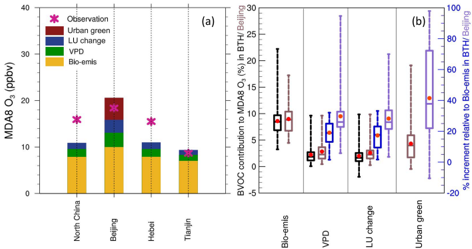
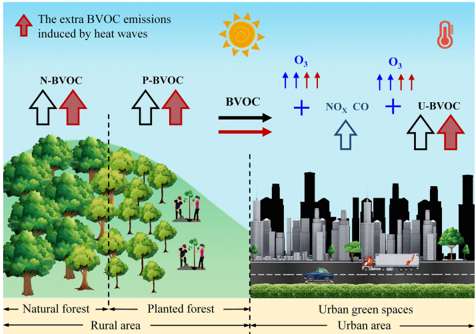
In the summer of 2017, heavy ozone pollution swamped most of the North China Plain (NCP), with the maximum regional average of daily maximum 8 h ozone concentration (MDA8) reaching almost 120 ppbv. In light of the continuing reduction of anthropogenic emissions in China, the underlying mechanisms for the occurrences of these regional extreme ozone episodes are elucidated from two perspectives: meteorology and biogenic emissions. The significant positive correlation between MDA8 ozone and temperature, which is amplified during heat waves concomitant with stagnant air and no precipitation, supports the crucial role of meteorology in driving high ozone concentrations. We also find that biogenic emissions are enhanced due to factors previously not considered. During the heavy ozone pollution episodes in June 2017, biogenic emissions driven by high vapor pressure deficit (VPD), land cover change and urban landscape yield an extra mean MDA8 ozone of 3.08, 2.79 and 4.74 ppbv, respectively, over the NCP, which together contribute as much to MDA8 ozone as biogenic emissions simulated using the land cover of 2003 and ignoring VPD and urban landscape. In Beijing, the biogenic emission increase due to urban landscape has a comparable effect on MDA8 ozone to the combined effect of high VPD and land cover change between 2003 and 2016. In light of the large effect of urban landscape on biogenic emission and the subsequent ozone formation, the types of trees may be cautiously selected to take into account of the biogenic volatile organic compound (BVOC) emission during the afforestation of cities. This study highlights the vital contributions of heat waves, land cover change and urbanization to the occurrence of extreme ozone episodes, with significant implications for ozone pollution control in a future when heat wave frequency and intensity are projected to increase under global warming.
Overview
The claims and statistics of this paper haven’t been checked yet.
Free: it reads the open-access text and checks the first 5 claims that cite a source we can check. Create a free account to check every claim.
Integrity signals
Registry
Cites
Statistics
Figures
Verification
Claims the paper makes
The claims and statistics of this paper haven’t been checked yet.
Free: it reads the open-access text and checks the first 5 claims that cite a source we can check. Create a free account to check every claim.
Claims other papers make about this one
Each is checked against this paper’s own text: does it say what the citing paper says it does?
In the citing paper
“This has led to surface brightening (e.g., by 0.70–1.16 W m−2 year−1 in eastern China over 2014–2019) [29] but also to undesirable increases in ambient O3 [30–33] (e.g., by 2–6 µg m−3 year−1 in megacity clusters of Beijing and Shanghai over 2013–2017) [34].”
From Changes in tropospheric air quality related to the protection of stratospheric ozone in a changing climate (2023) · cites this paper as [30]
Self-check
Percentages, sums and reported differences re-computed from the paper’s own numbers.
The self-check needs the paper’s full text.
Citations
Cites
Development of a turbulence closure model for geophysical fluid problems
Mellor, G. L., & Yamada, T. (1982) · Reviews of Geophysics · doi:10.1029/rg020i004p00851 · Cited by 6,913 · cited 2×
“, 2008), the unified Noah land surface model (Chen and Dudhia, 2001), the Mellor–Yamada–Janjic planetary boundary layer (PBL) scheme (Janjić, 1990, 1994; Mellor and Yamada, 1982), and the Grell–Freitas cumulus scheme (Grell and Freitas, 2014).”
Iacono, M. J., Delamere, J. S., Mlawer, E. J., Shephard, M. W., Clough, S. A., & Collins, W. D. (2008) · Journal of Geophysical Research: Atmospheres · doi:10.1029/2008jd009944 · Cited by 5,738
Chen, F., & Dudhia, J. (2001) · Monthly Weather Review · doi:10.1175/1520-0493(2001)129<0569:caalsh>2.0.co;2 · Cited by 5,674
Guenther, A., Karl, T., Harley, P., Wiedinmyer, C., Palmer, P. I., & Geron, C. (2006) · Atmospheric Chemistry and Physics · doi:10.5194/acp-6-3181-2006 · Cited by 4,603 · cited 2×
“The biogenic emissions were calculated by the Model of Emissions of Gases and Aerosols from Nature version 2.1 (MEGAN; Guenther et al., 2006, 2012).”
InfluentialGuenther, A. B., Jiang, X., Heald, C. L., Sakulyanontvittaya, T., Duhl, T., Emmons, L. K., & Wang, X. (2012) · Geoscientific Model Development · doi:10.5194/gmd-5-1471-2012 · Cited by 4,112
MODIS Collection 5 global land cover: Algorithm refinements and characterization of new datasets
Friedl, M. A., Sulla-Menashe, D., Tan, B., Schneider, A., Ramankutty, N., Sibley, A., & Huang, X. (2010) · Remote Sensing of Environment · doi:10.1016/j.rse.2009.08.016 · Cited by 3,473 · cited 3×
“PFT and LAI data were from the MODIS MCD12Q1 (Friedl et al., 2010) and MCD15A2H datasets (Myneni et al.”
BackgroundMethodInfluentialJanjić, Z. I. (1994) · Monthly Weather Review · doi:10.1175/1520-0493(1994)122<0927:tsmecm>2.0.co;2 · Cited by 3,366 · cited 1×
“…radiation (Iacono et al., 2008; Morcrette et al., 2008), the uni- fied Noah land surface model (Chen and Dudhia, 2001), the Mellor–Yamada–Janjic planetary boundary layer (PBL) scheme (Janjić, 1990, 1994; Mellor and Yamada, 1982), and the Grell–Freitas cumulus scheme (Grell and Freitas, 2014).”
The NCEP Climate Forecast System Version 2
Saha, S., Moorthi, S., Wu, X., Wang, J., Nadiga, S., Tripp, P., Behringer, D., Hou, Y.-T., Chuang, H.-Y., Iredell, M., et al. (2014) · Journal of Climate · doi:10.1175/jcli-d-12-00823.1 · Cited by 3,354
Trends in China's anthropogenic emissions since 2010 as the consequence of clean air actions
Zheng, B., Tong, D., Li, M., Liu, F., Hong, C., Geng, G., Li, H., Li, X., Peng, L., Qi, J., et al. (2018) · Atmospheric Chemistry and Physics · doi:10.5194/acp-18-14095-2018 · Cited by 2,916
Soriano, J. B., Abajobir, A. A., Abate, K. H., Abera, S. F., Agrawal, A., Ahmed, M. B., Aichour, A. N., Aichour, I., Aichour, M. T. E., Alam, K., et al. (2017) · The Lancet Respiratory Medicine · doi:10.1016/s2213-2600(17)30293-x · Cited by 2,538 · cited 1×
“Since ozone is harmful to both human health (Soriano et al., 2017) and vegetation (Emberson et al., 2009; Avnery et al., 2011), it is vital to investigate the possible mechanisms related to high ozone concentrations.”
Morrison, H., Thompson, G., & Tatarskii, V. (2009) · Monthly Weather Review · doi:10.1175/2008mwr2556.1 · Cited by 2,438
Byun, D., & Schere, K. L. (2006) · Applied Mechanics Reviews · doi:10.1115/1.2128636 · Cited by 2,413 · cited 1×
“For modeling atmospheric chemistry, the widely used Community Multi-scale Air Quality (CMAQ) model (Byun and Ching, 1999; Byun and Schere, 2006), with the latest version 5.”
MethodEffect of climate change on air quality
Jacob, D. J., & Winner, D. A. (2009) · Atmospheric Environment · doi:10.1016/j.atmosenv.2008.09.051 · Cited by 1,979
Description and evaluation of the Model for Ozone and Related chemical Tracers, version 4 (MOZART-4)
Emmons, L. K., Walters, S., Hess, P. G., Lamarque, J.-F., Pfister, G. G., Fillmore, D., Granier, C., Guenther, A., Kinnison, D., Laepple, T., et al. (2010) · Geoscientific Model Development · doi:10.5194/gmd-3-43-2010 · Cited by 1,838
Anthropogenic drivers of 2013–2017 trends in summer surface ozone in China
Li, K., Jacob, D. J., Liao, H., Shen, L., Zhang, Q., & Bates, K. H. (2019) · Proceedings of the National Academy of Sciences · doi:10.1073/pnas.1812168116 · Cited by 1,804 · cited 4×
“, 2016) and anthropogenic VOCs changed little (Zhao et al., 2018; Zheng et al., 2018; Li et al., 2019).”
InfluentialThe relation between ozone, NOx and hydrocarbons in urban and polluted rural environments
Sillman, S. (1999) · Atmospheric Environment · doi:10.1016/s1352-2310(98)00345-8 · Cited by 1,689 · cited 1×
“…of the high-ozone problem over the NCP. Tropospheric ozone is closely related to both anthropogenic emissions and biogenic emissions, including volatile organic compounds (VOCs) and nitrogen oxides (NOx) (Sill- man, 1995, 1999; Tonnesen and Dennis, 2000; Xing et al., 2011; Fu et al., 2012).”
Li, M., Zhang, Q., Kurokawa, J.-I., Woo, J.-H., He, K., Lu, Z., Ohara, T., Song, Y., Streets, D. G., Carmichael, G. R., et al. (2017) · Atmospheric Chemistry and Physics · doi:10.5194/acp-17-935-2017 · Cited by 1,616
Self-citationReactive nitrogen chemistry in aerosol water as a source of sulfate during haze events in China
Cheng, Y., Zheng, G., Wei, C., Mu, Q., Zheng, B., Wang, Z., Gao, M., Zhang, Q., He, K., Carmichael, G., et al. (2016) · Science Advances · doi:10.1126/sciadv.1601530 · Cited by 1,317
Self-citationScience algorithms of the EPA Models-3 community multi-scale air quality (CMAQ) modeling system
Byun, D. W. (1999) · Medical Entomology and Zoology · Cited by 1,252
Grell, G. A., & Freitas, S. R. (2014) · Atmospheric Chemistry and Physics · doi:10.5194/acp-14-5233-2014 · Cited by 1,217 · cited 1×
“, 2008), the unified Noah land surface model (Chen and Dudhia, 2001), the Mellor–Yamada–Janjic planetary boundary layer (PBL) scheme (Janjić, 1990, 1994; Mellor and Yamada, 1982), and the Grell–Freitas cumulus scheme (Grell and Freitas, 2014).”
MethodSevere Surface Ozone Pollution in China: A Global Perspective
Lu, X., Hong, J., Zhang, L., Cooper, O. R., Schultz, M. G., Xu, X., Wang, T., Gao, M., Zhao, Y., & Zhang, Y. (2018) · Environmental Science & Technology Letters · doi:10.1021/acs.estlett.8b00366 · Cited by 1,040
Zheng, G. J., Duan, F. K., Su, H., Ma, Y. L., Cheng, Y., Zheng, B., Zhang, Q., Huang, T., Kimoto, T., Chang, D., et al. (2015) · Atmospheric Chemistry and Physics · doi:10.5194/acp-15-2969-2015 · Cited by 951
Self-citationThe Step-Mountain Coordinate: Physical Package
Janjić, Z. I. (1990) · Monthly Weather Review · doi:10.1175/1520-0493(1990)118<1429:tsmcpp>2.0.co;2 · Cited by 787
Sillman, S. (1995) · Journal of Geophysical Research: Atmospheres · doi:10.1029/94jd02953 · Cited by 754
Avnery, S., Mauzerall, D. L., Liu, J., & Horowitz, L. W. (2011) · Atmospheric Environment · doi:10.1016/j.atmosenv.2010.11.045 · Cited by 596
Air Quality and Climate Connections
Fiore, A. M., Naik, V., & Leibensperger, E. M. (2015) · Journal of the Air & Waste Management Association · doi:10.1080/10962247.2015.1040526 · Cited by 537 · cited 1×
“Besides emissions, tropospheric ozone is also closely related to meteorological conditions, such as heat waves (Gao et al., 2013; Fiore et al., 2015; Otero et al., 2016), low wind speed and stagnant weather (Jacob and Winner, 2009; Sun et al.”
BackgroundDuan, J., Tan, J., Yang, L., Wu, S., & Hao, J. (2008) · Atmospheric Research · doi:10.1016/j.atmosres.2007.09.004 · Cited by 397
NO x emissions in China: historical trends and future perspectives
Zhao, B., Wang, S. X., Liu, H., Xu, J. Y., Fu, K., Klimont, Z., Hao, J. M., He, K. B., Cofala, J., & Amann, M. (2013) · Atmospheric Chemistry and Physics · doi:10.5194/acp-13-9869-2013 · Cited by 380
Self-citationImpact of a New Radiation Package, McRad, in the ECMWF Integrated Forecasting System
Morcrette, J.-J., Barker, H. W., Cole, J. N. S., Iacono, M. J., & Pincus, R. (2008) · Monthly Weather Review · doi:10.1175/2008mwr2363.1 · Cited by 375 · cited 2×
“, 2009), the Rapid Radiative Transfer Model for General Circulation Models (RRTMG) longwave and shortwave radiation (Iacono et al., 2008; Morcrette et al., 2008), the unified Noah land surface model (Chen and Dudhia, 2001), the Mellor–Yamada–Janjic planetary boundary layer (PBL) scheme (Janjić, 1990, 1994; Mellor and…”
Zhao, B., Zheng, H., Wang, S., Smith, K. R., Lu, X., Aunan, K., Gu, Y., Wang, Y., Ding, D., Xing, J., et al. (2018) · Proceedings of the National Academy of Sciences · doi:10.1073/pnas.1812955115 · Cited by 366 · cited 2×
“In the past few years (i.e., 2012– 2017), anthropogenic emissions such as NOX continued to decrease (Liu et al., 2016) and anthropogenic VOCs changed little (Zhao et al., 2018; Zheng et al., 2018; Li et al., 2019).”
InfluentialSelf-citationParticulate matter pollution over China and the effects of control policies
Wang, J., Zhao, B., Wang, S., Yang, F., Xing, J., Morawska, L., Ding, A., Kulmala, M., Kerminen, V.-M., Kujansuu, J., et al. (2017) · Science of The Total Environment · doi:10.1016/j.scitotenv.2017.01.027 · Cited by 355
Self-citationLander, M. A. (1994) · Monthly Weather Review · doi:10.1175/1520-0493(1994)122<2331:sosmco>2.0.co;2 · Cited by 350
Zhao, S., Yu, Y., Yin, D., He, J., Liu, N., Qu, J., & Xiao, J. (2016) · Environment International · doi:10.1016/j.envint.2015.11.003 · Cited by 338
Emission trends and mitigation options for air pollutants in East Asia
Wang, S. X., Zhao, B., Cai, S. Y., Klimont, Z., Nielsen, C. P., Morikawa, T., Woo, J. H., Kim, Y., Fu, X., Xu, J. Y., et al. (2014) · Atmospheric Chemistry and Physics · doi:10.5194/acp-14-6571-2014 · Cited by 314
Self-citationA comparison of North American and Asian exposure–response data for ozone effects on crop yields
Emberson, L. D., Büker, P., Ashmore, M. R., Mills, G., Jackson, L. S., Agrawal, M., Atikuzzaman, M. D., Cinderby, S., Engardt, M., Jamir, C., et al. (2009) · Atmospheric Environment · doi:10.1016/j.atmosenv.2009.01.005 · Cited by 297
Liu, F., Zhang, Q., van der A, R. J., Zheng, B., Tong, D., Yan, L., Zheng, Y., & He, K. (2016) · Environmental Research Letters · doi:10.1088/1748-9326/11/11/114002 · Cited by 286 · cited 1×
“, 2012– 2017), anthropogenic emissions such as NOX continued to decrease (Liu et al., 2016) and anthropogenic VOCs changed little (Zhao et al.”
BackgroundShao, M., Lu, S., Liu, Y., Xie, X., Chang, C., Huang, S., & Chen, Z. (2009) · Journal of Geophysical Research: Atmospheres · doi:10.1029/2008jd010863 · Cited by 273
Enhanced surface ozone during the heat wave of 2013 in Yangtze River Delta region, China
Pu, X., Wang, T. J., Huang, X., Melas, D., Zanis, P., Papanastasiou, D. K., & Poupkou, A. (2017) · Science of The Total Environment · doi:10.1016/j.scitotenv.2017.03.056 · Cited by 270 · cited 1×
“Weather conditions concomitant with heat waves, including high temperature, low wind speed and little cloud coverage, may enhance ozone production (Jaffe and Zhang, 2017; Pu et al., 2017; Sun et al., 2019).”
BackgroundXing, J., Wang, S. X., Jang, C., Zhu, Y., & Hao, J. M. (2011) · Atmospheric Chemistry and Physics · doi:10.5194/acp-11-5027-2011 · Cited by 241 · cited 2×
“Generally, urban ozone production is highly sensitive to VOC emissions (Xing et al., 2011; Liu et al., 2012).”
Self-citationVariations of ground-level O 3 and its precursors in Beijing in summertime between 2005 and 2011
Zhang, Q., Yuan, B., Shao, M., Wang, X., Lu, S., Lu, K., Wang, M., Chen, L., Chang, C.-C., & Liu, S. C. (2014) · Atmospheric Chemistry and Physics · doi:10.5194/acp-14-6089-2014 · Cited by 207
Summertime photochemistry during CAREBeijing-2007: RO x budgets and O 3 formation
Liu, Z., Wang, Y., Gu, D., Zhao, C., Huey, L. G., Stickel, R., Liao, J., Shao, M., Zhu, T., Zeng, L., et al. (2012) · Atmospheric Chemistry and Physics · doi:10.5194/acp-12-7737-2012 · Cited by 195
Self-citationGao, Y., Fu, J. S., Drake, J. B., Liu, Y., & Lamarque, J.-F. (2012) · Environmental Research Letters · doi:10.1088/1748-9326/7/4/044025 · Cited by 184 · cited 1×
“Together with the more frequent heat waves projected for the future (Gao et al., 2012; Zhang et al., 2018), the impact of biogenic emissions on ozone pollution in the NCP will likely play an increasingly important role in ozone pollution and should be taken into considerations in future air quality management plans to…”
BackgroundSelf-citationChen, Z., Zhuang, Y., Xie, X., Chen, D., Cheng, N., Yang, L., & Li, R. (2019) · Environmental Pollution · doi:10.1016/j.envpol.2018.10.117 · Cited by 184
Isoprene emissions over Asia 1979–2012: impact of climate and land-use changes
Stavrakou, T., Müller, J. ‐., Bauwens, M., Smedt, I. D., Roozendaël, M. V., Guenther, A., Wild, M., & Xia, X. (2014) · Atmospheric chemistry and physics · doi:10.5194/acp-14-4587-2014 · Cited by 175
MCD15A2H MODIS/Terra+Aqua Leaf Area Index/FPAR 8-day L4 Global 500m SIN Grid V006
Myneni, R. B., Knyazikhin, Y. V., & Park, T. (2015) · Earth Observing System Data and Information System · doi:10.5067/modis/mcd15a2h.006 · Cited by 175
Synoptic and meteorological drivers of extreme ozone concentrations over Europe
Otero, N., Sillmann, J., Schnell, J. L., Rust, H. W., & Butler, T. M. (2016) · Environmental Research Letters · doi:10.1088/1748-9326/11/2/024005 · Cited by 173
Isoprene emission response to drought and the impact on global atmospheric chemistry
Jiang, X., Guenther, A., Potosnak, M. J., Geron, C. D., Seco, R., Karl, T., Kim, S., Gu, L., & Pallardy, S. G. (2018) · Atmospheric Environment · doi:10.1016/j.atmosenv.2018.01.026 · Cited by 168 · cited 1×
“Please note that in the latest version MEGAN 3 (Jiang et al., 2018), a new approach was developed to quantify the drought effect on the isoprene emissions based on both photosynthesis and water stress, yielding a general reduction of monthly mean isoprene emission across the globe, including northern China.”
BackgroundLi, R., Cui, L., Li, J., Zhao, A., Fu, H., Wu, Y., Zhang, L., Kong, L., & Chen, J. (2017) · Atmospheric Environment · doi:10.1016/j.atmosenv.2017.05.008 · Cited by 167
Ren, Y., Qu, Z., Du, Y., Xu, R., Ma, D., Yang, G., Shi, Y., Fan, X., Tani, A., Guo, P., et al. (2017) · Environmental Pollution · doi:10.1016/j.envpol.2017.06.049 · Cited by 167
Tonnesen, G., & Dennis, R. L. (2000) · Journal of Geophysical Research Atmospheres · doi:10.1029/1999jd900371 · Cited by 163
Sun, L., Xue, L., Wang, Y., Li, L., Lin, J., Ni, R., Yan, Y., Chen, L., Li, J., Zhang, Q., et al. (2019) · Atmospheric chemistry and physics · doi:10.5194/acp-19-1455-2019 · Cited by 161 · cited 1×
“Weather conditions concomitant with heat waves, including high temperature, low wind speed and little cloud coverage, may enhance ozone production (Jaffe and Zhang, 2017; Pu et al., 2017; Sun et al., 2019).”
Self-citationYang, X., Xue, L., Wang, T., Wang, X., Gao, J. G., Lee, S., Blake, D. R., Chai, F., & Wang, W. (2018) · Journal of Geophysical Research Atmospheres · doi:10.1002/2017jd027403 · Cited by 143
Urban stress-induced biogenic VOC emissions and SOA-forming potentials in Beijing
Ghirardo, A., Xie, J., Zheng, X., Wang, Y., Grote, R., Block, K., Wildt, J., Mentel, T. F., Kiendler‐Scharr, A., Hallquist, M., et al. (2016) · Atmospheric chemistry and physics · doi:10.5194/acp-16-2901-2016 · Cited by 137
Self-citationGao, Y., Fu, J. S., Drake, J. B., Lamarque, J.-F., & Liu, Y. (2013) · Atmospheric Chemistry and Physics · doi:10.5194/acp-13-9607-2013 · Cited by 135 · cited 1×
“Besides emissions, tropospheric ozone is also closely related to meteorological conditions, such as heat waves (Gao et al., 2013; Fiore et al., 2015; Otero et al., 2016), low wind speed and stagnant weather (Jacob and Winner, 2009; Sun et al.”
BackgroundSelf-citationClimate-driven ground-level ozone extreme in the fall over the Southeast United States
Zhang, Y., & Wang, Y. (2016) · Proceedings of the National Academy of Sciences · doi:10.1073/pnas.1602563113 · Cited by 132 · cited 3×
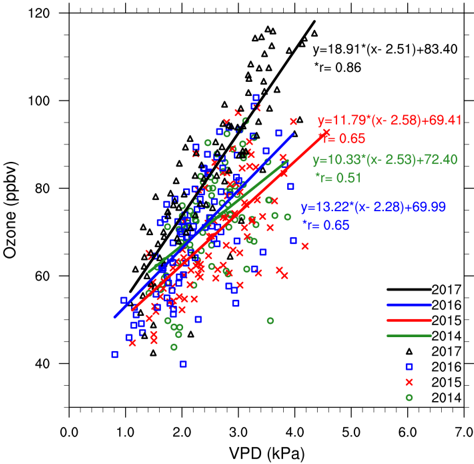
“Zhang and Wang (2016) suggested a doubling of daily biogenic isoprene when the daily VPD reaches 1.7 kPa or greater.”
InfluentialGao, Y., Leung, L.-Y. R., Zhao, C., & Hagos, S. (2017) · Journal of Geophysical Research Atmospheres · doi:10.1002/2016jd025896 · Cited by 130 · cited 1×
“The physics parameterizations used in this study are the same as in our previous studies (Gao et al., 2017; Zhang et al., 2019), including the Morrison double moment microphysics (Morrison et al.”
MethodSelf-citationZhao, B., Wu, W., Wang, S., Xing, J., Chang, X., Liou, K., Jiang, J. H., Gu, Y., Jang, C. J., Fu, J. S., et al. (2017) · Atmospheric chemistry and physics · doi:10.5194/acp-17-12031-2017 · Cited by 120
Self-citationImpacts of compound extreme weather events on ozone in the present and future
Zhang, J., Gao, Y., Luo, K., Leung, L.-Y. R., Zhang, Y., Wang, K., & Fan, J. (2018) · Atmospheric chemistry and physics · doi:10.5194/acp-18-9861-2018 · Cited by 115
Self-citationWang, Q., Han, Z., Wang, T., & Zhang, R. (2008) · The Science of The Total Environment · doi:10.1016/j.scitotenv.2008.01.059 · Cited by 91
Liu, Y., Yuan, B., Li, X., Shao, M., Lü, S., Li, Y., Chang, C.-K., Wang, Z., Hu, W., Huang, X., et al. (2015) · Atmospheric chemistry and physics · doi:10.5194/acp-15-3045-2015 · Cited by 89
Zhang, G., Gao, Y., Cai, W., Leung, L.-Y. R., Wang, S., Zhao, B., Wang, M., Shan, H., Yao, X., & Gao, H. (2019) · Atmospheric chemistry and physics · doi:10.5194/acp-19-565-2019 · Cited by 82
Self-citationBell, M. L. (2004) · Atmospheric Environment · doi:10.1016/j.atmosenv.2004.01.012 · Cited by 74
Xiao, H., Zhu, L., Wang, S., Meng, X., Zhang, M., & Hu, J. (2018) · Atmospheric chemistry and physics · doi:10.5194/acp-18-12207-2018 · Cited by 74
Self-citationRegional to Global Biogenic Isoprene Emission Responses to Changes in Vegetation From 2000 to 2015
Chen, W., Guenther, A., Wang, X., Chen, Y., Gu, D., Chang, M., Zhou, S., Wu, L. L., & Zhang, Y. Q. (2018) · Journal of Geophysical Research Atmospheres · doi:10.1002/2017jd027934 · Cited by 71
The impact of meteorological persistence on the distribution and extremes of ozone
Sun, W., Hess, P., & Liu, C. (2017) · Geophysical Research Letters · doi:10.1002/2016gl071731 · Cited by 64
Self-citationGu, Y., Li, Q., Wei, D., Gao, L., Tan, L., Su, G., Liu, G., Liu, W., Li, C., & Wang, Q. (2018) · Ecotoxicology and Environmental Safety · doi:10.1016/j.ecoenv.2018.11.091 · Cited by 58 · cited 1×
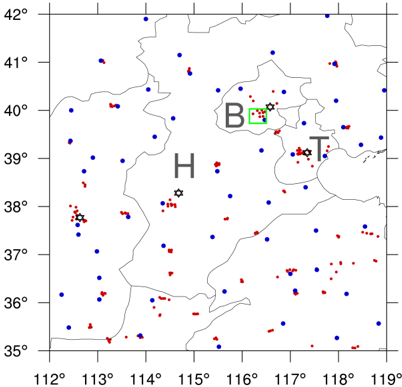
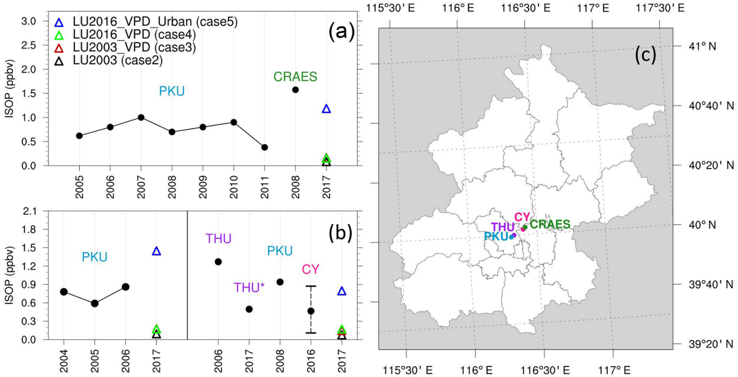
“, 2015), and the fourth dot indicates data observed at Chaoyang District (CY; Gu et al., 2019).”
BackgroundFu, J. S., Dong, X., Gao, Y., Wong, D. C., & Lam, Y. F. (2012) · Journal of the Air & Waste Management Association · doi:10.1080/10962247.2012.699014 · Cited by 53 · cited 1×
“Tropospheric ozone is closely related to both anthropogenic emissions and biogenic emissions, including volatile organic compounds (VOCs) and nitrogen oxides (NOx) (Sillman, 1995, 1999; Tonnesen and Dennis, 2000; Xing et al., 2011; Fu et al., 2012).”
BackgroundSelf-citationAssessing air-quality in Beijing-Tianjin-Hebei region: The method and mixed tales of PM2.5 and O3
Chen, L., Guo, B., Huang, J., He, J., Wang, H., Zhang, S., & Chen, S. X. (2018) · Atmospheric Environment · doi:10.1016/j.atmosenv.2018.08.047 · Cited by 53
Self-citationMeteorological anomalies lead to elevated O3 in the western U.S. in June 2015
Jaffe, D. A., & Zhang, L. (2017) · Geophysical Research Letters · doi:10.1002/2016gl072010 · Cited by 39
Jiang, X., Guenther, A., Potosnak, M. J., Geron, C. D., Seco, R., Karl, T., Kim, S., Gu, L., & Pallardy, S. G. (2018) · Atmospheric Environment · doi:10.1016/j.atmosenv.2018.05.020 · Cited by 4
Cited by
Rapid Increases in Warm-Season Surface Ozone and Resulting Health Impact in China Since 2013
Lu, X., Zhang, L., Wang, X., Gao, M., Li, K., Zhang, Y., Yue, X., & Zhang, Y. (2020) · Environmental Science & Technology Letters · doi:10.1021/acs.estlett.0c00171 · Cited by 602
Bais, A. F., Lucas, R. M., Bornman, J. F., Williamson, C. E., Sulzberger, B., Austin, A. T., Wilson, S. R., Andrady, A. L., Bernhard, G., McKenzie, R. L., et al. (2018) · Photochemical & Photobiological Sciences · doi:10.1039/c7pp90043k · Cited by 350
Beating the urban heat: Situation, background, impacts and the way forward in China
He, B.-J., Wang, J., Zhu, J., & Qi, J. (2022) · Renewable and Sustainable Energy Reviews · doi:10.1016/j.rser.2022.112350 · Cited by 316
Effects of Anthropogenic and Biogenic Volatile Organic Compounds on Los Angeles Air Quality
Gu, S., Guenther, A., & Faiola, C. (2021) · Environmental Science & Technology · doi:10.1021/acs.est.1c01481 · Cited by 263
Dang, R., Liao, H., & Fu, Y. (2021) · Science of The Total Environment · doi:10.1016/j.scitotenv.2020.142394 · Cited by 237
Metadata
- Authors
- Ma, M., Gao, Y., Wang, Y., Zhang, S., Leung, L. R., Liu, C., Wang, S., Zhao, B., Chang, X., Su, H., Zhang, T., Sheng, L., Yao, X., & Gao, H.
- Affiliations
- Ocean University of China (CN)
- Qingdao National Laboratory for Marine Science and Technology (CN)
- Georgia Institute of Technology (US)
- University of Science and Technology of China (CN)
- State Key Joint Laboratory of Environment Simulation and Pollution Control (CN)
- Pacific Northwest National Laboratory (US)
- Max Planck Institute for Chemistry (DE)
- Corresponding author
- Gao, Yang
- Wang, Yuhang
- Liu, Cheng
- ORCID
- Venue
- Atmospheric Chemistry and Physics
- Publisher
- Copernicus GmbH
- Published
- 2019-10-02
- Volume
- 19
- Issue
- 19
- Pages
- 12195-12207
- ISSN
- 1680-7316 (ISSN-L)
- 1680-7324
- OpenAlex
- W2942208331
- Cited by
- 216
- References
- 72
- Citations by year
- 2026: 22 · 2025: 25 · 2024: 36 · 2023: 31 · 2022: 50 · 2021: 34 · 2020: 12 · 2019: 5
- FWCI
- 10.01
- Type
- journal article
- Language
- en
- Open access
- gold
- doi.org
- Licence
- Locations
- Atmospheric chemistry and physics (publishedVersion, cc-by)
- DOAJ (DOAJ: Directory of Open Access Journals) (submittedVersion, cc-by-sa)
- OSTI OAI (U.S. Department of Energy Office of Scientific and Technical Information) (submittedVersion)
- MPG.PuRe (Max Planck Society) (submittedVersion)
- Funders
- National Science Foundation (DEAC05–76RL01830, 76RL01830)
- U.S. Department of Energy (DE-AC05–76RL01830, 76RL01830, AC05-76RL01830, DE-AC05?)
- Battelle (AC05-76RL01830, DE- AC05-76RL01830, DE-AC05)
- National Natural Science Foundation of China (21625701, 91544212, 41722501, 41705124, DE AC05-76RL01830)
- Natural Science Foundation of Shandong Province (ZR2017MD026)
- Fundamental Research Funds for the Central Universities (201941006)
- Pacific Northwest National Laboratory (DEAC0576RL01830, 76RL01830)
- Topics
- Physical Sciences › Earth and Planetary Sciences › Atmospheric Science › Atmospheric chemistry and aerosols
- Physical Sciences › Earth and Planetary Sciences › Atmospheric Science › Atmospheric Ozone and Climate
- Physical Sciences › Environmental Science › Global and Planetary Change › Atmospheric and Environmental Gas Dynamics
- Keywords
- ozone pollution, biogenic volatile organic compounds, heat waves, land cover change, urban landscape, vapor pressure deficit, North China Plain, urban arborization, tree species selection, summer 2017
About these checks
Registry, retraction, Cites and statistics results are computed, not judged, with one exception: a printed reference that no index lists is read once by a model before it counts as a citation error. Claims are extracted by a model and kept only when their quote appears verbatim in the text; each cited source is then checked, with a model’s help, for whether it says what the claim relies on. Those verdicts can be wrong — read the claim’s quote and the cited source before relying on one.
Statistics and arithmetic are recomputed, not judged.
Confidence bands are shown only for fields calibrated on our annotated test set. None is calibrated yet, so no band is shown.
What counts as a claim ›How we measure confidence ›How we check this ›
Are you an author, or do you see a problem with this page? Request a review
Data sources
Bibliographic data: Semantic Scholar, OpenAlex, Crossref.
Contains information from the Semantic Scholar Academic Graph Datasets, made available under the ODC Attribution License (ODC-BY 1.0).
Semantic Scholar’s data is described in: Kinney, R., et al. (2023). The Semantic Scholar Open Data Platform. arXiv:2301.10140.
