

Worsening urban ozone pollution in China from 2013 to 2017 – Part 2: The effects of emission changes and implications for multi-pollutant control
Open accessPublished version of a preprint
The DOI matches its Crossref record; 69 of the 69 references it cites were found in a registry or an index.
Abstract
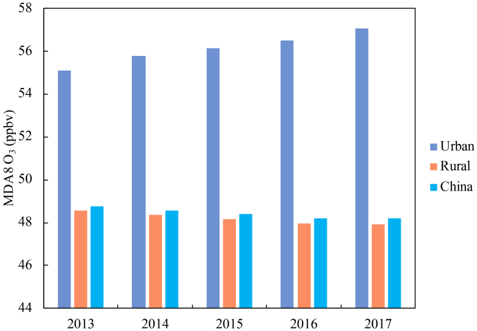
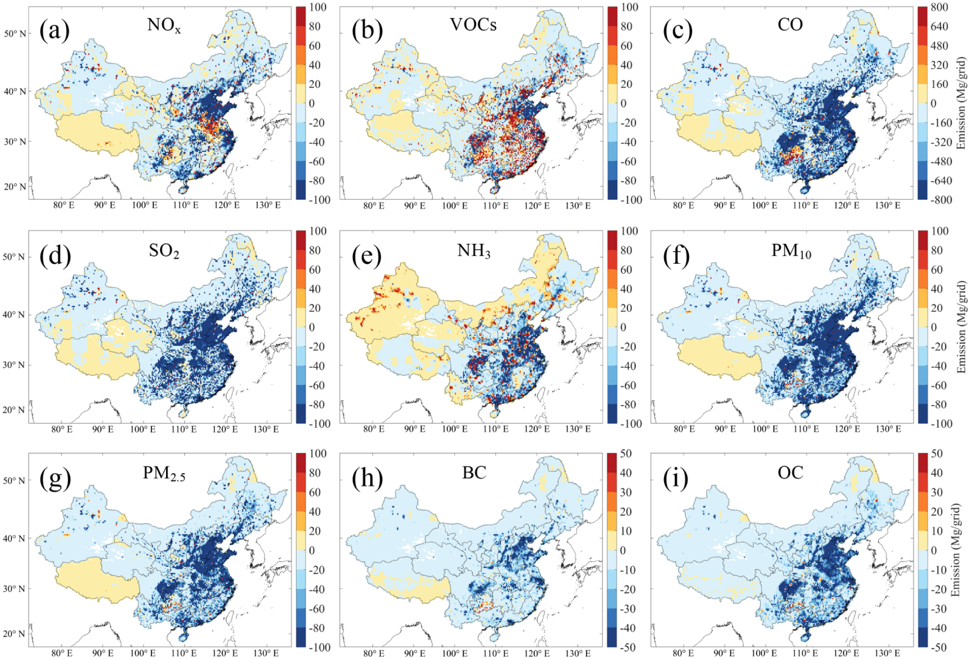
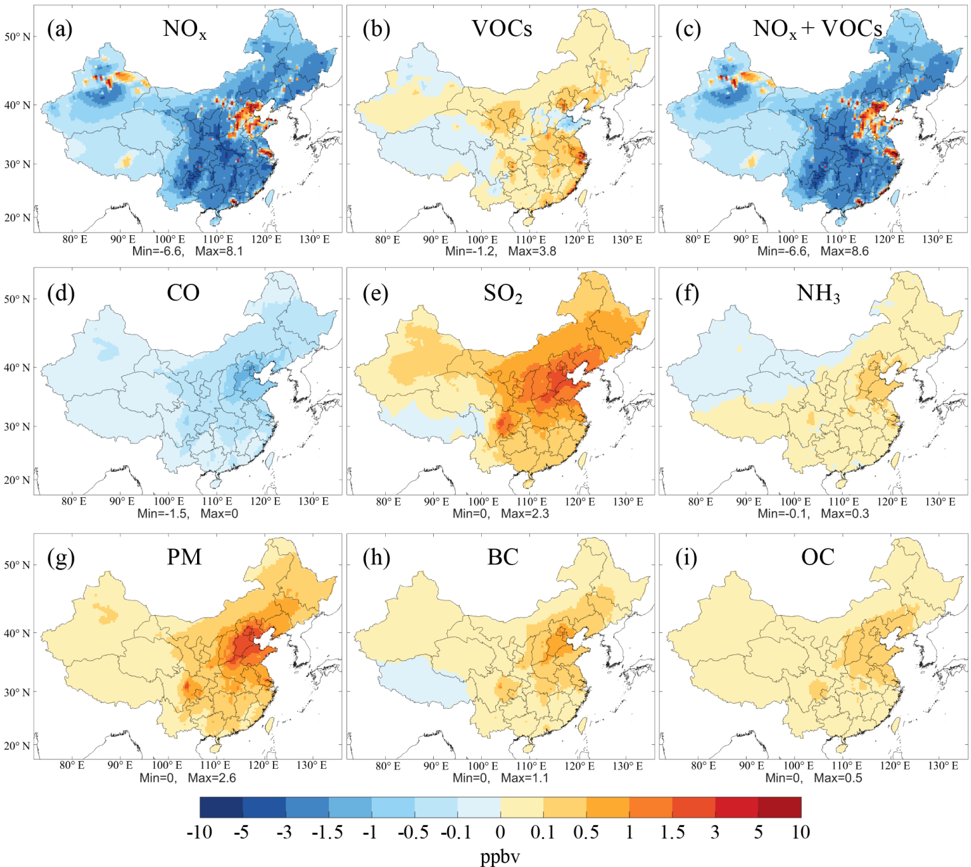
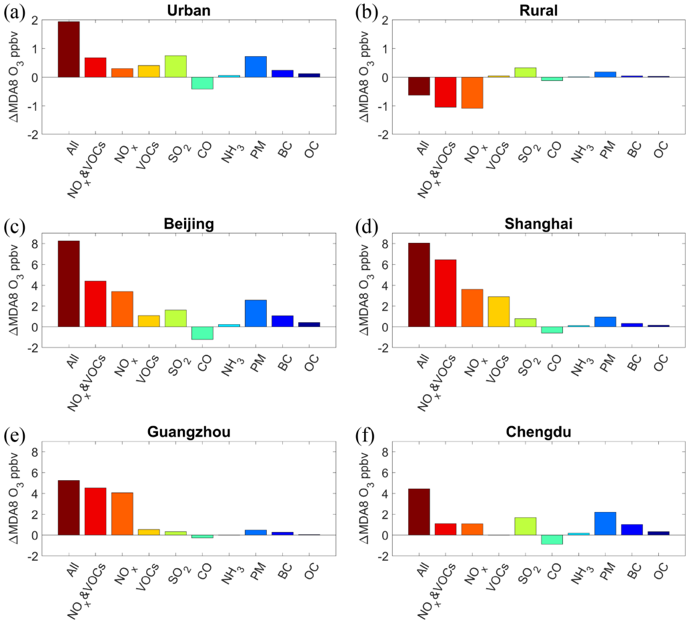
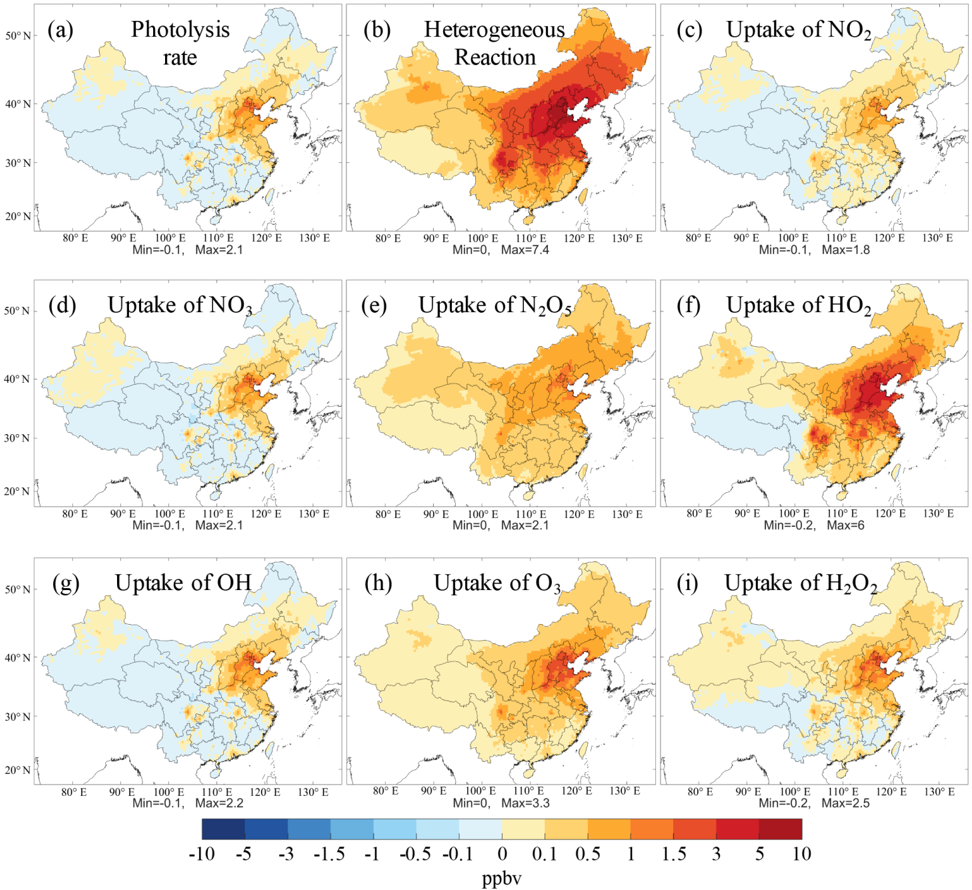
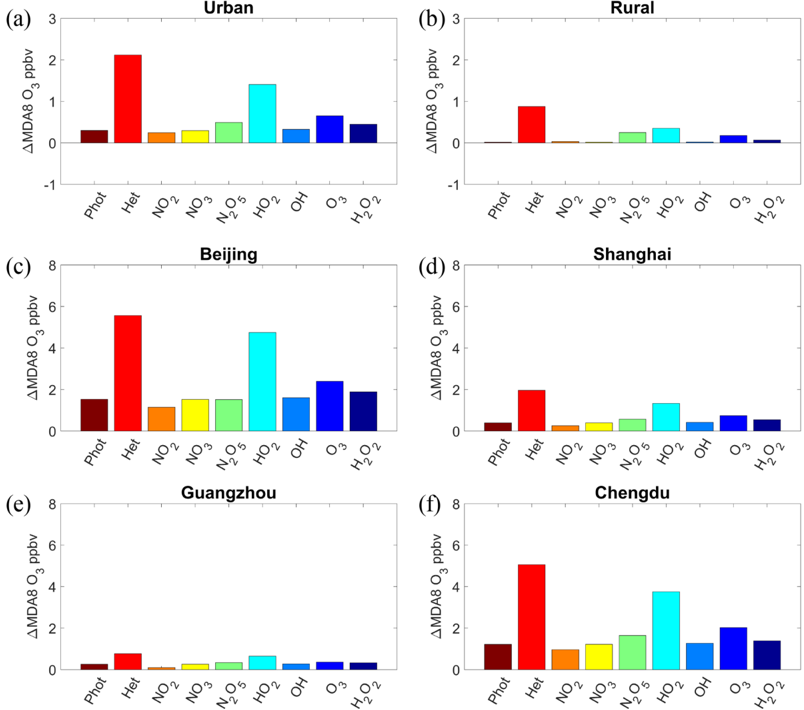
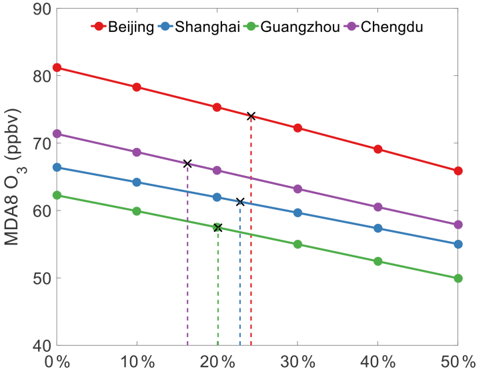
The Chinese government launched the Air Pollution Prevention and Control Action Plan in 2013, and various stringent measures have since been implemented, which have resulted in significant decreases in emissions and ambient concentrations of primary pollutants such as SO 2 , NO x , and particulate matter (PM). However, surface ozone (O 3 ) concentrations have still been increasing in urban areas across the country. In a previous analysis, we examined in detail the roles of meteorological variation during 2013–2017 in the summertime surface O 3 trend in various regions of China. In this study, we evaluated the effect of changes in multi-pollutant emissions from anthropogenic activities on O 3 levels during the same period by using an up-to-date regional chemical transport model (WRF-CMAQ) driven by an interannual anthropogenic emission inventory. The Community Multiscale Air Quality (CMAQ) model was improved with regard to heterogeneous reactions of reactive gases on aerosol surfaces, which led to better model performance in reproducing the ambient concentrations of those gases. The model simulations showed that the maximum daily 8 h average (MDA8) O 3 mixing ratio in urban areas increased by 0.46 ppbv per year (ppbv a −1 ) ( p =0.001) from 2013 to 2017. In contrast, a slight decrease in MDA8 O 3 by 0.17 ppbv a −1 ( p =0.005) in rural areas was predicted, mainly attributable to the NO x emission reduction. The effects of changes in individual pollutant emissions on O 3 were also simulated. The reduction of NO x emission increased the O 3 levels in urban areas due to the nonlinear NO x and volatile organic compound (VOC) chemistry and decreasing aerosol effects; the slight increase in VOC emissions enhanced the O 3 levels; the reduction of PM emissions increased the O 3 levels by enhancing the photolysis rates and reducing the loss of reactive gases on aerosol surfaces; and the reduction of SO 2 emissions resulted in a drastic decrease in sulfate concentrations, which increased O 3 through aerosol effects. In contrast to the unfavorable effect of the above changes in pollutant emissions on efforts to reduce surface O 3 , the reduction of CO emissions did help to decrease the O 3 level in recent years. The dominant cause of increasing O 3 due to changes in anthropogenic emissions varied geographically. In Beijing, NO x and PM emission reductions were the two largest causes of the O 3 increase; in Shanghai, the reduction of NO x and increase in VOC emissions were the two major causes; in Guangzhou, NO x reduction was the primary cause; in Chengdu, the PM and SO 2 emission decreases contributed most to the O 3 increase. Regarding the effects of decreasing concentrations of aerosols, the drop in heterogeneous uptake of reactive gases – mainly HO 2 and O 3 – was found to be more important than the increase in photolysis rates. The adverse effect of the reductions of NO x , SO 2 , and PM emissions on O 3 abatement in Beijing, Shanghai, Guangzhou, and Chengdu would have been avoided if the anthropogenic VOCs emission had been reduced by 24 %, 23 %, 20 %, and 16 %, respectively, from 2013 to 2017. Our analysis revealed that the NO x reduction in recent years has helped to contain the total O 3 production in China. However, to reduce O 3 levels in major urban and industrial areas, VOC emission controls should be added to the current NO x -SO 2 -PM policy.
Overview
The claims and statistics of this paper haven’t been checked yet.
Free: it reads the open-access text and checks the first 5 claims that cite a source we can check. Create a free account to check every claim.
Integrity signals
Registry
Cites
Statistics
Figures
Verification
Claims the paper makes
The claims and statistics of this paper haven’t been checked yet.
Free: it reads the open-access text and checks the first 5 claims that cite a source we can check. Create a free account to check every claim.
Claims other papers make about this one
Each is checked against this paper’s own text: does it say what the citing paper says it does?
The cited source says what the claim attributes to it.
In the citing paper
“Simulations with numerical models show several possible reasons including increases in UV radiation [31, 33–39], shifts in the VOC/NOx chemical regime resulting in increased production of O3 efficiency [35, 40], higher emissions of biogenic VOC due to rising temperatures [30], and decreased competition for gas-phase radicals by aerosol surfaces [34, 40], with reality likely being a combination of”
From Changes in tropospheric air quality related to the protection of stratospheric ozone in a changing climate (2023) · cites this paper as [35]
Self-check
Percentages, sums and reported differences re-computed from the paper’s own numbers.
The self-check needs the paper’s full text.
Citations
Cites
High secondary aerosol contribution to particulate pollution during haze events in China
Huang, R.-J., Zhang, Y., Bozzetti, C., Ho, K.-F., Cao, J.-J., Han, Y., Daellenbach, K. R., Slowik, J. G., Platt, S. M., Canonaco, F., et al. (2014) · Nature · doi:10.1038/nature13774 · Cited by 4,556
Global and regional climate changes due to black carbon
Ramanathan, V., & Carmichael, G. (2008) · Nature Geoscience · doi:10.1038/ngeo156 · Cited by 3,616
Atmospheric chemistry of VOCs and NOx
Atkinson, R. (2000) · Atmospheric Environment · doi:10.1016/s1352-2310(99)00460-4 · Cited by 3,500
Trends in China's anthropogenic emissions since 2010 as the consequence of clean air actions
Zheng, B., Tong, D., Li, M., Liu, F., Hong, C., Geng, G., Li, H., Li, X., Peng, L., Qi, J., et al. (2018) · Atmospheric Chemistry and Physics · doi:10.5194/acp-18-14095-2018 · Cited by 2,916
Byun, D., & Schere, K. L. (2006) · Applied Mechanics Reviews · doi:10.1115/1.2128636 · Cited by 2,413
Drivers of improved PM 2.5 air quality in China from 2013 to 2017
Zhang, Q., Zheng, Y., Tong, D., Shao, M., Wang, S., Zhang, Y., Xu, X., Wang, J., He, H., Liu, W., et al. (2019) · Proceedings of the National Academy of Sciences · doi:10.1073/pnas.1907956116 · Cited by 2,204
Self-citationWang, T., Xue, L., Brimblecombe, P., Lam, Y. F., Li, L., & Zhang, L. (2017) · Science of The Total Environment · doi:10.1016/j.scitotenv.2016.10.081 · Cited by 1,876
Self-citationAnthropogenic drivers of 2013–2017 trends in summer surface ozone in China
Li, K., Jacob, D. J., Liao, H., Shen, L., Zhang, Q., & Bates, K. H. (2019) · Proceedings of the National Academy of Sciences · doi:10.1073/pnas.1812168116 · Cited by 1,804
Elucidating severe urban haze formation in China
Guo, S., Hu, M., Zamora, M. L., Peng, J., Shang, D., Zheng, J., Du, Z., Wu, Z., Shao, M., Zeng, L., et al. (2014) · Proceedings of the National Academy of Sciences · doi:10.1073/pnas.1419604111 · Cited by 1,711
Heterogeneous chemistry and tropospheric ozone
Jacob, D. (2000) · Atmospheric Environment · doi:10.1016/s1352-2310(99)00462-8 · Cited by 1,289
Research works printed but not linked: 1
- NRC: Rethinking the ozone problem in urban and regional air pol- lution, National Academy Press, Washington, D.C., 1991.
Cited by
Items 301–360 of 360
Gao, M. (2022) · doi:10.5194/essd-2022-187-ac1
Author response to referee comments - acp-2021-1059
Smith, S. J. (2022) · Atmospheric chemistry and physics · doi:10.5194/acp-2021-1059-ac1
Exacerbated ozone pollution in the greening northern ChinaPreprint
Xu, J., Lou, S., Wang, N., Xue, L., Huang, X., & Ding, A. (2023) · doi:10.31223/x5vq0d · Cited by 1
(2023) · Atmospheric chemistry and physics · doi:10.5194/acp-2022-850-rc1
(2023) · Atmospheric chemistry and physics · doi:10.5194/acp-2022-850-rc2
Danyang, M. (2023) · Atmospheric chemistry and physics · doi:10.5194/acp-2022-850-ac2
Danyang, M. (2023) · Atmospheric chemistry and physics · doi:10.5194/acp-2022-850-ac1
Wang, H., Qiu, J., Liu, Y., Fan, Q., Lu, X. H., Zhang, Y., Wu, K., Shen, A., Xu, Y., Jin, Y., et al. (2023) · doi:10.5194/egusphere-2023-1309
Self-citationComment on egusphere-2023-1052
Mao, J. (2023) · doi:10.5194/egusphere-2023-1052-ac1
Sha, T. (2024) · doi:10.5194/egusphere-2024-359-ac1
Sha, T. (2024) · doi:10.5194/egusphere-2024-359-ac2
Sun, H., Yang, Y., Xu, P., Li, J., Cao, M., Wang, Y., sheng, L., & Zhang, F. (2024) · Air Quality Atmosphere & Health · doi:10.1007/s11869-024-01676-2
The 21st Century Climate Response to China's Clean Air ActionPreprint
Ma, J., Zhang, X., Jian, X., Fu, B., Gasser, T., Liu, X., Tao, S., Liu, J., Huang, T., Gao, H. T., et al. (2025) · Research Square · doi:10.21203/rs.3.rs-6392425/v1
Li, K. (2025) · doi:10.5194/egusphere-2025-430-ac1
Vallero, D. A. (2025) · Elsevier eBooks · doi:10.1016/b978-0-443-31446-9.00020-1
Characteristics and Causes of Compound and Independent Heavy Pollution Events in the Fenwei Plain
Lin, G., Zhang, Z. Q., Wang, Y., Dong, J., Wang, P., & Zhang, H. (2025) · Aerosol Science and Engineering · doi:10.1007/s41810-025-00344-x
An, W., Tong, J., Zhang, L., Ma, L., Liu, Y., Yang, H., & Chen, M. (2025) · Atmosphere · doi:10.3390/atmos16101192
Self-citationAnalysis of ozone pollution characteristics and meteorological factors in Yichang City, Hubei
Zhou, T., Hu, H., Wang, P., Zhang, M., Wen, H., Liu, D., & Liu, W. (2025) · Journal of Atmospheric and Solar-Terrestrial Physics · doi:10.1016/j.jastp.2025.106668
Gu, C. (2025) · Research Square · doi:10.21203/rs.3.rs-7970628/v1
Owusu, C., Ofori, A., Adusei‐Mensah, F., Asare, M., Quansah, R., & Essumang, D. K. (2025) · Journal of industrial safety. · doi:10.1016/j.jinse.2025.10.005
Wang, Y. (2023) · eScholarship (California Digital Library)
Shen, A., Liu, Y., Zhu, Y., Lu, X., Fan, Q., & Li, L. (2025) · Journal of Environmental Sciences · doi:10.1016/j.jes.2025.12.033
Self-citationHe, Y., Shen, Y., Li, P., Yang, T., Yang, X., Zhang, Z., & Lu, G. (2026) · SSRN Electronic Journal · doi:10.2139/ssrn.6268766
Nan, P., Yu, J., ZHANG, J., Ye, S., Hu, X., Ding, Y., Zang, H., & Zhang, W. (2026) · Journal of Energy and Climate Change · doi:10.3724/j.issn.2097-4981.jecc-2025-0386
Li, W., Peng, S., Li, S., Zhu, Z., Tan, C., Gao, X., Lu, L., Wu, R., Xie, Z., Zhang, L., et al. (2026) · Environmental Science & Technology · doi:10.1021/acs.est.6c02887
Wang, Z., Chen, Y., Zhang, H., Ji, X., Sun, X., Zhang, M., Lin, X., Yan, S., Xia, C., Zhang, K., et al. (2026) · Atmospheric Research · doi:10.1016/j.atmosres.2026.109030
Wang, H., Xue, W., Xie, Y., Liu, Z., Wang, Y., Zhang, Y., Liu, X., Lei, Y., & Wang, J. (2026) · Environmental Research · doi:10.1016/j.envres.2026.124849
Policy-driven winter-to-spring emissions shift enhances oxidizing capacity in ChinaPreprint
Jiang, F., Jia, M., Huang, X., Wang, Z., Evangeliou, N., Wang, H., Feng, S., Zhao, T., Xue, L., Xie, Y., et al. (2026) · Research Square · doi:10.21203/rs.3.rs-9871669/v1
Kang, Y.-H., Kim, E., Jeong, S., & Kim, S. (2026) · Environmental Impact Assessment Review · doi:10.1016/j.eiar.2026.108551
Mai, B., Deng, X., Li, Y., Deng, T., Yang, T., Xu, H., Liu, X., Li, T., Sun, N., Zhou, J., et al. (2026) · Atmospheric Research · doi:10.1016/j.atmosres.2026.109175
Evolution and drivers of urban–suburban ozone contrasts in China during 2013–2020Preprint
Yang, N., Wang, Q., Ma, N., Liu, G., Yang, Z., Zhong, Y., Hu, Z., Zhou, Y., Tao, J., Hong, J., et al. (2026) · doi:10.5194/egusphere-2026-4328
Xu, D., Yin, A., Lian, P., Qiu, F., Yang, Q., Chen, Y., & Zhao, K. (2026) · Ecotoxicology and Environmental Safety · doi:10.1016/j.ecoenv.2026.120629
Drivers of air pollutant and greenhouse gas emissions since 2010 in Greater Bay Area, China
Li, J., Xie, Y., Huang, Z., Zheng, J., & Fu, X. (2026) · Atmospheric Environment · doi:10.1016/j.atmosenv.2026.122301
张治国, Hu, Q., Li, Q., Xue, J., Lin, P., Tang, Z., Zhang, J., Xuan, Z., Lu, C., & Liu, C. (2026) · npj Climate and Atmospheric Science · doi:10.1038/s41612-026-01517-2
Zeng, G., Weng, X., Wang, H., Wang, H., Li, S., He, G., Li, K., Gao, M. C., & Lu, X. H. (2026) · doi:10.5194/egusphere-2026-4864
He, Y., Yang, T., & Li, Y. (2026) · Atmosphere · doi:10.3390/atmos17090885
Tang, J., 孙有学, & Ding, S. (2026) · Sustainability · doi:10.3390/su18189264
Yang, W., Peng, C., Zeng, W., Pang, X., 廖程浩, Liu, J., Ye, C., Yu, Q., Song, W., Zhang, Y., et al. (2026) · Atmospheric Pollution Research · doi:10.1016/j.apr.2026.103197
Zhao, L., Hu, Y., Zhang, C., Xiong, Z., Du, Y., & Li, C. (2026) · Journal of Cleaner Production · doi:10.1016/j.jclepro.2026.149510
Song, X., Tian, P., Yu, Z., Zeng, S., Zhang, Y., An, W., Liang, J., Cao, X., Chen, M., Ren, Y., et al. (2026) · ACS ES&T Air · doi:10.1021/acsestair.6c00228
Xiong, E. (n.d.) · PolyU Institutional Research Archive (Hong Kong Polytechnic University)
Zhou, B. (n.d.) · PolyU Institutional Research Archive (Hong Kong Polytechnic University)
Cao, Y., Liu, H., & Liu, H. (2026) · Sustainability · doi:10.3390/su182010292
Lin, W., Pei, C., Ye, X., Guan, Z., Yan, T., & Wang, L. (2026) · Advances in Meteorology · doi:10.1155/adme/5930401
Yang, C., Pei, X., Yue, H., Wang, Z., Hu, K., 陈安雄, 龚海群, Zhang, H., Li, X., & Cheng, H. (2026) · Journal of Environmental Sciences · doi:10.1016/j.jes.2026.105824
Li, Z., He, Y., Ruan, N., & Ge, X. (2026) · doi:10.5194/egusphere-2026-5488
Ma, X., Huang, J., Zhao, T., Liu, C., Zhao, K., Xing, J., & Xiao, W. (2020) · doi:10.5194/acp-2020-385 · Cited by 112
Metadata
- Authors
- Liu, Y., & Wang, T.
- Affiliations
- Hong Kong Polytechnic University (HK)
- Corresponding author
- Wang, Tao
- ORCID
- Venue
- Atmospheric Chemistry and Physics
- Publisher
- Copernicus GmbH
- Published
- 2020-06-03
- Volume
- 20
- Issue
- 11
- Pages
- 6323-6337
- ISSN
- 1680-7316 (ISSN-L)
- 1680-7324
- OpenAlex
- W3003589880
- Cited by
- 345
- References
- 69
- Citations by year
- 2026: 23 · 2025: 46 · 2024: 51 · 2023: 61 · 2022: 75 · 2021: 74 · 2020: 15
- FWCI
- 18.43
- Type
- journal article
- Language
- en
- Open access
- gold
- doi.org
- Licence
- Locations
- Atmospheric chemistry and physics (publishedVersion, cc-by)
- DOAJ (DOAJ: Directory of Open Access Journals) (submittedVersion, cc-by-sa)
- PolyU Institutional Research Archive (Hong Kong Polytechnic University) (submittedVersion, cc-by)
- Funders
- National Natural Science Foundation of China (91844301)
- Topics
- Physical Sciences › Earth and Planetary Sciences › Atmospheric Science › Atmospheric chemistry and aerosols
- Physical Sciences › Earth and Planetary Sciences › Atmospheric Science › Atmospheric Ozone and Climate
- Physical Sciences › Environmental Science › Global and Planetary Change › COVID-19 impact on air quality
- Keywords
- urban ozone, surface ozone trends, NOx reduction, volatile organic compounds, particulate emissions, sulfur dioxide emissions, carbon monoxide emissions, ozone precursors, multi-pollutant control, Air Pollution Prevention and Control Action Plan, WRF-CMAQ, China, urban air pollution
About these checks
Registry, retraction, Cites and statistics results are computed, not judged, with one exception: a printed reference that no index lists is read once by a model before it counts as a citation error. Claims are extracted by a model and kept only when their quote appears verbatim in the text; each cited source is then checked, with a model’s help, for whether it says what the claim relies on. Those verdicts can be wrong — read the claim’s quote and the cited source before relying on one.
Statistics and arithmetic are recomputed, not judged.
Confidence bands are shown only for fields calibrated on our annotated test set. None is calibrated yet, so no band is shown.
What counts as a claim ›How we measure confidence ›How we check this ›
Are you an author, or do you see a problem with this page? Request a review
Data sources
Bibliographic data: Semantic Scholar, OpenAlex, Crossref.
Contains information from the Semantic Scholar Academic Graph Datasets, made available under the ODC Attribution License (ODC-BY 1.0).
Semantic Scholar’s data is described in: Kinney, R., et al. (2023). The Semantic Scholar Open Data Platform. arXiv:2301.10140.
