

Modelling potential production of macroalgae farms in UK and Dutch coastal waters.
Open accessPublished version of a preprint
The DOI matches its Crossref record; 84 of the 87 references it cites were found in a registry or an index.
Abstract
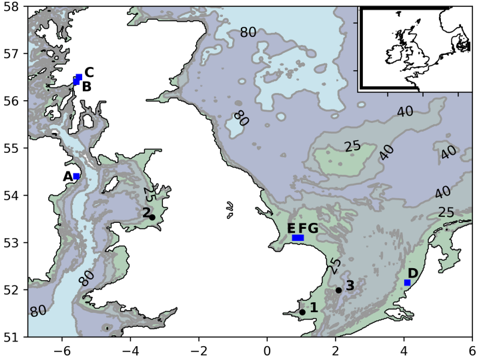
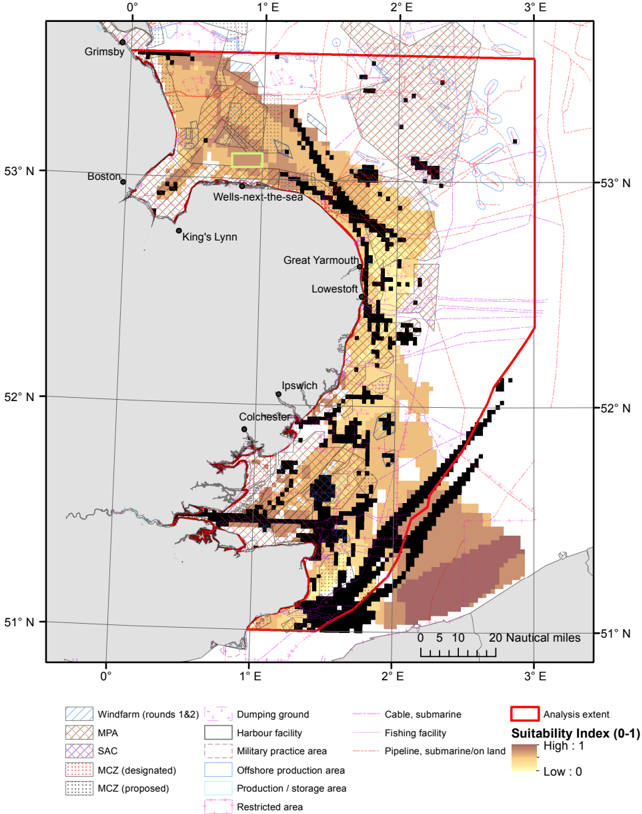
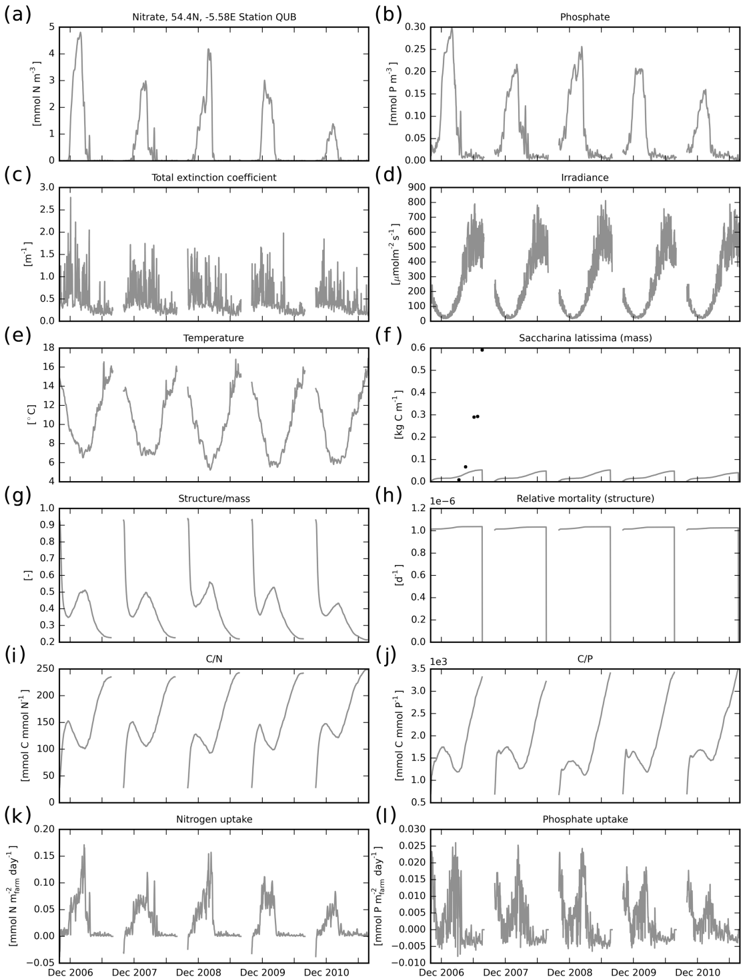
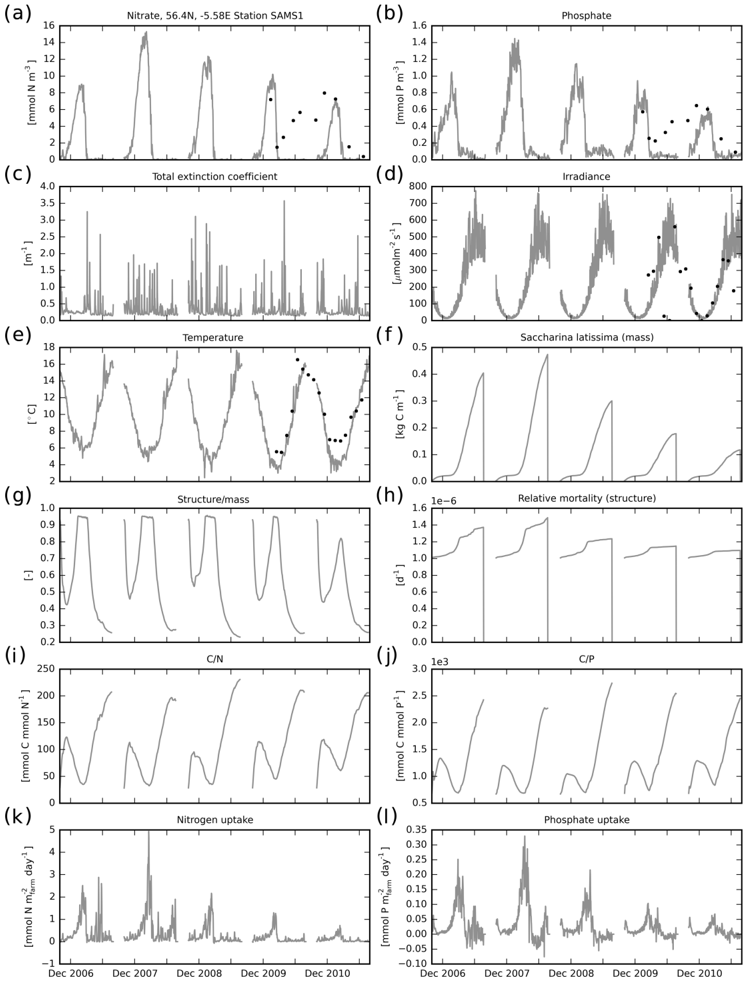
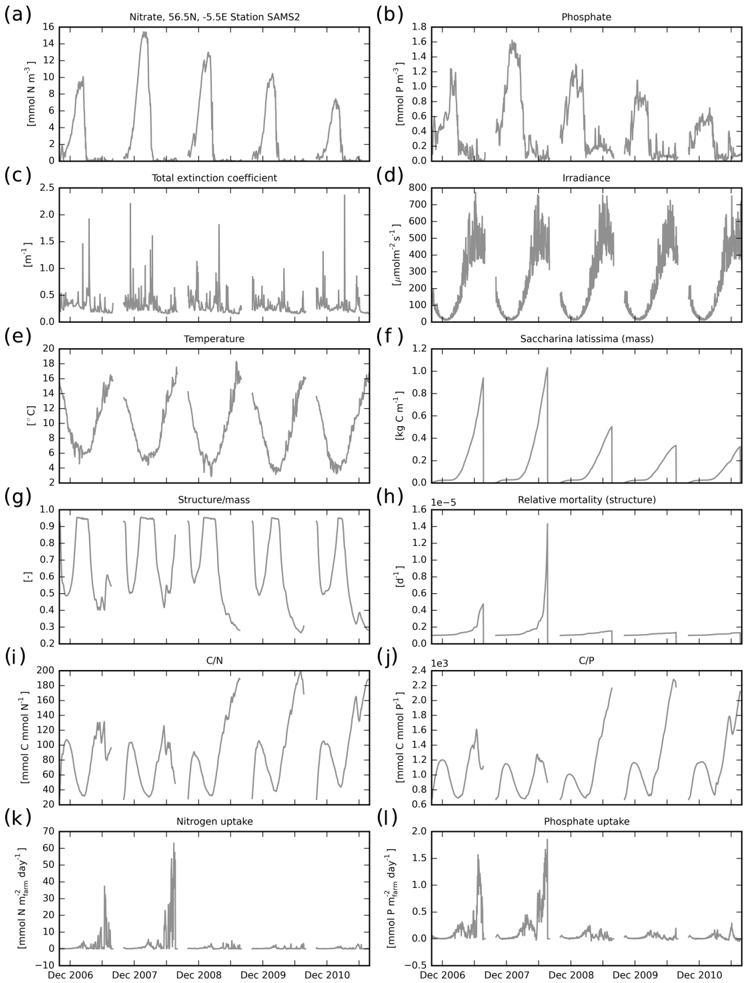
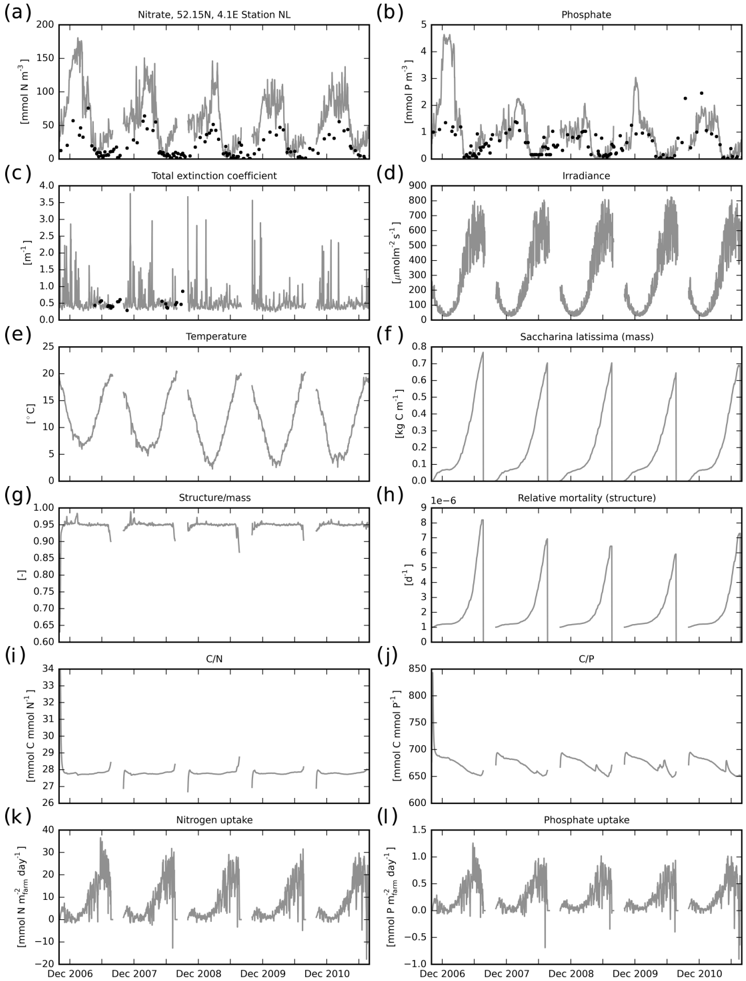
There is increasing interest in macroalgae farming in European waters for a range of applications, including food, chemical extraction for biofuel production. This study uses a 3-D numerical model of hydrodynamics and biogeochemistry to investigate potential production and environmental effects of macroalgae farming in UK and Dutch coastal waters. The model included four experimental farms in different coastal settings in Strangford Lough (Northern Ireland), in Sound of Kerrera and Lynn of Lorne (north-west Scotland) and in the Rhine plume (the Netherlands), as well as a hypothetical large-scale farm off the UK north Norfolk coast. The model could not detect significant changes in biogeochemistry and plankton dynamics at any of the farm sites averaged over the farming season. The results showed a range of macroalgae growth behaviours in response to simulated environmental conditions. These were then compared with in situ observations where available, showing good correspondence for some farms and less good correspondence for others. At the most basic level, macroalgae production depended on prevailing nutrient concentrations and light conditions, with higher levels of both resulting in higher macroalgae production. It is shown that under non-elevated and interannually varying winter nutrient conditions, farming success was modulated by the timings of the onset of increasing nutrient concentrations in autumn and nutrient drawdown in spring. Macroalgae carbohydrate content also depended on nutrient concentrations, with higher nutrient concentrations leading to lower carbohydrate content at harvest. This will reduce the energy density of the crop and thus affect its suitability for conversion into biofuel. For the hypothetical large-scale macroalgae farm off the UK north Norfolk coast, the model suggested high, stable farm yields of macroalgae from year to year with substantial carbohydrate content and limited environmental effects.
Overview
The claims and statistics of this paper haven’t been checked yet.
Free: it reads the open-access text and checks the first 5 claims that cite a source we can check. Create a free account to check every claim.
Integrity signals
Registry
Cites
Statistics
Figures
Verification
Claims the paper makes
The claims and statistics of this paper haven’t been checked yet.
Free: it reads the open-access text and checks the first 5 claims that cite a source we can check. Create a free account to check every claim.
Claims other papers make about this one
Each is checked against this paper’s own text: does it say what the citing paper says it does?
The cited source says what the claim attributes to it.
In the citing paper
“Recent modeling studies show spatial variations in the cultivation potential of S. latissima in Norway (Broch et al., 2019), the role of environmental nutrient concentrations in the biochemical composition of algae biomass (van der Molen et al., 2018) and the growth dynamics of S. latissima with variable environmental parameters (Venolia et al., 2020).”
From Current Status of the Algae Production Industry in Europe: An Emerging Sector of the Blue Bioeconomy (2021) · cites this paper as van der Molen et al., 2018
Self-check
Percentages, sums and reported differences re-computed from the paper’s own numbers.
The self-check needs the paper’s full text.
Citations
Cites
The ERA‐Interim reanalysis: configuration and performance of the data assimilation system
Dee, D. P., Uppala, S. M., Simmons, A. J., Berrisford, P., Poli, P., Kobayashi, S., Andrae, U., Balmaseda, M. A., Balsamo, G., Bauer, P., et al. (2011) · Quarterly Journal of the Royal Meteorological Society · doi:10.1002/qj.828 · Cited by 24,480
Evaluation of the ECMWF ocean reanalysis system ORAS4
Balmaseda, M. A., Mogensen, K., & Weaver, A. T. (2013) · Quarterly Journal of the Royal Meteorological Society · doi:10.1002/qj.2063 · Cited by 1,020 · cited 1×
“…the 30 Institute for Marine Research, Bergen, for Norwegian rivers; see also Lenhart et al., 2010), and depth-resolved temperatureand salinity boundary conditions from ECMWF-ORAS4 (Mogensen et al., 2012; Balmaseda et al., 2013; http://www.ecmwf.int/products/forecasts/d/charts/oras4/reanalysis/).”
BackgroundC:N:P ratios of benthic marine plants1
Atkinson, M. J., & Smith, S. V. (1983) · Limnology and Oceanography · doi:10.4319/lo.1983.28.3.0568 · Cited by 856 · cited 2×
“To conform with the structure of ERSEM, phosphate dynamics were added in analogy to the nitrate dynamics, as well as assuming an 25 optimum N/P ratio for structural mass of 25, slightly below the median reported by Atkinson & Smith (1983); see also Duarte (1992).”
MethodInfluentialSOME THOUGHTS ON NUTRIENT LIMITATION IN ALGAE1
Droop, M. R. (1973) · Journal of Phycology · doi:10.1111/j.1529-8817.1973.tb04092.x · Cited by 813 · cited 1×
“The nutrient uptake method for the macroalgae was changed to the dynamic one presented by Droop (1973, 1974) in order to be consistent with the nutrient uptake of phytoplankton in ERSEM (Baretta-Bekker et al., 1997).”
MethodThe nutrient status of algal cells in continuous culture
Droop, M. R. (1974) · Journal of the Marine Biological Association of the United Kingdom · doi:10.1017/s002531540005760x · Cited by 767 · cited 1×
“The nutrient uptake method for the macroalgae was changed to the dynamic one presented by Droop (1973, 1974) in order to be consistent with the nutrient uptake of phytoplankton in ERSEM (Baretta-Bekker et al., 1997).”
MethodIntegrating seaweeds into marine aquaculture systems: a key toward sustainability.
Chopin, T., Buschmann, A. H., Halling, C., Troell, M., Kautsky, N., Neori, A., Kraemer, G. P., Zertuche‐González, J. A., Yarish, C., & Neefus, C. (2001) · Journal of Phycology · doi:10.1046/j.1529-8817.2001.01137.x · Cited by 765 · cited 1×
“…from the water column, helping to remediate nutrient release from anthropogenic 15 sources such as agricultural runoff, waste water treatment and aquaculture ('bioremediation', e.g. Chopin et al., 2001; Lüning and Pang, 2003; Fei, 2004; He et al., 2008; Sanderson et al., 2012; Smale et al., 2013).”
BackgroundThe ERA-Interim archive, version 2.0
Berrisford, P., Dee, D., Poli, P., Brugge, R., Fielding, K., Fuentes, M. R. A., Kållberg, P. W., Kobayashi, S., Uppala, S. S., & Simmons, A. (2011) · Cited by 720
Can Seaweed Farming Play a Role in Climate Change Mitigation and Adaptation?
Duarte, C. M., Wu, J., Xiao, X., Bruhn, A., & Krause-Jensen, D. (2017) · Frontiers in Marine Science · doi:10.3389/fmars.2017.00100 · Cited by 680 · cited 3×
“Marine macroalgae fix CO2, acting as a sink for anthropogenic CO2 (“Blue Carbon”, Nellemann et al., 2009; Duarte et al., 2017) and absorb dissolved nutrients from the water column, helping to remediate nutrient release from anthropogenic 15 sources such as agricultural runoff, waste water treatment and aquaculture ('b…”
BackgroundThe European regional seas ecosystem model, a complex marine ecosystem model
Baretta, J. W., Ebenhöh, W., & Ruardij, P. (1995) · Netherlands Journal of Sea Research · doi:10.1016/0077-7579(95)90047-0 · Cited by 554 · cited 1×
“…(European Regional Seas Ecosystem Model - Biogeochemical Flux Model) version used here (01-06- 2016) is a development of the model ERSEM III (see Baretta et al., 1995; Ruardij and Van Raaphorst, 1995; Ruardij et al., 5 1997; Vichi et al., 2003; Vichi et al., 2004; Ruardij et al., 2005; Vichi et…”
MethodSelf-citationSmale, D. A., Burrows, M. T., Moore, P., O'Connor, N., & Hawkins, S. J. (2013) · Ecology and Evolution · doi:10.1002/ece3.774 · Cited by 530
Self-citationThe genus Laminaria sensu lato : recent insights and developments
Bartsch, I., Wiencke, C., Bischof, K., Buchholz, C. M., Buck, B. H., Eggert, A., Feuerpfeil, P., Hanelt, D., Jacobsen, S., Karez, R., et al. (2008) · European Journal of Phycology · doi:10.1080/09670260701711376 · Cited by 475
Nutrient concentration of aquatic plants: Patterns across species
Duarte, C. M. (1992) · Limnology and Oceanography · doi:10.4319/lo.1992.37.4.0882 · Cited by 425 · cited 1×
“To conform with the structure of ERSEM, phosphate dynamics were added in analogy to the nitrate dynamics, as well as assuming an 25 optimum N/P ratio for structural mass of 25, slightly below the median reported by Atkinson & Smith (1983); see also Duarte (1992).”
MethodKraan, S. (2013) · Mitigation and Adaptation Strategies for Global Change · doi:10.1007/s11027-010-9275-5 · Cited by 383
Bolton, J. J., & L�ning, K. (1982) · Marine Biology · doi:10.1007/bf00397259 · Cited by 312
Seaweed Ecology and Physiology.
Boney, A. D., Lobban, C. S., & Harrison, P. J. (1995) · The Journal of Ecology · doi:10.2307/2261617 · Cited by 304
Eckman, J. E., Duggins, D. O., & Sewell, A. T. (1989) · Journal of Experimental Marine Biology and Ecology · doi:10.1016/0022-0981(89)90055-5 · Cited by 266 · cited 2×
“, 2007), and by modifying sedimentation rates of suspended particles (Eckman et al., 1989).”
BackgroundFood web studies in a Norwegian kelp forest based on stable isotope (δ13C and δ15N) analysis
Fredriksen, S. (2003) · Marine Ecology Progress Series · doi:10.3354/meps260071 · Cited by 264 · cited 1×
“…ecosystem services including habitat, shelter and food for many species including fish (Hartney, 1996), benthic organisms (lobster, crabs; Bologna and Steneck, 1993; Daly and Konar, 2008), herbivorous organisms (Kang et al., 2008), and birds (Fredriksen, 2003), see also Walls et al. (2017).”
BackgroundStudies on British Laminariaceae. I. Growth in Laminaria Saccharina (L.) Lamour
Parke, M. (1948) · Journal of the Marine Biological Association of the United Kingdom · doi:10.1017/s0025315400056071 · Cited by 256 · cited 2×
“Maximum length developments are also associated with maximum fresh weights (Parke, 1948; Black, 1950).”
BackgroundA generalized model of pelagic biogeochemistry for the global ocean ecosystem. Part I: Theory
Vichi, M., Pinardi, N., & Masina, S. (2007) · Journal of Marine Systems · doi:10.1016/j.jmarsys.2006.03.006 · Cited by 245 · cited 1×
“…(see Baretta et al., 1995; Ruardij and Van Raaphorst, 1995; Ruardij et al., 5 1997; Vichi et al., 2003; Vichi et al., 2004; Ruardij et al., 2005; Vichi et al., 2007; Van der Molen et al., 2013; Van der Molen et al., 2014; Van der Molen et al., 2016; www.nioz.nl/northsea_model), and describes…”
BackgroundA hydrodynamic ocean tide model improved by assimilating a satellite altimeter‐derived data set
Le Provost, C., Lyard, F., Molines, J. M., Genco, M. L., & Rabilloud, F. (1998) · Journal of Geophysical Research: Oceans · doi:10.1029/97jc01733 · Cited by 243
Fernand, F., Israel, A., Skjermo, J., Wichard, T., Timmermans, K. R., & Golberg, A. (2017) · Renewable and Sustainable Energy Reviews · doi:10.1016/j.rser.2016.10.046 · Cited by 238
Self-citationThe offshore-ring: a new system design for the open ocean aquaculture of macroalgae.
Buck, B. H., & Buchholz, C. M. (2004) · Journal of Applied Phycology · doi:10.1023/b:japh.0000047947.96231.ea · Cited by 237 · cited 2×
“Its cultivation has been trialled across Europe, including Scotland, Strangford Lough in Northern Ireland, southern North Sea, and northwest of Spain (Buck and Buchholz 2004; Sanderson et al. 2012; Peteiro et al. 2012; Kerrison et al. 2015; van der Burg et al. 2016).”
BackgroundEngel, A. (2000) · Journal of Plankton Research · doi:10.1093/plankt/22.3.485 · Cited by 236 · cited 2×
“…consisting of TEP and diatoms, leading to enhanced sinking rates and food supply to the benthic system especially in the deeper offshore areas (Engel, 2000), a Phaeocystis functional group for 15 improved simulation of primary production in coastal areas (Peperzak et al., 1998), a pelagic…”
BackgroundMass cultivation of seaweeds: current aspects and approaches
Lüning, K., & Pang, S. (2003) · Journal of Applied Phycology · doi:10.1023/a:1023807503255 · Cited by 228 · cited 2×
“…from the water column, helping to remediate nutrient release from anthropogenic 15 sources such as agricultural runoff, waste water treatment and aquaculture ('bioremediation', e.g. Chopin et al., 2001; Lüning and Pang, 2003; Fei, 2004; He et al., 2008; Sanderson et al., 2012; Smale et al., 2013).”
BackgroundThe seasonal variation in weight and chemical composition of the common British Laminariaceae
Black, W. A. P. (1950) · Journal of the Marine Biological Association of the United Kingdom · doi:10.1017/s0025315400056186 · Cited by 226 · cited 4×
“Maximum length developments are also associated with maximum fresh weights (Parke, 1948; Black, 1950).”
BackgroundInfluentialKain, J. (1979) · Cited by 223
Spatial patterns of flow and their modification within and around a giant kelp forest
Gaylord, B., Rosman, J. H., Reed, D. C., Koseff, J. R., Fram, J., MacIntyre, S., Arkema, K., McDonald, C., Brzezinski, M. A., Largier, J. L., et al. (2007) · Limnology and Oceanography · doi:10.4319/lo.2007.52.5.1838 · Cited by 198
Biogas from Macroalgae: is it time to revisit the idea?
Hughes, A. D., Kelly, M. S., Black, K. D., & Stanley, M. S. (2012) · Biotechnology for Biofuels · doi:10.1186/1754-6834-5-86 · Cited by 198 · cited 2×
“The characteristics of Phaeophyta macroalgae, in particular high productivity, fast growth rate and high polysaccharide content, make them a 10 suitable biomass for biofuels production (Hughes et al., 2012; Kerrison et al., 2015; Schiener et al., 2016; Fernand et al., 2017).”
BackgroundSelf-citationSolving the coastal eutrophication problem by large scale seaweed cultivation
Fei, X. (2004) · Hydrobiologia · doi:10.1023/b:hydr.0000020320.68331.ce · Cited by 193 · cited 2×
“…from the water column, helping to remediate nutrient release from anthropogenic 15 sources such as agricultural runoff, waste water treatment and aquaculture ('bioremediation', e.g. Chopin et al., 2001; Lüning and Pang, 2003; Fei, 2004; He et al., 2008; Sanderson et al., 2012; Smale et al., 2013).”
BackgroundThe cultivation of European kelp for bioenergy: Site and species selection
Kerrison, P. D., Stanley, M. S., Edwards, M. D., Black, K., & Hughes, A. D. (2015) · Biomass and Bioenergy · doi:10.1016/j.biombioe.2015.04.035 · Cited by 183 · cited 9×
“, 2016), partially driven by research on biofuel technologies (Kerrison et al., 2015).”
BackgroundSelf-citationPredicting the consequences of nutrient reduction on the eutrophication status of the North Sea
Lenhart, H.-J., Mills, D. K., Baretta-Bekker, H. J. G., van Leeuwen, S. M., van der Molen, J., Baretta, J. W., Blaas, M., Desmit, X., Kühn, W., Lacroix, G., et al. (2010) · Journal of Marine Systems · doi:10.1016/j.jmarsys.2009.12.014 · Cited by 176
Self-citationGohin, F., Loyer, S., Lunven, M., Labry, C., Froidefond, J., Delmas, D., Huret, M., & Herbland, A. (2005) · Remote Sensing of Environment · doi:10.1016/j.rse.2004.11.007 · Cited by 174 · cited 1×
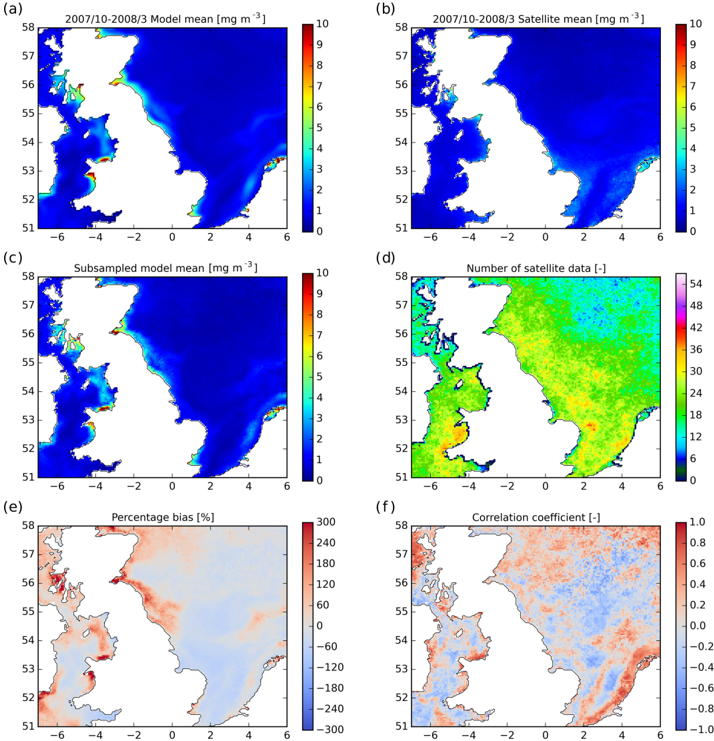
“:/ifremer/cersat/products/gridded/ocean-color/atlantic), and were processed as described by Gohin et al. (2005) and Gohin (2011).”
MethodBaretta-Bekker, J. G., Baretta, J. W., & Ebenhöh, W. (1997) · Journal of Sea Research · doi:10.1016/s1385-1101(97)00052-x · Cited by 171 · cited 9×
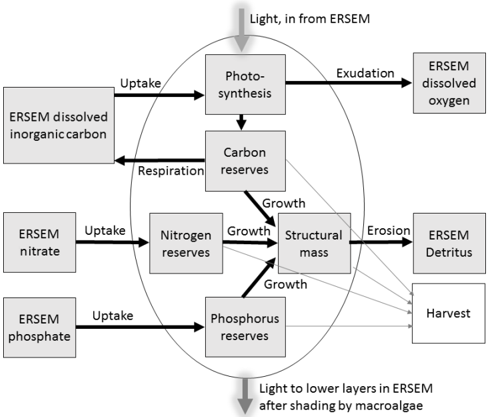
“5 The aim of this modelling study was to investigate environmental effects and potential yield of macroalgae farms, at different locations in UK and Dutch coastal waters, using the ERSEM-BFM (European Regional Seas Ecosystem Model - Biogeochemical Flux Model).”
MethodInfluentialSolving the coastal eutrophication problem by large scale seaweed cultivation
Fei, X. (2004) · Asian Pacific Phycology in the 21st Century: Prospects and Challenges · doi:10.1007/978-94-007-0944-7_19 · Cited by 168
He, P., Xu, S., Zhang, H., Wen, S., Dai, Y., Lin, S., & Yarish, C. (2008) · Water Research · doi:10.1016/j.watres.2007.09.023 · Cited by 168 · cited 2×
“…from the water column, helping to remediate nutrient release from anthropogenic 15 sources such as agricultural runoff, waste water treatment and aquaculture ('bioremediation', e.g. Chopin et al., 2001; Lüning and Pang, 2003; Fei, 2004; He et al., 2008; Sanderson et al., 2012; Smale et al., 2013).”
BackgroundGohin, F. (2011) · Ocean Science · doi:10.5194/os-7-705-2011 · Cited by 162 · cited 1×
“:/ifremer/cersat/products/gridded/ocean-color/atlantic), and were processed as described by Gohin et al. (2005) and Gohin (2011).”
MethodChapman, A. R. O., Markham, J. W., & Lüning, K. (1978) · Journal of Phycology · doi:10.1111/j.1529-8817.1978.tb02448.x · Cited by 159 · cited 2×
“For example, S. latissima has been shown to store nitrogen reserves at levels of more than 1000 times the external ambient concentration (Chapman et al., 1978).”
BackgroundThe economic feasibility of seaweed production in the North Sea
van den Burg, S. W. K., van Duijn, A. P., Bartelings, H., van Krimpen, M. M., & Poelman, M. (2016) · Aquaculture Economics & Management · doi:10.1080/13657305.2016.1177859 · Cited by 154 · cited 3×
“Its cultivation has been trialled across Europe, including Scotland, Strangford Lough in Northern Ireland, southern North Sea, and northwest of Spain (Buck and Buchholz 2004; Sanderson et al. 2012; Peteiro et al. 2012; Kerrison et al. 2015; van der Burg et al. 2016).”
BackgroundMethodPeperzak, L., Colijn, F., Gieskes, W. W. C., & Peeters, J. C. H. (1998) · Journal of Plankton Research · doi:10.1093/plankt/20.3.517 · Cited by 147 · cited 2×
“The pelagic module includes transparent exopolymer particle (TEP) excretion by diatoms under nutrient stress, the associated formation of macro-aggregates consisting of TEPs and diatoms, leading to enhanced sinking rates and food supply to the benthic system especially in the deeper offshore areas (Engel, 2000), a Pha…”
BackgroundBenthic nutrient regeneration in the ERSEM ecosystem model of the North Sea
Ruardij, P., & van Raaphorst, W. (1995) · Netherlands Journal of Sea Research · doi:10.1016/0077-7579(95)90057-8 · Cited by 133 · cited 1×
“…Seas Ecosystem Model - Biogeochemical Flux Model) version used here (01-06- 2016) is a development of the model ERSEM III (see Baretta et al., 1995; Ruardij and Van Raaphorst, 1995; Ruardij et al., 5 1997; Vichi et al., 2003; Vichi et al., 2004; Ruardij et al., 2005; Vichi et al., 2007; Van der…”
MethodSelf-citationResponse of offshore cultivated Laminaria saccharina to hydrodynamic forcing in the North Sea
Buck, B. H., & Buchholz, C. (2005) · Aquaculture · doi:10.1016/j.aquaculture.2005.04.062 · Cited by 132
Sanderson, J. C., Dring, M. J., Davidson, K., & Kelly, M. S. (2012) · Aquaculture · doi:10.1016/j.aquaculture.2012.03.019 · Cited by 130 · cited 2×
“Its cultivation has been trialled across Europe, including Scotland, Strangford Lough in Northern Ireland, southern North Sea, and northwest of Spain (Buck and Buchholz 2004; Sanderson et al. 2012; Peteiro et al. 2012; Kerrison et al. 2015; van der Burg et al. 2016).”
BackgroundSelf-citationAspects of the Biology of Laminaria Hyperborea: II. Age, Weight and Length
Kain, J. M., & Jones, N. S. (1963) · Journal of the Marine Biological Association of the United Kingdom · doi:10.1017/s0025315400005312 · Cited by 129 · cited 1×
“This is then followed by a slower growth phase between July and December (Parke, 1948; Kain, 1963).”
BackgroundInfluences of wave fetch, tidal flow and ocean colour on subtidal rocky communities
Burrows, M. T. (2011) · Marine Ecology Progress Series · doi:10.3354/meps09422 · Cited by 124
Modelling seasonal growth and composition of the kelp Saccharina latissima
Broch, O. J., & Slagstad, D. (2011) · Journal of Applied Phycology · doi:10.1007/s10811-011-9695-y · Cited by 119 · cited 3×
“For a comprehensive summary of modelling efforts on S. latissima we refer the reader to Broch & Slagstad (2012) and references therein.”
BackgroundMethodGreenwood, N., Parker, E. R., Fernand, L., Sivyer, D. B., Weston, K., Painting, S. J., Kröger, S., Forster, R. M., Lees, H. E., Mills, D. K., et al. (2010) · Biogeosciences · doi:10.5194/bg-7-1357-2010 · Cited by 112
Kang, C., Choy, E. J., Son, Y.-S., Lee, J.-Y., Kim, J.-K., Kim, Y.-D., & Lee, K. (2008) · Marine Biology · doi:10.1007/s00227-007-0890-y · Cited by 100 · cited 2×
“They are also associated with high biodiversity (Burrows, 2012), providing numerous ecosystem services including habitat, shelter and food for many species including fish (Hartney, 1996), benthic organisms (lobster, crabs; Bologna and Steneck, 1993; Daly and Konar, 2008), herbivorous organisms (Kang et al., 2008) and…”
BackgroundUK macroalgae aquaculture: What are the key environmental and licensing considerations?
Wood, D. T., Capuzzo, E., Kirby, D., Mooney, K. M., & Kerrison, P. D. (2017) · Marine Policy · doi:10.1016/j.marpol.2017.05.021 · Cited by 93 · cited 6×
“Since kelp farms are monocultures suspended within the water column, and are likely to undergo a yearly cycle of growth and harvesting, they are not synonymous with mature kelp beds which contain multiple species, of different ages attached to the benthos (Wood et al. 2017).”
BackgroundSelf-citationCurrents in the high drag environment of a coastal kelp stand off California
Jackson, G. A. (1997) · Continental Shelf Research · doi:10.1016/s0278-4343(97)00054-x · Cited by 87 · cited 1×
“These macroalgae aggregations have been shown to modify the surrounding environment by reducing water velocity and attenuate waves (Jackson, 1997; Gaylord et 25 al., 2007), and by modifying sedimentation rates of suspended particles (Eckman et al., 1989).”
BackgroundRuardij, P., Veldhuis, M. J. W., & Brussaard, C. P. D. (2005) · Harmful Algae · doi:10.1016/j.hal.2004.12.011 · Cited by 83 · cited 1×
“…of the model ERSEM III (see Baretta et al., 1995; Ruardij and Van Raaphorst, 1995; Ruardij et al., 5 1997; Vichi et al., 2003; Vichi et al., 2004; Ruardij et al., 2005; Vichi et al., 2007; Van der Molen et al., 2013; Van der Molen et al., 2014; Van der Molen et al., 2016;…”
BackgroundSelf-citationSOME THOUGHTS ON NUTRIENT LIMITATION IN ALGAE1
Droop, M. R. (1973) · Journal of Phycology · doi:10.1111/j.0022-3646.1973.00264.x · Cited by 83
Kelp beds as habitat for American lobster Homarus americanus
Bologna, P. A. X., & Steneck, R. S. (1993) · Marine Ecology Progress Series · doi:10.3354/meps100127 · Cited by 82 · cited 2×
“They are also associated with high biodiversity (Burrows, 2012), providing numerous ecosystem services including habitat, shelter and food for many species including fish (Hartney, 1996), benthic organisms (lobster, crabs; Bologna and Steneck, 1993; Daly and Konar, 2008), herbivorous organisms (Kang et al.”
Backgroundvan der Molen, J., Smith, H. C. M., Lepper, P. A., Limpenny, S., & Rees, J. (2014) · Continental Shelf Research · doi:10.1016/j.csr.2014.05.018 · Cited by 82 · cited 1×
“…1995; Ruardij et al., 5 1997; Vichi et al., 2003; Vichi et al., 2004; Ruardij et al., 2005; Vichi et al., 2007; Van der Molen et al., 2013; Van der Molen et al., 2014; Van der Molen et al., 2016; www.nioz.nl/northsea_model), and describes the dynamics of the biogeochemical fluxes within the…”
BackgroundHydes, D. J., Kelly-Gerreyn, B. A., Gall, A. C. L., & Proctor, R. (1999) · Marine Chemistry · doi:10.1016/s0304-4203(99)00069-9 · Cited by 82 · cited 2×
“The north Norfolk coast of the UK is also characterised by shallow water depths, high winter nutrient concentrations (Hydes et al., 1999; Proctor et al., 2003; Foden et al., 2011) and high turbidity (Dyer and Moffatt, 1998; Bristow et al.”
BackgroundRuardij, P., van Haren, H., & Ridderinkhof, H. (1997) · Journal of Sea Research · doi:10.1016/s1385-1101(97)00042-7 · Cited by 79
Self-citationModelling marine ecosystem response to climate change and trawling in the North Sea
van der Molen, J., Aldridge, J., Coughlan, C., Parker, E. R., Stephens, D., & Ruardij, P. (2012) · Biogeochemistry · doi:10.1007/s10533-012-9763-7 · Cited by 78
Self-citationGevaert, F., Davoult, D., Creach, A., Kling, R., Janquin, M.-A., Seuront, L., & Lemoine, Y. (2001) · Journal of the Marine Biological Association of the United Kingdom · doi:10.1017/s0025315401004532 · Cited by 78 · cited 3×
“For example, Gevaert et al. (2001) observed that for S. latissima in the English Channel, the maximum carbon content is reached in September with the lowest concentrations occurring in March.”
BackgroundInfluentialFluxes of suspended matter in the East Anglian plume Southern North Sea
Dyer, K. R., & Moffat, T. J. (1998) · Continental Shelf Research · doi:10.1016/s0278-4343(98)00045-4 · Cited by 71
Nutrient fluxes and budgets for the North West European Shelf from a three-dimensional model
Proctor, R., Holt, J., ALLEN, J., & Blackford, J. C. (2003) · The Science of The Total Environment · doi:10.1016/s0048-9697(03)00083-4 · Cited by 70 · cited 1×
“The north Norfolk coast of the UK is also characterized by shallow water depths, high winter nutrient concentrations (Hydes et al., 1999; Proctor et al., 2003; Foden et al., 2011), and high turbidity (Dyer and Moffatt, 1998; Bristow et al., 2013).”
BackgroundDevlin, M. J., Barry, J., Mills, D. K., Gowen, R. J., Foden, J., Sivyer, D. B., Greenwood, N., Pearce, D., & Tett, P. (2008) · Estuarine Coastal and Shelf Science · doi:10.1016/j.ecss.2008.12.015 · Cited by 69
Vichi, M., Oddo, P., Zavatarelli, M., Coluccelli, A., Coppini, G., Celio, M., Umani, S. F., & Pinardi, N. (2003) · Annales Geophysicae · doi:10.5194/angeo-21-413-2003 · Cited by 67 · cited 1×
“…used here (01-06- 2016) is a development of the model ERSEM III (see Baretta et al., 1995; Ruardij and Van Raaphorst, 1995; Ruardij et al., 5 1997; Vichi et al., 2003; Vichi et al., 2004; Ruardij et al., 2005; Vichi et al., 2007; Van der Molen et al., 2013; Van der Molen et al., 2014; Van der…”
MethodLink or sink: a modelling interpretation of the open Baltic biogeochemistry
Vichi, M., Ruardij, P., & Baretta, J. W. (2004) · Biogeosciences · doi:10.5194/bg-1-79-2004 · Cited by 66
Self-citationPietrzak, J. D., de Boer, G. J., & Eleveld, M. A. (2011) · Continental Shelf Research · doi:10.1016/j.csr.2010.12.014 · Cited by 62 · cited 1×
“The southern coast of the Netherlands is characterized by shallow water depths (<25 m), high winter nutrient concentrations (Laane, 2005; Troost et al., 2014), and high turbidity (Pietrzak et al., 2011; Van der Hout et al., 2015).”
BackgroundThe influence of water motion on the growth rate of the kelp Laminaria digitata
Kregting, L., Blight, A. J., Elsäßer, B., & Savidge, G. (2016) · Journal of Experimental Marine Biology and Ecology · doi:10.1016/j.jembe.2016.02.006 · Cited by 62 · cited 4×
“Reported values for the Narrows and coastal offshore area for 2009 show values within, but also in exceedence of these ranges (Kregting et al., 2016).”
BackgroundInfluentialvan der Molen, J., Ruardij, P., & Greenwood, N. (2016) · Biogeosciences · doi:10.5194/bg-13-2593-2016 · Cited by 61
Self-citationBristow, L. A., Jickells, T. D., Weston, K., Marca-Bell, A., Parker, R. E., & Andrews, J. E. (2012) · Biogeochemistry · doi:10.1007/s10533-012-9758-4 · Cited by 59
The Rhine outflow: A prototypical pulsed discharge plume in a high energy shallow sea
de Ruijter, W. P. M., Visser, A. W., & Bos, W. G. (1997) · Journal of Marine Systems · doi:10.1016/s0924-7963(96)00102-9 · Cited by 57 · cited 1×
“The Dutch coastal area is influenced by the Rhine river and has lowered salinity, potential for episodic salinity stratification (De Ruyter et al., 1997), and a higher N/P ratio due to larger reductions in anthropogenic riverine phosphate loading since the late 1980's 5 (Lenhart et al., 2010).”
BackgroundSeasonal Lamina Growth in two Age Groups of Laminaria saccharina (L.) Lamour. in Western Norway
Sjøtun, K. (1993) · Botanica Marina · doi:10.1515/botm.1993.36.5.433 · Cited by 57 · cited 1×
“Similar trends have also been reported for Norway (Sjøtun, 1993) and Scotland (Connolly and Drew, 1985).”
ResultWalls, A., Edwards, M., Firth, L. B., & Johnson, M. P. (2017) · Aquaculture Environment Interactions · doi:10.3354/aei00215 · Cited by 51
Foden, J., Devlin, M. J., Mills, D. K., & Malcolm, S. J. (2010) · Biogeochemistry · doi:10.1007/s10533-010-9475-9 · Cited by 50
Smyth, D., Kregting, L., Elsäßer, B., Kennedy, R. J., & Roberts, D. (2015) · Journal of Sea Research · doi:10.1016/j.seares.2015.12.009 · Cited by 45 · cited 2×
“5 km wide at narrowest) connect the Irish Sea to the main inlet of the lough (Smyth et al., 2016; Kregting and Elsäßer, 2014).”
BackgroundInfluentialThe nutritional aspects of biorefined Saccharina latissima, Ascophyllum nodosum and Palmaria palmata
Schiener, P., SuFen, Z., Theodoridou, K., Carey, M. P., Mooney, K. M., & Greenwell, H. C. (2016) · Biomass Conversion and Biorefinery · doi:10.1007/s13399-016-0227-5 · Cited by 45 · cited 2×
“The characteristics of Phaeophyta macroalgae, in particular high productivity, fast growth rate and high polysaccharide content, make them a suitable biomass for biofuel production (Hughes et al., 2012; Kerrison et al., 2015; Schiener et al., 2017; Fernand et al., 2017).”
BackgroundSelf-citationThe Irish Sea: Is it eutrophic?
Gowen, R. J., Tett, P., Kennington, K., Mills, D. K., Shammon, T. M., Stewart, B. M., Greenwood, N., Flanagan, C., Devlin, M. J., & Wither, A. (2007) · Estuarine Coastal and Shelf Science · doi:10.1016/j.ecss.2007.07.005 · Cited by 42 · cited 1×
“Discrete samples were collected using an automated Aquamonitor and subsequently analysed for TOxN (total oxidisable nitrogen) and silicate according to Gowen et al. (2008).”
MethodPeteiro, C., Salinas-Morrondo, J. M., Freire, Ó., & Fuertes-Roig, M. C. (2006) · Thalassas An International Journal of Marine Sciences · Cited by 41
Site fidelity and homing behaviour of some kelp-bed fishes
Hartney, K. B. (1996) · Journal of Fish Biology · doi:10.1111/j.1095-8649.1996.tb01778.x · Cited by 41 · cited 2×
“They are also associated with high biodiversity (Burrows, 2012), providing numerous ecosystem services including habitat, shelter and food for many species including fish (Hartney, 1996), benthic organisms (lobster, crabs; Bologna and Steneck, 1993; Daly and Konar, 2008), herbivorous organisms (Kang et al.”
BackgroundConolly, N. J., & Drew, E. A. (1985) · Marine Ecology · doi:10.1111/j.1439-0485.1985.tb00321.x · Cited by 37 · cited 5×
“The model included four experimental farms in different coastal settings in Strangford Lough (Northern Ireland), in Sound of Kerrera and Lynn of Lorne (northwest Scotland), and in the Rhine plume (The Netherlands), as well as a hypothetical large-scale farm off the UK north Norfolk coast.”
ResultInfluentialA Hydrodynamic Modelling Framework for Strangford Lough Part 1: Tidal Model
Kregting, L., & Elsäßer, B. (2014) · Journal of Marine Science and Engineering · doi:10.3390/jmse2010046 · Cited by 37
van der Hout, C. M., Gerkema, T., Nauw, J. J., & Ridderinkhof, H. (2015) · Continental Shelf Research · doi:10.1016/j.csr.2015.01.002 · Cited by 32 · cited 1×
“The southern coast of the Netherlands is characterized by shallow water depths (<25 m), high winter nutrient concentrations (Laane, 2005; Troost et al., 2014), and high turbidity (Pietrzak et al., 2011; Van der Hout et al., 2015).”
BackgroundApplying the critical load concept to the nitrogen load of the river Rhine to the Dutch coastal zone
Laane, R. W. P. M. (2004) · Estuarine Coastal and Shelf Science · doi:10.1016/j.ecss.2004.09.012 · Cited by 31 · cited 1×
“The southern coast of the Netherlands is characterized by shallow water depths (<25 m), high winter nutrient concentrations (Laane, 2005; Troost et al., 2014), and high turbidity (Pietrzak et al., 2011; Van der Hout et al., 2015).”
Backgroundvan der Molen, J., Ruardij, P., & Greenwood, N. (2016) · Journal of Sea Research · doi:10.1016/j.seares.2016.12.003 · Cited by 29 · cited 5×
“GETM was run using the north-west European shelf setup that has 20 been used by Van der Molen et al. (2016) to study the potential large-scale effects of tidal energy generation in the Pentland Firth, and by Van der Molen et al. (2017) to develop a suspended particulate matter model.”
BackgroundMethodSelf-citationThe influence of water motion on the growth rate of the kelp Laminaria hyperborea
Kregting, L., Blight, A. J., Elsäßer, B., & Savidge, G. (2013) · Journal of Experimental Marine Biology and Ecology · doi:10.1016/j.jembe.2013.07.017 · Cited by 26
New approaches to improve the detection of eutrophication in UK coastal waters
Mills, D. K., Greenwood, N., Kröger, S., Devlin, M. J., Sivyer, D. B., Pearce, D., Cutchey, S. J., & Malcolm, S. J. (2004) · IEEE/OES Baltic International Symposium · doi:10.1109/baltic.2004.7296835 · Cited by 23
Troost, T. A., de Kluijver, A., & Los, F. J. (2014) · Journal of Marine Systems · doi:10.1016/j.jmarsys.2014.01.015 · Cited by 22 · cited 2×
“The southern coast of the Netherlands is characterised by shallow water depths (< 25 m), high winter nutrient concentrations (Laane, 2005; Troost et al., 2014) and high turbidity (Pietrzak et al.”
BackgroundEffects of macroalgal structural complexity on nearshore larval and post-larval crab composition
Daly, B., & Konar, B. H. (2007) · Marine Biology · doi:10.1007/s00227-007-0878-7 · Cited by 15 · cited 2×
“They are also associated with high biodiversity (Burrows, 2012), providing numerous ecosystem services including habitat, shelter and food for many species including fish (Hartney, 1996), benthic organisms (lobster, crabs; Bologna and Steneck, 1993; Daly and Konar, 2008), herbivorous organisms (Kang et al.”
Background
Research works printed but not linked: 2
- Nellemann, C., Corcoran, E., Duarte, C. M., Valdes, L., De Young, C., Fonseca, L., and Grimsditch, G. (Eds.): Blue Carbon. A rapid response assessment, United Nations Environment Programme, GRID-Arendal, available at: www.grida.no, Birkeland Trykkeri AS, Norway, 90 pp., 2009.
- Smith, F.: An Assessment of the Water Balance of the Strangford Lough Catchment (Belfast Thesis Master in Science) School of Planning, Architecture & Civil Engineering, Queen's University Belfast, 2010.
Cited by
Current Status of the Algae Production Industry in Europe: An Emerging Sector of the Blue Bioeconomy
Araújo, R., Vázquez Calderón, F., Sánchez López, J., Azevedo, I. C., Bruhn, A., Fluch, S., Garcia Tasende, M., Ghaderiardakani, F., Ilmjärv, T., Laurans, M., et al. (2021) · Frontiers in Marine Science · doi:10.3389/fmars.2020.626389 · Cited by 653
“…cultivation potential of S. latissima in Norway (Broch et al., 2019), the role of environmental nutrient concentrations in the biochemical composition of algae biomass (van der Molen et al., 2018) and the growth dynamics of S. latissima with variable environmental parameters (Venolia et al., 2020).”
BackgroundWu, J., Keller, D. P., & Oschlies, A. (2023) · Earth System Dynamics · doi:10.5194/esd-14-185-2023 · Cited by 134
Environmental impact of kelp (Saccharina latissima) aquaculture
Visch, W., Kononets, M., Hall, P., Nylund, G. M., & Pavia, H. (2020) · Marine Pollution Bulletin · doi:10.1016/j.marpolbul.2020.110962 · Cited by 110
The kelp cultivation potential in coastal and offshore regions of Norway.
Broch, O. J., Alver, M. O., Bekkby, T., Gundersen, H., Forbord, S., Handå, A., Skjermo, J., & Hancke, K. (2019) · Frontiers in Marine Science · doi:10.3389/fmars.2018.00529 · Cited by 109
“Epiphyte infestation is of great importance for macroalgae aquaculture, as well as exposure and wave height (van der Molen et al., 2018).”
BackgroundInfluentialKarpouzoglou, T., Vlaswinkel, B., & van der Molen, J. (2020) · Ocean science · doi:10.5194/os-16-195-2020 · Cited by 70
“ERSEMBFM is a development of the ERSEM III model (Baretta et al., 1995; Ruardij et al., 1997; Vichi et al., 2007; van der Molen et al., 2018; https://www.nioz.nl/en/about/ cos/ecosystemmodelling, last access: 21 January 2020).”
Method
Metadata
- Authors
- van der Molen, J., Ruardij, P., Mooney, K., Kerrison, P., O'Connor, N. E., Gorman, E., Timmermans, K., Wright, S., Kelly, M., Hughes, A. D., & Capuzzo, E.
- Affiliations
- Utrecht University (NL)
- Queen's University Belfast (GB)
- Scottish Association For Marine Science (GB)
- Centre for Environment, Fisheries and Aquaculture Science (GB)
- Corresponding author
- Ruardij, Piet
- Mooney, Karen
- Kerrison, Philip
- Gorman, Emma
- Timmermans, Klaas
- Wright, Serena
- Kelly, Maeve
- Hughes, Adam D.
- Capuzzo, Elisa
- Venue
- Biogeosciences
- Publisher
- Copernicus GmbH
- Published
- 2018-02-23
- Volume
- 15
- Issue
- 4
- Pages
- 1123-1147
- ISSN
- 1726-4170 (ISSN-L)
- 1726-4189
- OpenAlex
- W2788366290
- Cited by
- 62
- References
- 87
- Citations by year
- 2026: 6 · 2025: 4 · 2024: 5 · 2023: 9 · 2022: 16 · 2021: 10 · 2020: 6 · 2019: 4 · 2018: 2
- FWCI
- 3.53
- Type
- journal article
- Language
- en
- Open access
- gold
- doi.org
- Licence
- Locations
- Biogeosciences (publishedVersion, cc-by)
- NIOZ Publications (Royal Netherlands Institute for Sea Research) (publishedVersion, other-oa)
- Flanders Marine Institute (Flanders Marine Institute) (submittedVersion, other-oa)
- DOAJ (DOAJ: Directory of Open Access Journals) (submittedVersion, cc-by-sa)
- Research Portal (Queen's University Belfast) (submittedVersion, other-oa)
- University of Groningen research database (University of Groningen / Centre for Information Technology) (submittedVersion, cc-by)
- Funders
- Innovate UK (N/A)
- Topics
- Physical Sciences › Earth and Planetary Sciences › Oceanography › Marine and coastal plant biology
- Physical Sciences › Earth and Planetary Sciences › Oceanography › Marine Plankton and Biogeochemistry
- Physical Sciences › Energy › Renewable Energy, Sustainability and the Environment › Algal biology and biofuel production
- Keywords
- seaweed cultivation, coastal hydrodynamics, biogeochemistry, nutrient concentration, light availability, carbohydrate content, biofuel feedstock, aquaculture impacts, seasonal nutrient dynamics, Strangford Lough, North Norfolk coast
About these checks
Registry, retraction, Cites and statistics results are computed, not judged, with one exception: a printed reference that no index lists is read once by a model before it counts as a citation error. Claims are extracted by a model and kept only when their quote appears verbatim in the text; each cited source is then checked, with a model’s help, for whether it says what the claim relies on. Those verdicts can be wrong — read the claim’s quote and the cited source before relying on one.
Statistics and arithmetic are recomputed, not judged.
Confidence bands are shown only for fields calibrated on our annotated test set. None is calibrated yet, so no band is shown.
What counts as a claim ›How we measure confidence ›How we check this ›
Are you an author, or do you see a problem with this page? Request a review
Data sources
Bibliographic data: Semantic Scholar, OpenAlex, Crossref.
Contains information from the Semantic Scholar Academic Graph Datasets, made available under the ODC Attribution License (ODC-BY 1.0).
Semantic Scholar’s data is described in: Kinney, R., et al. (2023). The Semantic Scholar Open Data Platform. arXiv:2301.10140.
