

MAREDAT: towards a world atlas of MARine Ecosystem DATa
Open accessPublished version of a preprint
The DOI matches its Crossref record; 43 of the 43 references it cites were found in a registry or an index.
Abstract
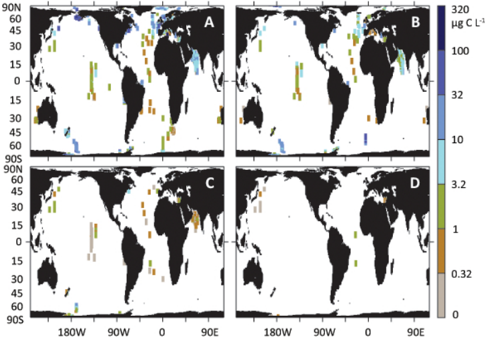
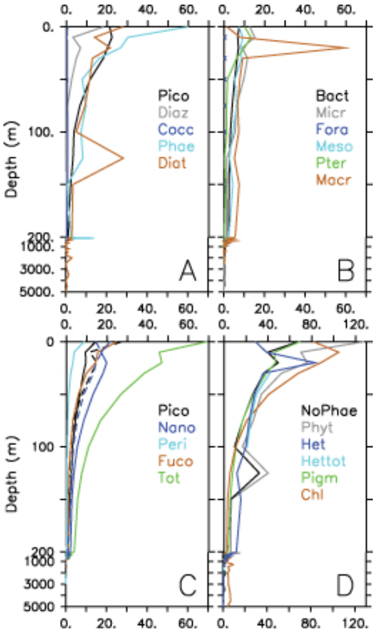
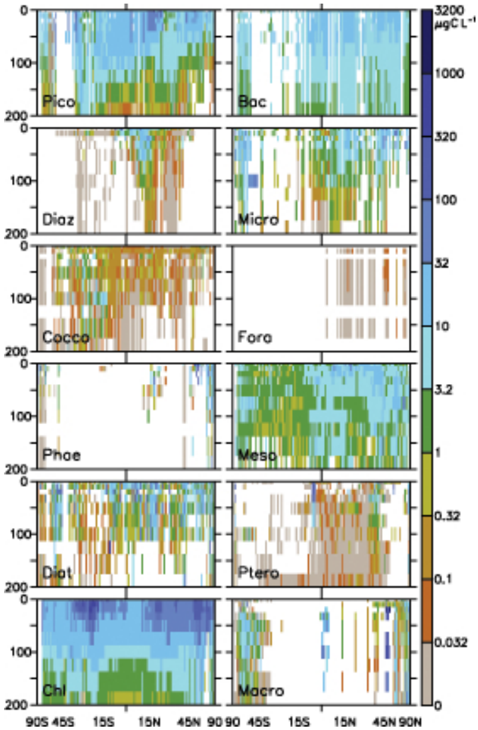
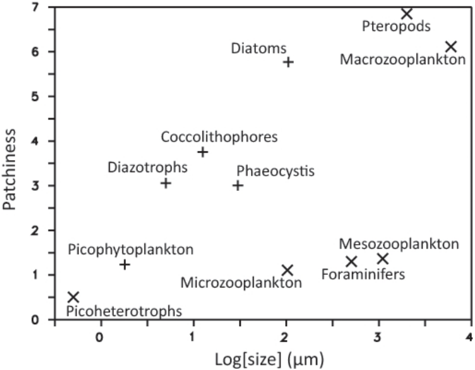
We present a summary of biomass data for 11 plankton functional types (PFTs) plus phytoplankton pigment data, compiled as part of the MARine Ecosystem biomass DATa (MAREDAT) initiative. The goal of the MAREDAT initiative is to provide, in due course, global gridded data products with coverage of all planktic components of the global ocean ecosystem. This special issue is the first step towards achieving this. The PFTs presented here include picophytoplankton, diazotrophs, coccolithophores, Phaeocystis, diatoms, picoheterotrophs, microzooplankton, foraminifers, mesozooplankton, pteropods and macrozooplankton. All variables have been gridded onto a World Ocean Atlas (WOA) grid (1° × 1° × 33 vertical levels × monthly climatologies). The results show that abundance is much better constrained than their carbon content/elemental composition, and coastal seas and other high productivity regions have much better coverage than the much larger volumes where biomass is relatively low. The data show that (1) the global total heterotrophic biomass (2.0–4.6 Pg C) is at least as high as the total autotrophic biomass (0.5–2.4 Pg C excluding nanophytoplankton and autotrophic dinoflagellates); (2) the biomass of zooplankton calcifiers (0.03–0.67 Pg C) is substantially higher than that of coccolithophores (0.001–0.03 Pg C); (3) patchiness of biomass distribution increases with organism size; and (4) although zooplankton biomass measurements below 200 m are rare, the limited measurements available suggest that Bacteria and Archaea are not the only important heterotrophs in the deep sea. More data will be needed to characterise ocean ecosystem functioning and associated biogeochemistry in the Southern Hemisphere and below 200 m. Future efforts to understand marine ecosystem composition and functioning will be helped both by further archiving of historical data and future sampling at new locations. Microzooplankton database: doi:10.1594/PANGAEA.779970 All MAREDAT databases: http://www.pangaea.de/search?&q=maredat
Overview
The claims and statistics of this paper haven’t been checked yet.
Free: it reads the open-access text and checks the first 5 claims that cite a source we can check. Create a free account to check every claim.
Integrity signals
Registry
Cites
Statistics
Figures
Verification
Claims the paper makes
The claims and statistics of this paper haven’t been checked yet.
Free: it reads the open-access text and checks the first 5 claims that cite a source we can check. Create a free account to check every claim.
Claims other papers make about this one
Each is checked against this paper’s own text: does it say what the citing paper says it does?
The source backs part of the claim, not all of it — or backs it for a different population, condition or comparison.
In the citing paper
“Previous reports have observed inverted biomass pyramids in local marine environments (36, 37). An additional study noted an inverted consumer/producer ratio for the global plankton biomass (16).”
From The biomass distribution on Earth (2018) · cites this paper as [16]
Experimental — accuracy not yet measured
Self-check
Percentages, sums and reported differences re-computed from the paper’s own numbers.
The self-check needs the paper’s full text.
Citations
Cites
The Theory of Island Biogeography
MacArthur, R. H., & Wilson, E. O. (2001) · Princeton University Press eBooks · doi:10.1515/9781400881376 · Cited by 12,632
Fundamentals of Ecology (1953)
Odum, E. P. (2017) · The Future of Nature · doi:10.12987/9780300188479-022 · Cited by 5,006
Mackey, M., Mackey, D., Higgins, H., & Wright, S. (1996) · Marine Ecology Progress Series · doi:10.3354/meps144265 · Cited by 1,465 · cited 3×
“For this reason, statistical methods employing multiple pigment to chlorophyll ratios are required to adequately resolve the algal community composition (e.g. Mackey et al., 1996; Van den Meersche et al., 2008).”
Uitz, J., Claustre, H., Morel, A., & Hooker, S. B. (2006) · Journal of Geophysical Research: Oceans · doi:10.1029/2005jc003207 · Cited by 959
Ecosystem dynamics based on plankton functional types for global ocean biogeochemistry models
Quéré, C. L., Harrison, S. P., Colin Prentice, I., Buitenhuis, E. T., Aumont, O., Bopp, L., Claustre, H., Cotrim Da Cunha, L., Geider, R., Giraud, X., et al. (2005) · Global Change Biology · doi:10.1111/j.1365-2486.2005.1004.x · Cited by 849
Geider, R., MacIntyre, H., & Kana, T. (1997) · Marine Ecology Progress Series · doi:10.3354/meps148187 · Cited by 784 · cited 1×
“3 model (Buitenhuis et al., 2013), which uses photosynthetic parameters synthesised by Geider et al. (1997).”
An ecosystem model of the global ocean including Fe, Si, P colimitations
Aumont, O., Maier‐Reimer, E., Blain, S., & Monfray, P. (2003) · Global Biogeochemical Cycles · doi:10.1029/2001gb001745 · Cited by 457
Database of diazotrophs in global ocean: abundance, biomass and nitrogen fixation rates
Luo, Y.-W., Doney, S. C., Anderson, L. A., Benavides, M., Berman-Frank, I., Bode, A., Bonnet, S., Boström, K. H., Böttjer, D., Capone, D. G., et al. (2012) · Earth System Science Data · doi:10.5194/essd-4-47-2012 · Cited by 408
Biomass distribution in marine planktonic communities
Gasol, J. M., del Giorgio, P. A., & Duarte, C. M. (1997) · Limnology and Oceanography · doi:10.4319/lo.1997.42.6.1353 · Cited by 391 · cited 4×
“Within the uncertainty in the data this is in agreement with Gasol et al. (1997), who estimated that the open ocean biomass of phytoplankton, total zooplankton and picoheterotrophs is roughly the same.”
InfluentialRemote sensing of phytoplankton groups in case 1 waters from global SeaWiFS imagery
Alvain, S., Moulin, C., Dandonneau, Y., & Bréon, F. M. (2005) · Deep Sea Research Part I: Oceanographic Research Papers · doi:10.1016/j.dsr.2005.06.015 · Cited by 384
Research works printed but not linked: 1
- Odum, E. P.: Fundamentals of Ecology, W. B. Saunders, Philadel- phia, 574 pp., 1971.
Cited by
The biomass distribution on Earth
Bar-On, Y. M., Phillips, R., & Milo, R. (2018) · Proceedings of the National Academy of Sciences · doi:10.1073/pnas.1711842115 · Cited by 3,723
Influence of diatom diversity on the ocean biological carbon pump
Tréguer, P., Bowler, C., Moriceau, B., Dutkiewicz, S., Gehlen, M., Aumont, O., Bittner, L., Dugdale, R., Finkel, Z., Iudicone, D., et al. (2018) · Nature Geoscience · doi:10.1038/s41561-017-0028-x · Cited by 825
Clarifying the role of coastal and marine systems in climate mitigation
Howard, J., Sutton-Grier, A., Herr, D., Kleypas, J., Landis, E., Mcleod, E., Pidgeon, E., & Simpson, S. (2017) · Frontiers in Ecology and the Environment · doi:10.1002/fee.1451 · Cited by 534
“Although the amount of phytoplankton in the world’s oceans is uncertain, their total biomass is estimated to be between 0.5–2.4 billion Mg C (Table 1 and WebTable 2; Buitenhuis et al. 2013).”
BackgroundInfluentialGlobal assessment of ocean carbon export by combining satellite observations and food‐web models
Siegel, D. A., Buesseler, K. O., Doney, S. C., Sailley, S. F., Behrenfeld, M. J., & Boyd, P. W. (2014) · Global Biogeochemical Cycles · doi:10.1002/2013gb004743 · Cited by 496
Marine biogeographic realms and species endemicity
Costello, M. J., Tsai, P., Wong, P. S., Cheung, A. K. L., Basher, Z., & Chaudhary, C. (2017) · Nature Communications · doi:10.1038/s41467-017-01121-2 · Cited by 410
Tracking Improvement in Simulated Marine Biogeochemistry Between CMIP5 and CMIP6
Séférian, R., Berthet, S., Yool, A., Palmiéri, J., Bopp, L., Tagliabue, A., Kwiatkowski, L., Aumont, O., Christian, J., Dunne, J., et al. (2020) · Current Climate Change Reports · doi:10.1007/s40641-020-00160-0 · Cited by 407
Database of diazotrophs in global ocean: abundance, biomass and nitrogen fixation rates
Luo, Y.-W., Doney, S. C., Anderson, L. A., Benavides, M., Berman-Frank, I., Bode, A., Bonnet, S., Boström, K. H., Böttjer, D., Capone, D. G., et al. (2012) · Earth System Science Data · doi:10.5194/essd-4-47-2012 · Cited by 408
“This e ff ort is part of the Marine Ecosystem Model Intercomparison Project (MAREMIP), in which field measurement-based databases are constructed for biomass and related process rates for phytoplankton functional types (PFTs) (Buitenhuis et al., 2012).”
BackgroundDrivers and uncertainties of future global marine primary production in marine ecosystem models
Laufkötter, C., Vogt, M., Gruber, N., Aita-Noguchi, M., Aumont, O., Bopp, L., Buitenhuis, E., Doney, S. C., Dunne, J., Hashioka, T., et al. (2015) · Biogeosciences · doi:10.5194/bg-12-6955-2015 · Cited by 369
The Size-Reactivity Continuum of Major Bioelements in the Ocean
Benner, R., & Amon, R. M. W. (2015) · Annual Review of Marine Science · doi:10.1146/annurev-marine-010213-135126 · Cited by 390
Globally Consistent Quantitative Observations of Planktonic Ecosystems
Lombard, F., Boss, E., Waite, A. M., Vogt, M., Uitz, J., Stemmann, L., Sosik, H. M., Schulz, J., Romagnan, J.-B., Picheral, M., et al. (2019) · Frontiers in Marine Science · doi:10.3389/fmars.2019.00196 · Cited by 386
“, 2017) or through empirical relationships between several planktonic groups (Buitenhuis et al., 2013), with only little concern about diversity.”
BackgroundJones, C. D., Arora, V., Friedlingstein, P., Bopp, L., Brovkin, V., Dunne, J., Graven, H., Hoffman, F., Ilyina, T., John, J. G., et al. (2016) · Geoscientific Model Development · doi:10.5194/gmd-9-2853-2016 · Cited by 365
“These will include the use of new data sets, such as biomass data for plankton functional types (MAREDAT; Buitenhuis et al., 2013) or ocean distribution of the micro-nutrient iron (Tagliabue et al.”
MethodFuture phytoplankton diversity in a changing climate
Henson, S. A., Cael, B. B., Allen, S. R., & Dutkiewicz, S. (2021) · Nature Communications · doi:10.1038/s41467-021-25699-w · Cited by 350
Quantifying the Carbon Export and Sequestration Pathways of the Ocean's Biological Carbon Pump
Nowicki, M., DeVries, T., & Siegel, D. A. (2022) · Global Biogeochemical Cycles · doi:10.1029/2021gb007083 · Cited by 317
“8 of 22 one version, the mesozooplankton climatology from MAREDAT (Buitenhuis et al., 2013) is used.”
BackgroundMethodInfluentialGlobal pattern of phytoplankton diversity driven by temperature and environmental variability
Righetti, D., Vogt, M., Gruber, N., Psomas, A., & Zimmermann, N. E. (2019) · Science Advances · doi:10.1126/sciadv.aau6253 · Cited by 283
Picophytoplankton biomass distribution in the global ocean
Buitenhuis, E. T., Li, W. K. W., Vaulot, D., Lomas, M. W., Landry, M. R., Partensky, F., Karl, D. M., Ulloa, O., Campbell, L., Jacquet, S., et al. (2012) · Earth System Science Data · doi:10.5194/essd-4-37-2012 · Cited by 281
“For further details on the gridding, see Buitenhuis et al. (2012b).”
BackgroundMethodFu, W., Randerson, J. T., & Moore, J. K. (2016) · Biogeosciences · doi:10.5194/bg-13-5151-2016 · Cited by 279
“The new globally gridded ocean atlas of plankton functional types, Marine Ecosystem Data (MAREDAT) (Buitenhuis et al., 2013) has started to fill this gap, and should lead to improved representations of plankton community structure in the future as the data set becomes increasingly populated and is…”
BackgroundResultInfluentialIn situ imaging reveals the biomass of giant protists in the global ocean
Biard, T., Stemmann, L., Picheral, M., Mayot, N., Vandromme, P., Hauss, H., Gorsky, G., Guidi, L., Kiko, R., & Not, F. (2016) · Nature · doi:10.1038/nature17652 · Cited by 259
Monitoring and modelling marine zooplankton in a changing climate
Ratnarajah, L., Abu-Alhaija, R., Atkinson, A., Batten, S., Bax, N. J., Bernard, K. S., Canonico, G., Cornils, A., Everett, J. D., Grigoratou, M., et al. (2023) · Nature Communications · doi:10.1038/s41467-023-36241-5 · Cited by 255
A global diatom database – abundance, biovolume and biomass in the world ocean
Leblanc, K., Arístegui, J., Armand, L., Assmy, P., Beker, B., Bode, A., Breton, E., Cornet, V., Gibson, J., Gosselin, M.-P., et al. (2012) · Earth System Science Data · doi:10.5194/essd-4-149-2012 · Cited by 243
“The different databases compiled in this special issue could be used to run such comparisons (see also Buitenhuis et al. (2012), introductory paper on this special issue).”
BackgroundMajor restructuring of marine plankton assemblages under global warming
Benedetti, F., Vogt, M., Elizondo, U. H., Righetti, D., Zimmermann, N. E., & Gruber, N. (2021) · Nature Communications · doi:10.1038/s41467-021-25385-x · Cited by 231
Dimensions of marine phytoplankton diversity
Dutkiewicz, S., Cermeno, P., Jahn, O., Follows, M. J., Hickman, A. E., Taniguchi, D. A. A., & Ward, B. A. (2020) · Biogeosciences · doi:10.5194/bg-17-609-2020 · Cited by 209
Stock, C. A., Dunne, J. P., Fan, S., Ginoux, P., John, J., Krasting, J. P., Laufkötter, C., Paulot, F., & Zadeh, N. (2020) · Journal of Advances in Modeling Earth Systems · doi:10.1029/2019ms002043 · Cited by 202
Dutkiewicz, S., Hickman, A. E., Jahn, O., Gregg, W. W., Mouw, C. B., & Follows, M. J. (2015) · Biogeosciences · doi:10.5194/bg-12-4447-2015 · Cited by 203
“We appreciate the NASA GSFC website for the MODIS level 3 data used here, as well as the ocean productivity website at Oregon State University for primary production data, and the efforts of the MAREDAT team for the phytoplankton compilations.”
InfluentialPhytoplankton in the Tara Ocean
Pierella Karlusich, J. J., Ibarbalz, F. M., & Bowler, C. (2020) · Annual Review of Marine Science · doi:10.1146/annurev-marine-010419-010706 · Cited by 186
“These studies estimated the global phytoplankton biomass at approximately 0.75 Gt C. Based on the MAREDAT database (Buitenhuis et al. 2013), which includes data from flow cytometry, microscopy, and bottle and net sampling counts, Bar-On et al. (2018) summed up the contributions of all phytoplankton…”
BackgroundMethodInfluentialAumont, O., Maury, O., Lefort, S., & Bopp, L. (2018) · Global Biogeochemical Cycles · doi:10.1029/2018gb005886 · Cited by 159
“2–2 mm) and macrozooplankton (2 mm to 2 cm) assembled by the MAREDAT initiative (Buitenhuis et al., 2013).”
BackgroundMethodInfluentialCoccolithophore growth and calcification in a changing ocean
Krumhardt, K. M., Lovenduski, N. S., Iglesias-Rodriguez, M. D., & Kleypas, J. A. (2017) · Progress In Oceanography · doi:10.1016/j.pocean.2017.10.007 · Cited by 170
Le Quéré, C., Buitenhuis, E. T., Moriarty, R., Alvain, S., Aumont, O., Bopp, L., Chollet, S., Enright, C., Franklin, D. J., Geider, R. J., et al. (2016) · Biogeosciences · doi:10.5194/bg-13-4111-2016 · Cited by 153
“The biomass ranges have been computed using the method described in Buitenhuis et al. (2013b).”
InfluentialOcean biogeochemical modelling
Fennel, K., Mattern, J. P., Doney, S. C., Bopp, L., Moore, A. M., Wang, B., & Yu, L. (2022) · Nature Reviews Methods Primers · doi:10.1038/s43586-022-00154-2 · Cited by 196
A trait-based approach to ocean ecology
Kiørboe, T., Visser, A. W., & Andersen, K. H. (2018) · ICES Journal of Marine Science · doi:10.1093/icesjms/fsy090 · Cited by 171
Distribution of mesozooplankton biomass in the global ocean
Moriarty, R., & O’Brien, T. (2013) · Earth system science data · doi:10.5194/essd-5-45-2013 · Cited by 159
“An overview of all 11 PFT groups currently included in the MAREDAT project is given in the Introduction to the MAREDAT ESSD Special Issue (see Buitenhuis et al., 2012).”
MethodEcological niches of open ocean phytoplankton taxa
Brun, P., Vogt, M., Payne, M., Gruber, N., O’Brien, C., Buitenhuis, E. T., Quéré, C. L., Leblanc, K., & Luo, Y. (2015) · Limnology and Oceanography · doi:10.1002/lno.10074 · Cited by 161
Diatom Phytochromes Reveal the Existence of Far-Red-Light-Based Sensing in the Ocean
Fortunato, A. E., Jaubert, M., Enomoto, G., Bouly, J.-P., Raniello, R., Thaler, M., Malviya, S., Bernardes, J. S., Rappaport, F., Gentili, B., et al. (2016) · The Plant Cell · doi:10.1105/tpc.15.00928 · Cited by 138
Machine Learning for the Study of Plankton and Marine Snow from Images
Irisson, J., Ayata, S., LINDSAY, D. J., Karp‐Boss, L., & Stemmann, L. (2021) · Annual Review of Marine Science · doi:10.1146/annurev-marine-041921-013023 · Cited by 164
Data-based assessment of environmental controls on global marine nitrogen fixation
Luo, Y., Lima, I. D., Karl, D. M., Deutsch, C. A., & Doney, S. C. (2014) · Biogeosciences · doi:10.5194/bg-11-691-2014 · Cited by 152
Bednaršek, N., Možina, J., Vogt, M., O'Brien, C., & Tarling, G. A. (2012) · Earth System Science Data · doi:10.5194/essd-4-167-2012 · Cited by 125
Role of jellyfish in the plankton ecosystem revealed using a global ocean biogeochemical model
Wright, R. M., Quéré, C. L., Buitenhuis, E. T., Pitois, S., & Gibbons, M. J. (2021) · Biogeosciences · doi:10.5194/bg-18-1291-2021 · Cited by 140
“To compare to the other PFTs within the MAREDAT database, global jellyfish biomass was calculated according to the methods in Buitenhuis et al. (2013b).”
BackgroundMethodLarge Contribution of Pteropods to Shallow CaCO3 Export
Buitenhuis, E. T., Quéré, C. L., Bednaršek, N., & Schiebel, R. (2019) · Global Biogeochemical Cycles · doi:10.1029/2018gb006110 · Cited by 130
Impacts of global warming on marine microbial communities
Baskaran, A., Manikkam, R., Subramanian, K., & Aruni, W. (2021) · The Science of The Total Environment · doi:10.1016/j.scitotenv.2021.147905 · Cited by 122
The global ocean size spectrum from bacteria to whales
Hatton, I. A., Heneghan, R., Bar‐On, Y. M., & Galbraith, E. D. (2021) · Science Advances · doi:10.1126/sciadv.abh3732 · Cited by 126
Nechad, B., Ruddick, K. G., Schroeder, T., Oubelkheir, K., Blondeau‐Patissier, D., Cherukuru, N., Brando, V., Dekker, A. G., Clementson, L. A., Banks, A. C., et al. (2015) · Earth system science data · doi:10.5194/essd-7-319-2015 · Cited by 100
“Oceanographic databases have been built during the last few years and made available to the scientific community (e.g. open ocean phytoplankton data by O’Brien et al., 2013, and Buitenhuis et al., 2013), facilitating the sharing of data and stimulates collaboration between the research institutes.”
BackgroundModeling What We Sample and Sampling What We Model: Challenges for Zooplankton Model Assessment
Everett, J. D., Baird, M. E., Buchanan, P., Bulman, C., Davies, C. H., Downie, R. A., Griffiths, C. A., Heneghan, R., Kloser, R. J., Laiolo, L., et al. (2017) · Frontiers in Marine Science · doi:10.3389/fmars.2017.00077 · Cited by 114
Brewin, R. J. W., Sathyendranath, S., Platt, T., Bouman, H. A., Ciavatta, S., Dall’Olmo, G., Dingle, J., Groom, S., Jönsson, B. F., Kostadinov, T. S., et al. (2021) · Earth-Science Reviews · doi:10.1016/j.earscirev.2021.103604 · Cited by 113
Kwiatkowski, L., Yool, A., Allen, J. I., Anderson, T. R., Barciela, R. M., Buitenhuis, E. T., Butenschön, M., Enright, C., Halloran, P. R., Quéré, C. L., et al. (2014) · Biogeosciences · doi:10.5194/bg-11-7291-2014 · Cited by 112
Weithoff, G., & Beisner, B. E. (2019) · Frontiers in Marine Science · doi:10.3389/fmars.2019.00040 · Cited by 107
Do functional groups of planktonic copepods differ in their ecological niches?
Benedetti, F., Vogt, M., Righetti, D., Guilhaumon, F., & Ayata, S. (2018) · Journal of Biogeography · doi:10.1111/jbi.13166 · Cited by 98
“In spite of the recent development of global open access plankton occurrence databases (Buitenhuis et al., 2013; O’Brien, 2005), relatively few studies have used ENMs to investigate plankton biogeography (Robinson et al.”
BackgroundGlobal marine plankton functional type biomass distributions: coccolithophores
O’Brien, C., Peloquin, J. A., Vogt, M., Heinle, M. J., Gruber, N., Ajani, P. A., Andruleit, H. A., Arístegui, J., Beaufort, L., Estrada, M., et al. (2013) · Earth system science data · doi:10.5194/essd-5-259-2013 · Cited by 107
Zooplankton grazing is the largest source of uncertainty for marine carbon cycling in CMIP6 models
Rohr, T. W., Richardson, A. J., Lenton, A. A., Chamberlain, M. A., & Shadwick, E. H. (2023) · Communications Earth & Environment · doi:10.1038/s43247-023-00871-w · Cited by 133
Elucidating ecological complexity: Unsupervised learning determines global marine eco-provinces
Sonnewald, M., Dutkiewicz, S., Hill, C., & Forget, G. (2020) · Science Advances · doi:10.1126/sciadv.aay4740 · Cited by 90
Comparing food web structures and dynamics across a suite of global marine ecosystem models
Sailley, S. F., Vogt, M., Doney, S. C., Aita, M. N., Bopp, L., Buitenhuis, E. T., Hashioka, T., Lima, I. D., Quéré, C. L., & Yamanaka, Y. (2013) · Ecological Modelling · doi:10.1016/j.ecolmodel.2013.04.006 · Cited by 90
“The comparison f model output with observations is difficult at present, due to the atchy nature of observations, with the added consideration that FTs often represent more than one species or taxonomic group of lankton (Buitenhuis et al., 2012).”
BackgroundKrumhardt, K. M., Lovenduski, N. S., Long, M. C., Levy, M., Lindsay, K., Moore, J. K., & Nissen, C. (2019) · Journal of Advances in Modeling Earth Systems · doi:10.1029/2018ms001483 · Cited by 81
“We also compare our results to the MAREDAT data set (MARine Ecosystem DATa; Figures 2a–2c; Buitenhuis et al., 2013; O'Brien et al., 2013) and a recent global compilation of coccolithophore calcification rates (Figures 2d–2e; Daniels et al., 2018).”
MethodResultInfluentialFactors controlling coccolithophore biogeography in the Southern Ocean
Nissen, C., Vogt, M., Münnich, M., Gruber, N., & Haumann, F. A. (2018) · Biogeosciences · doi:10.5194/bg-15-6997-2018 · Cited by 88
“…Monthly climatology 2002–2016 from MODIS Aqua VGPM; Behrenfeld and Falkowski (1997); O’Malley (2016) Annually integrated NPP climatology 2002–2016 from Buitenhuis et al. (2013a) Particulate organic carbon (POC) export Monthly output from a biogeochemical inverse model from Schlitzer (2004) and a…”
BackgroundMethodInfluentialMöck, T., Daines, S. J., Geider, R. J., Collins, S., Metodiev, M. V., Millar, A. J., Moulton, V., & Lenton, T. M. (2015) · Global Change Biology · doi:10.1111/gcb.12983 · Cited by 87
“…(ii) in situ ‘inventory’measurements, both bulk measurements of plankton biomass, C/ N/P in situ and remote sensing of chlorophyll and pigments (Buitenhuis et al., 2013), and taxonomic classification; (iii) in situ ‘rate’ or ‘flux’ measurements including growth rates and primary production…”
BackgroundMixoplankton and mixotrophy: future research priorities
Millette, N. C., Gast, R. J., Luo, J. Y., Moeller, H. V., Stamieszkin, K., Andersen, K. H., Brownlee, E. F., Cohen, N. R., Duhamel, S., Dutkiewicz, S., et al. (2023) · Journal of Plankton Research · doi:10.1093/plankt/fbad020 · Cited by 93
Global Distribution of Zooplankton Biomass Estimated by In Situ Imaging and Machine Learning
Drago, L., Panaïotis, T., Irisson, J., Babin, M., Biard, T., Carlotti, F., Coppola, L., Guidi, L., Hauss, H., Karp‐Boss, L., et al. (2022) · Frontiers in Marine Science · doi:10.3389/fmars.2022.894372 · Cited by 90
“…The zooplankton biomass predictions based on UVP5 datasets presentedhereareimportantforglobalbiogeochemicalmodelingof pelagic ecosystems because they usually lack zooplankton observations to constrain their development (Stemmann and Boss, 2012; Buitenhuis et al., 2013; Se ́ fe ́ rian et al., 2020).”
BackgroundMethodInfluentialTrophic interactions with heterotrophic bacteria limit the range of Prochlorococcus
Follett, C. L., Dutkiewicz, S., Ribalet, F., Zakem, E. J., Caron, D. A., Armbrust, E. V., & Follows, M. J. (2022) · Proceedings of the National Academy of Sciences · doi:10.1073/pnas.2110993118 · Cited by 69
Köbberich, M., & Vance, D. (2019) · Chemical Geology · doi:10.1016/j.chemgeo.2019.04.004 · Cited by 75
Constraints on global oceanic emissions of N 2 O from observations and models
Buitenhuis, E. T., Suntharalingam, P., & Quéré, C. L. (2018) · Biogeosciences · doi:10.5194/bg-15-2161-2018 · Cited by 70
“In previous versions of the PlankTOM model (Buitenhuis et al., 2006, 2010, 2013a) we have used Eq.”
BackgroundMethodInfluentialDiatom morphology and adaptation: Current progress and potentials for sustainable development
Fu, W., Shu, Y., Yi, Z., Su, Y., Pan, Y., Zhang, F., & Brynjólfsson, S. (2022) · Sustainable Horizons · doi:10.1016/j.horiz.2022.100015 · Cited by 93
Herbicide leakage into seawater impacts primary productivity and zooplankton globally
Yang, L., He, X., Ru, S., & Zhang, Y. (2024) · Nature Communications · doi:10.1038/s41467-024-46059-4 · Cited by 74
“…herbicides for three reasons: (1) it is one of the best-known cosmopolitan diatom species 69 , especially in nutrient-rich coastal ecosystems 70,71 ; (2) it is a model organism among diatoms, widely used in research on global climate change 72,73 , eutrophication 74,75 , marine pollution 76,77…”
BackgroundModern planktic foraminifers in the high-latitude ocean
Schiebel, R., Spielhagen, R. F., Garnier, J., Hagemann, J. R., Howa, H., Jentzen, A., Martínez‐García, A., Meilland, J., Michel, É., Repschläger, J., et al. (2017) · Marine Micropaleontology · doi:10.1016/j.marmicro.2017.08.004 · Cited by 77
Plankton energy flows using a global size-structured and trait-based model
Negrete-García, G., Luo, J. Y., Long, M. C., Lindsay, K., Levy, M. N., & Barton, A. D. (2022) · Progress In Oceanography · doi:10.1016/j.pocean.2022.102898 · Cited by 69
Pelagic calcium carbonate production and shallow dissolution in the North Pacific Ocean
Ziveri, P., Gray, W. R., Anglada‐Ortiz, G., Manno, C., Grelaud, M., Incarbona, A., Rae, J. W. B., Subhas, A. V., Pallacks, S., White, A., et al. (2023) · Nature Communications · doi:10.1038/s41467-023-36177-w · Cited by 81
“While our estimate of the total amount of CaCO3 produced agrees well with that of Buitenhuis et al.13, there is a large discrepancy between our results and those of Buitenhuis et al.13 in terms of the dominant CaCO3 polymorph produced.”
MethodResultInfluentialGlobal marine plankton functional type biomass distributions: Phaeocystis spp.
Vogt, M., O’Brien, C., Peloquin, J. A., Schoemann, V., Breton, E., Estrada, M., Gibson, J., Karentz, D., van Leeuwe, M. A., Stefels, J., et al. (2012) · Earth system science data · doi:10.5194/essd-4-107-2012 · Cited by 72
“…effort to provide marine ecosystem modellers with global biomass distributions for the major PFTs currently represented in marine ecosystem models (Buitenhuis et al., 2012; silicifiers, calcifiers, nitrogen fixers, DMSproducers, picophytoplankton, bacteria, microzooplankton, mesozooplankton and…”
BackgroundMethodThe MAREDAT global database of high performance liquid chromatography marine pigment measurements
Peloquin, J. A., Swan, C. M., Gruber, N., Vogt, M., Claustre, H., Ras, J., Uitz, J., Barlow, R. G., Behrenfeld, M. J., Bidigare, R. R., et al. (2013) · Earth system science data · doi:10.5194/essd-5-109-2013 · Cited by 71
“Zeax roughly marks the presence of cyanobacteria, which are recognized dominants in these lower latitude regions (Claustre and Marty, 1995; Vidussi et al., 2001; see also global biomass assessment of Synechococcusand Prochlorococcusspp. in Buitenhuis et al., 2012a).”
BackgroundMethodResultThe Importance of the Phytoplankton “Middle Class” to Ocean Net Community Production
Juranek, L. W., White, A., Dugenne, M., Freitas, F. H., Dutkiewicz, S., Ribalet, F., Ferrón, S., Armbrust, E. V., & Karl, D. M. (2020) · Global Biogeochemical Cycles · doi:10.1029/2020gb006702 · Cited by 68
“compare well with both observations based on functional types as well as size distributions (Buitenhuis et al., 2013; Ward, 2015).”
MethodWhat did we learn about ocean particle dynamics in the GEOSECS–JGOFS era?
Jeandel, C., van der Loeff, M. M. R., Lam, P. J., Roy‐Barman, M., Sherrell, R. M., Kretschmer, S., German, C. R., & Dehairs, F. (2015) · Progress In Oceanography · doi:10.1016/j.pocean.2014.12.018 · Cited by 60
Exploring biogeochemical and ecological redundancy in phytoplankton communities in the global ocean
Dutkiewicz, S., Boyd, P. W., & Riebesell, U. (2021) · Global Change Biology · doi:10.1111/gcb.15493 · Cited by 66
“…diameter (ESD) in μm of the plankton, labelled on the left for phytoplankton (and mixotrophs) and on the right for zooplankton distribution and abundances of size classes (Figure S1) and functional groups (Figure S2) also compare well to observations (e.g. Buitenhuis et al., 2013; Ward, 2015).”
ResultSwan, C. M., Vogt, M., Gruber, N., & Laufkötter, C. (2015) · Deep Sea Research Part I Oceanographic Research Papers · doi:10.1016/j.dsr.2015.12.002 · Cited by 64
Abrupt shifts in 21st-century plankton communities
Cael, B. B., Dutkiewicz, S., & Henson, S. (2021) · Science Advances · doi:10.1126/sciadv.abf8593 · Cited by 62
Picoheterotroph ( Bacteria and Archaea ) biomass distribution in the global ocean
Buitenhuis, E. T., Li, W. K. W., Lomas, M. W., Karl, D. M., Landry, M. R., & Jacquet, S. (2012) · Earth System Science Data · doi:10.5194/essd-4-101-2012 · Cited by 52
“As a statistical filter for outliers, we applied the Chauvenet criterion (Glover et al., 2011; 91 Buitenhuis et al., 2012) to the total carbon data.”
MethodDimensions of marine phytoplankton diversity
Dutkiewicz, S., Cermeño, P., Jahn, O., Follows, M. J., Hickman, A. E., Taniguchi, D. A. A., & Ward, B. A. (2019) · DSpace@MIT (Massachusetts Institute of Technology) · Cited by 51
Distribution of known macrozooplankton abundance and biomass in the global ocean
Moriarty, R., Buitenhuis, E. T., Quéré, C. L., & Gosselin, M. (2013) · Earth system science data · doi:10.5194/essd-5-241-2013 · Cited by 51
Biogeographic classification of the Caspian Sea
Fendereski, F., Vogt, M., Payne, M., Lachkar, Z., Gruber, N., Salmanmahiny, A., & Hosseini, S. A. (2014) · Biogeosciences · doi:10.5194/bg-11-6451-2014 · Cited by 60
“A comprehensive data synthesis for relevant marine organisms inhabiting the CS, along with in situ Chl a concentrations is urgently required (e.g., as in Buitenhuis et al., 2013) and would be essential to further validate ecoregions based on the classification of physical variables.”
Long-term trends in ocean plankton production and particle export between 1960–2006
Laufkötter, C., Vogt, M., & Gruber, N. (2013) · Biogeosciences · doi:10.5194/bg-10-7373-2013 · Cited by 58
Chemotaxis increases metabolic exchanges between marine picophytoplankton and heterotrophic bacteria
Raina, J., Giardina, M., Brumley, D. R., Clode, P. L., Pernice, M., Guagliardo, P. R., Bougoure, J., Mendis, H., Smriga, S., Sonnenschein, E. C., et al. (2023) · Nature Microbiology · doi:10.1038/s41564-023-01327-9 · Cited by 67
Ocean acidification compromises a planktic calcifier with implications for global carbon cycling
Davis, C. V., Rivest, E. B., Hill, T. M., Gaylord, B., Russell, A. D., & Sanford, E. (2017) · Scientific Reports · doi:10.1038/s41598-017-01530-9 · Cited by 55
Database of nitrification and nitrifiers in the global ocean
Tang, W., Ward, B. B., Beman, J. M., Bristow, L. A., Clark, D. R., Fawcett, S. E., Frey, C., Fripiat, F., Herndl, G. J., Mdutyana, M., et al. (2023) · Earth system science data · doi:10.5194/essd-15-5039-2023 · Cited by 45
“Chauvenet’s criterion is commonly applied to normally 154 distributed datasets to identify outliers whose deviations from the mean have a probability of less 155 than 1/(2n), where n is the number of data points (Buitenhuis et al., 2013).”
BackgroundSwimming towards each other: the role of chemotaxis in bacterial interactions
Seymour, J. R., Brumley, D. R., Stocker, R., & Raina, J. (2024) · Trends in Microbiology · doi:10.1016/j.tim.2023.12.008 · Cited by 50
“…key ecological interde-pendency that controls energy transfer to higher trophic levels [21,56,57], small photosynthetic bacteria are between 10 and 100 times more abundant than large phytoplankton [58 – 60] and dominate the photosynthetic biomass in the resource-poor open ocean [58,61] (Figure 2).”
Archibald, K. M., Laufkötter, C., Dutkiewicz, S., & Moeller, H. V. (2022) · Journal of Geophysical Research Oceans · doi:10.1029/2022jc018932 · Cited by 53
Did the evolution of the phytoplankton fuel the diversification of the marine biosphere?
Martin, R. E., & Servais, T. (2019) · Lethaia · doi:10.1111/let.12343 · Cited by 45
Sauzède, R., Lavigne, H., Claustre, H., Uitz, J., Schmechtig, C. M., D’Ortenzio, F., Guinet, C., & Pesant, S. (2015) · Earth system science data · doi:10.5194/essd-7-261-2015 · Cited by 49
“It is based on Chauvenet’s criterion which is used to identify statistical outliers in the retrieved biomass data (Buitenhuis et al., 2013; Glover et al., 2011; O’Brien et al., 2013).”
MethodDesmet, F., Gruber, N., Köhn, E. E., Münnich, M., & Vogt, M. (2022) · Journal of Geophysical Research Oceans · doi:10.1029/2021jc018159 · Cited by 46
Smart, S. M., Fawcett, S. E., Ren, H., Schiebel, R., Tompkins, E. M., Martínez‐García, A., Stirnimann, L., Roychoudhury, A. N., Haug, G. H., & Sigman, D. M. (2020) · Geochemistry Geophysics Geosystems · doi:10.1029/2019gc008440 · Cited by 46
“In terms of biomass, large phytoplankton likely contribute the most to both living and detrital organic matter in the Southern Ocean mixed layer (Buitenhuis et al., 2013, and references therein).”
BackgroundPuigcorbé, V., Masqué, P., & Moigne, F. A. C. L. (2020) · Earth system science data · doi:10.5194/essd-12-1267-2020 · Cited by 44
“…others, surface productivity, phytoplankton composition, zooplankton abundance, mixed-layer depth, dust inputs to the surface ocean, and ice cover (Buitenhuis et al., 2013; Mahowald et al., 2009; Moriarty et al., 2013; Moriarty and O’Brien, 2013) are all…”
BackgroundGorguès, T., Aumont, O., & Mémery, L. (2019) · Geophysical Research Letters · doi:10.1029/2018gl081748 · Cited by 42
“…distribution (Figures 2a and 2b) simulated in CTL is close to the one derived from the observations gathered in the MAREDAT database (Buitenhuis et al., 2013; O'Brien, 2014) with maxima (located in the Gulf stream region, the Norwegian sea, and the North‐East African upwelling) and…”
MethodLinacre, L., Durazo, R., Camacho-Ibar, V. F., Selph, K. E., Lara-Lara, J. R., Mirabal-Gómez, U., Bazán-Guzmán, C., Lago‐Lestón, A., Fernández‐Martín, E. M., & Sidón-Ceseña, K. (2019) · Journal of Geophysical Research Oceans · doi:10.1029/2019jc015103 · Cited by 36
The Physiological Response of Picophytoplankton to Temperature and Its Model Representation
Stawiarski, B., Buitenhuis, E. T., & Quéré, C. L. (2016) · Frontiers in Marine Science · doi:10.3389/fmars.2016.00164 · Cited by 44
“Picophytoplankton contribute 26–56% to the global phytoplankton biomass (Buitenhuis et al., 2013) and about half of the global ocean primary productivity (Grossman et al., 2010).”
BackgroundMethodThe deep history of Earth's biomass
McMahon, S., & Parnell, J. (2018) · Journal of the Geological Society · doi:10.1144/jgs2018-061 · Cited by 36
A trait-based modelling approach to planktonic foraminifera ecology
Grigoratou, M., Monteiro, F., Schmidt, D. N., Wilson, J. D., Ward, B. A., & Ridgwell, A. J. (2019) · Biogeosciences · doi:10.5194/bg-16-1469-2019 · Cited by 43
“To compare our modelled biomass to observations from Schiebel and Movellan (2012) and Buitenhuis et al. (2013), we converted Pg C and µg C to mmol N m−3, using the carbon molecular weight (12 g C mol−1) and a C : N Redfield stoichiometry of 6.625.”
BackgroundMethodInfluentialRoy, T., Lombard, F., Bopp, L., & Gehlen, M. (2015) · Biogeosciences · doi:10.5194/bg-12-2873-2015 · Cited by 44
Rossi, S., & Rizzo, L. (2020) · Springer eBooks · doi:10.1007/978-3-030-57054-5_11 · Cited by 48
Strack, A., Jonkers, L., Rillo, M. C., Hillebrand, H., & Kučera, M. (2022) · Nature Ecology & Evolution · doi:10.1038/s41559-022-01888-8 · Cited by 35
Food web structure for high carbon retention in marine plankton communities
Kang, H. C., Jeong, H. J., Ok, J. H., Lim, A. S., Lee, K., You, J. H., Park, S. A., Eom, S. H., Lee, S. Y., Lee, K. H., et al. (2023) · Science Advances · doi:10.1126/sciadv.adk0842 · Cited by 32
Gutknecht, E., Reffray, G., Gehlen, M., Triyulianti, I., Berlianty, D., & Gaspar, P. (2016) · Geoscientific model development · doi:10.5194/gmd-9-1523-2016 · Cited by 33
“MAREDAT, MARine Ecosystem DATa, (Buitenhuis et al., 2013) is a collection of global biomass data sets for major plankton functional types (e.”
Riverine influence on the tropical Atlantic Ocean biogeochemistry
da Cunha, L. C., & Buitenhuis, E. T. (2013) · Biogeosciences · doi:10.5194/bg-10-6357-2013 · Cited by 37
The Impact of Zooplankton Calcifiers on the Marine Carbon Cycle
Knecht, N., Benedetti, F., Elizondo, U. H., Bednaršek, N., Chaabane, S., de Weerd, C., Peijnenburg, K. T. C. A., Schiebel, R., & Vogt, M. (2023) · Global Biogeochemical Cycles · doi:10.1029/2022gb007685 · Cited by 43
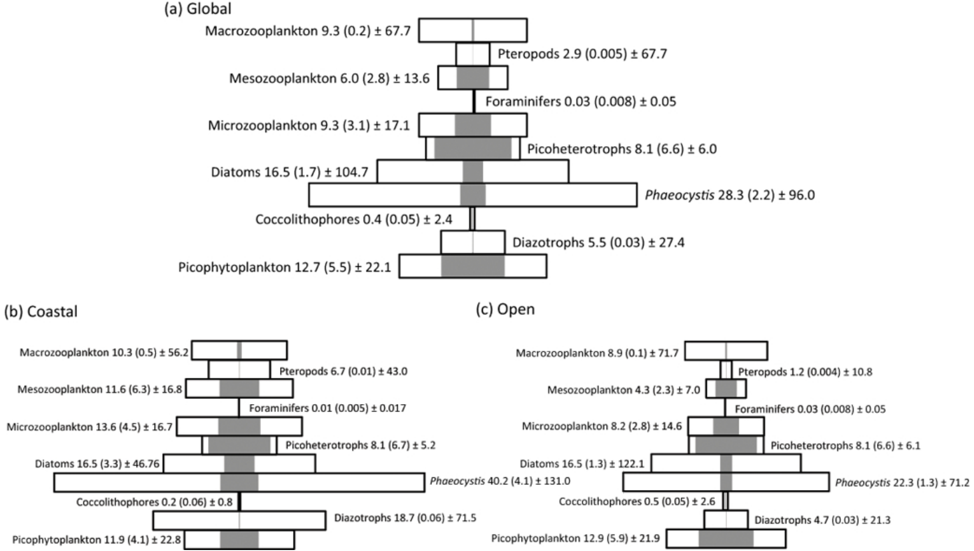
“In the context of the marine trophic foodweb, pteropods constitute approximately 6%–8% of total macrozoo-plankton biomass, whereas foraminifers make up 0.1%–0.6% of microzooplankton biomass as shown in Figure 5 (Buitenhuis, Vogt, et al., 2013).”
InfluentialOcean biogeochemistry in the coupled ocean–sea ice–biogeochemistry model FESOM2.1–REcoM3
Gürses, Ö., Oziel, L., Karakuş, O., Sidorenko, D., Völker, C., Ye, Y., Zeising, M., Butzin, M., & Hauck, J. (2023) · Geoscientific model development · doi:10.5194/gmd-16-4883-2023 · Cited by 49
Biome partitioning of the global ocean based on phytoplankton biogeography
Elizondo, U. H., Righetti, D., Benedetti, F., & Vogt, M. (2021) · Progress In Oceanography · doi:10.1016/j.pocean.2021.102530 · Cited by 36
Anglada‐Ortiz, G., Zamelczyk, K., Meilland, J., Ziveri, P., Chierici, M., Fransson, A., & Rasmussen, T. L. (2021) · Frontiers in Marine Science · doi:10.3389/fmars.2021.661158 · Cited by 28
Chien, C., Durgadoo, J. V., Ehlert, D., Frenger, I., Keller, D. P., Koeve, W., Kriest, I., Landolfi, A., Patara, L., Wahl, S., et al. (2022) · Geoscientific model development · doi:10.5194/gmd-15-5987-2022 · Cited by 35
Metadata
- Authors
- Buitenhuis, E. T., Vogt, M., Moriarty, R., Bednaršek, N., Doney, S. C., Leblanc, K., Le Quéré, C., Luo, Y.-W., O'Brien, C., O'Brien, T., Peloquin, J., Schiebel, R., & Swan, C.
- Affiliations
- University of East Anglia (GB)
- ETH Zurich (CH)
- University of Manchester (GB)
- National Oceanic and Atmospheric Administration (US)
- Woods Hole Oceanographic Institution (US)
- Centre National de la Recherche Scientifique (FR)
- ORCID
- Venue
- Earth system science data
- Publisher
- Copernicus GmbH
- Published
- 2013-07-12
- Volume
- 5
- Issue
- 2
- Pages
- 227-239
- ISSN
- 1866-3508 (ISSN-L)
- 1866-3516
- OpenAlex
- W2117824279
- Cited by
- 199
- References
- 43
- Citations by year
- 2026: 5 · 2025: 16 · 2024: 18 · 2023: 24 · 2022: 20 · 2021: 14 · 2020: 13 · 2019: 13 · 2018: 11 · 2017: 16 · 2016: 11 · 2015: 13 · 2014: 10 · 2013: 9
- FWCI
- 10.14
- Type
- journal article
- Language
- en
- Open access
- gold
- doi.org
- Licence
- Locations
- Earth system science data (publishedVersion, cc-by)
- Repository for Publications and Research Data (ETH Zurich) (publishedVersion, cc-by)
- HAL (submittedVersion)
- HAL (submittedVersion, cc-by)
- DOAJ (DOAJ: Directory of Open Access Journals) (submittedVersion, cc-by-sa)
- UEA Digital Repository (University of East Anglia) (submittedVersion, cc-by)
- Repository for Publications and Research Data (ETH Zurich) (submittedVersion, cc-by)
- Zenodo (CERN European Organization for Nuclear Research) (submittedVersion, other-oa)
- ETH Zürich Research Collection (cc-by)
- Funders
- National Science Foundation (0424599)
- European Commission (238366, 282672)
- Eidgenössische Technische Hochschule Zürich
- Topics
- Physical Sciences › Earth and Planetary Sciences › Oceanography › Marine Plankton and Biogeochemistry
- Physical Sciences › Earth and Planetary Sciences › Oceanography › Oceanographic and Atmospheric Processes
- Physical Sciences › Environmental Science › Environmental Chemistry › Aquatic Ecosystems and Phytoplankton Dynamics
- Keywords
- plankton functional types, phytoplankton pigments, zooplankton biomass, heterotrophic biomass, autotrophic biomass, picophytoplankton, nitrogen-fixing bacteria, coccolithophores, Phaeocystis, diatoms, microzooplankton, foraminifera, mesozooplankton, pteropods, macrozooplankton, World Ocean Atlas
About these checks
Registry, retraction, Cites and statistics results are computed, not judged, with one exception: a printed reference that no index lists is read once by a model before it counts as a citation error. Claims are extracted by a model and kept only when their quote appears verbatim in the text; each cited source is then checked, with a model’s help, for whether it says what the claim relies on. Those verdicts can be wrong — read the claim’s quote and the cited source before relying on one.
Statistics and arithmetic are recomputed, not judged.
Confidence bands are shown only for fields calibrated on our annotated test set. None is calibrated yet, so no band is shown.
What counts as a claim ›How we measure confidence ›How we check this ›
Are you an author, or do you see a problem with this page? Request a review
Data sources
Bibliographic data: Semantic Scholar, OpenAlex, Crossref.
Contains information from the Semantic Scholar Academic Graph Datasets, made available under the ODC Attribution License (ODC-BY 1.0).
Semantic Scholar’s data is described in: Kinney, R., et al. (2023). The Semantic Scholar Open Data Platform. arXiv:2301.10140.
