

Arctic Ocean simulations in the CMIP6 Ocean Model Intercomparison Project (OMIP)
Open accessPublished version of a preprint
The DOI matches its Crossref record; 113 of the 113 references it cites were found in a registry or an index.
Abstract
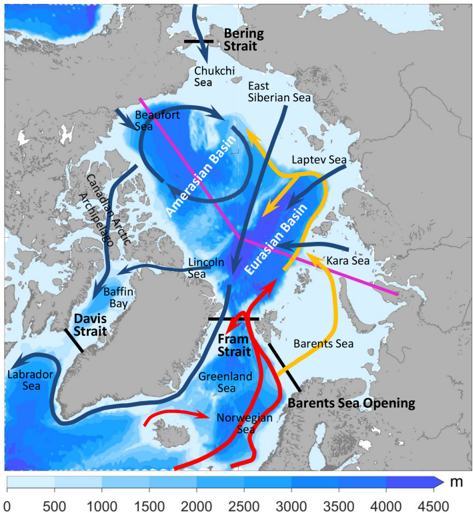
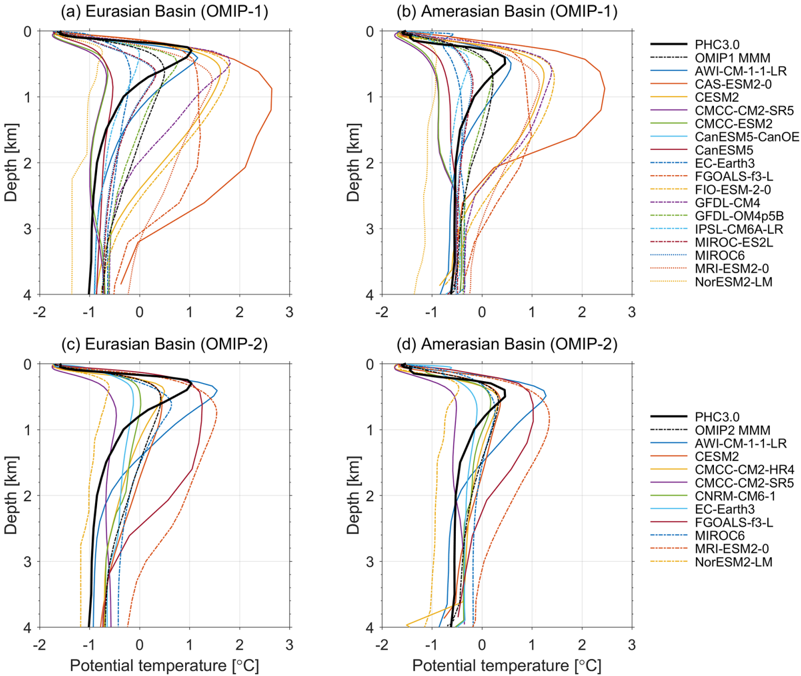
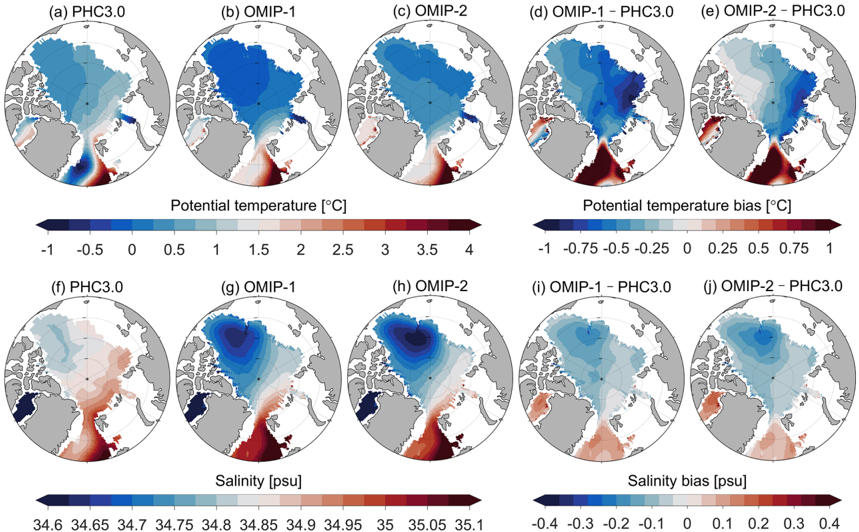
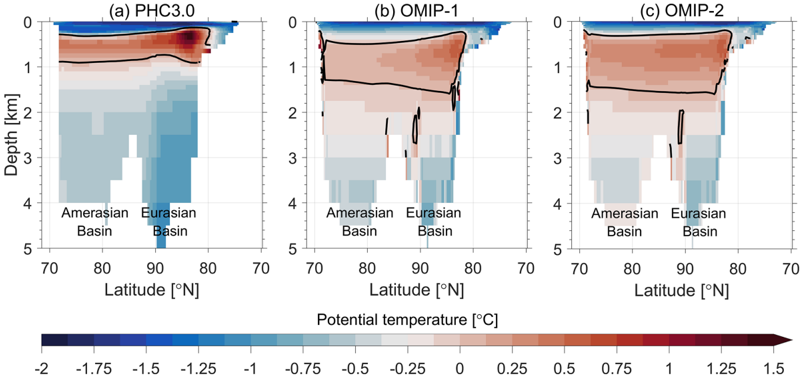
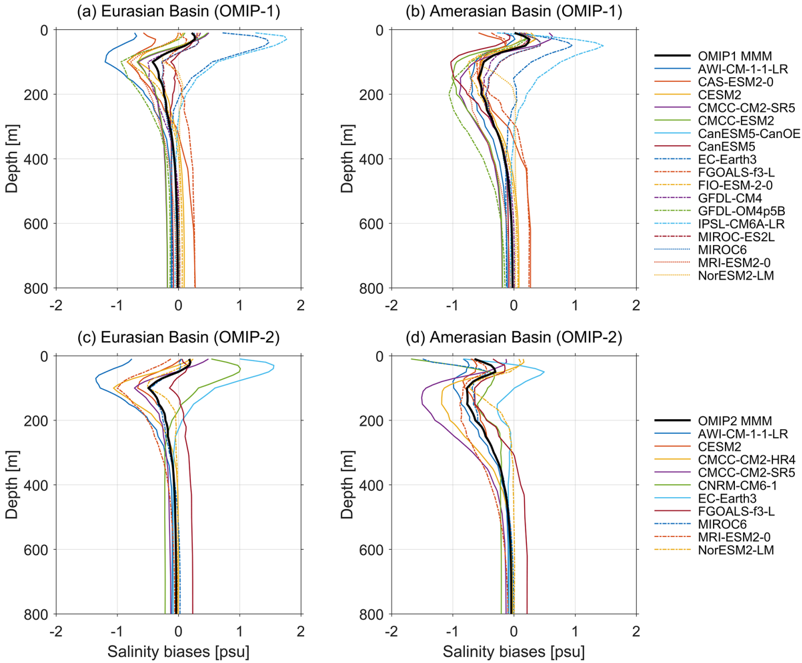
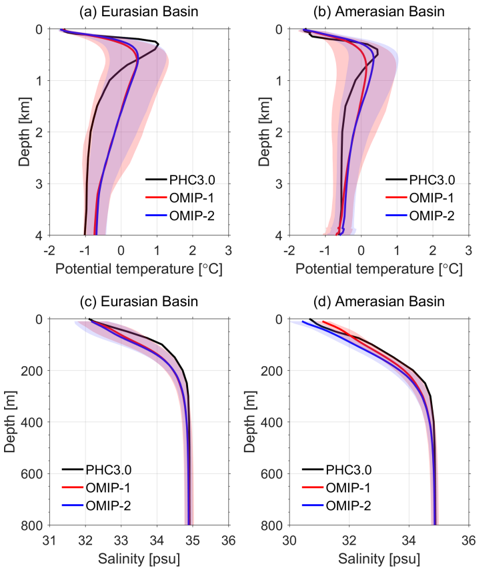
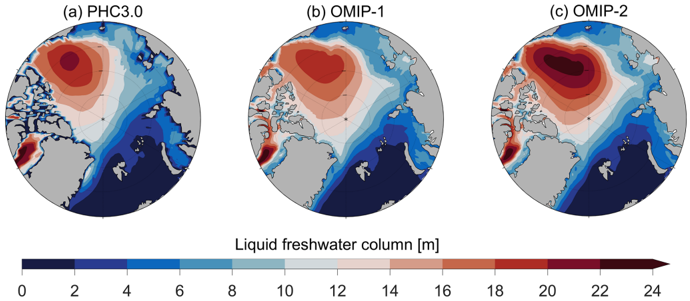
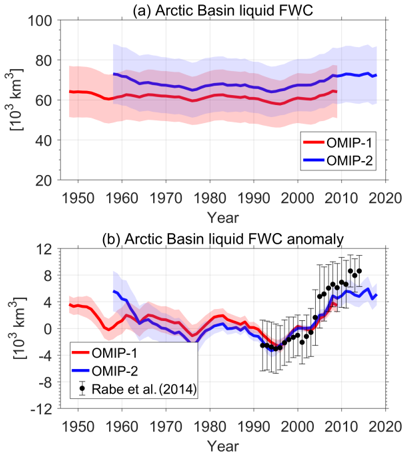
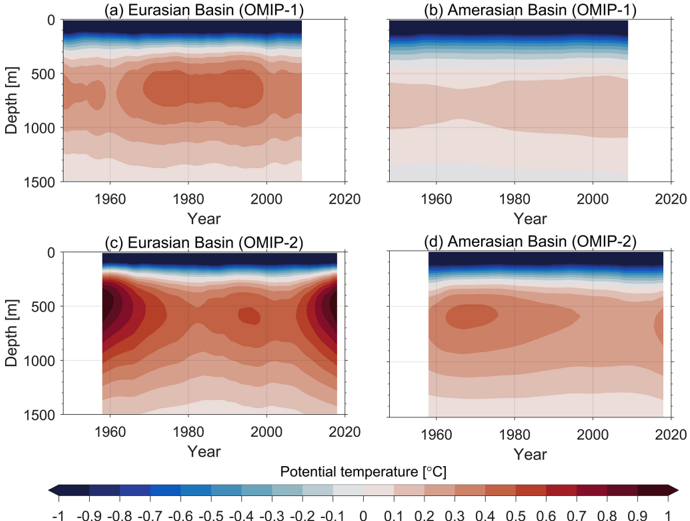
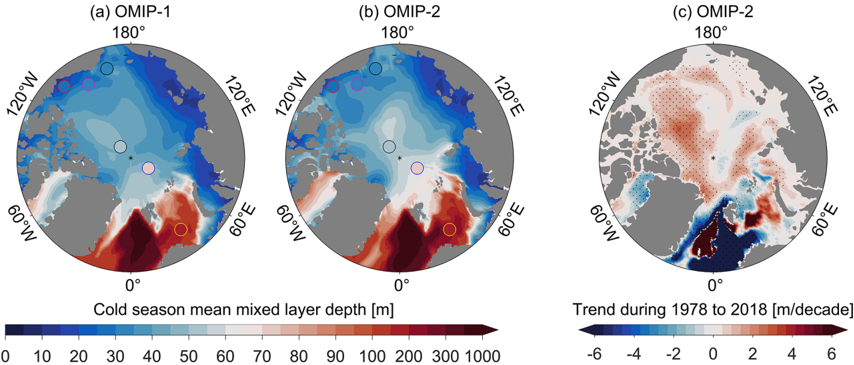
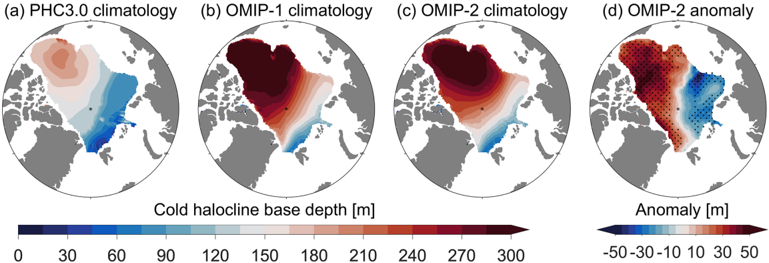
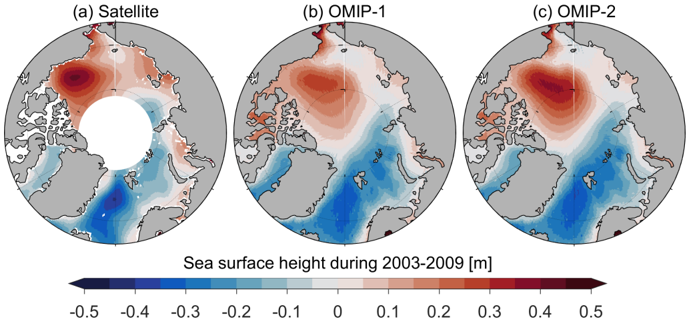
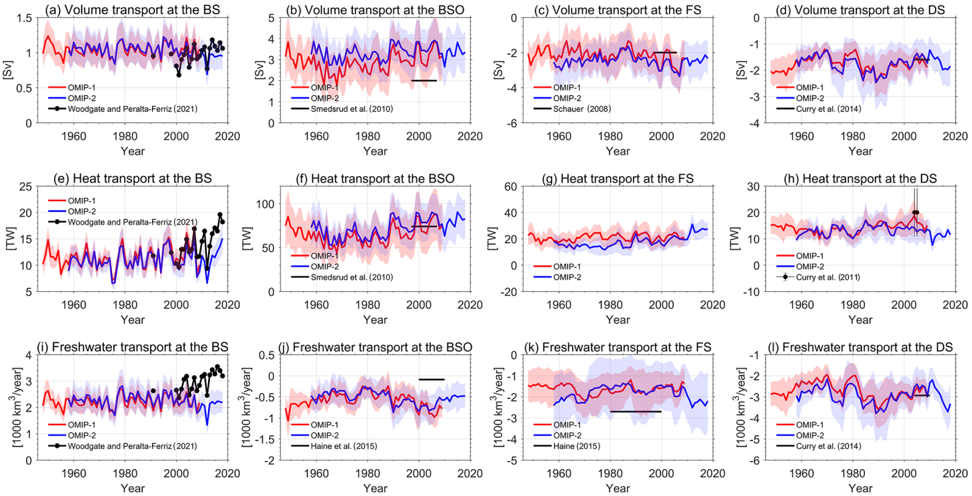
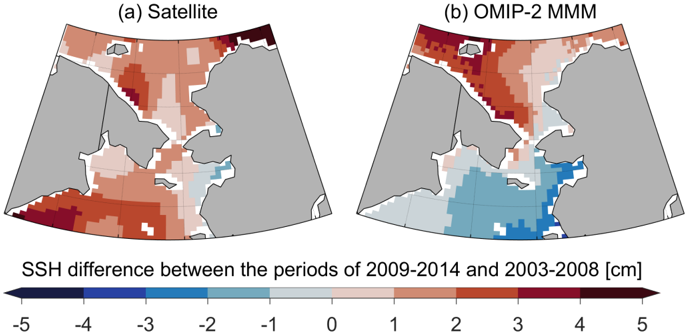
Arctic Ocean simulations in 19 global ocean–sea-ice models participating in the Ocean Model Intercomparison Project (OMIP) of the Coupled Model Intercomparison Project Phase 6 (CMIP6) are evaluated in this paper. Our findings show no significant improvements in Arctic Ocean simulations from the previous Coordinated Ocean-ice Reference Experiments phase II (CORE-II) to the current OMIP. Large model biases and inter-model spread exist in the simulated mean state of the halocline and Atlantic Water layer in the OMIP models. Most of the OMIP models suffer from a too thick and deep Atlantic Water layer, a too deep halocline base, and large fresh biases in the halocline. The OMIP models qualitatively agree on the variability and change of the Arctic Ocean freshwater content; sea surface height; stratification; and volume, heat, and freshwater transports through the Arctic Ocean gateways. They can reproduce the changes in the gateway transports observed in the early 21st century, with the exception of the Bering Strait. We also found that the OMIP models employing the NEMO ocean model simulate relatively larger volume and heat transports through the Barents Sea Opening. Overall, the performance of the Arctic Ocean simulations is similar between the CORE2-forced OMIP-1 and JRA55-do-forced OMIP-2 experiments.
Overview
The claims and statistics of this paper haven’t been checked yet.
Free: it reads the open-access text and checks the first 5 claims that cite a source we can check. Create a free account to check every claim.
Integrity signals
Registry
Cites
Statistics
Figures
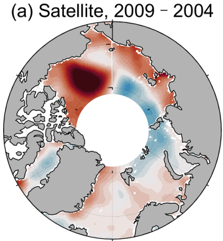
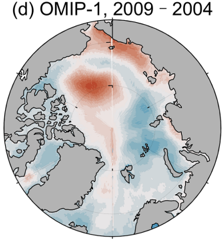
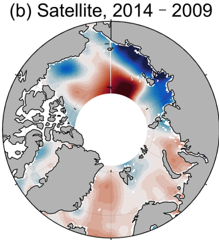
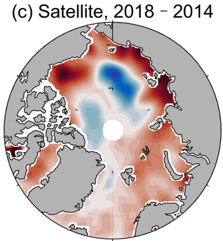
Verification
Claims the paper makes
The claims and statistics of this paper haven’t been checked yet.
Free: it reads the open-access text and checks the first 5 claims that cite a source we can check. Create a free account to check every claim.
Claims other papers make about this one
Each is checked against this paper’s own text: does it say what the citing paper says it does?
The cited source says what the claim attributes to it.
In the citing paper
“However, circulation models of the Arctic Ocean show a trend of progressively deeper surface mixed layers in the winter (November–May) between 1978 and 2018 [219].”
Self-check
Percentages, sums and reported differences re-computed from the paper’s own numbers.
The self-check needs the paper’s full text.
Citations
Cites
The JRA-55 Reanalysis: General Specifications and Basic Characteristics
KOBAYASHI, S., OTA, Y., HARADA, Y., EBITA, A., MORIYA, M., ONODA, H., ONOGI, K., KAMAHORI, H., KOBAYASHI, C., ENDO, H., et al. (2015) · Journal of the Meteorological Society of Japan. Ser. II · doi:10.2151/jmsj.2015-001 · Cited by 4,760 · cited 1×
“The JRA55-do forcing used in OMIP-2 (Tsujino et al., 2018) is based on the Japanese Reanalysis (JRA-55) product from Kobayashi et al. (2015).”
MethodThe global climatology of an interannually varying air-sea flux data set.
Large, W. G., & Yeager, S. G. (2009) · Climate Dynamics · doi:10.1007/s00382-008-0441-3 · Cited by 1,636 · cited 2×
“CORE2 forcing during 1948 to 2009 (Large and Yeager, 2009) and JRA55-do forcing during 1958 to 2018 (Tsujino et al., 2018) are the atmospheric forcing for OMIP-1 and OMIP-2 simulations, respectively.”
MethodThe role of sea ice and other fresh water in the Arctic circulation
Aagaard, K., & Carmack, E. C. (1989) · Journal of Geophysical Research: Oceans · doi:10.1029/jc094ic10p14485 · Cited by 1,635 · cited 2×
“8 psu, the mean Arctic salinity (Aagaard and Carmack, 1989), as the reference salinity to calculate liquid”
BackgroundMethodInfluentialEstimates of Freshwater Discharge from Continents: Latitudinal and Seasonal Variations
Dai, A., & Trenberth, K. E. (2002) · Journal of Hydrometeorology · doi:10.1175/1525-7541(2002)003<0660:eofdfc>2.0.co;2 · Cited by 1,237
Changing state of Arctic sea ice across all seasons
Stroeve, J., & Notz, D. (2018) · Environmental Research Letters · doi:10.1088/1748-9326/aade56 · Cited by 1,133 · cited 1×
“The decline of Arctic sea ice and warming of the water in the Arctic Ocean indicate that the Arctic Ocean has been experiencing rapid climate change (Onarheim et al., 2018; Stroeve and Notz, 2018; Polyakov et al., 2012, 2017; Danielson et al., 2020).”
BackgroundPHC: A Global Ocean Hydrography with a High-Quality Arctic Ocean
Steele, M., Morley, R., & Ermold, W. (2001) · Journal of Climate · doi:10.1175/1520-0442(2001)014<2079:pagohw>2.0.co;2 · Cited by 999 · cited 1×
“0) climatology (Steele et al., 2001), altimetry measurements (Armitage et al., 2016), and other relevant observations from published literatures.”
BackgroundChanges in Continental Freshwater Discharge from 1948 to 2004
Dai, A., Qian, T., Trenberth, K. E., & Milliman, J. D. (2009) · Journal of Climate · doi:10.1175/2008jcli2592.1 · Cited by 923
Greater role for Atlantic inflows on sea-ice loss in the Eurasian Basin of the Arctic Ocean
Polyakov, I. V., Pnyushkov, A. V., Alkire, M. B., Ashik, I. M., Baumann, T. M., Carmack, E. C., Goszczko, I., Guthrie, J., Ivanov, V. V., Kanzow, T., et al. (2017) · Science · doi:10.1126/science.aai8204 · Cited by 909 · cited 1×
“The decline of Arctic sea ice and warming of the water in the Arctic Ocean indicate that the Arctic Ocean has been experiencing rapid climate change (Onarheim et al., 2018; Stroeve and Notz, 2018; Polyakov et al., 2012, 2017; Danielson et al., 2020).”
BackgroundJRA-55 based surface dataset for driving ocean–sea-ice models (JRA55-do)
Tsujino, H., Urakawa, S., Nakano, H., Small, R. J., Kim, W. M., Yeager, S. G., Danabasoglu, G., Suzuki, T., Bamber, J. L., Bentsen, M., et al. (2018) · Ocean Modelling · doi:10.1016/j.ocemod.2018.07.002 · Cited by 869 · cited 3×
“The JRA55-do forcing used in OMIP-2 (Tsujino et al., 2018) is based on the Japanese Reanalysis (JRA-55) product from Kobayashi et al. (2015).”
BackgroundMethodWeakening of the stratospheric polar vortex by Arctic sea-ice loss
Kim, B.-M., Son, S.-W., Min, S.-K., Jeong, J.-H., Kim, S.-J., Zhang, X., Shim, T., & Yoon, J.-H. (2014) · Nature Communications · doi:10.1038/ncomms5646 · Cited by 816 · cited 1×
“…cause cold winters and extreme weather events over the mid-latitude continents in the Northern Hemisphere (Li et al., 2020; Outten and Esau, 2012; Kim et al., 2014; Cohen et al., 2020), and the storage and release of freshwater from the Arctic Ocean can influence the large scale ocean…”
Background
Cited by
A Review of Arctic–Subarctic Ocean Linkages: Past Changes, Mechanisms, and Future Projections
Wang, Q., Shu, Q., Wang, S., Beszczyńska-Möller, A., Danilov, S., de Steur, L., Haine, T. W. N., Kärcher, M., Lee, C. M., Myers, P. G., et al. (2023) · Ocean-Land-Atmosphere Research · doi:10.34133/olar.0013 · Cited by 55
Self-citationOziel, L., Gürses, Ö., Torres‐Valdés, S., Hoppe, C. J. M., Rost, B., Karakuş, O., Danek, C., Koch, B. P., Nissen, C., Koldunov, N., et al. (2025) · Nature Climate Change · doi:10.1038/s41558-024-02233-6 · Cited by 53
Self-citationOcean stratification in a warming climate
Cheng, L., Li, G., Long, S.-M., Li, Y., von Schuckmann, K., Trenberth, K. E., Mann, M. E., Abraham, J., Du, Y., Cheng, X., et al. (2025) · Nature Reviews Earth & Environment · doi:10.1038/s43017-025-00715-5 · Cited by 74
Neale, P. J., Hylander, S., Banaszak, A. T., Häder, D.-P., Rose, K. C., Vione, D., Wängberg, S.-Å., Jansen, M. A. K., Busquets, R., Andersen, M. P. S., et al. (2025) · Photochemical & Photobiological Sciences · doi:10.1007/s43630-025-00687-x · Cited by 32
“May) between 1978 and 2018 [219].”
Self-citationWang, Q., Shu, Q., Bozec, A., Chassignet, E. P., Fogli, P. G., Fox‐Kemper, B., Hogg, A. M., Iovino, D., Kiss, A. E., Koldunov, N., et al. (2024) · Geoscientific model development · doi:10.5194/gmd-17-347-2024 · Cited by 40
Self-citationArctic freshwater impact on the Atlantic Meridional Overturning Circulation: status and prospects
Haine, T. W. N., Siddiqui, A., & Jiang, W. (2023) · Philosophical Transactions of the Royal Society A Mathematical Physical and Engineering Sciences · doi:10.1098/rsta.2022.0185 · Cited by 28
“Moreover, well-known, stubborn biases exist in the Arctic Oceans of CMIP6 models [11,24–27].”
BackgroundMehling, O., Bellomo, K., & von Hardenberg, J. (2024) · Geophysical Research Letters · doi:10.1029/2024gl110791 · Cited by 30
Allende, S., Fichefet, T., Goosse, H., & Tréguier, A. (2023) · Ocean Modelling · doi:10.1016/j.ocemod.2023.102226 · Cited by 17
Timmermans, M., & Pickart, R. S. (2023) · Bulletin of the American Meteorological Society · doi:10.1175/bams-d-23-0129.1 · Cited by 7
“Of particular relevance to modeling the Beaufort Gyre system, Arctic Ocean simulations in Coupled Model Intercomparison Project (CMIP6) models indicate large biases in halocline structure and transport through Bering Strait (Shu et al. 2023); ongoing analyses are exploring this in context with new understanding of the…”
Opportunities for Earth Observation to Inform Risk Management for Ocean Tipping Points
Wood, R., Baker, J., Beaugrand, G., Boutin, J., Conversi, A., Donner, R. V., Frenger, I., Goberville, É., Hayashida, H., Koeve, W., et al. (2024) · Surveys in Geophysics · doi:10.1007/s10712-024-09859-3 · Cited by 12
Dominant inflation of the Arctic Ocean’s Beaufort Gyre in a warming climate
Wang, Q., Shu, Q., Wang, S., Li, X., Danilov, S., Qiao, F., Song, Z., Wang, F., & Jung, T. J. (2025) · Communications Earth & Environment · doi:10.1038/s43247-025-02028-3 · Cited by 13
Self-citationCheng, K., Shu, Q., Wang, Q., Song, Z., He, Y., Wang, S., Pan, R., Bi, H., & Qiao, F. (2025) · Journal of Geophysical Research Oceans · doi:10.1029/2024jc021178 · Cited by 10
Self-citationMore Frequent Abrupt Marine Environmental Changes Expected
Heinze, C., Michel, C., Torsvik, T., Schwinger, J., & Tjiputra, J. F. (2024) · Geophysical Research Letters · doi:10.1029/2023gl106192 · Cited by 4
Sensitivity of winter Arctic amplification in NorESM2
Graff, L. S., Tjiputra, J. F., Gjermundsen, A., Born, A., Debernard, J. B., Goelzer, H., He, Y., Langebroek, P. M., Nummelin, A., Olivié, D., et al. (2025) · Earth System Dynamics · doi:10.5194/esd-16-1671-2025 · Cited by 3
“The cold atmosphere above the ice promotes a rapid refreezing of leads and openings during winter”
Self-citationLei, R., Zhang, F., Yang, Q., Zhang, R., Zhong, W., Shu, Q., Ding, M., Hui, F., & Min, C. (2025) · Acta Oceanologica Sinica · doi:10.1007/s13131-025-2466-4 · Cited by 1
Self-citationPemberton, P., Wåhlström, I., & Fredriksson, S. (2026) · Ocean science · doi:10.5194/os-22-2375-2026
FUTURE SEA-ICE PROJECTIONS BY USING CESM2 WITH CONFIGURATION OF THE CMIP6-OMIP2 EXPERIMENT
OGURA, Y., & Nakamura, R. (2024) · Japanese Journal of JSCE · doi:10.2208/jscejj.24-18080
Role of Sea Ice and Ocean in the Observed Increase in Arctic Liquid Freshwater Content
Verma, T., Weijer, W., Haine, T. W. N., Veneziani, M., Kim, W. M., & Zhang, J. (2025) · Journal of Climate · doi:10.1175/jcli-d-24-0368.1 · Cited by 1
Predicting Arctic Sea Ice with Global Climate Models : Adopt the Concept of Pseudo-Global Warming
Ogura, Y., & Nakamura, R. (2025) · IEEE International Geoscience and Remote Sensing Symposium (IGARSS) · doi:10.1109/igarss55030.2025.11242394
“The omip2 experiment is an OMIP experiment (a type of CMIP6 endorsed MIPs) employing JRA55-do as atmospheric reanalysis forcing data, running at least five cycles of calculations from 1958 to 2018, and using the final cycle for evaluation [6].”
Metadata
- Authors
- Shu, Q., Wang, Q., Guo, C., Song, Z., Wang, S., He, Y., & Qiao, F.
- Affiliations
- Ministry of Natural Resources (CN)
- Alfred-Wegener-Institut Helmholtz-Zentrum für Polar- und Meeresforschung (DE)
- Bjerknes Centre for Climate Research (NO)
- Corresponding author
- Shu, Qi
- Venue
- Geoscientific Model Development
- Publisher
- Copernicus GmbH
- Published
- 2023-05-10
- Volume
- 16
- Issue
- 9
- Pages
- 2539-2563
- ISSN
- 1991-959X (ISSN-L)
- 1991-9603
- OpenAlex
- W4387438024
- Cited by
- 20
- References
- 112
- Citations by year
- 2026: 1 · 2025: 9 · 2024: 5 · 2023: 5
- FWCI
- 2.20
- Type
- journal article
- Language
- en
- Open access
- gold
- doi.org
- Licence
- Locations
- Geoscientific model development (publishedVersion, cc-by)
- Geoscientific Model Development Discussions (acceptedVersion, cc-by)
- Helmholtz-Zentrum für Polar-und Meeresforschung (Alfred-Wegener-Institut) (submittedVersion)
- DOAJ (DOAJ: Directory of Open Access Journals) (submittedVersion, cc-by-sa)
- NORA - Norwegian Open Research Archives (submittedVersion, cc-by)
- Funders
- National Natural Science Foundation of China (41941012, 42276253)
- Natural Science Foundation of Shandong Province (ZR2022JQ17)
- Helmholtz Association (REKLIM (Regional Climate Change and Human))
- Norges Forskningsråd (328941, 295046)
- Topics
- Physical Sciences › Earth and Planetary Sciences › Atmospheric Science › Arctic and Antarctic ice dynamics
- Physical Sciences › Earth and Planetary Sciences › Oceanography › Oceanographic and Atmospheric Processes
- Physical Sciences › Environmental Science › Global and Planetary Change › Climate variability and models
- Keywords
- Arctic Ocean, CMIP6, ocean-sea ice model, model evaluation, halocline, sea surface height, ocean stratification, Arctic gateways, Bering Strait, Barents Sea Opening, NEMO, volume transport, heat transport, freshwater transport
About these checks
Registry, retraction, Cites and statistics results are computed, not judged, with one exception: a printed reference that no index lists is read once by a model before it counts as a citation error. Claims are extracted by a model and kept only when their quote appears verbatim in the text; each cited source is then checked, with a model’s help, for whether it says what the claim relies on. Those verdicts can be wrong — read the claim’s quote and the cited source before relying on one.
Statistics and arithmetic are recomputed, not judged.
Confidence bands are shown only for fields calibrated on our annotated test set. None is calibrated yet, so no band is shown.
What counts as a claim ›How we measure confidence ›How we check this ›
Are you an author, or do you see a problem with this page? Request a review
Data sources
Bibliographic data: Semantic Scholar, OpenAlex, Crossref.
Contains information from the Semantic Scholar Academic Graph Datasets, made available under the ODC Attribution License (ODC-BY 1.0).
Semantic Scholar’s data is described in: Kinney, R., et al. (2023). The Semantic Scholar Open Data Platform. arXiv:2301.10140.
