

Arctic Ocean simulations in the CMIP6 Ocean Model Intercomparison Project (OMIP)
Open accessPublished version of a preprint
The DOI matches its Crossref record; 113 of the 113 references it cites were found in a registry or an index.
Abstract
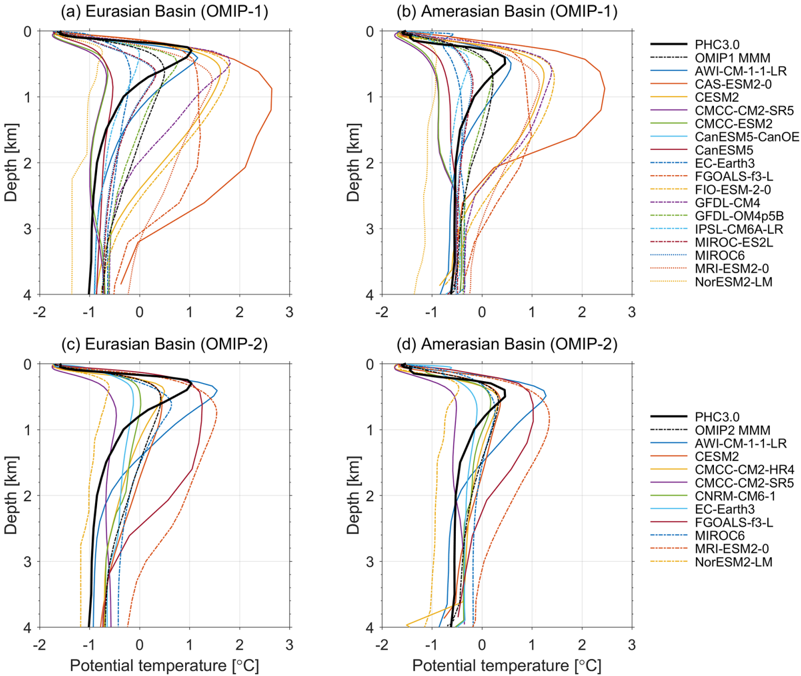
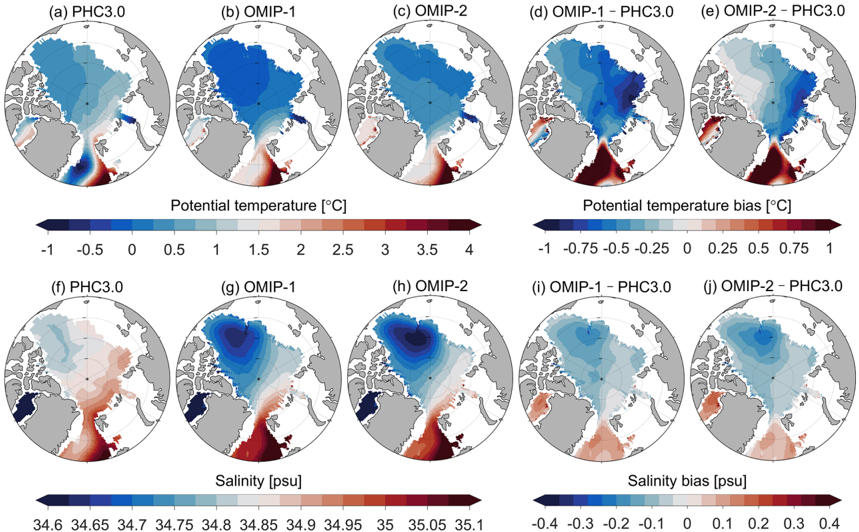
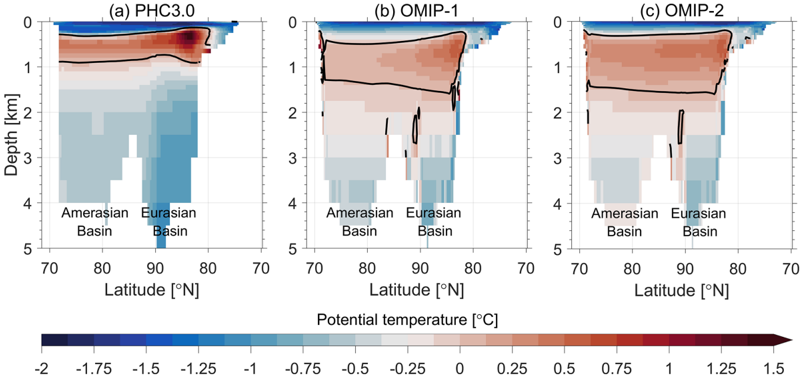
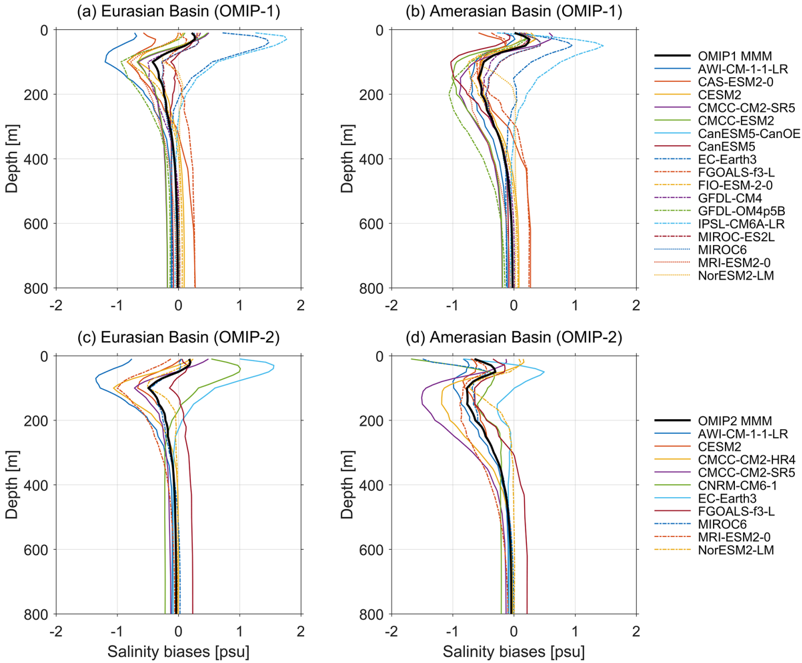
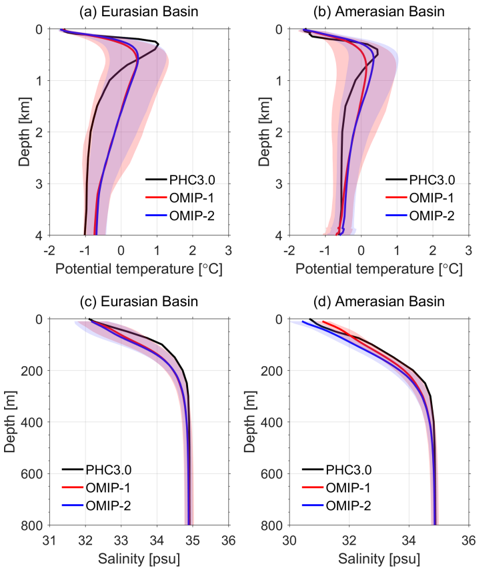
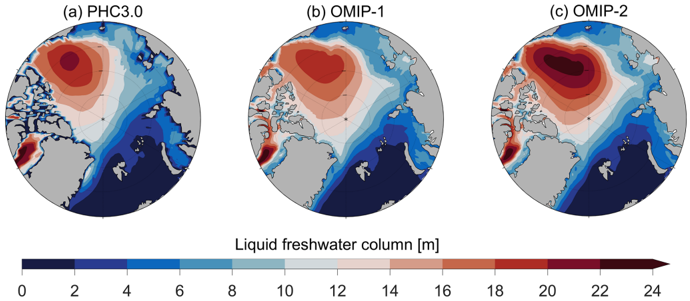
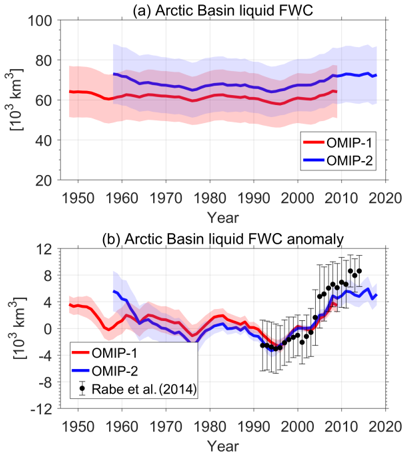
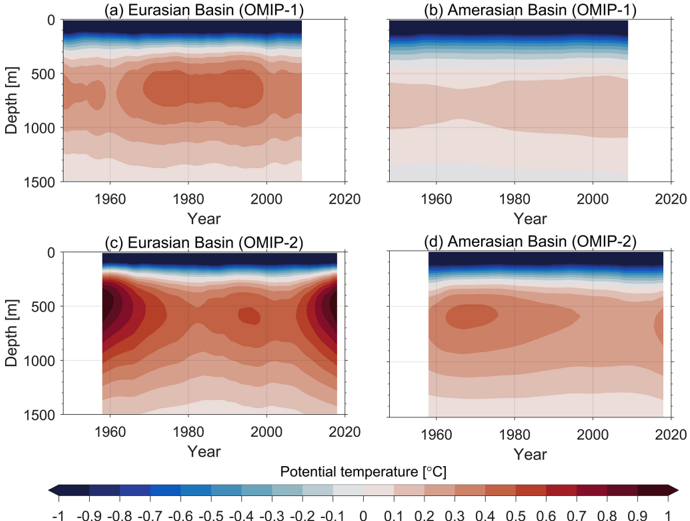
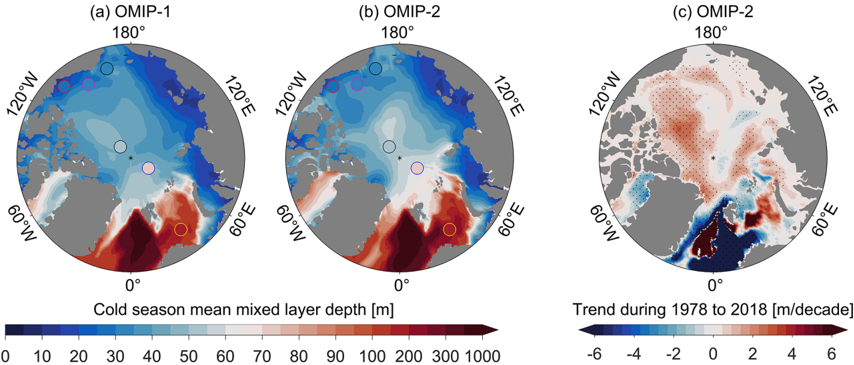
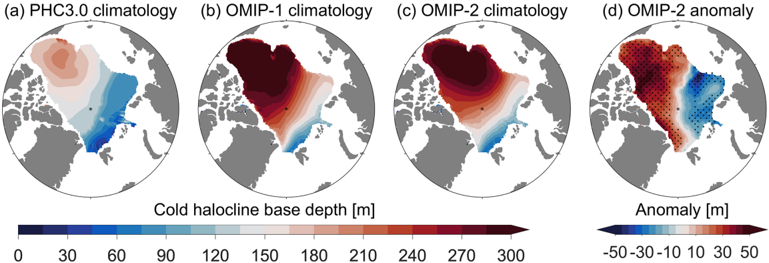
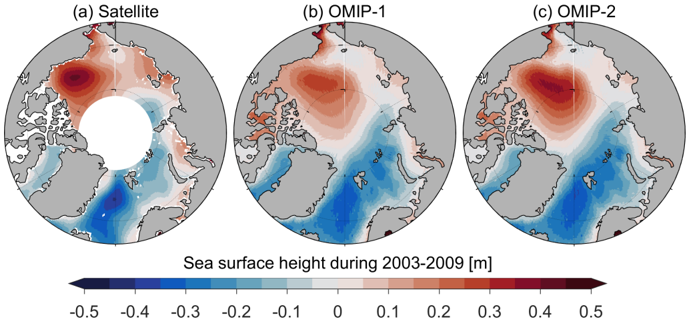
Arctic Ocean simulations in 19 global ocean–sea-ice models participating in the Ocean Model Intercomparison Project (OMIP) of the Coupled Model Intercomparison Project Phase 6 (CMIP6) are evaluated in this paper. Our findings show no significant improvements in Arctic Ocean simulations from the previous Coordinated Ocean-ice Reference Experiments phase II (CORE-II) to the current OMIP. Large model biases and inter-model spread exist in the simulated mean state of the halocline and Atlantic Water layer in the OMIP models. Most of the OMIP models suffer from a too thick and deep Atlantic Water layer, a too deep halocline base, and large fresh biases in the halocline. The OMIP models qualitatively agree on the variability and change of the Arctic Ocean freshwater content; sea surface height; stratification; and volume, heat, and freshwater transports through the Arctic Ocean gateways. They can reproduce the changes in the gateway transports observed in the early 21st century, with the exception of the Bering Strait. We also found that the OMIP models employing the NEMO ocean model simulate relatively larger volume and heat transports through the Barents Sea Opening. Overall, the performance of the Arctic Ocean simulations is similar between the CORE2-forced OMIP-1 and JRA55-do-forced OMIP-2 experiments.
Overview
The claims and statistics of this paper haven’t been checked yet.
Free: it reads the open-access text and checks the first 5 claims that cite a source we can check. Create a free account to check every claim.
Integrity signals
Registry
Cites
Statistics
Figures
Verification
Claims the paper makes
The claims and statistics of this paper haven’t been checked yet.
Free: it reads the open-access text and checks the first 5 claims that cite a source we can check. Create a free account to check every claim.
Claims other papers make about this one
Each is checked against this paper’s own text: does it say what the citing paper says it does?
The cited source says what the claim attributes to it.
In the citing paper
“However, circulation models of the Arctic Ocean show a trend of progressively deeper surface mixed layers in the winter (November–May) between 1978 and 2018 [219].”
Self-check
Percentages, sums and reported differences re-computed from the paper’s own numbers.
The self-check needs the paper’s full text.
Citations
Cites
The JRA-55 Reanalysis: General Specifications and Basic Characteristics
KOBAYASHI, S., OTA, Y., HARADA, Y., EBITA, A., MORIYA, M., ONODA, H., ONOGI, K., KAMAHORI, H., KOBAYASHI, C., ENDO, H., et al. (2015) · Journal of the Meteorological Society of Japan. Ser. II · doi:10.2151/jmsj.2015-001 · Cited by 4,760 · cited 1×
“The JRA55-do forcing used in OMIP-2 (Tsujino et al., 2018) is based on the Japanese Reanalysis (JRA-55) product from Kobayashi et al. (2015).”
MethodThe global climatology of an interannually varying air-sea flux data set.
Large, W. G., & Yeager, S. G. (2009) · Climate Dynamics · doi:10.1007/s00382-008-0441-3 · Cited by 1,636 · cited 2×
“CORE2 forcing during 1948 to 2009 (Large and Yeager, 2009) and JRA55-do forcing during 1958 to 2018 (Tsujino et al., 2018) are the atmospheric forcing for OMIP-1 and OMIP-2 simulations, respectively.”
MethodThe role of sea ice and other fresh water in the Arctic circulation
Aagaard, K., & Carmack, E. C. (1989) · Journal of Geophysical Research: Oceans · doi:10.1029/jc094ic10p14485 · Cited by 1,635 · cited 2×
“8 psu, the mean Arctic salinity (Aagaard and Carmack, 1989), as the reference salinity to calculate liquid”
BackgroundMethodInfluentialEstimates of Freshwater Discharge from Continents: Latitudinal and Seasonal Variations
Dai, A., & Trenberth, K. E. (2002) · Journal of Hydrometeorology · doi:10.1175/1525-7541(2002)003<0660:eofdfc>2.0.co;2 · Cited by 1,237
Changing state of Arctic sea ice across all seasons
Stroeve, J., & Notz, D. (2018) · Environmental Research Letters · doi:10.1088/1748-9326/aade56 · Cited by 1,133 · cited 1×
“The decline of Arctic sea ice and warming of the water in the Arctic Ocean indicate that the Arctic Ocean has been experiencing rapid climate change (Onarheim et al., 2018; Stroeve and Notz, 2018; Polyakov et al., 2012, 2017; Danielson et al., 2020).”
BackgroundPHC: A Global Ocean Hydrography with a High-Quality Arctic Ocean
Steele, M., Morley, R., & Ermold, W. (2001) · Journal of Climate · doi:10.1175/1520-0442(2001)014<2079:pagohw>2.0.co;2 · Cited by 999 · cited 1×
“0) climatology (Steele et al., 2001), altimetry measurements (Armitage et al., 2016), and other relevant observations from published literatures.”
BackgroundChanges in Continental Freshwater Discharge from 1948 to 2004
Dai, A., Qian, T., Trenberth, K. E., & Milliman, J. D. (2009) · Journal of Climate · doi:10.1175/2008jcli2592.1 · Cited by 923
Greater role for Atlantic inflows on sea-ice loss in the Eurasian Basin of the Arctic Ocean
Polyakov, I. V., Pnyushkov, A. V., Alkire, M. B., Ashik, I. M., Baumann, T. M., Carmack, E. C., Goszczko, I., Guthrie, J., Ivanov, V. V., Kanzow, T., et al. (2017) · Science · doi:10.1126/science.aai8204 · Cited by 909 · cited 1×
“The decline of Arctic sea ice and warming of the water in the Arctic Ocean indicate that the Arctic Ocean has been experiencing rapid climate change (Onarheim et al., 2018; Stroeve and Notz, 2018; Polyakov et al., 2012, 2017; Danielson et al., 2020).”
BackgroundJRA-55 based surface dataset for driving ocean–sea-ice models (JRA55-do)
Tsujino, H., Urakawa, S., Nakano, H., Small, R. J., Kim, W. M., Yeager, S. G., Danabasoglu, G., Suzuki, T., Bamber, J. L., Bentsen, M., et al. (2018) · Ocean Modelling · doi:10.1016/j.ocemod.2018.07.002 · Cited by 869 · cited 3×
“The JRA55-do forcing used in OMIP-2 (Tsujino et al., 2018) is based on the Japanese Reanalysis (JRA-55) product from Kobayashi et al. (2015).”
BackgroundMethodWeakening of the stratospheric polar vortex by Arctic sea-ice loss
Kim, B.-M., Son, S.-W., Min, S.-K., Jeong, J.-H., Kim, S.-J., Zhang, X., Shim, T., & Yoon, J.-H. (2014) · Nature Communications · doi:10.1038/ncomms5646 · Cited by 816 · cited 1×
“…cause cold winters and extreme weather events over the mid-latitude continents in the Northern Hemisphere (Li et al., 2020; Outten and Esau, 2012; Kim et al., 2014; Cohen et al., 2020), and the storage and release of freshwater from the Arctic Ocean can influence the large scale ocean…”
BackgroundDivergent consensuses on Arctic amplification influence on midlatitude severe winter weather
Cohen, J., Zhang, X., Francis, J., Jung, T., Kwok, R., Overland, J., Ballinger, T. J., Bhatt, U. S., Chen, H. W., Coumou, D., et al. (2020) · Nature Climate Change · doi:10.1038/s41558-019-0662-y · Cited by 802
Self-citationCoordinated Ocean-ice Reference Experiments (COREs)
Griffies, S. M., Biastoch, A., Böning, C., Bryan, F., Danabasoglu, G., Chassignet, E. P., England, M. H., Gerdes, R., Haak, H., Hallberg, R. W., et al. (2009) · Ocean Modelling · doi:10.1016/j.ocemod.2008.08.007 · Cited by 722
Quantifying the Influence of Atlantic Heat on Barents Sea Ice Variability and Retreat*
Årthun, M., Eldevik, T., Smedsrud, L. H., Skagseth, Ø., & Ingvaldsen, R. B. (2012) · Journal of Climate · doi:10.1175/jcli-d-11-00466.1 · Cited by 654 · cited 2×
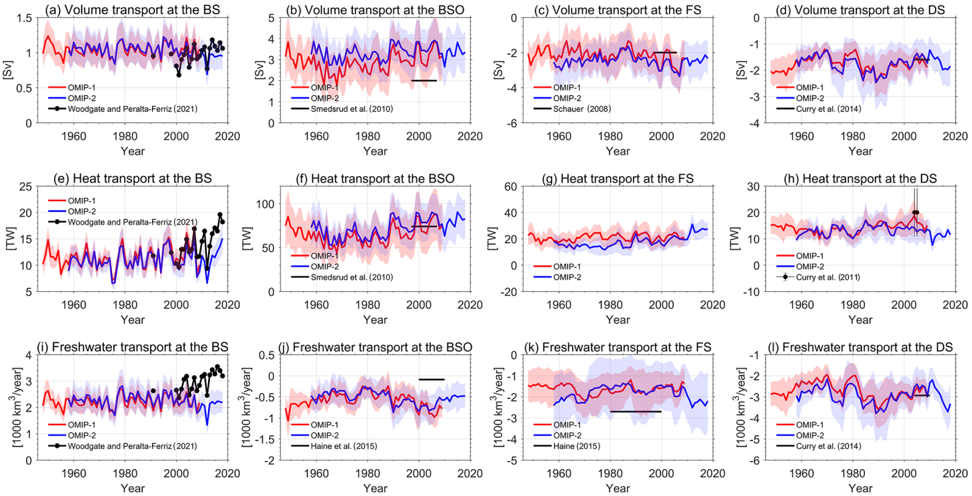
“(2008), Årthun et al. (2012) and Wang et al. (2019a) can also be reproduced by both OMIP-1 and OMIP-2. Based on the observational estimation by Schauer et al. (2008), ocean heat transport by Atlantic Water (warmer than 1°C) through the Fram Strait is between 26 and 50 TW without significant trend during 1997 to 2006.”
BackgroundThe large‐scale freshwater cycle of the Arctic
Serreze, M. C., Barrett, A. P., Slater, A. G., Woodgate, R. A., Aagaard, K., Lammers, R. B., Steele, M., Moritz, R., Meredith, M., & Lee, C. M. (2006) · Journal of Geophysical Research: Oceans · doi:10.1029/2005jc003424 · Cited by 624
Beaufort Gyre freshwater reservoir: State and variability from observations
Proshutinsky, A., Krishfield, R., Timmermans, M., Toole, J., Carmack, E., McLaughlin, F., Williams, W. J., Zimmermann, S., Itoh, M., & Shimada, K. (2009) · Journal of Geophysical Research: Oceans · doi:10.1029/2008jc005104 · Cited by 524
Arctic freshwater export: Status, mechanisms, and prospects
Haine, T. W. N., Curry, B., Gerdes, R., Hansen, E., Karcher, M., Lee, C., Rudels, B., Spreen, G., de Steur, L., Stewart, K. D., et al. (2015) · Global and Planetary Change · doi:10.1016/j.gloplacha.2014.11.013 · Cited by 520 · cited 3×
“Liquid freshwater transport through the Fram Strait is −2.66±0.53 km 3 /year based on historical observations (Serreze et al., 2006; Haine et al., 2015).”
BackgroundMethodInfluentialSeasonal and Regional Manifestation of Arctic Sea Ice Loss
Onarheim, I. H., Eldevik, T., Smedsrud, L. H., & Stroeve, J. C. (2018) · Journal of Climate · doi:10.1175/jcli-d-17-0427.1 · Cited by 519 · cited 1×
“The decline of Arctic sea ice and warming of the water in the Arctic Ocean indicate that the Arctic Ocean has been experiencing rapid climate change (Onarheim et al., 2018; Stroeve and Notz, 2018; Polyakov et al., 2012, 2017; Danielson et al., 2020).”
BackgroundBeszczynska-Möller, A., Fahrbach, E., Schauer, U., & Hansen, E. (2012) · ICES Journal of Marine Science · doi:10.1093/icesjms/fss056 · Cited by 510 · cited 1×
“One branch passes the Fram Strait and supplies the warm Atlantic Water AW layer of the Arctic Ocean (Våge et al., 2016; Beszczynska-Möller et al., 2012; Rudels et al., 2015).”
BackgroundTHE ROLE OF THE BARENTS SEA IN THE ARCTIC CLIMATE SYSTEM
Smedsrud, L. H., Esau, I., Ingvaldsen, R. B., Eldevik, T., Haugan, P. M., Li, C., Lien, V. S., Olsen, A., Omar, A. M., Otterå, O. H., et al. (2013) · Reviews of Geophysics · doi:10.1002/rog.20017 · Cited by 489 · cited 1×
“The mean net volume transport through the BSO is ~2.0 Sv based on historical observations during 1997 to 2007 (Smedsrud et al., 2010, 2013).”
BackgroundInfluentialWoodgate, R. A. (2018) · Progress in Oceanography · doi:10.1016/j.pocean.2017.12.007 · Cited by 482 · cited 11×
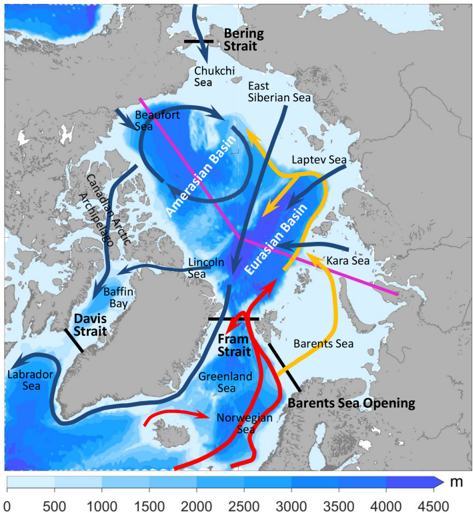
“1), which is connected to the Atlantic Ocean on both sides of Greenland and to the Pacific Ocean through the Bering Strait.”
BackgroundMethodInfluentialRetreat of the cold halocline layer in the Arctic Ocean
Steele, M., & Boyd, T. (1998) · Journal of Geophysical Research: Oceans · doi:10.1029/98jc00580 · Cited by 465 · cited 1×
“A warming pulse was observed in the 1990s in the Eurasian Basin and then in the Amerasian Basin in 2000s (Steele and Boyd, 1998; Polyakov et al., 2012).”
BackgroundChanging Arctic Ocean freshwater pathways
Morison, J., Kwok, R., Peralta-Ferriz, C., Alkire, M., Rigor, I., Andersen, R., & Steele, M. (2012) · Nature · doi:10.1038/nature10705 · Cited by 450 · cited 1×
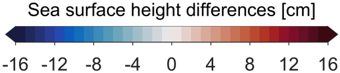
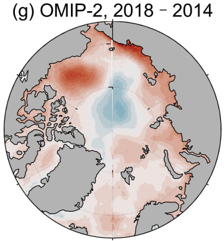
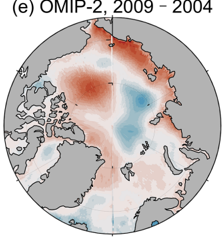
“Changes in sSea surface height in the Arctic bBasin area reflects the variationamount of liquid freshwater content (e.g., ( Morison et al., 2012 ); (Wang et al., 2021)).”
BackgroundGriffies, S. M., Danabasoglu, G., Durack, P. J., Adcroft, A. J., Balaji, V., Böning, C. W., Chassignet, E. P., Curchitser, E., Deshayes, J., Drange, H., et al. (2016) · Geoscientific Model Development · doi:10.5194/gmd-9-3231-2016 · Cited by 450 · cited 2×
“…(COREs) and subsequent Ocean Model Intercomparison Project (OMIP) proposed by the WCRP (World Climate Research Programme)/CLIVAR (Climate and Ocean: Variability, Predictability and Change) Working Group on Ocean Model Development were also successively initiated (Griffies et al., 2009, 2012, 2016).”
BackgroundMethodSelf-citationPhytoplankton dynamics in a changing Arctic Ocean
Ardyna, M., & Arrigo, K. R. (2020) · Nature Climate Change · doi:10.1038/s41558-020-0905-y · Cited by 446 · cited 1×
“Liquid freshwater in the Arctic Ocean has strong implications on Arctic physical and biogeochemical environment and downstreamlarge-scale ocean circulations in the North Atlantic (Coupel et al., 2015; Ardyna and Arrigo, 2020; Zhang et al., 2021).”
BackgroundArctic Ocean surface warming trends over the past 100 years
Steele, M., Ermold, W., & Zhang, J. (2008) · Geophysical Research Letters · doi:10.1029/2007gl031651 · Cited by 418 · cited 1×
“…have been observed in the upper polar mixed layer and Atlantic Water layer (Polyakov et al., 2012, 2020a; Ingvaldsen et al., 2021; Li et al., 2022; Steele et al., 2008), together with a weakening of the cold halocline layer and an increase of upward oceanic heat flux from theof Atlantic Water…”
BackgroundCirculation of summer Pacific halocline water in the Arctic Ocean
Steele, M., Morison, J., Ermold, W., Rigor, I., Ortmeyer, M., & Shimada, K. (2004) · Journal of Geophysical Research: Oceans · doi:10.1029/2003jc002009 · Cited by 399 · cited 1×
“Fresh Pacific Water flows into the Arctic Ocean through the Bering Strait (Woodgate, 2018b; Woodgate and Peralta-Ferriz, 2021), and leaves the Arctic via the Fram Strait and Canadian Arctic Archipelago (Hu et al., 2019; Steele et al., 2004; Lique et al., 2010; Wang et al., 2021).”
BackgroundBorealization of the Arctic Ocean in Response to Anomalous Advection From Sub-Arctic Seas
Polyakov, I. V., Alkire, M. B., Bluhm, B. A., Brown, K. A., Carmack, E. C., Chierici, M., Danielson, S. L., Ellingsen, I., Ershova, E. A., Gårdfeldt, K., et al. (2020) · Frontiers in Marine Science · doi:10.3389/fmars.2020.00491 · Cited by 394 · cited 6×
“Since the 1990s significant warming signals have been observed in the upper polar mixed layer and Atlantic Water layer (Polyakov et al., 2012, 2020a; Ingvaldsen et al., 2021; Li et al., 2022; Steele et al., 2008), together with a weakening of the cold halocline layer and an increase of upward…”
BackgroundInfluentialDirect measurements of transport and water properties through the Bering Strait
Roach, A. T., Aagaard, K., Pease, C. H., Salo, S. A., Weingartner, T., Pavlov, V., & Kulakov, M. (1995) · Journal of Geophysical Research: Oceans · doi:10.1029/95jc01673 · Cited by 382 · cited 1×
“The mean net volume transport through the Bering Strait based on observations is 0.8±0.2 Sv (1 Sv ≡ 1×10 6 m 3 /s) during 1990 to 2007 (Roach et al., 1995; Woodgate and Aagaard, 2005) and 1.0±0.05 Sv during 2003 to 2015 (Woodgate, 2018a).”
BackgroundInfluentialUnderstanding Arctic Ocean Circulation: A Review of Ocean Dynamics in a Changing Climate
Timmermans, M., & Marshall, J. (2020) · Journal of Geophysical Research: Oceans · doi:10.1029/2018jc014378 · Cited by 371
Global Modeling of Land Water and Energy Balances. Part I: The Land Dynamics (LaD) Model
Milly, P. C. D., & Shmakin, A. B. (2002) · Journal of Hydrometeorology · doi:10.1175/1525-7541(2002)003<0283:gmolwa>2.0.co;2 · Cited by 364
Revising the Bering Strait freshwater flux into the Arctic Ocean
Woodgate, R. A., & Aagaard, K. (2005) · Geophysical Research Letters · doi:10.1029/2004gl021747 · Cited by 363 · cited 2×
“The mean net volume transport through the Bering Strait based on observations is 0.8±0.2 Sv (1 Sv ≡ 1×10 6 m 3 /s) during 1990 to 2007 (Roach et al., 1995; Woodgate and Aagaard, 2005) and 1.0±0.05 Sv during 2003 to 2015 (Woodgate, 2018a).”
BackgroundInfluentialThe role of the Beaufort Gyre in Arctic climate variability: Seasonal to decadal climate scales
Proshutinsky, A., Bourke, R. H., & McLaughlin, F. A. (2002) · Geophysical Research Letters · doi:10.1029/2002gl015847 · Cited by 323 · cited 1×
“To validate and further improve model performances in the Arctic Ocean, the Arctic Ocean Model Intercomparison Project (AOMIP) and Forum for Arctic Modeling and Observational Synthesis (FAMOS) were initiated in 1999 and 2013 (Proshutinsky et al., 2001, 2016), respectively.”
MethodPeralta-Ferriz, C., & Woodgate, R. A. (2015) · Progress in Oceanography · doi:10.1016/j.pocean.2014.12.005 · Cited by 314 · cited 5×
“Mixed layer depth is important for Arctic physical, chemical and biological processes (Peralta-Ferriz and Woodgate, 2015).”
BackgroundMethodInfluentialAtlantic Water flow through the Barents and Kara Seas
Schauer, U., Loeng, H., Rudels, B., Ozhigin, V. K., & Dieck, W. (2002) · Deep Sea Research Part I: Oceanographic Research Papers · doi:10.1016/s0967-0637(02)00125-5 · Cited by 285 · cited 1×
“The other enters the Barents Sea and then Kara Sea and finally flows to the surface, intermediate and deeper layers of the Arctic Ocean (Karcher, 2002; Schauer et al., 2002; Maslowski et al., 2004).”
BackgroundJungclaus, J. H., Haak, H., Latif, M., & Mikolajewicz, U. (2005) · Journal of Climate · doi:10.1175/jcli3462.1 · Cited by 264 · cited 1×
“…et al., 2014; Cohen et al., 2020), and the storage and release of freshwater from the Arctic Ocean can influence the large scale ocean circulation by freshening the upper North Atlantic ocean (Jungclaus et al., 2005; Goosse et al., 1997; Wadley and Bigg, 2002; Shu et al., 2017; Zhang et al., 2021).”
BackgroundTsujino, H., Urakawa, L. S., Griffies, S. M., Danabasoglu, G., Adcroft, A. J., Amaral, A. E., Arsouze, T., Bentsen, M., Bernardello, R., Böning, C. W., et al. (2020) · Geoscientific Model Development · doi:10.5194/gmd-13-3643-2020 · Cited by 264
Self-citationPhysical manifestations and ecological implications of Arctic Atlantification
Ingvaldsen, R. B., Assmann, K. M., Primicerio, R., Fossheim, M., Polyakov, I. V., & Dolgov, A. V. (2021) · Nature Reviews Earth & Environment · doi:10.1038/s43017-021-00228-x · Cited by 255 · cited 1×
“Since the 1990s significant warming signals have been observed in the upper polar mixed layer and Atlantic Water layer (Polyakov et al., 2012, 2020a; Ingvaldsen et al., 2021; Li et al., 2022; Steele et al., 2008), together with a weakening of the cold halocline layer and an increase of upward…”
BackgroundCurrent estimates of freshwater flux through Arctic and subarctic seas
Dickson, R., Rudels, B., Dye, S., Karcher, M., Meincke, J., & Yashayaev, I. (2007) · Progress in Oceanography · doi:10.1016/j.pocean.2006.12.003 · Cited by 252 · cited 1×
“The Arctic Ocean receives large amounts of fresh water from river runoff, oceanic freshwater flux through Bering Strait, and net precipitation, and releases fresh water through Davis Strait and Fram Strait (Serreze et al., 2006; Dickson et al., 2007; Ilicak et al., 2016).”
BackgroundAnalysis of the Beaufort Gyre Freshwater Content in 2003–2018
Proshutinsky, A., Krishfield, R., Toole, J. M., Timmermans, M. ‐., Williams, W., Zimmermann, S., Yamamoto‐Kawai, M., Armitage, T. W. K., Dukhovskoy, D., Golubeva, E., et al. (2019) · Journal of Geophysical Research: Oceans · doi:10.1029/2019jc015281 · Cited by 243 · cited 1×
“To validate and further improve model performances in the Arctic Ocean, the Arctic Ocean Model Intercomparison Project (AOMIP) and Forum for Arctic Modeling and Observational Synthesis (FAMOS) were initiated in 1999 and 2013 (Proshutinsky et al., 2001, 2016), respectively.”
MethodVariability of the Intermediate Atlantic Water of the Arctic Ocean over the Last 100 Years
Polyakov, I. V., Alekseev, G. V., Timokhov, L. A., Bhatt, U. S., Colony, R. L., Simmons, H. L., Walsh, D., Walsh, J. E., & Zakharov, V. F. (2004) · Journal of Climate · doi:10.1175/jcli-3224.1 · Cited by 229 · cited 1×
“Arctic Ocean Atlantic Water layer temperature varies on different time scales (Polyakov et al., 2004).”
BackgroundVariation of Measured Heat Flow Through the Fram Strait Between 1997 and 2006
Schauer, U., Beszczynska-Möller, A., Walczowski, W., Fahrbach, E., Piechura, J., & Hansen, E. (2008) · Arctic–Subarctic Ocean Fluxes · doi:10.1007/978-1-4020-6774-7_4 · Cited by 223
Multiyear Volume, Liquid Freshwater, and Sea Ice Transports through Davis Strait, 2004–10*
Curry, B., Lee, C. M., Petrie, B., Moritz, R. E., & Kwok, R. (2014) · Journal of Physical Oceanography · doi:10.1175/jpo-d-13-0177.1 · Cited by 213
Arctic Ocean basin liquid freshwater storage trend 1992–2012
Rabe, B., Karcher, M., Kauker, F., Schauer, U., Toole, J. M., Krishfield, R. A., Pisarev, S., Kikuchi, T., & Su, J. (2014) · Geophysical Research Letters · doi:10.1002/2013gl058121 · Cited by 213 · cited 16×
“It is shallow in the Eurasian Basin and deep in the Amerasian Basin according to PHC3.”
BackgroundResultInfluentialVolume and Heat Transports to the Arctic Ocean Via the Norwegian and Barents Seas
Skagseth, Ø., Furevik, T., Ingvaldsen, R., Loeng, H., Mork, K. A., Orvik, K. A., & Ozhigin, V. (2008) · Arctic–Subarctic Ocean Fluxes · doi:10.1007/978-1-4020-6774-7_3 · Cited by 207 · cited 2×
“Its positive trend since 1980 reported by Skagseth et al. (2008), Årthun et al. (2012) and Wang et al. (2019a) can also be reproduced by both OMIP-1 and OMIP-2 (Fig.”
BackgroundMethodKarcher, M. J., Gerdes, R., Kauker, F., & Köberle, C. (2003) · Journal of Geophysical Research: Oceans · doi:10.1029/2001jc001265 · Cited by 202 · cited 1×
“The Atlantic Water circulates mainly cyclonically along the peripheries of the Arctic basins and is aligned with the continental slope (Karcher et al., 2003; Timmermans and Marshall, 2020).”
BackgroundHeat in the Barents Sea: transport, storage, and surface fluxes
Smedsrud, L. H., Ingvaldsen, R., Nilsen, J. E. Ø., & Skagseth, Ø. (2010) · Ocean Science · doi:10.5194/os-6-219-2010 · Cited by 200 · cited 2×
“The mean net volume transport through the BSO is ~2.0 Sv based on historical observations during 1997 to 2007 (Smedsrud et al., 2010, 2013).”
BackgroundMethodInfluentialA. Woodgate, R., & Peralta‐Ferriz, C. (2021) · Geophysical Research Letters · doi:10.1029/2021gl092528 · Cited by 194
Maslowski, W., Marble, D., Walczowski, W., Schauer, U., Clement, J. L., & Semtner, A. J. (2004) · Journal of Geophysical Research: Oceans · doi:10.1029/2001jc001039 · Cited by 192 · cited 1×
“The other enters the Barents Sea and then Kara Sea and finally flows to the surface, intermediate and deeper layers of the Arctic Ocean (Karcher, 2002; Schauer et al., 2002; Maslowski et al., 2004).”
BackgroundArctic sea surface height variability and change from satellite radar altimetry and GRACE, 2003–2014
Armitage, T. W. K., Bacon, S., Ridout, A. L., Thomas, S. F., Aksenov, Y., & Wingham, D. J. (2016) · Journal of Geophysical Research: Oceans · doi:10.1002/2015jc011579 · Cited by 190 · cited 4×
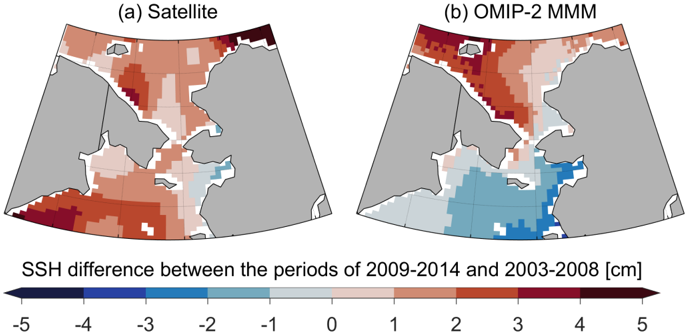
“12a) (Armitage et al., 2016).”
BackgroundMethodInfluentialDanielson, S. L., Weingartner, T. J., Hedstrom, K. S., Aagaard, K., Woodgate, R., Curchitser, E., & Stabeno, P. J. (2014) · Progress in Oceanography · doi:10.1016/j.pocean.2014.04.006 · Cited by 182 · cited 1×
“The sea surface height gradient between the eastern Bering Sea and western Chukchi Sea is one important factor controlling the variability of the Bering Strait throughflow (Danielson et al., 2014; Peralta ‐ Ferriz and Woodgate, 2017; Zhang et al., 2020).”
BackgroundDanielson, S. L., Ahkinga, O., Ashjian, C., Basyuk, E., Cooper, L. W., Eisner, L., Farley, E., Iken, K. B., Grebmeier, J. M., Juranek, L., et al. (2020) · Deep Sea Research Part II: Topical Studies in Oceanography · doi:10.1016/j.dsr2.2020.104781 · Cited by 178
Arctic Ocean Amplification in a warming climate in CMIP6 models
Shu, Q., Wang, Q., Årthun, M., Wang, S., Song, Z., Zhang, M., & Qiao, F. (2022) · Science Advances · doi:10.1126/sciadv.abn9755 · Cited by 176 · cited 3×
“According to the previous study (Shu et al., 2022), the Arctic Ocean warms faster than the global ocean mean in a warming climate, which is mainly contributed by the warming of the Atlantic Water layer.”
BackgroundInfluentialSelf-citationVolume, Freshwater, and Heat Fluxes through Davis Strait, 2004–05*
Curry, B., Lee, C. M., & Petrie, B. (2011) · Journal of Physical Oceanography · doi:10.1175/2010jpo4536.1 · Cited by 175
Davis Strait volume, freshwater and heat fluxes
Cuny, J., Rhines, P. B., & Kwok, R. (2005) · Deep Sea Research Part I: Oceanographic Research Papers · doi:10.1016/j.dsr.2004.10.006 · Cited by 174 · cited 1×
“Ocean heat transport through the Davis Strait is 18±17 and 20±9 TW based on observations from 1987 to 1990 and from 2004 to 2005 (Cuny et al., 2005; Curry et al., 2011), respectively.”
BackgroundChassignet, E. P., Yeager, S. G., Fox-Kemper, B., Bozec, A., Castruccio, F., Danabasoglu, G., Horvat, C., Kim, W. M., Koldunov, N., Li, Y., et al. (2020) · Geoscientific Model Development · doi:10.5194/gmd-13-4595-2020 · Cited by 165
Self-citationRudels, B., Korhonen, M., Schauer, U., Pisarev, S., Rabe, B., & Wisotzki, A. (2015) · Progress in Oceanography · doi:10.1016/j.pocean.2014.04.003 · Cited by 161
Weakening of Cold Halocline Layer Exposes Sea Ice to Oceanic Heat in the Eastern Arctic Ocean
Polyakov, I. V., Rippeth, T. P., Fer, I., Alkire, M. B., Baumann, T. M., Carmack, E. C., Ingvaldsen, R. B., Ivanov, V. V., Janout, M. A., Lind, S., et al. (2020) · Journal of Climate · doi:10.1175/jcli-d-19-0976.1 · Cited by 157
Ilıcak, M., Drange, H., Wang, Q., Gerdes, R., Aksenov, Y., Bailey, D. A., Bentsen, M., Biastoch, A., Bozec, A., Böning, C. W., et al. (2016) · Ocean Modelling · doi:10.1016/j.ocemod.2016.02.004 · Cited by 154
Self-citationA link between Arctic sea ice and recent cooling trends over Eurasia
Outten, S., & Esau, I. (2011) · Climatic Change · doi:10.1007/s10584-011-0334-z · Cited by 153
Wang, Q., Wekerle, C., Wang, X., Danilov, S., Koldunov, N., Sein, D., Sidorenko, D., von Appen, W., & Jung, T. J. (2020) · Geophysical Research Letters · doi:10.1029/2019gl086682 · Cited by 152 · cited 4×
“Its positive trend since 1980 reported by Skagseth et al. (2008), Årthun et al. (2012) and Wang et al. (2019a) can also be reproduced by both OMIP-1 and OMIP-2 (Fig.”
BackgroundResultInfluentialSelf-citationWarming of the Intermediate Atlantic Water of the Arctic Ocean in the 2000s
Polyakov, I. V., Pnyushkov, A. V., & Timokhov, L. (2012) · Journal of Climate · doi:10.1175/jcli-d-12-00266.1 · Cited by 149 · cited 3×
“Since the 1990s significant warming signals have been observed in the upper polar mixed layer and Atlantic Water layer (Polyakov et al., 2012, 2020a; Ingvaldsen et al., 2021; Li et al., 2022; Steele et al., 2008), together with a weakening of the cold halocline layer and an increase of upward…”
BackgroundWater properties and circulation in Arctic Ocean models
Holloway, G., Dupont, F., Николаевна, Г. Е., Hakkinen, S. M. A., Hunke, E., Jin, M., Kärcher, M., Kauker, F., Maltrud, M. E., Maqueda, M. Á. M., et al. (2007) · Journal of Geophysical Research Atmospheres · doi:10.1029/2006jc003642 · Cited by 137 · cited 4×
“…et al., 2016; K hosravi et al., 2022; Heuzé et al., 2023), is likely the consequences of too much spurious diapycnal mixing due to low resolution and numerical mixing associated with the advection operator in low resolution models (Zhang and Steele, 2007; Holloway et al., 2007, Wang et al., 2018).”
BackgroundInfluentialReduced efficiency of the Barents Sea cooling machine
Skagseth, Ø., Eldevik, T., Årthun, M., Asbjørnsen, H., Lien, V. S., & Smedsrud, L. H. (2020) · Nature Climate Change · doi:10.1038/s41558-020-0772-6 · Cited by 137 · cited 1×
“There is no observation-based estimation about the net volume trend, but Skagseth et al. (2020) estimated the volume flux of Atlantic Water inflow to the Barents Sea based on an array of current meters in the western Barents Sea.”
BackgroundImproved modeling of the Arctic halocline with a subgrid‐scale brine rejection parameterization
Nguyen, A. T., Menemenlis, D., & Kwok, R. (2009) · Journal of Geophysical Research Atmospheres · doi:10.1029/2008jc005121 · Cited by 134
The impact of freshening on phytoplankton production in the Pacific Arctic Ocean
Coupel, P., Ruiz-Pino, D. P., Sicre, M., Chen, J. F., Lee, S. H., Schiffrine, N., Li, H. L., & Gascard, J. (2014) · Progress In Oceanography · doi:10.1016/j.pocean.2014.12.003 · Cited by 131 · cited 2×
“Liquid freshwater in the Arctic Ocean has strong implications on Arctic physical and biogeochemical environment and downstreamlarge-scale ocean circulations in the North Atlantic (Coupel et al., 2015; Ardyna and Arrigo, 2020; Zhang et al., 2021).”
BackgroundEffect of vertical mixing on the Atlantic Water layer circulation in the Arctic Ocean
Zhang, J., & Steele, M. (2007) · Journal of Geophysical Research Atmospheres · doi:10.1029/2006jc003732 · Cited by 124
Rudels, B. (2009) · Elsevier eBooks · doi:10.1016/b978-012374473-9.00601-9 · Cited by 122
Arctic pathways of P acific W ater: Arctic O cean M odel I ntercomparison experiments
Aksenov, Y., Kärcher, M., Proshutinsky, A. Y., Gerdes, R., de Cuevas, B. A., Николаевна, Г. Е., Kauker, F., Nguyen, A. T., Алексеевич, П. Г., Wadley, M. R., et al. (2016) · Journal of Geophysical Research Oceans · doi:10.1002/2015jc011299 · Cited by 120 · cited 3×
“…et al., 2014; Cohen et al., 2020), and the storage and release of freshwater from the Arctic Ocean can influence the large scale ocean circulation by freshening the upper North Atlantic ocean (Jungclaus et al., 2005; Goosse et al., 1997; Wadley and Bigg, 2002; Shu et al., 2017; Zhang et al., 2021).”
BackgroundFreshwater in the Arctic Ocean 2010–2019
Solomon, A. B., Heuzé, C., Rabe, B., Bacon, S., Bertino, L., Heimbach, P., Inoue, J., Iovino, D., Mottram, R. H., Zhang, X., et al. (2021) · Ocean science · doi:10.5194/os-17-1081-2021 · Cited by 117
Wang, Q., Ilıcak, M., Gerdes, R., Drange, H., Aksenov, Y., Bailey, D. A., Bentsen, M., Biastoch, A., Bozec, A., Böning, C. W., et al. (2016) · Ocean Modelling · doi:10.1016/j.ocemod.2015.12.008 · Cited by 113 · cited 19×
“The overall performance of OMIP-1 and OMIP-2 in the simulation of freshwater content is also similar to CORE-II (Wang et al., 2016b).”
BackgroundMethodResultInfluentialSelf-citationArctic sea-ice loss intensifies aerosol transport to the Tibetan Plateau
Li, F., Wan, X., Wang, H., Orsolini, Y., Cong, Z., Gao, Y., & Kang, S. (2020) · Nature Climate Change · doi:10.1038/s41558-020-0881-2 · Cited by 113 · cited 2×
“…sea ice decline in the Arctic tends to cause cold winters and extreme weather events over the mid-latitude continents in the Northern Hemisphere (Li et al., 2020; Outten and Esau, 2012; Kim et al., 2014; Cohen et al., 2020), and the storage and release of freshwater from the Arctic Ocean can…”
BackgroundPathways and modification of the upper and intermediate waters of the Arctic Ocean
Kärcher, M., & Oberhuber, J. M. (2002) · Journal of Geophysical Research Atmospheres · doi:10.1029/2000jc000530 · Cited by 108 · cited 1×
“The other enters the Barents Sea and then Kara Sea and finally flows to the surface, intermediate and deeper layers of the Arctic Ocean (Karcher, 2002; Schauer et al., 2002; Maslowski et al., 2004).”
BackgroundThe Arctic Ocean in CMIP6 Models: Biases and Projected Changes in Temperature and Salinity
Khosravi, N., Wang, Q., Koldunov, N., Hinrichs, C., Semmler, T., Danilov, S., & Jung, T. J. (2022) · Earth s Future · doi:10.1029/2021ef002282 · Cited by 106 · cited 8×
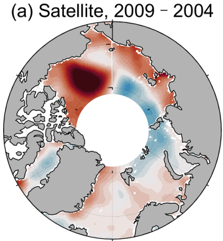
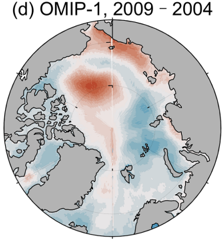
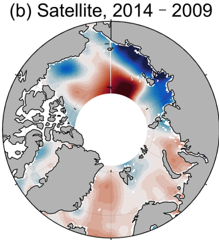
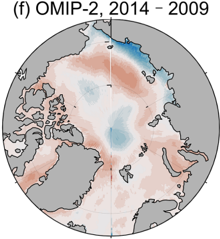
“In the period of 2009 to 2014, both the Beaufort High and Arctic Oscillation were close to neutral states on average, and a positive sea level pressure anomaly was centered over the outer shelf of the East Siberian Sea (Wang and Danilov, 2022).”
BackgroundMethodResultInfluentialSelf-citationWang, Q., Ilıcak, M., Gerdes, R., Drange, H., Aksenov, Y., Bailey, D. A., Bentsen, M., Biastoch, A., Bozec, A., Böning, C. W., et al. (2016) · Ocean Modelling · doi:10.1016/j.ocemod.2015.12.009 · Cited by 101
Self-citationA 4.5 km resolution Arctic Ocean simulation with the global multi-resolution model FESOM 1.4
Wang, Q., Wekerle, C., Danilov, S., Wang, X., & Jung, T. J. (2018) · Geoscientific model development · doi:10.5194/gmd-11-1229-2018 · Cited by 97 · cited 4×
“…et al., 2016; K hosravi et al., 2022; Heuzé et al., 2023), is likely the consequences of too much spurious diapycnal mixing due to low resolution and numerical mixing associated with the advection operator in low resolution models (Zhang and Steele, 2007; Holloway et al., 2007, Wang et al., 2018).”
BackgroundInfluentialSelf-citationThe poleward enhanced Arctic Ocean cooling machine in a warming climate
Shu, Q., Wang, Q., Song, Z., & Qiao, F. (2021) · Nature Communications · doi:10.1038/s41467-021-23321-7 · Cited by 97 · cited 3×
“The negative trends along the Atlantic Water pathway are mainly caused by less ocean surface heat release in these regions in a warming climate (Shu et al., 2021).”
BackgroundSelf-citationRecent oceanic changes in the Arctic in the context of long‐term observations
Polyakov, I. V., Bhatt, U. S., Walsh, J. E., Abrahamsen, E. P., Pnyushkov, A. V., & Wassmann, P. F. J. (2013) · Ecological Applications · doi:10.1890/11-0902.1 · Cited by 92 · cited 2×
“…that liquid freshwater stored in the Arctic Ocean has increased since the mid-1990s and stabilized in the 2010s with an unprecedented amount of freshwater accumulated in the Amerasian Basin (Rabe et al., 2014; Polyakov et al., 2013; Wang et al., 2019b; Wang and Danilov, 2022; Solomon et al., 2021).”
BackgroundFreshwater Export in the East Greenland Current Freshens the North Atlantic
de Steur, L., Peralta‐Ferriz, C., & Pavlova, O. (2018) · Geophysical Research Letters · doi:10.1029/2018gl080207 · Cited by 91
Arctic Ocean freshwater: How robust are model simulations?
Jahn, A., Aksenov, Y., de Cuevas, B. A., de Steur, L., Hakkinen, S. M. A., Hansen, E. G., Herbaut, C., Houssais, M., Kärcher, M., Kauker, F., et al. (2012) · Journal of Geophysical Research Atmospheres · doi:10.1029/2012jc007907 · Cited by 87 · cited 1×
“…wWe use 34.8 psu, the mean Arctic salinity (Aagaard and Carmack, 1989), as the reference salinity to calculate liquid freshwater column and freshwater transport, which was commonly used in previous studies (Jahn et al., 2012; Wang et al., 2016b; Serreze et al., 2006; Haine et al., 2015).”
MethodInfluentialWadley, M. R., & Bigg, G. R. (2002) · Quarterly Journal of the Royal Meteorological Society · doi:10.1256/qj.00.35 · Cited by 83 · cited 1×
“…et al., 2014; Cohen et al., 2020), and the storage and release of freshwater from the Arctic Ocean can influence the large scale ocean circulation by freshening the upper North Atlantic ocean (Jungclaus et al., 2005; Goosse et al., 1997; Wadley and Bigg, 2002; Shu et al., 2017; Zhang et al., 2021).”
BackgroundLabrador Sea freshening linked to Beaufort Gyre freshwater release
Zhang, J., Weijer, W., Steele, M., Cheng, W., Verma, T., & Veneziani, M. (2021) · Nature Communications · doi:10.1038/s41467-021-21470-3 · Cited by 83 · cited 3×
“…et al., 2014; Cohen et al., 2020), and the storage and release of freshwater from the Arctic Ocean can influence the large scale ocean circulation by freshening the upper North Atlantic ocean (Jungclaus et al., 2005; Goosse et al., 1997; Wadley and Bigg, 2002; Shu et al., 2017; Zhang et al., 2021).”
BackgroundDivergence in Climate Model Projections of Future Arctic Atlantification
Muilwijk, M., Nummelin, A., Heuzé, C., Polyakov, I. V., Zanowski, H., & Smedsrud, L. H. (2022) · Journal of Climate · doi:10.1175/jcli-d-22-0349.1 · Cited by 83
The Deep Arctic Ocean and Fram Strait in CMIP6 Models
Heuzé, C., Zanowski, H., Karam, S., & Muilwijk, M. (2023) · Journal of Climate · doi:10.1175/jcli-d-22-0194.1 · Cited by 82 · cited 15×
“The cCold biases ofin the Atlantic Water layer in the Arctic Basin isare also found in CMIP6 fully-coupled climate models ( K hosravi et al., 2022; Heuzé et al., 2023).”
BackgroundInfluentialThe Arctic Ocean halocline and its interannual variability from 1997 to 2008
Bourgain, P., & Gascard, J. (2011) · Deep Sea Research Part I Oceanographic Research Papers · doi:10.1016/j.dsr.2011.05.001 · Cited by 81 · cited 2×
“This depth characterizes the transition from halocline to thermocline (Bourgain and Gascard, 2011).”
BackgroundInfluentialOn improving the simulation of Atlantic Water circulation in the Arctic Ocean
Николаевна, Г. Е., & Алексеевич, П. Г. (2007) · Journal of Geophysical Research Atmospheres · doi:10.1029/2006jc003734 · Cited by 79
On the origins of water masses exported along both sides of Greenland: A Lagrangian model analysis
Lique, C., Tréguier, A., Blanke, B., & Grima, N. (2010) · Journal of Geophysical Research Atmospheres · doi:10.1029/2009jc005316 · Cited by 76 · cited 1×
“Fresh Pacific Water flows into the Arctic Ocean through the Bering Strait (Woodgate, 2018b; Woodgate and Peralta-Ferriz, 2021), and leaves the Arctic via the Fram Strait and Canadian Arctic Archipelago (Hu et al., 2019; Steele et al., 2004; Lique et al., 2010; Wang et al., 2021).”
BackgroundPeralta‐Ferriz, C., & Woodgate, R. A. (2017) · Geophysical Research Letters · doi:10.1002/2017gl075179 · Cited by 76 · cited 1×
“The sea surface height gradient between the eastern Bering Sea and western Chukchi Sea is one important factor controlling the variability of the Bering Strait throughflow (Danielson et al., 2014; Peralta ‐ Ferriz and Woodgate, 2017; Zhang et al., 2020).”
BackgroundHu, X., Myers, P. G., & Lu, Y. (2019) · Journal of Geophysical Research Oceans · doi:10.1029/2019jc015111 · Cited by 74 · cited 4×
“The reason may be that the passages in the Canadian Arctic Archipelago are closed in CAS-ESM2-0.”
BackgroundInfluentialProjected Freshening of the Arctic Ocean in the 21st Century
Shu, Q., Qiao, F., Song, Z., Zhao, J., & Li, X. (2018) · Journal of Geophysical Research Oceans · doi:10.1029/2018jc014036 · Cited by 73
Self-citationWang, Q., Wekerle, C., Danilov, S. D., Koldunov, N., Sidorenko, D., Sein, D., Rabe, B., & Jung, T. J. (2018) · Geophysical Research Letters · doi:10.1029/2018gl077901 · Cited by 72
Self-citationVåge, K., Pickart, R. S., Pavlov, V. K., Lin, P., Torres, D. J., Ingvaldsen, R. B., Sundfjord, A., & Proshutinsky, A. Y. (2016) · Journal of Geophysical Research Oceans · doi:10.1002/2016jc011715 · Cited by 70
Wang, Q., Wekerle, C., Danilov, S., Sidorenko, D., Koldunov, N., Sein, D., Rabe, B., & Jung, T. J. (2018) · Journal of Climate · doi:10.1175/jcli-d-18-0237.1 · Cited by 69
Self-citationArctic Ocean Freshwater in CMIP6 Ensembles: Declining Sea Ice, Increasing Ocean Storage and Export
Zanowski, H., Jahn, A., & Holland, M. M. (2021) · Journal of Geophysical Research Oceans · doi:10.1029/2020jc016930 · Cited by 69
The effects of the water flow through the Canadian Archipelago in a global ice‐ocean model
Goosse, H., Fichefet, T., & Campin, J. (1997) · Geophysical Research Letters · doi:10.1029/97gl01352 · Cited by 59 · cited 1×
“…et al., 2014; Cohen et al., 2020), and the storage and release of freshwater from the Arctic Ocean can influence the large scale ocean circulation by freshening the upper North Atlantic ocean (Jungclaus et al., 2005; Goosse et al., 1997; Wadley and Bigg, 2002; Shu et al., 2017; Zhang et al., 2021).”
BackgroundSea level variability in the Arctic Ocean from AOMIP models
Proshutinsky, A. Y., Ashik, I. M., Hakkinen, S. M. A., Hunke, E., Krishfield, R. A., Maltrud, M. E., Maslowski, W., & Zhang, J. (2007) · Journal of Geophysical Research Atmospheres · doi:10.1029/2006jc003916 · Cited by 58 · cited 1×
“…progressive thickening and deepening of the Atlantic Water layer) have been identified and some related solutions to some of the issues have been recommended (Holloway et al., 2007; Golubeva and Platov, 2007; Zhang and Steele, 2007; Proshutinsky et al., 2007; Aksenov et al., 2016; Hu et al., 2019).”
BackgroundWang, Q., & Danilov, S. (2022) · Frontiers in Marine Science · doi:10.3389/fmars.2022.863204 · Cited by 55
Self-citationWang, Q., Wang, X., Wekerle, C., Danilov, S. D., Jung, T. J., Koldunov, N., Lind, S., Sein, D., Shu, Q., & Sidorenko, D. (2019) · Geophysical Research Letters · doi:10.1029/2019gl083837 · Cited by 54 · cited 5×
“OMIP simulations indicate a negative trend in freshwater content in the Arctic Basin from the 1960s to the mid-1990s, and then a positive trend afterwards which is consistent with observations (Rabe et al., 2014; Wang et al., 2019b).”
BackgroundResultInfluentialSelf-citationThe Cyclonic Mode of Arctic Ocean Circulation
Morison, J. H., Kwok, R., Dickinson, S., Andersen, R., Peralta‐Ferriz, C., Morison, D., Rigor, I. G., Dewey, S. R., & Guthrie, J. D. (2021) · Journal of Physical Oceanography · doi:10.1175/jpo-d-20-0190.1 · Cited by 52 · cited 2×
“…interannual changes in sea surface height are good indicators of interannual changes in the upper Arctic Oocean circulation (Morison et al., 2021) (Morison et al., 2021), because surface geostrophic currents dominate the Arctic surface velocity on spatial scales larger than 10 km and timescales…”
BackgroundRecent upper Arctic Ocean warming expedited by summertime atmospheric processes
Li, Z., Ding, Q., Steele, M., & Schweiger, A. J. (2022) · Nature Communications · doi:10.1038/s41467-022-28047-8 · Cited by 52 · cited 2×
“Since the 1990s significant warming signals have been observed in the upper polar mixed layer and Atlantic Water layer (Polyakov et al., 2012, 2020a; Ingvaldsen et al., 2021; Li et al., 2022; Steele et al., 2008), together with a weakening of cold halocline layer and an increase of upward oceanic heat flux of Atlantic…”
BackgroundArctic Ocean Freshwater in CMIP6 Coupled Models
Wang, S., Wang, Q., Wang, M., Lohmann, G., & Qiao, F. (2022) · Earth s Future · doi:10.1029/2022ef002878 · Cited by 52
Self-citationMultinational effort studies differences among arctic ocean models
Proshutinsky, A. Y., Steele, M., Zhang, J., Holloway, G., Steiner, N. S., Hakkinen, S. M. A., Holland, D. M., Gerdes, R., Koeberle, C., Kärcher, M., et al. (2001) · Eos · doi:10.1029/01eo00365 · Cited by 50 · cited 2×
“0) climatology (Steele et al., 2001), altimetry measurements (Armitage et al., 2016), and other relevant observations from published literatures.”
BackgroundMethodAssessment of the Atlantic water layer in the Arctic Ocean in CMIP5 climate models
Shu, Q., Wang, Q., Su, J., Li, X., & Qiao, F. (2019) · Climate Dynamics · doi:10.1007/s00382-019-04870-6 · Cited by 49 · cited 1×
“The surface salinity biases in OMIP simulations are similar to that in CORE-II simulations (Ilicak et al., 2016), and are much smaller than those in CMIP5 and CMIP6 simulations (Shu et al., 2019; Khosravi et al., 2022).”
MethodSelf-citationFuture Arctic Climate Change in CMIP6 Strikingly Intensified by NEMO‐Family Climate Models
Pan, R., Shu, Q., Wang, Q., Wang, S., Song, Z., He, Y., & Qiao, F. (2023) · Geophysical Research Letters · doi:10.1029/2022gl102077 · Cited by 46
Self-citationDoglioni, F., Ricker, R., Rabe, B., Barth, A., Troupin, C., & Kanzow, T. (2023) · Earth system science data · doi:10.5194/essd-15-225-2023 · Cited by 33 · cited 1×
“…good indicators of interannual changes in the upper Arctic Oocean circulation (Morison et al., 2021) (Morison et al., 2021), because surface geostrophic currents dominate the Arctic surface velocity on spatial scales larger than 10 km and timescales longer than a few days (Doglioni et al., 2023).”
BackgroundWang, Q., Danilov, S., Sidorenko, D., & Wang, X. (2021) · Frontiers in Marine Science · doi:10.3389/fmars.2021.707593 · Cited by 31 · cited 2×
“Fresh Pacific Water flows into the Arctic Ocean through the Bering Strait (Woodgate, 2018b; Woodgate and Peralta-Ferriz, 2021), and leaves the Arctic via the Fram Strait and Canadian Arctic Archipelago (Hu et al., 2019; Steele et al., 2004; Lique et al., 2010; Wang et al., 2021).”
BackgroundSelf-citationForum for Arctic Modeling and Observational Synthesis (FAMOS): Past, current, and future activities
Proshutinsky, A. Y., Steele, M., & Timmermans, M. (2016) · Journal of Geophysical Research Oceans · doi:10.1002/2016jc011898 · Cited by 30 · cited 1×
“To validate and further improve model performances in the Arctic Ocean, the Arctic Ocean Model Intercomparison Project (AOMIP) and Forum for Arctic Modeling and Observational Synthesis (FAMOS) were initiated in 1999 and 2013 (Proshutinsky et al., 2001, 2016), respectively.”
MethodNguyen, A. T., Woodgate, R. A., & Heimbach, P. (2020) · Journal of Geophysical Research Oceans · doi:10.1029/2020jc016213 · Cited by 29
Na, L., Liu, J., Zhang, Z., Hongxia, C., & Song, M. (2011) · International Journal of Climatology · doi:10.1002/joc.2400 · Cited by 28
Atmospheric Wind Biases: A Challenge for Simulating the Arctic Ocean in Coupled Models?
Hinrichs, C., Wang, Q., Koldunov, N., Mu, L., Semmler, T., Sidorenko, D., & Jung, T. J. (2021) · Journal of Geophysical Research Oceans · doi:10.1029/2021jc017565 · Cited by 17
Self-citationMechanisms Driving the Interannual Variability of the Bering Strait Throughflow
Zhang, W., Wang, Q., Wang, X., & Danilov, S. (2020) · Journal of Geophysical Research Oceans · doi:10.1029/2019jc015308 · Cited by 16
Self-citationShu, Q., Qiao, F., Song, Z., & Xiao, B. (2017) · Acta Oceanologica Sinica · doi:10.1007/s13131-017-1009-z · Cited by 11 · cited 2×
“The similarPositive freshwater content biases are also reported in CMIP5 and CMIP6 fully-coupled models (Shu et al., 2018; Zanowski et al., 2021 ; Wang et al., 2022b ) .”
BackgroundSelf-citationWang, Q., Shu, Q., Danilov, S., & Sidorenko, D. (2022) · Environmental Research Letters · doi:10.1088/1748-9326/ac5562 · Cited by 11 · cited 5×
“The observed upward volume transport trend is also not reproduced in historical simulations of CMIP6 fully-coupled models (Zanowski et al., 2021, Wang et al., 2022b).”
BackgroundInfluentialSelf-citationArctic Ocean Simulations in the CMIP6 Ocean Model Intercomparison Project (OMIP)Preprint
Shu, Q., Wang, Q., Guo, C., et al. (2022) · Geoscientific Model Development Discussions · doi:10.5194/gmd-2022-260 · Cited by 5
Self-citation
Cited by
A Review of Arctic–Subarctic Ocean Linkages: Past Changes, Mechanisms, and Future Projections
Wang, Q., Shu, Q., Wang, S., Beszczyńska-Möller, A., Danilov, S., de Steur, L., Haine, T. W. N., Kärcher, M., Lee, C. M., Myers, P. G., et al. (2023) · Ocean-Land-Atmosphere Research · doi:10.34133/olar.0013 · Cited by 55
Self-citationOziel, L., Gürses, Ö., Torres‐Valdés, S., Hoppe, C. J. M., Rost, B., Karakuş, O., Danek, C., Koch, B. P., Nissen, C., Koldunov, N., et al. (2025) · Nature Climate Change · doi:10.1038/s41558-024-02233-6 · Cited by 53
Self-citationOcean stratification in a warming climate
Cheng, L., Li, G., Long, S.-M., Li, Y., von Schuckmann, K., Trenberth, K. E., Mann, M. E., Abraham, J., Du, Y., Cheng, X., et al. (2025) · Nature Reviews Earth & Environment · doi:10.1038/s43017-025-00715-5 · Cited by 74
Neale, P. J., Hylander, S., Banaszak, A. T., Häder, D.-P., Rose, K. C., Vione, D., Wängberg, S.-Å., Jansen, M. A. K., Busquets, R., Andersen, M. P. S., et al. (2025) · Photochemical & Photobiological Sciences · doi:10.1007/s43630-025-00687-x · Cited by 32
“May) between 1978 and 2018 [219].”
Self-citationWang, Q., Shu, Q., Bozec, A., Chassignet, E. P., Fogli, P. G., Fox‐Kemper, B., Hogg, A. M., Iovino, D., Kiss, A. E., Koldunov, N., et al. (2024) · Geoscientific model development · doi:10.5194/gmd-17-347-2024 · Cited by 40
Self-citation
Metadata
- Authors
- Shu, Q., Wang, Q., Guo, C., Song, Z., Wang, S., He, Y., & Qiao, F.
- Affiliations
- Ministry of Natural Resources (CN)
- Alfred-Wegener-Institut Helmholtz-Zentrum für Polar- und Meeresforschung (DE)
- Bjerknes Centre for Climate Research (NO)
- Corresponding author
- Shu, Qi
- Venue
- Geoscientific Model Development
- Publisher
- Copernicus GmbH
- Published
- 2023-05-10
- Volume
- 16
- Issue
- 9
- Pages
- 2539-2563
- ISSN
- 1991-959X (ISSN-L)
- 1991-9603
- OpenAlex
- W4387438024
- Cited by
- 20
- References
- 112
- Citations by year
- 2026: 1 · 2025: 9 · 2024: 5 · 2023: 5
- FWCI
- 2.20
- Type
- journal article
- Language
- en
- Open access
- gold
- doi.org
- Licence
- Locations
- Geoscientific model development (publishedVersion, cc-by)
- Geoscientific Model Development Discussions (acceptedVersion, cc-by)
- Helmholtz-Zentrum für Polar-und Meeresforschung (Alfred-Wegener-Institut) (submittedVersion)
- DOAJ (DOAJ: Directory of Open Access Journals) (submittedVersion, cc-by-sa)
- NORA - Norwegian Open Research Archives (submittedVersion, cc-by)
- Funders
- National Natural Science Foundation of China (41941012, 42276253)
- Natural Science Foundation of Shandong Province (ZR2022JQ17)
- Helmholtz Association (REKLIM (Regional Climate Change and Human))
- Norges Forskningsråd (328941, 295046)
- Topics
- Physical Sciences › Earth and Planetary Sciences › Atmospheric Science › Arctic and Antarctic ice dynamics
- Physical Sciences › Earth and Planetary Sciences › Oceanography › Oceanographic and Atmospheric Processes
- Physical Sciences › Environmental Science › Global and Planetary Change › Climate variability and models
- Keywords
- Arctic Ocean, CMIP6, ocean-sea ice model, model evaluation, halocline, sea surface height, ocean stratification, Arctic gateways, Bering Strait, Barents Sea Opening, NEMO, volume transport, heat transport, freshwater transport
About these checks
Registry, retraction, Cites and statistics results are computed, not judged, with one exception: a printed reference that no index lists is read once by a model before it counts as a citation error. Claims are extracted by a model and kept only when their quote appears verbatim in the text; each cited source is then checked, with a model’s help, for whether it says what the claim relies on. Those verdicts can be wrong — read the claim’s quote and the cited source before relying on one.
Statistics and arithmetic are recomputed, not judged.
Confidence bands are shown only for fields calibrated on our annotated test set. None is calibrated yet, so no band is shown.
What counts as a claim ›How we measure confidence ›How we check this ›
Are you an author, or do you see a problem with this page? Request a review
Data sources
Bibliographic data: Semantic Scholar, OpenAlex, Crossref.
Contains information from the Semantic Scholar Academic Graph Datasets, made available under the ODC Attribution License (ODC-BY 1.0).
Semantic Scholar’s data is described in: Kinney, R., et al. (2023). The Semantic Scholar Open Data Platform. arXiv:2301.10140.
