

Reading on the Computer Screen: Does Font Type has Effects on Web Text Readability?
Open accessThe DOI matches its Crossref record; 36 of the 49 references it cites were found in a registry or an index; none of the 26 sources its claims cite is checked for support yet.
Abstract
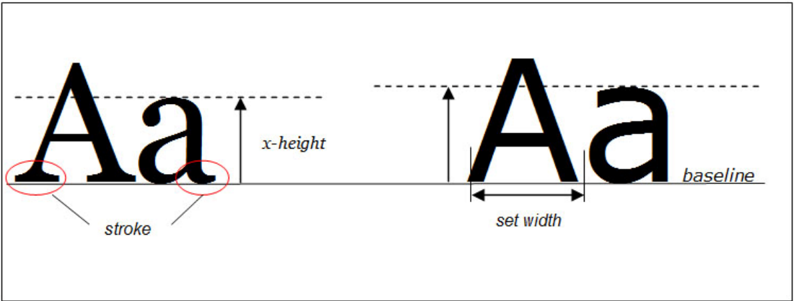
Reading on the World Wide Web has become a daily habit nowadays. This can be seen from the perspective of changes on readers’ tendency to be more interested in materials from the internet, than the printed media. Taking these developments into account, it is important for web-based instructional designers to choose the appropriate font, especially for long blocks of text, in order to enhance the level of students’ readability. Accordingly, this study aims to evaluate the effects of serif and san serif font in the category of screen fonts and print fonts, in terms of Malay text readability on websites. For this purpose, four fonts were selected, namely Georgia (serif) and Verdana (san serif) for the first respondents and Times New Roman (serif) and Arial (san serif) for the second respondents. Georgia and Verdana were designed for computer screens display. Meanwhile, Times New Roman and Arial were originally designed for print media. Readability test on a computer screen was conducted on 48 undergraduates. Overall, the results showed that there was no significant difference between the redability of serif and san serif font of both screen display category and print display category. Accordingly, the research findings and the literature overview, suggest that Verdana and followed by Georgia as the better choice in displaying long text on websites. Likewise, as anticipated, Times New Roman and Arial fonts provide good readability for print media, which reinfoces their status as the printing font category. However, with the current computer screen capability, it can still be an alternative option for instructional web developers.
Overview
CoChat Summary
TL;DR
This study tested whether serif versus san serif font type affects Malay web text readability on computer screens among 48 ICT undergraduates. It found no significant readability differences between Georgia and Verdana or between Times New Roman and Arial.
Key findings
- For screen-display fonts, Georgia (serif) had a mean readability score of 73.12 (SD = 8.57) and Verdana (san serif) had 72.92 (SD = 6.74); the difference was non-significant, t(46) = 0.09, p > 0.05.
- For print-display fonts, Times New Roman (serif) had a mean score of 66.25 (SD = 12.96) and Arial (san serif) had 65.62 (SD = 9.93); the difference was non-significant, t(46) = 0.19, p > 0.05.
- Overall, there was no significant difference in text readability on the computer screen between serif and san serif fonts in either the screen display category or the print display category.
- The authors suggest Verdana as the best choice for instructional web developers, followed by Georgia, with Arial and Times New Roman as alternative options.
Methods
- Participants were 48 undergraduates majoring in Information and Communication Technology at Sultan Idris Education University, Malaysia, randomly assigned into two groups: one tested Georgia and Verdana, the other tested Times New Roman and Arial.
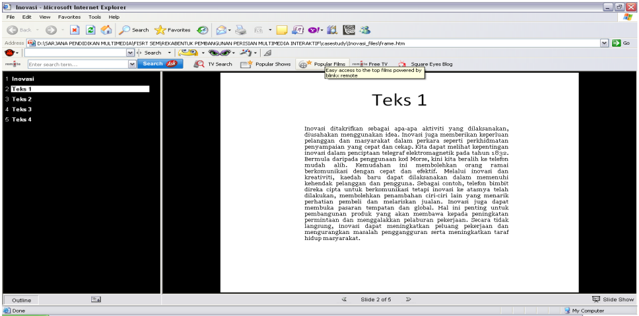
- Two 140-word Malay reading passages at the same level of difficulty were validated by a Malay language specialist and displayed on Internet Explorer on a 21" LCD flat screen monitor at 1280 x 1024 pixels, using 12pt black text on a white background.
- Reading performance was scored with a rubric combining reading speed and accuracy; independent sample t-tests at a 0.05 significance level were used, after Levene’s test showed equal variances were met.
Limitations
- The paper states that a definite conclusion is not applicable because the study involved two different groups that might have been influenced by factors affecting reading performance, and it recommends further study using the same respondent group.
- The paper states that future research should include the impacts of screen resolution on text readability and examine various current devices such as laptop, netbook, palmtop, tablet PC, and Kindle.
- Evident from the text: the sample was limited to 48 ICT undergraduates reading only Malay passages and only four fonts; no counterbalancing of font order is described, so order or practice effects may be possible.
Model-written summary. Check it against the paper before relying on it.
Integrity signals
Registry
Cites
Statistics
Figures
Verification
Claims the paper makes
0 Valid · 1 Not valid · 17 Not checked · 21 Own results and interpretations
A result the paper reports from its own data — it cites no other source for it, so there is none to check. The quote shows it is in the paper.
In the paper
“Overall, the results showed that there was no significant difference between the redability of serif and san serif font of both screen display category and print display category.”
§ Reading on the Computer Screen: Does Font Type has Effects on Web Text Readability? > Abstract
plain- Asserted: passes — The authors put it forward as true.
- Checkable: passes — It can be checked against evidence.
- Load-bearing: passes — The paper’s conclusions depend on it.
- Based: passes — The paper gives a reason why it holds.
- Rests on an assumption not shown here.
A result the paper reports from its own data — it cites no other source for it, so there is none to check. The quote shows it is in the paper.
In the paper
“the findings of this study indicate that the mean scores of Georgia and Verdana (i.e. computer screen display fonts) were slightly higher than Times New Roman and Arial (i.e.print media fonts).”
§ Reading on the Computer Screen: Does Font Type has Effects on Web Text Readability? > 6. Conclusion and Recommendations
hedgedstates an association- Asserted: passes — The authors put it forward as true.
- Checkable: passes — It can be checked against evidence.
- Load-bearing: passes — The paper’s conclusions depend on it.
- Based: passes — The paper gives a reason why it holds.
A result the paper reports from its own data — it cites no other source for it, so there is none to check. The quote shows it is in the paper.
In the paper
“The participants attained mean scores of 66.25 (SD = 12.96) and 65.62 (SD = 9.93) in reading the text in Times New Roman and Arial fonts, respectively.”
§ Reading on the Computer Screen: Does Font Type has Effects on Web Text Readability? > 4. Results
plain- Asserted: passes — The authors put it forward as true.
- Checkable: passes — It can be checked against evidence.
- Load-bearing: passes — The paper’s conclusions depend on it.
- Based: passes — The paper gives a reason why it holds.
A result the paper reports from its own data — it cites no other source for it, so there is none to check. The quote shows it is in the paper.
In the paper
“For the first group that used computer screen to read, the participants attained mean scores of 73.1 (SD = 8.57) and 72.92 (SD = 6.74) in reading the text in Georgia and Verdana fonts, respectively.”
§ Reading on the Computer Screen: Does Font Type has Effects on Web Text Readability? > 4. Results
plain- Asserted: passes — The authors put it forward as true.
- Checkable: passes — It can be checked against evidence.
- Load-bearing: passes — The paper’s conclusions depend on it.
- Based: passes — The paper gives a reason why it holds.
10 more claims
Create a free account to see all 39 claims and every source verdict.
- It may state two separate claims as one. 11
- Probably not a substantial claim. 19
Statistics recomputed
Every reported test result, recomputed from its test statistic and degrees of freedom. A result shows as not adding up only once an independent check has confirmed it.
- Consistentt(46) = 0.09reported p > .05 · recomputed p = .929
“t (46) = 0.09, p > .05”
- Consistentt(46) = 0.19reported p > .05 · recomputed p = .850
“t (46) = 0.19, p > .05”
Self-check
Percentages, sums and reported differences re-computed from the paper’s own numbers.
Each contradiction between two passages listed here was confirmed by an independent check.
Rated minor: it would not touch a result — a value no result rests on, a p-value that stays on the same side of the significance level, or a conflict that is clerical, resolved elsewhere in the paper, or outside its own findings.
In the paper
§ Reading on the Computer Screen: Does Font Type has Effects on Web Text Readability? > 6. Conclusion and Recommendations
“the former font (which is meant for the printing) and the latter font (which is meant for the computer screen) provide similar readability on website text.”
§ Reading on the Computer Screen: Does Font Type has Effects on Web Text Readability? > 3.3 Media Design
“Georgia (serif) and Verdana (san serif) were developed specifically for the purpose of computer screens, whilst Times New Roman (Serif) and Arial (san serif) were originally developed for printed media”
Rated minor: it would not touch a result — a value no result rests on, a p-value that stays on the same side of the significance level, or a conflict that is clerical, resolved elsewhere in the paper, or outside its own findings.
In the paper
§ Reading on the Computer Screen: Does Font Type has Effects on Web Text Readability? > 5. Discussion
“The specific displaying roles of san serif (for the printed media) and serif (for the computer screen) fonts is now being questioned”
§ Reading on the Computer Screen: Does Font Type has Effects on Web Text Readability? > 2. Background of the Study
“It is said that serif fonts are suitable for printed media and san serif fonts are suitable for computer screens because they are much easier and faster to read (Vaughan, 2008;Peck, 2003).”
Citations
Cites
Designing scoring rubrics for your classroom
Mertler, C. A. (2020) · ScholarWorks@UMassAmherst (University of Massachusetts Amherst) · doi:10.7275/gcy8-0w24 · Cited by 436 · cited 2×
“Table 1 shows the seven steps used in the development of the rubric based on Mertler (2001) recommendation.”
MethodVaughan, T. (1993) · International Linear Collider · Cited by 349
Reading text from computer screens
Mills, C. B., & Weldon, L. J. (1987) · ACM Computing Surveys · doi:10.1145/45075.46162 · Cited by 253 · cited 2×
“Generally, readability refers to the speed and comfort of reading and the understanding of its meaning (Woods, Davis & Scharff, 2005; Mills & Weldon, 1987).”
Background(2001) · Ktisis at Cyprus University of Technology (Cyprus University of Technology) · Cited by 246
Bernard, M. L., Chaparro, B. S., Mills, M. M., & Halcomb, C. G. (2003) · International Journal of Human-Computer Studies · doi:10.1016/s1071-5819(03)00121-6 · Cited by 244
The effects of font type and size on the legibility and reading time of online text by older adults
Bernard, M., Liao, C. H., & Mills, M. (2001) · CHI '01 Extended Abstracts on Human Factors in Computing Systems · doi:10.1145/634067.634173 · Cited by 168
Text Legibility and the Letter Superiority Effect
Sheedy, J. E., Subbaram, M. V., Zimmerman, A. B., & Hayes, J. R. (2005) · Human Factors The Journal of the Human Factors and Ergonomics Society · doi:10.1518/001872005775570998 · Cited by 161
Arditi, A., & Cho, J. (2005) · Vision Research · doi:10.1016/j.visres.2005.06.013 · Cited by 159 · cited 2×
“In conclusion, the appearance of small line in serif is said to be an influencing characteristic that affects the readability of a font (Arditi & Cho, 2005; Conover, 2003).”
BackgroundLanda, R. (1996) · Medical Entomology and Zoology · Cited by 124
A study of fonts designed for screen display
Boyarski, D., Neuwirth, C., Forlizzi, J., & Regli, S. H. (1998) · Proceedings of the SIGCHI conference on Human factors in computing systems - CHI '98 · doi:10.1145/274644.274658 · Cited by 120 · cited 1×
“Some studies show no differences between the fonts (Boyarski et al., 1998), while others suggest that san serif fonts are better for computer screens, in terms of readability (Josephson, 2008; Wilson, 2001).”
Background
Research works printed but not linked: 6
- [1]1. Ahmad Zamzuri, M. A. (2008). Effective instructional courseware design to Improve students' cognitive skills: A practical guide for educators as multimedia author. 2 nd International Malaysian Education Technology Convention Proceedings, Malaysia, 245-252.
- [19]19. Erdogan, Y., & Bayram, S. (2007). The effects of gender and visual disability factors on a legibility of web pages. Journal of Literacy and Technology, 8(1), 1-20.
- [23]23. Giese, X., & Holmes, A. (2002). Cisco networking academy's program: Fundamentals of web design companion guide. Indianapolis: Cisco Press.
- [49]49. Weisenmiller, E. M. (1999). A study of the readability of on-screen text. Unpublished doctoral dissertation, Virginia Polytechnic Institute & State University.
- [52]52. Woods, R. J., Davis, K., & Scharff, L. F. V. (2005). Effects of typeface and font size on legibility for children. American Journal of Psychological Research, 1(1), 86-102.
- [54]54. Yoshida, K. B. (2000). Avoiding typeface error. Society for Technical Communication Proceedings. Retrived May 25, 2010, from http://www.stc.org/confproceed/2000/PDFs/00006.pdf
Cited by
Reading on Paper and Digitally: What the Past Decades of Empirical Research Reveal
Singer, L. M., & Alexander, P. A. (2017) · Review of Educational Research · doi:10.3102/0034654317722961 · Cited by 324
“There was one article whose authors (Ali, Wahid, Samsudin, & Idris, 2013) explicitly defined reading componentially by delineating the elements, skills, or abilities regarded as core to reading.”
BackgroundComparison of reading performance on screen and on paper: A meta-analysis
Kong, Y., Seo, Y. S., & Zhai, L. (2018) · Computers & Education · doi:10.1016/j.compedu.2018.05.005 · Cited by 306
Pengembangan E-modul Interaktif Berbasis Proyek Mata Pelajaran Simulasi Digital
Winatha, K. R. (2018) · Jurnal Pendidikan Teknologi dan Kejuruan · doi:10.23887/jptk-undiksha.v15i2.14021 · Cited by 122
“Font jenis san serif dipandang lebih baik digunakan apabila teks tersebut ditampilan di layar komputer (Ali, et al , 2013”
User Experience of Reading in Virtual Reality — Finding Values for Text Distance, Size and Contrast
Kojić, T., Ali, D., Greinacher, R., Möller, S., & voigt-Antons, J.-N. (2020) · International Workshop on Quality of Multimedia Experience · doi:10.1109/qomex48832.2020.9123091 · Cited by 51
“Readability as a term is used within different domains so that it can be referred to as the accuracy of reading [5]; as the ability to understand the text with taking into account the speed of reading [6]; or to the visual representation of the characters themselves [7].”
BackgroundEmotype: Expressing emotions by changing typeface in mobile messenger texting
Choi, S., & Aizawa, K. (2018) · Multimedia Tools and Applications · doi:10.1007/s11042-018-6753-3 · Cited by 46
Effects of font size and font style of Traditional Chinese characters on readability on smartphones
Huang, S.-M. (2018) · International Journal of Industrial Ergonomics · doi:10.1016/j.ergon.2018.10.002 · Cited by 39
What makes the difference? The impact of item properties on mode effects in reading assessments
Bürger, S., Kroehne, U., Köhler, C., & Goldhammer, F. (2019) · Studies In Educational Evaluation · doi:10.1016/j.stueduc.2019.04.005 · Cited by 28
The Relationship Between Readability and Text Design in Educational Websites1
Keskinkılıç, F. (2023) · Kastamonu Eğitim Dergisi · doi:10.24106/kefdergi-2023-0070 · Cited by 20
“Ali et al. (2013) report the tendency of readers to prefer online materials rather than in print media, and web designers should take this into account.”
Assessment of Web Content Accessibility Levels in Spanish Official Online Education Environments
Roig-Vila, R., Ferrández, S., & Ferri-Miralles, I. (2014) · International Education Studies · doi:10.5539/ies.v7n6p31 · Cited by 19
“This tendency to work with online environments rather than printed materials is certainly changing (Ali, Wahid, Samsudin & Idris, 2013).”
BackgroundPersonalized Font Recommendations: Combining ML and Typographic Guidelines to Optimize Readability
Cai, T., Wallace, S., Rezvanian, T., Dobres, J., Kerr, B., Berlow, S. M., Huang, J. J. S., Sawyer, B. D., & Bylinskii, Z. (2022) · Designing Interactive Systems Conference · doi:10.1145/3532106.3533457 · Cited by 37
Medved, T., Podlešek, A., & Možina, K. (2023) · Frontiers in Psychology · doi:10.3389/fpsyg.2023.1107839 · Cited by 26
Assessing User Experience of Text Readability with Eye Tracking in Virtual Reality
Kojić, T., Vergari, M., Möller, S., & Voigt‐Antons, J. (2022) · Lecture notes in computer science · doi:10.1007/978-3-031-05939-1_13 · Cited by 16
The Legibility of Serif and Sans Serif Typefaces: Reading from Paper and Reading from Screens
Richardson, J. T. E. (2022) · Springer briefs in education · doi:10.1007/978-3-030-90984-0 · Cited by 29
Hoffman, D. M., McKenzie, C., Koprowski, B., Iqbal, A., & Balram, N. (2019) · Journal of the Society for Information Display · doi:10.1002/jsid.765 · Cited by 10
Shaping digital luxury perception: The impact of curvature in website design
Chen, J., & Lehto, X. Y. (2024) · Tourism Management · doi:10.1016/j.tourman.2024.105059 · Cited by 8
Sultana, S., & Alam, M. A. (2024) · Graphics Interface · doi:10.1145/3670947.3670984 · Cited by 9
Factors Influencing Digital Reading Behaviour of Students
Mohamed Haneefa, K., & Divya, P. (2020) · DESIDOC Journal of Library & Information Technology · doi:10.14429/djlit.40.05.15672 · Cited by 7
“In another study, Schmar-Dobler 25 observes that the Internet content has blinking graphics, vivid colour, and lots of eye-catching phrases that can distract from the reading. are spaces, font size and font type 30 .”
BackgroundText readability and legibility on iPad with comparison to paper and computer screen
Čerepinko, D., Periša, M., & Keček, D. (2017) · Tehnicki vjesnik - Technical Gazette · doi:10.17559/tv-20160225140202 · Cited by 13
Development of Elderly Reminder Mobile Application Using Mental Model
Baharum, A., Ismail, R., Saad, N., et al. (2018) · doi:10.1145/3293663.3293665 · Cited by 7
Medved, T., Podlešek, A., & Možina, K. (2024) · Applied Sciences · doi:10.3390/app15010326 · Cited by 13
COR Themes for Readability from Iterative Feedback
Cai, T., Niklaus, A. G., Kerr, B., Kraley, M., & Bylinskii, Z. (2024) · CHI Conference on Human Factors in Computing Systems · doi:10.1145/3613904.3642108 · Cited by 9
Nova, N., Degeng, I. N., & Sulton, S. (2021) · Edcomtech Jurnal Kajian Teknologi Pendidikan · doi:10.17977/um039v6i12021p069 · Cited by 6
Ukonu, M. O., Ohaja, E. U., Okeke, S. V., & Ruth, O. O. (2021) · Cogent Education · doi:10.1080/2331186x.2021.1968779 · Cited by 9
Susanti, E., Erlinda, N., & Lelfita, L. (2022) · Buana Pendidikan Jurnal Fakultas Keguruan dan Ilmu Pendidikan · doi:10.36456/bp.vol18.no1.a5243 · Cited by 7
EFFECTS OF VIDEO DISPLAY TERMINAL RESOLUTIONS TO THE LEGIBILITY OF TEXT ON A WEB PAGE
Affendi, H. A., & Majid, M. B. A. (2015) · International Journal of Computer Systems & Software Engineering · doi:10.15282/ijsecs.1.2015.11.00011 · Cited by 7
Readability of Non-Text Images on the World Wide Web (WWW)
Elahi, E., Iglesias, A. M., & Morato, J. (2022) · IEEE Access · doi:10.1109/access.2022.3218632 · Cited by 5
Effects of Video Display Terminal Resolutions to the Legibility of Text on a Web Page
Hashim, A. A., & Majid, M. B. A. (2015) · UMP Institutional Repository (Universiti Malaysia Pahang) · doi:10.15282/ijsecs.1.2015.11.0011 · Cited by 5
Multimedia Glosses for Enhancing EFL Students’ Vocabulary Acquisition and Retention
Ahmad, S. Z., & Ahmad, S. Z. (2019) · English Language Teaching · doi:10.5539/elt.v12n12p46 · Cited by 5
Reading Speed Performance based on Interface Design Elements for Web Interfaces
Bakar, Z. B. A., & Zhiang, T. (2021) · Annals of Emerging Technologies in Computing · doi:10.33166/aetic.2021.05.018 · Cited by 5
Evaluating a Photogrammetry-Based Video for Undergraduate Anatomy Education
Gianotto, I., Coutts, A., Pérez-Pachón, L., & Gröning, F. (2023) · Advances in experimental medicine and biology · doi:10.1007/978-3-031-30379-1_4 · Cited by 8
Улучшение запоминания текста посредством изменения шрифтов: исследование Sans Forgetica
Березнер, Т., & Горбунова, Е. (2021) · Психологические исследования · doi:10.54359/ps.v14i78.155 · Cited by 5
Readability of Graphical Contents on World Wide Web (WWW)
Elahi, E., Iglesias, A. M., & Morato, J. (2022) · Iberian Conference on Information Systems and Technologies (CISTI) · doi:10.23919/cisti54924.2022.9820011 · Cited by 5
The Impact of Serif vs Sans-Serif Typefaces on e-Commerce Websites
Vecino, S., Rodríguez, M. G., Fernández-Lanvin, D., & Suárez, J. D. A. (2024) · International Journal of Human-Computer Interaction · doi:10.1080/10447318.2024.2338667 · Cited by 8
“These conclusions coincide with the findings of Mohamad Ali et al. (2013).”
InfluentialERP Study of Mine Management System Warning Interface under Fatigue
Bai, Y., Shao, J., Zhang, Y., Chen, L., Zhao, X., Tian, F., & Xue, C. (2022) · International Journal of Environmental Research and Public Health · doi:10.3390/ijerph191912616 · Cited by 4
Reading Comprehension on Smartphones, A Comparison with Computers
Cotton, A., Benedetti, P., & Abusamra, V. (2023) · Cuadernos de lingüística hispánica · doi:10.19053/0121053x.n41.2023.16032 · Cited by 10
Fitriani, R., & Amalia, A. V. (2023) · Journal of Environmental and Science Education · doi:10.15294/jese.v3i1.59915 · Cited by 3
Wu, Y., Gilbert, M., & Churchill, E. F. (2019) · Lecture notes in computer science · doi:10.1007/978-3-030-29390-1_12 · Cited by 3
User Interface Design Analysis of Tokopedia Marketplace Website
Gunawan, E. S., Yonatia, J., & Santoso, L. A. (2023) · Jurnal Desain · doi:10.30998/jd.v10i3.15060 · Cited by 5
Typeface network and the principle of font pairing
Choi, J., & Hyun, K. H. (2024) · Scientific Reports · doi:10.1038/s41598-024-81601-w · Cited by 5
Öğrencilerin ders sunumlarında tercih ettikleri yazı tipleri
Yücel, K. (2022) · Izmir Democracy University Health Sciences Journal · doi:10.52538/iduhes.1065510 · Cited by 3
Akademi Pengajian Bahasa, U. T. M. (., Rashid, M. H. A., Johar, E. M., & Akademi Pengajian Bahasa, U. T. M. (. (2022) · Journal of Social Science and Humanities · doi:10.26666/rmp.jssh.2022.4.2 · Cited by 5
Effects of Colour Combination on Short-Words Processing Speed
Pušnik, N., Podlešek, A., Nedeljković, U., & Možina, K. (2019) · Tehnicki vjesnik - Technical Gazette · doi:10.17559/tv-20180109110718 · Cited by 3
Variable Fonts From Pioneer Perspectives
Bredikhina, L. (2020) · Advances in business information systems and analytics book series · doi:10.4018/978-1-7998-3756-5.ch004 · Cited by 3
THE IMPORTANCE AND USE OF TYPOGRAPHY IN PRINT AND DIGITAL DESIGN
Büyükpehlivan, G. A. (2024) · Motif Akademi Halk Bilimi Dergisi · doi:10.12981/mahder.1526320 · Cited by 10
Gentile, D., Musolino, F., Dastan, M., et al. (2025) · J — Multidisciplinary Scientific Journal · doi:10.3390/j8030032 · Cited by 1
Hsiao, C.-Y., Liu, D. C., Chang, C.-C., & Liu, M. (2025) · Applied Ergonomics · doi:10.1016/j.apergo.2025.104683 · Cited by 2
Usability of Bionic Reading on Different Mediums: Eye-Tracking Study
Možina, K., Kovačević, D., & Blaznik, B. (2025) · SAGE Open · doi:10.1177/21582440251376158 · Cited by 1
“The shape of letters and typographic design with type size strongly influence legibility (Ali et al., 2013; Beier et al., 2017; Choi et al., 2018; Franken et al., 2015; Su et al., 2018).”
Hassan, A., & Ali, A. Z. M. (2015) · The Asia Pacific Journal of Curriculum & Teaching · doi:10.13140/rg.2.1.3854.2249 · Cited by 2
Self-citationHassan, A. A., & Ali, A. Z. M. (2015) · International Journal of Information and Education Technology · doi:10.7763/ijiet.2016.v6.782 · Cited by 1
Self-citationStudy on font preferences of native and non-native speakers in a virtual reality environment
Zhang, H., Sakamoto, D., & Ono, T. (2025) · Frontiers in Virtual Reality · doi:10.3389/frvir.2025.1590871 · Cited by 1
The Effect of Font Selection on Student Test Anxiety.
Murphy, P. V. (2014) · ProQuest LLC eBooks · Cited by 2
Comparability of Computer-Based and Paper-Based Science Assessments.
Herrmann‐Abell, C. F., Hardcastle, J. M., & DeBoer, G. E. (2018) · Grantee Submission · Cited by 1
Dongo, E. Y. (2021) · Global Media Journal México · doi:10.29105/gmjmx17.33-5 · Cited by 1
“…que afirman que el uso de tipografías Georgia o Times New Roman [serif] y Verdana o Arial [sans serif] permiten legibilidad en medios impresos (Mohamad Ali et al., 2013), la publicidad popular utiliza estas mismas formas tipográficas para permitir la legibilidad Yalán Dongo Global Media…”
BackgroundThe impact of rhetorical devices in text on public displays
Hallema, G., Veenstra, M., & Bank, S. (2016) · ACM International Symposium on Pervasive Displays (PerDis) · doi:10.1145/2914920.2915019
Development and impact of english learning courseware eze to diploma students at KPM Bandar Penawar
Nordin, N. M., & Samah, N. A. (2015)
Karani, E. (2018) · Indonesian Communication Forum of Teacher Training and Education Faculty Leaders International Conference on Education (ICE) · doi:10.2991/ice-17.2018.46
Kamandhari, H. H. (2018) · VTechWorks (Virginia Tech)
YAITS: The Design and Development of a Personalized E-Book Platform for EFL Learners
Kaban, A. L. (2021) · Advances in early childhood and K-12 education · doi:10.4018/978-1-7998-6487-5.ch009 · Cited by 1
แนวทางการออกแบบโมบายแอพลเคชนในการเรยนรเชงรกสำหรบผพการทางการเหน
เบญจวรรณ, ป., & กรณีกิจ, ป. (2018) · doi:10.58837/chula.the.2018.587
Does the reading platform matter? An eye-tracking study
Mendhakar, A., Sierak, K., Chana, K., & Leder, H. (2025) · AILA Review · doi:10.1075/aila.24033.men · Cited by 1
Caesaron, D., Adyatama, A. R., Mufidah, I., Fitriani, E., Daliana, N., & Utama, N. I. (2025) · Engineering Technology & Applied Science Research · doi:10.48084/etasr.12587 · Cited by 2
Zhang, Y., Liu, J., Chen, Q., Chen, C., Luo, S., Ji, L., Li, F., & Xie, L. (2025) · Digital Health · doi:10.1177/20552076251393294
Feasibility Test of Case Study Oriented Textbooks in Educational Digital Psychology Courses
Natalia, D., Aswan, D. M., & Aina, M. (2025) · Jurnal Penelitian Pendidikan IPA · doi:10.29303/jppipa.v11i2.9857 · Cited by 1
“Like the assessment of material experts, in the assessment of media experts there are also suggestions for improvement, especially in the readability of the writing, font size and sentence structure (Ali et al., 2013).”
A design model to personalize learning using mobile technology and devices
Youssef, É. (2018) · theses.fr (ABES) · doi:10.70675/a44c8acbz610bz4fd6z8fb0z5fb56c9bd428
The Influence of Latin Typography on Arabic-Speaking Female Consumers’ Perception of Brand Identity
Alnobani, A. K., Ayed, T. L., Nasseraldin, A., et al. (2026) · Proceedings in Technology Transfer · doi:10.1007/978-981-95-7607-4_48
Millhagen, O., Schmidt, F. T. C., Metz, M., Feser, M. S., & Retelsdorf, J. (2026) · Behaviour and Information Technology · doi:10.1080/0144929x.2026.2678378 · Cited by 1
Ansori, N., Hanifah, D. N., & Lumintu, I. (2026) · Engineering headway · doi:10.4028/p-4abm49
“For the proposed SIAKAD UTM website, the recommended font type is Georgia, based on research in [26], which found that Georgia and Verdana are easier to read on computer screens.”
Effects of Pictogram and Typeface Complexity on Visual Attention: Eye-Tracking Study
Možina, K., Kovačević, D., Buljat, P., Šarčević, I., Blaznik, B., Medved, T., & Brozović, M. (2026) · Journal of Eye Movement Research · doi:10.3390/jemr19040073
“Letterform shape, overall typographic design, type size, and colour choice all affect text legibility and the clarity of information presentation [27–32].”
Metadata
- Authors
- Ali, A. Z. M., Wahid, R., Samsudin, K., & Idris, M. Z.
- Affiliations
- Sultan Idris Education University (MY)
- Venue
- International Education Studies
- Published
- 2013-01-23
- Volume
- 6
- Issue
- 3
- ISSN
- 1913-9020 (ISSN-L)
- 1913-9039
- OpenAlex
- W2096887910
- Cited by
- 69
- References
- 49
- Citations by year
- 2026: 4 · 2025: 9 · 2024: 7 · 2023: 6 · 2022: 9 · 2021: 6 · 2020: 3 · 2019: 6 · 2018: 10 · 2017: 2 · 2016: 1 · 2015: 4 · 2014: 2
- FWCI
- 3.15
- Type
- journal article
- Language
- en
- Open access
- hybrid
- doi.org
- Licence
- cc-by
- Locations
- International Education Studies (publishedVersion, cc-by)
- Greater South Information System
- Topics
- Social Sciences › Psychology › Experimental and Cognitive Psychology › Visual and Cognitive Learning Processes
- Social Sciences › Linguistics and Language › Text Readability and Simplification
- Physical Sciences › Computer Science › Human-Computer Interaction › Usability and User Interface Design
- Keywords
- font type, serif fonts, sans-serif fonts, Georgia, Times New Roman, Arial
About these checks
Registry, retraction, Cites and statistics results are computed, not judged, with one exception: a printed reference that no index lists is read once by a model before it counts as a citation error. Claims are extracted by a model and kept only when their quote appears verbatim in the text; each cited source is then checked, with a model’s help, for whether it says what the claim relies on. Those verdicts can be wrong — read the claim’s quote and the cited source before relying on one.
A language model drew the claims from the paper on 2026-10-09, under version 3 of the claim definition (model deepseek-v4.1-flash, prompt extract-v3).
A second model labelled each claim on 2026-10-09 (model jev-1.13-20260917, definition revision gold-guideline-v0.2).
Statistics and arithmetic are recomputed, not judged.
Confidence bands are shown only for fields calibrated on our annotated test set. None is calibrated yet, so no band is shown.
What counts as a claim ›How we measure confidence ›How we check this ›
Are you an author, or do you see a problem with this page? Request a review
Data sources
Bibliographic data: Semantic Scholar, OpenAlex, Crossref.
Contains information from the Semantic Scholar Academic Graph Datasets, made available under the ODC Attribution License (ODC-BY 1.0).
Semantic Scholar’s data is described in: Kinney, R., et al. (2023). The Semantic Scholar Open Data Platform. arXiv:2301.10140.
