

The importance of post-acquisition integration for value creation and success of mergers and acquisitions
Open accessThe DOI matches its Crossref record; 23 of the 23 references it cites were found in a registry or an index; none of the 58 sources its claims cite is checked for support yet.
Abstract
Companies often resort to mergers and acquisitions in order to gain access to new markets, introduce new products, expand their knowledge-base or improve the competitive advantage. Achieving success in mergers and acquisitions represents complex managerial challenges, as a great number of these transactions fail in creating value for shareholders. Post-acquisition integration is the most challenging phase during which value creation should be involved, but which may also involve numerous integration problems. This study puts an emphasis on the success factors of the post-acquisition integration of companies, such as an integration strategy, the composition of the integration team, communications, the speed of the integration process and the uniformity of measurements. A special emphasis is put on the importance of the speed of integration as a success factor of the post-acquisition integration of companies.
Overview
CoChat Summary
TL;DR
This review article argues that post-acquisition integration is the phase in which value is created after an M&A, and that its success depends on identifiable factors — integration strategy, integration team composition, communication, speed, and aligned measures — with speed treated as especially important. It synthesizes existing literature and consulting studies rather than presenting original data.
Key findings
- The paper reports that the failure rate of acquisition transactions averages about 50%, i.e. only one of two acquisitions can be considered successful (citing Kelly et al. 1999; Adolph et al. 2001; Marks & Mirvis 2001).
- Epstein's (2004) five drivers of post-acquisition integration success are identified as: a coherent integration strategy, a serious integration team, communications, the speed of integration, and aligned measures; failure of any one can prevent achievement of acquisition goals.
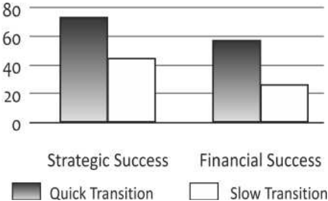
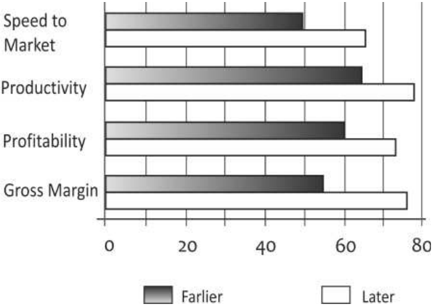
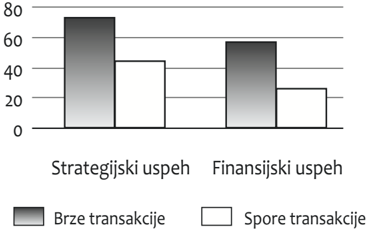
- On speed, the PricewaterhouseCoopers (2000) survey cited shows that among companies fast in implementing changes, 75% considered their transactions strategically successful and 58% financially successful, versus 43% and 24% respectively for companies with longer transition periods.
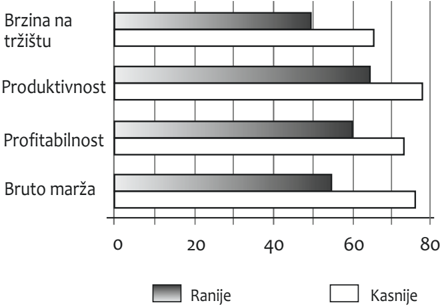
- Homburg & Bucerius (2005) found weak positive direct effects of integration speed on performance (based on stock price changes); their 2006 study concludes speed creates value when external relatedness is low while internal relatedness is high.
- Value sources are identified as resource sharing, knowledge transfer, and transfer of management skills; key value-destroying problems are employee resistance and cultural incompatibility.
Methods
- Qualitative methodology based on examination and descriptive analysis of the researched issue, drawing on relevant literature, theoretical generalizations, and the practical experience of authors who dealt with the subject.
- No primary empirical data are collected; the study analyzes the post-acquisition integration process, value-creation possibilities, integration problems, and success factors, with special attention to integration speed.
- The stated key hypothesis is that if value is created after the acquisition, then the speed of integration has a great influence on the efficiency of that integration and the success of the acquisition.
Limitations
- The paper states that M&A processes have only recently become more important in Serbia and that the subject is not well researched there, so empirical research is needed to test the post-acquisition integration process in a methodologically valid way and to compare results with research in developed market economies.
- Evident from the text: the study is a literature review with no original data, so its conclusions rest on secondary sources, including consulting-firm surveys (PwC, Booz Allen & Hamilton, Oliver Wyman, Atos Consulting) whose samples and methods are not described in the paper.
- Evident from the text: the paper itself notes there is no full uniformity of authors' opinions on the effects of speed, and that speed can bring benefits in some situations and negatively impact acquisition success in others.
Model-written summary. Check it against the paper before relying on it.
Integrity signals
Registry
Cites
Statistics
Figures
Verification
Claims the paper makes
0 Valid · 4 Not valid · 52 Not checked · 26 Own results and interpretations
In the paper
“Transformational leadership is more eff ective than transactional leadership in situations of uncertainty or a crisis, such as the integration process.”
§ Research of mergers and acquisitions can be grouped into four major categories, or perspectives: fi nancial, strategic, organizational and process-oriented THE IMPORTANCE OF POST-ACQUISITION INTEGRATION FOR VALUE CREATION AND SUCCESS OF MERGERS AND ACQUISITIONS > POSSIBILITIES FOR VALUE CREATION AND ISSUES DURING POST-ACQUISITION INTEGRATION OF COMPANIES
What the sources say
- Not checked yetcites Nemanich & Vera, 2009 matched to “Transformational leadership and ambidexterity in the context of an acquisition” (2009) source
plainstates a cause- Asserted: passes — The authors put it forward as true.
- Checkable: passes — It can be checked against evidence.
- Load-bearing: unclear — It is unclear whether the paper’s conclusions depend on it.
- Based: passes — The paper gives a reason why it holds.
In the paper
“This team may also contribute to achieving cost reductions if the previous team was profl igate (Fanlkner & Cambell, 2003, 95-117).”
§ Research of mergers and acquisitions can be grouped into four major categories, or perspectives: fi nancial, strategic, organizational and process-oriented THE IMPORTANCE OF POST-ACQUISITION INTEGRATION FOR VALUE CREATION AND SUCCESS OF MERGERS AND ACQUISITIONS > POSSIBILITIES FOR VALUE CREATION AND ISSUES DURING POST-ACQUISITION INTEGRATION OF COMPANIES
What the sources say
- Not matchedcites Fanlkner & Cambell, 2003, 95-117
An author–year citation the paper’s reference list doesn’t settle. We don’t search these by name.
hedgedstates a possible cause- Asserted: passes — The authors put it forward as true.
- Checkable: passes — It can be checked against evidence.
- Load-bearing: unclear — It is unclear whether the paper’s conclusions depend on it.
- Based: passes — The paper gives a reason why it holds.
- Not matched
A conclusion the paper draws from its own results — it cites no other source for it, so there is none to check. The quote shows it is in the paper.
In the paper
“Observed from the behaviorist perspective, speed is important because it mitigates uncertainty which exists among employees and customers.”
§ Research of mergers and acquisitions can be grouped into four major categories, or perspectives: fi nancial, strategic, organizational and process-oriented THE IMPORTANCE OF POST-ACQUISITION INTEGRATION FOR VALUE CREATION AND SUCCESS OF MERGERS AND ACQUISITIONS > SPEED AS SUCCESS FACTOR OF POST-ACQUISITION INTEGRATION OF COMPANIES
plainstates a cause- Asserted: passes — The authors put it forward as true.
- Checkable: passes — It can be checked against evidence.
- Load-bearing: passes — The paper’s conclusions depend on it.
- Based: passes — The paper gives a reason why it holds.
In the paper
“On the other hand, the presence of a developed corporate culture in the acquiring company can positively aff ect performance, if it is effi ciently transferred to the acquired company (Chakrabarti & Mitchell, 2004).”
§ Research of mergers and acquisitions can be grouped into four major categories, or perspectives: fi nancial, strategic, organizational and process-oriented THE IMPORTANCE OF POST-ACQUISITION INTEGRATION FOR VALUE CREATION AND SUCCESS OF MERGERS AND ACQUISITIONS > POSSIBILITIES FOR VALUE CREATION AND ISSUES DURING POST-ACQUISITION INTEGRATION OF COMPANIES
What the sources say
- Not matchedcites Chakrabarti & Mitchell, 2004
An author–year citation the paper’s reference list doesn’t settle. We don’t search these by name.
plainstates a possible cause- Asserted: passes — The authors put it forward as true.
- Checkable: passes — It can be checked against evidence.
- Load-bearing: unclear — It is unclear whether the paper’s conclusions depend on it.
- Based: passes — The paper gives a reason why it holds.
- Not matched
A conclusion the paper draws from its own results — it cites no other source for it, so there is none to check. The quote shows it is in the paper.
In the paper
“In the process of identifying factors of the key importance for the success of post-acquisition integration, and therefore for the success of mergers and acquisitions, special importance is given to the speed of integration.”
§ Research of mergers and acquisitions can be grouped into four major categories, or perspectives: fi nancial, strategic, organizational and process-oriented THE IMPORTANCE OF POST-ACQUISITION INTEGRATION FOR VALUE CREATION AND SUCCESS OF MERGERS AND ACQUISITIONS > CONCLUSION
plainstates a cause- Asserted: passes — The authors put it forward as true.
- Checkable: passes — It can be checked against evidence.
- Load-bearing: passes — The paper’s conclusions depend on it.
- Based: passes — The paper gives a reason why it holds.
- Rests on an assumption not shown here.
21 more claims
Create a free account to see all 82 claims and to verify the 24 references still open.
- Probably not a substantial claim. 36
- It may state two separate claims as one. 39
- The quote only partly states this claim. 1
Self-check
Percentages, sums and reported differences re-computed from the paper’s own numbers.
Each contradiction between two passages listed here was confirmed by an independent check.
Rated minor: it would not touch a result — a value no result rests on, a p-value that stays on the same side of the significance level, or a conflict that is clerical, resolved elsewhere in the paper, or outside its own findings.
In the paper
§ Research of mergers and acquisitions can be grouped into four major categories, or perspectives: fi nancial, strategic, organizational and process-oriented THE IMPORTANCE OF POST-ACQUISITION INTEGRATION FOR VALUE CREATION AND SUCCESS OF MERGERS AND ACQUISITIONS > POSSIBILITIES FOR VALUE CREATION AND ISSUES DURING POST-ACQUISITION INTEGRATION OF COMPANIES
“(Gates & Very, 2003, 165-185).”
§ Research of mergers and acquisitions can be grouped into four major categories, or perspectives: fi nancial, strategic, organizational and process-oriented THE IMPORTANCE OF POST-ACQUISITION INTEGRATION FOR VALUE CREATION AND SUCCESS OF MERGERS AND ACQUISITIONS > References
“Gates, S., & Very, P. (2003). Measuring Performance during M&A Integration. Long Range Planning, 36, 167-185.”
Rated minor: it would not touch a result — a value no result rests on, a p-value that stays on the same side of the significance level, or a conflict that is clerical, resolved elsewhere in the paper, or outside its own findings.
In the paper
§ Research of mergers and acquisitions can be grouped into four major categories, or perspectives: fi nancial, strategic, organizational and process-oriented THE IMPORTANCE OF POST-ACQUISITION INTEGRATION FOR VALUE CREATION AND SUCCESS OF MERGERS AND ACQUISITIONS > KEY SUCCESS FACTORS OF POST-ACQUISITION INTEGRATION OF COMPANIES
“De Noble et al (1988,(51)(52)(53)(54)(55)(56)(57)(58)(59) state the following factors:”
§ Research of mergers and acquisitions can be grouped into four major categories, or perspectives: fi nancial, strategic, organizational and process-oriented THE IMPORTANCE OF POST-ACQUISITION INTEGRATION FOR VALUE CREATION AND SUCCESS OF MERGERS AND ACQUISITIONS > References
“De Noble, A., Gustafson, L., & Hergert, M. (1997). Planning for Post-merger Integration -Eight Lessons for Merger Success.”
Citations
Cites
Acculturation in Mergers and Acquisitions
Nahavandi, A., & Malekzadeh, A. R. (1988) · The Academy of Management Review · doi:10.5465/amr.1988.4306790 · Cited by 1,542
COMMUNICATION WITH EMPLOYEES FOLLOWING A MERGER: A LONGITUDINAL FIELD EXPERIMENT.
Schweiger, D. M., & Denisi, A. S. (1991) · Academy of Management Journal · doi:10.2307/256304 · Cited by 1,370
Larsson, R., & Finkelstein, S. (1999) · Organization Science · doi:10.1287/orsc.10.1.1 · Cited by 1,302
Organizational fit and acquisition performance: Effects of post‐acquisition integration
Datta, D. K. (1991) · Strategic Management Journal · doi:10.1002/smj.4250120404 · Cited by 764
Birkinshaw, J., Bresman, H., & Håkanson, L. (2000) · Journal of Management Studies · doi:10.1111/1467-6486.00186 · Cited by 572
DETERMINANTS OF ACQUISITION INTEGRATION LEVEL: A DECISION-MAKING PERSPECTIVE.
PABLO, A. L. (1994) · Academy of Management Journal · doi:10.2307/256601 · Cited by 543
Shrivastava, P. (1986) · Journal of Business Strategy · doi:10.1108/eb039143 · Cited by 367
Homburg, C., & Bucerius, M. (2006) · Strategic Management Journal · doi:10.1002/smj.520 · Cited by 350
Transformational leadership and ambidexterity in the context of an acquisition
Nemanich, L. A., & Vera, D. (2009) · The Leadership Quarterly · doi:10.1016/j.leaqua.2008.11.002 · Cited by 336
Homburg, C., & Bucerius, M. (2005) · Journal of Marketing · doi:10.1509/jmkg.69.1.95.55510 · Cited by 292
Making mergers and acquisitions work: Strategic and psychological preparation
Marks, M. L., & Mirvis, P. H. (2001) · Academy of Management Perspectives · doi:10.5465/ame.2001.4614947 · Cited by 186
Acculturation in Acquired Organizations: A Force-Field Perspective
Elsass, P. M., & Veiga, J. F. (1994) · Human Relations · doi:10.1177/001872679404700404 · Cited by 180
The Oxford Handbook of Strategy
Campbell, A., & Faulkner, D. O. (2006) · Oxford University Press eBooks · doi:10.1093/oxfordhb/9780199275212.001.0001 · Cited by 166
The Drivers of Success in Post-Merger Integration
EPSTEIN, M. J. (2004) · Organizational Dynamics · doi:10.1016/j.orgdyn.2004.01.005 · Cited by 89
Measuring Performance During M&A Integration
Gates, S., & Very, P. (2003) · Long Range Planning · doi:10.1016/s0024-6301(03)00004-9 · Cited by 81
Schweizer, L., & Patzelt, H. (2012) · Scandinavian Journal of Management · doi:10.1016/j.scaman.2012.02.003 · Cited by 64
Integrating Cross-Border Acquisitions: A Process-oriented Approach
Colombo, G., Conca, V., Buongiorno, M., & Gnan, L. (2007) · Long Range Planning · doi:10.1016/j.lrp.2007.04.004 · Cited by 44
Planning for post-merger integration—eight lessons for merger success
De Noble, A. F., Gustafson, L. T., & Hergert, M. (1988) · Long Range Planning · doi:10.1016/0024-6301(88)90012-x · Cited by 38
Pitkethly, R., Faulkner, D., & Child, J. (2004) · Advances in mergers & acquisitions/Advances in mergers and acquisitions · doi:10.1016/s1479-361x(03)02003-9 · Cited by 29
Teerikangas, S. P. (2006) · Aaltodoc (Aalto University) · Cited by 23
Mergers & Acquisitions: A Critical Reader
Risberg, A. (2006) · Cited by 22
Ellis, K. M., & Lamont, B. T. (2004) · Advances in Mergers & Acquisitions · doi:10.1016/s1479-361x(04)03004-2 · Cited by 20
A CORPORATE LEVEL PERSPECTIVE ON ACQUISITIONS AND INTEGRATION
Chakrabarti, A., & Mitchell, W. (2005) · Advances in mergers & acquisitions/Advances in mergers and acquisitions · doi:10.1016/s1479-361x(04)04001-3 · Cited by 13
Research works printed but not linked: 18
- Fanlkner, D., & Cambell, A. (2003). The Oxford Handbook of Strategy. Vol II: Corporate Strategy. Oxford: Oxford University Press.
- Habeck, M., Kröger, F., & Träm, M. (2000). A! er the Merger - Seven Rules for Successful Post-Merger Integration. Pearson Education Limited.
- Marks, M. L., & Mirvis, P. H. (1986). The Merger Syndrome, Psychology Today. In A. Risberg, (2006). Mergers and acquisition A Critical Reader. Routledge Taylor & Francis Group.
- Birkinshaw, J., Bresman, H., & Hakanson, L. (2000). Managing the Post-Acquisition Integration Process: How the Human Integration and Task Integration Processes Interact to Foster Value Creation. Journal of Management Studies, 37(3), 395-421.
- De Noble, A., Gustafson, L., & Hergert, M. (1997). Planning for Post-merger Integration -Eight Lessons for Merger Success. In B. Lloyd (Ed.), Creating Value through Acquisitions, Demergers, Buyouts and Alliances (pp 51-59).
- Da7 a, K. D. (1991). Organizational Fit and Acquisition Performance-Eff ects of Post-acquisition Integration. Strategic Management Journal. In Risberg, A., (2006). Mergers and Acquisitions -A Critical Reader. Routledge Taylor & Francis Group.
- In Risberg, A. (2006). Mergers and Acquisitions A Critical Reader. Routledge Taylor & Francis Group.
- Epstein, M. (2004). The Drivers of Success in Post-Merger Integration, Organizational Dynamics, 33(2), 174-189.
- Fanlkner, D., & Cambell, A. (2003). The Oxford Handbook of Strategy. Vol II: Corporate Strategy. Oxford: Oxford University Press.
- Habeck, M., Kröger, F., & Träm, M. (2000). A! er the Merger - Seven Rules for Successful Post-Merger Integration. Pearson Education Limited.
- Haspeslagh, & Jemison. (1991). In Fanlkner D., & Cambell A. (2003). The Oxford Handbook of Strategy. Vol II: Corporate Strategy. Oxford: Oxford University Press.
- Homburg, C., & Bucerius, M. (2005). A Marketing Perspective on Mergers and Acquisitions: How Marketing Integration aff ects Postmerger Performance. The Journal of Marketing, 69(1), 95-113.
- Homburg, C., & Bucerius, M. (2006). Is speed of integration really a success factor of mergers and acquisitions? An analysis of role of internal and external relatedness. Strategic Management Journal, 27(4), 347-367.
- Larsson, R., & Finkelstein, S. (1999). Integrating Strategic, Organizational, and Human Resource Perspectives on Mergers and Acquisitions: A Case Survey of Synergy Realization. Organization Science, 10(1), 1-26.
- Marks, M. L., & Mirvis, P. H. (1986). The Merger Syndrome, Psychology Today. In A. Risberg, (2006). Mergers and acquisition A Critical Reader. Routledge Taylor & Francis Group.
- Marks, M. L., & Mirvis, P. H. (2001). Making mergers and acquisitions work: Strategic and psychological preparation. The Academy of Management Executive, 15(2), 80-92.
- Nahavandi, A., & Malekzadeh, A. (1988). Acculturation in Mergers and Acquisitions. The Academy of Management Review, 13(1), 79-90.
- Shrivastava, P. (1986). Post-merger integration. Journal of Business Strategy, 7(1), 65-76.
Cited by
Savović, S. (2017) · Ekonomski horizonti · doi:10.5937/ekonhor1702095s · Cited by 62
Transformational leadership and post-acquisition performance in transitional economies
Babić, V., Savović, S., & Domanović, V. (2014) · Journal of Organizational Change Management · doi:10.1108/jocm-02-2014-0028 · Cited by 56
Savović, S. (2017) · Leadership & Organization Development Journal · doi:10.1108/lodj-02-2016-0043 · Cited by 44
CHARACTERIZATION AND ANALYSIS OF COOPERATIVE MERGERS AND THEIR RESULTS
Martí, E. M., & Martínez-García, A. (2015) · Annals of Public and Cooperative Economics · doi:10.1111/apce.12083 · Cited by 35
Corporate Governance and Corporate Social Responsibility Synergies: A Systemic Approach
Nikolić, J., & Zlatanović, D. (2018) · Our Economy Journal of Contemporary Issues in Economics and Business · doi:10.2478/ngoe-2018-0016 · Cited by 29
Metadata
- Authors
- Savovic, S.
- Venue
- Ekonomski horizonti
- Published
- 2012
- Volume
- 14
- Issue
- 3
- Pages
- 193-205
- ISSN
- 1450-863X (ISSN-L)
- OpenAlex
- W2170865778
- Semantic Scholar
- 78840af33ae0a5ba9ee1c854fd3636be89a91540
- Cited by
- 29
- References
- 23
- Citations by year
- 2025: 1 · 2024: 1 · 2023: 6 · 2022: 3 · 2021: 3 · 2020: 2 · 2019: 3 · 2018: 1 · 2017: 3 · 2016: 4 · 2015: 1 · 2014: 1
- FWCI
- 0.80
- Type
- journal article
- Language
- en
- Open access
- diamond
- doi.org
- Licence
- cc-by-nc-nd
- Locations
- Ekonomski horizonti (publishedVersion, cc-by-nc-nd)
- SCIndeks (publishedVersion, other-oa)
- Funders
- Ministry of Education, Science and Technological Development of the Republic of Serbia (41010)
- Topics
- Social Sciences › Economics, Econometrics and Finance › Finance › Corporate Finance and Governance
- Social Sciences › Economics, Econometrics and Finance › Economics and Econometrics › Merger and Competition Analysis
- Social Sciences › Business, Management and Accounting › Strategy and Management › International Business and FDI
- Keywords
- post-merger integration, mergers and acquisitions, value creation, integration success factors, integration strategies, communication, integration speed, measurement uniformity, shareholder value
About these checks
Registry, retraction, Cites and statistics results are computed, not judged, with one exception: a printed reference that no index lists is read once by a model before it counts as a citation error. Claims are extracted by a model and kept only when their quote appears verbatim in the text; each cited source is then checked, with a model’s help, for whether it says what the claim relies on. Those verdicts can be wrong — read the claim’s quote and the cited source before relying on one.
A language model drew the claims from the paper on 2026-11-23, under version 3 of the claim definition (model deepseek-v4.1-flash, prompt extract-v3).
A second model labelled each claim on 2026-11-23 (model jev-1.13-20260917, definition revision gold-guideline-v0.2).
Statistics and arithmetic are recomputed, not judged.
Confidence bands are shown only for fields calibrated on our annotated test set. None is calibrated yet, so no band is shown.
What counts as a claim ›How we measure confidence ›How we check this ›
Are you an author, or do you see a problem with this page? Request a review
Data sources
Bibliographic data: Semantic Scholar, OpenAlex, Crossref.
Contains information from the Semantic Scholar Academic Graph Datasets, made available under the ODC Attribution License (ODC-BY 1.0).
Semantic Scholar’s data is described in: Kinney, R., et al. (2023). The Semantic Scholar Open Data Platform. arXiv:2301.10140.
