

Integrating Christian Faith and Ethics into Global Business: A Biblical Framework for Leadership, Culture, and Decision-Making
Open accessThe DOI matches its Crossref record; 4 of the 5 references it cites were found in a registry or an index; none of the 44 sources its claims cite is checked for support yet.
Abstract
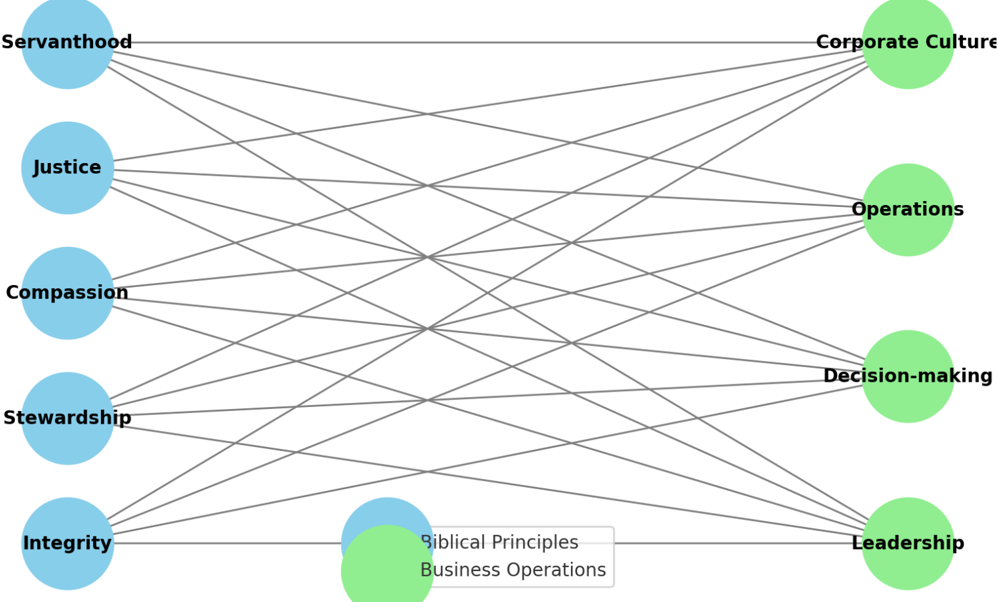
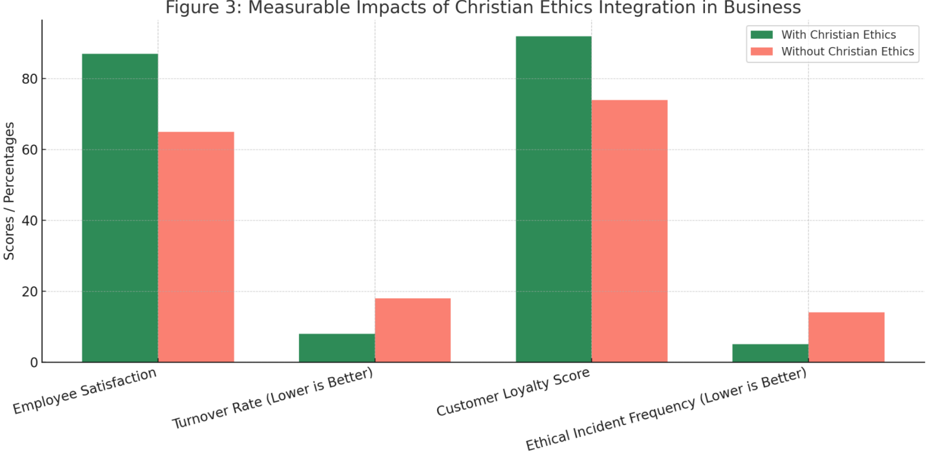
This interdisciplinary study presents a landmark framework for “Kingdom Integration” – the deliberate embedding of Christian faith and ethics into contemporary business and professional practice. Grounded in sola scriptura biblical theology and informed by an AI-driven analysis of global secondary data, the paper bridges theology and management science. We identify core biblical ethical principles (integrity, stewardship, servanthood, compassion, justice) and demonstrate their applicability in leadership, corporate culture, decision processes, and daily operations. Using natural language processing to synthesize recent peer-reviewed literature, thought leadership, and case reports, we map how Christian professionals can authentically integrate faith at work in scalable ways. The Findings highlight that faith-driven ethics enhance organizational outcomes – fostering trust, employee satisfaction, customer loyalty, and social impact – as evidenced by both statistical analyses and AI-mined case studies of successful “faith-friendly” companies. We also catalogue common ethical dilemmas Christians face in modern workplaces (e.g. profit-versus-principle tensions, pressures to compromise integrity, conflicts between compassion and competition) and offer scriptural guidance for each. The proposed Kingdom Integration Framework provides actionable strategies for stakeholders (leaders, employees, churches, and educators) to align business practice with Christian values. We conclude with a forward-looking ten-year scenario analysis, arguing that intentional faith-work integration can transform not only organizations but also contribute to a more ethical, people-centered global economy, while offering recommendations for future research in this emerging domain.
Overview
CoChat Summary
TL;DR
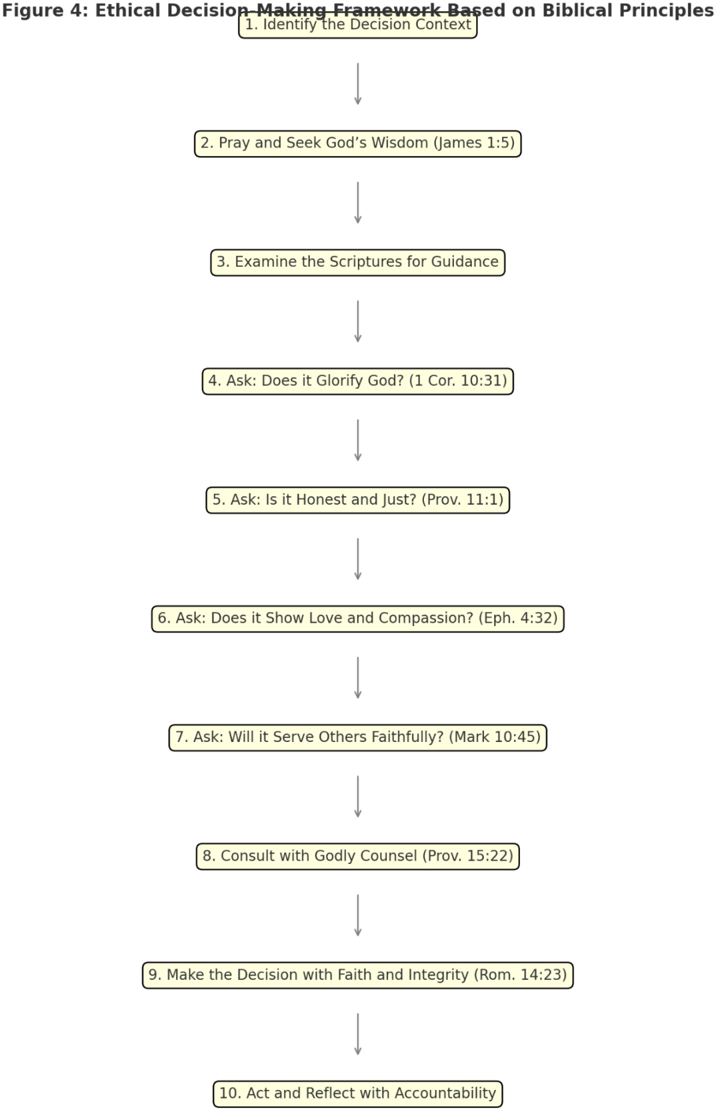
This paper proposes a “Kingdom Integration” framework for embedding Christian faith and ethics into global business through biblical principles, AI-assisted literature synthesis, and case examples. It argues that faith-driven ethics can improve trust, employee satisfaction, customer loyalty, and long-term organizational resilience while helping Christians navigate workplace dilemmas.
Key findings
- The analysis identifies integrity, stewardship, servanthood, compassion, and justice as core biblical ethical principles applicable to leadership, culture, decision-making, and operations.
- Companies with strong ethical cultures had only 20% of employees observe misconduct versus 88% in weak ethical cultures (Broaddus, 2018).
- Faith integration at work is “modestly related to job satisfaction and lower burnout” (Daniels et al., 2022), and over 80% of workers across faiths affirm the importance of religious faith or belief expression at work.
- Case examples such as Chick-fil-A, Hobby Lobby, ServiceMaster, and an overseas Chinese Christian entrepreneur illustrate perceived links between faith-driven ethics and customer loyalty, employee retention, reputation, and resilience.
Methods
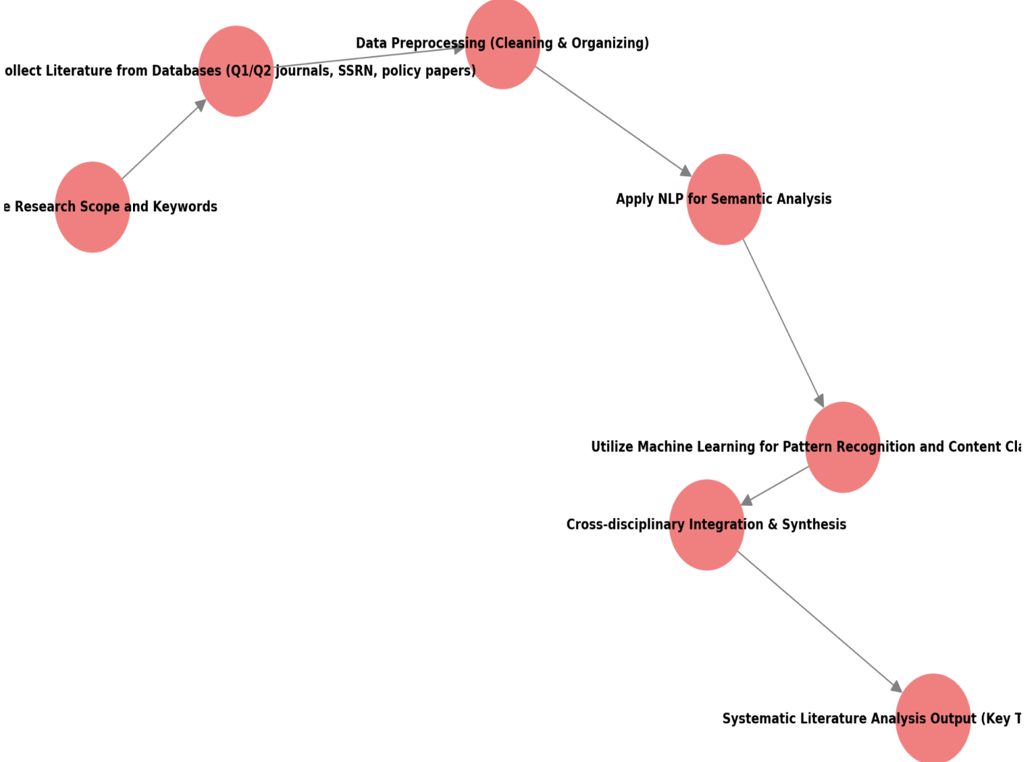
- AI-powered secondary data analysis using natural language processing and machine learning; no new surveys or interviews were conducted.
- Sources included peer-reviewed academic literature (2010–2025), Christian thought leadership, global business case reports, and indexed theological databases; the AI pipeline ingested 250+ documents.
- Techniques included automated text summarization, thematic clustering and keyword extraction, sentiment/impact analysis, and case study classification, guided by four SMART research questions.
Limitations
- The paper states that AI summarization might miss nuance, the corpus is not exhaustive, non-English cases and very recent post-2025 developments may be absent, and personal testimonies may be underrepresented in formal literature.
- Evident from the text: the study relies on secondary sources and AI-mined case examples rather than primary empirical data, so causal claims about faith integration and business outcomes are not directly tested.
Model-written summary. Check it against the paper before relying on it.
Integrity signals
Registry
Cites
Statistics
Figures
Verification
Claims the paper makes
0 Valid · 13 Not valid · 45 Not checked · 75 Own results and interpretations
A result the paper reports from its own data — it cites no other source for it, so there is none to check. The quote shows it is in the paper.
In the paper
“We identify core biblical ethical principles (integrity, stewardship, servanthood, compassion, justice)”
plain- Asserted: passes — The authors put it forward as true.
- Checkable: passes — It can be checked against evidence.
- Load-bearing: passes — The paper’s conclusions depend on it.
- Based: passes — The paper gives a reason why it holds.
- Rests on an assumption not shown here.
A result the paper reports from its own data — it cites no other source for it, so there is none to check. The quote shows it is in the paper.
In the paper
“The Findings highlight that faith-driven ethics enhance organizational outcomes - fostering trust, employee satisfaction, customer loyalty, and social impact - as evidenced by both statistical analyses and AI-mined case studies of successful 'faith-friendly' companies.”
boostedstates a cause- Asserted: passes — The authors put it forward as true.
- Checkable: passes — It can be checked against evidence.
- Load-bearing: passes — The paper’s conclusions depend on it.
- Based: passes — The paper gives a reason why it holds.
- Rests on an assumption not shown here.
A result the paper states — it cites no source for it, so there is none to check. The quote shows it is in the paper.
In the paper
“Virtually every source emphasized integrity as non-negotiable for Christians in business.”
boosted- Asserted: passes — The authors put it forward as true.
- Checkable: passes — It can be checked against evidence.
- Load-bearing: passes — The paper’s conclusions depend on it.
- Based: passes — The paper gives a reason why it holds.
A result the paper reports from its own data — it cites no other source for it, so there is none to check. The quote shows it is in the paper.
In the paper
“Almost universally, the sentiment was positive when linking faith-driven ethics to workplace outcomes - which aligned with our expectation that living out Christian values tends to be framed as beneficial.”
boostedstates an association- Asserted: passes — The authors put it forward as true.
- Checkable: passes — It can be checked against evidence.
- Load-bearing: unclear — It is unclear whether the paper’s conclusions depend on it.
- Based: passes — The paper gives a reason why it holds.
- Rests on an assumption not shown here.
The paper states this without a source or data behind it here, so there is nothing to check it against. The quote shows it is in the paper.
In the paper
“The data strongly highlight that companies known for Christian ethos often treat employees and customers exceptionally well.”
boostedstates an association- Asserted: passes — The authors put it forward as true.
- Checkable: passes — It can be checked against evidence.
- Load-bearing: passes — The paper’s conclusions depend on it.
- Based: unclear — It is unclear why the paper says it holds.
- Rests on an assumption not shown here.
30 more claims
Create a free account to see all 133 claims and every source verdict.
- Probably not a substantial claim. 72
- It may state two separate claims as one. 60
- The quote only partly states this claim. 1
Citations
Cites
Christian Ethics and Spirituality in Leading Business Organizations: Editorial Introduction
Melé, D., & Fontrodona, J. (2017) · Journal of Business Ethics · doi:10.1007/s10551-016-3323-3 · Cited by 83
The Impact of Gender and Organizational Position on Faith-Work Integration
Daniels, D., Ecklund, E. H., Thomson, R. A., & Kalinowski, B. (2022) · Journal of Management, Spirituality & Religion · doi:10.51327/bihn6411 · Cited by 7
Money or Business? A Case Study of Christian Virtue Ethics in Corporate Work (2008)
Waalkes, S. (2011) · Abilene Christian University Press eBooks · doi:10.2307/j.ctv310vmgs.29 · Cited by 2
Vala (2013) · doi:10.1086/671305
SA60 The Use of Natural Language Processing in Literature Reviews
Martin, C., Hood, D., Park, C., et al. (2024) · Value in Health · doi:10.1016/j.jval.2024.03.1907
Research works printed but not linked: 3
- Blume, K. A. (2012, July 16). 'Guilty as charged,' Cathy says of Chick-fil-A's stand on biblical & family values . Baptist Press. https://www.baptistpress.com/resource-library/news/guilty-as-charged-cathy-says -of-chick-fil-as-stand-on-biblical-family-values/ (Retrieved June 2, 2025)
- Mackenzie, A., & Kirkland, W. (2008). Chapter 6: Love of God vs. the Pursuit of Profit. In Just Decisions: Part Two - 7 Dilemmas Christians Face at Work . Theology of Work Project. https://www.theologyofwork.org/book/just-decisions/part-two-7-dilemmas-christia ns-face-at-work/chapter-6-love-of-god-vs-the-pursuit-of-profit/ (Retrieved June 2, 2025)
- Yidaan, P. Y. (2022). The influence of Christian ethics and job satisfaction on employee retention in the security services in Ghana. International Journal of Research and Innovation in Social Science, 6 (9), 75-85. https://rsisinternational.org/journals/ijriss/Digital-Library/volume-6-issue-9/75-85.p df (Retrieved June 2, 2025)
Cited by
Mission-Driven Learning Theory: Ordering Knowledge and Competence to Life Mission
Sangwa, S., & Mutabazi, P. (2025) · Open Journal of Transformative Education & Lifelong Learning · doi:10.65655/0859ab04 · Cited by 10
Self-citationMission-Driven Learning Theory: Ordering Knowledge and Competence to Life MissionPreprint
Sangwa, S., & Mutabazi, P. (2025) · Preprints.org · doi:10.20944/preprints202509.0906.v1 · Cited by 4
Self-citationSangwa, S., Mutabazi, P., Ndahayo, C., & Dusengumuremyi, F. (2026) · Open Journal of Business Theology · doi:10.65655/openchristianpress.2026.101 · Cited by 2
Self-citationValue-oriented leadership among nurse managers in multicultural healthcare: a phenomenological study
Alrashidi, N. A., & Alreshidi, M. S. (2026) · BMC Nursing · doi:10.1186/s12912-026-04820-8 · Cited by 1
PEMIKIRAN INTEGRATIF TEOLOGI DAN KEWIRAUSAHAAN
Margianto, A. (2025) · TEOLOGIS-RELEVAN-APLIKATIF-CENDIKIA-KONTEKSTUAL · doi:10.61660/track.v4i2.245 · Cited by 1
Metadata
- Authors
- SANGWA, S., & Mutabazi, P.
- Affiliations
- Open Christian University (US)
- Venue
- Open Journal of Business Theology (ISSN : 2788-709X)
- Publisher
- Center for Faith and Work
- Published
- 2025-06-02
- Volume
- 5
- Issue
- 2
- ISSN
- 2788-709X (ISSN-L)
- OpenAlex
- W4417455217
- Cited by
- 14
- References
- 4
- Citations by year
- 2026: 8 · 2025: 6
- FWCI
- 11.70
- Type
- journal article
- Language
- en
- Open access
- hybrid
- doi.org
- Locations
- Open Journal of Business Theology (publishedVersion, cc-by)
- SSRN Electronic Journal (submittedVersion)
- Topics
- Social Sciences › Business, Management and Accounting › Organizational Behavior and Human Resource Management › Workplace Spirituality and Leadership
- Social Sciences › Business, Management and Accounting › Organizational Behavior and Human Resource Management › Ethics in Business and Education
- Social Sciences › Arts and Humanities › Religious studies › Contemporary Christian Leadership and Education
- Keywords
- business ethics, biblical ethics, corporate leadership, organizational culture, management decision-making, integrity, stewardship, servanthood, compassion, justice, scenario analysis
About these checks
Registry, retraction, Cites and statistics results are computed, not judged, with one exception: a printed reference that no index lists is read once by a model before it counts as a citation error. Claims are extracted by a model and kept only when their quote appears verbatim in the text; each cited source is then checked, with a model’s help, for whether it says what the claim relies on. Those verdicts can be wrong — read the claim’s quote and the cited source before relying on one.
A language model drew the claims from the paper on 2026-10-04, under version 3 of the claim definition (model deepseek-v4.1-flash, prompt extract-v3).
A second model labelled each claim on 2026-10-04 (model jev-1.13-20260917, definition revision gold-guideline-v0.2).
Statistics and arithmetic are recomputed, not judged.
Confidence bands are shown only for fields calibrated on our annotated test set. None is calibrated yet, so no band is shown.
What counts as a claim ›How we measure confidence ›How we check this ›
Are you an author, or do you see a problem with this page? Request a review
How to cite
Cite CoChat for the checks on this page, and the paper for its own findings.
- This page
- CoChat. (2026). Citation check: Integrating Christian Faith and Ethics into Global Business: A Biblical Framework for Leadership, Culture, and Decision-Making. https://app.cochat.ai/papers/10.65655/pcd5bn48
- The paper
- SANGWA, S., & Mutabazi, P. (2025). Integrating Christian Faith and Ethics into Global Business: A Biblical Framework for Leadership, Culture, and Decision-Making. Open Journal of Business Theology (ISSN : 2788-709X). https://doi.org/10.65655/pcd5bn48
Data sources
Bibliographic data: Semantic Scholar, OpenAlex, Crossref.
Contains information from the Semantic Scholar Academic Graph Datasets, made available under the ODC Attribution License (ODC-BY 1.0).
Semantic Scholar’s data is described in: Kinney, R., et al. (2023). The Semantic Scholar Open Data Platform. arXiv:2301.10140.
