

The DOI matches its Crossref record; 34 of the 34 references it cites were found in a registry or an index.
Financial costs and personal consequences of research misconduct resulting in retracted publications
Open accessAbstract
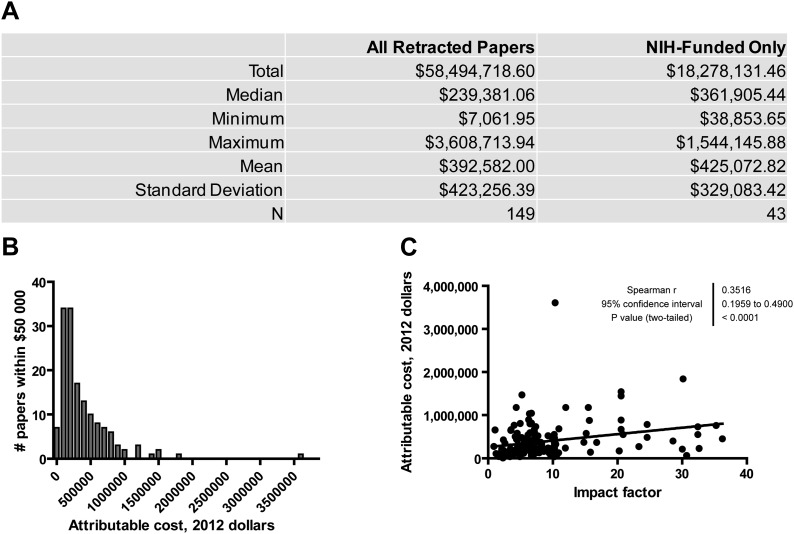
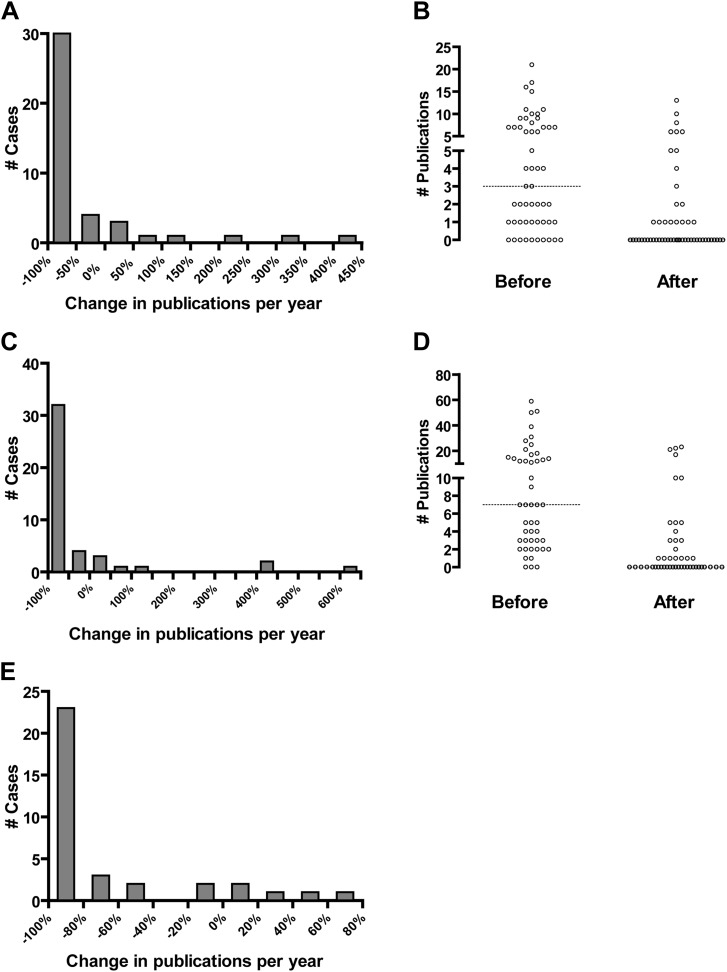
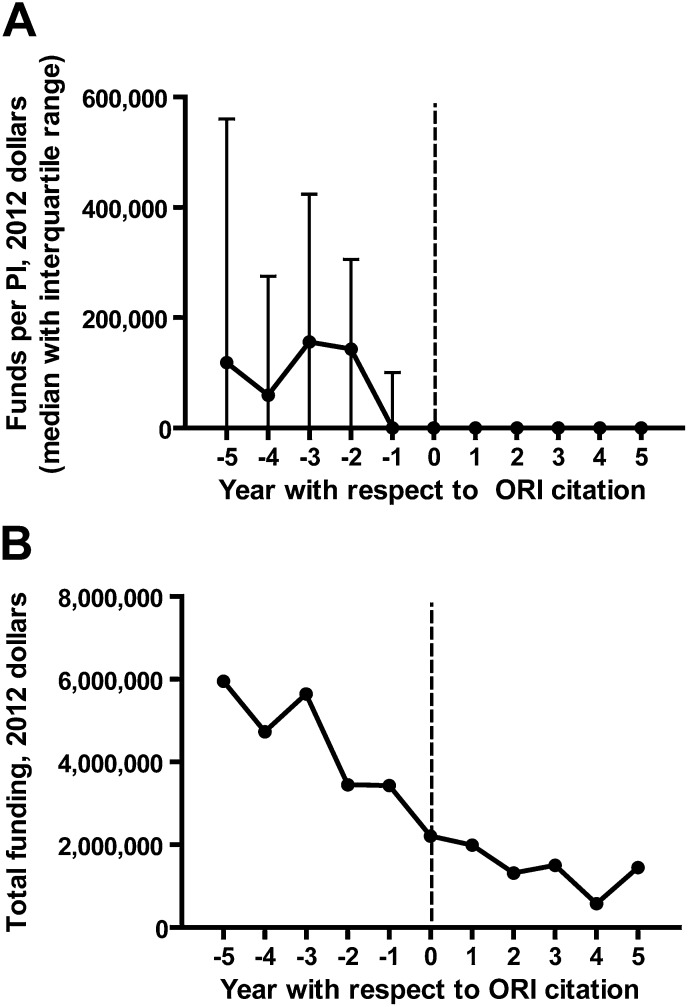
The number of retracted scientific articles has been increasing. Most retractions are associated with research misconduct, entailing financial costs to funding sources and damage to the careers of those committing misconduct. We sought to calculate the magnitude of these effects. Data relating to retracted manuscripts and authors found by the Office of Research Integrity (ORI) to have committed misconduct were reviewed from public databases. Attributable costs of retracted manuscripts, and publication output and funding of researchers found to have committed misconduct were determined. We found that papers retracted due to misconduct accounted for approximately $58 million in direct funding by the NIH between 1992 and 2012, less than 1% of the NIH budget over this period. Each of these articles accounted for a mean of $392,582 in direct costs (SD $423,256). Researchers experienced a median 91.8% decrease in publication output and large declines in funding after censure by the ORI.
Overview
The claims and statistics of this paper haven’t been checked yet.
Run the check — free, no account needed. It reads the open-access text and checks the sources it cites.
Integrity signals
Registry
Cites
Statistics
Figures
Verification
Claims the paper makes
The claims and statistics of this paper haven’t been checked yet.
Run the check — free, no account needed. It reads the open-access text and checks the sources it cites.
Claims other papers make about this one
Each is checked against this paper’s own text: does it say what the citing paper says it does?
The source backs part of the claim, not all of it — or backs it for a different population, condition or comparison.
In the citing paper
“retractions themselves impose substantial financial and scientific costs (Stern et al., 2014).”
From FLAWS: A Benchmark for Error Identification and Localization in Scientific Papers (2025) · cites this paper as Stern et al., 2014
Experimental — accuracy not yet measuredThe source backs part of the claim, not all of it — or backs it for a different population, condition or comparison.
In the citing paper
“Damage to reputation after retracting papers for any reason also plays a crucial role in faculty recruitment and philanthropy efforts [16].”
From Genetic Insights into the Economic Toll of Cell Line Misidentification: A Comprehensive Review (2026) · cites this paper as [16]
Experimental — accuracy not yet measuredThe cited source says what the claim attributes to it.
In the citing paper
“Stern and colleagues discussed the general financial costs of retracted articles that were funded by the NIH and calculated that each retracted articles accounted for a mean of $392,582 ± $423,256 [16].”
From Genetic Insights into the Economic Toll of Cell Line Misidentification: A Comprehensive Review (2026) · cites this paper as [16]
In the citing paper
“by one estimate $392 , 582 of financial loss for each retracted article [46].”
From BioFors: A Large Biomedical Image Forensics Dataset (2021) · cites this paper as [46]
Self-check
Percentages, sums and reported differences re-computed from the paper’s own numbers.
The self-check needs the paper’s full text.
Citations
Cites
5 retracted
Wakefield, A., Murch, S., Anthony, A., Linnell, J., Casson, D., Malik, M., Berelowitz, M., Dhillon, A., Thomson, M., Harvey, P., et al. (1998) · The Lancet · doi:10.1016/s0140-6736(97)11096-0 · Cited by 3,006
RetractedRetracted Science and the Retraction Index
Fang, F. C., & Casadevall, A. (2011) · Infection and Immunity · doi:10.1128/iai.05661-11 · Cited by 405 · cited 1×
“Impact factor exhibits a positive correlation with articles retracted for research misconduct or error (Fang and Casadevall, 2011; Fang et al., 2012).”
BackgroundSelf-citationRetractedRETRACTED: Transcription-Coupled Repair of 8-oxoGuanine
Page, F. L., Kwoh, E. E., Avrutskaya, A. V., Gentil, A., Leadon, S. A., Sarasin, A. R., & Cooper, P. K. (2000) · Cell · doi:10.1016/s0092-8674(00)80827-2 · Cited by 280 · cited 1×
“…this database that were retracted due to misconduct originating from the United States between 1992 and 2012, as well as one additional article originating from France (Le Page et al., 2000) that was retracted due to data falsification by a co-author (Steven Leadon) working in the United States.”
RetractedPage, F. L., Kwoh, E. E., Avrutskaya, A. V., Gentil, A., Leadon, S. A., Sarasin, A. R., & Cooper, P. K. (2005) · Cell · doi:10.1016/j.cell.2005.11.005 · Cited by 271
RetractedGene-expression patterns predict phenotypes of immune-mediated thrombosis
Potti, A., Bild, A., Dressman, H. K., LEWIS, D. A., Nevins, J. R., & Ortel, T. L. (2005) · Blood · doi:10.1182/blood-2005-07-2669 · Cited by 51 · cited 1×
“One outlier was found to have an attributable cost of $3.6 million (Potti et al., 2006).”
BackgroundInfluentialRetractedFanelli, D. (2009) · PLoS ONE · doi:10.1371/journal.pone.0005738 · Cited by 1,911 · cited 1×
“A meta-analysis of survey data indicates that approximately 2% of scientists admit to data falsification or manipulation on at least one occasion (Fanelli, 2009), whereas less than 0.02% of published data are retracted due to fabrication, falsification, or plagiarism (Claxton, 2005; Fang et al.,…”
InfluentialMisconduct accounts for the majority of retracted scientific publications
Fang, F. C., Steen, R. G., & Casadevall, A. (2012) · Proceedings of the National Academy of Sciences · doi:10.1073/pnas.1212247109 · Cited by 1,232 · cited 6×
“We examined the text of 291 articles originating from the United States and published between 1992 and 2012 that were retracted for research misconduct (Fang et al., 2012), and recorded NIH grant numbers cited in footnotes or acknowledgments.”
BackgroundInfluentialSelf-citationZarychanski, R., Abou-Setta, A. M., Turgeon, A. F., Houston, B. L., McIntyre, L., Marshall, J. C., & Fergusson, D. A. (2013) · JAMA · doi:10.1001/jama.2013.430 · Cited by 646 · cited 1×
“In another high-profile fraud case involving studies of the use of colloid for fluid resuscitation, there is evidence that the discredited body of work led to the use of a therapy with higher mortality and morbidity than standard care (Wise, 2013; Zarychanski et al., 2013).”
BackgroundWhy has the number of scientific retractions increased?
Steen, R. G., Casadevall, A., & Fang, F. C. (2013) · PLoS ONE · doi:10.1371/journal.pone.0068397 · Cited by 415 · cited 1×
“Whether the actual frequency of misconduct is increasing is unknown (Fanelli, 2013; Steen et al., 2013), but there is increasing interest in this subject given the occurrence of several high profile cases, the creation of websites that track retracted research, such as Retraction Watch (Oransky and…”
BackgroundSelf-citationLet's make science metrics more scientific
Lane, J. I. (2010) · Nature · doi:10.1038/464488a · Cited by 308 · cited 1×
“This problem has been noted previously (Falagas, 2006; Bourne and Fink, 2008; Lane, 2010; Polychronakos, 2012), and systems have been proposed for the disambiguation of authors with similar names (Fenner, 2011).”
Background
Research works printed but not linked: 1
- McWatt J. 2013. Measles epidemic costs health board £500,000. WalesOnline. http://www.walesonline.co.uk/news/wales-news/measles-epidemic-costs-health-board-4923520.
Cited by
Sorted by citations
The economics of reproducibility in preclinical research
Freedman, L. P., Cockburn, I. M., & Simcoe, T. S. (2015) · PLOS Biology · doi:10.1371/journal.pbio.1002165 · Cited by 1,055
“[21], even in cases of retracted publications due to scientific misconduct, which is not a major source of irreproducibility [13,22], “it is conceivable that some of the research resulting in a retracted article still provides useful information for other nonretracted”
BackgroundEdwards, M. A., & Roy, S. (2017) · Environmental Engineering Science · doi:10.1089/ees.2016.0223 · Cited by 688
Wu, Y., AbdAlmageed, W., & Natarajan, P. (2019) · IEEE Computer Society Conference on Computer Vision and Pattern Recognition/Proceedings - IEEE Computer Society Conference on Computer Vision and Pattern Recognition/Proceedings · doi:10.1109/cvpr.2019.00977 · Cited by 702
“In 2014, Stern et al. [41] estimate that each of the retracted articles could account for a mean of $ 392,582 in direct costs , implying much higher indirect costs caused by misled research—and this is only in the biomedical field and these numbers are five years out-dated.”
BackgroundThe carnage of substandard research during the COVID-19 pandemic: a call for quality
Bramstedt, K. A. (2020) · Journal of Medical Ethics · doi:10.1136/medethics-2020-106494 · Cited by 170
The visibility of scientific misconduct: A review of the literature on retracted journal articles
Hesselmann, F., Graf, V., Schmidt, M., & Reinhart, M. (2017) · Current Sociology · doi:10.1177/0011392116663807 · Cited by 153
“Stern et al. (2014) estimate the amount of NIH funding involved in publications that are retracted subsequently and find that between 1992 and 2012, no more than 0.02% of the NIH budget went to studies that were later retracted.”
BackgroundInfluentialData standards can boost metabolomics research, and if there is a will, there is a way
Rocca‐Serra, P., Salek, R. M., Arita, M., Correa, E. S., Dayalan, S., Gonzalez-Beltran, A. N., Ebbels, T. M. D., Goodacre, R., Hastings, J., Haug, K., et al. (2015) · Metabolomics · doi:10.1007/s11306-015-0879-3 · Cited by 150
“2014), (Editorial 2014), (Stern et al. 2014) and news on the consequences,(1) and in general the growing concern over the rise in paper retractions,(2) governments and funding agencies are increasingly mandating reproducible research and the release(3) and long-term archival of raw data with guaranteed rights to asses…”
BackgroundReproducibility: changing the policies and culture of cell line authentication
Freedman, L. P., Gibson, M. C., Ethier, S. P., Soule, H. R., Neve, R. M., & Reid, Y. A. (2015) · Nature Methods · doi:10.1038/nmeth.3403 · Cited by 136
COVID-19 research: pandemic versus “paperdemic”, integrity, values and risks of the “speed science”
Dinis‐Oliveira, R. J. (2020) · Forensic Sciences Research · doi:10.1080/20961790.2020.1767754 · Cited by 137
“Regarding financial waste, a study examining publications retracted due to serious misconduct estimated that the direct cost to the National Institutes of Health (NIH – USA) was approximately US$425 000 per article [59].”
BackgroundRetractions in cancer research: a systematic survey
Bozzo, A., Bali, K., Evaniew, N., & Ghert, M. (2017) · Research Integrity and Peer Review · doi:10.1186/s41073-017-0031-1 · Cited by 83
What studies of retractions tell us
Marcus, A., & Oransky, I. (2014) · Journal of Microbiology & Biology Education · doi:10.1128/jmbe.v15i2.855 · Cited by 81
Automatic detection of image manipulations in the biomedical literature
Bucci, E. M. (2018) · Cell Death & Disease · doi:10.1038/s41419-018-0430-3 · Cited by 76
“For example, if we consider that the average value of extramural NIH research projects is above $400,000(7), then the overall value for the 12 NIH projects which produced 12 problematic papers (red portion of the pie in the preceding graph) is greater than $4,800,000, in agreement with an independent estimate that was…”
BackgroundPickett, J. T., & Roche, S. P. (2016) · Science and Engineering Ethics · doi:10.1007/s11948-017-9886-2 · Cited by 77
The reproducibility of biomedical research: Sleepers awake!
Bustin, S. A. (2014) · Biomolecular Detection and Quantification · doi:10.1016/j.bdq.2015.01.002 · Cited by 61
van der Vet, P. E., & Nijveen, H. (2016) · Research Integrity and Peer Review · doi:10.1186/s41073-016-0008-5 · Cited by 50
Fanelli, D., Wong, J., & Moher, D. (2022) · Accountability in Research · doi:10.1080/08989621.2021.1947810 · Cited by 49
On the use of blockchain-based mechanisms to tackle academic misconduct
Mohan, V. (2019) · Research Policy · doi:10.1016/j.respol.2019.103805 · Cited by 53
Retraction: The “Other Face” of Research Collaboration?
Tang, L., Hu, G., Sui, Y., Yang, Y., & Cao, C. (2020) · Science and Engineering Ethics · doi:10.1007/s11948-020-00209-1 · Cited by 45
A Framework for Improving the Quality of Research in the Biological Sciences
Casadevall, A., Ellis, L. M., Davies, E. W., McFall-Ngai, M., & Fang, F. C. (2016) · mBio · doi:10.1128/mbio.01256-16 · Cited by 46
Self-citationResearch integrity: environment, experience, or ethos?
Hofmann, B., & Holm, S. (2019) · Research Ethics · doi:10.1177/1747016119880844 · Cited by 40
“…2012; Komic et al., 2015; Lafollette, 2000; Martinson et al., 2006; Marusic et al., 2011; Okonta and Rossouw, 2014; Pryor et al., 2007; Pupovac and Fanelli, 2015; Ranstam et al., 2000; Redman et al., 2008; Sarwar and Nicolaou, 2012; Saurin, 2016; Stern et al., 2014; Tijdink et al., 2014, 2016).”
Retracted Publications in Orthopaedics
Rai, R., & Sabharwal, S. (2017) · Journal of Bone and Joint Surgery · doi:10.2106/jbjs.16.01116 · Cited by 40
Blatt, M. R. (2015) · PLANT PHYSIOLOGY · doi:10.1104/pp.15.01443 · Cited by 40
Gossip as Social Control: Informal Sanctions on Ethical Violations in Scientific Workplaces
Vaidyanathan, B., Khalsa, S., & Ecklund, E. H. (2016) · Social Problems · doi:10.1093/socpro/spw022 · Cited by 39
Research Methods in International Business: Challenges and Advances
Nielsen, B. B., Eden, L., & Verbeke, A. C. (2019) · JIBS special collections · doi:10.1007/978-3-030-22113-3_1 · Cited by 39
Luxenhofer, R. (2015) · Nanomedicine · doi:10.2217/nnm.15.139 · Cited by 36
Biomedical retractions due to misconduct in Europe: characterization and trends in the last 20 years
Freijedo-Farinas, F., Ruano‐Raviña, A., Pérez‐Ríos, M., Ross, J. S., & Candal‐Pedreira, C. (2024) · Scientometrics · doi:10.1007/s11192-024-04992-7 · Cited by 43
“Moreover, fraud in biomedical research can have serious consequences (Stern et al., 2014) as the fraudulent results are incorporated into clinical practice.”
The landscape of urological retractions: the prevalence of reported research misconduct
Mena, J. D., Ndoye, M., Cohen, A. J., Kamal, P., & Breyer, B. N. (2019) · British Journal of Urology · doi:10.1111/bju.14706 · Cited by 35
Increasing rigor in NMR-based metabolomics through validated and open source tools
Eghbalnia, H. R., Romero, P. R., Westler, W. M., Baskaran, K., Ulrich, E. L., & Markley, J. L. (2016) · Current Opinion in Biotechnology · doi:10.1016/j.copbio.2016.08.005 · Cited by 31
Koo, M., & Lin, S.-C. (2024) · Heliyon · doi:10.1016/j.heliyon.2024.e38620 · Cited by 45
RetractedAn observation framework for retracted publications in multiple dimensions
Feng, L., Yuan, J., & Yang, L. (2020) · Scientometrics · doi:10.1007/s11192-020-03702-3 · Cited by 29
Xu, S. B., & Hu, G. (2022) · Learned Publishing · doi:10.1002/leap.1445 · Cited by 30
“…retraction stigma (Teixeira da Silva & Al-Khatib, 2021), damage to academic image (Hu & Xu, 2020; Xu & Hu, 2018, 2021), reduced publication counts, citation penalty (Azoulay et al., 2017; Lu et al., 2013), and decreased opportunities for funding, promotion, and other benefits (Stern et al., 2014).”
BackgroundAssociations between attitudes towards scientific misconduct and self-reported behavior
Holm, S., & Hofmann, B. (2018) · Accountability in Research · doi:10.1080/08989621.2018.1485493 · Cited by 28
Critical Analysis of Non-Thermal Plasma-Driven Modulation of Immune Cells from Clinical Perspective
Smolková, B., Frtús, A., Uzhytchak, M., Lunová, M., Kubinová, Š., Dejneka, A., & Lunov, O. (2020) · International Journal of Molecular Sciences · doi:10.3390/ijms21176226 · Cited by 28
“Irreproducible research not only wastes resources, hampers progress, and leads to frustration in academic science [50], but it also has devastating economical and personal consequences [51].”
BackgroundWyndham, J. M., Weisenberg, N., McCarty, C. A., Goldman, G. T., Brown, M., & Borenstein, J. (2022) · doi:10.1126/aaas.ade8203 · Cited by 29
Ethical publishing in intensive care medicine: A narrative review
Wiedermann, C. J. (2016) · World Journal of Critical Care Medicine · doi:10.5492/wjccm.v5.i3.171 · Cited by 27
Fraud in scientific publications in the European Union. An analysis through their retractions.
Cuenca, G. M., Oliván, J. A. S., & Avilés, R. A. (2021) · Scientometrics · doi:10.1007/s11192-021-03977-0 · Cited by 31
Taylor, D. B. (2017) · American Journal of Roentgenology · doi:10.2214/ajr.16.17208 · Cited by 26
Olesen, A. P., Amin, L., & Mahadi, Z. (2017) · Science and Engineering Ethics · doi:10.1007/s11948-017-9997-9 · Cited by 25
Pitfalls and Misconducts in Medical Writing
Lazarides, M. K., Gougoudi, E., & Παπάνας, Ν. (2019) · The International Journal of Lower Extremity Wounds · doi:10.1177/1534734619870083 · Cited by 26
“A classic example is a now-discredited article linking measles-mumps-rubella vaccination and autism that dissuaded many parents from obtaining vaccination for their children.(20,21) The severe consequences of that fraudulent publication are ongoing supported by the anti-vaccine propaganda.”
BackgroundLife After Research Misconduct
Galbraith, K. L. (2016) · Journal of Empirical Research on Human Research Ethics · doi:10.1177/1556264616682568 · Cited by 24
Retraction Notices: Who Authored Them?
Xu, S. B., & Hu, G. (2018) · Publications · doi:10.3390/publications6010002 · Cited by 27
“Studies of research retraction have revealed grave negative consequences for authors of retracted articles, such as citation penalty [8,22–24], publishing bans [25], decreased opportunities for funding [26], dismissals from positions held [27], and, in serious cases, even termination of academic careers [28,29].”
BackgroundKorch, C. T., & Capes-Davis, A. (2021) · SLAS Discovery · doi:10.1177/24725552211051963 · Cited by 23
Review of retracted papers in the field of neurology
Wang, X., Gao, N., Chen, H., & Wang, W. (2023) · European Journal of Neurology · doi:10.1111/ene.15960 · Cited by 23
“In addition, retracted studies can have severe consequences for the authors, with those reprimanded by the Office of Research Integrity found to experience a median decrease in academic output of 91.8% and a significant decline in funding [14].”
BackgroundInfluentialRossouw, T. M., Matsau, L., & van Zyl, C. (2020) · Journal of Empirical Research on Human Research Ethics · doi:10.1177/1556264620955110 · Cited by 23
“Publications containing fabricated or falsified data are generally deemed most damaging for the scientific enterprise and those who might become victims of applied fraudulent research (Chen et al., 2013; Stern et al., 2014).”
BackgroundSharing of retracted COVID-19 articles: an altmetric study
Shamsi, A., Lund, B. D., & SeyyedHosseini, S. (2022) · Journal of the Medical Library Association JMLA · doi:10.5195/jmla.2022.1269 · Cited by 22
“Furthermore, retractions can have negative consequences for authors [6] and lead to irrecoverable injuries for patients if improper methodologies or findings from these retracted studies are employed in clinical settings [7].”
BackgroundRetraction Stigma and its Communication via Retraction Notices
Xu, S. B., & Hu, G. (2022) · Minerva · doi:10.1007/s11024-022-09465-w · Cited by 25
Dal-Ré, R., & Ayuso, C. (2021) · Accountability in Research · doi:10.1080/08989621.2020.1835479 · Cited by 21
Rotatory role-playing and role-models to enhance the research integrity culture
Prieß-Buchheit, J., Aro, A. R., Demirova, I., Lanzerath, D., Стоев, П., & Wilder, N. (2020) · Research Ideas and Outcomes · doi:10.3897/rio.6.e53921 · Cited by 21
A cross sectional study of retraction notices of scholarly journals of science
Tripathi, M., Sonkar, S. K., & Kumar, S. (2019) · DESIDOC Journal of Library & Information Technology · doi:10.14429/djlit.39.2.14000 · Cited by 23
Poor visibility of retracted articles: a problem that should no longer be ignored
Boudry, C., Howard, K., & Mouriaux, F. (2023) · BMJ · doi:10.1136/bmj-2022-072929 · Cited by 22
The Ethical Implications of Plagiarism and Ghostwriting in an Open Society
Fusch, P. I., Ness, L., Booker, J. M., & Fusch, G. E. (2017) · Journal of Social Change · doi:10.5590/josc.2017.09.1.04 · Cited by 20
Surveying Retracted Studies and Notices Within the Field of Radiation Oncology
Wasiak, J., Hamilton, D. G., Foroudi, F., & Faggion, C. M. (2018) · International Journal of Radiation Oncology*Biology*Physics · doi:10.1016/j.ijrobp.2018.06.028 · Cited by 22
A Survey of Iranian Retracted Publications Indexed in PubMed
Mansourzadeh, M. J., Ghazimirsaeid, J., Motamedi, N., Najafi, A., Abubakar, A. A., & Dehdarirad, H. (2021) · Iranian Journal of Public Health · doi:10.18502/ijph.v50i1.5086 · Cited by 21
“8% and had a large decline in receiving fund (8).”
BackgroundShi, Q., Wang, Z., Zhou, Q. X., Hou, R., Gao, X., He, S.-E., Zhao, S., Ma, Y., Zhang, X., Guan, Q., et al. (2021) · Journal of Clinical Epidemiology · doi:10.1016/j.jclinepi.2021.06.020 · Cited by 19
Tagne, A. M., Cassina, N., Furgiuele, A., Storelli, E., Cosentino, M., & Marino, F. (2020) · Journal of Academic Ethics · doi:10.1007/s10805-020-09359-0 · Cited by 20
Assessing research misconduct in Iran: a perspective from Iranian medical faculty members
Shamsoddin, E., Torkashvand-Khah, Z., Sofi‐Mahmudi, A., Janani, L., Kabiri, P., Gooshki, E. S., & Mesgarpour, B. (2021) · BMC Medical Ethics · doi:10.1186/s12910-021-00642-2 · Cited by 19
Cheat or perish? A theory of scientific customs
Maux, B. L., Necker, S., & Rocaboy, Y. (2019) · Research Policy · doi:10.1016/j.respol.2019.05.001 · Cited by 22
“It has been estimated that every paper retracted due to scientific misbehavior costs almost $400,000 in funds from the US National Institutes of Health, for a total of $58 million between 1992 and 2012 (Stern et al., 2014).”
BackgroundMistry, V., Grey, A., & Bolland, M. J. (2019) · Accountability in Research · doi:10.1080/08989621.2019.1612244 · Cited by 18
“However, these problems are not unique and similar issues have occurred in other studies (Grieneisen and Zhang 2012; Stern et al. 2014; Galbraith 2017).”
BackgroundResultInfluentialAgency and responsibility: A linguistic analysis of culpable acts in retraction notices
Hu, G., & Xu, S. B. (2020) · Lingua · doi:10.1016/j.lingua.2020.102954 · Cited by 21
Evolution and characterization of health sciences paper retractions in Brazil and Portugal
Candal‐Pedreira, C., Ruano‐Raviña, A., Rey‐Brandariz, J., Mourino, N., Ravara, S., Aguiar, P. M. V., & Pérez‐Ríos, M. (2022) · Accountability in Research · doi:10.1080/08989621.2022.2080549 · Cited by 16
Reasons and implications of retracted articles in Brazil
Santos-d’Amorim, K., Correia, A. E. G. C., Miranda, M. K. F. D. O., & Santa‐Cruz, P. A. (2021) · Transinformação · doi:10.1590/2318-0889202133e210001 · Cited by 18
Ahmad, R., Riaz, M., Aldholmi, M., Qureshi, M. A., Uddin, S., Bhat, A., Pratheeshkumar, P., Baig, M., Pourahmad, J., Ganesan, T., et al. (2021) · Asian Pacific Journal of Cancer Prevention · doi:10.31557/apjcp.2021.22.12.3735 · Cited by 15
“The cost to the retracted papers between 1992–2012 incurred approximately USD58 million (Stern et al., 2014).”
BackgroundRipetaScore: Measuring the Quality, Transparency, and Trustworthiness of a Scientific Work
Sumner, J., Vitale, C. H., & McIntosh, L. D. (2022) · Frontiers in Research Metrics and Analytics · doi:10.3389/frma.2021.751734 · Cited by 15
Does the Anonymous Voice Have a Place in Scholarly Publishing?
da Silva, J. A. T., & Blatt, M. R. (2016) · PLANT PHYSIOLOGY · doi:10.1104/pp.15.01939 · Cited by 15
The Citation of Retracted Papers and Impact on the Integrity of the Scientific Biomedical Literature
da Silva, J. A. T., Santos-d’Amorim, K., & Bornemann‐Cimenti, H. (2025) · Learned Publishing · doi:10.1002/leap.1667 · Cited by 19
“…represents collective failure on the part of authors, peer reviewers, editors, and/or publishers (Teixeira da Silva 2016a), then one response might be to not cite any retracted literature to avoid any risk to one's reputation, and to not cite erroneous or fraudulent literature (Stern et al. 2014).”
Influence of accessibility (open and toll-based) of scholarly publications on retractions
Shah, T. A., Gul, S., Bashir, S., Ahmad, S., Huertas, A., Oliveira, A., Gulzar, F., Najar, A. H., & Chakraborty, K. (2021) · Scientometrics · doi:10.1007/s11192-021-03990-3 · Cited by 16
High time for a common plagiarism detection system
Jarić, I. (2015) · Scientometrics · doi:10.1007/s11192-015-1756-6 · Cited by 14
“As stated by Stern et al. (2014), indirect financial costs due to the use of retracted research as a basis for future research efforts may be even greater than the cost of the retracted research itself.”
Analysis of spin in the reporting of studies of topical treatments of photoaged skin
Motosko, C. C., Ault, A. K., Kimberly, L. L., Zakhem, G. A., Gothard, M. D., Ho, R. S., & Hazen, A. (2018) · Journal of the American Academy of Dermatology · doi:10.1016/j.jaad.2018.04.034 · Cited by 16
Research Misconduct Investigations in China’s Science Funding System
Tang, L., Wang, L., & Hu, G. (2023) · Science and Engineering Ethics · doi:10.1007/s11948-023-00459-9 · Cited by 13
“Stern et al. (2014) revealed that the research productivity of US-based faculties plummeted by “a median rate of 91.8%” in alignment with reduced funding of 70.5%.”
InfluentialResearch misconduct as a challenge for academic institutions and scientific journals
Candal-Pedreira, C., Ross, J. S., Marušić, A., & Ruano-Raviña, A. (2023) · Journal of Epidemiology and Community Health · doi:10.1136/jech-2023-220554 · Cited by 13
Schneider, J., Woods, N. D., Proescholdt, R., Fu, Y., & The RISRS Team (2021) · MetArXiv (OSF Preprints) · doi:10.31222/osf.io/ms579 · Cited by 16
Analysis of Retracted Manuscripts in Chemistry: Errors vs Misconduct
Sevryugina, Y. V., & Jimenez, R. (2023) · ACS Omega · doi:10.1021/acsomega.3c03689 · Cited by 20
“63 Considering the current advances in Artificial Intelligence (AI) and Machine Learning (ML), unidentified errors may affect funding more significantly if research is misguided by irreproducible experiments or faulty material properties.”
Panahi, S., & Soleimanpour, S. (2021) · Accountability in Research · doi:10.1080/08989621.2021.1990049 · Cited by 12
“In addition, depending on the type of scientific misconducts, these papers impose financial costs on researchers and funding agencies (Michalek et al. 2010; Stern et al. 2014).”
BackgroundA epidemia de más condutas na ciência: o fracasso do tratamento moralizador
de Oliveira, M. B. (2015) · Scientiae Studia · doi:10.1590/s1678-31662015000400007 · Cited by 12
Publication pressure and scientific misconduct: why we need more open governance
Gandevia, S. C. (2018) · Spinal Cord · doi:10.1038/s41393-018-0193-9 · Cited by 14
Why do some retracted articles continue to get cited?
Schmidt, M. A. (2024) · Scientometrics · doi:10.1007/s11192-024-05147-4 · Cited by 19
“Stern et al. (2014) assess funding lost due to retracted publications (RP).”
Korte, S. M., & van der Heyden, M. A. G. (2016) · Journal of Cardiovascular Pharmacology · doi:10.1097/fjc.0000000000000443 · Cited by 11
BioFors: A Large Biomedical Image Forensics Dataset
Sabir, E., Nandi, S., AbdAlmageed, W., & Natarajan, P. (2021) · 2021 IEEE/CVF International Conference on Computer Vision (ICCV) · doi:10.1109/iccv48922.2021.01078 · Cited by 12
“tractions [5] and by one estimate $392, 582 of financial loss for each retracted article [46].”
BackgroundFanelli, D., & Moher, D. (2019) · doi:10.1101/734137 · Cited by 10
“05% of the NIH budget, a figure that was deemed low in the authors’ own assessment [10].”
BackgroundOversight: Community vulnerabilities in the blind spot of research ethics
Cragoe, N. G. (2017) · Research Ethics · doi:10.1177/1747016117739936 · Cited by 10
Redrawing the frontiers in the age of post-publication review
Galbraith, D. W. (2015) · Frontiers in Genetics · doi:10.3389/fgene.2015.00198 · Cited by 12
“Papers retracted due to misconduct from 1992 to 2012 accounted for approximately $58 million in NIH funding, or less than 1% of the NIH budget (Stern et al., 2014).”
BackgroundStavale, R., Pupovac, V., Ferreira, G. I., & Guilhem, D. (2022) · Frontiers in Research Metrics and Analytics · doi:10.3389/frma.2022.991836 · Cited by 9
Simon, C. M., Beerman, R. W., Ariansen, J. L., Kessler, D., Sanchez, A. M., King, K., Sarzotti‐Kelsoe, M., Samsa, G. P., Bradley, A., Torres, L., et al. (2019) · Accountability in Research · doi:10.1080/08989621.2019.1621755 · Cited by 9
“In addition, the average cost of the research lost to the community when a publication is retracted is $400,000 (Stern et al. 2014).”
BackgroundThe Legal Consequences of Research Misconduct: False Investigators and Grant Proposals
Fong, E. A., Wilhite, A. W., Hickman, C., & Lee, Y. (2020) · The Journal of Law Medicine & Ethics · doi:10.1177/1073110520935347 · Cited by 9
Research integrity guidelines and safeguards in Brazil
Armond, A. C. V., & Kakuk, P. (2021) · Accountability in Research · doi:10.1080/08989621.2021.1979969 · Cited by 9
“In addition to the impact on public trust and misinformation, research misconduct and detrimental practices might entail economic, reputational, and personal costs (Stern et al. 2014; National Academies of Sciences and Medicine 2017).”
BackgroundLa Oficina de Integridad Científica en España. Una tarea pendiente
Candal‐Pedreira, C., Álvarez‐Dardet, C., Ruano‐Raviña, A., & Pérez‐Ríos, M. (2022) · Gaceta Sanitaria · doi:10.1016/j.gaceta.2022.02.005 · Cited by 9
Khan, K. S., Fawzy, M. M., CHIEN, P. F. W., Geary, M. P., Bueno‐Cavanillas, A., Núñez‐Núñez, M., Zamora, J., Bedaiwy, M. A., Serour, G. I., D’Hooghe, T., et al. (2025) · International Journal of Gynecology & Obstetrics · doi:10.1002/ijgo.16118 · Cited by 10
Wang, P., & Su, J. (2022) · Journal of Information Science · doi:10.1177/01655515221074329 · Cited by 9
“Stern et al. [18] examined 149 papers retracted due to misconduct (1992–2012) that received approximately $58 million in direct funding from the National Institute of Health (NIH), a mean of $392,582 (SD $423,256) in indirect costs per retracted article.”
BackgroundArticle retraction rates in selected MeSH term categories in PubMed published between 2010 and 2020
Alexander, R. L., Peterson, C., Yang, S., & NUGENT, K. M. (2023) · Accountability in Research · doi:10.1080/08989621.2023.2272246 · Cited by 10
“While outside of the scope of this study, misleading or fraudulent information can have serious negative impacts both on the academic fields relying on this research (Avenell et al. 2019; Stern et al. 2014) and on public trust in science.”
Scientific Misconduct: Falsification, Fabrication, and Misappropriation of Credit
Vaux, D. L. (2016) · Springer eBooks · doi:10.1007/978-981-287-098-8_26 · Cited by 8
Retractions in academic publishing: insights from highly ranked global universities
Khan, R., Joshi, A., Kaur, K., Sinhababu, A., & Chakravarty, R. (2024) · Global Knowledge, Memory and Communication · doi:10.1108/gkmc-01-2024-0037 · Cited by 9
Reckoning with Retractions in Research Funding Reviews: The Case of China
Xu, S. B., & Hu, G. (2025) · Publications · doi:10.3390/publications13030041 · Cited by 9
“Given the tremendous waste of research funding due to breaches of research integrity (Gao & Zhan, 2024; Stern et al., 2014; L. Tang et al., 2023), penalizing researchers with a retraction record of funded publications can serve as a deterrent against future offenses, sending a clear message that…”
The Impact of False Investigators on Grant Funding
Fong, E. A., & Wilhite, A. W. (2021) · Research Policy · doi:10.1016/j.respol.2021.104366 · Cited by 7
A Narrative on The Fabrication of Results in Science
Freitas, J., Esteves, D., & Neiva, H. P. (2021) · Current Science · doi:10.18520/cs/v121/i2/205-209 · Cited by 6
Schumm, W. R., Crawford, D. W., Lockett, L., bin Ateeq, A., & AlRashed, A. (2023) · Publications · doi:10.3390/publications11010014 · Cited by 11
“The number of articles retracted on account of scientific misconduct has increased in recent decades, even in medicine [1–4]; some academics have had dozens of their articles retracted [5–11], in spite of the grave consequences caused by scientific conduct being exposed [12].”
BackgroundOff-Label Use vs Off-Label Marketing
Norman, G. A. V. (2023) · JACC Basic to Translational Science · doi:10.1016/j.jacbts.2022.12.012 · Cited by 9
Long, B., Laux, S., Lemon, B., Guarente, A., Davis, M., Casadevall, A., Fang, F. C., Shi, M., & Resnik, D. B. (2023) · Accountability in Research · doi:10.1080/08989621.2023.2287046 · Cited by 8
“…ORI does not refer to its administrative actions as “punishments,” they usually have a detrimental impact on the respondent’s ability to secure grant funding and publish and thus have a punitive effect (Galbraith 2017; Mello and Brennan 2003; Redman 2013; Shamoo and Resnik 2022; Stern et al. 2014).”
Self-citationCHIEN, P. F. W., Elsuity, M. A., Rashwan, M., Núñez‐Núñez, M., Khan, K. S., Zamora, J., Bueno‐Cavanillas, A., & Fawzy, M. M. (2024) · International Journal of Gynecology & Obstetrics · doi:10.1002/ijgo.15488 · Cited by 7
Ética en la publicación científica biomédica. Revisión de las publicaciones retractadas en España
Cuenca, G. M., Oliván, J. A. S., & Avilés, R. A. (2019) · El Profesional de la Informacion · doi:10.3145/epi.2019.mar.22 · Cited by 8
Using Statistics from Binary Variables to Detect Data Anomalies, Even Possibly Fraudulent Research
Schumm, W. R., Crawford, D. W., & Lockett, L. (2019) · Psychology Research and Applications · doi:10.22606/pra.2019.14004 · Cited by 7
Lendvai, G. F., & Sasvári, P. (2026) · Journal of Information Science · doi:10.1177/01655515251362383 · Cited by 6
“We also included the analysis of funding data given the incredibly high, unrewarded financial loss suffered by the funder [47].”
Metadata
- Authors
- Stern, A. M., Casadevall, A., Steen, R. G., & Fang, F. C.
- Affiliations
- University of Pennsylvania (US)
- Albert Einstein College of Medicine (US)
- MediCC!, Medical Communications Consultants, LLC, Chapel Hill, United States
- University of Washington (US)
- Corresponding author
- Fang, Ferric C
- Venue
- eLife
- Publisher
- eLife Sciences Publications, Ltd
- Published
- 2014-08-14
- Volume
- 3
- Pages
- e02956-e02956
- ISSN
- 2050-084X (ISSN-L)
- PMC
- PMC4132287
- OpenAlex
- W1999131703
- Cited by
- 189
- References
- 33
- Citations by year
- 2026: 17 · 2025: 14 · 2024: 16 · 2023: 19 · 2022: 16 · 2021: 21 · 2020: 16 · 2019: 19 · 2018: 11 · 2017: 8 · 2016: 14 · 2015: 14 · 2014: 4
- FWCI
- 37.24
- Type
- journal article
- Language
- en
- Open access
- gold
- doi.org
- Licence
- Locations
- eLife (publishedVersion, cc-by)
- PubMed Central (publishedVersion, cc-by)
- PubMed (publishedVersion)
- DOAJ (DOAJ: Directory of Open Access Journals) (submittedVersion, cc-by-sa)
- Funders
- National Institutes of Health
- Topics
- Social Sciences › Education › Academic integrity and plagiarism
- Social Sciences › Library and Information Sciences › Academic Publishing and Open Access
- Social Sciences › Library and Information Sciences › scientometrics and bibliometrics research
- Keywords
- research misconduct, retracted article, financial costs, research funding, Office of Research Integrity, publication output, career outcomes, NIH funding, research integrity
- MeSH terms
- Humans, Retraction of Publication as Topic, United States, Scientific Misconduct, Databases, Factual, United States Office of Research Integrity, Biomedical Research
About these checks
Registry, retraction, Cites and statistics results are computed, not judged, with one exception: a printed reference that no index lists is read once by a model before it counts as a citation error. Claims are extracted by a model and kept only when their quote appears verbatim in the text; each cited source is then checked, with a model’s help, for whether it says what the claim relies on. Those verdicts can be wrong — read the claim’s quote and the cited source before relying on one.
Statistics and arithmetic are recomputed, not judged.
Confidence bands are shown only for fields calibrated on our annotated test set. None is calibrated yet, so no band is shown.
What counts as a claim ›How we measure confidence ›How we check this ›
Are you an author, or do you see a problem with this page? Request a review
