

The DOI matches its Crossref record; 34 of the 34 references it cites were found in a registry or an index.
Financial costs and personal consequences of research misconduct resulting in retracted publications
Open accessAbstract
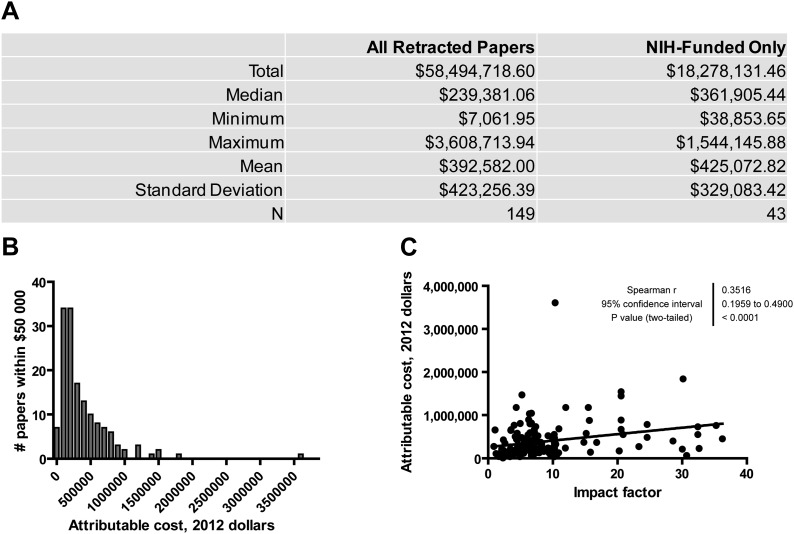
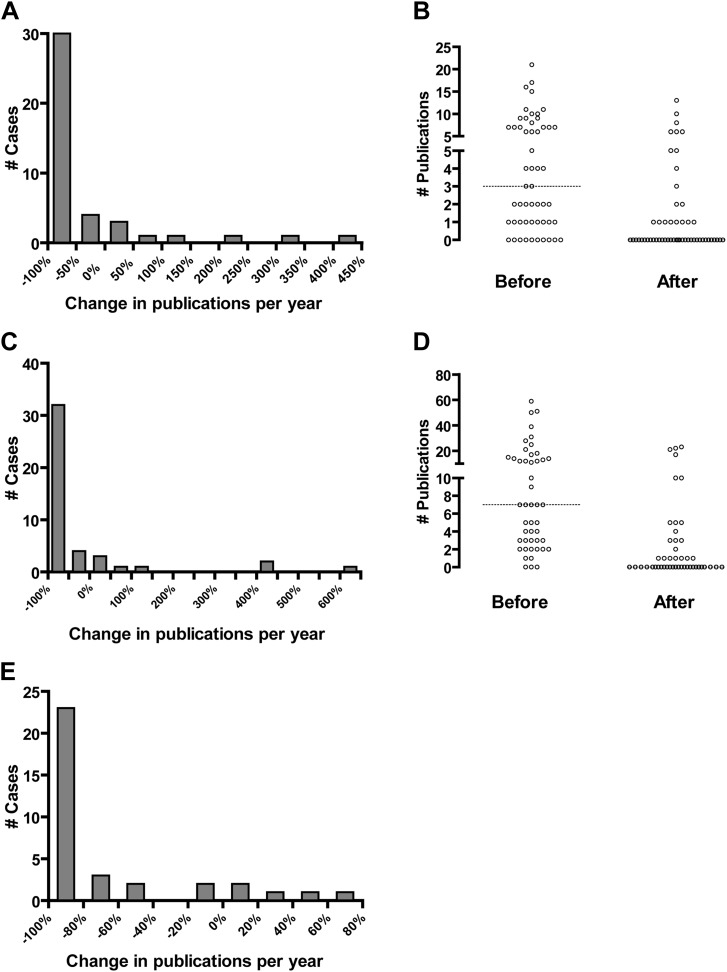
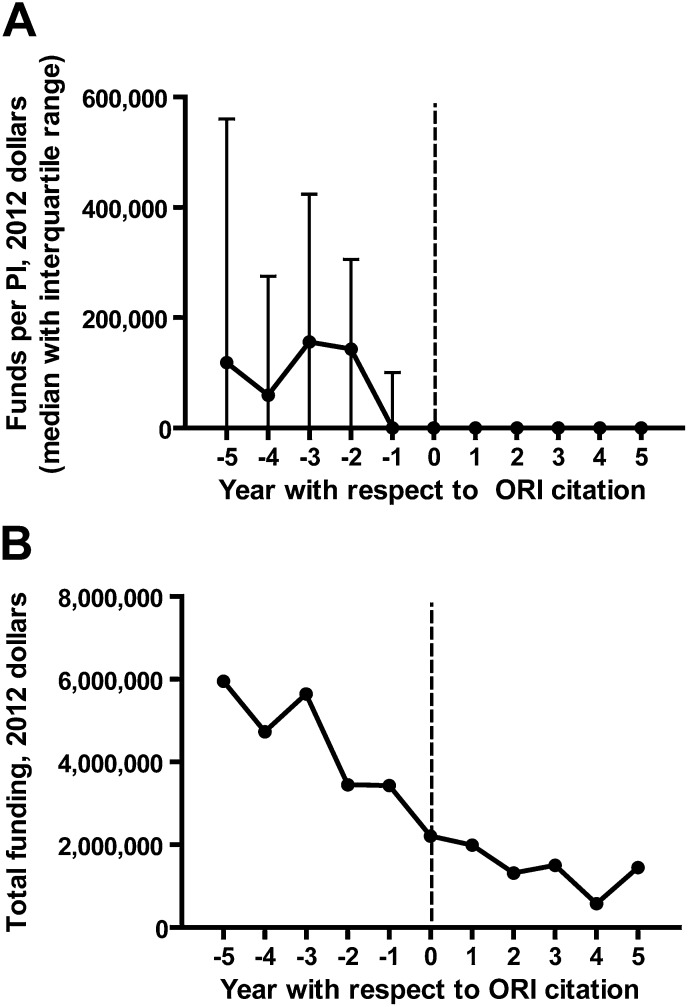
The number of retracted scientific articles has been increasing. Most retractions are associated with research misconduct, entailing financial costs to funding sources and damage to the careers of those committing misconduct. We sought to calculate the magnitude of these effects. Data relating to retracted manuscripts and authors found by the Office of Research Integrity (ORI) to have committed misconduct were reviewed from public databases. Attributable costs of retracted manuscripts, and publication output and funding of researchers found to have committed misconduct were determined. We found that papers retracted due to misconduct accounted for approximately $58 million in direct funding by the NIH between 1992 and 2012, less than 1% of the NIH budget over this period. Each of these articles accounted for a mean of $392,582 in direct costs (SD $423,256). Researchers experienced a median 91.8% decrease in publication output and large declines in funding after censure by the ORI.
Overview
The claims and statistics of this paper haven’t been checked yet.
Run the check — free, no account needed. It reads the open-access text and checks the sources it cites.
Integrity signals
Registry
Cites
Statistics
Figures
Verification
Claims the paper makes
The claims and statistics of this paper haven’t been checked yet.
Run the check — free, no account needed. It reads the open-access text and checks the sources it cites.
Claims other papers make about this one
Each is checked against this paper’s own text: does it say what the citing paper says it does?
The source backs part of the claim, not all of it — or backs it for a different population, condition or comparison.
In the citing paper
“retractions themselves impose substantial financial and scientific costs (Stern et al., 2014).”
From FLAWS: A Benchmark for Error Identification and Localization in Scientific Papers (2025) · cites this paper as Stern et al., 2014
Experimental — accuracy not yet measuredThe source backs part of the claim, not all of it — or backs it for a different population, condition or comparison.
In the citing paper
“Damage to reputation after retracting papers for any reason also plays a crucial role in faculty recruitment and philanthropy efforts [16].”
From Genetic Insights into the Economic Toll of Cell Line Misidentification: A Comprehensive Review (2026) · cites this paper as [16]
Experimental — accuracy not yet measuredThe cited source says what the claim attributes to it.
In the citing paper
“Stern and colleagues discussed the general financial costs of retracted articles that were funded by the NIH and calculated that each retracted articles accounted for a mean of $392,582 ± $423,256 [16].”
From Genetic Insights into the Economic Toll of Cell Line Misidentification: A Comprehensive Review (2026) · cites this paper as [16]
In the citing paper
“by one estimate $392 , 582 of financial loss for each retracted article [46].”
From BioFors: A Large Biomedical Image Forensics Dataset (2021) · cites this paper as [46]
Self-check
Percentages, sums and reported differences re-computed from the paper’s own numbers.
The self-check needs the paper’s full text.
Citations
Cites
5 retracted
Wakefield, A., Murch, S., Anthony, A., Linnell, J., Casson, D., Malik, M., Berelowitz, M., Dhillon, A., Thomson, M., Harvey, P., et al. (1998) · The Lancet · doi:10.1016/s0140-6736(97)11096-0 · Cited by 3,006
RetractedRetracted Science and the Retraction Index
Fang, F. C., & Casadevall, A. (2011) · Infection and Immunity · doi:10.1128/iai.05661-11 · Cited by 405 · cited 1×
“Impact factor exhibits a positive correlation with articles retracted for research misconduct or error (Fang and Casadevall, 2011; Fang et al., 2012).”
BackgroundSelf-citationRetractedRETRACTED: Transcription-Coupled Repair of 8-oxoGuanine
Page, F. L., Kwoh, E. E., Avrutskaya, A. V., Gentil, A., Leadon, S. A., Sarasin, A. R., & Cooper, P. K. (2000) · Cell · doi:10.1016/s0092-8674(00)80827-2 · Cited by 280 · cited 1×
“…this database that were retracted due to misconduct originating from the United States between 1992 and 2012, as well as one additional article originating from France (Le Page et al., 2000) that was retracted due to data falsification by a co-author (Steven Leadon) working in the United States.”
RetractedPage, F. L., Kwoh, E. E., Avrutskaya, A. V., Gentil, A., Leadon, S. A., Sarasin, A. R., & Cooper, P. K. (2005) · Cell · doi:10.1016/j.cell.2005.11.005 · Cited by 271
RetractedGene-expression patterns predict phenotypes of immune-mediated thrombosis
Potti, A., Bild, A., Dressman, H. K., LEWIS, D. A., Nevins, J. R., & Ortel, T. L. (2005) · Blood · doi:10.1182/blood-2005-07-2669 · Cited by 51 · cited 1×
“One outlier was found to have an attributable cost of $3.6 million (Potti et al., 2006).”
BackgroundInfluentialRetractedFanelli, D. (2009) · PLoS ONE · doi:10.1371/journal.pone.0005738 · Cited by 1,911 · cited 1×
“A meta-analysis of survey data indicates that approximately 2% of scientists admit to data falsification or manipulation on at least one occasion (Fanelli, 2009), whereas less than 0.02% of published data are retracted due to fabrication, falsification, or plagiarism (Claxton, 2005; Fang et al.,…”
InfluentialMisconduct accounts for the majority of retracted scientific publications
Fang, F. C., Steen, R. G., & Casadevall, A. (2012) · Proceedings of the National Academy of Sciences · doi:10.1073/pnas.1212247109 · Cited by 1,232 · cited 6×
“We examined the text of 291 articles originating from the United States and published between 1992 and 2012 that were retracted for research misconduct (Fang et al., 2012), and recorded NIH grant numbers cited in footnotes or acknowledgments.”
BackgroundInfluentialSelf-citationZarychanski, R., Abou-Setta, A. M., Turgeon, A. F., Houston, B. L., McIntyre, L., Marshall, J. C., & Fergusson, D. A. (2013) · JAMA · doi:10.1001/jama.2013.430 · Cited by 646 · cited 1×
“In another high-profile fraud case involving studies of the use of colloid for fluid resuscitation, there is evidence that the discredited body of work led to the use of a therapy with higher mortality and morbidity than standard care (Wise, 2013; Zarychanski et al., 2013).”
BackgroundWhy has the number of scientific retractions increased?
Steen, R. G., Casadevall, A., & Fang, F. C. (2013) · PLoS ONE · doi:10.1371/journal.pone.0068397 · Cited by 415 · cited 1×
“Whether the actual frequency of misconduct is increasing is unknown (Fanelli, 2013; Steen et al., 2013), but there is increasing interest in this subject given the occurrence of several high profile cases, the creation of websites that track retracted research, such as Retraction Watch (Oransky and…”
BackgroundSelf-citationLet's make science metrics more scientific
Lane, J. I. (2010) · Nature · doi:10.1038/464488a · Cited by 308 · cited 1×
“This problem has been noted previously (Falagas, 2006; Bourne and Fink, 2008; Lane, 2010; Polychronakos, 2012), and systems have been proposed for the disambiguation of authors with similar names (Fenner, 2011).”
Background
Research works printed but not linked: 1
- McWatt J. 2013. Measles epidemic costs health board £500,000. WalesOnline. http://www.walesonline.co.uk/news/wales-news/measles-epidemic-costs-health-board-4923520.
Cited by
Sorted by citations
Items 101–189 of 189
Butt, F., Núñez‐Núñez, M., Juhász, B., Bueno‐Cavanillas, A., & Khan, K. S. (2024) · Medicina de Familia SEMERGEN · doi:10.1016/j.semerg.2024.102333 · Cited by 6
Sanctions for Research Misconduct in Cardiothoracic Surgery Journals
Sade, R. M., Canver, C. C., D’Amico, T. A., Ellis, J., Fenton, K. N., Freeman, R., Fullerton, D. A., Harrison, L. W., Jaggers, J. J., Jones, J., et al. (2016) · The Annals of Thoracic Surgery · doi:10.1016/j.athoracsur.2016.02.003 · Cited by 6
The status of research ethics in social work
Ferguson, A., & Clark, J. J. (2018) · Journal of Evidence-Informed Social Work · doi:10.1080/23761407.2018.1478756 · Cited by 10
“Research violations result in an average of $392,582 in personal costs, a large decrease in publications and funding, as well as $58 million lost in direct National Institute of Health funding from 1992 to 2012 (Stern et al., 2014).”
BackgroundYuan, Z.-H., & Liu, Y. (2023) · Journal of Data and Information Science · doi:10.2478/jdis-2023-0022 · Cited by 7
Challenges and Advances in the Development of Cell Lines and Xenografts
Schweppe, R. E., & Korch, C. T. (2018) · Advances in Molecular Pathology · doi:10.1016/j.yamp.2018.07.004 · Cited by 6
Distributed Anti-Plagiarism Checker for Biomedical Images Based on Sensor Noise
Bruno, A., Cattaneo, G., Petrillo, U. F., Narducci, F., & Roscigno, G. (2017) · Lecture notes in computer science · doi:10.1007/978-3-319-70742-6_32 · Cited by 6
A comprehensive bibliometric analysis of retracted chapters based on OpenAlex database
Liu, Y., Liu, Y., & Yuan, Z.-H. (2025) · Scientometrics · doi:10.1007/s11192-025-05289-z · Cited by 7
“…indicators, misleading follow-up research, hindering scientific progress, eroding scientific reputation, wasting academic resources, affecting the academic careers of authors and co-authors (Brown et al., 2022; Lu et al., 2013; Stern et al., 2014; Szilagyi et al., 2022; S. B. Xu & G. W. Hu, 2022a).”
Abo‐elnour, D. E., Helal, M. M., Albalasy, A. A., Abdul‐Hafez, H. A., Abdelkader, A., El-Sherbini, E. R., Abdalla, Y. E., Abdelrahman, S. T., Salem, A. G., Sarhan, M. M., et al. (2025) · European Journal of Pediatrics · doi:10.1007/s00431-025-06578-8 · Cited by 5
MONet: Multi-Scale Overlap Network for Duplication Detection in Biomedical Images
Sabir, E., Nandi, S., AbdAlmageed, W., & Natarajan, P. (2022) · Proceedings - International Conference on Image Processing · doi:10.1109/icip46576.2022.9897213 · Cited by 5
“However the entire discovery process is a loss of time and money [12].”
BackgroundSvare, B. B. (2020) · Psychology and Developing Societies · doi:10.1177/0971333619900043 · Cited by 5
Scientific Misconduct: Falsification, Fabrication, and Misappropriation of Credit
Vaux, D. L. (2015) · Springer eBooks · doi:10.1007/978-981-287-079-7_26-1 · Cited by 5
How research ethics boards should monitor clinical research
Bediako, R. A., & Kaposy, C. (2019) · Accountability in Research · doi:10.1080/08989621.2019.1706048 · Cited by 5
An Assessment of Retractions as a Measure of Scientific Misconduct and Impact on Public Health Risks
Abritis, A. J. (2015) · Digital Commons - University of South Florida (University of South Florida) · Cited by 5
Retraction Experience, Lessons Learned, and Recommendations for Clinician Researchers
Kullgren, K. A., & Carter, B. D. (2015) · Clinical Practice in Pediatric Psychology · doi:10.1037/cpp0000120 · Cited by 5
Lemaitre, J. C., Popelka, D., Ribotta, B., Westlake, H. E., Chakrabarti, S., Li, X., Hanson, M. A., Jiang, H., Cara, F. D., Kurant, E., et al. (2025) · bioRxiv (Cold Spring Harbor Laboratory) · doi:10.1101/2025.07.07.663460 · Cited by 5
“The 14-year interval between the time the latest article was published and our study, during which scientific knowledge has advanced and other laboratories have had the opportunity to attempt replication, provides the necessary perspective to efficiently assess the validity of the claims.”
Genetic Insights into the Economic Toll of Cell Line Misidentification: A Comprehensive Review
Weiskirchen, R. (2026) · Medical Sciences · doi:10.3390/medsci14010025 · Cited by 4
“Stern and colleagues calculated that a retracted article accounts for a mean of $392,582 in direct costs (SD $423,256) [16].”
InfluentialCelebrating Failure: Learning lessons from a leading consumer behavior journal’s retractions
Moussa, S. (2022) · CBR - Consumer Behavior Review · doi:10.51359/2526-7884.2022.254032 · Cited by 5
“This is a question that was not addressed in this paper and needs to be looked into further (Stern et al., 2014).”
BackgroundCorrecting the scientific record
Lin, Y. (2023) · Pragmatics and Society · doi:10.1075/ps.22008.lin · Cited by 4
The ripple effect of retraction on an author’s collaboration network
Sharma, K., & Mukherjee, S. (2024) · Journal of Computational Social Science · doi:10.1007/s42001-024-00278-3 · Cited by 5
“jeopardize academic job opportunities (Stern et al., 2014).”
Gayle, A. A., & Shimaoka, M. (2017) · JMIR Public Health and Surveillance · doi:10.2196/publichealth.5980 · Cited by 4
“Academic institutions invest heavily in anticipation of future academic trends and research demands [21]; consequently, unanticipated changes in public policy or funding may result in large, unrecoupable capital expenditures and lost opportunity [22].”
BackgroundAn Exploratory Analysis of 4844 Withdrawn Articles and Their Retraction Notes
Toma, C., & Padureanu, L. (2021) · Open Journal of Social Sciences · doi:10.4236/jss.2021.911028 · Cited by 4
Sanctions for research misconduct in cardiothoracic surgery journals
Sade, R. M., Canver, C. C., D’Amico, T. A., Ellis, J., Fenton, K. N., Freeman, R., Fullerton, D. A., Harrison, L. W., Jaggers, J. J., Jones, J., et al. (2016) · Journal of Thoracic and Cardiovascular Surgery · doi:10.1016/j.jtcvs.2016.06.044 · Cited by 4
COVID-19: The urgent call for academic research in research ethics
Bommier, C., Stoeklé, H., & Hervé, C. (2021) · Ethics Medicine and Public Health · doi:10.1016/j.jemep.2021.100679 · Cited by 4
“The result has been an economic and human mess, as this model of neoliberal science seems to be completely out of step with the rigors of scientific knowledge [3,4].”
A Mummers Farce – Retractions of Medical Papers Conducted in Egyptian Institutions
Menshawey, R., Menshawey, E., & Mahamud, B. A. (2023) · Journal of Academic Ethics · doi:10.1007/s10805-023-09494-4 · Cited by 4
“Institutions must be made aware of the impact of retractions on their reputation, as well as develop policies on the matter of misconduct, and strictly enforce swift punitive actions when misconduct is identified- proactive engagement with the Editors of journals and avoidance of obstructing or delaying investigations…”
Developing ethical research behaviour in doctoral students
Furtak, A. (2022) · South African Journal of Bioethics and Law · doi:10.7196/sajbl.2022.v15i2.813 · Cited by 3
Uncovering the reasons of retraction in virology: a citation and Altmetric investigation
Malla, R. A., & Wani, Z. A. (2024) · Global Knowledge, Memory and Communication · doi:10.1108/gkmc-11-2023-0415 · Cited by 4
Characteristics of retracted articles in ophthalmology
Er‐Reguyeg, Y., Boudry, C., & Mouriaux, F. (2024) · Heliyon · doi:10.1016/j.heliyon.2024.e35460 · Cited by 3
Analyzing the Drivers Behind Retractions in Tuberculosis Research
García-Solórzano, F. O., Anticona, S. M. D. L. C., Pezua-Espinoza, M., Jesus, F. A. C., Sanabria-Pinilla, K. D., Veliz, C. C., Huayta-Alarcón, V. A., Mayta‐Tristán, P., & Lecca, L. W. (2025) · Publications · doi:10.3390/publications13010004 · Cited by 3
“Another study on the retraction of articles funded by entities in the United States showed that the retracted studies resulted in a waste of $58 million from the NIH budget and that, on average, each article cost $392,582 (Stern et al., 2014).”
Research Retraction and Its Communication
Xu, S. B., & Hu, G. (2023) · Advances in information quality and management · doi:10.4018/978-1-6684-7366-5.ch030 · Cited by 3
Psychometric properties of Persian version of the research misconduct questionnaire (PRMQ)
Shamsoddin, E., Janani, L., Ghamari, K., Kabiri, P., Gooshki, E. S., & Mesgarpour, B. (2020) · Journal of Medical Ethics and History of Medicine · doi:10.18502/jmehm.v13i18.4826 · Cited by 3
“Such misconducts not only can disturb the public health status of different individuals including the patients, but also can impose extensive financial costs on healthcare systems (3, 5, 6).”
BackgroundExperimental Analysis of the Pixel Non Uniformity (PNU) in SEM for Digital Forensics Purposes
Bruno, A., & Cattaneo, G. (2019) · Communications in computer and information science · doi:10.1007/978-3-030-30143-9_26 · Cited by 3
An Overview of Retraction Status and Reasons of Non-Cochrane Systematic Reviews in MedicinePreprint
Shi, Q., Wang, Z., Zhou, Q. X., Hou, R., Gao, X., He, S.-E., Zhao, S., Ma, Y., Zhang, X., Guan, Q., et al. (2020) · medRxiv · doi:10.1101/2020.10.10.20210666 · Cited by 3
Lemaitre, J. C., Popelka, D., Ribotta, B., Westlake, H. E., Chakrabarti, S., Xiaoxue, L., Hanson, M. A., Jiang, H., Cara, F. D., Kurant, E., et al. (2026) · eLife · doi:10.7554/elife.108403.1 · Cited by 3
Trends in Retraction of Orthopaedic Research Articles
Guirguis, P. G., Punreddy, A., Botros, M., Raiford, M. E., Humphrey, C. A., Gorczyca, J. T., & Ketz, J. P. (2024) · Journal of Bone and Joint Surgery · doi:10.2106/jbjs.24.00591 · Cited by 2
“Various studies have found that the number of retracted articles across all fi elds has dramatically increased in the last few decades due to an increase in the identi fi cation of errors in previously published articles and in the number of fl awed articles that are being published 7,16-26 .”
Scientific misconduct in health research: A systematic review and meta-analysis
Miquilussi, P. A., da Silva, R. D., Ravazzi, G. C., Taveira, K. V. M., Souza, S. F. D. S., Zeigelboim, B. S., Bubna, D. P., de Araujo, B. M. D. M., Santos, R. S., & de Araújo, C. M. (2026) · Research Methods in Medicine & Health Sciences · doi:10.1177/26320843261428315 · Cited by 2
“6,7 Therefore, this systematic review aimed to synthesize the evidence on the prevalence of scienti fi c misconduct in health research and to expand the scope of analysis by including a broader range of inadequate practices in sci-enti fi c work.”
Javed, F., & Almās, K. (2026) · Photodiagnosis and Photodynamic Therapy · doi:10.1016/j.pdpdt.2026.105514 · Cited by 2
Ethics in scientific publication: spectrum of misconducts
PINTO, A., Capasso, R., Gianluca, M. U. T. O., BIANCHI, E., Guida, F., RODRIGUEZ, R., ROSSI, C., & Vecchione, D. (2023) · Journal of Radiological Review · doi:10.23736/s2723-9284.22.00217-1 · Cited by 2
Writing the Roadmap for Medical Practice
Norman, G. A. V. (2024) · Anesthesiology Clinics · doi:10.1016/j.anclin.2024.02.006 · Cited by 2
Nine Ways to Detect Possible Scientific Misconduct in Research with Small (N < 200) Samples
Schumm, W. R., Crawford, D. W., Lockett, L., AlRashed, A., & bin Ateeq, A. (2021) · Psychology Research and Applications · doi:10.22606/pra.2021.32001 · Cited by 2
Faria, R. (2018) · Springer eBooks · doi:10.1007/978-3-319-73435-4_2 · Cited by 2
Research Integrity in the Context of Social Science Research in Africa
Nortjé, N., & Hoffmann, W. A. (2019) · Research ethics forum · doi:10.1007/978-3-030-15402-8_9 · Cited by 2
Research integrity: we are all accountable
Otto, C. M., Bradley, S. M., & Newby, D. E. (2015) · Heart · doi:10.1136/heartjnl-2015-307458 · Cited by 2
Retractions in Otolaryngology Publications
Edalati, S., Chung, T., Govindaraj, M., Kraft, D. L., Lerner, D. K., Signore, A. D., & Iloreta, A. M. (2025) · JAMA Otolaryngology–Head & Neck Surgery · doi:10.1001/jamaoto.2025.0018 · Cited by 3
Gawrysiak, M., Stępień, S., & Polcyn, J. (2024) · Management · doi:10.58691/man/189737 · Cited by 1
Retracted publications in medical education: systematic review
Barbosa, S., Paredes, S., & Ribeiro, L. V. P. T. (2024) · International Journal for Educational Integrity · doi:10.1007/s40979-024-00172-5 · Cited by 1
Drivers and penalties of retraction: An empirical study of Chinese medical researchers
Han, F., Ren, Y., Zhang, R., Feng, L., Wang, L., & Yuan, J. (2025) · Journal of Informetrics · doi:10.1016/j.joi.2025.101745 · Cited by 2
Sivakumar, I., Sivakumar, A., Gadde, P., Buzayan, M. M., Sharan, J., & Kamaraj, B. (2026) · Science Editing · doi:10.6087/kcse.391 · Cited by 1
“Beyond these immediate clinical consequences, the dissemination of false data undermines public trust in medical professionals and the underlying evidence base, while also generating significant legal, ethical, and financial risks for researchers and their institutions [7].”
How Journals and Institutions Can Work Together to Promote Responsible Conduct
Mah, E. (2014) · Journal of Microbiology and Biology Education · doi:10.1128/jmbe.v15i2.869 · Cited by 1
Othman, M. S., Ludin, A. F. M., Muralitharan, R. V., Yaacob, W. M. N. N. W. M., Liew, S. L., Zuha, A. A., Ra’oh, N. A., Ruzaini, N. R. A., & Norazmi, N. A. (2022) · Jurnal Intelek · doi:10.24191/ji.v17i1.15848 · Cited by 1
“Dishonest retractions are triggered by the discovery of data fabrication falsification or any other types of misconduct (Stern et al., 2014).”
BackgroundWhat Can We Learn from the Retraction of Medical Articles
Peterson, C., & NUGENT, K. M. (2024) · Medical Science Educator · doi:10.1007/s40670-024-02171-0 · Cited by 1
“They cost money, both in research money lost and in money and time spent on investigating misconduct [32].”
Reimagining the Path to Reproducibility for Cancer Research
Dang, C. V. (2020) · Cancer Research · doi:10.1158/0008-5472.can-20-2364 · Cited by 1
“It is particularly notable that the number of retracted scientific publications increased by 10-fold from 1975 to 2012 (3), with retractions between 1992–2012 estimated to carry a cost of approximately $58million (4).”
BackgroundTang, G. (2024) · Qeios · doi:10.32388/8wgit6 · Cited by 1
FLAWS: A Benchmark for Error Identification and Localization in Scientific Papers
Xi, S., Rao, V., Payan, J., & Shah, N. B. (2025) · arXiv · doi:10.48550/arxiv.2511.21843
“Such oversights can have lasting consequences: erroneous publications may continue to shape subsequent research even after corrections or retractions (Shepperd and Yousefi, 2023), while retractions themselves impose substantial financial and scientific costs (Stern et al., 2014).”
Woolston, C. (2014) · Nature · doi:10.1038/512351f
Ethical Issues in Oral Sciences
Lins-Kusterer, L. (2015) · International Journal of Oral and Dental Health · doi:10.23937/2469-5734/1510005
“The consequences of misconduct in sciences have been systematically studied [10].”
The Economics of Reproducibility in
Freedman, L. P., Cockburn, I., & Simcoe, T. S. (2015)
Bioinformatics and emerging statistical tools for plant metabolome and microbiome
Parray, J. A., & Shameem, N. (2020) · Elsevier eBooks · doi:10.1016/b978-0-12-817109-7.00007-9
Knowledge of research ethics guidelines in Darling Downs health clinical staff
Rouse, D. (2026) · University of Southern Queensland ePrints (University of Southern Queensland) · doi:10.26192/q5yvx
Original Writing in a Remix Culture
Early, K. W., Seliskar, H. V., White, D. A., Mead, J. L., & Campbell, W. C. (2021) · Advances in mobile and distance learning book series · doi:10.4018/978-1-7998-7653-3.ch009
The AHA/ACC Consensus Conference: A Roadmap for Success or Just a Long Road?
Douglas, A., & Capdeville, M. J. (2021) · Journal of Cardiothoracic and Vascular Anesthesia · doi:10.1053/j.jvca.2021.07.050
An Overview of Quality of Research in COVID19
Mallick, U. (2022) · Springer eBooks · doi:10.1007/978-3-030-90065-6_20
Kline, J. A. (2018) · Faculty Opinions – Post-Publication Peer Review of the Biomedical Literature · doi:10.3410/f.726772120.793551762
Riminucci, M., & Corsi, A. (2019) · Faculty Opinions – Post-Publication Peer Review of the Biomedical Literature · doi:10.3410/f.726772120.793558467
Assessing Research Misconduct in Iran: A Perspective from Iranian Medical Faculty MembersPreprint
Shamsoddin, E., Torkashvand, Z., Sofi‐Mahmudi, A., Janani, L., Kabiri, P., Gooshki, E. S., & Mesgarpour, B. (2021) · Research Square · doi:10.21203/rs.3.rs-307806/v1
Chessler, S. D. (2019) · Faculty Opinions – Post-Publication Peer Review of the Biomedical Literature · doi:10.3410/f.726772120.793557759
Golemis, E. A. (2019) · Faculty Opinions – Post-Publication Peer Review of the Biomedical Literature · doi:10.3410/f.726772120.793559699
(2018) · Elsevier eBooks · doi:10.1016/b978-0-08-102474-4.00023-6
Assessing Research Misconduct in Iran: A Perspective from Iranian Medical Faculty Members
Shamsoddin, E., Torkashvand-Khah, Z., Sofi‐Mahmudi, A., Janani, L., Kabiri, P., Gooshki, E. S., & Mesgarpour, B. (2022) · South Asian Research Journal of Applied Medical Sciences · doi:10.36346/sarjams.2022.v04i06.001
General High-Pass Convolution: A Novel Convolutional Layer for Image Manipulation Detection
Tang, Z., & Liu, Y. (2022) · Lecture notes in computer science · doi:10.1007/978-3-031-18907-4_11
Bennett, M. (2023) · Springer eBooks · doi:10.1007/978-981-19-9240-7_1
Retrakcie vo vedeckom publikovaní
Stožická, Z., & Dobbersteinová, J. (2023) · ITlib Informačné technológie a knižnice · doi:10.52036/1335793x.2023.sc.34-49
Gbagbo, F. Y. (2023) · African Journal of Bioethics · doi:10.58177/ajb230008
Retraction Notices of COVID-19 Publications
Tripathi, M., Awasthi, S., Nisha, F., & Das, S. (2023) · Annals of Library and Information Studies · doi:10.56042/alis.v70i3.969
Alam, Z., Desai, K., Maddali, A., Sivan, V., Kumar, R. P., O’Malley, G. R., & Patel, N. V. (2024) · Neurosurgical Review · doi:10.1007/s10143-024-03008-5
“Research practices have been investigated diffusely throughout medicine, but there is no current literature on the use of open science practices in the neurosurgical literature.”
Retracted articles in endodontic-related literature: an analysis of 60 cases
Mergoni, G., Ghezzi, B., Toffoli, A. S., & Manfredi, M. (2025) · Minerva Dental and Oral Science · doi:10.23736/s2724-6329.24.05043-5
RetractedRetraction Notices from NIH Funded Studies: Insights and Lessons
Peterson, C., Alexander, R. L., Fortner, M., Elhawi, M. A., & NUGENT, K. M. (2025) · Journal of Electronic Resources in Medical Libraries · doi:10.1080/15424065.2025.2582838
“In the interim, important decisions in science and medicine can be based on faulty information, not to mention the loss of resources that come from faulty studies (Avenell et al., 2019; Kataoka et al., 2022; Stern et al., 2014).”
Academic Misconduct in China’s Physiology and Medicine Sector: Trends and Challenges
Bo, Y., Zhang, X., & Wang, X. (2025) · Journal of Academic Ethics · doi:10.1007/s10805-025-09694-0
“Between 1992 and 2012, the aver - age cost attributable to retracted NIH-funded articles was $392,582 (Stern et al., 2014 ).”
Why social norms matter in science: Determinants of misconduct in German-speaking Europe
Oberhauser, V., Velicu, A., & Rauhut, H. (2025) · Social Science Research · doi:10.1016/j.ssresearch.2025.103292 · Cited by 1
Contaminating the evidence: the reproducibility crisis and fraud in infectious disease research
Watkins, R. R. (2026) · Infection · doi:10.1007/s15010-026-02730-0 · Cited by 1
“Retracted papers cost a mean of $392,582, which added up to approximately $58 million in direct funding by the National Institutes of Health (NIH) between 1992 and 2012 [3].”
Lemaitre, J. C., Popelka, D., Ribotta, B., Westlake, H. E., Chakrabarti, S., Xiaoxue, L., Hanson, M. A., Jiang, H., Cara, F. D., Kurant, E., et al. (2026) · eLife · doi:10.7554/elife.108403
A meta-ethnographic synthesis of researchers' views on scholarly misconduct in the health sciences
Shahid, S. H. B., & Sinnamon, L. S. (2026) · Library & Information Science Research · doi:10.1016/j.lisr.2026.101399
Current Status of Research Misconduct: Causes, Consequences and Prevention Procedures
Majhi, R., Islam, E., & Dixit, P. (2026) · International Journal of Technology & Emerging Research · doi:10.64823/ijter.2604013
Research Misconduct in Academia: Examining the Views of Academics in a Public University in Ghana
Gbagbo, F. Y., Agordoh, P. D., Manful, E., Kearns, L., & Redman, B. K. (2026) · Science and Engineering Ethics · doi:10.1007/s11948-026-00604-0
“Research misconduct (RM), on the other hand, refers to a variety of ethical violations, including purposeful data fabrication (making up data), manipulation, falsifica - tion and plagiarism (Stern et al., 2014).”
Sultanaamin, K., Balneaves, L. G., Kumar, S., Leach, M., Su, K., Veziari, Y., Wardle, J., Cramer, H., & Ng, J. Y. (2026) · Integrative Medicine Research · doi:10.1016/j.imr.2026.101385
The landscape of problematic papers in the field of non-coding RNA
Lou, Y., Zhou, Z., Wang, G., Shen, Z., & Li, M. (2026) · Journal of Informetrics · doi:10.1016/j.joi.2026.101851 · Cited by 1
“They can mislead scientific progress [3], policy formulation [19], erode public trust [31], and result in a waste of resources [35].”
Balachandran, P., Janakiram, C., Bhan, A., Thankappan, K. R., Kumar, N., & Menon, J. C. (2026) · BMJ Open · doi:10.1136/bmjopen-2026-117248
“15 Such examples underscore the profound clinical, financial and population-level consequences of RI breaches.”
Korch, C. T., Capes-Davis, D., & Shen, C. (2026) · Current Protocols · doi:10.1002/cpz1.70439
China's Price of Retraction: Wasted Research Funding and Beyond
Xu, S. B., & Hu, G. (2026) · Learned Publishing · doi:10.1002/leap.2102
“However, little is known globally, and particularly in China, about the extent to which retracted publications are funded (Tang et al. 2023) or how much monetary loss may result from funded- but-retracted publications (Stern et al. 2014).”
Lemaitre, J. C., Popelka, D., Ribotta, B., Westlake, H. E., Chakrabarti, S., Xiaoxue, L., Hanson, M. A., Jiang, H., Cara, F. D., Kurant, E., et al. (2026) · eLife · doi:10.7554/elife.108403.2
Metadata
- Authors
- Stern, A. M., Casadevall, A., Steen, R. G., & Fang, F. C.
- Affiliations
- University of Pennsylvania (US)
- Albert Einstein College of Medicine (US)
- MediCC!, Medical Communications Consultants, LLC, Chapel Hill, United States
- University of Washington (US)
- Corresponding author
- Fang, Ferric C
- Venue
- eLife
- Publisher
- eLife Sciences Publications, Ltd
- Published
- 2014-08-14
- Volume
- 3
- Pages
- e02956-e02956
- ISSN
- 2050-084X (ISSN-L)
- PMC
- PMC4132287
- OpenAlex
- W1999131703
- Cited by
- 189
- References
- 33
- Citations by year
- 2026: 17 · 2025: 14 · 2024: 16 · 2023: 19 · 2022: 16 · 2021: 21 · 2020: 16 · 2019: 19 · 2018: 11 · 2017: 8 · 2016: 14 · 2015: 14 · 2014: 4
- FWCI
- 37.24
- Type
- journal article
- Language
- en
- Open access
- gold
- doi.org
- Licence
- Locations
- eLife (publishedVersion, cc-by)
- PubMed Central (publishedVersion, cc-by)
- PubMed (publishedVersion)
- DOAJ (DOAJ: Directory of Open Access Journals) (submittedVersion, cc-by-sa)
- Funders
- National Institutes of Health
- Topics
- Social Sciences › Education › Academic integrity and plagiarism
- Social Sciences › Library and Information Sciences › Academic Publishing and Open Access
- Social Sciences › Library and Information Sciences › scientometrics and bibliometrics research
- Keywords
- research misconduct, retracted article, financial costs, research funding, Office of Research Integrity, publication output, career outcomes, NIH funding, research integrity
- MeSH terms
- Humans, Retraction of Publication as Topic, United States, Scientific Misconduct, Databases, Factual, United States Office of Research Integrity, Biomedical Research
About these checks
Registry, retraction, Cites and statistics results are computed, not judged, with one exception: a printed reference that no index lists is read once by a model before it counts as a citation error. Claims are extracted by a model and kept only when their quote appears verbatim in the text; each cited source is then checked, with a model’s help, for whether it says what the claim relies on. Those verdicts can be wrong — read the claim’s quote and the cited source before relying on one.
Statistics and arithmetic are recomputed, not judged.
Confidence bands are shown only for fields calibrated on our annotated test set. None is calibrated yet, so no band is shown.
What counts as a claim ›How we measure confidence ›How we check this ›
Are you an author, or do you see a problem with this page? Request a review
