

The DOI matches its Crossref record; 92 of the 92 references it cites were found in a registry or an index.
Deconstruction of the Ras switching cycle through saturation mutagenesis
Open accessAbstract
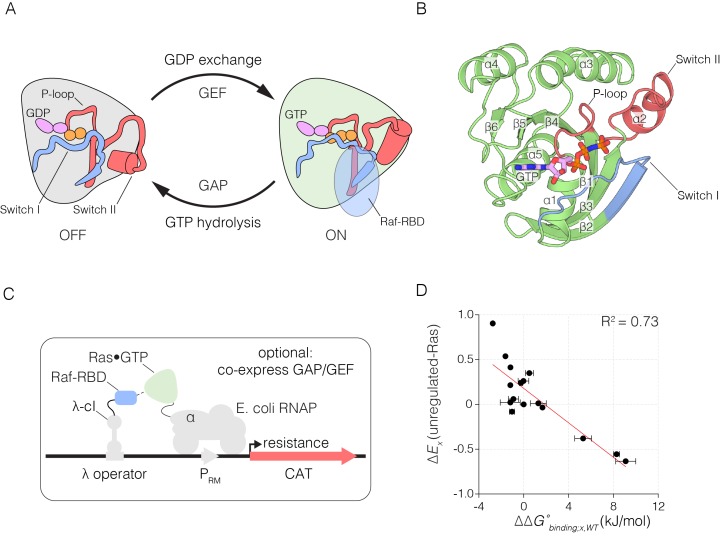
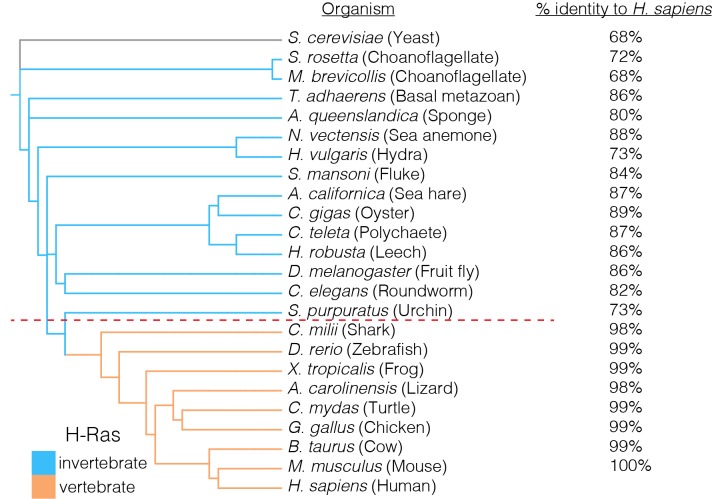
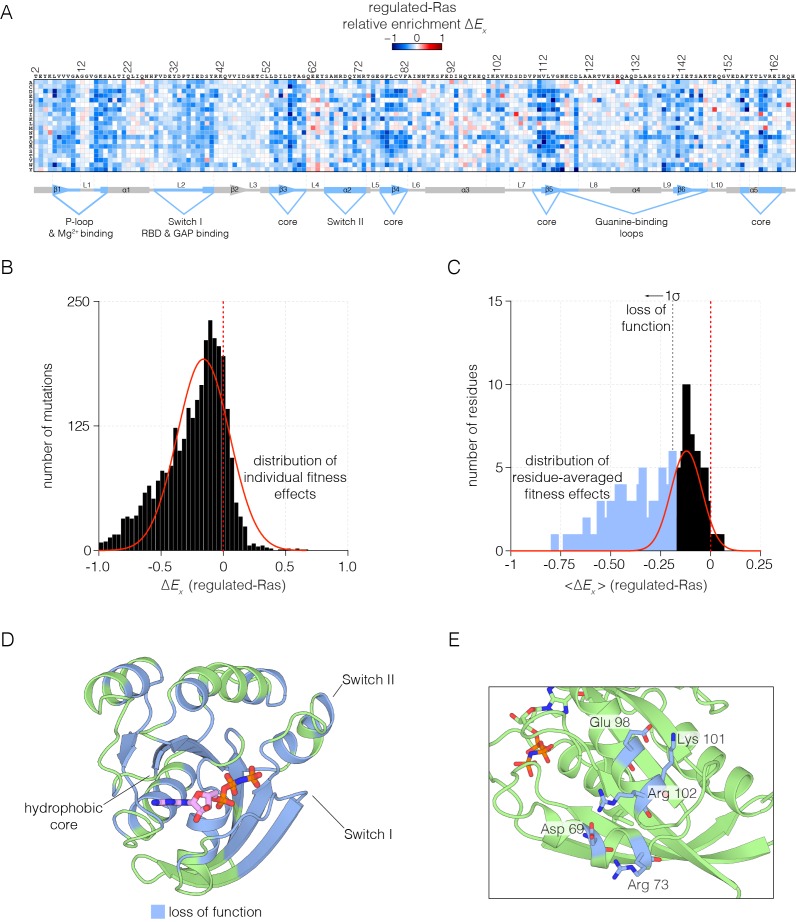
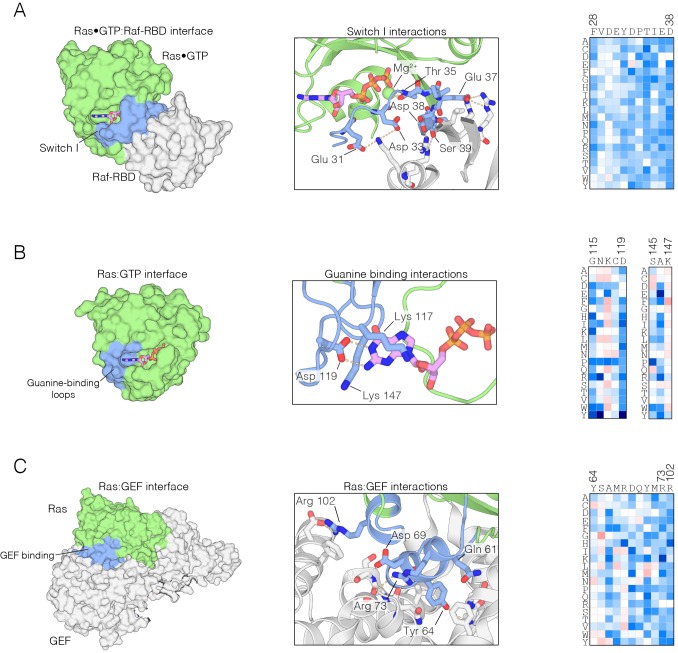
Ras proteins are highly conserved signaling molecules that exhibit regulated, nucleotide-dependent switching between active and inactive states. The high conservation of Ras requires mechanistic explanation, especially given the general mutational tolerance of proteins. Here, we use deep mutational scanning, biochemical analysis and molecular simulations to understand constraints on Ras sequence. Ras exhibits global sensitivity to mutation when regulated by a GTPase activating protein and a nucleotide exchange factor. Removing the regulators shifts the distribution of mutational effects to be largely neutral, and reveals hotspots of activating mutations in residues that restrain Ras dynamics and promote the inactive state. Evolutionary analysis, combined with structural and mutational data, argue that Ras has co-evolved with its regulators in the vertebrate lineage. Overall, our results show that sequence conservation in Ras depends strongly on the biochemical network in which it operates, providing a framework for understanding the origin of global selection pressures on proteins.
Overview
The claims and statistics of this paper haven’t been checked yet.
Run the check — free, no account needed. It reads the open-access text and checks the sources it cites.
Integrity signals
Registry
Cites
Statistics
Figures
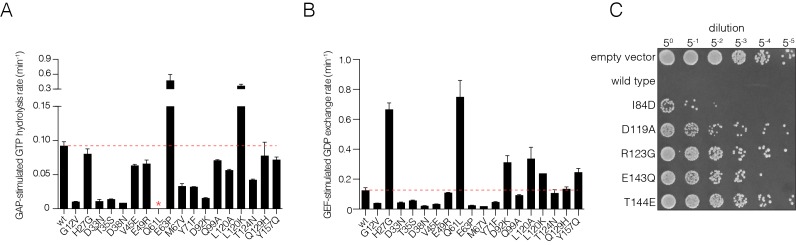
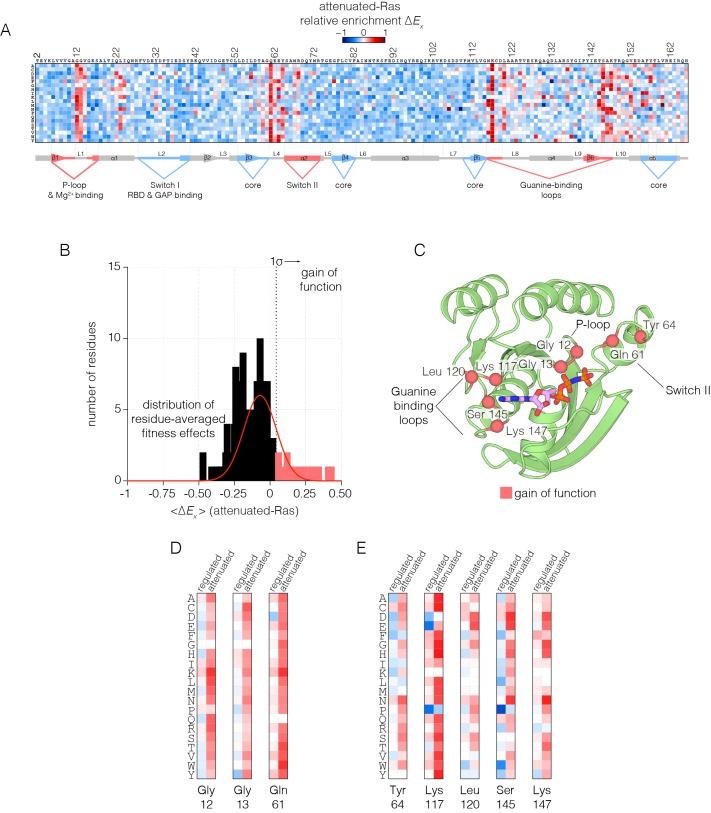
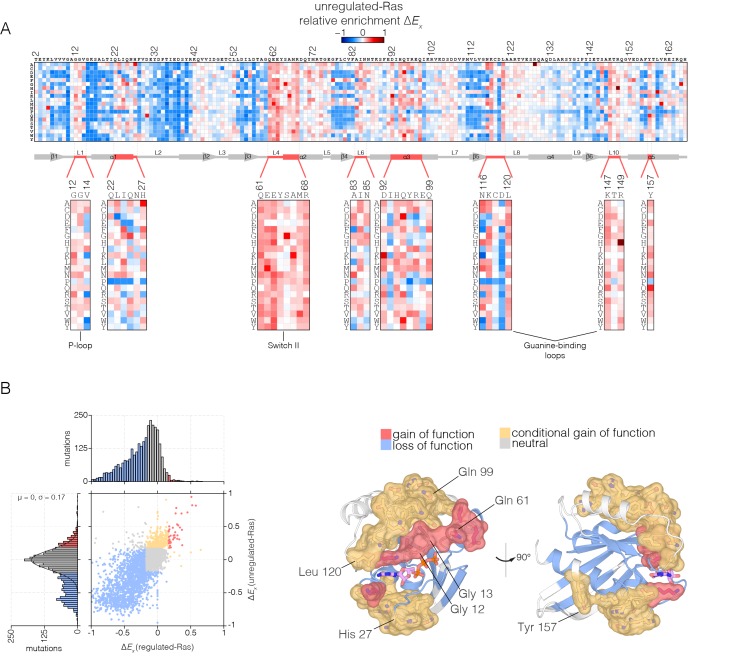
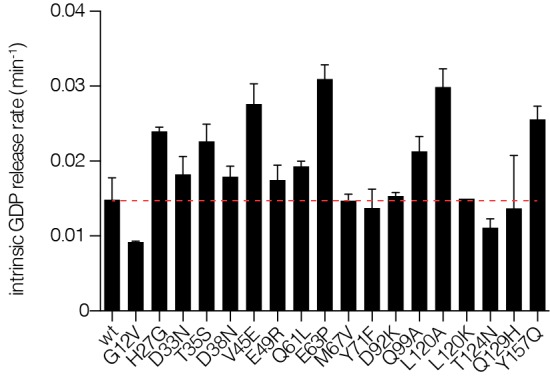
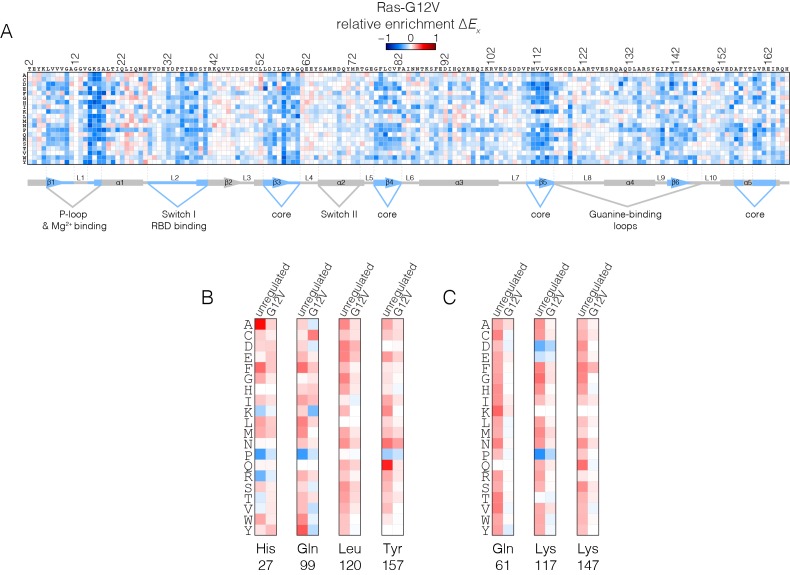
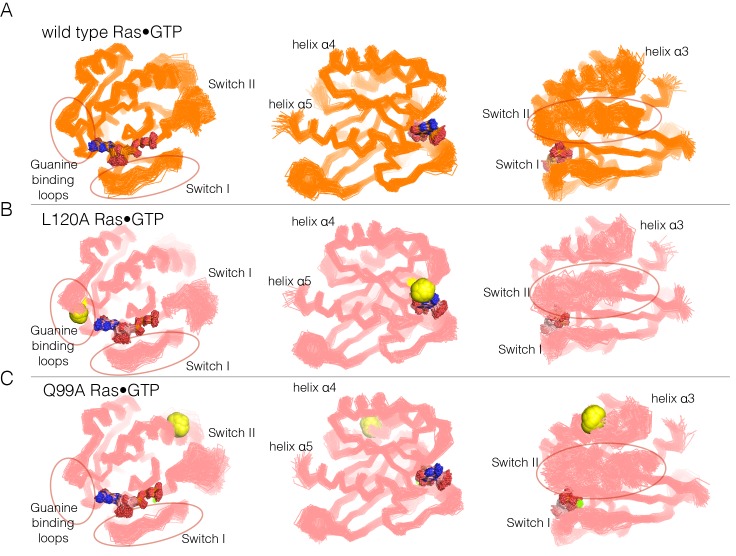
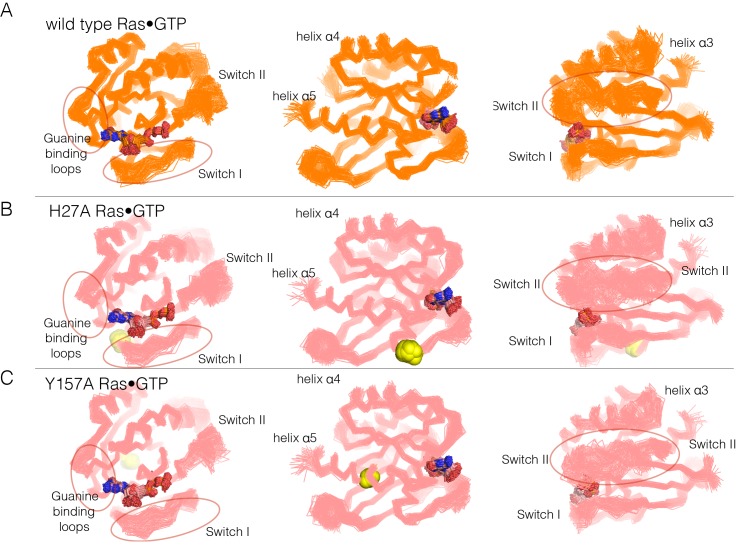
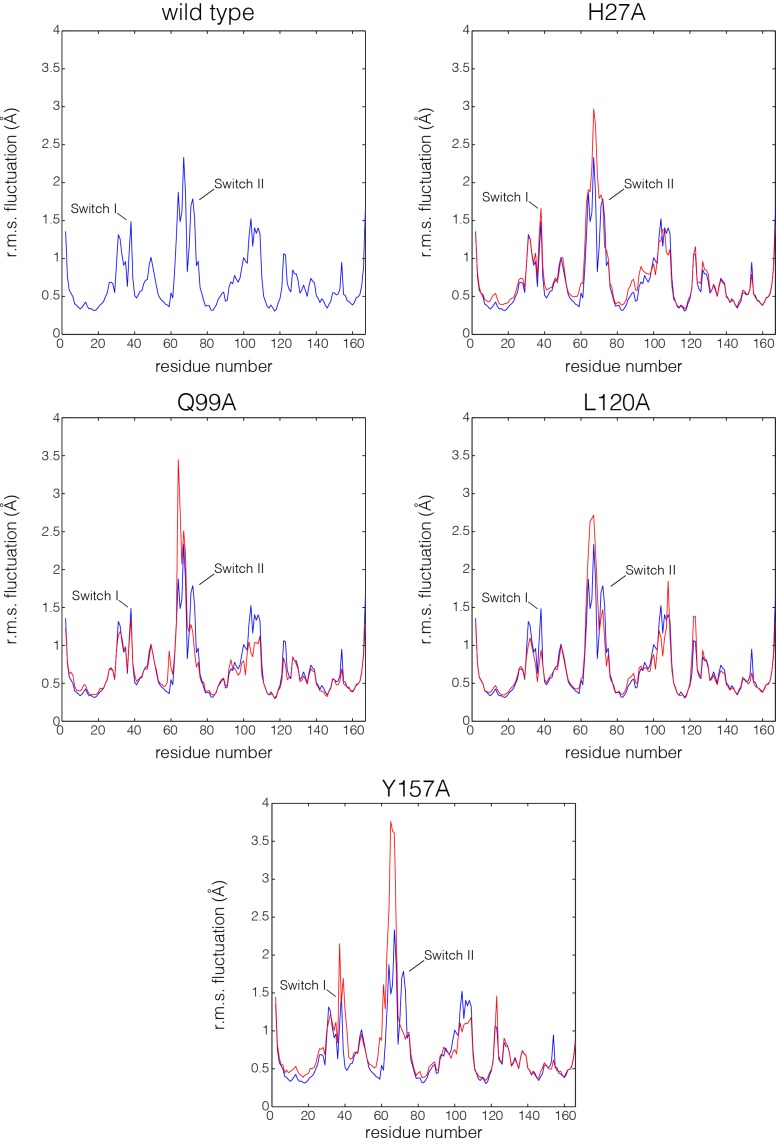
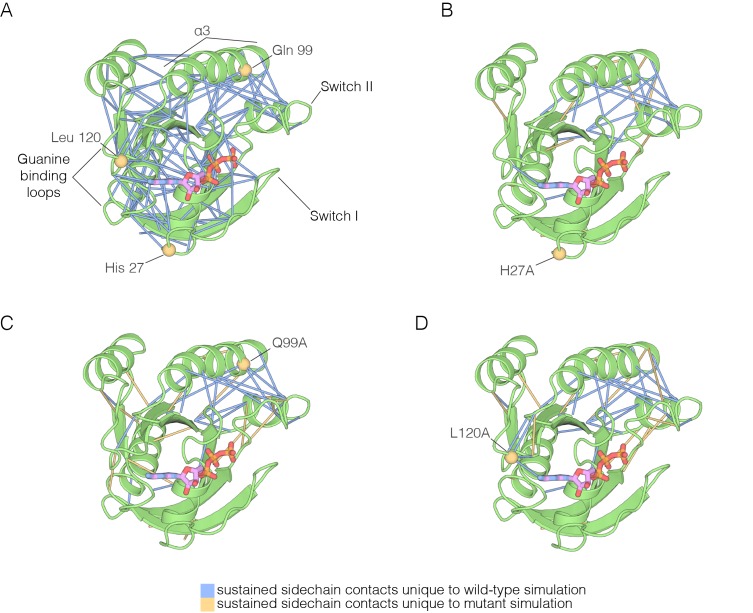
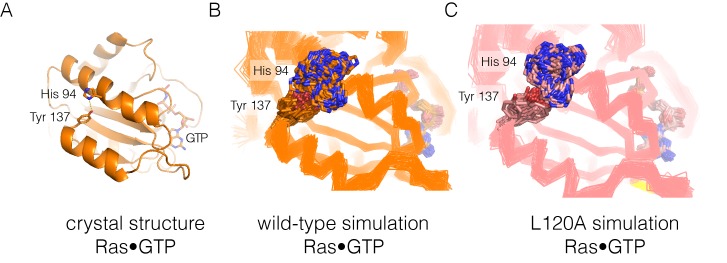
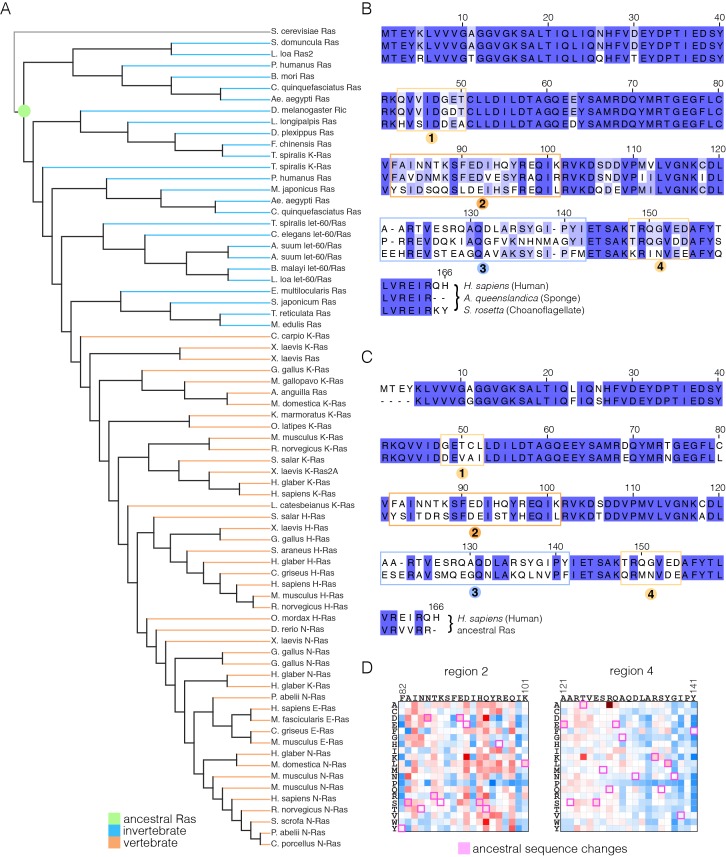
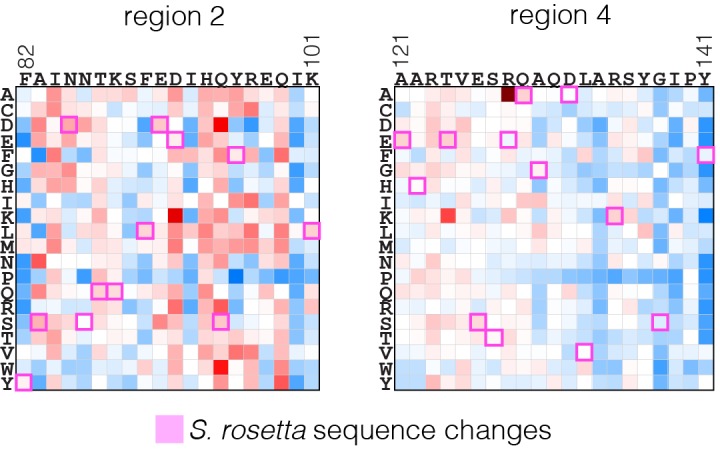
Verification
Claims the paper makes
The claims and statistics of this paper haven’t been checked yet.
Run the check — free, no account needed. It reads the open-access text and checks the sources it cites.
Claims other papers make about this one
Each is checked against this paper’s own text: does it say what the citing paper says it does?
In the citing paper
“RAS mutants were once viewed as being ‘locked’ in the GTP-bound ‘on’ state, impervious to GAP-stimulated or intrinsic GTP hydrolysis, and hence undruggable. However, detailed structural and biochemical analyses of various RAS mutants associated with cancer and ‘RASopathies’”
From The current state of the art and future trends in RAS-targeted cancer therapies (2022) · cites this paper as [48]
In the citing paper
“Some oncogenic mutants, notably KRASG12C (G12C) and, to a lesser extent, KRASG12D (G12D), retain significant intrinsic GTPase activity.”
From SHP2 inhibition diminishes KRASG12C cycling and promotes tumor microenvironment remodeling (2021) · cites this paper as Bandaru et al., 2017
Self-check
Percentages, sums and reported differences re-computed from the paper’s own numbers.
The self-check needs the paper’s full text.
Citations
Cites
RAxML version 8: a tool for phylogenetic analysis and post-analysis of large phylogenies
Stamatakis, A. (2014) · Bioinformatics · doi:10.1093/bioinformatics/btu033 · Cited by 32,291
Coot : model-building tools for molecular graphics
Emsley, P., & Cowtan, K. (2004) · Acta Crystallographica Section D Biological Crystallography · doi:10.1107/s0907444904019158 · Cited by 30,571
PHENIX : a comprehensive Python-based system for macromolecular structure solution
Adams, P. D., Afonine, P. V., Bunkóczi, G., Chen, V. B., Davis, I. W., Echols, N., Headd, J. J., Hung, L.-W., Kapral, G. J., Grosse-Kunstleve, R. W., et al. (2010) · Acta Crystallographica Section D Biological Crystallography · doi:10.1107/s0907444909052925 · Cited by 23,716
Kabsch, W. (2010) · Acta Crystallographica Section D Biological Crystallography · doi:10.1107/s0907444909047337 · Cited by 16,463
Overview of the CCP 4 suite and current developments
Winn, M. D., Ballard, C. C., Cowtan, K. D., Dodson, E. J., Emsley, P., Evans, P. R., Keegan, R. M., Krissinel, E. B., Leslie, A. G. W., McCoy, A., et al. (2011) · Acta Crystallographica Section D Biological Crystallography · doi:10.1107/s0907444910045749 · Cited by 12,353
REFMAC 5 for the refinement of macromolecular crystal structures
Murshudov, G. N., Skubák, P., Lebedev, A. A., Pannu, N. S., Steiner, R. A., Nicholls, R. A., Winn, M., Long, F., & Vagin, A. A. (2011) · Acta Crystallographica Section D Biological Crystallography · doi:10.1107/s0907444911001314 · Cited by 8,415
PHENIX: a comprehensive Python-based system for macromolecular structure solution
Adams, P. D., Afonine, P. V., Bunkòczi, G., Chen, V. B., Davis, I., Echols, N., Headd, J. J., Hung, L., Kapral, G. J., Grosse‐Kunstleve, R. W., et al. (2012) · International Tables for Crystallography · doi:10.1107/97809553602060000865 · Cited by 7,334
Improved side-chain torsion potentials for the Amber ff99SB protein force field
Lindorff-Larsen, K., Piana, S., Palmo, K., Maragakis, P., Klepeis, J., Dror, R., & Shaw, D. (2010) · Proteins: Structure, Function, and Bioinformatics · doi:10.1002/prot.22711 · Cited by 6,056
The Pfam protein families database: towards a more sustainable future
Finn, R. D., Coggill, P., Eberhardt, R. Y., Eddy, S. R., Mistry, J., Mitchell, A. L., Potter, S. C., Punta, M., Qureshi, M., Sangrador-Vegas, A., et al. (2016) · Nucleic Acids Research · doi:10.1093/nar/gkv1344 · Cited by 5,975
Scaling and assessment of data quality
Evans, P. (2005) · Acta Crystallographica Section D Biological Crystallography · doi:10.1107/s0907444905036693 · Cited by 4,391
Research works printed but not linked: 1
- Case, 2014, Amber 14
Cited by
Sorted by citations
Disease variant prediction with deep generative models of evolutionary data
Frazer, J., Notin, P., Dias, M., Gomez, A., Min, J. K., Brock, K., Gal, Y., & Marks, D. S. (2021) · Nature · doi:10.1038/s41586-021-04043-8 · Cited by 791
Language models enable zero-shot prediction of the effects of mutations on protein function
Meier, J., Rao, R., Verkuil, R., Liu, J., Sercu, T., & Rives, A. (2021) · doi:10.1101/2021.07.09.450648 · Cited by 635
Deep generative models of genetic variation capture the effects of mutations
Riesselman, A. J., Ingraham, J. B., & Marks, D. S. (2018) · Nature Methods · doi:10.1038/s41592-018-0138-4 · Cited by 601
The current state of the art and future trends in RAS-targeted cancer therapies
Punekar, S. R., Velcheti, V., Neel, B. G., & Wong, K.-K. (2022) · Nature Reviews Clinical Oncology · doi:10.1038/s41571-022-00671-9 · Cited by 549
Learning the protein language: Evolution, structure, and function
Bepler, T., & Berger, B. (2021) · Cell Systems · doi:10.1016/j.cels.2021.05.017 · Cited by 483
Metadata
- Authors
- Bandaru, P., Shah, N. H., Bhattacharyya, M., Barton, J. P., Kondo, Y., Cofsky, J. C., Gee, C. L., Chakraborty, A. K., Kortemme, T., Ranganathan, R., & Kuriyan, J.
- Affiliations
- QB3 (US)
- Ragon Institute of MGH, MIT and Harvard (US)
- University of California, San Francisco (US)
- The University of Texas Southwestern Medical Center (US)
- Corresponding author
- Ranganathan, Rama
- Kuriyan, John
- ORCID
- Venue
- eLife
- Publisher
- eLife Sciences Publications, Ltd
- Published
- 2017-07-07
- Volume
- 6
- ISSN
- 2050-084X (ISSN-L)
- PMC
- PMC5538825
- OpenAlex
- W2727251566
- Cited by
- 117
- References
- 91
- Citations by year
- 2026: 7 · 2025: 16 · 2024: 7 · 2023: 14 · 2022: 16 · 2021: 19 · 2020: 11 · 2019: 11 · 2018: 13 · 2017: 3
- FWCI
- 4.25
- Type
- journal article
- Language
- en
- Open access
- gold
- doi.org
- Licence
- Locations
- eLife (publishedVersion, cc-by)
- PubMed Central (publishedVersion, cc-by)
- PubMed (publishedVersion)
- OSTI OAI (U.S. Department of Energy Office of Scientific and Technical Information) (submittedVersion)
- DOAJ (DOAJ: Directory of Open Access Journals) (submittedVersion, cc-by-sa)
- DSpace@MIT (Massachusetts Institute of Technology) (submittedVersion, cc-by-nc)
- eScholarship (California Digital Library) (submittedVersion)
- Funders
- Howard Hughes Medical Institute
- Damon Runyon Cancer Research Foundation
- National Institutes of Health
- Topics
- Life Sciences › Biochemistry, Genetics and Molecular Biology › Molecular Biology › Protein Kinase Regulation and GTPase Signaling
- Life Sciences › Biochemistry, Genetics and Molecular Biology › Genetics › Evolution and Genetic Dynamics
- Life Sciences › Biochemistry, Genetics and Molecular Biology › Molecular Biology › Protein Structure and Dynamics
- Keywords
- Ras proteins, deep mutational scanning, saturation mutagenesis, GTPase-activating protein, nucleotide exchange factor, mutational tolerance, sequence conservation
- MeSH terms
- DNA Mutational Analysis, Humans, Mutagenesis, Conserved Sequence, ras Proteins, Evolution, Molecular, Protein Interaction Maps
About these checks
Registry, retraction, Cites and statistics results are computed, not judged, with one exception: a printed reference that no index lists is read once by a model before it counts as a citation error. Claims are extracted by a model and kept only when their quote appears verbatim in the text; each cited source is then checked, with a model’s help, for whether it says what the claim relies on. Those verdicts can be wrong — read the claim’s quote and the cited source before relying on one.
Statistics and arithmetic are recomputed, not judged.
Confidence bands are shown only for fields calibrated on our annotated test set. None is calibrated yet, so no band is shown.
What counts as a claim ›How we measure confidence ›How we check this ›
Are you an author, or do you see a problem with this page? Request a review
