

The DOI matches its Crossref record; 54 of the 54 references it cites were found in a registry or an index.
Glucose inhibits cardiac muscle maturation through nucleotide biosynthesis
Open accessAbstract
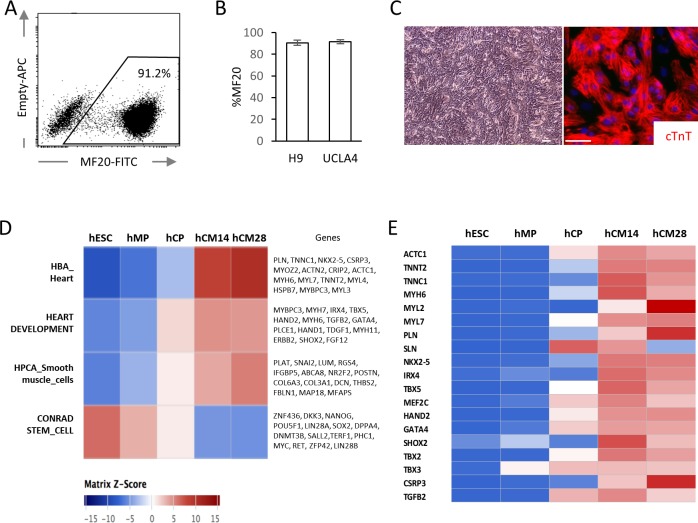
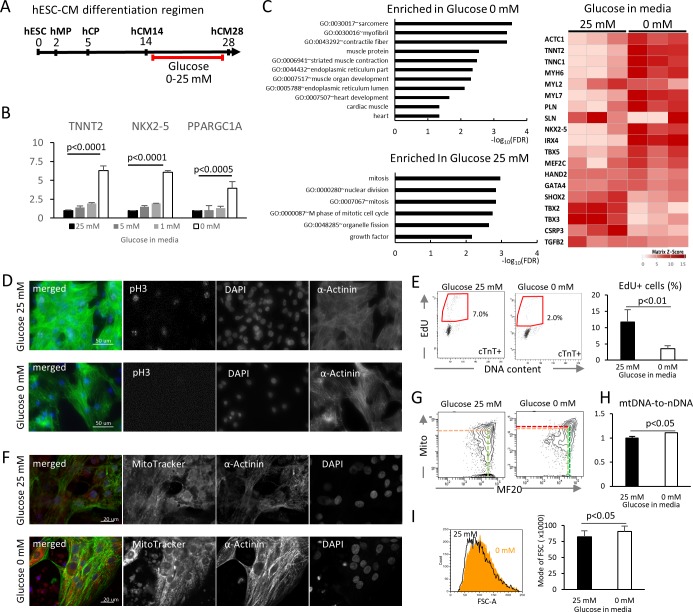
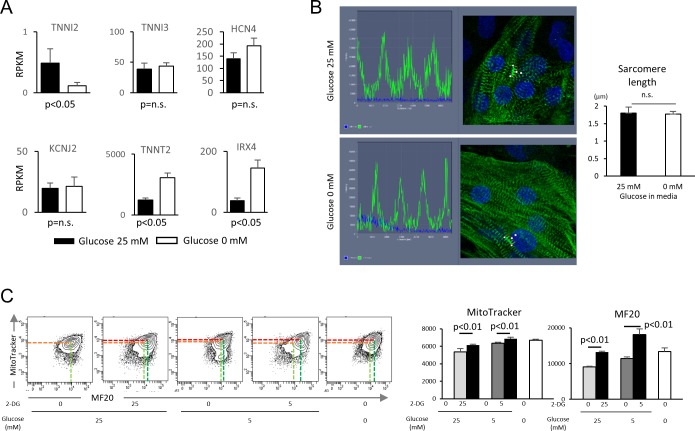
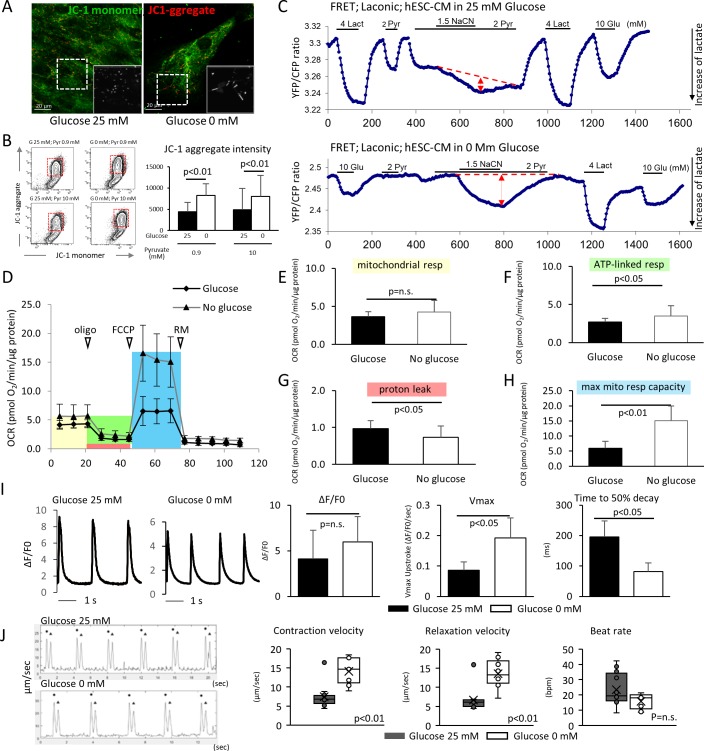
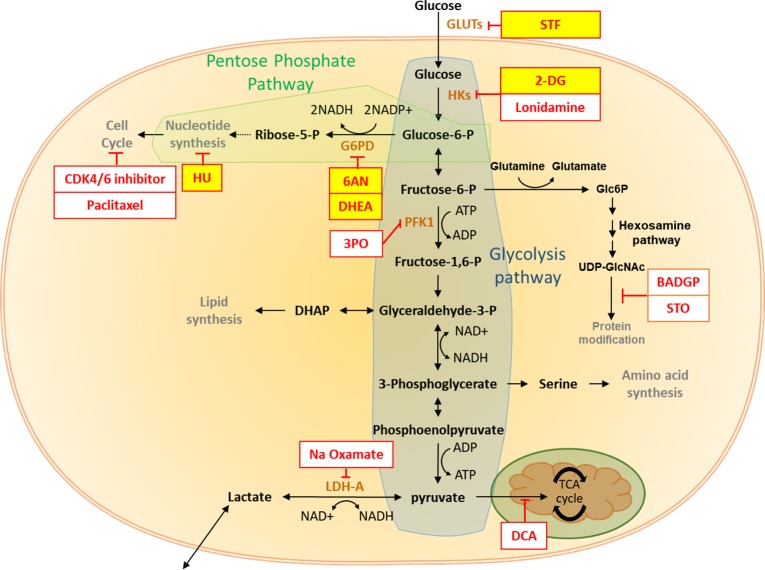
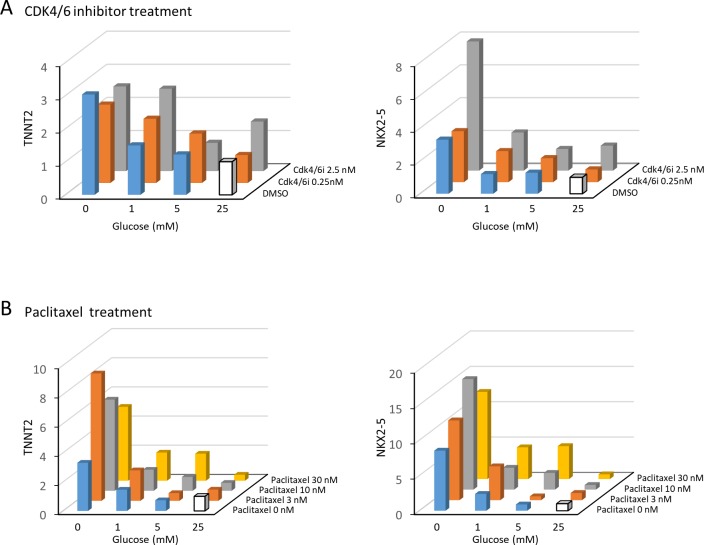
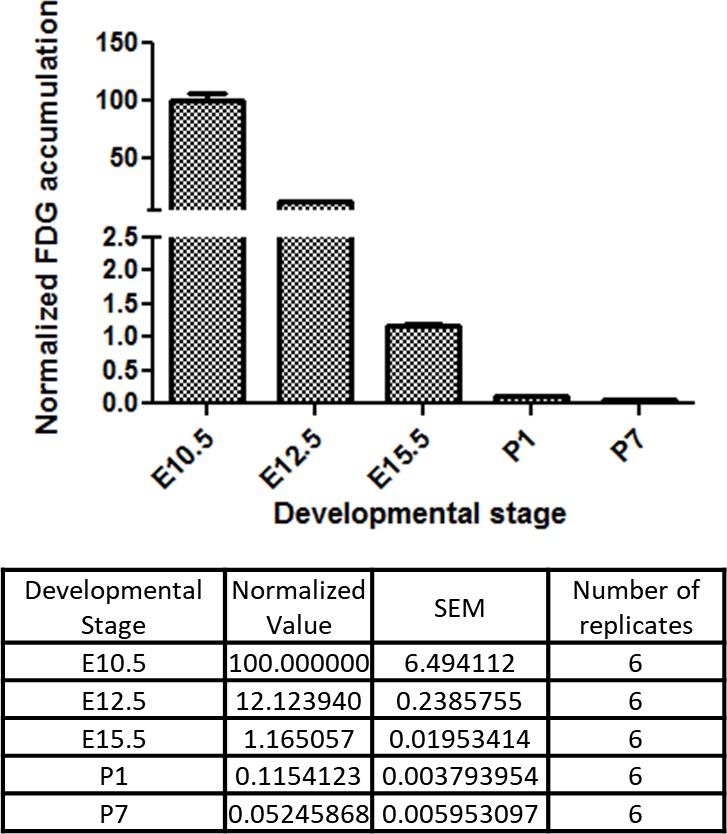
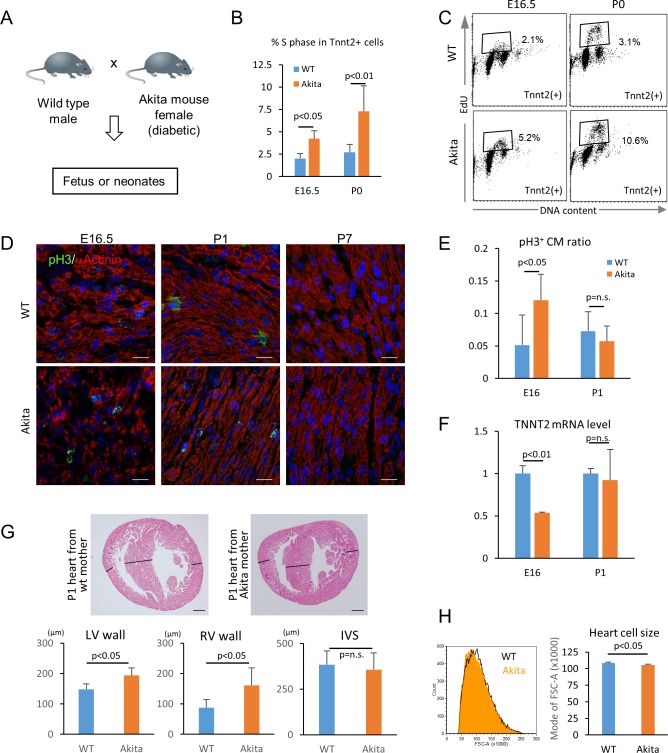
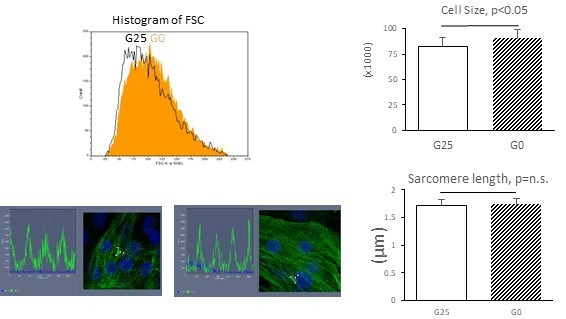
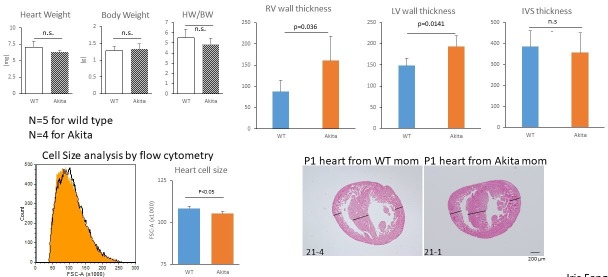
The heart switches its energy substrate from glucose to fatty acids at birth, and maternal hyperglycemia is associated with congenital heart disease. However, little is known about how blood glucose impacts heart formation. Using a chemically defined human pluripotent stem-cell-derived cardiomyocyte differentiation system, we found that high glucose inhibits the maturation of cardiomyocytes at genetic, structural, metabolic, electrophysiological, and biomechanical levels by promoting nucleotide biosynthesis through the pentose phosphate pathway. Blood glucose level in embryos is stable in utero during normal pregnancy, but glucose uptake by fetal cardiac tissue is drastically reduced in late gestational stages. In a murine model of diabetic pregnancy, fetal hearts showed cardiomyopathy with increased mitotic activity and decreased maturity. These data suggest that high glucose suppresses cardiac maturation, providing a possible mechanistic basis for congenital heart disease in diabetic pregnancy.
Overview
The claims and statistics of this paper haven’t been checked yet.
Run the check — free, no account needed. It reads the open-access text and checks the sources it cites.
Integrity signals
Registry
Cites
Statistics
Figures
Verification
Claims the paper makes
The claims and statistics of this paper haven’t been checked yet.
Run the check — free, no account needed. It reads the open-access text and checks the sources it cites.
Claims other papers make about this one
Each is checked against this paper’s own text: does it say what the citing paper says it does?
The source backs part of the claim, not all of it — or backs it for a different population, condition or comparison.
In the citing paper
“Using a model of STZ-induced insulin-deficient diabetes during pregnancy, Nakano et al. demonstrated that hyperglycemia promotes the proliferation of fetal offspring cardiomyocytes while maturation was inhibited [117].”
From Recent Experimental Studies of Maternal Obesity, Diabetes during Pregnancy and the Developmental Origins of Cardiovascular Disease (2022) · cites this paper as [117]
Experimental — accuracy not yet measuredThe source backs part of the claim, not all of it — or backs it for a different population, condition or comparison.
In the citing paper
“Using a model of STZ-induced insulin-deficient diabetes during pregnancy, Nakano et al. demonstrated that hyperglycemia promotes the proliferation of fetal offspring cardiomyocytes while maturation was inhibited [117].”
From Recent Experimental Studies of Maternal Obesity, Diabetes during Pregnancy and the Developmental Origins of Cardiovascular Disease (2022) · cites this paper as [117]
Experimental — accuracy not yet measured
Self-check
Percentages, sums and reported differences re-computed from the paper’s own numbers.
The self-check needs the paper’s full text.
Citations
Cites
Subramanian, A., Tamayo, P., Mootha, V. K., Mukherjee, S., Ebert, B. L., Gillette, M. A., Paulovich, A., Pomeroy, S. L., Golub, T. R., Lander, E. S., et al. (2005) · Proceedings of the National Academy of Sciences · doi:10.1073/pnas.0506580102 · Cited by 53,625
Understanding the Warburg Effect: The Metabolic Requirements of Cell Proliferation
Vander Heiden, M. G., Cantley, L. C., & Thompson, C. B. (2009) · Science · doi:10.1126/science.1160809 · Cited by 16,197
A gene atlas of the mouse and human protein-encoding transcriptomes
Su, A. I., Wiltshire, T., Batalov, S., Lapp, H., Ching, K. A., Block, D., Zhang, J., Soden, R., Hayakawa, M., Kreiman, G., et al. (2004) · Proceedings of the National Academy of Sciences · doi:10.1073/pnas.0400782101 · Cited by 3,475
Targeting cancer metabolism: a therapeutic window opens
Heiden, M. G. V. (2011) · Nature Reviews Drug Discovery · doi:10.1038/nrd3504 · Cited by 1,443
Functional Cardiomyocytes Derived From Human Induced Pluripotent Stem Cells
Zhang, J., Wilson, G. F., Soerens, A. G., Koonce, C. H., Yu, J., Palecek, S. P., Thomson, J. A., & Kamp, T. J. (2009) · Circulation Research · doi:10.1161/circresaha.108.192237 · Cited by 1,426
Targeting metabolic transformation for cancer therapy
Tennant, D. A., Durán, R. V., & Gottlieb, E. (2010) · Nature reviews. Cancer · doi:10.1038/nrc2817 · Cited by 1,073
Tohyama, S., Hattori, F., Sano, M., Hishiki, T., Nagahata, Y., Matsuura, T., Hashimoto, H., Suzuki, T., Yamashita, H., Satoh, Y., et al. (2012) · Cell stem cell · doi:10.1016/j.stem.2012.09.013 · Cited by 1,051
Intracellular α-ketoglutarate maintains the pluripotency of embryonic stem cells
Carey, B. W., Finley, L. W. S., Cross, J. R., Allis, C. D., & Thompson, C. B. (2015) · Nature · doi:10.1038/nature13981 · Cited by 1,007
Ma, J., Guo, L., Fiene, S., Anson, B. D., Thomson, J. A., Kamp, T. J., Kolaja, K. L., Swanson, B. J., & January, C. T. (2011) · American Journal of Physiology-Heart and Circulatory Physiology · doi:10.1152/ajpheart.00694.2011 · Cited by 787
Congenital Heart Disease in Adults
Brickner, M. E., Hillis, L. D., & Lange, R. A. (2000) · New England Journal of Medicine · doi:10.1056/nejm200001273420407 · Cited by 765
Cited by
Sorted by citations
Cardiomyocyte maturation: advances in knowledge and implications for regenerative medicine
Karbassi, E., Fenix, A. M., Marchianò, S., Muraoka, N., Nakamura, K., Yang, X., & Murry, C. E. (2020) · Nature Reviews Cardiology · doi:10.1038/s41569-019-0331-x · Cited by 796
Cardiomyocyte Maturation: New Phase in Development
Guo, Y., & Pu, W. T. (2020) · Circulation Research · doi:10.1161/circresaha.119.315862 · Cited by 653
Metabolic Maturation Media Improve Physiological Function of Human iPSC-Derived Cardiomyocytes
Feyen, D. A. M., McKeithan, W. L., Bruyneel, A. A. N., Spiering, S., Hörmann, L., Ulmer, B., Zhang, H., Briganti, F., Schweizer, M., Hegyi, B., et al. (2020) · Cell Reports · doi:10.1016/j.celrep.2020.107925 · Cited by 400
Metabolic Coordination of Physiological and Pathological Cardiac Remodeling
Gibb, A., & Hill, B. G. (2018) · Circulation Research · doi:10.1161/circresaha.118.312017 · Cited by 393
Glucose Metabolism in Cardiac Hypertrophy and Heart Failure
Tran, D. H., & Wang, Z. V. (2019) · Journal of the American Heart Association · doi:10.1161/jaha.119.012673 · Cited by 336
Metadata
- Authors
- Nakano, H., Minami, I., Braas, D., Pappoe, H., Wu, X., Sagadevan, A., Vergnes, L., Fu, K., Morselli, M., Dunham, C., Ding, X., Stieg, A. Z., Gimzewski, J. K., Pellegrini, M., Clark, P. M., Reue, K., Lusis, A. J., Ribalet, B., Kurdistani, S. K., Christofk, H., Nakatsuji, N., & Nakano, A.
- Affiliations
- University of California, Los Angeles (US)
- Kyoto University (JP)
- California NanoSystems Institute (US)
- Corresponding author
- Nakano, Haruko
- ORCID
- Venue
- eLife
- Publisher
- eLife Sciences Publications, Ltd
- Published
- 2017-12-12
- Volume
- 6
- ISSN
- 2050-084X (ISSN-L)
- PMC
- PMC5726851
- OpenAlex
- W2774527609
- Cited by
- 195
- References
- 54
- Citations by year
- 2026: 13 · 2025: 17 · 2024: 26 · 2023: 28 · 2022: 37 · 2021: 36 · 2020: 16 · 2019: 15 · 2018: 7
- FWCI
- 4.25
- Type
- journal article
- Language
- en
- Open access
- gold
- doi.org
- Licence
- Locations
- eLife (publishedVersion, cc-by)
- Europe PMC (PubMed Central) (publishedVersion, cc-by)
- PubMed Central (publishedVersion, cc-by)
- PubMed (publishedVersion)
- DOAJ (DOAJ: Directory of Open Access Journals) (submittedVersion, cc-by-sa)
- eScholarship (California Digital Library) (submittedVersion)
- eScholarship (California Digital Library) (submittedVersion, cc-by)
- Funders
- Oppenheimer Foundation
- University of California, Los Angeles (Center for Duchenne Muscular Dystrophy, Pilot and Feasibility Seed Grant program)
- National Institute of Arthritis and Musculoskeletal and Skin Diseases (P30AR057230)
- National Center for Research Resources (Grant S10RR026744)
- National Institutes of Health (DK094311, CA178415, HL126051, HL124503)
- Hunan University (Chinese Scholarship Council of Chemistry and Chemical Engineering)
- Topics
- Life Sciences › Biochemistry, Genetics and Molecular Biology › Molecular Biology › Congenital heart defects research
- Life Sciences › Biochemistry, Genetics and Molecular Biology › Molecular Biology › Pluripotent Stem Cells Research
- Health Sciences › Medicine › Endocrinology, Diabetes and Metabolism › Pancreatic function and diabetes
- Keywords
- high glucose, cardiomyocyte maturation, nucleotide synthesis, pentose phosphate pathway, diabetes in pregnancy, maternal hyperglycemia, congenital heart disease, cardiomyopathy, pluripotent stem cell-derived cardiomyocytes, fetal heart development
- MeSH terms
- Animals, Cell Differentiation, Female, Glucose, Humans, Mice, Inbred C57BL, Myocardium, Nucleotides, Pentose Phosphate Pathway, Pregnancy, Sweetening Agents, Gene Expression Profiling, Muscle Development, Myocytes, Cardiac, Mice, Embryonic Stem Cells
About these checks
Registry, retraction, Cites and statistics results are computed, not judged, with one exception: a printed reference that no index lists is read once by a model before it counts as a citation error. Claims are extracted by a model and kept only when their quote appears verbatim in the text; each cited source is then checked, with a model’s help, for whether it says what the claim relies on. Those verdicts can be wrong — read the claim’s quote and the cited source before relying on one.
Statistics and arithmetic are recomputed, not judged.
Confidence bands are shown only for fields calibrated on our annotated test set. None is calibrated yet, so no band is shown.
What counts as a claim ›How we measure confidence ›How we check this ›
Are you an author, or do you see a problem with this page? Request a review
