

The DOI matches its Crossref record; 77 of the 77 references it cites were found in a registry or an index.
Background selection and biased gene conversion affect more than 95% of the human genome and bias demographic inferences
Open accessAbstract
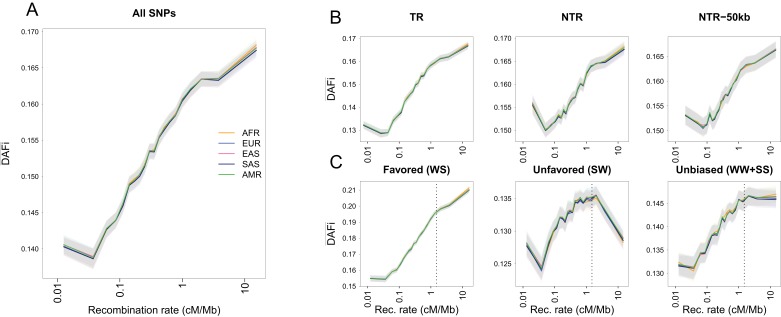
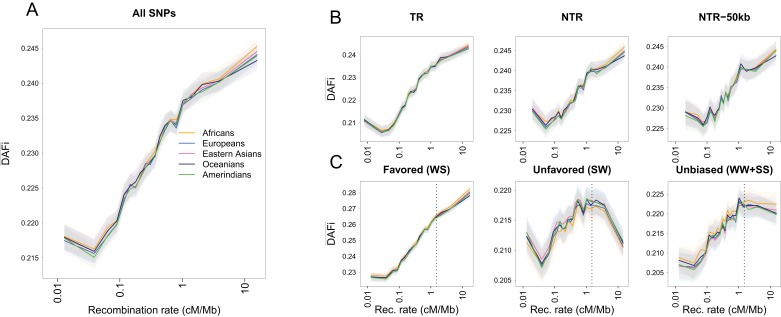
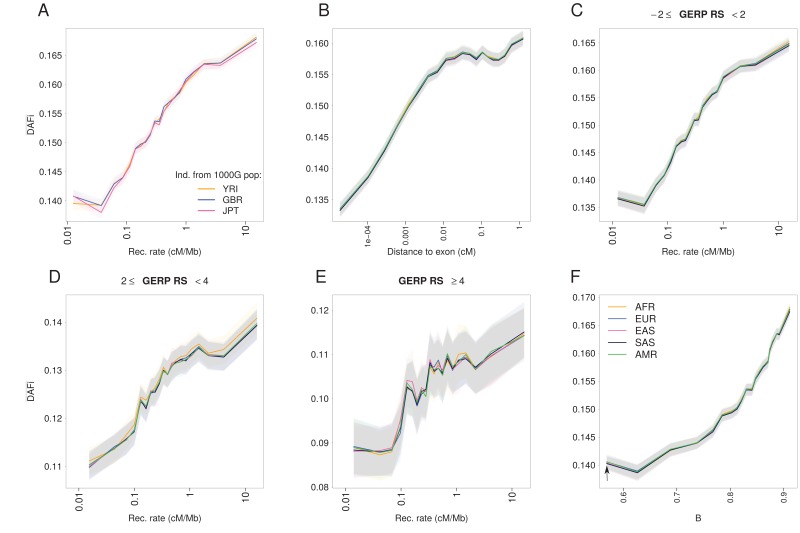
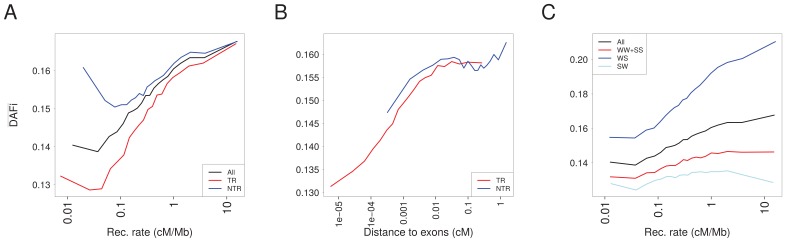
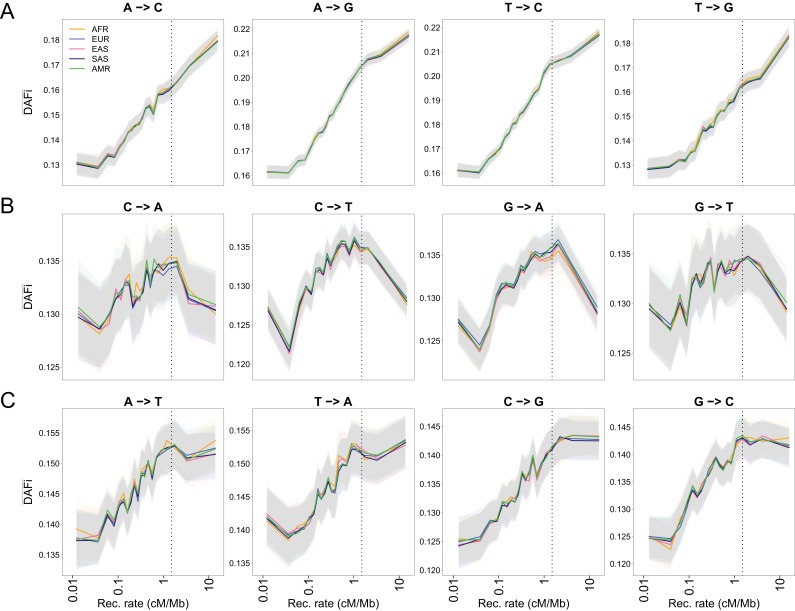
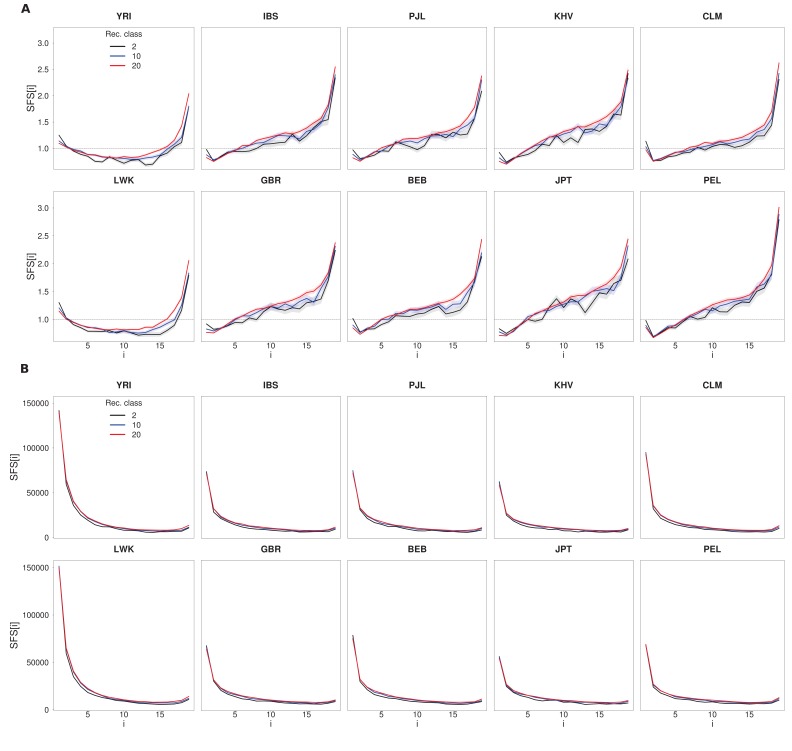
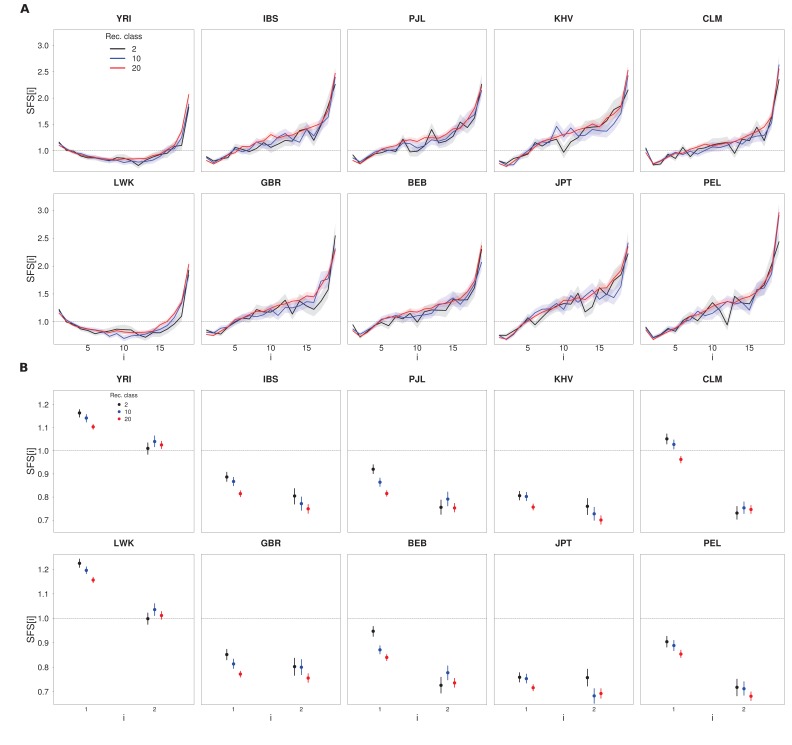
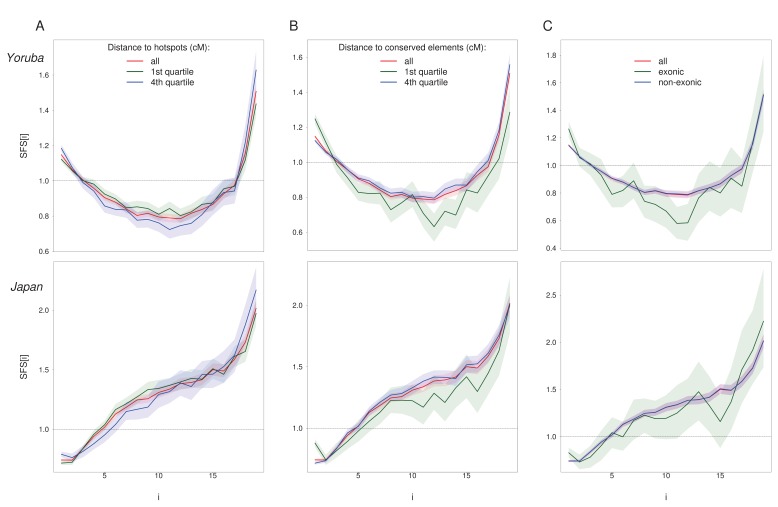
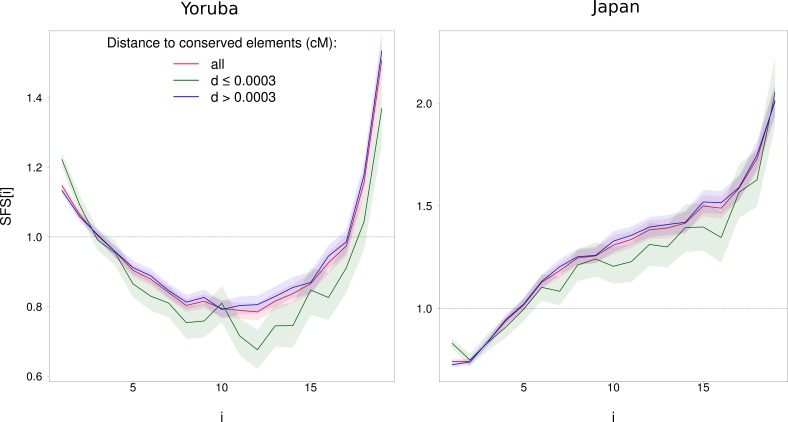
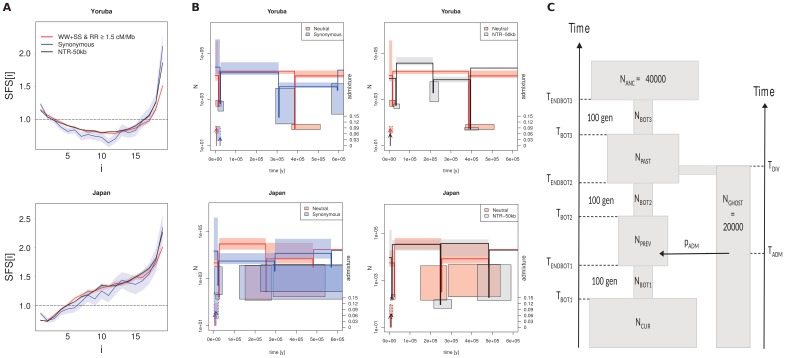
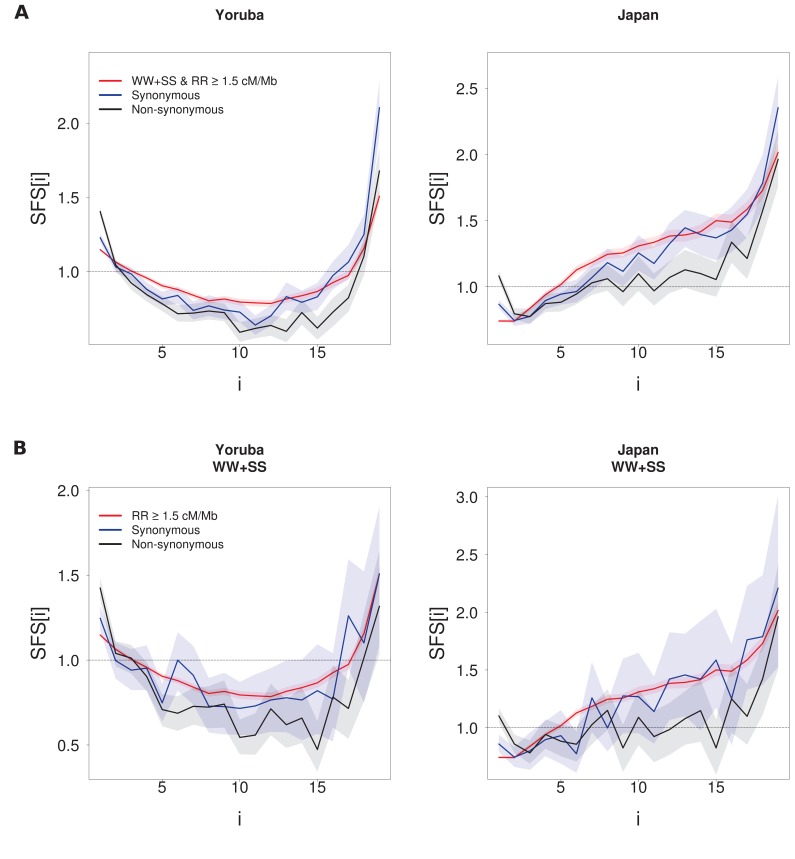
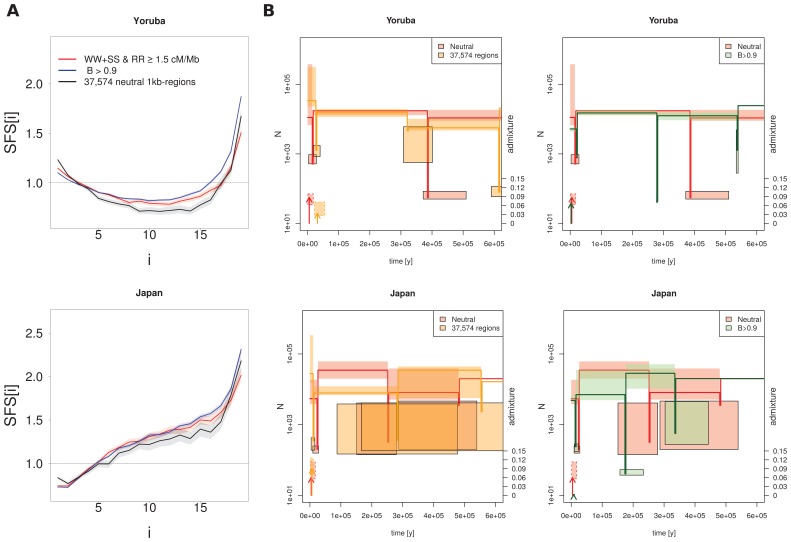
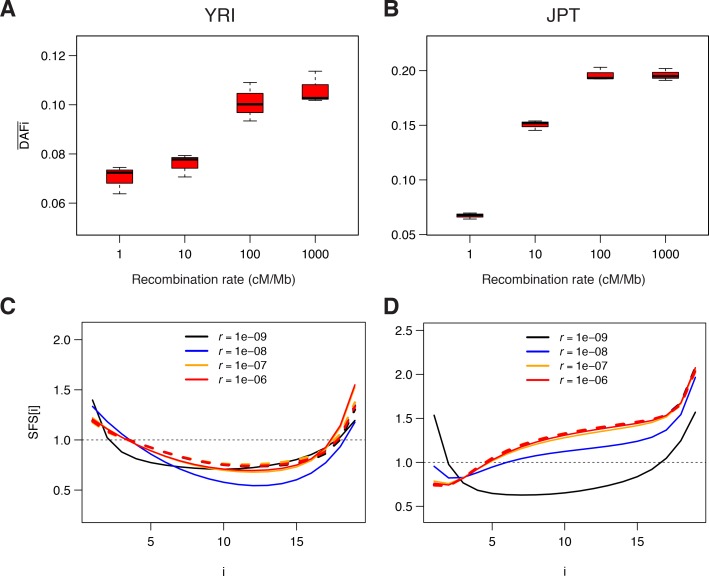
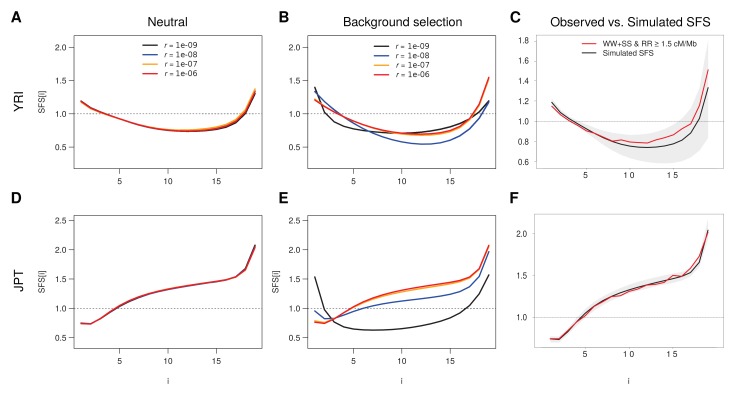
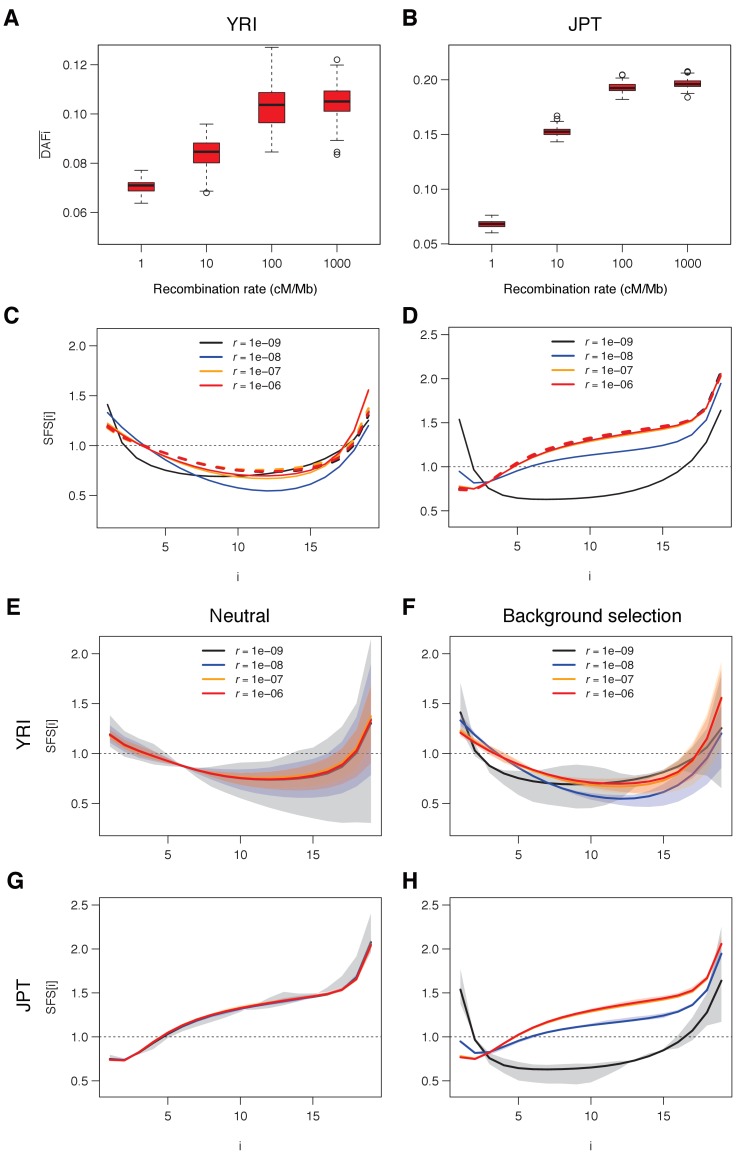
Disentangling the effect on genomic diversity of natural selection from that of demography is notoriously difficult, but necessary to properly reconstruct the history of species. Here, we use high-quality human genomic data to show that purifying selection at linked sites (i.e. background selection, BGS) and GC-biased gene conversion (gBGC) together affect as much as 95% of the variants of our genome. We find that the magnitude and relative importance of BGS and gBGC are largely determined by variation in recombination rate and base composition. Importantly, synonymous sites and non-transcribed regions are also affected, albeit to different degrees. Their use for demographic inference can lead to strong biases. However, by conditioning on genomic regions with recombination rates above 1.5 cM/Mb and mutation types (C↔G, A↔T), we identify a set of SNPs that is mostly unaffected by BGS or gBGC, and that avoids these biases in the reconstruction of human history.
Overview
The claims and statistics of this paper haven’t been checked yet.
Run the check — free, no account needed. It reads the open-access text and checks the sources it cites.
Integrity signals
Registry
Cites
Statistics
Figures
Verification
Claims the paper makes
The claims and statistics of this paper haven’t been checked yet.
Run the check — free, no account needed. It reads the open-access text and checks the sources it cites.
Claims other papers make about this one
Each is checked against this paper’s own text: does it say what the citing paper says it does?
The source backs part of the claim, not all of it — or backs it for a different population, condition or comparison.
In the citing paper
“The second considered the same Full Eurasia model, but using a subset of data restricted to genomic regions with high recombination rates (>1.5 cM/Mb), also removing regions closer than 100 base pairs from conserved elements, following (63).”
From Past human expansions shaped the spatial pattern of Neanderthal ancestry (2023) · cites this paper as [63]
Experimental — accuracy not yet measuredThe cited source says what the claim attributes to it.
In the citing paper
“This dataset is much more limited in size (n = 1190) and genomic positions (~80% less), but presumably less affected by background selection, while still affected by GC-biased gene conversion (63).”
From Past human expansions shaped the spatial pattern of Neanderthal ancestry (2023) · cites this paper as [63]
Self-check
Percentages, sums and reported differences re-computed from the paper’s own numbers.
The self-check needs the paper’s full text.
Citations
Cites
R: A Language and Environment for Statistical Computing
R Core Team (2000) · doi:10.32614/r.manuals · Cited by 355,893
Fast and accurate short read alignment with Burrows-Wheeler transform
Li, H., & Durbin, R. (2009) · Bioinformatics · doi:10.1093/bioinformatics/btp324 · Cited by 58,607
A new look at the statistical model identification
Akaike, H. (1974) · IEEE Transactions on Automatic Control · doi:10.1109/tac.1974.1100705 · Cited by 51,879 · cited 1×
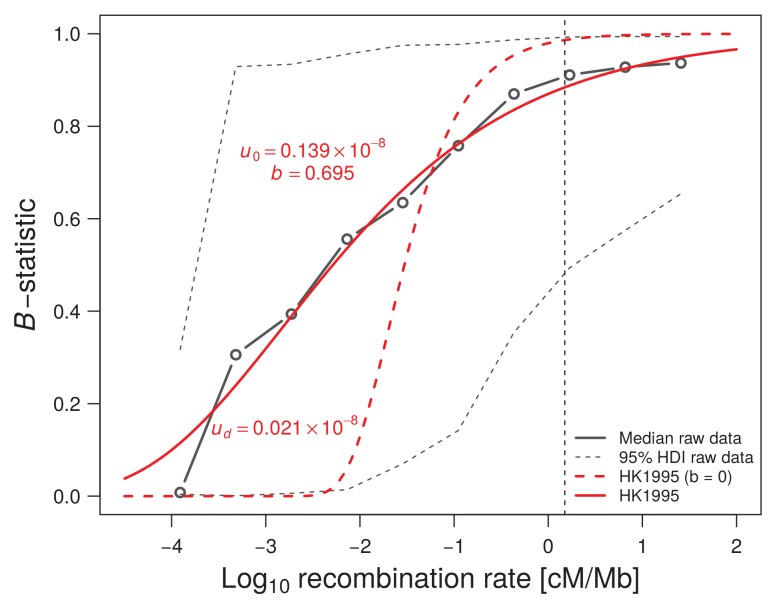
“We then used the Akaike information criterion (AIC, Akaike, 1974) to compare this extended BGS model to the original BGS model in which the mutation rate does not depend on the recombi- nation rate (b¼ 0).”
MethodA global reference for human genetic variation
The 1000 Genomes Project Consortium, authors, C., Auton, A., Abecasis, G. R., Steering committee, Altshuler, D. M., Durbin, R. M., Abecasis, G. R., Bentley, D. R., Chakravarti, A., et al. (2015) · Nature · doi:10.1038/nature15393 · Cited by 18,247
An integrated encyclopedia of DNA elements in the human genome
The ENCODE Project Consortium (2012) · Nature · doi:10.1038/nature11247 · Cited by 18,072
A second generation human haplotype map of over 3.1 million SNPs
The International HapMap Consortium (2007) · Nature · doi:10.1038/nature06258 · Cited by 4,438
Evolutionarily conserved elements in vertebrate, insect, worm, and yeast genomes
Siepel, A., Bejerano, G., Pedersen, J. S., Hinrichs, A. S., Hou, M., Rosenbloom, K., Clawson, H., Spieth, J., Hillier, L. W., Richards, S., et al. (2005) · Genome Research · doi:10.1101/gr.3715005 · Cited by 3,971
An Expanded View of Complex Traits: From Polygenic to Omnigenic
Boyle, E. A., Li, Y. I., & Pritchard, J. K. (2017) · Cell · doi:10.1016/j.cell.2017.05.038 · Cited by 2,851 · cited 2×
“…of pervasive positive selection, either in the form of soft or hard sweeps (Kern and Hahn, 2018) or of positive selection on polygenic traits (Boyle et al., 2017) in our genome could also lead to a correlation between genetic diversity and recombination, as the effect of selection on linked…”
BackgroundHitchhiking Under Positive Darwinian Selection
Fay, J. C., & Wu, C.-I. (2000) · Genetics · doi:10.1093/genetics/155.3.1405 · Cited by 1,819
Identifying a High Fraction of the Human Genome to be under Selective Constraint Using GERP++
Davydov, E. V., Goode, D. L., Sirota, M., Cooper, G. M., Sidow, A., & Batzoglou, S. (2010) · PLoS Computational Biology · doi:10.1371/journal.pcbi.1001025 · Cited by 1,757 · cited 2×
“Genomic Evolutionary Rate Profiling (GERP) rejection scores (Davydov et al., 2010) that quantify the level of evolutionary constraint acting on polymorphic sites and conserved elements identified using PhastCons on the primate subset of 46 vertebrates (Siepel et al., 2005) were downloaded from the…”
Background
Cited by
Sorted by citations
fastsimcoal2 : demographic inference under complex evolutionary scenarios
Excoffier, L., Marchi, N., Marques, D. A., Matthey‐Doret, R., Gouy, A., & Sousa, V. C. (2021) · Bioinformatics · doi:10.1093/bioinformatics/btab468 · Cited by 460
Self-citationWilli, Y., Kristensen, T. N., Sgrò, C. M., Weeks, A. R., Ørsted, M., & Hoffmann, A. A. (2022) · Proceedings of the National Academy of Sciences · doi:10.1073/pnas.2105076119 · Cited by 281
Prevalence and Adaptive Impact of Introgression
Edelman, N. B., & Mallet, J. (2021) · Annual Review of Genetics · doi:10.1146/annurev-genet-021821-020805 · Cited by 262
The importance of the Neutral Theory in 1968 and 50 years on: A response to Kern and Hahn 2018
Jensen, J. D., Payseur, B. A., Stephan, W., Aquadro, C. F., Lynch, M., Charlesworth, D., & Charlesworth, B. (2018) · Evolution · doi:10.1111/evo.13650 · Cited by 195
Effects of Selection at Linked Sites on Patterns of Genetic Variability
Charlesworth, B., & Jensen, J. D. (2021) · Annual Review of Ecology Evolution and Systematics · doi:10.1146/annurev-ecolsys-010621-044528 · Cited by 152
“…rates (e.g., B. Charlesworth 1996, Comeron 2017, Elyashiv et al. 2016, Hudson & Kaplan 1995) (Figure 1a), as well as observations of increases in diversity in intergenic sequences at increasing distances from coding sequences ( Johri et al. 2020, McVicker et al. 2009, Pouyet et al. 2018).”
Background
Metadata
- Authors
- Pouyet, F., Aeschbacher, S., Thiéry, A., & Excoffier, L.
- Affiliations
- University of Bern (CH)
- Corresponding author
- Pouyet, Fanny
- Excoffier, Laurent
- Venue
- eLife
- Publisher
- eLife Sciences Publications, Ltd
- Published
- 2018-08-23
- Volume
- 7
- ISSN
- 2050-084X (ISSN-L)
- PMC
- PMC6177262
- OpenAlex
- W2888373299
- Cited by
- 153
- References
- 76
- Citations by year
- 2026: 16 · 2025: 17 · 2024: 17 · 2023: 18 · 2022: 18 · 2021: 29 · 2020: 14 · 2019: 17 · 2018: 6
- FWCI
- 9.96
- Type
- journal article
- Language
- en
- Open access
- gold
- doi.org
- Licence
- Locations
- eLife (publishedVersion, cc-by)
- Europe PMC (PubMed Central) (publishedVersion, cc-by)
- PubMed Central (publishedVersion, cc-by)
- PubMed (publishedVersion)
- Zurich Open Repository and Archive (University of Zurich) (acceptedVersion, cc-by)
- HAL (submittedVersion, other-oa)
- Bern Open Repository and Information System (University of Bern) (submittedVersion, cc-by)
- DOAJ (DOAJ: Directory of Open Access Journals) (submittedVersion, cc-by-sa)
- Zurich Open Repository and Archive (University of Zurich) (submittedVersion, cc-by)
- Zurich Open Repository and Archive (University of Zurich)
- Funders
- Schweizerischer Nationalfonds zur Förderung der Wissenschaftlichen Forschung (310030B-166605)
- University of California Berkeley (Visiting Miller Professorship)
- Topics
- Life Sciences › Biochemistry, Genetics and Molecular Biology › Genetics › Forensic and Genetic Research
- Life Sciences › Biochemistry, Genetics and Molecular Biology › Genetics › Evolution and Genetic Dynamics
- Life Sciences › Biochemistry, Genetics and Molecular Biology › Genetics › Genetic diversity and population structure
- Keywords
- background selection, GC-biased gene conversion, purifying selection, human genome, recombination rate, nucleotide composition, synonymous sites, demographic inference, human population history, mutation types, single nucleotide polymorphisms
- MeSH terms
- Base Composition, Demography, Gene Conversion, Humans, Models, Genetic, Mutation, Recombination, Genetic, Selection, Genetic, Genome, Human, Evolution, Molecular, Genomics
About these checks
Registry, retraction, Cites and statistics results are computed, not judged, with one exception: a printed reference that no index lists is read once by a model before it counts as a citation error. Claims are extracted by a model and kept only when their quote appears verbatim in the text; each cited source is then checked, with a model’s help, for whether it says what the claim relies on. Those verdicts can be wrong — read the claim’s quote and the cited source before relying on one.
Statistics and arithmetic are recomputed, not judged.
Confidence bands are shown only for fields calibrated on our annotated test set. None is calibrated yet, so no band is shown.
What counts as a claim ›How we measure confidence ›How we check this ›
Are you an author, or do you see a problem with this page? Request a review
