

The DOI matches its Crossref record; 128 of the 131 references it cites were found in a registry or an index, and 1 are not checked yet.
Anterior insular cortex plays a critical role in interoceptive attention
Open accessPublished version of a preprint
Abstract
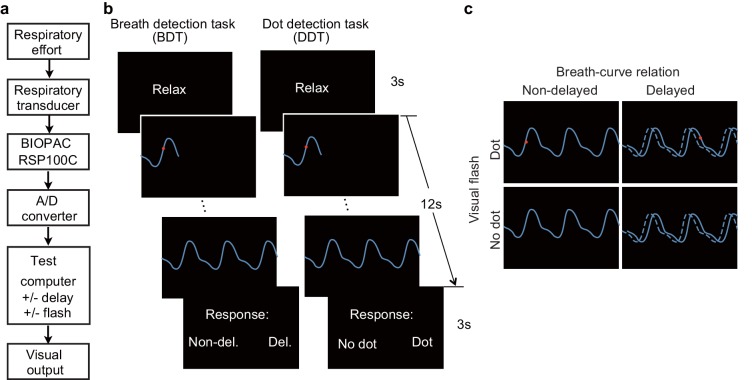
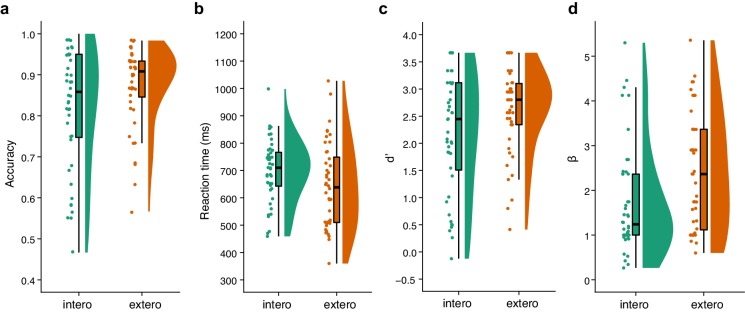
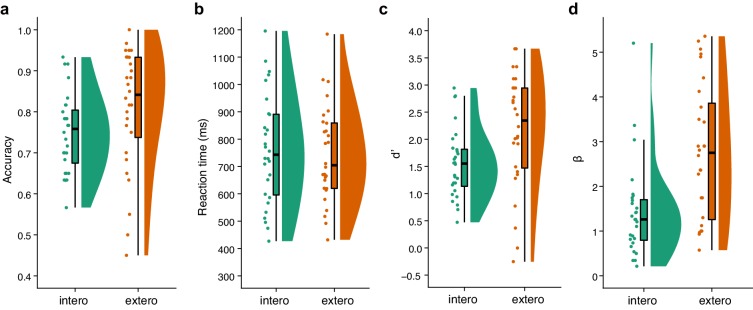
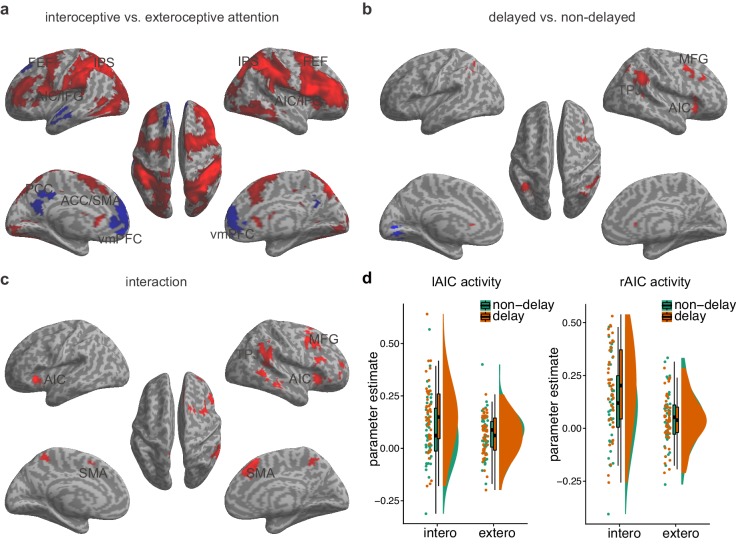
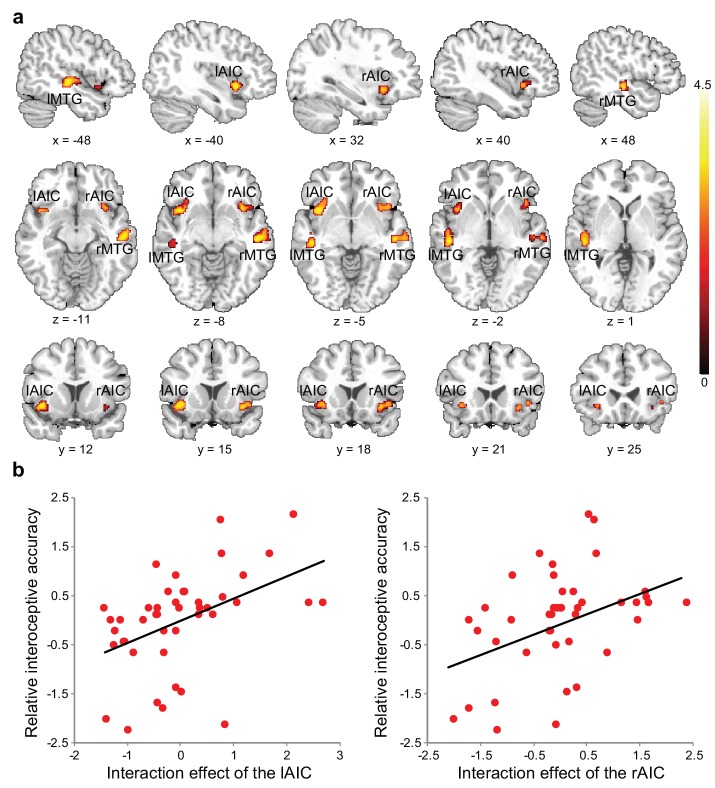
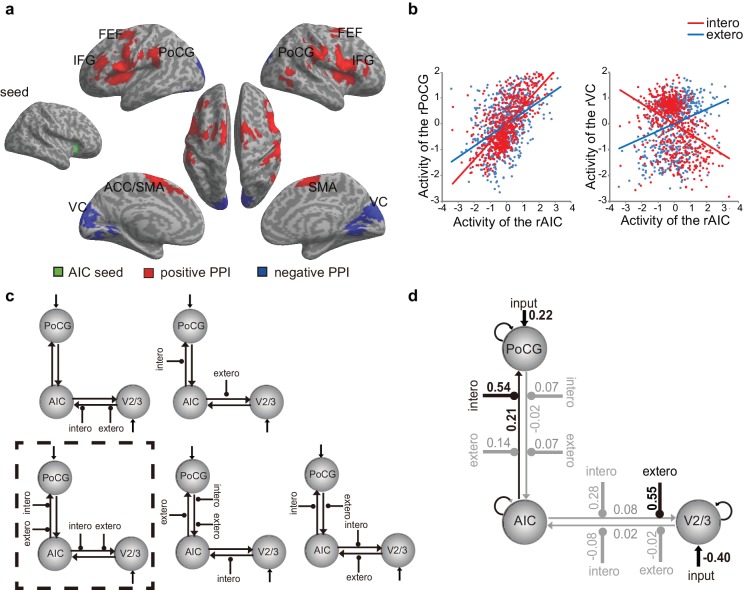
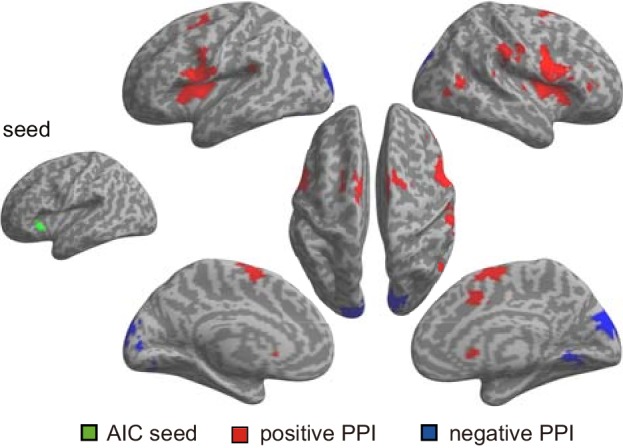
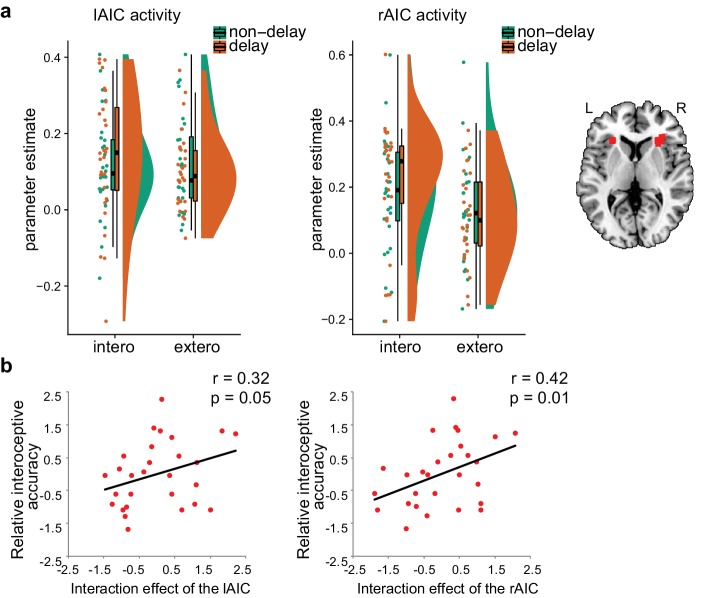
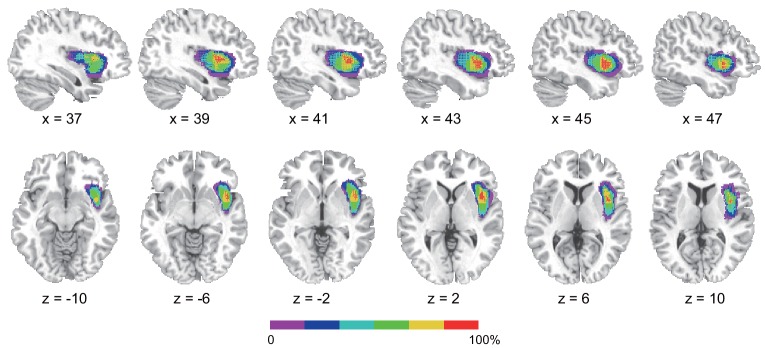
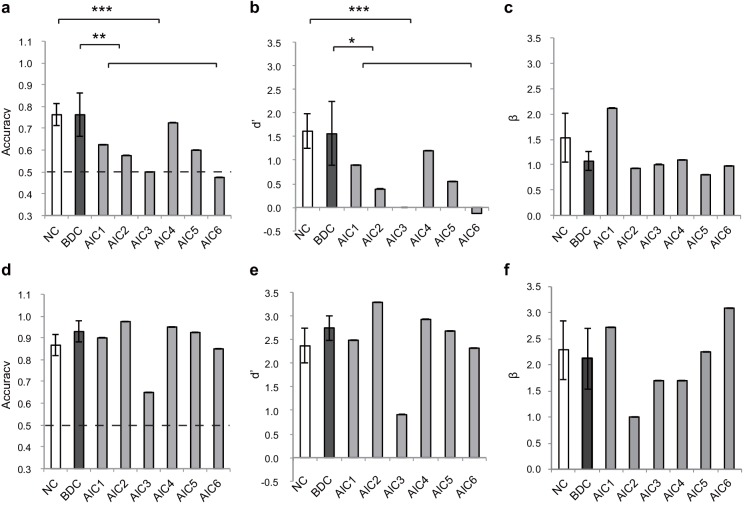
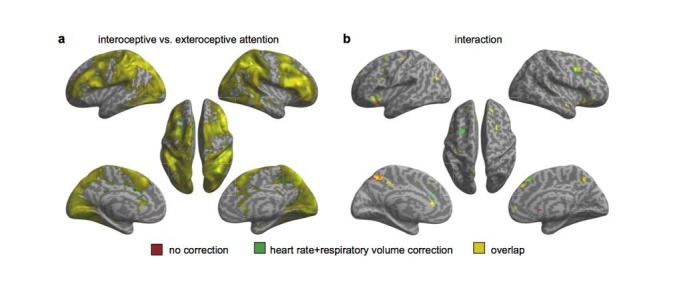
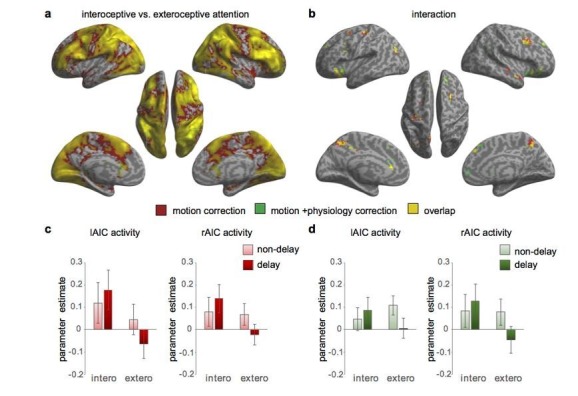
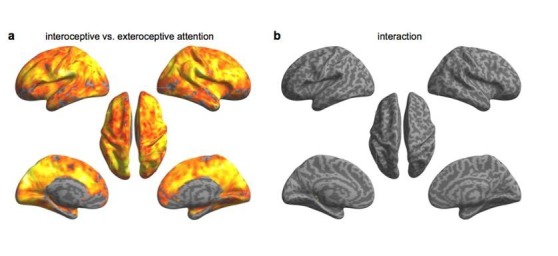
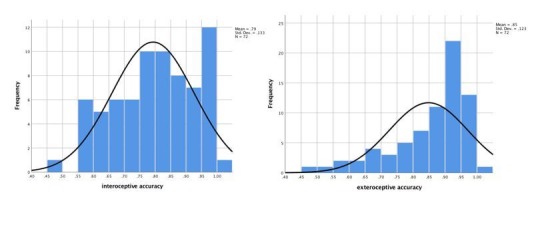
Accumulating evidence indicates that the anterior insular cortex (AIC) mediates interoceptive attention which refers to attention towards physiological signals arising from the body. However, the necessity of the AIC in this process has not been demonstrated. Using a novel task that directs attention toward breathing rhythm, we assessed the involvement of the AIC in interoceptive attention in healthy participants using functional magnetic resonance imaging and examined the necessity of the AIC in interoceptive attention in patients with AIC lesions. Results showed that interoceptive attention was associated with increased AIC activation, as well as enhanced coupling between the AIC and somatosensory areas along with reduced coupling between the AIC and visual sensory areas. In addition, AIC activation was predictive of individual differences in interoceptive accuracy. Importantly, AIC lesion patients showed disrupted interoceptive discrimination accuracy and sensitivity. These results provide compelling evidence that the AIC plays a critical role in interoceptive attention.
Overview
The claims and statistics of this paper haven’t been checked yet.
Run the check — free, no account needed. It reads the open-access text and checks the sources it cites.
Integrity signals
Registry
Cites
Statistics
Figures
Verification
Claims the paper makes
The claims and statistics of this paper haven’t been checked yet.
Run the check — free, no account needed. It reads the open-access text and checks the sources it cites.
Claims other papers make about this one
Each is checked against this paper’s own text: does it say what the citing paper says it does?
The cited source says what the claim attributes to it.
In the citing paper
“AIC, that plays a crucial role in mediating interoceptive awareness (Wang et al. 2019)”
From Neuroanatomical correlates of peripersonal space: bridging the gap between perception, action, emotion and social cognition (2024) · cites this paper as Wang et al. 2019
Self-check
Percentages, sums and reported differences re-computed from the paper’s own numbers.
The self-check needs the paper’s full text.
Citations
Cites
R: A Language and Environment for Statistical Computing
R Core Team (2000) · doi:10.32614/r.manuals · Cited by 355,893
Folstein, M. F., Folstein, S. E., & McHugh, P. R. (1975) · Journal of Psychiatric Research · doi:10.1016/0022-3956(75)90026-6 · Cited by 88,282
James, W. (1891) · Personality Culture Society · doi:10.1037/11059-000 · Cited by 25,876
Hirono, N., Mori, E., Ikejiri, Y., Imamura, T., Shimomura, T., Hashimoto, M., Yamashita, H., & Ikeda, M. (1997) · PubMed · Cited by 21,012
Kok, J. S., Berg, I. J., & Scherder, E. J. A. (2013) · Dementia and Geriatric Cognitive Disorders Extra · doi:10.1159/000353441 · Cited by 20,589
Older Adults' Reasons for Using Technology while Aging in Place
Peek, S. T. M., Luijkx, K. G., Rijnaard, M. D., Nieboer, M. E., van der Voort, C. S., Aarts, S., van Hoof, J., Vrijhoef, H. J., & Wouters, E. (2015) · Gerontology · doi:10.1159/000430949 · Cited by 19,852
Sensitivity and False Alarm Rate of a Fall Sensor in Long-Term Fall Detection in the Elderly
Kangas, M., Korpelainen, R., Vikman, I., Nyberg, L., & Jämsä, T. J. (2014) · Gerontology · doi:10.1159/000362720 · Cited by 19,007
Tzourio-Mazoyer, N., Landeau, B., Papathanassiou, D., Crivello, F., Etard, O., Delcroix, N., Mazoyer, B., & Joliot, M. (2002) · NeuroImage · doi:10.1006/nimg.2001.0978 · Cited by 16,319
A default mode of brain function
Raichle, M. E., MacLeod, A. M., Snyder, A. Z., Powers, W. J., Gusnard, D. A., & Shulman, G. L. (2001) · Proceedings of the National Academy of Sciences · doi:10.1073/pnas.98.2.676 · Cited by 12,190
Dissociable intrinsic connectivity networks for salience processing and executive control
Seeley, W. W., Menon, V., Schatzberg, A. F., Keller, J., Glover, G. H., Kenna, H., Reiss, A. L., & Greicius, M. D. (2007) · The Journal of Neuroscience · doi:10.1523/jneurosci.5587-06.2007 · Cited by 7,426
Research works printed but not linked: 3
- Hamilton, 1976, Sourcebook of Adult Assessment: Applied Clinical Psychology, 154
- Porges, 1993, Body perception questionnaire, Laboratory of Developmental Assessment, University of Maryland
- Tranel, 1991, Somatic Markers and the Guidance of Behaviour: Theory and Preliminary Testing
Cited by
Sorted by citations
Items 101–200 of 203
The Conceptualization and Measurement of Interoception
Desmedt, O., Corneille, O., & Luminet, O. (2024) · Springer eBooks · doi:10.1007/978-3-031-68521-7_2 · Cited by 6
Arioli, M., Richelli, L., Mattavelli, G. C., Cattaneo, Z., Poggi, P., & Canessa, N. (2025) · Human Brain Mapping · doi:10.1002/hbm.70274 · Cited by 7
The cardiac cycle modulates learning-related interoception
Nokia, M. S., Xu, W., & Wikgren, J. (2024) · Trends in Cognitive Sciences · doi:10.1016/j.tics.2024.05.007 · Cited by 5
What Do We Perceive? Interoceptive Sensibility
Köteles, F. G. (2021) · Springer eBooks · doi:10.1007/978-3-030-63201-4_5 · Cited by 5
The Role of Central Oxytocin in Autonomic Regulation
Tsai, S., & Kuo, Y. (2024) · Journal of physiological investigation. · doi:10.4103/ejpi.ejpi-d-23-00037 · Cited by 4
Cremona, S., Gillig, A., Mellet, E., & Joliot, M. (2025) · Scientific Reports · doi:10.1038/s41598-025-10432-0 · Cited by 6
Hansen, H. A., Norris, J. E., Bain, C. M., Ethridge, L. E., & Tardif, C. L. (2026) · Human Brain Mapping · doi:10.1002/hbm.70468 · Cited by 5
Patient reported feedback suggests an alternative sweet spot for DBS programming in essential tremor
Peschke, S., Dong, J., Kirschner, A., Off, J., Shaik, J., Palleis, C., Mehrkens, J. H., Kaufmann, E., Scherer, M., & Koeglsperger, T. (2026) · Movement Disorders · doi:10.1002/mds.70228 · Cited by 6
Schmid, F., Henry, A., Benzerouk, F., Barrière, S., Portefaix, C., Gondrexon, J., Obert, A., Kaladjian, A., & Gierski, F. (2023) · Psychological Medicine · doi:10.1017/s0033291723002854 · Cited by 5
Małkiewicz, M. A., Malinowski, K. S., Grzywińska, M., Partinen, E., Partinen, M., Pyrzowski, J., & Wszędybył-Winklewska, M. (2024) · Journal of Clinical Medicine · doi:10.3390/jcm13206129 · Cited by 4
Fu, W., Huang, Z., Li, J., Dong, Q., Li, Y., Li, G., Xu, Y., Xue, B., Li, Z., Chen, C., et al. (2021) · NeuroImage Clinical · doi:10.1016/j.nicl.2021.102895 · Cited by 5
Female Survivors of Intimate Partner Violence (IPV) and Mental Health
Goldberg, X. (2022) · Springer eBooks · doi:10.1007/978-3-030-98711-4_82-1 · Cited by 4
Nakamura, N. H., Fukunaga, M., Nakamura, N. H., & Oku, Y. (2023) · Progress in Neurobiology · doi:10.60124/j.pneuro.2023.10.01 · Cited by 4
Attention and interoception alter perceptual and neural pain signaturesPreprint
Niedernhuber, M., Streicher, J., Lenggenhager, B., & Bekinschtein, T. A. (2023) · medRxiv · doi:10.1101/2023.11.04.23298049 · Cited by 4
Resting-state functional connectivity changes following audio-tactile speech training
Cieśla, K., Wolak, T. P., & Amedi, A. (2025) · Frontiers in Neuroscience · doi:10.3389/fnins.2025.1482828 · Cited by 3
Insular routing to orbitofrontal cortex enables breathing awareness
Assi, J. Y., Bickel, S., Greenberg, H. E., Mehta, A. D., Similowski, T., & Herrero, J. L. (2026) · Science Advances · doi:10.1126/sciadv.aeb3326 · Cited by 3
Laurin, A., Bottemanne, H., Bulteau, S., Haj, M. E., Sauvaget, A., & Deschamps, T. (2026) · Neuroscience & Biobehavioral Reviews · doi:10.1016/j.neubiorev.2026.106546 · Cited by 8
Development of interoception: the critical role of maternal affective touch in early attachment
Solano-Durán, P., & Isaac, V. (2026) · Frontiers in Neuroscience · doi:10.3389/fnins.2026.1748486 · Cited by 4
Female Survivors of Intimate Partner Violence (IPV) and Mental Health
Goldberg, X. (2023) · Springer eBooks · doi:10.1007/978-3-031-31547-3_82 · Cited by 3
Zheng, Y., Hou, Z., Ma, S., Huang, Z., Peng, J., Huang, S., Guo, R., Huang, J., Lin, Z., Zhuang, Z., et al. (2024) · RMD Open · doi:10.1136/rmdopen-2023-003684 · Cited by 3
The association between interoception and olfactory affective responses
Arai, T., Komano, T., Munakata, T., & Ohira, H. (2024) · Biological Psychology · doi:10.1016/j.biopsycho.2024.108878 · Cited by 4
Bolender, A., Staley, R., Garcia, R. G., Barbieri, R., Andronesi, O. C., Castel, S., Thurler, A. H., Napadow, V., Kuo, B., & Sclocco, R. (2024) · American Journal of Physiology-Gastrointestinal and Liver Physiology · doi:10.1152/ajpgi.00011.2024 · Cited by 3
Kim, Y. J., Lee, G. J., Shim, S. W., Kim, D., & Oh, S. B. (2023) · Experimental Neurobiology · doi:10.5607/en23002 · Cited by 3
Schulz, K. P., Sysko, R., Fan, J., & Hildebrandt, T. (2025) · Journal of the American Academy of Child & Adolescent Psychiatry · doi:10.1016/j.jaac.2024.12.013 · Cited by 4
Self-citationAttention Allocation During Exercise Performed at Various Intensities
Hutchinson, J., & Lucia, B. D. (2025) · Springer eBooks · doi:10.1007/978-3-031-90034-1_9 · Cited by 4
Interoceptive disruption in functional neurological disorder: a multimodal brain imaging studyPreprint
Sojka, P., Serranová, T., Khalsa, S. S., Perez, D. L., & Diez, I. P. (2024) · medRxiv · doi:10.1101/2024.03.13.24303546 · Cited by 5
CaMKIIα neurons in the anterior insular cortex regulate attention behavior in mice
Ma, Y., Jiang, S., Zhao, X., Li, S., Chen, L., Zhao, Z., Shen, W., Wu, Y., & Wu, H. (2023) · Frontiers in Neural Circuits · doi:10.3389/fncir.2023.1197541 · Cited by 2
Self-citationNitric Oxide in the Hypnotizability-Related Interoception: A Scoping Review
Giusti, G., & Santarcangelo, E. L. (2025) · International Journal of Clinical and Experimental Hypnosis · doi:10.1080/00207144.2025.2468979 · Cited by 2
Pathfinding: a neurodynamical account of intuition
Kotler, S., Mannino, M., Friston, K. J., Buzsáki, G., Kelso, J. A. S., & Dumas, G. (2025) · Communications Biology · doi:10.1038/s42003-025-08612-9 · Cited by 6
Liu, X., Niu, P., Yang, Z., Xu, Y., Liu, T., Liu, S., Chen, Y., & Chen, J. (2025) · European Journal of Neuroscience · doi:10.1111/ejn.70289 · Cited by 2
In vivo parcellation of the human superior colliculus from brain-wide probabilistic connectivity
Diano, M., Méndez, C. A., Monte, O. D., Lanzilotto, M., Orsenigo, D., Borriero, A., Premi, E., Celeghin, A., Panormita, M., Bonini, L., et al. (2025) · Proceedings of the National Academy of Sciences · doi:10.1073/pnas.2518549122 · Cited by 2
From lobotomy to connectomics: a critical review of contemporary psychosurgery
González, V., Rumià, J., Brell, M., Roset, C., de Miguel, J., Arboleya, S., Aguirre, I., Alegre, D., Goliney, V. G., & Ibáñez, J. (2026) · Frontiers in Psychiatry · doi:10.3389/fpsyt.2026.1785333 · Cited by 3
An atlas of primate insular cortex reveals a signal-processing strategy in von Economo neurons
Liu, R.-F., Huang, M., Shen, Y., Shao, M., Jing, J., Xu, N. W., Tang, L., Liu, B. Q., Shi, J., Chen, F. N., et al. (2026) · Nature Cell Biology · doi:10.1038/s41556-026-02009-4 · Cited by 2
The effects of age-bias on neural correlates of successful and unsuccessful response inhibition
Hanley, C., Burns, N., Thomas, H. R., Marstaller, L., & Burianová, H. (2022) · Behavioural Brain Research · doi:10.1016/j.bbr.2022.113877 · Cited by 2
Interconnected sub-networks of the macaque monkey gustatory connectome
Hartig, R., Karimi, A., & Evrard, H. (2023) · Frontiers in Neuroscience · doi:10.3389/fnins.2022.818800 · Cited by 3
Joshi, S. D., Ruffini, G., Nuttall, H. E., Watson, D. G., & Braithwaite, J. J. (2023) · Consciousness and Cognition · doi:10.1016/j.concog.2023.103610 · Cited by 4
Pandey, H. R., Keshri, A. K., Sinha, N., & Kumar, U. (2025) · Hearing Research · doi:10.1016/j.heares.2025.109406 · Cited by 2
Kim, J., Kim, N., Kim, Y., Park, B., & Park, M. H. (2025) · Scientific Reports · doi:10.1038/s41598-025-14736-z · Cited by 2
A Cognition-Affect Integrated Model of EmotionPreprint
Mishra, S., & Tiwary, U. S. (2019) · arXiv (Cornell University) · doi:10.48550/arxiv.1907.02557 · Cited by 6
Yu, J., Fiore, V. G., Briggs, R. W., Braud, J., Rubia, K., Adinoff, B. H., & Gu, X. (2020) · bioRxiv (Cold Spring Harbor Laboratory) · doi:10.1101/2020.04.08.031757 · Cited by 2
Self-citationHerman, A. M., Palmer, C. E., Azevedo, R. T., & Manos Tsakiris, A. (2020) · bioRxiv (Cold Spring Harbor Laboratory) · doi:10.1101/2020.06.04.134288 · Cited by 2
Herman, A. M., Manos Tsakiris, A., & Palmer, C. E. (2020) · doi:10.17605/osf.io/6v3h4 · Cited by 2
Farb, N. A. S., Zuo, Z., & Price, C. J. (2022) · bioRxiv (Cold Spring Harbor Laboratory) · doi:10.1101/2022.05.27.493743 · Cited by 2
Aster, H.-C., Hahn, V., Schmalzing, M., Homola, G. A., Kampf, T., Pham, M., Üçeyler, N., & Sommer, C. (2022) · medRxiv · doi:10.1101/2022.09.15.22279963 · Cited by 3
Мельников, М. Е., Bezmaternykh, D. D., Savelov, A. A., Petrovskiy, E. D., & Kochetova, A. V. (2022) · Bulletin of Experimental Biology and Medicine · doi:10.1007/s10517-022-05637-6 · Cited by 1
Interoceptive influences on resting-state fMRI
Liu, Z., Wang, X., Bazan, A. C. S., & Cao, J. (2023) · Elsevier eBooks · doi:10.1016/b978-0-323-91688-2.00015-1 · Cited by 1
Self-citationBehavioral characteristics and neural mechanisms of pain processing in depression
Ding, Y., Wang, Z., & Weidong, L. I. (2024) · Advances in Psychological Science · doi:10.3724/sp.j.1042.2024.01315 · Cited by 1
Makowski, D., Lau, Z. J., Pham, T., Te, A., Kirk, S., Tong, C. L. Y., & Chen, S. A. (2024) · Current Psychology · doi:10.1007/s12144-024-06890-w · Cited by 2
Cui, H., Wang, J., & Li, C. (2025) · Neuroscience Bulletin · doi:10.1007/s12264-025-01432-1 · Cited by 4
Puaud, M., Joshi, D., Wright, A., Ho, V., Belin‐Rauscent, A., Fouyssac, M., Everitt, B. J., Peterschmitt, Y., & Belin, D. (2025) · eNeuro · doi:10.1523/eneuro.0156-25.2025 · Cited by 1
Epigenetic manipulation of anterior insular cortex alters neural signals and cognitive control
Perry, S., Sharalla, P., Sarubin, D. R., Li, X., Roesch, M. R., & Brockett, A. T. (2025) · Neuropsychopharmacology · doi:10.1038/s41386-025-02181-5 · Cited by 1
Value saturation: Architecture of subjective necessity
Trukovich, J. J. (2025) · Biosystems · doi:10.1016/j.biosystems.2025.105642 · Cited by 1
Li, H.-T., Chen, Y., Chaudhary, S., Ide, J. S., & Li, C. R. (2026) · The International Journal of Neuropsychopharmacology · doi:10.1093/ijnp/pyag005 · Cited by 1
Operationalizing the Mind–Body Connection: Interoception via the Autonomic Nervous System
Nackley, B., & Friedman, B. H. (2026) · NeuroSci · doi:10.3390/neurosci7010025 · Cited by 2
Consciousness and the rabbit holes of delirium
Eeles, E. M., Ward, S., Teodorczuk, A., Dissanayaka, N. N., & Burianová, H. (2020) · Medical Hypotheses · doi:10.1016/j.mehy.2020.110260 · Cited by 1
Embodied empathy and abstract concepts' concreteness: Evidence from contemplative practices
Marson, F., Paoletti, P., Naor‐Ziv, R., Carducci, F., & Ben‐Soussan, T. D. (2023) · Progress in brain research · doi:10.1016/bs.pbr.2022.12.005 · Cited by 4
Hanley, C., Burns, N., Thomas, H. R., Marstaller, L., & Burianová, H. (2023) · Neurobiology of Aging · doi:10.1016/j.neurobiolaging.2023.07.004 · Cited by 1
Xie, Q., Zhou, X., Wen, Y., Li, Y., & Chen, X. (2023) · Chinese Science Bulletin (Chinese Version) · doi:10.1360/tb-2023-0592 · Cited by 1
Abnormalities of structural covariance of insular subregions in drug-naïve OCD patients
Zhang, X., Xie, M., Li, W., Xu, Z., Wang, Z., Jiang, W., Wu, Y., & Liu, N. (2023) · Cerebral Cortex · doi:10.1093/cercor/bhad469 · Cited by 1
Self-citationAltered Effective Connectivity During Threat Anticipation in Individuals With Alcohol Use Disorder
Radoman, M., Phan, K. L., Ajilore, O., & Gorka, S. M. (2024) · Biological Psychiatry Cognitive Neuroscience and Neuroimaging · doi:10.1016/j.bpsc.2024.07.023 · Cited by 1
Insights from Ecstatic Epilepsy: From Uncertainty to Metacognitive Feelings
Sooter, N. M., Seragnoli, F., & Picard, F. (2024) · Current topics in behavioral neurosciences · doi:10.1007/7854_2024_528 · Cited by 1
Vangelova‐Korpinen, V., Liira, H., Kurki, S., Sainio, M. A., Malmivaara, A. V., Kanerva, M. J., Stenberg, J., Varonen, M., Venäläinen, M. S., Vuorela, P., et al. (2025) · PLoS ONE · doi:10.1371/journal.pone.0316169 · Cited by 1
Perkins, D., Ruffell, S., Day, K., Pinzon, D., & Sarris, J. J. (2022) · doi:10.31219/osf.io/e5tjc · Cited by 1
Human insula neurons respond to simple sounds during passive listeningPreprint
Berger, J. I., Kawasaki, H., Banks, M. I., Kumar, S., Howard, M. A., & Nourski, K. V. (2025) · bioRxiv (Cold Spring Harbor Laboratory) · doi:10.1101/2025.03.12.642819 · Cited by 1
Garcia, S. M., & Kensinger, E. A. (2023) · Elsevier eBooks · doi:10.1016/b978-0-12-820480-1.00021-8
Fló, E., Belloli, L. M. L., Cabana, Á., Ruyant-Belabbas, A., Jodaïtis, L., Denis-Valente, M., Rohaut, B., Naccache, L., Rosanova, M., Comanducci, A., et al. (2023) · bioRxiv (Cold Spring Harbor Laboratory) · doi:10.1101/2023.11.03.565584
Angioletti, L., & Balconi, M. (2024) · Psychiatry International · doi:10.3390/psychiatryint5020017
Hypnotizability, interoception and nitric oxide: a theoretical perspective.Preprint
Giusti, G., & Santarcangelo, E. L. (2024) · doi:10.22541/au.172466868.88848665/v1
Interoception in Anorexia Nervosa
Neill, E. (2024) · Springer eBooks · doi:10.1007/978-3-031-32046-0_76-1
Wu, L. C., Segal, Z. V., & Farb, N. A. S. (2025) · Journal of Affective Disorders · doi:10.1016/j.jad.2025.03.106 · Cited by 1
Martins, D., Leslie, M. R., Dipasquale, O., Leppänen, J., Treasure, J. L., & Paloyelis, Y. (2025) · Research Square · doi:10.21203/rs.3.rs-6207163/v1
Li, H.-T., Chen, Y., Chaudhary, S., Ide, J. S., & Li, C.-S. R. (2025) · bioRxiv (Cold Spring Harbor Laboratory) · doi:10.1101/2025.06.25.661556
The Association between Interoception and Mental Health
刘, 文. (2025) · Advances in Psychology · doi:10.12677/ap.2025.158466
Interoception in Anorexia Nervosa
Neill, E. (2025) · Springer eBooks · doi:10.1007/978-3-031-73363-5_76
Müller-Schrader, M., Petzschner, F. H., Heinzle, J., Kasper, L., Wellstein, K. V., Bayer, J., Engel, M., Bianchi, S., Weber, L. A. E., Pruessmann, K. P., et al. (2025) · bioRxiv (Cold Spring Harbor Laboratory) · doi:10.1101/2025.10.08.679044
Applying Team Flow to Sport Teams
Kincaid, M. J., van den Hout, J. J. J., & Davis, O. C. (2025) · IGI Global eBooks · doi:10.4018/979-8-3693-8573-9.ch009
Lee, S., Fitzpatrick‐Schmidt, T., Bookman, D., & Edwards, S. (2025) · Elsevier eBooks · doi:10.1016/b978-0-443-34258-5.00008-6
High extraversion enhances attentional control through dynamic network reorganizationPreprint
Chen, J. C. C., Nandi, B., Campusano, R., Jiang, F., Ziegler, D. A., Gazzaley, A. H., & Zanto, T. P. (2025) · bioRxiv (Cold Spring Harbor Laboratory) · doi:10.1101/2025.11.20.689570
Nakamura, N. H., Yoshino, K., & Fukunaga, M. (2025) · bioRxiv (Cold Spring Harbor Laboratory) · doi:10.64898/2025.12.25.696473
Webler, R. D., Neudorfer, C., Dijkstra, E., Frandsen, S. B., Chiulli, N., Miller, J., Kong, R., Khosravani, S., Meyer, G. M., Boutet, A., et al. (2026) · bioRxiv (Cold Spring Harbor Laboratory) · doi:10.64898/2026.01.08.698446 · Cited by 1
A Feasibility Study of Real-Time FMRI with Neurofeedback of Motor Performance in Cerebellar Ataxia
Berenbaum, J. G., Marvel, C. L., Lisinski, J. M., Soldate, J. S., Morgan, O. P., Kucharski, A. N., Lutzel, L. P., Ecker, J. A., Rice, L. C., Mistri, A., et al. (2026) · Brain Sciences · doi:10.3390/brainsci16020120
Pre-movement EEG microstates reflect intended lifted load of volitional movement
Yadav, R. K., Ghosh, S., Kumar, L., Bhasin, S., Roy, S., Sharma, R., & Muthukrishnan, S. P. (2026) · Frontiers in Computational Neuroscience · doi:10.3389/fncom.2026.1784913
Pan, M., Hou, J., Yang, Q., Chen, Y., Deng, J., Zheng, M., Sun, C., & Liu, Y. (2026) · Scientific Reports · doi:10.1038/s41598-026-45376-6
Blanco‐Inostroza, C. (2026) · International Journal of Developmental Disabilities · doi:10.1080/20473869.2026.2650545
The Sentinel Sleep Theory: Unweaving the biological function of REM sleep
Spinassi, R. (2026) · Sleep Medicine X · doi:10.1016/j.sleepx.2026.100186
Maladaptive Attentional Processes
Yates, J. R. (2026) · Springer eBooks · doi:10.1007/978-3-032-15602-0_5
Sharma, S., Singh, A., & Munda, S. K. (2026) · Indian Journal of Psychiatry · doi:10.4103/indianjpsychiatry_646_25
CGRP reception potentiates anxiety in an influenza A derived immune engramPreprint
Monroe, S. K., Devlin, B. A., Vaida, A., Nanduri, N., Staley, H. A., Reyes, E. Y., Nguyen, D. M., Dziabis, J. E., Pragana, A., Oxendine, S. R., et al. (2026) · bioRxiv (Cold Spring Harbor Laboratory) · doi:10.64898/2026.05.20.725748
Arendt, C. T., Klinsing, S., Becke, E., Fahim, M., Koepsell, J., Jahnke, K., Ronellenfitsch, M. W., Vehreschild, M. J., Shrestha, M., Deichmann, R., et al. (2026) · Brain Research Bulletin · doi:10.1016/j.brainresbull.2026.111986
Mavroudis, I. A., Petridis, F., Ciobica, A. S., Ionescu, C., Kamar, A. E., Cojocariu, R. O., Kazis, D. A., Gheban, D., Morosan, C., Gurzu, B., et al. (2026) · Frontiers in Molecular Neuroscience · doi:10.3389/fnmol.2026.1816644
Kong, Y., Guo, Q., Tang, Y., Xia, S., Xu, T., Zhang, J.-R., Wang, J., Cheng, Y., Chen, Y., Zhao, M.-Q., et al. (2026) · Brain Research · doi:10.1016/j.brainres.2026.150433
Self-citationTuran, S., Erbaş, İ. M., Sarıoğlu, F. C., Çavuşoğlu, B., Molla, E., Şişman, A. R., Güney, S. A., Güleryüz, H., Abacı, A., Öztürk, Y., et al. (2026) · International Journal of Eating Disorders · doi:10.1002/eat.70161
Brassard, S. L., Ahn, H. M., Cerit, H., Hye, T., Durham, E. L., Chang, R. S., Hall, J., Boukezzi, S. C., Goldstein, J. M., Dillon, D. G., et al. (2026) · Journal of Affective Disorders · doi:10.1016/j.jad.2026.122235
Peschke, S., Dong, J., Kirschner, A., Off, J., Shaik, J., Palleis, C., Mehrkens, J. H., Kaufmann, E., Scherer, M., & Koeglsperger, T. (2026) · Movement Disorders · doi:10.1002/mds.70440
Boendermaker, S. H., Boendermaker, B., Buechler, R., & Michels, L. (2026) · Frontiers in Pain Research · doi:10.3389/fpain.2026.1884788
Ma, L., Steinberg, J. L., Eddie, D., Hardy, A., Zuniga, E. A., Vassileva, J., Bjork, J. M., Snyder, A. D., Keen, L., González, R., et al. (2026) · Applied Psychophysiology and Biofeedback · doi:10.21203/rs.3.rs-10895585/v1
Metadata
- Authors
- Wang, X., Wu, Q., Egan, L., Gu, X., Liu, P., Gu, H., Yang, Y., Luo, J., Wu, Y., Gao, Z., & Fan, J.
- Affiliations
- Capital Medical University (CN)
- Peking University (CN)
- Queens College, CUNY (US)
- James J. Peters VA Medical Center (US)
- National Institute on Drug Abuse (US)
- Capital Normal University (CN)
- Corresponding author
- Fan, Jin
- ORCID
- Venue
- eLife
- Publisher
- eLife Sciences Publications, Ltd
- Published
- 2019-04-15
- Volume
- 8
- ISSN
- 2050-084X (ISSN-L)
- PMC
- PMC6488299
- OpenAlex
- W2899948248
- Cited by
- 204
- References
- 131
- Citations by year
- 2026: 31 · 2025: 37 · 2024: 31 · 2023: 40 · 2022: 28 · 2021: 17 · 2020: 18 · 2019: 2
- FWCI
- 12.95
- Type
- journal article
- Language
- en
- Open access
- gold
- doi.org
- Licence
- Locations
- eLife (publishedVersion, cc-by)
- bioRxiv (Cold Spring Harbor Laboratory) (acceptedVersion, cc-by)
- Europe PMC (PubMed Central) (publishedVersion, public-domain)
- PubMed Central (publishedVersion, public-domain)
- PubMed (publishedVersion)
- DOAJ (DOAJ: Directory of Open Access Journals) (submittedVersion, cc-by-sa)
- Greater South Information System
- Funders
- Beijing Municipal Administration of Hospitals (Youth Program QML20170503)
- National Natural Science Foundation of China (81600931, 31771205, 61690205, 81328008, 81729001)
- Capital Health Development Research Project of Beijing (2016-4-1074)
- Brain Research Project of Beijing (Z16110002616014)
- China Postdoctoral Science Foundation (2016M600835)
- National Institute on Drug Abuse (1R01DA043695, Intramul Research Program)
- The Mental Illness Research, Education, and Clinical Center, James J. Peter Veterans Affairs Medical Center (MIRECC VISN 2)
- National Basic Research Program of China (973-2015CB351800)
- National Institute of Mental Health (R01MH094305)
- Topics
- Health Sciences › Medicine › Psychiatry and Mental health › Psychosomatic Disorders and Their Treatments
- Life Sciences › Neuroscience › Cognitive Neuroscience › Tactile and Sensory Interactions
- Health Sciences › Medicine › Cardiology and Cardiovascular Medicine › Heart Rate Variability and Autonomic Control
- Keywords
- anterior insula, interoceptive attention, interoception, respiratory rhythm, interoceptive accuracy, interoceptive sensitivity, somatosensory cortex, individual differences
- MeSH terms
- Attention, Brain Mapping, Cerebral Cortex, Humans, Magnetic Resonance Imaging, Healthy Volunteers, Interoception
About these checks
Registry, retraction, Cites and statistics results are computed, not judged, with one exception: a printed reference that no index lists is read once by a model before it counts as a citation error. Claims are extracted by a model and kept only when their quote appears verbatim in the text; each cited source is then checked, with a model’s help, for whether it says what the claim relies on. Those verdicts can be wrong — read the claim’s quote and the cited source before relying on one.
Statistics and arithmetic are recomputed, not judged.
Confidence bands are shown only for fields calibrated on our annotated test set. None is calibrated yet, so no band is shown.
What counts as a claim ›How we measure confidence ›How we check this ›
Are you an author, or do you see a problem with this page? Request a review
