

The DOI matches its Crossref record; 128 of the 131 references it cites were found in a registry or an index, and 1 are not checked yet.
Anterior insular cortex plays a critical role in interoceptive attention
Open accessPublished version of a preprint
Abstract
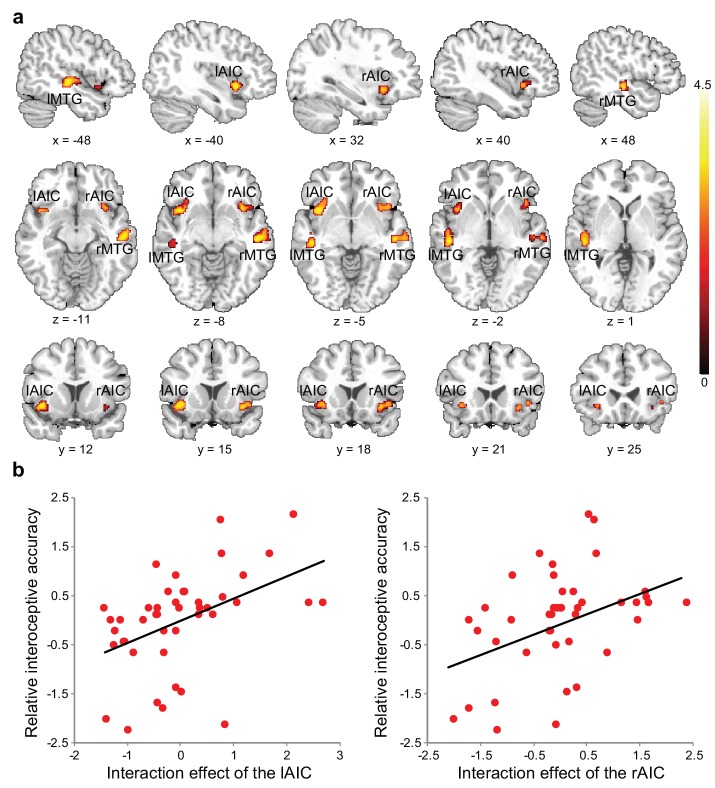
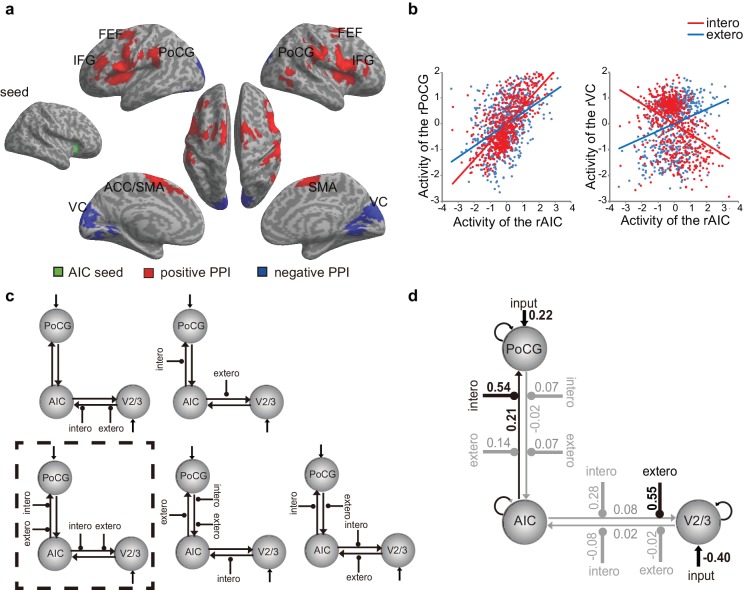
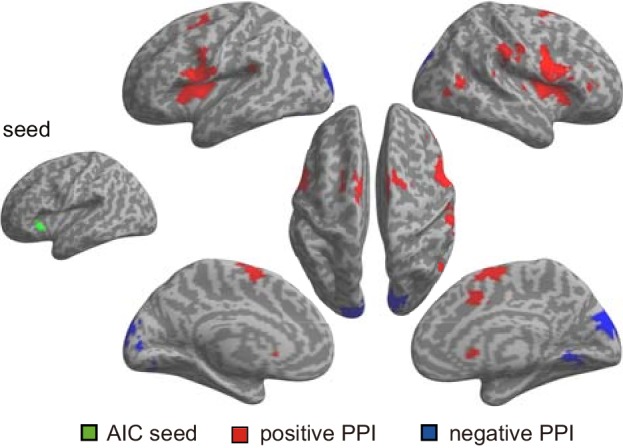
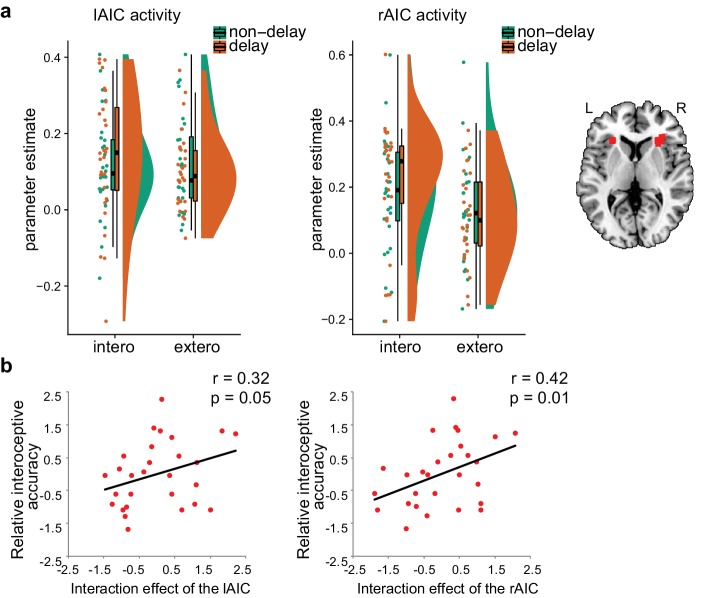
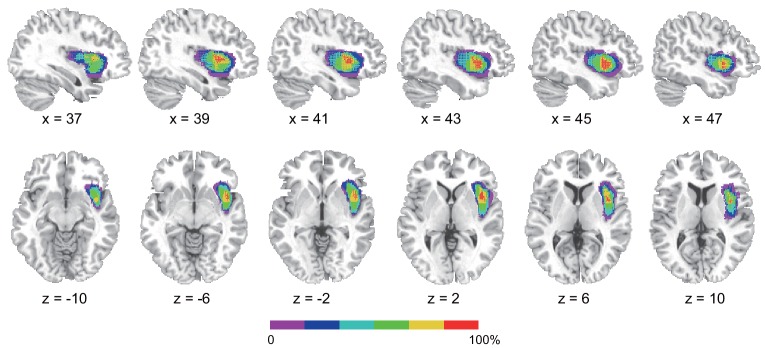
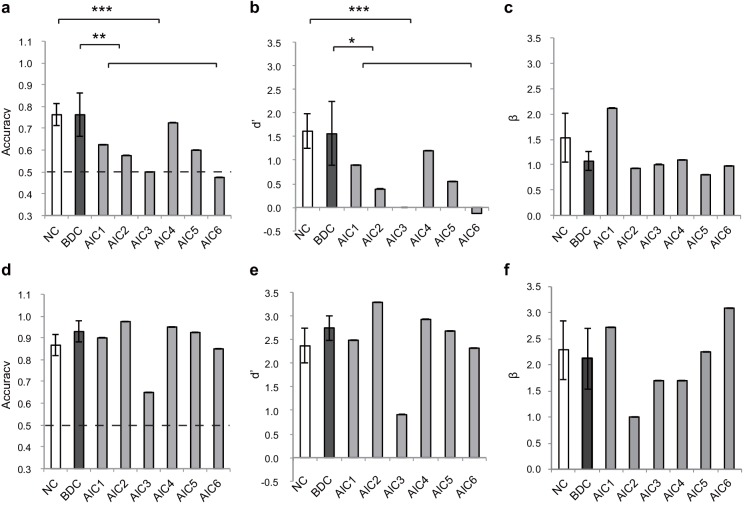
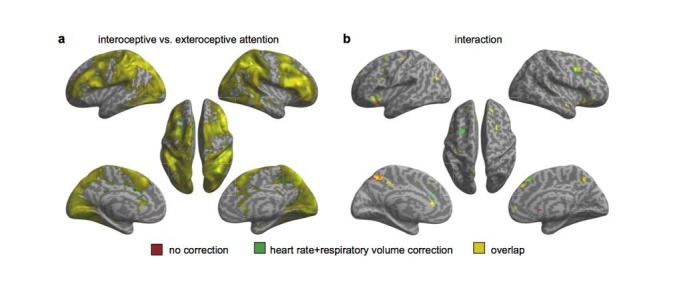
Accumulating evidence indicates that the anterior insular cortex (AIC) mediates interoceptive attention which refers to attention towards physiological signals arising from the body. However, the necessity of the AIC in this process has not been demonstrated. Using a novel task that directs attention toward breathing rhythm, we assessed the involvement of the AIC in interoceptive attention in healthy participants using functional magnetic resonance imaging and examined the necessity of the AIC in interoceptive attention in patients with AIC lesions. Results showed that interoceptive attention was associated with increased AIC activation, as well as enhanced coupling between the AIC and somatosensory areas along with reduced coupling between the AIC and visual sensory areas. In addition, AIC activation was predictive of individual differences in interoceptive accuracy. Importantly, AIC lesion patients showed disrupted interoceptive discrimination accuracy and sensitivity. These results provide compelling evidence that the AIC plays a critical role in interoceptive attention.
Overview
The claims and statistics of this paper haven’t been checked yet.
Run the check — free, no account needed. It reads the open-access text and checks the sources it cites.
Integrity signals
Registry
Cites
Statistics
Figures
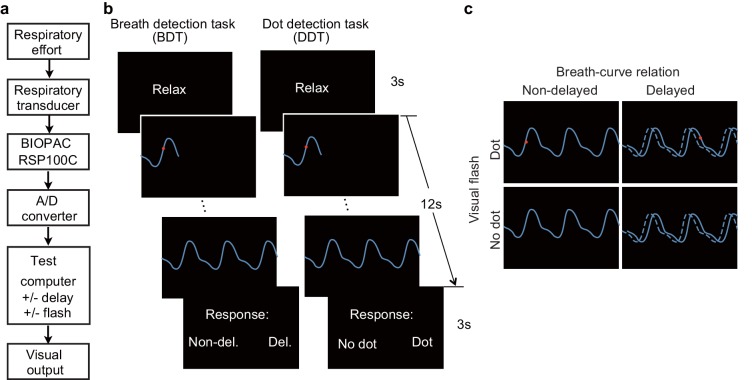
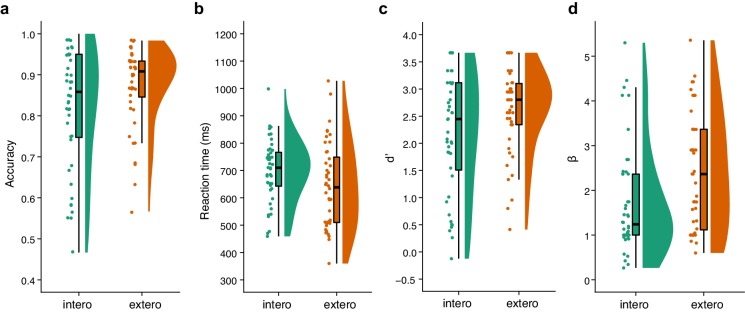
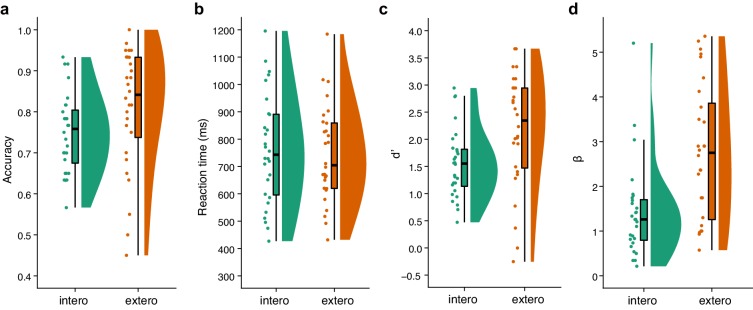
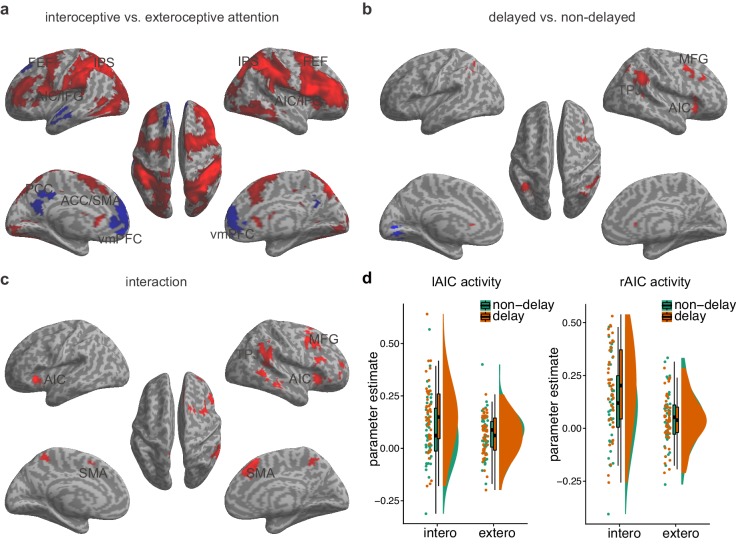
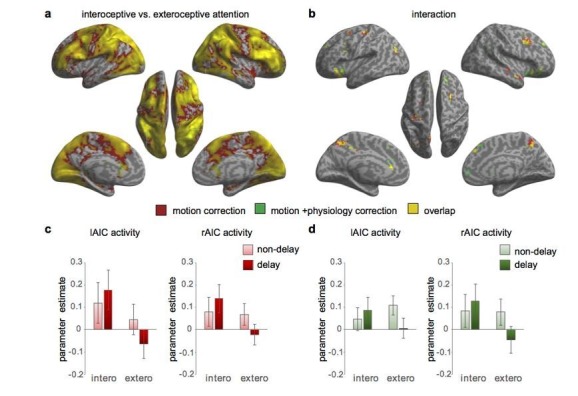
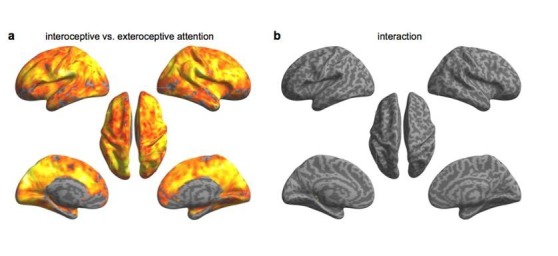
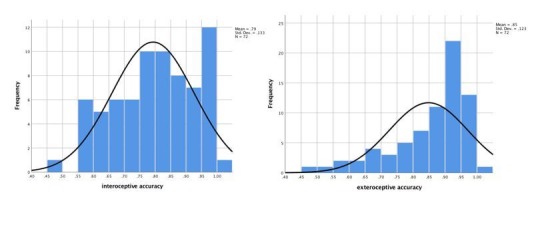
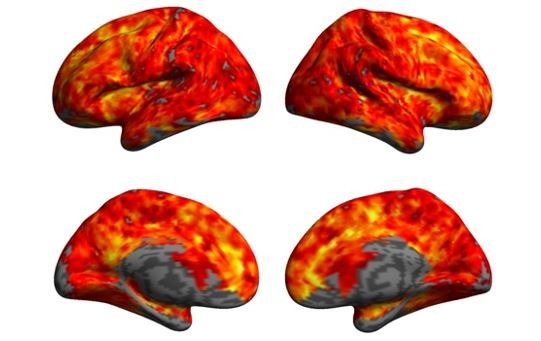
Verification
Claims the paper makes
The claims and statistics of this paper haven’t been checked yet.
Run the check — free, no account needed. It reads the open-access text and checks the sources it cites.
Claims other papers make about this one
Each is checked against this paper’s own text: does it say what the citing paper says it does?
The cited source says what the claim attributes to it.
In the citing paper
“AIC, that plays a crucial role in mediating interoceptive awareness (Wang et al. 2019)”
From Neuroanatomical correlates of peripersonal space: bridging the gap between perception, action, emotion and social cognition (2024) · cites this paper as Wang et al. 2019
Self-check
Percentages, sums and reported differences re-computed from the paper’s own numbers.
The self-check needs the paper’s full text.
Citations
Cites
R: A Language and Environment for Statistical Computing
R Core Team (2000) · doi:10.32614/r.manuals · Cited by 355,893
Folstein, M. F., Folstein, S. E., & McHugh, P. R. (1975) · Journal of Psychiatric Research · doi:10.1016/0022-3956(75)90026-6 · Cited by 88,282
James, W. (1891) · Personality Culture Society · doi:10.1037/11059-000 · Cited by 25,876
Hirono, N., Mori, E., Ikejiri, Y., Imamura, T., Shimomura, T., Hashimoto, M., Yamashita, H., & Ikeda, M. (1997) · PubMed · Cited by 21,012
Kok, J. S., Berg, I. J., & Scherder, E. J. A. (2013) · Dementia and Geriatric Cognitive Disorders Extra · doi:10.1159/000353441 · Cited by 20,589
Older Adults' Reasons for Using Technology while Aging in Place
Peek, S. T. M., Luijkx, K. G., Rijnaard, M. D., Nieboer, M. E., van der Voort, C. S., Aarts, S., van Hoof, J., Vrijhoef, H. J., & Wouters, E. (2015) · Gerontology · doi:10.1159/000430949 · Cited by 19,852
Sensitivity and False Alarm Rate of a Fall Sensor in Long-Term Fall Detection in the Elderly
Kangas, M., Korpelainen, R., Vikman, I., Nyberg, L., & Jämsä, T. J. (2014) · Gerontology · doi:10.1159/000362720 · Cited by 19,007
Tzourio-Mazoyer, N., Landeau, B., Papathanassiou, D., Crivello, F., Etard, O., Delcroix, N., Mazoyer, B., & Joliot, M. (2002) · NeuroImage · doi:10.1006/nimg.2001.0978 · Cited by 16,319
A default mode of brain function
Raichle, M. E., MacLeod, A. M., Snyder, A. Z., Powers, W. J., Gusnard, D. A., & Shulman, G. L. (2001) · Proceedings of the National Academy of Sciences · doi:10.1073/pnas.98.2.676 · Cited by 12,190
Dissociable intrinsic connectivity networks for salience processing and executive control
Seeley, W. W., Menon, V., Schatzberg, A. F., Keller, J., Glover, G. H., Kenna, H., Reiss, A. L., & Greicius, M. D. (2007) · The Journal of Neuroscience · doi:10.1523/jneurosci.5587-06.2007 · Cited by 7,426
Research works printed but not linked: 3
- Hamilton, 1976, Sourcebook of Adult Assessment: Applied Clinical Psychology, 154
- Porges, 1993, Body perception questionnaire, Laboratory of Developmental Assessment, University of Maryland
- Tranel, 1991, Somatic Markers and the Guidance of Behaviour: Theory and Preliminary Testing
Cited by
Sorted by citations
Items 201–203 of 203
Kang, J. C., Park, H.-J., & Yoon, H. (2026) · NeuroImage · doi:10.1016/j.neuroimage.2026.122240
Zou, H., Li, H., & Li, C. (2026) · Progress in Neuro-Psychopharmacology and Biological Psychiatry · doi:10.1016/j.pnpbp.2026.111980
Lactate and panic across infusion and exercise contexts: an interoceptive context-gating hypothesis
Li, X., Wang, S., & Chen, W. (2026) · Frontiers in Psychiatry · doi:10.3389/fpsyt.2026.1975318
Metadata
- Authors
- Wang, X., Wu, Q., Egan, L., Gu, X., Liu, P., Gu, H., Yang, Y., Luo, J., Wu, Y., Gao, Z., & Fan, J.
- Affiliations
- Capital Medical University (CN)
- Peking University (CN)
- Queens College, CUNY (US)
- James J. Peters VA Medical Center (US)
- National Institute on Drug Abuse (US)
- Capital Normal University (CN)
- Corresponding author
- Fan, Jin
- ORCID
- Venue
- eLife
- Publisher
- eLife Sciences Publications, Ltd
- Published
- 2019-04-15
- Volume
- 8
- ISSN
- 2050-084X (ISSN-L)
- PMC
- PMC6488299
- OpenAlex
- W2899948248
- Cited by
- 204
- References
- 131
- Citations by year
- 2026: 31 · 2025: 37 · 2024: 31 · 2023: 40 · 2022: 28 · 2021: 17 · 2020: 18 · 2019: 2
- FWCI
- 12.95
- Type
- journal article
- Language
- en
- Open access
- gold
- doi.org
- Licence
- Locations
- eLife (publishedVersion, cc-by)
- bioRxiv (Cold Spring Harbor Laboratory) (acceptedVersion, cc-by)
- Europe PMC (PubMed Central) (publishedVersion, public-domain)
- PubMed Central (publishedVersion, public-domain)
- PubMed (publishedVersion)
- DOAJ (DOAJ: Directory of Open Access Journals) (submittedVersion, cc-by-sa)
- Greater South Information System
- Funders
- Beijing Municipal Administration of Hospitals (Youth Program QML20170503)
- National Natural Science Foundation of China (81600931, 31771205, 61690205, 81328008, 81729001)
- Capital Health Development Research Project of Beijing (2016-4-1074)
- Brain Research Project of Beijing (Z16110002616014)
- China Postdoctoral Science Foundation (2016M600835)
- National Institute on Drug Abuse (1R01DA043695, Intramul Research Program)
- The Mental Illness Research, Education, and Clinical Center, James J. Peter Veterans Affairs Medical Center (MIRECC VISN 2)
- National Basic Research Program of China (973-2015CB351800)
- National Institute of Mental Health (R01MH094305)
- Topics
- Health Sciences › Medicine › Psychiatry and Mental health › Psychosomatic Disorders and Their Treatments
- Life Sciences › Neuroscience › Cognitive Neuroscience › Tactile and Sensory Interactions
- Health Sciences › Medicine › Cardiology and Cardiovascular Medicine › Heart Rate Variability and Autonomic Control
- Keywords
- anterior insula, interoceptive attention, interoception, respiratory rhythm, interoceptive accuracy, interoceptive sensitivity, somatosensory cortex, individual differences
- MeSH terms
- Attention, Brain Mapping, Cerebral Cortex, Humans, Magnetic Resonance Imaging, Healthy Volunteers, Interoception
About these checks
Registry, retraction, Cites and statistics results are computed, not judged, with one exception: a printed reference that no index lists is read once by a model before it counts as a citation error. Claims are extracted by a model and kept only when their quote appears verbatim in the text; each cited source is then checked, with a model’s help, for whether it says what the claim relies on. Those verdicts can be wrong — read the claim’s quote and the cited source before relying on one.
Statistics and arithmetic are recomputed, not judged.
Confidence bands are shown only for fields calibrated on our annotated test set. None is calibrated yet, so no band is shown.
What counts as a claim ›How we measure confidence ›How we check this ›
Are you an author, or do you see a problem with this page? Request a review
