

The DOI matches its Crossref record; 49 of the 49 references it cites were found in a registry or an index.
An atlas of polygenic risk score associations to highlight putative causal relationships across the human phenome
Open accessPublished version of a preprint
Abstract
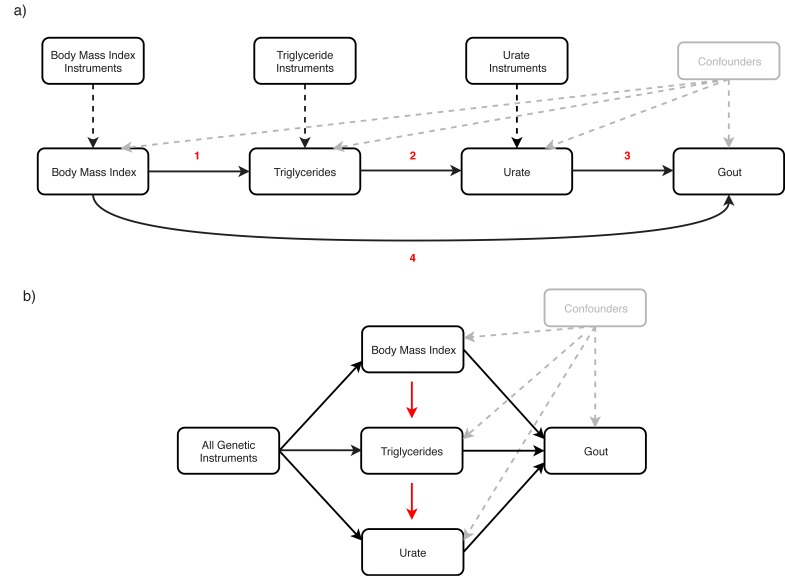
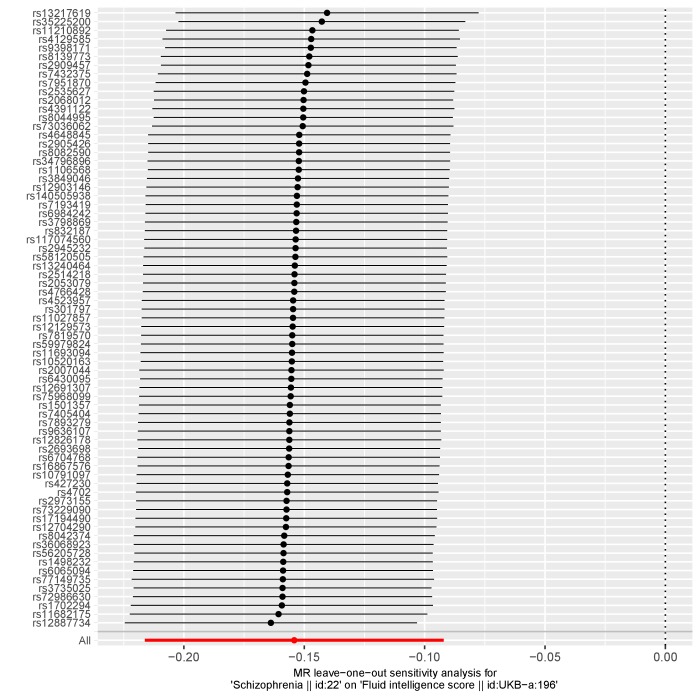
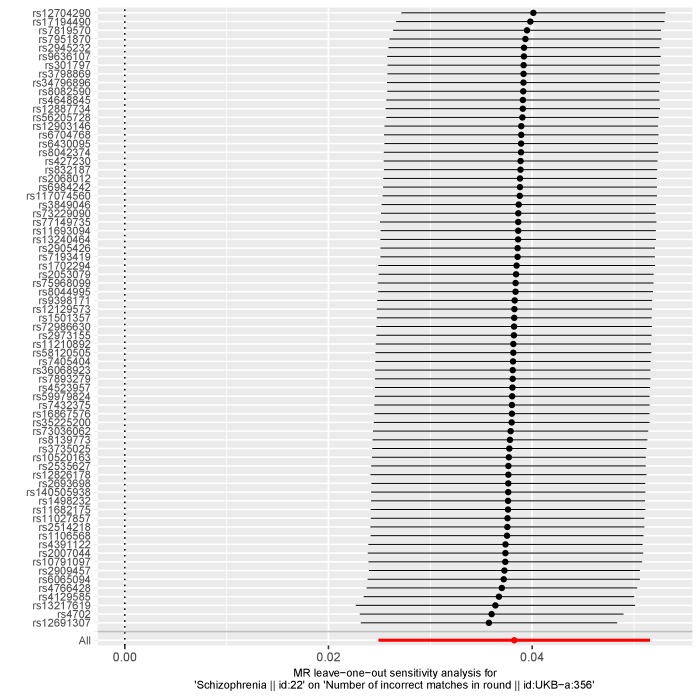
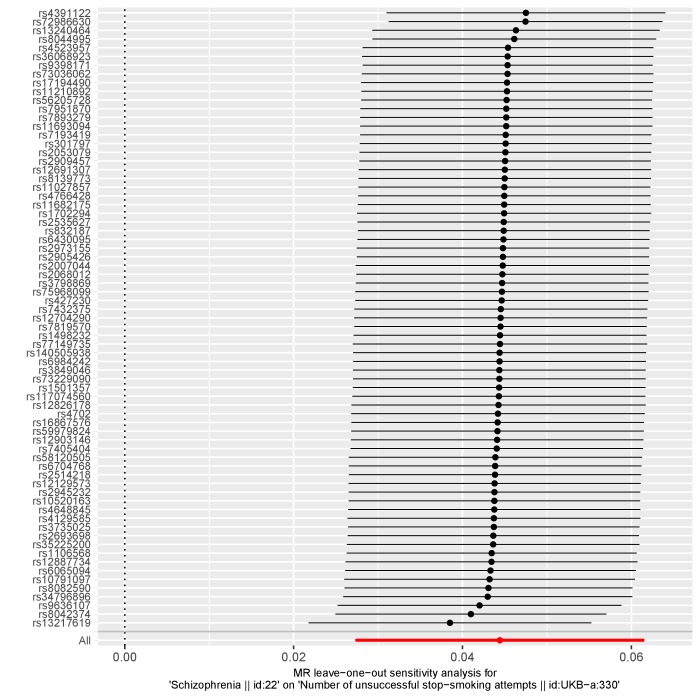
The age of large-scale genome-wide association studies (GWAS) has provided us with an unprecedented opportunity to evaluate the genetic liability of complex disease using polygenic risk scores (PRS). In this study, we have analysed 162 PRS (p<5×10−05) derived from GWAS and 551 heritable traits from the UK Biobank study (N = 334,398). Findings can be investigated using a web application (http://mrcieu.mrsoftware.org/PRS_atlas/), which we envisage will help uncover both known and novel mechanisms which contribute towards disease susceptibility. To demonstrate this, we have investigated the results from a phenome-wide evaluation of schizophrenia genetic liability. Amongst findings were inverse associations with measures of cognitive function which extensive follow-up analyses using Mendelian randomization (MR) provided evidence of a causal relationship. We have also investigated the effect of multiple risk factors on disease using mediation and multivariable MR frameworks. Our atlas provides a resource for future endeavours seeking to unravel the causal determinants of complex disease.
Overview
The claims and statistics of this paper haven’t been checked yet.
Run the check — free, no account needed. It reads the open-access text and checks the sources it cites.
Integrity signals
Registry
Cites
Statistics
Figures
Verification
Claims the paper makes
The claims and statistics of this paper haven’t been checked yet.
Run the check — free, no account needed. It reads the open-access text and checks the sources it cites.
Claims other papers make about this one
Each is checked against this paper’s own text: does it say what the citing paper says it does?
The source backs part of the claim, not all of it — or backs it for a different population, condition or comparison.
In the citing paper
“we and others argue that associations between patient-level PGSs and outcomes are more robust, potentially capturing causal associations.95”
From Cystatin C is glucocorticoid responsive, directs recruitment of Trem2+ macrophages, and predicts failure of cancer immunotherapy (2023) · cites this paper as [95]
Experimental — accuracy not yet measuredIn the citing paper
“In addition, as inherited sequence variation is a prominent cause of phenotypic variation (but the reverse is not true), risk variants identified by GWAS have value as genetic instruments, mapping causal relationships between traits and inferring contributions made by circulating biomarkers and environmental exposures to disease development66.”
From A brief history of human disease genetics (2020) · cites this paper as [66]
Self-check
Percentages, sums and reported differences re-computed from the paper’s own numbers.
The self-check needs the paper’s full text.
Citations
Cites
Sudlow, C., Gallacher, J., Allen, N., Beral, V., Burton, P., Danesh, J., Downey, P., Elliott, P., Green, J., Landray, M., et al. (2015) · PLOS Medicine · doi:10.1371/journal.pmed.1001779 · Cited by 12,728
Bowden, J., Davey Smith, G., & Burgess, S. (2015) · International Journal of Epidemiology · doi:10.1093/ije/dyv080 · Cited by 9,816 · cited 2×
“evaluating the MR-Egger intercept term (Bowden et al., 2015) to discern whether estimates may be biased by directional pleiotropic effects.”
BackgroundMethodBowden, J., Davey Smith, G., Haycock, P. C., & Burgess, S. (2016) · Genetic Epidemiology · doi:10.1002/gepi.21965 · Cited by 8,922 · cited 2×
“, 2013), weighed median (Bowden et al., 2016) and weighted mode approaches.”
MethodThe UK Biobank resource with deep phenotyping and genomic data
Bycroft, C., Freeman, C., Petkova, D., Band, G., Elliott, L. T., Sharp, K., Motyer, A., Vukcevic, D., Delaneau, O., O’Connell, J., et al. (2018) · Nature · doi:10.1038/s41586-018-0579-z · Cited by 8,876 · cited 2×
“In this study, we have constructed 162 different PRS (based on p<5 10 ) using findings from large-scale GWAS and evaluated their association with 551 traits in up to 334,398 individuals enrolled in the UK Biobank study (Bycroft et al., 2018; Sudlow et al., 2015).”
BackgroundMethodThe MR-Base platform supports systematic causal inference across the human phenome
Hemani, G., Zheng, J., Elsworth, B., Wade, K. H., Haberland, V., Baird, D., Laurin, C., Burgess, S., Bowden, J., Langdon, R., et al. (2018) · eLife · doi:10.7554/elife.34408 · Cited by 7,959 · cited 1×
“Constructing polygenic risk scores from large-scale genome-wide association studies We have used the MR-Base platform (Hemani et al., 2018) to identify SNPs from large-scale GWAS to include in our PRS.”
MethodSelf-citationAn integrated map of genetic variation from 1,092 human genomes
The 1000 Genomes Project Consortium (2012) · Nature · doi:10.1038/nature11632 · Cited by 7,711
Mendelian Randomization Analysis With Multiple Genetic Variants Using Summarized Data
Burgess, S., Butterworth, A., & Thompson, S. G. (2013) · Genetic Epidemiology · doi:10.1002/gepi.21758 · Cited by 6,050 · cited 3×
“In terms of MR methods, we applied the inverse variance weighted (IVW) (Burgess et al., 2013), weighed median (Bowden et al.”
MethodInfluentialDavey Smith, G., & Ebrahim, S. (2003) · International Journal of Epidemiology · doi:10.1093/ije/dyg070 · Cited by 5,882
Mendelian randomization: genetic anchors for causal inference in epidemiological studies
Davey Smith, G., & Hemani, G. (2014) · Human Molecular Genetics · doi:10.1093/hmg/ddu328 · Cited by 4,677
Self-citationReading Mendelian randomisation studies: a guide, glossary, and checklist for clinicians
Davies, N. M., Holmes, M. V., & Davey Smith, G. (2018) · BMJ · doi:10.1136/bmj.k601 · Cited by 4,404 · cited 1×
“Along with the emerging utility of PRS to predict disease, they have also been previously used to evaluate putative causal relationships (Davies et al., 2018; Palmer et al., 2012).”
Method
Research works printed but not linked: 1
- Hu, 2006, Pseudo-R2 in logistic regression model, Statistica Sinica, 16, 847
Cited by
Sorted by citations
Mendelian Randomization: Concepts and Scope
Richmond, R. C., & Davey Smith, G. (2022) · Cold Spring Harbor Perspectives in Medicine · doi:10.1101/cshperspect.a040501 · Cited by 841
The Polygenic Score Catalog as an open database for reproducibility and systematic evaluation
Lambert, S. A., Gil, L., Jupp, S., Ritchie, S. C., Xu, Y., Buniello, A., McMahon, A., Abraham, G., Chapman, M., Parkinson, H., et al. (2021) · Nature Genetics · doi:10.1038/s41588-021-00783-5 · Cited by 709
A brief history of human disease genetics
Claussnitzer, M., Cho, J. H., Collins, R., Cox, N. J., Dermitzakis, E. T., Hurles, M. E., Kathiresan, S., Kenny, E. E., Lindgren, C. M., MacArthur, D. G., et al. (2020) · Nature · doi:10.1038/s41586-019-1879-7 · Cited by 697
Cano-Gamez, E., & Trynka, G. (2020) · Frontiers in Genetics · doi:10.3389/fgene.2020.00424 · Cited by 613
“Polygenic risk scores performance has increased as GWAS studies increased in sample sizes and larger validation cohorts became available, as shown in CAD (Ripatti et al., 2010; Mega et al., 2015; Abraham et al., 2016; Khera et al., 2016) and cancer (Garcia-Closas et al., 2013; Mavaddat et al., 2015; Maas et al., 2016).”
BackgroundInfluentialGenetics meets proteomics: perspectives for large population-based studies
Suhre, K., McCarthy, M. I., & Schwenk, J. M. (2021) · Nature Reviews Genetics · doi:10.1038/s41576-020-0268-2 · Cited by 478
Metadata
- Authors
- Richardson, T. G., Harrison, S., Hemani, G., & Davey Smith, G.
- Affiliations
- University of Bristol (GB)
- MRC Integrative Epidemiology Unit (IEU), Population Health Sciences, Bristol Medical School, University of Bristol, Bristol, United Kingdom
- Corresponding author
- Richardson, Tom G
- Venue
- eLife
- Publisher
- eLife Sciences Publications, Ltd
- Published
- 2019-03-05
- Volume
- 8
- ISSN
- 2050-084X (ISSN-L)
- PMC
- PMC6400585
- OpenAlex
- W2899836172
- Cited by
- 198
- References
- 48
- Citations by year
- 2026: 12 · 2025: 10 · 2024: 24 · 2023: 14 · 2022: 37 · 2021: 41 · 2020: 44 · 2019: 16
- FWCI
- 20.94
- Type
- journal article
- Language
- en
- Open access
- gold
- doi.org
- Licence
- Locations
- eLife (publishedVersion, cc-by)
- bioRxiv (Cold Spring Harbor Laboratory) (acceptedVersion, cc-by)
- Europe PMC (PubMed Central) (publishedVersion, cc-by)
- PubMed Central (publishedVersion, cc-by)
- PubMed (publishedVersion)
- Explore Bristol Research (publishedVersion, cc-by)
- Bristol Research (University of Bristol) (acceptedVersion, other-oa)
- DOAJ (DOAJ: Directory of Open Access Journals) (submittedVersion, cc-by-sa)
- Funders
- Medical Research Council (MC_UU_00011/1)
- Wellcome Trust (208806/Z/17/Z)
- Health Data Research UK (MR/S003886/1)
- Topics
- Life Sciences › Biochemistry, Genetics and Molecular Biology › Genetics › Genetic Associations and Epidemiology
- Life Sciences › Biochemistry, Genetics and Molecular Biology › Genetics › Genetic and phenotypic traits in livestock
- Life Sciences › Biochemistry, Genetics and Molecular Biology › Genetics › Genetic Mapping and Diversity in Plants and Animals
- Keywords
- polygenic risk score, phenome-wide association study, schizophrenia, genetic susceptibility, cognitive function, causal relationship, Mendelian randomization, mediation analysis, multivariable Mendelian randomization, complex disease susceptibility, heritable traits, UK Biobank, web application
- MeSH terms
- United Kingdom, Humans, Schizophrenia, Risk Assessment, Genetic Predisposition to Disease, Multifactorial Inheritance, Databases, Genetic, Genome-Wide Association Study
About these checks
Registry, retraction, Cites and statistics results are computed, not judged, with one exception: a printed reference that no index lists is read once by a model before it counts as a citation error. Claims are extracted by a model and kept only when their quote appears verbatim in the text; each cited source is then checked, with a model’s help, for whether it says what the claim relies on. Those verdicts can be wrong — read the claim’s quote and the cited source before relying on one.
Statistics and arithmetic are recomputed, not judged.
Confidence bands are shown only for fields calibrated on our annotated test set. None is calibrated yet, so no band is shown.
What counts as a claim ›How we measure confidence ›How we check this ›
Are you an author, or do you see a problem with this page? Request a review
