

The DOI matches its Crossref record; 44 of the 44 references it cites were found in a registry or an index.
Tight nuclear tethering of cGAS is essential for preventing autoreactivity
Open accessAbstract
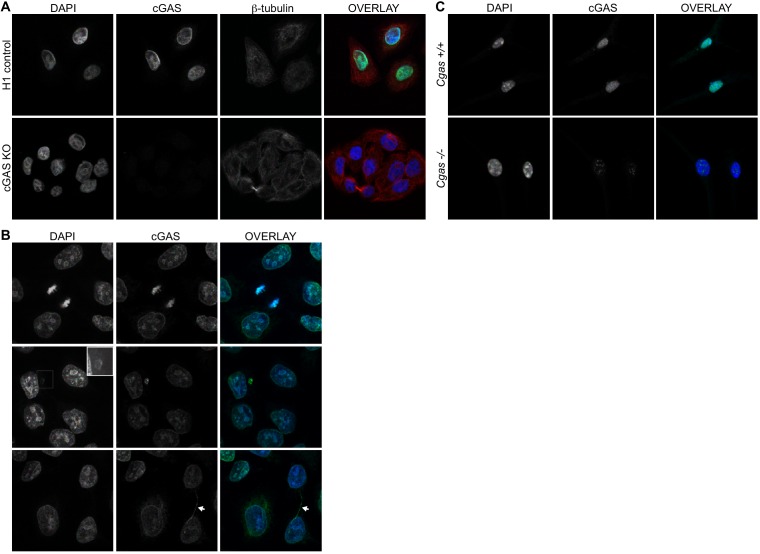
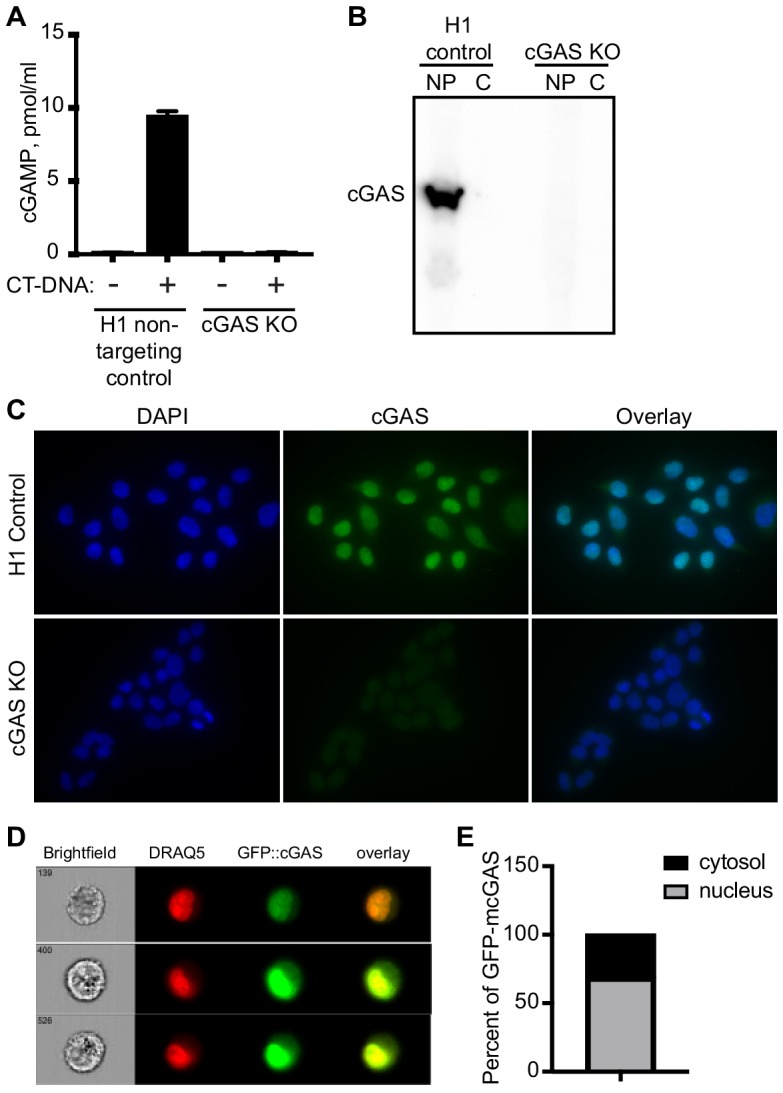
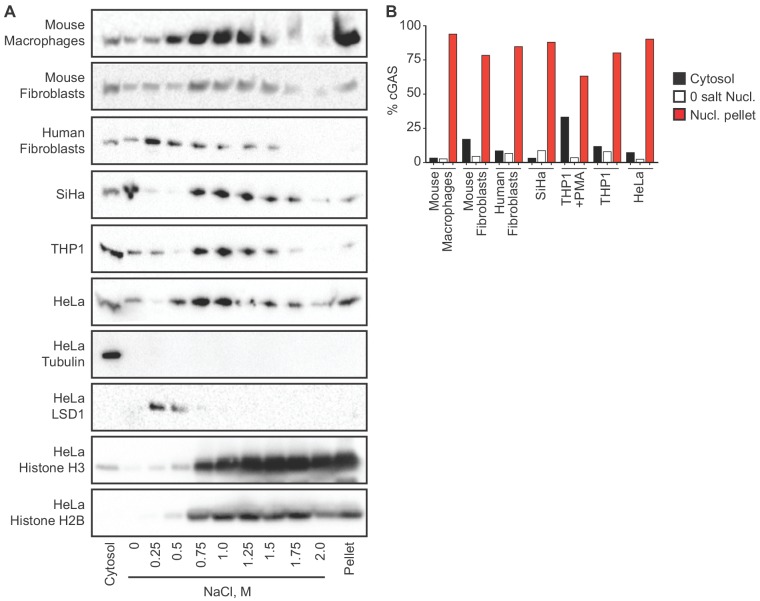
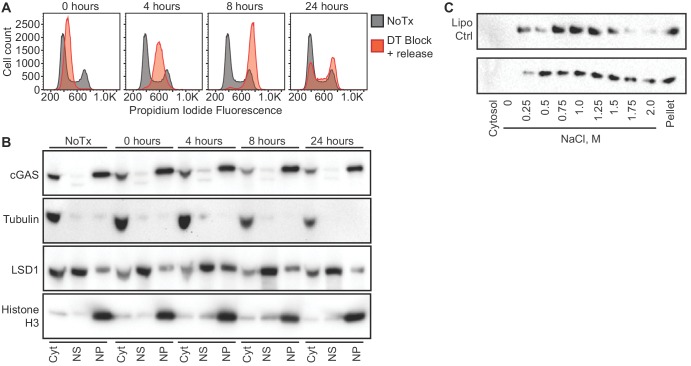
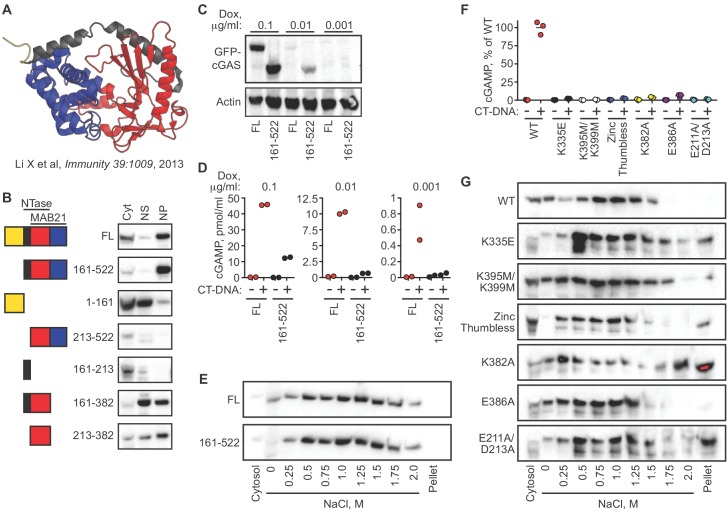
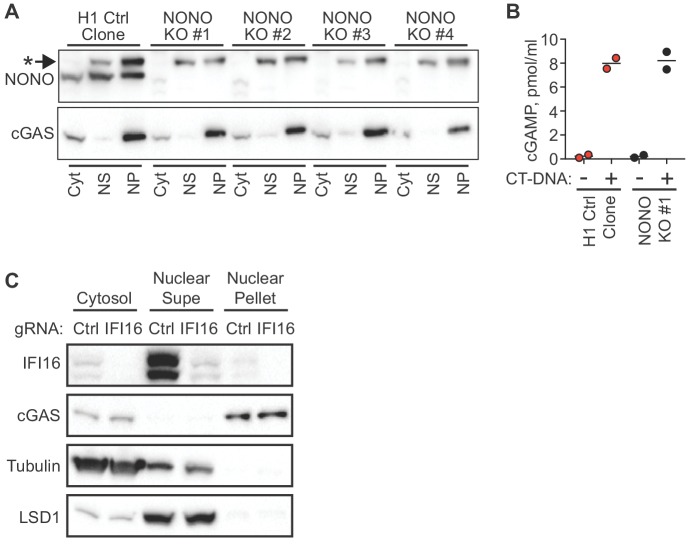
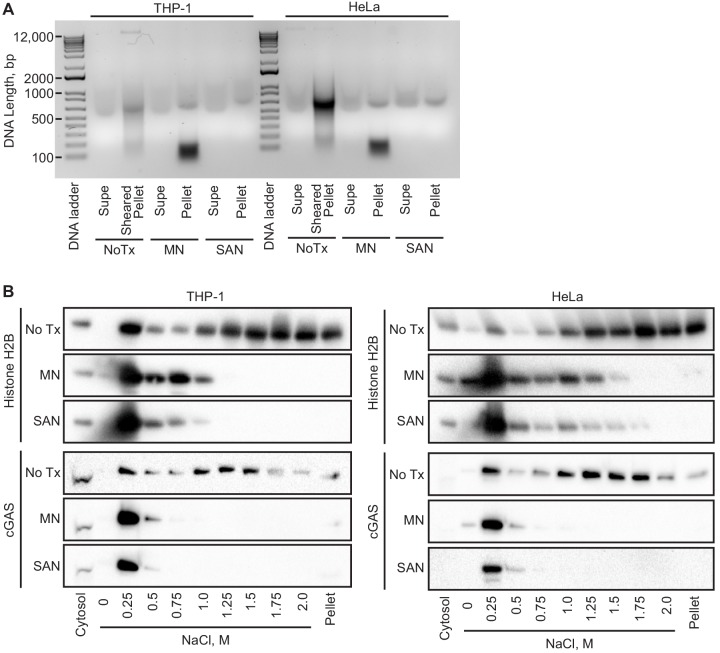
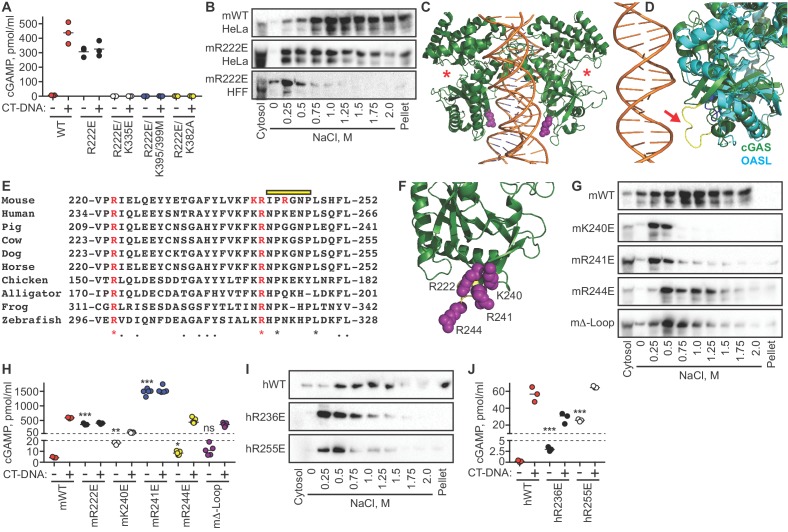
cGAS is an intracellular innate immune sensor that detects double-stranded DNA. The presence of billions of base pairs of genomic DNA in all nucleated cells raises the question of how cGAS is not constitutively activated. A widely accepted explanation for this is the sequestration of cGAS in the cytosol, which is thought to prevent cGAS from accessing nuclear DNA. Here, we demonstrate that endogenous cGAS is predominantly a nuclear protein, regardless of cell cycle phase or cGAS activation status. We show that nuclear cGAS is tethered tightly by a salt-resistant interaction. This tight tethering is independent of the domains required for cGAS activation, and it requires intact nuclear chromatin. We identify the evolutionarily conserved tethering surface on cGAS and we show that mutation of single amino acids within this surface renders cGAS massively and constitutively active against self-DNA. Thus, tight nuclear tethering maintains the resting state of cGAS and prevents autoreactivity.
Overview
The claims and statistics of this paper haven’t been checked yet.
Run the check — free, no account needed. It reads the open-access text and checks the sources it cites.
Integrity signals
Registry
Cites
Statistics
Figures
Verification
Claims the paper makes
The claims and statistics of this paper haven’t been checked yet.
Run the check — free, no account needed. It reads the open-access text and checks the sources it cites.
Claims other papers make about this one
Each is checked against this paper’s own text: does it say what the citing paper says it does?
The source backs part of the claim, not all of it — or backs it for a different population, condition or comparison.
In the citing paper
“Previously, we and others showed that cGAS is suppressed by binding to nucleosomes and that disruption of nucleosome regulation enables robust DNA-dependent activation of cGAS32–37 (Fig. 4a).”
From cGAS–STING drives ageing-related inflammation and neurodegeneration (2023) · cites this paper as [37]
Experimental — accuracy not yet measured
Self-check
Percentages, sums and reported differences re-computed from the paper’s own numbers.
The self-check needs the paper’s full text.
Citations
Cites
Improved vectors and genome-wide libraries for CRISPR screening
Sanjana, N. E., Shalem, O., & Zhang, F. (2014) · Nature Methods · doi:10.1038/nmeth.3047 · Cited by 5,239
Cyclic GMP-AMP Synthase Is a Cytosolic DNA Sensor That Activates the Type I Interferon Pathway
Sun, L., Wu, J., Du, F., Chen, X., & Chen, Z. J. (2013) · Science · doi:10.1126/science.1232458 · Cited by 4,996
STING is an endoplasmic reticulum adaptor that facilitates innate immune signalling
Ishikawa, H., & Barber, G. N. (2008) · Nature · doi:10.1038/nature07317 · Cited by 3,576
STING regulates intracellular DNA-mediated, type I interferon-dependent innate immunity
Ishikawa, H., Ma, Z., & Barber, G. N. (2009) · Nature · doi:10.1038/nature08476 · Cited by 2,759 · cited 7×
“The cGAS-STING DNA sensing pathway has emerged as a key innate immune response that is important for antiviral immunity (Goubau et al., 2013), contributes to specific autoimmune diseases (Crowl et al., 2017), and mediates important aspects of antitumor immunity (Li and Chen, 2018). cGAS binds to double-stranded DNA an…”
BackgroundInfluentialCyclic GMP-AMP Is an Endogenous Second Messenger in Innate Immune Signaling by Cytosolic DNA
Wu, J., Sun, L., Chen, X., Du, F., Shi, H., Chen, C., & Chen, Z. J. (2012) · Science · doi:10.1126/science.1229963 · Cited by 2,628
Phosphorylation of innate immune adaptor proteins MAVS, STING, and TRIF induces IRF3 activation
Liu, S., Cai, X., Wu, J., Cong, Q., Chen, X., Li, T., Du, F., Ren, J., Wu, Y.-T., Grishin, N. V., et al. (2015) · Science · doi:10.1126/science.aaa2630 · Cited by 1,927
cGAS surveillance of micronuclei links genome instability to innate immunity
Mackenzie, K. J., Carroll, P., Martin, C.-A., Murina, O., Fluteau, A., Simpson, D. J., Olova, N., Sutcliffe, H., Rainger, J. K., Leitch, A., et al. (2017) · Nature · doi:10.1038/nature23449 · Cited by 1,752
Mitotic progression following DNA damage enables pattern recognition within micronuclei
Harding, S. M., Benci, J. L., Irianto, J., Discher, D. E., Minn, A. J., & Greenberg, R. A. (2017) · Nature · doi:10.1038/nature23470 · Cited by 1,508
Cytoplasmic chromatin triggers inflammation in senescence and cancer
Dou, Z., Ghosh, K., Vizioli, M. G., Zhu, J., Sen, P., Wangensteen, K. J., Simithy, J., Lan, Y., Lin, Y., Zhou, Z., et al. (2017) · Nature · doi:10.1038/nature24050 · Cited by 1,335
The cGAS–cGAMP–STING pathway connects DNA damage to inflammation, senescence, and cancer
Li, T., & Chen, Z. J. (2018) · Journal of Experimental Medicine · doi:10.1084/jem.20180139 · Cited by 1,293
Cited by
Sorted by citations
Items 301–303 of 303
Zhang, A., Fang, Y., Peng, R., Yan, M., Chen, Z., Li, T., Tan, J., Sun, L., & Chen, Z. J. (2026) · bioRxiv (Cold Spring Harbor Laboratory) · doi:10.64898/2026.10.15.759215
Chemical Modulation of the cGAS‐STING‐ENPP1 Axis: Medicinal Chemistry and Clinical Perspective
Shinde, A. U., & Bharate, S. B. (2026) · Medicinal Research Reviews · doi:10.1002/med.70118
Zhao, J., Zhu, C., Shu, Y., Guo, B., & Xu, W. (2026) · Medicine Plus · doi:10.1016/j.medp.2026.100176
Metadata
- Authors
- Volkman, H. E., Cambier, S., Gray, E. E., & Stetson, D. B.
- Affiliations
- University of Washington (US)
- Corresponding author
- Stetson, Daniel B
- Venue
- eLife
- Publisher
- eLife Sciences Publications, Ltd
- Published
- 2019-12-06
- Volume
- 8
- ISSN
- 2050-084X (ISSN-L)
- PMC
- PMC6927687
- OpenAlex
- W2994585472
- Cited by
- 303
- References
- 42
- Citations by year
- 2026: 38 · 2025: 42 · 2024: 55 · 2023: 36 · 2022: 37 · 2021: 59 · 2020: 36
- FWCI
- 13.19
- Type
- journal article
- Language
- en
- Open access
- gold
- doi.org
- Licence
- Locations
- eLife (publishedVersion, cc-by)
- Europe PMC (PubMed Central) (publishedVersion, cc-by)
- PubMed Central (publishedVersion, cc-by)
- PubMed (publishedVersion)
- DOAJ (DOAJ: Directory of Open Access Journals) (submittedVersion, cc-by-sa)
- Funders
- National Institutes of Health (AI084914)
- Jane Coffin Childs Memorial Fund for Medical Research
- Burroughs Wellcome Fund (1013540)
- Howard Hughes Medical Institute (55108572)
- Bill and Melinda Gates Foundation (OPP1156262)
- Cancer Research Institute (A84161)
- Topics
- Life Sciences › Immunology and Microbiology › Immunology › interferon and immune responses
- Life Sciences › Immunology and Microbiology › Immunology › Immune Response and Inflammation
- Life Sciences › Biochemistry, Genetics and Molecular Biology › Molecular Biology › DNA and Nucleic Acid Chemistry
- Keywords
- cGAS, innate immunity, double-stranded DNA sensing, self-DNA, autoreactivity, chromatin, cytosolic DNA sensing, constitutive activation, nucleic acid sensors
- MeSH terms
- Cyclic Guanosine Monophosphate-Adenosine Monophosphate Synthase, Animals, Cell Nucleus, Cells, Cultured, Cytosol, DNA, DNA Damage, HeLa Cells, Humans, Mice, Inbred C57BL, Nuclear Proteins, Nucleotidyltransferases, Protein Binding, Cell Line, Tumor, DNA Cleavage
About these checks
Registry, retraction, Cites and statistics results are computed, not judged, with one exception: a printed reference that no index lists is read once by a model before it counts as a citation error. Claims are extracted by a model and kept only when their quote appears verbatim in the text; each cited source is then checked, with a model’s help, for whether it says what the claim relies on. Those verdicts can be wrong — read the claim’s quote and the cited source before relying on one.
Statistics and arithmetic are recomputed, not judged.
Confidence bands are shown only for fields calibrated on our annotated test set. None is calibrated yet, so no band is shown.
What counts as a claim ›How we measure confidence ›How we check this ›
Are you an author, or do you see a problem with this page? Request a review
