

The DOI matches its Crossref record; 148 of the 149 references it cites were found in a registry or an index, and 1 are not checked yet.
Nitric oxide acts as a cotransmitter in a subset of dopaminergic neurons to diversify memory dynamics
Open accessPublished version of a preprint
Abstract
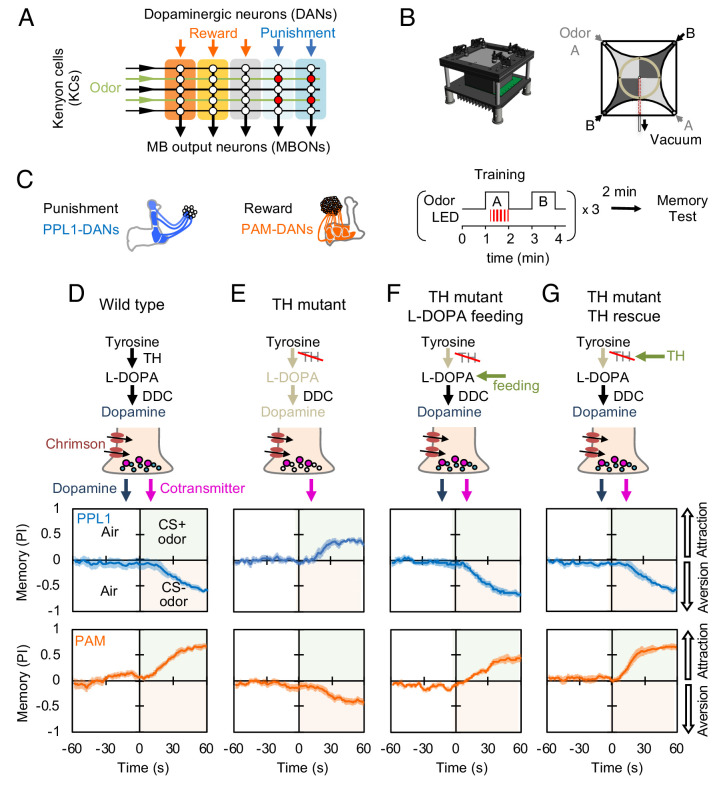
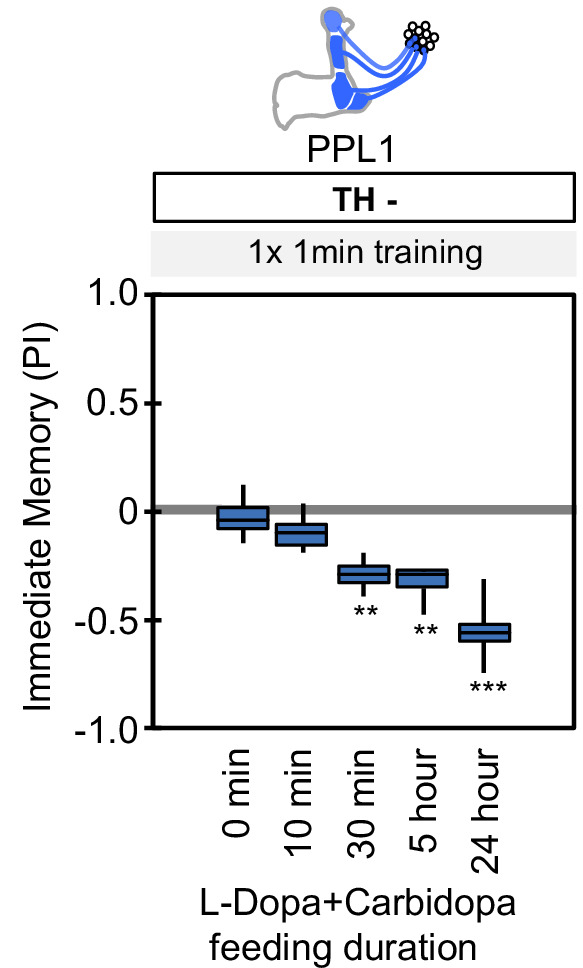
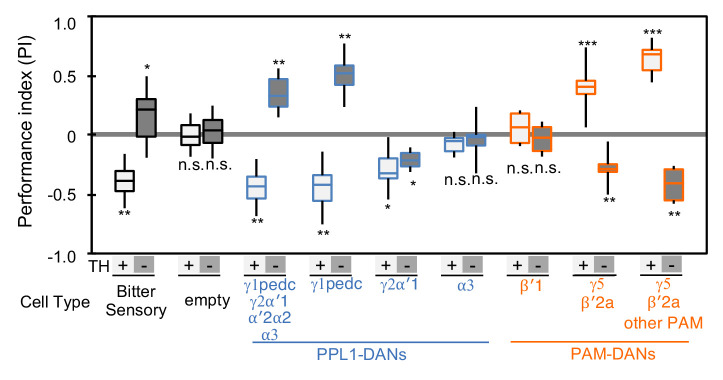
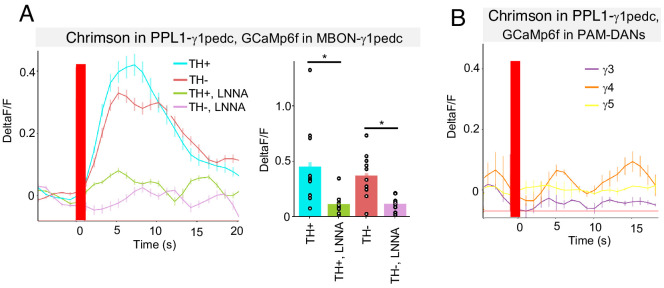
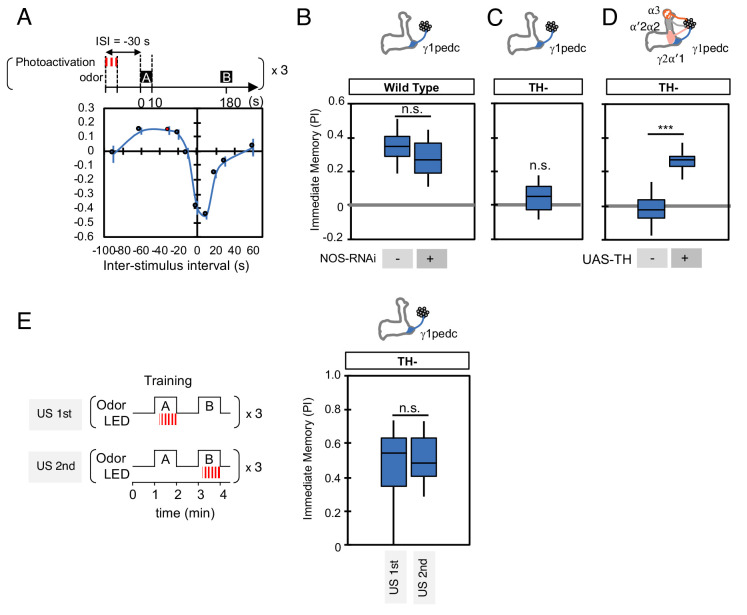
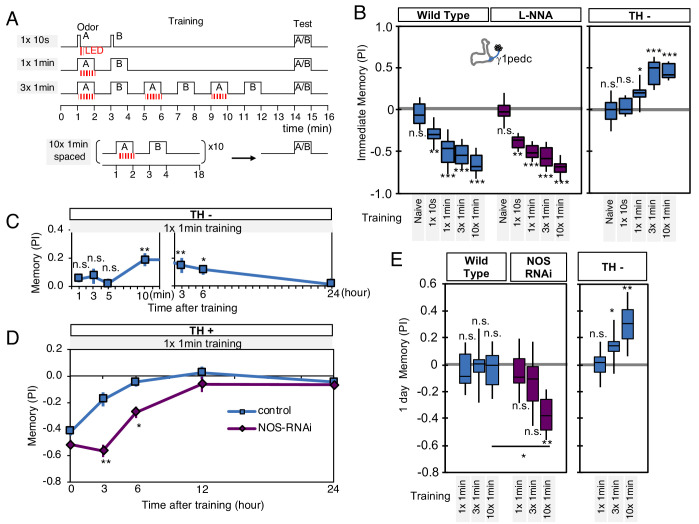
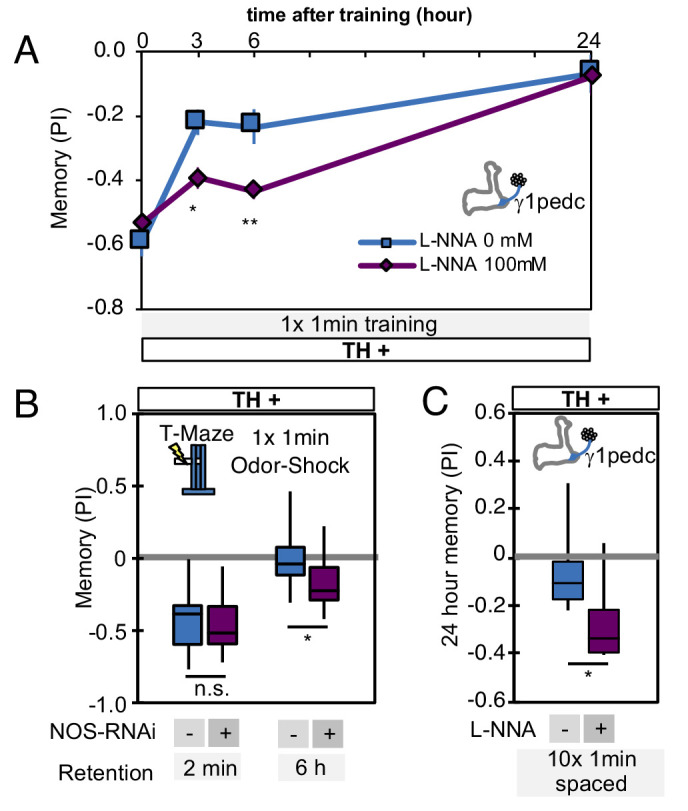
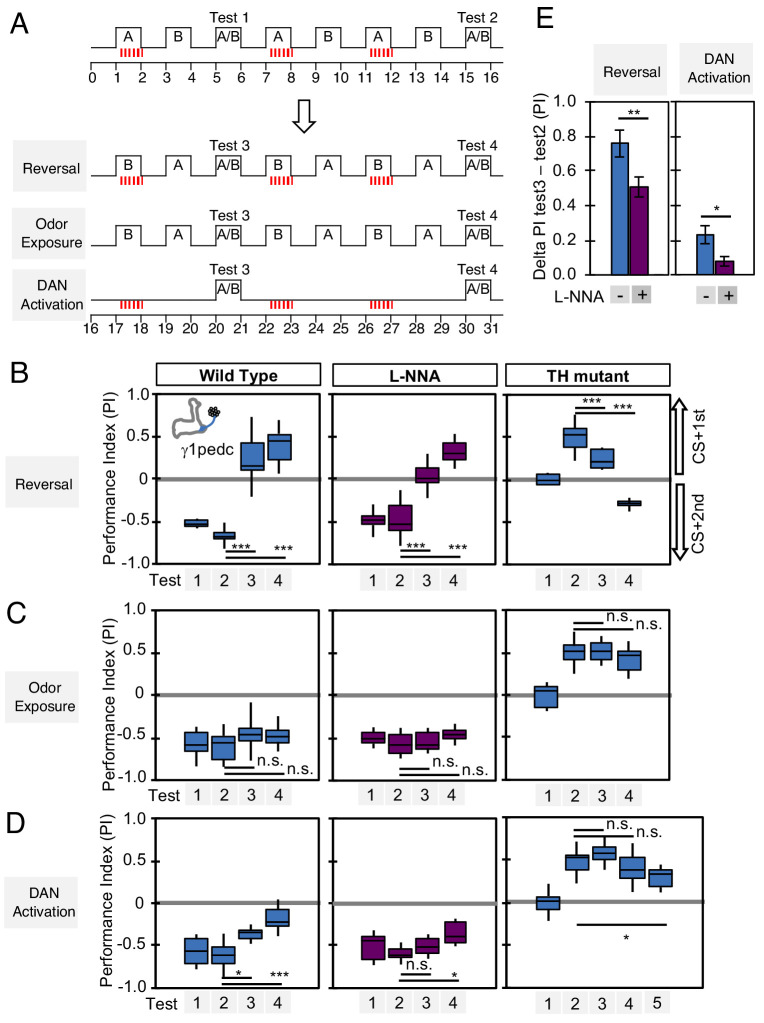
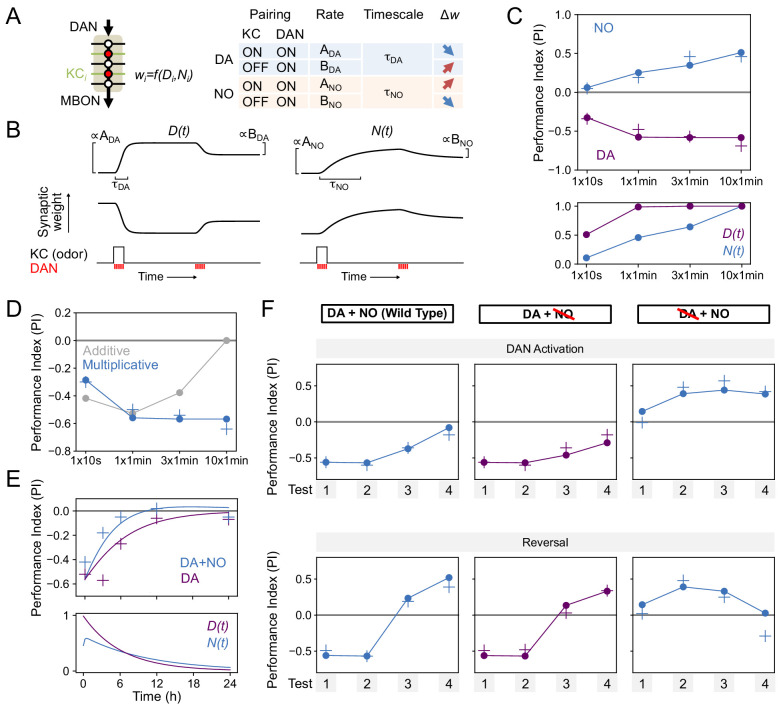
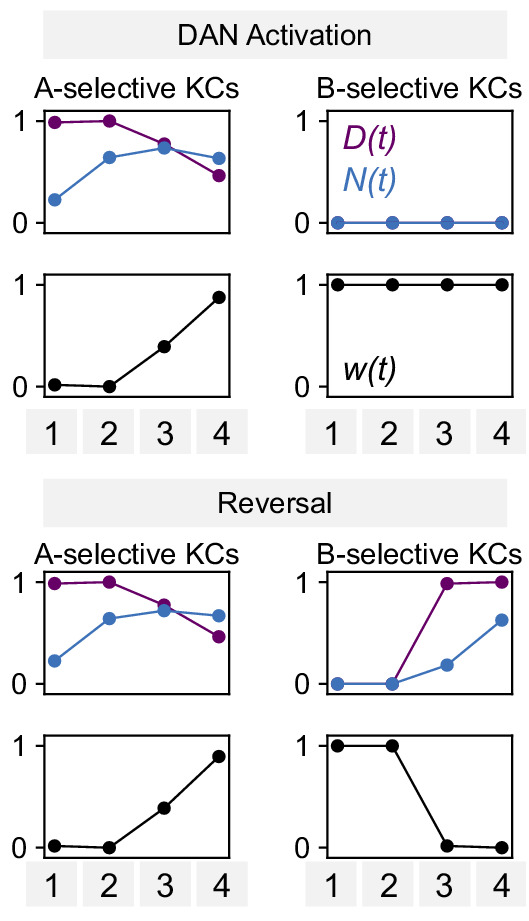
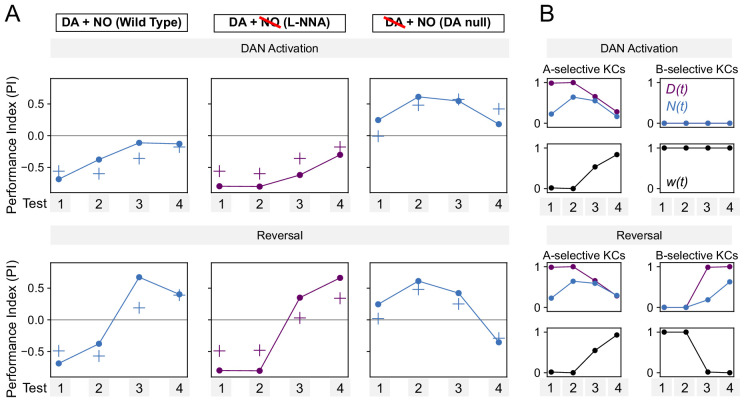
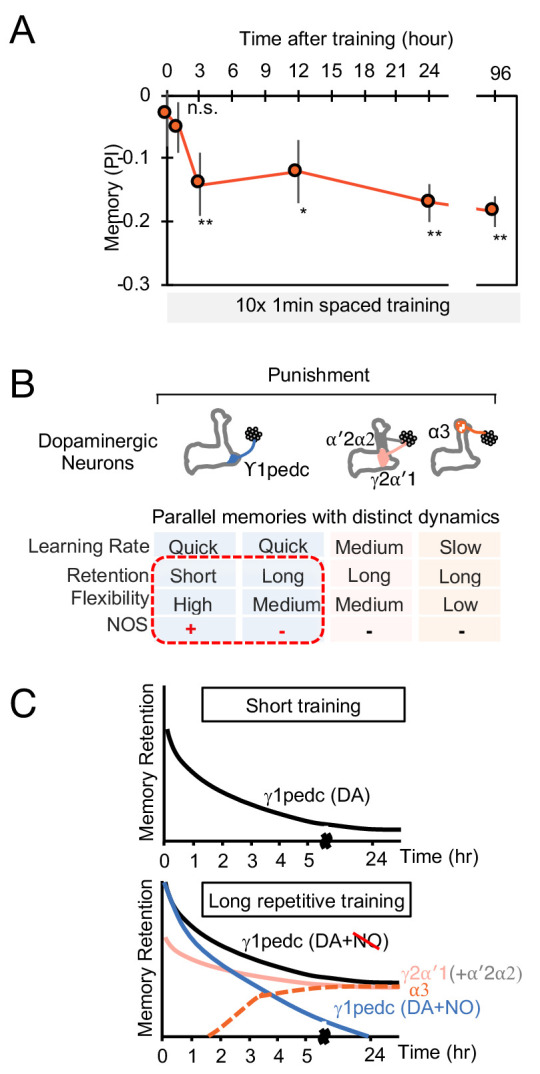
Animals employ diverse learning rules and synaptic plasticity dynamics to record temporal and statistical information about the world. However, the molecular mechanisms underlying this diversity are poorly understood. The anatomically defined compartments of the insect mushroom body function as parallel units of associative learning, with different learning rates, memory decay dynamics and flexibility (Aso and Rubin, 2016). Here, we show that nitric oxide (NO) acts as a neurotransmitter in a subset of dopaminergic neurons in Drosophila . NO’s effects develop more slowly than those of dopamine and depend on soluble guanylate cyclase in postsynaptic Kenyon cells. NO acts antagonistically to dopamine; it shortens memory retention and facilitates the rapid updating of memories. The interplay of NO and dopamine enables memories stored in local domains along Kenyon cell axons to be specialized for predicting the value of odors based only on recent events. Our results provide key mechanistic insights into how diverse memory dynamics are established in parallel memory systems.
Overview
The claims and statistics of this paper haven’t been checked yet.
Run the check — free, no account needed. It reads the open-access text and checks the sources it cites.
Integrity signals
Registry
Cites
Statistics
Figures
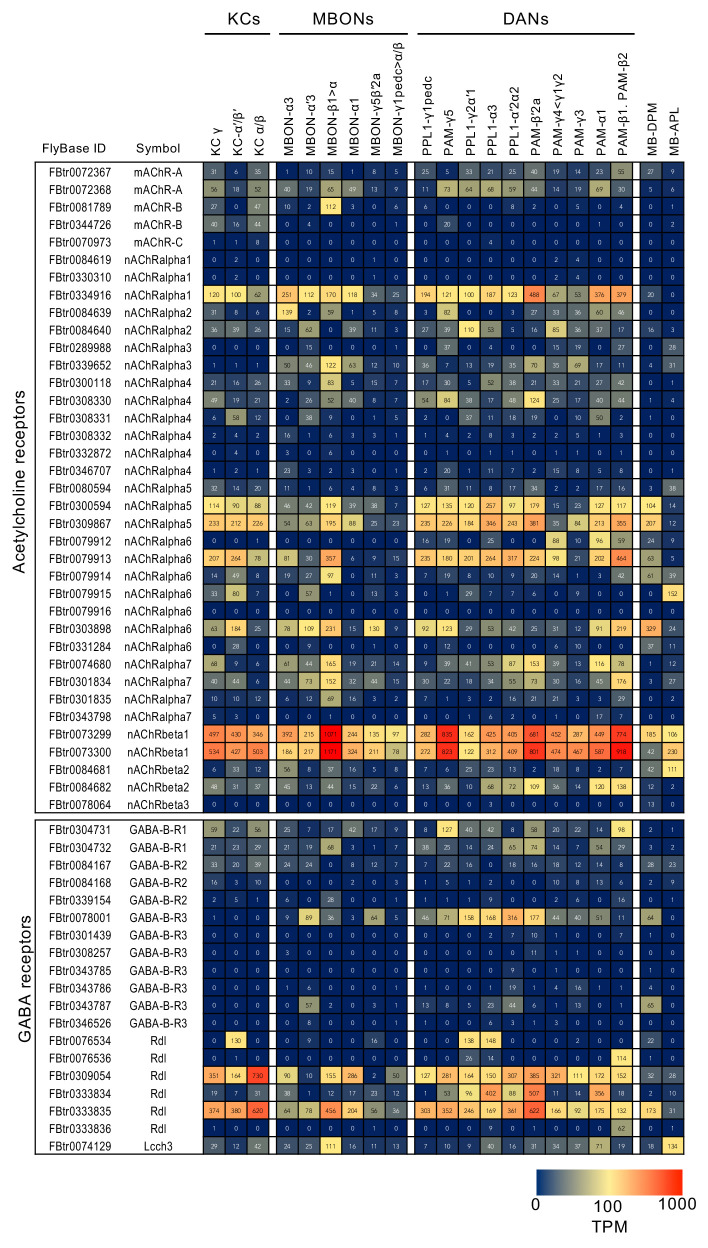
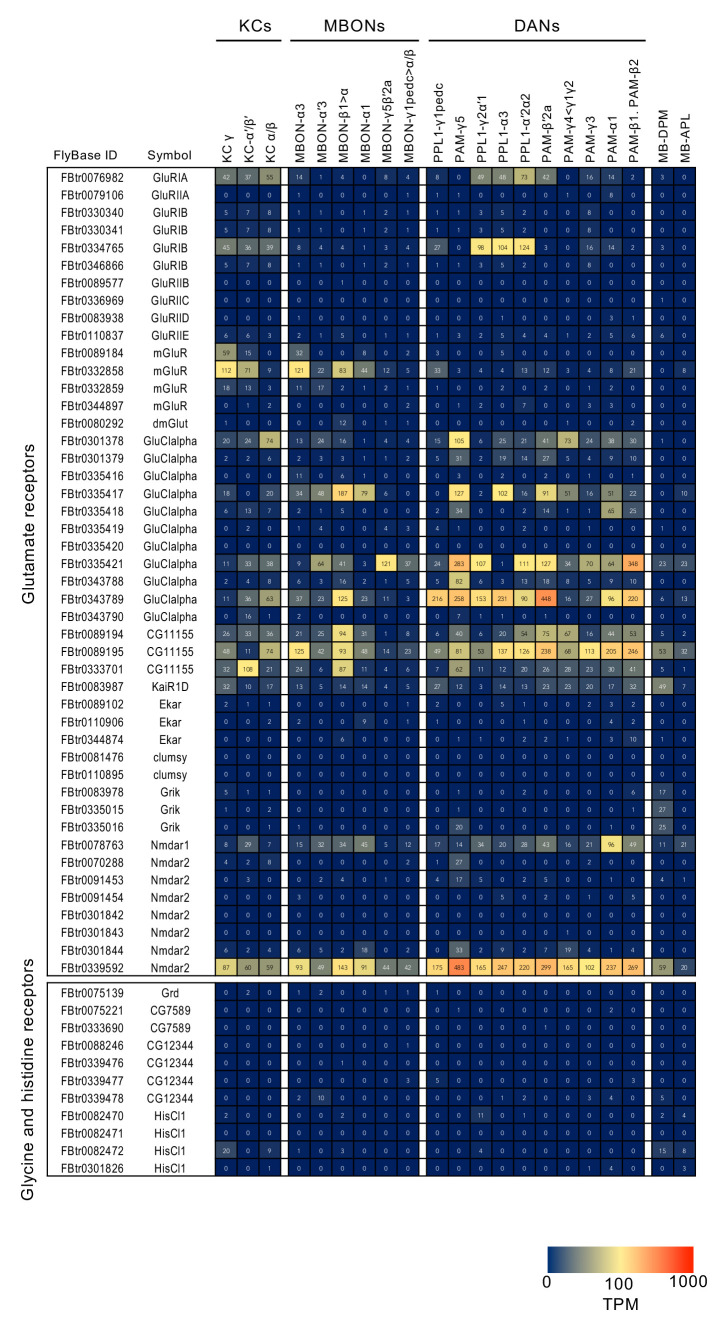
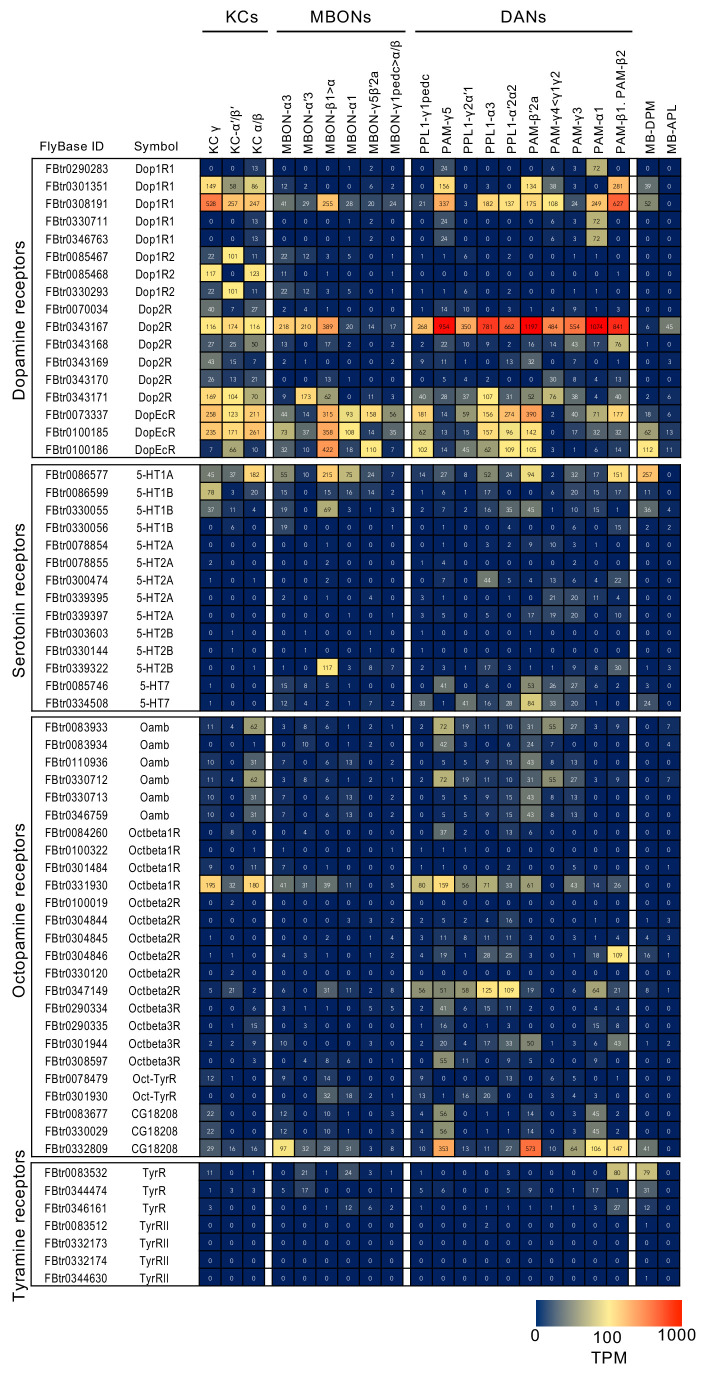
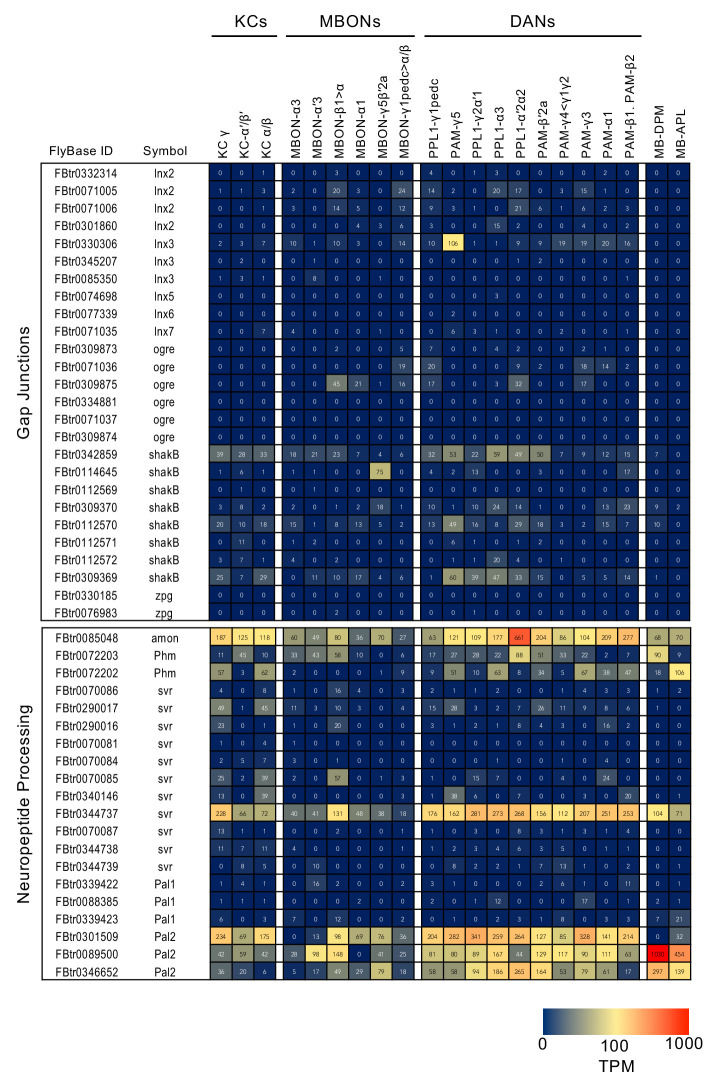
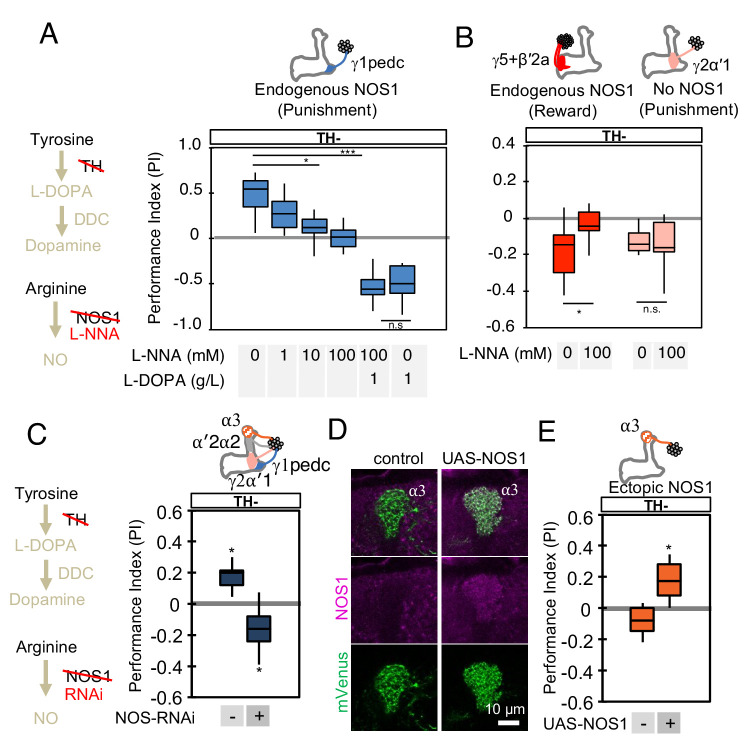
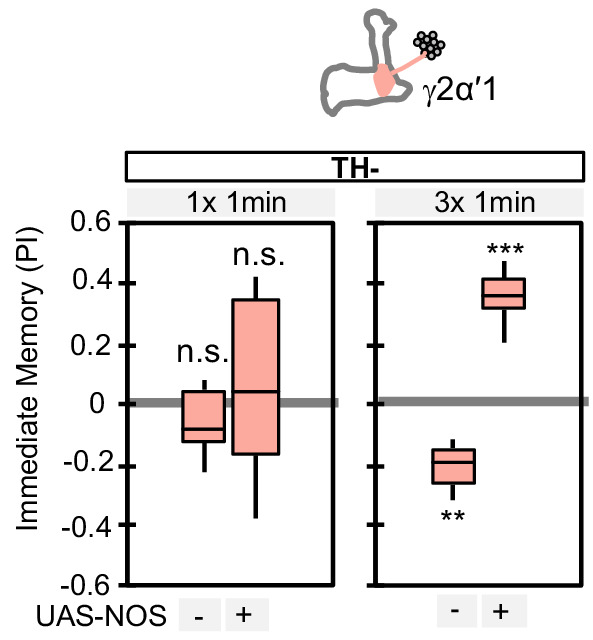
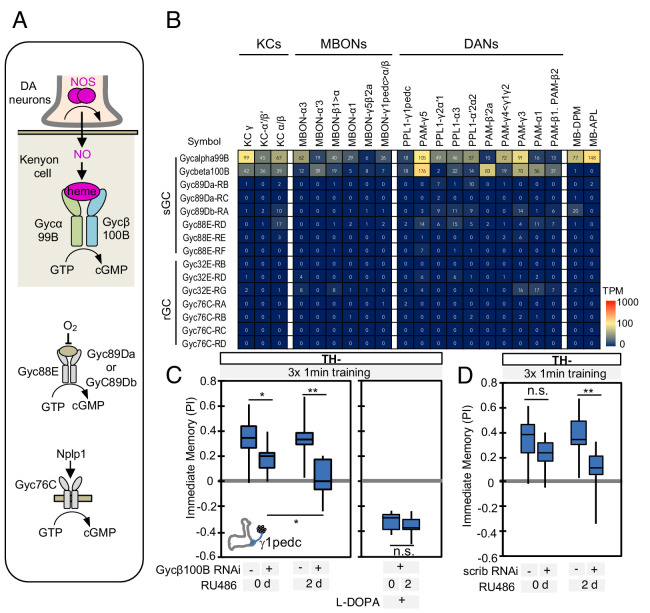
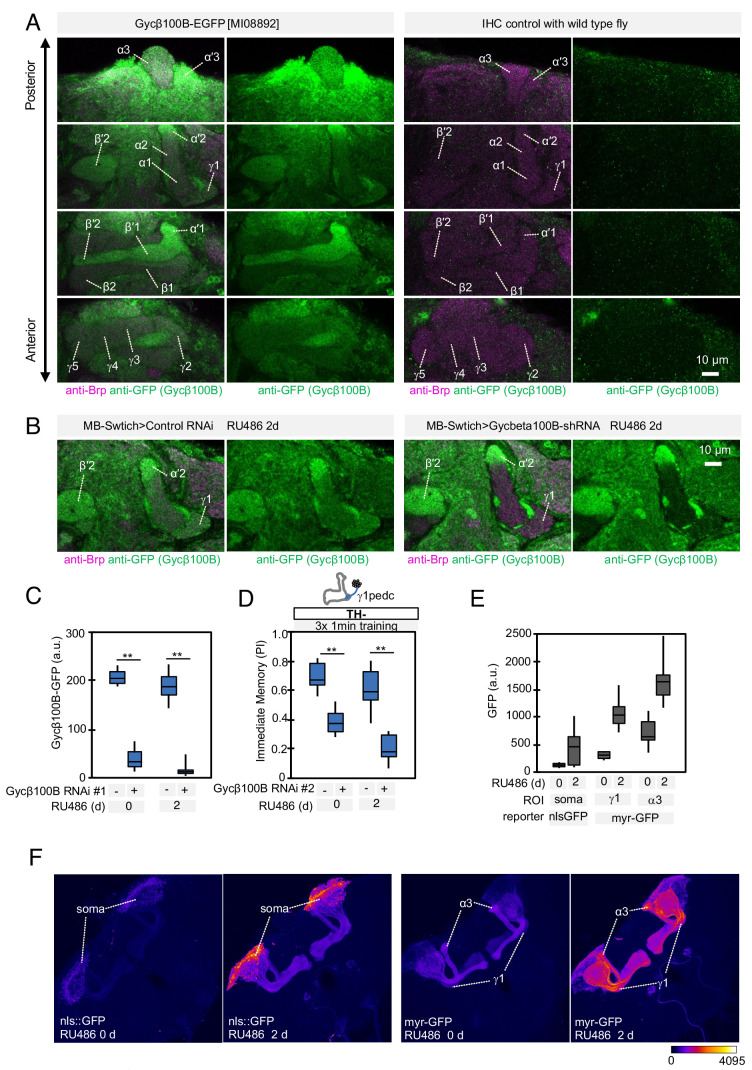
Verification
Claims the paper makes
The claims and statistics of this paper haven’t been checked yet.
Run the check — free, no account needed. It reads the open-access text and checks the sources it cites.
Claims other papers make about this one
Each is checked against this paper’s own text: does it say what the citing paper says it does?
The source backs part of the claim, not all of it — or backs it for a different population, condition or comparison.
In the citing paper
“Co-transmission of a fast-acting transmitter and a neuropeptide was more common, e.g., Kenyon cells (at least acetylcholine, sparkly and short neuropeptide F),21,25,55,164 the dorsal paired medial (DPM) neuron (GABA, serotonin, sparkly, nplp1, proctolin, orcokinin, eclosion hormone, CG34136)25,56,60 and most central complex, mushroom body output and mushroom body dopaminergic neurons.25,157”
From Neurotransmitter classification from electron microscopy images at synaptic sites in Drosophila melanogaster (2024) · cites this paper as [25]
Experimental — accuracy not yet measuredThe cited source says what the claim attributes to it.
In the citing paper
“Nitric oxide is used as a co-transmitter,25 we did not include it in our dataset.”
From Neurotransmitter classification from electron microscopy images at synaptic sites in Drosophila melanogaster (2024) · cites this paper as [25]
The check wasn’t confident either way, so it gives no verdict — never disputed.
In the citing paper
“DPM has been found to express the fast-acting transmitter GABA the monoamine serotonin and several neuropeptides (sparkly, nplp1, proctolin, orcokinin, eclosion hormone, CG34136).25,56,60”
From Neurotransmitter classification from electron microscopy images at synaptic sites in Drosophila melanogaster (2024) · cites this paper as [25]
Experimental — accuracy not yet measuredThe check wasn’t confident either way, so it gives no verdict — never disputed.
In the citing paper
“Kenyon cells may also express the neuropeptide sparkly.25,174”
From Neurotransmitter classification from electron microscopy images at synaptic sites in Drosophila melanogaster (2024) · cites this paper as [25]
Experimental — accuracy not yet measured
Self-check
Percentages, sums and reported differences re-computed from the paper’s own numbers.
The self-check needs the paper’s full text.
Citations
Cites
Moderated estimation of fold change and dispersion for RNA-seq data with DESeq2
Love, M. I., Huber, W., & Anders, S. (2014) · Genome Biology · doi:10.1186/s13059-014-0550-8 · Cited by 95,106
Fiji: an open-source platform for biological-image analysis
Schindelin, J., Arganda-Carreras, I., Frise, E., Kaynig, V., Longair, M., Pietzsch, T., Preibisch, S., Rueden, C., Saalfeld, S., Schmid, B., et al. (2012) · Nature Methods · doi:10.1038/nmeth.2019 · Cited by 66,890
STAR: ultrafast universal RNA-seq aligner
Dobin, A., Davis, C. A., Schlesinger, F., Drenkow, J., Zaleski, C., Jha, S., Batut, P., Chaisson, M., & Gingeras, T. R. (2013) · Bioinformatics · doi:10.1093/bioinformatics/bts635 · Cited by 51,709
Cutadapt removes adapter sequences from high-throughput sequencing reads
Martin, M. (2011) · EMBnet.journal · doi:10.14806/ej.17.1.200 · Cited by 33,889
RSEM: accurate transcript quantification from RNA-Seq data with or without a reference genome
Li, B., & Dewey, C. N. (2011) · BMC Bioinformatics · doi:10.1186/1471-2105-12-323 · Cited by 22,179
Marr, D. (1969) · The Journal of Physiology · doi:10.1113/jphysiol.1969.sp008820 · Cited by 3,253
Localization of nitric oxide synthase indicating a neural role for nitric oxide
Bredt, D. S., Hwang, P. M., & Snyder, S. H. (1990) · Nature · doi:10.1038/347768a0 · Cited by 2,981
A genome-wide transgenic RNAi library for conditional gene inactivation in Drosophila
Dietzl, G., Chen, D., Schnorrer, F., Su, K.-C., Barinova, Y., Fellner, M., Gasser, B., Kinsey, K., Oppel, S., Scheiblauer, S., et al. (2007) · Nature · doi:10.1038/nature05954 · Cited by 2,644
Lattice light-sheet microscopy: Imaging molecules to embryos at high spatiotemporal resolution
Chen, B., Legant, W. R., Wang, K., Shao, L., Milkie, D. E., Davidson, M. W., Janetopoulos, C., Wu, X., Hammer, J. A., Liu, Z. J., et al. (2014) · Science · doi:10.1126/science.1257998 · Cited by 1,947
Chen, F., Tillberg, P. W., & Boyden, E. S. (2015) · Science · doi:10.1126/science.1260088 · Cited by 1,516
Self-citation
Cited by
Sorted by citations
Hulse, B. K., Haberkern, H., Franconville, R., Turner-Evans, D., Takemura, S.-Y., Wolff, T., Noorman, M., Dreher, M., Dan, C., Parekh, R., et al. (2021) · eLife · doi:10.7554/elife.66039 · Cited by 392
Self-citationThe connectome of the adult Drosophila mushroom body provides insights into function
Li, F., Lindsey, J. W., Marin, E. C., Otto, N., Dreher, M., Dempsey, G., Stark, I., Bates, A. S., Pleijzier, M. W., Schlegel, P., et al. (2020) · eLife · doi:10.7554/elife.62576 · Cited by 418
Self-citationEckstein, N., Bates, A. S., Champion, A., Du, M., Yin, Y., Schlegel, P., Lu, A. K.-Y., Rymer, T., Finley-May, S., Paterson, T., et al. (2024) · Cell · doi:10.1016/j.cell.2024.03.016 · Cited by 277
The Drosophila Mushroom Body: From Architecture to Algorithm in a Learning Circuit
Modi, M. N., Shuai, Y., & Turner, G. C. (2020) · Annual Review of Neuroscience · doi:10.1146/annurev-neuro-080317-0621333 · Cited by 223
An open-access volume electron microscopy atlas of whole cells and tissues
Xu, C. S., Pang, S., Shtengel, G. E., Müller, A., Ritter, A. T., Hoffman, H. K., Takemura, S.-Y., Lu, Z., Pasolli, H. A., Iyer, N., et al. (2021) · Nature · doi:10.1038/s41586-021-03992-4 · Cited by 189
The Neuroanatomical Ultrastructure and Function of a Biological Ring Attractor
Turner-Evans, D. B., Jensen, K. T., Ali, S., Paterson, T., Sheridan, A., Ray, R. P., Wolff, T., Lauritzen, J. S., Rubin, G. M., Bock, D. D., et al. (2020) · Neuron · doi:10.1016/j.neuron.2020.08.006 · Cited by 168
Self-citationThe neuroanatomical ultrastructure and function of a biological ring attractor
Turner-Evans, D. B., Jensen, K. T., Ali, S., Paterson, T., Sheridan, A., Ray, R. P., Wolff, T., Lauritzen, S., Rubin, G. M., Bock, D., et al. (2019) · doi:10.1101/847152 · Cited by 166
Self-citationA gut-secreted peptide suppresses arousability from sleep
Titos, I., Juginović, A., Vaccaro, A., Nambara, K., Gorelik, P., Mazor, O., & Rogulja, D. (2023) · Cell · doi:10.1016/j.cell.2023.02.022 · Cited by 95
Davis, R. L. (2023) · Genetics · doi:10.1093/genetics/iyad085 · Cited by 95
RETRACTED ARTICLE: Multisensory learning binds neurons into a cross-modal memory engram
Okray, Z., Jacob, P. F., Stern, C., Desmond, K., Otto, N., Talbot, C. B., Vargas-Gutierrez, P., & Waddell, S. (2023) · Nature · doi:10.1038/s41586-023-06013-8 · Cited by 78
RetractedLocal 5-HT signaling bi-directionally regulates the coincidence time window for associative learning
Zeng, J., Li, X., Zhang, R., Lv, M., Wang, Y., Tan, K., Xia, X., Wan, J., Jing, M., Zhang, X., et al. (2023) · Neuron · doi:10.1016/j.neuron.2022.12.034 · Cited by 81
Localized inhibition in the Drosophila mushroom body
Amin, H., Apostolopoulou, A. A., Suárez-Grimalt, R., Vrontou, E., & Lin, A. C. (2020) · eLife · doi:10.7554/elife.56954 · Cited by 66
Neural Circuits Underlying Behavioral Flexibility: Insights From Drosophila
Devineni, A. V., & Scaplen, K. M. (2022) · Frontiers in Behavioral Neuroscience · doi:10.3389/fnbeh.2021.821680 · Cited by 70
The Role of Dopamine in Associative Learning in Drosophila: An Updated Unified Model
Adel, M., & Griffith, L. C. (2021) · Neuroscience Bulletin · doi:10.1007/s12264-021-00665-0 · Cited by 64
Hierarchical architecture of dopaminergic circuits enables second-order conditioning in Drosophila
Yamada, D., Bushey, D., Li, F., Hibbard, K. L., Sammons, M., Funke, J., Litwin-Kumar, A., Hige, T., & Aso, Y. (2023) · eLife · doi:10.7554/elife.79042 · Cited by 61
Self-citationSaxon, E., & Peng, X. (2021) · ChemBioChem · doi:10.1002/cbic.202100366 · Cited by 60
Hulse, B. K., Haberkern, H., Franconville, R., Turner-Evans, D. B., Takemura, S., Wolff, T., Noorman, M., Dreher, M., Dan, C., Parekh, R., et al. (2020) · doi:10.1101/2020.12.08.413955 · Cited by 392
Self-citationMemory suppressor genes: Modulating acquisition, consolidation, and forgetting
Noyes, N. C., Phan, A., & Davis, R. L. (2021) · Neuron · doi:10.1016/j.neuron.2021.08.001 · Cited by 58
Lateral Axonal Modulation Is Required for Stimulus-Specific Olfactory Conditioning in Drosophila
Manoim, J. E., Davidson, A. M., Weiss, S., Hige, T., & Parnas, M. (2022) · Current Biology · doi:10.1016/j.cub.2022.09.007 · Cited by 54
Schleyer, M. H., Weiglein, A., Thoener, J., Strauch, M., Hartenstein, V., Weigelt, M. K., Schuller, S., Saumweber, T., Eichler, K., Rohwedder, A., et al. (2020) · Journal of Neuroscience · doi:10.1523/jneurosci.0290-20.2020 · Cited by 51
Compartment specific regulation of sleep by mushroom body requires GABA and dopaminergic signaling
Driscoll, M., Buchert, S. N., Coleman, V., McLaughlin, M., Nguyen, A., & Sitaraman, D. (2021) · Scientific Reports · doi:10.1038/s41598-021-99531-2 · Cited by 40
Sanfilippo, P., Kim, A. J., Bhukel, A., Yoo, J., Mirshahidi, P. S., Pandey, V., Bevir, H., Yuen, A., Mirshahidi, P. S., Guo, P., et al. (2024) · Neuron · doi:10.1016/j.neuron.2023.12.014 · Cited by 36
Self-citationPribbenow, C., Chen, Y., Heim, M. ‐., Laber, D., Reubold, S., Reynolds, E., Balles, I. S., Alquicira, T. F.-D. V., Suárez-Grimalt, R., Scheunemann, L., et al. (2022) · eLife · doi:10.7554/elife.80445 · Cited by 37
Stahl, A., Noyes, N. C., Boto, T., Botero, V., Broyles, C. N., Jing, M., Zeng, J., King, L. B., Li, Y., Davis, R. L., et al. (2022) · eLife · doi:10.7554/elife.76712 · Cited by 36
Xia, X., & Li, Y. (2025) · Nature Communications · doi:10.1038/s41467-025-56129-w · Cited by 33
Bornstein, B., Meltzer, H., Adler, R., Alyagor, I., Berkun, V., Cummings, G., Reh, F., Keren‐Shaul, H., David, E., Riemensperger, T. D., et al. (2021) · The EMBO Journal · doi:10.15252/embj.2020105763 · Cited by 28
Models of heterogeneous dopamine signaling in an insect learning and memory center
Jiang, L., & Litwin-Kumar, A. (2021) · PLoS Computational Biology · doi:10.1371/journal.pcbi.1009205 · Cited by 35
Self-citationSocial state alters vision using three circuit mechanisms in Drosophila
Schretter, C. E., Hindmarsh Sten, T., Klapoetke, N., Shao, M., Nern, A., Dreher, M., Bushey, D., Robie, A. A., Taylor, A. L., Branson, K., et al. (2025) · Nature · doi:10.1038/s41586-024-08255-6 · Cited by 29
Self-citationDistributed control circuits across a brain-and-cord connectome
Bates, A. S., Phelps, J. S., Kim, M., Yang, H. H., Matsliah, A., Ajabi, Z., Perlman, E., Delgado, K. M., Osman, M. A. M., Salmon, C. K., et al. (2026) · Nature · doi:10.1038/s41586-026-10735-w · Cited by 76
Presynaptic inhibition of dopamine neurons controls optimistic bias
Yamagata, N., Ezaki, T., Takahashi, T., Wu, H., & Tanimoto, H. (2021) · eLife · doi:10.7554/elife.64907 · Cited by 37
New genetic tools for mushroom body output neurons in Drosophila
Rubin, G. M., & Aso, Y. (2023) · eLife · doi:10.7554/elife.90523 · Cited by 31
Self-citationNeuropeptide F inhibits dopamine neuron interference of long-term memory consolidation in Drosophila
Feng, K.-L., Weng, J., Chen, C.-C., Abubaker, M. B., Lin, H.-W., Charng, C.-C., Lo, C., de Belle, J. S., Tully, T., Lien, C., et al. (2021) · iScience · doi:10.1016/j.isci.2021.103506 · Cited by 30
Nitric oxide mediates neuro-glial interaction that shapes Drosophila circadian behavior
Kozlov, A., Koch, R., & Nagoshi, E. (2020) · PLoS Genetics · doi:10.1371/journal.pgen.1008312 · Cited by 26
Wolff, T., Eddison, M., Chen, N., Nern, A., Sundaramurthi, P., Sitaraman, D., & Rubin, G. M. (2025) · eLife · doi:10.1101/2024.10.21.619448 · Cited by 25
Self-citationChanging memories on the fly: the neural circuits of memory re-evaluation in Drosophila melanogaster
Felsenberg, J. (2020) · Current Opinion in Neurobiology · doi:10.1016/j.conb.2020.12.003 · Cited by 25
Ma, D., Herndon, N., Le, J. Q., Abruzzi, K. C., Zinn, K., & Rosbash, M. (2023) · Science Advances · doi:10.1126/sciadv.ade8500 · Cited by 25
An incentive circuit for memory dynamics in the mushroom body of Drosophila melanogaster
Gkanias, E., McCurdy, L. Y., Nitabach, M. N., & Webb, B. (2022) · eLife · doi:10.7554/elife.75611 · Cited by 23
Drosophila reward system - A summary of current knowledge
Dvořáček, J., & Kodrík, D. (2021) · Neuroscience & Biobehavioral Reviews · doi:10.1016/j.neubiorev.2020.12.032 · Cited by 25
Driver lines for studying associative learning in Drosophila
Shuai, Y., Sammons, M., Sterne, G. R., Hibbard, K. L., Yang, H., Yang, C.-P., Managan, C., Siwanowicz, I., Lee, T., Rubin, G. M., et al. (2025) · eLife · doi:10.1101/2023.09.15.557808 · Cited by 22
Self-citationSuárez-Grimalt, R., Kadow, I. C. G., & Scheunemann, L. (2024) · Learning & Memory · doi:10.1101/lm.053918.124 · Cited by 21
Lyu, S., Terao, N., Nakashima, H., Itoh, M., & Tonoki, A. (2023) · Neuroscience Research · doi:10.1016/j.neures.2023.02.003 · Cited by 21
Dopaminergic neurons dynamically update sensory values during olfactory maneuver
Kato, A., Ohta, K., Okanoya, K., & Kazama, H. (2023) · Cell Reports · doi:10.1016/j.celrep.2023.113122 · Cited by 28
Octopamine in the mushroom body circuitry for learning and memoryPreprint
Selcho, M. (2024) · Learning & Memory · doi:10.1101/lm.053839.123 · Cited by 19
A crabs' high‐order brain center resolved as a mushroom body‐like structure
Maza, F. J., Sztarker, J., Cozzarin, M. E., Lepore, M. G., & Delorenzi, A. (2020) · The Journal of Comparative Neurology · doi:10.1002/cne.24960 · Cited by 20
Nitrergic modulation of ion channel function in regulating neuronal excitability
Spiers, J. G., & Steinert, J. R. (2021) · Channels · doi:10.1080/19336950.2021.2002594 · Cited by 20
Toward nanoscale localization of memory engrams inDrosophila
Aso, Y., & Rubin, G. M. (2020) · Journal of Neurogenetics · doi:10.1080/01677063.2020.1715973 · Cited by 20
Self-citationWeiglein, A., Thoener, J., Feldbruegge, I., Warzog, L., Mancini, N., Schleyer, M. H., & Gerber, B. (2020) · The Journal of Comparative Neurology · doi:10.1002/cne.25037 · Cited by 27
Active forgetting and neuropsychiatric diseases
Berry, J. A., Guhle, D. C., & Davis, R. L. (2024) · Molecular Psychiatry · doi:10.1038/s41380-024-02521-9 · Cited by 21
Jones, T. B., Mackey, T., Juba, A. N., Amin, K., Atyam, A., McDole, M., Yancy, J., Thomas, T. C., & Buhlman, L. M. (2023) · Experimental Neurology · doi:10.1016/j.expneurol.2023.114621 · Cited by 20
Mohammad, F., Mai, Y., Ho, J., Zhang, X., Ott, S., Stewart, J. C., & Claridge‐Chang, A. (2024) · PLoS Biology · doi:10.1371/journal.pbio.3002843 · Cited by 34
Constitutive and Conditional Epitope Tagging of Endogenous G-Protein–Coupled Receptors in Drosophila
Bonanno, S. L., Sanfilippo, P., Eamani, A., Sampson, M. M., Kandagedon, B., Li, K., Burns, G. D., Makar, M. E., Zipursky, S. L., & Krantz, D. E. (2024) · Journal of Neuroscience · doi:10.1523/jneurosci.2377-23.2024 · Cited by 18
An open-access volume electron microscopy atlas of whole cells and tissues
Xu, C. S., Pang, S., Shtengel, G. E., Müller, A., Ritter, A. T., Hoffman, H. K., Takemura, S.-Y., Lu, Z., Pasolli, H. A., Iyer, N., et al. (2021) · RePEc: Research Papers in Economics · Cited by 17
Wolff, T., Eddison, M., Chen, N., Nern, A., Sundaramurthi, P., Sitaraman, D., & Rubin, G. M. (2025) · eLife · doi:10.7554/elife.104764 · Cited by 17
Self-citationThe connectome of the adult Drosophila mushroom body: implications for functionPreprint
Li, F., Lindsey, J. W., Marin, E. C., Otto, N., Dreher, M., Dempsey, G., Stark, I., Bates, A. S., Pleijzier, M. W., Schlegel, P., et al. (2020) · bioRxiv (Cold Spring Harbor Laboratory) · doi:10.1101/2020.08.29.273276 · Cited by 17
Self-citationYamazaki, D., Maeyama, Y., & Tabata, T. (2023) · Journal of Neuroscience · doi:10.1523/jneurosci.2152-22.2023 · Cited by 15
Abdelrahman, N. Y., Vasilaki, E., & Lin, A. C. (2021) · Proceedings of the National Academy of Sciences · doi:10.1073/pnas.2102158118 · Cited by 15
Cyclic nucleotide‐induced bidirectional long‐term synaptic plasticity in Drosophila mushroom body
Yamada, D., Davidson, A. M., & Hige, T. (2024) · The Journal of Physiology · doi:10.1113/jp285745 · Cited by 15
Roy, A. P., Chakravorty, A., Mini, A. A., Das, S., Mangaiyarkarasi, R., & Raghavan, V. (2024) · Results in Chemistry · doi:10.1016/j.rechem.2024.101489 · Cited by 14
Nitric Oxide Signaling in the Auditory Pathway
Kopp‐Scheinpflug, C., & Forsythe, I. D. (2021) · Frontiers in Neural Circuits · doi:10.3389/fncir.2021.759342 · Cited by 14
Driver lines for studying associative learning in DrosophilaPreprint
Shuai, Y., Sammons, M., Sterne, G. R., Hibbard, K. L., Yang, H., Yang, C.-P., Managan, C., Siwanowicz, I., Lee, T., Rubin, G. M., et al. (2024) · eLife · doi:10.7554/elife.94168 · Cited by 15
Self-citationSocial state gates vision using three circuit mechanisms in DrosophilaPreprint
Schretter, C. E., Sten, T. H., Klapoetke, N. C., Shao, M., Nern, A., Dreher, M., Bushey, D., Robie, A. A., Taylor, A. L., Branson, K. M., et al. (2024) · bioRxiv (Cold Spring Harbor Laboratory) · doi:10.1101/2024.03.15.585289 · Cited by 14
Self-citationZhai, S., Otsuka, S., Xu, J., Clarke, V. R. J., Tkatch, T., Wokosin, D. L., Xie, Z., Tanimura, A., Agarwal, H. K., Ellis‐Davies, G. C. R., et al. (2024) · Cell Reports · doi:10.1016/j.celrep.2024.114540 · Cited by 13
Female fruit flies copy the acceptance, but not the rejection, of a mate
Nöbel, S., Monier, M., Fargeot, L., Lespagnol, G., Danchin, É., & Isabel, G. (2022) · Behavioral Ecology · doi:10.1093/beheco/arac071 · Cited by 12
Mechanisms underlying homeostatic plasticity in the Drosophila mushroom body in vivo
Apostolopoulou, A. A., & Lin, A. C. (2020) · Proceedings of the National Academy of Sciences · doi:10.1073/pnas.1921294117 · Cited by 12
Lin, S. (2023) · Current Opinion in Insect Science · doi:10.1016/j.cois.2023.101104 · Cited by 13
Function and regulation of nitric oxide signaling in Drosophila
Jeong, S. (2023) · Molecules and Cells · doi:10.1016/j.mocell.2023.12.004 · Cited by 12
Nitroxidative stress in pain and opioid-induced adverse effects: therapeutic opportunities
Squillace, S., & Salvemini, D. (2021) · Pain · doi:10.1097/j.pain.0000000000002347 · Cited by 13
Enhancing mask activity in dopaminergic neurons extends lifespan in flies
Tian, X. (2021) · Aging Cell · doi:10.1111/acel.13493 · Cited by 12
“NO” Time in Fear Response: Possible Implication of Nitric-Oxide-Related Mechanisms in PTSD
Fronza, M. G., Ferreira, B. F., Pavan-Silva, I., Guimarães, F. S., & Lisboa, S. F. D. S. (2023) · Molecules · doi:10.3390/molecules29010089 · Cited by 13
Francés, R., Rabah, Y., Préat, T., & Plaçais, P.-Y. (2024) · Nature Communications · doi:10.1038/s41467-024-54778-x · Cited by 12
Spatiotemporal Control of Neuronal Remodeling by Cell Adhesion Molecules: Insights From Drosophila
Meltzer, H., & Schuldiner, O. (2022) · Frontiers in Neuroscience · doi:10.3389/fnins.2022.897706 · Cited by 11
Foka, K., Georganta, E., Σεμελίδου, Ο., & Skoulakis, E. M. C. (2022) · Journal of Neuroscience · doi:10.1523/jneurosci.1055-22.2022 · Cited by 11
A gut-secreted peptide controls arousability through modulation of dopaminergic neurons in the brainPreprint
Titos, I., & Rogulja, D. (2020) · bioRxiv (Cold Spring Harbor Laboratory) · doi:10.1101/2020.08.31.275552 · Cited by 11
Sharma, B., Koren, D. T., & Ghosh, S. (2023) · Biophysical Chemistry · doi:10.1016/j.bpc.2023.107114 · Cited by 9
Hiramatsu, S., Saito, K., Kondo, S., Katow, H., Yamagata, N., Wu, C., & Tanimoto, H. (2024) · eLife · doi:10.7554/elife.98358 · Cited by 11
Nitric oxide feedback to ciliary photoreceptor cells gates a UV avoidance circuitPreprint
Jokura, K., Słowiński, P., Ueda, N., Gühmann, M., Yáñez-Guerra, L. A., Savage, E., Wedgwood, K. C. A., & Jékely, G. (2023) · bioRxiv (Cold Spring Harbor Laboratory) · doi:10.1101/2023.08.02.551600 · Cited by 9
A systematic study of molecular targets of cannabidiol in Alzheimer's disease
Patil, N., Patil, K., Jain, M., Mohammed, A., Yadav, A., Dhanda, P. S., Kole, C., Dave, K., Kaushik, P., Razab, M. K. A. A., et al. (2024) · Journal of Alzheimer s Disease Reports · doi:10.1177/25424823241284464 · Cited by 8
Flexible specificity of memory in Drosophila depends on a comparison between choices
Modi, M. N., Rajagopalan, A. E., Rouault, H., Aso, Y., & Turner, G. C. (2023) · eLife · doi:10.7554/elife.80923 · Cited by 12
Self-citationTonoki, A., Nagai, S., Yu, Z., Tong, Y. A., Lyu, S., Hou, X., Onuki, K., Yabana, K., Takahashi, H., & Itoh, M. (2022) · Aging Cell · doi:10.1111/acel.13691 · Cited by 7
Woitkuhn, J., Ender, A., Beuschel, C. B., Maglione, M., Matkovic, T., Huang, S., Lehmann, M., Geiger, J. R. P., & Sigrist, S. J. (2020) · Journal of Neurogenetics · doi:10.1080/01677063.2019.1710146 · Cited by 7
Sensory encoding and memory in the mushroom body: signals, noise, and variabilityPreprint
Parnas, M., Manoim, J. E., & Lin, A. C. (2024) · Learning & Memory · doi:10.1101/lm.053825.123 · Cited by 9
Optogenetically induced reward and ‘frustration’ memory in larval Drosophila melanogaster
Thoener, J., Weiglein, A., Gerber, B., & Schleyer, M. H. (2022) · Journal of Experimental Biology · doi:10.1242/jeb.244565 · Cited by 7
Takakura, M., Lam, Y. H., Nakagawa, R., Ng, M. Y., Hu, X., Bhargava, P., Alia, A. G. M., Gu, Y., Wang, Z., Ota, T., et al. (2023) · Proceedings of the National Academy of Sciences · doi:10.1073/pnas.2304851120 · Cited by 8
Response of nitrergic system in the brain of rat conditioned to intracranial self‐stimulation
Choudhary, A. G., Awathale, S. N., Dudhabhate, B. B., Pawar, N., Jadhav, G., Upadhya, M. A., Khedkar, T., Gadhikar, Y. A., Sakharkar, A. J., Subhedar, N. K., et al. (2024) · Journal of Neurochemistry · doi:10.1111/jnc.16090 · Cited by 7
Nitric oxide feedback to ciliary photoreceptor cells gates a UV avoidance circuitPreprint
Jokura, K., Ueda, N., Gühmann, M., Yáñez-Guerra, L. A., Słowiński, P., Wedgwood, K. C. A., & Jékely, G. (2023) · doi:10.7554/elife.91258.1 · Cited by 7
Kang, A., Choi, H. J., Lee, W. J., Kang, M.-G., Seo, E., Lee, D. J., Choi, Y., Son, S.-H., Kwak, M., Jeong, K. C., et al. (2025) · Journal of Hazardous Materials · doi:10.1016/j.jhazmat.2025.138902 · Cited by 6
An open-access volume electron microscopy atlas of whole cells and tissuesPreprint
Xu, C. S., Pang, S., Shtengel, G. E., Müller, A., Ritter, A. T., Hoffman, H. K., Takemura, S.-Y., Lu, Z., Pasolli, H. A., Iyer, N., et al. (2020) · bioRxiv (Cold Spring Harbor Laboratory) · doi:10.1101/2020.11.13.382457 · Cited by 6
Towards a functional connectome in Drosophila
Vogt, K. (2020) · Journal of Neurogenetics · doi:10.1080/01677063.2020.1712598 · Cited by 5
Bonanno, S. L., & Krantz, D. E. (2023) · Translational Psychiatry · doi:10.1038/s41398-023-02521-3 · Cited by 5
Wolff, T., Eddison, M., Chen, N., Nern, A., Sundaramurthi, P., Sitaraman, D., & Rubin, G. M. (2025) · eLife · doi:10.7554/elife.104764.2 · Cited by 5
Self-citationNeuronal Actin Remodeling and Its Role in Higher Nervous Activity
Zhuravlev, A. V. (2025) · International Journal of Molecular Sciences · doi:10.3390/ijms262211215 · Cited by 5
Functional dissection of a neuronal brain circuit mediating higher-order associative learning
Rachad, E. Y., Deimel, S. H., Epple, L., Gadgil, Y. V., Jürgensen, A.-M., Springer, M., Lin, C.-H., Nawrot, M. P., Lin, S., & Fiala, A. (2025) · Cell Reports · doi:10.1016/j.celrep.2025.115593 · Cited by 5
New genetic tools for mushroom body output neurons in Drosophila
Rubin, G. M., & Aso, Y. (2024) · eLife · doi:10.7554/elife.90523.3 · Cited by 4
Self-citationThe Neural Correlations of Olfactory Associative Reward Memories in Drosophila
Lin, Y.-C., Wu, T., & Wu, C. (2024) · Cells · doi:10.3390/cells13201716 · Cited by 4
Molecular Underpinnings of Memory Persistence and Forgetting
Dalto, J. F., Medina, J. H., & Pastor, V. E. (2025) · Journal of Neurochemistry · doi:10.1111/jnc.70089 · Cited by 4
Dopamine neurons promotes wakefulness via the DopR receptor in the Drosophila mushroom bodyPreprint
Driscoll, M., Buchert, S. N., Coleman, V., McLaughlin, M., Nguyen, A., & Sitaraman, D. (2020) · bioRxiv (Cold Spring Harbor Laboratory) · doi:10.1101/2020.04.29.069229 · Cited by 4
Driver lines for studying associative learning in DrosophilaPreprint
Shuai, Y., Sammons, M., Sterne, G. R., Hibbard, K. L., Yang, H., Yang, C.-P., Managan, C., Siwanowicz, I., Lee, T., Rubin, G. M., et al. (2024) · eLife · doi:10.7554/elife.94168.1 · Cited by 5
Self-citationRoles of feedback and feed-forward networks of dopamine subsystems: insights fromDrosophilastudiesPreprint
Davidson, A. M., & Hige, T. (2024) · Learning & Memory · doi:10.1101/lm.053807.123 · Cited by 4
Mancini, N., Thoener, J., Tafani, E., Pauls, D., Mayseless, O., Strauch, M., Eichler, K., Champion, A. S., Kobler, O., Weber, D., et al. (2023) · Journal of Neuroscience · doi:10.1523/jneurosci.2310-22.2023 · Cited by 6
How nitric oxide helps update memories
Green, D. J., & Lin, A. C. (2020) · eLife · doi:10.7554/elife.53832 · Cited by 3
Metadata
- Authors
- Aso, Y., Ray, R. P., Long, X., Bushey, D., Cichewicz, K., Ngo, T.-T., Sharp, B., Christoforou, C., Hu, A., Lemire, A. L., Tillberg, P., Hirsh, J., Litwin-Kumar, A., & Rubin, G. M.
- Affiliations
- Howard Hughes Medical Institute (US)
- University of Virginia (US)
- Columbia University (US)
- Corresponding author
- Aso, Yoshinori
- Rubin, Gerald M
- ORCID
- Venue
- eLife
- Publisher
- eLife Sciences Publications, Ltd
- Published
- 2019-11-14
- Volume
- 8
- ISSN
- 2050-084X (ISSN-L)
- PMC
- PMC6948953
- OpenAlex
- W2987761357
- Cited by
- 141
- References
- 148
- Citations by year
- 2026: 10 · 2025: 27 · 2024: 27 · 2023: 24 · 2022: 15 · 2021: 19 · 2020: 19
- FWCI
- 6.33
- Type
- journal article
- Language
- en
- Update notices
- correction (2020-10-22)
- Open access
- gold
- doi.org
- Licence
- Locations
- eLife (publishedVersion, cc-by)
- bioRxiv (Cold Spring Harbor Laboratory) (acceptedVersion, cc-by)
- PubMed Central (publishedVersion, cc-by)
- PubMed (publishedVersion)
- DOAJ (DOAJ: Directory of Open Access Journals) (submittedVersion, cc-by-sa)
- Funders
- Howard Hughes Medical Institute
- National Institutes of Health (R01 GM84128)
- Simons Foundation (Global Brain)
- Burroughs Wellcome Fund
- Gatsby Charitable Foundation
- National Science Foundation (DBI-1707398)
- Topics
- Life Sciences › Neuroscience › Cellular and Molecular Neuroscience › Neurobiology and Insect Physiology Research
- Life Sciences › Neuroscience › Cognitive Neuroscience › Memory and Neural Mechanisms
- Life Sciences › Neuroscience › Cellular and Molecular Neuroscience › Neuroscience and Neuropharmacology Research
- Keywords
- nitric oxide, co-transmitter, dopaminergic neurons, mushroom body, Kenyon cells, soluble guanylate cyclase, dopamine, memory dynamics, associative learning, memory updating, memory decay, parallel memory systems, Drosophila, odor prediction
- MeSH terms
- Animals, Dopamine, Drosophila melanogaster, Learning, Memory, Nitric Oxide, Odorants, Smell, Neurotransmitter Agents, Mushroom Bodies, Drosophila Proteins, Dopaminergic Neurons
About these checks
Registry, retraction, Cites and statistics results are computed, not judged, with one exception: a printed reference that no index lists is read once by a model before it counts as a citation error. Claims are extracted by a model and kept only when their quote appears verbatim in the text; each cited source is then checked, with a model’s help, for whether it says what the claim relies on. Those verdicts can be wrong — read the claim’s quote and the cited source before relying on one.
Statistics and arithmetic are recomputed, not judged.
Confidence bands are shown only for fields calibrated on our annotated test set. None is calibrated yet, so no band is shown.
What counts as a claim ›How we measure confidence ›How we check this ›
Are you an author, or do you see a problem with this page? Request a review
