

The DOI matches its Crossref record.
Bootstrap methods can help evaluate monitoring program performance to inform restoration as part of an adaptive management program
Abstract
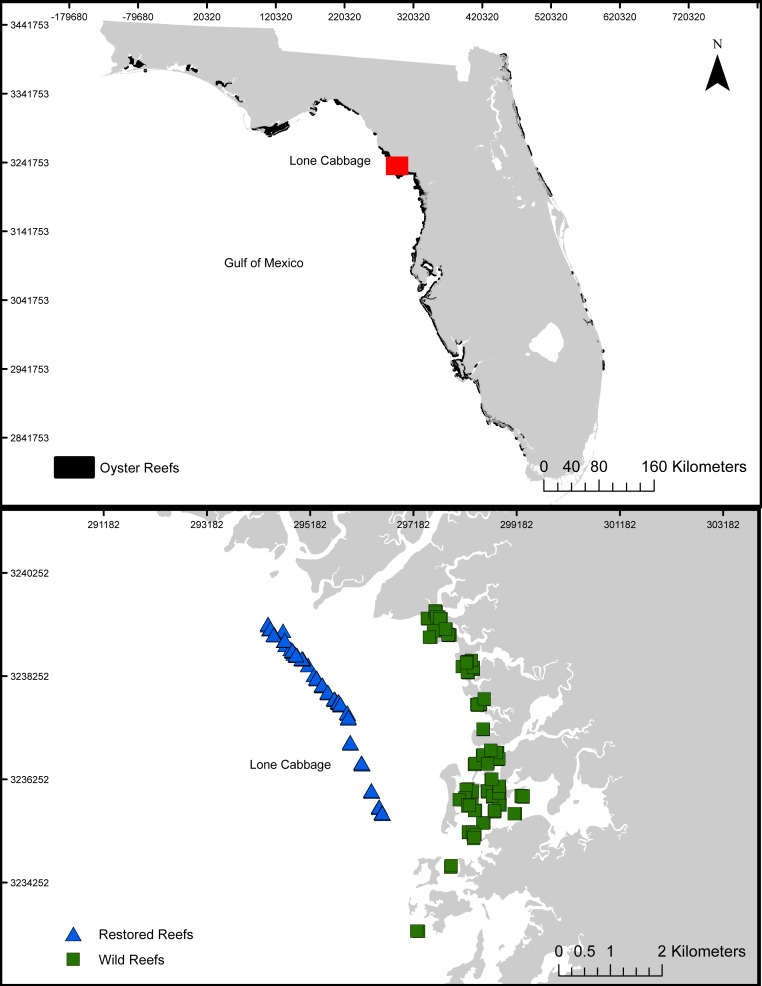
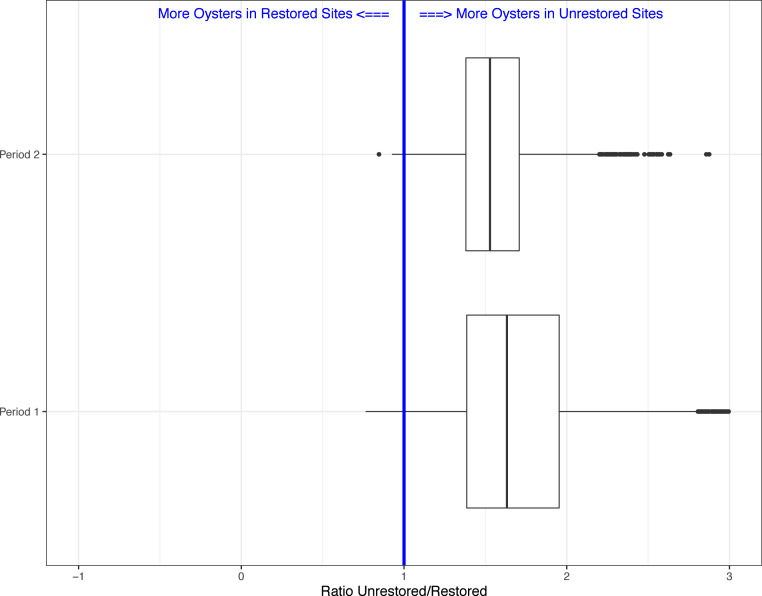
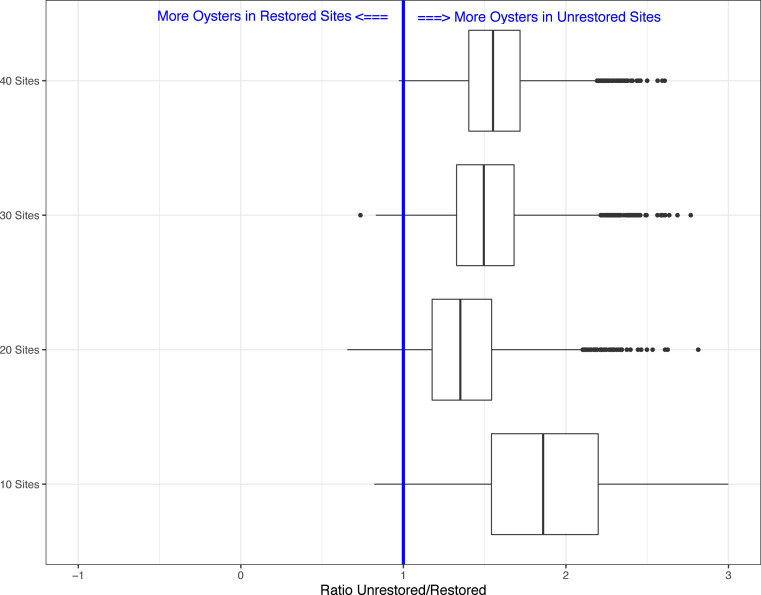
The objective of many fish and wildlife restoration programs is to utilize management actions to change the state of a system. Because restoration programs are often expensive, iteratively assessing whether the restoration is having the desired outcome is a critical aspect of learning how to inform ongoing and sampling designs to evaluate proposed restoration programs. We provide an example of how we are using data resampling as part of an adaptive restoration process to test the effectiveness of a restoration action and associated monitoring program to restore the degraded Lone Cabbage oyster reef in Suwannee Sound, Florida in the northeast Gulf of Mexico. We use a resampling framework through simulations to inform the progress of the restoration efforts by examining the direction and magnitude of the differences in live oyster counts between restored and unrestored (wild) reefs over time. In addition, we evaluated the effort (number of sites sampled) needed to determine the effect of restoration to understand how many surveys should be conducted in subsequent sampling seasons. These efforts allow us to provide timely insight into the effectiveness of both our monitoring efforts and restoration strategy which is of critical importance not only to the restoration of Lone Cabbage Reef but to larger restoration efforts within the Gulf of Mexico as part of the consolidated Deepwater Horizon settlements and funded restoration efforts.
Overview
The claims and statistics of this paper haven’t been checked yet.
Run the check — free, no account needed. It reads the open-access text and checks the sources it cites.
Integrity signals
Registry
Cites
Statistics
Figures
Verification
Claims the paper makes
The claims and statistics of this paper haven’t been checked yet.
Run the check — free, no account needed. It reads the open-access text and checks the sources it cites.
Claims other papers make about this one
Each is checked against this paper’s own text: does it say what the citing paper says it does?
In the citing paper
“These uncertainties will be typical of other oyster restoration projects; therefore, the design of restoration and monitoring implemented for Lone Cabbage Reef may be of larger relevance (Moore and Pine 2021).”
From Adaptive Management in Practice and the Problem of Application at Multiple Scales—Insights from Oyster Reef Restoration on Florida’s Gulf Coast (2022) · cites this paper as Moore and Pine 2021
In the citing paper
“This led to an in-depth exploration of the monitoring design for Lone Cabbage Reef (Moore and Pine 2021), including defining explicit feedback loops related to our expected restoration response and possible outcomes (Table 1).”
From Adaptive Management in Practice and the Problem of Application at Multiple Scales—Insights from Oyster Reef Restoration on Florida’s Gulf Coast (2022) · cites this paper as Moore and Pine 2021
In the citing paper
“Rigorously developed living data management plan is integrated with routine summaries of oyster and water quality data that are assessed prior to and during sampling events to evaluate the informativeness of monitoring (see application in Moore et al. 2020;Moore and Pine 2021).”
From Adaptive Management in Practice and the Problem of Application at Multiple Scales—Insights from Oyster Reef Restoration on Florida’s Gulf Coast (2022) · cites this paper as Moore and Pine 2021
In the citing paper
“Because monitoring is explicitly structured around the hypothesized treatment effects of our restoration, we can improve our understanding of restoration effectiveness by separating the restoration effects from background variability in oyster populations (Moore and Pine 2021).”
From Adaptive Management in Practice and the Problem of Application at Multiple Scales—Insights from Oyster Reef Restoration on Florida’s Gulf Coast (2022) · cites this paper as Moore and Pine 2021
In the citing paper
“Second, continuously analyzing field data to determine whether the restoration was having the intended consequences and tuning ongoing sampling efforts to answer these questions necessitated the development of a living data management system (Yenni et al. 2019) and methods of rapid analysis (Moore and Pine 2021).”
From Adaptive Management in Practice and the Problem of Application at Multiple Scales—Insights from Oyster Reef Restoration on Florida’s Gulf Coast (2022) · cites this paper as Moore and Pine 2021
In the citing paper
“When combined with the high costs and logistical constraints for sampling these oyster reefs, this approach also made it clear that we needed careful consideration of how and where to conduct sampling (Moore and Pine 2021).”
From Adaptive Management in Practice and the Problem of Application at Multiple Scales—Insights from Oyster Reef Restoration on Florida’s Gulf Coast (2022) · cites this paper as Moore and Pine 2021
In the citing paper
“The Lone Cabbage Reef project has used a combination of field and simulated data to provide insight into the utility of our monitoring programs for distinguishing between restoration responses and background”
From Adaptive Management in Practice and the Problem of Application at Multiple Scales—Insights from Oyster Reef Restoration on Florida’s Gulf Coast (2022) · cites this paper as Moore and Pine 2021
Self-check
Percentages, sums and reported differences re-computed from the paper’s own numbers.
The self-check needs the paper’s full text.
Citations
Cites
No references could be resolved yet.
Research works printed but not linked: 32
- Bolker, 2008, Ecological models and data in R
- Carpenter, 1989, Randomized intervention analysis and the interpretation of whole-ecosystem experiments, Ecology, 70, 1142, 10.2307/1941382 · DOI
- Colden, 2017, Reef height drives threshold dynamics of restored oyster reefs, Marine Ecology Progress Series, 582, 1, 10.3354/meps12362 · DOI
- Conner, 2016, Evaluating impacts using a BACI design, ratios, and a Bayesian approach with a focus on restoration, Environmental Monitoring and Assessment, 188, 555, 10.1007/s10661-016-5526-6 · DOI
- Frederick, 2016, Reversing a rapid decline in oyster reefs: effects of durable substrate on oyster populations, elevations, and aquatic bird community composition, Journal of Shellfish Research, 35, 359, 10.2983/035.035.0210 · DOI · Paper page
- George, 2019, Temporal variability in stream fish assemblage metrics and implications for long-term monitoring, Ecological Indicators, 101, 661, 10.1016/j.ecolind.2019.01.055 · DOI
- Gillespie, 2019, Tropical invertebrate response to marine reserves varies with protection duration, habitat type, and exploitation history, Aquatic Conservation: marine and Freshwater Ecosystems, 29, 511, 10.1002/aqc.3019 · DOI
- Gwinn, 2016, Imperfect detection and the determination of environmental flows for fish: challenges, implications and solutions, Freshwater Biology, 61, 172, 10.1111/fwb.12684 · DOI
- Hayes, 2019, The influence of natural flow and temperature and introduced brown trout on the temporal variation in native fish abundance in a reference stream, Canadian Journal of Fisheries and Aquatic Sciences, 76, 705, 10.1139/cjfas-2018-0033 · DOI
- Hilderbrand, 2017, Spatiotemporal stability patterns of brook trout abundance and implications for stream research and monitoring, North American Journal of Fisheries Management, 37, 353, 10.1080/02755947.2016.1269030 · DOI
- Holling, 1978, Adaptive environmental assessment and management
- Johnson, 2015, Power analysis for generalized linear mixed models in ecology and evolution, Methods in Ecology and Evolution, 6, 133, 10.1111/2041-210X.12306 · DOI
- Kain, 2015, A practical guide and power analysis for GLMMs: detecting among treatment variation in random effects, PeerJ, 3, e1226, 10.7717/peerj.1226 · DOI
- Kaplan, 2016, Freshwaterdetention by oyster reefs: quantifying a keystone ecosystem service, PLOS ONE, 11, e0167694, 10.1371/journal.pone.0167694 · DOI · Paper page
- Krebs, 1999, Ecological methodology
- Miner, 2018, Large-scale impacts of sea star wasting disease (SSWD) on intertidal sea stars and implications for recovery, PLOS ONE, 13, e0192870, 10.1371/journal.pone.0192870 · DOI
- Moore, 2020, Trends in oyster populations in the Northeastern Gulf of Mexico: an assessment of river discharge and fishing effects over time and space, Marine and Coastal Fisheries, 12, 191, 10.1002/mcf2.10117 · DOI · Paper page
- National Academies of Sciences, Engineering, and Medicine, 2017, Effective monitoring to evaluate ecological restoration in the Gulf of Mexico
- NRC, 2014, Adaptive management for water resources project planning
- NRDA Trustees, 2016, Deepwater Horizon oil spill: final programmatic damage assessment and restoration plan and final programmatic Environmental Impact Statement (noaa:18084)
- Osenberg, 1994, Detection of environmental impacts: natural variability, effect size, and power analysis, Ecological Applications, 4, 16, 10.2307/1942111 · DOI · Paper page
- Pine, 2015, The curious case of eastern oyster Crassostrea virginica stock status in Apalachicola Bay, Florida, Ecology and Society, 20, 46, 10.5751/ES-07827-200346 · DOI · Paper page
- Pregler, 2019, State-space analysis of power to detect regional brook trout population trends over time, Canadian Journal of Fisheries and Aquatic Sciences, 76, 2145, 10.1139/cjfas-2018-0241 · DOI
- Raabe, 2004, Historic topographic sheets to satellite imagery—A methodology for evaluating coastal change in Florida’s Big Bend tidal marsh (Report No. 2002211; Revised June 28, 2012, Open-File Report), 10.3133/ofr2002211 · DOI
- Seavey, 2011, Decadal changes in oyster reefs in the Big Bend of Florida’s Gulf Coast, Ecosphere, 2, 1, 10.1890/ES11-00205.1 · DOI · Paper page
- Stewart-Oaten, 1992, Assessing effects of unreplicated perturbations: no simple solutions, Ecology, 73, 1396, 10.2307/1940685 · DOI
- Wagner, 2014, Spatial and temporal dynamics in brook trout density: implications for population monitoring, North American Journal of Fisheries Management, 34, 258, 10.1080/02755947.2013.847878 · DOI
- Wagner, 2013, Detecting temporal trends in freshwater fisheries surveys: statistical power and the important linkages between management questions and monitoring objectives, Fisheries, 38, 309, 10.1080/03632415.2013.799466 · DOI
- Walters, 2007, Is adaptive management helping to solve fisheries problems?, AMBIO: A Journal of the Human Environment, 36, 304, 10.1579/0044-7447(2007)36[304:IAMHTS]2.0.CO;2 · DOI · Paper page
- Walters, 1990, Large-scale management experiments and learning by doing, Ecology, 71, 2060, 10.2307/1938620 · DOI
- Zacherl, 2015, Exploring Restoration Methods for the Olympia Oyster Ostrea lurida Carpenter, 1864: effects of shell bed thickness and shell deployment methods on shell cover, oyster recruitment, and oyster density, Journal of Shellfish Research, 34, 819, 10.2983/035.034.0311 · DOI
- Zedler, 2017, What’s new in adaptive management and restoration of coasts and estuaries?, Estuaries and Coasts, 40, 1, 10.1007/s12237-016-0162-5 · DOI
Cited by
Sorted by citations
Pine, W. E., Johnson, F. A., Frederick, P. C., & Coggins, L. G. (2022) · Marine and Coastal Fisheries · doi:10.1002/mcf2.10192 · Cited by 16
Self-citation
Metadata
- Authors
- Moore, J. F., & Pine III, W. E.
- Affiliations
- Department of Wildlife Ecology and Conservation, University of Florida, Gainesville, FL, United States of America
- Venue
- PeerJ
- Publisher
- PeerJ
- Published
- 2021-05-04
- Volume
- 9
- Pages
- e11378
- ISSN
- 2167-8359
- PMC
- PMC8103915
- Cited by
- 5
- References
- 0
- Language
- en
- Funders
- National Fish and Wildlife Foundation
About these checks
Registry, retraction, Cites and statistics results are computed, not judged, with one exception: a printed reference that no index lists is read once by a model before it counts as a citation error. Claims are extracted by a model and kept only when their quote appears verbatim in the text; each cited source is then checked, with a model’s help, for whether it says what the claim relies on. Those verdicts can be wrong — read the claim’s quote and the cited source before relying on one.
Statistics and arithmetic are recomputed, not judged.
Confidence bands are shown only for fields calibrated on our annotated test set. None is calibrated yet, so no band is shown.
What counts as a claim ›How we measure confidence ›How we check this ›
Are you an author, or do you see a problem with this page? Request a review
How to cite
Cite CoChat for the checks on this page, and the paper for its own findings.
- This page
- CoChat. (2026). Citation check: Bootstrap methods can help evaluate monitoring program performance to inform restoration as part of an adaptive management program. https://app.cochat.ai/papers/10.7717/peerj.11378
- The paper
- Moore, J. F., & Pine III, W. E. (2021). Bootstrap methods can help evaluate monitoring program performance to inform restoration as part of an adaptive management program. PeerJ. https://doi.org/10.7717/peerj.11378
