

The DOI matches its Crossref record; 92 of the 92 references it cites were found in a registry or an index.
A brief introduction to mixed effects modelling and multi-model inference in ecology
Open accessAbstract
The use of linear mixed effects models (LMMs) is increasingly common in the analysis of biological data. Whilst LMMs offer a flexible approach to modelling a broad range of data types, ecological data are often complex and require complex model structures, and the fitting and interpretation of such models is not always straightforward. The ability to achieve robust biological inference requires that practitioners know how and when to apply these tools. Here, we provide a general overview of current methods for the application of LMMs to biological data, and highlight the typical pitfalls that can be encountered in the statistical modelling process. We tackle several issues regarding methods of model selection, with particular reference to the use of information theory and multi-model inference in ecology. We offer practical solutions and direct the reader to key references that provide further technical detail for those seeking a deeper understanding. This overview should serve as a widely accessible code of best practice for applying LMMs to complex biological problems and model structures, and in doing so improve the robustness of conclusions drawn from studies investigating ecological and evolutionary questions.
Overview
The claims and statistics of this paper haven’t been checked yet.
Run the check — free, no account needed. It reads the open-access text and checks the sources it cites.
Integrity signals
Registry
Cites
Statistics
Figures
Verification
Claims the paper makes
The claims and statistics of this paper haven’t been checked yet.
Run the check — free, no account needed. It reads the open-access text and checks the sources it cites.
Claims other papers make about this one
Each is checked against this paper’s own text: does it say what the citing paper says it does?
The cited source says what the claim attributes to it.
In the citing paper
“Recent advances in statistical modeling appear to have solved this problem, because it is now possible to fit generalized linear mixed models “glmm” with a variety of error distributions (e.g., binomial, Poisson, zero-inflated Poisson, negative binomial; Harrison et al., 2018; O'Hara, 2009) or to use a range of randomization techniques such as bootstrapping (Good, 2005)”
From Violating the normality assumption may be the lesser of two evils (2021) · cites this paper as Harrison et al., 2018
The cited source says what the claim attributes to it.
In the citing paper
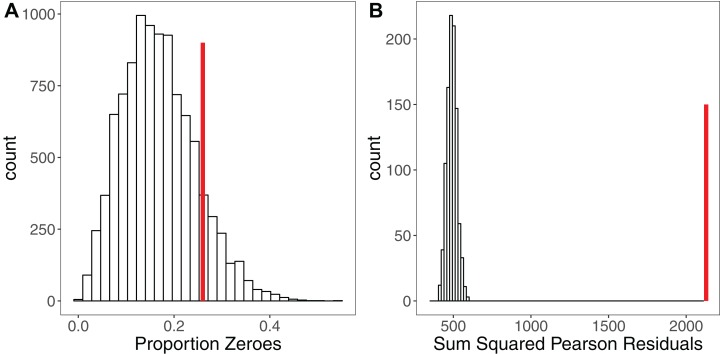
“Controlling for overdispersion in counts through the use of a glmm with an observation-level random effect (Harrison et al., 2018) fixed the problem of inflated type I error rates for distributions D2 and D7 (Fig. 3, indicated in red)”
From Violating the normality assumption may be the lesser of two evils (2021) · cites this paper as Harrison et al., 2018
In the citing paper
“Furthermore, as data were unbalanced, the use of a linear mixed model with different levels of correlations was necessary.42 This allowed all data to be used, and by including participant as a random effect, it ensured that each participant had their own baseline level, and the estimated change from baseline to visit 5 can be interpreted as the mean change from this level.”
From Increased Time in Range and Fewer Missed Bolus Injections After Introduction of a Smart Connected Insulin Pen (2020) · cites this paper as [42]
Self-check
Percentages, sums and reported differences re-computed from the paper’s own numbers.
The self-check needs the paper’s full text.
Citations
Cites
R: A Language and Environment for Statistical Computing
R Core Team (2000) · doi:10.32614/r.manuals · Cited by 355,893
Fitting Linear Mixed-Effects Models Using lme4
Bates, D., Mächler, M., Bolker, B., & Walker, S. (2015) · Journal of Statistical Software · doi:10.18637/jss.v067.i01 · Cited by 86,835
Model selection and multimodel inference: a practical information-theoretic approach.
Guthery, F. S., Burnham, K. P., & Anderson, D. R. (2003) · The Journal of Wildlife Management · doi:10.2307/3802723 · Cited by 41,495
Mixed effects models and extensions in ecology with R
Zuur, A. F., Ieno, E. N., Walker, N., Saveliev, A. A., & Smith, G. M. (2009) · Statistics for Biology and Health · doi:10.1007/978-0-387-87458-6 · Cited by 17,963
Multimodel Inference: Understanding AIC and BIC in Model Selection
Burnham, K. P., & Anderson, D. R. (2004) · Sociological Methods & Research · doi:10.1177/0049124104268644 · Cited by 11,648
Experimental Design and Data Analysis for Biologists
Quinn, G. P., & Keough, M. J. (2002) · doi:10.1017/cbo9780511806384 · Cited by 10,674 · cited 1×
“…parameters to be estimated can result in overparameterised models, where there are insufficient data to estimate coefficients robustly (Southwood & Henderson 2000, Quinn & Keough 2002, Crawley 2013 expected fitted lines of a 3-way interaction means refraining from fitting a model containing one.”
BackgroundA general and simple method for obtaining R 2 from generalized linear mixed‐effects models
Nakagawa, S., & Schielzeth, H. (2013) · Methods in Ecology and Evolution · doi:10.1111/j.2041-210x.2012.00261.x · Cited by 10,356
Random effects structure for confirmatory hypothesis testing: Keep it maximal
Barr, D. J., Levy, R., Scheepers, C., & Tily, H. J. (2013) · Journal of Memory and Language · doi:10.1016/j.jml.2012.11.001 · Cited by 10,328
Dormann, C. F., Elith, J., Bacher, S., Buchmann, C., Carl, G., Carré, G., Marquéz, J. R. G., Gruber, B., Lafourcade, B., Leitão, P. J., et al. (2013) · Ecography · doi:10.1111/j.1600-0587.2012.07348.x · Cited by 9,998
Generalized linear mixed models: a practical guide for ecology and evolution
Bolker, B. M., Brooks, M. E., Clark, C. J., Geange, S. W., Poulsen, J. R., Stevens, M. H. H., & White, J.-S. S. (2009) · Trends in Ecology & Evolution · doi:10.1016/j.tree.2008.10.008 · Cited by 8,910
Research works printed but not linked: 5
- Cox, 1989, The Analysis of Binary Data
- Crawley, 2013, The R Book
- Noble, 2017, Planned missing data design: stronger inferences increased research efficiency and improved animal welfare in ecology and evolution, bioRxiv, 247064, 10.1101/247064 · DOI
- Peters, 1991, A Critique for Ecology
- Southwood, 2000, Ecological Methods
Cited by
Sorted by citations
Robustness of linear mixed-effects models to violations of distributional assumptions
Schielzeth, H., Dingemanse, N. J., Nakagawa, S., Westneat, D. F., Allegue, H., Teplitsky, C., Réale, D., Dochtermann, N. A., Garamszegi, L. Z., & Araya‐Ajoy, Y. G. (2020) · Methods in Ecology and Evolution · doi:10.1111/2041-210x.13434 · Cited by 1,393
O’Dea, R. E., Lagisz, M., Jennions, M. D., Koricheva, J., Noble, D. W. A., Parker, T. H., Gurevitch, J., Page, M. J., Stewart, G. B., Moher, D., et al. (2021) · Biological reviews/Biological reviews of the Cambridge Philosophical Society · doi:10.1111/brv.12721 · Cited by 825
Violating the normality assumption may be the lesser of two evils
Knief, U., & Forstmeier, W. (2021) · Behavior Research Methods · doi:10.3758/s13428-021-01587-5 · Cited by 654
Lai, J., Zou, Y., Zhang, S., Zhang, X., & Mao, L. (2022) · Journal of Plant Ecology · doi:10.1093/jpe/rtac096 · Cited by 565
Estimating power in (generalized) linear mixed models: An open introduction and tutorial in R
Kumle, L., Võ, M. L.-H., & Draschkow, D. (2021) · Behavior Research Methods · doi:10.3758/s13428-021-01546-0 · Cited by 552
Metadata
- Authors
- Harrison, X. A., Donaldson, L., Correa-Cano, M. E., Evans, J., Fisher, D. N., Goodwin, C. E. D., Robinson, B. S., Hodgson, D. J., & Inger, R.
- Affiliations
- Zoological Society of London (GB)
- University of Exeter (GB)
- Environment and Sustainability Institute, University of Exeter, Penryn, UK
- University of Ottawa (CA)
- Corresponding author
- Harrison, Xavier A.
- ORCID
- Venue
- PeerJ
- Publisher
- PeerJ
- Published
- 2018-05-23
- Volume
- 6
- Pages
- e4794
- ISSN
- 2167-8359 (ISSN-L)
- PMC
- PMC5970551
- OpenAlex
- W2783564415
- Cited by
- 2,094
- References
- 91
- Citations by year
- 2026: 227 · 2025: 228 · 2024: 271 · 2023: 246 · 2022: 327 · 2021: 383 · 2020: 261 · 2019: 116 · 2018: 32
- FWCI
- 164.31
- Type
- journal article
- Language
- en
- Open access
- gold
- doi.org
- Locations
- PeerJ (publishedVersion, cc-by)
- Europe PMC (PubMed Central) (publishedVersion, cc-by)
- PubMed Central (publishedVersion, cc-by)
- PubMed (publishedVersion)
- Aberdeen University Research Archive (Aberdeen University) (submittedVersion)
- DOAJ (DOAJ: Directory of Open Access Journals) (submittedVersion, cc-by-sa)
- Funders
- Institute of Zoology Research Fellowship
- NERC studentship (NE/H02249X/1, NE/L501669/1)
- University of Exeter and the Animal and Plant Health as part of ‘Wildlife Research Co-Operative’
- CONACYT (The Mexican National Council for Science and Technology)
- SEP (The Mexican Ministry of Education)
- Forestry Commission
- Topics
- Physical Sciences › Mathematics › Statistics and Probability › Statistical Methods and Bayesian Inference
- Life Sciences › Agricultural and Biological Sciences › Agronomy and Crop Science › Agriculture, Soil, Plant Science
- Physical Sciences › Mathematics › Statistics and Probability › Statistical Methods and Applications
- Keywords
- linear mixed models, multi-model inference, model selection, information theory, ecological data analysis, statistical pitfalls
About these checks
Registry, retraction, Cites and statistics results are computed, not judged, with one exception: a printed reference that no index lists is read once by a model before it counts as a citation error. Claims are extracted by a model and kept only when their quote appears verbatim in the text; each cited source is then checked, with a model’s help, for whether it says what the claim relies on. Those verdicts can be wrong — read the claim’s quote and the cited source before relying on one.
Statistics and arithmetic are recomputed, not judged.
Confidence bands are shown only for fields calibrated on our annotated test set. None is calibrated yet, so no band is shown.
What counts as a claim ›How we measure confidence ›How we check this ›
Are you an author, or do you see a problem with this page? Request a review
