

The DOI matches its Crossref record; 3 of the 3 references it cites were found in a registry or an index.
Adverse Health Effects Related to Shift Work Patterns and Work Schedule Tolerance in Emergency Medical Services Personnel: A Scoping Review
Open accessAbstract
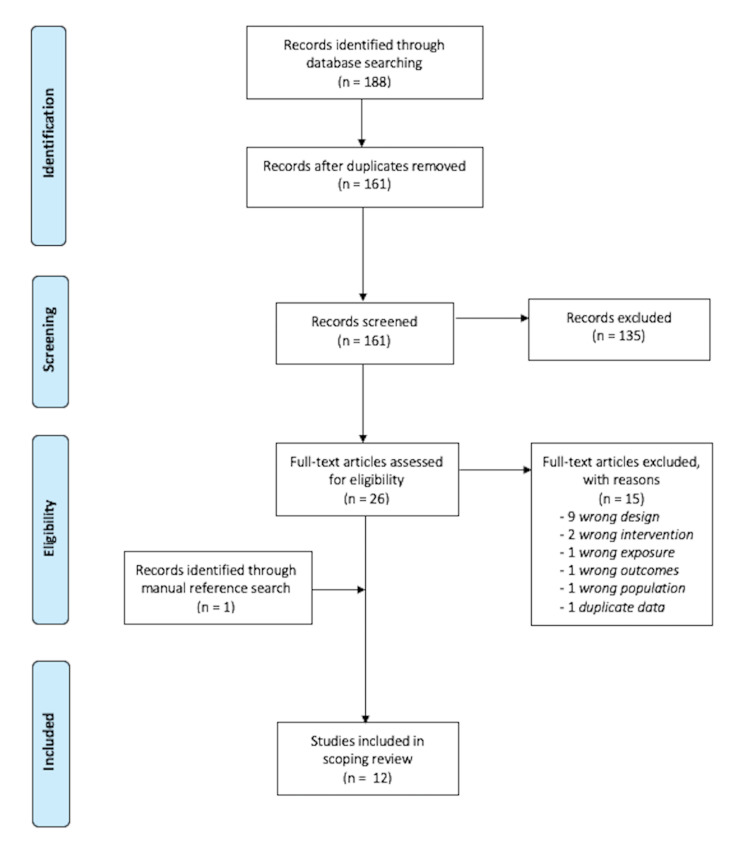
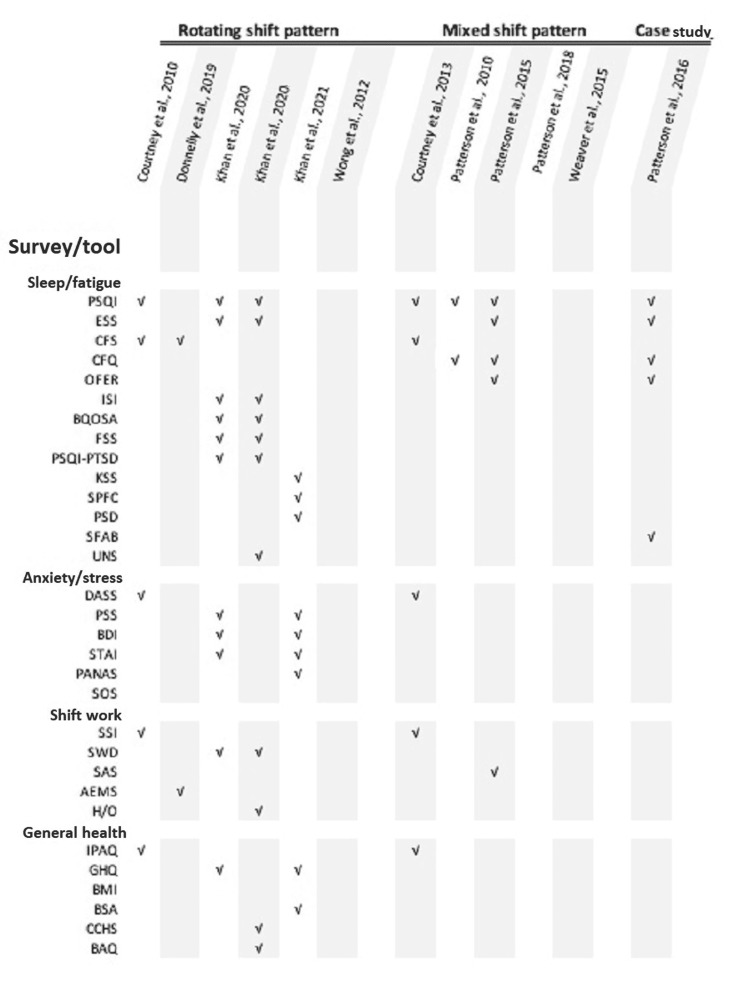
Paramedicine as a profession is continually evolving in clinical practice, responsibilities, and workload. Changes over time in both population demographics and distribution have altered the demand for, and availability of, prehospital emergency medical services (EMS). These factors may also affect scheduling policies in many EMS organizations. However, there is little evidence that suggests optimal shift scheduling patterns to reduce adverse health events such as increased stress or fatigue in prehospital emergency health care providers. Our objective was to describe associations between variations in shift scheduling patterns and EMS provider health outcomes, such as fatigue, stress, sleep quality, and general mental and physiological health. We also sought to identify knowledge gaps. We performed searches of PubMed, CINAHL, Embase, and Cochrane databases for primary studies, systematic reviews, and meta-analyses published between January 2000 and December 2020. Studies reporting measurable health care outcomes in prehospital personnel with defined shift schedule patterns in land-based ambulance systems were included. Our search strategy yielded 188 studies, of which 11 met eligibility criteria (eight cross-sectional surveys, one single case report, one retrospective cohort study, one prospective cohort study, and one systematic review), with one additional study found through reference list screening, leaving 12 studies for review. All publications contained a description of shift schedule characteristics and shared similar outcomes of interest, although there was variation in comparators and assessment of outcomes. Most studies showed high rates of fatigue, stress, mental health concerns, and negative general health outcomes in paramedic shift worker populations. The case study reported improved fatigue, alertness, and sleep quality levels following a switch from a 24-hour shift pattern to an eight-hour shift. We did not complete an in-depth risk of bias assessment for any of the studies. Melnyk evidence ratings varied from IV to VI, indicating a low quality of evidence evaluating the impacts of shift schedule patterns in paramedics, with the retrospective cohort study design, ranked as IV, systematic review as a V, and prospective cohort study, case report and surveys ranked as VI. The low quality and quantity of evidence indicate the need for further research to definitively assess relationships between specific schedule patterns and health outcomes.
Overview
The claims and statistics of this paper haven’t been checked yet.
Run the check — free, no account needed. It reads the open-access text and checks the sources it cites.
Integrity signals
Registry
Cites
Statistics
Figures
Verification
Claims the paper makes
The claims and statistics of this paper haven’t been checked yet.
Run the check — free, no account needed. It reads the open-access text and checks the sources it cites.
Claims other papers make about this one
Each is checked against this paper’s own text: does it say what the citing paper says it does?
The source backs part of the claim, not all of it — or backs it for a different population, condition or comparison.
In the citing paper
“Paramedics are reported to have poor levels of physical health with an increased risk of shift work disorder (Barth et al., 2022; Nguyen et al., 2023; Pallesen et al., 2010), chronic illness, cardiovascular conditions and hypertension (MacQuarrie et al., 2018; Torquati, et al., 2018), and obesity and cancer (Gan et al., 2018; Pahwa, Labr che, & Demers, 2018).”
From Understanding the Occupational Factors that Influence Paramedic Health and Wellbeing (2024) · cites this paper as Barth et al., 2022
Experimental — accuracy not yet measured
Self-check
Percentages, sums and reported differences re-computed from the paper’s own numbers.
The self-check needs the paper’s full text.
Citations
Cites
PRISMA Extension for Scoping Reviews (PRISMA-ScR): Checklist and Explanation
Tricco, A. C., Lillie, E., Zarin, W., O'Brien, K. K., Colquhoun, H., Levac, D., Moher, D., Peters, M. D. J., Horsley, T., Weeks, L., et al. (2018) · Annals of Internal Medicine · doi:10.7326/m18-0850 · Cited by 43,565
Updated methodological guidance for the conduct of scoping reviews
Peters, M. D. J., Marnie, C., Tricco, A. C., Pollock, D., Munn, Z., Alexander, L., McInerney, P., Godfrey, C. M., & Khalil, H. (2020) · JBI Evidence Synthesis · doi:10.11124/jbies-20-00167 · Cited by 9,046
Sleep, sleepiness, fatigue, and performance of 12-hour-shift nurses
Geiger-Brown, J., Rogers, V. E., Trinkoff, A. M., Kane, R. L., Bausell, R. B., & Scharf, S. M. (2012) · Chronobiology International · doi:10.3109/07420528.2011.645752 · Cited by 382
Research works printed but not linked: 31
- Caruso CC. Negative impacts of shiftwork and long work hours. Rehabil Nurs. 2014, 39:16-25. 10.1002/rnj.107 · DOI · Paper page
- Costa G. Shift work and health: current problems and preventive actions. Saf Health Work. 2010, 1:112-23. 10.5491/SHAW.2010.1.2.112 · DOI · Paper page
- Bambra CL, Whitehead MM, Sowden AJ, Akers J, Petticrew MP. Shifting schedules: the health effects of reorganizing shift work. Am J Prev Med. 2008, 34:427-34. 10.1016/j.amepre.2007.12.023 · DOI
- Courtney JA, Francis AJP, Paxton SJ. Caring for the carers: fatigue, sleep, and mental health in Australian paramedic shiftworkers. Australas J Organ Psychol. 2010, 3:32-41. 10.1375/ajop.3.1.32 · DOI
- Patterson PD, Suffoletto BP, Kupas DF, Weaver MD, Hostler D. Sleep quality and fatigue among prehospital providers. Prehosp Emerg Care. 2010, 14:187-93. 10.3109/10903120903524971 · DOI
- Brown JP, Martin D, Nagaria Z, Verceles AC, Jobe SL, Wickwire EM. Mental health consequences of shift work: an updated review. Curr Psychiatry Rep. 2020, 22:10.1007/s11920-020-1131-z · DOI
- Patterson PD, Runyon MS, Higgins JS, et al.. Shorter versus longer shift durations to mitigate fatigue and fatigue-related risks in emergency medical services personnel and related shift workers: a systematic review. Prehosp Emerg Care. 2018, 22:28-36. 10.1080/10903127.2017.1376135 · DOI
- Patterson PD, Higgins JS, Van Dongen HP, et al.. Evidence-based guidelines for fatigue risk management in emergency medical services. Prehosp Emerg Care. 2018, 22:89-101. 10.1080/10903127.2017.1376137 · DOI
- Patterson PD, Martin-Gill C. Absence and need for fatigue risk management in emergency medical services. Prehosp Emerg Care. 2018, 22:6-8. 10.1080/10903127.2017.1380101 · DOI
- Dall'Ora C, Ball J, Recio-Saucedo A, Griffiths P. Characteristics of shift work and their impact on employee performance and wellbeing: a literature review. Int J Nurs Stud. 2016, 57:12-27. 10.1016/j.ijnurstu.2016.01.007 · DOI · Paper page
- Cumber E, Greig PR. Can a tool developed for industry be used to assess fatigue risk in medical rotas? A pilot study of foundation doctors' rotas in a tertiary centre. BMJ Open. 2019, 9:10.1136/bmjopen-2018-023470 · DOI
- Smith L, Mason C. Reducing night shift exposure: a pilot study of rota, night shift and age effects on sleepiness and fatigue. J Hum Ergol (Tokyo). 2001, 30:83-7. 10.11183/jhe1972.30.83 · DOI
- Angehrn A, Sapach MJ, Ricciardelli R, MacPhee RS, Anderson GS, Carleton RN. Sleep quality and mental disorder symptoms among Canadian public safety personnel. Int J Environ Res Public Health. 2020, 17:10.3390/ijerph17082708 · DOI
- Khan WA, Jackson ML, Kennedy GA, Conduit R. A field investigation of the relationship between rotating shifts, sleep, mental health and physical activity of Australian paramedics. Sci Rep. 2021, 11:10.1038/s41598-020-79093-5 · DOI · Paper page
- Donnelly EA, Bradford P, Davis M, Hedges C, Socha D, Morassutti P. Fatigue and safety in paramedicine. CJEM. 2019, 21:762-5. 10.1017/cem.2019.380 · DOI
- Mapping evidence of adverse health effects related to shift work patterns and work schedule tolerance in emergency medical services personnel; a scoping review protocol. (2020). https.//osf.io/equgs.
- Covidence systematic review software, Veritas Health Innovation, Melbourne, Australia. (2020). http.//support.covidence.org/knowledge_base/topics/how-can-i-cite-covidence.
- Melnyk BM, Fineout-Overholt E. Evidence-Based Practice in Nursing & Healthcare: A Guide to Best Practice. Third Edition. Wolters Kluwer Health, Philadelphia, PA; 2015.
- Courtney JA, Francis AJ, Paxton SJ. Caring for the country: fatigue, sleep and mental health in Australian rural paramedic shiftworkers. J Community Health. 2013, 38:178-86. 10.1007/s10900-012-9599-z · DOI · Paper page
- Khan WA, Conduit R, Kennedy GA, Abdullah Alslamah A, Ahmad Alsuwayeh M, Jackson ML. Sleep and mental health among paramedics from Australia and Saudi Arabia: a comparison study. Clocks Sleep. 2020, 2:246-57. 10.3390/clockssleep2020019 · DOI
- Khan WA, Conduit R, Kennedy GA, Jackson ML. The relationship between shift-work, sleep, and mental health among paramedics in Australia. Sleep Health. 2020, 6:330-7. 10.1016/j.sleh.2019.12.002 · DOI · Paper page
- Patterson PD, Buysse DJ, Weaver MD, Callaway CW, Yealy DM. Recovery between work shifts among emergency medical services clinicians. Prehosp Emerg Care. 2015, 19:365-75. 10.3109/10903127.2014.995847 · DOI
- Patterson PD, Klapec SE, Weaver MD, Guyette FX, Platt TE, Buysse DJ. Differences in paramedic fatigue before and after changing from a 24-hour to an 8-hour shift schedule: a case report. Prehosp Emerg Care. 2016, 20:132-6. 10.3109/10903127.2015.1025158 · DOI
- Weaver MD, Patterson PD, Fabio A, Moore CG, Freiberg MS, Songer TJ. An observational study of shift length, crew familiarity, and occupational injury and illness in emergency medical services workers. Occup Environ Med. 2015, 72:798-804. 10.1136/oemed-2015-102966 · DOI
- Wong IS, Ostry AS, Demers PA, Davies HW. Job strain and shift work influences on biomarkers and subclinical heart disease indicators: a pilot study. J Occup Environ Hyg. 2012, 9:467-77. 10.1080/15459624.2012.693831 · DOI
- Ulhôa MA, Marqueze EC, Kantermann T, Skene D, Moreno C. When does stress end? Evidence of a prolonged stress reaction in shiftworking truck drivers. Chronobiol Int. 2011, 28:810-8. 10.3109/07420528.2011.613136 · DOI
- Rhéaume A, Mullen J. The impact of long work hours and shift work on cognitive errors in nurses. J Nurs Manag. 2018, 26:26-32. 10.1111/jonm.12513 · DOI
- Burgess PA. Optimal shift duration and sequence: recommended approach for short-term emergency response activations for public health and emergency management. Am J Public Health. 2007, 97:88-92. 10.2105/AJPH.2005.078782 · DOI
- Pilcher JJ, Lambert BJ, Huffcut AI. Differential effects of permanent and rotating shifts on self-report sleep length: a meta-analytic review. Sleep. 2000, 23:1-9. 10.1093/sleep/23.2.1b · DOI
- Short MA, Agostini A, Lushington K, Dorrian J. A systematic review of the sleep, sleepiness, and performance implications of limited wake shift work schedules. Scand J Work Environ Health. 2015, 41:425-40. 10.5271/sjweh.3509 · DOI
- Takeyama H, Itani T, Tachi N, et al.. Effects of a modified ambulance night shift system on fatigue and physiological function among ambulance paramedics. J Occup Health. 2009, 51:204-9. 10.1539/joh.l7040 · DOI
Cited by
Sorted by citations
Understanding the Occupational Factors that Influence Paramedic Health and Wellbeing
Betts, C., Stoneley, A., Anderson, J., & Sutton, C. (2024) · International Journal of Paramedicine · doi:10.56068/mnrg8307 · Cited by 2
Metadata
- Authors
- Barth, J., Greene, J. A., Goldstein, J., & Sibley, A.
- Affiliations
- Dalhousie University (CA)
- University of Prince Edward Island (CA)
- Corresponding author
- Barth, Jennifer
- Venue
- Cureus
- Published
- 2022-04-01
- Volume
- 14
- Issue
- 4
- Pages
- e23730-e23730
- ISSN
- 2168-8184 (ISSN-L)
- PMC
- PMC9060748
- OpenAlex
- W4220776455
- Cited by
- 17
- References
- 3
- Citations by year
- 2026: 3 · 2025: 6 · 2024: 4 · 2023: 3 · 2022: 1
- FWCI
- 0.51
- Type
- journal article
- Language
- en
- Open access
- diamond
- doi.org
- Licence
- cc-by
- Locations
- Cureus (publishedVersion, cc-by)
- PubMed Central (publishedVersion, cc-by)
- PubMed (publishedVersion)
- IslandScholar (University of Prince Edward Island) (submittedVersion, cc-by)
- Funders
- University of Prince Edward Island
- Topics
- Social Sciences › Psychology › Experimental and Cognitive Psychology › Sleep and Work-Related Fatigue
- Health Sciences › Medicine › Public Health, Environmental and Occupational Health › Workplace Health and Well-being
- Health Sciences › Medicine › Public Health, Environmental and Occupational Health › Occupational Health and Burnout
- Keywords
- shift work, shift scheduling, emergency medical personnel, paramedics, fatigue, occupational stress, sleep quality, mental health, ambulance personnel, prehospital care, 24-hour shifts
About these checks
Registry, retraction, Cites and statistics results are computed, not judged, with one exception: a printed reference that no index lists is read once by a model before it counts as a citation error. Claims are extracted by a model and kept only when their quote appears verbatim in the text; each cited source is then checked, with a model’s help, for whether it says what the claim relies on. Those verdicts can be wrong — read the claim’s quote and the cited source before relying on one.
Statistics and arithmetic are recomputed, not judged.
Confidence bands are shown only for fields calibrated on our annotated test set. None is calibrated yet, so no band is shown.
What counts as a claim ›How we measure confidence ›How we check this ›
Are you an author, or do you see a problem with this page? Request a review
