

The DOI matches its Crossref record; 4 of the 4 references it cites were found in a registry or an index.
Why illness perceptions matter
Open accessAbstract
ConclusionsUntreated depression in patients with physical illness causes distress, amplifies physical symptoms and is more predictive of functional impairment over time than severity of physical illness.For example, patients with rheumatoid arthritis who become depressed may present with increasingly painful joints in the absence of increased disease activity.Also, diabetic patients with depression have worse glucose control and are more likely to have diabetic complications.It is therefore important that all clinicians should be aware of the frequency of depression in physical illness, be able to recognise it and have an understanding of its management.References 1 Royal College of Physicians, Royal College of Psychiatrists.The psychological care of medical patients.London: RCP, RCPsych,
Overview
The claims and statistics of this paper haven’t been checked yet.
Free: it reads the open-access text and checks the first 5 claims that cite a source we can check. Create a free account to check every claim.
Integrity signals
Registry
Cites
Statistics
Figures
Verification
Claims the paper makes
The claims and statistics of this paper haven’t been checked yet.
Free: it reads the open-access text and checks the first 5 claims that cite a source we can check. Create a free account to check every claim.
Claims other papers make about this one
Each is checked against this paper’s own text: does it say what the citing paper says it does?
The source backs part of the claim, not all of it — or backs it for a different population, condition or comparison.
In the citing paper
“A change in illness perceptions can help to reduce everyday disability and improve functioning and quality of life (Petrie and Weinman, 2006).”
From The effectiveness of a body-affective mindfulness intervention for multiple sclerosis patients with depressive symptoms: A randomized controlled clinical trial (2017) · cites this paper as Petrie and Weinman, 2006
Experimental — accuracy not yet measuredThe cited source says what the claim attributes to it.
In the citing paper
“Furthermore, such expectations or health perceptions are a good predictor of outcome in a host of medical conditions.16,17”
From Impact of psychological factors in the experience of pain (2011) · cites this paper as [17]
In the citing paper
“After receiving a diagnosis of illness, individuals develop an organized pattern of cognitive and emotional representations of their own illness, which can be referred to as an illness perception (Petrie and Weinman, 2006).”
From The effectiveness of a body-affective mindfulness intervention for multiple sclerosis patients with depressive symptoms: A randomized controlled clinical trial (2017) · cites this paper as Petrie and Weinman, 2006
In the citing paper
“These beliefs can influence coping behavior (Leventhal et al., 1984), with negative illness perceptions being associated with poorer recovery and increased healthcare use, even after controlling for objective illness severity (Leventhal et al., 1984; Petrie and Weinman, 2006).”
From The effectiveness of a body-affective mindfulness intervention for multiple sclerosis patients with depressive symptoms: A randomized controlled clinical trial (2017) · cites this paper as Petrie and Weinman, 2006
Self-check
Percentages, sums and reported differences re-computed from the paper’s own numbers.
The self-check needs the paper’s full text.
Citations
Cites
The Brief Illness Perception Questionnaire
Broadbent, E., Petrie, K. J., Main, J., & Weinman, J. (2006) · Journal of Psychosomatic Research · doi:10.1016/j.jpsychores.2005.10.020 · Cited by 3,431
Self-citationMarteau, T. M., & Weinman, J. (2006) · Social Science & Medicine · doi:10.1016/j.socscimed.2005.08.005 · Cited by 285
Self-citationModern worries, new technology, and medicine
Petrie, K. J. (2002) · BMJ · doi:10.1136/bmj.324.7339.690 · Cited by 101
Self-citationBotha-Scheepers, S. A., Riyazi, N., Kroon, H. M. J. A., Scharloo, M., Houwing‐Duistermaat, J. J., Slagboom, P. E., Rosendaal, F. R., Breedveld, F. C., & Kloppenburg, M. (2006) · Osteoarthritis and Cartilage · doi:10.1016/j.joca.2006.04.011 · Cited by 90
Research works printed but not linked: 10
- Leventhal H, Meyer D, Nerenz D. The common sense representation of illness danger. In: Rachman S (ed). Contributions to medical psychology, vol. 2. New York: Pergamon Press, 1980:17-30.
- Weinman J, Petrie KJ, Sharpe N, Walker S. Causal attributions in patients and spouses following a heart attack and subsequent lifestyle changes. Br J Health Psychol 2000;5: 263-73.
- Moss-Morris R, Weinman J, Petrie KJ et al. The Revised Illness Perception Question- naire (IPQ-R). Psychol Health 2002;17:1-16.
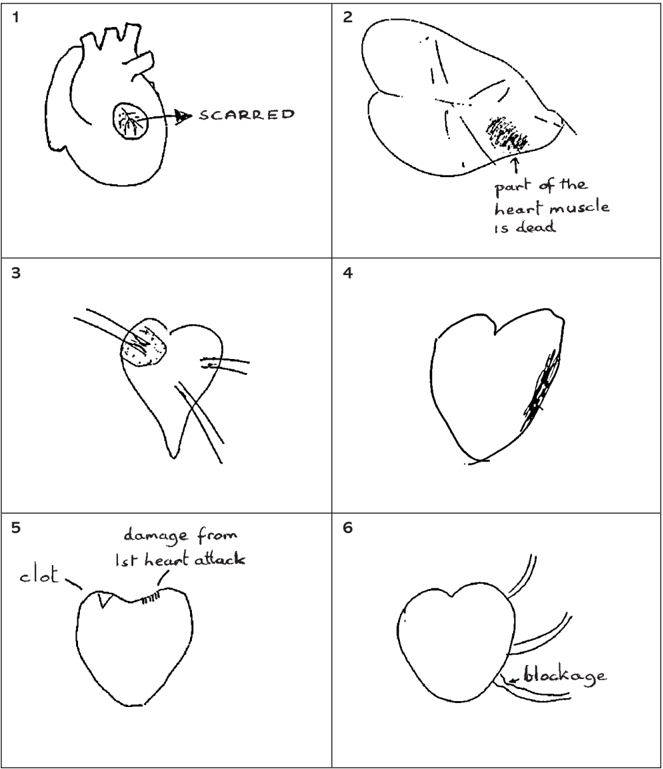
- Broadbent E, Petrie KJ, Ellis CJ, Ying J, Gamble G. A picture of health -myocardial infarction patients' drawings of their hearts and subsequent disability: a longitudinal study. J Psychosom Res 2004;57:583-7.
- Broadbent E, Ellis CJ, Gamble G, Petrie KJ. Using patient drawings to identify slow recovery following myocardial infarction. Psychosom Med (in press) 10
- Donkin L, Ellis CJ, Powell R et al. Illness perceptions predict reassurance following negative exercise testing result. Psychol Health 2006;21:421-30.
- Scharloo M, Kaptein AA, Weinman J et al. Patients' illness perceptions and coping as predictors of functional status in psoriasis: a 1-year follow-up. Br J Dermatol 2000;142: 899-907.
- Scharloo M, Kaptein AA, Weinman JA et al. Predicting functional status in patients with rheumatoid arthritis. J Rheumatol 1999;26: 1686-93.
- Frostholm L, Fink P, Christensen KS et al. The patients' illness perceptions and the use of primary health care. Psychosom Med 2005;67:997-1005.
- Petrie KJ, Cameron LD, Ellis CJ, Buick D, Weinman, J. Changing illness perceptions after myocardial infarction: an early inter- vention randomized controlled trial. Psychosom Med 2002;64:580-6.
Cited by
Demographic and attitudinal determinants of protective behaviours during a pandemic: A review
Bish, A., & Michie, S. (2010) · British Journal of Health Psychology · doi:10.1348/135910710x485826 · Cited by 1,227
“The representation involves beliefs about the cause, consequences (in terms of the impact the disease would have), identity, time line, and controllability of the illness (Petrie & Weinman, 1997, 2006).”
BackgroundImpact of psychological factors in the experience of pain
Linton, S. J., & Shaw, W. S. (2011) · Physical Therapy · doi:10.2522/ptj.20100330 · Cited by 819
Petrie, K. J., Perry, K., Broadbent, E., & Weinman, J. (2012) · British Journal of Health Psychology · doi:10.1111/j.2044-8287.2011.02033.x · Cited by 330
“Previous work on patients’ illness and treatment beliefs shows they cluster along specific dimensions (Horne, Weinman, & Hankins, 1999; Petrie & Weinman, 2006).”
BackgroundSelf-citationHeydari, H., Kamran, A., Ahari, S., Biria, M., & Malepour, A. (2014) · Annals of Medical and Health Sciences Research · doi:10.4103/2141-9248.144914 · Cited by 166
“[11] However, if the patient thinks that hypertension is a controllable disease, following the recommendations may be more likely.[12]”
BackgroundInfluentialBaines, T., & Wittkowski, A. (2013) · Journal of Clinical Psychology in Medical Settings · doi:10.1007/s10880-012-9337-9 · Cited by 147
“When diagnosed with an illness, individuals are purposed to develop beliefs about their condition influencing behaviour directed at managing their illness (Petrie & Weinmen, 2006).”
Background
Metadata
- Authors
- Petrie, K., & Weinman, J.
- Affiliations
- University of Auckland (NZ)
- King's College London (GB)
- Venue
- Clinical Medicine
- Publisher
- Elsevier BV
- Published
- 2006-11
- Volume
- 6
- Issue
- 6
- Pages
- 536-539
- ISSN
- 1470-2118 (ISSN-L)
- PMC
- PMC4952762
- OpenAlex
- W2320604122
- Cited by
- 475
- References
- 4
- Citations by year
- 2026: 15 · 2025: 25 · 2024: 22 · 2023: 30 · 2022: 23 · 2021: 35 · 2020: 39 · 2019: 33 · 2018: 39 · 2017: 32 · 2016: 33 · 2015: 21 · 2014: 27 · 2013: 14 · 2012: 30
- FWCI
- 9.06
- Type
- journal article
- Language
- en
- Open access
- hybrid
- doi.org
- Licence
- cc-by-nc-nd
- www.elsevier.com/tdm/userlicense/1.0/ (tdm)
- www.elsevier.com/legal/tdmrep-license (tdm)
- creativecommons.org/licenses/by-nc-nd/4.0/ (vor, 6369 d)
- Locations
- Clinical Medicine (publishedVersion, cc-by-nc-nd)
- Europe PMC (PubMed Central) (publishedVersion)
- PubMed Central (publishedVersion)
- PubMed (publishedVersion)
- Research Portal (King's College London) (submittedVersion)
- Topics
- Health Sciences › Medicine › Psychiatry and Mental health › Mental Health Treatment and Access
- Health Sciences › Medicine › Psychiatry and Mental health › Psychosomatic Disorders and Their Treatments
- Health Sciences › Medicine › Endocrinology, Diabetes and Metabolism › Diabetes Management and Education
- Keywords
- depression, physical illness, illness perception, rheumatoid arthritis, diabetes mellitus, functional disability, pain, glycemic control, diabetes complications, comorbidities
- MeSH terms
- Adaptation, Psychological, Disease, Humans, Patients, Perception
About these checks
Registry, retraction, Cites and statistics results are computed, not judged, with one exception: a printed reference that no index lists is read once by a model before it counts as a citation error. Claims are extracted by a model and kept only when their quote appears verbatim in the text; each cited source is then checked, with a model’s help, for whether it says what the claim relies on. Those verdicts can be wrong — read the claim’s quote and the cited source before relying on one.
Statistics and arithmetic are recomputed, not judged.
Confidence bands are shown only for fields calibrated on our annotated test set. None is calibrated yet, so no band is shown.
What counts as a claim ›How we measure confidence ›How we check this ›
Are you an author, or do you see a problem with this page? Request a review
How to cite
Cite CoChat for the checks on this page, and the paper for its own findings.
- This page
- CoChat. (2026). Citation check: Why illness perceptions matter. https://app.cochat.ai/papers/10.7861/clinmedicine.6-6-536
- The paper
- Petrie, K., & Weinman, J. (2006). Why illness perceptions matter. Clinical Medicine. https://doi.org/10.7861/clinmedicine.6-6-536
Data sources
Bibliographic data: Semantic Scholar, OpenAlex, Crossref.
Contains information from the Semantic Scholar Academic Graph Datasets, made available under the ODC Attribution License (ODC-BY 1.0).
Semantic Scholar’s data is described in: Kinney, R., et al. (2023). The Semantic Scholar Open Data Platform. arXiv:2301.10140.
