

The DOI matches its Crossref record; 49 of the 51 references it cites were found in a registry or an index.
Early-Onset Atrial Fibrillation and the Prevalence of Rare Variants in Cardiomyopathy and Arrhythmia Genes
Open accessAbstract
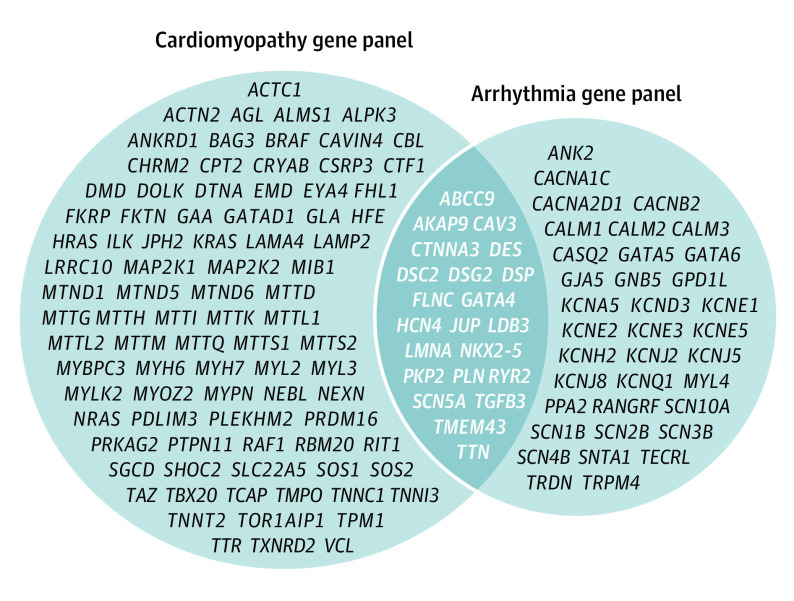
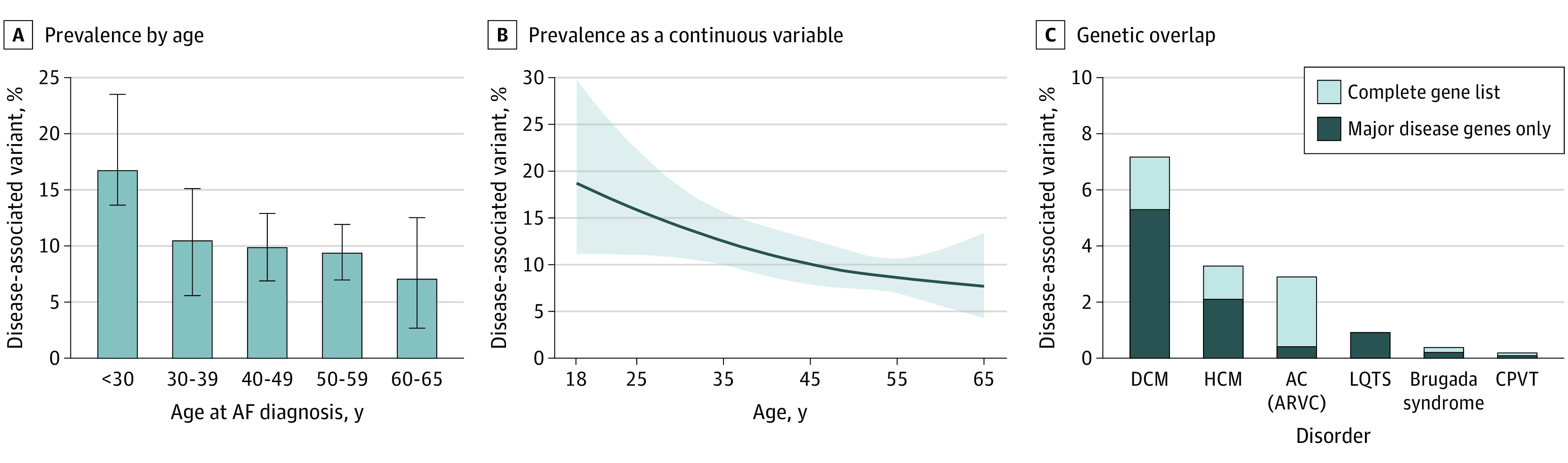
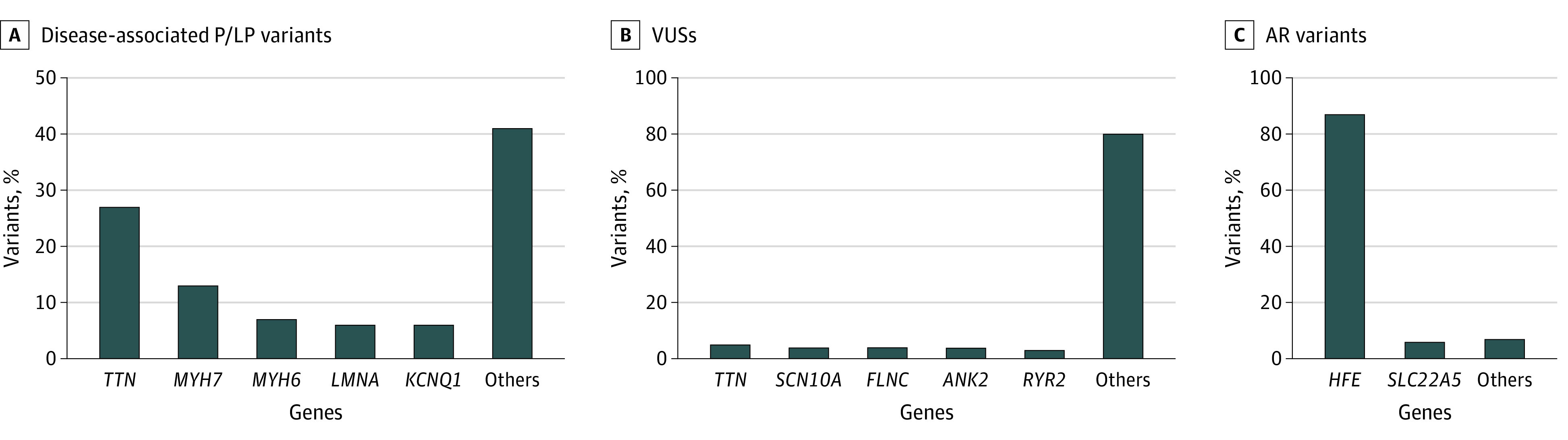
Importance: Early-onset atrial fibrillation (AF) can be the initial manifestation of a more serious underlying inherited cardiomyopathy or arrhythmia syndrome. Objective: To examine the results of genetic testing for early-onset AF. Design, Setting, and Participants: This prospective, observational cohort study enrolled participants from an academic medical center who had AF diagnosed before 66 years of age and underwent whole genome sequencing through the National Heart, Lung, and Blood Institute's Trans-Omics for Precision Medicine program. Participants were enrolled from November 23, 1999, to June 2, 2015. Data analysis was performed from October 24, 2020, to March 11, 2021. Exposures: Rare variants identified in a panel of 145 genes that are included on cardiomyopathy and arrhythmia panels used by commercial clinical genetic testing laboratories. Main Outcomes and Measures: Sequencing data were analyzed using an automated process followed by manual review by a panel of independent, blinded reviewers. The primary outcome was classification of rare variants using American College of Medical Genetics and Genomics criteria: benign, likely benign, variant of undetermined significance, likely pathogenic, or pathogenic. Disease-associated variants were defined as pathogenic/likely pathogenic variants in genes associated with autosomal dominant or X-linked dominant disorders. Results: Among 1293 participants (934 [72.2%] male; median [interquartile range] age at enrollment, 56 [48-61] years; median [interquartile range] age at AF diagnosis, 50 [41-56] years), genetic testing identified 131 participants (10.1%) with a disease-associated variant, 812 (62.8%) with a variant of undetermined significance, 92 (7.1%) as heterozygous carriers for an autosomal recessive disorder, and 258 (20.0%) with no suspicious variant. The likelihood of a disease-associated variant was highest in participants with AF diagnosed before the age of 30 years (20 of 119 [16.8%; 95% CI, 10.0%-23.6%]) and lowest after the age of 60 years (8 of 112 [7.1%; 95% CI, 2.4%-11.9%]). Disease-associated variants were more often associated with inherited cardiomyopathy syndromes compared with inherited arrhythmias. The most common genes were TTN (n = 38), MYH7 (n = 18), MYH6 (n = 10), LMNA (n = 9), and KCNQ1 (n = 8). Conclusions and Relevance: In this cohort study, genetic testing identified a disease-associated variant in 10% of patients with early-onset AF (the percentage was higher if diagnosed before the age of 30 years and lower if diagnosed after the age of 60 years). Most pathogenic/likely pathogenic variants are in genes associated with cardiomyopathy. These results support the use of genetic testing in early-onset AF.
Overview
The claims and statistics of this paper haven’t been checked yet.
Run the check — free, no account needed. It reads the open-access text and checks the sources it cites.
Integrity signals
Registry
Cites
Statistics
Figures

Verification
Claims the paper makes
The claims and statistics of this paper haven’t been checked yet.
Run the check — free, no account needed. It reads the open-access text and checks the sources it cites.
Claims other papers make about this one
Each is checked against this paper’s own text: does it say what the citing paper says it does?
The source backs part of the claim, not all of it — or backs it for a different population, condition or comparison.
In the citing paper
“There is a strong association between AF and genes such as KCNA5, SCN5A and TTN, while genes like LMNA and KCNQ1 present a weaker association with AF [35,36,37,38].”
From Atrial Fibrillation in Elite Athletes: A Comprehensive Review of the Literature (2024) · cites this paper as [36]
Experimental — accuracy not yet measured
Self-check
Percentages, sums and reported differences re-computed from the paper’s own numbers.
The self-check needs the paper’s full text.
Citations
Cites
Richards, S., Aziz, N., Bale, S., Bick, D., Das, S., Gastier-Foster, J., Grody, W. W., Hegde, M., Lyon, E., Spector, E., et al. (2015) · Genetics in Medicine · doi:10.1038/gim.2015.30 · Cited by 32,594
2014 AHA/ACC/HRS Guideline for the Management of Patients With Atrial Fibrillation
January, C. T., Wann, L. S., Alpert, J. S., Calkins, H. G., Cigarroa, J. E., Cleveland, J. C., CONTI, J. B., Ellinor, P. T., Ezekowitz, M. D., Field, M. E., et al. (2014) · Circulation · doi:10.1161/cir.0000000000000041 · Cited by 7,145
Self-citationJanuary, C. T., Wann, L. S., Alpert, J. S., Calkins, H., Cigarroa, J. E., Cleveland, J. C., Conti, J. B., Ellinor, P. T., Ezekowitz, M. D., Field, M. E., et al. (2014) · Circulation · doi:10.1161/cir.0000000000000040 · Cited by 2,056
Self-citationPriori, S. G., Wilde, A. A., Horie, M., Cho, Y., Behr, E. R., Berul, C., Blom, N., Brugada, J., Chiang, C.-E., Huikuri, H., et al. (2013) · Heart Rhythm · doi:10.1016/j.hrthm.2013.05.014 · Cited by 1,942
ClinGen — The Clinical Genome Resource
Rehm, H. L., Berg, J. S., Brooks, L. D., Bustamante, C. D., Evans, J. P., Landrum, M. J., Ledbetter, D. H., Maglott, D. R., Martin, C. L., Nussbaum, R. L., et al. (2015) · New England Journal of Medicine · doi:10.1056/nejmsr1406261 · Cited by 1,496
Ackerman, M. J., Priori, S. G., Willems, S., Berul, C. I., Brugada, R., Calkins, H. G., Camm, A. J., Ellinor, P. T., Gollob, M. H., Hamilton, R. M., et al. (2011) · Heart Rhythm · doi:10.1016/j.hrthm.2011.05.020 · Cited by 1,472
Self-citationPriori, S. G., Napolitano, C., Tiso, N., Memmi, M., Vignati, G., Bloise, R., Sorrentino, V., & Danieli, G. A. (2001) · Circulation · doi:10.1161/01.cir.103.2.196 · Cited by 1,378
Fatkin, D., MacRae, C. A., Sasaki, T., Wolff, M. R., Porcu, M., Frenneaux, M. P., Atherton, J. J., Vidaillet, H. J., Jr., Spudich, S., Girolami, U. D., et al. (1999) · New England Journal of Medicine · doi:10.1056/nejm199912023412302 · Cited by 1,366
Priori, S. G., Napolitano, C., Memmi, M., Colombi, B., Drago, F., Gasparini, M., DeSimone, L., Coltorti, F., Bloise, R., Keegan, R., et al. (2002) · Circulation · doi:10.1161/01.cir.0000020013.73106.d8 · Cited by 1,163
Dong, C., Wei, P., Jian, X., Gibbs, R. A., Boerwinkle, E., Wang, K., & Liu, X. (2014) · Human Molecular Genetics · doi:10.1093/hmg/ddu733 · Cited by 1,151
Cited by
Sorted by citations
Heart Disease and Stroke Statistics—2023 Update: A Report From the American Heart Association
Tsao, C. W., Aday, A. W., Almarzooq, Z. I., Anderson, C. A. M., Arora, P., Avery, C. L., Baker-Smith, C. M., Beaton, A. Z., Boehme, A. K., Buxton, A. E., et al. (2023) · Circulation · doi:10.1161/cir.0000000000001123 · Cited by 8,300
Joglar, J. A., Chung, M. K., Armbruster, A. L., Benjamin, E. J., Chyou, J. Y., Cronin, E. M., Deswal, A. M., Eckhardt, L. L., Goldberger, Z. D., Gopinathannair, R., et al. (2023) · Circulation · doi:10.1161/cir.0000000000001193 · Cited by 3,145
Martin, S. S., Aday, A. W., Almarzooq, Z. I., Anderson, C. A. M., Arora, P., Avery, C. L., Baker-Smith, C. M., Barone Gibbs, B., Beaton, A. Z., Boehme, A. K., et al. (2024) · Circulation · doi:10.1161/cir.0000000000001209 · Cited by 2,800
Martin, S. S., Aday, A. W., Allen, N. B., Almarzooq, Z., Anderson, C. A. M., Arora, P. K., Avery, C. L., Baker-Smith, C. M., Bansal, N., Beaton, A., et al. (2025) · Circulation · doi:10.1161/cir.0000000000001303 · Cited by 1,284
2023 ACC/AHA/ACCP/HRS Guideline for the Diagnosis and Management of Atrial Fibrillation
Joglar, J. A., Chung, M. K., Armbruster, A. L., Benjamin, E. J., Chyou, J. Y., Cronin, E. M., Deswal, A., Eckhardt, L. L., Goldberger, Z. D., Gopinathannair, R., et al. (2024) · Journal of the American College of Cardiology · doi:10.1016/j.jacc.2023.08.017 · Cited by 933
Metadata
- Authors
- Yoneda, Z. T., Anderson, K. C., Quintana, J. A., O’Neill, M. J., Sims, R. A., Glazer, A. M., Shaffer, C. M., Crawford, D. M., Stricker, T., Ye, F., Wells, Q., Stevenson, L. W., Michaud, G. F., Darbar, D., Lubitz, S. A., Ellinor, P. T., Roden, D. M., & Shoemaker, M. B.
- Affiliations
- Vanderbilt University Medical Center (US)
- Vanderbilt University (US)
- University of Illinois Chicago (US)
- Broad Institute (US)
- Corresponding author
- Shoemaker, M. Benjamin
- ORCID
- Venue
- JAMA Cardiology
- Publisher
- American Medical Association (AMA)
- Published
- 2021-12-01
- Volume
- 6
- Issue
- 12
- Pages
- 1371
- ISSN
- 2380-6583 (ISSN-L)
- PMC
- PMC8427496
- OpenAlex
- W3196904047
- Cited by
- 192
- References
- 51
- Citations by year
- 2026: 46 · 2025: 42 · 2024: 43 · 2023: 32 · 2022: 28 · 2021: 1
- FWCI
- 17.43
- Type
- journal article
- Language
- en
- Open access
- hybrid
- doi.org
- Licence
- cc-by
- Locations
- JAMA Cardiology (publishedVersion, cc-by)
- PubMed Central (publishedVersion, cc-by)
- PubMed (publishedVersion)
- Funders
- American Heart Association (18SFRN34110082)
- National Institutes of Health (UL1TR002243)
- National Heart, Lung, and Blood Institute (R01HL140074, K24HL105780, R01HL155197)
- National Human Genome Research Institute (K99HG010904)
- National Institute of General Medical Sciences (T32GM007347, T32GM152284)
- National Center for Advancing Translational Sciences
- Topics
- Health Sciences › Medicine › Cardiology and Cardiovascular Medicine › Cardiac electrophysiology and arrhythmias
- Health Sciences › Medicine › Cardiology and Cardiovascular Medicine › Atrial Fibrillation Management and Outcomes
- Life Sciences › Biochemistry, Genetics and Molecular Biology › Genetics › Genomics and Rare Diseases
- Keywords
- early-onset atrial fibrillation, rare variants, familial cardiomyopathy, inherited arrhythmia, genetic testing, variant interpretation, autosomal recessive disorder, whole genome sequencing, pathogenic variants, genetic counseling
- MeSH terms
- Whole Genome Sequencing, Adult, Aged, Atrial Fibrillation, Female, Follow-Up Studies, Humans, Male, Middle Aged, Cardiomyopathies, Prospective Studies, Registries, United States, Prevalence, Precision Medicine
About these checks
Registry, retraction, Cites and statistics results are computed, not judged, with one exception: a printed reference that no index lists is read once by a model before it counts as a citation error. Claims are extracted by a model and kept only when their quote appears verbatim in the text; each cited source is then checked, with a model’s help, for whether it says what the claim relies on. Those verdicts can be wrong — read the claim’s quote and the cited source before relying on one.
Statistics and arithmetic are recomputed, not judged.
Confidence bands are shown only for fields calibrated on our annotated test set. None is calibrated yet, so no band is shown.
What counts as a claim ›How we measure confidence ›How we check this ›
Are you an author, or do you see a problem with this page? Request a review
