

The DOI matches its Crossref record; 8 of the 8 references it cites were found in a registry or an index.
Trends in ransomware attacks on US hospitals, clinics, and other health care delivery organizations, 2016-2021.
Open accessAbstract
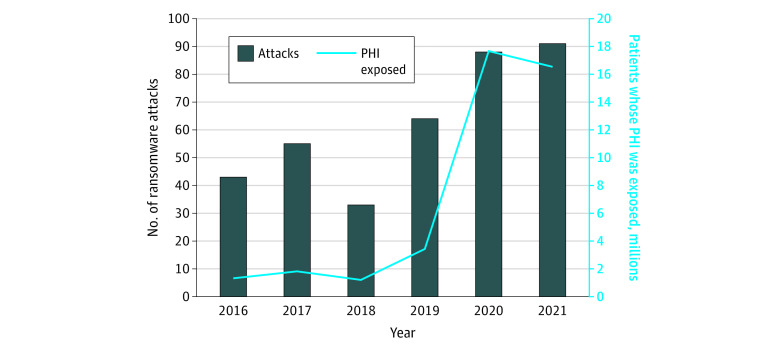
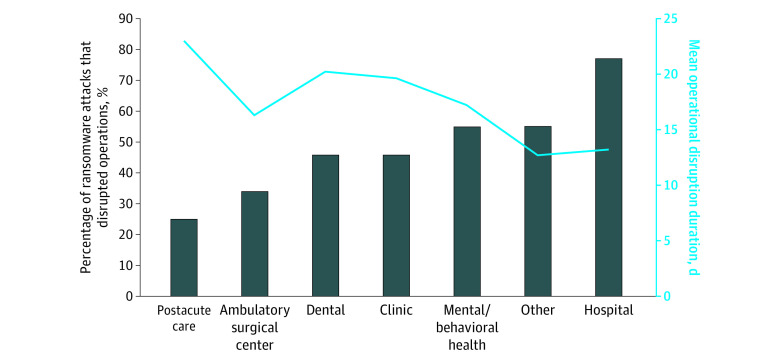
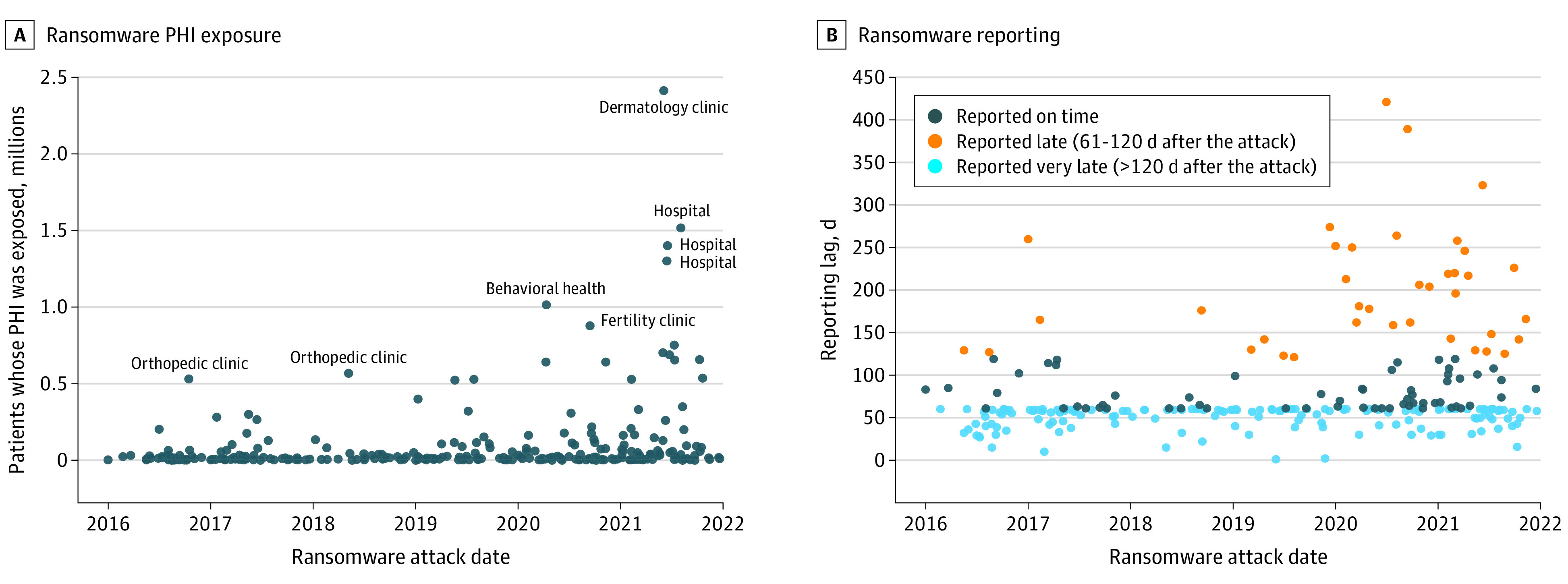
Importance: Anecdotal evidence suggests that health care delivery organizations face a growing threat from ransomware attacks that are designed to disrupt care delivery and may consequently threaten patient outcomes. Objective: To quantify the frequency and characteristics of ransomware attacks on health care delivery organizations. Design, Setting, and Participants: This cohort study used data from the Tracking Healthcare Ransomware Events and Traits database to examine the number and characteristics of ransomware attacks on health care delivery organizations from 2016 to 2021. Logistic and negative binomial regression quantified changes over time in the characteristics of ransomware attacks that affected health care delivery organizations. Main Outcomes and Measures: Date of ransomware attack, public reporting of ransomware attacks, personal health information (PHI) exposure, status of encrypted/stolen data following the attack, type of health care delivery organization affected, and operational disruption during the ransomware attack. Results: From January 2016 to December 2021, 374 ransomware attacks on US health care delivery organizations exposed the PHI of nearly 42 million patients. From 2016 to 2021, the annual number of ransomware attacks more than doubled from 43 to 91. Almost half (166 [44.4%]) of ransomware attacks disrupted the delivery of health care, with common disruptions including electronic system downtime (156 [41.7%]), cancellations of scheduled care (38 [10.2%]), and ambulance diversion (16 [4.3%]). From 2016 to 2021, ransomware attacks on health care delivery organizations increasingly affected large organizations with multiple facilities (annual marginal effect [ME], 0.08; 95% CI, 0.05-0.10; P < .001), exposed the PHI of more patients (ME, 66 385.8; 95% CI, 3400.5-129 371.2; P = .04), were less likely to be restored from data backups (ME, -0.04; 95% CI, -0.06 to -0.01; P = .002), were more likely to exceed mandatory reporting timelines (ME, 0.06; 95% CI, 0.03-0.08; P < .001), and increasingly were associated with delays or cancellations of scheduled care (ME, 0.02; 95% CI, 0-0.05; P = .02). Conclusions and Relevance: This cohort study of ransomware attacks documented growth in their frequency and sophistication. Ransomware attacks disrupt care delivery and jeopardize information integrity. Current monitoring/reporting efforts provide limited information and could be expanded to potentially yield a more complete view of how this growing form of cybercrime affects the delivery of health care.
Overview
The claims and statistics of this paper haven’t been checked yet.
Run the check — free, no account needed. It reads the open-access text and checks the sources it cites.
Integrity signals
Registry
Cites
Statistics
Figures
Verification
Claims the paper makes
The claims and statistics of this paper haven’t been checked yet.
Run the check — free, no account needed. It reads the open-access text and checks the sources it cites.
Claims other papers make about this one
Each is checked against this paper’s own text: does it say what the citing paper says it does?
The source backs part of the claim, not all of it — or backs it for a different population, condition or comparison.
In the citing paper
“Ransomware cyberattacks on healthcare delivery organizations (HDOs) are increasing in frequency and sophistication (1).”
From Ransomware Cyberattack Associated With Cardiac Arrest Incidence and Outcomes at Untargeted, Adjacent Hospitals (2024) · cites this paper as [1]
Experimental — accuracy not yet measured
Self-check
Percentages, sums and reported differences re-computed from the paper’s own numbers.
The self-check needs the paper’s full text.
Citations
Cites
Assessment of Employee Susceptibility to Phishing Attacks at US Health Care Institutions
Gordon, W. J., Wright, A. T., Aiyagari, R. M., Corbo, L., Glynn, R. J., Kadakia, J., Kufahl, J., Mazzone, C., Noga, J., Parkulo, M. A., et al. (2019) · JAMA Network Open · doi:10.1001/jamanetworkopen.2019.0393 · Cited by 81
Temporal trends and characteristics of reportable health data breaches, 2010-2017
McCoy, T. H., & Perlis, R. H. (2018) · JAMA · doi:10.1001/jama.2018.9222 · Cited by 62
Health Information Technology for Economic and Clinical Health Act
(2011) · NASN School Nurse · doi:10.1177/1942602x10390377 · Cited by 52
Hospital risk of data breaches
Bai, G., Jiang, J. (., & Flasher, R. (2017) · JAMA Internal Medicine · doi:10.1001/jamainternmed.2017.0336 · Cited by 51
Data breach locations, types, and associated characteristics among US hospitals.
Gabriel, M. H., Noblin, A. M., Rutherford, A. E., Walden, A., & Cortelyou-Ward, K. H. (2018) · PubMed · Cited by 45
Types of Information Compromised in Breaches of Protected Health Information
Jiang, J. (., & Bai, G. (2020) · Annals of Internal Medicine · doi:10.7326/m19-1759 · Cited by 21
Your Money or Your Patient's Life? Ransomware and Electronic Health Records
Cohen, I. G., Hoffman, S., & Adashi, E. Y. (2017) · Annals of Internal Medicine · doi:10.7326/m17-1312 · Cited by 14
Beyond Security Patches—Fundamental Incentive Problems in Health Care Cybersecurity
Kanter, G. P., Kufahl, J., & Cohen, I. G. (2021) · JAMA Health Forum · doi:10.1001/jamahealthforum.2021.2969 · Cited by 4
Cited by
Sorted by citations
Ethical hacking for IoT: Security issues, challenges, solutions and recommendations
Yaacoub, J.-P. A., Noura, H., Salman, O., & Chehab, A. (2023) · Internet of Things and Cyber-Physical Systems · doi:10.1016/j.iotcps.2023.04.002 · Cited by 141
Ransomware attack associated with disruptions at adjacent emergency departments in the US.
Dameff, C., Tully, J., Chan, T. C., Castillo, E. M., Savage, S., Maysent, P., Hemmen, T. M., Clay, B. J., & Longhurst, C. A. (2023) · JAMA Network Open · doi:10.1001/jamanetworkopen.2023.12270 · Cited by 60
Clinicians’ Perspectives on Healthcare Cybersecurity and Cyber Threats
Alanazi, A. T. (2023) · Cureus · doi:10.7759/cureus.47026 · Cited by 55
“Furthermore, hospitals have experienced a 300% surge in attacks over the past three years [8].”
BackgroundRansomware Reloaded: Re-examining Its Trend, Research and Mitigation in the Era of Data Exfiltration
McIntosh, T. R., Sušnjak, T., Liu, T., Xu, D., Watters, P., Liu, D., Hao, Y., Ng, A., & Halgamuge, M. N. (2024) · ACM Computing Surveys · doi:10.1145/3691340 · Cited by 55
Emerging Digital Technologies in Healthcare with a Spotlight on Cybersecurity: A Narrative Review
Arafa, A., Sheerah, H. A., & Alsalamah, S. (2023) · Information · doi:10.3390/info14120640 · Cited by 57
“Ransomware can lead to significant disruptions in healthcare services, compromise patient care, and result in financial losses [77,78].”
BackgroundThériault-Lauzier, P., Corbin, D., Tastet, O., Langlais, É. L., Taji, B., Kang, G., Chong, A., So, D. Y. F., Tang, A., Gichoya, J. W., et al. (2024) · Canadian Journal of Cardiology · doi:10.1016/j.cjca.2024.05.025 · Cited by 42
Ransomware Attacks and Data Breaches in US Health Care Systems
Jiang, J. X., Ross, J. S., & Bai, G. (2025) · JAMA Network Open · doi:10.1001/jamanetworkopen.2025.10180 · Cited by 35
Cybersecurity: a critical priority for digital mental health
Inkster, B., Knibbs, C., & Bada, M. (2023) · Frontiers in Digital Health · doi:10.3389/fdgth.2023.1242264 · Cited by 33
Shah, C., Nachand, D., Wald, C., & Chen, P. (2023) · Journal of the American College of Radiology · doi:10.1016/j.jacr.2023.06.023 · Cited by 32
Bouma, D., Hoffmans, C. C. A., van den Hout, N. J., Zwarts, N., Jan Treur, A., & Roelofsma, P. H. M. P. (2024) · Lecture notes in networks and systems · doi:10.1007/978-3-031-75016-8_10 · Cited by 29
Patel, V., Saikali, S., Kavoussi, L. R., Leveillee, R. J., Albala, D. M., Parra‐Dávila, E., Rogers, T., Ozawa, Y., Sharma, R. S., Palmer, K. J., et al. (2025) · Journal of Robotic Surgery · doi:10.1007/s11701-025-02523-x · Cited by 27
Biomarkers in high grade serous ovarian cancer
Bates, M., Mohamed, B. M., Lewis, F., O’Toole, S. A., & O’Leary, J. J. (2024) · Biochimica et Biophysica Acta (BBA) - Reviews on Cancer · doi:10.1016/j.bbcan.2024.189224 · Cited by 24
Ikegwu, A. C., Alo, U. R., & Nweke, H. F. (2025) · Discover Computing · doi:10.1007/s10791-025-09686-z · Cited by 25
“Common forms of malware include spyware [100], which secretly gathers private data, and ransomware [14], which encrypts data and demands payment to unlock it.”
Consideration of Cybersecurity Risks in the Benefit-Risk Analysis of Medical Devices: Scoping Review
Freyer, O., Jahed, F., Ostermann, M., Rosenzweig, C., Werner, P., & Gilbert, S. (2024) · Journal of Medical Internet Research · doi:10.2196/65528 · Cited by 21
“The relevance of cybersecurity risks is underscored by a rising number of cyberattacks on health care infrastructure [9,14] while, at the same time, the US Food and Drug Administration (FDA) reports a substantial number of adverse events related to cybersecurity vulnerabilities [15] and has even…”
Federation Opacity and the Promise of Federated Learning in Healthcare
Hatherley, J. J., Søgaard, A., Ballantyne, A., & Pauwels, R. (2026) · The American Journal of Bioethics · doi:10.1080/15265161.2026.2637093 · Cited by 27
“Ransomware attacks, which are cyber-attacks that aim to extract ransom payments from healthcare organizations by locking them out of their own technical systems, more than doubled between 2016 and 2021 (Neprash et al. 2022).”
Lessons From the Change Healthcare Ransomware Attack
Kanter, G. P., Rekowski, J. R., & Kannarkat, J. T. (2024) · JAMA Health Forum · doi:10.1001/jamahealthforum.2024.2764 · Cited by 17
Cybersecurity challenges across sustainable development goals: A comprehensive review
Mohamed, N. N., & Abuobied, B. H. (2024) · Sustainable Engineering and Innovation · doi:10.37868/sei.v6i1.id207 · Cited by 20
“…integrity issues in healthcare and the need for research in this field was highlighted in [26] Ransomware Threats Hospitals and healthcare organizations are increasingly targeted by ransomware attacks [27], which disrupt critical medical services and compromise patient care until ransoms are paid.”
BackgroundDealing with digital paralysis: Surviving a cyberattack in a National Cancer center
Keogh, R. J., Harvey, H. M., Brady, C., Hassett, E., Costelloe, S. J., O’Sullivan, M. J., Twomey, ., O’Leary, M. J., Cahill, M. R., O’Riordan, A., et al. (2024) · Journal of Cancer Policy · doi:10.1016/j.jcpo.2023.100466 · Cited by 16
McGlave, C., Nikpay, S., Henning‐Smith, C., Rydberg, K., & Neprash, H. T. (2023) · Health Affairs Scholar · doi:10.1093/haschl/qxad037 · Cited by 18
“The THREAT database (described in greater detail and validated elsewhere 1 ) combines proprietary data provided by HackNotice (a cybersecurity threat intelligence company that helps businesses identify and respond to attacks) with data from the US Department of Health and Human Services (HHS)…”
MethodWhat happens to rural hospitals during a ransomware attack? Evidence from Medicare data
Neprash, H. T., McGlave, C., Rydberg, K., & Henning‐Smith, C. (2024) · The Journal of Rural Health · doi:10.1111/jrh.12834 · Cited by 14
An Incremental Mutual Information-Selection Technique for Early Ransomware Detection
Gazzan, M., & Sheldon, F. T. (2024) · Information · doi:10.3390/info15040194 · Cited by 14
Artificial Intelligence in Healthcare and Medical Records Security
Herzog, N. J., Çelik, D., & Sulaiman, R. B. (2024) · Advanced sciences and technologies for security applications · doi:10.1007/978-3-031-52272-7_2 · Cited by 17
Ransomware Attacks, ED Visits and Inpatient Admissions in Targeted and Nearby Hospitals
Abouk, R., & Powell, D. (2024) · JAMA · doi:10.1001/jama.2024.7752 · Cited by 14
Ostermann, M., Mathias, R., Jahed, F., Parker, M., Hudson, F. D., Harding, W. C. B., Gilbert, S., & Freyer, O. (2025) · Computational and Structural Biotechnology Journal · doi:10.1016/j.csbj.2025.07.024 · Cited by 16
“Due to the widespread distribution of software in medical devices (MD) [1,2] and an increase in cyberattacks on critical healthcare infrastructure [3,4], cybersecurity has become a significant topic for manufacturers, users, and regulators of MDs.”
A recent review of ransomware attacks on healthcare industries
Kirubavathi, G., Anne, W. R., & Sridevi, U. K. (2024) · International Journal of Systems Assurance Engineering and Management · doi:10.1007/s13198-024-02496-4 · Cited by 13
“Healthcare is a prime target for cyber-crime because of its rich data and weak defenses (Slayton 2018; Thamer and Alubady 2021a; Minnaar and Herbig 2021; Neprash et al. 2022).”
Applying Moving Target Defense Against Data Theft Ransomware on Windows OSPreprint
Liu, S., & Chen, X. (2023) · Preprints.org · doi:10.20944/preprints202312.0948.v1 · Cited by 13
Pham, T. T., Loo, T. M., Malhotra, A., Longhurst, C. A., Hylton, D., Dameff, C., Tully, J., Wardi, G., Sell, R. E., & Pearce, A. K. (2024) · Critical Care Explorations · doi:10.1097/cce.0000000000001079 · Cited by 14
Resilienz gegen IT-Angriffe an Kliniken
Pfenninger, E. G., Schmidt, S. A., Rohland, C., Peters, S., McNutt, D., Kaisers, U. X., & Königsdorfer, M. (2023) · Die Anaesthesiologie · doi:10.1007/s00101-023-01331-y · Cited by 12
Patient Care Technology Disruptions Associated With the CrowdStrike Outage
Tully, J. L., Rao, S., Straw, I., Gabriel, R. A., Longhurst, C., Savage, S., Voelker, G. M., & Dameff, C. J. (2025) · JAMA Network Open · doi:10.1001/jamanetworkopen.2025.30226 · Cited by 12
Medical laboratory data-based models: opportunities, obstacles, and solutions
Meng, J., Wu, M., Shi, F., Xie, Y., Wang, H., & Guo, Y. (2025) · Journal of Translational Medicine · doi:10.1186/s12967-025-06802-x · Cited by 12
“Between 2016 and 2021, there were 374 attack incidents affecting nearly 42 million patients’ personal health information, with a focus on large healthcare organizations [141].”
Cyberattacks on Canadian health information systems
Harish, V., Ackery, A., Grant, K. L., Jamieson, T., & Mehta, S. (2023) · Canadian Medical Association Journal · doi:10.1503/cmaj.230436 · Cited by 10
“15 Although effective cyber-hygiene (i.e., daily routines, good behaviours and occasional check-ups akin to principles in health) strategies for end-users are essentially universal across organizations, sectors and juris-dictions, cybersecurity policy in Canadian health information systems has…”
BackgroundCybersecurity Lessons From the Change Healthcare Attack
Neprash, H. T., Dameff, C. J., & Tully, J. L. (2024) · JAMA Internal Medicine · doi:10.1001/jamainternmed.2024.3162 · Cited by 10
MIRAD: A Method for Interpretable Ransomware Attack Detection
Marcinkowski, B., Goschorska, M., Wileńska, N., Siuta, J., & Kajdanowicz, T. J. (2024) · IEEE Access · doi:10.1109/access.2024.3461322 · Cited by 10
“From January 2016 to December 2021, among 374 investigated ransomware attacks on the US healthcare system, 10.2% caused cancellations of scheduled care, and, terrifyingly, 4.3% led to ambulance diversion [6].”
BackgroundInfluentialVariation, Overlap, and Stability in Defining Safety Net Hospitals
Chatterjee, P., Liao, J. M., Amagai, K., Zhao, Y., Shirk, T., & Navathe, A. S. (2025) · JAMA Network Open · doi:10.1001/jamanetworkopen.2025.23923 · Cited by 9
Bluetooth security analysis of general and intimate health IoT devices and apps: the case of FemTech
Cook, S., Mehrnezhad, M., & Toreini, E. (2024) · International Journal of Information Security · doi:10.1007/s10207-024-00883-3 · Cited by 9
“Forinstance,thisdataishighlyvaluabletocyber-criminals [29]; individuals who target and exploit a victim to steal or profit off the victim’s personal information.”
Hasegawa, K., O’Brien, N., Prendergast, M., Ajah, C. A., Neves, A. L., & Ghafur, S. (2024) · Journal of Medical Internet Research · doi:10.2196/47311 · Cited by 7
“Health care organizations globally have seen a significant increase in the frequency of cyberattacks in recent years as technology plays more of a central role in the delivery of care [6,7].”
How public involvement can improve the science of AI
Matias, J. N., & Price, M. (2025) · Proceedings of the National Academy of Sciences · doi:10.1073/pnas.2421111122 · Cited by 13
Mori, R., Okawa, M., Tokumaru, Y., Niwa, Y., Matsuhashi, N., & Futamura, M. (2024) · World Journal of Surgical Oncology · doi:10.1186/s12957-023-03286-1 · Cited by 8
“Moreover, some AI diagnosis services require Internet access from hospital networks, which exposes hospital information systems (HISs) to malware threats (e.g., computer viruses or ransomware) [12].”
BackgroundGranda, C. M. M., Fernández‐Alemán, J. L., de Gea, J. M. C., & García‐Berná, J. A. (2024) · International Journal of Medical Informatics · doi:10.1016/j.ijmedinf.2024.105699 · Cited by 7
Wijayanti, D., Ujianto, E. I. H., & Rianto, R. (2024) · Jurnal Ilmiah Teknik Elektro Komputer dan Informatika · doi:10.26555/jiteki.v10i1.28192 · Cited by 9
Conquistando el futuro en farmacia hospitalaria: la formación como pilar del éxito
Cordero-Cruz, A. M., de Gamarra-Martínez, E. F., Florencio, M. B., González-Haba, E., Marcos, J. A., García, T. M., Navarro‐Ruiz, A., Pourcq, J. T. D., de la Fuente, J. S., & Soy, D. (2024) · Farmacia Hospitalaria · doi:10.1016/j.farma.2024.05.012 · Cited by 6
[Translated article] Conquering the future in hospital pharmacy: Training as a pillar of success
Cordero-Cruz, A. M., de Gamarra-Martínez, E. F., Florencio, M., González-Haba, E., Marcos, J. A., García, T. M., Navarro‐Ruiz, A., Pourcq, J. T. D., de la Fuente, J. S., & Soy, D. (2024) · Farmacia Hospitalaria · doi:10.1016/j.farma.2024.06.009 · Cited by 5
McCoy, E. (2025) · Health Economics and Management Review · doi:10.61093/hem.2025.2-04 · Cited by 5
Safeguarding the healthcare sector from ransomware attacks: insights from a literature review
Shahzadi, A., Ishaq, K., Dogar, A. B., Khan, J. A., Mylonas, A., Nawaz, N. A. H., Yasin, A., & Khan, F. A. (2025) · PeerJ Computer Science · doi:10.7717/peerj-cs.3073 · Cited by 6
Raoof, M. M. (2024) · Journal of Information Security · doi:10.4236/jis.2024.152014 · Cited by 4
Whitaker, J., & Thekdi, S. (2024) · Risk Analysis · doi:10.1111/risa.17644 · Cited by 4
“For example, an IS disruption for a healthcare organization can have physical safety implications for patients (Neprash et al., 2022).”
Kim, Y., & Dán, G. (2025) · IEEE Transactions on Dependable and Secure Computing · doi:10.1109/tdsc.2025.3592127 · Cited by 4
Balancing Innovation and Cybersecurity in Medical Schools and Their Related Academic Health Systems
Halaas, M., Pfeffer, M. A., & Roberts, L. W. (2023) · Academic Medicine · doi:10.1097/acm.0000000000005436 · Cited by 4
Ransomware Attacks in the Healthcare Industry
Kesarwani, A., & Gochhayat, S. P. (2023) · Journal of Student Research · doi:10.47611/jsrhs.v12i4.5799 · Cited by 4
Hacked to Pieces? The Effects of Ransomware Attacks on Hospitals and Patients
Neprash, H., McGlave, C., & Nikpay, S. (2026) · American Economic Journal: Economic Policy · doi:10.1257/pol.20240594 · Cited by 6
Chen, P., & Wald, C. (2025) · Journal of the American College of Radiology · doi:10.1016/j.jacr.2025.06.033 · Cited by 3
ESTRO framework for radiation oncology departments to mitigate against cyberattacks
Peters, S., O’Donovan, A., Bellini, M., Caissie, A. L., Coffey, M., Dabach, A., Delaney, G. P., Fischer, P. E., Frenken, G., Liszewski, B., et al. (2025) · Radiotherapy and Oncology · doi:10.1016/j.radonc.2025.111305 · Cited by 3
ERAD: Enhanced Ransomware Attack Defense System for Healthcare Organizations
Li, X., & Madisetti, V. K. (2024) · Journal of Software Engineering and Applications · doi:10.4236/jsea.2024.175016 · Cited by 3
VanGeest, J. B., Johnson, T. P., & Kapousouz, E. (2024) · Evaluation & the Health Professions · doi:10.1177/01632787241295794 · Cited by 3
“The internet is often perceived as place characterized by cyber predators, phishing scams, and malware attacks for which clinicians and clinician of fi ces are at notable and increasing risk due to markets for patient health data and account information (Neprash et al., 2022).”
van den Hout, N. J., Bouma, D., Hoffmans, C. C. A., Zwarts, N., Jan Treur, A., & Roelofsma, P. H. M. P. (2024) · Studies in systems, decision and control · doi:10.1007/978-3-031-72075-8_12 · Cited by 3
Safeguarding Healthcare: A Comprehensive Threat Analysis of Clinical Decision Support Systems
Hamel, A. U. C., Zarcu, B.-C., Csenteri, A.-G., Pfliegler, T., Khan, S., & Svetinović, D. (2023) · IEEE Intl Conf on Dependable, Autonomic and Secure Computing, Intl Conf on Pervasive Intelligence and Computing, Intl Conf on Cloud and Big Data Computing, Intl Conf on Cyber Science and Technology Congress (DASC/PiCom/CBDCom/CyberSciTech) · doi:10.1109/dasc/picom/cbdcom/cy59711.2023.10361509 · Cited by 3
“By disrupting the service of medical systems, attackers can demand ransom from hospitals that are temporarily unable to provide medical care to their patients [31].”
BackgroundMethodInfluentialCornejo, G. M. (2025) · Security Journal · doi:10.1057/s41284-025-00475-3 · Cited by 3
Data governance in radiology Part I: Overview of data management approaches to radiology
Chhor, C. M., Raichandani, S., du Preez, L., Brandser, N. R., Fotos, J. S., Jiwani, R. A., Li, D. S., Rajiah, P. S., Sin, J. M., & Nguyen, X. V. (2025) · Current Problems in Diagnostic Radiology · doi:10.1067/j.cpradiol.2025.06.004 · Cited by 3
Applying Markov Decision Processes to Evaluate Ransomware Data Theft RisksPreprint
Zhu, T., Li, X., & Zhang, W. (2023) · Research Square · doi:10.21203/rs.3.rs-3736872/v1 · Cited by 3
Design and Pilot Study of a High-Fidelity Medical Simulation of a Hospital-Wide Cybersecurity AttackPreprint
Marsh-Armstrong, B. P., Pacheco, F., Dameff, C. J., & Tully, J. L. (2024) · Research Square · doi:10.21203/rs.3.rs-3959502/v1 · Cited by 3
Digital Disasters: The Growing Threat of Healthcare Ransomware
Tully, J. L., Gabriel, R. A., Waterman, R. S., & Dameff, C. J. (2025) · Anesthesiology · doi:10.1097/aln.0000000000005442 · Cited by 2
A Novel Malware Detection Framework for Internet of Things Applications
Adil, M., Jamjoom, M. M., & Ullah, Z. (2025) · Computers, materials & continua/Computers, materials & continua (Print) · doi:10.32604/cmc.2025.066551 · Cited by 2
“Moreover, it has been reported that cybercriminals are now using more advanced techniques to quickly compromise the system’s security, with reduced average execution time from 60 days in to just 4 days in [5].”
Electronic health record market consolidation and implications for cybersecurity
Holmgren, A. J., Apathy, N. C., & Kanter, G. P. (2025) · Health Affairs Scholar · doi:10.1093/haschl/qxaf164 · Cited by 2
Cases, C., Latorre-Musoll, A., Candela‐Juan, C., Valduvieco, I., Antelo, G., Moreno-López, S., Herreros, A., Serrano-Rueda, S., Navarro‐Palomas, P., Sáez, J., et al. (2026) · International Journal of Radiation Oncology*Biology*Physics · doi:10.1016/j.ijrobp.2026.03.030 · Cited by 2
Defending Against Model Inversion Attacks for Biomedical Images via Learnable Data Perturbation
Jiang, S., Firouzi, F., & Chakrabarty, K. (2026) · IEEE Internet of Things Journal · doi:10.1109/jiot.2026.3693688 · Cited by 3
“It has been reported that there has been an upsurge in the incidents of data breaches and ransomware attacks on hospitals [7], [8].”
Privacy of Information and Data
Kavak, A. (2024) · Advances in information quality and management · doi:10.4018/979-8-3693-0472-3.ch009 · Cited by 2
Promoting the Resilience of Health Care Information Systems—The Day Hospitals Stood Still
Kramer, D. B., & Fu, K. E. (2024) · JAMA Health Forum · doi:10.1001/jamahealthforum.2024.3968 · Cited by 2
Meeting Abstracts from the 5th National Big Data Health Science Conference
Olatosi, B., Nixon, M., & Li, X. (2024) · BMC Proceedings · doi:10.1186/s12919-024-00292-3 · Cited by 3
Freyer, O., Jahed, F., Ostermann, M., Rosenzweig, C., Werner, P., & Gilbert, S. (2024) · Research Square · doi:10.21203/rs.3.rs-4816554/v1 · Cited by 2
Cornejo, G. M., Sakowski, J. A., Lee, J., & Parks, A. (2024) · Discover Health Systems · doi:10.1007/s44250-024-00105-6 · Cited by 1
“This finding is consistent with existing literature highlighting email as a frequent vector for security breach incidents [21–24].”
Mierzwa, S., & Christov, I. (2024) · Cybersecurity Pedagogy and Practice Journal · doi:10.62273/eufo3601 · Cited by 1
Avery, A., Baker, E. W., Wright, B., Avery, I., & Gomez, D. (2024) · Journal of Medical Internet Research · doi:10.2196/59231 · Cited by 1
“A ransomware attack can, therefore, have significantly negative consequences for patients, including disruption of patient care, which may consequently threaten patient outcomes [27].”
Ransomware strikes a large healthcare provider
Streck, P., & Meyer, M. H. (2025) · Journal of Information Technology Case and Application Research · doi:10.1080/15228053.2025.2477361 · Cited by 1
Confidentiality in the era of electronic health records: ethical challenges and solutions
Alhomidan, Z. S., Albaqami, N., Alshehri, A. A., Aldubaib, A. A., Alsuwailem, A., & Ghadam, K. F. A. (2025) · International Journal of Community Medicine and Public Health · doi:10.18203/2394-6040.ijcmph20250945 · Cited by 1
Ross, J. M. (2025) · Springer eBooks · doi:10.1007/978-3-031-85546-7_16 · Cited by 1
Predicting Ransomware Incidents with Time-Series Modeling
Roumani, Y., & Roumani, Y. F. (2025) · Journal of Cybersecurity and Privacy · doi:10.3390/jcp5030061 · Cited by 1
“In the healthcare and public health sector, however, the trend is rising, consistent with previous studies [1].”
Leveraging Large Language Models for Malware Detection Through PE Header and Library Analysis
Tane, M. M., Wijaya, N. D., & Hidayaturrahman, H. (2025) · Procedia Computer Science · doi:10.1016/j.procs.2025.09.046 · Cited by 2
A survey of cyber threat intelligence in embedded system driven security for mobile health systems
Ikegwu, A. C., Nnabue, J. C., Kinse, A. S., & Alo, U. R. (2025) · Journal of Cloud Computing Advances Systems and Applications · doi:10.1186/s13677-025-00811-3 · Cited by 1
Cornejo, G. M. (2025) · Health and Technology · doi:10.1007/s12553-025-01036-9 · Cited by 1
AI in patient care: A narrative review of safety promises and pitfalls
Shopijen, E. (2025) · International Journal of Nursing Sciences · doi:10.1016/j.ijnss.2025.12.003 · Cited by 1
Ensemble Learning Strategies for Anomaly-Based Intrusion Detection in IoMT Systems
Yacoubi, M., Moussaoui, O., & Drocourt, C. (2026) · Springer eBooks · doi:10.1007/978-3-032-08784-3_9 · Cited by 1
International Differences in Windows Remote Desktop Hacking: An Analysis of Honeypot Data
Dearden, T. E., & Bergeron, A. (2026) · Social Science Computer Review · doi:10.1177/08944393261416786 · Cited by 1
Khan, S. I., Rahman, M., Hossain, E., Rahman, M. S., Ashik, A. A. M., & Islam, S. (2026) · International Conference on Mobile Computing and Sustainable Informatics (ICMCSI) · doi:10.1109/icmcsi67283.2026.11412435 · Cited by 1
Privacy and Security Throughout the Health Data Life Cycle: From Primary Care to Research Networks
Malin, B., Yan, C., & Bonomi, L. (2026) · Annual Review of Biomedical Data Science · doi:10.1146/annurev-biodatasci-092724-031932 · Cited by 1
“Moreover, there is a growing sophistication in ransomware attacks that have been committed against healthcare organizations (10).”
The effect of a national healthcare cyberattack on the Irish hip fracture standards
McCarthy, C. J., Hickey, P., O’Daly, B., McGoldrick, N. P., & Quinlan, J. F. (2026) · The Surgeon · doi:10.1016/j.surge.2026.04.012 · Cited by 1
Chen, Y., & Wu, H. (2026) · Frontiers in Public Health · doi:10.3389/fpubh.2026.1819684 · Cited by 1
Wang, S. Q. G., Xue, Y., Wang, D., & Li, R. (2026) · International Journal of Human-Computer Interaction · doi:10.1080/10447318.2026.2668623 · Cited by 1
Choudhuri, B., Prakash, J., Pal, B., & Veenith, T. (2026) · Indian Journal of Critical Care Medicine · doi:10.5005/jp-journals-10071-25203 · Cited by 1
Straw, I., Kumar, D., Kweon, S., Selzer, J., Dameff, C. J., & Tully, J. L. (2026) · Journal of Medical Internet Research · doi:10.2196/88257 · Cited by 1
“The rise in health care cyberattacks has been described extensively in the literature, with Neprash et al [4] revealing that incidents more than doubled between 2016 and 2021.”
The Growing Impact and Reach of JAMA Health Forum
Ayanian, J. Z. (2023) · JAMA Health Forum · doi:10.1001/jamahealthforum.2023.3077 · Cited by 1
Bakiris, E., Papadakis, N., Katsarou, V., & Alampasis, N. (2024) · International Conference on PErvasive Technologies Related to Assistive Environments (PETRA) · doi:10.1145/3652037.3663888 · Cited by 1
Heath, M. L., Silvera, G. A., & Porter, T. H. (2025) · Health Care Management Review · doi:10.1097/hmr.0000000000000436 · Cited by 1
Tarka, M. C., Blankstein, M., & Schottel, P. C. (2023) · Injury · doi:10.1016/j.injury.2023.111013 · Cited by 1
Ciberseguridad, una prioridad de los servicios de farmacia en la era de la inteligencia artificial
Marín, C. M. H., Monte‐Boquet, E., & Andrés, J. L. P. (2024) · Farmacia Hospitalaria · doi:10.1016/j.farma.2024.08.001 · Cited by 1
Marín, C. M. H., Monte‐Boquet, E., & Andrés, J. L. P. (2024) · Farmacia Hospitalaria · doi:10.1016/j.farma.2024.08.009 · Cited by 1
(2023) · JAMA Health Forum · doi:10.1001/jamahealthforum.2023.0001
Procedural, Substantive, and By-Design Approach toward a Third Stage of Bioethics
Ribas, S. (2023) · IntechOpen eBooks · doi:10.5772/intechopen.1001984
A Comparative Assessment of Threat Identification Methods in EHR Systems
Holík, F., Yeng, P. K., & Fauzi, M. A. (2023) · International Conference on Sustainable Information Engineering and Technology (SIET) · doi:10.1145/3626641.3627493
Cyberattaques contre les systèmes d’information de santé au Canada
Harish, V., Ackery, A., Grant, K. L., Jamieson, T., & Mehta, S. (2024) · Canadian Medical Association Journal · doi:10.1503/cmaj.230436-f
“Il est difficile de faire une comparaison exhaustive des con séquences des attaques sur différents territoires, car de nom breuses cyberattaques contre les systèmes d’information de santé ne sont pas signalées 15 .”
BackgroundKüfner, J. J. K., Tahir, S., Bakhsh, S. T., Mohaisen, L., & Danso, S. (2024) · Lecture notes in networks and systems · doi:10.1007/978-981-97-3973-8_27
Metadata
- Authors
- Neprash, H. T., McGlave, C. C., Cross, D. A., Virnig, B. A., Puskarich, M. A., Huling, J. D., Rozenshtein, A. Z., & Nikpay, S. S.
- Affiliations
- University of Minnesota (US)
- University of Florida Health (US)
- Corresponding author
- Neprash, Hannah T.
- ORCID
- Venue
- JAMA Health Forum
- Publisher
- American Medical Association (AMA)
- Published
- 2022-12-29
- Volume
- 3
- Issue
- 12
- Pages
- e224873
- ISSN
- 2689-0186 (ISSN-L)
- PMC
- PMC9856685
- OpenAlex
- W4313325293
- Cited by
- 154
- References
- 8
- Citations by year
- 2026: 49 · 2025: 43 · 2024: 43 · 2023: 19
- FWCI
- 25.94
- Type
- journal article
- Language
- en
- Open access
- gold
- doi.org
- Licence
- cc-by
- Locations
- JAMA Health Forum (publishedVersion, cc-by)
- PubMed Central (publishedVersion, cc-by)
- PubMed (publishedVersion)
- Topics
- Health Sciences › Health Professions › Health Information Management › Thoreau and American Literature
- Physical Sciences › Computer Science › Information Systems › Information and Cyber Security
- Physical Sciences › Computer Science › Software › Advanced Malware Detection Techniques
- Keywords
- ransomware, health care delivery organization, hospitals, clinics, operational disruption, mandatory reporting, ransom negotiation, ransom payments, ambulance diversion, patient safety
- MeSH terms
- Delivery of Health Care, Health Facilities, Hospitals, Humans, Organizations, Cohort Studies
About these checks
Registry, retraction, Cites and statistics results are computed, not judged, with one exception: a printed reference that no index lists is read once by a model before it counts as a citation error. Claims are extracted by a model and kept only when their quote appears verbatim in the text; each cited source is then checked, with a model’s help, for whether it says what the claim relies on. Those verdicts can be wrong — read the claim’s quote and the cited source before relying on one.
Statistics and arithmetic are recomputed, not judged.
Confidence bands are shown only for fields calibrated on our annotated test set. None is calibrated yet, so no band is shown.
What counts as a claim ›How we measure confidence ›How we check this ›
Are you an author, or do you see a problem with this page? Request a review
