

The DOI matches its Crossref record; 28 of the 35 references it cites were found in a registry or an index.
Safety of GLP-1 Receptor Agonists and Other Second-Line Antidiabetics in Early Pregnancy
Open accessAbstract
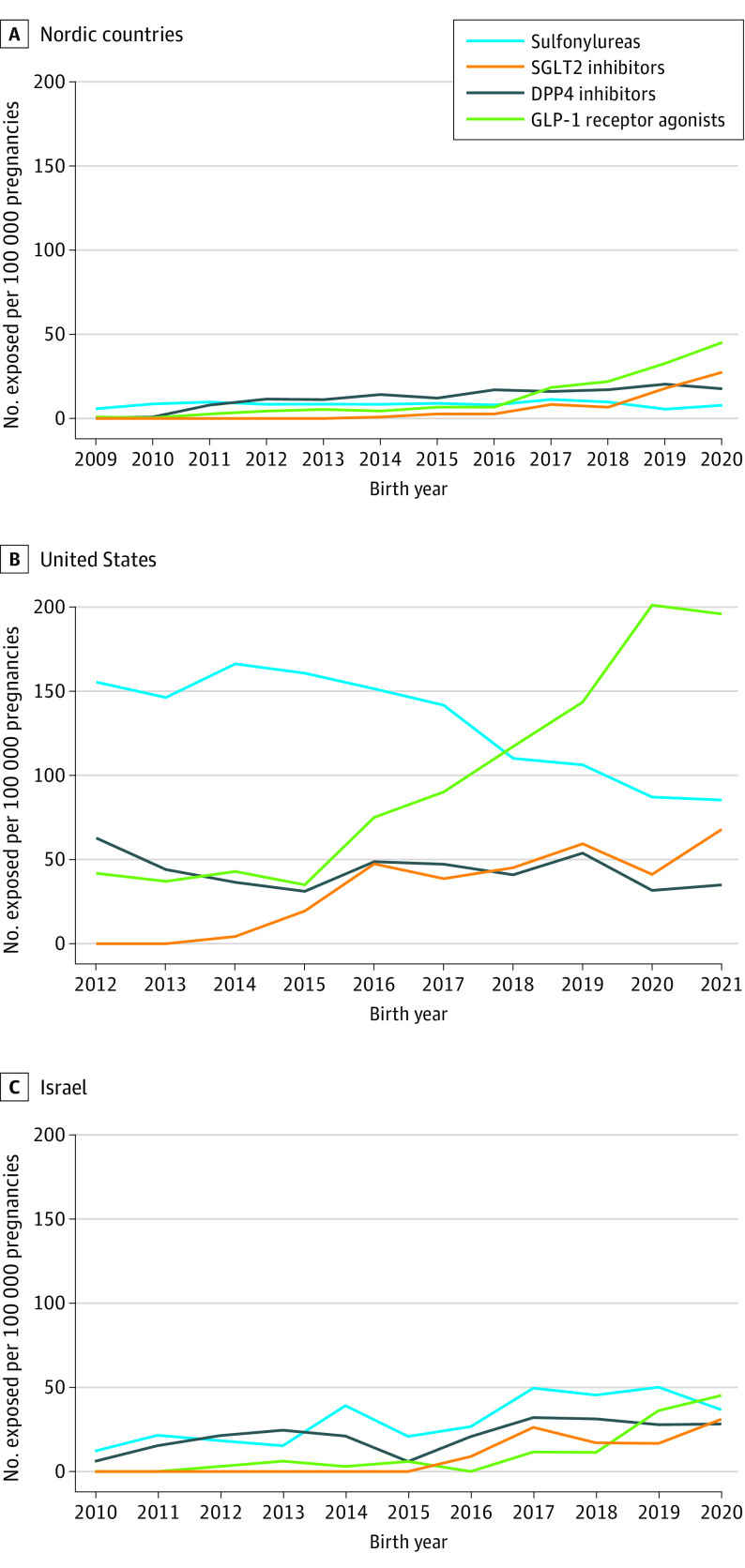
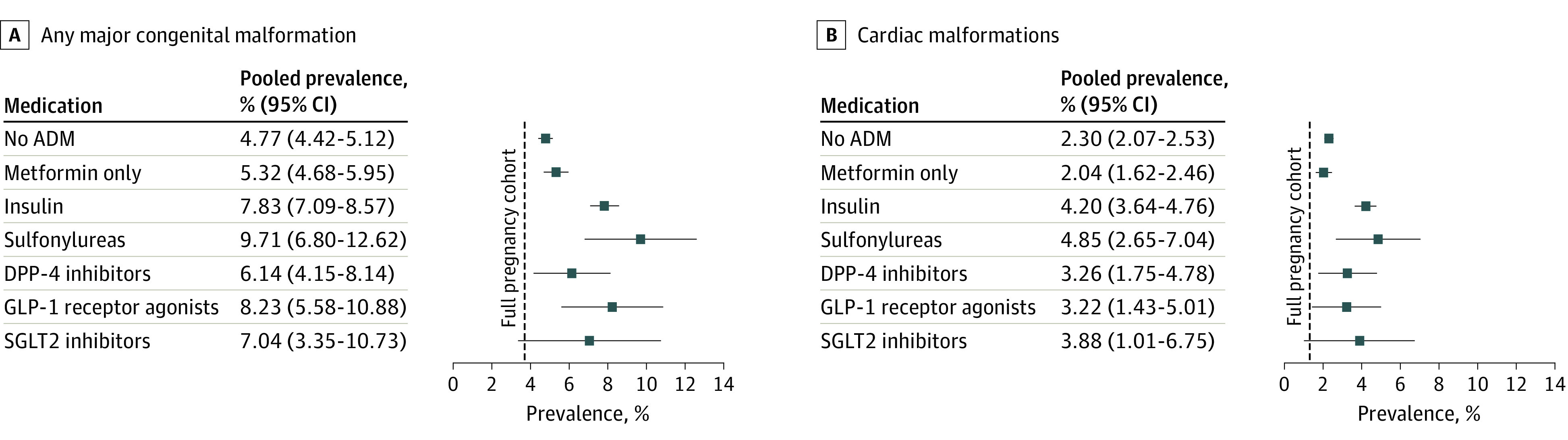
Importance: Increasing use of second-line noninsulin antidiabetic medication (ADM) in pregnant individuals with type 2 diabetes (T2D) may result in fetal exposure, but their teratogenic risk is unknown. Objective: To evaluate periconceptional use of second-line noninsulin ADMs and whether it is associated with increased risk of major congenital malformations (MCMs) in the infant. Design, Setting, and Participants: This observational population-based cohort study used data from 4 Nordic countries (2009-2020), the US MarketScan Database (2012-2021), and the Israeli Maccabi Health Services database (2009-2020). Pregnant women with T2D were identified and their live-born infants were followed until up to 1 year after birth. Exposure: Periconceptional exposure was defined as 1 or more prescription fill of sulfonylureas, dipeptidyl peptidase 4 (DPP-4) inhibitors, glucagon-like peptide 1 (GLP-1) receptor agonists, and sodium-glucose cotransporter 2 (SGLT2) inhibitors, or insulin (active comparator) from 90 days before pregnancy to end of first trimester. Main Outcomes and Measures: Relative risks (RRs) and 95% CIs for MCMs were estimated using log-binomial regression models, adjusting for key confounders in each cohort and meta-analyzed. Results: Periconceptional exposure to second-line noninsulin ADMs differed between countries (32, 295, and 73 per 100 000 pregnancies in the Nordics, US, and Israel, respectively), and increased over the study period, especially in the US. The standardized prevalence of MCMs was 3.7% in all infants (n = 3 514 865), 5.3% in the infants born to women with T2D (n = 51 826), and among infants exposed to sulfonylureas was 9.7% (n = 1362); DPP-4 inhibitors, 6.1% (n = 687); GLP-1 receptor agonists, 8.3% (n = 938); SGLT2 inhibitors, 7.0% (n = 335); and insulin, 7.8% (n = 5078). Compared with insulin, adjusted RRs for MCMs were 1.18 (95% CI, 0.94-1.48), 0.83 (95% CI, 0.64-1.06), 0.95 (95% CI, 0.72-1.26), and 0.98 (95% CI, 0.65-1.46) for infants exposed to sulfonylureas, DPP-4 inhibitors, GLP-1 receptor agonists, and SGLT2 inhibitors, respectively. Conclusions and Relevance: Use of second-line noninsulin ADMs is rapidly increasing for treatment of T2D and other indications, resulting in an increasing number of exposed pregnancies. Although some estimates were imprecise, results did not indicate a large increased risk of MCMs above the risk conferred by maternal T2D requiring second-line treatment. Although reassuring, confirmation from other studies is needed, and continuous monitoring will provide more precise estimates as data accumulate.
Overview
The claims and statistics of this paper haven’t been checked yet.
Run the check — free, no account needed. It reads the open-access text and checks the sources it cites.
Integrity signals
Registry
Cites
Statistics
Figures
Verification
Claims the paper makes
The claims and statistics of this paper haven’t been checked yet.
Run the check — free, no account needed. It reads the open-access text and checks the sources it cites.
Claims other papers make about this one
Each is checked against this paper’s own text: does it say what the citing paper says it does?
The cited source says what the claim attributes to it.
In the citing paper
“These findings align with a recently published multinational population-based cohort study.”
The cited source says what the claim attributes to it.
In the citing paper
“Compared with insulin, there was no increased risk of major congenital malformations (adjusted relative risk 0.95, 95% CI, 0.72 to 1.26) for infants exposed to GLP1-RA.”
The cited source says what the claim attributes to it.
In the citing paper
“In a multinational population-based cohort study involving 51,826 pregnant women diagnosed with type 2 diabetes and their infants, the standardised prevalence of major congenital malformations was 8.3% among infants with periconceptional exposure to GLP1-RA (n=938).12”
Self-check
Percentages, sums and reported differences re-computed from the paper’s own numbers.
The self-check needs the paper’s full text.
Citations
Cites
IDF Diabetes Atlas: Global estimates of diabetes prevalence for 2017 and projections for 2045
Cho, N. H., Shaw, J. E., Karuranga, S., Huang, Y., da Rocha Fernandes, J. D., Ohlrogge, A. W., & Malanda, B. (2018) · Diabetes Research and Clinical Practice · doi:10.1016/j.diabres.2018.02.023 · Cited by 7,283
Disparities in Rates of Unintended Pregnancy In the United States, 1994 and 2001
Finer, L. B., & Henshaw, S. K. (2006) · Perspectives on Sexual and Reproductive Health · doi:10.1363/3809006 · Cited by 1,557
Bearak, J., Popinchalk, A., Ganatra, B., Moller, A., Tunçalp, Ö., Beavin, C., Kwok, L., & Alkema, L. (2020) · The Lancet Global Health · doi:10.1016/s2214-109x(20)30315-6 · Cited by 1,341
9. Pharmacologic Approaches to Glycemic Treatment: Standards of Medical Care in Diabetes—2021
American Diabetes Association (2021) · Diabetes Care · doi:10.2337/dc21-s009 · Cited by 972
The Prevalence of Congenital Anomalies in Europe
Dolk, H. M., Loane, M. A., & Garne, E. (2010) · Advances in experimental medicine and biology · doi:10.1007/978-90-481-9485-8_20 · Cited by 718
Disparities in rates of unintended pregnancy in the United States, 1994 and 2001.
Finer, L. B., & Henshaw, S. K. (2006) · PubMed · doi:10.1363/psrh.38.090.06 · Cited by 585
Update on overall prevalence of major birth defects - Atlanta, Georgia, 1978-2005
(2008) · PsycEXTRA Dataset · doi:10.1037/e403792008-002 · Cited by 408
Deputy, N. P., Kim, S. Y., Conrey, E. J., & Bullard, K. M. (2018) · MMWR Morbidity and Mortality Weekly Report · doi:10.15585/mmwr.mm6743a2 · Cited by 354
Progress and challenges in anti-obesity pharmacotherapy
Bessesen, D. H., & Van Gaal, L. F. (2018) · The Lancet Diabetes & Endocrinology · doi:10.1016/s2213-8587(17)30236-x · Cited by 347
Ornoy, A., Reece, E. A., Pavlínková, G., Kappen, C., & Miller, R. K. (2015) · Birth Defects Research Part C Embryo Today Reviews · doi:10.1002/bdrc.21090 · Cited by 337
Research works printed but not linked: 1
- Kitzmiller, 2018, Diabetes in America. Bethesda (MD) no conflicts of interest
Cited by
Sorted by citations
Efficacy and Safety of GLP-1 Medicines for Type 2 Diabetes and Obesity
Drucker, D. J. (2024) · Diabetes Care · doi:10.2337/dci24-0003 · Cited by 383
Targeting the incretin system in obesity and type 2 diabetes mellitus
Ansari, S., Khoo, B. C. E., & Tan, T. (2024) · Nature Reviews Endocrinology · doi:10.1038/s41574-024-00979-9 · Cited by 110
“Moreover, observational data suggest that GLP1RA use in the preconceptional context is not associated with more congenital malformations relative to insulin treatment, although such observational data should be interpreted carefully because of the potential for bias 153 .”
Glucagon-like peptide-1 receptor agonist use in pregnancy: a review
Drummond, R. F., Seif, K. E., & Reece, E. A. (2024) · American Journal of Obstetrics and Gynecology · doi:10.1016/j.ajog.2024.08.024 · Cited by 102
GLP-1 and Its Analogs: Does Sex Matter?
Börchers, S., & Skibicka, K. P. (2024) · Endocrinology · doi:10.1210/endocr/bqae165 · Cited by 96
Gestational Weight Gain and Pregnancy Outcomes After GLP-1 Receptor Agonist Discontinuation
Maya, J., Pant, D. B., Fu, Y., James, K. E., Camero, C. B., Hsu, S. C., Soria‐Contreras, D. C., Shook, L. L., Mow, C., Hivert, M., et al. (2025) · JAMA · doi:10.1001/jama.2025.20951 · Cited by 75
Wyckoff, J., Lapolla, A., Asias-Dinh, B. D., Barbour, L. A., Brown, F. M., Catalano, P. M., Corcoy, R., Renzo, G. C. D., Drobycki, N., Kautzky‐Willer, A., et al. (2025) · The Journal of Clinical Endocrinology & Metabolism · doi:10.1210/clinem/dgaf288 · Cited by 57
“The only comparative study identified (115) was indirect evidence restricted to pregnancies resulting from live births and exposure to GLP-1RAs based on filled prescription history.”
Pregnancy outcomes in type 2 diabetes: a systematic review and meta-analysis
Clement, N. S., Abul, A., Farrelly, R., Murphy, H. R., Forbes, K. A., Simpson, N., & SCOTT, E. M. (2024) · American Journal of Obstetrics and Gynecology · doi:10.1016/j.ajog.2024.11.026 · Cited by 51
Managing early-onset type 2 diabetes in the individual and at the population level
Misra, S., Khunti, K., Goyal, A., Gable, D. R., Armocida, B., Tandon, N., Sachdev, P., Wild, S. H., Hivert, M., & Beran, D. (2025) · The Lancet · doi:10.1016/s0140-6736(25)01067-0 · Cited by 43
Epigenetic inheritance of PCOS by developmental programming and germline transmission
Stener‐Victorin, E., & Deng, Q. (2024) · Trends in Endocrinology and Metabolism · doi:10.1016/j.tem.2024.12.002 · Cited by 40
Duah, J., & Seifer, D. B. (2025) · Reproductive Biology and Endocrinology · doi:10.1186/s12958-024-01339-y · Cited by 46
Parker, C., Slattery, C., Brennan, D. J., & le Roux, C. W. (2025) · Diabetes Obesity and Metabolism · doi:10.1111/dom.16437 · Cited by 35
“35 However, the populations assessed in the Cesta study and in the pre-sent study had different comorbiditis.”
InfluentialPregnancy Outcomes After Semaglutide Exposure
Kolding, L., Henriksen, J. N., Sædder, E. A., Ovesen, P., & Pedersen, L. H. (2025) · Basic & Clinical Pharmacology & Toxicology · doi:10.1111/bcpt.70021 · Cited by 30
“A recent cohort study on the potential risk of malformations included GLP-1 receptor agonists but did not provide specific estimates for semaglutide [3].”
El-Solh, A., Gould, E., Aibangbee, K. E., Jimerson, T., & Hartling, R. (2024) · Expert Opinion on Pharmacotherapy · doi:10.1080/14656566.2024.2437525 · Cited by 31
“In terms of using these agents during pregnancy, the evidence so far does not suggest an increased risk of major congenital malformations above the risk conferred by maternal T2DM requiring insulin treat-ment [81].”
Implications of pregnancy on cardiometabolic disease risk: preeclampsia and gestational diabetes
Elgazzaz, M., Woodham, P. C., Maher, J. E., & Faulkner, J. (2024) · American Journal of Physiology-Cell Physiology · doi:10.1152/ajpcell.00293.2024 · Cited by 26
Price, S., & Nankervis, A. J. (2025) · Archives of Gynecology and Obstetrics · doi:10.1007/s00404-024-07849-9 · Cited by 27
“There is little data to describe what is driving the huge demand for GLP-1 RAs in women planning pregnancy [54, 76].”
InfluentialGLP-1 receptor agonist therapy and pregnancy: Evolving and emerging evidence
Varughese, M. S., O’Mahony, F., & Varadhan, L. (2025) · Clinical Medicine · doi:10.1016/j.clinme.2025.100298 · Cited by 29
“12”
Zhou, J., Wei, Z., Lai, W., Liu, M., & Wu, X. (2024) · British Journal of Clinical Pharmacology · doi:10.1111/bcp.16354 · Cited by 28
“16 Nevertheless, some studies suggest that pregnant women treated with GLP-1 RAs should consider the potential unknown risks of adverse pregnancy outcomes and increased weight regain.”
Dzhemileva, L. U., Захарова, Е. Н., Goncharenko, A. O., Vorontsova, M. V., Roumiantsev, S. A., Mokrysheva, N. G., Loguinova, M. Y., & Chekhonin, V. P. (2025) · Frontiers in Endocrinology · doi:10.3389/fendo.2024.1497298 · Cited by 24
Endocrine and metabolic effects of GLP-1 receptor agonists on women with PCOS, a narrative review
Monney, M., Mavromati, M., Leboulleux, S., & Gariani, K. (2025) · Endocrine Connections · doi:10.1530/ec-24-0529 · Cited by 26
“However, fi ndings from large patient registries involving women exposed to GLP-1 RAs in early pregnancy for the treatment of type 2 diabetes or overweight/obesity are reassuring, suggesting no signi fi cant increase in adverse outcomes (79).”
Pondugula, N., Culhane, J. F., Lundsberg, L. S., Partridge, C. M., & Merriam, A. A. (2025) · Obstetrics and Gynecology · doi:10.1097/aog.0000000000005995 · Cited by 20
Wyckoff, J., Lapolla, A., Asias-Dinh, B. D., Barbour, L. A., Brown, F. M., Catalano, P. M., Corcoy, R., Renzo, G. C. D., Drobycki, N., Kautzky‐Willer, A., et al. (2025) · European Journal of Endocrinology · doi:10.1093/ejendo/lvaf116 · Cited by 27
“The only comparative study identified 115 was indirect evidence restricted to pregnancies resulting from live births and exposure to GLP-1RAs based on filled prescription history.”
Özbek, L., Shah, E., Al-Shiab, R., İnal, A., Güldan, M., Afşar, B., Covic, A. C., & Kanbay, M. (2026) · Diabetes Obesity and Metabolism · doi:10.1111/dom.70699 · Cited by 16
“Some registry-based analyses suggest a possible increase in congenital anomalies with first-trimester GLP-1RA exposure, whereas others report malformation and neonatal outcome rates comparable to those observed in insulin-treated diabetic pregnancies [8, 9].”
Treating obesity and fertility in the era of glucagon-like peptide 1 receptor agonists
Goldberg, A. S., & Boots, C. E. (2024) · Fertility and Sterility · doi:10.1016/j.fertnstert.2024.05.154 · Cited by 15
What is the evidence regarding the safety of new obesity pharmacotherapies
Vidal, J., Flores, L., Jiménez, A., Pané, A., & de Hollanda, A. (2025) · International Journal of Obesity · doi:10.1038/s41366-024-01488-5 · Cited by 15
Thapaliya, K., Sweeting, A., Black, K. I., Poprzeczny, A. J., Mazza, D., & Grzeskowiak, L. E. (2025) · The Medical Journal of Australia · doi:10.5694/mja2.70026 · Cited by 16
“12 Supporting these reassuring findings is evidence that the placental transfer of GLP-receptor agonists is limited.”
Technology advances in diabetes pregnancy: right technology, right person, right time
McLean, A., Maple-Brown, L. J., & Murphy, H. R. (2024) · Diabetologia · doi:10.1007/s00125-024-06216-2 · Cited by 18
“…50,000 type 2 diabetes pregnancies across six countries (USA, Finland, Iceland, Norway, Sweden and Israel) found no strong evidence for increased rates of major congenital anomaly, or of cardiac malformations, associated with use of GLP-1 receptor agonists compared with insulin therapy [50].”
BackgroundStephansson, O., & Sandström, A. (2024) · Journal of Internal Medicine · doi:10.1111/joim.13823 · Cited by 20
“In sum-mary, the results did not indicate a large increased risk of major congenital malformations [123].”
Hoteit, B. H., Kotaich, J., Ftouni, H., Hazime, F., Safawi, A., Masri, R., & Marwani, M. (2025) · Therapeutic Advances in Endocrinology and Metabolism · doi:10.1177/20420188251383064 · Cited by 18
“100 Regarding contraception during GLP-1RAs therapy, OCPs stand as the most common way used among women of childbearing age.”
Prescribing Trends in Glucagon-Like Peptide-1 Medications Among Pregnant and Postpartum Persons
Lessard, C., Cary, C. B., In, A., Steinle, J., Lin, B. Y., Kablinger, A. S., Grucza, R. A., Bello, J. K., Galati, B. M., Kimmel, M., et al. (2026) · Obstetrics and Gynecology · doi:10.1097/aog.0000000000006161 · Cited by 13
Pregnancy outcomes following first trimester exposure to semaglutide
Morton, A., & He, J. (2025) · Obstetric Medicine · doi:10.1177/1753495x251346330 · Cited by 16
Armstrong, B. B. S., Servidoni, A. C. P., Martin, G. C. D. C., Machado, G. F., Amador, W. F. O., & Yousif, A. (2025) · Journal of Gynecology Obstetrics and Human Reproduction · doi:10.1016/j.jogoh.2025.103046 · Cited by 13
Chou, Y., Weng, S., Cheng, F., Tseng, C. H., Hu, H., & Liu, C. (2025) · Diabetes Obesity and Metabolism · doi:10.1111/dom.70334 · Cited by 12
“17 Similarly, a multicentre prospective cohort that compared 168 first-trimester GLP-1 RA exposures with two reference groups (women with diabetes treated with non-GLP-1 RA ADMs and overweight/obese women without diabetes) found no excess risk of pregnancy loss in the GLP-1 RA group relative to…”
Incretin receptor agonism during pregnancy: implications for mother and baby
Dearden, L., & Ozanne, S. E. (2025) · Clinical Science · doi:10.1042/cs20258493 · Cited by 12
“…reports of perinatal exposure to GLP1RAs found a rise from less than 50 cases per 100,000 pregnancies in 2012 to over 200 cases per 100,000 pregnancies in 2020 [15] and a separate study in the US state of Maine showed that perinatal exposure to GLP1RAs rose from 0.02% in 2017 to 0.29% in 2023 [16].”
InfluentialEffect of GLP1 Agonists on Reproduction
Couldwell, M., Tidwell, A. J., & Taylor, A. E. (2025) · The Journal of Clinical Endocrinology & Metabolism · doi:10.1210/clinem/dgaf401 · Cited by 14
Prepregnancy Care and Counseling
Cooper, K. M., Szymanski, L. M., David, P. S., Allen, S. V., & Breitkopf, D. M. (2026) · JAMA · doi:10.1001/jama.2026.2888 · Cited by 12
Current understanding and controversy on brain access of GLP-1 and GLP-1 receptor agonists
Feng, J., & Jin, T. (2025) · Journal of Translational Internal Medicine · doi:10.1515/jtim-2025-0026 · Cited by 14
Preconception use of GLP-1 and GLP-1/GIP receptor agonists for obesity treatment
Koceva, A., Janež, A., & Jensterle, M. (2025) · Best Practice & Research Clinical Endocrinology & Metabolism · doi:10.1016/j.beem.2025.102038 · Cited by 14
Impact of semaglutide exposure on fetal and neonatal outcomes in pregnant women: a systematic review
Mandal, L., Andersen, L. S., Luef, B. M., Tanvig, M. H., & Vinter, C. A. (2025) · European Journal of Obstetrics & Gynecology and Reproductive Biology · doi:10.1016/j.ejogrb.2025.114836 · Cited by 10
Hviid, K. V. R., Banasik, K., Mortensen, L. H., Madsbad, S., Strandberg‐Larsen, K., Geiker, N. R. W., Westergaard, D., & Nielsen, H. S. (2026) · Human Reproduction Open · doi:10.1093/hropen/hoag015 · Cited by 13
“In the first study by Cesta et al. , the risk in patients with pregesta-tional type 2 diabetes was examined, comparing the risk to patients treated with insulin during pregnancy (Cesta et al. , 2024).”
InfluentialChan, J. L., Masini, I., & Pisarska, M. D. (2026) · Journal of Clinical Investigation · doi:10.1172/jci202824 · Cited by 17
Use of dulaglutide in a pregnant woman with type 2 diabetes until third trimester of pregnancy
Molteni, M., Lodigiani, S., Teliti, M., Rotondi, M., & Guazzoni, V. (2024) · Acta Diabetologica · doi:10.1007/s00592-024-02331-z · Cited by 10
Alhomoud, I. S., Wheeler, S. E., & Dixon, D. L. (2025) · Canadian Journal of Physiology and Pharmacology · doi:10.1139/cjpp-2025-0038 · Cited by 11
Navigating Postpartum Weight Loss: Evidence and Interventions
Dellapiana, G., Nguyen, Q. T., & Naqvi, M. (2024) · Current Obstetrics and Gynecology Reports · doi:10.1007/s13669-024-00398-7 · Cited by 9
“Human data of peri-conception GLP-1 use has shown a 6% incidence of major congenital malformations in offspring [37].”
Glucagon-like peptide-1 receptor agonists during pregnancy and lactation
Zipursky, J. S., Bogler, T., & Maxwell, C. V. (2024) · Canadian Medical Association Journal · doi:10.1503/cmaj.240768 · Cited by 9
A Guide to the Management of Hidradenitis Suppurativa in Pregnancy and Lactation
Ghanshani, R., Lee, K., Crew, A. B., Shi, V. Y., & Hsiao, J. L. (2025) · American Journal of Clinical Dermatology · doi:10.1007/s40257-025-00935-x · Cited by 9
“…population-based cohort study investigating live births of pregnant women with type 2 diabetes found no statistically significant increased risk for major congenital malformations between exposure to GLP-1 agonist versus insulin (relative risk of 0.95, 95% confidence interval 0.72–1.26) [65].”
InfluentialExploring the multifaceted roles of GLP-1 receptor agonists; a comprehensive review
Hammad, B. F., Zafar, N., Ullah, M., Faisal, S. J., Iftikhar, F., Waheed, H., Muzaffar, M. W., Ahmed, K., Ashraf, F., Zahid, K., et al. (2025) · Frontiers in Clinical Diabetes and Healthcare · doi:10.3389/fcdhc.2025.1590530 · Cited by 13
“An identical study undertaken across 6 countries evaluated the tolerability of GLP-1 agonists in pregnant women and their effects on fetal outcomes (91).”
Moiz, A., Peters, T. M., Tsoukas, M. A., Yu, O. H. Y., Filion, K. B., & Eisenberg, M. J. (2026) · EClinicalMedicine · doi:10.1016/j.eclinm.2026.103991 · Cited by 11
“44 Because delayed gastric emptying may reduce the absorption of oral contraceptives, 45 clinicians should review contraceptive reliability and discuss non-oral options.”
Dao, K., Shechtman, S., Weber-Schoendorfer, C., Diav-Citrin, O., Murad, R. H., Berlin, M., Hazan, A., Richardson, J. L., Eleftheriou, G., Rousson, V., et al. (2024) · BMJ Open · doi:10.1136/bmjopen-2023-083550 · Cited by 110
Roberts, R. L., Markande, A., Kasaven, L. S., Chieveley-Williams, S., Faris, R., Bracewell‐Milnes, T., Thum, Y., Nicopoullos, J. D. M., & Jones, B. P. (2025) · Obesity Reviews · doi:10.1111/obr.70015 · Cited by 8
Rotem, R. S., Weisskopf, M. G., Bateman, B. T., Huybrechts, K. F., & Hernández–Dı́az, S. (2024) · Human Reproduction · doi:10.1093/humrep/deae233 · Cited by 7
Self-citationRole of Glucagon-Like Peptide-1 Receptor Agonists in People With Infertility and Pregnancy
Finkle, J., & Brost, B. C. (2025) · Obstetrics and Gynecology · doi:10.1097/aog.0000000000005825 · Cited by 7
“Cesta et al 46 conducted the largest study to date of GLP-1 RA – affected pregnancies with 51,826 pregnancies from three cohorts (Nordic countries, United States, and Israel) who had type 2 diabetes treated with antidiabetic medications.”
Obesity Epidemic and Its Impact on Female Fertility: Current Understanding and Future Directions
Malhotra, R., de Paredes, J. G., Smith, A. C., Chemerinski, A., Doshi, D., & Morelli, S. S. (2025) · Cureus · doi:10.7759/cureus.87283 · Cited by 14
“Early studies examining the use of GLP-1 RAs during pregnancy in humans have not indicated an increased risk of fetal abnormalities with first-trimester use of the medication [102-104].”
Alshehri, F. S. (2025) · Medicine · doi:10.1097/md.0000000000044917 · Cited by 8
“[26,27] This systematic review aimed to analyze clinical trial data regarding the efficacy and safety of GLP-1 in the management of GDM and to assess the current evidence on the safety and efficacy of GLP-1 receptor agonists as pharmacologic options for managing GDM, based on available clinical…”
Hakim, J., Rajesh, D., & Tello, J. A. (2026) · American Journal of Obstetrics and Gynecology · doi:10.1016/j.ajog.2026.04.037 · Cited by 7
Machado, M. F., Shunk, T., Hansen, G., Harvey, C., Fulford, B., Hauf, S., Schuh, O., Kaldas, M., Arcaroli, E., Ortiz, J. P., et al. (2024) · Cureus · doi:10.7759/cureus.66691 · Cited by 11
Contributions of white adipose tissue to energy requirements for female reproduction
Anaya, E. S., de Groot, E. L., Lydon, J. P., Pangas, S. A., & Hartig, S. M. (2024) · Trends in Endocrinology and Metabolism · doi:10.1016/j.tem.2024.04.012 · Cited by 7
Ahrens, K. A., Palmsten, K. K., Lipkind, H. S., & Ackerman‐Banks, C. M. (2025) · American Journal of Obstetrics & Gynecology MFM · doi:10.1016/j.ajogmf.2024.101596 · Cited by 6
Periconceptional Glucagon-Like Peptide-1 Receptor Agonist Use and Discontinuation
Khan, S. S., Grobman, W. A., & Kazi, D. S. (2025) · JAMA Cardiology · doi:10.1001/jamacardio.2025.0637 · Cited by 7
GLP-1-Mediated Pregnancy and Neonatal Complications in Mice
Ramamoorthy, R., Carden, A. K., Hussain, H., Druyan, B. Z., Chen, P. P., Hajjar, R., Fernandez, C., Elumalai, N., Rashed, A. B., Young, K., et al. (2025) · Journal of Developmental Biology · doi:10.3390/jdb13030029 · Cited by 6
Du, R., Wang, F., Li, L., & Wang, Q. (2025) · Obesity Reviews · doi:10.1111/obr.70048 · Cited by 9
“However, their long-term safety remains unclear and requires further investigation [158].”
Current treatment for diabetes: a holistic approach
Mourelatou, N. G., Kounatidis, D. C., Vallianou, N. G., Daniele, G., Dardano, A., & Rebelos, E. (2025) · HORMONES · doi:10.1007/s42000-025-00734-3 · Cited by 7
Schoenaker, D. A. J. M., Dyer, E., Heslehurst, N., Kent, G., Gunabalasingam, S., Hopkins, L., Kyrka, A., Lebrett, R., Flynn, A. C., White, S. L., et al. (2025) · Diabetic Medicine · doi:10.1111/dme.70183 · Cited by 8
“35,36 Feghali et al. reported significant associations between the use of glyburide and metformin vs. insulin with caesarean delivery (OR 0.44; 95% CI 0.24–0.80) and excessive GWG (OR 0.44; 95% CI 0.24–0.80).”
InfluentialGLP-1 Receptor Agonist Exposure During Pregnancy
Kodali, L. S. M., Metlock, F., Nriagu, B. N., Brazile, T. L., Kwapong, Y. A., Dastmalchi, L. N., Spitz, J. A., & Sharma, G. V. (2026) · JACC Advances · doi:10.1016/j.jacadv.2026.102649 · Cited by 6
Abedi, M. M., Patni, M. M., Shajahan, A. N. B., Dube, R., Khadeeja, L., Alabid, I., Kharoufeh, A., Kar, S. S., George, B. T., Bahutair, S. N., et al. (2026) · Journal of Clinical Medicine · doi:10.3390/jcm15093204 · Cited by 6
“The global burden of obesity and type 2 diabetes mellitus has increased substantially over recent decades, affecting a growing proportion of women of reproductive age [1–3].”
Garg, S. K., Aktürk, H. K., Garg, S., Beck, R. W., Bellini, N. J., Bjornstad, P., Carlson, A. L., Carroll, J., Close, K., Block, C., et al. (2026) · Diabetes Technology & Therapeutics · doi:10.1177/15209156261449879 · Cited by 7
“138 – 140 By lowering mean glucose and BMI, as well as increasing TIR in individuals with T1D, GLP-1 and GLP-1/GIP RAs may reduce both obesity-and diabetes-related adverse pregnancy outcomes.”
Sharma, G. V. (2024) · Circulation · doi:10.1161/circulationaha.124.070766 · Cited by 6
The Potential Role of Glucagon-Like Peptide-1 (GLP-1) Agonists for Polycystic Ovary Syndrome
Rahim, S., & Pergolizzi, J. V. (2025) · Cureus · doi:10.7759/cureus.77998 · Cited by 6
“However, no direct link associated with major birth defects and GLP-1 RAs was established in the study [28].”
Insulin Allergy: The Allergist’s Updated Approach to Evaluation and Management
Oh, J., Vasquez, E. C., Arango, S. A., Ramesh, M., & Castells, M. (2025) · The Journal of Allergy and Clinical Immunology In Practice · doi:10.1016/j.jaip.2025.02.028 · Cited by 6
Diabetes Mellitus in Pregnancy: Implications for Obstetric Anesthesia
Rogers, W. K., Chugaieva, I., Moheet, A. A., & Wernimont, S. A. (2025) · Obstetric Anesthesia Digest · doi:10.1097/01.aoa.0001192196.21020.41 · Cited by 6
Lewin, Z., Snow, S., Lee, J. A., & Wilkie, G. (2025) · American Journal of Perinatology · doi:10.1055/a-2716-1639 · Cited by 5
“13 Similarly, Hanif et al conducted a retrospective cohort study with 3,652 patients with T2DM divided by GLP-1 RA exposure.”
Kuitunen, I. (2024) · Acta Paediatrica · doi:10.1111/apa.17412 · Cited by 5
Impact of Reducing Obesity in PCOS: Methods and Treatment Outcomes
Dzienny, A. C., & Seifer, D. B. (2025) · Journal of Personalized Medicine · doi:10.3390/jpm15110518 · Cited by 6
“Currently, there are not sufficient human studies to ensure its safety of use in early pregnancy [33], although retrospective data on pregnancies conceived along with inadvertent early exposure to GLP-1 therapy have been reassuring [33,105].”
Guo, Y., Souza, S. C. S., Bruce, L., Luo, R., El‐Chaâr, D., Gaudet, L., Muldoon, K. A., Hawken, S., Dunn, S., White, R. R., et al. (2024) · Obesity · doi:10.1002/oby.24143 · Cited by 5
Advances in postpartum hypertension management: a review of current guidelines and interventions
McCoy, S. E., Hurwitz, M., Kwapong, Y. A., Bircan, E., Spitz, J. A., Dastmalchi, L. N., Metlock, F., Saad, A. F., Sarma, A. A., Khandelwal, A., et al. (2025) · npj Women s Health · doi:10.1038/s44294-025-00095-7 · Cited by 9
“…data available investigating GLP1 receptor agonist exposure in early pregnancy showed no increased risk of pregnancy loss 61 or fetal malformation 62 , which is reassuring when considering possible inadvertent exposures, but signi fi cantly more research is needed on the subject 59,60 .”
Obesity, insulin resistance and fertility: unresolved questions and emerging insights
Narula, K., Kenkre, J. S., Loh, W. J., & Tan, T. (2025) · Current Opinion in Endocrinology Diabetes and Obesity · doi:10.1097/med.0000000000000907 · Cited by 5
Lee, I. O., Ghiasi, M., Wong, K. K. Y., & Walker, M. C. (2025) · Journal of Obstetrics and Gynaecology Canada · doi:10.1016/j.jogc.2025.103191 · Cited by 3
Crider, K. S., Adisa, O., Pfeiffer, C. M., Wang, A., Zhou, Y., Yeung, L. F., Bullard, K. M., Qi, Y. P., Rose, C. E., Fazili, Z., et al. (2026) · American Journal of Clinical Nutrition · doi:10.1016/j.ajcnut.2026.101193 · Cited by 3
Dilbaz, B., & Ateş, Ç. (2026) · The European Journal of Contraception & Reproductive Health Care · doi:10.1080/13625187.2026.2644895 · Cited by 3
Gestational diabetes: from pathogenesis to therapeutic intervention
Zhang, X., Chi, Y., Zhang, Z., Wang, Y., Yi, F., Wang, P., Liu, Y., & Hao, W. (2026) · Diabetology & Metabolic Syndrome · doi:10.1186/s13098-026-02156-6 · Cited by 3
Banerjee, M., Dutta, S., & Dasgupta, S. (2026) · Diabetes Obesity and Metabolism · doi:10.1111/dom.70853 · Cited by 4
“An exploratory safety analysis was also conducted in the secondary ‘abrupt discontinuation’ cohort with regard to MCM because of a probability of exposure to these agents during the peri-implantation period or early pregnancy, consistent with the exposure window used in previous studies [9, 10].”
Lemas, D. J., Zapata, R., Loy, I., Mahadevan, A. D., Wen, T. S.-T., Mkuu, R. S., Louis‐Jacques, A. F., Hall, J., Harrall, K. K., Strath, L. J., et al. (2026) · Obesity · doi:10.1002/oby.70221 · Cited by 3
“Population-level analyses from Denmark and Israel have reported preconception GLP-1RA exposure and selected perinatal outcomes [5, 10].”
InfluentialBrown, J. P., Huybrechts, K. F., Straub, L., Patorno, E., Seely, E. W., Bateman, B. T., & Hernández–Dı́az, S. (2026) · Annals of Internal Medicine · doi:10.7326/annals-25-04820 · Cited by 3
Self-citationNofal, A. A., Benkhadra, K., Abbas, A. S., Nduwimana, M.-J., Al-Kordi, M., Allababidi, A. K., Wyckoff, J., Lapolla, A., Prokop, L. J., Wang, Z., et al. (2025) · The Journal of Clinical Endocrinology & Metabolism · doi:10.1210/clinem/dgaf289 · Cited by 3
Su, C., He, X., Chang, X., Tian, J., Wang, G., & Liu, J. (2025) · Diabetes & Metabolism Journal · doi:10.4093/dmj.2024.0521 · Cited by 2
“The results of positive controls found that the genetically predicted drug effects were consistent with clinical evidence and mechanisms, indicating the robustness of the selected IVs [22,47,48].”
The Impact of GLP-1 Receptor Agonists on Women's Reproductive Health: A Review
Wolszczak, M., Wołodkiewicz, H., & Szmit, J. (2025) · Journal of Education Health and Sport · doi:10.12775/jehs.2025.82.60194 · Cited by 4
Exploring Challenges With Widespread Use of GLP-1–Based Therapies for Adolescents and Young Adults
Luo, J., Vajravelu, M. E., & Dusetzina, S. B. (2025) · Archives of Pediatrics and Adolescent Medicine · doi:10.1001/jamapediatrics.2025.2469 · Cited by 2
Fernandes, A., Gordon, A., & Sweeting, A. (2025) · Diabetes Obesity and Metabolism · doi:10.1111/dom.70116 · Cited by 3
“43 PCOS guidelines additionally suggest consideration of bariatric surgery.”
Burlina, S., Cioccoloni, D., Romanello, G., & Lombardi, S. (2025) · Acta Diabetologica · doi:10.1007/s00592-025-02601-4 · Cited by 2
Guiding Obstetric Care and Treatment Decisions for Women With Prior GLP-1 Receptor Agonist Use
Cesta, C. E., Hutcheon, J. A., & Johansson, K. (2025) · JAMA · doi:10.1001/jama.2025.19841 · Cited by 2
Self-citationJang, M., Kim, M., & Suh, H. S. (2026) · Nutrition Metabolism and Cardiovascular Diseases · doi:10.1016/j.numecd.2026.104572 · Cited by 3
Vardhan, S., Arnott, C. G., Chen, A., Frolova, A. I., Meka, R. A., Raghuraman, N., Vijay, A., Yoo, S. G., & Mahmoud, Z. (2026) · American Journal of Preventive Cardiology · doi:10.1016/j.ajpc.2026.101471 · Cited by 2
“Another population-based cohort study followed over 900 women with pre-gestational T2DM and exposure to GLP-1 agonists in the first trimester, and found no increased risk of congenital malformations compared to those using insulin or other antidiabetic medications [73].”
GLP-1 Receptor Agonist Use Across Preconception, Pregnancy, and the Postpartum Periods
Porterfield, F., Ogunwole, S. M., Maya, J., & Stanford, F. C. (2026) · Pediatric Drugs · doi:10.1007/s40272-026-00746-5 · Cited by 2
Wu, Y.-C., Hsu, J. C., Su, E. C., Chen, C., & Chang, T. (2026) · Reproductive Biology and Endocrinology · doi:10.1186/s12958-026-01549-6 · Cited by 2
“For instance, a recent multinational cohort study involving over 50,000 pregnancies found no substantial increase in major congenital malformations following first-trimester exposure to GLP-1 receptor agonists [17].”
InfluentialAndrade, C. (2024) · The Journal of Clinical Psychiatry · doi:10.4088/jcp.24f15318 · Cited by 2
Varughese, M. S., & Jacob, S. (2025) · Clinical and Experimental Ophthalmology · doi:10.1111/ceo.14529 · Cited by 2
Promising Safety Profile of Noninsulin Medications for Type 2 Diabetes in Early Pregnancy
Ghaffari, N. (2024) · JAMA Internal Medicine · doi:10.1001/jamainternmed.2023.8422 · Cited by 2
Teratogenic risks of treated and untreated maternal obesity
Jones, R. E., & Zera, C. (2025) · Seminars in Perinatology · doi:10.1016/j.semperi.2025.152081 · Cited by 1
GLP-1 Receptor Agonist Use in Pregnancy
Druce, I. (2025) · Canadian Diabetes & Endocrinology Today · doi:10.58931/cdet.2025.3139 · Cited by 1
Kettner, J. T., Donnelly, E. T., & Maes, M. L. (2025) · Journal of Pharmacy Practice · doi:10.1177/08971900251376795 · Cited by 2
“62 The adjusted relative risk of major congenital malformation was 0.95 (95% con fi dence interval 0.72 to 1.26) for infants exposed to GLP1RAs in the periconceptional period (90 days before pregnancy to end of fi rst trimester) compared with insulin.”
InfluentialZhou, L., Duanmu, W., Tan, F., Gu, X., Che, H., & Yin, W. (2025) · BMC Health Services Research · doi:10.1186/s12913-025-13377-2 · Cited by 2
“GLP-1RA is a new type of hypoglycemic drug used in the treatment of T2DM, which is widely used in clinical practice at home and abroad due to its reliable and safe efficacy [23–25].”
Metadata
- Authors
- Cesta, C. E., Rotem, R., Bateman, B. T., Chodick, G., Cohen, J. M., Furu, K., Gissler, M., Huybrechts, K. F., Kjerpeseth, L. J., Leinonen, M. K., Pazzagli, L., Zoega, H., Seely, E. W., Patorno, E., & Hernández-Díaz, S.
- Affiliations
- Karolinska Institutet (SE)
- Harvard University (US)
- Stanford Medicine (US)
- Maccabi Healthcare Services (IL)
- Norwegian Institute of Public Health (NO)
- University of Turku (FI)
- Brigham and Women's Hospital (US)
- Finnish Institute for Health and Welfare (FI)
- School of Population Health, Faculty of Medicine & Health, UNSW Sydney, Sydney, New South Wales, Australia
- Department of Epidemiology, Harvard T.H. Chan School of Public Health, Boston, Massachusetts
- Corresponding author
- Cesta, Carolyn E.
- ORCID
- Venue
- JAMA Internal Medicine
- Publisher
- American Medical Association (AMA)
- Published
- 2024-02-01
- Volume
- 184
- Issue
- 2
- Pages
- 144
- ISSN
- 2168-6106 (ISSN-L)
- PMC
- PMC10714281
- OpenAlex
- W4389553854
- Cited by
- 200
- References
- 35
- Citations by year
- 2026: 90 · 2025: 79 · 2024: 31
- FWCI
- 51.20
- Type
- journal article
- Language
- en
- Open access
- hybrid
- doi.org
- Licence
- cc-by
- Locations
- JAMA Internal Medicine (publishedVersion, cc-by)
- PubMed Central (publishedVersion, cc-by)
- PubMed (publishedVersion)
- Opin vísindi (Opin vísindi) (submittedVersion, cc-by-nc-sa)
- Opin vísindi (Opin vísindi) (submittedVersion, other-oa)
- STM:n Hallinnonalan avoin julkaisuarkisto (Julkari) (submittedVersion)
- Funders
- European Commission (844728)
- Eunice Kennedy Shriver National Institute of Child Health and Human Development (R01HD097778)
- Topics
- Health Sciences › Medicine › Public Health, Environmental and Occupational Health › Pregnancy and Medication Impact
- Health Sciences › Medicine › Obstetrics and Gynecology › Gestational Diabetes Research and Management
- Health Sciences › Medicine › Pediatrics, Perinatology and Child Health › Pharmacological Effects and Toxicity Studies
- Keywords
- GLP-1 receptor agonists, type 2 diabetes in pregnancy, major congenital malformations, teratogenicity, sulfonylureas, DPP-4 inhibitors, SGLT2 inhibitors, insulin, prenatal exposure, pregnancy safety, liveborn infants, first trimester
- MeSH terms
- Glucagon-Like Peptide-1 Receptor, Sodium-Glucose Transporter 2 Inhibitors, Glucagon-Like Peptide-1 Receptor Agonists, Diabetes Mellitus, Type 2, Female, Humans, Hypoglycemic Agents, Insulin, Pregnancy, Sulfonylurea Compounds, Cohort Studies, Dipeptidyl-Peptidase IV Inhibitors
About these checks
Registry, retraction, Cites and statistics results are computed, not judged, with one exception: a printed reference that no index lists is read once by a model before it counts as a citation error. Claims are extracted by a model and kept only when their quote appears verbatim in the text; each cited source is then checked, with a model’s help, for whether it says what the claim relies on. Those verdicts can be wrong — read the claim’s quote and the cited source before relying on one.
Statistics and arithmetic are recomputed, not judged.
Confidence bands are shown only for fields calibrated on our annotated test set. None is calibrated yet, so no band is shown.
What counts as a claim ›How we measure confidence ›How we check this ›
Are you an author, or do you see a problem with this page? Request a review
