

The DOI matches its Crossref record; 49 of the 53 references it cites were found in a registry or an index.
Prevalence of Perinatal Depression and Anxiety in Both Parents: A Systematic Review and Meta-analysis
Open accessAbstract
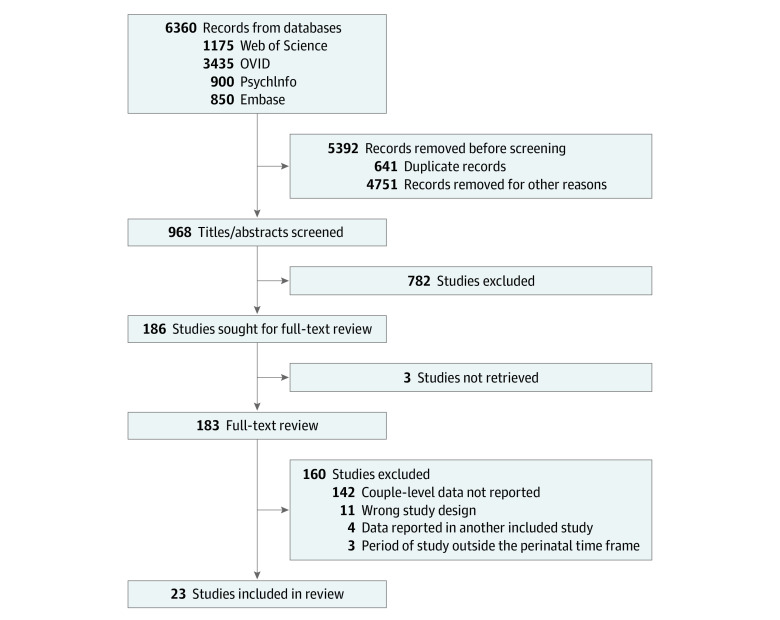
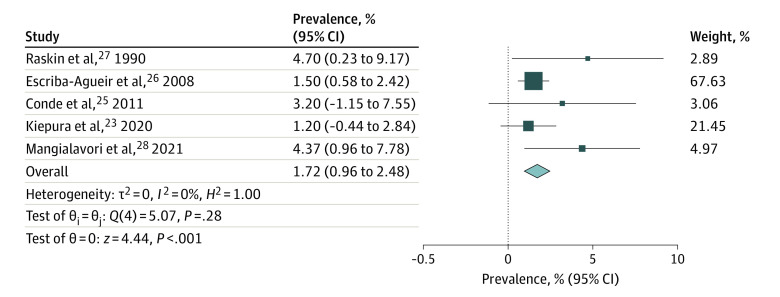
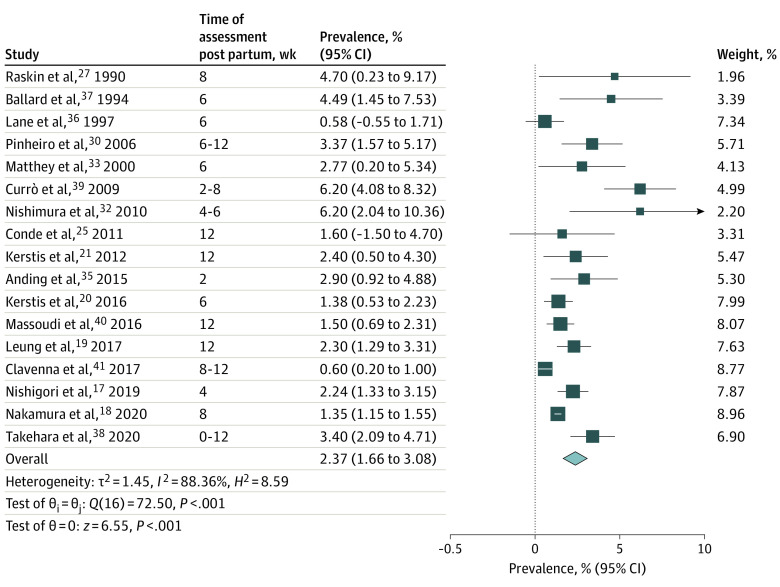
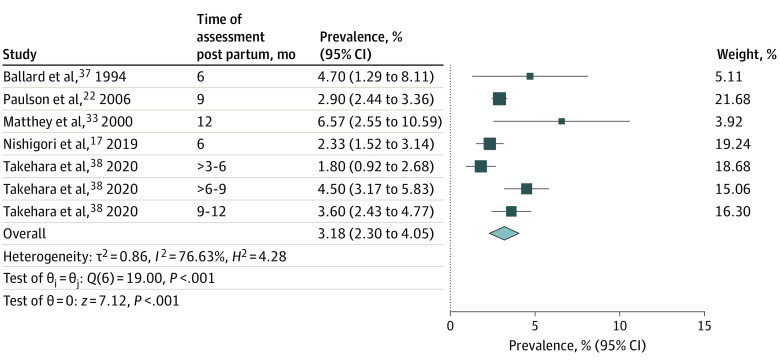
Importance: New and expectant parents experience perinatal mood disorders, with consequences to parenting ability, bonding with the neonate, interpersonal relationships, and health and well-being of parents. Research shows that maternal and paternal perinatal mood disorders are associated, but no recent systematic review has addressed the prevalence of perinatal mood disorders in both mothers and fathers (parental dyad). Objective: To examine the prevalence of perinatal mood disorders in parental dyads and identify factors associated with perinatal mood disorders in parental dyads. Data Sources: Ovid (MEDLINE, Embase, and PsycINFO) and Web of Science were searched from January 1, 1990, to June 8, 2021, for observational studies reporting on the prevalence of perinatal depression or anxiety in a parental dyad. Study Selection: Studies reporting the prevalence of anxiety or depression in both members of a parental dyad were included, with diagnosis according to established criteria (Diagnostic and Statistical Manual of Mental Disorders [Fifth Edition], International Classification of Diseases, 11th Revision) or use of validated screening tools. Data Extraction and Synthesis: Prevalence data were extracted in accordance with Preferred Reporting Items for Systematic Reviews and Meta-Analyses guidelines. Data were analyzed in subgroups: antenatal depression, early postnatal depression (0-12 weeks), late postnatal depression (3-12 months), and perinatal anxiety. Pooled prevalence was calculated using a random-effects meta-analysis model. Quality assessment was performed using Joanna Briggs Institute Appraisal Checklist for Studies Reporting Prevalence Data. Data were analyzed in June 2021. Main Outcomes and Measures: Prevalence of perinatal anxiety and perinatal depression in parental dyads. Results: Twenty-three studies were included, with data from 29 286 couples. The pooled prevalence of antenatal depression in both parents was 1.72% (95% CI, 0.96%-2.48%; P < .001). The prevalence of early postnatal depression (up to 12 weeks post partum) was 2.37% (95% CI, 1.66%-3.08%; P < .001) and the prevalence of late postnatal depression (3-12 months post partum) was 3.18% (95% CI, 2.3-4.05; P < .001). Only 3 studies reported on perinatal anxiety in both parents, precluding a quantitative analysis. Conclusions and Relevance: In up to 3.18% of couples, both parents may concurrently experience perinatal depression. Perinatal health care must consider the mental health needs of parents, both as individuals and as a parental dyad. Further research is needed to examine outcomes in families where both parents experience perinatal mood disorders.
Overview
The claims and statistics of this paper haven’t been checked yet.
Run the check — free, no account needed. It reads the open-access text and checks the sources it cites.
Integrity signals
Registry
Cites
Statistics
Figures
Verification
Claims the paper makes
The claims and statistics of this paper haven’t been checked yet.
Run the check — free, no account needed. It reads the open-access text and checks the sources it cites.
Claims other papers make about this one
Each is checked against this paper’s own text: does it say what the citing paper says it does?
The source backs part of the claim, not all of it — or backs it for a different population, condition or comparison.
In the citing paper
“Parents with babies in the neonatal intensive care unit (NICU) experience high levels of stress, anxiety, and depression.”
From A digital Acceptance and Commitment Therapy and education intervention targeting stress of parents and caregivers with preterm babies in the neonatal intensive care unit: A randomised controlled cluster trial protocol (2024) · cites this paper as [3]
Experimental — accuracy not yet measuredThe source backs part of the claim, not all of it — or backs it for a different population, condition or comparison.
In the citing paper
“Increased psychological distress of NICU parents is associated with a wide range of short- and long-term challenges for parents and infants, including increased risk of mental health disorders [1 -3], impaired parenting, and early childhood behavioural and emotional problems [5].”
From A digital Acceptance and Commitment Therapy and education intervention targeting stress of parents and caregivers with preterm babies in the neonatal intensive care unit: A randomised controlled cluster trial protocol (2024) · cites this paper as [3]
Experimental — accuracy not yet measuredThe cited source says what the claim attributes to it.
In the citing paper
“Postnatal depression affects approximately 13 % of mothers and 9 % of co-parents, with many cases going undetected and untreated, posing significant risks to women, their families, and especially their children [12 -14].”
The check wasn’t confident either way, so it gives no verdict — never disputed.
In the citing paper
“Postnatal depression affects approximately 13 % of mothers and 9 % of co-parents, with many cases going undetected and untreated, posing significant risks to women, their families, and especially their children [12 -14].”
From Systematic home visit planning prior to hospital discharge: a propensity-score matched comparative cohort study of over one million mother-infant dyads with one-year follow-up (2026) · cites this paper as [14]
Experimental — accuracy not yet measured
Self-check
Percentages, sums and reported differences re-computed from the paper’s own numbers.
The self-check needs the paper’s full text.
Citations
Cites
The PRISMA 2020 statement: An updated guideline for reporting systematic reviews
Page, M. J., McKenzie, J. E., Bossuyt, P. M., Boutron, I., Hoffmann, T. C., Mulrow, C. D., Shamseer, L., Tetzlaff, J. M., Akl, E. A., Brennan, S. E., et al. (2021) · BMJ · doi:10.1136/bmj.n71 · Cited by 108,283
Screening for serious mental illness in the general population
Kessler, R. C., Barker, P. R., Colpe, L. J., Epstein, J. F., Gfroerer, J. C., Hiripi, E., Howes, M. J., Normand, S.-L. T., Manderscheid, R. W., Walters, E. E., et al. (2003) · Archives of General Psychiatry · doi:10.1001/archpsyc.60.2.184 · Cited by 5,692
JBI Manual for Evidence Synthesis
(2020) · JBI eBooks · doi:10.46658/jbimes-20-01 · Cited by 4,165
Munn, Z., Moola, S., Riitano, D., & Lisy, K. (2014) · International Journal of Health Policy and Management · doi:10.15171/ijhpm.2014.71 · Cited by 1,479 · cited 1×
“Although the EPDS has been validated in many different settings, the cutoff varies, and this is reflected in the range of cutoffs used (8-13).”
MethodNon-psychotic mental disorders in the perinatal period
Howard, L. M., Molyneaux, E., Dennis, C.-L., Rochat, T., Stein, A., & Milgrom, J. (2014) · The Lancet · doi:10.1016/s0140-6736(14)61276-9 · Cited by 1,328
Gelaye, B., Rondon, M. B., Araya, R., & Williams, M. A. (2016) · The Lancet Psychiatry · doi:10.1016/s2215-0366(16)30284-x · Cited by 1,155
Paulson, J. F., Dauber, S., & Leiferman, J. A. (2006) · Pediatrics · doi:10.1542/peds.2005-2948 · Cited by 706
Advances in Experimental Medicine and Biology
Berry, C. L. (1973) · Journal of Medical Genetics · doi:10.1136/jmg.10.4.401-a · Cited by 668
Paternal and maternal depressed mood during the transition to parenthood
Matthey, S., Barnett, B. E. W., Ungerer, J. A., & Waters, B. G. H. (2000) · Journal of Affective Disorders · doi:10.1016/s0165-0327(99)00159-7 · Cited by 500
The prevalence of antenatal and postnatal co-morbid anxiety and depression: a meta-analysis
Falah‐Hassani, K., Shiri, R., & Dennis, C. (2017) · Psychological Medicine · doi:10.1017/s0033291717000617 · Cited by 384
Research works printed but not linked: 1
- della Vedova, 2019, Prenatal attachment, distress symptoms and psychosocial variables in a sample of Italian first-time parents., Life Span Disabil, 22, 255
Cited by
Sorted by citations
Psychological distress in the neonatal intensive care unit: a meta-review
van Wyk, L., Majiza, A. P., Ely, C. S. E., & Singer, L. T. (2024) · Pediatric Research · doi:10.1038/s41390-024-03599-1 · Cited by 65
Aziz, H. A., Yahya, H. D. B., Ang, W. W., & Lau, Y. (2024) · Journal of Psychiatric Research · doi:10.1016/j.jpsychires.2024.11.070 · Cited by 59
Hu, F., Liu, P., Jia, Y., Ge, M., Shen, L.-T., Xia, X., & Chen, H. (2024) · Psychology Health & Medicine · doi:10.1080/13548506.2024.2424998 · Cited by 46
Ou, L., Shen, Q., Xiao, M., Wang, W., He, T., & Wang, B. (2025) · Psychological Medicine · doi:10.1017/s0033291725000601 · Cited by 36
Pan, T., Zeng, Y., Chai, X., Wen, Z., Tan, X., & Sun, M. (2024) · Depression and Anxiety · doi:10.1155/2024/1882604 · Cited by 34
Perinatal Depression and Beyond—Implications for Research Design and Clinical Management
Garthus‐Niegel, S., Radoš, S. N., & Horsch, A. (2022) · JAMA Network Open · doi:10.1001/jamanetworkopen.2022.18978 · Cited by 32
Villar-Alises, O., Martínez-Miranda, P., & Martínez-Calderón, J. (2023) · International Journal of Environmental Research and Public Health · doi:10.3390/ijerph20021556 · Cited by 46
Yin, A., Shi, Y., Heinonen, S. T., Räisänen, S., Fang, W., Jiang, H., & Chen, A. (2023) · Journal of Affective Disorders · doi:10.1016/j.jad.2023.11.054 · Cited by 26
Padhani, Z. A., Salam, R. A., Rahim, K. A., Naz, S., Zulfiqar, A., Memon, Z., Meherali, S. M., Atif, M., & Lassi, Z. S. (2024) · Health Psychology and Behavioral Medicine · doi:10.1080/21642850.2024.2383468 · Cited by 32
Palagini, L., Cipriani, E., Caruso, V., Sharma, V., Gemignani, A., Bramante, A., Miniati, M., & Riemann, D. W. (2023) · Current Psychiatry Reports · doi:10.1007/s11920-023-01463-3 · Cited by 24
The Mother-Baby Bond: Role of Past and Current Relationships
Bianciardi, E., Ongaretto, F., Stefano, A. D., Siracusano, A., & Niolu, C. (2023) · Children · doi:10.3390/children10030421 · Cited by 24
Housing hardship and maternal mental health among renter households with young children
Marçal, K. E. (2023) · Psychiatry Research · doi:10.1016/j.psychres.2023.115677 · Cited by 20
Väter und peripartale psychische Erkrankungen: Das übersehene Elternteil?
Garthus‐Niegel, S., & Kittel‐Schneider, S. (2023) · Der Nervenarzt · doi:10.1007/s00115-023-01508-1 · Cited by 18
Relationship between prenatal anxiety, depression, pregnancy stress and their social determinants
Meng, W., Shalayiding, S., Wang, X., Sailike, B., & Jiang, T. (2025) · BMC Psychology · doi:10.1186/s40359-025-03237-3 · Cited by 18
Lutkiewicz, K., Bieleninik, Ł., Jurek, P., & Bidzan, M. (2024) · BMC Public Health · doi:10.1186/s12889-024-20194-5 · Cited by 16
Wohrer, F. E., Ngo, H., DiDomenico, J., Ma, X., Roberts, M. H., & Bakhireva, L. N. (2024) · Frontiers in Human Neuroscience · doi:10.3389/fnhum.2024.1323297 · Cited by 18
The importance of perinatal non-birthing parents’ mental health and involvement for family health
Fisher, S. D., Walsh, T. B., & Wongwai, C. (2024) · Seminars in Perinatology · doi:10.1016/j.semperi.2024.151950 · Cited by 12
Centeno, L. O. L., Fernandez, M. D. S., Muniz, F. W. M. G., Longoni, A., & de Assis, A. M. (2024) · Nutrients · doi:10.3390/nu16213648 · Cited by 12
Brief Resolved Unexplained Event (BRUE): Is Reassurance Enough for Caregivers?
Nama, N., DeLaroche, A. M., & Gremse, D. A. (2022) · Hospital Pediatrics · doi:10.1542/hpeds.2022-006939 · Cited by 12
Path analysis of influencing factors for anxiety and depression among first-trimester pregnant women
Li, W., Lin, L., Teng, S., Yang, Y., Li, L., Fang, P., Peng, D., Gao, X. Y., & Huang, G. (2024) · Frontiers in Psychology · doi:10.3389/fpsyg.2024.1440560 · Cited by 15
Henshaw, E. J., Cooper, M. A., Wood, T., Doan, S. N., Krishna, S., & Lockhart, M. M. (2023) · BMC Pregnancy and Childbirth · doi:10.1186/s12884-023-05506-8 · Cited by 14
Uriko, K., Christoforou, A., Motrico, E., Moreno-Peral, P., Akik, B. K., Žutić, M., & den Berg, M. P. L. (2023) · Journal of Reproductive and Infant Psychology · doi:10.1080/02646838.2023.2266470 · Cited by 10
International best-practice models for perinatal and infant mental health care – a scoping review
Reinsperger, I., Paul, J. L., & Zechmeister‐Koss, I. (2025) · Frontiers in Psychiatry · doi:10.3389/fpsyt.2025.1536145 · Cited by 9
Mancinelli, E., & Filippi, B. (2025) · EClinicalMedicine · doi:10.1016/j.eclinm.2025.103512 · Cited by 9
Ginsberg, K. H., Serlachius, A., Rogers, J., & Alsweiler, J. (2023) · The Journal of Pediatrics · doi:10.1016/j.jpeds.2023.113456 · Cited by 9
Clément, M., Ahun, M. N., Orri, M., Montreuil, T. C., St‐André, M., Herba, C. M., Moullec, G., & Côté, S. M. (2024) · Journal of Child Psychology and Psychiatry · doi:10.1111/jcpp.14051 · Cited by 8
Weigl, L.-M., Jabeen, F., Jan Treur, A., Taal, H. R., & Roelofsma, P. H. M. P. (2023) · Cognitive Systems Research · doi:10.1016/j.cogsys.2023.01.009 · Cited by 8
Baldoni, F., Agostini, F., Terrone, G., Casu, G., & Giannotti, M. (2023) · Healthcare · doi:10.3390/healthcare11060907 · Cited by 8
Jiang, Y., Zhang, T., Yang, L., Du, Z., Wang, Q., Hou, J., Liu, Y., Song, Q., Zhao, J., & Wu, Y. (2023) · Behavioural Brain Research · doi:10.1016/j.bbr.2023.114598 · Cited by 10
Vogel, L., Henning, C., Wolstein, J. R., Versele, V., van Poppel, M. N. M., Steppan, K., Schlossbach, T., Opitz, A., Lux, U., Löchner, J., et al. (2024) · Mental Health Science · doi:10.1002/mhs2.58 · Cited by 10
Oancea, M. D., Strilciuc, Ș., Borza, D. B., Ciortea, R., Diculescu, D. M., & Mihu, D. (2024) · Journal of Clinical Medicine · doi:10.3390/jcm13072088 · Cited by 7
Chen, Y., Zhang, L., Zhang, S., Zhang, J., Hong, Y., Li, Q., & Zhou, Y. (2025) · Journal of Affective Disorders · doi:10.1016/j.jad.2025.01.129 · Cited by 9
Kumar, A., Bartoli, B., Lichand, G., & Wolf, S. (2023) · Journal of Affective Disorders · doi:10.1016/j.jad.2023.05.060 · Cited by 9
Xiao, G., Wang, H., Hu, J., Zhao, Z., Li, Q., & Qin, C. (2024) · Heliyon · doi:10.1016/j.heliyon.2024.e35089 · Cited by 7
The perception of childbearing sense of coherence among Chinese couples: a qualitative study
Li, B., Yuan, M., Zhang, K., Ni, S., Zhao, H., Lang, X., Hu, Z., & Zeng, T. (2023) · BMC Public Health · doi:10.1186/s12889-023-17363-3 · Cited by 7
Ginsberg, K. H., Alsweiler, J., Rogers, J., Cavadino, A., Douglas, M., & Serlachius, A. (2024) · Contemporary Clinical Trials · doi:10.1016/j.cct.2024.107519 · Cited by 7
Preconception paternal mental health history as predictor of antenatal depression in pregnant women
Orsolini, L., Karaman, İ. G. Y., Bottaro, M., Bellagamba, S., Francesconi, G., & Volpe, U. (2025) · Annals of General Psychiatry · doi:10.1186/s12991-025-00554-0 · Cited by 6
Jen, W.-H., Hung, T., Chen, C.-Y., & Tsai, Y. (2022) · American Journal of Men s Health · doi:10.1177/15579883221138191 · Cited by 6
Segre, G., Clavenna, A., Cartabia, M., & Bonati, M. R. (2023) · BMJ Open · doi:10.1136/bmjopen-2022-069797 · Cited by 6
Perazzo, S. I., Hoge, M. K., Shaw, R. J., Gillispie-Bell, V., & Soghier, L. M. (2024) · Seminars in Perinatology · doi:10.1016/j.semperi.2024.151906 · Cited by 6
Prevalence of Paternal Prenatal Depression and Its Associated Factors in Saudi Arabia
Younis, A. S., Julaidan, G., Alsuwaylimi, R., Almajed, B., Shammari, R. T. A., Alfirm, R., & Alfarra, L. (2024) · Risk Management and Healthcare Policy · doi:10.2147/rmhp.s454926 · Cited by 6
Gallagher, K., Hayns-Worthington, R., Marlow, N., Meek, J. H., & Chant, K. (2023) · BMC Pediatrics · doi:10.1186/s12887-023-03907-4 · Cited by 6
Assisted reproductive technologies and postpartum depressive symptoms: A meta-analysis
Si, S., Zhao, G., Song, G., & Liu, J. (2024) · Journal of Affective Disorders · doi:10.1016/j.jad.2024.03.168 · Cited by 5
Fan, X., Ma, Y., Zhu, Y., Tang, W., Dong, X., & Liu, M. (2024) · BMC Pregnancy and Childbirth · doi:10.1186/s12884-024-06668-9 · Cited by 5
Zhang, M., Zhou, N., Chen, X., Li, Q., Zhang, C., Tang, Y., Ming, X., Zhou, W., Qi, H., & Zhou, W. (2024) · Journal of Affective Disorders · doi:10.1016/j.jad.2024.09.044 · Cited by 6
Crombag, N. M. T. H., Bollen, B., Vancoppenolle, E., Vandendriessche, T., Versmissen, D., Paisi, M., Shawe, J., Garthus‐Niegel, S., & Bogaerts, A. (2025) · BMC Pregnancy and Childbirth · doi:10.1186/s12884-024-07043-4 · Cited by 5
Is the mental health of couples with twins more at risk? Results from an Italian cohort study
Bonanni, G., Longo, V. L., Airoldi, C. A., Meli, F., Familiari, A., Romanzi, F., Pellegrino, M., Visconti, D., Serio, A., Lanzone, A., et al. (2024) · Frontiers in Psychiatry · doi:10.3389/fpsyt.2024.1284090 · Cited by 4
Throm, J. K., Dörsam, A. F., Micali, N., Preissl, H. T., & Giel, K. E. (2024) · International Journal of Eating Disorders · doi:10.1002/eat.24338 · Cited by 4
Padrón, L. T., Emrich, N., Strizek, B., Schleußner, E., Dreiling, J., Komann, M., Schuster, M., Werdehausen, R., Meißner, W., & Cruz, J. J. (2024) · International Journal of Gynecology & Obstetrics · doi:10.1002/ijgo.15489 · Cited by 4
Early detection of perinatal depression in couples: a single-center prospective study
Paria, A., Atallah, A., Nourredine, M., Dubernard, G., Joubert, F., Landel, V., Savelon, S. V., & de la Fournière, B. (2024) · European Psychiatry · doi:10.1192/j.eurpsy.2024.1755 · Cited by 3
Ten-year trajectories of postpartum depression of Japanese mothers and fathers
Kubo, T., Jikihara, Y., Todo, N., Aramaki, M., Shiozaki, N., & Ando, S. (2024) · Journal of Affective Disorders · doi:10.1016/j.jad.2024.09.154 · Cited by 4
Nutritional Nesting (Nestrition): Shaping the Home Food Environment in the First Pregnancy
Peles, C., Shloim, N., & Rudolf, M. C. J. (2024) · Nutrients · doi:10.3390/nu16193335 · Cited by 4
Stuart, S. P., Brock, R. L., Ramsdell, E. L., Arndt, S. V., & O’Hara, M. W. (2023) · Journal of Affective Disorders Reports · doi:10.1016/j.jadr.2023.100636 · Cited by 3
Progresión posparto de los niveles de ansiedad y depresión en madres de recién nacidos prematuros
Giménez, Y., Fatjó, F., Mallorquí, A., Sanvicente, A., Figueras, F., & Arranz, Á. (2024) · Atención Primaria · doi:10.1016/j.aprim.2024.103085 · Cited by 3
Kerstis, B., Jönsson, P., Derwig, M., Nilsson, K. W., Hallström, I., & Lindeberg, S. I. (2025) · Child Care Health and Development · doi:10.1111/cch.70099 · Cited by 3
Equipping fathers to support distressed mothers: What do mothers want fathers to know and do?
Fletcher, R. J., Regan, C., May, C. D., White, S. W., & StGeorge, J. M. (2023) · Health Promotion Journal of Australia · doi:10.1002/hpja.758 · Cited by 3
Zhang, H., Mo, S., Zhang, J., Li, B., Chen, Y., Huang, X., Li, S., & Ling, L. (2023) · PubMed Central · Cited by 3
Exploring Partners’ Part in Shaping the Home Food Environment During the Transition to Fatherhood
Peles, C., Rudolf, M. C. J., Shloim, D., & Shloim, N. (2024) · Nutrients · doi:10.3390/nu16244356 · Cited by 3
Wang, D., Chen, J., Luo, H., Wang, Z., & Cheng, G. (2024) · The Journal of Maternal-Fetal & Neonatal Medicine · doi:10.1080/14767058.2024.2374438 · Cited by 2
Louis, S., Rousseau, A., Mercier, L., Chamly, M., & Gaucher, L. (2024) · BMC Pregnancy and Childbirth · doi:10.1186/s12884-024-06854-9 · Cited by 2
Xu, J., Xiao, Y., Li, F., Cui, Y., Shi, C., Shi, J., Yu, C., Qi, S., Lu, C., Li, G., et al. (2025) · Journal of Affective Disorders · doi:10.1016/j.jad.2025.01.041 · Cited by 4
Resilience mediates the relationship between social support and anxiety in postpartum mothers
Ben-David, H., & Miller, K. J. (2025) · Clinical Psychologist · doi:10.1080/13284207.2025.2462842 · Cited by 2
The Relationship Between Postpartum Depression and Timely Child Vaccination: A Systematic Review
Robitaille, J., Esser, K., King, C. L., Leask, J., Wiley, K. E., Vigod, S. N., Rodin, G., Bolotin, S., & Shapiro, G. K. (2025) · Vaccines · doi:10.3390/vaccines13030222 · Cited by 2
Arifin, S. R. B. M., Kamaruddin, A., Muhammad, N. A., Nurumal, M. S., Mohadis, H. M., Hussain, N. H. N., & Wardaningsih, S. (2025) · International Journal of Nursing Sciences · doi:10.1016/j.ijnss.2025.04.014 · Cited by 2
Asare, S. F., Adjorlolo, S., & Brysiewicz, P. (2025) · BMC Psychiatry · doi:10.1186/s12888-025-07249-6 · Cited by 2
Liu, H., Kong, Y., Cao, X., Liu, J., Zhou, R., Lin, Q., Liu, W., & Chen, Y. (2025) · Psychiatry Research · doi:10.1016/j.psychres.2025.116912 · Cited by 3
The Role of Fathers in the Intergenerational Transmission of Obesity
Landry, M. J., & Parker, J. J. (2026) · Current Obesity Reports · doi:10.1007/s13679-026-00720-9 · Cited by 3
Identifying and supporting men who experience paternal postnatal depression
Davenport, C. J., & Swami, V. (2023) · Mental Health Practice · doi:10.7748/mhp.2023.e1641 · Cited by 2
Smith, H. C., Petersen, I., & Schartau, P. (2023) · JAMA Network Open · doi:10.1001/jamanetworkopen.2023.16105 · Cited by 2
The importance of patient‐specific resources for families dealing with prenatal rare diseases
Shukla, D. P., Cutshall, J. O., van der Heijden, L., Schindewolf, E. M., & Sheppard, S. E. (2023) · American Journal of Medical Genetics Part A · doi:10.1002/ajmg.a.63450 · Cited by 2
Wang, S., Zhang, J., Zhu, T., Xie, X., Xia, X., & Li, Y. (2024) · ALPHA PSYCHIATRY · doi:10.5152/alphapsychiatry.2024.231342 · Cited by 2
Duckworth, M., Garfield, C. F., Santiago, J. E., Gollan, J. K., O’Sullivan, K., Williams, D., Lee, Y. S., Muhammad, L. N., & Miller, E. S. (2024) · Contemporary Clinical Trials · doi:10.1016/j.cct.2024.107571 · Cited by 3
Penot, P., Jacob, G., Guerizec, A., Trevisson, C., Letembet, V.-A., Harich, R., Phuong, T., Renevier, B., Manuellan, P.-E., du Loû, A. D., et al. (2024) · BMC Public Health · doi:10.1186/s12889-024-20388-x · Cited by 2
Pérez, F., Ampuero, D., Alba, V., Balin, M. J., Iturra, A., Ayala, F., & Giannotti, M. (2025) · BMC Pregnancy and Childbirth · doi:10.1186/s12884-025-07747-1 · Cited by 2
Arvanitidou, O., Kalaitzopoulos, D. R., Samartzis, N., Athanasiadis, A. P., Ierodiakonou‐Benou, I., & Daniilidis, A. (2023) · Cureus · doi:10.7759/cureus.36659 · Cited by 3
Caron, A., Rousseau, A., Brisacier, A.-C., Akkari, H., Haushalter, E., Mondschein, T., Simon-Yeou, M., Thissier, F., Courouve, L., & Gaucher, L. (2026) · Women and Birth · doi:10.1016/j.wombi.2026.102160 · Cited by 1
O’Hagan, E. T., Wallwork, S. B., Callander, E. J., Stanton, T. R., & Mychasiuk, R. (2023) · Journal of Pain · doi:10.1016/j.jpain.2023.01.008 · Cited by 1
Perinatal and infant mental health care in Austria
Zechmeister‐Koss, I., Hoertnagl, C. M., Lampe, A., & Paul, J. L. (2024) · Neuropsychiatrie · doi:10.1007/s40211-024-00516-0 · Cited by 1
Shah, M. N., Curran, M. A., Kopystynska, O., Barnett, M. A., Aroz-Moscoso, G., & Oliver, J. C. (2025) · Journal of Social and Personal Relationships · doi:10.1177/02654075251331326 · Cited by 1
Association of Prenatal Depression With Second to Fourth Digit Ratio in Children Aged 4 and 6 Years
Zhang, O., Chen, Y., Chen, Y., Wang, Z., Sun, Q., Liang, H., Yuan, W., Sheng, W., & Miao, M. (2025) · Depression and Anxiety · doi:10.1155/da/6655082 · Cited by 1
Zhu, L., Ji, C. F., Liu, Y., Chen, W., Liu, X., & Yang, F. (2025) · ACS Chemical Neuroscience · doi:10.1021/acschemneuro.5c00535 · Cited by 2
Postpartum depression among newly delivered mothers based on postnatal newborn care
Manasyan, A., Lakhwani, J., Kapesa, H., Owuor, K. O., Menon, J. A., Bosomprah, S., Nalwamba, L., Machona, S., & Carlo, W. A. (2025) · BMC Psychiatry · doi:10.1186/s12888-025-07614-5 · Cited by 1
Ge, J.-D., Tang, C. Y., & Shen, Y. (2025) · World Journal of Psychiatry · doi:10.5498/wjp.v15.i12.109408 · Cited by 1
Culpin, I., Pearson, R. M., Wright, N., Stein, A. L., Bornstein, M. H., Fredriksen, E., Evans, J., Miller, T., Dermott, E., Heron, J., et al. (2025) · Journal of Affective Disorders · doi:10.1016/j.jad.2025.120855 · Cited by 1
Gaucher, L., Desplanches, T., Sormani, J., Cattani, G., Mueller, A. N., Celetta, E., Widmer, I. N., Lorthe, E., & Grylka‐Baeschlin, S. (2026) · BMJ Open · doi:10.1136/bmjopen-2026-121443 · Cited by 1
Sentimental Analysis on Twitter data using Deep Learning
Brindha, V., Shanthi, S., Bhavishya, C., Durgashree, V., Devi, K. N., & Jaganathan, P. (2024) · International Conference on Artificial Intelligence and Machine Learning Applications Theme: Healthcare and Internet of Things (AIMLA) · doi:10.1109/aimla59606.2024.10531618 · Cited by 1
Weigl, L.-M., Jabeen, F., Jan Treur, A., Taal, H. R., & Roelofsma, P. H. M. P. (2024) · Studies in systems, decision and control · doi:10.1007/978-3-031-72075-8_8 · Cited by 1
Giulio, P., Eleuteri, S., & Petruccelli, I. (2025) · Psychiatry International · doi:10.3390/psychiatryint6030073 · Cited by 1
Takahashi, N., Okumura, A., Kubota, C., & Tsuchiya, K. J. (2025) · Environmental Health and Preventive Medicine · doi:10.1265/ehpm.25-00191 · Cited by 1
Correia, J., Debrot, A., & Garthus‐Niegel, S. (2023) · Journal of Reproductive and Infant Psychology · doi:10.1080/02646838.2023.2212576 · Cited by 1
Tufail, M., Waseem, S., & Adawi, T. R. (2025) · SSRN Electronic Journal · doi:10.2139/ssrn.5401678 · Cited by 1
Impacts of Perinatal Death on Women and Families: A Qualitative Systematic Review
Punaglom, N., & Arayasinlapathon, N. (2022) · THE BANGKOK MEDICAL JOURNAL · doi:10.31524/bkkmedj.2022.23.003 · Cited by 1
Impact of Expectant Father’s Depression on Health-Promoting Behaviors and Marital Adjustment
Zohouri, S., Faramarzi, M., & Jahromi, R. G. (2023) · American Journal of Family Therapy · doi:10.1080/01926187.2023.2246027
Most users of a prenatal consultation dedicated to future fathers are immigrants facing hardshipPreprint
Penot, P., Jacob, G., Guerizec, A., Trevisson, C., Letembet, V.-A., Harich, R., Phuong, T., Renevier, B., Manuellan, P.-E., du Loû, A. D., et al. (2023) · medRxiv · doi:10.1101/2023.09.28.23295896
Expert survey: safer research with parent survivors of child maltreatment
van Rensburg, E. J., Ohan, J. L., Wickens, N., Milroy, H., & Lin, A. P. (2023) · Ethics & Behavior · doi:10.1080/10508422.2023.2265519
Zechmeister‐Koss, I., Kern, J., Edlinger, M., Hörtnagl, C., Lampe, A., Buchheim, A., & Paul, J. L. (2024) · Research Square · doi:10.21203/rs.3.rs-3908813/v1
Franchitto, L. G. (2024) · La Presse Médicale Formation · doi:10.1016/j.lpmfor.2024.06.002
Evaluation of the Quality of Online Information About Perinatal Depression in China
Li, M., Abas, W. A. W., Ma’rof, A. A., Wang, P., & Wang, X. (2024) · Studies in Media and Communication · doi:10.11114/smc.v12i3.6908
Factors associated with depressive symptoms among 1,502 couples in the immediate puerperium
Hernández-Santillán, G., Gurpegui, M., Alcamí-Pertejo, M., Lahera, G., & Bravo-Ortiz, M. (2024) · International Journal of Social Psychiatry · doi:10.1177/00207640241296047
Noda, Y., & Nakajima, S. (2025) · Brain Behavior and Immunity Integrative · doi:10.1016/j.bbii.2025.100103
Metadata
- Authors
- Smythe, K. L., Petersen, I., & Schartau, P.
- Affiliations
- University College London (GB)
- Corresponding author
- Smythe, Kara L.
- Venue
- JAMA Network Open
- Publisher
- American Medical Association (AMA)
- Published
- 2022-06-24
- Volume
- 5
- Issue
- 6
- Pages
- e2218969
- ISSN
- 2574-3805 (ISSN-L)
- PMC
- PMC9233234
- OpenAlex
- W4283397289
- Cited by
- 147
- References
- 53
- Citations by year
- 2026: 41 · 2025: 32 · 2024: 41 · 2023: 29 · 2022: 4
- FWCI
- 5.24
- Type
- journal article
- Language
- en
- Open access
- gold
- doi.org
- Licence
- cc-by
- Locations
- JAMA Network Open (publishedVersion, cc-by)
- PubMed Central (publishedVersion, cc-by)
- PubMed (publishedVersion)
- ORCA Online Research @Cardiff (Cardiff University) (acceptedVersion)
- Topics
- Health Sciences › Medicine › Public Health, Environmental and Occupational Health › Maternal Mental Health During Pregnancy and Postpartum
- Health Sciences › Medicine › Pediatrics, Perinatology and Child Health › Maternal and Neonatal Healthcare
- Health Sciences › Medicine › Pediatrics, Perinatology and Child Health › Infant Health and Development
- Keywords
- perinatal depression, perinatal anxiety, antenatal depression, postpartum depression, prevalence, couples, risk factors
- MeSH terms
- Anxiety, Depression, Female, Humans, Infant, Newborn, Parents, Pregnancy, Prevalence, Depression, Postpartum
About these checks
Registry, retraction, Cites and statistics results are computed, not judged, with one exception: a printed reference that no index lists is read once by a model before it counts as a citation error. Claims are extracted by a model and kept only when their quote appears verbatim in the text; each cited source is then checked, with a model’s help, for whether it says what the claim relies on. Those verdicts can be wrong — read the claim’s quote and the cited source before relying on one.
Statistics and arithmetic are recomputed, not judged.
Confidence bands are shown only for fields calibrated on our annotated test set. None is calibrated yet, so no band is shown.
What counts as a claim ›How we measure confidence ›How we check this ›
Are you an author, or do you see a problem with this page? Request a review
