

The DOI matches its Crossref record; 35 of the 38 references it cites were found in a registry or an index, and 3 are not checked yet.
APOE Genotype and Alzheimer Disease Risk Across Age, Sex, and Population Ancestry
Open accessAbstract
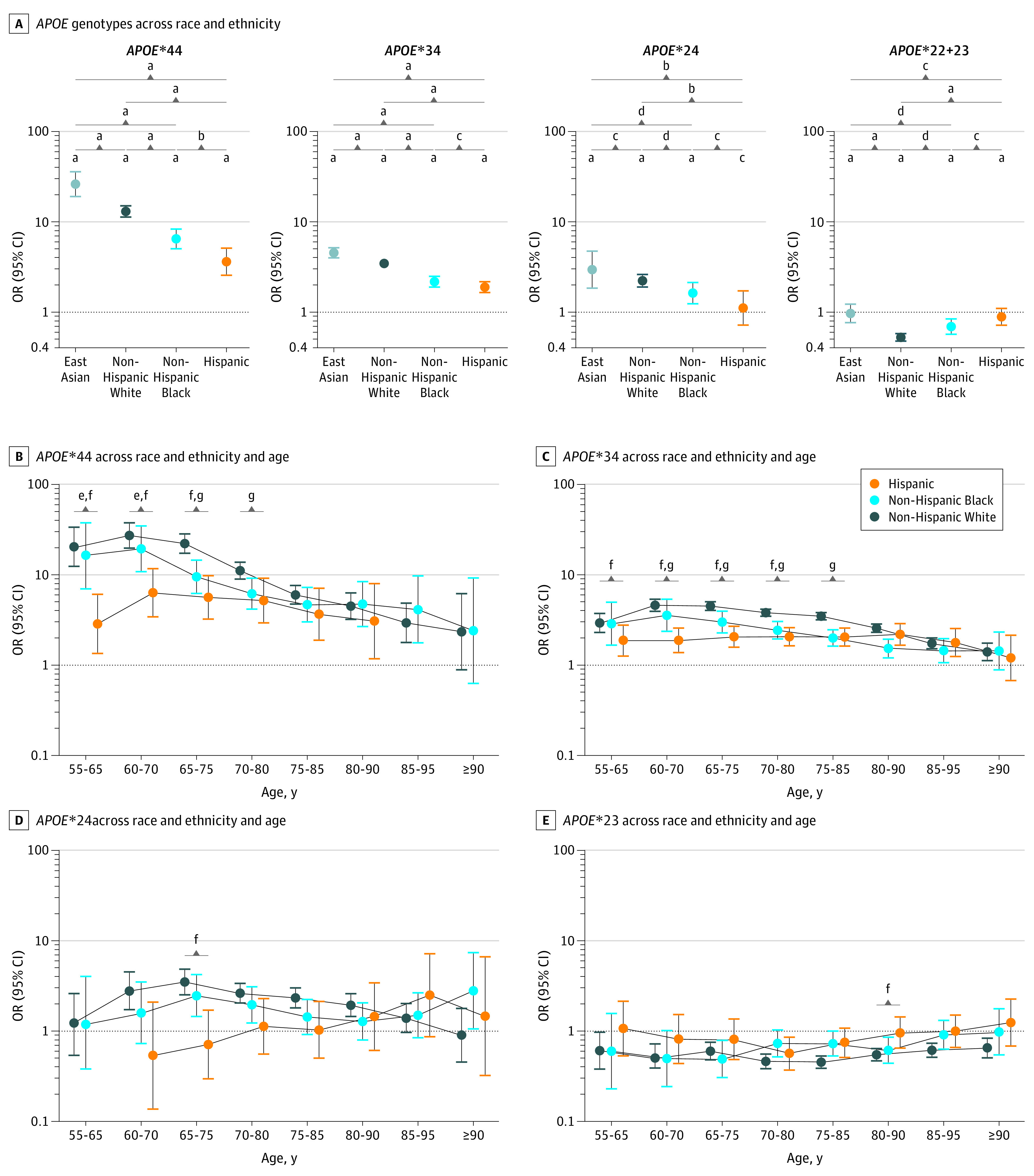
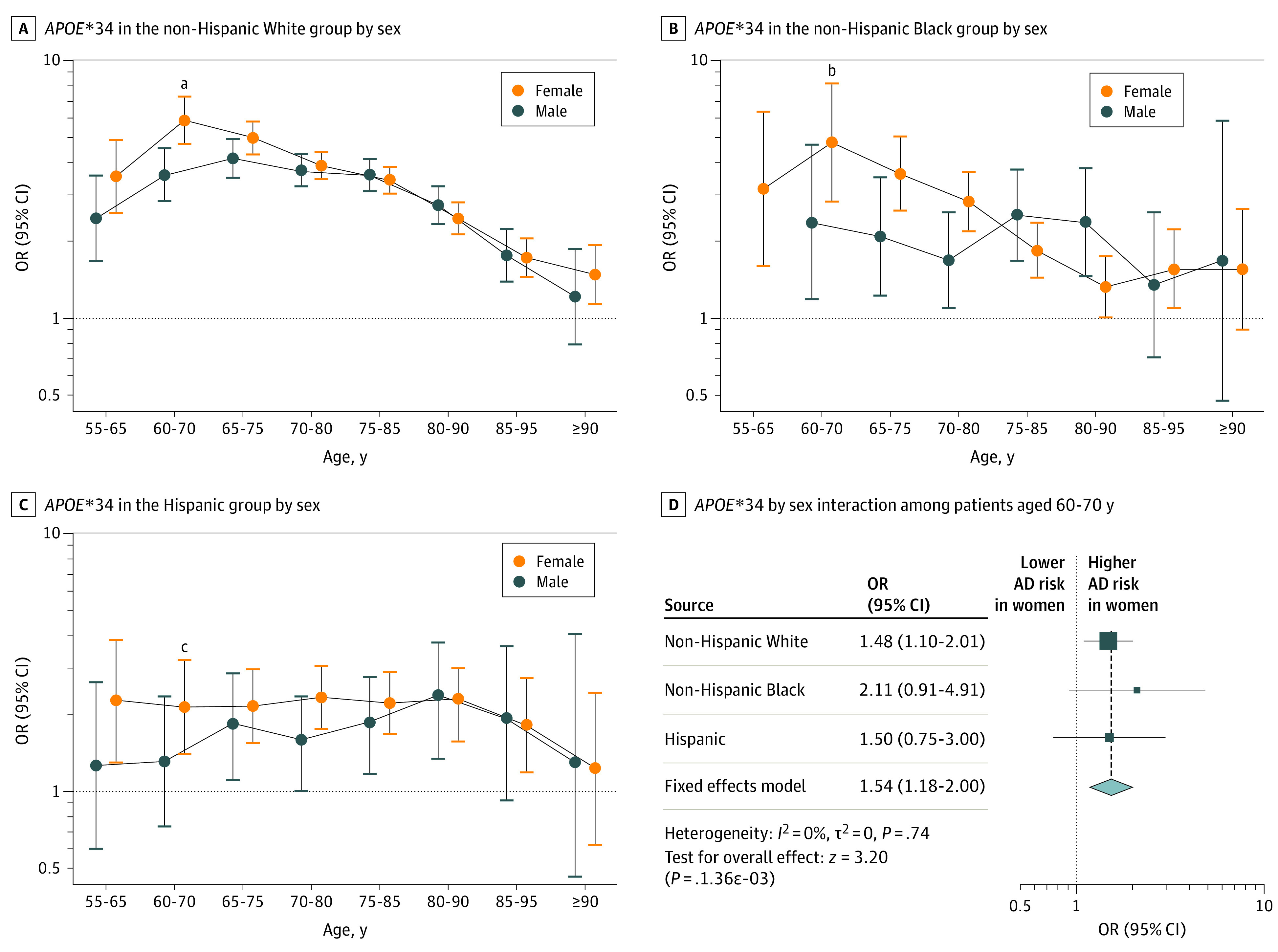
Importance: Apolipoprotein E (APOE)*2 and APOE*4 are, respectively, the strongest protective and risk-increasing, common genetic variants for late-onset Alzheimer disease (AD), making APOE status highly relevant toward clinical trial design and AD research broadly. The associations of APOE genotypes with AD are modulated by age, sex, race and ethnicity, and ancestry, but these associations remain unclear, particularly among racial and ethnic groups understudied in the AD and genetics research fields. Objective: To assess the stratified associations of APOE genotypes with AD risk across sex, age, race and ethnicity, and global population ancestry. Design, Setting, Participants: This genetic association study included case-control, family-based, population-based, and longitudinal AD-related cohorts that recruited referred and volunteer participants. Data were analyzed between March 2022 and April 2023. Genetic data were available from high-density, single-nucleotide variant microarrays, exome microarrays, and whole-exome and whole-genome sequencing. Summary statistics were ascertained from published AD genetic studies. Main Outcomes and Measures: The main outcomes were risk for AD (odds ratios [ORs]) and risk of conversion to AD (hazard ratios [HRs]), with 95% CIs. Risk for AD was evaluated through case-control logistic regression analyses. Risk of conversion to AD was evaluated through Cox proportional hazards regression survival analyses. Results: Among 68 756 unique individuals, analyses included 21 852 East Asian (demographic data not available), 5738 Hispanic (68.2% female; mean [SD] age, 75.4 [8.8] years), 7145 non-Hispanic Black (hereafter referred to as Black) (70.8% female; mean [SD] age, 78.4 [8.2] years), and 34 021 non-Hispanic White (hereafter referred to as White) (59.3% female; mean [SD] age, 77.0 [9.1] years) individuals. There was a general, stepwise pattern of ORs for APOE*4 genotypes and AD risk across race and ethnicity groups. Odds ratios for APOE*34 and AD risk attenuated following East Asian (OR, 4.54; 95% CI, 3.99-5.17),White (OR, 3.46; 95% CI, 3.27-3.65), Black (OR, 2.18; 95% CI, 1.90-2.49) and Hispanic (OR, 1.90; 95% CI, 1.65-2.18) individuals. Similarly, ORs for APOE*22+23 and AD risk attenuated following White (OR, 0.53, 95% CI, 0.48-0.58), Black (OR, 0.69, 95% CI, 0.57-0.84), and Hispanic (OR, 0.89; 95% CI, 0.72-1.10) individuals, with no association for Hispanic individuals. Deviating from the global pattern of ORs, APOE*22+23 was not associated with AD risk in East Asian individuals (OR, 0.97; 95% CI, 0.77-1.23). Global population ancestry could not explain why Hispanic individuals showed APOE associations with less pronounced AD risk compared with Black and White individuals. Within Black individuals, decreased global African ancestry or increased global European ancestry showed a pattern of APOE*4 dosage associated with increasing AD risk, but no such pattern was apparent for APOE*2 dosage with AD risk. The sex-by-age–specific interaction effect of APOE*34 among White individuals (higher risk in women) was reproduced but shifted to ages 60 to 70 years (OR, 1.48; 95% CI, 1.10-2.01) and was additionally replicated in a meta-analysis of Black individuals and Hispanic individuals (OR, 1.72; 95% CI, 1.01-2.94). Conclusion and Relevance: Through recent advances in AD-related genetic cohorts, this study provided the largest-to-date overview of the association of APOE with AD risk across age, sex, race and ethnicity, and population ancestry. These novel insights are critical to guide AD clinical trial design and research.
Overview
The claims and statistics of this paper haven’t been checked yet.
Run the check — free, no account needed. It reads the open-access text and checks the sources it cites.
Integrity signals
Registry
Cites
Statistics
Figures
Verification
Claims the paper makes
The claims and statistics of this paper haven’t been checked yet.
Run the check — free, no account needed. It reads the open-access text and checks the sources it cites.
Claims other papers make about this one
Each is checked against this paper’s own text: does it say what the citing paper says it does?
The source backs part of the claim, not all of it — or backs it for a different population, condition or comparison.
In the citing paper
“Even more puzzling than these differences in APOEε4-linked AD risk are those associated with the APOEε2 allele; this study found that the protective effect of APOEε2 is attenuated in Black versus white people, whereas in Hispanic and East Asian individuals, the APOEε2 allele confers essentially no protection against AD relative to APOEε3 homozygosis, and only in the presence of APOEε4 does APOEε2”
From Multifaceted roles of APOE in Alzheimer disease (2024) · cites this paper as [10]
Experimental — accuracy not yet measuredThe source backs part of the claim, not all of it — or backs it for a different population, condition or comparison.
In the citing paper
“Rather, age and sex moderate the effects of the APOE genotype on AD risk so that the risk associated with the APOEε3/ε4 genotype is highest in women of ages 60–70 years (or 70–80 years according to ref. 6) but decreases in older women and equalizes to that of non-Hispanic White, Black and Hispanic men of the same age10.”
From Multifaceted roles of APOE in Alzheimer disease (2024) · cites this paper as [10]
Experimental — accuracy not yet measuredThe source backs part of the claim, not all of it — or backs it for a different population, condition or comparison.
In the citing paper
“In the analysis, APOE allele frequencies for East Asian, white, Black and Hispanic people were as follows: APOEε2 carriers 5.6%, 11.1%, 19.7% and 10.6%; APOEε3 homozygotes 72.8%, 50.6%, 43.3% and 61.3% and APOEε4 carriers 21.6%, 40.6%, 41.6% and 29.9%, respectively10.”
From Multifaceted roles of APOE in Alzheimer disease (2024) · cites this paper as [10]
Experimental — accuracy not yet measuredThe cited source says what the claim attributes to it.
In the citing paper
“Compared with E3, E4 confers up to a 13-fold increase in risk for AD in homozygous carriers1.”
From APOE4 to APOE2 allelic switching in mice improves Alzheimer’s disease-related metabolic signatures, neuropathology and cognition (2025) · cites this paper as [1]
The cited source says what the claim attributes to it.
In the citing paper
“First, the degree of risk and protection afforded by E4 and E2 respectively vary according to ancestry1,59–62.”
From APOE4 to APOE2 allelic switching in mice improves Alzheimer’s disease-related metabolic signatures, neuropathology and cognition (2025) · cites this paper as [1]
The cited source says what the claim attributes to it.
In the citing paper
“APOE remains the strongest common genetic determinant of late-onset Alzheimer disease (AD) 1 , but the molecular basis of its effect is still unresolved.”
From Association of Rare APOE Missense Variants R189C and W276C With Risk of Alzheimer Disease (2026) · cites this paper as [1]
The cited source says what the claim attributes to it.
In the citing paper
“Notably, this age × sex interaction with the APOEε3/ε4 genotype was not only seen in non-Hispanic White people but also replicated in Black and Hispanic individuals via meta-analysis of both groups, suggesting that the interaction is independent of race and ethnicity10.”
From Multifaceted roles of APOE in Alzheimer disease (2024) · cites this paper as [10]
The cited source says what the claim attributes to it.
In the citing paper
“Among the AD susceptibility genes/loci identified to date, APOE remains the most significant genetic risk factor across populations.”
From Association of rare APOE missense variants with Alzheimer's disease in the Japanese population (2025) · cites this paper as [10]
Self-check
Percentages, sums and reported differences re-computed from the paper’s own numbers.
The self-check needs the paper’s full text.
Citations
Cites
A global reference for human genetic variation
The 1000 Genomes Project Consortium, authors, C., Auton, A., Abecasis, G. R., Steering committee, Altshuler, D. M., Durbin, R. M., Abecasis, G. R., Bentley, D. R., Chakravarti, A., et al. (2015) · Nature · doi:10.1038/nature15393 · Cited by 18,247
Next-generation genotype imputation service and methods
Das, S., Forer, L., Schönherr, S., Sidore, C., Locke, A. E., Kwong, A., Vrieze, S. I., Chew, E. Y., Levy, S., McGue, M., et al. (2016) · Nature Genetics · doi:10.1038/ng.3656 · Cited by 3,808
Sequencing of 53,831 diverse genomes from the NHLBI TOPMed Program
Taliun, D., Harris, D. N., Kessler, M. D., Carlson, J., Szpiech, Z. A., Torres, R., Taliun, S. A. G., Corvelo, A., Gogarten, S. M., Kang, H. M., et al. (2021) · Nature · doi:10.1038/s41586-021-03205-y · Cited by 2,213
Updated Guidance on the Reporting of Race and Ethnicity in Medical and Science Journals
Flanagin, A., Frey, T., Christiansen, S. L., & AMA Manual of Style Committee (2021) · JAMA · doi:10.1001/jama.2021.13304 · Cited by 1,615
Sex modifies the APOE ‐related risk of developing Alzheimer disease
Altmann, A., Tian, L., Henderson, V. W., Greicius, M. D., & Alzheimer's Disease Neuroimaging Initiative Investigators (2014) · Annals of Neurology · doi:10.1002/ana.24135 · Cited by 891
Self-citationThe genetic ancestry of African Americans, Latinos, and European Americans across the United States
Bryc, K., Durand, E. Y., Macpherson, J. M., Reich, D., & Mountain, J. L. (2015) · The American Journal of Human Genetics · doi:10.1016/j.ajhg.2014.11.010 · Cited by 712
Apolipoprotein E Genotype and Sex Risk Factors for Alzheimer Disease: A Meta-analysis
Neu, S. C., Pa, J., Kukull, W., Beekly, D., Kuzma, A., Gangadharan, P., Wang, L.-S., Romero, K., Arneric, S. P., Redolfi, A., et al. (2017) · JAMA Neurology · doi:10.1001/jamaneurol.2017.2188 · Cited by 674
Race and Genetic Ancestry in Medicine — A Time for Reckoning with Racism
Borrell, L. N., Elhawary, J. R., Fuentes‐Afflick, E., Witonsky, J. I., Bhakta, N. R., Wu, A. H. B., Bibbins-Domingo, K. B., Rodríguez‐Santana, J., LeNoir, M. A., Gavin, J. R., et al. (2021) · New England Journal of Medicine · doi:10.1056/nejmms2029562 · Cited by 666
A Quarter Century of APOE and Alzheimer’s Disease: Progress to Date and the Path Forward
Belloy, M. E., Napolioni, V., & Greicius, M. D. (2019) · Neuron · doi:10.1016/j.neuron.2019.01.056 · Cited by 570
Self-citationAncestral origin of ApoE ε4 Alzheimer disease risk in Puerto Rican and African American populations
Rajabli, F., Feliciano, B. E., Celis, K., Hamilton-Nelson, K. L., Whitehead, P. L., Adams, L. D., Bussies, P. L., Manrique, C. P., Rodriguez, A., Rodriguez, V., et al. (2018) · PLOS Genetics · doi:10.1371/journal.pgen.1007791 · Cited by 206
Self-citation
Cited by
Sorted by citations
Items 201–300 of 320
Rose, C., Liu, S., Bush, W. S., Haines, J. L., Williams, S. M., & Crawford, D. C. (2026) · medRxiv · doi:10.64898/2026.01.21.26344555 · Cited by 1
Association of Rare APOE Missense Variants R189C and W276C With Risk of Alzheimer Disease
Le Guen, Y., Reil, D., Jackson, R. J., Peña-Tauber, A., Khosla, C., & Greicius, M. D. (2026) · doi:10.64898/2026.05.08.26352778
Self-citationValidation of the brain health index in the European Prevention of Alzheimer's Dementia cohort
Watt, J. K., Dickie, D. A., Ho, F. K. W., Lyall, D. M., Dawson, J., & Quinn, T. J. (2024) · Cerebral Circulation - Cognition and Behavior · doi:10.1016/j.cccb.2024.100214
Dementia Risk Scores, APOE, and risk of Alzheimer disease: one size does not fit allPreprint
Andrews, S. J., Boeriu, A. I., Belloy, M. E., Renton, A. E., Fulton‐Howard, B., Brenowitz, W. D., Yaffe, K. S., & Initiative, T. A. D. N. (2024) · medRxiv · doi:10.1101/2024.04.27.24306486
Self-citationAzhuvalappil, S., Prasad, R., Sahadevan, P., Chatterjee, P. B., Pradhan, H., Rai, P., Gupta, A., Kommaddi, R. P., Issac, T. G., & Sundarakumar, J. S. (2024) · medRxiv · doi:10.1101/2024.06.11.24308744
Research Progress of Neurodegenerative Diseases Targeting APOE
苏, 航. (2024) · Aging Research · doi:10.12677/ar.2024.115295
Podleśny-Drabiniok, A., Romero-Molina, C., Patel, T., Wen, Y.-S., Liu, Y.-Y., Marcora, E., & Goate, A. (2024) · bioRxiv · doi:10.1101/2024.10.24.619910 · Cited by 7
Wong, J. H., Gan, A., Nguyen, L. A., El-Hage, L. Z., Kawaakoa, K., Roman, M., Siriwardhana, C., Carrazana, E. J., & Liow, K. K. (2024) · Cureus · doi:10.7759/cureus.76197 · Cited by 1
Johnson, G. A., Tian, Y., Hornburg, K. J., Cook, J. J., Qi, Y. P., WHITE, L. E., KILLMAR, J. T., Kaczorowski, C. C., Ashbrook, D. G., & Williams, R. W. (2025) · bioRxiv (Cold Spring Harbor Laboratory) · doi:10.1101/2025.01.08.632011
Berntsson, E., Noormägi, A., Padari, K., Jarvet, J., Gräslund, A., Palumaa, P., & Wärmländer, S. K. T. S. (2025) · Research Square · doi:10.21203/rs.3.rs-5888115/v1
Ashford, J. W. (2025) · Journal of Alzheimer s Disease · doi:10.1177/13872877241313398
HongAn, C. H. E. N., Zhang, H., & JIANG, N. (2025) · Scientia Sinica Vitae · doi:10.1360/ssv-2024-0369
Waterink, L., van der Lee, S. J., Nijland, D. M., van der Zee, F. I., Visser, L. N. C., Pijnenburg, Y. A. L., Sikkes, S. A. M., van der Flier, W. M., & Zwan, M. D. (2025) · The Journal of Prevention of Alzheimer s Disease · doi:10.1016/j.tjpad.2025.100099
Effect of frailty on the associations between modifiable risk factors and dementia
Kawada, T. (2025) · Annals of Epidemiology · doi:10.1016/j.annepidem.2025.03.004
García‐González, P., Puerta, R., Muñoz-Morales, Á., Olivé, C., Calm, B., Montrreal, L., Valenzuela, A., Bayón-Buján, P., Rovira, M., Capdevila-Bayo, M., et al. (2025) · medRxiv · doi:10.1101/2025.03.25.25324541
Guebel, D. V. (2025) · Exploration of Medicine · doi:10.37349/emed.2025.1001299
Selected Genetic Characteristics of the Vietnamese Minority Living in the Czech Republic
Pham, K. H., & Hubacek, J. A. (2025) · Folia Biologica · doi:10.14712/fb2025071010001
Apolipoprotein E4 Carriers as Clinical Trial Subjects
Smith, C. J., Ashford, J. W., & Perfetti, T. A. (2025) · Springer eBooks · doi:10.1007/978-3-031-52641-1_63-1
Lee, S., Hecker, J., Vardarajan, B. N., Kelly, R. S., Prince, N., Mullin, K., Lutz, S. M., Hahn, G., Lasky-Su, J. A., Mayeux, R. P., et al. (2025) · Genetic Epidemiology · doi:10.1002/gepi.70014
Villarreal, A. E., Rangel, G. A., Tratner, A. E., Oviedo, D. C., Carreira, M. B., Bryant, S. O., Castillo, E. C. S., Rodríguez, C. E., & Britton, G. B. (2025) · Dementia and Geriatric Cognitive Disorders · doi:10.1159/000546741
Estimation of events in cohort studies based on probability of cognitive impairment
Park, J., Abner, E. L., Wang, P., Liu, C., Jicha, G. A., Harp, J. P., Schmitt, F. A., & Kryscio, R. J. (2025) · Journal of Alzheimer s Disease · doi:10.1177/13872877251351337
Young, J. I., Varma, A., Gomez, L., Schmidt, M. A., Kunkle, B. W., Wang, L. H.-C., & Martin, E. R. (2025) · bioRxiv (Cold Spring Harbor Laboratory) · doi:10.1101/2025.06.25.661596
Aljabry, K. N. O. (2025) · International Journal of Medical Science and Dental Health · doi:10.55640/ijmsdh-11-06-16
Genomics and Transcriptomics of Alzheimer Disease
Vilor‐Tejedor, N., Rodríguez‐Fernández, B., Genius, P., Luckett, E. S., Anastasi, F., Lorenzini, L., Murray, H., Bull, C. J., Clement, M. H. S., Morris, A., et al. (2025) · Springer eBooks · doi:10.1007/978-3-031-80849-4_13
New Biomarkers and Biological Therapies in Alzheimer’s Disease
Balcerzak, W. (2025) · Biuletyn Głównej Biblioteki Lekarskiej · doi:10.2478/bgbl-2025-0012
Wang, L., Tanner, K., Andersen, S. L., Cosentino, S., Moghaddam, V. A., Daw, E. W., Anema, J. A., Lin, S. J., Sandeep, A., Province, M. A., et al. (2025) · bioRxiv (Cold Spring Harbor Laboratory) · doi:10.1101/2025.07.08.663708
APOE Genetics and Epigenetics and Physiological Mechanisms
Yu, C., Tulloch, J., & Lee, E.-G. (2025) · Springer eBooks · doi:10.1007/978-3-031-52641-1_5-1
Dong, W., Wang, W., & Li, M. (2025) · Bioengineering · doi:10.3390/bioengineering12080804
Role of genetics and hormones in the differences in longevity between men and women
Ciaglia, E., Altucci, L., Chianese, U., Lopardo, V., Montella, F., & Puca, A. A. (2025) · Elsevier eBooks · doi:10.1016/b978-0-443-27398-8.00014-9
Li, M., Wang, Y., Kazis, L. E., Weng, J., & Xia, W. (2025) · Journal of Alzheimer s Disease Reports · doi:10.1177/25424823251353209
Novel insight into genetic impacts on neurodegenerative dementia
Xiao, X., Luo, S., Li, J., Jiao, B., & Shen, L. (2025) · Ageing and Neurodegenerative Diseases · doi:10.20517/and.2025.04
Recruitment and eligibility in a Phase 1 early Alzheimer's disease trial of Sabirnetug
Moxon, R., Feaster, T., Sethuraman, G., Carroll, A., Gan, S. T., Skljarevski, V., Sundell, K. L., Hitchcock, J. M., & Siemers, E. (2025) · Alzheimer s & Dementia Translational Research & Clinical Interventions · doi:10.1002/trc2.70161
Lamonja-Vicente, N., Dacosta‐Aguayo, R., López-Olóriz, J., Prades-Senovilla, L., Soriano-Raya, J. J., Clemente, I. C., Miralbell, J., Barrios, M., Elena López-Cancio, M., Cáceres, C. M., et al. (2025) · International Journal of Molecular Sciences · doi:10.3390/ijms262110591
Geospatial and temporal disparities in Alzheimer's disease deaths in Argentina
Morales, L., Andrade, L. D., Bronberg, R., Ramallo, V., Figueroa, M. I., & Dipierri, J. E. (2025) · Journal of Alzheimer s Disease Reports · doi:10.1177/25424823251391705
APOE ε4 and ischemic heart disease in American Indian/Indigenous tribal Elders
Labounek, R., Matheson, M. J., Petersen, A. J., Hansen, A., Block, A. D., Strong, C., Hill, A., Kremer, M., Robertson, A. J., Maharaj, V., et al. (2025) · American Heart Journal Plus Cardiology Research and Practice · doi:10.1016/j.ahjo.2025.100662
Sun, X.-Y., Mews, M. A., Wheeler, N. R., Benchek, P. H., Gu, T.-J., Gomez, L., Ray, N., Reitz, C., Naj, A., Below, J., et al. (2025) · bioRxiv · doi:10.1101/2025.11.03.686160
de Leeuw, S. M., & Nuriel, T. (2025) · bioRxiv (Cold Spring Harbor Laboratory) · doi:10.1101/2025.11.11.687891
Shin, J., Brady, E. S., Chen, C., Lauderdale, K., Agrawal, A., Zhang, Y., Jiang, X., Nambiar, P., Herbert, J., Mallen, D. D., et al. (2025) · bioRxiv (Cold Spring Harbor Laboratory) · doi:10.1101/2025.11.11.687887
APOE and Genetic Counseling for Dementia in Clinical Practice
Rumbaugh, M. C., & Chan, A. K. (2025) · Springer eBooks · doi:10.1007/978-3-031-52641-1_71-1
Age-only versus multivariable models for dementia prediction: a comparative analysis
Dunne, J., Guan, Z., Pakpahan, E., & Stephan, B. C. M. (2025) · Current Opinion in Psychiatry · doi:10.1097/yco.0000000000001056
REELIN-COLBOS (H3447R) in Colombian oldest-old individuals, a case series
Vásquez, D., Aguillon, D. F., Perez-Corredor, P. A., Alzate, D., Zuluaga, Y., Baena, A. Y., Madrigal, L., Hincapié, L., Ramirez-Gomez, L. A., Martinez, L., et al. (2025) · ScienceBank · doi:10.61340/rccoop
Blood-Based Circular RNAs Enable Early and Accurate Alzheimer’s Disease DiagnosisPreprint
Cruchaga, C., Phillips, B., Sanford, J., Liu, M., Johnson, M. J., Gong, K., Bergmann, K., Lowery, J., Flynn, A., Brock, W., et al. (2025) · Research Square · doi:10.21203/rs.3.rs-8023085/v1
Dagli, C. S., Armstrong, N. D., Kim, D., Raffield, L. M., Tiwari, H. K., Cushman, M., Judd, S. E., Crowe, M. G., Howard, V. J., & Irvin, M. R. (2025) · Journal of Stroke and Cerebrovascular Diseases · doi:10.1016/j.jstrokecerebrovasdis.2025.108535
The impact of APOE ε4 on cognition in Brazilians with type 2 diabetes: exploring ethnicity effects
Nohmi, R. L., de Matos, M. R., Oba‐Shinjo, S. M., Guedes, B. F., Sola, P. R., Uno, M., Passarelli, M., Brucki, S. M. D., Beeri, M. S., Simon, S. S., et al. (2025) · Alzheimer s & Dementia Diagnosis Assessment & Disease Monitoring · doi:10.1002/dad2.70231
Cardiometabolic indicators of cognitive impairment in the Cameron County Hispanic Cohort
Musfee, F. I., Agarwal, S., Maroufy, V., Liu, C., McCormick, J. B., FISHER-HOCH, S. P., & Savitz, S. I. (2025) · Journal of Alzheimer s Disease · doi:10.1177/13872877251408098
Francis, L., Beiser, A., Lu, S., Kujawa, S. G., Heard‐Costa, N. L., Kolo, F. B., Kamboh, M. I., Bernal, R., Welling, D. B., Alcabes, R. L., et al. (2026) · Journal of Alzheimer s Disease · doi:10.1177/13872877251407211 · Cited by 1
Durodoye, R. O., Ciesielski, T. H., Benchek, P. H., Bartlett, J., Zhu, X., Liu, S., Naj, A. C., Kunkle, B. W., Schellenberg, G. D., Mayeux, R. P., et al. (2026) · Human Genetics · doi:10.1007/s00439-025-02810-5 · Cited by 1
Self-citationAPOE, Biomarkers, and Proteogenomics in Alzheimer’s Disease
Pereira, J. D., Tosatti, J. A. G., & Gomes, K. B. (2026) · Springer eBooks · doi:10.1007/978-3-031-52641-1_66-1
Indian‐enriched genetic variants are associated with cognitive function
Abu‐Amara, H., Zhao, W., Li, Z., Leung, Y. Y., Schellenberg, G. D., Wang, L.-S., Dey, A. B., Dey, S., Zhou, X., Gross, A. L., et al. (2026) · Alzheimer s & Dementia · doi:10.1002/alz.71115
Xu, Y., Gunasekaran, T. I., Gu, Y. Y., Reyes‐Dumeyer, D., Piriz, A. L., Sanchez, D. L., Mejía, D. R., Medrano, M. Z., Lantigua, R., Initiative, A. D. N., et al. (2026) · medRxiv · doi:10.64898/2026.02.06.26345774
A critical appraisal of the link between apolipoprotein E and Tau
Das, S., Hyman, B. T., & Serrano‐Pozo, A. (2026) · Current Opinion in Neurology · doi:10.1097/wco.0000000000001459
APOE ε4 and Cognition Among Middle-Aged and Older East Asian Adults
Qian, J., & Serrano‐Pozo, A. (2026) · JAMA Network Open · doi:10.1001/jamanetworkopen.2026.0860
Driscoll, I. F., Wilson, R. E., Johnson, S. C., Asthana, S., Gallagher, C. L., Hermann, B. P., Sager, M. A., Carlsson, C. M., Blennow, K., Zetterberg, H., et al. (2026) · Journal of Alzheimer s Disease · doi:10.1177/13872877261422411
Zheng, Z., Ren, Y., Gao, J., Chen, J., Yuan, K., Zhang, Z., Wang, Z., Lei, X., Zhang, Y., Ai, H., et al. (2026) · Alzheimer s & Dementia Translational Research & Clinical Interventions · doi:10.1002/trc2.70206
Dissecting Alzheimer's disease heritability across populations
Liu, S., Bush, W. S., Kunkle, B. W., Byrd, G. S., Reitz, C., Tosto, G., Rajabli, F., Caban‐Holt, A., Cuccaro, M. L., Starks, T. D., et al. (2026) · Alzheimer s & Dementia · doi:10.1002/alz.71236
Self-citationHealth system patterns of imaging and fluid biomarker testing in the era of anti‐amyloid therapies
Robb, W. H., Kaur, G., Huang, S. K., Martinez, F., Nguyen, B. D., Shin, C., Yang, M., Conyers, C. T., Grilli, C. B., Upjohn, D. P., et al. (2026) · Alzheimer s & Dementia · doi:10.1002/alz.71343
Triangulating causal evidence on sleep and dementia
Jiang, K., Callow, D. D., & Spira, A. P. (2026) · SLEEP · doi:10.1093/sleep/zsag098
Mendoza‐Villena, E. P., Neelamegam, M., Phillips, N., Johnson, L. A., Abdullah, L. B., Hall, J., O’Bryant, S. E., Mun, E., Andrews, S. J., Barber, R. C., et al. (2026) · Alzheimer s & Dementia Behavior & Socioeconomics of Aging · doi:10.1002/bsa3.70077
Self-citationYou, M., Tang, C., Liu, L., Chen, D., Wu, Y., & He, D. (2026) · The Journal of Prevention of Alzheimer s Disease · doi:10.1016/j.tjpad.2026.100568
Fat on Fire: Disrupted Microglial Lipid Metabolism as a Driver of Anesthetic Neurotoxicity
Mou, Y., Tu, H., Yi-chan, W., Song, S.-Y., Liu, H., Wang, D., Wu, J., Meng, X., Qin, Z.-H., & Ji, F.-H. (2026) · Neuroscience Bulletin · doi:10.1007/s12264-026-01623-4
Basche, K. E., He, D., Langhough, R. E., Jonaitis, E., Du, L., Bruno, D., Wilson, R., Hermann, B., Johnson, S. C., & Mueller, K. (2026) · Journal of Alzheimer s Disease · doi:10.1177/13872877261446477
Guen, Y. L., Park, J. Y., Peña‐Tauber, A., & Greicius, M. D. (2026) · Alzheimer s & Dementia · doi:10.1002/alz.71688
Self-citationPersonalized Feature Statistics: Individual-Level Variant Inference under Genetic Ancestry ContinuumPreprint
Wang, J. F., Yu, R., Edelson, J. L., Park, J. Y., Guen, Y. L., Liu, X., Belloy, M. E., Ionita‐Laza, I., Greicius, M. D., Tang, H., et al. (2026) · medRxiv · doi:10.64898/2026.04.28.26351879
Self-citationTan, M., Zeng, J., Zhou, H., Yang, S., Wang, T., Zhong, M., 王彤宇, Liu, Z., Dai, Y., & Song, S. (2026) · Frontiers in Bioinformatics · doi:10.3389/fbinf.2026.1829278
Rousset, R. Z., den Braber, A., Bongers, B., Boonkamp, L., Wilson, D., Ligthart, L., Pool, R., Visser, P. J., van der Landen, S. M., de Geus, E. J. C., et al. (2026) · Research Square · doi:10.21203/rs.3.rs-8426026/v1
Hazaveh, M. B., Rad, F. N., Faraji, M., Karimi, M., Zenouz, M. T., Amini, H., Esfandiari, M., Yarahmadi, D., & Deravi, N. (2026) · World Neurosurgery X · doi:10.1016/j.wnsx.2026.100602
APOE, Biomarkers, and Proteogenomics in Alzheimer’s Disease
Pereira, J. D., Tosatti, J. A. G., & Gomes, K. B. (2026) · Springer eBooks · doi:10.1007/978-3-031-96089-5_66
APOE ε4, modifiable risk factors, and dementia in community‐based older Japanese adults
Kumamoto, M., Ninomiya, T., Furuta, Y., Shibata, M., Ohara, T., Hata, J., Ago, T., Taki, Y., Mikami, T., Maeda, T., et al. (2026) · Alzheimer s & Dementia Diagnosis Assessment & Disease Monitoring · doi:10.1002/dad2.70371
APOE4 and INPP5D converge on membrane mechanics to regulate endocytosis in human astrocytesPreprint
Gevorgyan, A. S., Gordon, L. M., Combs, C. A., Lita, A., Yang, L. G., Cuní‐López, C., Root, J. T., Larion, M., Taraska, J. W., & Narayan, P. S. (2026) · bioRxiv (Cold Spring Harbor Laboratory) · doi:10.64898/2026.05.22.726347
Apolipoprotein E (APOE) in Alzheimer’s Disease: Mechanisms, Modifiers, and Therapeutic Implications
Rehman, S. U. (2026) · Bengal Journal of Psychiatry · doi:10.25259/bjpsy_2_2026
The physiological effects of APOE genotype in healthy young/middle‐aged individuals
de Leeuw, S. M., Emrani, S., Putter, J., & Nuriel, T. (2026) · Biological reviews/Biological reviews of the Cambridge Philosophical Society · doi:10.1002/brv.70187
Stable neuronal representations underlie cognitive resilience to Alzheimer's disease pathology
Chen, K.-Y., Pineau, E., Koletar, M., Trevisiol, A., He, J. S., Hill, M. E., Goubran, M., Sled, J. G., Mclaurin, J., & Stefanovic, B. (2026) · Alzheimer's & Dementia · doi:10.1002/alz.71570 · Cited by 2
An investigation of the APOE4 association with tau pathology and cognitive decline
Peretti, D. E., Boccalini, C., Ribaldi, F., Mendes, A. J., Blouin, J., Wyss‐Dominguez, C., Margot, H., Treyer, V., Gietl, A. F., Höck, C., et al. (2026) · The EANM Journal · doi:10.1016/j.eanmj.2026.100231
APOE interacts with COX-2 on lipid droplets to modulate inflammatory lipid signalingPreprint
Powers, A. E., Kamble, K., Nair, M., Windham, I. A., Miner, G. E., Prim, C. E., Mills, C. A., Lyons, S. P., Herring, L. E., Chirasani, V. R., et al. (2026) · bioRxiv (Cold Spring Harbor Laboratory) · doi:10.64898/2026.06.09.730852
Xiao, C., Ard, T. D., Blazhenets, G., Joie, R. L., Pappas, I., Toga, A. W., Initiative, T. F. L. D. N., & The Health and Aging Brain Study (HABS‐HD) Study Team (2026) · Alzheimer s & Dementia · doi:10.1002/alz.71586
Hu, J., Lu, S., Zhang, Q., Qian, K., Rehman, H., Zhu, C., Farrell, J. J., Castrillón-Candás, J. E., Au, R., Farrer, L. A., et al. (2026) · BMJ Health & Care Informatics · doi:10.1136/bmjhci-2025-101803
Self-citationSakagami, S., Yoshida, Y., Uemura, S., Kumamoto, T., Tsukamoto, R., Nishi, T., Kawano, S., Fukuoka, K., Ino, H., Hamamura, K., et al. (2026) · Clinical and Translational Science · doi:10.1111/cts.70650
Wang, Z., Ding, J., Hu, X., Bai, J., Li, J., Pang, J., Ren, L., Dong, M., Wang, L., & Sun, J. (2026) · Brain Research Bulletin · doi:10.1016/j.brainresbull.2026.112017
Mdluli, N. T., & Chang, Y. (2026) · IntechOpen eBooks · doi:10.5772/intechopen.1014444
Apolipoprotein E and precision medicine: Individualized disease management approaches
Singh, V., Shirbhate, E., Kore, R., Veerasamy, R., Koch, B., Tiwari, A. K., & Rajak, H. (2026) · Elsevier eBooks · doi:10.1016/b978-0-443-40563-1.00012-0
Cai, Y., Wang, Y., Huang, W., Su, Y., Lei, M., Jia, R., Wu, C., Zhang, T., Sun, L., Peng, B., et al. (2026) · Alzheimer s & Dementia · doi:10.1002/alz.71655
Jordan, D. M., Kritzer, E., Thompson, R. C., Lund, A. N., Patel, T., Grice, A. B., John, D., Initiative, A. D. N., Initiative, A. D. N., Goate, A., et al. (2026) · medRxiv · doi:10.64898/2026.07.07.26356710
APOE‐ε4 carriership and dementia risk over 10 years among Asian American and White older adults
Wu, Y., Rojas‐Saunero, L. P., Zhou, Y., Hayes‐Larson, E., Fong, J. O., Mobley, T. M., Brenowitz, W. D., Hoffmann, T. J., Deters, K., Whitmer, R. A., et al. (2026) · Alzheimer s & Dementia · doi:10.1002/alz.71615
APOE ε4 and Alzheimer's disease biomarkers in an American Indian community
Matheson, M. J., Labounek, R., Block, A. D., Strong, C., Robertson, A. J., Hansen, A., Kremer, M., Petersen, A. J., Hill, A., Asken, B. M., et al. (2026) · Alzheimer s & Dementia Diagnosis Assessment & Disease Monitoring · doi:10.1002/dad2.70421
Wang, J., Cao, X., & Wan, M. (2026) · Journal of Clinical Investigation · doi:10.1172/jci207273
Okorie, M., Jiang, X., Tolosa‐Tort, P., Sharma, R. U., Clark, A. L., Yaffe, K. S., Yokoyama, J. S., Andrews, S. J., & Disparities, H. A. B. S. ‐. H. (2026) · medRxiv · doi:10.64898/2026.07.07.26357509
Self-citationThe Association Between APOE Genotype, Race, and Dementia
Lakomski, N., Giorgio, K., Stephen, J. J., Mansolf, M. A., Soumaré, A., Gross, A. L., Aiello, A. E., Singh‐Manoux, A., Ikram, M. A., Helmer, C., et al. (2026) · Neurology Genetics · doi:10.1212/nxg.0000000000200417
Oxidative Stress in Alzheimer’s Disease: Can Dietary Interventions Provide Neuroprotection?
Kupczyk, D., Bilski, R., Kozieł, I., Słota, A., Kurek, M., Stablewska, E., Baumgart, S., Słomka, A., & Studzińska, R. (2026) · Nutrients · doi:10.3390/nu18152436
Wang, Q., Xu, C., Tang, M., Liu, G., Ji, H., Cui, W., & Xu, S. (2026) · Research Square · doi:10.21203/rs.3.rs-10351245/v1
Karan, K. R., Hackett, N. R., & Crystal, R. G. (2026) · Human Gene Therapy · doi:10.1177/10430342261473427 · Cited by 1
Michelin, W., Pinto, J. O., & Peixoto, B. (2026) · Life · doi:10.3390/life16081290
Toward personalized medicine in AD/ADRD through genetic-exposome dementia risk assessments
Tolosa‐Tort, P., Okorie, M., Chatterjee, A., Boeriu, A. I., Sharma, R. U., & Andrews, S. J. (2026) · npj Dementia · doi:10.1038/s44400-026-00087-7
Self-citationNg, R.-K., Tan, D. Y. Z., Wong, B. W. X., Shen, L., Cho, Y., Chen, C. L., & Yong, E. (2026) · Neurology Open Access · doi:10.1212/wn9.0000000000000150
You, Y., Lyall, L. M., Ho, F. K. W., Hastie, C. E., & Lyall, D. M. (2026) · Alzheimer s & Dementia Diagnosis Assessment & Disease Monitoring · doi:10.1002/dad2.70470
Clinical correlates of APOE ε4 homozygosity in Alzheimer’s dementia: findings from an Indian cohort
Vinod, P., Arampady, C., Sen, S., Janardhanan, M., Kota, L. N., Ganesh, S., Jayasankar, P., Shankarappa, B. M., Paul, P., Nayok, S. B., et al. (2026) · Neurodegenerative Disease Management · doi:10.1080/17582024.2026.2723525
External Validation of a Mathematical Model of Brain HealthPreprint
Sadia, H., Doyon, N., Duchesne, S., & Initiative, A. D. N. (2026) · medRxiv · doi:10.64898/2026.09.01.26361929
Beaufort, Q., Charbonnier, C., Ruellan, P., Ozkul-Wermester, O., Amar, V., Turpin, D., Quillard‐Muraine, M., Gérardin, E., Dufour‐Rainfray, D., Charidimou, A., et al. (2026) · Neurology · doi:10.1212/wnl.0000000000218458
Rare extreme polygenic risk scores strongly indicate Alzheimer’s disease riskPreprint
Ward, E. L., Nelson, P. T., Katsumata, Y., Fardo, D. W., Jicha, G. A., Initiative, A. D. N., & Miller, J. B. (2026) · medRxiv · doi:10.64898/2026.09.08.26362504
Deng, S., Gao, S., Zhou, C., Lan, Z., Li, H., Chen, J., Xu, Y., Li, J., Liu, P., Zhang, S., et al. (2026) · CNS Neuroscience & Therapeutics · doi:10.1002/cns.71150 · Cited by 1
Ottman, R., Wetmore, J. B., Leu, C.-S., Uhlmann, W. R., Goldman, J., Rodriguez, S., Caro, D. D., Cabán, M., McCain, S., Blasco, D., et al. (2026) · Alzheimer s & Dementia · doi:10.1002/alz.71796
Metadata
- Authors
- Belloy, M. E., Andrews, S. J., Le Guen, Y., Cuccaro, M., Farrer, L. A., Napolioni, V., & Greicius, M. D.
- Affiliations
- Department of Neurology and Neurological Sciences, Stanford University, Stanford, California
- University of California, San Francisco (US)
- University of Miami (US)
- Boston University (US)
- Università di Camerino (IT)
- Stanford University (US)
- Venue
- JAMA Neurology
- Publisher
- American Medical Association (AMA)
- Published
- 2023-12-01
- Volume
- 80
- Issue
- 12
- Pages
- 1284
- ISSN
- 2168-6149 (ISSN-L)
- PMC
- PMC10628838
- OpenAlex
- W4388410342
- Cited by
- 320
- References
- 38
- Citations by year
- 2026: 120 · 2025: 149 · 2024: 47 · 2023: 4
- FWCI
- 56.83
- Type
- journal article
- Language
- en
- Open access
- hybrid
- doi.org
- Licence
- cc-by
- Locations
- JAMA Neurology (publishedVersion, cc-by)
- PubMed Central (publishedVersion, cc-by)
- PubMed (publishedVersion)
- Unicam Scientific Publications (University of Camerino) (submittedVersion, cc-by)
- Digital Commons@Becker (Washington University School of Medicine) (submittedVersion, cc-by)
- Funders
- Alzheimer's Association (AARF-20-683984)
- European Commission (890650)
- National Institute on Aging (R01AG060747, P50AG047366, K99AG075238, U24AG021886, R00AG075238)
- H2020 Marie Skłodowska-Curie Actions
- Topics
- Life Sciences › Neuroscience › Cellular and Molecular Neuroscience › Alzheimer's disease research and treatments
- Health Sciences › Medicine › Psychiatry and Mental health › Dementia and Cognitive Impairment Research
- Life Sciences › Biochemistry, Genetics and Molecular Biology › Genetics › Genetic Associations and Epidemiology
- Keywords
- apolipoprotein E, APOE ε4, late-onset Alzheimer's disease, Alzheimer's disease risk, sex differences, age effects, population ancestry, racial and ethnic disparities, East Asian populations, Hispanic population, non-Hispanic Black population, non-Hispanic whites, genetic risk stratification, clinical trial design
- MeSH terms
- Aged, Alzheimer Disease, Antibodies, Monoclonal, Apolipoproteins E, Female, Genotype, Humans, Male, Middle Aged, Amyloid beta-Peptides, White People, Apolipoprotein E4
About these checks
Registry, retraction, Cites and statistics results are computed, not judged, with one exception: a printed reference that no index lists is read once by a model before it counts as a citation error. Claims are extracted by a model and kept only when their quote appears verbatim in the text; each cited source is then checked, with a model’s help, for whether it says what the claim relies on. Those verdicts can be wrong — read the claim’s quote and the cited source before relying on one.
Statistics and arithmetic are recomputed, not judged.
Confidence bands are shown only for fields calibrated on our annotated test set. None is calibrated yet, so no band is shown.
What counts as a claim ›How we measure confidence ›How we check this ›
Are you an author, or do you see a problem with this page? Request a review
