

The DOI matches its Crossref record; 35 of the 38 references it cites were found in a registry or an index, and 3 are not checked yet.
APOE Genotype and Alzheimer Disease Risk Across Age, Sex, and Population Ancestry
Open accessAbstract
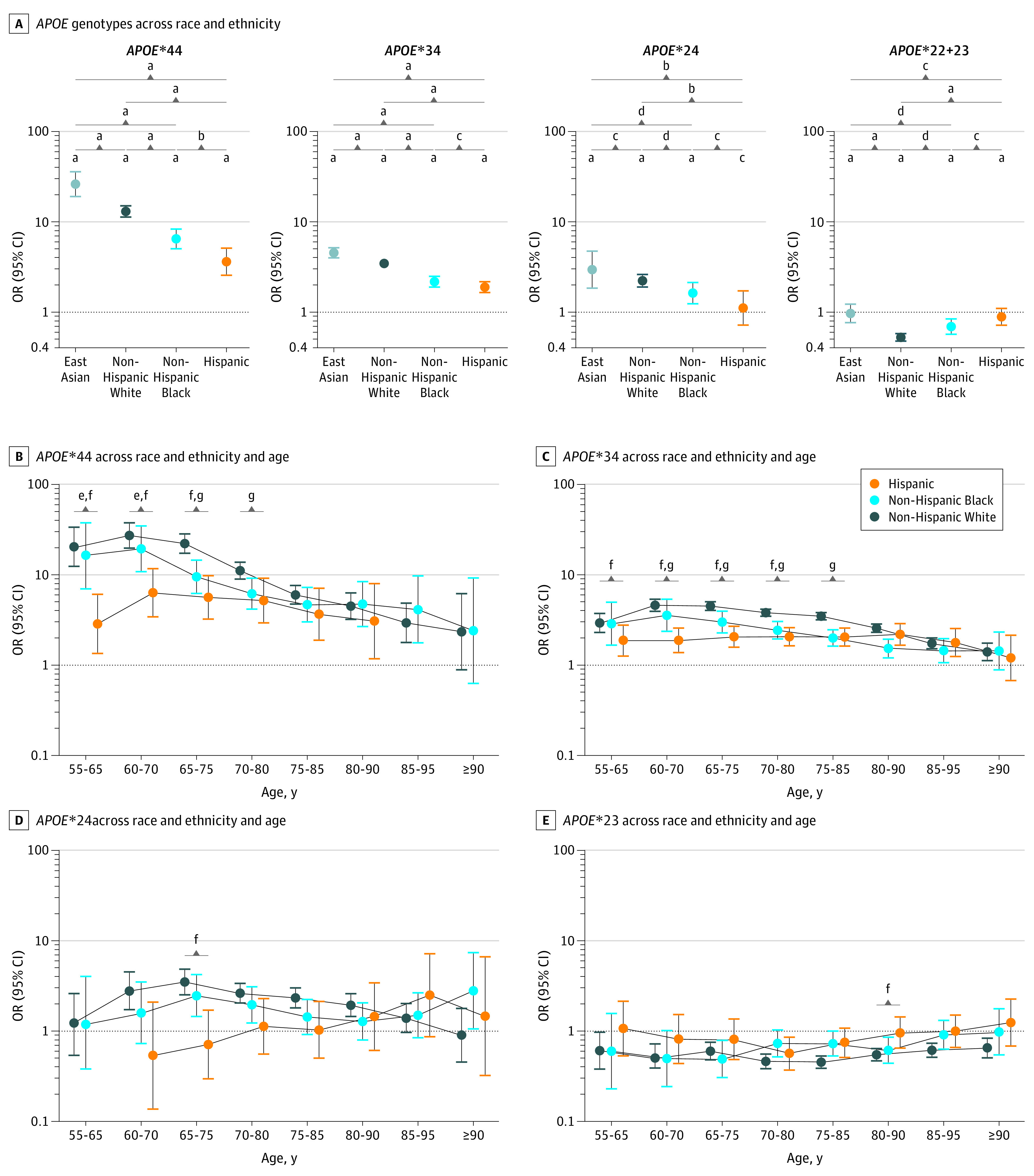
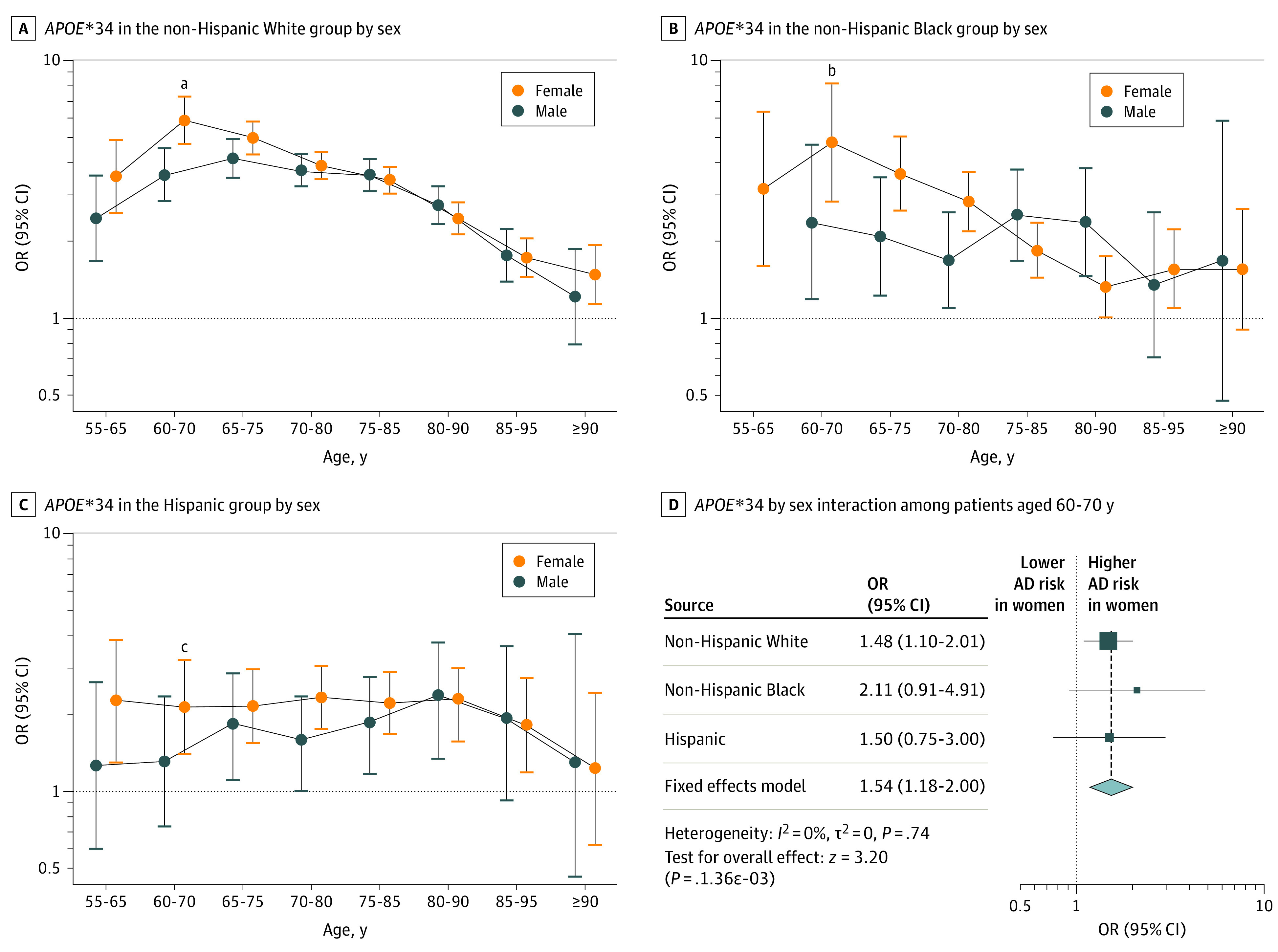
Importance: Apolipoprotein E (APOE)*2 and APOE*4 are, respectively, the strongest protective and risk-increasing, common genetic variants for late-onset Alzheimer disease (AD), making APOE status highly relevant toward clinical trial design and AD research broadly. The associations of APOE genotypes with AD are modulated by age, sex, race and ethnicity, and ancestry, but these associations remain unclear, particularly among racial and ethnic groups understudied in the AD and genetics research fields. Objective: To assess the stratified associations of APOE genotypes with AD risk across sex, age, race and ethnicity, and global population ancestry. Design, Setting, Participants: This genetic association study included case-control, family-based, population-based, and longitudinal AD-related cohorts that recruited referred and volunteer participants. Data were analyzed between March 2022 and April 2023. Genetic data were available from high-density, single-nucleotide variant microarrays, exome microarrays, and whole-exome and whole-genome sequencing. Summary statistics were ascertained from published AD genetic studies. Main Outcomes and Measures: The main outcomes were risk for AD (odds ratios [ORs]) and risk of conversion to AD (hazard ratios [HRs]), with 95% CIs. Risk for AD was evaluated through case-control logistic regression analyses. Risk of conversion to AD was evaluated through Cox proportional hazards regression survival analyses. Results: Among 68 756 unique individuals, analyses included 21 852 East Asian (demographic data not available), 5738 Hispanic (68.2% female; mean [SD] age, 75.4 [8.8] years), 7145 non-Hispanic Black (hereafter referred to as Black) (70.8% female; mean [SD] age, 78.4 [8.2] years), and 34 021 non-Hispanic White (hereafter referred to as White) (59.3% female; mean [SD] age, 77.0 [9.1] years) individuals. There was a general, stepwise pattern of ORs for APOE*4 genotypes and AD risk across race and ethnicity groups. Odds ratios for APOE*34 and AD risk attenuated following East Asian (OR, 4.54; 95% CI, 3.99-5.17),White (OR, 3.46; 95% CI, 3.27-3.65), Black (OR, 2.18; 95% CI, 1.90-2.49) and Hispanic (OR, 1.90; 95% CI, 1.65-2.18) individuals. Similarly, ORs for APOE*22+23 and AD risk attenuated following White (OR, 0.53, 95% CI, 0.48-0.58), Black (OR, 0.69, 95% CI, 0.57-0.84), and Hispanic (OR, 0.89; 95% CI, 0.72-1.10) individuals, with no association for Hispanic individuals. Deviating from the global pattern of ORs, APOE*22+23 was not associated with AD risk in East Asian individuals (OR, 0.97; 95% CI, 0.77-1.23). Global population ancestry could not explain why Hispanic individuals showed APOE associations with less pronounced AD risk compared with Black and White individuals. Within Black individuals, decreased global African ancestry or increased global European ancestry showed a pattern of APOE*4 dosage associated with increasing AD risk, but no such pattern was apparent for APOE*2 dosage with AD risk. The sex-by-age–specific interaction effect of APOE*34 among White individuals (higher risk in women) was reproduced but shifted to ages 60 to 70 years (OR, 1.48; 95% CI, 1.10-2.01) and was additionally replicated in a meta-analysis of Black individuals and Hispanic individuals (OR, 1.72; 95% CI, 1.01-2.94). Conclusion and Relevance: Through recent advances in AD-related genetic cohorts, this study provided the largest-to-date overview of the association of APOE with AD risk across age, sex, race and ethnicity, and population ancestry. These novel insights are critical to guide AD clinical trial design and research.
Overview
The claims and statistics of this paper haven’t been checked yet.
Run the check — free, no account needed. It reads the open-access text and checks the sources it cites.
Integrity signals
Registry
Cites
Statistics
Figures
Verification
Claims the paper makes
The claims and statistics of this paper haven’t been checked yet.
Run the check — free, no account needed. It reads the open-access text and checks the sources it cites.
Claims other papers make about this one
Each is checked against this paper’s own text: does it say what the citing paper says it does?
The source backs part of the claim, not all of it — or backs it for a different population, condition or comparison.
In the citing paper
“Even more puzzling than these differences in APOEε4-linked AD risk are those associated with the APOEε2 allele; this study found that the protective effect of APOEε2 is attenuated in Black versus white people, whereas in Hispanic and East Asian individuals, the APOEε2 allele confers essentially no protection against AD relative to APOEε3 homozygosis, and only in the presence of APOEε4 does APOEε2”
From Multifaceted roles of APOE in Alzheimer disease (2024) · cites this paper as [10]
Experimental — accuracy not yet measuredThe source backs part of the claim, not all of it — or backs it for a different population, condition or comparison.
In the citing paper
“Rather, age and sex moderate the effects of the APOE genotype on AD risk so that the risk associated with the APOEε3/ε4 genotype is highest in women of ages 60–70 years (or 70–80 years according to ref. 6) but decreases in older women and equalizes to that of non-Hispanic White, Black and Hispanic men of the same age10.”
From Multifaceted roles of APOE in Alzheimer disease (2024) · cites this paper as [10]
Experimental — accuracy not yet measuredThe source backs part of the claim, not all of it — or backs it for a different population, condition or comparison.
In the citing paper
“In the analysis, APOE allele frequencies for East Asian, white, Black and Hispanic people were as follows: APOEε2 carriers 5.6%, 11.1%, 19.7% and 10.6%; APOEε3 homozygotes 72.8%, 50.6%, 43.3% and 61.3% and APOEε4 carriers 21.6%, 40.6%, 41.6% and 29.9%, respectively10.”
From Multifaceted roles of APOE in Alzheimer disease (2024) · cites this paper as [10]
Experimental — accuracy not yet measuredThe cited source says what the claim attributes to it.
In the citing paper
“Compared with E3, E4 confers up to a 13-fold increase in risk for AD in homozygous carriers1.”
From APOE4 to APOE2 allelic switching in mice improves Alzheimer’s disease-related metabolic signatures, neuropathology and cognition (2025) · cites this paper as [1]
The cited source says what the claim attributes to it.
In the citing paper
“First, the degree of risk and protection afforded by E4 and E2 respectively vary according to ancestry1,59–62.”
From APOE4 to APOE2 allelic switching in mice improves Alzheimer’s disease-related metabolic signatures, neuropathology and cognition (2025) · cites this paper as [1]
The cited source says what the claim attributes to it.
In the citing paper
“APOE remains the strongest common genetic determinant of late-onset Alzheimer disease (AD) 1 , but the molecular basis of its effect is still unresolved.”
From Association of Rare APOE Missense Variants R189C and W276C With Risk of Alzheimer Disease (2026) · cites this paper as [1]
The cited source says what the claim attributes to it.
In the citing paper
“Notably, this age × sex interaction with the APOEε3/ε4 genotype was not only seen in non-Hispanic White people but also replicated in Black and Hispanic individuals via meta-analysis of both groups, suggesting that the interaction is independent of race and ethnicity10.”
From Multifaceted roles of APOE in Alzheimer disease (2024) · cites this paper as [10]
The cited source says what the claim attributes to it.
In the citing paper
“Among the AD susceptibility genes/loci identified to date, APOE remains the most significant genetic risk factor across populations.”
From Association of rare APOE missense variants with Alzheimer's disease in the Japanese population (2025) · cites this paper as [10]
Self-check
Percentages, sums and reported differences re-computed from the paper’s own numbers.
The self-check needs the paper’s full text.
Citations
Cites
A global reference for human genetic variation
The 1000 Genomes Project Consortium, authors, C., Auton, A., Abecasis, G. R., Steering committee, Altshuler, D. M., Durbin, R. M., Abecasis, G. R., Bentley, D. R., Chakravarti, A., et al. (2015) · Nature · doi:10.1038/nature15393 · Cited by 18,247
Next-generation genotype imputation service and methods
Das, S., Forer, L., Schönherr, S., Sidore, C., Locke, A. E., Kwong, A., Vrieze, S. I., Chew, E. Y., Levy, S., McGue, M., et al. (2016) · Nature Genetics · doi:10.1038/ng.3656 · Cited by 3,808
Sequencing of 53,831 diverse genomes from the NHLBI TOPMed Program
Taliun, D., Harris, D. N., Kessler, M. D., Carlson, J., Szpiech, Z. A., Torres, R., Taliun, S. A. G., Corvelo, A., Gogarten, S. M., Kang, H. M., et al. (2021) · Nature · doi:10.1038/s41586-021-03205-y · Cited by 2,213
Updated Guidance on the Reporting of Race and Ethnicity in Medical and Science Journals
Flanagin, A., Frey, T., Christiansen, S. L., & AMA Manual of Style Committee (2021) · JAMA · doi:10.1001/jama.2021.13304 · Cited by 1,615
Sex modifies the APOE ‐related risk of developing Alzheimer disease
Altmann, A., Tian, L., Henderson, V. W., Greicius, M. D., & Alzheimer's Disease Neuroimaging Initiative Investigators (2014) · Annals of Neurology · doi:10.1002/ana.24135 · Cited by 891
Self-citationThe genetic ancestry of African Americans, Latinos, and European Americans across the United States
Bryc, K., Durand, E. Y., Macpherson, J. M., Reich, D., & Mountain, J. L. (2015) · The American Journal of Human Genetics · doi:10.1016/j.ajhg.2014.11.010 · Cited by 712
Apolipoprotein E Genotype and Sex Risk Factors for Alzheimer Disease: A Meta-analysis
Neu, S. C., Pa, J., Kukull, W., Beekly, D., Kuzma, A., Gangadharan, P., Wang, L.-S., Romero, K., Arneric, S. P., Redolfi, A., et al. (2017) · JAMA Neurology · doi:10.1001/jamaneurol.2017.2188 · Cited by 674
Race and Genetic Ancestry in Medicine — A Time for Reckoning with Racism
Borrell, L. N., Elhawary, J. R., Fuentes‐Afflick, E., Witonsky, J. I., Bhakta, N. R., Wu, A. H. B., Bibbins-Domingo, K. B., Rodríguez‐Santana, J., LeNoir, M. A., Gavin, J. R., et al. (2021) · New England Journal of Medicine · doi:10.1056/nejmms2029562 · Cited by 666
A Quarter Century of APOE and Alzheimer’s Disease: Progress to Date and the Path Forward
Belloy, M. E., Napolioni, V., & Greicius, M. D. (2019) · Neuron · doi:10.1016/j.neuron.2019.01.056 · Cited by 570
Self-citationAncestral origin of ApoE ε4 Alzheimer disease risk in Puerto Rican and African American populations
Rajabli, F., Feliciano, B. E., Celis, K., Hamilton-Nelson, K. L., Whitehead, P. L., Adams, L. D., Bussies, P. L., Manrique, C. P., Rodriguez, A., Rodriguez, V., et al. (2018) · PLOS Genetics · doi:10.1371/journal.pgen.1007791 · Cited by 206
Self-citation
Cited by
Sorted by citations
2025 Alzheimer's disease facts and figures
(2025) · Alzheimer s & Dementia · doi:10.1002/alz.70235 · Cited by 642
APOE4 homozygosity represents a distinct genetic form of Alzheimer’s disease
Fortea, J., Pegueroles, J., Alcolea, D., Belbin, O., Dols-Icardo, O., Vaqué-Alcázar, L., Videla, L., Gispert, J. D., Suárez-Calvet, M., Johnson, S. C., et al. (2024) · Nature Medicine · doi:10.1038/s41591-024-02931-w · Cited by 369
Donanemab: Appropriate use recommendations
Rabinovici, G. D., Selkoe, D. J., Schindler, S. E., Aisen, P., Apostolova, L. G., Atri, A., Greenberg, S. M., Hendrix, S. B., Petersen, R. C., Weiner, M., et al. (2025) · The Journal of Prevention of Alzheimer's Disease · doi:10.1016/j.tjpad.2025.100150 · Cited by 278
Updates in Alzheimer's disease: from basic research to diagnosis and therapies
Liu, E., Zhang, Y., & Wang, J. (2024) · Translational Neurodegeneration · doi:10.1186/s40035-024-00432-x · Cited by 241
Multifaceted roles of APOE in Alzheimer disease
Jackson, R. J., Hyman, B. T., & Serrano-Pozo, A. (2024) · Nature Reviews Neurology · doi:10.1038/s41582-024-00988-2 · Cited by 193
Microglial activation states and their implications for Alzheimer's Disease
Valiukas, Z., Tangalakis, K., Apostolopoulos, V., & Feehan, J. (2025) · The Journal of Prevention of Alzheimer s Disease · doi:10.1016/j.tjpad.2024.100013 · Cited by 167
APOE3ch alters microglial response and suppresses Aβ-induced tau seeding and spread
Chen, Y., Song, S., Parhizkar, S., Lord, J., Zhu, Y., Strickland, M. R., Wang, C., Park, J., Tabor, G. T., Jiang, H., et al. (2024) · Cell · doi:10.1016/j.cell.2023.11.029 · Cited by 120
Alzheimer’s disease as type 3 diabetes: understanding the link and implications
Kciuk, M., Kruczkowska, W., Gałęziewska, J., Wanke, K., Kałuzińska-Kołat, Ż., Aleksandrowicz, M., & Kontek, R. (2024) · International Journal of Molecular Sciences · doi:10.3390/ijms252211955 · Cited by 98
Apolipoprotein E in Alzheimer’s disease: molecular insights and therapeutic opportunities
Belaidi, A. A., Bush, A. I., & Ayton, S. (2025) · Molecular Neurodegeneration · doi:10.1186/s13024-025-00843-y · Cited by 91
Apolipoprotein E in Alzheimer’s disease trajectories and the next-generation clinical care pathway
Narasimhan, S., Holtzman, D. M., Apostolova, L. G., Cruchaga, C., Masters, C. L., Hardy, J., Villemagne, V. L., Bell, J. S., Cho, M., & Hampel, H. J. (2024) · Nature Neuroscience · doi:10.1038/s41593-024-01669-5 · Cited by 70
Rare genetic variation in fibronectin 1 (FN1) protects against APOEε4 in Alzheimer’s disease
Bhattarai, P., Gunasekaran, T. I., Belloy, M. E., Reyes‐Dumeyer, D., Jülich, D., Tayran, H., Yılmaz, E., Flaherty, D., Turgutalp, B., Sukumar, G., et al. (2024) · Acta Neuropathologica · doi:10.1007/s00401-024-02721-1 · Cited by 64
Self-citationBougea, A. M., & Gourzis, P. (2024) · Journal of Clinical Medicine · doi:10.3390/jcm13164661 · Cited by 43
2026 Alzheimer's disease facts and figures
(2026) · Alzheimer s & Dementia · doi:10.1002/alz.71345 · Cited by 69
APOE genotype determines cell-type-specific pathological landscape of Alzheimer’s disease
Li, Z., Martens, Y. A., Ren, Y., Jin, Y., Sekiya, H., Doss, S. V., Kouri, N., Castanedes-Casey, M., Christensen, T. A., Miller Nevalainen, L. B., et al. (2025) · Neuron · doi:10.1016/j.neuron.2025.02.017 · Cited by 39
Alzheimer's Disease Sequencing Project release 4 whole genome sequencing dataset
Leung, Y. Y., Lee, W., Kuzma, A. B., Nicaretta, H. I., Valladares, O., Gangadharan, P., Qu, L., Zhao, Y., Ren, Y., Cheng, P., et al. (2025) · Alzheimer s & Dementia · doi:10.1002/alz.70237 · Cited by 40
Self-citationCousins, K. A. Q., Korecka, M., Wan, Y., Vulaj, A., Brown, C. D., Tropea, T. F., Lee, E. B., Tosun, D., Landau, S. M., Okonkwo, O. C., et al. (2025) · Alzheimer s & Dementia · doi:10.1002/alz.70469 · Cited by 35
Kloske, C. M., Belloy, M. E., Blue, E. E., Bowman, G. R., Carrillo, M. C., Chen, X., Chiba‐Falek, O., Davis, A. A., Paolo, G. D., Garretti, F., et al. (2024) · Alzheimer's & Dementia · doi:10.1002/alz.13877 · Cited by 33
“…evidence suggests that the frequencies of the major APOE alleles differ dramatically across geographical, racial, and ethnic groups, the genetic-environmental interplay heterogeneously impacts disease risk within those populations, 27–29 and APOE -related risk of AD may be sex-dependent.”
BackgroundSelf-citationA comprehensive analysis of APOE genotype effects on human brain structure in the UK Biobank
Heise, V., Offer, A. R., Whiteley, W. N., Mackay, C. E., Armitage, J., & Parish, S. (2024) · Translational Psychiatry · doi:10.1038/s41398-024-02848-5 · Cited by 31
APOE4 impact on soluble and insoluble tau pathology is mostly influenced by amyloid-β
Cicognola, C., Salvadó, G., Smith, R. A., Palmqvist, S., Stomrud, E., Betthauser, T. J., Johnson, S. C., Janelidze, S., Mattsson, N., Hansson, O., et al. (2025) · Brain · doi:10.1093/brain/awaf016 · Cited by 31
APOE4 , Blood Neurodegenerative Biomarkers, and Cognitive Decline in Community-Dwelling Older Adults
Ng, T. K. S., Beck, T. L., Boyle, P. A., Dhana, K., Desai, P., Evans, D. A., & Rajan, K. B. (2025) · JAMA Network Open · doi:10.1001/jamanetworkopen.2025.8903 · Cited by 29
Role of the X Chromosome in Alzheimer Disease Genetics
Belloy, M. E., Guen, Y. L., Stewart, I., Williams, K., Herz, J., Sherva, R., Zhang, R., Merritt, V. C., Panizzon, M. S., Hauger, R. L., et al. (2024) · JAMA Neurology · doi:10.1001/jamaneurol.2024.2843 · Cited by 36
Self-citationChen, J., Zhao, S., Zhou, Y., Wang, L., Chen, Q., & Zheng, K. (2025) · BioScience Trends · doi:10.5582/bst.2025.01148 · Cited by 29
Bonkhoff, A. K., Coughlan, G., Perosa, V., Alhadid, K., Schirmer, M. D., Regenhardt, R. W., van Veluw, S. J., Buckley, R. F., Fox, M., & Rost, N. S. (2025) · Science Advances · doi:10.1126/sciadv.adt9243 · Cited by 26
Sex Differences in Apolipoprotein E and Alzheimer Disease Pathology Across Ancestries
Xu, X., Kwon, J., Yan, R., Apio, C., Song, S. C., Heo, G., Yang, Q., Timsina, J., Liu, M., Budde, J., et al. (2025) · JAMA Network Open · doi:10.1001/jamanetworkopen.2025.0562 · Cited by 30
A manifesto for Alzheimer’s disease drug discovery in the era of disease-modifying therapies
Hering, H., Bussière, T., Liu, C., Glajch, K. E., Weihofen, A., Grogan, J. L., & Walsh, D. M. (2025) · Molecular Neurodegeneration · doi:10.1186/s13024-025-00872-7 · Cited by 28
Systematic review and meta‐analysis of bulk RNAseq studies in human Alzheimer's disease brain tissue
Heberle, B. A., Fox, K. L., Libermann, L. L., Xavier, S. R. M., Dallarosa, G. T., Santos, R. C., Fardo, D. W., Viola, T. W., & Ebbert, M. (2025) · Alzheimer s & Dementia · doi:10.1002/alz.70025 · Cited by 30
The proportion of Alzheimer’s disease attributable to apolipoprotein E
Williams, D. M., Heikkinen, S., Hiltunen, M. O., FinnGen, Davies, N. M., & Anderson, E. L. (2026) · npj Dementia · doi:10.1038/s44400-025-00045-9 · Cited by 27
Abushakra, S. R., Power, A., Watson, D., Porsteinsson, A. P., Sabbagh, M., MacSweeney, E., Cohen, S., Boada, M., Doraiswamy, P. M., Liang, E., et al. (2025) · Drugs · doi:10.1007/s40265-025-02250-5 · Cited by 31
Lee, H., Pearse, R. V., Lish, A. M., Pan, C., Augur, Z. M., Terzioğlu, G., Gaur, P., Liao, M., Fujita, M., Tio, E. S., et al. (2025) · Glia · doi:10.1002/glia.24677 · Cited by 21
Walker, K. A., An, Y., Moghekar, A., Moaddel, R., Duggan, M. R., Peng, Z., Tian, Q., Pilling, L. C., Drouin, S. M., Espeland, M. A., et al. (2024) · Molecular Neurodegeneration · doi:10.1186/s13024-024-00772-2 · Cited by 21
Raya, M. A., Zeltzer, E., Blazhenets, G., Schonhaut, D. R., Allen, I. E., Carrillo, M. C., Gatsonis, C. G., Hanna, L., Hillner, B. E., Iaccarino, L., et al. (2025) · Alzheimer s & Dementia · doi:10.1002/alz.70304 · Cited by 22
Protective genetic variants against Alzheimer's disease
Mariño, C., Malotaux, V., Giudicessi, A., Aguillon, D. F., Falla, D. S., Lopera, F. J., & Quiroz, Y. T. (2025) · The Lancet Neurology · doi:10.1016/s1474-4422(25)00116-4 · Cited by 22
Sex differences and the role of estrogens in the immunological underpinnings of Alzheimer's disease
Price, B. R., Walker, K. A., Eissman, J. M., Suryadevara, V., Sime, L. N., Hohman, T. J., & Gordon, M. N. (2025) · Alzheimer s & Dementia Translational Research & Clinical Interventions · doi:10.1002/trc2.70139 · Cited by 25
Proteins linking APOE ɛ4 with Alzheimer's disease
Oveisgharan, S., Yu, L., Lopes, K. D. P., Tasaki, S., Wang, Y., Menon, V., Schneider, J. A., Seyfried, N. T., & Bennett, D. A. (2024) · Alzheimer s & Dementia · doi:10.1002/alz.13867 · Cited by 18
Golden, L. R., Siano, D. S., Stephens, I. O., MacLean, S. M., Saito, K., Nolt, G. L., Funnell, J. L., Pallerla, A. V., Lee, S., Smith, C., et al. (2025) · Nature Neuroscience · doi:10.1038/s41593-025-02094-y · Cited by 18
Insomnia and risk of all-cause dementia: A systematic review and meta-analysis
Meng, M., Shen, X., Xie, Y., Lan, R., & Zhu, S. (2025) · PLoS ONE · doi:10.1371/journal.pone.0318814 · Cited by 21
Molecular mechanisms implicated in protein changes in the Alzheimer’s disease human hippocampus
Nguyen, H. D., Kim, W.-K., & Vu, G. H. (2024) · Mechanisms of Ageing and Development · doi:10.1016/j.mad.2024.111930 · Cited by 17
Sleep Disordered Breathing and Neurocognitive Disorders
Ogbu, I. R., Menon, T., Chahil, V., Kahlon, A., Devanand, D., & Kalra, D. K. (2024) · Journal of Clinical Medicine · doi:10.3390/jcm13175001 · Cited by 19
Serrano‐Pozo, A., Escott‐Price, V., Grinberg, L. T., Pascoal, T. A., Suárez‐Calvet, M., Dubois, B., & Sperling, R. A. (2026) · The Lancet · doi:10.1016/s0140-6736(26)00198-4 · Cited by 20
APOE Genotype in the Era of Disease-Modifying Treatment With Monoclonal Antibodies Against Amyloid-β
Ossenkoppele, R., & van der Flier, W. M. (2023) · JAMA Neurology · doi:10.1001/jamaneurol.2023.4046 · Cited by 15
Tian, J., Jia, K., Wang, T., Guo, L., Xuan, Z., Michaelis, E. K., Swerdlow, R. H., Initiative, A. D. N., & Du, H. (2024) · Translational Psychiatry · doi:10.1038/s41398-024-02958-0 · Cited by 17
Navigating the Alzheimer’s Biomarker Landscape: A Comprehensive Analysis of Fluid-Based Diagnostics
Abiad, E. E., Al-Kuwari, A., Al-Aani, U., Jaidah, Y. A., & Châari, A. (2024) · Cells · doi:10.3390/cells13221901 · Cited by 17
APOE ε4–associated heterogeneity of neuroimaging biomarkers across the Alzheimer's disease continuum
Mares, J. A., Kumar, G., Sharma, A., Emrani, S., McIntire, L. B., Guo, J., Menon, V., Nuriel, T., & Initiative, A. D. N. (2024) · Alzheimer s & Dementia · doi:10.1002/alz.14392 · Cited by 16
Phenome-wide association of APOE alleles in the All of Us Research Program
Khajouei, E., Ghisays, V., Piras, I. S., Martinez, K. L., Vicenti, A. T., Naymik, M., Ngo, P., Tran, T. C., Denny, J. C., Wheeler, T. J., et al. (2025) · EBioMedicine · doi:10.1016/j.ebiom.2025.105768 · Cited by 14
ApoE-calypse tau: ApoE–tau synergy in Alzheimer’s disease
Lennol, M. P., Bordier, C., Kamelher, L., Ulrich, J. D., Holtzman, D. M., & Gratuze, M. (2025) · The Journal of Experimental Medicine · doi:10.1084/jem.20250965 · Cited by 14
Cho, S. B. (2024) · International Journal of Molecular Sciences · doi:10.3390/ijms25042211 · Cited by 12
Sex-related differences in genetically determined Alzheimer’s disease
Soriano, L. D. H., Wagemann, O., Bejanin, A., Levin, J., & Fortea, J. (2025) · Frontiers in Aging Neuroscience · doi:10.3389/fnagi.2025.1522434 · Cited by 16
APOE and Alzheimer's disease and related dementias risk among 12,221 Hispanics/Latinos
Barral, S., Yang, Z., Phillips, N., Barber, R. C., Brickman, A. M., Honig, L. S., Cieza, B., Reyes‐Dumeyer, D., Mayeux, R. P., Rajabli, F., et al. (2025) · Alzheimer s & Dementia · doi:10.1002/alz.70138 · Cited by 14
Self-citationProteomic Insight Into Alzheimer's Disease Pathogenesis Pathways
Ryu, T., Kim, K., Asiimwe, N., & Na, C. H. (2025) · PROTEOMICS · doi:10.1002/pmic.202400298 · Cited by 12
The Risk of Alzheimer Disease in APOE4 Homozygotes
Reiman, E. M., Ghisays, V., & Langbaum, J. B. S. (2025) · JAMA Neurology · doi:10.1001/jamaneurol.2025.0639 · Cited by 14
Shvetcov, A., Thomson, S., Cho, A., Wilkins, H., Reed, J. H., Swerdlow, R. H., Brown, D. A., Initiative, T. A. D. N., & Finney, C. A. (2024) · Aging Cell · doi:10.1111/acel.14439 · Cited by 11
Giorgio, J., Jonson, C., Wang, Y., Yokoyama, J. S., Wang, J., Jagust, W. J., & Initiative, O. B. O. T. A. D. N. (2025) · Nature Communications · doi:10.1038/s41467-025-60370-8 · Cited by 14
Liu, S., Wu, G., Ma, X., Kai, X. U., Lan, X., Wang, L., Li, H., Gu, D., Wang, M., & Liu, J. (2026) · Frontiers in Aging Neuroscience · doi:10.3389/fnagi.2025.1683158 · Cited by 10
A multifactorial lens on risk factors promoting the progression of Alzheimer’s disease
Parker, J., Moris, J. M., Goodman, L. C., Paidisetty, V. K., Vanegas, V., Turner, H. A., Melgar, D., & Koh, Y. (2024) · Brain Research · doi:10.1016/j.brainres.2024.149262 · Cited by 12
Trends and Disparities in Alzheimer’s Disease Mortality in the United States: The Impact of COVID-19
Chaddha, J. K., Blaney, E., Al‐Salahat, A., Noor, A., Billion, T., Chen, Y.-T., Tauseef, A., Sood, A., & Jabbar, A. B. A. (2025) · NeuroSci · doi:10.3390/neurosci6010016 · Cited by 10
ABCA7 Loss-of-Function Variants Impact Phosphatidylcholine Metabolism in the Human BrainPreprint
von Maydell, D. K., Wright, S., Pao, P., Staab, C., King, O., Spitaleri, A., Bonner, J. M., Liu, L., Yu, C. J., Chiu, C.-C., et al. (2023) · bioRxiv (Cold Spring Harbor Laboratory) · doi:10.1101/2023.09.05.556135 · Cited by 10
Huang, L., Hu, W., Cui, L., Zhang, Z., Lu, Y., Li, Q., Huang, Q., Wang, L., Jiang, J., Guo, Q., et al. (2024) · Alzheimer s & Dementia · doi:10.1002/alz.14155 · Cited by 8
Zhu, Y., Benos, P. V., & Chikina, M. D. (2024) · Bioinformatics · doi:10.1093/bioinformatics/btae411 · Cited by 10
Ren, L., Hu, F., Walsh, S., Jin, X., Hu, Y., Li, S., Jiang, Y., Yu, M., Wu, Y., Zang, G. Y., et al. (2025) · Alzheimer s & Dementia · doi:10.1002/alz.70090 · Cited by 13
Gong, J., & Zaninotto, P. (2025) · International Journal of Environmental Research and Public Health · doi:10.3390/ijerph22060815 · Cited by 9
Brickman, A. M., Muller, C., Warren, J. R., Grodsky, E., Kim, S., Culbertson, M. J., Thyagarajan, B., & Manly, J. J. (2025) · JAMA Network Open · doi:10.1001/jamanetworkopen.2025.45046 · Cited by 9
Dissecting the genetic and proteomic risk factors for delirium
Raptis, V., Bhak, Y., Cannings, T. I., MacLullich, A. M. J., & Tenesa, A. (2025) · Nature Aging · doi:10.1038/s43587-025-01018-6 · Cited by 9
Risk factors for the neurodegenerative dementias in the Western Pacific region
Clarke, A. J., Brodtmann, A. G., Irish, M., Mowszowski, L., Radford, K. A., Naismith, S. L., Mok, V., Kiernan, M. C., Halliday, G. M., & Ahmed, R. M. (2024) · The Lancet Regional Health - Western Pacific · doi:10.1016/j.lanwpc.2024.101051 · Cited by 9
Merritt, V. C., Zhang, R., Sherva, R., Ly, M. T., Marra, D. E., Panizzon, M. S., Tsuang, D. W., Hauger, R. L., The MVP Cognitive Decline and Dementia During Aging Working Group, V. M. V. P., & Logue, M. W. (2024) · Journal of Alzheimer s Disease · doi:10.1177/13872877241299130 · Cited by 10
Xu, Y.-X., Qiao, M., Gunasekaran, T. I., Gu, Y., Reyes-Dumeyer, D., Piriz, A., Sanchez, D., Soriano, B., Franco, Y., Coronado, Z. D., et al. (2025) · The Lancet Regional Health - Americas · doi:10.1016/j.lana.2025.101198 · Cited by 10
Langbaum, J. B. S., Bradbury, A. R., Egleston, B. L., Wood, E. M., Langlois, C. M., Largent, E. A., Harkins, K. A., Erickson, C. M., Stites, S. D., Oyen, E., et al. (2025) · The Lancet Healthy Longevity · doi:10.1016/j.lanhl.2025.100778 · Cited by 8
Recent advances in Alzheimer’s disease: From molecular mechanisms to therapeutic strategies
Rudman, M. D., Ulrich, J. D., & Holtzman, D. M. (2026) · Cell · doi:10.1016/j.cell.2026.06.006 · Cited by 12
Dementia risk scores, apolipoprotein E, and risk of Alzheimer's disease: One size does not fit all
Andrews, S. J., Boeriu, A. I., Belloy, M. E., Renton, A. E., Fulton‐Howard, B., Brenowitz, W. D., Yaffe, K. S., & Initiative, A. D. N. (2024) · Alzheimer s & Dementia · doi:10.1002/alz.14300 · Cited by 6
Self-citationDasadhikari, S., Ghosh, S., Pal, S., Knowles, T. P. J., & Garai, K. (2025) · Communications Chemistry · doi:10.1038/s42004-025-01524-z · Cited by 9
Sindi, S., Yerramalla, M. S., Barbera, M., Thunborg, C., Li, Y., Jönsson, L., Mangialasche, F., Qiu, C., & Kivipelto, M. (2025) · Cerebral Circulation - Cognition and Behavior · doi:10.1016/j.cccb.2025.100385 · Cited by 8
Maguire, E., Winston, J., Ellwood, S. H., O’Donoghue, R., Shaw, B., Castillo-Morales, A., Keat, S., Evans, A., Marshall, I. J., Luckcuck, L., et al. (2025) · Stem Cell Reports · doi:10.1016/j.stemcr.2025.102570 · Cited by 7
Rodríguez, A., Calero, O., Veiga, S., Menacho-Román, M., Arribas, I., Cano, L., García-Ribas, G., & Calero, M. (2025) · Alzheimer's Research & Therapy · doi:10.1186/s13195-025-01811-w · Cited by 8
Olajide, T. N., Oladapo, O., Asogwa, C. S., Olajide, G., Oyekan, A., Fatola, A., Olanrewaju, T., Oyegbile, D., Ugbo, I., Oyoyo, H. D., et al. (2025) · Genes and Environment · doi:10.1186/s41021-025-00332-0 · Cited by 8
Independent effects of white matter lesion volume and APOE ɛ4 on ARIA‐H in A4 Study
Shirzadi, Z., Schultz, A. P., Loghmani, N., Yang, H., Ford, J. N., Yaari, R., Properzi, M. J., Yau, W. W., Liu, L., Rafii, M. S., et al. (2025) · Alzheimer s & Dementia · doi:10.1002/alz.70751 · Cited by 6
Li, J., Shao, W., Quan, W., Xu, L., Liu, P., Yang, J., & Peng, X. (2024) · Journal of Neuroinflammation · doi:10.1186/s12974-024-03219-z · Cited by 7
Aathira, N. S., Kaur, A., Kumar, A., Dar, G. M., Nimisha, Sharma, A. K., Bera, P., Mahajan, B., Chatterjee, A., & Saluja, S. S. (2025) · Neuroscience · doi:10.1016/j.neuroscience.2025.05.021 · Cited by 7
Nedelkov, D., Tsokolas, Z. E., Rodrigues, M. S., Sible, I. J., Han, S. D., Kerman, B. E., Renteln, M., Mack, W. J., Pascoal, T. A., Yassine, H. N., et al. (2025) · Alzheimer s Research & Therapy · doi:10.1186/s13195-025-01795-7 · Cited by 6
Abdullah, L. B., Zhou, Z., Alliey, N. A., Barber, R. C., Hall, J. R., & O’Bryant, S. E. (2025) · Frontiers in Neurology · doi:10.3389/fneur.2025.1627525 · Cited by 6
APOE genotype-dependent differences in human astrocytic energy metabolism
Budny, V., Bodenmann, C., Zürcher, K. J., Krüger, M., de Leeuw, S. M., Weber, R. Z., Rust, R., Ravotto, L., Ruminot, I., Barros, L. F., et al. (2025) · Frontiers in Cellular Neuroscience · doi:10.3389/fncel.2025.1603657 · Cited by 6
Ancestral genomic functional differences in oligodendroglia: implications for Alzheimer's disease
Ramírez, A. M., Nasciben, L. B., Moura, S., Coombs, L. E., Rajabli, F., DeRosa, B. A., Whitehead, P. L., Adams, L. D., Starks, T. D., Mena, P. R., et al. (2025) · Alzheimer s & Dementia · doi:10.1002/alz.70593 · Cited by 7
Self-citationTsui, J. S. M., Au, D. M., Uhm, H., Wong, W., Lo, R. M. N., Jiang, Y., Ip, F. C. F., Mok, K. Y., Wong, H. Y., Kwok, T. C. Y., et al. (2025) · Alzheimer s & Dementia · doi:10.1002/alz.70586 · Cited by 7
Huang, X., Huang, L., Tan, C., Wei, J.-M., Zhang, X.-H., Tan, L., & Xu, W. (2025) · Journal of Neurology · doi:10.1007/s00415-025-13434-0 · Cited by 6
APOE ε4 and Accelerated Cognitive Decline Among Cognitively Healthy Middle-Aged and Older Adults
Chung, Y.-C. E., Chung, R.-H., Hsu, C.-C., Liu, Y.-L., Lai, R.-H., Hung, W.-J., Wu, R., Jiang, Y., Chuang, S., Tsai, S. F., et al. (2026) · JAMA Network Open · doi:10.1001/jamanetworkopen.2026.0853 · Cited by 6
Macedo, A. C., Trudel, L., Therriault, J., Rahmouni, N., Aumont, É., Bezgin, G., Hosseini, S. A., Tissot, C., Chan, T., Servaes, S., et al. (2026) · Nature Aging · doi:10.1038/s43587-026-01143-w · Cited by 10
LMTK2 and CRB1 are two novel risk genes for Alzheimer's disease in Han Chinese
Xiao, X., Liu, H., Yao, R., Li, Y., Liao, X., Liu, Y., Zhou, Y., Wang, J., Tang, B., Jiao, B., et al. (2025) · The Journal of Prevention of Alzheimer s Disease · doi:10.1016/j.tjpad.2025.100087 · Cited by 6
Cook, N., Yang, C., Zeng, Y., Sivasankaran, S. K., Song, S., Talozzi, L., Western, D., Yang, C., Liu, Y., Guen, Y. L., et al. (2025) · medRxiv · doi:10.1101/2025.10.31.25339089 · Cited by 10
Self-citationAssociation of rare APOE missense variants with Alzheimer's disease in the Japanese population
Miyashita, A., Obinata, A., Hara, N., Mitsumori, R., Kaneda, D., Hashizume, Y., Sano, T., Takao, M., Gabdulkhaev, R., Tada, M., et al. (2025) · Journal of Alzheimer’s Disease · doi:10.1177/13872877251340710 · Cited by 5
Phillips, J., Dumitrescu, L. C., Archer, D. B., Regelson, A. N., Mukherjee, S., Lee, M. L., Choi, S., Scollard, P., Trittschuh, E. H., Kukull, W. A., et al. (2025) · Brain · doi:10.1093/brain/awaf106 · Cited by 6
Self-citationLife Purpose Lowers Risk for Cognitive Impairment in a United States Population-Based Cohort
Howard, N. C., Gerasimov, E. S., Wingo, T. S., & Wingo, A. P. (2025) · American Journal of Geriatric Psychiatry · doi:10.1016/j.jagp.2025.05.009 · Cited by 5
Potential diagnostic markers in Alzheimer's disease: current perspectives and future directions
Zheng, M., Wang, S., & Jia, J. (2025) · Neurodegenerative Disease Management · doi:10.1080/17582024.2025.2554515 · Cited by 5
Targeting the cardiometabolic bottleneck to slow polypathology and cognitive decline
Hayes, C. A., & Younes, K. (2025) · Alzheimer s & Dementia · doi:10.1002/alz.70684 · Cited by 5
Dunk, M. M., Delac, L., Rapp, S. R., Driscoll, I. F., Latorre‐Leal, M., Farland, L. V., Haring, B., Harris, H. R., Jung, S. Y., Manson, J. E., et al. (2025) · Journal of Lipid Research · doi:10.1016/j.jlr.2025.100938 · Cited by 5
Vulnerability to memory decline in aging revealed by a mega-analysis of structural brain change
Dídac Vidal-piñeiro, A., Sørensen, Ø., Strømstad, M., Amlien, I. K., Baaré, W. F. C., Bartrés‐Faz, D., Brandmaier, A. M., Cattaneo, G., Düzel, S., Ghisletta, P., et al. (2025) · Nature Communications · doi:10.1038/s41467-025-66354-y · Cited by 14
Tran, T., Fu, M., Fung, J., Sankararaman, S., Elashoff, D. A., Vossel, K. A., & Chang, T. S. (2025) · npj Digital Medicine · doi:10.1038/s41746-025-02111-1 · Cited by 6
Wiedermann, C. J., Engl, A., Piccoliori, G., & von Strobele-Prainsack, D. H. (2026) · Diagnostics · doi:10.3390/diagnostics16020196 · Cited by 5
Biomarker-integrated prognostic stagings for Alzheimer’s Disease
Shin, D., Lee, S., Kim, J. P., Jang, H., Yun, J., Chun, M. Y., Ahn, J., Kim, S., Kim, K., Yoon, S., et al. (2026) · Nature Communications · doi:10.1038/s41467-026-68732-6 · Cited by 5
Lower Prevalence of Asymptomatic Alzheimer's Disease Among Healthy African Americans
Lah, J. J., Tian, G., Risk, B. B., Hanfelt, J., Wang, L., Zhao, L., Hales, C. M., Johnson, E. C. B., Elmor, M. B., Malakauskas, S., et al. (2024) · Annals of Neurology · doi:10.1002/ana.26960 · Cited by 5
Hensen, T., Ahmad, S., Kastenmüller, G., Kraaij, R., Ghanbari, M., Ikram, M. A., Kaddurah‐Daouk, R., & Thiele, I. (2024) · Gut Microbes Reports · doi:10.1080/29933935.2024.2443171 · Cited by 5
Chen, Z., He, Z., Chu, B. B., Gu, J., Morrison, T., Sabatti, C., & Candès, E. J. (2024) · PubMed · doi:10.48550/arxiv.2402.12724 · Cited by 4
He, Z., Nie, Y., Zhang, W., Liu, Y., Liu, Y., Xue, H., Ai, S., Feng, H., Zhou, Y., Zhang, J., et al. (2025) · Journal of Alzheimer s Disease · doi:10.1177/13872877251344253 · Cited by 4
Metadata
- Authors
- Belloy, M. E., Andrews, S. J., Le Guen, Y., Cuccaro, M., Farrer, L. A., Napolioni, V., & Greicius, M. D.
- Affiliations
- Department of Neurology and Neurological Sciences, Stanford University, Stanford, California
- University of California, San Francisco (US)
- University of Miami (US)
- Boston University (US)
- Università di Camerino (IT)
- Stanford University (US)
- Venue
- JAMA Neurology
- Publisher
- American Medical Association (AMA)
- Published
- 2023-12-01
- Volume
- 80
- Issue
- 12
- Pages
- 1284
- ISSN
- 2168-6149 (ISSN-L)
- PMC
- PMC10628838
- OpenAlex
- W4388410342
- Cited by
- 320
- References
- 38
- Citations by year
- 2026: 120 · 2025: 149 · 2024: 47 · 2023: 4
- FWCI
- 56.83
- Type
- journal article
- Language
- en
- Open access
- hybrid
- doi.org
- Licence
- cc-by
- Locations
- JAMA Neurology (publishedVersion, cc-by)
- PubMed Central (publishedVersion, cc-by)
- PubMed (publishedVersion)
- Unicam Scientific Publications (University of Camerino) (submittedVersion, cc-by)
- Digital Commons@Becker (Washington University School of Medicine) (submittedVersion, cc-by)
- Funders
- Alzheimer's Association (AARF-20-683984)
- European Commission (890650)
- National Institute on Aging (R01AG060747, P50AG047366, K99AG075238, U24AG021886, R00AG075238)
- H2020 Marie Skłodowska-Curie Actions
- Topics
- Life Sciences › Neuroscience › Cellular and Molecular Neuroscience › Alzheimer's disease research and treatments
- Health Sciences › Medicine › Psychiatry and Mental health › Dementia and Cognitive Impairment Research
- Life Sciences › Biochemistry, Genetics and Molecular Biology › Genetics › Genetic Associations and Epidemiology
- Keywords
- apolipoprotein E, APOE ε4, late-onset Alzheimer's disease, Alzheimer's disease risk, sex differences, age effects, population ancestry, racial and ethnic disparities, East Asian populations, Hispanic population, non-Hispanic Black population, non-Hispanic whites, genetic risk stratification, clinical trial design
- MeSH terms
- Aged, Alzheimer Disease, Antibodies, Monoclonal, Apolipoproteins E, Female, Genotype, Humans, Male, Middle Aged, Amyloid beta-Peptides, White People, Apolipoprotein E4
About these checks
Registry, retraction, Cites and statistics results are computed, not judged, with one exception: a printed reference that no index lists is read once by a model before it counts as a citation error. Claims are extracted by a model and kept only when their quote appears verbatim in the text; each cited source is then checked, with a model’s help, for whether it says what the claim relies on. Those verdicts can be wrong — read the claim’s quote and the cited source before relying on one.
Statistics and arithmetic are recomputed, not judged.
Confidence bands are shown only for fields calibrated on our annotated test set. None is calibrated yet, so no band is shown.
What counts as a claim ›How we measure confidence ›How we check this ›
Are you an author, or do you see a problem with this page? Request a review
