

The DOI matches its Crossref record; 26 of the 26 references it cites were found in a registry or an index.
Stratified Care vs Stepped Care for Depression: A Cluster Randomized Clinical Trial
Open accessAbstract
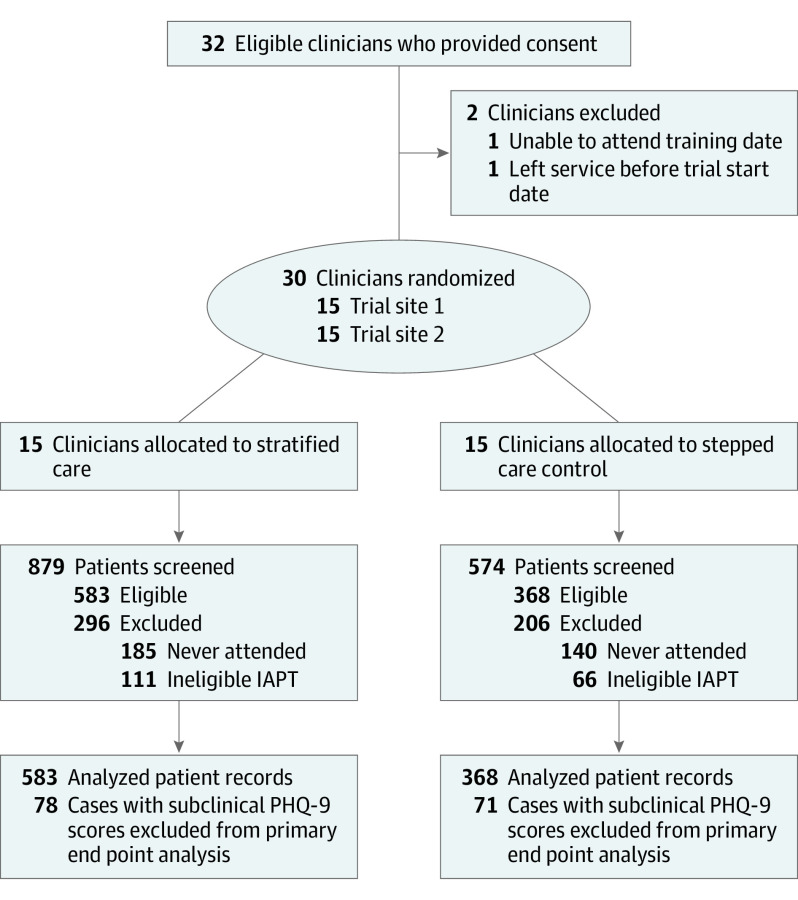
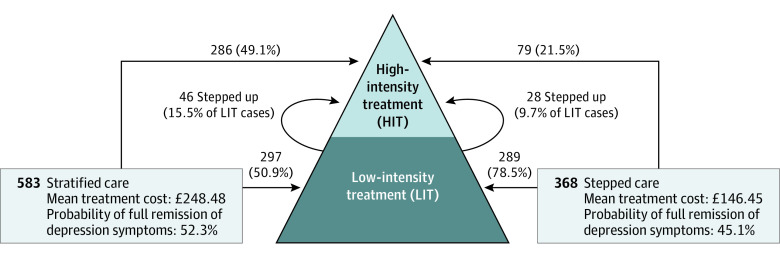
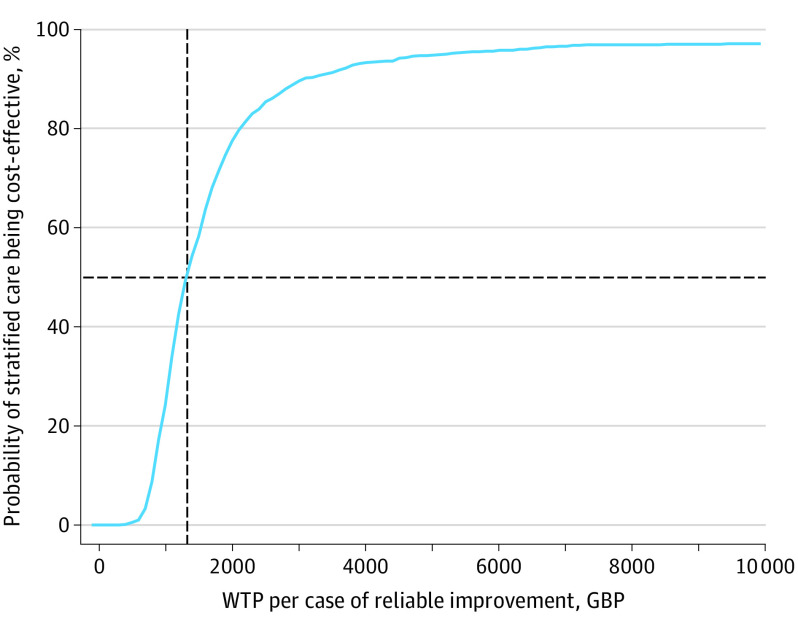
Importance: Depression is a major cause of disability worldwide. Although empirically supported treatments are available, there is scarce evidence on how to effectively personalize psychological treatment selection. Objective: To compare the clinical effectiveness and cost-effectiveness of 2 treatment selection strategies: stepped care and stratified care. Design, Setting, and Participants: This multisite, cluster randomized clinical trial recruited participants from the English National Health Service from July 5, 2018, to February 1, 2019. Thirty clinicians working across 4 psychological therapy services were randomly assigned to provide stratified (n = 15) or stepped (n = 15) care. In stepped care, patients sequentially access low-intensity guided self-help followed by high-intensity psychotherapy. In stratified care, patients are matched with either low- or high-intensity treatments at initial assessment. Data were analyzed from May 18, 2020, to October 13, 2021, using intention-to-treat principles. Interventions: All clinicians used the same interview schedule to conduct initial assessments with patients seeking psychological treatment for common mental disorders, but those in the stratified care group received a personalized treatment recommendation for each patient generated by a machine learning algorithm. Eligible patients received either stratified or stepped care (ie, treatment as usual). Main Outcomes and Measures: The preregistered outcome was posttreatment reliable and clinically significant improvement (RCSI) of depression symptoms (measured using the 9-item Patient Health Questionnaire). The RCSI outcome was compared between groups using logistic regression adjusted for baseline severity. Cost-effectiveness analyses compared incremental costs and health outcomes of the 2 treatment pathways. Results: A total of 951 patients were included (618 women among 950 with data available [65.1%]; mean [SD] age, 38.27 [14.53] years). The proportion of cases of RCSI was significantly higher in the stratified care arm compared with the stepped care arm (264 of 505 [52.3%] vs 134 of 297 [45.1%]; odds ratio, 1.40 [95% CI, 1.04-1.87]; P = .03). Stratified care was associated with a higher mean additional cost per patient (£104.5 [95% CI, £67.5-£141.6] [$139.83 (95% CI, $90.32-$189.48)]; P < .001) because more patients accessed high-intensity treatments (332 of 583 [56.9%] vs 107 of 368 [29.1%]; χ2 = 70.51; P < .001), but this additional cost resulted in an approximately 7% increase in the probability of RCSI. Conclusions and Relevance: In this cluster randomized clinical trial of adults with common mental disorders, stratified care was efficacious and cost-effective for the treatment of depression symptoms compared with stepped care. Stratified care can improve depression treatment outcomes at a modest additional cost. Trial Registration: isrctn.org Identifier: ISRCTN11106183.
Overview
The claims and statistics of this paper haven’t been checked yet.
Run the check — free, no account needed. It reads the open-access text and checks the sources it cites.
Integrity signals
Registry
Cites
Statistics
Figures
Verification
Claims the paper makes
The claims and statistics of this paper haven’t been checked yet.
Run the check — free, no account needed. It reads the open-access text and checks the sources it cites.
Claims other papers make about this one
Each is checked against this paper’s own text: does it say what the citing paper says it does?
The cited source doesn’t support the claim as written.
In the citing paper
“A two-arm waitlist-controlled RCT showed that increased pre–post global trait mindfulness mediated the effect of MBSR on lower posttreatment distress and avoidance in cancer patients [12].”
From Treatment condition as a moderator and change in trait mindfulness as a mediator of a brief mindfulness ecological momentary intervention for generalized anxiety disorder (2024) · cites this paper as [12]
Checked by a reasoning model — may be wrong.
Experimental — accuracy not yet measured
Self-check
Percentages, sums and reported differences re-computed from the paper’s own numbers.
The self-check needs the paper’s full text.
Citations
Cites
The PHQ-9: Validity of a brief depression severity measure
Kroenke, K., Spitzer, R. L., & Williams, J. B. W. (2001) · Journal of General Internal Medicine · doi:10.1046/j.1525-1497.2001.016009606.x · Cited by 44,910
A Brief Measure for Assessing Generalized Anxiety Disorder: The GAD-7
Spitzer, R. L., Kroenke, K., Williams, J. B. W., & Löwe, B. (2006) · Archives of Internal Medicine · doi:10.1001/archinte.166.10.1092 · Cited by 31,765
Jacobson, N. S., & Truax, P. (1991) · Journal of Consulting and Clinical Psychology · doi:10.1037/0022-006x.59.1.12 · Cited by 7,770
The Work and Social Adjustment Scale: a simple measure of impairment in functioning
Mundt, J. C., Marks, I. M., Shear, M. K., & Greist, J. M. (2002) · British Journal of Psychiatry · doi:10.1192/bjp.180.5.461 · Cited by 2,515
Bower, P., & Gilbody, S. (2005) · British Journal of Psychiatry · doi:10.1192/bjp.186.1.11 · Cited by 1,084
Shared decision making: really putting patients at the centre of healthcare
Stiggelbout, A. M., Weijden, T. V. D., Wit, M. P. T. D., Frosch, D., Legare, F., Montori, V. M., Trevena, L., & Elwyn, G. (2012) · BMJ · doi:10.1136/bmj.e256 · Cited by 1,014
The National Collaborating Centre for Mental Health
Kendall, T., & Pilling, S. (2004) · UCL Discovery (University College London) · Cited by 840
Clark, D. M. (2011) · International Review of Psychiatry · doi:10.3109/09540261.2011.606803 · Cited by 699
Prognosis research strategy (PROGRESS) 4: Stratified medicine research
Hingorani, A. D., van der Windt, D., Riley, R. D., Abrams, K. R., Moons, K. G. M., Steyerberg, E. W., Schroter, S., Sauerbrei, W., Altman, D. G., Hemingway, H., et al. (2013) · BMJ · doi:10.1136/bmj.e5793 · Cited by 534
Moran, P., Leese, M., Lee, T., Walters, P., Thornicroft, G., & MANN, A. H. (2003) · The British Journal of Psychiatry · doi:10.1192/bjp.183.3.228 · Cited by 449
Research works printed but not linked: 1
- Richards, 2011, Reach Out: National Programme Educator Materials to Support the Delivery of Training for Psychological Wellbeing Practitioners Delivering Low Intensity Interventions.
Cited by
Sorted by citations
Lam, R. W. M., Kennedy, S. H., Adams, G. C., Bahji, A., Beaulieu, S., Bhat, V., Blier, P., Blumberger, D. M., Brietzke, E. M., Chakrabarty, T., et al. (2024) · The Canadian Journal of Psychiatry · doi:10.1177/07067437241245384 · Cited by 435
Stade, E. C., Stirman, S. W., Ungar, L. H., Boland, C. L., Schwartz, H. A., Yaden, D. B., Sedoc, J., DeRubeis, R. J., Willer, R., & Eichstaedt, J. C. (2024) · npj Mental Health Research · doi:10.1038/s44184-024-00056-z · Cited by 391
Self-citationTreatment of Posttraumatic Stress Disorder: A State-of-the-art Review
Burback, L., Brémault‐Phillips, S., Nijdam, M. J., McFARLANE, A. C., & Vermetten, E. H. G. J. M. (2023) · Current Neuropharmacology · doi:10.2174/1570159x21666230428091433 · Cited by 251
González, P. C., He, A., Lam, E. K. M., Ng, I. M. C., Li, M. W., Hou, R., Chan, J. N.-M., Sahni, Y., Viñas‐Guasch, N., Miller, T., et al. (2025) · Psychological Medicine · doi:10.1017/s0033291724003295 · Cited by 255
Efficacy of Personalized Psychological Interventions: A Systematic Review and Meta-Analysis
Nye, A., Delgadillo, J., & Barkham, M. (2023) · Journal of Consulting and Clinical Psychology · doi:10.1037/ccp0000820 · Cited by 142
Self-citationMeasurement-Based and Data-Informed Psychological Therapy
Lutz, W., Schwartz, B., & Delgadillo, J. (2021) · Annual Review of Clinical Psychology · doi:10.1146/annurev-clinpsy-071720-014821 · Cited by 146
Self-citationDeisenhofer, A., Barkham, M., Beierl, E. T., Schwartz, B., Doorn, K. A., Beevers, C. G., Berwian, I. M., Blackwell, S. E., Bockting, C., Brakemeier, E., et al. (2023) · Behaviour Research and Therapy · doi:10.1016/j.brat.2023.104443 · Cited by 123
Self-citationVigod, S. N., Frey, B. N., Clark, C. T., Grigoriadis, S., Barker, L. C., Brown, H. K., Charlebois, J., Dennis, C., Fairbrother, N., Green, S. M., et al. (2025) · The Canadian Journal of Psychiatry · doi:10.1177/07067437241303031 · Cited by 91
Vieira, S., Liang, X., Guiomar, R. N. R. M., & Mechelli, A. (2022) · Clinical Psychology Review · doi:10.1016/j.cpr.2022.102193 · Cited by 84
Vithlani, J., Hawksworth, C., Elvidge, J., Ayiku, L., & Dawoud, D. (2023) · Frontiers in Pharmacology · doi:10.3389/fphar.2023.1220950 · Cited by 65
“Examples of this are 1 study that assumed all patients would consent to a test (Mallow and Belk, 2021); 1 study that used a primary outcome that was patient reported (Delgadillo et al., 2022) and 1 study that assumed the effectiveness of the AI intervention last for 10 years, despite having data for only 5 years (Mita…”
McAleavey, A. A., de Jong, K., Nissen‐Lie, H. A., Boswell, J. F., Moltu, C., & Lutz, W. (2024) · Administration and Policy in Mental Health and Mental Health Services Research · doi:10.1007/s10488-024-01351-9 · Cited by 78
Wilhelm, C., Steckelberg, A., & Rebitschek, F. G. (2024) · The Lancet Regional Health - Europe · doi:10.1016/j.lanepe.2024.101145 · Cited by 59
Rollwage, M., Juechems, K., Habicht, J., Carrington, B., Hauser, T. U., & Harper, R. J. (2024) · BMJ Innovations · doi:10.1136/bmjinnov-2023-001110 · Cited by 48
Precision Medicine Approaches to Mental Health Care
Scala, J. J., Ganz, A. B., & Snyder, M. P. (2022) · Physiology · doi:10.1152/physiol.00013.2022 · Cited by 55
Treatment Personalization and Precision Mental Health Care: Where are we and where do we want to go?
Moggia, D., Lutz, W., Brakemeier, E., & Bickman, L. (2024) · Administration and Policy in Mental Health and Mental Health Services Research · doi:10.1007/s10488-024-01407-w · Cited by 40
“…rather than mere associations between variables (Saxe et al., 2022 ), and more prospective studies testing the efficacy and effectiveness of these initiatives (in contrast to non-person - alized treatments) should be performed (e.g., Delgadillo et al., 2022 ; Lutz et al., 2021 ; Nye et al., 2023 ).”
Toward staging differentiation for posttraumatic stress disorder treatment
Nijdam, M. J., Vermetten, E. H. G. J. M., & McFARLANE, A. C. (2022) · Acta Psychiatrica Scandinavica · doi:10.1111/acps.13520 · Cited by 39
Alavi, N., Moghimi, E., Stephenson, C., Gutierrez, G., Jagayat, J., Kumar, A., Shao, Y., Miller, S., Yee, C. S., Stefatos, A., et al. (2023) · Frontiers in Psychiatry · doi:10.3389/fpsyt.2023.1113956 · Cited by 36
Identifying active ingredients in cognitive-behavioral therapies: What if we didn't?Preprint
Lorenzo‐Luaces, L. (2022) · Behaviour Research and Therapy · doi:10.1016/j.brat.2023.104365 · Cited by 33
Wolitzky-Taylor, K. B., LeBeau, R. T., Arnaudova, I., Barnes‐Horowitz, N. M., Gong-Guy, E., Fears, S. C., Congdon, E. L., Freimer, N. B., & Craske, M. G. (2023) · JMIR Mental Health · doi:10.2196/46200 · Cited by 34
Kastrup, N., Holst‐Kristensen, A. W., & Valentin, J. B. (2024) · BMC Digital Health · doi:10.1186/s44247-024-00088-7 · Cited by 34
Kerber, A., Beintner, I., Burchert, S., & Knaevelsrud, C. (2023) · JMIR Mental Health · doi:10.2196/45068 · Cited by 34
Generalizability of clinical prediction models in mental health
Richter, M. F., Emden, D., Leenings, R., Winter, N. R., Mikolajczyk, R., Massag, J., Zwiky, E., Borgers, T., Redlich, R., Koutsouleris, N., et al. (2025) · Molecular Psychiatry · doi:10.1038/s41380-025-02950-0 · Cited by 36
Danaher, B. G., Seeley, J. R., Silver, R. K., Tyler, M. S., Kim, J. J., Porte, L. M. L., Cleveland, E., Smith, D. R., Milgrom, J., & Gau, J. M. (2022) · American Journal of Obstetrics and Gynecology · doi:10.1016/j.ajog.2022.09.027 · Cited by 32
Cuijpers, P. J., Harrer, M., & Furukawa, T. A. (2026) · World Psychiatry · doi:10.1002/wps.70002 · Cited by 34
Gaskell, C., Power, N., Nováková, B., Simmonds‐Buckley, M., Reuber, M., Kellett, S., & Rawlings, G. H. (2023) · Epilepsia · doi:10.1111/epi.17626 · Cited by 32
Jiao, W., Zhang, X., & D'Souza, F. T. (2023) · IEEE Access · doi:10.1109/access.2023.3327905 · Cited by 35
Tanguay-Sela, M., Rollins, C. P. E., Pérez, T., Qiang, V., Golden, G. M., Tunteng, J.-F., Perlman, K., Simard, J., Benrimoh, D. A., & Margolese, H. C. (2022) · Journal of Affective Disorders · doi:10.1016/j.jad.2022.08.041 · Cited by 32
Cohen, Z. D., DeRubeis, R. J., Hayes, R., Watkins, E. R., Lewis, G., Byng, R., Byford, S., Crane, C., Kuyken, W., Dalgleish, T., et al. (2023) · Clinical Psychological Science · doi:10.1177/21677026221076832 · Cited by 25
Self-citationThe Future of Enhanced Psychotherapy: Towards Precision Psychotherapy
Zipfel, S., Lutz, W., Schneider, S., Schramm, E., Delgadillo, J., & Giel, K. E. (2024) · Psychotherapy and Psychosomatics · doi:10.1159/000539022 · Cited by 25
Self-citationGonzález-Flores, C. J., García-García, G., Lerma, C., Saldaña, R. M. E. G., & Lerma, A. (2023) · International Journal of Environmental Research and Public Health · doi:10.3390/ijerph20115981 · Cited by 31
“The results of the study can be integrated into other models of mental health care, such as the model called stepped care, which aims to ensure that people have optimized access to the appropriate services for their needs over time [67,68].”
Smaller effects matter in the psychological therapies: 25 years on from Wampold et al. (1997)
Barkham, M. (2022) · Psychotherapy Research · doi:10.1080/10503307.2022.2141589 · Cited by 23
Self-citationScodari, B. T., Chacko, S. M., Matsumura, R., & Jacobson, N. C. (2023) · Journal of Affective Disorders · doi:10.1016/j.jad.2023.08.004 · Cited by 21
Electronic health records and stratified psychiatry: bridge to precision treatment?
Grzenda, A. L., & Widge, A. S. (2023) · Neuropsychopharmacology · doi:10.1038/s41386-023-01724-y · Cited by 21
Waqas, A., Zafar, S. W., Akhtar, P. S., Naveed, S., & Rahman, A. (2023) · Cambridge Prisms Global Mental Health · doi:10.1017/gmh.2023.8 · Cited by 21
Leveraging Novel Technologies and Artificial Intelligence to Advance Practice-Oriented Research
Atzil–Slonim, D., Penedo, J. M. G., & Lutz, W. (2023) · Administration and Policy in Mental Health and Mental Health Services Research · doi:10.1007/s10488-023-01309-3 · Cited by 23
Li, W. H. C., Gleeson, J., Fraser, M. I., Ciarrochi, J., Hofmann, S. G., Hayes, S. C., & Sahdra, B. K. (2024) · Frontiers in Psychology · doi:10.3389/fpsyg.2024.1470817 · Cited by 23
Chong, M. K., Hickie, I. B., Cross, S. P. M., McKenna, S., Varidel, M., Capon, W., Davenport, T. A., LaMonica, H. M., Sawrikar, V., Guastella, A. J., et al. (2023) · JMIR Formative Research · doi:10.2196/45161 · Cited by 21
Capon, W., Hickie, I. B., Fetanat, M., Varidel, M., LaMonica, H. M., Prodan, A., Piper, S., Davenport, T. A., Mughal, S., Shah, J. L., et al. (2023) · Comprehensive Psychiatry · doi:10.1016/j.comppsych.2023.152404 · Cited by 15
Individual-Specific Animated Profiles of Mental Health
Zilcha‐Mano, S. (2024) · Perspectives on Psychological Science · doi:10.1177/17456916231226308 · Cited by 18
“Studies have implemented advanced data-analysis approaches to identify the most effective treatments (Delgadillo et al., 2022) and therapeutic techniques (Webb et al., 2022) for a given individual on the basis of the individual’s pretreatment characteristics (DeRubeis, 2019).”
Jagayat, J., Kumar, A., Shao, Y., Pannu, A., Patel, C. B., Shirazi, A., Omrani, M., & Alavi, N. (2023) · JMIR Mental Health · doi:10.2196/51704 · Cited by 15
Advances in personalization of psychological interventions
Lutz, W., Schwartz, B., Vehlen, A., Eberhardt, S. T., & Delgadillo, J. (2025) · World Psychiatry · doi:10.1002/wps.21342 · Cited by 14
Self-citationCognitive remediation for depression vulnerability: Current challenges and new directions
Zwalmen, Y. V., Hoorelbeke, K., Liebaert, E., de Mévergnies, C. N., & Koster, E. H. W. (2022) · Frontiers in Psychology · doi:10.3389/fpsyg.2022.903446 · Cited by 16
Penedo, J. M. G., Rubel, J. A., Meglio, M., Bornhauser, L. P., Krieger, T., Babl, A., Muiños, R., Roussos, A., Delgadillo, J., Flückiger, C., et al. (2023) · Psychotherapy · doi:10.1037/pst0000507 · Cited by 13
Self-citationArtificial intelligence, machine learning and mental health
Delgadillo, J., & Atzil–Slonim, D. (2022) · Elsevier eBooks · doi:10.1016/b978-0-323-91497-0.00177-6 · Cited by 15
Self-citationBiopsychosocial complexity in functional neurological disorder
Joos, A. A. B., Herrmann, C., Lahmann, C., Flottman, M., Jansen, T., Schede, C., Maner, P., Schörner, K., van Husen, D. K., Jöbges, M., et al. (2023) · General Hospital Psychiatry · doi:10.1016/j.genhosppsych.2023.06.011 · Cited by 12
Barriers in Access to and Delivery of Behavioral Sleep Treatments
Roberts, S., & Ulmer, C. S. (2023) · Current Sleep Medicine Reports · doi:10.1007/s40675-023-00270-9 · Cited by 15
Meinke, C., Hornstein, S., Schmidt, J., Arolt, V., Dannlowski, U., Deckert, J., Domschke, K., Fehm, L., Fydrich, T., Gerlach, A. L., et al. (2024) · Psychological Medicine · doi:10.1017/s0033291724003118 · Cited by 12
“Delgadillo et al. (2022) and Delgadillo, Huey, Bennett, and McMillan (2017), for instance, developed and successfully validated an ITR that identified patients with a generally poorer model-based prognosis and assigned them to the more intense treatment of a 2-stepped care approach.”
Expanding, improving, and understanding behaviour research and therapy through digital mental health
Cohen, Z. D., & Schueller, S. M. (2023) · Behaviour Research and Therapy · doi:10.1016/j.brat.2023.104358 · Cited by 10
Self-citationCognitive Behavioral Therapy for Suicidal Ideation: Extending the Stepped Care Model
Saber, A. F., Ali, A., Hasan, H. A., Ahmed, S. K., & Hussein, S. H. (2024) · Journal of Contemporary Psychotherapy · doi:10.1007/s10879-024-09639-5 · Cited by 15
“Stepped care may encompass guided self-help materials, peer support groups, coaching from non-specialists, and formal therapy with psychologists or psychiatrists depending on symptom severity (Delgadillo et al., 2022).”
Waqas, A., Sikander, S., Malik, A., Atif, N., Karyotaki, E., & Rahman, A. (2022) · Journal of Personalized Medicine · doi:10.3390/jpm12071046 · Cited by 13
The future of CBT and evidence‐based psychotherapies is promising
Craske, M. G. (2022) · World Psychiatry · doi:10.1002/wps.21002 · Cited by 9
Roos, L. G., Henson, S. J. S., Castro, C. M., Chamberlain, C. E. W., & Smith, B. J. (2024) · JMIR mhealth and uhealth · doi:10.2196/48298 · Cited by 10
Lindberg, M. S., Brattmyr, M., Lundqvist, J., Solem, S., Hjemdal, O., Roos, E., Fjeldsæter, A. B., Björgvinsson, Þ., Cornish, P. A., & Havnen, A. (2024) · Psychotherapy Research · doi:10.1080/10503307.2024.2378017 · Cited by 9
Developing Solutions to the Waitlist Problem for Eating Disorder Treatments
Wade, T. D., Jabs, M., Keegan, E., Long, R., McGregor, A., Pellizzer, M. L., de Valle, M. K., & Radünz, M. (2024) · International Journal of Eating Disorders · doi:10.1002/eat.24310 · Cited by 12
Alsalloum, G. A., Dalibalta, S., & Hadijat, Y. (2025) · Frontiers in Digital Health · doi:10.3389/fdgth.2025.1654745 · Cited by 10
Gual-Montolio, P., Suso‐Ribera, C., García‐Palacios, A., Castilla, D., Zaragozá, I., & Bretón-López, J. M. (2023) · Internet Interventions · doi:10.1016/j.invent.2023.100601 · Cited by 11
Tait, J., Kellett, S., Saxon, D. H., Deisenhofer, A., Lutz, W., Barkham, M., & Delgadillo, J. (2024) · Psychotherapy Research · doi:10.1080/10503307.2024.2360449 · Cited by 12
Self-citationZainal, N. H., Bossarte, R. M., Gildea, S. M., Hwang, I. H., Kennedy, C. J., Liu, H., Leung, L. B., Luedtke, A. R., Marx, B. P., Petukhova, M. V., et al. (2024) · Molecular Psychiatry · doi:10.1038/s41380-024-02500-0 · Cited by 9
Li, M., Cheng, L., & Jiang, Y. (2024) · Frontiers in Psychiatry · doi:10.3389/fpsyt.2024.1474715 · Cited by 8
Barkham, M., Saxon, D. H., Hardy, G. E., Delgadillo, J., & Lutz, W. (2025) · Psychotherapy Research · doi:10.1080/10503307.2025.2541710 · Cited by 8
“…and meta-analyzes in areas of current and ongoing interest: for example, differential treatment effects (Barkham & Lambert, 2021), stratified care (Delgadillo et al., 2022), routine outcome monitoring and feedback (De Jong et al., 2021), predictive modeling (Lorenzo-Luaces et al., 2021), and…”
Self-citationSpiegelhalder, K., Baglioni, C., Morin, C. M., Nissen, C., Palagini, L., Perlis, M. L., Scott, H., & Riemann, D. W. (2026) · Nature Reviews Disease Primers · doi:10.1038/s41572-026-00693-y · Cited by 17
Wade, T. D., & Waller, G. (2025) · Behaviour Research and Therapy · doi:10.1016/j.brat.2025.104826 · Cited by 7
Olsson, E., Andrén, P., Claesdotter‐Knutsson, E., Dellgran, K., Castro, O. C., Möttus, A., Mataix‐Cols, D., Gušić, S., Perrin, S. G., Serlachius, E., et al. (2025) · Child Psychiatry & Human Development · doi:10.1007/s10578-025-01908-1 · Cited by 7
Precision Assignment to Psychosocial Interventions for Late-Life Depression
Solomonov, N., Kerchner, D., Bein, O., Lee, C., Diaz, J. L., Ciarleglio, A., Kim, S., Sirey, J. A., Gunning, F. M., Raue, P. J., et al. (2025) · JAMA Psychiatry · doi:10.1001/jamapsychiatry.2025.2518 · Cited by 7
Bossarte, R. M., Ross, E. L., Liu, H., Turner, B., Bryant, C., Zainal, N. H., Puac‐Polanco, V., Ziobrowski, H. N., Cui, R., Cipriani, A., et al. (2023) · Journal of Affective Disorders · doi:10.1016/j.jad.2023.01.082 · Cited by 6
Lorenzo‐Luaces, L., Dierckman, C., Lind, C. M., Peipert, A., Jesús-Romero, R. D., Buss, J., Ramírez, I., Starvaggi, I., Adams, S. M., Howard, J., et al. (2024) · Cognitive Therapy and Research · doi:10.1007/s10608-024-10489-7 · Cited by 7
“Our analyses also showed that racial-ethnic (Delgadillo et al., 2022; see also, Harris et al., 2020).”
Associations between specific depressive symptoms and psychosocial functioning in psychotherapy
Malkki, V. K., Rosenström, T. H., Jokela, M. M., & Saarni, S. E. (2023) · Journal of Affective Disorders · doi:10.1016/j.jad.2023.02.021 · Cited by 6
Zhu, B., Hou, Y., Yu, X., Jiang, M., Lu, M., Shang, M., Zhen, H., Gu, Y., Li, H., & Tao, F. (2024) · BMJ Global Health · doi:10.1136/bmjgh-2023-013604 · Cited by 5
Alleviating the burden of depression: a simulation study on the impact of mental health services
Wilhelm, M., Bauer, S., Feldhege, J., Wolf, M., & Moessner, M. (2024) · Epidemiology and Psychiatric Sciences · doi:10.1017/s204579602400012x · Cited by 5
Jamieson, M., Putman, A., Bryan, M., Hansen, B., Klassen, P. E., Li, N., McQuaid, B., & Rudoler, D. (2024) · The Canadian Journal of Psychiatry · doi:10.1177/07067437241295635 · Cited by 5
Comparing three neural networks to predict depression treatment outcomes in psychological therapies
Schwartz, B., Giesemann, J., Delgadillo, J., Schaffrath, J., Hehlmann, M. I., Moggia, D., Baumann, C., & Lutz, W. (2025) · Behaviour Research and Therapy · doi:10.1016/j.brat.2025.104752 · Cited by 5
Self-citationTargeting mechanisms of change as a path to precision psychotherapy for community settings
Solomonov, N. (2025) · Psychotherapy Research · doi:10.1080/10503307.2025.2545284 · Cited by 5
“In a recent promising randomized controlled trial, conducted in the English National Health Service, stratified care with patient matching to low vs. high-intensity treatment was superior to stepped care (Delgadillo et al., 2022).”
The Use of Artificial Intelligence for Personalized Treatment in Psychiatry
Jalali, S., You, Q., Xu, V., Chen, L., Zini, J., Zamorano, T., Luo, Y., Friesen, T., Fontana, G. J., & Benrimoh, D. A. (2025) · Current Psychiatry Reports · doi:10.1007/s11920-025-01656-y · Cited by 8
Witte, N. A. J. D., Best, P., Torous, J. B., Mulvenna, M. D., Assche, E. V., Mathiasen, K., Kleiboer, A. M., Carlbring, P., & Daele, T. V. (2026) · Internet Interventions · doi:10.1016/j.invent.2026.100927 · Cited by 6
Dimitropoulos, G., Lindenbach, D., Potestio, M. L., Mogan, T., Richardson, A., Anderson, A., Heintz, M., Moskovic, K., Gondziola, J., Bradley, J., et al. (2024) · JMIR Research Protocols · doi:10.2196/51667 · Cited by 5
eXplainable AI for routine outcome monitoring and clinical feedback
Westbye, H. J., Moltu, C., & McAleavey, A. A. (2024) · Counselling and Psychotherapy Research · doi:10.1002/capr.12764 · Cited by 5
Data-Informed Advances and Technology Augmentation
Lutz, W. (2022) · Cognitive and Behavioral Practice · doi:10.1016/j.cbpra.2022.02.008 · Cited by 5
Rosansky, J. A., Okst, K., Tepper, M. C., Schreck, A. B., Fulwiler, C., Wang, P. S., & Schuman‐Olivier, Z. (2023) · JMIR Mental Health · doi:10.2196/48112 · Cited by 4
Henson, S. J. S., Chamberlain, C. E. W., Smith, B. J., Jackson, J. L., Adusei, S. L., & Castro, C. M. (2024) · International Journal of Environmental Research and Public Health · doi:10.3390/ijerph21121660 · Cited by 5
Borgdorf, K. S. A., Küchler, G., Wrzus, C., & Aguilar‐Raab, C. (2025) · Scientific Reports · doi:10.1038/s41598-025-27697-0 · Cited by 4
Lindberg, M. S., Lundqvist, J., Brattmyr, M., Solem, S., Hjemdal, O., Roos, E., Björgvinsson, Þ., Cornish, P. A., & Havnen, A. (2025) · Psychotherapy Research · doi:10.1080/10503307.2025.2485165 · Cited by 6
PRO: CBT-I for insomnia treatment can be delivered by a range of healthcare providers
Espie, C. A., Grandner, M. A., & Drake, C. L. (2025) · SLEEP · doi:10.1093/sleep/zsaf124 · Cited by 4
Adu, M. K., Dias, R. D. L., Obuobi-Donkor, G., Ezeanozie, N., Sridharan, S., Morrison, J., Simon, P., Taylor, B., MacKinnon, M., Gossen, S., et al. (2024) · BMC Health Services Research · doi:10.1186/s12913-024-10697-7 · Cited by 8
Wynne‐Jones, G., Wainwright, E. M., Goodson, N. J., Jordan, J. L., Legha, A., Parchment, M., Wilkie, R., & Peat, G. (2024) · Journal of Occupational Rehabilitation · doi:10.1007/s10926-024-10205-y · Cited by 5
Solomonov, N., & Barber, J. P. (2022) · Clinical Psychology Science and Practice · doi:10.1037/cps0000101 · Cited by 4
Geschke, K., Wangler, J., Klein, F., Wuttke, A., Farin‐Glattacker, E., Löhr, M., Janský, M., & Fellgiebel, A. (2024) · Psychiatrische Praxis · doi:10.1055/a-2286-1557 · Cited by 4
Watkins, E. R., Phillips, D., Choueiri, H., Ford, A., Cook, H., Taylor, G. T., & Kessler, R. C. (2025) · Trials · doi:10.1186/s13063-025-09023-1 · Cited by 4
“Stepped care typically involves access to and movement between different levels of intensity of intervention based on patient need and presentation [13].”
Zainal, N. H., & Newman, M. G. (2024) · European Psychiatry · doi:10.1192/j.eurpsy.2024.1750 · Cited by 3
Pozzar, R. A. (2025) · Seminars in Oncology Nursing · doi:10.1016/j.soncn.2025.151901 · Cited by 3
Pozuelo, J. R., Lahiri, A., Singh, R. S. P., Kushwah, A., Khanduri, M., Shukla, A., Khan, A., Sruthi, G., Shende, V., Parashar, Y., et al. (2025) · BMC Psychiatry · doi:10.1186/s12888-025-07030-9 · Cited by 4
“By stratifying participants according to their predicted likelihood of remission, the findings could inform tiered implementation strategies that match intervention intensity to patient needs [92].”
Self-citationAn Exploratory Study of Chatbot-Based Mindfulness for Mental Health Support
Wang, Y., & Farb, N. A. S. (2025) · Mindfulness · doi:10.1007/s12671-025-02685-7 · Cited by 6
Maidment, K., Christensen, H. M., Lattimore, J., Newby, J. M., & Whitton, A. E. (2026) · Australian & New Zealand Journal of Psychiatry · doi:10.1177/00048674261434403 · Cited by 3
“Few studies focus on individuals with diagnosed mental health conditions, instead targeting general wellbeing, which typically places such technologies outside existing regulatory requirements (Kolding et al., 2025).”
Yang, H., Chang, F., Muroi, F., Liu, Z., Zhang, W., & Cai, J. (2026) · Psychotherapy and Psychosomatics · doi:10.1159/000552072 · Cited by 2
Last, B. S., Kiefer, M., Mirhashem, R., & Adams, D. R. (2024) · Community Mental Health Journal · doi:10.1007/s10597-024-01333-z · Cited by 3
Digitale Interventionen in der Psychotherapie
Berger, T., Bielinski, L. L., & Klein, J. P. (2024) · PPmP - Psychotherapie · Psychosomatik · Medizinische Psychologie · doi:10.1055/a-2018-2250 · Cited by 3
Tait, J., Kellett, S., & Delgadillo, J. (2025) · Journal of Anxiety Disorders · doi:10.1016/j.janxdis.2025.103003 · Cited by 4
Self-citationFarrand, P. A., Raue, P. J., Ward, E. C., Healey, S., & Baker, J. (2025) · Academia Mental Health and Well-Being · doi:10.20935/mhealthwellb7785 · Cited by 3
Addressing the Gap: Real-World Evidence of Technology-Enabled Coaching Services for Mental Health
Henson, S. J. S., Kumar, K., Swearingen, K. M. V., Watrous, J. R., & Chaudhary, N. (2025) · Administration and Policy in Mental Health and Mental Health Services Research · doi:10.1007/s10488-025-01473-8 · Cited by 3
“…strong evidence that coaching services may reduce symptoms of depressive and anxiety symptoms and may be especially useful for individuals starting out with elevated symptoms. stratified care model designed to deliver appropriate inter - ventions based on individual need (Delgadillo et al., 2022 ).”
Zainal, N. H., Tan, H. H., Hong, R. Y. S., & Newman, M. G. (2025) · JMIR Mental Health · doi:10.2196/67210 · Cited by 9
Wade, T. D., & Waller, G. (2025) · Cognitive Behaviour Therapy · doi:10.1080/16506073.2025.2547977 · Cited by 3
“While the work of Delgadillo et al. (2022) in depression reported that stratified care was associated with a higher mean additional cost per patient (because more patients accessed high-intensity treatments), the additional cost resulted in an approximately 7% increase in the probability of a…”
Metadata
- Authors
- Delgadillo, J., Ali, S., Fleck, K., Agnew, C., Southgate, A., Parkhouse, L., Cohen, Z. D., DeRubeis, R. J., & Barkham, M.
- Affiliations
- Humber Teaching NHS Foundation Trust (GB)
- Western University (CA)
- Lancashire Care NHS Foundation Trust (GB)
- University of California, Los Angeles (US)
- University of Pennsylvania (US)
- University of Sheffield (GB)
- Corresponding author
- Delgadillo, Jaime
- Venue
- JAMA Psychiatry
- Publisher
- American Medical Association (AMA)
- Published
- 2022-02-01
- Volume
- 79
- Issue
- 2
- Pages
- 101
- ISSN
- 2168-622X (ISSN-L)
- PMC
- PMC8655665
- OpenAlex
- W4200371774
- Cited by
- 194
- References
- 26
- Citations by year
- 2026: 45 · 2025: 48 · 2024: 43 · 2023: 37 · 2022: 20
- FWCI
- 22.30
- Type
- journal article
- Language
- en
- Open access
- hybrid
- doi.org
- Licence
- cc-by
- Locations
- JAMA Psychiatry (publishedVersion, cc-by)
- PubMed Central (publishedVersion, cc-by)
- PubMed (publishedVersion)
- White Rose Research Online (University of Leeds, The University of Sheffield, University of York) (acceptedVersion)
- Scholarship@Western (Western University) (submittedVersion)
- Research Portal (King's College London) (submittedVersion, cc-by)
- Funders
- National Institute for Health and Care Research (28/05/18)
- Topics
- Social Sciences › Psychology › Applied Psychology › Digital Mental Health Interventions
- Health Sciences › Medicine › Psychiatry and Mental health › Mental Health Treatment and Access
- Social Sciences › Psychology › Experimental and Cognitive Psychology › Anxiety, Depression, Psychometrics, Treatment, Cognitive Processes
- Keywords
- depression, stratified care, stepped care, treatment selection, personalized treatment recommendations, machine learning algorithms, guided self-help, psychotherapy, common mental disorders, cost-effectiveness, clinical effectiveness, National Health Service
- MeSH terms
- Distance Counseling, Adult, Depression, Female, Humans, Male, Middle Aged, Psychotherapy, Surveys and Questionnaires, Self Care, Treatment Outcome, Young Adult, Eye Movement Desensitization Reprocessing
About these checks
Registry, retraction, Cites and statistics results are computed, not judged, with one exception: a printed reference that no index lists is read once by a model before it counts as a citation error. Claims are extracted by a model and kept only when their quote appears verbatim in the text; each cited source is then checked, with a model’s help, for whether it says what the claim relies on. Those verdicts can be wrong — read the claim’s quote and the cited source before relying on one.
Statistics and arithmetic are recomputed, not judged.
Confidence bands are shown only for fields calibrated on our annotated test set. None is calibrated yet, so no band is shown.
What counts as a claim ›How we measure confidence ›How we check this ›
Are you an author, or do you see a problem with this page? Request a review
