

Assessing Toxicity and Nuclear and Mitochondrial DNA Damage Caused by Exposure of Mammalian Cells to Lunar Regolith Simulants
Open accessThe DOI matches its Crossref record; 44 of the 45 references it cites were found in a registry or an index.
Abstract
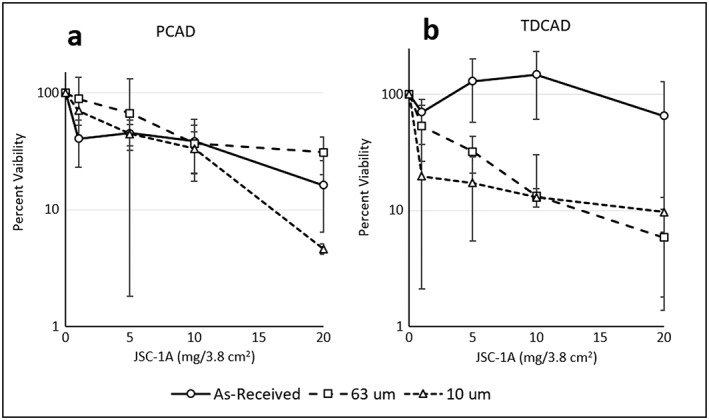
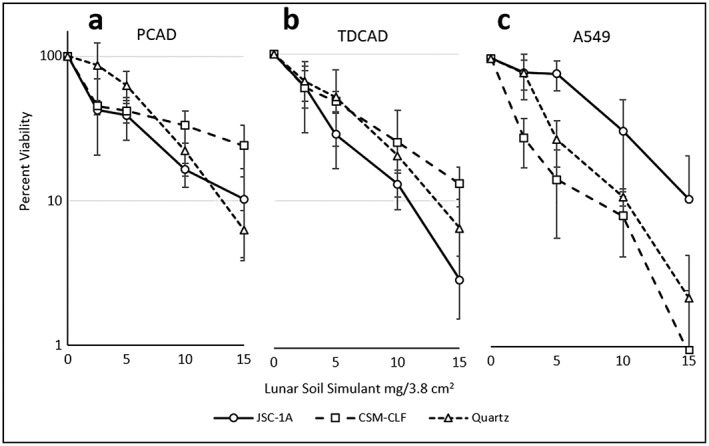
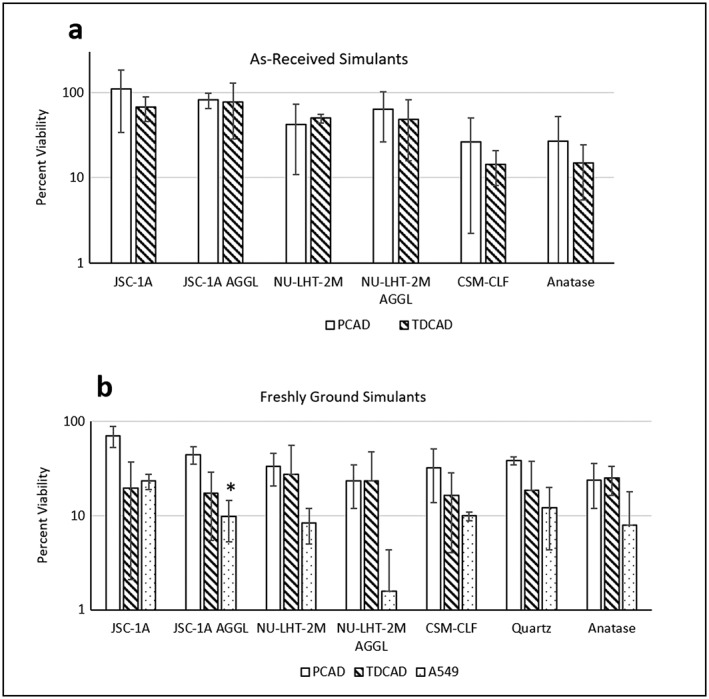
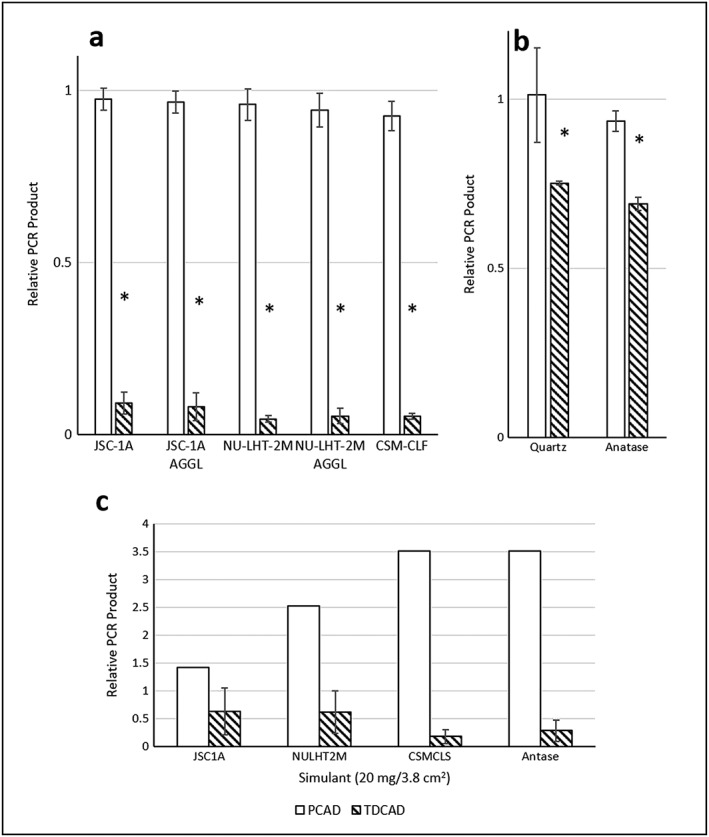
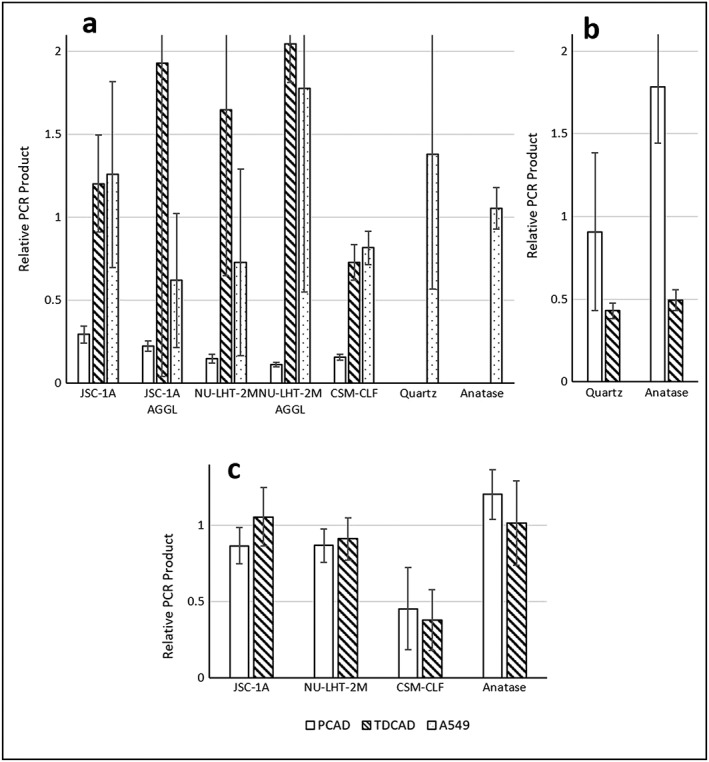
Previous missions to the lunar surface implicated potential dangers of lunar soil. In future explorations, astronauts may spend weeks or months on the Moon, increasing the risk of inhaling lunar dust. In an effort to understand the biological impact of lunar regolith, cell cultures derived from lung or neuronal cells were challenged with lunar soil simulants to assess cell survival and genotoxicity. Lunar soil simulants were capable of causing cell death and DNA damage in neuronal and lung cell lines, and freshly crushed lunar soil simulants were more effective at causing cell death and DNA damage than were simulants as received from the supplier. The ability of the simulants to generate reactive oxygen species in aqueous suspensions was not correlated with their cytotoxic or genotoxic affects. Furthermore, the cytotoxicity was not correlated with the accumulation of detectable DNA lesions. These results determine that lunar soil simulants are, with variable activity, cytotoxic and genotoxic to both neuronal and lung‐derived cells in culture.
Overview
The claims and statistics of this paper haven’t been checked yet.
Free: it reads the open-access text and checks the first 5 claims that cite a source we can check. Create a free account to check every claim.
Integrity signals
Registry
Cites
Statistics
Figures
Verification
Claims the paper makes
The claims and statistics of this paper haven’t been checked yet.
Free: it reads the open-access text and checks the first 5 claims that cite a source we can check. Create a free account to check every claim.
Claims other papers make about this one
Each is checked against this paper’s own text: does it say what the citing paper says it does?
The source backs part of the claim, not all of it — or backs it for a different population, condition or comparison.
In the citing paper
“While this no doubt requires further study, LADTAG determined that any increased surface reactivity is likely less important than direct toxicity with respect to adverse human health effects33,34.”
From Overview of lunar dust toxicity risk (2022) · cites this paper as [33]
Experimental — accuracy not yet measuredThe cited source says what the claim attributes to it.
In the citing paper
“Among less explored potential toxicities, concern exists for neurological consequences of exposure as a result of multiple studies examining the direct cytotoxic effects of simulant LD, though no comprehensive studies have yet confirmed such findings with native LD33,53.”
From Overview of lunar dust toxicity risk (2022) · cites this paper as [33]
Self-check
Percentages, sums and reported differences re-computed from the paper’s own numbers.
The self-check needs the paper’s full text.
Citations
Cites
Nanotoxicology: An Emerging Discipline Evolving from Studies of Ultrafine Particles
Oberdörster, G., Oberdörster, E., & Oberdörster, J. (2005) · Environmental Health Perspectives · doi:10.1289/ehp.7339 · Cited by 7,891
Physiological Roles of Mitochondrial Reactive Oxygen Species
Sena, L. A., & Chandel, N. S. (2012) · Molecular Cell · doi:10.1016/j.molcel.2012.09.025 · Cited by 2,632
Translocation of inhaled ultrafine particles to the brain
Oberdörster, G., Sharp, Z., Atudorei, V., Elder, A., Gelein, R., Kreyling, W., & Cox, C. (2004) · Inhalation Toxicology · doi:10.1080/08958370490439597 · Cited by 2,606
Nanoparticle uptake: The phagocyte problem
Gustafson, H. H., Holt-Casper, D., Grainger, D. W., & Ghandehari, H. (2015) · Nano Today · doi:10.1016/j.nantod.2015.06.006 · Cited by 1,411
Mechanisms of nanotoxicity: Generation of reactive oxygen species
Fu, P. P., Xia, Q., Hwang, H.-M., Ray, P. C., & Yu, H. (2014) · Journal of Food and Drug Analysis · doi:10.1016/j.jfda.2014.01.005 · Cited by 1,398
DNA damage and the balance between survival and death in cancer biology
Roos, W. P., Thomas, A. D., & Kaina, B. (2016) · Nature Reviews Cancer · doi:10.1038/nrc.2015.2 · Cited by 1,189 · cited 1×
“Mutations in nuclear DNA may lead to cell death or cancer, and these endpoints are not mutually exclusive (Roos & Kaina, 2013; Roos et al., 2016), because dying cells can signal to neighboring cells to promote cell division (Labi & Erlacher, 2015).”
BackgroundRole of Particle Size in Phagocytosis of Polymeric Microspheres
Champion, J. A., Walker, A., & Mitragotri, S. (2008) · Pharmaceutical Research · doi:10.1007/s11095-008-9562-y · Cited by 888
DNA damage-induced cell death: From specific DNA lesions to the DNA damage response and apoptosis
Roos, W. P., & Kaina, B. (2013) · Cancer Letters · doi:10.1016/j.canlet.2012.01.007 · Cited by 879
Lunar sourcebook : a user's guide to the moon
Heiken, G. H., Vaniman, D. T., & French, B. M. (1991) · Cited by 809
DNA repair mechanisms in dividing and non-dividing cells
Iyama, T., & Wilson, D. M. (2013) · DNA Repair · doi:10.1016/j.dnarep.2013.04.015 · Cited by 697
Cited by
Overview of lunar dust toxicity risk
Pohlen, M., Carroll, D., Prisk, G. K., & Sawyer, A. J. (2022) · npj Microgravity · doi:10.1038/s41526-022-00244-1 · Cited by 72
Space Medicines for Space Health
Tran, Q. D., Tran, V., Toh, L. S., Williams, P. M., Tran, N. N., & Hessel, V. (2022) · ACS Medicinal Chemistry Letters · doi:10.1021/acsmedchemlett.1c00681 · Cited by 42
Utilizing the Analytical Hierarchy Process to determine the optimal lunar habitat configuration
Higgins, M., & Benaroya, H. (2020) · Acta Astronautica · doi:10.1016/j.actaastro.2020.04.012 · Cited by 34
“For crewed missions, the greatest danger that lunar dust poses might be its effects on the human body; exposure to regolith is known to cause cell death and DNA damage [17].”
BackgroundMiranda, S., Marchal, S., Cumps, L., Dierckx, J., Krüger, M., Grimm, D. G., Baatout, S., Tabury, K., & Baselet, B. (2023) · Biomedicines · doi:10.3390/biomedicines11071921 · Cited by 35
“Mutations in nuclear DNA may lead to cell death or cancer [93].”
BackgroundAstroimmunology: the effects of spaceflight and its associated stressors on the immune system
Winer, D. A., Du, H., Kim, J., Chang, V., Burke, M., Winer, S., Costes, S. V., Frippiat, J., Sams, C. F., Paul, A. M., et al. (2025) · Nature reviews. Immunology · doi:10.1038/s41577-025-01226-6 · Cited by 38
“The increased formation of ROS linked to LDS could potentiate DNA damage 190 , which would be compounded by other hostile elements on the Moon such as cosmic radiation.”
Hendrix, D. A., Port, S. T., Hurowitz, J. A., & Schoonen, M. A. A. (2019) · GeoHealth · doi:10.1029/2018gh000175 · Cited by 21
“…from JSC‐1A have value in that it is readily available to other researchers in large quantity (unlike real lunar regolith) and thus provides a reference material against which interlaboratory comparisons of reactivity can be made (Caston et al., 2018; Loftus et al., 2010; Turci et al., 2015).”
BackgroundSelf-citationElectrostatic interactions between rough dielectric particles
Gorman, M. T., Ruan, X., & Ni, R. (2024) · Physical review. E · doi:10.1103/physreve.109.034902 · Cited by 21
Hayes, A. C., Osio-Norgaard, J., Miller, S., Vance, M. E., & Whiting, G. L. (2021) · ACS ES&T Engineering · doi:10.1021/acsestengg.0c00045 · Cited by 14
Biomining of lunar regolith simulant EAC-1 A with the fungus Penicillium simplicissimum
Figueira, J., Koch, S., Müller, D. W., Slawik, S., Cowley, A., Moeller, R., & Cortesão, M. (2025) · Fungal Biology and Biotechnology · doi:10.1186/s40694-025-00201-z · Cited by 19
“However, when in Lunar Simulated Gravity (LSG), colonies with EAC-1A (60”
InfluentialManzoli, M., Tammaro, O., Marocco, A., Bonelli, B., Barrera, G., Tiberto, P. M., Allia, P., Matéo‐Vélez, J.-C., Roggero, A., Dantras, E., et al. (2021) · ACS Earth and Space Chemistry · doi:10.1021/acsearthspacechem.1c00118 · Cited by 14
Design of a lunar plume-surface interaction measurement system
Tyrrell, O. K., Thompson, R. J. R., Danehy, P. M., Dupuis, C. J., Munk, M., Nguyen, C. P., Maddock, R. W., Fahringer, T. W., Krolick, W. C., Weaver, A. B., et al. (2022) · AIAA SciTech Forum · doi:10.2514/6.2022-1693 · Cited by 13
Lunar soil simulants alter macrophage survival and function
Li, M., Thompson, K., Nissen, J. C., Hendrix, D., Hurowitz, J., & Tsirka, S. (2019) · Journal of Applied Toxicology · doi:10.1002/jat.3827 · Cited by 13
“It was previously reported that the 10‐minute re‐ grinding of the samples decreased particle size by 25%, except in the case of NU‐LHT‐2M, which decreased in size by ~50% (Caston et al., 2018).”
BackgroundSelf-citationFreyria, F. S., Marocco, A., Esposito, S., Bonelli, B., Barrera, G., Tiberto, P. M., Allia, P., Oudayer, P., Roggero, A., Matéo‐Vélez, J.-C., et al. (2019) · ACS Earth and Space Chemistry · doi:10.1021/acsearthspacechem.9b00042 · Cited by 13
Lam, C., Castranova, V., Zeidler-Erdely, P. C., Renne, R. A., Hunter, R. L., McCluskey, R., Scully, R. R., Wallace, W. T., Zhang, Y., Ryder, V. E., et al. (2022) · Inhalation Toxicology · doi:10.1080/08958378.2022.2038736 · Cited by 19
“Particles’ ROS not correlated with the cytotoxicity and genotoxicity in cells exposed to lunar soil simulants in cultures To help NASA understanding the toxicity of LD, Caston et al. (2018) carried out a study on LD dust simulants, which were ground, to show ROS generated/possessed by particles is crucial to the toxic…”
BackgroundResultInfluentialLam, C., Castranova, V., Driscoll, K. E., Warheit, D. B., Ryder, V., Zhang, Y., Zeidler-Erdely, P. C., Hunter, R. L., Scully, R. R., Wallace, W. T., et al. (2023) · Critical Reviews in Toxicology · doi:10.1080/10408444.2023.2258925 · Cited by 14
“Because astronauts on the moon could be exposed to LD containing ROS, articles by Vandette (2018) and Specktor (2018) have claimed that LD is highly toxic based on the findings by Caston et al. (2018) that ground LD simulant (a terrestrial volcanic ash) contained free radicals.”
BackgroundChang, J. H.-M., Xue, Z., Bauer, J., Wehle, B., Hendrix, D. A., Catalano, T., Hurowitz, J. A., Nekvasil, H., & Demple, B. (2024) · GeoHealth · doi:10.1029/2023gh000840 · Cited by 10
“We previously found no direct correlation between ·OH production and cytotoxicity (Caston et al., 2018).”
BackgroundMethodInfluentialSelf-citationLunar dust removal and material degradation from liquid nitrogen sprays
Wells, I. A., Bussey, J. M., Swets, N., & Leachman, J. (2023) · Acta Astronautica · doi:10.1016/j.actaastro.2023.02.016 · Cited by 9
Hendrix, D. A., Hurowitz, J. A., Glotch, T. D., & Schoonen, M. A. A. (2021) · GeoHealth · doi:10.1029/2021gh000491 · Cited by 7
“The generation of reactive oxygen species (ROS) such as hydroxyl radicals (OH*) via lunar dust is problematic considering that inhalation of lunar dust rich in minerals such as pyroxene and olivine would lead to tissue and cell damage induced in part by ROS (Caston et al., 2018; Fubini & Hubbard, 2003; Gilmour et al.,…”
BackgroundInfluentialSelf-citationGureev, A. P., Nesterova, V. V., & Sadovnikova, I. S. (2025) · DNA repair · doi:10.1016/j.dnarep.2025.103812 · Cited by 7
Cislunar City: The Outpost of Humankind Expansion into Space
Russo, G., Ciamarra, M. P., Messidoro, P., Voto, C., Moronese, V., Paudice, F., Pederbelli, D., Minichini, R., D’Iorio, M., & Salvato, M. (2024) · Springer series in design and innovation · doi:10.1007/978-3-031-53122-4_59 · Cited by 6
Hendrix, D. A., Catalano, T., Nekvasil, H., Glotch, T. D., Legett, C., & Hurowitz, J. A. (2024) · Meteoritics and Planetary Science · doi:10.1111/maps.14228 · Cited by 7
“Other studies, such as (Caston et al., 2018; Lam et al., 2022), have shown no observed correlation between cytotoxicity and OH * generation potential.”
Self-citationPavan, C., Bianco, P., Tammaro, O., Castellino, M., Marocco, A., Petriglieri, J. R., Tomatis, M., Pansini, M., Esposito, S., & Turci, F. (2025) · Journal of Hazardous Materials · doi:10.1016/j.jhazmat.2025.138096 · Cited by 8
Braddock, M. (2021) · Space and society · doi:10.1007/978-3-030-81388-8_9 · Cited by 7
Assessment of toxicity changes induced by exposure of human cells to lunar dust simulant
Wang, J., Lei, M., Xue, Y., Tan, Q., He, X., Guan, J., Song, W. D., Ma, H., Wu, B., & Cui, X. (2024) · Scientific Reports · doi:10.1038/s41598-024-69259-w · Cited by 8
HUMAN SIDE OF SPACE EXPLORATION AND HABITATION
Duda, K. R., Newman, D. J., Zhang, J., Meirhaeghe, N., & Zhou, H. L. (2021) · Wiley eBooks · doi:10.1002/9781119636113.ch56 · Cited by 6
Palmer, G. A., Mathyk, B. A., Jones, J. A., Stocks, B. T., Wolpe, P. R., Wotring, V. E., Mason, C. E., Cohen, J., & Karouia, F. (2026) · Reproductive BioMedicine Online · doi:10.1016/j.rbmo.2025.105431 · Cited by 5
la Torre, G. G. D., & González-Torre, S. (2023) · Journal of Clinical and Experimental Neuropsychology · doi:10.1080/13803395.2023.2225235 · Cited by 4
“There is also evidence from animal models that smaller particles (≤ 0.1 μm) can travel from the olfactory bulb to the brain (Caston et al., 2018; Oberdörster et al., 2005).”
BackgroundInfluentialAstropharmazie und ‐toxikologie in der Raumfahrt: Ziemlich abgehoben
Strey, K. (2024) · Chemie in unserer Zeit · doi:10.1002/ciuz.202300015 · Cited by 3
Electrostatic Power from Negatively Charged Lunar Regolith
Choi Sang, H., Jung, K. H., & Moses Robert, W. (2023) · Journal of Aerospace Engineering and Mechanics · doi:10.36959/422/468 · Cited by 2
Morphological and Spectral Characterization of Lunar Regolith Breakdown due to Water Ice
Shackelford, A., Hanna, K. L. D., Horton, M., & Noce, D. (2024) · The Planetary Science Journal · doi:10.3847/psj/ad0041 · Cited by 6
Georgiou, C. D., McKay, C. P., Quinn, R. C., Kalaitzopoulou, E., Papadea, P., & Skipitari, M. (2019) · Life · doi:10.3390/life9030070 · Cited by 2
“Such dust/silica-induced radicals may pose a serious human health hazard (verified by toxicity studies on mammalian cells [18]), during future manned missions to Mars and Moon.”
BackgroundInfluentialMcKenzie, C., Watson, P., Vincent-Bonnieu, S., & Lappa, M. (2026) · Journal of Rheology · doi:10.1122/8.0001041 · Cited by 2
Yang, Y., Razibur, R., Andriamasinoro, M., Vatteroni, F., & Wang, L. (2026) · Acta Astronautica · doi:10.1016/j.actaastro.2026.04.066 · Cited by 1
Lunar dust induces minimal pulmonary toxicity compared to Earth dust
Smith, M. B., Chou, J., Xenaki, D., Bai, X., Chen, H., & Oliver, B. G. G. (2025) · Life Sciences in Space Research · doi:10.1016/j.lssr.2025.02.005 · Cited by 1
Barinov, V. A., & Ушаков, И. Б. (2022) · Russian Journal of Occupational Health and Industrial Ecology · doi:10.31089/1026-9428-2022-62-2-72-90 · Cited by 1
Crew health—Psychological, biological, and medical issues and the need for a systems approach
Shelhamer, M., & Fogarty, J. A. (2024) · Elsevier eBooks · doi:10.1016/b978-0-323-91280-8.00001-0 · Cited by 1
Biotechnology for a spacefaring civilization—necessary and challenging
Walker, C. D. (2025) · Elsevier eBooks · doi:10.1016/b978-0-443-13850-8.00003-8
Celestial hazards: immunological and pulmonary effects of lunar and Martian regolith simulants
Ferraro, C. C., Tirado, D., & Ferraro, M. J. (2025) · Life Sciences in Space Research · doi:10.1016/j.lssr.2025.07.003 · Cited by 1
Merritt, E. L., Nguyen, T., Peay, O., Janka, I., & Ronia, M. (2025) · Waste-management Education Research Conference (WERC) · doi:10.1109/werc66199.2025.11143796
Simulated Regolith Testing of Origami-Based Covers for Space Robots
Hickey, B., & Pierre, R. S. (2025) · International Conference on Space Robotics (iSpaRo) · doi:10.1109/isparo66239.2025.11437076
“Moreover, sandbox testbeds, while effective for rover-scale validation, are typically large and difficult to control precisely and pose safety risks due to the fine particle size [19], [20], [21].”
A bioartificial 3D bronchial epithelial airway model to study lunar hay fever on Earth
Marchal, S., Hellwig, P., Schmidt, C., Kopp, S., Grimm, D. G., Walles, H., Walles, T., Wiese-Rischke, C., & Krüger, M. (2026) · Trends in biotechnology · doi:10.1016/j.tibtech.2026.04.011
Salaria, L., Pearce-Menzies, I., Mishra, A., Khan, S., Saravanan, P., Bhavsar, P. K., & Russomano, T. (2026) · Acta Astronautica · doi:10.1016/j.actaastro.2026.08.017
Toxicological Evaluation of Short-Term Exposure to Chang’e-5 Lunar Dust in RatsPreprint
Xue, Y., Wu, B., Xing, Q., Lei, M., Wang, G., Gao, Y., Hu, S., Honglei, M., He, X., Wang, J., et al. (2026) · Research Square · doi:10.21203/rs.3.rs-10577544/v1
Long-Fox, J. M., Dotson, B. N., & Britt, D. T. (2026) · Rock Mechanics and Rock Engineering · doi:10.1007/s00603-026-05898-x
Metadata
- Authors
- Caston, R., Luc, K., Hendrix, D., Hurowitz, J. A., & Demple, B.
- Affiliations
- Stony Brook School (US)
- Stony Brook University (US)
- Corresponding author
- Demple, Bruce
- Venue
- GeoHealth
- Publisher
- Wiley
- Published
- 2018-04
- Volume
- 2
- Issue
- 4
- Pages
- 139-148
- ISSN
- 2471-1403 (ISSN-L)
- PMC
- PMC7007071
- OpenAlex
- W2800312102
- Cited by
- 45
- References
- 45
- Citations by year
- 2026: 7 · 2025: 9 · 2024: 8 · 2023: 5 · 2022: 5 · 2021: 4 · 2020: 2 · 2019: 3 · 2018: 2
- FWCI
- 0.83
- Type
- journal article
- Language
- en
- Open access
- gold
- doi.org
- Licence
- Locations
- GeoHealth (publishedVersion, cc-by-nc-nd)
- Europe PMC (PubMed Central) (publishedVersion, cc-by-nc-nd)
- PubMed Central (publishedVersion, cc-by-nc-nd)
- PubMed (publishedVersion)
- DOAJ (DOAJ: Directory of Open Access Journals) (submittedVersion, cc-by-sa)
- Funders
- National Aeronautics and Space Administration (NNA‐14AB04A)
- Topics
- Life Sciences › Biochemistry, Genetics and Molecular Biology › Cancer Research › Carcinogens and Genotoxicity Assessment
- Health Sciences › Medicine › Physiology (medical) › Spaceflight effects on biology
- Health Sciences › Medicine › Radiology, Nuclear Medicine and Imaging › Effects of Radiation Exposure
- Keywords
- lunar regolith simulant, lunar dust, genotoxicity, cytotoxicity, DNA damage, nuclear DNA damage, mitochondrial DNA damage, neurons, lung cells, reactive oxygen species, cell survival, space radiation exposure, astronaut health risk
About these checks
Registry, retraction, Cites and statistics results are computed, not judged, with one exception: a printed reference that no index lists is read once by a model before it counts as a citation error. Claims are extracted by a model and kept only when their quote appears verbatim in the text; each cited source is then checked, with a model’s help, for whether it says what the claim relies on. Those verdicts can be wrong — read the claim’s quote and the cited source before relying on one.
Statistics and arithmetic are recomputed, not judged.
Confidence bands are shown only for fields calibrated on our annotated test set. None is calibrated yet, so no band is shown.
What counts as a claim ›How we measure confidence ›How we check this ›
Are you an author, or do you see a problem with this page? Request a review
Data sources
Bibliographic data: Semantic Scholar, OpenAlex, Crossref.
Contains information from the Semantic Scholar Academic Graph Datasets, made available under the ODC Attribution License (ODC-BY 1.0).
Semantic Scholar’s data is described in: Kinney, R., et al. (2023). The Semantic Scholar Open Data Platform. arXiv:2301.10140.
