

The DOI matches its Crossref record; 4 of the 4 references it cites were found in a registry or an index.
Theoretical framework of sustainable value creation by companies. What do we know so far?
Open accessAbstract
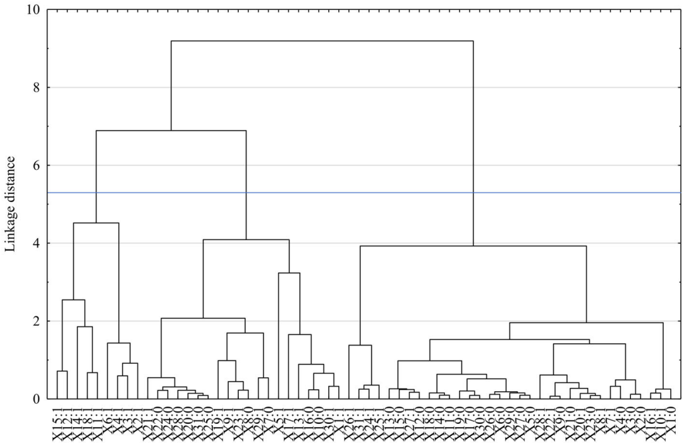
In conditions of limited natural resources, growing social awareness, and ESG risk, sustainability and the pressure to be sustainable are gaining importance. Legislative requirements, good practices and recommendations as well as the stakeholders themselves expect from market participants, especially from the enterprise sector, that they will incorporate sustainability in their activities. Enterprises undertake adaptation activities towards sustainability by creating sustainable value based on their business models. The article aims to systematize the state of knowledge on how companies create sustainable value. Research results in this area are dispersed, and more studies discussing this topic comprehensively are needed. The article fills the gap in research by reviewing the existing studies on creating sustainable value. The analysis of publications was based on the academic databases of Elsevier Scopus and Web‐of‐Science. 101 publications were reviewed, and 31 categorization variables related to the area of research and issues addressed in scientific publications were created. Using a multidimensional correspondence analysis, three homogeneous clusters of publications were obtained: group I refers to articles concerning enterprises of various sizes (micro, small, SME, and start‐up); group II includes publications on Asia and Australia, which appeared in 2020 or later; group III concerns articles related to the research of large production companies in developed European countries. The result shows that companies build sustainable value in various ways, influenced by company's location and size. Among the dominant patterns of incorporating sustainable value, the following are indicated: building a sustainable supply chain, innovations, building relationships with stakeholders and consumers, sharing economy.
Overview
The claims and statistics of this paper haven’t been checked yet.
Run the check — free, no account needed. It reads the open-access text and checks the sources it cites.
Integrity signals
Registry
Cites
Statistics
Figures







Verification
Claims the paper makes
The claims and statistics of this paper haven’t been checked yet.
Run the check — free, no account needed. It reads the open-access text and checks the sources it cites.
Claims other papers make about this one
Each is checked against this paper’s own text: does it say what the citing paper says it does?
In the citing paper
“Another theoretical contribution was the advancement in the literature on BVC, which is poorly defined and has several terms (Zioło et al. 2023), and the integration of sustainable entrepreneurship with innovation research (Demirel et al. 2019).”
From Dynamic Configurations of Entrepreneurial Ecosystem Elements for Blended Value Creation (2025) · cites this paper as Zioło et al. 2023
Self-check
Percentages, sums and reported differences re-computed from the paper’s own numbers.
The self-check needs the paper’s full text.
Citations
Cites
Networking and innovation: a systematic review of the evidence
Pittaway, L., Robertson, M., Munir, K., Denyer, D., & Neely, A. (2004) · International Journal of Management Reviews · doi:10.1111/j.1460-8545.2004.00101.x · Cited by 1,747
A systematic review on green human resource management: Implications for social sustainability
Amrutha, V. N., & Geetha, S. N. (2020) · Journal of Cleaner Production · doi:10.1016/j.jclepro.2019.119131 · Cited by 685
Lüdeke‐Freund, F. (2020) · Business Strategy and the Environment · doi:10.1002/bse.2396 · Cited by 502
The place of waste: Changing business value for the circular economy
Perey, R., Benn, S., Agarwal, R., & Edwards, M. (2018) · Business Strategy and the Environment · doi:10.1002/bse.2068 · Cited by 199
Research works printed but not linked: 125
- 10.1142/S1363919613400033 · DOI
- 10.1108/JFRA-07-2019-0088 · DOI
- 10.21511/ppm.17(2).2019.10 · DOI
- 10.1111/ijmr.12068 · DOI
- 10.1002/bse.2573 · DOI
- Aggarwal P., 2013, Impact of sustainability performance of company on its financial performance: A study of listed Indian companies, Global Journal of Management and Business Research C: Finance, 13, 61
- 10.1080/20430795.2020.1870202 · DOI
- Allee V., 2015, Value networks and the true nature of collaboration
- 10.3390/su10020494 · DOI
- 10.1007/978-3-030-11217-2_2 · DOI
- Amit R., 2012, Creating value through business model innovation, MIT Slogan Management Review, 53, 41
- 10.1108/ARA-10-2019-0184 · DOI
- 10.1016/j.eneco.2022.106186 · DOI
- 10.1007/978-981-10-2917-2_12 · DOI
- 10.1016/j.jclepro.2017.01.081 · DOI
- 10.1016/j.jclepro.2016.04.146 · DOI
- 10.1007/978-3-319-12142-0_14 · DOI
- Beh E. J., 2014, Correspondence analysis. Theory, practice and new strategies
- 10.1080/21681015.2014.1000399 · DOI
- 10.1016/j.jclepro.2013.11.039 · DOI · Paper page
- 10.1108/CG-06-2013-0078 · DOI
- 10.1016/j.jclepro.2012.07.007 · DOI · Paper page
- 10.1016/j.jclepro.2012.08.013 · DOI
- 10.1002/bse.2067 · DOI
- 10.1142/S1363919617500281 · DOI
- 10.3763/cdev.2010.0062 · DOI
- 10.1016/j.jclepro.2018.02.016 · DOI
- 10.3390/su12020615 · DOI
- 10.1021/acs.est.9b05153 · DOI · Paper page
- Dao V. T. &Abraham T.(2018).An exploratory empirical examination of the integrated sustainability framework via case study. InProceedings of the Americas conference on information systems(Vol. 2018 p. 10).https://aisel.aisnet.org/amcis2018/GreenIS/Presentations/10
- 10.1017/beq.2019.10 · DOI
- 10.1016/j.jclepro.2016.10.130 · DOI
- 10.1108/IJLM-01-2020-0044 · DOI
- 10.18593/race.v16i2.12053 · DOI
- 10.1002/sd.417 · DOI
- 10.1007/978-1-4471-2268-5 · DOI
- 10.1007/978-3-319-12142-0_1 · DOI
- 10.1016/j.jbusres.2020.08.019 · DOI
- Dickinson S. Plisson‐Saune S. &Mani P.(2020).Establishing public biodiversity commitments within an oil & gas company [Conference presentation]. InSPE international conference and exhibition on health safety environment and sustainability virtual.https://doi.org/10.2118/199508-MS · DOI
- 10.1016/j.procir.2015.08.037 · DOI
- 10.1016/j.cpa.2019.102097 · DOI
- Elkington J., 1997, Cannibals with forks: The triple bottom line of 21st century business
- 10.3763/cdev.2010.0060 · DOI
- 10.1016/j.trpro.2017.03.004 · DOI
- Evans S., 2017, Sustainable manufacturing. Sustainable production. Life cycle engineering and management, 203
- 10.1002/bse.1939 · DOI · Paper page
- 10.1017/CBO9781139192675 · DOI
- 10.1007/s10551-019-04112-z · DOI · Paper page
- 10.3390/su9122256 · DOI
- 10.3390/su12062364 · DOI
- 10.1007/978-981-287-742-0_1 · DOI
- 10.1016/j.jclepro.2016.07.020 · DOI
- 10.1016/j.tre.2020.101923 · DOI
- Greenacre M., 1994, Correspondence analysis in social sciences. Recent developments and applications, 141
- 10.1201/9781420011234 · DOI
- 10.1108/BFJ-03-2019-0209 · DOI
- 10.35530/IT.072.05.202035 · DOI
- 10.1504/IJETM.2007.015627 · DOI
- 10.3390/su11205782 · DOI
- 10.5465/ame.2003.10025194 · DOI
- 10.3390/su11143811 · DOI
- Henriksson R., 2018, ESG literature review, SSRN Electronic Journal, 1
- 10.3390/su13115763 · DOI
- 10.1177/1086026614535786 · DOI
- 10.3390/su11072119 · DOI
- 10.1016/j.eneco.2021.105134 · DOI
- 10.1016/j.emj.2021.09.009 · DOI
- 10.1016/j.jclepro.2019.01.301 · DOI
- 10.1108/SRJ-03-2019-0114 · DOI
- Kaufman L., 2008, Finding groups in data: An introduction to cluster analysis
- 10.1016/j.ribaf.2022.101668 · DOI
- 10.1002/sd.2034 · DOI
- 10.9770/jesi.2018.6.2(14) · DOI
- 10.1016/j.jclepro.2021.127015 · DOI
- 10.1016/j.jclepro.2020.120745 · DOI
- 10.1016/j.indmarman.2015.05.018 · DOI
- 10.1002/csr.1716 · DOI
- 10.3389/fbioe.2020.619066 · DOI
- 10.1016/j.jclepro.2020.120004 · DOI
- 10.1016/j.ijproman.2015.06.007 · DOI
- Lebart L., 1984, Multivariate descriptive statistical analysis. Correspondence analysis and related techniques for large matrices
- 10.1108/S0897-3016(2012)0000020011 · DOI
- Lüdeke‐Freund F., 2020, Sustainable value creation through business models: The what, the who and the how, Journal of Business Models, 8, 62
- 10.3390/en13226062 · DOI
- Mati B. N., 2021, An examination of the effect of impact investment instruments on sustainable development financing in Kenya
- Max‐Neef M., 1991, Human scale development: Conception, application and further reflections
- 10.3390/su12010277 · DOI
- 10.1016/j.jclepro.2022.133623 · DOI
- Nadeem M., 2013, Emerging markets: Corporate sustainability or maximize stakeholder value?, International Journal of Humanities and Social Science, 3, 91
- 10.3390/su11061663 · DOI
- 10.3390/su12114674 · DOI
- Osterwalder A., 2010, Business model generation: A handbook for visionaries, game changers, and challengers
- 10.1016/j.jclepro.2018.02.001 · DOI
- 10.1108/IJPPM-04-2020-0151 · DOI
- Pandit P., 2019, The textile institute book series, circular economy in textiles and apparel, 95
- 10.1080/13675567.2018.1534946 · DOI
- 10.1007/s11356-021-15587-7 · DOI
- 10.1504/IJMEF.2020.108827 · DOI
- 10.1109/SOLI.2018.8476750 · DOI
- 10.1016/j.jclepro.2020.125217 · DOI
- 10.1002/csr.2134 · DOI
- Rana P., 2013, Sustainable consumption research and action initiative (SCORAI) conference: The future of consumerism and well‐being in a world of ecological constraints
- 10.1002/jsc.821 · DOI
- 10.1002/bse.2277 · DOI
- 10.3390/su10103789 · DOI
- Scatigna M., 2021, Achievements and challenges in ESG markets, BIS Quarterly Review
- 10.1177/1086026615599806 · DOI
- 10.3390/su11102862 · DOI
- Spandel T. Schiemann F. &Hoepner A. G.(2020).Capital market effects of ESG materiality standards. SSRN.https://doi.org/10.2139/ssrn.3694285 · DOI
- 10.1177/1086026608318042 · DOI
- 10.1016/j.matpr.2021.10.249 · DOI
- 10.3390/su141610101 · DOI
- 10.1177/1086026615592933 · DOI
- 10.3390/su11061745 · DOI
- 10.1016/j.rcim.2019.101896 · DOI
- 10.1108/17542731311286423 · DOI
- 10.1016/j.jclepro.2017.03.151 · DOI
- 10.1177/030630700302800301 · DOI
- 10.1016/j.jclepro.2020.121574 · DOI
- Yang M., 2015, Sustainable value creation for product‐service systems (PSS)
- 10.1504/ajmsa.2014.070649 · DOI
- 10.3390/su9040483 · DOI
- 10.1016/j.jclepro.2017.10.190 · DOI
- 10.1007/978-3-319-12142-0_5 · DOI
- 10.1016/j.energy.2021.122029 · DOI
Cited by
Sorted by citations
Dynamic Configurations of Entrepreneurial Ecosystem Elements for Blended Value Creation
Pelegrini, G. C., de Moraes, G. H. S. M., do Prado, N. B., Fischer, B. B., & Anholon, R. (2025) · Sustainable Development · doi:10.1002/sd.3469 · Cited by 6
Metadata
- Authors
- Zioło, M., Bąk, I., & Spoz, A.
- Affiliations
- University of Szczecin (PL)
- West Pomeranian University of Technology in Szczecin (PL)
- John Paul II Catholic University of Lublin (PL)
- Corresponding author
- Spoz, Anna
- Venue
- Corporate Social Responsibility and Environmental Management
- Publisher
- Wiley
- Published
- 2023-03-30
- Volume
- 30
- Issue
- 5
- Pages
- 2344-2361
- ISSN
- 1535-3958 (ISSN-L)
- 1535-3966
- OpenAlex
- W4362518696
- Cited by
- 40
- References
- 4
- Citations by year
- 2026: 9 · 2025: 14 · 2024: 15 · 2023: 2
- FWCI
- 9.77
- Type
- journal article
- Language
- en
- Open access
- hybrid
- doi.org
- Licence
- Locations
- Corporate Social Responsibility and Environmental Management (publishedVersion, cc-by)
- Topics
- Social Sciences › Business, Management and Accounting › Management of Technology and Innovation › Sustainability and Innovation in Business
- Social Sciences › Business, Management and Accounting › Strategy and Management › Sustainable Supply Chain Management
- Social Sciences › Business, Management and Accounting › Marketing › Environmental Sustainability in Business
- Keywords
- sustainable value creation, corporate sustainability, business models, supply chain sustainability, stakeholder relations, consumer relations, sharing economy, innovation, firm size, firm location, ESG risk, small and medium-sized enterprises
About these checks
Registry, retraction, Cites and statistics results are computed, not judged, with one exception: a printed reference that no index lists is read once by a model before it counts as a citation error. Claims are extracted by a model and kept only when their quote appears verbatim in the text; each cited source is then checked, with a model’s help, for whether it says what the claim relies on. Those verdicts can be wrong — read the claim’s quote and the cited source before relying on one.
Statistics and arithmetic are recomputed, not judged.
Confidence bands are shown only for fields calibrated on our annotated test set. None is calibrated yet, so no band is shown.
What counts as a claim ›How we measure confidence ›How we check this ›
Are you an author, or do you see a problem with this page? Request a review
