

The DOI matches its Crossref record; 52 of the 52 references it cites were found in a registry or an index; none of the 111 sources its claims cite is checked for support yet.
A systematic review of the efficacy and safety of turmeric in the treatment of digestive disorders
Open accessAbstract
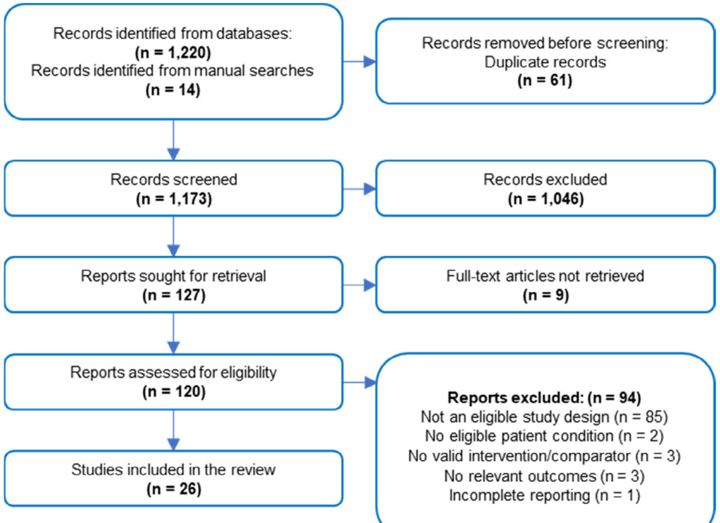
Turmeric has been gaining popularity as a treatment option for digestive disorders, although a rigorous synthesis of efficacy has not been conducted. This study aimed to summarize the evidence for the efficacy and safety of turmeric in the treatment of digestive disorders, including inflammatory bowel diseases (IBD), irritable bowel syndrome (IBS), dyspepsia, gastroesophageal reflux disease, and peptic ulcers. Literature searches were conducted in Medline, EMBASE, AMED, the Cochrane Central Register of Control Trials, and Dissertation Abstracts from inception to November 15, 2021. Dual independent screening of citations and full texts was conducted and studies meeting inclusion criteria were retained: randomized controlled trials (RCT) and comparative observational studies evaluating turmeric use in people of any age with one of the digestive disorders of interest. Extraction of relevant data and risk of bias assessments were performed by two reviewers independently. Meta‐analysis was not conducted due to high heterogeneity. From 1136 citations screened, 26 eligible studies were retained. Most studies were assessed to have a high risk of bias, and many had methodological limitations. Descriptive summaries suggest that turmeric is safe, with possible efficacy in patients with IBD or IBS, but its effects were inconsistent for other conditions. The efficacy of turmeric in digestive disorders remains unclear due to the high risk of bias and methodological limitations of the included studies. Future studies should be designed to include larger sample sizes, use rigorous statistical methods, employ core outcome sets, and adhere to reporting guidance for RCTs of herbal interventions to facilitate more meaningful comparisons and robust conclusions.
Overview
CoChat Summary
TL;DR
This systematic review of 26 studies found mixed efficacy for turmeric/curcumin in digestive disorders, with some favorable signals in IBD and IBS but no meta-analysis due to high heterogeneity. Turmeric appeared safe, with no significant safety differences versus placebo or active comparators.
Key findings
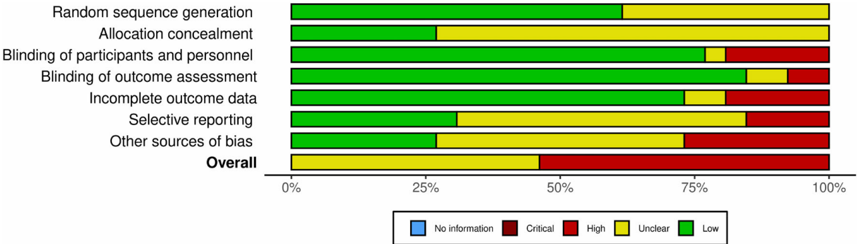
- The review included 26 studies (25 RCTs and 1 randomized crossover trial); 14/26 (54%) were assessed as high risk of bias and the remaining 12 as unclear. Meta-analysis was not performed due to high heterogeneity.
- IBD (9 studies, 533 patients): all studies reported beneficial responses, but significant findings were limited to curcumin extract ≥1000 mg/day or bio-enhanced curcumin <1000 mg/day; low-dose curcumin extract and curcumin enema were non-significant. In CD, curcumin 1500 mg/day did not significantly differ from placebo for endoscopic or clinical relapse at 6 months, but severe endoscopic recurrence was greater with curcumin (p = 0.034).
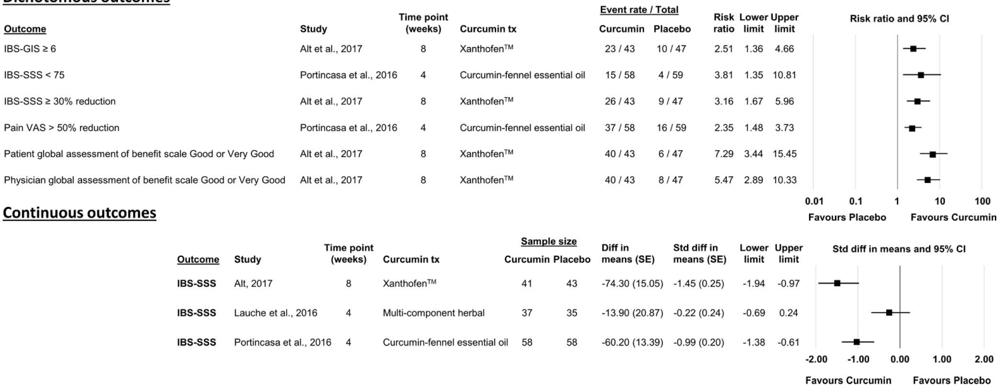
- IBS (5 studies, 551 patients): mixed-formula curcumin products were significantly better than placebo in two studies (e.g., IBS-SSS p < 0.001; IBS-QoL adjusted difference of differences = 9.19 [95% CI 3.13–15.25]), but a third found no significant IBS-SSS difference (MD = 24.10, p = 0.26). Curcumin extracts showed no significant differences versus placebo, fumitory, or between doses.
- Dyspepsia, ulcers, and H. pylori: dyspepsia (5 studies, 511 patients) showed curcumin extract beneficial versus placebo but not versus active comparators. For gastric ulcers, antacid produced more complete healing than 750 mg/day curcumin (94.1% vs 70.6%, p < 0.05); for duodenal ulcers, 6000 mg/day curcumin did not differ from placebo (25.4% vs 28.1%, p = 0.736). In H. pylori, 2100 mg/day curcumin had lower eradication than triple therapy (5.9% vs 78.9%, p < 0.001), while a mixed-formula curcumin product was similar to quadruple therapy (55.8% vs 62.2%, p > 0.05). No studies suggested significant safety differences, though two reported withdrawal due to adverse events in the turmeric group.
Methods
- Systematic review with an a priori protocol, reported per PRISMA 2020. Searches were conducted in Medline, EMBASE, AMED, the Cochrane Central Register of Control Trials, and Dissertation Abstracts from inception to November 15, 2021, plus manual bibliography searches.
- Eligible studies were RCTs and comparative observational studies in people of any age with IBD, IBS, dyspepsia, GERD, or peptic/gastric/duodenal ulcers; interventions were curcumin or derivatives at any dose, duration, or route; comparators were placebo, active comparator, or no treatment; animal studies were excluded. After screening 1173 references, 26 studies were included.
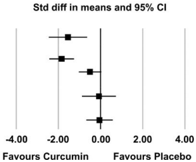
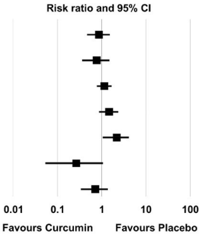
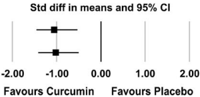
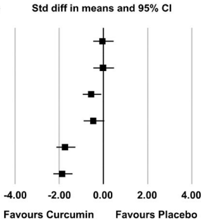
- Dual independent screening and data extraction were performed, with risk of bias assessed using Cochrane ROB-1. Meta-analysis was not conducted due to high heterogeneity; findings were synthesized descriptively by condition, with Chi-squared or Fisher’s exact tests in Stata where raw data allowed, and forest plots generated in Comprehensive Meta-Analysis using standardized mean differences.
Limitations
- The paper states that the evidence base was limited by high risk of bias (14/26 high, 12 unclear), clinical and methodological heterogeneity, small sample sizes, poor reporting, variation in turmeric preparations, and concurrent standard therapy in IBD/IBS that makes isolating turmeric’s effects difficult.
- The paper also states that not all studies reported between-group comparisons, several used per-protocol rather than intention-to-treat analyses, adverse-event reporting was inadequate, some statistical methods were inappropriate, and zero cells limited precision.
- Evident from the text: because meta-analysis was not performed, no pooled effect estimates are available, and outcome definitions varied widely with minimal overlap across studies.
Model-written summary. Check it against the paper before relying on it.
Integrity signals
Registry
Cites
Statistics
Figures


Verification
Claims the paper makes
0 Valid · 0 Not valid · 84 Not checked · 70 Own results and interpretations
A result the paper reports from its own data — it cites no other source for it, so there is none to check. The quote shows it is in the paper.
In the paper
“All studies included a concomitant therapy in both the turmeric and placebo arms”
§ A systematic review of the efficacy and safety of turmeric in the treatment of digestive disorders > 3.3 | Risk of bias assessment
plain- Asserted: passes — The authors put it forward as true.
- Checkable: passes — It can be checked against evidence.
- Load-bearing: unclear — It is unclear whether the paper’s conclusions depend on it.
- Based: passes — The paper gives a reason why it holds.
A result the paper reports from its own data — it cites no other source for it, so there is none to check. The quote shows it is in the paper.
In the paper
“High risks of bias were frequently identified for”
§ A systematic review of the efficacy and safety of turmeric in the treatment of digestive disorders > 3.3 | Risk of bias assessment
plain- Asserted: passes — The authors put it forward as true.
- Checkable: passes — It can be checked against evidence.
- Load-bearing: unclear — It is unclear whether the paper’s conclusions depend on it.
- Based: passes — The paper gives a reason why it holds.
A result the paper reports from its own data — it cites no other source for it, so there is none to check. The quote shows it is in the paper.
In the paper
“Duration of therapy ranged from 4 to 24 weeks.”
§ A systematic review of the efficacy and safety of turmeric in the treatment of digestive disorders > 3.3 | Risk of bias assessment
plain- Asserted: passes — The authors put it forward as true.
- Checkable: passes — It can be checked against evidence.
- Load-bearing: unclear — It is unclear whether the paper’s conclusions depend on it.
- Based: passes — The paper gives a reason why it holds.
None of the sources cited for this claim have been checked yet.
In the paper
“Studies with small sample sizes and zero events demonstrated reduced precision of estimates of treatment effect (Lang et al., 2015;Sugimoto et al., 2020).”
§ A systematic review of the efficacy and safety of turmeric in the treatment of digestive disorders > 3.3.1 | Response to treatment
What the sources say
boostedstates a cause- Asserted: passes — The authors put it forward as true.
- Checkable: passes — It can be checked against evidence.
- Load-bearing: unclear — It is unclear whether the paper’s conclusions depend on it.
- Based: passes — The paper gives a reason why it holds.
None of the sources cited for this claim have been checked yet.
In the paper
“These findings were also confirmed in analyses of continuous data (IBS-SSS scores) in the same two studies (Alt et al., 2017;Portincasa et al., 2016) (significant difference of differences after 8 weeks following adjustment for baseline values, p < 0.001 (Alt et al., 2017); significant relative mean decreases and adjusted mean difference at 4 weeks, p < 0.001 (Portincasa et al., 2016)).”
§ A systematic review of the efficacy and safety of turmeric in the treatment of digestive disorders > 3.4.1 | Response to treatment
What the sources say
- Not matchedcites Alt et al., 2017
Couldn’t be matched to a paper in Crossref, so it can’t be checked.
- Not checked yetcites Portincasa et al., 2016 source
plainstates an association- Asserted: passes — The authors put it forward as true.
- Checkable: passes — It can be checked against evidence.
- Load-bearing: passes — The paper’s conclusions depend on it.
- Based: passes — The paper gives a reason why it holds.
- Not matched
76 more claims
Create a free account to see all 154 claims and to verify the 66 references still open.
- It may state two separate claims as one. 59
- Probably not a substantial claim. 21
- The quote only partly states this claim. 2
Claims other papers make about this one
Each is checked against this paper’s own text: does it say what the citing paper says it does?
In the citing paper
“A recently published systematic analysis of 26 studies reviewing the evidence on the efficacy and safety of curcumin in digestive disorders demonstrated that it is potentially effective for IBS, although most of the reported studies have a high risk of bias and methodological limitations [80].”
From Natural Remedies for Irritable Bowel Syndrome: A Comprehensive Review of Herbal-Based Therapies (2025) · cites this paper as [80]
In the citing paper
“A recent systematic review and meta-analysis of randomized controlled trials and comparative observational studies, including 551 adults with IBS who received turmeric, reported improvements in overall quality of life and reductions in IBS-SSS scores and abdominal pain; however, many included studies had methodological limitations [51].”
From Plant-Derived Treatments for IBS: Clinical Outcomes, Mechanistic Insights, and Their Position in International Guidelines (2026) · cites this paper as [51]
In the citing paper
“curcumin shows mechanistic and preliminary clinical potential by modulating several IBS-related pathways”
From Plant-Derived Treatments for IBS: Clinical Outcomes, Mechanistic Insights, and Their Position in International Guidelines (2026) · cites this paper as [51]
Self-check
Percentages, sums and reported differences re-computed from the paper’s own numbers.
Each contradiction between two passages listed here was confirmed by an independent check.
Rated major: it would touch a result — a value a result rests on, reported and recomputed p-values on opposite sides of the significance level, two passages that conflict with no sign which is right, or a cited work retracted before this paper was published.
In the paper
§ A systematic review of the efficacy and safety of turmeric in the treatment of digestive disorders > 3.3 | Risk of bias assessment
“All seven studies of UC (Banerjee et al., 2021;Hanai et al., 2006;Kedia et al., 2017;Lang et al., 2015;Masoodi et al., 2018;Sadeghi et al., 2019;Singla et al., 2014) included patients with mild-to-moderate active disease”
§ A systematic review of the efficacy and safety of turmeric in the treatment of digestive disorders > 3.2 | Study characteristics
“Hanai et al. (2006) Japan RCT n = 89 42.5 years 44.9% Curcumin 1000 mg orally BID + sulfasalazine or mesalamine Placebo + sulfasalazine or mesalamine 24 weeks UC fulfilling radiologic, endoscopic, or histologic criteria, according to the Research Committee of Inflammatory Bowel Disease and the Japanese Ministry of Health, and in clinical remission”
Rated major: it would touch a result — a value a result rests on, reported and recomputed p-values on opposite sides of the significance level, two passages that conflict with no sign which is right, or a cited work retracted before this paper was published.
In the paper
§ A systematic review of the efficacy and safety of turmeric in the treatment of digestive disorders > 3.3.2 | Relapse
“There were no significant differences between curcumin extract (1500 mg/day) and placebo in the occurrence of either endoscopic or clinical relapse of CD at 6 months”
§ A systematic review of the efficacy and safety of turmeric in the treatment of digestive disorders > 3.2 | Study characteristics
“Bommelaer et al. (2020) France RCT n = 62 36.3 years NR Curcumin capsule 1000 mg orally TID + azathioprine”
Rated minor: it would not touch a result — a value no result rests on, a p-value that stays on the same side of the significance level, or a conflict that is clerical, resolved elsewhere in the paper, or outside its own findings.
In the paper
“MD curcumin-placebo at 4 weeks = 2.5 [95% CI = À10.85 to 5.86]”
§ A systematic review of the efficacy and safety of turmeric in the treatment of digestive disorders > 5 | CONCLUSIONS
Reported 2.5 · recomputed -2.495
Rated minor: it would not touch a result — a value no result rests on, a p-value that stays on the same side of the significance level, or a conflict that is clerical, resolved elsewhere in the paper, or outside its own findings.
In the paper
§ A systematic review of the efficacy and safety of turmeric in the treatment of digestive disorders > 3.6.1 | Response to treatment
“antacids significantly increased the probability of complete ulcer healing compared to 750 mg/day curcumin extract after 12 weeks of treatment”
§ A systematic review of the efficacy and safety of turmeric in the treatment of digestive disorders > 3.2 | Study characteristics
“Kositchaiwat et al. (1993) Thailand RCT n = 60 50.5 years 36.7% C. longa capsule 250 mg orally TID Antacid (aluminum hydroxide and magnesium hydroxide) TID 6 weeks”
Rated minor: it would not touch a result — a value no result rests on, a p-value that stays on the same side of the significance level, or a conflict that is clerical, resolved elsewhere in the paper, or outside its own findings.
In the paper
§ A systematic review of the efficacy and safety of turmeric in the treatment of digestive disorders > 3.6 | Peptic, gastric, and duodenal ulcers
“neither of the studies of duodenal (published in 1998) (Kositchaiwat et al., 1993) or gastric (published in 1993) (Kositchaiwat et al., 1993) ulcers did.”
§ A systematic review of the efficacy and safety of turmeric in the treatment of digestive disorders > 3.2 | Study characteristics
“Van Dau et al. (1998) Vietnam RCT n = 123 36.5 years 22.0% C. longa tablet 2000 mg orally TID Placebo 8 weeks One duodenal ulcer with a minimum diameter of 5 mm, confirmed by endoscopy”
4 more findings
Create a free account to see every finding of this check.
Citations
Cites
The PRISMA 2020 statement: An updated guideline for reporting systematic reviews
Page, M. J., McKenzie, J. E., Bossuyt, P. M., Boutron, I., Hoffmann, T. C., Mulrow, C. D., Shamseer, L., Tetzlaff, J. M., Akl, E. A., Brennan, S. E., et al. (2021) · BMJ · doi:10.1136/bmj.n71 · Cited by 108,283
Cochrane Handbook for Systematic Reviews of Interventions: Cochrane Book Series
(2008) · doi:10.1002/9780470712184 · Cited by 25,048
Sperber, A. D., Bangdiwala, S. I., Drossman, D. A., Ghoshal, U. C., Simren, M., Tack, J., Whitehead, W. E., Dumitrascu, D. L., Fang, X., Fukudo, S., et al. (2021) · Gastroenterology · doi:10.1053/j.gastro.2020.04.014 · Cited by 2,263
Amalraj, A., Pius, A., Gopi, S., & Gopi, S. (2016) · Journal of Traditional and Complementary Medicine · doi:10.1016/j.jtcme.2016.05.005 · Cited by 1,037
Sharifi-Rad, J., Rayess, Y. E., Rizk, A. A., Sadaka, C., Zgheib, R., Zam, W., Sestito, S., Rapposelli, S., Neffe-Skocińska, K., Zielińska, D., et al. (2020) · Frontiers in Pharmacology · doi:10.3389/fphar.2020.01021 · Cited by 937
Peery, A. F., Crockett, S. D., Murphy, C. C., Jensen, E. T., Kim, H. P., Egberg, M. D., Lund, J. L., Moon, A. M., Pate, V., Barnes, E. L., et al. (2022) · Gastroenterology · doi:10.1053/j.gastro.2021.10.017 · Cited by 836
Reporting Randomized, Controlled Trials of Herbal Interventions: An Elaborated CONSORT Statement
Gagnier, J. J., Boon, H., Rochon, P., Moher, D., Barnes, J., Bombardier, C., & for the CONSORT Group* (2006) · Annals of Internal Medicine · doi:10.7326/0003-4819-144-5-200603070-00013 · Cited by 608
Functional gastrointestinal disorders: advances in understanding and management
Black, C. J., Drossman, D. A., Talley, N. J., Ruddy, J., & Ford, A. C. (2020) · The Lancet · doi:10.1016/s0140-6736(20)32115-2 · Cited by 605
Hanai, H., Iida, T., Takeuchi, K., Watanabe, F., Maruyama, Y., Andoh, A., Tsujikawa, T., Fujiyama, Y., Mitsuyama, K., Sata, M., et al. (2006) · Clinical Gastroenterology and Hepatology · doi:10.1016/j.cgh.2006.08.008 · Cited by 569
Lang, A., Salomon, N., Wu, J. C. Y., Kopylov, U., Lahat, A., Har-Noy, O., Ching, J. Y. L., Cheong, P. K., Avidan, B., Gamus, D., et al. (2015) · Clinical Gastroenterology and Hepatology · doi:10.1016/j.cgh.2015.02.019 · Cited by 343
Prasad, S., & Aggarwal, B. B. (2011) · Oxidative stress and disease · doi:10.1201/b10787-14 · Cited by 274
Singla, V., Mouli, V. P., Garg, S. K., Rai, T., Choudhury, B. N., Verma, P., Deb, R., Tiwari, V., Rohatgi, S., Dhingra, R., et al. (2013) · Journal of Crohn s and Colitis · doi:10.1016/j.crohns.2013.08.006 · Cited by 195
Complementary and Alternative Medicines Used by Patients With Inflammatory Bowel Diseases
Cheifetz, A. S., Gianotti, R. J., Luber, R. P., & Gibson, P. R. (2016) · Gastroenterology · doi:10.1053/j.gastro.2016.10.004 · Cited by 167
In a meta-analysis, the I-squared statistic does not tell us how much the effect size varies
Borenstein, M. (2022) · Journal of Clinical Epidemiology · doi:10.1016/j.jclinepi.2022.10.003 · Cited by 141
Therapeutic potential of curcumin in digestive diseases
Dulbecco, P. (2013) · World Journal of Gastroenterology · doi:10.3748/wjg.v19.i48.9256 · Cited by 139
Martin, D. A., & Bolling, B. W. (2015) · Food & Function · doi:10.1039/c5fo00202h · Cited by 133
Sadeghi, N., Mansoori, A., Shayesteh, A., & Hashemi, S. J. (2020) · Phytotherapy Research · doi:10.1002/ptr.6581 · Cited by 132
Bundy, R., Walker, A. F., Middleton, R. W., & Booth, J. (2004) · The Journal of Alternative and Complementary Medicine · doi:10.1089/acm.2004.10.1015 · Cited by 131
Portincasa, P., Bonfrate, L., Scribano, M., Kohn, A., Caporaso, N., Festi, D., Campanale, M. C., Di Rienzo, T., Guarino, M., Taddia, M., et al. (2016) · Journal of Gastrointestinal and Liver Diseases · doi:10.15403/jgld.2014.1121.252.ccm · Cited by 109
Koosirirat, C., Linpisarn, S., Changsom, D., Chawansuntati, K., & Wipasa, J. (2010) · International Immunopharmacology · doi:10.1016/j.intimp.2010.04.021 · Cited by 99
Ma, C., Hanžel, J., Panaccione, R., Sandborn, W. J., D’Haens, G., Ahuja, V., Atreya, R. N., Bernstein, C. N., Bossuyt, P. J., Bressler, B. L., et al. (2022) · Gastroenterology · doi:10.1053/j.gastro.2022.06.068 · Cited by 94
Kedia, S., Bhatia, V., Thareja, S., Garg, S., Mouli, V. P., Bopanna, S., Tiwari, V., Makharia, G., & Ahuja, V. (2017) · World Journal of Gastrointestinal Pharmacology and Therapeutics · doi:10.4292/wjgpt.v8.i2.147 · Cited by 80
Masoodi, M., Mahdiabadi, M. A., Mokhtare, M., Agah, S., Kashani, A. H. F., Rezadoost, A. M., Sabzikarian, M., Talebi, A., & Sahebkar, A. (2018) · Journal of Cellular Biochemistry · doi:10.1002/jcb.27273 · Cited by 75
Lopresti, A. L., Smith, S. J., Rea, A., & Michel, S. (2021) · BMC Complementary Medicine and Therapies · doi:10.1186/s12906-021-03220-6 · Cited by 72
Bommelaer, G., Laharie, D., Nancey, S., Hébuterne, X., Roblin, X., Nachury, M., Peyrin‐Biroulet, L., Fuméry, M., Richard, D., Pereira, B., et al. (2019) · Clinical Gastroenterology and Hepatology · doi:10.1016/j.cgh.2019.08.041 · Cited by 70
Botanical Drugs as an Emerging Strategy in Inflammatory Bowel Disease: A Review
Algieri, F., Rodríguez‐Nogales, A., Rodríguez‐Cabezas, M. E., Risco, S., Ocete, M. A., & Gálvez, J. (2015) · Mediators of Inflammation · doi:10.1155/2015/179616 · Cited by 67
Sugimoto, K., Ikeya, K., Bamba, S., Andoh, A., Yamasaki, H., Mitsuyama, K., Nasuno, M., Tanaka, H., Matsuura, A., Kato, M., et al. (2020) · Journal of Crohn's and Colitis · doi:10.1093/ecco-jcc/jjaa097 · Cited by 63
Effects of the Use of Curcumin on Ulcerative Colitis and Crohn's Disease: A Systematic Review
Goulart, R. D. Á., Barbalho, S. M., Lima, V. M., de Souza, G. A., Matias, J. N., Araújo, A. C., Rubira, C. J., Buchaim, R. L., Buchaim, D. V., de Carvalho, A. C. A., et al. (2020) · Journal of Medicinal Food · doi:10.1089/jmf.2020.0129 · Cited by 62
Banerjee, R., Pal, P., Penmetsa, A., Kathi, P., Girish, G., Goren, I., & Reddy, D. N. (2020) · Journal of Clinical Gastroenterology · doi:10.1097/mcg.0000000000001416 · Cited by 61
Adjunctive Therapy with Curcumin for Peptic Ulcer: a Randomized Controlled Trial
Khonche, A., Biglarian, O., Panahi, Y., Valizadegan, G., Soflaei, S., Ghamarchehreh, M., Majeed, M., & Sahebkar, A. (2016) · Drug Research · doi:10.1055/s-0042-109394 · Cited by 55
Brinkhaus, B., Hentschel, C., Keudell, C. V., Schindler, G., Lindner, M., Stützer, H., Kohnen, R., Willich, S. N., Lehmacher, W., & Hahn, E. G. G. (2005) · Scandinavian Journal of Gastroenterology · doi:10.1080/00365520510023134 · Cited by 50
Grammatikopoulou, M. G., Gkiouras, K., Theodoridis, X., Asteriou, E., Forbes, A., & Bogdanos, D. P. (2018) · Nutrients · doi:10.3390/nu10111737 · Cited by 45
Blaze, J. (2021) · INNOVATIONS in pharmacy · doi:10.24926/iip.v12i2.3694 · Cited by 45
Yin, J., Wei, L., Wang, N., Li, X., & Miao, M. (2022) · Journal of Ethnopharmacology · doi:10.1016/j.jep.2022.115041 · Cited by 45
Rose, T. C., Pennington, A., Kypridemos, C., Chen, T., Subhani, M. M., Hanefeld, J., Ricciardiello, L., & Barr, B. (2022) · United European Gastroenterology Journal · doi:10.1002/ueg2.12298 · Cited by 44
Psychological Interventions for Irritable Bowel Syndrome
Blaga, T. S., Băban, A., Nedelcu, L. D., & Dumitrascu, D. L. (2016) · Journal of Gastrointestinal and Liver Diseases · doi:10.15403/jgld.2014.1121.253.ibs · Cited by 43
A Core Outcome Set for Clinical Trials in Pediatric Functional Abdominal Pain Disorders
Zeevenhooven, J., Rexwinkel, R., Van Berge Henegouwen, V. W. A., Krishnan, U., Vandenplas, Y., Strisciuglio, C., Staiano, A., Devanarayana, N. M., Rajindrajith, S., Benninga, M. A., et al. (2020) · The Journal of Pediatrics · doi:10.1016/j.jpeds.2020.02.032 · Cited by 39
Lauche, R., Kumar, S., Hallmann, J., Lüdtke, R., Rampp, T., Dobos, G., & Langhorst, J. (2016) · Complementary Therapies in Medicine · doi:10.1016/j.ctim.2016.04.002 · Cited by 37
Ahmed Nasef, N., Loveday, S. M., Golding, M., Martins, R. N., Shah, T. M., Clarke, M., Coad, J., Moughan, P. J., Garg, M. L., & Singh, H. (2019) · Food & Function · doi:10.1039/c9fo01063g · Cited by 36
Gagnier, J. J., Moher, D., Boon, H., Beyene, J., & Bombardier, C. (2011) · Journal of Clinical Epidemiology · doi:10.1016/j.jclinepi.2010.10.005 · Cited by 32
Alt, F., Chong, P., Teng, E., & Uebelhack, R. (2017) · Phytotherapy Research · doi:10.1002/ptr.5826 · Cited by 24
Abdulridha, M. K. (2017) · Asian Journal of Pharmaceutical and Clinical Research · doi:10.22159/ajpcr.2017.v10i5.17462 · Cited by 21
Thavorn, K., Mamdani, M. M., & Straus, S. E. (2014) · Systematic Reviews · doi:10.1186/2046-4053-3-71 · Cited by 20
Self-citationYongwatana, K., Harinwan, K., Chirapongsathorn, S., Opuchar, K., Sanpajit, T., Piyanirun, W., & Puttapitakpong, C. (2021) · Journal of Gastroenterology and Hepatology · doi:10.1111/jgh.15705 · Cited by 20
Sayre, C. L., Yellepeddi, V., Job, K. M., Krepkova, L. V., Sherwin, C. M. T., & Enioutina, E. Y. (2023) · Frontiers in Pharmacology · doi:10.3389/fphar.2023.1051442 · Cited by 16
Van Dau, N., Ham, N. N., Khac, D. H., Lam, N. T., Son, P. T., Tan, N. T., Van, D. D., Dahlgren, S., Grabe, M., Johansson, R., et al. (1998) · Phytomedicine · doi:10.1016/s0944-7113(98)80056-1 · Cited by 15
Effect of Curcumin on Severity of Functional Dyspepsia: a Triple Blinded Clinical Trial
Panahi, Y., Karbasi, A., Valizadegan, G., Ostadzadeh, N., Soflaei, S. S., Jamialahmadi, T., Majeed, M., & Sahebkar, A. (2021) · Advances in Experimental Medicine and Biology · doi:10.1007/978-3-030-64872-5_10 · Cited by 14
Pratoomsoot, C., Sruamsiri, R., Dilokthornsakul, P., & Chaiyakunapruk, N. (2015) · PLoS ONE · doi:10.1371/journal.pone.0108681 · Cited by 12
Sawangroj, N., Budkaew, J., & Chumworathayi, B. (2019) · F1000Research · doi:10.12688/f1000research.20662.1 · Cited by 3
(1989) · PubMed
(1993) · PubMed
(2015) · PubMed
Research works printed but not linked: 3
- Oxford Centre for Evidence‐based Medicine. (2009).Levels of Evidence.https://www.cebm.net/2009/06/oxford‐centre‐evidence‐based‐medicine‐levels‐evidence‐march‐2009/accessed 2024/01/10.
- Shivakumar V., 2011, A double blind randomised controlled trial to study the effect of oral Curcumina longa versus placebo in patients with active ulcerative colitis, Indian Journal of Gastroenterology, 30, A1
- Sirijarugul S., 2007, Efficacy and side effects of Curcuma longa and ranitidine in patients with uninvestigated dyspepsia
Cited by
Deleu, S., Becherucci, G., Godny, L., Mentella, M. C., Petito, V., & Scaldaferri, F. (2024) · Nutrients · doi:10.3390/nu16234201 · Cited by 40
Saavedra, D. I., Carter, D. T., Dawson, J. T., Shah, S. A., Stevens, N., Poudel, A., Satyal, P., & Bascoul, C. (2026) · Pharmaceutical Biology · doi:10.1080/13880209.2026.2629622 · Cited by 11
Aggeletopoulou, I., Karaivazoglou, K., Kalafateli, M., & Triantos, C. K. (2025) · Nutrients · doi:10.3390/nu17223595 · Cited by 6
Natural Remedies for Irritable Bowel Syndrome: A Comprehensive Review of Herbal-Based Therapies
Abalo, R., Gallego-Barceló, P., & Gabbia, D. (2025) · International Journal of Molecular Sciences · doi:10.3390/ijms26199345 · Cited by 5
Yeerong, K., Inpan, R., Aisara, J., Settakorn, K., Takuathung, M. N., Thinrungroj, N., & Koonrungsesomboon, N. (2025) · BMC Complementary Medicine and Therapies · doi:10.1186/s12906-025-05175-4 · Cited by 2
Metadata
- Authors
- Thavorn, K., Wolfe, D., Faust, L., Shorr, R., Akkawi, M., Isaranuwatchai, W., Klinger, C., Chai‐Adisaksopa, C., Tanvejsilp, P., Nochaiwong, S., Straus, S. E., & Hutton, B.
- Affiliations
- University of Ottawa (CA)
- Ottawa Hospital Research Institute (CA)
- McGill University (CA)
- Ministry of Public Health (TH)
- University of Toronto (CA)
- Department of Internal Medicine Chiang Mai University Chiang Mai Thailand
- Prince of Songkla University (TH)
- Chiang Mai University (TH)
- St. Michael's Hospital (CA)
- Corresponding author
- Thavorn, Kednapa
- ORCID
- Venue
- Phytotherapy Research
- Publisher
- Wiley
- Published
- 2024-03-19
- Volume
- 38
- Issue
- 6
- Pages
- 2687-2706
- ISSN
- 0951-418X (ISSN-L)
- 1099-1573
- PMC
- PMC11168884
- OpenAlex
- W4394740489
- Cited by
- 11
- References
- 52
- Citations by year
- 2026: 4 · 2025: 5 · 2024: 2
- FWCI
- 0.38
- Type
- journal article
- Language
- en
- Open access
- hybrid
- doi.org
- Licence
- Locations
- Phytotherapy Research (publishedVersion, cc-by-nc-nd)
- PubMed (publishedVersion)
- PubMed Central (acceptedVersion)
- Funders
- National Institutes of Health
- National Center for Complementary and Integrative Health (R24AT001293)
- Topics
- Life Sciences › Biochemistry, Genetics and Molecular Biology › Molecular Medicine › Curcumin's Biomedical Applications
- Life Sciences › Pharmacology, Toxicology and Pharmaceutics › Pharmacology › Saffron Plant Research Studies
- Health Sciences › Medicine › Complementary and alternative medicine › Complementary and Alternative Medicine Studies
- Keywords
- turmeric, gastrointestinal diseases, inflammatory bowel disease, irritable bowel syndrome, dyspepsia, gastroesophageal reflux disease, peptic ulcer, herbal intervention, efficacy, safety, risk of bias
- MeSH terms
- Digestive System Diseases, Humans, Plant Extracts, Inflammatory Bowel Diseases, Randomized Controlled Trials as Topic, Curcuma, Irritable Bowel Syndrome
About these checks
Registry, retraction, Cites and statistics results are computed, not judged, with one exception: a printed reference that no index lists is read once by a model before it counts as a citation error. Claims are extracted by a model and kept only when their quote appears verbatim in the text; each cited source is then checked, with a model’s help, for whether it says what the claim relies on. Those verdicts can be wrong — read the claim’s quote and the cited source before relying on one.
A language model drew the claims from the paper on 2026-11-14, under version 3 of the claim definition (model deepseek-v4.1-flash, prompt extract-v3).
A second model labelled each claim on 2026-11-14 (model jev-1.13-20260917, definition revision gold-guideline-v0.2).
Statistics and arithmetic are recomputed, not judged.
Confidence bands are shown only for fields calibrated on our annotated test set. None is calibrated yet, so no band is shown.
What counts as a claim ›How we measure confidence ›How we check this ›
Are you an author, or do you see a problem with this page? Request a review
Data sources
Bibliographic data: Semantic Scholar, OpenAlex, Crossref.
Contains information from the Semantic Scholar Academic Graph Datasets, made available under the ODC Attribution License (ODC-BY 1.0).
Semantic Scholar’s data is described in: Kinney, R., et al. (2023). The Semantic Scholar Open Data Platform. arXiv:2301.10140.
