

The DOI matches its Crossref record; 3 of the 3 references it cites were found in a registry or an index.
Bit threads, Einstein’s equations and bulk locality
Abstract
In the context of holography, entanglement entropy can be studied either by i) extremal surfaces or ii) bit threads, i.e., divergenceless vector fields with a norm bound set by the Planck length. In this paper we develop a new method for metric reconstruction based on the latter approach and show the advantages over existing ones. We start by studying general linear perturbations around the vacuum state. Generic thread configurations turn out to encode the information about the metric in a highly nonlocal way, however, we show that for boundary regions with a local modular Hamiltonian there is always a canonical choice for the perturbed thread configurations that exploits bulk locality. To do so, we express the bit thread formalism in terms of differential forms so that it becomes manifestly background independent. We show that the Iyer-Wald formalism provides a natural candidate for a canonical local perturbation, which can be used to recast the problem of metric reconstruction in terms of the inversion of a particular linear differential operator. We examine in detail the inversion problem for the case of spherical regions and give explicit expressions for the inverse operator in this case. Going beyond linear order, we argue that the operator that must be inverted naturally increases in order. However, the inversion can be done recursively at different orders in the perturbation. Finally, we comment on an alternative way of reconstructing the metric non-perturbatively by phrasing the inversion problem as a particular optimization problem.
Overview
The claims and statistics of this paper haven’t been checked yet.
Run the check — free, no account needed. It reads the open-access text and checks the sources it cites.
Integrity signals
Registry
Cites
Statistics
Figures
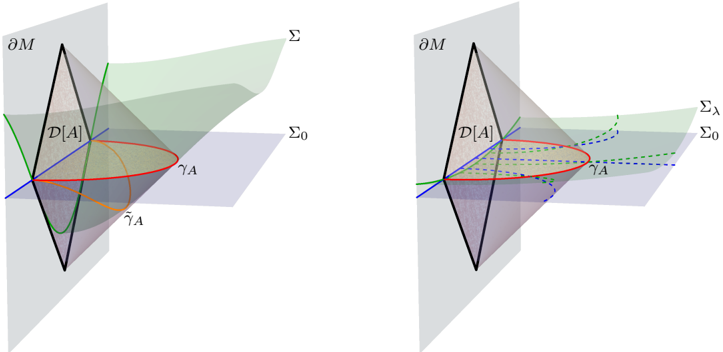
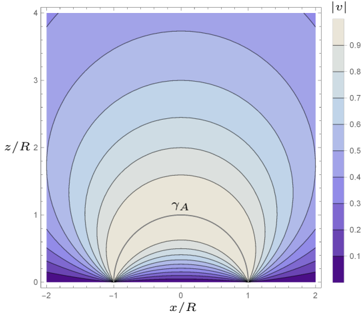
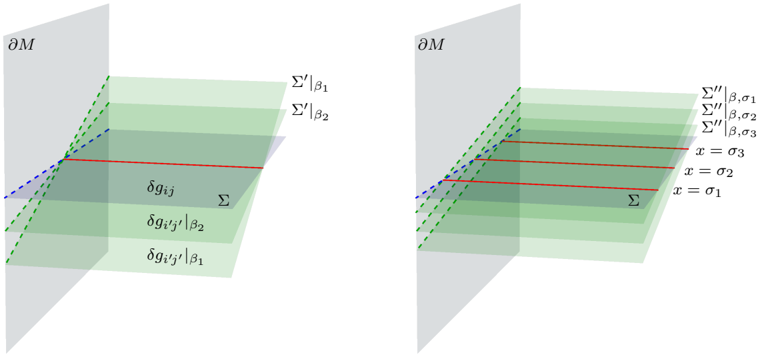
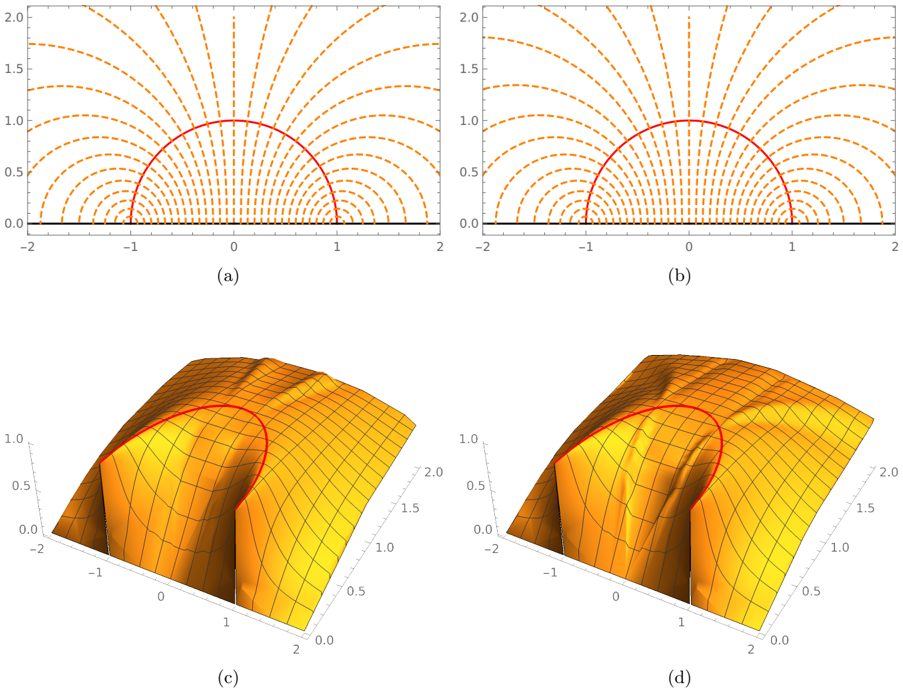
Verification
Claims the paper makes
The claims and statistics of this paper haven’t been checked yet.
Run the check — free, no account needed. It reads the open-access text and checks the sources it cites.
Claims other papers make about this one
Each is checked against this paper’s own text: does it say what the citing paper says it does?
In the citing paper
“As such, it has led to numerous insights into gravitational physics, notably in understanding the emergence of gravity from quantum entanglement [233][234][235][236][237][238]”
From Three-Dimensional Quantum Black Holes: A Primer (2024) · cites this paper as [237]
Self-check
Percentages, sums and reported differences re-computed from the paper’s own numbers.
The self-check needs the paper’s full text.
Citations
Cites
A covariant holographic entanglement entropy proposal
Hubeny, V. E., Rangamani, M., & Takayanagi, T. (2007) · Journal of High Energy Physics · doi:10.1088/1126-6708/2007/07/062 · Cited by 1,822 · cited 2×
“J H E P 0 1 ( 2 0 2 1 ) 1 9 3 or its covariant HRT version [2], where the minimality condition is replaced by extremality,”
BackgroundMethodA Covariant Holographic Entanglement Entropy Proposal
Hubeny, V. E., Rangamani, M., & Takayanagi, T. (2007) · arXiv · doi:10.48550/arxiv.0705.0016 · Cited by 1,822 · cited 2×
“J H E P 0 1 ( 2 0 2 1 ) 1 9 3 or its covariant HRT version [2], where the minimality condition is replaced by extremality,”
BackgroundMethodRelative entropy and holography
Blanco, D. D., Casini, H., Hung, L.-Y., & Myers, R. C. (2013) · Journal of High Energy Physics · doi:10.1007/jhep08(2013)060 · Cited by 375
Research works printed but not linked: 74
- S. Ryu and T. Takayanagi, Holographic derivation of entanglement entropy from AdS/CFT, Phys. Rev. Lett. 96 (2006) 181602 [hep-th/0603001] [INSPIRE]. · DOI · Paper page
- A. Lewkowycz and J. Maldacena, Generalized gravitational entropy, JHEP 08 (2013) 090 [arXiv:1304.4926] [INSPIRE]. · DOI · Paper page
- X. Dong, A. Lewkowycz and M. Rangamani, Deriving covariant holographic entanglement, JHEP 11 (2016) 028 [arXiv:1607.07506] [INSPIRE]. · DOI · Paper page
- V. Balasubramanian, B. Czech, B.D. Chowdhury and J. de Boer, The entropy of a hole in spacetime, JHEP 10 (2013) 220 [arXiv:1305.0856] [INSPIRE]. · DOI
- V. Balasubramanian, B.D. Chowdhury, B. Czech, J. de Boer and M.P. Heller, Bulk curves from boundary data in holography, Phys. Rev. D 89 (2014) 086004 [arXiv:1310.4204] [INSPIRE]. · DOI
- R.C. Myers, J. Rao and S. Sugishita, Holographic holes in higher dimensions, JHEP 06 (2014) 044 [arXiv:1403.3416] [INSPIRE]. · DOI
- M. Headrick, R.C. Myers and J. Wien, Holographic holes and differential entropy, JHEP 10 (2014) 149 [arXiv:1408.4770] [INSPIRE]. · DOI
- B. Czech and L. Lamprou, Holographic definition of points and distances, Phys. Rev. D 90 (2014) 106005 [arXiv:1409.4473] [INSPIRE]. · DOI
- B. Czech, L. Lamprou, S. McCandlish and J. Sully, Integral geometry and holography, JHEP 10 (2015) 175 [arXiv:1505.05515] [INSPIRE]. · DOI
- X. Dong, D. Harlow and A.C. Wall, Reconstruction of bulk operators within the entanglement wedge in gauge-gravity duality, Phys. Rev. Lett. 117 (2016) 021601 [arXiv:1601.05416] [INSPIRE]. · DOI · Paper page
- B. Czech, L. Lamprou, S. McCandlish, B. Mosk and J. Sully, A stereoscopic look into the bulk, JHEP 07 (2016) 129 [arXiv:1604.03110] [INSPIRE]. · DOI
- C. Cao, S.M. Carroll and S. Michalakis, Space from Hilbert space: recovering geometry from bulk entanglement, Phys. Rev. D 95 (2017) 024031 [arXiv:1606.08444] [INSPIRE]. · DOI
- R. Espíndola, A. Güijosa, A. Landetta and J.F. Pedraza, What’s the point? Hole-ography in Poincaré AdS, Eur. Phys. J. C 78 (2018) 75 [arXiv:1708.02958] [INSPIRE]. · DOI
- R. Espíndola, A. Guijosa and J.F. Pedraza, Entanglement wedge reconstruction and entanglement of purification, Eur. Phys. J. C 78 (2018) 646 [arXiv:1804.05855] [INSPIRE]. · DOI
- S.R. Roy and D. Sarkar, Bulk metric reconstruction from boundary entanglement, Phys. Rev. D 98 (2018) 066017 [arXiv:1801.07280] [INSPIRE]. · DOI
- T. Faulkner, M. Li and H. Wang, A modular toolkit for bulk reconstruction, JHEP 04 (2019) 119 [arXiv:1806.10560] [INSPIRE]. · DOI
- B. Czech, Y.D. Olivas and Z.-z. Wang, Holographic integral geometry with time dependence, JHEP 12 (2020) 063 [arXiv:1905.07413] [INSPIRE]. · DOI
- V. Balasubramanian and C. Rabideau, The dual of non-extremal area: differential entropy in higher dimensions, JHEP 09 (2020) 051 [arXiv:1812.06985] [INSPIRE]. · DOI
- N. Bao, C. Cao, S. Fischetti and C. Keeler, Towards bulk metric reconstruction from extremal area variations, Class. Quant. Grav. 36 (2019) 185002 [arXiv:1904.04834] [INSPIRE]. · DOI
- C. Cao, X.-L. Qi, B. Swingle and E. Tang, Building bulk geometry from the tensor radon transform, JHEP 12 (2020) 033 [arXiv:2007.00004] [INSPIRE]. · DOI
- N. Lashkari, M.B. McDermott and M. Van Raamsdonk, Gravitational dynamics from entanglement ‘thermodynamics’, JHEP 04 (2014) 195 [arXiv:1308.3716] [INSPIRE]. · DOI · Paper page
- T. Faulkner, M. Guica, T. Hartman, R.C. Myers and M. Van Raamsdonk, Gravitation from entanglement in holographic CFTs, JHEP 03 (2014) 051 [arXiv:1312.7856] [INSPIRE]. · DOI · Paper page
- B. Swingle and M. Van Raamsdonk, Universality of Gravity from Entanglement, arXiv:1405.2933 [INSPIRE]. · arXiv
- E. Caceres, P.H. Nguyen and J.F. Pedraza, Holographic entanglement chemistry, Phys. Rev. D 95 (2017) 106015 [arXiv:1605.00595] [INSPIRE]. · DOI
- B. Czech, L. Lamprou, S. McCandlish, B. Mosk and J. Sully, Equivalent equations of motion for gravity and entropy, JHEP 02 (2017) 004 [arXiv:1608.06282] [INSPIRE]. · DOI
- T. Faulkner, F.M. Haehl, E. Hijano, O. Parrikar, C. Rabideau and M. Van Raamsdonk, Nonlinear gravity from entanglement in conformal field theories, JHEP 08 (2017) 057 [arXiv:1705.03026] [INSPIRE]. · DOI
- F.M. Haehl, E. Hijano, O. Parrikar and C. Rabideau, Higher curvature gravity from entanglement in conformal field theories, Phys. Rev. Lett. 120 (2018) 201602 [arXiv:1712.06620] [INSPIRE]. · DOI · Paper page
- F. Rosso and A. Svesko, Novel aspects of the extended first law of entanglement, JHEP 08 (2020) 008 [arXiv:2003.10462] [INSPIRE]. · DOI
- M. Freedman and M. Headrick, Bit threads and holographic entanglement, Commun. Math. Phys. 352 (2017) 407 [arXiv:1604.00354] [INSPIRE]. · DOI
- M. Headrick and V.E. Hubeny, Riemannian and Lorentzian flow-cut theorems, Class. Quant. Grav. 35 (2018) 10 [arXiv:1710.09516] [INSPIRE]. · DOI
- M. Headrick and B. Zwiebach, Minimal-area metrics on the Swiss cross and punctured torus, Commun. Math. Phys. 377 (2020) 2287 [arXiv:1806.00450] [INSPIRE]. · DOI
- M. Headrick and B. Zwiebach, Convex programs for minimal-area problems, Commun. Math. Phys. 377 (2020) 2217 [arXiv:1806.00449] [INSPIRE]. · DOI
- S.X. Cui, P. Hayden, T. He, M. Headrick, B. Stoica and M. Walter, Bit threads and holographic monogamy, Commun. Math. Phys. 376 (2019) 609 [arXiv:1808.05234] [INSPIRE]. · DOI
- C.-B. Chen, F.-W. Shu and M.-H. Wu, Quantum bit threads of MERA tensor network in large c limit, Chin. Phys. C 44 (2020) 075102 [arXiv:1804.00441] [INSPIRE]. · DOI
- J. Harper, M. Headrick and A. Rolph, Bit threads in higher curvature gravity, JHEP 11 (2018) 168 [arXiv:1807.04294] [INSPIRE]. · DOI
- D.-H. Du, C.-B. Chen and F.-W. Shu, Bit threads and holographic entanglement of purification, JHEP 08 (2019) 140 [arXiv:1904.06871] [INSPIRE]. · DOI
- N. Bao, A. Chatwin-Davies, J. Pollack and G.N. Remmen, Towards a bit threads derivation of holographic entanglement of purification, JHEP 07 (2019) 152 [arXiv:1905.04317] [INSPIRE]. · arXiv
- J. Harper and M. Headrick, Bit threads and holographic entanglement of purification, JHEP 08 (2019) 101 [arXiv:1906.05970] [INSPIRE]. · DOI
- C.A. Agón and M. Mezei, Bit Threads and the Membrane Theory of Entanglement Dynamics, arXiv:1910.12909 [INSPIRE]. · arXiv
- D.-H. Du, F.-W. Shu and K.-X. Zhu, Inequalities of holographic entanglement of purification from bit threads, Eur. Phys. J. C 80 (2020) 700 [arXiv:1912.00557] [INSPIRE]. · DOI
- V.E. Hubeny, Bulk locality and cooperative flows, JHEP 12 (2018) 068 [arXiv:1808.05313] [INSPIRE]. · DOI
- C.A. Agón, J. De Boer and J.F. Pedraza, Geometric aspects of holographic bit threads, JHEP 05 (2019) 075 [arXiv:1811.08879] [INSPIRE]. · DOI
- C. Akers and P. Rath, Entanglement wedge cross sections require tripartite entanglement, JHEP 04 (2020) 208 [arXiv:1911.07852] [INSPIRE]. · DOI
- N. Engelhardt and G.T. Horowitz, Towards a reconstruction of general bulk metrics, Class. Quant. Grav. 34 (2017) 015004 [arXiv:1605.01070] [INSPIRE]. · DOI
- G. Trevino, Reconstruction of an AdS radiation/boson star bulk geometry using light-cone cuts, JHEP 11 (2017) 111 [arXiv:1708.03331] [INSPIRE]. · DOI
- S. Hernández-Cuenca and G.T. Horowitz, Bulk reconstruction of metrics with a compact space asymptotically, JHEP 20 (2020) 108 [arXiv:2003.08409] [INSPIRE]. · DOI
- V. Balasubramanian, B.D. Chowdhury, B. Czech and J. de Boer, Entwinement and the emergence of spacetime, JHEP 01 (2015) 048 [arXiv:1406.5859] [INSPIRE]. · DOI
- M. Van Raamsdonk, Comments on quantum gravity and entanglement, arXiv:0907.2939 [INSPIRE]. · arXiv
- M. Van Raamsdonk, Building up spacetime with quantum entanglement, Gen. Rel. Grav. 42 (2010) 2323 [arXiv:1005.3035] [INSPIRE]. · DOI · Paper page
- I. Bakhmatov, N.S. Deger, J. Gutowski, E.O. Colgáin and H. Yavartanoo, Calibrated Entanglement Entropy, JHEP 07 (2017) 117 [arXiv:1705.08319] [INSPIRE]. · DOI
- R.M. Wald, General relativity, Chicago University Press, Chicago U.S.A. (1984). · DOI · Paper page
- R.M. Wald, On identically closed forms locally constructed from a field, J. Math. Phys. 31 (1990) 2378. · DOI
- J.J. Bisognano and E.H. Wichmann, On the duality condition for a Hermitian scalar field, J. Math. Phys. 16 (1975) 985 [INSPIRE]. · DOI
- W.G. Unruh, Notes on black hole evaporation, Phys. Rev. D 14 (1976) 870 [INSPIRE]. · DOI · Paper page
- P.D. Hislop and R. Longo, Modular structure of the local algebras associated with the free massless scalar field theory, Commun. Math. Phys. 84 (1982) 71 [INSPIRE]. · DOI · Paper page
- H. Casini, M. Huerta and R.C. Myers, Towards a derivation of holographic entanglement entropy, JHEP 05 (2011) 036 [arXiv:1102.0440] [INSPIRE]. · DOI · Paper page
- V. Iyer and R.M. Wald, Some properties of Noether charge and a proposal for dynamical black hole entropy, Phys. Rev. D 50 (1994) 846 [gr-qc/9403028] [INSPIRE]. · DOI · Paper page
- V. Iyer and R.M. Wald, A comparison of Noether charge and Euclidean methods for computing the entropy of stationary black holes, Phys. Rev. D 52 (1995) 4430 [gr-qc/9503052] [INSPIRE]. · DOI
- E. Oh, I.Y. Park and S.-J. Sin, Complete Einstein equations from the generalized First Law of Entanglement, Phys. Rev. D 98 (2018) 026020 [arXiv:1709.05752] [INSPIRE]. · DOI
- N. Lashkari and M. Van Raamsdonk, Canonical energy is quantum Fisher information, JHEP 04 (2016) 153 [arXiv:1508.00897] [INSPIRE]. · DOI · Paper page
- S. Hollands and R.M. Wald, Stability of black holes and black branes, Commun. Math. Phys. 321 (2013) 629 [arXiv:1201.0463] [INSPIRE]. · DOI
- M.J.S. Beach, J. Lee, C. Rabideau and M. Van Raamsdonk, Entanglement entropy from one-point functions in holographic states, JHEP 06 (2016) 085 [arXiv:1604.05308] [INSPIRE]. · DOI
- M. Botta-Cantcheff, P. Martínez and G.A. Silva, On excited states in real-time AdS/CFT, JHEP 02 (2016) 171 [arXiv:1512.07850] [INSPIRE]. · DOI
- A. Christodoulou and K. Skenderis, Holographic construction of excited CFT states, JHEP 04 (2016) 096 [arXiv:1602.02039] [INSPIRE]. · arXiv
- D. Marolf, O. Parrikar, C. Rabideau, A. Izadi Rad and M. Van Raamsdonk, From Euclidean sources to lorentzian spacetimes in holographic conformal field theories, JHEP 06 (2018) 077 [arXiv:1709.10101] [INSPIRE]. · DOI
- Y. Chen and G. Vidal, Entanglement contour, J. Stat. Mech. 10 (2014) P10011 [arXiv:1406.1471]. · DOI
- J. Kudler-Flam, I. MacCormack and S. Ryu, Holographic entanglement contour, bit threads, and the entanglement tsunami, J. Phys. A 52 (2019) 325401 [arXiv:1902.04654] [INSPIRE]. · DOI
- A. Lewkowycz and O. Parrikar, The holographic shape of entanglement and Einstein’s equations, JHEP 05 (2018) 147 [arXiv:1802.10103] [INSPIRE]. · DOI
- M. Nozaki, T. Numasawa and T. Takayanagi, Holographic local quenches and entanglement density, JHEP 05 (2013) 080 [arXiv:1302.5703] [INSPIRE]. · DOI
- C.A. Agón, S.F. Lokhande and J.F. Pedraza, Local quenches, bulk entanglement entropy and a unitary Page curve, JHEP 08 (2020) 152 [arXiv:2004.15010] [INSPIRE]. · DOI
- H. Liu and S.J. Suh, Entanglement tsunami: universal scaling in holographic thermalization, Phys. Rev. Lett. 112 (2014) 011601 [arXiv:1305.7244] [INSPIRE]. · DOI
- H. Liu and S.J. Suh, Entanglement growth during thermalization in holographic systems, Phys. Rev. D 89 (2014) 066012 [arXiv:1311.1200] [INSPIRE]. · DOI
- S. Kundu and J.F. Pedraza, Spread of entanglement for small subsystems in holographic CFTs, Phys. Rev. D 95 (2017) 086008 [arXiv:1602.05934] [INSPIRE]. · DOI
- S.F. Lokhande, G.W.J. Oling and J.F. Pedraza, Linear response of entanglement entropy from holography, JHEP 10 (2017) 104 [arXiv:1705.10324] [INSPIRE]. · DOI
Cited by
Sorted by citations
Three-Dimensional Quantum Black Holes: A Primer
Panella, E., Pedraza, J. F., & Svesko, A. (2024) · Universe · doi:10.3390/universe10090358 · Cited by 24
Self-citation
Metadata
- Authors
- Agón, C. A., Cáceres, E., & Pedraza, J. F.
- ORCID
- Pedraza, Juan F.
- Venue
- Journal of High Energy Physics
- Published
- 2021-01-28
- Volume
- 2021
- Issue
- 1
- ISSN
- 1029-8479
- Cited by
- 34
- References
- 3
- Language
- en
About these checks
Registry, retraction, Cites and statistics results are computed, not judged, with one exception: a printed reference that no index lists is read once by a model before it counts as a citation error. Claims are extracted by a model and kept only when their quote appears verbatim in the text; each cited source is then checked, with a model’s help, for whether it says what the claim relies on. Those verdicts can be wrong — read the claim’s quote and the cited source before relying on one.
Statistics and arithmetic are recomputed, not judged.
Confidence bands are shown only for fields calibrated on our annotated test set. None is calibrated yet, so no band is shown.
What counts as a claim ›How we measure confidence ›How we check this ›
Are you an author, or do you see a problem with this page? Request a review
