

The DOI matches its Crossref record; 79 of the 79 references it cites were found in a registry or an index.
Fox-1 family of RNA-binding proteins
Open accessAbstract
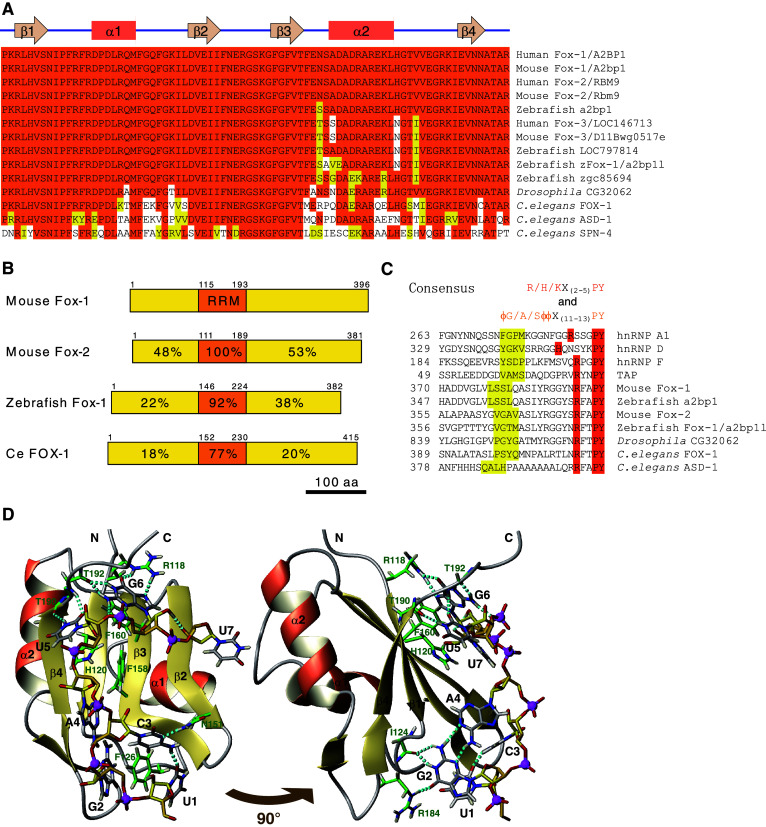
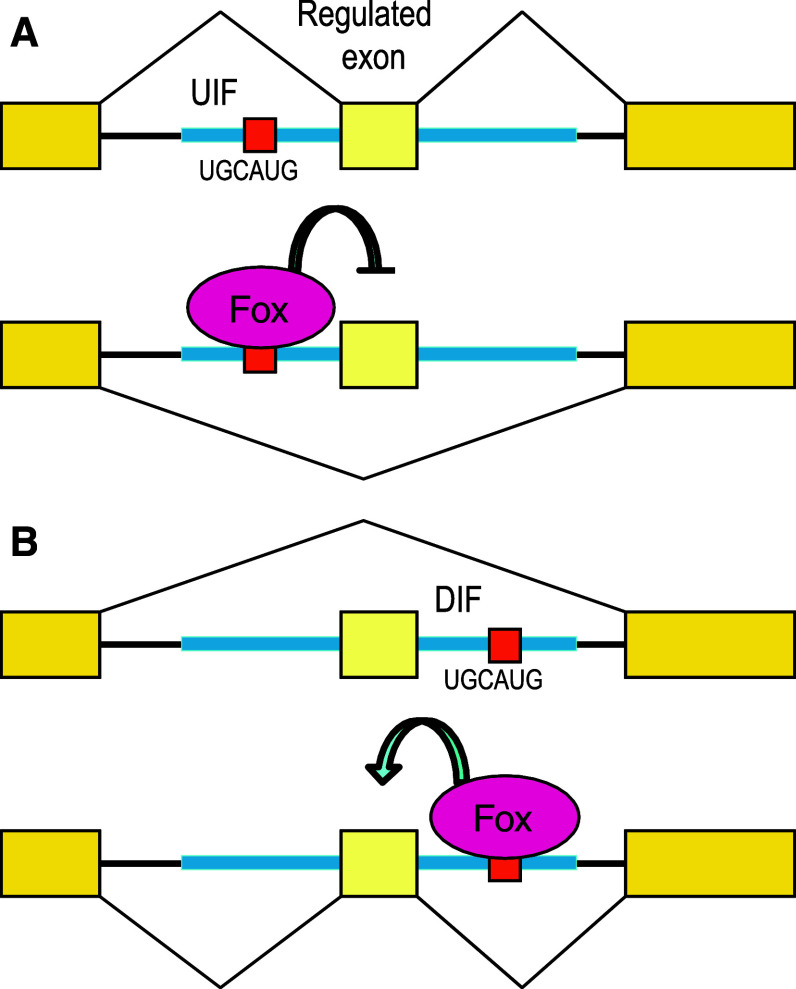
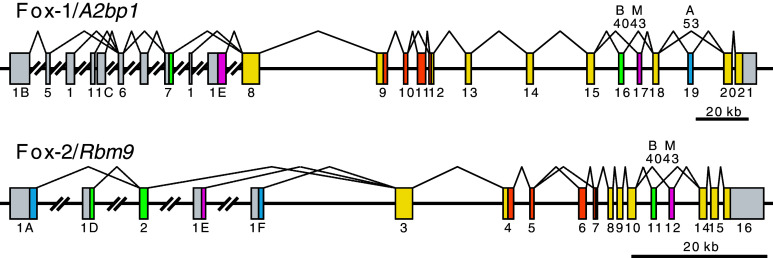
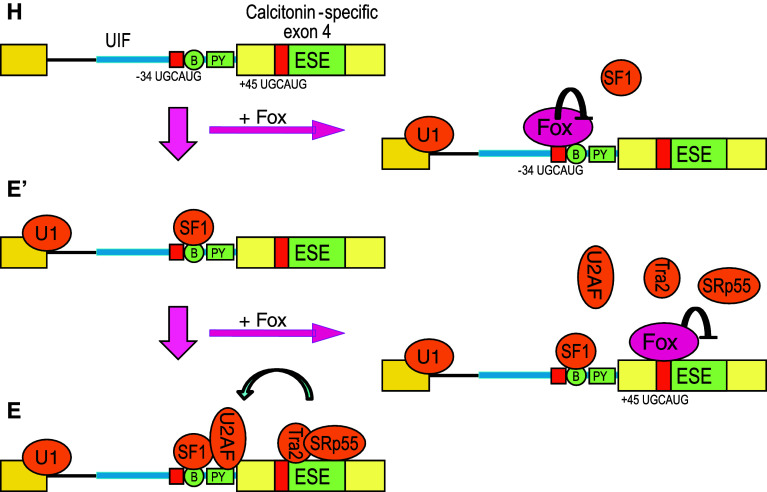
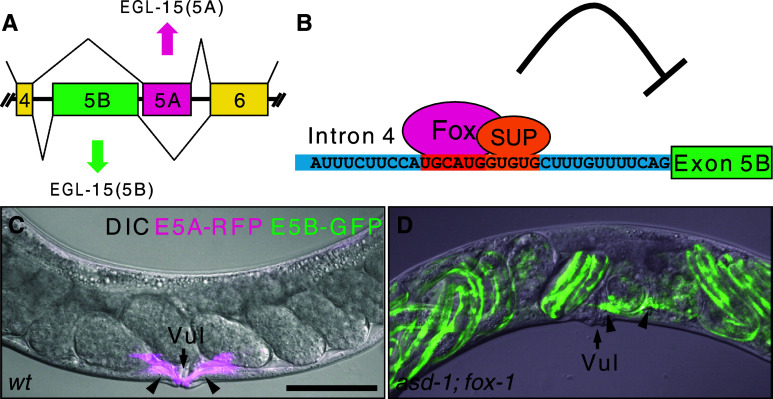
The Fox-1 family of RNA-binding proteins are evolutionarily conserved regulators of tissue-specific alternative splicing in metazoans. The Fox-1 family specifically recognizes the (U)GCAUG stretch in regulated exons or in flanking introns, and either promotes or represses target exons. Recent unbiased bioinformatics analyses of alternatively spliced exons and comparison of various vertebrate genomes identified the (U)GCAUG stretch as a highly conserved and widely distributed element enriched in intronic regions surrounding exons with altered inclusion in muscle, heart, and brain, consistent with specific expression of Fox-1 and Fox-2 in these tissues. Global identification of Fox-2 target RNAs in living cells revealed that many of the Fox-2 target genes themselves encode splicing regulators. Further systematic elucidation of target genes of the Fox-1 family and other splicing regulators in various tissues will lead to a comprehensive understanding of splicing regulatory networks.
Overview
The claims and statistics of this paper haven’t been checked yet.
Run the check — free, no account needed. It reads the open-access text and checks the sources it cites.
Integrity signals
Registry
Cites
Statistics
Figures
Verification
Claims the paper makes
The claims and statistics of this paper haven’t been checked yet.
Run the check — free, no account needed. It reads the open-access text and checks the sources it cites.
Claims other papers make about this one
Each is checked against this paper’s own text: does it say what the citing paper says it does?
In the citing paper
“RBFOX binding upstream of, or within, an alternative exon typically inhibits exon inclusion, whereas downstream binding usually promotes splicing48.”
From The neurogenetics of alternative splicing (2016) · cites this paper as [48]
Self-check
Percentages, sums and reported differences re-computed from the paper’s own numbers.
The self-check needs the paper’s full text.
Citations
Cites
MOLMOL: A program for display and analysis of macromolecular structures
Koradi, R., Billeter, M., & Wüthrich, K. (1996) · Journal of Molecular Graphics · doi:10.1016/0263-7855(96)00009-4 · Cited by 7,156
Alternative isoform regulation in human tissue transcriptomes
Wang, E. T., Sandberg, R., Luo, S., Khrebtukova, I., Zhang, L., Mayr, C., Kingsmore, S. F., Schroth, G. P., & Burge, C. B. (2008) · Nature · doi:10.1038/nature07509 · Cited by 5,181
Pan, Q., Shai, O., Lee, L. J., Frey, B. J., & Blencowe, B. J. (2008) · Nature Genetics · doi:10.1038/ng.259 · Cited by 3,951
Mechanisms of Alternative Pre-Messenger RNA Splicing
Black, D. L. (2003) · Annual Review of Biochemistry · doi:10.1146/annurev.biochem.72.121801.161720 · Cited by 2,704
HITS-CLIP yields genome-wide insights into brain alternative RNA processing
Licatalosi, D. D., Mele, A., Fak, J. J., Ule, J., Kayikci, M., Chi, S. W., Clark, T. A., Schweitzer, A. C., Blume, J. E., Wang, X., et al. (2008) · Nature · doi:10.1038/nature07488 · Cited by 1,352 · cited 2×
“These stories are reminiscent of the CLIP-seq analysis of NOVA that led to the discovery that NOVA interacts with 30 UTRs of target mRNAs and regulates alternative polyadenylation in the brain [43].”
MethodUnderstanding alternative splicing: towards a cellular code
Matlin, A. J., Clark, F., & Smith, C. W. J. (2005) · Nature Reviews Molecular Cell Biology · doi:10.1038/nrm1645 · Cited by 1,299
Alternative splicing: increasing diversity in the proteomic world
Graveley, B. R. (2001) · Trends in Genetics · doi:10.1016/s0168-9525(00)02176-4 · Cited by 1,228
Maris, C., Dominguez, C., & Allain, F. H. ‐. (2005) · FEBS Journal · doi:10.1111/j.1742-4658.2005.04653.x · Cited by 1,135
Lim, J., Hao, T., Shaw, C., Patel, A. J., Szabó, G., Rual, J.-F., Fisk, C. J., Li, N., Smolyar, A., Hill, D. E., et al. (2006) · Cell · doi:10.1016/j.cell.2006.03.032 · Cited by 789
ESRP1 and ESRP2 Are Epithelial Cell-Type-Specific Regulators of FGFR2 Splicing
Warzecha, C. C., Sato, T. K., Nabet, B., Hogenesch, J. B., & Carstens, R. P. (2009) · Molecular Cell · doi:10.1016/j.molcel.2009.01.025 · Cited by 580
Cited by
Sorted by citations
Items 101–187 of 187
Song, M., Hou, W., Mustafa, A. U., Li, P., Lei, J., Zhou, Y., Li, J., Sun, Y., Zhou, H., Xu, Y., et al. (2022) · Clinical Science · doi:10.1042/cs20220226 · Cited by 17
Altered Rbfox1-Vamp1 pathway and prefrontal cortical dysfunction in schizophrenia
Chung, Y., Dienel, S. J., Belch, M., Fish, K. N., Ermentrout, B., Lewis, D. A., & Chung, D. W. (2024) · Molecular Psychiatry · doi:10.1038/s41380-024-02417-8 · Cited by 17
Comprehensive analysis of mutually exclusive alternative splicing inC. elegans
Kuroyanagi, H., Takei, S., & Suzuki, Y. (2014) · Worm · doi:10.4161/worm.28459 · Cited by 15
Self-citationSuzuki, S., Ayukawa, N., Okada, C., Tanaka, M., Takekoshi, S., Iijima, Y., & Iijima, T. (2017) · Scientific Reports · doi:10.1038/s41598-017-11319-5 · Cited by 17
RBFOX2 and alternative splicing in B-cell lymphoma
Quentmeier, H., Pommerenke, C., Bernhart, S. H., Dirks, W. G., Hauer, V., Hoffmann, S., Nagel, S., Siebert, R., Uphoff, C. C., Zaborski, M., et al. (2018) · Blood Cancer Journal · doi:10.1038/s41408-018-0114-3 · Cited by 16
HMGA1a is involved in specific splice site regulation of human immunodeficiency virus type 1
Tsuruno, C., Ohe, K., Kuramitsu, M., Kohma, T., Takahama, Y., Hamaguchi, Y., Hamaguchi, I., & Okuma, K. (2011) · Biochemical and Biophysical Research Communications · doi:10.1016/j.bbrc.2011.02.059 · Cited by 16
Jeong, J., Yoo, H. J., An, J., & Jeong-Yu, S. (2025) · Molecules and Cells · doi:10.1016/j.mocell.2025.100237 · Cited by 15
Barron, V. A., Geng, C., Ladd, A. N., & Lou, H. J. (2012) · BMC Molecular Biology · doi:10.1186/1471-2199-13-35 · Cited by 15
Six GU-rich (6GUR) FUS-binding motifs detected by normalization of CLIP-seq by Nascent-seq
Takeda, J., Masuda, A., & Ohno, K. (2017) · Gene · doi:10.1016/j.gene.2017.04.008 · Cited by 14
Lee, J., Lamarche‐Vane, N., & Richard, S. (2021) · Wiley Interdisciplinary Reviews - RNA · doi:10.1002/wrna.1678 · Cited by 14
The effect of Rbfox2 modulation on retinal transcriptome and visual function
Gu, L., Kawaguchi, R., Caprioli, J., & Piri, N. (2020) · Scientific Reports · doi:10.1038/s41598-020-76879-5 · Cited by 15
New Insights Into the Role of RNA-Binding Proteins in the Regulation of Heart Development
Ladd, A. N. (2016) · International review of cytology · doi:10.1016/bs.ircmb.2015.12.009 · Cited by 14
Casanovas, S., Schlichtholz, L., Mühlbauer, S., Dewi, S., Schüle, M., Strand, D. J., Strand, S., Zografidou, L., & Winter, J. (2020) · Frontiers in Molecular Neuroscience · doi:10.3389/fnmol.2020.00066 · Cited by 14
Alternative splicing induces cytoplasmic localization of RBFOX2 protein in calcific tendinopathy
Cho, N., Kim, J. O., Lee, S., Choi, S., Kim, J., Ko, M., Park, S.-J., Ji, J., & Kim, K. K. (2019) · Experimental and Molecular Pathology · doi:10.1016/j.yexmp.2019.104264 · Cited by 13
Xing, B., Shen, C., Yang, Q., Wang, Z., & Tan, W. (2023) · International Journal of Experimental Pathology · doi:10.1111/iep.12468 · Cited by 13
Nazario-Toole, A., Robalino, J., Okrah, K., Bravo, H. C., Mount, S. M., & Wu, L. P. (2018) · The Journal of Immunology · doi:10.4049/jimmunol.1800496 · Cited by 13
Iijima, T., & Yoshimura, T. (2019) · Frontiers in Molecular Neuroscience · doi:10.3389/fnmol.2019.00295 · Cited by 13
Post-transcriptional regulation of the transcriptional apparatus in neuronal development
Nazim, M. (2024) · Frontiers in Molecular Neuroscience · doi:10.3389/fnmol.2024.1483901 · Cited by 12
Wenzel, M., Schüle, M., Casanovas, S., Strand, D. J., Strand, S., & Winter, J. (2016) · FEBS Letters · doi:10.1002/1873-3468.12492 · Cited by 11
An emerging model organism Caenorhabditis elegans for alternative pre‐ mRNA processing in vivo
Wani, S., & Kuroyanagi, H. (2017) · Wiley Interdisciplinary Reviews - RNA · doi:10.1002/wrna.1428 · Cited by 12
Self-citationFOX-2 Dependent Splicing of Ataxin-2 Transcript Is Affected by Ataxin-1 Overexpression
Welzel, F., Kaehler, C., Isau, M., Hallen, L., Lehrach, H., & Krobitsch, S. (2012) · PLoS ONE · doi:10.1371/journal.pone.0037985 · Cited by 13
Genetic profile of elite endurance athletes
Semenova, E. A., Fuku, N., & Ahmetov, I. I. (2019) · Elsevier eBooks · doi:10.1016/b978-0-12-816193-7.00004-x · Cited by 11
Ye, X., Yang, W. J., Yi, S., Zhao, Y., Varani, G., Jankowsky, E., & Yang, F. (2023) · Nature Communications · doi:10.1038/s41467-023-36394-3 · Cited by 11
Nikonova, E. V., Kamble, K., Mukherjee, A., Barz, C., Nongthomba, U., & Spletter, M. L. (2022) · Life Science Alliance · doi:10.26508/lsa.202101342 · Cited by 10
Rbfox3/NeuN Regulates Alternative Splicing of Tau Exon 10
Gu, J., Chen, F., Chu, D., Lu, Y., Iqbal, K., Gong, C., & Liu, F. (2018) · Journal of Alzheimer s Disease · doi:10.3233/jad-180882 · Cited by 10
Sun, Y., Shortridge, M. D., & Varani, G. (2018) · ChemBioChem · doi:10.1002/cbic.201800645 · Cited by 10
Interrelationship between miRNA and splicing factors in pancreatic ductal adenocarcinoma
Supadmanaba, I. G. P., Mantini, G., Randazzo, O., Capula, M., Muller, I. B., Cascioferro, S., Diana, P., Peters, G. J., & Giovannetti, E. (2021) · Epigenetics · doi:10.1080/15592294.2021.1916697 · Cited by 10
Li, X., Li, X., Yin, Z., Jiang, M., Tian, W., Tang, M., & Zhou, B. (2019) · Biomarkers in Medicine · doi:10.2217/bmm-2018-0482 · Cited by 10
Rbfox1 controls alternative splicing of focal adhesion genes in cardiac muscle cells
Zorn, P., Sánchez, J. C., Alakhras, T., Schreier, B., Gekle, M., Hüttelmaier, S., & Köhn, M. (2024) · Journal of Molecular Cell Biology · doi:10.1093/jmcb/mjae003 · Cited by 10
RNA splicing factor RBFOX2 is a key factor in the progression of cancer and cardiomyopathy
Shen, J., Shentu, J., Zhong, C., Huang, Q., & Duan, S. (2024) · Clinical and Translational Medicine · doi:10.1002/ctm2.1788 · Cited by 9
Norovirus VPg Binds RNA through a Conserved N-Terminal K/R Basic Patch
McSweeney, A. M., Young, V. L., & Ward, V. K. (2021) · Viruses · doi:10.3390/v13071282 · Cited by 8
Cooper, A. M., Nutter, C. A., Kuyumcu‐Martinez, M. N., & Wright, C. W. (2022) · Molecular and Cellular Biology · doi:10.1128/mcb.00503-21 · Cited by 8
Visual Function and Survival of Injured Retinal Ganglion Cells in Aged Rbfox1 Knockout Animals
Gu, L., Kwong, J. M. K., Caprioli, J., & Piri, N. (2022) · Cells · doi:10.3390/cells11213401 · Cited by 8
NeuN immunoreactivity in the brain of Xenopus laevis
Saito, S., Shiina, T., & Shimizu, Y. (2017) · Tissue and Cell · doi:10.1016/j.tice.2017.05.001 · Cited by 6
Evolution Increases Primates Brain Complexity Extending RbFOX1 Splicing Activity to LSD1 Modulation
Forastieri, C., Italia, M., Toffolo, E., Romito, E., Bonasoni, M. P., Ranzani, V., Bodega, B., Rusconi, F., & Battaglioli, E. (2022) · Journal of Neuroscience · doi:10.1523/jneurosci.1782-21.2022 · Cited by 9
FOXK2 transcription factor and its roles in tumorigenesis (Review)
Wang, Z., Liu, X., Wang, Z., & Hu, Z. (2022) · Oncology Letters · doi:10.3892/ol.2022.13581 · Cited by 7
To RNA ‐binding and beyond: Emerging facets of the role of Rbfox proteins in development and disease
Mukherjee, A., & Nongthomba, U. (2023) · Wiley Interdisciplinary Reviews - RNA · doi:10.1002/wrna.1813 · Cited by 7
Down-regulation of fatty acid binding protein 7 (Fabp7) is a hallmark of the postpartum brain
Driessen, T. M., Zhao, C., Saenz, M., Stevenson, S. A., Owada, Y., & Gammie, S. C. (2018) · Journal of Chemical Neuroanatomy · doi:10.1016/j.jchemneu.2018.07.003 · Cited by 8
Kuroyanagi, H. (2013) · Worm · doi:10.4161/worm.23834 · Cited by 7
Self-citationJuarez, A., González, N., Campos-Ordoñez, T., Martínez, Y. G., & Gudiño‐Cabrera, G. (2024) · Acta Histochemica · doi:10.1016/j.acthis.2024.152207 · Cited by 7
Liao, S. (2024) · American Journal of Cancer Research · doi:10.62347/bnpo2363 · Cited by 6
Splicing factor SUP-12 and the molecular complexity of apparent cooperativity
Mackereth, C. D. (2014) · Worm · doi:10.4161/21624054.2014.991240 · Cited by 6
A Biophysical Model for Identifying Splicing Regulatory Elements and Their Interactions
Wen, J., Chen, Z., & Cai, X. (2013) · PLoS ONE · doi:10.1371/journal.pone.0054885 · Cited by 6
Ma, F., Dong, Z., & Berberoglu, M. A. (2019) · Gene Expression Patterns · doi:10.1016/j.gep.2019.01.001 · Cited by 5
m6A and cardiac posttranscriptional regulation: a novel player in heart development and disease
Li, D., Li, D., & Jang, J. (2025) · Experimental & Molecular Medicine · doi:10.1038/s12276-025-01528-8 · Cited by 5
Loss of Rbfox1 Does Not Affect Survival of Retinal Ganglion Cells Injured by Optic Nerve Crush
Gu, L., Kwong, J. M. K., Caprioli, J., & Piri, N. (2021) · Frontiers in Neuroscience · doi:10.3389/fnins.2021.687690 · Cited by 5
Cytosolic localization of Fox proteins in motor neurons of G93A SOD1 mice
Ma, X., Turnbull, P. C., Crapper, E. P., Wang, H., Drannik, A. G., Jiang, F., Xia, S., & Turnbull, J. (2016) · Histochemistry and Cell Biology · doi:10.1007/s00418-015-1393-4 · Cited by 5
Elorza, A., Márquez, Y., Cabrera, J. R., Sanchez‐Trincado, J. L., Santos‐Galindo, M., Hernández, I. H., Díaz‐Hernandéz, J. I., García‐Escudero, R., Irimia, M., & Lucas, J. J. (2020) · bioRxiv (Cold Spring Harbor Laboratory) · doi:10.1101/2020.05.11.086017 · Cited by 5
Alternative Splicing and CaV ‐Associated Channelopathies
Munyao, W., Rahman, M. M., Sabzanov, S., Chu, E. H., Wang, R., Wang, Z., Yu, Y., & Ruggiu, M. (2025) · Wiley Interdisciplinary Reviews - RNA · doi:10.1002/wrna.70016 · Cited by 4
Evolutionary analysis of the Musashi family: What can it tell us about Zika?
Caldas-Garcia, G. B., Schüler‐Faccini, L., Pissinatti, A., Paixão‐Côrtes, V. R., & Bortolini, M. C. (2020) · Infection Genetics and Evolution · doi:10.1016/j.meegid.2020.104364 · Cited by 4
RBFOX2 confers tumor growth by PI3K/AKT and MAPK signaling in gastric cancer
Xie, S.-Y., Li, Z., Zhong, Y., Fang, Q., Ma, A., Wang, Y., Zeng, L., Lin, T., & Xie, D. (2023) · European Journal of Cancer Prevention · doi:10.1097/cej.0000000000000789 · Cited by 4
Non-canonical splice junction processing increases the diversity of RBFOX2 splicing isoforms
Choi, S., Cho, N., & Kim, K. K. (2022) · The International Journal of Biochemistry & Cell Biology · doi:10.1016/j.biocel.2022.106172 · Cited by 4
Michielsen, L., Hsu, J., Joglekar, A., Belchikov, N., Reinders, M. J. T., Tilgner, H., & Mahfouz, A. E. (2024) · bioRxiv (Cold Spring Harbor Laboratory) · doi:10.1101/2024.03.18.585465 · Cited by 4
RBFOX1 Regulates Calcium Signaling and Enhances SERCA2 Translation
Umar, S., Zhu, W., Souza-Neto, F., Bender, I. K., Wu, S. C., Healy, C. L., O’Connell, T. D., & van Berlo, J. H. (2025) · Cells · doi:10.3390/cells14090664 · Cited by 3
ErbB4 alternative splicing mediates fetal mouse alveolar type II cell differentiation in vitro
Wiegel, D., Dammann, C. E. L., & Nielsen, H. C. (2022) · Pediatric Research · doi:10.1038/s41390-022-02013-y · Cited by 3
Freitag, N., Xie, Y., Adam, L., Borowski, S., Blois, S. M., & Barrientos, G. (2021) · American Journal of Reproductive Immunology · doi:10.1111/aji.13491 · Cited by 3
Deng, K., Liu, Z., Su, Y., Zhang, Z., Fan, Y., Zhang, Y., & Wang, F. (2023) · The FASEB Journal · doi:10.1096/fj.202300677r · Cited by 3
Rbfox1 expression in amacrine cells is restricted to GABAergic and VGlut3 glycinergic cells
Gu, L., Caprioli, J., & Piri, N. (2022) · Bioscience Reports · doi:10.1042/bsr20220497 · Cited by 3
Tomassoni‐Ardori, F., Palko, M. E., Galloux, M., & Tessarollo, L. (2025) · PLoS Genetics · doi:10.1371/journal.pgen.1011855 · Cited by 2
Regulating mRNA complexity in the mammalian brain
Cooper, T. A. (2011) · Nature Genetics · doi:10.1038/ng.867 · Cited by 2
Evsyukova, I. Y. (2012) · Cited by 2
Spike, C. A., Parker, D. M., Tsukamoto, T., Torres‐Mangual, N., Tsukamoto, E. C., Coleman, K., Gearhart, M. D., Greenstein, D., & Nishimura, E. O. (2026) · Development · doi:10.1242/dev.205295 · Cited by 3
Phenotypic and molecular characterization of cataract in the TDRD7 knockout mouse mutant
Barnum, C. E. (2015) · Library, Museums and Press - UDSpace (University of Delaware) · doi:10.58088/7w4f-te25 · Cited by 1
Becares, A. A. (2013) · UVaDOC UVaDOC University of Valladolid Documentary Repository (University of Valladolid) · doi:10.35376/10324/4406 · Cited by 1
Secondary motifs enable concentration-dependent regulation by Rbfox family proteinsPreprint
Begg, B. E., Jens, M., Wang, P. Y., & Burge, C. B. (2019) · bioRxiv (Cold Spring Harbor Laboratory) · doi:10.1101/840272 · Cited by 1
Single cell atlas of trisomy 21 cerebral cortexPreprint
Zhang, J., Wang, S., Xu, Z., Ding, X., Li, C., Zhang, Y., Chen, Y., Zhong, J., Liang, L., Chai, C., et al. (2020) · bioRxiv (Cold Spring Harbor Laboratory) · doi:10.1101/2020.01.01.892398 · Cited by 1
Correction of RBFOX1 deficit rescues Huntington’s disease mis-splicing and pathologyPreprint
Lozano-Muñoz, D., Elorza, A., Mayor, L. P., Santos‐Galindo, M., Lucas-Santamaría, M., Parras, A., & Lucas, J. J. (2024) · bioRxiv (Cold Spring Harbor Laboratory) · doi:10.1101/2024.11.06.622223 · Cited by 1
Koutsoulidou, A., Mastroyiannopoulos, N. P., & Phylactou, L. A. (2013) · Encyclopedia of Molecular Cell Biology and Molecular Medicine · doi:10.1002/3527600906.mcb.201200033
RNA-Binding Proteins in Metazoans
Ngamniyom, A., & Sriyapai, T. (2012) · Journal of Advanced Development in Engineering and Science
Study of Protein-nucleic acid Complexes
Fernandes, L. F. D. C. (2013) · Portuguese National Funding Agency for Science, Research and Technology (RCAAP Project by FCT) · doi:10.34626/mwgj-rq42
Perfil da expressão gênica de larvas de Tetrapedia diversipes (Hymenoptera: Apidae) em diapausa
Santos, P. K. F. (2016) · Digital Library of Theses and Dissertations (Universidade de São Paulo) · doi:10.11606/d.41.2016.tde-29032016-135049
A Genome-Scale Analysis of Alternative Splicing Regulation by Splicing Factors in C. elegans
Tan, J. H. (2018) · TSpace (University of Toronto)
Functional impact of alternative splicing in vertebrate proteomes across tissues and cell types
Rodríguez, T., & Javier, J. (2018) · LA Referencia (Red Federada de Repositorios Institucionales de Publicaciones Científicas)
Dysregulated Translation in Autism Spectrum Disorder
Santini, E., & Borgkvist, A. (2020) · Oxford University Press eBooks · doi:10.1093/oxfordhb/9780190686307.013.24
Expression Analysis of Fox-2 Alternative Isoforms During Neuronal Differentiation
(2016) · International Journal of Advances in Chemical Engineering and Biological Sciences · doi:10.15242/ijacebs.iae0516407
Metavinculin mediates differentiation cues into myogenic gene expressionPreprint
Murugan, A., Nanjegowda, N. B., & Jothi, M. (2024) · bioRxiv (Cold Spring Harbor Laboratory) · doi:10.1101/2024.02.21.578728
Yotova, A. Y. (2024) · Publication Server of Goethe University Frankfurt am Main (Goethe University Frankfurt) · doi:10.21248/gups.85791
Evolutionarily Developed Alternatively Spliced Exons Containing Translation Initiation Sites
Takeda, J., Okamoto, T., & Masuda, A. (2024) · Cells · doi:10.3390/cells14010011
Prognostic alternative mRNA splicing signature and immune infiltration in prostate cancer
Wang, Z., Jian, T., Yin, R., Shang, P., Zhang, C., Zhou, Y., Xu, L., Zhu, J., & Zang, Y. (2026) · Journal of Applied Genetics · doi:10.1007/s13353-026-01085-4
Michielsen, L., Hsu, J., Joglekar, A., Belchikov, N., Reinders, M. J. T., Tilgner, H., & Mahfouz, A. E. (2026) · Genome biology · doi:10.1186/s13059-026-04015-z · Cited by 3
Study of molecules with nonsense mutation correction capacity
Jia, J. (2015) · theses.fr (ABES) · doi:10.70675/c02ce8ffzddb9z4b97z89c6zd164fb88d6be
Deciphering molecular mechanisms of unusual variants in Usher Syndrome
Liquori, A. (2015) · theses.fr (ABES) · doi:10.70675/3bcce956z97eaz41ffz93aczda615888431b
Modest rescue of RBFOX1 splicing function attenuates Huntington’s disease features
Lozano-Muñoz, D., Elorza, A., Lucas-Santamaría, M., Santos‐Galindo, M., Parras, A., & Lucas, J. J. (2026) · Molecular Medicine · doi:10.1186/s10020-026-01471-y
Alternative splicing of the Ca V 1 .2 calcium channel and its role in cardiovascular diseases
Wang, C., Qin, K., & Wang, J. (2026) · FEBS Letters · doi:10.1002/1873-3468.70437
Metadata
- Authors
- Kuroyanagi, H.
- Affiliations
- Tokyo Medical and Dental University (JP)
- Corresponding author
- Kuroyanagi, Hidehito
- ORCID
- Kuroyanagi, Hidehito
- Venue
- Cellular and Molecular Life Sciences
- Published
- 2009-08-18
- Volume
- 66
- Issue
- 24
- Pages
- 3895-3907
- ISSN
- 1420-682X (ISSN-L)
- 1420-9071
- PMC
- PMC2777236
- OpenAlex
- W2057774013
- Cited by
- 187
- References
- 78
- Citations by year
- 2026: 5 · 2025: 6 · 2024: 12 · 2023: 10 · 2022: 13 · 2021: 7 · 2020: 9 · 2019: 9 · 2018: 12 · 2017: 11 · 2016: 23 · 2015: 10 · 2014: 10 · 2013: 17 · 2012: 11
- FWCI
- 0.84
- Type
- journal article
- Language
- en
- Open access
- hybrid
- doi.org
- Licence
- cc-by-nc
- Locations
- Cellular and Molecular Life Sciences (publishedVersion, cc-by-nc)
- PubMed Central (publishedVersion, cc-by-nc)
- PubMed (publishedVersion)
- Funders
- Tokyo Medical and Dental University
- Japan Society for the Promotion of Science
- Topics
- Life Sciences › Biochemistry, Genetics and Molecular Biology › Molecular Biology › RNA Research and Splicing
- Life Sciences › Biochemistry, Genetics and Molecular Biology › Molecular Biology › RNA regulation and disease
- Life Sciences › Biochemistry, Genetics and Molecular Biology › Molecular Biology › RNA and protein synthesis mechanisms
- Keywords
- RNA-binding proteins, alternative splicing, intronic splicing enhancer, muscle, heart, brain, splicing regulators, splicing regulatory network, vertebrate genomes
- MeSH terms
- RNA Splicing Factors, Amino Acid Sequence, Animals, Base Sequence, Binding Sites, Humans, Molecular Sequence Data, RNA-Binding Proteins, Spliceosomes, Sequence Homology, Amino Acid, Alternative Splicing
About these checks
Registry, retraction, Cites and statistics results are computed, not judged, with one exception: a printed reference that no index lists is read once by a model before it counts as a citation error. Claims are extracted by a model and kept only when their quote appears verbatim in the text; each cited source is then checked, with a model’s help, for whether it says what the claim relies on. Those verdicts can be wrong — read the claim’s quote and the cited source before relying on one.
Statistics and arithmetic are recomputed, not judged.
Confidence bands are shown only for fields calibrated on our annotated test set. None is calibrated yet, so no band is shown.
What counts as a claim ›How we measure confidence ›How we check this ›
Are you an author, or do you see a problem with this page? Request a review
