

The DOI matches its Crossref record; 60 of the 60 references it cites were found in a registry or an index.
Emergence and evolution of the renin-angiotensin-aldosterone system
Open accessAbstract
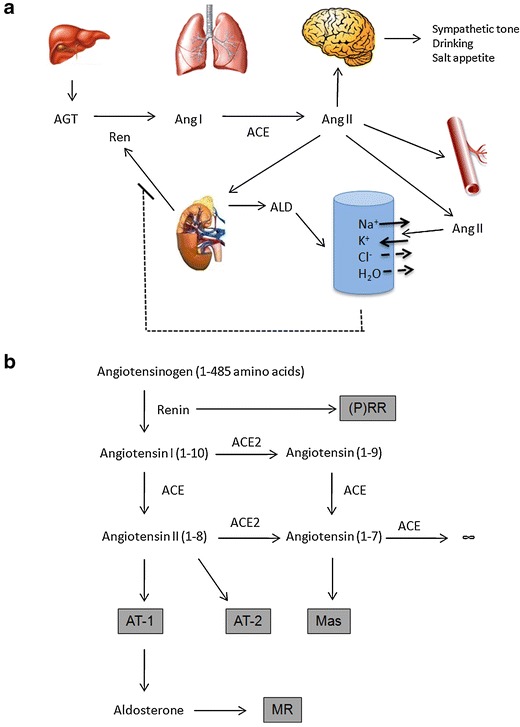
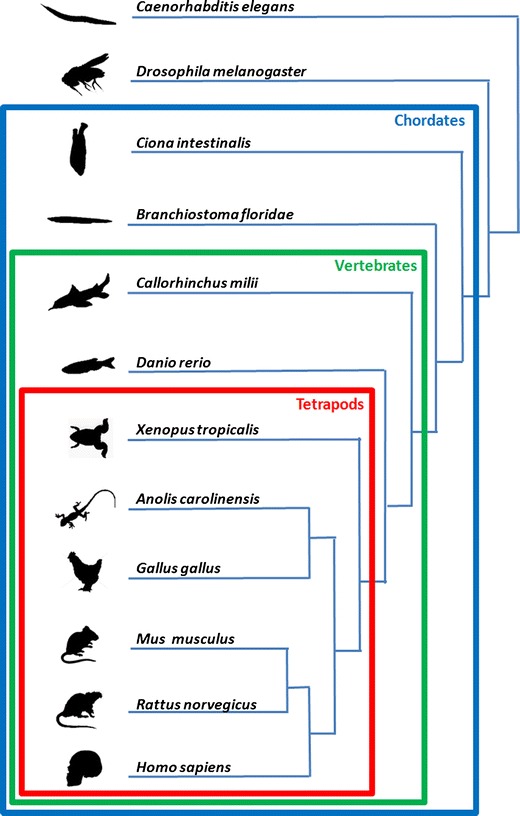
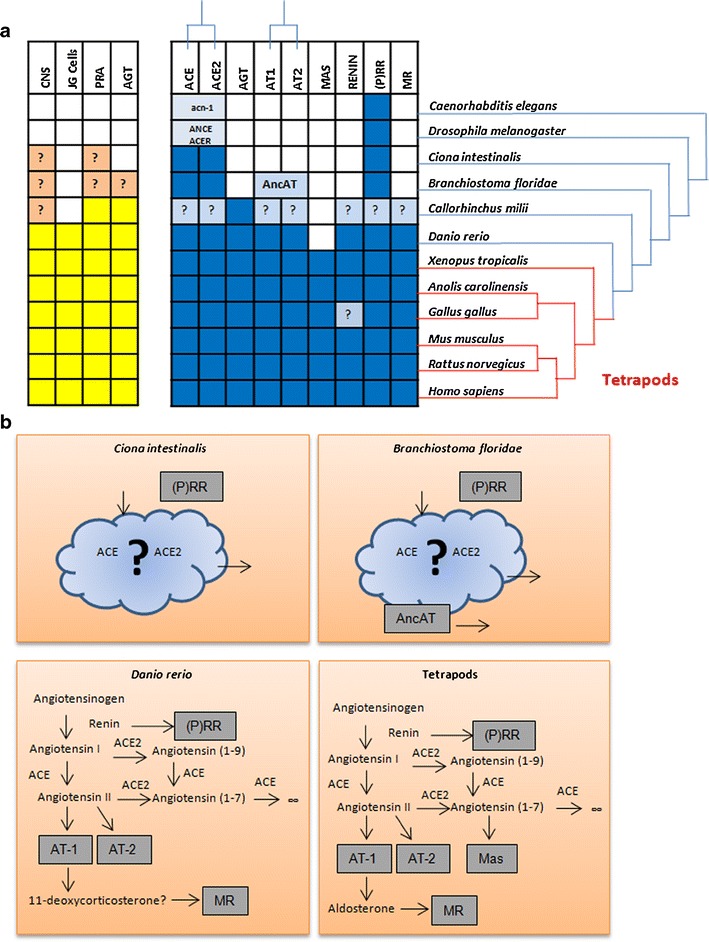
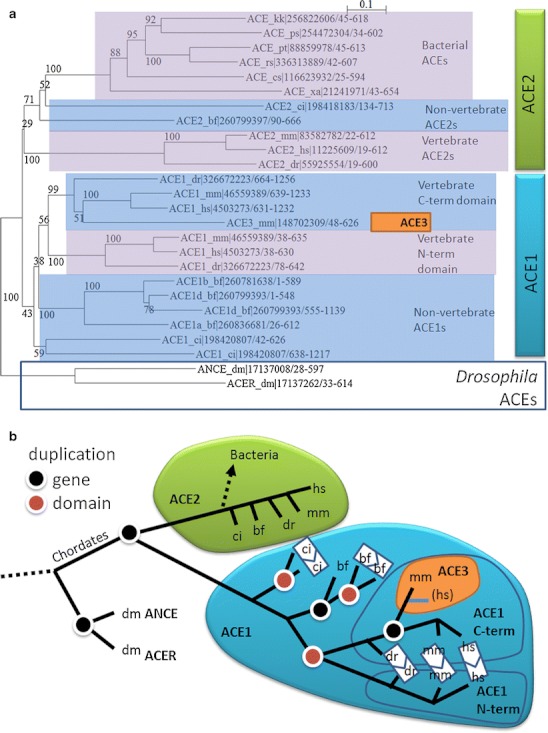
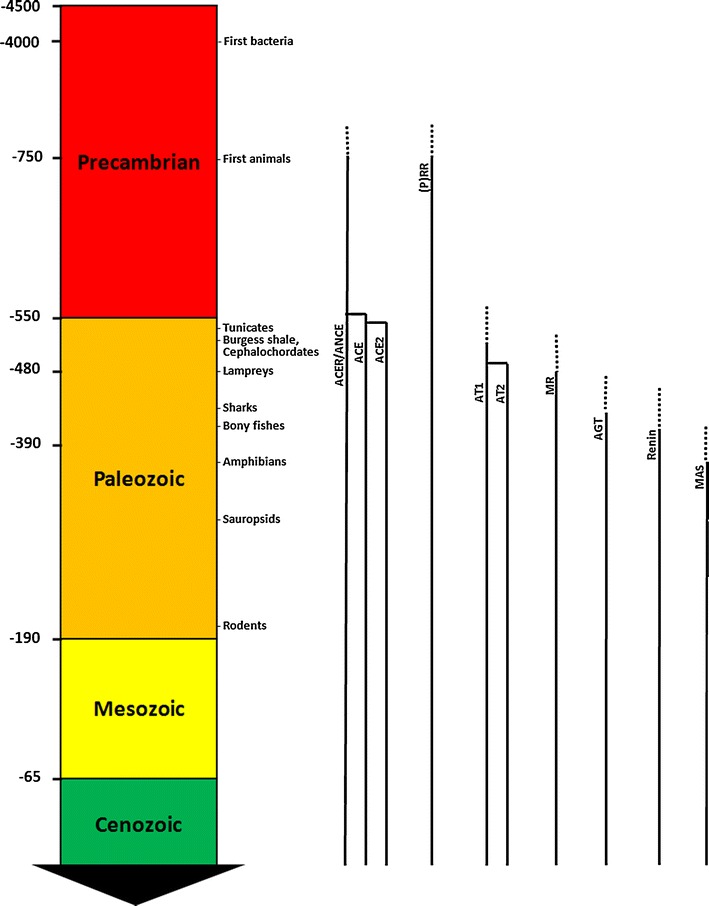
The renin-angiotensin-aldosterone system (RAAS) is not the sole, but perhaps the most important volume regulator in vertebrates. To gain insights into the function and evolution of its components, we conducted a phylogenetic analysis of its main related genes. We found that important parts of the system began to appear with primitive chordates and tunicates and that all major components were present at the divergence of bony fish, with the exception of the Mas receptor. The Mas receptor first appears after the bony-fish/tetrapod divergence. This phase of evolutionary innovation happened about 400 million years ago. We found solid evidence that angiotensinogen made its appearance in cartilage fish. The presence of several RAAS genes in organisms that lack all the components shows that these genes have had other ancestral functions outside of their current role. Our analysis underscores the utility of sequence comparisons in the study of evolution. Such analyses may provide new hypotheses as to how and why in today's population an increased activity of the RAAS frequently leads to faulty salt and volume regulation, hypertension, and cardiovascular diseases, opening up new and clinically important research areas for evolutionary medicine.
Overview
The claims and statistics of this paper haven’t been checked yet.
Run the check — free, no account needed. It reads the open-access text and checks the sources it cites.
Integrity signals
Registry
Cites
Statistics
Figures
Verification
Claims the paper makes
The claims and statistics of this paper haven’t been checked yet.
Run the check — free, no account needed. It reads the open-access text and checks the sources it cites.
Claims other papers make about this one
Each is checked against this paper’s own text: does it say what the citing paper says it does?
In the citing paper
“Because BIO101 does not interfere with AT1R like TRV-027, our positive results in COVID-19 perhaps suggest a particular importance of MasR activation in the regulation of respiratory function.28”
In the citing paper
“Our results, and those of other clinical studies, suggests that the role of the RAS in COVID-19 pathophysiology may be more complex than previously thought.9,28”
In the citing paper
“These contrasting results between the effect of BIO101 and of these other compounds may be explained by the complexity of the RAS composed of many proteases, receptors and peptidic ligands with often opposing effects.28”
Self-check
Percentages, sums and reported differences re-computed from the paper’s own numbers.
The self-check needs the paper’s full text.
Citations
Cites
Gapped BLAST and PSI-BLAST: a new generation of protein database search programs
Altschul, S. (1997) · Nucleic Acids Research · doi:10.1093/nar/25.17.3389 · Cited by 73,302
MUSCLE: multiple sequence alignment with high accuracy and high throughput
Edgar, R. C. (2004) · Nucleic Acids Research · doi:10.1093/nar/gkh340 · Cited by 44,662
Clustal W and Clustal X version 2.0
Larkin, M., Blackshields, G., Brown, N. P., Chenna, R., McGettigan, P., McWilliam, H., Valentin, F., Wallace, I. M., Wilm, A., López, R., et al. (2007) · Bioinformatics · doi:10.1093/bioinformatics/btm404 · Cited by 28,598
Global burden of hypertension: analysis of worldwide data
Kearney, P. M., Whelton, M., Reynolds, K., Muntner, P., Whelton, P. K., & He, J. (2005) · The Lancet · doi:10.1016/s0140-6736(05)17741-1 · Cited by 8,698
Handbook of Proteolytic Enzymes
(2004) · Elsevier eBooks · doi:10.1016/c2009-0-03628-9 · Cited by 2,623
Stratigraphic placement and age of modern humans from Kibish, Ethiopia
McDougall, I., Brown, F. H., & Fleagle, J. G. (2005) · Nature · doi:10.1038/nature03258 · Cited by 1,023
Fulminant hypertension in transgenic rats harbouring the mouse Ren-2 gene
Mullins, J. J., Peters, J., & Ganten, D. (1990) · Nature · doi:10.1038/344541a0 · Cited by 919
Self-citationThe serpin superfamily of proteinase inhibitors: structure, function, and regulation.
Potempa, J., Korzus, E., & Travis, J. W. (1994) · Journal of Biological Chemistry · doi:10.1016/s0021-9258(17)33954-6 · Cited by 881
The Dawn of Darwinian Medicine
Williams, G. C., & Nesse, R. M. (1991) · The Quarterly Review of Biology · doi:10.1086/417048 · Cited by 739
NCBI Reference Sequences: current status, policy and new initiatives
Pruitt, K. D., Tatusova, T., Klimke, W., & Maglott, D. R. (2009) · Nucleic Acids Research · doi:10.1093/nar/gkn721 · Cited by 736 · cited 1×
“To complement the available physiological evidence on the evolution of the RAAS, we used the information available from the gene and protein sequences in public databases [20].”
MethodEvolution of Hormone-Receptor Complexity by Molecular Exploitation
Bridgham, J. T., Carroll, S. M., & Thornton, J. W. (2006) · Science · doi:10.1126/science.1123348 · Cited by 590
The gain and loss of genes during 600 million years of vertebrate evolution
Blomme, T., Vandepoele, K., Bodt, S. D., Simillion, C., Maere, S., & de Peer, Y. V. (2006) · Genome biology · doi:10.1186/gb-2006-7-5-r43 · Cited by 400
Cellular localization and regional distribution of an angiotensin II-forming chymase in the heart.
Urata, H., Boehm, K. D., Philip, A., Kinoshita, A., Gabrovsek, J., Bumpus, F. M., & Husain, A. (1993) · Journal of Clinical Investigation · doi:10.1172/jci116325 · Cited by 398
Tissue Renin-Angiotensin-Aldosterone Systems: Targets for Pharmacological Therapy
Bäder, M. (2010) · The Annual Review of Pharmacology and Toxicology · doi:10.1146/annurev.pharmtox.010909.105610 · Cited by 352
Angiotensin-converting enzyme and male fertility
Hagaman, J. R., Moyer, J. S., Bachman, E. S., Sibony, M., Magyar, P. L., Welch, J. E., Smithies, O., Krege, J. H., & O’Brien, D. A. (1998) · Proceedings of the National Academy of Sciences · doi:10.1073/pnas.95.5.2552 · Cited by 339
Tsuchida, S., Matsusaka, T., Chen, X., Okubo, S., Niimura, F., Nishimura, H., Fogo, A. B., Utsunomiya, H., Inagami, T., & Ichikawa, I. (1998) · Journal of Clinical Investigation · doi:10.1172/jci1899 · Cited by 332
Angiotensin-Forming Enzyme in Brain Tissue
Ganten, D., Minnich, J. L., Grenger, P., Hayduk, K., Brecht, H. M., Barbeau, A., Boucher, R., & Genest, J. (1971) · Science · doi:10.1126/science.173.3991.64 · Cited by 318
Self-citationUpdate on tissue renin–angiotensin systems
Bäder, M., & Ganten, D. (2008) · Journal of Molecular Medicine · doi:10.1007/s00109-008-0336-0 · Cited by 297
Self-citation[18] Peptidyl dipeptidase A: Angiotensin I-converting enzyme
Corvol, P. L., Williams, T. A., & Soubrier, F. (1995) · Methods in enzymology on CD-ROM/Methods in enzymology · doi:10.1016/0076-6879(95)48020-x · Cited by 278
Evolution of the corticosteroid receptor signalling pathway in fish
Bury, N. R., & Sturm, A. (2007) · General and Comparative Endocrinology · doi:10.1016/j.ygcen.2007.03.009 · Cited by 230
The Biology of the (Pro)Renin Receptor
Nguyen, G., & Müller, D. N. (2009) · Journal of the American Society of Nephrology · doi:10.1681/asn.2009030300 · Cited by 220
Design of angiotensin converting enzyme inhibitors
Cushman, D. W., & Ondetti, M. A. (1999) · Nature Medicine · doi:10.1038/13423 · Cited by 213
Cornell, M. J., Williams, T. A., Lamango, N. S., Coates, D., Corvol, P. L., Soubrier, F., Hoheisel, J. D., Lehrach, H. R., & Isaac, R. E. (1995) · Journal of Biological Chemistry · doi:10.1074/jbc.270.23.13613 · Cited by 156
Nutrition in cardiovascular disease: salt in hypertension and heart failure
He, F. J., Burnier, M., & MacGregor, G. A. (2011) · European Heart Journal · doi:10.1093/eurheartj/ehr194 · Cited by 153
Expression of Murine Renin Genes during Fetal Development
Jones, C. A., Sigmund, C. D., McGowan, R. A., Kane-Haas, C. M., & Gross, K. W. (1990) · Molecular Endocrinology · doi:10.1210/mend-4-3-375 · Cited by 117
Identification of a human neutrophil angiotension II-generating protease as cathepsin G.
Tonnesen, M. G., Klempner, M. S., Austen, K. F., & Wintroub, B. U. (1982) · Journal of Clinical Investigation · doi:10.1172/jci110437 · Cited by 106
Holm, I., Ollo, R., Panthier, J., & Rougeon, F. (1984) · The EMBO Journal · doi:10.1002/j.1460-2075.1984.tb01846.x · Cited by 104
Comparative Studies of the Juxtaglomerular Apparatus
Sokabe, H., & Ogawa, M. (1974) · International review of cytology · doi:10.1016/s0074-7696(08)61360-1 · Cited by 102
Physiology of the (pro)renin receptor: Wnt of change?
Sihn, G., Rousselle, A., Vilianovich, L., Burcklé, C., & Bäder, M. (2010) · Kidney International · doi:10.1038/ki.2010.151 · Cited by 86
Schnermann, J. B. (2003) · Journal of the American Society of Nephrology · doi:10.1097/01.asn.0000069221.69551.30 · Cited by 86
The Drosophila melanogaster‐related angiotensin‐I‐converting enzymes Acer and Ance
Houard, X., Williams, T. A., Michaud, A., Dani, M. P., Isaac, R. E., Shirras, A. D., Coates, D., & Corvol, P. L. (1998) · European Journal of Biochemistry · doi:10.1046/j.1432-1327.1998.2570599.x · Cited by 84
Evidence of Renin Release or Production in Splanchnic Territory
Ganten, D., Hayduk, K., Brecht, H. M., Boucher, R., & Genest, J. (1970) · Nature · doi:10.1038/226551a0 · Cited by 84
Self-citationNot just angiotensinases: new roles for the angiotensin-converting enzymes
Lambert, D., Clarke, N. E., & Turner, A. J. (2009) · Cellular and Molecular Life Sciences · doi:10.1007/s00018-009-0152-x · Cited by 84
Mechanisms for the Evolution of a Derived Function in the Ancestral Glucocorticoid Receptor
Carroll, S., Ortlund, E., & Thornton, J. W. (2011) · PLoS Genetics · doi:10.1371/journal.pgen.1002117 · Cited by 76
Functional evidence of post-transcriptional regulation by pseudogenes.
Muro, E. M., Mah, N., & Andrade-Navarro, M. A. (2011) · Biochimie · doi:10.1016/j.biochi.2011.07.024 · Cited by 75
Self-citationWilliams, T. A., Michaud, A., Houard, X., Chauvet, M. T., Soubrier, F., & Corvol, P. L. (1996) · Biochemical Journal · doi:10.1042/bj3180125 · Cited by 74
Peptidyl-dipeptidase A/angiotensin I-converting enzyme
Corvol, P. L., Eyries, M., & Soubrier, F. (2004) · Handbook of Proteolytic Enzymes · doi:10.1016/b978-0-12-079611-3.50090-2 · Cited by 73
Purification and Properties of Periplasmic 3’:5’-Cyclic Nucleotide Phosphodiesterase
Callahan, S. M., Cornell, N. W., & Dunlap, P. V. (1995) · Journal of Biological Chemistry · doi:10.1074/jbc.270.29.17627 · Cited by 70
The angiotensin system elements in invertebrates
Salzet, M., Deloffre, L. A. M., Breton, C., Vieau, D., & Schoofs, L. (2001) · Brain Research Reviews · doi:10.1016/s0165-0173(01)00063-7 · Cited by 57
Identification and Disruption of Sperm-Specific Angiotensin Converting Enzyme-3 (ACE3) in Mouse
Inoue, N., Kasahara, T., Ikawa, M., & Okabe, M. (2010) · PLoS ONE · doi:10.1371/journal.pone.0010301 · Cited by 50
Comparative physiology of the renin-angiotensin system.
Taylor, A. A. (1977) · PubMed · Cited by 50
Rylett, C. M., Walker, M. J., Howell, G. J., Shirras, A. D., & Isaac, R. E. (2007) · Journal of Experimental Biology · doi:10.1242/jeb.009035 · Cited by 49
Intrarenal renin-angiotensin system in primitive vertebrates.
Nishimura, H., & Bailey (1982) · PubMed · Cited by 39
Ekbote, U. V., Coates, D. J., & Isaac, R. E. (1999) · FEBS Letters · doi:10.1016/s0014-5793(99)00870-4 · Cited by 36
Liang, P., Jones, C. A., Bisgrove, B. W., Song, L., Glenn, S. T., Yost, H. J., & Gross, K. W. (2004) · Physiological Genomics · doi:10.1152/physiolgenomics.00012.2003 · Cited by 34
Rivière, G., Michaud, A., Corradi, H. R., Sturrock, E. D., Acharya, K. R., Cogez, V., Bohin, J., Vieau, D., & Corvol, P. L. (2007) · Gene · doi:10.1016/j.gene.2007.05.010 · Cited by 32
Identification of Angiotensin I in a Cyclostome, Lampetra fluviatilis
Rankin, J. C., Watanabe, T. X., Nakajima, K., Broadhead, C. L., & Takei, Y. (2004) · ZOOLOGICAL SCIENCE · doi:10.2108/zsj.21.173 · Cited by 31
Weaver, D., Skinner, S. L., Walker, L., & Sangster, M. Y. (1991) · General and Comparative Endocrinology · doi:10.1016/0016-6480(91)90035-5 · Cited by 30
Emerging drugs which target the renin–angiotensin–aldosterone system
Steckelings, U. M., Paulis, L., Unger, T., & Bäder, M. (2011) · Expert Opinion on Emerging Drugs · doi:10.1517/14728214.2011.618495 · Cited by 29
Brown, J. A., Cobb, C. S., Frankling, S. C., & Rankin, J. C. (2005) · Journal of Experimental Biology · doi:10.1242/jeb.01362 · Cited by 29
(2005) · Advances in organ biology · doi:10.1016/s1569-2590(05)x1000-x · Cited by 28
Rella, M., Elliot, J. L., Revett, T. J., Lanfear, J., Phelan, A., Jackson, R. M., Turner, A. J., & Hooper, N. M. (2007) · BMC Genomics · doi:10.1186/1471-2164-8-194 · Cited by 28
Multiple gains of spliceosomal introns in a superfamily of vertebrate protease inhibitor genes
Ragg, H., Kumar, A., Köster, K., Bentele, C., Wang, Y., Frese, M., Prib, N., & Krüger, O. (2009) · BMC Evolutionary Biology · doi:10.1186/1471-2148-9-208 · Cited by 27
Salt and hypertension: recent advances and perspectives.
Luft, F. C. (1989) · PubMed · Cited by 22
Self-citationAn unexpected link between angiotensinogen and thrombin
Wang, Y., & Ragg, H. (2011) · FEBS Letters · doi:10.1016/j.febslet.2011.06.021 · Cited by 19
Aggression-provoked huge release of submaxillary mouse renin to saliva
Pedersen, E. B., & Poulsen, K. (1983) · European Journal of Endocrinology · doi:10.1530/acta.0.1040510 · Cited by 18
Shen, X. Z., Xiao, H., Li, P., Lin, C. X., Billet, S., Okwan-Duodu, D. K., Adams, J. W., Bernstein, E. A., Xu, Y., Fuchs, S., et al. (2008) · Journal of Molecular Medicine · doi:10.1007/s00109-008-0325-3 · Cited by 16
From Fish to Philosopher; the Story of our Internal Environment
Smith, H. W., & Smith, H. W. (2011) · Cited by 14
Ong, F. S.-C., Lin, C. X., Campbell, D. J., Okwan-Duodu, D. K., Chen, X., Blackwell, W.-L. B., Shah, K. H., González-Villalobos, R. A., Shen, X. Z., Fuchs, S., et al. (2011) · Hypertension · doi:10.1161/hypertensionaha.111.180844 · Cited by 13
Vandingenen, A., Hens, K., Macours, N., Schoofs, L., LOOF, A. D., & Huybrechts, R. (2002) · Comparative Biochemistry and Physiology Part B Biochemistry and Molecular Biology · doi:10.1016/s1096-4959(01)00529-2 · Cited by 11
Cited by
Sorted by citations
Classical Renin‐Angiotensin System in Kidney Physiology
Sparks, M. A., Crowley, S. D., Gurley, S. B., Mirotsou, M., & Coffman, T. M. (2014) · Comprehensive physiology · doi:10.1002/cphy.c130040 · Cited by 593
Rossier, B. C., Baker, M. E., & Studer, R. A. (2015) · Physiological Reviews · doi:10.1152/physrev.00011.2014 · Cited by 269
Primary aldosteronism — a multidimensional syndrome
Turcu, A. F., Yang, J., & Vaidya, A. (2022) · Nature Reviews Endocrinology · doi:10.1038/s41574-022-00730-2 · Cited by 196
The Hypertension Pandemic: An Evolutionary Perspective
Rossier, B. C., Bochud, M., & Devuyst, O. (2017) · Physiology · doi:10.1152/physiol.00026.2016 · Cited by 173
ACE2 in Brain Physiology and Pathophysiology: Evidence from Transgenic Animal Models
Alenina, N. V., & Bäder, M. (2018) · Neurochemical Research · doi:10.1007/s11064-018-2679-4 · Cited by 145
Metadata
- Authors
- Fournier, D., Luft, F. C., Bader, M., Ganten, D., & Andrade-Navarro, M. A.
- Affiliations
- Max Delbrück Center (DE)
- Charité – Universitätsmedizin Berlin (DE)
- Corresponding author
- Andrade-Navarro, Miguel A.
- Venue
- Journal of Molecular Medicine
- Published
- 2012-04-14
- Volume
- 90
- Issue
- 5
- Pages
- 495-508
- ISSN
- 0946-2716 (ISSN-L)
- 1432-1440
- PMC
- PMC3354321
- OpenAlex
- W2086052108
- Cited by
- 165
- References
- 60
- Citations by year
- 2026: 6 · 2025: 3 · 2024: 12 · 2023: 11 · 2022: 15 · 2021: 18 · 2020: 23 · 2019: 12 · 2018: 15 · 2017: 4 · 2016: 11 · 2015: 9 · 2014: 12 · 2013: 12 · 2012: 2
- FWCI
- 1.89
- Type
- journal article
- Language
- en
- Open access
- hybrid
- doi.org
- Licence
- cc-by
- Locations
- Journal of Molecular Medicine (publishedVersion, cc-by)
- PubMed Central (publishedVersion, cc-by)
- PubMed (publishedVersion)
- MDC Repository (Max-Delbrueck-Center for Molecular Medicine) (acceptedVersion)
- Topics
- Health Sciences › Medicine › Cardiology and Cardiovascular Medicine › Renin-Angiotensin System Studies
- Health Sciences › Medicine › Endocrinology, Diabetes and Metabolism › Hormonal Regulation and Hypertension
- Life Sciences › Biochemistry, Genetics and Molecular Biology › Molecular Biology › Genomics and Phylogenetic Studies
- Keywords
- renin-angiotensin-aldosterone system, phylogenetic analysis, angiotensinogen, Mas receptor, angiotensin II receptor, volume regulation, water-salt balance, Chordata, tunicates, Chondrichthyes, bony fishes, tetrapods, evolutionary innovation, hypertension, cardiovascular disease, evolutionary medicine
- MeSH terms
- Animals, Humans, Phylogeny, Renin-Angiotensin System, Time Factors, Sequence Homology, Amino Acid, Sequence Analysis, DNA, Evolution, Molecular
About these checks
Registry, retraction, Cites and statistics results are computed, not judged, with one exception: a printed reference that no index lists is read once by a model before it counts as a citation error. Claims are extracted by a model and kept only when their quote appears verbatim in the text; each cited source is then checked, with a model’s help, for whether it says what the claim relies on. Those verdicts can be wrong — read the claim’s quote and the cited source before relying on one.
Statistics and arithmetic are recomputed, not judged.
Confidence bands are shown only for fields calibrated on our annotated test set. None is calibrated yet, so no band is shown.
What counts as a claim ›How we measure confidence ›How we check this ›
Are you an author, or do you see a problem with this page? Request a review
