

Native incretins prevent the development of atherosclerotic lesions in apolipoprotein E knockout mice
Open accessThe DOI matches its Crossref record; 25 of the 25 references it cites were found in a registry or an index.
Abstract
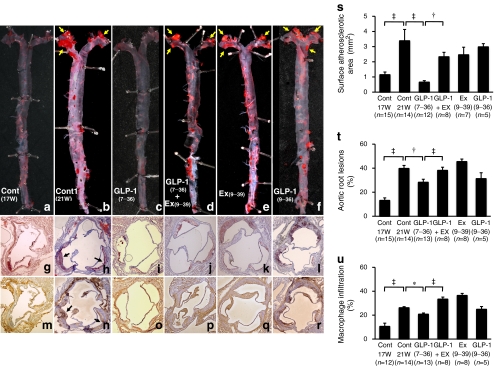
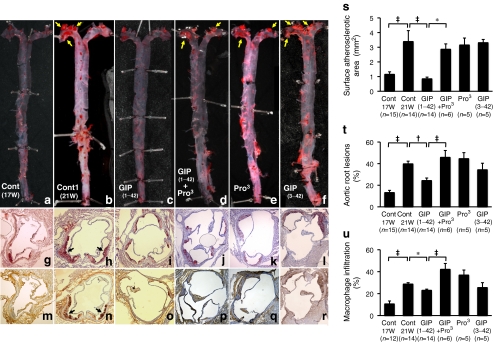
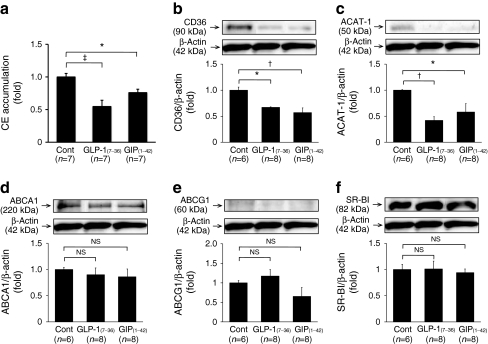
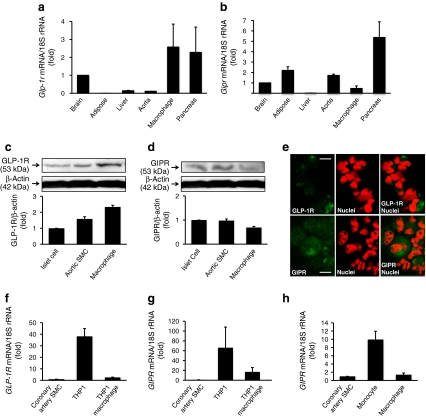
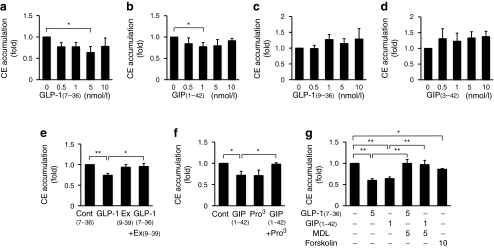
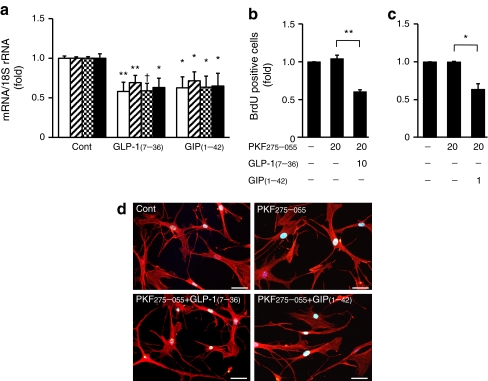
AIMS/HYPOTHESIS: Several lines of evidence suggest that incretin-based therapies suppress the development of cardiovascular disease in type 2 diabetes. We investigated the possibility that glucagon-like peptide-1 (GLP-1) and glucose-dependent insulinotropic polypeptide (GIP) can prevent the development of atherosclerosis in Apoe (-/-) mice. METHODS: Apoe (-/-) mice (17 weeks old) were administered GLP-1(7-36)amide, GLP-1(9-36)amide, GIP(1-42) or GIP(3-42) for 4 weeks. Aortic atherosclerosis, oxidised LDL-induced foam cell formation and related gene expression in exudate peritoneal macrophages were determined. RESULTS: Administration of GLP-1(7-36)amide or GIP(1-42) significantly suppressed atherosclerotic lesions and macrophage infiltration in the aortic wall, compared with vehicle controls. These effects were cancelled by co-infusion with specific antagonists for GLP-1 and GIP receptors, namely exendin(9-39) or Pro(3)(GIP). The anti-atherosclerotic effects of GLP-1(7-36)amide and GIP(1-42) were associated with significant decreases in foam cell formation and downregulation of CD36 and acyl-coenzyme A:cholesterol acyltransferase-1 (ACAT-1) in macrophages. GLP-1 and GIP receptors were both detected in Apoe (-/-) mouse macrophages. Ex vivo incubation of macrophages with GLP-1(7-36)amide or GIP(1-42) for 48 h significantly suppressed foam cell formation. This effect was wholly abolished in macrophages pretreated with exendin(9-39) or (Pro(3))GIP, or with an adenylate cyclase inhibitor, MDL12,330A, and was mimicked by incubation with an adenylate cyclase activator, forskolin. The inactive forms, GLP-1(9-36)amide and GIP(3-42), had no effects on atherosclerosis and macrophage foam cell formation. CONCLUSIONS/INTERPRETATION: Our study is the first to demonstrate that active forms of GLP-1 and GIP exert anti-atherogenic effects by suppressing macrophage foam cell formation via their own receptors, followed by cAMP activation. Molecular mechanisms underlying these effects are associated with the downregulation of CD36 and ACAT-1 by incretins.
Overview
The claims and statistics of this paper haven’t been checked yet.
Free: it reads the open-access text and checks the first 5 claims that cite a source we can check. Create a free account to check every claim.
Integrity signals
Registry
Cites
Statistics
Figures
Verification
Claims the paper makes
The claims and statistics of this paper haven’t been checked yet.
Free: it reads the open-access text and checks the first 5 claims that cite a source we can check. Create a free account to check every claim.
Claims other papers make about this one
Each is checked against this paper’s own text: does it say what the citing paper says it does?
The cited source says what the claim attributes to it.
In the citing paper
“GIPR agonism further promotes bone formation [40], has beneficial effects in animal models for atherosclerosis [41–43] and neurodegenerative diseases [44, 45], and decreases body weight in obese rodents via inhibition of food intake [46, 47].”
From Dual and Triple Incretin-Based Co-agonists: Novel Therapeutics for Obesity and Diabetes (2024) · cites this paper as [42]
Self-check
Percentages, sums and reported differences re-computed from the paper’s own numbers.
The self-check needs the paper’s full text.
Citations
Cites
The biology of incretin hormones
Drucker, D. J. (2006) · Cell Metabolism · doi:10.1016/j.cmet.2006.01.004 · Cited by 2,210 · cited 5×
“Both GLP-1 and GIP are rapidly metabolised via enzymatic degradation by the dipeptidyl peptidase-4 (DPP-4) [2].”
InfluentialThe role of incretins in glucose homeostasis and diabetes treatment
Kim, W., & Egan, J. M. (2008) · Pharmacological Reviews · doi:10.1124/pr.108.000604 · Cited by 824 · cited 4×
“Several lines of evidence suggest that GLP-1 and its receptor agonists, but not GIP, have vasoprotective effects [1, 2].”
InfluentialNyström, T., Gutniak, M. K., Zhang, Q., Zhang, F., Holst, J. J., Ahrén, B., & Sjöholm, Å. (2004) · American Journal of Physiology-Endocrinology and Metabolism · doi:10.1152/ajpendo.00237.2004 · Cited by 680
Arakawa, M., Mita, T., Azuma, K., Ebato, C., Goto, H., Nomiyama, T., Fujitani, Y., Hirose, T., Kawamori, R., & Watada, H. (2010) · Diabetes · doi:10.2337/db09-1694 · Cited by 548 · cited 3×
“[5] reported that exendin-4 suppresses the lipopolysaccharide-induced mRNA expression of TNF-α (also known as TNF) and MCP1 via the cAMP/PKA pathway.”
Kodera, R., Shikata, K., Kataoka, H. U., Takatsuka, T., Miyamoto, S., Sasaki, M., Kajitani, N., Nishishita, S., Sarai, K., Hirota, D., et al. (2011) · Diabetologia · doi:10.1007/s00125-010-2028-x · Cited by 394 · cited 1×
“Exendin-4 suppresses high glucose-induced TNF-α and IL- 1β levels in THP1 cells, and TNF-α-induced ICAM-1 production in human glomerular microvascular endothelial cells [ 18 ].”
BackgroundOeseburg, H., de Boer, R. A., Buikema, H., van der Harst, P., van Gilst, W. H., & Silljé, H. H. W. (2010) · Arteriosclerosis, Thrombosis, and Vascular Biology · doi:10.1161/atvbaha.110.206425 · Cited by 267 · cited 1×
“GLP-1 and exendin-4 have a protective effect on oxidative stress-induced DNA damage in HUVECs [17].”
Feng, J., Han, J., Pearce, S. F. A., Silverstein, R. L., Gotto, A. M., Hajjar, D. P., & Nicholson, A. C. (2000) · Journal of Lipid Research · doi:10.1016/s0022-2275(20)32377-4 · Cited by 241
Liu, H., Dear, A. E., Knudsen, L. B., & Simpson, R. W. (2009) · Journal of Endocrinology · doi:10.1677/joe-08-0468 · Cited by 187 · cited 1×
“Liraglutide, a long-acting GLP-1R agonist, and vildagliptin, a DPP-4 inhibitor, attenuate production of plasminogen activator inhibitor 1 (PAI-1) and vascular cell adhesion molecule-1 (VCAM-1) in vascular cells [7, 8].”
GIP and GLP-1 as incretin hormones: lessons from single and double incretin receptor knockout mice
Hansotia, T., & Drucker, D. J. (2005) · Regulatory Peptides · doi:10.1016/j.regpep.2004.07.019 · Cited by 183 · cited 2×
“The effect of GIP on the cardiovascular system is largely unknown, although GIP receptors (GIPR) have been detected in vascular tissues [4].”
Impact of Salusin-α and -β on Human Macrophage Foam Cell Formation and Coronary Atherosclerosis
Watanabe, T., Nishio, K., Kanome, T., Matsuyama, T.-A., Koba, S., Sakai, T., Sato, K., Hongo, S., Nose, K., Ota, H., et al. (2008) · Circulation · doi:10.1161/circulationaha.107.712539 · Cited by 130 · cited 1×
“Human peripheral mononuclear cells were isolated from the blood of six healthy volunteers (four men, two women, age 25±2 years) as described previously [10, 15].”
Self-citation
Cited by
Items 101–200 of 270
Vergès, B. L., & Charbonnel, B. H. (2017) · Diabetes & Metabolism · doi:10.1016/s1262-3636(17)30067-8 · Cited by 44
Maiseyeu, A., Di, L., Ravodina, A. M., Barajas‐Espinosa, A. R., Sakamoto, A., Chaplin, A. M. L., Zhong, J., Gao, H., Mignery, M., Narula, N., et al. (2022) · Theranostics · doi:10.7150/thno.66456 · Cited by 44
“Studies that investigated the effects of GLP-1R agonism in atherosclerosis in the context of monocyte adhesion [37], foam cell formation [38], and macrophage M1/M2 phenotypes [39] all used high doses of GLP-1R agonists (100-300 μg/kg) with either daily injections or continuous osmotic pump infusions; with one study em…”
BackgroundStimulatory Effects of Cardiotrophin 1 on Atherosclerosis
Konii, H., Sato, K., Kikuchi, S., Okiyama, H., Watanabe, R., Hasegawa, A., Yamamoto, K., Itoh, F., Hirano, T., & Watanabe, T. (2013) · Hypertension · doi:10.1161/hypertensionaha.113.01653 · Cited by 40
Self-citationGlucose-Dependent Insulinotropic Polypeptide Suppresses Peripheral Arterial Remodeling in Male Mice
Mori, Y., Kushima, H., Koshibu, M., Saito, T., Hiromura, M., Kohashi, K., Terasaki, M., Seino, Y., Yamada, Y., & Hirano, T. (2018) · Endocrinology · doi:10.1210/en.2018-00336 · Cited by 39
Self-citationSkrobucha, A., Pindlowski, P., Krajewska, N., Grabowski, M., & Jonik, S. (2024) · Frontiers in Cardiovascular Medicine · doi:10.3389/fcvm.2024.1446468 · Cited by 42
Oral GLP-1 analogue: perspectives and impact on atherosclerosis in type 2 diabetic patients
Saraiva, J. F. K., & Franco, D. R. (2021) · Cardiovascular Diabetology · doi:10.1186/s12933-021-01417-0 · Cited by 42
Cardiovascular effects of incretins: focus on glucagon-like peptide-1 receptor agonists
Madsbad, S., & Holst, J. J. (2022) · Cardiovascular Research · doi:10.1093/cvr/cvac112 · Cited by 39
Hirano, T., Yamashita, S., Takahashi, M., Hashimoto, H., Mori, Y., & Goto, M. (2016) · Metabolism · doi:10.1016/j.metabol.2016.03.010 · Cited by 39
Self-citationAntidiabetic drugs and oxidized low-density lipoprotein: A review of anti-atherosclerotic mechanisms
Ahmadi, A., Panahi, Y., Johnston, T. P., & Sahebkar, A. (2021) · Pharmacological Research · doi:10.1016/j.phrs.2021.105819 · Cited by 39
Atheroprotective Effects of Tumor Necrosis Factor-Stimulated Gene-6
Watanabe, R., Watanabe, H., Takahashi, Y., Kojima, M., Konii, H., Watanabe, K., Shirai, R., Sato, K., Matsuyama, T.-A., Ishibashi-Ueda, H., et al. (2016) · JACC: Basic to Translational Science · doi:10.1016/j.jacbts.2016.07.008 · Cited by 36
“Exudate peritoneal macrophages are widely accepted to use in the assessment of mouse atherosclerosis (22,27).”
BackgroundMethodSelf-citationAghili, N., Devaney, J. M., Alderman, L. O., Żukowska, Z., Epstein, S. E., & Burnett, M. S. (2012) · Neuropeptides · doi:10.1016/j.npep.2012.10.001 · Cited by 36
Incretin drugs as modulators of atherosclerosis
Gallego-Colon, E., Wojakowski, W., & Francuz, T. (2018) · Atherosclerosis · doi:10.1016/j.atherosclerosis.2018.09.011 · Cited by 35
Incretin-Based Therapies, Glucometabolic Health and Endovascular Inflammation
Rizzo, M., Nikolić, D., Banach, M., Patti, A. M., Montalto, G., & Rizvi, A. A. (2014) · Current Pharmaceutical Design · doi:10.2174/1381612819666131206102255 · Cited by 36
“Recently, the same authors have also reported these findings with GLP-1 use in animal studies [82].”
ResultThe gut hormone receptor GIPR links energy availability to the control of hematopoiesis
Pujadas, G., Varin, E. M., Baggio, L. L., Mulvihill, E. E., Bang, K. W. A., Koehler, J. A., Matthews, D., & Drucker, D. J. (2020) · Molecular Metabolism · doi:10.1016/j.molmet.2020.101008 · Cited by 35
Petersen, K. E., Rakipovski, G., Raun, K., & Lykkesfeldt, J. (2016) · Current Diabetes Reviews · doi:10.2174/1573399812666150918150608 · Cited by 38
Genetic disruption of the Gipr in Apoe−/− mice promotes atherosclerosis
Pujadas, G., Baggio, L. L., Kaur, K. D., McLean, B. A., Cao, X., & Drucker, D. J. (2022) · Molecular Metabolism · doi:10.1016/j.molmet.2022.101586 · Cited by 34
“In summary, our current data linking loss of GIPR signaling to enhanced atherosclerosis and vascular inflammation, taken together with published studies reporting reduced atherosclerosis with GIPR agonists [21,53], extends our understanding of mechanisms linking directional changes in GIPR activity to control of ather…”
BackgroundKoska, J., Migrino, R. Q., Chan, K. C., Cooper-Cox, K., & Reaven, P. D. (2021) · Diabetes Care · doi:10.2337/dc20-2014 · Cited by 31
Tate, M., Chong, A., Robinson, E., Green, B. D., & Grieve, D. J. (2015) · British Journal of Pharmacology · doi:10.1111/bph.12943 · Cited by 33
“These findings were confirmed by a different group who demonstrated reduced aortic macrophage recruitment, foam cell formation and atherosclerotic lesion development in apolipoprotein E-deficient mice after GLP-1 infusion (Nagashima et al., 2011).”
BackgroundJonik, S., Marchel, M., Grabowski, M., Opolski, G., & Mazurek, T. (2022) · Biology · doi:10.3390/biology11020288 · Cited by 33
“[66] investigating the potential possibility of gastrointestinal hormones against protection from atherosclerosis, active forms of incretins—GLP1(7–36)amide and GIP(1–42)amide were proved to exert an anti-atherogenic effect.”
BackgroundRroji, M., Spahia, N., Figurek, A., & Spasovski, G. B. (2025) · Biomedicines · doi:10.3390/biomedicines13030728 · Cited by 35
“Notably, reduced GIP receptor expression in animal models has demonstrated cardioprotective effects [171–173].”
Terasaki, M., Yashima, H., Mori, Y., Saito, T., Matsui, T., Hiromura, M., Kushima, H., Osaka, N., Ohara, M., Fukui, T., et al. (2020) · International Journal of Molecular Sciences · doi:10.3390/ijms21134811 · Cited by 33
“At 13 weeks old, blood samples were collected, and peritoneal macrophages were extracted from mice after intraperitoneal injection of thioglycolate broth as previously described [14,17,31,36,37].”
MethodSelf-citationGLP-1 mimetics as a potential therapy for nonalcoholic steatohepatitis
Chen, Y., Xu, Y.-N., Ye, C.-Y., Feng, W., Zhou, Q., Yang, D., & Wang, M. (2021) · Acta Pharmacologica Sinica · doi:10.1038/s41401-021-00836-9 · Cited by 36
“Glp-1r mice accepting bone marrow transplantation from wild-type counterparts had restored intestinal mucosa function and normalized cytokine expression profiles [80, 81].”
BackgroundYamanouchi, D. (2025) · International Journal of Molecular Sciences · doi:10.3390/ijms27010027 · Cited by 42
Shah, F. A., Mahmud, H., Gallego‐Martin, T., Jurczak, M. J., O'Donnell, C. P., & McVerry, B. J. (2019) · The Journal of Clinical Endocrinology & Metabolism · doi:10.1210/jc.2019-00296 · Cited by 33
Agrawal, V., Amasa, S., Karabacak, M., & Margetis, K. D. (2024) · Neurosurgery · doi:10.1227/neu.0000000000003291 · Cited by 34
Kohashi, K., Hiromura, M., Mori, Y., Terasaki, M., Watanabe, T., Kushima, H., Shinmura, K., Tomoyasu, M., Nagashima, M., & Hirano, T. (2015) · Journal of Atherosclerosis and Thrombosis · doi:10.5551/jat.31997 · Cited by 32
Self-citationBelli, M., Barone, L., Bellia, A., Sergi, D., Lecis, D., Prandi, F. R., Milite, M., Galluccio, C., Muscoli, S., Romeo, F., et al. (2022) · International Journal of Molecular Sciences · doi:10.3390/ijms232314598 · Cited by 29
Ben‐Shlomo, S., Zvibel, I., Varol, C., Spektor, L., Shlomai, A., Santo, E. M., Halpern, Z., Oren, R., & Fishman, S. (2013) · Obesity · doi:10.1002/oby.20340 · Cited by 29
“Furthermore, inhibition of GIP binding to its receptor using 1 lM of the GIP antagonist GIP (7-30) prevents the GIP-mediated increase in adiponectin levels (Figure 5A and 5B).”
BackgroundMethodInfluentialKoshibu, M., Mori, Y., Saito, T., Kushima, H., Hiromura, M., Terasaki, M., Takada, M., Fukui, T., & Hirano, T. (2019) · American Journal of Physiology-Endocrinology and Metabolism · doi:10.1152/ajpendo.00511.2018 · Cited by 27
“Atherosclerotic plaque and lipid deposition were evaluated as previously described (6, 36).”
MethodResultInfluentialSelf-citationWatanabe, R., Sato, Y., Ozawa, N., Takahashi, Y., Koba, S., & Watanabe, T. (2018) · International Journal of Molecular Sciences · doi:10.3390/ijms19020465 · Cited by 29
Self-citationBowker, N., Hansford, R., Burgess, S., Foley, C. N., Auyeung, V. P. W., Erzurumluoglu, A. M., Stewart, I. D., Wheeler, E., Pietzner, M., Gribble, F., et al. (2021) · Diabetes · doi:10.2337/db21-0103 · Cited by 24
“Further, GIP infusion or overexpression is protective in mouse models of restenosis and cardiac remodeling (17,24).”
BackgroundPotenza, M. A., Nacci, C., Salvia, M. A. D., Sgarra, L., Collino, M., & Montagnani, M. (2017) · Pharmacological Research · doi:10.1016/j.phrs.2017.04.009 · Cited by 27
Anti‐inflammatory role of glucose‐dependent insulinotropic polypeptide in periodontitis
Suzuki, Y., Nakamura, N., Miyabe, M., Nishikawa, T., Miyajima, S., Adachi, K., Mizutani, M., Kikuchi, T., Miyazawa, K., Goto, S., et al. (2016) · Journal of Diabetes Investigation · doi:10.1111/jdi.12450 · Cited by 27
Recent achievements and future directions of anti-obesity medications
Grandl, G., Novikoff, A., Liu, X., & Müller, T. D. (2024) · The Lancet Regional Health - Europe · doi:10.1016/j.lanepe.2024.101100 · Cited by 33
Gargiulo, P., Savarese, G., D’Amore, C., Martino, F. D., Lund, L. H., Marsico, F., Dellegrottaglie, S., Marciano, C., Trimarco, B., & Filardi, P. P. (2017) · Nutrition Metabolism and Cardiovascular Diseases · doi:10.1016/j.numecd.2017.09.006 · Cited by 26
Aguilar-Ballester, M., Hurtado-Genovés, G., Taberner-Cortés, A., Herrero-Cervera, A., Martínez‐Hervás, S., & Navarro, H. G. (2021) · International Journal of Molecular Sciences · doi:10.3390/ijms22020660 · Cited by 29
Vasoprotective Effects of Urocortin 1 against Atherosclerosis In Vitro and In Vivo
Hasegawa, A., Sato, K., Shirai, R., Watanabe, R., Yamamoto, K., Watanabe, K., Nohtomi, K., Hirano, T., & Watanabe, T. (2014) · PLoS ONE · doi:10.1371/journal.pone.0110866 · Cited by 24
“These areas of the aortic wall were traced by an investigator blind to the treatment and measured as described previously [16, 17, 21].”
MethodSelf-citationEndogenous Bioactive Peptides as Potential Biomarkers for Atherosclerotic Coronary Heart Disease
Watanabe, T., Sato, K., Itoh, F., Wakabayashi, K., Shichiri, M., & Hirano, T. (2012) · Sensors · doi:10.3390/s120404974 · Cited by 26
“GLP-1 has been shown to suppress foam cell formation and ACAT1 expression in mouse macrophages [11].”
BackgroundResultSelf-citationThe role of incretins and incretin-based drugs in autoimmune diseases
Radbakhsh, S., Atkin, S. L., Simental‐Mendía, L. E., & Sahebkar, A. (2021) · International Immunopharmacology · doi:10.1016/j.intimp.2021.107845 · Cited by 24
Signaling profiles in HEK 293T cells co-expressing GLP-1 and GIP receptors
Wang, Y., Yang, D., & Wang, M. (2021) · Acta Pharmacologica Sinica · doi:10.1038/s41401-021-00758-6 · Cited by 25
Incretin hormones as immunomodulators of atherosclerosis
Alonso, N., Julián, M. T., Puig‐Domingo, M., & Vives‐Pi, M. (2012) · Frontiers in Endocrinology · doi:10.3389/fendo.2012.00112 · Cited by 27
“These incretins control blood glucose by stimulating insulin release from the β cells of the pancreatic islet, decreasing glucagon secretion and slowing gastric emptying (Nauck et al., 2011).”
BackgroundLecis, D., Prandi, F. R., Barone, L., Belli, M., Sergi, D., Longo, S., Muscoli, S., Romeo, F., Federici, M., Lerakis, S., et al. (2023) · Biomolecules · doi:10.3390/biom13121695 · Cited by 23
“Nagashima et al. showed that the infusion of native incretins (GLP-1 and GIP) in ApoE − / − mice also resulted in a reduction in foam cell formation through the downregulation of the CD36 and ACAT1 pathways [58].”
Ma, G., Chen, S., Yin, L., Gao, X., & Yao, W. (2013) · Acta Pharmacologica Sinica · doi:10.1038/aps.2013.128 · Cited by 23
Cardiovascular biology of the GIP receptor
Greenwell, A. A., Chahade, J. J., & Ussher, J. R. (2019) · Peptides · doi:10.1016/j.peptides.2019.170228 · Cited by 24
Yamanouchi, D. (2025) · doi:10.20944/preprints202511.1408.v2 · Cited by 23
Takahashi, H., Nomiyama, T., Terawaki, Y., Kawanami, T., Hamaguchi, Y., Tanaka, T., Tanabe, M., Bruemmer, D., & Yanase, T. (2018) · Journal of Atherosclerosis and Thrombosis · doi:10.5551/jat.43414 · Cited by 28
Ge, J., Zhai, W., Cheng, B., He, P., Qi, B., Lu, H., Zeng, Y., & Chen, X. (2013) · Journal of Cellular Biochemistry · doi:10.1002/jcb.24568 · Cited by 21
Sanon, S., Patel, R., Eshelbrenner, C., Sanon, V. P., Alhaddad, M., OLIVEROS, R. A., Pham, S. V., & CHILTON, R. J. (2012) · The American Journal of Cardiology · doi:10.1016/j.amjcard.2012.08.035 · Cited by 22
Efimova, I., Steinberg, I., Zvibel, I., Neumann, A., Mantelmacher, F. D., Drucker, D. J., Fishman, S., & Varol, C. (2021) · Frontiers in Immunology · doi:10.3389/fimmu.2021.643144 · Cited by 22
van Eenige, R., Ying, Z., Tramper, N., Wiebing, V., Siraj, Z., de Boer, J. F., Lambooij, J. M., Guigas, B., Qu, H., Coşkun, T., et al. (2023) · Atherosclerosis · doi:10.1016/j.atherosclerosis.2023.03.016 · Cited by 20
Chou, C., Chang, Y., Yang, J.-L., Wang, J., Lee, T.-E., Wang, R., & Hung, C. (2017) · Scientific Reports · doi:10.1038/s41598-017-16101-1 · Cited by 22
Kim, G. S., Park, J. H., & Won, J. C. (2019) · Endocrinology and Metabolism · doi:10.3803/enm.2019.34.2.106 · Cited by 20
Incretins and the cardiovascular system: bridging digestion with metabolism
Avogaro, A., & Fadini, G. P. (2025) · The Lancet Diabetes & Endocrinology · doi:10.1016/s2213-8587(25)00166-4 · Cited by 21
Anti-atherosclerotic effect of incretin receptor agonists
Wang, X., Yang, X., Qi, X., Fan, G., Zhou, L., Peng, Z., & Yang, J. (2024) · Frontiers in Endocrinology · doi:10.3389/fendo.2024.1463547 · Cited by 23
Potential cardiovascular effects of incretin-based therapies
Deacon, C. F., & Marx, N. (2012) · Expert Review of Cardiovascular Therapy · doi:10.1586/erc.12.5 · Cited by 19
Amelioration of cyclosporine induced nephrotoxicity by dipeptidyl peptidase inhibitor vildagliptin
Ateyya, H. (2015) · International Immunopharmacology · doi:10.1016/j.intimp.2015.07.022 · Cited by 21
The current landscape for diabetes treatment: Preventing diabetes-associated CV risk
Dardano, A., Bianchi, C., Garofolo, M., & Prato, S. D. (2024) · Atherosclerosis · doi:10.1016/j.atherosclerosis.2024.117560 · Cited by 18
Review: The physiological and computational approaches for atherosclerosis treatment
Wang, W., Lee, Y., & Lee, C. (2012) · International Journal of Cardiology · doi:10.1016/j.ijcard.2012.09.195 · Cited by 20
Terasaki, M., Shibata, K., Mori, Y., Saito, T., Matsui, T., Ohara, M., Fukui, T., Hasumi, K., Higashimoto, Y., Nobe, K., et al. (2023) · International Journal of Molecular Sciences · doi:10.3390/ijms24076505 · Cited by 20
Self-citationWu, W., Wang, Y., Shao, X., Huang, S., Wang, J., Zhou, S., Liu, H., Lin, Y., & Yu, P. (2024) · PLoS ONE · doi:10.1371/journal.pone.0314628 · Cited by 17
Gutiérrez‐Vidal, R., Delgado‐Coello, B., Méndez-Acevedo, K. M., Calixto-Tlacomulco, S., Damián-Zamacona, S., & Mas‐Oliva, J. (2018) · Archives of Medical Research · doi:10.1016/j.arcmed.2019.01.007 · Cited by 17
Regulating intestinal function to reduce atherogenic lipoproteins
Hussain, M. M., Leung, T. M., Zhou, L., & Abu-Merhi, S. (2013) · Clinical Lipidology · doi:10.2217/clp.13.40 · Cited by 18
PATEL, V. G., Joharapurkar, A. A., Kshirsagar, S. G., Patel, K. N., Bahekar, R. H., Shah, G. B., & Jain, M. R. (2015) · Canadian Journal of Physiology and Pharmacology · doi:10.1139/cjpp-2014-0457 · Cited by 15
“2010), LDL oxidation (Nagashima et al. 2011), expression of lipogenic genes, and increase beta oxidation (Ding et al.”
BackgroundTerasaki, M., Yashima, H., Mori, Y., Saito, T., Shiraga, Y., Kawakami, R., Ohara, M., Fukui, T., Hirano, T., Yamada, Y., et al. (2021) · Biomedicines · doi:10.3390/biomedicines9070832 · Cited by 16
“Also, macrophages were first isolated from Gipr−/− and Gipr+/+ mice at 21 weeks old, respectively, and then exposed to [D-Ala2]GIP(1–42) at 1 nmol/L for 18 h as described previously [14,15].”
BackgroundMethodSelf-citationLu, C., Xu, C., & Yang, J. (2024) · Medicina · doi:10.3390/medicina61010017 · Cited by 14
Effects of Thiazolidinedione and New Antidiabetic Agents on Stroke
Ahn, C. H., & Lim, S. K. (2019) · Journal of Stroke · doi:10.5853/jos.2019.00038 · Cited by 14
“In an atherosclerotic mouse model, a 4-week infusion of GLP1(7–36) amide, an active form of GLP1, suppressed atherosclerosis development and macrophage infiltration in the aortic wall.(76) This effect was blocked by co-infusion with exendin(9–39), a specific GLP1 receptor antagonist, suggesting that GLP1 analogues exe…”
MethodAlharby, H., Abdelati, T., Rizk, M. M., Youssef, E. A., Gaber, N., Moghazy, K., & Yafei, S. (2019) · Diabetes & Metabolic Syndrome Clinical Research & Reviews · doi:10.1016/j.dsx.2019.01.031 · Cited by 16
Chrysavgis, L., Mourelatou, N. G., Koloutsou, M. E., Rozani, S., & Cholongitas, Ε. (2025) · International Journal of Molecular Sciences · doi:10.3390/ijms262412130 · Cited by 16
“GIP also promotes vascular and endothelial health as it can stimulate endothelial regeneration and exerts anti-atherosclerotic effects by activating GIP-receptor (GIPR) signalling, which inhibits foam cell formation and macrophage infiltration [34,35].”
GLP-1 and the cardiovascular system
Kahles, F., Birkenfeld, A. L., & Marx, N. (2026) · Journal of Clinical Investigation · doi:10.1172/jci194748 · Cited by 14
Pan, S., Weng, C., Tsai, S.-F., Sheen, Y., Lin, H., Tien, P., Lin, J., Lin, C., Wang, I., & Chou, C. (2025) · Ophthalmology Science · doi:10.1016/j.xops.2025.100734 · Cited by 13
“39 e 41 Given that GLP-1RAs could reduce atherosclerosis 32 and BRVO is more closely associated with arteriosclerotic changes, 39,40,42 it is plausible that GLP-1RAs may provide greater risk reduction for BRVO than for CRVO.”
Incretin-Based Therapies and Cancer: What’s New?
Medenica, S., Bogdanović, J. M., Vekić, J., Vojinović, T., Babić, I., Bogdanovic, L. M., Maggio, V., El‐Tanani, M., & Rizzo, M. (2025) · Medicina · doi:10.3390/medicina61040678 · Cited by 13
“Active forms of GLP-1 and GIP also influence atherosclerosis and macrophage foam cell formation by activating cAMP and downregulating CD36 and ACAT-1, suggesting potential anticancer effects [60].”
Dipeptidyl peptidase-4 inhibitors in cardioprotection: a promising therapeutic approach
Dai, Y., Dai, D., Mercanti, F., Ding, Z., Wang, X., & Mehta, J. L. (2013) · Acta Diabetologica · doi:10.1007/s00592-013-0496-4 · Cited by 15
“[28] showed that infusion of native GIP (25 nmol/kg daily) by osmotic pumps into ApoE-null mice prevented macrophage infiltration and development of atherosclerosis.”
BackgroundLiu, A., Li, K., Xu, L., Si, M., Teng, G., Li, G., Xue, J., Liang, S., & Song, W. (2020) · Diabetes Therapy · doi:10.1007/s13300-020-00761-w · Cited by 13
Terasaki, M., Hiromura, M., Mori, Y., Kohashi, K., Kushima, H., Ohara, M., Watanabe, T., Andersson, O., & Hirano, T. (2017) · International Journal of Endocrinology · doi:10.1155/2017/1365209 · Cited by 13
“We previously reported that CD36 in mice macrophages treated with GLP-1, GIP, or DPP-4i was downregulated [5, 9].”
BackgroundSelf-citationCardiovascular effects of tirzepatide
Sumithran, P., Russell, A. W., & Zoungas, S. (2025) · Journal of Endocrinology · doi:10.1530/joe-24-0259 · Cited by 12
Ståhle, M. R., Hellberg, S., Virta, J., Liljenbäck, H., Metsälä, O., Li, X., Jauhiainen, M., Saukko, P. J., Ylä‐Herttuala, S., Nuutila, P., et al. (2021) · American Journal of Physiology-Endocrinology and Metabolism · doi:10.1152/ajpendo.00465.2020 · Cited by 13
Effect of Liraglutide on Vascular Inflammation Evaluated by [64Cu]DOTATATE
Zobel, E. H., Ripa, R. S., von Scholten, B. J., Curovic, V. R., Díaz, L. J., Hansen, T. W., Rossing, P. R., & Kjær, A. (2021) · Diagnostics · doi:10.3390/diagnostics11081431 · Cited by 12
“Preclinical data, primarily in mice, have demonstrated that GLP-1 RAs inhibit the formation of atherosclerotic plaques [12,19], suppress macrophage-derived foam cell formation in the plaques [14] and decrease the adhesion of mononuclear cells to the vessel wall [15].”
BackgroundGIP_HUMAN[22–51] is a new proatherogenic peptide identified by native plasma peptidomics
Masaki, T., Kodera, Y., Terasaki, M., Fujimoto, K., Hirano, T., & Shichiri, M. (2021) · Scientific Reports · doi:10.1038/s41598-021-93862-w · Cited by 11
Self-citationNusca, A., Piccirillo, F., Bernardini, F., Filippis, A. D., Coletti, F., Mangiacapra, F., Ricottini, E., Melfi, R., Gallo, P., Cammalleri, V., et al. (2022) · International Journal of Molecular Sciences · doi:10.3390/ijms23137261 · Cited by 14
Terasaki, M., Hiromura, M., Mori, Y., Kohashi, K., Kushima, H., Koshibu, M., Saito, T., Yashima, H., Watanabe, T., & Hirano, T. (2018) · International Journal of Endocrinology · doi:10.1155/2018/8458304 · Cited by 11
Self-citationDPP-4 inhibitors and atherosclerosis: The promise
Jialal, I., & Bajaj, M. (2013) · Atherosclerosis · doi:10.1016/j.atherosclerosis.2012.12.033 · Cited by 10
Wójcicka, G., Zaręba, M., Warpas, A., Jamróz-Wiśniewska, A., Rusek, M., Czechowska, G., & Bełtowski, J. (2019) · European Journal of Pharmacology · doi:10.1016/j.ejphar.2019.02.014 · Cited by 10
Nesfatin-1 suppresses peripheral arterial remodeling without elevating blood pressure in mice
Mori, Y., Shimizu, H., Kushima, H., Saito, T., Hiromura, M., Terasaki, M., Koshibu, M., Ohtaki, H., & Hirano, T. (2019) · Endocrine Connections · doi:10.1530/ec-19-0120 · Cited by 10
Self-citationGut Molecules in Cardiometabolic Diseases: The Mechanisms behind the Story
Inceu, A.-I., Neag, M. A., Craciun, A. E., & Buzoianu, A. D. (2023) · International Journal of Molecular Sciences · doi:10.3390/ijms24043385 · Cited by 11
“Incretin treatment reduced the accumulation of cholesterol in macrophag s and con cutive foam cell formation induced by oxidized LDL (ox-LDL) and suppressed the expre sion of dhesion molecules in end thelial cells and the proliferation of smooth uscle cells [75].”
BackgroundLiraglutide for the prevention of major adverse cardiovascular events in diabetic patients
Madsbad, S. (2019) · Expert Review of Cardiovascular Therapy · doi:10.1080/14779072.2019.1615444 · Cited by 12
“Accordingly, infusion of native GLP-1 decreased the development of atherosclerotic lesions in the aortic wall in the ApoE knockout mice, and this effect could be blocked by the exendin 9–39, a specific GLP-1 receptor antagonist [45].”
BackgroundThe Role of Insulin and Incretins in Neuroinflammation and Neurodegeneration
(2015) · Immunoendocrinology · doi:10.14800/ie.391 · Cited by 12
“Infusions of GIPR agonists in apolipoprotein E deficient (apoE -/) mice inhibited monocyte/macrophage infiltration into aortic walls [66] ; thus, GIP may inhibit monocyte/macrophage infiltration into the CNS in a similar fashion.”
BackgroundObesity, cardiovascular and cerebrovascular disease: the role of GLP-1 receptor agonists
Tirandi, A., Montecucco, F., Carbone, F., & Liberale, L. (2024) · Polish Archives of Internal Medicine · doi:10.20452/pamw.16658 · Cited by 8
Novel cardiovascular metabolic risk factor mechanisms and therapeutic opportunities
Evans, P. C., Vilahur, G., Kleinbongard, P., Osto, E., Remme, C. A., Madonna, R., Aksentijević, D., Sourij, H., Davidson, S. M., Santovito, D., et al. (2026) · European Heart Journal · doi:10.1093/eurheartj/ehag116 · Cited by 10
Bernardini, F., Nusca, A., Coletti, F., Porta, Y. L., Piscione, M., Vespasiano, F., Mangiacapra, F., Ricottini, E., Melfi, R., Cavallari, I., et al. (2023) · Pharmaceutics · doi:10.3390/pharmaceutics15071858 · Cited by 9
“These investigations demonstrated reduced aortic macrophage recruitment and atherosclerotic lesion formation in wild-type and apolipoprotein E-deficient mice with infusions of exendin-4, via cAMP/PKA-dependent inflammation suppression, or GLP-1 [138].”
BackgroundFiorentino, T. V., & Sesti, G. (2015) · Endocrine · doi:10.1007/s12020-015-0811-7 · Cited by 9
“[22, 23].”
MethodPotential of Glucagon-Like Peptide 1 as a Regulator of Impaired Cholesterol Metabolism in the Brain
Kim, Y., & Song, J. (2020) · Advances in Nutrition · doi:10.1093/advances/nmaa080 · Cited by 9
“DPP-4 inhibitors and GLP-1R agonists have been known to block severe inflammatory responses of monocytes and macrophages and subsequently alleviate atherosclerotic lesion progression in apoE-knockout mice (95).”
BackgroundAnti-inflammatory effects of GLP1-RA drugs
Quintana, L., Tabaza, N., Kurt, B., & Kahles, F. (2026) · The Journal of Clinical Endocrinology & Metabolism · doi:10.1210/clinem/dgag218 · Cited by 7
He, X. (2022) · European Journal of Inflammation · doi:10.1177/20587392211070402 · Cited by 7
Neto, J. A. D. O. N., Yariwake, V. Y., Câmara, N. O. S., & Andrade‐Oliveira, V. (2023) · Frontiers in Pharmacology · doi:10.3389/fphar.2023.1248757 · Cited by 8
“Notably, GIP exhibits the capacity to reduce macrophage in fi ltration, a potentially positive attribute in the context of renal in fl ammatory diseases (Nagashima et al., 2011).”
BackgroundGlucagon-like Peptide-1 Receptor Agonists: Exciting Avenues Beyond Weight Loss
Sundararaman, L. V., Gouda, D., Kumar, A., Sundararaman, S., & Goudra, B. (2025) · Journal of Clinical Medicine · doi:10.3390/jcm14061978 · Cited by 7
“DPP-4 inhibitors and GLP-1R agonists may prevent strong inflammatory reactions in monocytes and macrophages, leading to a reduction in atherosclerotic lesion advancement in apoE-knockout mice [87–89].”
Komatsu, T., Abe, S., Nakashima, S., Sasaki, K., Higaki, Y., Saku, K., Miura, S.-I., & Uehara, Y. (2023) · Biomolecules · doi:10.3390/biom13020228 · Cited by 8
“The presence of GLP-1R mRNA or protein has also been shown in macrophages derived from THP-1 cells [23,24], peritoneal macrophages from mice [23,40], and J774 cells [26].”
BackgroundRole of endogenous incretin hormones, GLP-1 and GIP, in cardiovascular physiology
Trivedi, K., & Dolinsky, V. W. (2026) · Canadian Journal of Physiology and Pharmacology · doi:10.1139/cjpp-2025-0163 · Cited by 7
Polu, P. R. (2026) · Obesity Medicine · doi:10.1016/j.obmed.2026.100686 · Cited by 7
The weight reduction mediated by anti-obesity medication and the cardiovascular outcome
Guo, Y., Chu, L., Cai, X., Wu, H., Yan, J., Li, Z., Jiao, R., Bai, S., Yang, W., Lv, F., et al. (2024) · iScience · doi:10.1016/j.isci.2024.110867 · Cited by 7
Selim, D. H., Mokhlis, H. A., Elsayed, A. M., Shatat, A.-A. S., Salama, S. A., & Ismail, R. S. (2025) · Naunyn-Schmiedeberg s Archives of Pharmacology · doi:10.1007/s00210-025-03789-6 · Cited by 6
“…HD, high-dose 0.8 mg/kg lesions and macrophage infiltration in the aortic wall, associated with significant decreases in foam cell formation and downregulation of CD36 in macrophages, and this effect was abolished by pretreatment with exendin, a specific GLP-1 antagonist (Nagashima et al. 2011).”
Influential
Metadata
- Authors
- Nagashima, M., Watanabe, T., Terasaki, M., Tomoyasu, M., Nohtomi, K., Kim-Kaneyama, J., Miyazaki, A., & Hirano, T.
- Affiliations
- SHOWA Medical University (JP)
- Tokyo University of Pharmacy and Life Sciences (JP)
- Corresponding author
- Hirano, T.
- Venue
- Diabetologia
- Published
- 2011-07-24
- Volume
- 54
- Issue
- 10
- Pages
- 2649-2659
- ISSN
- 0012-186X (ISSN-L)
- 1432-0428
- PMC
- PMC3168747
- OpenAlex
- W2075567076
- Cited by
- 259
- References
- 25
- Citations by year
- 2026: 22 · 2025: 15 · 2024: 16 · 2023: 14 · 2022: 19 · 2021: 22 · 2020: 11 · 2019: 20 · 2018: 17 · 2017: 14 · 2016: 18 · 2015: 22 · 2014: 12 · 2013: 23 · 2012: 13
- FWCI
- 12.60
- Type
- journal article
- Language
- en
- Open access
- hybrid
- doi.org
- Licence
- cc-by-nc
- Locations
- Diabetologia (publishedVersion, cc-by-nc)
- Europe PMC (PubMed Central) (publishedVersion, cc-by-nc)
- PubMed Central (publishedVersion, cc-by-nc)
- PubMed (publishedVersion)
- Funders
- American Diabetes Association
- American Heart Association
- European Foundation for the Study of Diabetes
- Japan Society for the Promotion of Science (19-24, 22590831, 23591341)
- Topics
- Health Sciences › Medicine › Endocrinology, Diabetes and Metabolism › Diabetes Treatment and Management
- Life Sciences › Immunology and Microbiology › Immunology › Atherosclerosis and Cardiovascular Diseases
- Life Sciences › Biochemistry, Genetics and Molecular Biology › Biochemistry › Cholesterol and Lipid Metabolism
- Keywords
- incretins, glucagon-like peptide-1, glucose-dependent insulinotropic polypeptide, atherosclerosis, ApoE-deficient mice, foam cell formation, macrophages, oxidized LDL, CD36, ACAT1, GLP-1 receptor, GIP receptor, exendin-9-39, adenylate cyclase, type 2 diabetes, antiatherogenic effects
- MeSH terms
- Acetyl-CoA C-Acetyltransferase, Animals, Apolipoproteins E, Cell Line, Cells, Cultured, Foam Cells, Gastric Inhibitory Polypeptide, Humans, Male, Peptide Fragments, Peptides, Blotting, Western, Mice, Knockout, Microscopy, Confocal, CD36 Antigens, Atherosclerosis, Mice, Glucagon-Like Peptide 1, Incretins, Real-Time Polymerase Chain Reaction
About these checks
Registry, retraction, Cites and statistics results are computed, not judged, with one exception: a printed reference that no index lists is read once by a model before it counts as a citation error. Claims are extracted by a model and kept only when their quote appears verbatim in the text; each cited source is then checked, with a model’s help, for whether it says what the claim relies on. Those verdicts can be wrong — read the claim’s quote and the cited source before relying on one.
Statistics and arithmetic are recomputed, not judged.
Confidence bands are shown only for fields calibrated on our annotated test set. None is calibrated yet, so no band is shown.
What counts as a claim ›How we measure confidence ›How we check this ›
Are you an author, or do you see a problem with this page? Request a review
Data sources
Bibliographic data: Semantic Scholar, OpenAlex, Crossref.
Contains information from the Semantic Scholar Academic Graph Datasets, made available under the ODC Attribution License (ODC-BY 1.0).
Semantic Scholar’s data is described in: Kinney, R., et al. (2023). The Semantic Scholar Open Data Platform. arXiv:2301.10140.
