

Native incretins prevent the development of atherosclerotic lesions in apolipoprotein E knockout mice
Open accessThe DOI matches its Crossref record; 25 of the 25 references it cites were found in a registry or an index.
Abstract
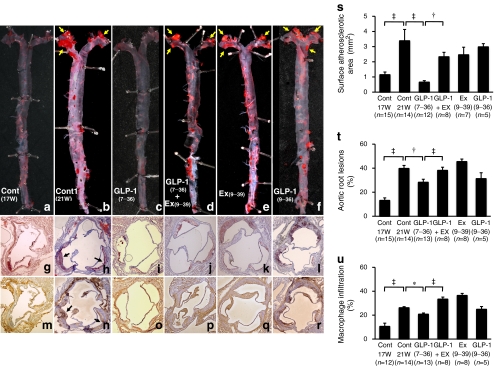
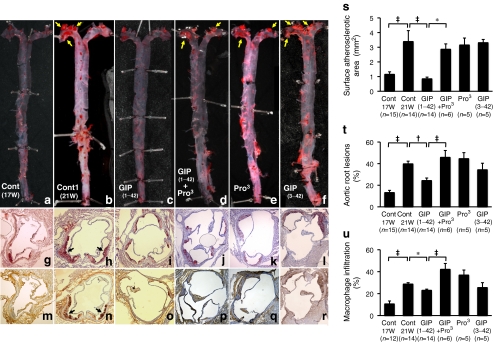
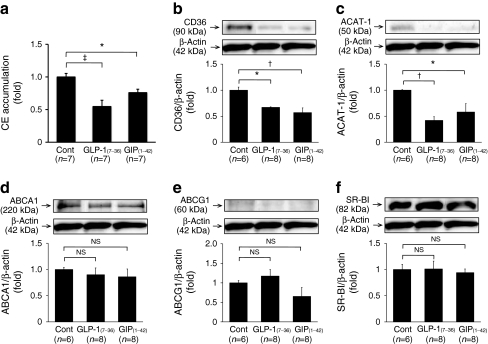
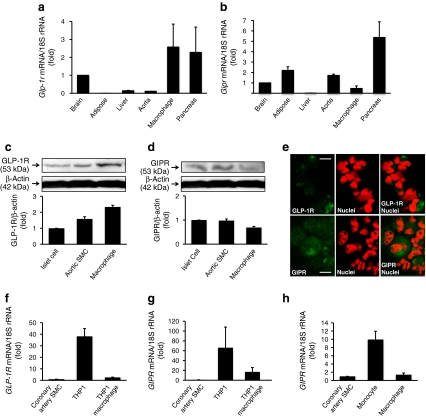
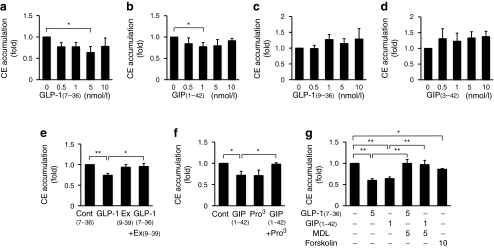
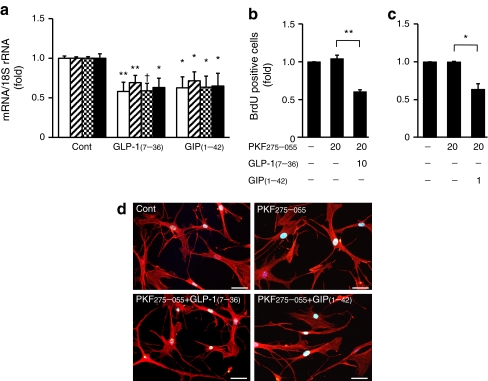
AIMS/HYPOTHESIS: Several lines of evidence suggest that incretin-based therapies suppress the development of cardiovascular disease in type 2 diabetes. We investigated the possibility that glucagon-like peptide-1 (GLP-1) and glucose-dependent insulinotropic polypeptide (GIP) can prevent the development of atherosclerosis in Apoe (-/-) mice. METHODS: Apoe (-/-) mice (17 weeks old) were administered GLP-1(7-36)amide, GLP-1(9-36)amide, GIP(1-42) or GIP(3-42) for 4 weeks. Aortic atherosclerosis, oxidised LDL-induced foam cell formation and related gene expression in exudate peritoneal macrophages were determined. RESULTS: Administration of GLP-1(7-36)amide or GIP(1-42) significantly suppressed atherosclerotic lesions and macrophage infiltration in the aortic wall, compared with vehicle controls. These effects were cancelled by co-infusion with specific antagonists for GLP-1 and GIP receptors, namely exendin(9-39) or Pro(3)(GIP). The anti-atherosclerotic effects of GLP-1(7-36)amide and GIP(1-42) were associated with significant decreases in foam cell formation and downregulation of CD36 and acyl-coenzyme A:cholesterol acyltransferase-1 (ACAT-1) in macrophages. GLP-1 and GIP receptors were both detected in Apoe (-/-) mouse macrophages. Ex vivo incubation of macrophages with GLP-1(7-36)amide or GIP(1-42) for 48 h significantly suppressed foam cell formation. This effect was wholly abolished in macrophages pretreated with exendin(9-39) or (Pro(3))GIP, or with an adenylate cyclase inhibitor, MDL12,330A, and was mimicked by incubation with an adenylate cyclase activator, forskolin. The inactive forms, GLP-1(9-36)amide and GIP(3-42), had no effects on atherosclerosis and macrophage foam cell formation. CONCLUSIONS/INTERPRETATION: Our study is the first to demonstrate that active forms of GLP-1 and GIP exert anti-atherogenic effects by suppressing macrophage foam cell formation via their own receptors, followed by cAMP activation. Molecular mechanisms underlying these effects are associated with the downregulation of CD36 and ACAT-1 by incretins.
Overview
The claims and statistics of this paper haven’t been checked yet.
Free: it reads the open-access text and checks the first 5 claims that cite a source we can check. Create a free account to check every claim.
Integrity signals
Registry
Cites
Statistics
Figures
Verification
Claims the paper makes
The claims and statistics of this paper haven’t been checked yet.
Free: it reads the open-access text and checks the first 5 claims that cite a source we can check. Create a free account to check every claim.
Claims other papers make about this one
Each is checked against this paper’s own text: does it say what the citing paper says it does?
The cited source says what the claim attributes to it.
In the citing paper
“GIPR agonism further promotes bone formation [40], has beneficial effects in animal models for atherosclerosis [41–43] and neurodegenerative diseases [44, 45], and decreases body weight in obese rodents via inhibition of food intake [46, 47].”
From Dual and Triple Incretin-Based Co-agonists: Novel Therapeutics for Obesity and Diabetes (2024) · cites this paper as [42]
Self-check
Percentages, sums and reported differences re-computed from the paper’s own numbers.
The self-check needs the paper’s full text.
Citations
Cites
The biology of incretin hormones
Drucker, D. J. (2006) · Cell Metabolism · doi:10.1016/j.cmet.2006.01.004 · Cited by 2,210 · cited 5×
“Both GLP-1 and GIP are rapidly metabolised via enzymatic degradation by the dipeptidyl peptidase-4 (DPP-4) [2].”
InfluentialThe role of incretins in glucose homeostasis and diabetes treatment
Kim, W., & Egan, J. M. (2008) · Pharmacological Reviews · doi:10.1124/pr.108.000604 · Cited by 824 · cited 4×
“Several lines of evidence suggest that GLP-1 and its receptor agonists, but not GIP, have vasoprotective effects [1, 2].”
InfluentialNyström, T., Gutniak, M. K., Zhang, Q., Zhang, F., Holst, J. J., Ahrén, B., & Sjöholm, Å. (2004) · American Journal of Physiology-Endocrinology and Metabolism · doi:10.1152/ajpendo.00237.2004 · Cited by 680
Arakawa, M., Mita, T., Azuma, K., Ebato, C., Goto, H., Nomiyama, T., Fujitani, Y., Hirose, T., Kawamori, R., & Watada, H. (2010) · Diabetes · doi:10.2337/db09-1694 · Cited by 548 · cited 3×
“[5] reported that exendin-4 suppresses the lipopolysaccharide-induced mRNA expression of TNF-α (also known as TNF) and MCP1 via the cAMP/PKA pathway.”
Kodera, R., Shikata, K., Kataoka, H. U., Takatsuka, T., Miyamoto, S., Sasaki, M., Kajitani, N., Nishishita, S., Sarai, K., Hirota, D., et al. (2011) · Diabetologia · doi:10.1007/s00125-010-2028-x · Cited by 394 · cited 1×
“Exendin-4 suppresses high glucose-induced TNF-α and IL- 1β levels in THP1 cells, and TNF-α-induced ICAM-1 production in human glomerular microvascular endothelial cells [ 18 ].”
BackgroundOeseburg, H., de Boer, R. A., Buikema, H., van der Harst, P., van Gilst, W. H., & Silljé, H. H. W. (2010) · Arteriosclerosis, Thrombosis, and Vascular Biology · doi:10.1161/atvbaha.110.206425 · Cited by 267 · cited 1×
“GLP-1 and exendin-4 have a protective effect on oxidative stress-induced DNA damage in HUVECs [17].”
Feng, J., Han, J., Pearce, S. F. A., Silverstein, R. L., Gotto, A. M., Hajjar, D. P., & Nicholson, A. C. (2000) · Journal of Lipid Research · doi:10.1016/s0022-2275(20)32377-4 · Cited by 241
Liu, H., Dear, A. E., Knudsen, L. B., & Simpson, R. W. (2009) · Journal of Endocrinology · doi:10.1677/joe-08-0468 · Cited by 187 · cited 1×
“Liraglutide, a long-acting GLP-1R agonist, and vildagliptin, a DPP-4 inhibitor, attenuate production of plasminogen activator inhibitor 1 (PAI-1) and vascular cell adhesion molecule-1 (VCAM-1) in vascular cells [7, 8].”
GIP and GLP-1 as incretin hormones: lessons from single and double incretin receptor knockout mice
Hansotia, T., & Drucker, D. J. (2005) · Regulatory Peptides · doi:10.1016/j.regpep.2004.07.019 · Cited by 183 · cited 2×
“The effect of GIP on the cardiovascular system is largely unknown, although GIP receptors (GIPR) have been detected in vascular tissues [4].”
Impact of Salusin-α and -β on Human Macrophage Foam Cell Formation and Coronary Atherosclerosis
Watanabe, T., Nishio, K., Kanome, T., Matsuyama, T.-A., Koba, S., Sakai, T., Sato, K., Hongo, S., Nose, K., Ota, H., et al. (2008) · Circulation · doi:10.1161/circulationaha.107.712539 · Cited by 130 · cited 1×
“Human peripheral mononuclear cells were isolated from the blood of six healthy volunteers (four men, two women, age 25±2 years) as described previously [10, 15].”
Self-citation
Cited by
Items 201–270 of 270
Ma, X., Huang, J. X., Lu, D., Gu, N., Lu, R., Zhang, J., Zhang, H., Li, J., Zhang, J., & Guo, X. (2018) · Journal of Diabetes Research · doi:10.1155/2018/6820294 · Cited by 6
“[12] infused the Apoe mice with GIP1–42 for 4 weeks and found that the plaques in the aorta in Apoe mice were obviously smaller than the control group.”
BackgroundCereal Proteins: Potential Health Applications and Allergenicities
Bleakley, S. (2018) · Wiley eBooks · doi:10.1002/9781119385332.ch4 · Cited by 7
Jiménez-Martí, E., Hurtado-Genovés, G., Aguilar-Ballester, M., Martínez‐Hervás, S., & Navarro, H. G. (2022) · Nutrients · doi:10.3390/nu14183775 · Cited by 7
“The infusion of an inactive form of GIP, GIP(3–42), had no effect on these parameters or on atherosclerosis [85].”
BackgroundMitsuhashi, T., Hibi, K., Konishi, M., Maejima, N., Iwahashi, N., Tsukahara, K., Kosuge, M., Ebina, T., Umemura, S., & Kimura, K. (2015) · Circulation Journal · doi:10.1253/circj.cj-15-0718 · Cited by 6
Incretin Hormones in the Control of Immunometabolism
Fishman, S., Zvibel, I., & Varol, C. (2019) · Immunometabolism · doi:10.20900/immunometab20190004 · Cited by 6
“Accordingly, continuous administration of GIP in diabetic and non-diabetic apolipoprotein E-null (Apoe−/−) mice suppresses atherosclerotic lesions, macrophage infiltration and foam cell formation in the aortic wall [162,163].”
BackgroundCollaborators, S. O. P. E. O. A. O. D. A. (.-A., Irie, Y., Katakami, N., Mita, T., Takahara, M., Matsuoka, T., Gosho, M., Watada, H., & Shimomura, I. (2018) · Diabetes Therapy · doi:10.1007/s13300-018-0367-7 · Cited by 5
Vargas‐Alarcón, G., González-Salazar, M. D. C., Hernández-Díazcouder, A., Sánchez‐Muñoz, F., Ramírez‐Bello, J., Rodríguez-Pérez, J. M., & Posadas‐Sánchez, R. (2022) · Diagnostics · doi:10.3390/diagnostics12071716 · Cited by 6
“GLP-1 improves endothelial dysfunction [35] and increases coronary blood flow [36], while GIP has anti-atherosclerosis effects [37].”
BackgroundThe role of the incretin GIP in inflammation
Rossi, G., Bucciarelli, L. G., Cimino, V., & Fiorina, P. (2025) · Journal of Endocrinological Investigation · doi:10.1007/s40618-025-02719-w · Cited by 7
Karacabeyli, D., & Lacaille, D. V. (2026) · Rheumatology · doi:10.1093/rheumatology/keag147 · Cited by 4
“Notably, the GIP receptor is expressed at low levels in the human heart [72], and, in mice, GIP receptor agonism reduces vascular inflammation and aortic atherosclerosis [73, 74].”
Ahmed, M., Hashmi, T. M., Shahzad, M., Zia, R., Ashraf, H., Ahmed, R., Rashid, M. O., Greene, S. J., Mentz, R. J., Fudim, M., et al. (2026) · European Heart Journal - Quality of Care and Clinical Outcomes · doi:10.1093/ehjqcco/qcag079 · Cited by 4
GLP-1 Receptor Agonists: From Clinical Success to Mechanistic Insight
Patel, T., Rose, J., Katsurada, K., Yada, T., Koutakis, P., Salomon, J., Patel, K. P., & Alfaidi, M. (2026) · Circulation Research · doi:10.1161/circresaha.126.327683 · Cited by 5
Kahles, F., Rau, M., Reugels, M., Foldenauer, A. C., Mertens, R. W., Arrivas, M. C., Schröder, J. H., Idel, P., Moellmann, J., van der Vorst, E. P. C., et al. (2022) · Cardiovascular Diabetology · doi:10.1186/s12933-022-01454-3 · Cited by 5
Watada, H. (2024) · Journal of Diabetes Investigation · doi:10.1111/jdi.14346 · Cited by 4
Amasa, S., Agrawal, V., Karabacak, M., Bhimani, A. D., Le, C., Margetis, K. D., & Houten, J. K. (2026) · Journal of Spine Surgery · doi:10.21037/jss-25-142 · Cited by 5
“Exenatide reduced atherosclerotic lesions in apolipoprotein E (ApoE) deficient mice, which is a model specifically designed to study accelerated atherosclerosis (55).”
Clinical Potential of GIP in Type 2 Diabetes and Obesity
Nauck, M. A., Gribble, F. M., Reimann, F., D’Alessio, D. A., & Campbell, J. E. (2026) · Diabetes Care · doi:10.2337/dci25-0141 · Cited by 3
The Effect of GLP-1 Agonist Treatment On Subclinical Atherosclerosis
Sakız, D., Çalapkulu, M., Sencar, M. E., Bayram, S. M., Ünsal, İ. Ö., Kızılgül, M., Uçan, B., Özbek, M., & Çakal, E. (2022) · Van Medical Journal · doi:10.5505/vtd.2022.09815 · Cited by 3
“Diabetes Mellitus duration (years) (median (min-max)) 9 (1-30)”
Effects of Vagotomy and Fenugreek on Hyperlipidemia and Insulin Resistance
Khound, R. (2017) · Lincoln (University of Nebraska) · Cited by 3
Biomarkers and therapies to target endothelial dysfunction in type 2 diabetes: moving a step forward
Chee, Y. J., Loh, W. J., & Dalan, R. (2025) · Current Opinion in Endocrinology Diabetes and Obesity · doi:10.1097/med.0000000000000933 · Cited by 2
GLP‐1 and GIP Beyond Glycaemia: Evolutionary Roles in Energy Optimisation and Organ Protection
Tuccinardi, D., Watanabe, M., Masi, D., Gianfrilli, D., Manfrini, S., & le Roux, C. W. (2025) · Diabetes/Metabolism Research and Reviews · doi:10.1002/dmrr.70108 · Cited by 3
Bile acids and incretins as modulators of obesity-associated atherosclerosis
Kirsch, A., Gindlhuber, J., Zabini, D., & Osto, E. (2025) · Frontiers in Cardiovascular Medicine · doi:10.3389/fcvm.2024.1510148 · Cited by 3
Pleiotropic effects of incretins and antidiabetics with incretine mechanism
Winkler, G. (2013) · Orvosi Hetilap · doi:10.1556/oh.2013.29553 · Cited by 2
Kong, Y., Tong, Y. A., Chen, C., Gao, M., Gao, X., & Yao, W. (2016) · Endocrine · doi:10.1007/s12020-015-0831-3 · Cited by 2
Cardiometabolic Effects of Glucagon-Like Peptide-1 Agonists
Sarraju, A., Kim, S. H., & Knowles, J. W. (2016) · Current Atherosclerosis Reports · doi:10.1007/s11883-016-0558-5 · Cited by 2
Shang, R., & Rodrigues, B. B. (2025) · Cardiovascular Research · doi:10.1093/cvr/cvaf006 · Cited by 2
Effects of Evening-Only Low-Carbohydrate Meal on Healthy Volunteers
Yaegashi, A., & Suzuki, J. S. (2020) · Journal of Nutritional Science and Vitaminology · doi:10.3177/jnsv.66.229 · Cited by 1
Stryukova, E. V., Шрамко, В. С., Kashtanova, E. V., Polonskaya, Y. V., Stakhneva, E. M., Кургузов, А. В., Chernyavskiy, A. M., & Ragino, Y. I. (2023) · Bulletin of Experimental Biology and Medicine · doi:10.1007/s10517-023-05817-y · Cited by 1
Шрамко, В. С., Kashtanova, E. V., Полонская, Я. В., Stakhneva, E. M., & Рагино, Ю. И. (2023) · Ateroscleroz · doi:10.52727/2078-256x-2023-19-3-332-334 · Cited by 1
Portha, B., & Liu, J. (2026) · Cahiers de Nutrition et de Diététique · doi:10.1016/j.cnd.2025.12.005 · Cited by 1
Portha, B., & Liu, J. (2026) · Cahiers de Nutrition et de Diététique · doi:10.1016/j.cnd.2026.01.001 · Cited by 1
Zawadzki, M., & Karczewska‐Kupczewska, M. (2026) · Cardiovascular Therapeutics · doi:10.1155/cdr/8388511 · Cited by 1
Gómez-Martín, Á., Marqués, P., Recatalá, C. A., Vea, À., Domingo, E., Alabadí, B., Real, J. T., Sanz, M., & Piqueras, L. (2026) · Pharmacological Research · doi:10.1016/j.phrs.2026.108321 · Cited by 2
Incretin-Based Therapies, Obesity-Associated Inflammation, and Atherosclerotic Cardiovascular Risk
Kafol, J., Jug, B., & Fras, Z. (2026) · Cells · doi:10.3390/cells15141293 · Cited by 1
“Within the arterial wall, GLP-1R agonism has been associated with reduced uptake of modified lipoproteins, attenuation of macrophage foam-cell formation, and decreased plaque macrophage content and inflammatory gene expression [63,64,73].”
Beyond glycemic control: clinical cardiovascular effects of tirzepatide—a narrative review
Alawad, A. O., Merghani, T. H., Fadelelmoula, T. E. Y., Elamin, N. A., Satti, S., Edris, A., Hakim, A., El-Hindi, R. F., Alhaj-Ali, A. A., Ibrahim, W. E., et al. (2026) · Therapeutic Advances in Endocrinology and Metabolism · doi:10.1177/20420188261469947 · Cited by 1
“101 Given the shared pathophysiological mechanisms underlying aortic, coronary, cerebrovascular, and peripheral arterial disease, TZP may also attenuate atherosclerosis in all these arteries; however, direct evidence regarding its effects on cerebro-vascular and peripheral vascular outcomes…”
Abai, B., & Ryan, S. P. (2015) · Springer eBooks · doi:10.1007/978-3-642-37078-6_196 · Cited by 1
Effets cardiovasculaires des inhibiteurs de la DPP-4
Vergès, B. L. (2013) · Médecine des Maladies Métaboliques · doi:10.1016/s1957-2557(13)70563-7 · Cited by 1
[The pathophysiology of hemodynamic shock syndrome (part one)].
Kovač, Z., & Belina, D. (1998) · PubMed · Cited by 1
Ge, J., Bei, C., Qi, B., PENG, W., WEN, H., BAI, L., Liu, Y., & ZHAI, W. (2016) · Molecular Medicine Reports · doi:10.3892/mmr.2016.5295 · Cited by 1
“However, incretins, hydrogen sulfide, adiponectin and Ghrelin downregulated ACAT1 expression to suppress the development of atherosclerosis (18-21).”
Rashad, N. M., Allam, R. M., Ebaid, A. M., Yousef, M. S., & Fathy, M. A. (2019) · The Egyptian Journal of Internal Medicine · doi:10.4103/ejim.ejim_126_19 · Cited by 1
Lubberding, A. F., Holst, J. J., & Madsbad, S. (2023) · Elsevier eBooks · doi:10.1016/b978-0-323-99991-5.00017-6 · Cited by 1
Ormoni gastrointestinali e terapia del diabete: dalla fisiologia alle nuove opportunità terapeutiche
Fadini, G. P. (2023) · L Endocrinologo · doi:10.1007/s40619-023-01260-3 · Cited by 2
Dear, A. E. (2013) · Cardiovascular Drugs and Therapy · doi:10.1007/s10557-013-6465-x · Cited by 1
“Several in vivo studies identify atheroprotection by native GLP-1, GLP-1R agonists and DPP-4 inhibitors [9–12].”
BackgroundTomoyasu, M., Kim‐Kaneyama, J., Kohashi, K., Shinmura, K., Nogi, Y., Terasaki, M., Nagashima, M., Miyazaki, A., & Hirano, T. (2014) · The Showa University Journal of Medical Sciences · doi:10.15369/sujms.26.191
Self-citationRabello, F. R. D. A. (2016) · Digital Library of Theses and Dissertations (Universidade de São Paulo) · doi:10.11606/t.5.2016.tde-20052016-103421 · Cited by 4
de Cardiologia, P., & Paulo, S. (2016)
The Role of the Glucagon-like Peptide-1 Receptor in Atherosclerosis
Panjwani, N. (2013) · TSpace (University of Toronto)
Belcastro, E. (2016) · theses.fr (ABES) · doi:10.70675/ff11aacdz46ffz4fc1z83e6z2d9faaae5e68 · Cited by 1
“In contrast, M2 macrophages are characterized by increased activity of GPx, which is also confirmed by the literature [339].”
BackgroundKoshibu, M., Mori, Y., Kushima, H., Hiromura, M., Kohashi, K., Terasaki, M., Osaka, N., Fujikawa, T., Fukui, T., & Hirano, T. (2019) · The Showa University Journal of Medical Sciences · doi:10.15369/sujms.31.115
Self-citationHuang, L., Zhou, J., Liang, B., Huang, H., & Li, L. (2021) · International Journal of Diabetes in Developing Countries · doi:10.1007/s13410-021-00940-w
Gut Hormones and the Vascular System
Wägner, A. M. (2013) · Springer eBooks · doi:10.1007/978-3-642-37393-0_178-1
Gut Hormones and the Vascular System
Wägner, A. M. (2015) · Springer eBooks · doi:10.1007/978-3-642-37078-6_178
Mechanisms of GLP‒1 Receptor Agonists on the Cardio-Renal Protective Effects
Kuriyama, S., & Matsumoto, K. (2022) · Rinsho yakuri/Japanese Journal of Clinical Pharmacology and Therapeutics · doi:10.3999/jscpt.53.6_249
Beneficios cardiovasculares del semaglutide: un nuevo agonista del GLP-1
Ortega, J. P. G., Ramón, S. M. Q., Panamá, J. C. P., Cajas, J. I. P., Pineda, E. G. R., Sacoto, E. P. L., Masache, G. A. R., Delgado, A. M. G., Calle, M. E. R., & Quizhpi, P. F. B. (2023) · Zenodo (CERN European Organization for Nuclear Research) · doi:10.5281/zenodo.7702783
ULTRASOUND ASSESSMENT OF A1 AND A2 PULLEY ENTHESIS WITH ANATOMICAL AND HISTOLOGICAL CORRELATION
Coronel, L., Miguel, M. I., Blasi, J., Marsal, S., D’Agostino, M. A., & Möller, I. (2023) · Annals of the Rheumatic Diseases · doi:10.1136/annrheumdis-2023-eular.3169 · Cited by 1
Positron emission tomography imaging of disease activity in atherosclerosis
Virta, J. (2024) · UTUPub (University of Turku)
Effect of Semaglutide on Vascular Regenerative Cells in People at Elevated Risk for Atherosclerosis
Park, B. (2025) · TSpace (University of Toronto)
Trabelsi, M.-S. (2015) · theses.fr (ABES) · doi:10.70675/57d5cdf4z352ez4ac4z9da1zee3dcc8aba01
“Il réduit également la taille des plaques et l’infiltration des macrophages dans l’aorte (Nagashima et al. 2011).”
BackgroundA comprehensive review of GLP-1 and aerobic training in cardiovascular disease management
Kordi, N., Kheirandish, R., Akraminia, P., Jung, F., & Karami, S. (2025) · Clinical Hemorheology and Microcirculation · doi:10.1177/13860291251414840
Li, J., Li, C., Yang, C., Zhu, Z., Ran, H., Liu, B., Zhang, Y., & Xiang, Y. (2026) · Peptides · doi:10.1016/j.peptides.2026.171489
Plasma Proteomic Signatures of Glucose Metabolism Disturbances and Early Diabetes
Zieleniewska, N. A., Jamiołkowski, J., Mälarstig, A., Diamanti, K., Chlabicz, M., Kondraciuk, M., Woo, K., Kowalska, I., & Kamiński, K. A. (2026) · International Journal of Molecular Sciences · doi:10.3390/ijms27093844
Zarei, M., & Hajiani, Y. (2026) · Diabetology & Metabolic Syndrome · doi:10.1186/s13098-026-02196-y
“At the cellular level, GLP-1 receptor activation has been shown to reduce monocyte adhesion to the vascular endothelium and limit macrophage infiltration into inflamed vascular tissues, attenuating early inflammatory events that contribute to cardiovascular pathology [173, 174].”
Ramadan, A., Aglan, A., Salama, B., Abdalla, M., Fath, A., Frishman, W. H., & Aronow, W. S. (2026) · Cardiology in Review · doi:10.1097/crd.0000000000001322
Comparative effectiveness of tirzepatide and DPP-4 inhibitors in type 2 diabetes with heart failure
Mortada, I., Paul, K., Chammany, M., Abraham, Y., Devulapally, K., Lee, A. W., Mansour, S., Chatila, K., Boyars, M. C., Jehle, D. V., et al. (2026) · Diabetes and Vascular Disease Research · doi:10.1177/14791641261467888
“16 17–19 Additionally, GIP and dual GIP/GLP-1 RAs lower blood pressure through mechanisms that appear to extend beyond weight loss alone, including direct vascular effects.”
Melnikov, I., Borodko, D. D., & Alekseev, V. (2026) · Cells · doi:10.3390/cells15171578
“Native GLP-1 and GIP suppress oxidized LDL-induced foam cell formation https://doi.org/10.3390/cells15171578 in macrophages via downregulation of CD36 and ACAT-1 [19].”
InfluentialCardiovascular effects of incretin receptor agonists: beyond glycemic control
Ravić, M. P., Srejovic, I. M., Milosavljević, I., Novakovic, J. N., Jakovljević, V., Vučićević, K., Petrovic, D., & Muric, M. D. (2026) · Canadian Journal of Physiology and Pharmacology · doi:10.1139/cjpp-2026-0184
The Impact of Glucagon-Like Peptide-1 Receptor Agonists on Risk of Retinal Vascular Occlusions
Abbass, N. J., Allan, K., Kaelber, D. C., Singh, R. P., Talcott, K. E., & Sharma, N. (2026) · Journal of VitreoRetinal Diseases · doi:10.1177/24741264261486777
Okuma, H. (2026) · Diabetology International · doi:10.1007/s13340-026-00940-3
“GIPR expression appears to be higher in monocytes than in differentiated macro - phages [ 6 ], suggesting context-dependent regulation during myeloid differentiation.”
心血管病に対するインクレチン製剤の心保護作用について(4.糖尿病における心血管病の特徴と対策,<特集>第76回日本循環器学会学術集会)
純一, 尾., & 野出孝一 (2012) · Journal of JCS Cardiologists · doi:10.1253/jjcsc.20.2_256
Metadata
- Authors
- Nagashima, M., Watanabe, T., Terasaki, M., Tomoyasu, M., Nohtomi, K., Kim-Kaneyama, J., Miyazaki, A., & Hirano, T.
- Affiliations
- SHOWA Medical University (JP)
- Tokyo University of Pharmacy and Life Sciences (JP)
- Corresponding author
- Hirano, T.
- Venue
- Diabetologia
- Published
- 2011-07-24
- Volume
- 54
- Issue
- 10
- Pages
- 2649-2659
- ISSN
- 0012-186X (ISSN-L)
- 1432-0428
- PMC
- PMC3168747
- OpenAlex
- W2075567076
- Cited by
- 259
- References
- 25
- Citations by year
- 2026: 22 · 2025: 15 · 2024: 16 · 2023: 14 · 2022: 19 · 2021: 22 · 2020: 11 · 2019: 20 · 2018: 17 · 2017: 14 · 2016: 18 · 2015: 22 · 2014: 12 · 2013: 23 · 2012: 13
- FWCI
- 12.60
- Type
- journal article
- Language
- en
- Open access
- hybrid
- doi.org
- Licence
- cc-by-nc
- Locations
- Diabetologia (publishedVersion, cc-by-nc)
- Europe PMC (PubMed Central) (publishedVersion, cc-by-nc)
- PubMed Central (publishedVersion, cc-by-nc)
- PubMed (publishedVersion)
- Funders
- American Diabetes Association
- American Heart Association
- European Foundation for the Study of Diabetes
- Japan Society for the Promotion of Science (19-24, 22590831, 23591341)
- Topics
- Health Sciences › Medicine › Endocrinology, Diabetes and Metabolism › Diabetes Treatment and Management
- Life Sciences › Immunology and Microbiology › Immunology › Atherosclerosis and Cardiovascular Diseases
- Life Sciences › Biochemistry, Genetics and Molecular Biology › Biochemistry › Cholesterol and Lipid Metabolism
- Keywords
- incretins, glucagon-like peptide-1, glucose-dependent insulinotropic polypeptide, atherosclerosis, ApoE-deficient mice, foam cell formation, macrophages, oxidized LDL, CD36, ACAT1, GLP-1 receptor, GIP receptor, exendin-9-39, adenylate cyclase, type 2 diabetes, antiatherogenic effects
- MeSH terms
- Acetyl-CoA C-Acetyltransferase, Animals, Apolipoproteins E, Cell Line, Cells, Cultured, Foam Cells, Gastric Inhibitory Polypeptide, Humans, Male, Peptide Fragments, Peptides, Blotting, Western, Mice, Knockout, Microscopy, Confocal, CD36 Antigens, Atherosclerosis, Mice, Glucagon-Like Peptide 1, Incretins, Real-Time Polymerase Chain Reaction
About these checks
Registry, retraction, Cites and statistics results are computed, not judged, with one exception: a printed reference that no index lists is read once by a model before it counts as a citation error. Claims are extracted by a model and kept only when their quote appears verbatim in the text; each cited source is then checked, with a model’s help, for whether it says what the claim relies on. Those verdicts can be wrong — read the claim’s quote and the cited source before relying on one.
Statistics and arithmetic are recomputed, not judged.
Confidence bands are shown only for fields calibrated on our annotated test set. None is calibrated yet, so no band is shown.
What counts as a claim ›How we measure confidence ›How we check this ›
Are you an author, or do you see a problem with this page? Request a review
Data sources
Bibliographic data: Semantic Scholar, OpenAlex, Crossref.
Contains information from the Semantic Scholar Academic Graph Datasets, made available under the ODC Attribution License (ODC-BY 1.0).
Semantic Scholar’s data is described in: Kinney, R., et al. (2023). The Semantic Scholar Open Data Platform. arXiv:2301.10140.
